Article

Effects of Loading Conditions and Stirrup Arrangement on Corrosion-Induced Expansion Strain and Cracking in Reinforced Concrete Beams

1
School of Civil Engineering, Changde Vocational Technical College, Changde 415000, China
2
Key Laboratory of Safety Control of Bridge Engineering, Ministry of Education, Changsha University of Science & Technology, Changsha 410114, China
3
Hinggan League Jingwei Highway Survey and Design Co., Ltd., Hinggan League 137400, China
4
School of Hydraulic and Ocean Engineering, Changsha University of Science and Technology, Changsha 410114, China
*
Author to whom correspondence should be addressed.
Buildings 2026, 16(1), 52; https://doi.org/10.3390/buildings16010052
Submission received: 21 November 2025 / Revised: 15 December 2025 / Accepted: 22 December 2025 / Published: 23 December 2025
(This article belongs to the Section Building Materials, and Repair & Renovation)

Abstract

To investigate the effects of loading type and stirrup arrangement on the corrosion and deterioration characteristics of reinforced concrete beams, constant current accelerated corrosion tests were conducted under no load, uniaxial compressive load, and biaxial compressive load conditions, with specimens without stirrups serving as the control group. A comparative analysis was performed on the overall corrosion of the top surface of the concrete beams, the expansion strain of the concrete beams, and the crack distribution on the top surface of the beams with and without stirrups. The characteristics of the protective layer spalling in the concrete beams under different loading conditions were also discussed. The results showed that the expansion strain of specimens with normal stirrups was significantly higher than that of specimens without stirrups. Under uniaxial compressive loading, the expansion strain was lower compared to the no-load specimens. Under biaxial loading at 15% of the compressive strength, the expansion strain was minimal, suggesting that the loading compaction effect suppressed crack propagation. Furthermore, under biaxial loading, as the load level increased, the Poisson effect intensified the tensile deformation in the vertical direction, causing cracks to propagate rapidly. The extent and depth of the spalling of the protective layer increased significantly, exhibiting more severe deterioration characteristics.

1. Introduction

Reinforced concrete (RC) structures are frequently subjected to sustained and cyclic actions in aggressive environments, and corrosion of the embedded reinforcement is widely recognized as one of the predominant deterioration mechanisms governing their long-term durability and residual load-bearing capacity [1]. Although a passive film initially forms on the steel surface, depassivation may occur due to chloride ingress or carbonation, after which anodic dissolution and the accumulation of corrosion products at the steel–concrete interface generate a volumetric expansion of approximately two to six times the volume of the original metal, inducing substantial radial tensile stresses in the surrounding concrete cover [2,3,4]. When these stresses exceed the tensile strength of concrete, longitudinal and transverse cracking initiates and propagates, creating preferential pathways that markedly enhance the ingress of chloride ions, oxygen and moisture and thus accelerate the corrosion process [5,6,7]. Progressive accumulation of corrosion products and crack coalescence eventually result in cover delamination and spalling, a reduction in the effective bar cross-section and bond, and, at the member level, a measurable loss of stiffness, strength and ductility [8,9]. Consequently, a reliable understanding of reinforcement corrosion and corrosion-induced damage under sustained loading is essential for durability assessment, life-cycle performance prediction and the design of repair and strengthening strategies for existing RC bridges and other infrastructure assets.
Researchers have begun to investigate the corrosion characteristics of concrete beams under external loading. He et al. [10] investigated the corrosion characteristics of reinforced concrete beams exposed to a chloride environment under sustained loading, focusing on crack development, steel mass loss corrosion rates, and chloride distribution. The results showed that reinforced concrete structures subjected to sustained loads exhibited more severe corrosion. Zhang et al. [11] examined the cracking behavior of two three-point bending reinforced concrete beams under sustained loading in a salt fog environment. It found that corrosion was most pronounced in the tensile midspan region and the compressive end zones of the beams, whereas the vertical legs of the stirrups exhibited generally minor corrosion and were not significantly influenced by load-induced cracking. Imperatore et al. [12] reviewed the history of reinforcement corrosion studies and noted that the extent of corrosion in reinforced concrete beams is proportional to both the duration of corrosion and the applied load level. Although previous studies have focused on the impact of load level on reinforcement corrosion, most reinforced concrete structures are subjected to biaxial compressive stress during service. The corrosion evolution and corrosion rates of the reinforcing steel under biaxial compressive stress are more complex and require further investigation.
To facilitate the study of reinforcement corrosion in reinforced concrete structures, Hariche et al. [13] considered the corrosion characteristics of the tensile reinforcement when analyzing the performance of reinforced concrete beams under corrosion and sustained loading. Shen et al. [14] designed a series of reinforced concrete beams and conducted accelerated chloride corrosion tests under sustained loading, and the results indicated that load–corrosion coupling reduced side cracking but intensified bottom cracking, increased structural stiffness, and decreased the load-carrying capacity by 3.9 to 19.2%. Additionally, Tarighat et al. [15] analyzed the corrosion behavior of reinforcement in reinforced concrete structures under static loading. Although these studies incorporated factors such as reinforcement corrosion in their analysis of the corrosion behavior in reinforced concrete structures, the presence of shear reinforcement, or stirrups, in these structures also needs to be considered. The effect of stirrup distribution on the corrosion characteristics of reinforced concrete structures requires further analysis.
This paper aims to elucidate the influence mechanisms of external loading and transverse reinforcement on the corrosion behavior of reinforced concrete (RC) members, thereby providing a theoretical foundation and technical support for the durability assessment and rehabilitation of existing RC structures. Firstly, a series of constant current corrosion tests were conducted on reinforced concrete beams, both with and without stirrups, under uniaxial and biaxial sustained loading conditions. The overall corrosion of the top surface and the expansion strain of the concrete beams were analyzed under different loading conditions. A concrete expansion strain model accounting for biaxial compressive stress and stirrup effects was established. The distribution of cracks on the top surface of the beams with and without stirrups was compared. Finally, the characteristics of the protective layer spalling in the concrete beams under various loading conditions were discussed. This work was original in isolating the coupled effects of uniaxial and biaxial sustained compression and stirrup presence on impressed-current corrosion-induced expansion strain, cracking, and cover spalling in reinforced concrete beams, and in proposing a biaxial stress stirrup strain model.

2. Experiment Design

2.1. Materials and Design

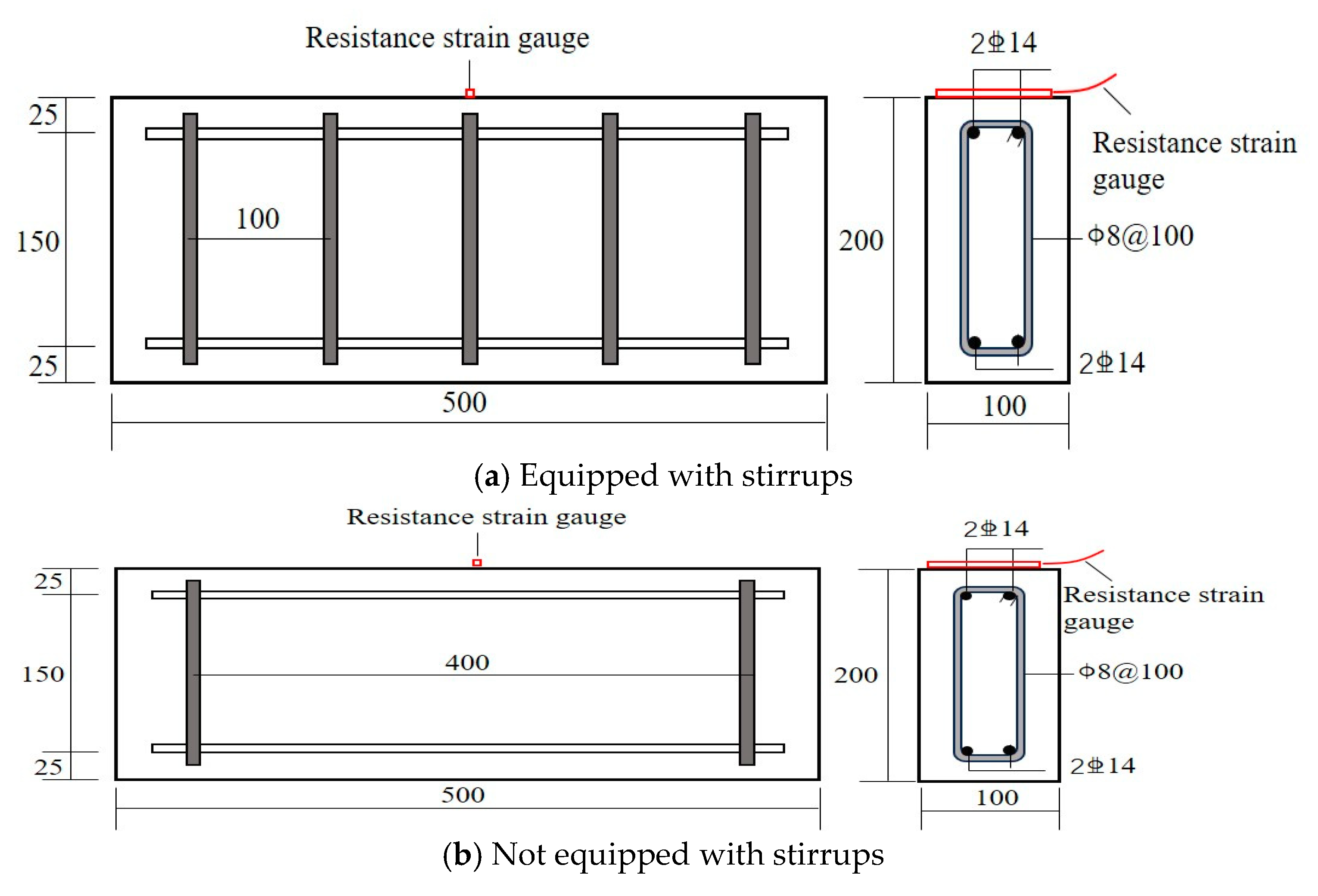
To investigate the effects of loading and stirrup configuration on the corrosion behavior of concrete members, this study designed two types of reinforced concrete experiment beams, one with stirrups and one without. The specific geometric parameters of the specimens are shown in Figure 1. Each experiment beam was reinforced with two 14 mm diameter, 400 mm long HRB335 ribbed longitudinal steel bars in both the tension and compression zones. The stirrups were made of 8 mm diameter HPB300 plain round steel bars, and the concrete cover thickness was set at 25 mm. To monitor the surface strain of the concrete surrounding the longitudinal reinforcement during corrosion, strain gauges measuring 80 mm × 3 mm were bonded to the top and sides of the longitudinal reinforcement after the beams had undergone standard curing for 28 days. All strain gauges were sealed with strict waterproof treatment.
In this study, Portland cement with a standard strength class of 42.5 MPa (CEM I) was employed as the binder, and its chemical composition and physical properties are provided in Table 1. Among these characteristics, the particle-size distribution of the cement complied with the Fuller grading curve, and its fineness, quantified by the residue retained on the 45 µm square sieve, was measured as 6.5%. Crushed granite was selected as the coarse aggregate, with a nominal size range of 5–20 mm, an apparent density of 2480 kg/m3 and a crushing index of 5.4%. Natural river sand served as the fine aggregate, exhibiting an apparent density of 2534 kg/m3, a bulk density of 1539 kg/m3 and a fineness modulus of 2.4. A polycarboxylate-based superplasticizer (SP) with a water-reduction capacity of 20% was incorporated into the mixture to improve the workability of the fresh concrete.
The concrete mix design is shown in Table 2, with a sand-to-aggregate ratio of 32%. Three identical reinforced concrete experiment beams were used to conduct compressive strength tests. The final average compressive strength obtained was 26.78 MPa. The specific experiment specimen design was provided in Table 3, where D and N represented beams with and without stirrups, respectively. S and T denoted side and top corrosion, and A and B indicated loading in the x-direction and y-direction, respectively. In addition, three specimens were tested for each condition group, with the expansion strain taken as the average value of the three specimens. The corrosion characteristics were discussed based on the specimen with the most noticeable corrosion in each condition group. A total of 36 reinforced concrete experiment beams were tested.

2.2. Corrosion Experiment

2.2.1. Apply Sustained Load

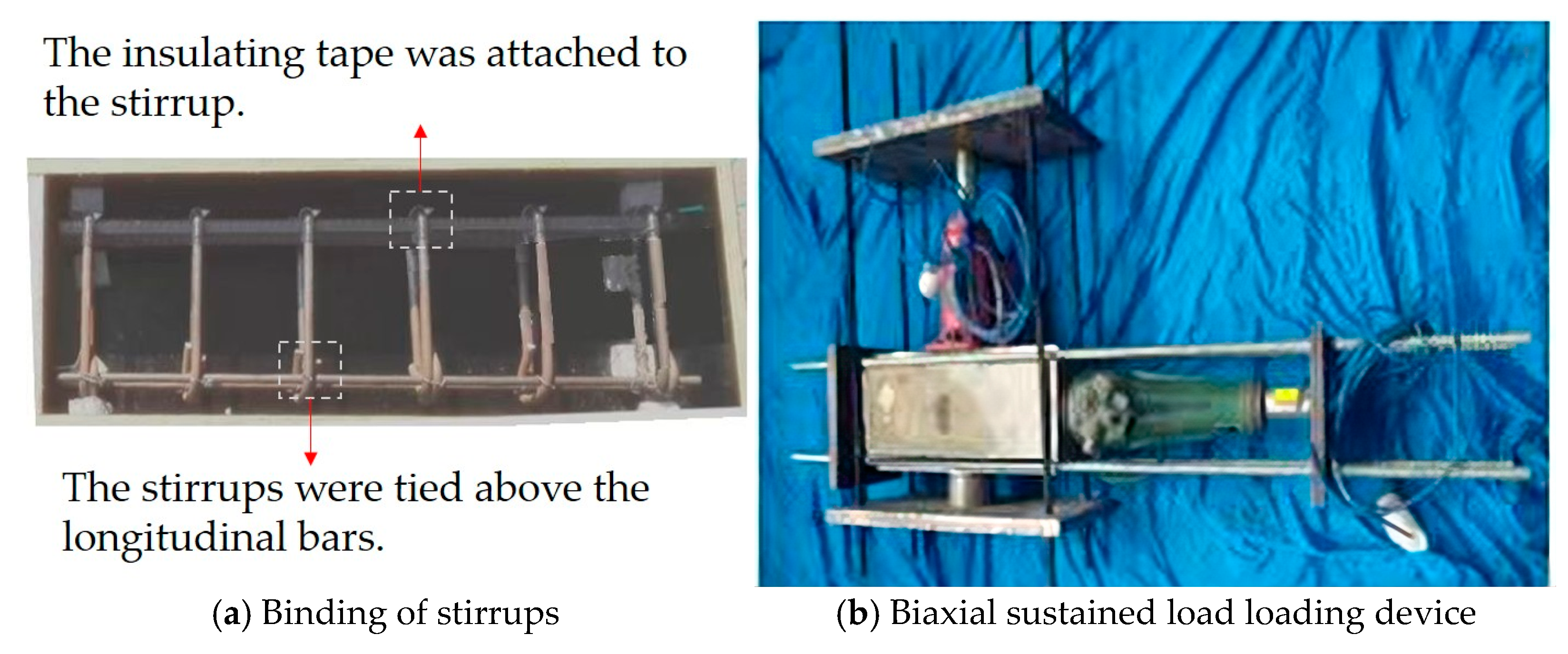
The experiment beams were primarily subjected to corrosion under sustained load and no-load conditions. The loading method was modified based on the approach outlined in reference [16], with loading applied according to the method described in Table 3. The tying of the stirrups and the associated insulation of the materials were arranged as shown in Figure 2a, whereas the loading setup of the reinforced concrete test beams was configured as illustrated in Figure 2b.
The no-load beams served as the control group. The corrosion tests were conducted in identical environmental conditions (temperature controlled at 20 ± 1 °C, humidity at 60% ± 5%). After the specified load was applied to the reinforced concrete experiment beam, the electrochemical corrosion parts were installed. The impressed current technique employed a constant anodic current density of approximately 0.325 mA/cm2, accelerating steel dissolution and reducing the corrosion period to several months. Prior studies showed that, at such moderate current levels, comparable steel mass loss, concrete cover cracking, and stiffness and strength degradation were obtained, indicating that the essential structural deterioration mechanisms were reliably reproduced despite the shortened timescale and altered corrosion uniformity [17,18,19]. The current density and exposure duration were back calculated from the target stirrup mass loss, demonstrating that the selected anodic current density of 0.325 mA/cm2 was reasonable because it achieved the planned corrosion degree within a feasible laboratory timespan without shifting into electrochemical regimes unrepresentative of in-service corrosion. Literature further supported that moderate impressed current levels near 0.325 mA/cm2 reproduced mass loss dependent stiffness degradation and cracking patterns, whereas excessive currents distorted damage mechanisms [18,20,21]. The corrosion current density was 0.325 mA/cm2. An impressed-current electrochemical system was adopted to induce corrosion in the reinforced beams. A direct current constant-current power supply applied a stable current density of 0.325 mA/cm2, with longitudinal reinforcement acting as the working electrode and stainless-steel plates in 3.5% NaCl solution serving as auxiliary electrodes, while water tanks ensured full immersion of the target zone under controlled temperature and humidity. The connections between the power-supply terminals and the reinforcing bars were protected by mechanically clamped copper conductors combined with epoxy insulation and waterproof tape to prevent parasitic corrosion and stray currents. The water tanks were rigidly fixed to the specimen surfaces using supports and sealing materials, with non-shrink waterproof mortar or structural sealant applied to form a continuous watertight interface, verified by hydrostatic testing and stabilized with external restraints when necessary.

2.2.2. Setting of Corrosive Environment

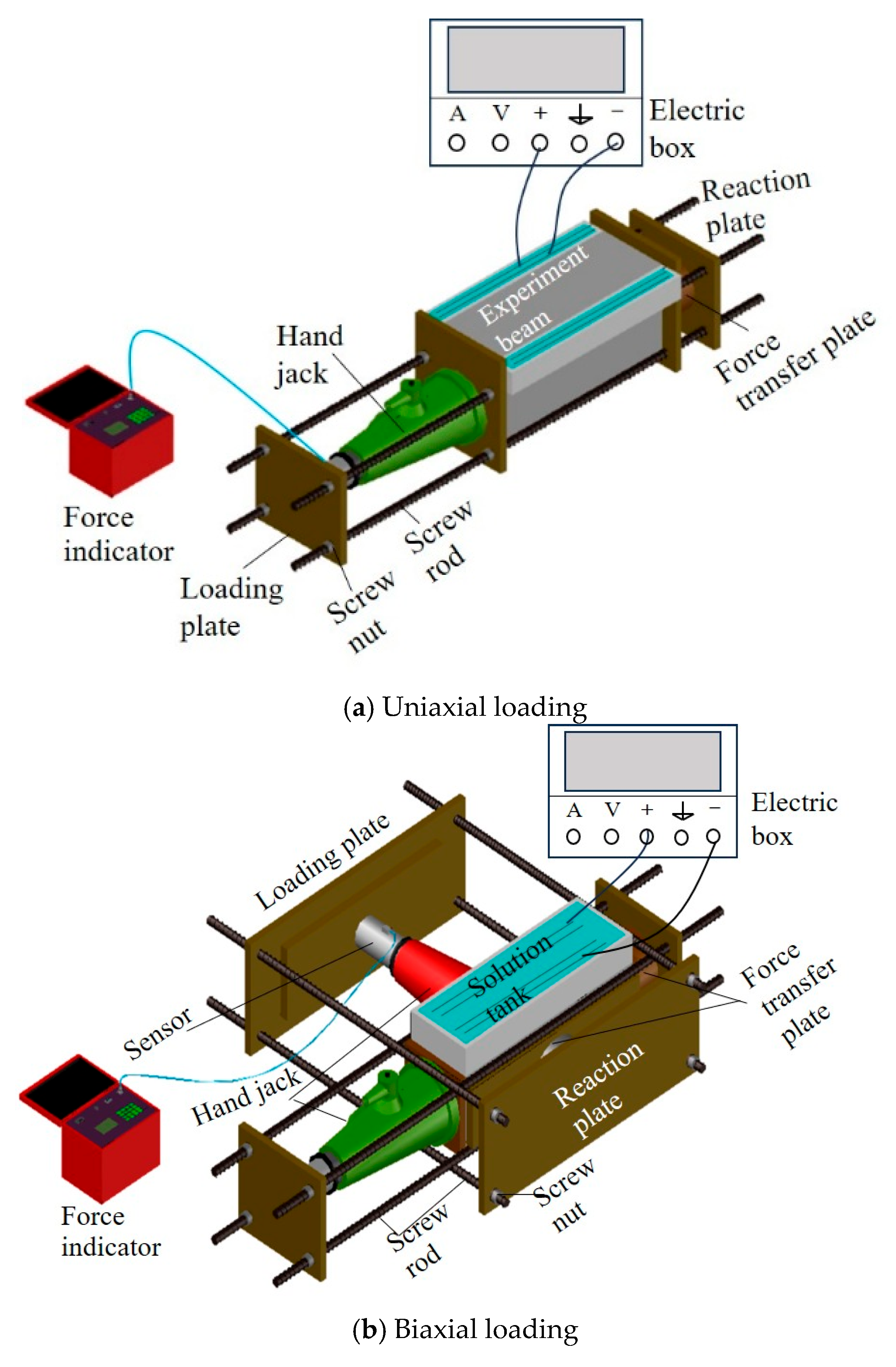
All specimens were subjected to corrosion using the electrochemical corrosion method. The corrosion setup was as follows: a 500 × 100 × 50 mm3 water tank was placed on the top surface of the specimens under no load, uniaxial, and biaxial sustained compressive stress conditions. For the specimens under no load and uniaxial sustained compressive stress, water tanks measuring 500 × 50 × 50 mm3 were installed on both sides of the specimen. A 3.5% sodium chloride solution was employed as the corrosive medium in the water tanks, into which stainless steel plates (450 × 18 × 2 mm3) were placed. After an immersion period of 3 days, the positive and negative terminals of the constant-current power supply were, respectively, connected to the longitudinal reinforcement in the beam and the stainless steel plate in the tank (see Figure 3). The power supply was subsequently switched on, and the current was regulated to induce corrosion of the beam reinforcement, corresponding to a current density of 0.325 mA/cm2 [18,22]. To ensure the reliability of the test, the ambient temperature during the corrosion process was controlled at 20 ± 1 °C and the salt solution in the tank was maintained in a stable state.

2.3. Measurement of Reinforcement Corrosion

Once the electrochemical corrosion process had concluded, the specimens were fractured and the internal reinforcement cage was detached. The longitudinal steel bars and stirrups from the central 350 mm zone were then cut, and their respective corrosion rates were measured sequentially. In order to reduce experimental measurement uncertainty, the longitudinal reinforcement and stirrups were segmented into three parts using a high-accuracy wire-cutting device, and the arithmetic average of the results was used. Following the provisions of the code [23], every segment of the cut steel reinforcement was subjected to cleaning, drying, and weighing, and its length was recorded with a vernier caliper. Based on these data, the mean corrosion rate corresponding to each cross-section and each reinforcement category was computed by means of Equations (1) and (2). Table 3 shows the corrosion rates for different specimens.
η = ρ 0 ρ ρ 0 × 100 %
η m = ρ 0 m l ρ 0 × 100 %
where η represented the corrosion rate of the reinforcement in the cross-section; ηm denoted the average corrosion rate of the entire corroded reinforcement; ρ was the linear density of the corroded reinforcement, where ρ = m/l, with m representing the mass of the reinforcement and l representing its length; ρ0 was the average linear density of the non-corroded reinforcement. In each loading condition, three nominally identical specimens were prepared. The mean values of the longitudinal reinforcement corrosion rate, the stirrup corrosion rate, and the total mass loss due to corrosion were obtained from the experiment results, and the corresponding standard deviations were calculated and summarized in Table 4.

3. Analysis and Discussion of Experiment Results

3.1. Distribution of Corrosion Propagation Cracks

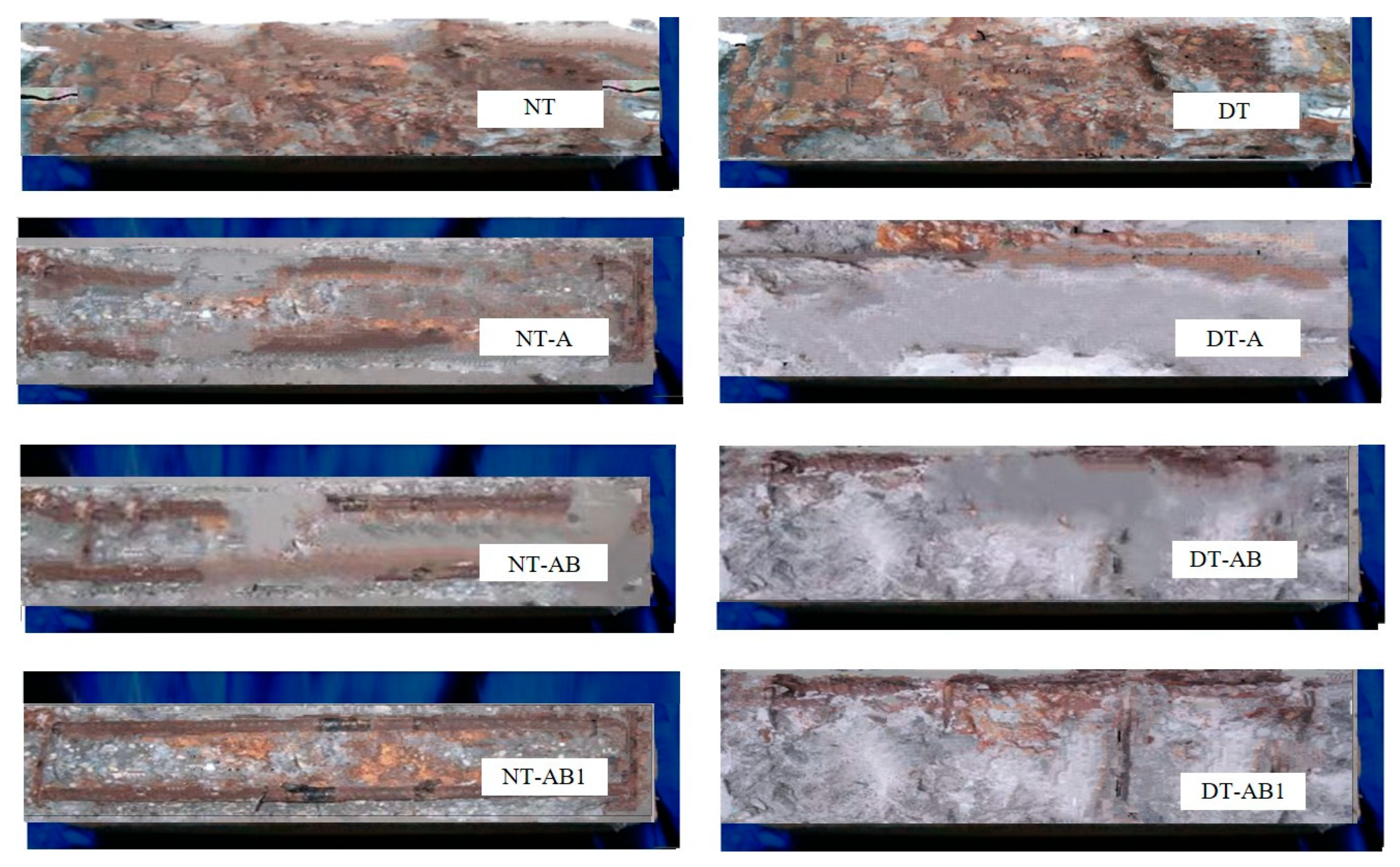
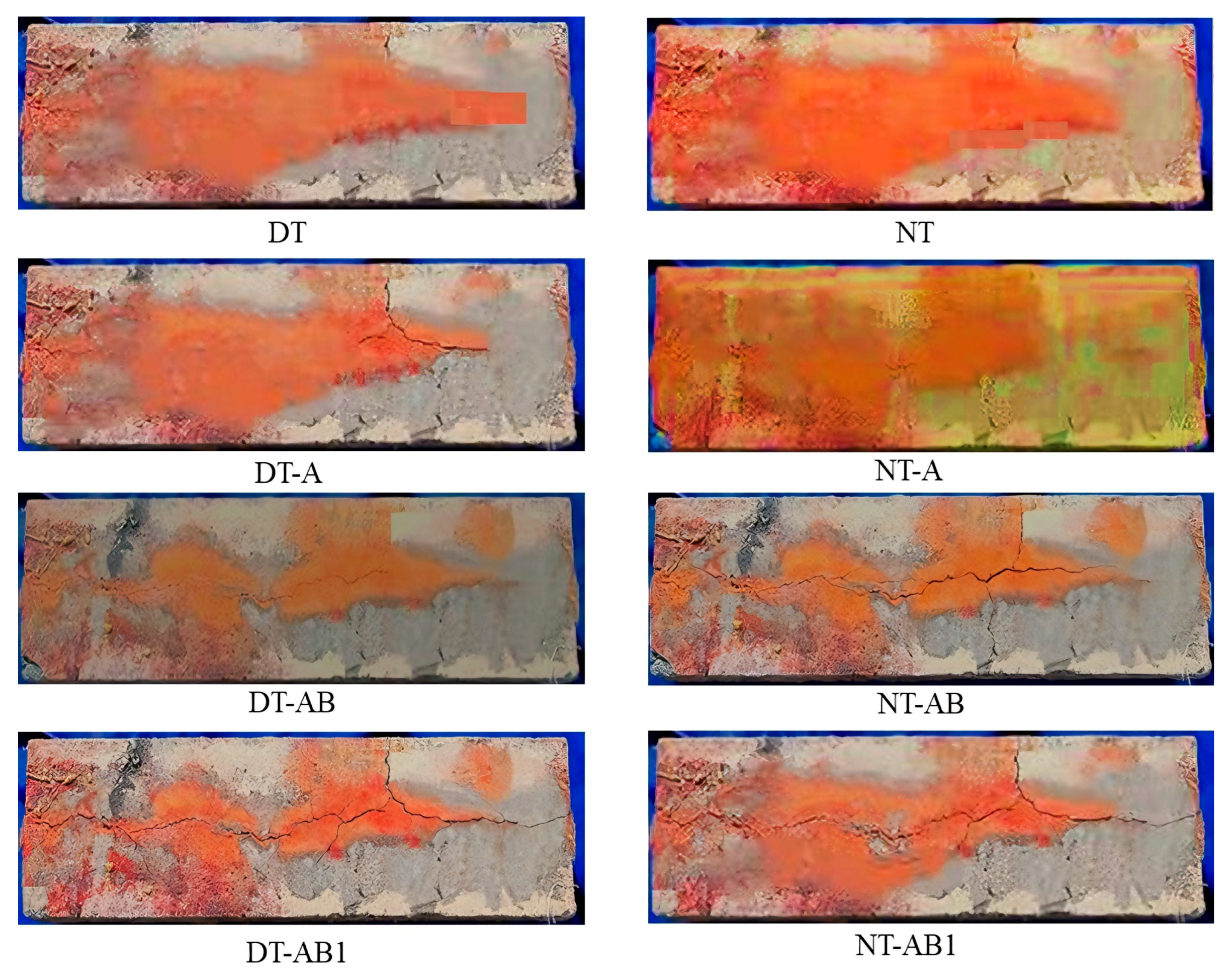
Figure 4 shows the overall corrosion of the concrete specimens’ top surface after 72 h of corrosion under different conditions. It can be seen from Figure 4 that the corrosion area was larger in the DT and NT specimens. The corrosion area in the DT-A and NT-A specimens decreased, with noticeable cracks. Compared to the NT-AB specimens, the DT-AB specimens exhibited fewer cracks. The number of cracks increased in the DT-AB1 and NT-AB1 specimens, with more cracks observed in the NT-AB1 specimens. These results suggest that the stirrups helped prevent the formation of some microcracks.
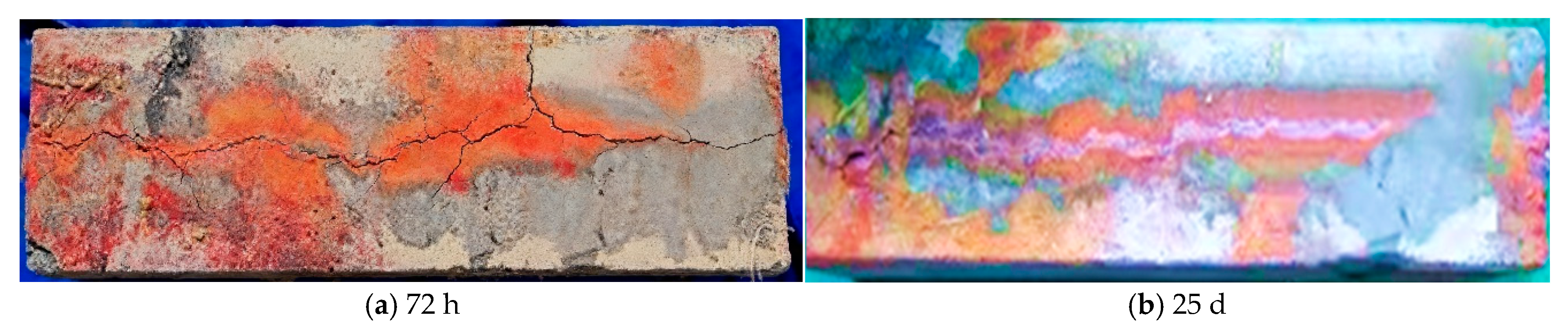
In real-world conditions, reinforced concrete structures subjected to biaxial compression performed better than those without stirrups. This study presented a comparison of the overall corrosion on the top surface of the DT-AB1 specimen after 72 h of corrosion and 25 days, as shown in Figure 4. As seen in Figure 5b), with further oxidation of the reinforcement, the expansion pressure caused an intensification and spread of surface cracks. Localized areas showed significant delamination, and the surface damage of the concrete became more severe. The corrosion products penetrated deeper into the concrete, and more pronounced rust stains appeared on the surface. Both the width and depth of the cracks increased, indicating the progression of the corrosion process.

3.2. Concrete Expansion Strain

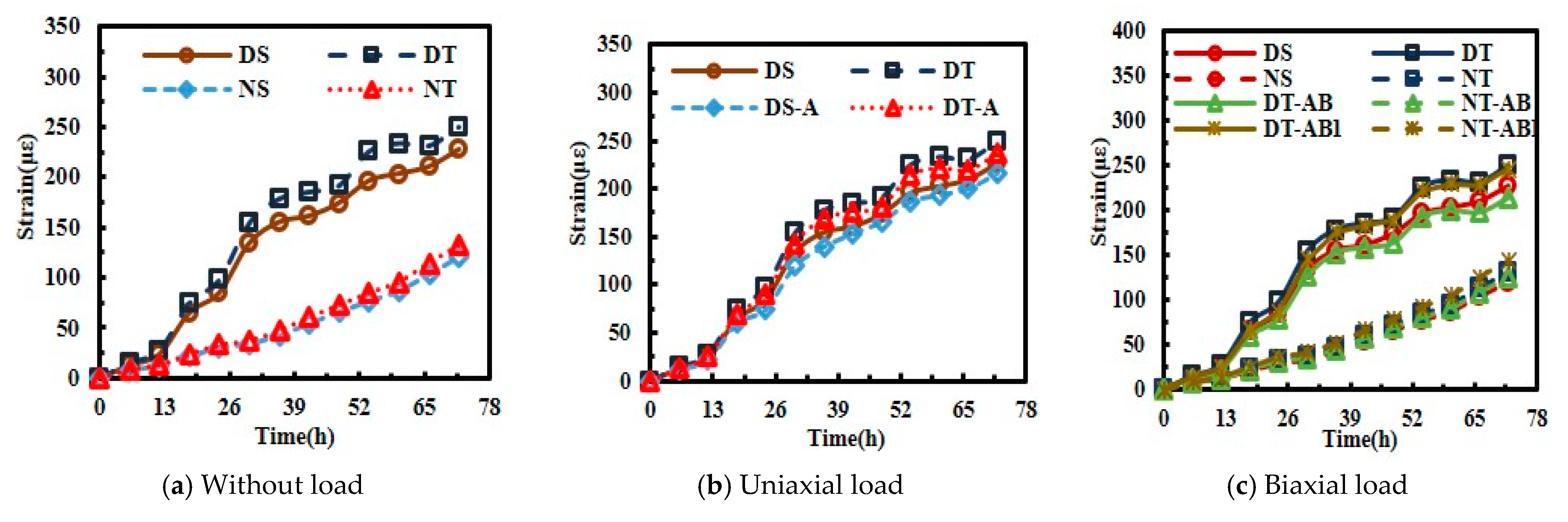
During the corrosion period, the transverse concrete strain around the longitudinal reinforcement of each specimen was monitored. Figure 5 shows the concrete strain on the top of the beam during the first 72 h of corrosion.
As shown in Figure 6a, during the first 6 h of corrosion, the expansion strain changes for all types of reinforced concrete specimens were minimal. As time progressed, the transverse strain of the concrete increased. The expansion strain of the D specimens rapidly increased with the corrosion time, with the DT specimens reaching 251.4 με at 72 h, while the DS specimens reached 229 με. In contrast, the expansion strain of the N specimens increased more slowly, with the NS and NT specimens reaching 122 με and 134 με, respectively, at 72 h. This indicated that the corrosion of the stirrups accelerated the change in concrete’s expansion strain. Additionally, the top concrete strain was greater than the side concrete strain. Unlike Figure 5a, Figure 6b showed the effect of uniaxial compressive loading on the change in concrete expansion strain. The expansion strain of the DS-A specimens was smaller than that of the DS specimens, with the expansion strain of the DS-A specimens being 216.79 με at 72 h. A similar change in expansion strain was observed for the DT series specimens.
Figure 6c describes the effect of biaxial compressive loading on the expansion strain of the concrete on the top of the corroded concrete beams. The rate of increase in expansion strain for the DT-AB specimens was smaller than for the DT specimens. At 72 h, the expansion strain of the DT-AB specimens was 176.7 με, which was 10 με smaller than that of the DT-B specimens. Furthermore, the expansion strain of the NT-AB specimens showed little change compared to the NT specimens, with overall minimal variation. This indicated that when stirrups were not corroded, biaxial compressive stress had a smaller effect on the top of the corroded concrete beams.
To facilitate the investigation into the evolution law of expansion strain in concrete subjected to biaxial sustained compressive loading after 72 h of corrosion, the initial expansion strain is multiplied by a stress level influence function for characterization, as expressed in Equation (3).
ε x y = ε 0 f λ x , λ y
where εxy denotes the expansion strain at the top surface of the reinforced concrete specimen subjected to biaxial compressive loading, ε0 represents the corresponding expansion strain in the absence of external loading, fx, λy) is the influence function of the biaxial compressive loading stress level, and λx, λy is are the compressive stress levels in the x and y directions, respectively. fx, λy) can be described by Equation (4).
f λ x , λ y = f λ x f λ y
where fx) and fy) are the stress level influence functions in the x and y directions, respectively.
Based on the experimental results obtained in this study and those reported in reference [24], curve fitting was conducted and the goodness of fit was evaluated using the coefficient of determination (R2). Consequently, the influence function of the stress level in the x-direction is derived.
f λ x = 1 0.49 λ x + 0.86 λ x 2         R 2 95 %
According to the expansion strain of concrete subjected to biaxial compressive stress, as illustrated in Figure 5, and in combination with Equation (5), the influence function of the stress level in the y-direction is obtained. By further arranging the expression, the influence function of the stress level under biaxial loading is derived.
f λ x , λ y = 1 0.49 λ x + 0.86 λ x 2 0.84 λ y + 0.41 λ x λ y 0 . 72 λ x 2 λ y + 4 . 01 λ y 2 1.96 λ x λ y 2 + 3.47 λ x 2 λ y 2
Developing an expansion strain model for reinforced concrete subjected to biaxial compressive loading and stirrup confinement after 72 h of corrosion enables quantification of load–corrosion interactions, supports predictive durability assessment and numerical simulations, and provides a mechanistic basis for optimizing reinforcement detailing and informing future code provisions on corrosion-induced damage.
To further clarify the combined effects of corrosion duration and biaxial compressive loading on concrete deterioration, crack width and expansion strain of DT-AB1 specimens were analyzed at two corrosion stages, followed by an exploration of the mechanism linking load-induced deformation to corrosive media transport.
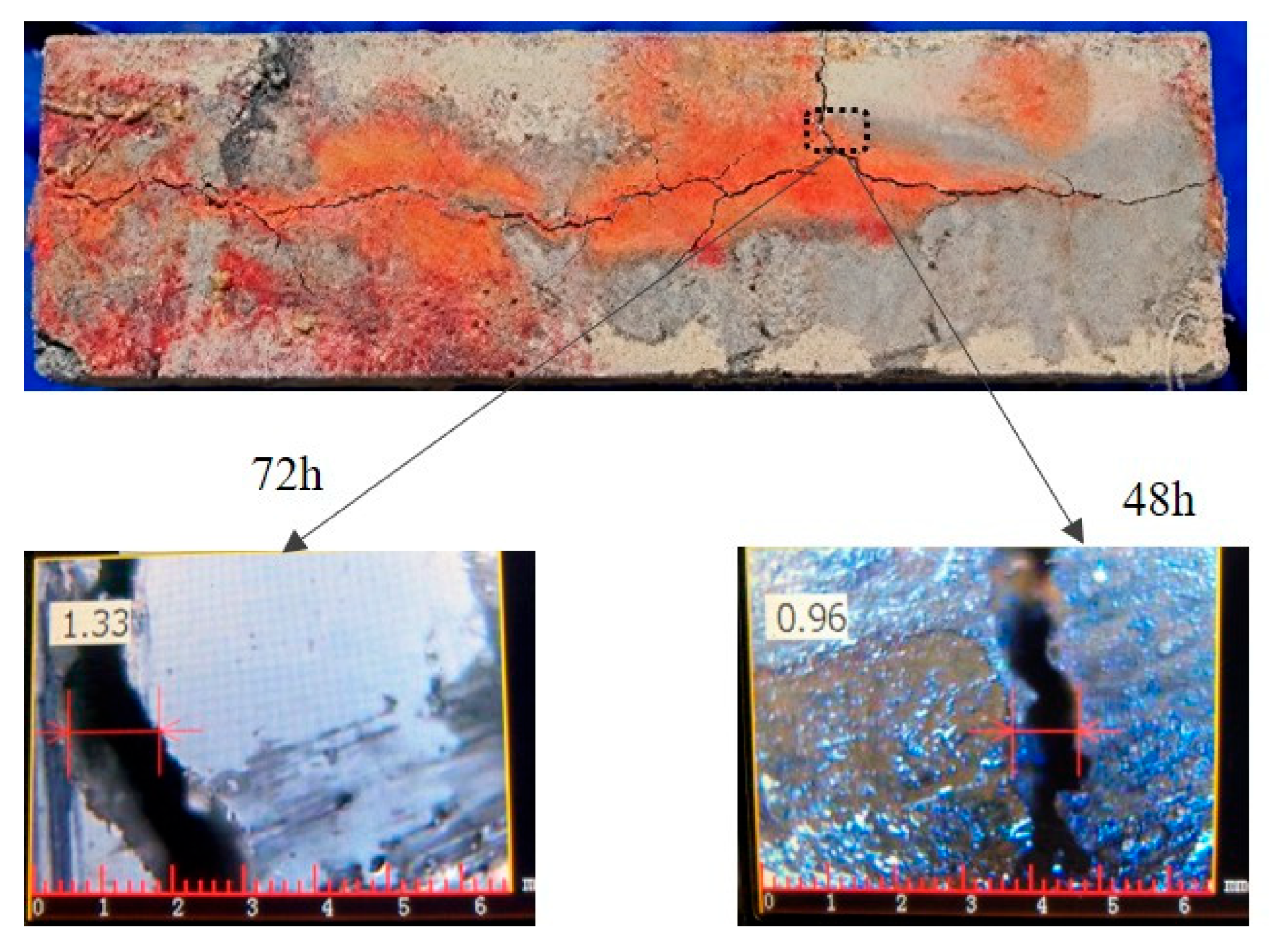
Figure 7 describes the crack width measurements of the more noticeable cracking areas in the DT-AB1 specimens after 48 h and 72 h of electrochemical corrosion. After 48 h of electrochemical corrosion, the expansion strain of the DT-AB1 specimen was 167 με, and the concrete surface crack width was 0.96 mm. After 72 h of electrochemical corrosion, the expansion strain of the DT-AB1 specimen was 221.5 με, and the concrete surface crack width increased to 1.33 mm. According to existing literature [22], when the expansion strain reaches 200–300 με, cracks begin to propagate and penetrate the protective layer, which can lead to localized delamination of the concrete cover.
In summary, under bihaxial compressive loading, the Poisson effect caused the concrete to densify in the compression direction, while tensile deformation perpendicular to the load direction increased the porosity, forming pathways for the penetration of corrosive media. At low load levels, the density of the concrete structure increased, helping to suppress the transport of corrosive media. However, as the load level increased, especially when larger tensile strains occurred in localized areas, microcracks gradually formed and interconnected, making the pore structure more complex and facilitating the diffusion of corrosive media. Therefore, the effect of biaxial loading on the concrete porosity depended on the combined influence of the load level and the Poisson’s ratio effect [25,26].
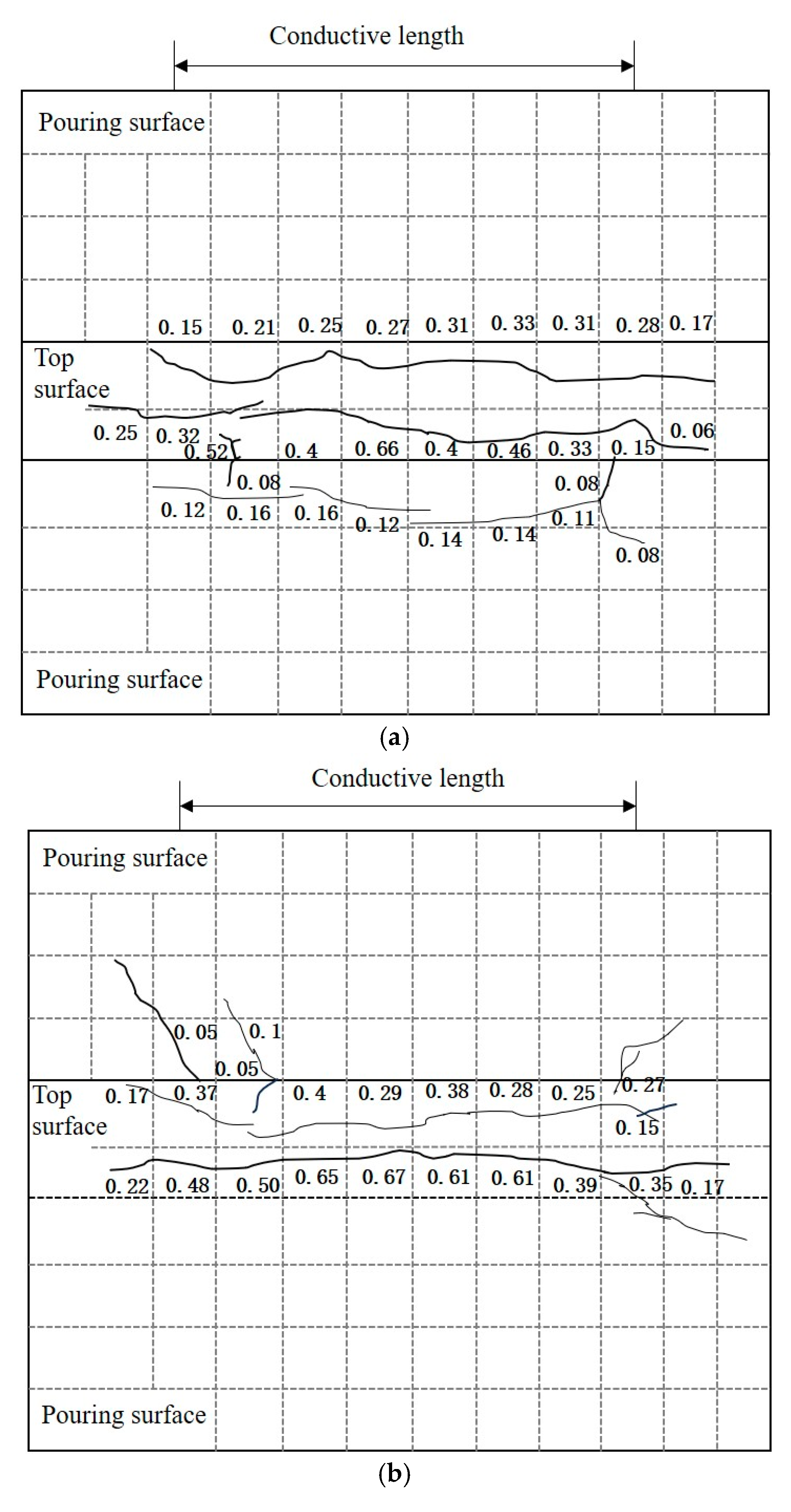
Additionally, the analysis of the results in Table 3 showed that during corrosion, the longitudinal reinforcement corrosion rate was lowest in the DS specimens, followed by the DT specimens. The NS and NT specimens experienced more severe longitudinal reinforcement corrosion. It could be inferred that the corrosion of stirrups promoted longitudinal corrosion cracking. The macro distribution of corrosion cracks after the predetermined corrosion period for the DT and NT specimen beams as shown in Figure 8:
(1)
The cracks on the top surface of each beam were similar, with two longitudinal corrosion cracks of similar length extending beyond the electrode region.
(2)
The crack distribution on the sides of the beams was notably different. Longitudinal corrosion cracks appeared only on one side of the beams with normal stirrups, while transverse corrosion cracks were most prominent on the insulated beams and not visible on the beams with normal stirrups.

3.3. Delamination Characteristics of the Protective Layer

Concrete cracking and subsequent cover spalling induced by reinforcement corrosion markedly reduced the compressive strength of concrete, thereby compromising the service performance of structural members [27,28,29]. To more effectively characterize the relationship between the degree of corrosion and the reduction in concrete compressive strength, Goharrokhi et al. [29] propose a correlation between the mass loss of reinforcing steel and the residual compressive strength of concrete, and this approach is widely adopted in subsequent studies [30,31]. The corresponding expression is given in Equation (7).
k = ( 0.007 C w + 0.015 ) 100 %
where k is the compressive-strength reduction ratio of concrete (%), and Cw denotes the reinforcement corrosion rate (%), taking the lesser value between longitudinal reinforcement and stirrups.
Due to the significant impact of top surface corrosion on the concrete cover thickness, the corrosion damage of the beams after removing the top surface cover is described in Figure 9. It is evident that the damage to the reinforced concrete beams under different loading conditions varied significantly:
According to Table 3 of the original paper, the corrosion rates for all experiments conditions were identified, and the corresponding reductions in compressive strength of the reinforced concrete specimens were derived. As shown in Figure 9, the DT specimens (unloaded, with stirrups) exhibited slight cover spalling, and cracks were locally distributed but did not propagate through the full cross-section. The concrete compressive strength decreased by 2.53%. The stirrups exhibited extensive and relatively uniform rusting along the straight legs, whereas the bent segments and hook regions showed more pronounced localized attack. In contrast, no stirrups were provided in the NT specimen, and therefore only the longitudinal reinforcement contributed to rust staining and cover delamination. The NT specimens (unloaded, without stirrups) showed a pronounced increase in crack propagation, and through-thickness spalling was observed in several regions. Compared with the DT specimen, the NT specimens exhibited a larger compressive-strength reduction of 3.28%.
Under uniaxial loading, the DT-A specimens presented cracks preferentially oriented along the loading direction, and shallow spalling was concentrated in specific zones. The compressive strength decreased by 2.49%. The stirrups presented a moderate degree of corrosion around the perimeter, with localized pitting occurring near the upper electrode zone. Under biaxial loading, the DT-AB specimens at the 15% load level displayed an interlaced crack pattern, and the delamination depth increased. Regarding the DT-AB specimen, the stirrups displayed the mildest corrosion, characterized by a thinner oxide layer and fewer pits. When the load level increased to 30% in the DT-AB1 specimens, spalling became most severe, cracks penetrated the cover, and block-type spalling was observed on both the top and side surfaces. This condition resulted in a compressive-strength reduction of 2.52%. In the case of the DT-AB1 specimen, intensified pitting was evident at the corner bends of the stirrups, and rust accumulation was observed adjacent to the major cracks. In the absence of stirrups, the NT-AB and NT-AB1 specimens exhibited markedly more severe spalling, and cracks rapidly propagated through the cross-section. The spalled region expanded, and corrosion products accumulated substantially, which indicated more pronounced deterioration. Accordingly, the reductions in compressive strength for the NT-AB and NT-AB1 specimens were more significant and reached 3.17% and 3.26%, respectively. Overall, the increase in load level and the absence of stirrups significantly accelerated the spalling and damage of the protective layer.

4. Conclusions

This study conducted a series of constant current corrosion tests on reinforced concrete beams with and without stirrups under uniaxial and biaxial sustained loading conditions. A comparative analysis was then performed on the overall corrosion of the top surface of the concrete beams and the expansion strain of the concrete beams under different loading conditions. A concrete expansion strain model accounting for biaxial compressive stress and stirrup effects was established. The crack distribution on the top surface of the beams with and without stirrups was also examined. Finally, the characteristics of the protective layer spalling in the concrete beams under different loading conditions were discussed. The following conclusions were drawn:
(1)
Under the same corrosion conditions, the expansion strain of specimens with normal stirrups was significantly higher than that of specimens without stirrups. Under uniaxial compressive loading, the expansion strain decreased compared to the no-load specimens. Under biaxial compressive loading at 15% of the compressive strength, the expansion strain of the concrete beams was minimal, indicating that the loading compaction effect suppressed crack propagation.
(2)
The load level had a significant impact on crack distribution and development. Under biaxial compressive loading, crack propagation was influenced by the Poisson effect, with cracks distributed in a staggered pattern between the compression and tension zones. When the load on one axis exceeded 15% of the compressive strength, the corrosion cracks increased significantly.
(3)
Under no load and uniaxial loading conditions, spalling of the protective layer primarily manifested as localized cracks and linear delamination. Under biaxial loading, the Poisson effect intensified tensile deformation in the vertical direction, causing cracks to quickly propagate and the spalling depth and area to increase significantly. In specimens without stirrups, the protective layer spalling was more severe, indicating that stirrups had a significant inhibiting effect on protective layer degradation.

Author Contributions

Conceptualization, W.M. and Y.Z.; methodology, J.Y.; validation, T.H. and X.L.; formal analysis, W.M.; investigation, X.L.; resources, J.Y.; data curation, J.Y.; writing—original draft preparation, Y.Z.; writing—review and editing, W.M.; visualization, W.M.; supervision, X.L.; project administration, Y.Z.; funding acquisition, W.M. All authors have read and agreed to the published version of the manuscript.

Funding

This research was funded by the Scientific research project of Hunan Provincial Department of Education (23C0482) and Open Fund of Key Laboratory of Safety Control of Bridge Engineering, Ministry of Education (Changsha University of Science & Technology) (21KB05).

Institutional Review Board Statement

Not applicable.

Informed Consent Statement

Not applicable.

Data Availability Statement

The original contributions presented in this study are included in the article. Further inquiries can be directed to the corresponding authors.

Conflicts of Interest

Author Yingxin Zhou was employed by the company Hinggan league jingwei highway survey and design Co., Ltd., Hinggan League 137400, China. The remaining authors declare that the research was conducted in the absence of any commercial or financial relationships that could be construed as a potential conflict of interest.

References

  1. Marcotte, T.D.; Hansson, C.M. Corrosion products that form on steel within cement paste. Mater. Struct. 2007, 40, 325–340. [Google Scholar] [CrossRef]
  2. Peng, J.X.; Cheng, X.K.; Yang, Y.M.; Xiao, J.Y. Chloride transport in concrete subjected to multiple cracks under drying-wetting cycles. Constr. Build. Mater. 2025, 470, 140559. [Google Scholar] [CrossRef]
  3. Berrocal, C.G.; Fernandez, I.; Rempling, R. The interplay between corrosion and cracks in reinforced concrete beams with non-uniform reinforcement corrosion. Mater. Struct. 2022, 55, 120. [Google Scholar] [CrossRef]
  4. Zhang, J.; Li, J.; Zhao, Y.; Wang, S.; Guan, Z. Concrete cover cracking and reinforcement corrosion behavior in concrete with new-to-old concrete interfaces. Materials 2023, 16, 5969. [Google Scholar] [CrossRef]
  5. Agboola, O.; Kupolati, K.W.; Fayomi, O.S.I.; Omoniyi Ayeni, A.O.; Ayodeji, A.; Akinmolayemi, J.J.; Oladokun Olagoke, O.; Sadiku, R.; Oluwasegun, K.M. A review on corrosion in concrete structure: Inhibiting admixtures and their compatibility in concrete. J. Bio-Tribo-Corros. 2022, 8, 25. [Google Scholar] [CrossRef]
  6. Taheri-Shakib, J.; Al-Mayah, A. Dynamics of localized accelerated corrosion in reinforced concrete: Voids, corrosion products, and crack formation. Ceram. Int. 2024, 50, 48755–48767. [Google Scholar] [CrossRef]
  7. Cheng, X.K.; Mu, Q.J.; Peng, J.X.; Yang, Y.M. Chloride transport in concrete on the side of anchorage zone under drying-wetting cycles. Constr. Build. Mater. 2025, 498, 143869. [Google Scholar] [CrossRef]
  8. Ali, M.; Shams, M.A.; Bheel, N.; Almaliki, A.H.; Mahmoud, A.S.; Dodo, Y.A.; Benjeddou, O. A review on chloride induced corrosion in reinforced concrete structures: Lab and in situ investigation. RSC Adv. 2024, 14, 37252–37271. [Google Scholar] [CrossRef]
  9. Bajić, P.; Leporace-Guimil, B.; Andrade, C.; Tošić, N.; de la Fuente, A. Chloride-induced corrosion effects on the structural performance of concrete with rebar and fibres: A Review. Appl. Sci. 2025, 15, 6457. [Google Scholar] [CrossRef]
  10. He, S.Q.; Cao, Z.Y.; Liu, W.J.; Zhang, Y.; Shang, F. Experimental study on long-term performance of reinforced concrete beams under a sustained load in a corrosive environment. Constr. Build. Mater. 2020, 234, 117288. [Google Scholar] [CrossRef]
  11. Zhang, W.L.; François, R.; Wang, R.Y.; Cai, Y.X.; Yu, L.W. Corrosion behavior of stirrups in corroded concrete beams exposed to chloride environment under sustained loading. Constr. Build. Mater. 2021, 274, 121987. [Google Scholar] [CrossRef]
  12. Imperatore, S.; Rinaldi, Z.; Spagnuolo, S. Experimental investigations on the effects of the steel rebar corrosion at structural level. Struct. Concr. 2019, 20, 2230–2241. [Google Scholar] [CrossRef]
  13. Hariche, L.; Ballim, Y.; Bouhicha, M.; Kenai, S. Effects of reinforcement configuration and sustained load on the behaviour of reinforced concrete beams affected by reinforcing steel corrosion. Cem. Concr. Compos. 2012, 34, 1202–1209. [Google Scholar] [CrossRef]
  14. Shen, J.; Gao, X.; Li, B.; Du, K.; Jin, R.Y. Damage evolution of RC beams under simultaneous reinforcement corrosion and sustained load. Materials 2019, 12, 627. [Google Scholar] [CrossRef]
  15. Tarighat, A.; Zehtab, B. Structural reliability of reinforced concrete beams/columns under simultaneous static loads and steel reinforcement corrosion. Arab. J. Sci. Eng. 2016, 41, 3945–3958. [Google Scholar] [CrossRef]
  16. Cheng, X.K.; Peng, J.X.; Cai, C.S.; Zhang, J.R. Experimental study on chloride ion diffusion in concrete under uniaxial and biaxial sustained stress. Materials 2020, 13, 5717. [Google Scholar] [CrossRef] [PubMed]
  17. Korec, E.; Jirásek, M.; Wong, H.S.; Martínez-Pañeda, E. Unravelling the interplay between steel rebar corrosion rate and corrosion-induced cracking of reinforced concrete. Cem. Concr. Res. 2024, 186, 107647. [Google Scholar] [CrossRef]
  18. Matthews, B.; Palermo, A.; Scott, A. Impact of artificial corrosion technique under variable acceleration on morphological efficacy in reinforced concrete elements. J. Mater. Civ. Eng. 2025, 37, 04024520. [Google Scholar] [CrossRef]
  19. Alhede, A.; Dijkstra, J.; Tengattini, A.; Lundgren, K. Characterisation of steel corrosion and matrix damage in reinforced mortar combining analytical, electrical and image-based techniques. Cem. Concr. Res. 2025, 190, 107792. [Google Scholar] [CrossRef]
  20. Ferenc, T.; Wojtczak, E.; Meronk, B.; Rucka, M. Characterization of corrosion in reinforced concrete beams using destructive and non-destructive tests. Case Stud. Constr. Mater. 2024, 20, e03309. [Google Scholar] [CrossRef]
  21. Hashim, A.A.; Anaee, R.; Nasr, M.S.; Shubbar, A. Mechanical properties, corrosion resistance and microstructural analysis of recycled aggregate concrete made with ceramic wall waste and ultrafine ceria. J. Mater. Res. Technol. 2025, 36, 627–640. [Google Scholar] [CrossRef]
  22. Zhao, P.; Xu, G.; Wang, Q.; Zhao, J. Influence of stirrup arrangements on the corrosion characteristics of reinforced concrete members. Constr. Build. Mater. 2018, 192, 683–695. [Google Scholar] [CrossRef]
  23. JTS/T 236-2019; Technical Specification for Concrete Testing of Port and Waterway Engineering. China Architecture & Building Press: Beijing, China, 2019.
  24. Andisheh, K.; Scott, A.; Palermo, A. Effects of corrosion on stress–Strain behavior of confined concrete. J. Struct. Eng. 2021, 147, 04021087. [Google Scholar] [CrossRef]
  25. Ying, J.W.; Deng, C.Y.; Qian, S.T.; Chen, B.X. Effect of water-to-binder ratio on chloride ion diffusion in concrete under continuous biaxial compression. Constr. Build. Mater. 2024, 416, 135308. [Google Scholar] [CrossRef]
  26. Ying, J.W.; Wang, W.B.; Xiao, J.Z. Chloride diffusion in concrete with carbonated recycled coarse aggregates under biaxial compression. Front. Struct. Civ. Eng. 2023, 17, 637–648. [Google Scholar] [CrossRef]
  27. Askar, M.K.; Al-Kamaki, Y.S.; Ferhadi, R.; Majeed, H.K. Cracks in concrete structures causes and treatments: A review. J. Duhok Univ. 2023, 26, 148–165. [Google Scholar] [CrossRef]
  28. Zhang, X.H.; Zhang, Y.; Liu, B.; Liu, B.W.; Wu, W.P.; Yang, C.Q. Corrosion-induced spalling of concrete cover and its effects on shear strength of RC beams. Eng. Fail. Anal. 2021, 127, 105538. [Google Scholar] [CrossRef]
  29. Goharrokhi, A.; Ahmadi, J.; Shayanfar, M.A.; Ghanooni-Bagha, M.; Nasserasadi, K. Effect of transverse reinforcement corrosion on compressive strength reduction of stirrup-confined concrete: An experimental study. Sādhanā 2020, 45, 49. [Google Scholar] [CrossRef]
  30. Zhang, X.; Zheng, S.S.; Ruan, S.; Yuan, J.W.; Li, C.-L.; Hu, J.-H. State-of-the-art review on the uniaxial compressive properties of corroded stirrup-confined concrete. J. Build. Eng. 2025, 112, 113854. [Google Scholar] [CrossRef]
  31. Li, Q.; Dong, Z.; He, Q.; Fu, C.Q.; Jin, X.Y. Effects of reinforcement corrosion and sustained load on mechanical behavior of reinforced concrete columns. Materials 2022, 15, 3590. [Google Scholar] [CrossRef]
Figure 1. Schematic diagram of specimen arrangement (unit: mm).
Buildings 16 00052 g001
Figure 2. Device for applying sustained load.
Buildings 16 00052 g002
Figure 3. Schematic diagram of corroded beam under sustained load.
Buildings 16 00052 g003
Figure 4. Overall corrosion of the top surface of reinforced concrete specimens.
Buildings 16 00052 g004
Figure 5. Overall corrosion of the top surface of DT-AB1 concrete specimen under different corrosion cycles.
Buildings 16 00052 g005
Figure 6. Expansion strain of reinforced concrete.
Buildings 16 00052 g006
Figure 7. Observation diagram of concrete specimen cracking.
Buildings 16 00052 g007
Figure 8. Distribution of expansion cracks in protective layer of different reinforced concrete experiment beams.
Buildings 16 00052 g008
Figure 9. Damage characteristics of protective layer of different concrete specimens.
Buildings 16 00052 g009
Table 1. Chemical compositions and physical properties of cement.
SiO2Al2O3Fe2O3CaOMgOSO3TiO2K2OLoss on Ignition
Chemical composition (%)21.466.434.5761.251.461.740.220.352.52
Table 2. Concrete mix proportion (unit: kg/m3).
WaterCementNatural Fine AggregateNatural Coarse Aggregate
180450566.41203.6
Table 3. Number of concrete specimens.
SpecimensCorrosion Time (d)Load Level in x-DirectionLoad Level in y-Direction
DS2500
DT2500
NS2500
NT2500
DS-A2515%0
DT-A2515%0
DT-AB2515%15%
NT-AB2515%15%
DT-AB12515%30%
NT-AB12515%30%
Table 4. Corrosion rate of steel bars.
SpecimensAverage Corrosion Rate of Longitudinal Reinforcement (%)Average Corrosion Rate of Stirrups (%)Total Quality of Corrosion (g)
nsnsns
DS1.380.144.110.1721.031.15
DT1.470.184.210.2121.450.82
NS2.380.16--19.431.34
NT2.540.22--19.621.22
DS-A1.330.133.870.2520.520.67
DT-A1.420.253.970.2421.271.06
DT-AB1.280.113.480.2619.731.35
NT-AB2.390.17--19.251.12
DT-AB11.460.254.180.1920.930.73
NT-AB12.510.18- 19.531.45
Disclaimer/Publisher’s Note: The statements, opinions and data contained in all publications are solely those of the individual author(s) and contributor(s) and not of MDPI and/or the editor(s). MDPI and/or the editor(s) disclaim responsibility for any injury to people or property resulting from any ideas, methods, instructions or products referred to in the content.