Olfactory Environment Design in Office Buildings: A Study on the Recovery Effect of Specific Fragrances on Work Fatigue Based on Multimodal Measurement


Abstract
1. Introduction
2. Materials and Methods
2.1. Participants
2.2. Materials
2.2.1. Material of Stimulation
2.2.2. Experimental Equipment
2.3. Experiment Design
2.4. Experiment Procedures
2.5. Measurements
2.5.1. Cognitive Recovery Assessment Indicators
2.5.2. Physiological Fatigue Assessment Indicators
2.5.3. Psychological Fatigue Assessment Indicators
2.6. Data Collection and Analysis
3. Results
3.1. The Cognitive Recovery Benefits of Olfactory Intervention for Office Fatigue
3.2. The Physiological Recovery Benefits of Olfactory Intervention for Office Fatigue
3.3. The Psychological Recovery Benefits of Olfactory Intervention for Office Fatigue
3.3.1. EEG Signal Data Results and Analysis
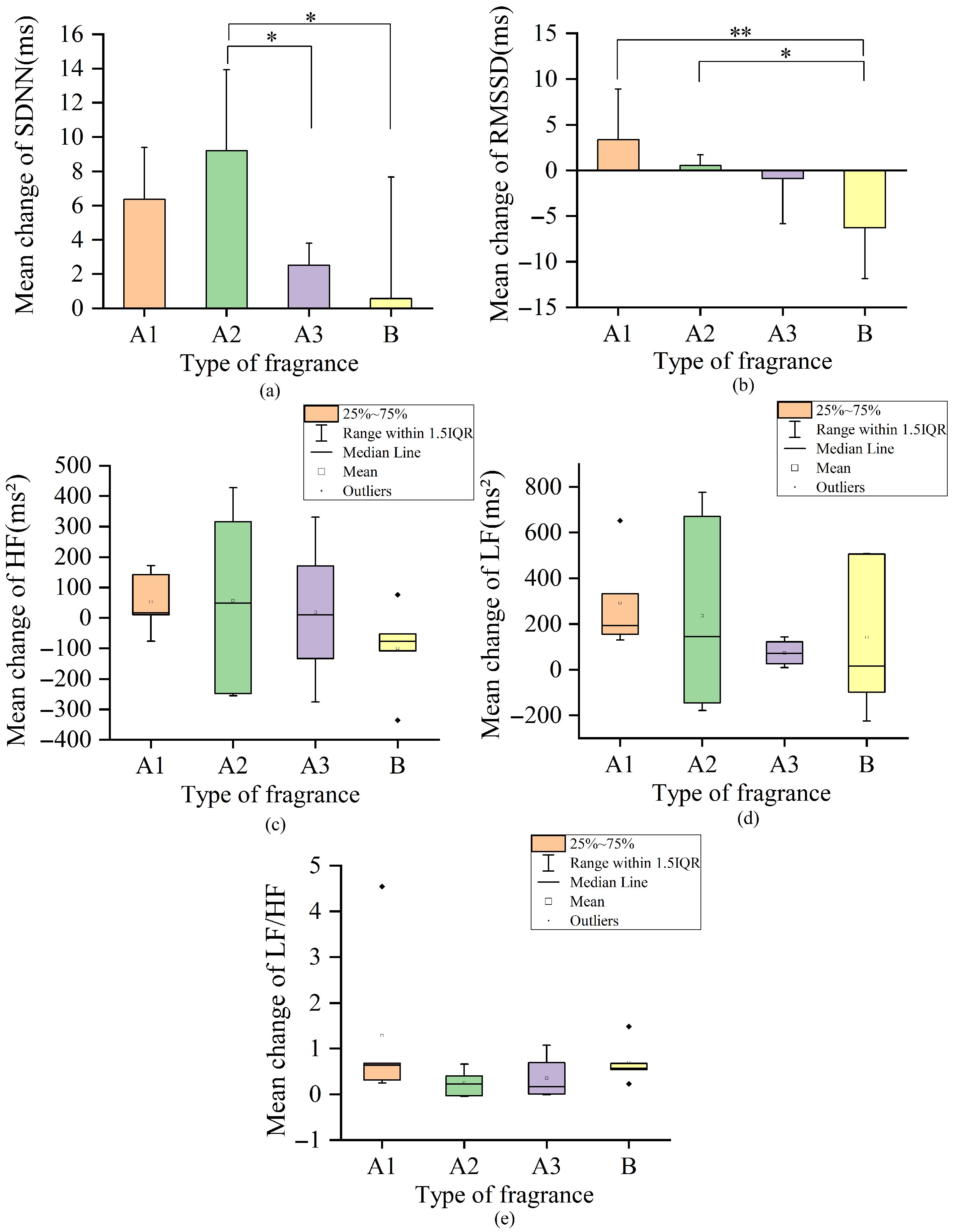
3.3.2. HRV Signal Data Results and Analysis
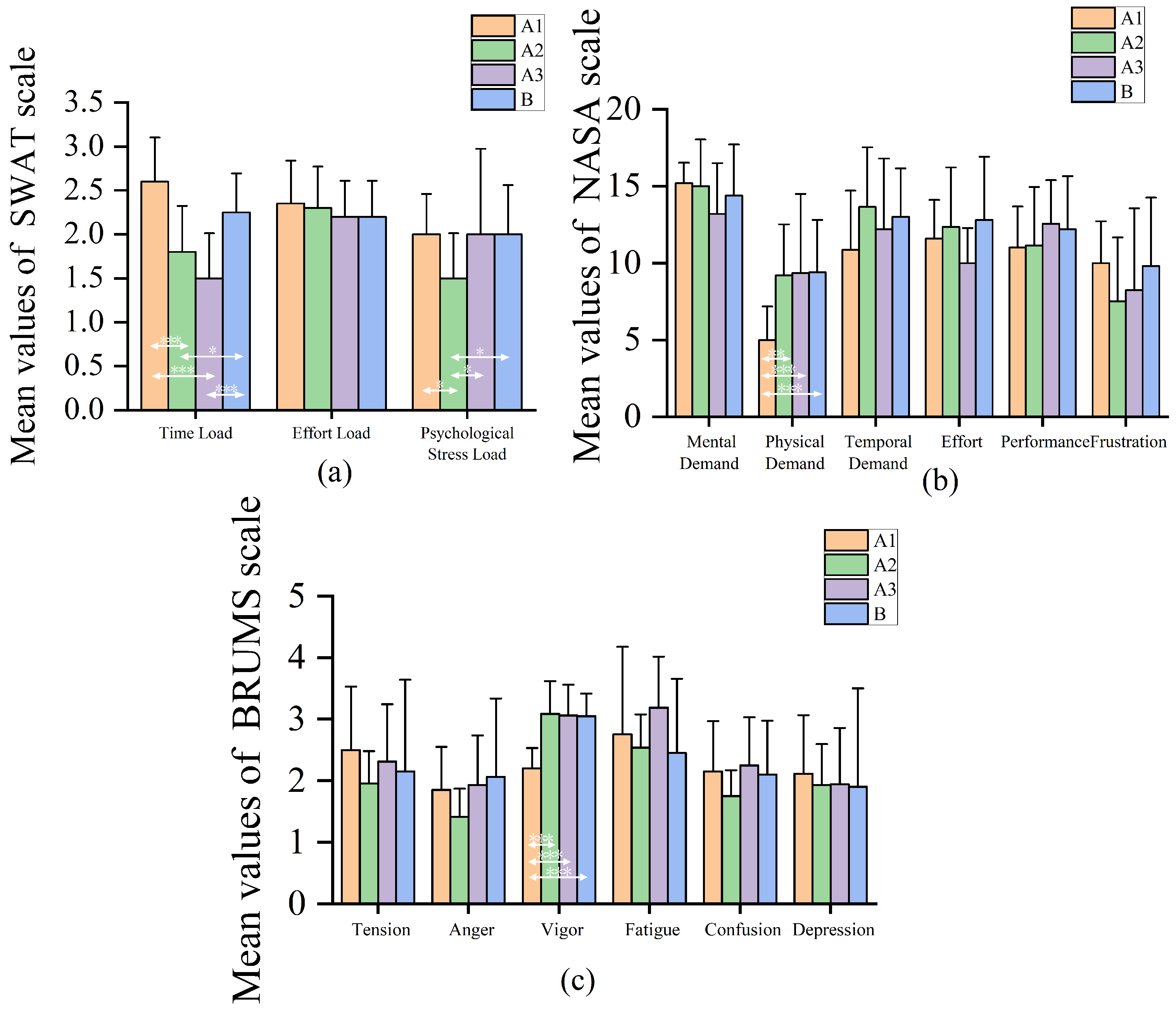
3.3.3. Subjective Questionnaire Statistical Results and Analysis
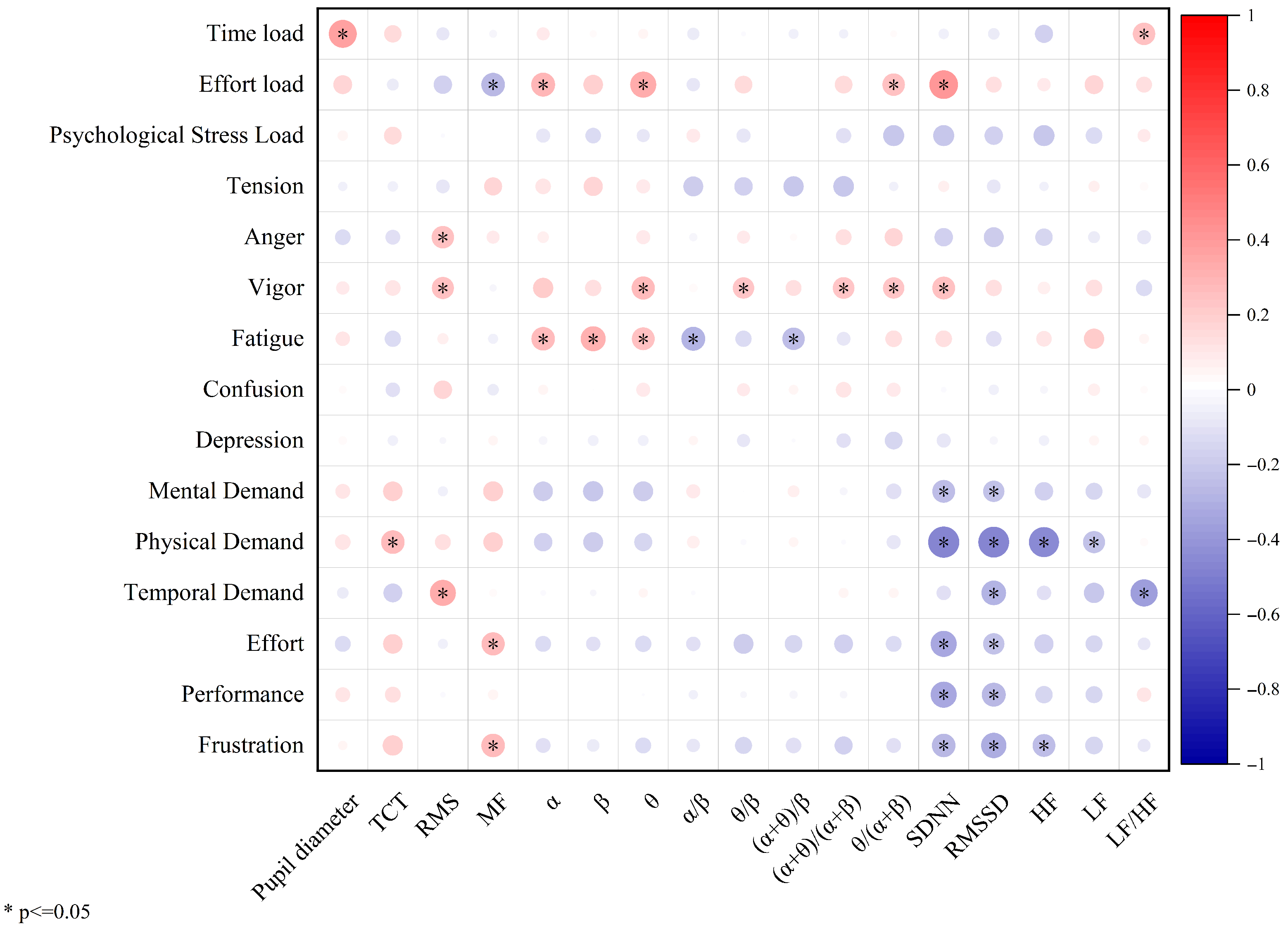
3.4. Correlation Analysis
4. Discussions
4.1. The Impact of Olfactory Stimulation on Cognitive Recovery
4.2. The Recovery Benefits of Olfactory Stimulation on Physiological Fatigue
4.3. The Recovery Benefits of Olfactory Stimulation on Psychological Fatigue
4.4. Suggestions for Olfactory Intervention in Office Scenarios Based on Intervention Effects
4.5. Limitations and Prospects
5. Conclusions
Supplementary Materials
Author Contributions
Funding
Institutional Review Board Statement
Informed Consent Statement
Data Availability Statement
Acknowledgments
Conflicts of Interest
References
- Liu, F.; Yan, L.; Meng, X.; Zhang, C. A review on indoor green plants employed to improve indoor environment. J. Build. Eng. 2022, 53, 104542. [Google Scholar] [CrossRef]
- Ram’ırez-Moreno, M.A.; Carrillo-Tijerina, P.; Candela-Leal, M.O.; Alanis-Espinosa, M.; Tud’on-Mart’ınez, J.C.; Roman-Flores, A.; Ram’ırez-Mendoza, R.A.; Lozoya-Santos, J.D.J. Evaluation of a fast test based on biometric signals to assess mental fatigue at the workplace—A pilot study. Int. J. Environ. Res. Public Health 2021, 18, 11891. [Google Scholar] [CrossRef]
- Kołodziej, M.; Tarnowski, P.; Sawicki, D.J.; Majkowski, A.; Rak, R.J.; Bala, A.; Pluta, A. Fatigue detection caused by office work with the use of eog signal. IEEE Sens. J. 2020, 20, 15213–15223. [Google Scholar] [CrossRef]
- Zhang, X.; Zheng, P.; Peng, T.; He, Q.; Lee, C.K.; Tang, R. Promoting employee health in smart office: A survey. Adv. Eng. Inform. 2022, 51, 101518. [Google Scholar] [CrossRef]
- O, J.; Pugh-Jones, C.; Clark, B.; Trott, J.; Chang, L. The evolutionarily mismatched impact of urbanization on insomnia symptoms: A short review of the recent literature. Curr. Psychiatry Rep. 2021, 23, 28. [Google Scholar] [CrossRef] [PubMed]
- Adli, M.; Schöndorf, J. Does the city make us ill? the effect of urban stress on emotions, behavior, and mental health. Bundesgesundheitsblatt-Gesundheitsforschung-Gesundheitsschutz 2020, 63, 979–986. [Google Scholar] [CrossRef] [PubMed]
- Wijsman, J.; Grundlehner, B.; Liu, H.; Penders, J.; Hermens, H. Wearable physiological sensors reflect mental stress state in office-like situations. In Proceedings of the 2013 Humaine Association Conference on Affective Computing and Intelligent Interaction, Geneva, Switzerland, 2–5 September 2013; pp. 600–605. [Google Scholar] [CrossRef]
- Lim, E.-J.; Ahn, Y.-C.; Jang, E.-S.; Lee, S.-W.; Lee, S.-H.; Son, C.-G. Systematic review and meta-analysis of the prevalence of chronic fatigue syndrome/myalgic encephalomyelitis (cfs/me). J. Transl. Med. 2020, 18, 100. [Google Scholar] [CrossRef]
- Srivastava, C.; Murnane, E.L.; Billington, S.L.; Samuelson, H.W. Impact of workplace design on perceived work performance and well-being: Home versus office. J. Environ. Psychol. 2024, 95, 102274. [Google Scholar] [CrossRef]
- Colenberg, S.; Jylhä, T.; Arkesteijn, M. The relationship between interior office space and employee health and well-being–a literature review. Build. Res. Inf. 2021, 49, 352–366. [Google Scholar] [CrossRef]
- Bergefurt, L.; Weijs-Perrée, M.; Appel-Meulenbroek, R.; Arentze, T. The physical office workplace as a resource for mental health—A systematic scoping review. Build. Environ. 2022, 207, 108505. [Google Scholar] [CrossRef]
- Lamb, S.; Kwok, K.C. A longitudinal investigation of work environment stressors on the performance and wellbeing of office workers. Appl. Ergon. 2016, 52, 104–111. [Google Scholar] [CrossRef]
- Fang, Y.; Liu, C.; Zhao, C.; Zhang, H.; Wang, W.; Zou, N. A study of the effects of different indoor lighting environments on computer work fatigue. Int. J. Environ. Res. Public Health 2022, 19, 6866. [Google Scholar] [CrossRef]
- Ojala, A.; Neuvonen, M.; Kurkilahti, M.; Leinikka, M.; Huotilainen, M.; Tyrväinen, L. Short virtual nature breaks in the office environment can restore stress: An experimental study. J. Environ. Psychol. 2022, 84, 101909. [Google Scholar] [CrossRef]
- Mattila, O.; Korhonen, A.; Pöyry, E.; Hauru, K.; Holopainen, J.; Parvinen, P. Restoration in a virtual reality forest environment. Comput. Hum. Behav. 2020, 107, 106295. [Google Scholar] [CrossRef]
- Kontaris, I.; East, B.S.; Wilson, D.A. Behavioral and neurobiological convergence of odor, mood and emotion: A review. Front. Behav. Neurosci. 2020, 14, 35. [Google Scholar] [CrossRef] [PubMed]
- Herz, R.S. Aromatherapy facts and fictions: A scientific analysis of olfactory effects on mood, physiology and behavior. Int. J. Neurosci. 2009, 119, 263–290. [Google Scholar] [CrossRef]
- Li, Z.; Zhang, W.; Cui, J.; Wang, L.; Liu, H.; Liu, H. Biophilic environment with visual-olfactory stimuli contributes to psychophysiological restoration and cognitive enhancement. Build. Environ. 2024, 250, 111202. [Google Scholar] [CrossRef]
- Hatsukawa, H.; Ishikawa, M. Psychological states affecting initial pupil size changes after olfactory stimulation in healthy participants. Sci. Rep. 2023, 13, 16050. [Google Scholar] [CrossRef] [PubMed]
- Jiang, X.; Muthusamy, K.; Fang, X. A scoping review of olfactory interventions for fatigue relief: Addressing occupational health hazards. Front. Public Health 2024, 12, 1409254. [Google Scholar] [CrossRef]
- Sowndhararajan, K.; Kim, S. Influence of fragrances on human psychophysiological activity: With special reference to human electroencephalographic response. Sci. Pharm. 2016, 84, 724–752. [Google Scholar] [CrossRef]
- Hasheminia, S.; Sho’ouri, N. The effect of musk incense stick aroma inhalation on different features of electroencephalogram signals and working memory for use in neurofeedback training. Biomed. Signal Process. Control 2023, 83, 104658. [Google Scholar] [CrossRef]
- Anu, S.; Jeyashree, K.; Vishnuvarthini, S.; Venkatesh, N.; Anto, J. Effect of mint flavoured chewing gum in observing changes in cognitive function while assessing test performance—An interventional study. J. Clin. Diagn. Res. 2022, 16, 6–10. [Google Scholar] [CrossRef]
- Lwin, M.O.; Malik, S.; Neo, J.R. Effects of scent and scent emission methods: Implications on workers’ alertness, vigilance, and memory under fatigue conditions. Environ. Behav. 2021, 53, 987–1012. [Google Scholar] [CrossRef]
- Kazemi, A.; Iraji, A.; Esmaealzadeh, N.; Salehi, M.; Hashempur, M. Peppermint and menthol: A review on their biochemistry, pharmacological activities, clinical applications, and safety considerations. Crit. Rev. Food Sci. Nutr. 2023, 65, 1553–1578. [Google Scholar] [CrossRef] [PubMed]
- Nasiri, A.; Boroomand, M. The effect of rosemary essential oil inhalation on sleepiness and alertness of shift-working nurses: A randomized, controlled field trial. Complement. Ther. Clin. Pract. 2021, 43, 101326. [Google Scholar] [CrossRef]
- Jo, H.; Rodiek, S.; Fujii, E.; Miyazaki, Y.; Park, B.-J.; Ann, S.-W. Physiological and psychological response to floral scent. HortScience 2013, 48, 82–88. [Google Scholar] [CrossRef]
- Mahdavikian, S.; Fallahi, M.; Khatony, A. Comparing the effect of aromatherapy with peppermint and lavender essential oils on fatigue of cardiac patients: A randomized controlled trial. Evid.-Based Complement. Altern. Med. 2021, 2021, 9925945. [Google Scholar] [CrossRef]
- Ebrahimi, H.; Mardani, A.; Basirinezhad, M.; Hamidzadeh, A.; Eskandari, F. The effects of lavender and chamomile essential oil inhalation aromatherapy on depression, anxiety and stress in older community-dwelling people: A randomized controlled trial. Explore 2022, 18, 272–278. [Google Scholar] [CrossRef]
- Xiong, X.; Jin, H.; Hu, W.; Zeng, C.; Huang, Q.; Cui, X.; Zhang, M.; Jin, Y. Benefits of jasminum polyanthum’s natural aromas on human emotions and moods. Urban For. Urban Green. 2023, 86, 128010. [Google Scholar] [CrossRef]
- Agarwal, P.; Sebghatollahi, Z.; Kamal, M.; Dhyani, A.; Shrivastava, A.; Singh, K.; Sinha, M.; Mahato, N.; Mishra, A.; Baek, K.-H. Citrus essential oils in aromatherapy: Therapeutic effects and mechanisms. Antioxidants 2022, 11, 2374. [Google Scholar] [CrossRef] [PubMed]
- Wang, Y.; Wang, Q.; Wang, L.; Li, F.; Weschler, L.; Huang, J.; Zhang, Y. Potential benefits of short-term indoor exposure to sweet orange essential oil for relaxation during mental work breaks. J. Build. Eng. 2023, 78, 107602. [Google Scholar] [CrossRef]
- Matsumoto, T.; Asakura, H.; Hayashi, T. Effects of olfactory stimulation from the fragrance of the Japanese citrus fruit yuzu (Citrus junos sieb. ex tanaka) on mood states and salivary chromogranin a as an endocrinologic stress marker. J. Altern. Complement. Med. 2014, 20, 500–506. [Google Scholar] [CrossRef] [PubMed]
- Kwon, S.; Ahn, J.; Jeon, H. Can aromatherapy make people feel better throughout exercise? Int. J. Environ. Res. Public Health 2020, 17, 4559. [Google Scholar] [CrossRef] [PubMed]
- Ikei, H.; Song, C.; Miyazaki, Y. Physiological effects of wood on humans: A review. J. Wood Sci. 2017, 63, 1–23. [Google Scholar] [CrossRef]
- Ikei, H.; Song, C.; Miyazaki, Y. Physiological effect of olfactory stimulation by hinoki cypress (Chamaecyparis obtusa) leaf oil. J. Physiol. Anthropol. 2015, 34, 44. [Google Scholar] [CrossRef]
- Matsubara, E.; Matsui, N.; Ohira, T. Evaluation of the psychophysiological effects of the cupressaceae family wood odor. Wood Sci. Technol. 2020, 54, 269–286. [Google Scholar] [CrossRef]
- Matsubara, E.; Ohira, T. Inhalation of Japanese cedar (Cryptomeria japonica) wood odor causes psychological relaxation after monotonous work among female participants. Biomed. Res. 2018, 39, 241–249. [Google Scholar] [CrossRef]
- Li, Z.; Zhang, W.; Cui, J.; Liu, H.; Liu, H. Beneficial effects of short-term exposure to indoor biophilic environments on psychophysiological health: Evidence from electrophysiological activity and salivary metabolomics. Environ. Res. 2024, 243, 117843. [Google Scholar] [CrossRef] [PubMed]
- Zhou, C.; Xu, B.; Xu, X.; Kaner, J. Exploring the creation of multi-modal soundscapes in the indoor environment: A study of stimulus modality and scene type affecting physiological recovery. J. Build. Eng. 2025, 111, 113327. [Google Scholar] [CrossRef]
- Choi, N.-Y.; Wu, Y.-T.; Park, S.-A. Effects of olfactory stimulation with aroma oils on psychophysiological responses of female adults. Int. J. Environ. Res. Public Health 2022, 19, 5196. [Google Scholar] [CrossRef] [PubMed]
- Seol, G.-H.; Lee, Y.-H.; Kang, P.; You, J.-H.; Park, M.; Min, S.-S. Randomized controlled trial for salvia sclarea or lavandula angustifolia: Differential effects on blood pressure in female patients with urinary incontinence undergoing urodynamic examination. J. Altern. Complement. Med. 2013, 19, 664–670. [Google Scholar] [CrossRef] [PubMed]
- Sayorwan, W.; Siripornpanich, V.; Piriyapunyaporn, T.; Hongratanaworakit, T.; Kotchabhakdi, N.; Ruangrungsi, N. The effects of lavender oil inhalation on emotional states, autonomic nervous system, and brain electrical activity. J. Med. Assoc. Thail. 2012, 95, 598–606. [Google Scholar]
- Ahmadi, Y.; Rezaei, J.; Rezaei, M.; Khatony, A. Comparison of the effect of inhalation aromatherapy with 10% and 30% peppermint essential oils on the severity of nausea in abdominal surgery patients. Evid.-Based Complement. Altern. Med. 2020, 2020, 5897465. [Google Scholar] [CrossRef]
- Biondi, F.; Balasingam, B.; Ayare, P. On the cost of detection response task performance on cognitive load. Hum. Factors 2021, 63, 804–812. [Google Scholar] [CrossRef]
- Souchet, A.; Philippe, S.; Lourdeaux, D.; Leroy, L. Measuring visual fatigue and cognitive load via eye tracking while learning with virtual reality head-mounted displays: A review. Int. J.-Hum.-Comput. Interact. 2022, 38, 801–824. [Google Scholar] [CrossRef]
- Biondi, F.; Saberi, B.; Graf, F.; Cort, J.; Pillai, P.; Balasingam, B. Distracted worker: Using pupil size and blink rate to detect cognitive load during manufacturing tasks. Appl. Ergon. 2023, 106, 103867. [Google Scholar] [CrossRef]
- Matton, N.; Paubel, P.-V.; Puma, S. Toward the use of pupillary responses for pilot selection. Hum. Factors 2022, 64, 555–567. [Google Scholar] [CrossRef] [PubMed]
- Fadda, P.; Meloni, M.; Fancello, G.; Pau, M.; Medda, A.; Pinna, C.; Del Rio, A.; Lecca, L.; Setzu, D.; Leban, B. Multidisciplinary study of biological parameters and fatigue evolution in quay crane operators. Procedia Manuf. 2015, 3, 3301–3308. [Google Scholar] [CrossRef]
- Summala, H.; Hakkanen, H.; Mikkola, T.; Sinkkonen, J. Task effects on fatigue symptoms in overnight driving. Ergonomics 1999, 42, 798–806. [Google Scholar] [CrossRef] [PubMed]
- Moss, M.; Cook, J.; Wesnes, K.; Duckett, P. Aromas of rosemary and lavender essential oils differentially affect cognition and mood in healthy adults. Int. J. Neurosci. 2003, 113, 15–38. [Google Scholar] [CrossRef]
- Marras, W. Industrial electromyography (emg). Int. J. Ind. Ergon. 1990, 6, 89–93. [Google Scholar] [CrossRef]
- Filligoi, G.; Felici, F. Detection of hidden rhythms in surface emg signals with a non-linear time-series tool. Med. Eng. Phys. 1999, 21, 439–448. [Google Scholar] [CrossRef]
- Bangaru, S.; Wang, C.; Aghazadeh, F. Automated and continuous fatigue monitoring in construction workers using forearm emg and imu wearable sensors and recurrent neural network. Sensors 2022, 22, 9729. [Google Scholar] [CrossRef] [PubMed]
- Hou, X.; Liu, J.; Weng, K.; Griffin, L.; Rice, L.; Jan, Y.-K. Effects of various physical interventions on reducing neuromuscular fatigue assessed by electromyography: A systematic review and meta-analysis. Front. Bioeng. Biotechnol. 2021, 9, 659138. [Google Scholar] [CrossRef] [PubMed]
- Reaz, M.; Hussain, M.; Mohd-Yasin, F. Techniques of emg signal analysis: Detection, processing, classification and applications. Biol. Proced. Online 2006, 8, 11–35. [Google Scholar] [CrossRef]
- Ding, Y.; Cao, Y.; Duffy, V.; Zhang, X. It is time to have rest: How do break types affect muscular activity and perceived discomfort during prolonged sitting work. Saf. Health Work 2020, 11, 207–214. [Google Scholar] [CrossRef] [PubMed]
- Michel, C.; Koenig, T. Eeg microstates as a tool for studying the temporal dynamics of whole-brain neuronal networks: A review. Neuroimage 2018, 180, 577–593. [Google Scholar] [CrossRef]
- Pei, G.; Li, T. A literature review of eeg-based affective computing in marketing. Front. Psychol. 2021, 12, 602843. [Google Scholar] [CrossRef]
- Li, X.; Zhang, Y.; Tiwari, P.; Song, D.; Hu, B.; Yang, M.; Zhao, Z.; Kumar, N.; Marttinen, P. Eeg based emotion recognition: A tutorial and review. ACM Comput. Surv. 2022, 55, 1–57. [Google Scholar] [CrossRef]
- Yang, Z.; Zhang, Y.; Ning, J.; Wang, X.; Wu, Z. Early diagnosis of autism: A review of video-based motion analysis and deep learning techniques. IEEE Access 2025, 13, 2903–2928. [Google Scholar] [CrossRef]
- Chiang, Y.-C.; Li, D.; Jane, H.-A. Wild or tended nature? the effects of landscape location and vegetation density on physiological and psychological responses. Landsc. Urban Plan. 2017, 167, 72–83. [Google Scholar] [CrossRef]
- Gola, M.; Magnuski, M.; Szumska, I.; Wr’obel, A. Eeg beta band activity is related to attention and attentional deficits in the visual performance of elderly subjects. Int. J. Psychophysiol. 2013, 89, 334–341. [Google Scholar] [CrossRef]
- Körmendi, J.; Ferentzi, E.; Weiss, B.; Nagy, Z. Topography of movement-related delta and theta brain oscillations. Brain Topogr. 2021, 34, 608–617. [Google Scholar] [CrossRef]
- Li, G.; Huang, S.; Xu, W.; Jiao, W.; Jiang, Y.; Gao, Z.; Zhang, J. The impact of mental fatigue on brain activity: A comparative study both in resting state and task state using eeg. BMC Neurosci. 2020, 21, 20. [Google Scholar] [CrossRef]
- Lal, S.; Craig, A. Driver fatigue: Electroencephalography and psychological assessment. Psychophysiology 2002, 39, 313–321. [Google Scholar] [CrossRef]
- Jiang, X.; Muthusamy, K.; Chen, J.; Fang, X. Scented solutions: Examining the efficacy of scent interventions in mitigating driving fatigue. Sensors 2024, 24, 2384. [Google Scholar] [CrossRef]
- Siciliano, R.; Anderson, A.; Compas, B. Autonomic nervous system correlates of posttraumatic stress symptoms in youth: Meta-analysis and qualitative review. Clin. Psychol. Rev. 2022, 92, 102125. [Google Scholar] [CrossRef] [PubMed]
- Laohakangvalvit, T.; Sripian, P.; Nakagawa, Y.; Feng, C.; Tazawa, T.; Sakai, S.; Sugaya, M. Study on the psychological states of olfactory stimuli using electroencephalography and heart rate variability. Sensors 2023, 23, 4026. [Google Scholar] [CrossRef]
- Gullett, N.; Zajkowska, Z.; Walsh, A.; Harper, R.; Mondelli, V. Heart rate variability (hrv) as a way to understand associations between the autonomic nervous system (ans) and affective states: A critical review of the literature. Int. J. Psychophysiol. 2023, 192, 35–42. [Google Scholar] [CrossRef]
- Li, Z.; Ba, M.; Kang, J. Physiological indicators and subjective restorativeness with audio-visual interactions in urban soundscapes. Sustain. Cities Soc. 2021, 75, 103360. [Google Scholar] [CrossRef]
- Cao, X.; MacNaughton, P.; Cadet, L.; Cedeno-Laurent, J.; Flanigan, S.; Vallarino, J.; Donnelly-McLay, D.; Christiani, D.; Spengler, J.; Allen, J. Heart rate variability and performance of commercial airline pilots during flight simulations. Int. J. Environ. Res. Public Health 2019, 16, 237. [Google Scholar] [CrossRef]
- Burlacu, A.; Brinza, C.; Brezulianu, A.; Covic, A. Accurate and early detection of sleepiness, fatigue and stress levels in drivers through heart rate variability parameters: A systematic review. Rev. Cardiovasc. Med. 2021, 22, 845–852. [Google Scholar] [CrossRef]
- Shaffer, F.; Ginsberg, J. An overview of heart rate variability metrics and norms. Front. Public Health 2017, 5, 258. [Google Scholar] [CrossRef]
- Bourdillon, N.; Jeanneret, F.; Nilchian, M.; Albertoni, P.; Ha, P.; Millet, G. Sleep deprivation deteriorates heart rate variability and photoplethysmography. Front. Neurosci. 2021, 15, 642548. [Google Scholar] [CrossRef] [PubMed]
- Csatho, A.; Van der Linden, D.; Matuz, A. Change in heart rate variability with increasing time-on-task as a marker for mental fatigue: A systematic review. Biol. Psychol. 2024, 185, 108727. [Google Scholar] [CrossRef] [PubMed]
- Yang, B.; Yao, H.; Yang, P.; Guo, Y.; Wang, F.; Yang, C.; Li, A.; Che, L. Effects of thermal and acoustic environments on workers’ psychological and physiological stress in deep underground spaces. Build. Environ. 2022, 212, 108830. [Google Scholar] [CrossRef]
- Srinivasan, A.; Smith, S.; Pattinson, C.; Mann, D.; Sullivan, K.; Salmon, P.; Soleimanloo, S. Heart rate variability as an indicator of fatigue: A structural equation model approach. Transp. Res. Part Traffic Psychol. Behav. 2024, 103, 420–429. [Google Scholar] [CrossRef]
- Haskell, B.; Reid, G. The subjective perception of workload in low-time private pilots: A preliminary study. Aviat. Space Environ. Med. 1987, 58, 1230–1232. [Google Scholar]
- Dickinson, J.; Byblow, W.; Ryan, L. Order effects and the weighting process in workload assessment. Appl. Ergon. 1993, 24, 357–361. [Google Scholar] [CrossRef]
- Terry, P.; Lane, A.; Lane, H.; Keohane, L. Development and validation of a mood measure for adolescents. J. Sports Sci. 1999, 17, 861–872. [Google Scholar] [CrossRef] [PubMed]
- Vlachopoulos, S.; Lane, A.; Terry, P. A greek translation of the brunel mood scale: Initial validation among exercise participants and inactive adults. Sports 2023, 11, 234. [Google Scholar] [CrossRef]
- Wilhelm, B.; Giedke, H.; Lüdtke, H.; Bittner, E.; Hofmann, A.; Wilhelm, H. Daytime variations in central nervous system activation measured by a pupillographic sleepiness test. J. Sleep Res. 2001, 10, 1–7. [Google Scholar] [CrossRef] [PubMed]
- Gorin, H.; Patel, J.; Qiu, Q.; Merians, A.; Adamovich, S.; Fluet, G. A review of the use of gaze and pupil metrics to assess mental workload in gamified and simulated sensorimotor tasks. Sensors 2024, 24, 1759. [Google Scholar] [CrossRef]
- Ohata, M.; Zhou, L.; Ando, S.; Kaneko, S.; Osada, K.; Yada, Y. Application of integrative physiological approach to evaluate human physiological responses to the inhalation of essential oils of Japanese citrus fruits iyokan (Citrus iyo) and yuzu (Citrus junos). Biosci. Biotechnol. Biochem. 2022, 86, 109–116. [Google Scholar] [CrossRef]
- Sobel, N.; Prabhakaran, V.; Desmond, J.; Glover, G.; Goode, R.; Sullivan, E.; Gabrieli, J. Sniffing and smelling: Separate subsystems in the human olfactory cortex. Nature 1998, 392, 282–286. [Google Scholar] [CrossRef] [PubMed]
- Pakniyat, N.; Soundirarajan, M.; Gohery, S.; Burvill, C.; Krejcar, O.; Namazi, H. Decoding of facial muscle-brain relation by information-based analysis of electromyogram (emg) and electroencephalogram (eeg) signals. Waves Random Complex Media 2024, 34, 3599–3608. [Google Scholar] [CrossRef]
- Baker, R.; Coenen, P.; Howie, E.; Williamson, A.; Straker, L. The short term musculoskeletal and cognitive effects of prolonged sitting during office computer work. Int. J. Environ. Res. Public Health 2018, 15, 1678. [Google Scholar] [CrossRef] [PubMed]
- Nagai, K.; Horii, Y.; Fujisaki, Y.; Fuyuki, R.; Misonou, Y. Effects of olfactory stimulation with scents of grapefruit and lavender essential oils on the skeletal muscle sympathetic nerve and muscle blood flow in rats. Flavour Fragr. J. 2018, 33, 135–143. [Google Scholar] [CrossRef]
- Tian, L.; Hu, T.; Zhang, S.; Zhang, H.; Yang, C.; Chen, G.; Pan, S. A comparative study on relieving exercise-induced fatigue by inhalation of different citrus essential oils. Molecules 2022, 27, 3239. [Google Scholar] [CrossRef]
- Li, R.; Yan, R.; Cheng, W.; Ren, H. Effect of resistance training on heart rate variability of anxious female college students. Front. Public Health 2022, 10, 1050469. [Google Scholar] [CrossRef]
- Okada, K.; Shimatani, K. Effect of olfactory stimulation from aromatherapy on the autonomic nervous activity during aerobic exercises. Sci. Rep. 2024, 14, 11198. [Google Scholar] [CrossRef]
- Kafaei, M.; Latifi, M.; Burry, J.; Ciorciari, J.; Aminitabar, A.; Ji, K. Sensory design with scent: Exploring the impact of ambient smell on emotions and physiological responses in the office environment. Build. Environ. 2025, 271, 112626. [Google Scholar] [CrossRef]
- Huang, L.; Capdevila, L. Aromatherapy improves work performance through balancing the autonomic nervous system. J. Altern. Complement. Med. 2017, 23, 214–221. [Google Scholar] [CrossRef]
- Sakamoto, R.; Minoura, K.; Usui, A.; Ishizuka, Y.; Kanba, S. Effectiveness of aroma on work efficiency: Lavender aroma during recesses prevents deterioration of work performance. Chem. Senses 2005, 30, 683–691. [Google Scholar] [CrossRef] [PubMed]
- Moghaddam, K.; Famahini Farahani, M.; Zafarramazanian, F.; Souri, F.; Kaviani, M.; Askarpoor Kabir, A. Effect of aromatherapy with Lavender on nurses’ fatigue in the intensive care unit: A randomized controlled trial. J. Nurs. Adv. Clin. Sci. 2025, 2, 185–189. [Google Scholar] [CrossRef]
- Liu, Z.; Ying, W.; Yao, C.; Ying, F. Effects of aromatherapy on stress and emotion in office workers: An electroencephalogram analysis. DYNA-Ing. E Ind. 2025, 100, 56–62. [Google Scholar] [CrossRef] [PubMed]
- Lekamge, S.; Nakachi, M.; Sato, S.; Ito, K.; Nomura, S. Psychophysiological effects of aroma inhalation during a short-term cognitive stressor: A preliminary study using eight different aromas. Int. J. Affect. Eng. 2017, 16, 213–220. [Google Scholar] [CrossRef][Green Version]



| Age | Height | Weight | Upper Arm Length | Forearm Length | Shoulder Height | Hip Height | Knee Height | ||
|---|---|---|---|---|---|---|---|---|---|
| Male | Mean | 27.2 | 177.4 | 77.5 | 26.55 | 25.65 | 144.6 | 97.75 | 47.5 |
| SD | 2.15 | 4.7 | 2.82 | 2.03 | 1.49 | 7.14 | 5.4 | 2.72 | |
| Max | 30 | 187 | 92 | 30 | 27.5 | 158 | 106 | 53 | |
| Min | 25 | 172 | 68 | 24 | 23 | 132 | 89 | 44 | |
| Female | Mean | 26.9 | 165.3 | 48.4 | 25.75 | 23.85 | 135.9 | 99.45 | 47.35 |
| SD | 1.79 | 6.45 | 4.45 | 2.8 | 1.51 | 6.73 | 4.16 | 3.48 | |
| Max | 30 | 178 | 53 | 30 | 26 | 148 | 110 | 53 | |
| Min | 25 | 160 | 42 | 21 | 22 | 127.5 | 96.5 | 43.5 | |
| Categories | Variables | Analysis Parameters |
|---|---|---|
| Cognitive ability assessment | Eye tracking indicators | Pupil Diameter |
| Task completion time | ||
| Physiological fatigue assessment | Electromyography (EMG) | Root mean square (RMS), Median frequency (MF) |
| Psychological fatigue assessment | Electroencephalogram (EEG) | Theta wave, Alpha wave, Beta wave, /, /, ( + )/, ( + )/( + ), /( + ) |
| Electrocardiogram (ECG) | Standard deviation of the NN (R-R) intervals (SDNN), Root mean square of successive differences (RMSSD), High frequency (HF), Low frequency (LF), The power ratio in the low frequency and high frequency (LF/HF) | |
| SWAT scale | Time load, Effort load, Psychological stress Load | |
| NASA-TLX scale | Mental demand, Physical demand, Temporal demand, Performance, Effort, Frustration | |
| BRUMS mood scale questionnaire | Assessment of Emotional State by Dimension |
| Power | Variables | Type of Fragrance | p | |||
|---|---|---|---|---|---|---|
| A1 | A2 | A3 | B | |||
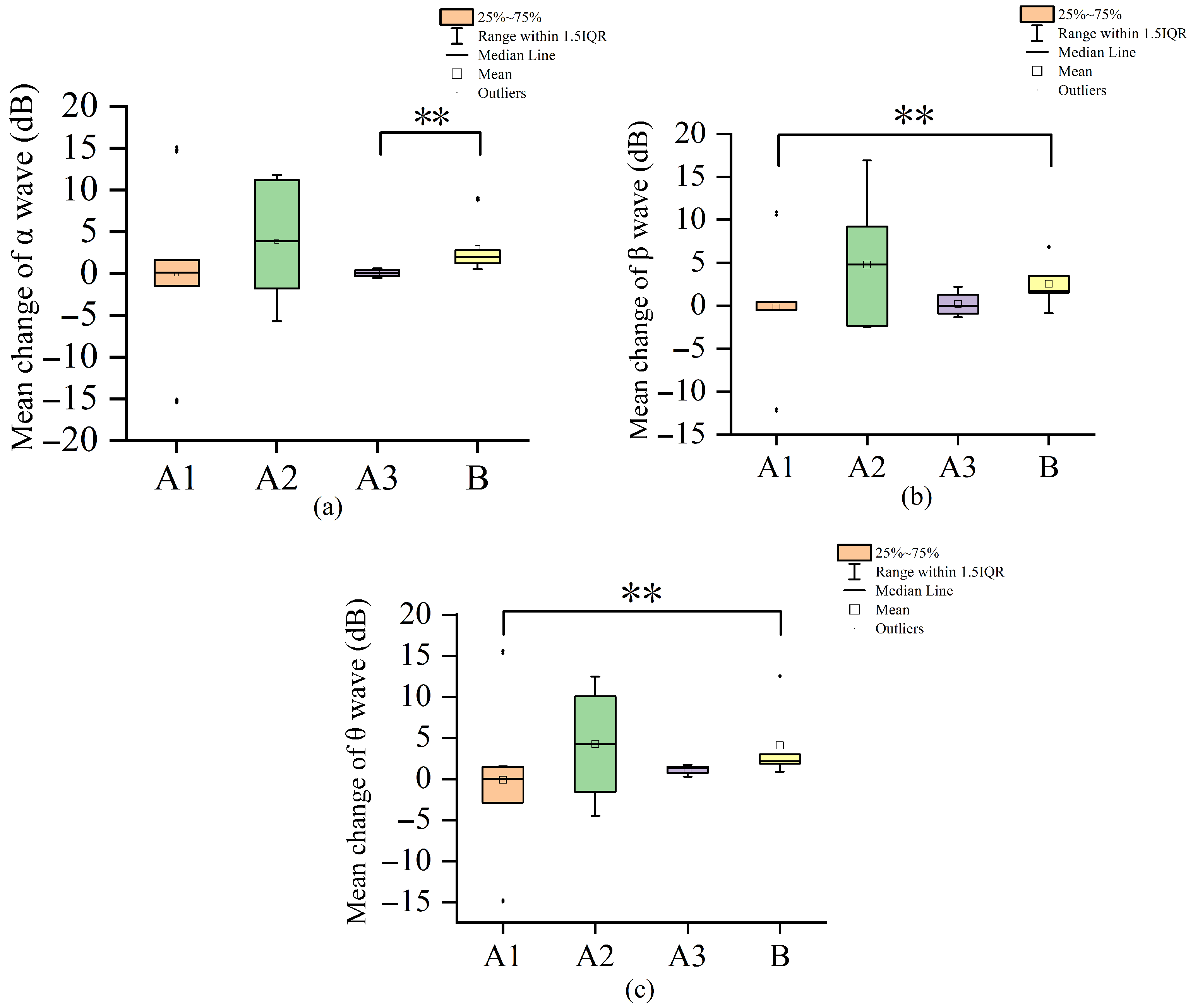
| Total Power | −0.04 ± 9.8 | 3.8 ± 6.68 | 0.04 ± 0.42 | 3.09 ± 3.09 | 0.009 ** | |
| −0.23 ± 7.47 | 4.81 ± 6.73 | 0.20 ± 1.32 | 2.53 ± 2.62 | 0.042 * | ||
| −0.11 ± 9.95 | 4.25 ± 6.19 | 1.14 ± 0.54 | 4.10 ± 4.38 | 0.006 ** | ||
| / | 0.03 ± 0.18 | −0.20 ± 0.30 | −0.01 ± 0.08 | 0.02 ± 0.08 | 0.307 | |
| / | 0.04 ± 0.14 | −0.03 ± 0.22 | 0.06 ± 0.11 | 0.06 ± 0.12 | 0.969 | |
| ( + )/ | 0.06 ± 0.23 | −0.23 ± 0.48 | 0.08 ± 0.19 | 0.08 ± 0.20 | 0.875 | |
| ( + )/( + ) | 0.01 ± 0.07 | −0.01 ± 0.11 | 0.03 ± 0.05 | 0.03 ± 0.05 | 0.802 | |
| /( + ) | 0.01 ± 0.10 | 0.05 ± 0.08 | 0.03 ± 0.03 | 0.03 ± 0.03 | 0.052 | |
Disclaimer/Publisher’s Note: The statements, opinions and data contained in all publications are solely those of the individual author(s) and contributor(s) and not of MDPI and/or the editor(s). MDPI and/or the editor(s) disclaim responsibility for any injury to people or property resulting from any ideas, methods, instructions or products referred to in the content. |
© 2025 by the authors. Licensee MDPI, Basel, Switzerland. This article is an open access article distributed under the terms and conditions of the Creative Commons Attribution (CC BY) license.
Share and Cite
Feng, M.; Zhou, C.; Yuan, F.; Kaner, J. Olfactory Environment Design in Office Buildings: A Study on the Recovery Effect of Specific Fragrances on Work Fatigue Based on Multimodal Measurement. Buildings 2026, 16, 3. https://doi.org/10.3390/buildings16010003
Feng M, Zhou C, Yuan F, Kaner J. Olfactory Environment Design in Office Buildings: A Study on the Recovery Effect of Specific Fragrances on Work Fatigue Based on Multimodal Measurement. Buildings. 2026; 16(1):3. https://doi.org/10.3390/buildings16010003
Chicago/Turabian StyleFeng, Mizhi, Chengmin Zhou, Fangfang Yuan, and Jake Kaner. 2026. "Olfactory Environment Design in Office Buildings: A Study on the Recovery Effect of Specific Fragrances on Work Fatigue Based on Multimodal Measurement" Buildings 16, no. 1: 3. https://doi.org/10.3390/buildings16010003
APA StyleFeng, M., Zhou, C., Yuan, F., & Kaner, J. (2026). Olfactory Environment Design in Office Buildings: A Study on the Recovery Effect of Specific Fragrances on Work Fatigue Based on Multimodal Measurement. Buildings, 16(1), 3. https://doi.org/10.3390/buildings16010003