Article

Children’s Well-Being of Physical Activity Space Design in Primary School Campus from the Perspective of Basic Psychological Needs

1
School of Art and Design, Guangdong University of Finance and Economics, Guangzhou 510320, China
2
School of Design, Foshan University, Foshan 528225, China
*
Author to whom correspondence should be addressed.
These authors contributed equally to this work.
Buildings 2026, 16(1), 222; https://doi.org/10.3390/buildings16010222
Submission received: 19 November 2025 / Revised: 3 December 2025 / Accepted: 5 December 2025 / Published: 4 January 2026

Abstract

The issue of children’s mental health is becoming increasingly prominent worldwide. Research indicates that insufficient physical activity constitutes a significant risk factor for various health issues. As primary school campuses serve as the primary setting for children’s physical activities, their spatial design currently fails to adequately support children’s psychological needs, thereby hindering improvements in mental well-being. This study, grounded in the theory of basic psychological needs, employs a combined approach of quantitative bibliometric analysis and qualitative content analysis to systematically investigate the relationship between children’s psychological needs and the design of physical activity spaces within school environments. The study identified six major research clusters: children’s health, self-determination theory, evaluation, physical education, user-centred design, and physical health. These reveal the multidimensional relationship between spatial design and children’s well-being. The key findings suggest that optimising facility diversity, designing progressively challenging activity zones, and implementing function-oriented colour coding can fulfil children’s fundamental psychological needs for autonomy, competence, and relatedness. These measures significantly enhance their mental well-being and overall happiness. This study extends the application of basic psychological needs theory to the field of campus spatial design, providing practical guidance for designers, educators, and policymakers. It aims to collectively advance the continuous optimisation of school sports facilities, thereby creating more favourable conditions for children’s healthy development.

1. Introduction

Multiple empirical studies have indicated that mental health issues among children and adolescents worldwide are becoming increasingly severe, with a detection rate as high as 13.4% and a year-on-year increasing trend [1]. Previous research indicates that the primary reasons for insufficient physical activity among children and adolescents are a lack of interest and intrinsic motivation for exercise [2]. This issue may heighten the risk of depression and anxiety at the emotional level [3]; at the self-perception level, it may diminish self-esteem and self-efficacy due to delayed motor development [4]; and at the social level, it may impede communication, cooperation, and the development of rule awareness [5]. The theory of basic psychological needs, grounded in human intrinsic motivation, provides the fundamental theoretical underpinning for addressing children’s lack of interest in physical activities. Throughout a child’s developmental journey, the primary school campus occupies a pivotal position, serving as the principal setting for sustained physical activity and learning. The design of its sports facilities is not only crucial for fostering physical fitness, but also holds profound significance for safeguarding mental well-being and facilitating social development. Therefore, from the perspective of basic psychological needs theory, optimising physical activity spaces—particularly the spatial layout, facility configuration, and atmosphere creation of school sports grounds—plays a pivotal role in shaping pupils’ participation in physical education and fostering their enthusiasm for exercise [6].
The theory of basic psychological needs was formally proposed by the American psychologists Edward Deci and Richard Ryan in the 20th century. This theory posits that humans universally possess three innate fundamental psychological needs: Autonomy, competence, and relatedness. The fulfilment of these needs directly influences an individual’s motivation, psychological state, and behavioural performance [7]. Within the context of physical activity, demand-supportive teaching strategies and environmental design have been empirically demonstrated to significantly enhance children’s intrinsic motivation and participation in exercise [8]. Consequently, this provides a robust basis for applying the theory to the design of physical activity spaces within primary school campuses, with the aim of enhancing children’s intrinsic motivation to participate in physical activities and promoting their holistic physical and mental development.
At present, academic research into the interaction between basic psychological needs theory and the design of physical activity spaces in primary schools primarily converges upon three core research directions. Considering the relationship between autonomy needs and space, Kenneth Hurst et al. proposed enhancing children’s decision-making power by providing diverse, optional play facilities. They suggested that stimulating children’s fundamental psychological needs through spatial amenities can motivate active participation in physical activities [9]. In the relationship between the need for competence and spatial design, the core argument of the article published by Yang, Mingyue et al. is that design should provide challenging facilities appropriate to children’s developmental stages, avoiding two extremes: excessive frustration or tedium [10]. Moreover, research into three competencies among female students and their participation in physical activities has explored the psychological needs and well-being associated with physical activity spaces among different individuals [11]. Considering the interplay between the need for relatedness and spatial design, Birgitte Westerskov Dalgas et al. explored how spatial layouts that foster social interaction can enhance individuals’ sense of relatedness, thereby addressing children’s need for connection and social engagement within physical activity spaces [12]. Moreover, the integration of universal design [9] with natural elements is also considered to broadly support children’s psychological needs.
However, despite existing research having addressed this topic from multidisciplinary perspectives, including psychology, education, and design studies, a systematic integration between psychological theory and environmental design practice has yet to be established at the interdisciplinary level. Most studies have focused on improving individual facilities or optimising specific scenarios, failing to integrate environmental factors such as spatial layout, equipment configuration, and sensory experiences. A framework which is capable of systematically explaining “how spatial design enhances children’s well-being through the intrinsic mechanism of meeting fundamental psychological needs” remains to be developed.
Given the limitations of existing research, this study endeavours to integrate theory with practical application. It systematically constructs the theory of basic psychological needs as a core framework for analysing and guiding the design of physical activity spaces within primary school campuses. The concept of enhancing well-being is thereby translated into concrete, operationally feasible design strategies grounded in psychology. Methodologically, this study employs quantitative research methods within bibliometrics to elucidate the current state of research, emerging focal points, and future trends. Furthermore, it adopts qualitative analytical approaches to explore how the design of physical activity spaces within primary school campuses can effectively promote children’s mental well-being and psychological health in depth. This study aims to highlight that, compared to designs which merely fulfil singular requirements or are confined to enhancing physical spaces, an integrated approach addressing the multidimensional psychological needs of autonomy, competence, and relatedness will yield more comprehensive and effective outcomes for children’s well-being. By analysing the mechanisms through which spatial elements satisfy children’s psychological needs, it seeks to provide theoretical reference and practical guidance for optimising the design of school sports environments.

2. Materials and Methods

2.1. Research Framework and Approach

Figure 1 shows the two phases of the research methodology applied in this study. The first phase (Yellow section) consisted of (1) defining the research problem, (2) searching the database, and (3) defining the selection and quality criteria. This phase involved integrating and organising data from the Web of Science (WOS) database, with the primary task of constructing a database. The second phase (green section) consisted of (4) quantitative research (conduct bibliometric analysis to address issues Q1 to Q3); (5) qualitative analysis (an exploration of the relationship between autonomy, competence, and relatedness in the design of physical activity spaces, addressing questions Q4 to Q6); and (6) discussion of the findings. This phase focused on evaluation and analysis of the data. The results and discussion of the analyses are presented in the Section 3 and Section 4 of the thesis.

2.2. Defining the Research Question

This study, grounded in the theory of basic psychological needs, aims to explore how the design of physical activity spaces in primary schools can enhance children’s well-being. As illustrated in Table 1, the research framework comprises two modules: quantitative research and qualitative analysis. The quantitative section (Q1–Q3) identifies the state of research, key areas of focus, and emerging trends, whilst the qualitative analysis (Q4–Q6) delves into the intrinsic connections between spatial design and each psychological need. This study not only comprehensively reveals the current state and trends in primary school physical activity space design, but also proposes specific strategies from the perspective of basic psychological needs. It provides a new theoretical foundation and practical guidance for the design of physical activity spaces in primary school campuses.

2.3. Searching the Database

In this study, the Web of Science (WOS) database was selected for bibliometric visualisation and analysis of the relevant literature. WOS is considered an authoritative data source for conducting bibliometric analyses due to its comprehensiveness, authority, and reliability, which cater to the needs of researchers in various fields. Therefore, the selection of literature from the core collection of WOS can make the study’s results more comprehensive and reliable. Moreover, through rigorous thematic screening (i.e., focusing on the three core needs of “autonomy,” “competence,” and “relatedness”), it is ensured that the literature review encompasses the mainstream research findings on basic psychological needs theory within sports space design.
The selection and search strategy of keywords is a vital component of the bibliometric analysis. As shown in Table 2, the search strategy is structured around three core dimensions: theoretical foundations (theory of basic psychological needs and its core concepts: autonomy, competence, and relatedness), research settings (spaces for physical activity defined by specific venue types), and environmental context: schools. In primary school research, although no precise definition of physical activity spaces exists, these typically encompass areas such as playgrounds, football pitches, basketball courts, and play areas [13,14,15]. Some studies also consider corridors, sports halls, and similar zones [16]. Furthermore, given that the study’s application domain is primary school settings, the search terms initially included the location-specific qualifier “primary school” OR “elementary school”. However, the search results revealed that only 123 articles addressed these terms. To achieve a more comprehensive research perspective and sufficient data support, the search scope was broadened to include the inclusive term “school”. This adjustment increased the number of identified articles to 579. We acknowledge that this broader search strategy may include studies not specifically targeting primary school settings, introducing a potential limitation; however, given the fundamental functional attributes and usage logic of shared physical activity spaces across different educational institutions [17], and considering that our subsequent qualitative analysis was highly focused on literature strongly associated with primary schools, we believe the benefits of gaining a broader analytical foundation outweigh this limitation.
According to the analysis of the search data in Table 3, the search results for the keywords “basic psychological needs,” “children,” and “sports” showed that a total of 61 documents met the criteria. This indicates that basic psychological needs in the field of children’s sports have begun to receive academic attention, providing a theoretical basis for understanding children’s intrinsic motivation to participate in physical activities. However, compared with the large body of research on children’s sports, this number also implies that research from the perspective of basic psychological needs still needs to be further deepened and expanded. The keywords “school sports facilities,” “basic psychological requirements,” and “school” were searched, and only nine articles were found. This result suggests that there is a scarcity of research directly applying basic psychological needs theory to the study of school sports facilities, indicating that research in this area is still in its infancy and offers considerable space for exploration. The total number of studies related to “autonomy,” “competence,” and “relatedness” was 579. Among them, the number on autonomy and campus physical activity venues was 87, the number on competence and campus physical activity venues was 124, and the number on relatedness and campus physical activity venues was 12. These data indicate that the research hotspots focus on the correlation between autonomy, sense of competence, and physical activity venues on campus. In contrast, the research deficit is reflected in the relative lack of research on the combination of relatedness and campus physical activity venues. Therefore, in future research, it is necessary to more comprehensively consider all aspects of basic psychological needs and combine them with specific environmental design elements in order to construct campus sports activity spaces that are more conducive to the development of physical and mental health. The limited amount of literature on “school sports venues,” “environmental design,” and “schools” suggests that there is still a lack of specific research on physical activity spaces in schools, underscoring the need to apply basic psychological needs theory to the design of these spaces. Finally, the results for “school sports venues,” “well-being,” and “schools” reflect a growing interest in the impact of school sports venues on well-being. However, there remains a lack of in-depth research on the design and well-being of school sports spaces, particularly from a basic psychological needs perspective, indicating that there is still space for cross-cutting research in these areas.

2.4. Data Screening

Based on the above screening criteria, the filtering process was further refined by manual screening to eliminate any apparent non-compliance with the study requirements and to ensure the accuracy of the results. Manual screening criteria are as follows:
(1)
Remove duplicate literature: Eliminate duplicate records to ensure data uniqueness.
(2)
Relevance to the theme: Exclude literature unrelated to research on physical activity spaces (e.g., exclude studies focusing solely on curriculum teaching).
(3)
Language: Exclude non-English text.
(4)
Document type: Peer-reviewed journal articles and conference papers.
(5)
Publication period: Literature published between 1985 (the year basic psychological needs were first proposed) and the first quarter of 2025 (the search date). As 2025 had not yet concluded at the time of retrieval, the 2025 cohort comprises only literature published and indexed in databases during the first quarter of that year (1 January to 31 March).
(6)
Design relevance: Exclude studies that do not explicitly mention design influences or spatial factors.
(7)
Academic influence: Priority shall be given to articles that have been widely cited within the field.
Based on the aforementioned selection criteria, an initial search yielded 579 relevant publications. Through manual screening, further refinement was undertaken to eliminate studies that did not meet the research requirements logically, thereby ensuring the accuracy of the selection results. Key review points include whether fundamental psychological needs or autonomy, competence, and relatedness are explicitly addressed, such as the presence of keywords including “basic psychological needs,” “autonomy support,” “competence,” and “relatedness,” as well as whether the research setting was a sports activity space or a highly analogous environment and whether the conclusions support design relevance. Ultimately, 455 articles were excluded, leaving 124 for quantitative analysis to reveal the current state of research, key research areas, and emerging trends. A further selection of 60 articles which are highly relevant to fundamental psychological needs was then performed for subsequent qualitative analysis. These articles enabled an in-depth exploration of pertinent design principles, theoretical frameworks, and case studies.

3. Results

3.1. Quantitative Research

This study utilised the CiteSpace (version 6.4.R1) software to review existing research on the design of physical activity spaces in primary school campuses from a basic psychological needs perspective. CiteSpace, developed by Dr. Chao-Mei Chen of Drexel University, is dedicated to the visualisation and analysis of scientific knowledge graphs. With its excellent graph visualisation and in-depth analysis capabilities, it can reveal the intrinsic structure, development dynamics, and potential trends of research areas. With this tool, we aimed to systematically review and analyse the relevant literature, allowing us to gain a deeper understanding of how the design of physical activity spaces in primary school campuses fulfils children’s basic psychological needs and thereby boosts their well-being. This study elaborates on the process and results of data analysis using CiteSpace, laying a solid foundation for subsequent research discussions.

3.1.1. Number of Publications

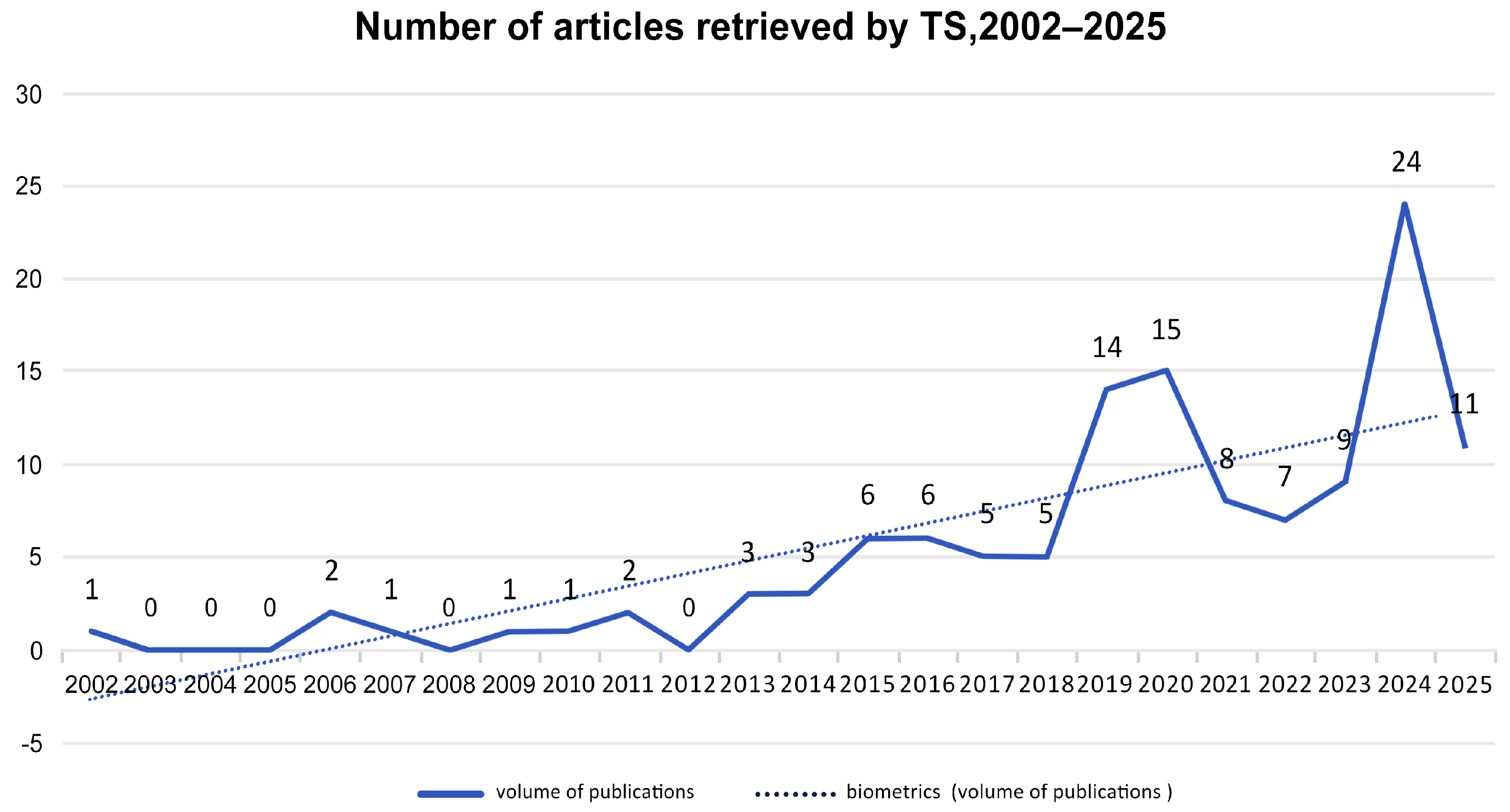
In bibliometric research, the number of publications is considered a crucial quantitative indicator. By analysing the evolution of the number of publications over time, researchers can observe the development of a particular research area and the changes in its body of research, thereby responding to Q1 about the current state of research in this area. From 1985 to 2025, a total of 124 related papers were published in the field. Although basic psychological needs were first introduced in 1985, academics did not associate them with physical activity spaces on campuses until 2002. Therefore, there were no publications in this area during this period, indicating that research in this area had not begun. In Figure 2, by analysing the data on the annual number of publications between 2002 and 2025, it can be seen that the research in this field shows noticeable stage changes: in the early period (2002–2010), the number of publications was little and fluctuated less; the overall number of publications was low, with only six publications. During this period, research was mainly exploratory, and scholars began to pay attention to the connection between the design of physical activity spaces in primary school campuses and children’s basic psychological needs. However, the research results were fragmented, and a systematic research system has not been formed. Research conducted during the middle period (2011–2018) revealed a clear growth trend, with the number of publications increasing year by year to 30. Research in this period was no longer limited to simple exploration: it began to delve deeper into the impacts of campus physical activity space design on children’s well-being, such as proposing personalised playgrounds [16], colourful markers [18], and other research findings. In 2019, research in this field entered a period of rapid growth, with a remarkable increase in the number of articles published. According to the actual data, from 2019 to 2025, a total of 88 articles were published. However, it should be noted that only the data for the first quarter of 2025 were included in this analysis. This trend suggests that the study of children’s well-being in the design of physical activity spaces on primary school campuses, from the perspective of basic psychological needs, has garnered significant attention and has become a key area of academic research. Research indicates that the core driver behind this explosive growth is the post-pandemic surge in demand for children’s outdoor activities. The psychological health issues arising from insufficient physical activity during the pandemic have prompted academic attention to the compensatory role of physical activity spaces in addressing these psychological needs. Overall, the change in the annual number of articles published reflects the combined influence of societal, technological, and research needs, with obvious characteristics of the times.

3.1.2. Keyword Network Visualisation

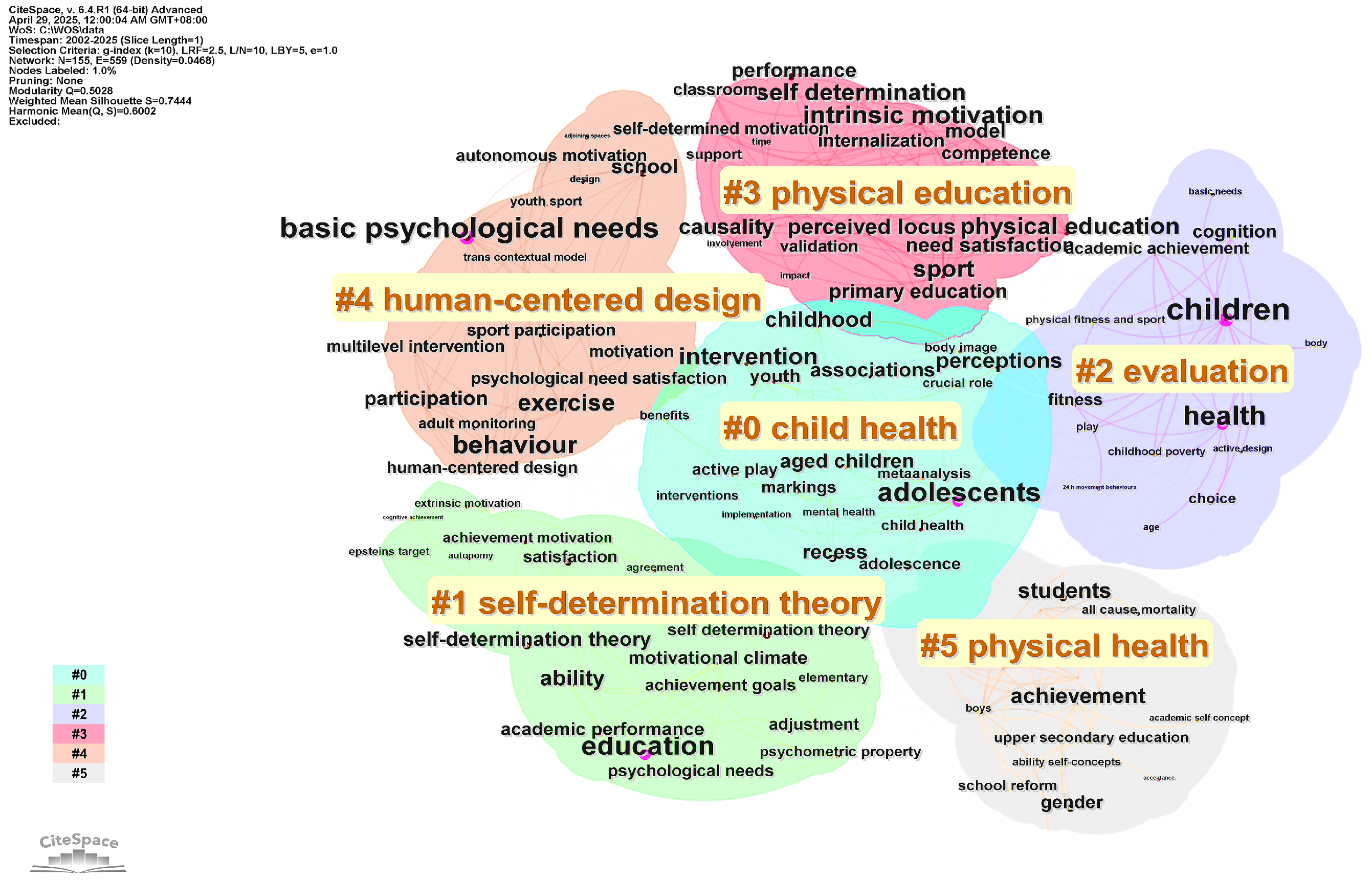
The keyword clustering function in the Citespace software is a powerful tool for researchers to delve deeper and analyse key issues in their research field. The clustering analysis of keywords using Citespace was performed in response to the pressing issues covered by Q2. The clustering of the keywords is shown in Figure 3 below. Initially, six clusters were generated, including #0 child health, #1 self-determination theory, #2 evaluation, #3 physical education, #4 human-centred design, and #5 physical health. In this figure different colors represent distinct research clusters. Nodes denote keywords, with their size proportional to frequency or centrality. Links between nodes indicate co-occurrence relationships, and line thickness reflects the strength of co-occurrence. Based on an in-depth understanding of the research theme and an analysis of the intrinsic connections between the clusters, the above clusters were reintegrated and further grouped to enhance the systematicity and relevance of the research.
(1)
Health promotion and behavioural development objectives
First, clusters #0, #3, and #5 were combined into the cluster “Health promotion and behavioural development objectives.” This integration is based on the World Health Organisation’s (WHO) holistic definition of “health,” which encompasses physical, mental, and social well-being. These three clusters are highly focused on the core objective of the role of physical activity in primary schools in promoting children’s multidimensional health. As a momentous intervention to promote children’s physical and mental health development, sports are intrinsically related to the core concepts of children’s health and physical well-being. Specifically, the effectiveness of physical education directly influences children’s physical health indicators, is closely linked to their psychological well-being, and plays a vital role in developing social adaptive skills. Cluster #0 focuses on the relationship between activity environments (e.g., recess, interventions) and physical and mental health (including psychology); Cluster #3 focuses on the effects of physical activity designs on development by enhancing performance, achievement, and motivation (intrinsic motivation, need fulfilment); and cluster #5 focuses on the perceived physical abilities and health outcomes of students in physical activity, especially considering gender differences. Together, they form a core system of indicators and goal orientation for assessing the effectiveness of physical activity space designs in primary school campuses to improve children’s health in all aspects. Therefore, from a systemic perspective, integrating these three clusters into a single cluster more accurately reflects the core objectives of physical activity space design in primary school campuses. This integration creates favourable conditions for the effective development of physical education, thus enhancing children’s health in all aspects.
The keywords for cluster #0, child health, are centred around child health and relate to “adolescents,” “aged children,” “mental health,” and “active play.” These words reflect a concern for the physical and mental health of children at various stages of development, whether they are active primary school children or adolescents progressing toward puberty. Keywords such as “recess,” “interventions,” and “active play” suggest that the cluster focuses on the promotion of active and self-directed activities through time-specific (recess) and organised interventions to improve the physical and mental health of children (across different age groups) [19]. This provides a clear objective for the design of the space: to create environments that support self-directed activity and effective intervention delivery during recess. Although recess is valued as a crucial time for physical activity, the role of environmental design itself in supporting this goal has received insufficient attention. Instead, research has often focused on the content of intervention programs, rather than on optimising the physical activity spaces that serve as the primary setting for these activities. There is a lack of research into proactive and effective design of physical environments in physical activity spaces to promote physical motivation and well-being. From the perspective of basic psychological needs, integrating physical environmental factors and creating a psychological environment can more naturally and consistently stimulate children’s intrinsic enthusiasm for participating in physical activities. At the same time, creating a physical foundation that supports the overall development of physical and mental health can thereby contribute to meeting their needs and enhancing their well-being. For example, design strategies such as activity zoning [20], favourable lighting [21], and the level of greenery [22] aim to enhance spatial attractiveness and participation in activities, indirectly serving physical and mental health goals.
The keywords for Cluster #3, physical education, are centred around sport and involve keywords such as “sport,” “primary education,” “classroom,” “performance,” and “achievement.” Physical education is not only about teaching physical skills and knowledge, but is also the cornerstone of physical activity promotion in schools [23]. At the primary school level, physical education not only focuses on children’s physical exercise but also enhances their performance and achievement in class and competitions through physical activities, thereby increasing their self-confidence and sense of accomplishment. The keywords “locus physical” and “primary education” highlight the inseparability of the physical education program and the physical environment of the activity space at the primary level [21]. The keyword “need satisfaction” is associated with “competence“ and “performance,” with “intrinsic motivation,” pointing to research within the framework of basic psychological needs, exploring the enhancement of motivation and effectiveness of sports participation through need satisfaction; and, in particular, optimising sport participation by enhancing a sense of competence [24]. This exemplifies the psychologically driven mechanisms of the sports process and, in order to enhance children’s daily physical activity, special attention should be paid to improving their intrinsic motivation towards physical activity. For example, it is possible to design the space, facilities, lighting, music, and so on to attract children’s attention, enhance their motivation for sports activities, and change their stereotypical impression of sports space and facilities. These factors can drive children’s intrinsic motivation, stimulate their motivation, and satisfy their intrinsic needs for sports activities. The combination of the keywords “locus physical,” “sport,” and “education” further highlights the importance of the design of physical activity spaces in primary school campuses. Therefore, the design of school physical activity spaces should be guided by basic psychological needs to transform the physical environment from a background to an active “educator” and “motivator.” Instead of being a venue that only accommodates physical activity, the physical environment should be used to fulfil children’s psychological needs and effectively drive participation, performance, and achievement. For example, a variety of facility choices and free space are needed to satisfy the need for autonomy, challenging equipment (such as height, speed, and elements of risk) to satisfy the need for competence, and social areas to promote peer interactions and satisfy the demand for a sense of belonging.
The keywords for cluster #5, physical health, include “students,” “ability self-concepts,” and “gender.” The keywords “students” and “ability self-concepts” indicate that research focuses on improving students’ academic skills and overall quality in physical education scenarios [25]; for example, through the optimisation of the primary school PE curricula and activity spaces, students’ achievements in motor skill acquisition and teamwork ability can be improved, in turn contributing to the achievement of overall educational outcomes. As a key variable, “gender” reveals the differentiated needs of students during the development process [19]. The design needs to consider the preferences and ability development of students of different genders, which also requires the space design to be inclusive and adaptive [11]. For example, this involves providing a variety of choices to avoid ability bias caused by a single criterion. Guided by basic psychological needs, the design of physical activity spaces in primary school campuses should support the need for a sense of competence. Through well-designed environmental suitability, it directly contributes to children’s positive perceptions of their abilities in physical activity, effectively overcoming barriers to participation and cognitive bias brought about by factors such as gender, and establishing a physical foundation for equitable development.
(2)
Theory and design guidance
Secondly, cluster #1, self-determination theory, and cluster #4, human-centred design, were integrated to form the “Theory and design guidance” cluster. The extensive application of self-determination theory in education and design provides solid theoretical support for the design of sports activity spaces in schools. It emphasises the satisfaction of the basic psychological needs of individuals in the three dimensions of autonomy, sense of competence, and relatedness, which plays a key role in stimulating children’s intrinsic motivation to participate in sports activities. Meanwhile, human-centred design focuses on placing children’s needs, experiences, and feelings at the centre of the design work, requiring designers to gain in-depth insight into the requirements of children in the process of physical activity to create a physical activity space that is in line with design thinking and can fully mobilise children’s motivation. Self-determination theory defines the “goal state” that design should strive to achieve, while human-centred design outlines the process of realising this goal. The combination of the two at both theoretical and practical levels provides a guiding framework for designing physical activity spaces in primary schools.
The keywords for Cluster #1, self-determination theory, include “self-determination theory,” “motivation,” “intrinsic motivation,” “autonomy,” “competence,” “relatedness,” and “psychological needs.” The basic psychological needs under self-determination theory emphasise the prevalence of three basic psychological needs: Autonomy, competence, and relatedness. These three needs are interrelated and mutually influential. When the design of a physical activity space can simultaneously satisfy children’s needs for autonomy, competence, and relatedness, they are more likely to show higher intrinsic motivation and be more willing to participate in physical activities actively, thus promoting their physical and mental health and overall development. The keywords “motivation” and “intrinsic motivation” suggest that research has focused on stimulating children’s intrinsic motivation through the design of physical activity spaces, enabling them to participate more actively in physical activities [26]. The terms “autonomy,” “competence,” and “relatedness” correspond to the three basic psychological needs, indicating that research is dedicated to exploring how to better meet these needs through design in order to promote children’s mental health and well-being. Therefore, when designing and evaluating physical activity spaces in primary school campuses, full consideration should be given to support the satisfaction of these three basic psychological needs through spatial layout, facility configuration, and activity organisation in order to enhance children’s well-being [27].
Cluster #4, human-centred design, emphasises design methodology and design principles, with keywords including “basic psychological needs,” “human-centred design,” “design,” “user experience,” “participatory design,” and “exercise.” This cluster examines how children’s needs, abilities, preferences, and perspectives are placed at the centre of the design. The research aims to gain insights into user needs through observation, interviews, and child participation; for example, by considering children’s safety, comfort, playfulness, and inclusiveness in the design process and creating spaces that fulfil both functional needs and positive emotional experiences. The human-centred design concept emphasises placing children’s needs, experiences, and feelings at the heart of the design work. In the design of physical activity spaces on primary school campuses, this means that designers need to have a deep understanding of the various types of children’s needs in the process of physical activity—such as the need for safety, fun, and diversity of the activity space [28,29]—to create a physical activity space that matches children’s characteristics. In the design iteration stage, the satisfaction of basic psychological needs as a key assessment index enables the creation of spaces that better stimulate intrinsic motivation. The terms “intervention” and “participation” suggest that research also focuses on promoting children’s participation through design interventions to enhance the effectiveness of physical activity.
(3)
Evaluation
Finally, cluster #2, evaluation, was independently classified as an “evaluation” cluster. This positioning stems from the fact that it focuses on specialised research that measures the effectiveness of physical activity space design and interventions in primary schools. It should be noted explicitly that the content integrated within this cluster comprises existing campus sports space evaluation methods and indicators found in the literature (e.g., commonly referenced approaches including “monitoring of spatial usage frequency,” “scores on the Basic Psychological Needs Satisfaction Scale,” and “quantification of well-being-related indicators”), rather than original empirical assessments conducted within this study. Evaluation is the key link between “design practice” and “goal attainment,” and is a necessary means to test the effectiveness of the application of “Theory and design guidance.” This dimension provides a scientific basis for optimising design decisions, validating theoretical assumptions, and promoting evidence-based practice.
The keywords for cluster #2, evaluation, are “children,” “health,” “fitness,” “academic achievement,” and “active design.” Studies in this cluster focus on scientifically measuring the effectiveness of design and campaigns, including evaluation of the quality of the space itself (e.g., whether it is safe, meets functional requirements); evaluation of behavioural impacts (e.g., the design’s impact on children’s levels of physical activity, types of activity, and patterns of use of the space); evaluation of health and well-being outcomes (e.g., the design’s intervention in children’s physical health indicators, mental health, and social well-being); and needs satisfaction evaluation (e.g., whether the design of the space meets children’s needs for autonomy, competence, and relatedness). The keyword “active design” particularly emphasises the role of evaluation research in supporting the evidence-based concept of “active design,” which aims to promote activity. This clustered study provides an empirical feedback loop for the design and optimisation of physical activity spaces in primary school campuses, ensuring that design decisions effectively serve the core objective of enhancing children’s well-being. This section indirectly validates the rationale that spatial design can enhance well-being by facilitating the fulfilment of needs through synthesising the evaluation dimensions identified in the literature. For instance, by analysing the assessment tools and methodologies employed in existing research, we observed that scales such as the Basic Psychological Needs Scale for Children (BPNS-F) have been widely utilised to measure the extent to which spatial design supports children’s autonomy, competence, and relatedness. These findings provide circumstantial evidence for understanding the relationship between spatial design and the fulfilment of children’s psychological needs, further supporting the argument put forward in this study that optimising spatial design can enhance children’s well-being.
In summary, the six clusters determined in the bibliometric analysis of this study were consolidated into three core research clusters: “Health promotion and behavioural development objectives,” “Theory and design guidance,” and “Evaluation.” These three clusters do not exist in isolation but form a goal-driven, theory-supported, and practice-validated whole, which together serve the core goal of optimising physical activity spaces in primary schools to enhance children’s well-being. “Health promotion and behavioural development objectives” (Cluster #0, #3, #5) establishes the core value orientation of space design: to promote children’s physical health, mental health, social adaptation, and positive capability awareness in all aspects. To achieve this, “Theory and design guidance” (Cluster #1, #4) provides the foundation: self-determination theory reveals that meeting children’s basic psychological needs is the core mechanism for intrinsic motivation and engagement; in contrast, the human-centred design methodology guides the transition of principles from self-determination theory into grounded, experience-optimising spatial interventions, achieved through a deep understanding of users and an iterative process. Finally, “Evaluation” (#2) examines the effectiveness of the design in achieving the core objectives by scientifically measuring spatial quality, behavioural impacts, and health and well-being outcomes, especially regarding the satisfaction of basic psychological needs. At the same time, it continually validates and optimises the application of the theory and design to ensure that spatial environment iterations more accurately respond to children’s needs, and ultimately efficiently drive children’s health and well-being.

3.1.3. Keyword Burst Analysis

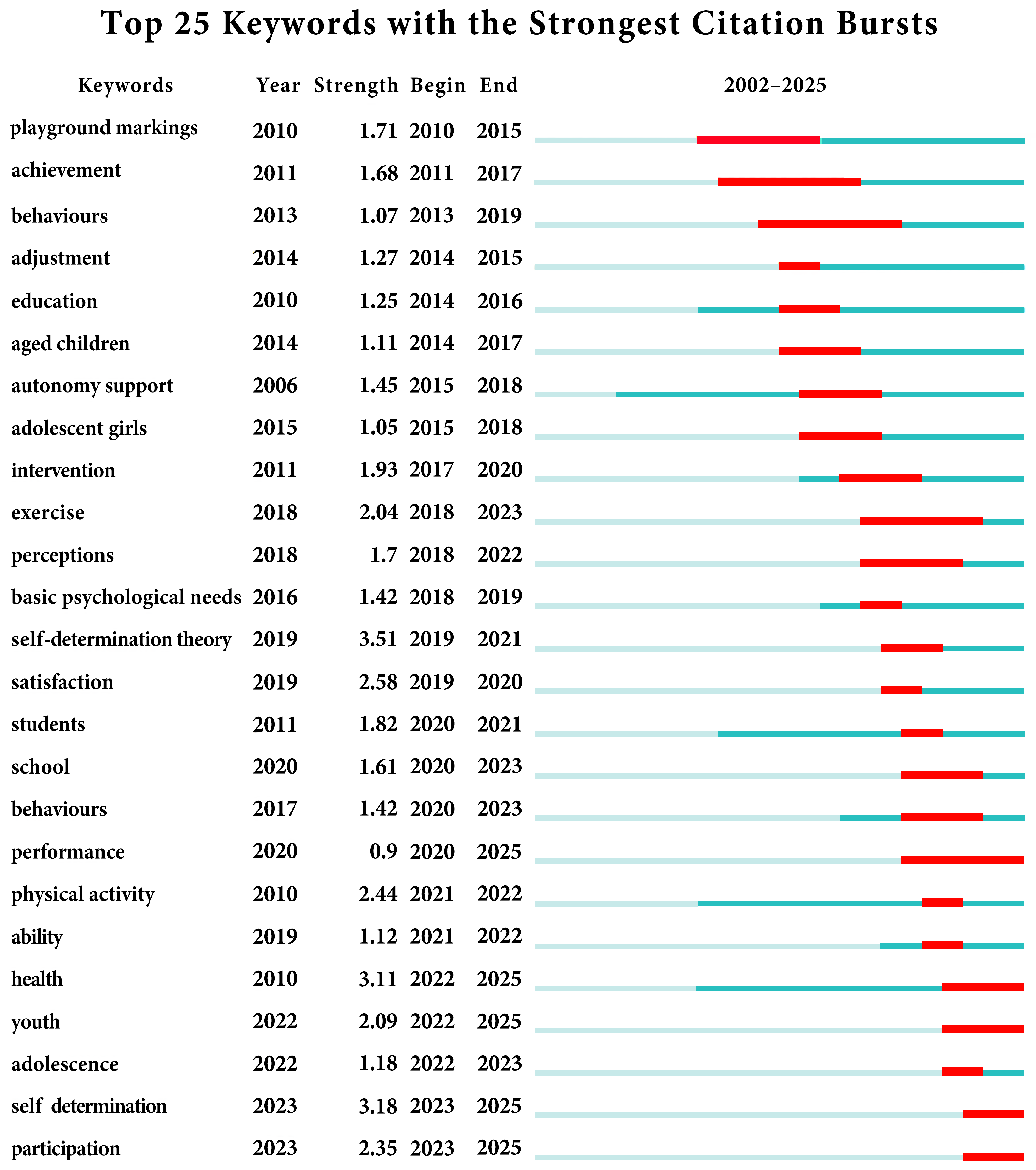
Identifying the cutting-edge dynamics of a particular research area involves capturing considerable changes in the frequency of terminology usage over a specific period, which can be reflected in the degree of occurrence of burst words, thus providing an answer to Q3 (research trends). This study utilised CiteSpace to generate a keyword time zone chart (shown in Figure 4), which visualises this process. In the chart, the blue-coloured blocks represent the persistence of keywords over time. In contrast, the red-coloured blocks indicate specific time intervals during which the keyword experienced a sudden increase in usage. In order to reveal more clearly the hotspots of research at the intersection of “physical activity space design in primary schools” and “children’s well-being,” the word cluster analysis function in CiteSpace was used to generate the keywords with the parameters (r [0,1] = 0.28), Minimum Duration = 2, thus generating graphs of the top 25 keyword clusters. Based on the content relevance of these hotspot keywords and their distribution characteristics along the time axis, the research development in this field can be divided into three stages.
Keywords in the early phase (2002–2012) include “playground markings,” “achievement,” and “education,” suggesting that research during this period focused on the impact of the physical environment in the schooling context (e.g., playground markings) on children’s motivation to play sport, and that the effect of school sport on the enhancement of pupils’ sporting achievement was beginning to gain attention. Keywords such as “behaviorus,” “adjustment,” and “autonomy support” in the mid-term period (2013–2016) represent a shift in the focus of research on children’s motivation to exercise. This represents an increased focus on the affection of physical activity spaces on campus on student behaviour and a shift in focus to student adaptation to physical activity spaces (e.g., environmental comfort). The emergence of “autonomy support” suggests the importance of meeting the autonomy needs of students in physical activity. Moving into the recent period (2017–2025), keywords such as “perceptions,” “basic psychological needs,” “self-determination theory,” and “satisfaction” began to emerge. This represents the beginning of self-determination theory as a dominant framework, with research focusing on the relationship between basic psychological needs and physical activity to better motivate students’ intrinsic motivation to exercise.
In terms of emergence intensity, “self-determination theory” (3.51) and “health” (3.11) were the keywords with the highest emergence intensity, indicating that they have a crucial influence on campus sports activity space design-related research. The prominent emergence of self-determination theory not only reflects its influence but also signals a qualitative shift in research perspectives: from a singular focus on physical environmental attributes to an exploration of psychological mechanisms. Health further underscores the close connection between the design of campus sports activity spaces and well-being. Meanwhile, in terms of the duration of keywords, “physical activity” has a longer duration from 2010 to 2022, reflecting the importance of physical activity in primary school campuses as a long-term hot issue. Furthermore, ’youth’ and ’participation’ are emerging keywords that have appeared from 2022–2025, representing current research hotspots and future research trends. Although this indicates a surge in the needs of children within this age group, existing campus sports facilities predominantly employ standardised designs lacking tailored adaptation; this gap may present a potential breakthrough point for future research. It is noteworthy that the operationalisation of “participation” in existing research predominantly relies on questionnaire surveys, whilst genuinely participatory design practices remain scarce. This methodological gap underscores the need for future empirical research to effectively translate children’s voices into actionable spatial design parameters.
Overall, the burst map indicates that the trend in campus physical activity space research focuses on three aspects. The first is the physical environment and external environment, and keywords such as “playground markings,” “education,” and “intervention” indicate that the influence of the environment on physical activity spaces on campus has become an important topic. Secondly, the importance of behaviour and health is reflected in keywords such as “behaviour” and “health,” which highlight the close relationship between physical activity on campus and behavioural health, emphasising the importance of exercise. Thirdly, there is theoretical support, as evidenced by keywords such as “basic psychological needs” and “self-determination theory,” suggesting that research has begun to focus on implementation in psychological contexts.
It is worth mentioning that, when analysing the keyword burst diagram, it can be noted that the research area is not focused on the concept of “primary school.” However, given that the primary school stage is a critical period for children to form healthy lifestyles and exercise habits [30], positive physical activity space design not only has a constructive impact on the health and well-being of primary school children but also plays a crucial role in fostering the development of healthy behaviours and promoting sports participation in subsequent developmental stages. Therefore, it is reasonable and necessary to apply the data in the study of physical activity space design to the context of primary school campuses.

3.2. Qualitative Analysis: Impact on Children’s Well-Being Based on Basic Psychological Needs

The quantitative study revealed the current status, hotspots, and trends in research on physical activity space design for primary school campuses. It was found that the existing work has mainly focused on the functionality of the campus environment and students’ motivation to participate in physical activities, reflected in cluster #4, human-centred design, which emphasises the consideration of children’s safety, comfort, amusement, and inclusiveness during the design process; and cluster #1, self-determination theory, which suggests that children are intrinsically motivated through the design of physical activity spaces to participate more actively in physical activity. Although existing research has focused on school sports activities and children’s development, it has primarily concentrated on explicit factors, such as exercise duration and curriculum. At the same time, the systematic framework of space design based on basic psychological needs theory remains fragmented. Moreover, quantitative mapping cannot address the question of how spaces specifically fulfil children’s psychological needs. This provides a macro perspective for comprehending the impacts of physical activity space design on children’s psychological needs. To further elucidate the underlying mechanisms behind these clusters, qualitative analysis methods were employed to provide an in-depth interpretation of the mechanisms driving the aforementioned quantitative findings.

3.2.1. Qualitative Content Analysis Procedure

This study constructed an initial framework based on the three core dimensions of basic psychological needs theory. To ensure the objectivity and systematic nature of the coding process, two researchers independently conducted open-ended pilot coding on ten randomly selected articles, preliminarily identifying and marking text segments related to “the impact of spatial design on psychological experience.” Building upon this foundation, the researcher and the arbitrator (corresponding author) convened a series of coding meetings to compare, discuss, and consolidate these preliminary codes, which were subsequently categorised under three core themes, thereby forming a preliminary coding manual comprising three main categories and eight sub-codes.
To enhance the clarity and applicability of the manual, we employed it to conduct a second round of pilot coding on a further ten documents. Based on the findings, the operational definitions and decision rules for the codes were revised and refined. For instance, “colour marking” was initially categorised under “supply of diversity” but was subsequently reclassified under “Planning clear zoning of activities,” as its primary function lies in guidance and partitioning. This culminated in the establishment of a coding manual for formal analysis (see Table 4).
To minimise researcher bias to the greatest extent possible, we employed rigorous double-blind coding and reliability verification procedures to ensure the objectivity and independence of the coding process. During implementation, purposive sampling was employed to select 15 of the 60 articles ultimately included in the qualitative study. These were chosen for their richness of information, representativeness, and ability to illustrate key issues. These 15 articles underwent formal, rigorous line-by-line coding and thematic extraction (representing 25% of the total, consistent with qualitative research conventions). Prior to coding, the coders underwent consent training and conducted consistency checks using five trial coding documents (not included in the final analysis of 15). The Kappa value reached 0.79, indicating a high degree of agreement in understanding the coding rules and laying the groundwork for subsequent independent coding. In the formal coding process, all documents underwent anonymisation. Following independent line-by-line reading and coding by two coders, discrepancies were resolved by the corresponding author in accordance with the coding manual. The final Kappa coefficient was 0.73, indicating a high degree of consistency in the coding outcomes. It should be noted that coding discrepancies primarily centred on the code “R3—Integration of elements of cultural values,” stemming from differing interpretations of the abstract nature of descriptions of cultural elements. This issue was effectively resolved by revising the adjudication rules to require codes to refer to specific symbols or practices. All subsequent analyses were based on data agreed upon following this consensus.
Upon completion of the coding process, we synthesised and summarised the literature content falling under each code, and distilled the core design strategies and influencing mechanisms associated with each code. Subsequently, these code-based findings were integrated into the discussion under three main categories: Autonomy, competence, and relatedness. This formed the analytical framework presented in Section 3.2.3, Section 3.2.4 and Section 3.2.5. Through cross-referencing findings across the three needs, this study developed a holistic understanding of how spatial design can enhance children’s well-being by addressing basic psychological requirements, thus providing an empirical foundation for the discussion of design strategies in Chapter 4.
It is worth noting that although the three major demand frameworks effectively synthesised the majority of findings, during the coding process we still observed a small number of valuable observations that fell outside these frameworks. For instance, discussions concerning the supervision of children and adults with special needs frequently arose. These findings indicate that a universal design framework must account for user diversity and environmental complexity. Future research should adopt a more interactive perspective, incorporating user diversity and social factors rather than focusing solely on the physical space itself. The framework proposed in this study provides a foundation for understanding mainstream childhood groups, whilst the identification of these spillover data points points the way towards constructing a more inclusive design theory.

3.2.2. Quantitative Analysis of Qualitative Coding

To investigate the degree of attention given to different fundamental psychological needs in existing research, this study conducted quantitative statistical analysis based on qualitative content analysis. We employed a double-blind coding procedure, with two coders independently coding 15 core documents. Inter-rater reliability was assessed by calculating Cohen’s Kappa coefficient ( κ = 0.73 ), indicating that the coding results demonstrated high reliability and were not subject to arbitrary individual judgement. The coding framework and its operational definitions in this study are systematically grounded in fundamental psychological needs and recurring findings within the existing literature, thereby ensuring content validity. Concurrently, iterative refinement of the framework through pilot coding ensured that operational definitions accurately capture core information from the literature, enhancing process validity. Based on this coding data, whose reliability and validity were assured, we conducted the following analyses: (1) We counted the frequency of occurrence for each design strategy code (A1–R3) across the 15 studies (see Table 5); (2) to examine whether significant differences existed in research prominence among the three fundamental psychological needs (autonomy, competence, and relatedness), we employed a chi-square test to compare the total frequencies of their respective codes. All statistical analyses were conducted using the SPSS 26.0 software, with a significance level set at p < 0.05 .
The results of the chi-squared test results indicated no significant difference in the level of attention paid to the three needs: χ 2 ( d f = 2 , N = 39 ) = 4.31 , p = 0.116 . To provide an overarching understanding of how existing research addresses children’s basic psychological needs, this study first conducted a quantitative analysis of the frequency of references to the three core needs (autonomy, competence, and relatedness) in the literature. The analysis revealed the following frequency distribution of research themes: autonomy needs were examined most frequently (n = 19), followed by competence needs (n = 11), while studies addressing attribution needs were comparatively scarce (n = 9). This distribution preliminarily indicates that academic discourse places the greatest emphasis on autonomy needs. To further examine whether this distribution difference is statistically significant, we conducted a chi-squared goodness-of-fit test. The null hypothesis ( H 0 ) posited that the probabilities of the three needs appearing in the literature were equal. The calculated chi-squared statistic was χ 2 (2) = 4.31. At a significance level of α = 0.05, the corresponding critical value was 5.99. As the calculated value of 4.31 is less than the critical value of 5.99, the test result failed to reach statistical significance ( p > 0.05 ). This implies that, although a numerical difference exists, we lack sufficient evidence to reject the null hypothesis. In other words, the frequency with which the existing literature addresses the three basic psychological needs does not exhibit statistically significant deviation; as such, the current distribution disparity may stem from random fluctuations.
This finding indicates that the field of study has begun to establish a comprehensive understanding of children’s multidimensional psychological needs, rather than being overly focused on a single dimension. This provides empirical support for subsequent parallel and in-depth qualitative analysis across the three dimensions of autonomy, competence, and relatedness considered in this study, thereby avoiding potential biases arising from an undue emphasis on any single need. Although the absolute number of instances of relatedness in keyword searches was relatively low (12 articles), within the core literature undergoing in-depth analysis and bearing a high degree of relevance to design, its prominence showed no significant difference compared to autonomy and competence. This suggests that the scarcity of research on belongingness may be reflected more in the breadth rather than the depth of studies. Therefore, future research should not only focus on increasing the volume of studies on relatedness, but also explore how to deepen the examination of the synergistic mechanisms between relatedness and spatial design within existing research—this is expected to enable the construction of a more balanced and comprehensive research landscape. Secondly, the lack of significant frequency differences precisely underscores the necessity for subsequent in-depth qualitative analysis. The value of research should not be determined solely by the topicality of a subject, but rather by conducting thorough mechanistic analyses of each demand dimension. Consequently, the following sections systematically elucidate the specific connections between various demands and the design of physical activity spaces within primary school campuses.

3.2.3. Q4: The Relationship Between Autonomy and the Design of Physical Activity Spaces in Primary School Campuses

The emergent term “autonomy support” was in use from 2006 to 2018, demonstrating that students in autonomy-supportive environments scored higher in autonomy and had a higher index of self-determined motivation [24]. This confirms the centrality of meeting children’s autonomy needs in promoting positive development. In children’s development, autonomy is expressed not only in terms of control over their behaviour but also in active exploration of the environment and the free choice of activities. From the perspective of children’s well-being, core elements include psychological health, emotional fulfilment, and positive self-perceptions. Empirical quantitative studies of physical activity spaces have shown that autonomy has a pivotal contribution to the enhancement of emotional satisfaction, among other factors, and has a multidimensional intrinsic link with the design elements of the physical environment. In general, autonomy emphasises that actions stem from one’s own volition. Research indicates that contextual cues influencing children’s ability to decide for themselves what to play, where to play, and how to play are concentrated in three categories: firstly, physical accessibility; secondly, the functional diversity of choice; and thirdly, whether children themselves can participate in decision-making. On this basis, these characteristics are categorised as autonomy needs. Satisfying children’s need for autonomy is key to enhancing their intrinsic motivation and well-being in physical activity. According to quantitative research findings, when environmental design effectively supports children in these dimensions, their autonomy needs are easily met and their motivation, exploratory spirit, and creativity are markedly enhanced, thereby improving their psychological and overall well-being. Through systematic coding and analysis of 15 literature sources, spatial design supporting children’s autonomy needs was found to primarily revolve around three core mechanisms: Enhancing spatial and temporal accessibility, strengthening the supply of diversity, and building participatory design. Based on this empirical finding, a qualitative analysis was conducted on the dimension of children’s autonomy needs, exploring the positive effects of spatial accessibility, the provision of a variety of facilities and spaces, and autonomous participatory design on children’s psychology.
  • Enhancing spatial and temporal accessibility
In the quantitative research, the keywords of cluster #0, child health, were found to primarily focus on “child health,” “active play,” and “recess,” indicating that children’s experiences of activity during recess and its positive impact on mental health have become the primary direction of research [31]. From the perspective of environmental design, spatial accessibility and temporal convenience are the design elements that constitute the basic framework of physical activity space on primary school campuses. Children, especially younger ones, present immediate and context-dependent behaviours. The short breaks between classes (usually only 10–15 min) place higher demands on spatial responsiveness. Studies have shown that spatial accessibility is linearly and positively correlated with the frequency of autonomous choice, with preliminary evidence from Thea Toft Amholt et al. indicating a correlational trend whereby children’s autonomous participation rates can reach up to 30% when primary activity zones are located within 100 metres of the classroom. Although these data originate from a specific context and do not imply universal causality, this finding powerfully illustrates the potential influence of spatial distance on autonomous behaviour, thereby providing empirical support for strategies to enhance spatial and temporal accessibility [27]. Moreover, recess interventions need to take into account grade- and gender-based differences in motivation and emotion [32]. The inhibitory effect of such distance constraints on autonomy is not homogeneous; its intensity is moderated by grade and gender differences: children in lower grades are more sensitive to distance, and spatial barriers suppress their autonomy more due to the limitations of their physical functioning and cognitive developmental stage. At the same time, children of different genders may have differentiated perceptions of accessibility and experiences of autonomy for the same spatial layout, under the influence of their activity preferences and social dynamics. Therefore, from the qualitative perspective of the study, spatial and temporal accessibility provides the fundamental conditions for autonomy by eliminating certain physical barriers, while the freedom of choice—through activity areas and options—effectively increases children’s participation and willingness to participate, thereby boosting their motivation and fostering their autonomy.
  • Strengthening the supply of diversity
The keywords “human-centred design” and “multilevel intervention” in cluster #4 human-centred design indicate that it focuses on the differentiation of children’s needs and design flexibility [27]. From this perspective, the provision of multiple types and levels of sports scenes and facilities is the basis for satisfying children’s individual preferences, stimulating their intrinsic interest and free exploration, thereby promoting their motivation to participate in sports [27]. The diversity of environments and facilities is a physical prerequisite to support children’s choices according to their wishes and is a direct reflection of the need for autonomy. The number of physical activity spaces on campus is positively correlated with the frequency of children’s independent choice of activity type, indicating that the spatial limitations affect children’s ability to participate in games and activities to a certain extent [33]. Expanding the range of choices to allow children to freely explore and make decisions based on their interests, abilities, and moods and to satisfy individualised preferences can provide the necessary environmental support for children’s autonomy [34]. From the perspective of basic psychological needs, the richness of diversity in the spatial environment affects whether children’s needs for autonomy can be adequately met. When the physical activity space offers a variety of activity areas and rich sensory experiences, it can create an environment that supports children’s individualised decision-making behaviours. The existence of this diversity design dimension provides children with the material foundation for matching their interests with the environment and experiencing autonomy. It enables them to continually reinforce their perception of behavioural agency through free choice, allowing children to determine the activity content based on their intrinsic interests rather than external demands, thereby achieving the intrinsic fulfilment of autonomy needs. Consequently, further qualitative research indicates that diverse provision—achieved by expanding the scope of choice—furnishes behavioural vehicles for autonomy. The varied supply of environments and facilities affords children extensive freedom of selection and opportunities for exploration, thereby enhancing their sense of autonomy.
  • Building participatory design
In addition, the keyword “participatory” in cluster #4, human-centred design, reflects how participation is becoming a topic of discussion. Participatory design is a human-centred design approach that emphasises the involvement of end-users and other stakeholders in design decisions and innovation. The participatory process can quickly yield results that focus on the actual needs of users [35], allowing children to be integrated into all aspects of spatial design and actively express their needs, opinions, and ideas. This ensures that the design results accurately match the actual expectations of children, transforming children from passive space users to co-creators of space and giving them a voice and influence over the environment to materially enhance their sense of subjectivity and control. Participatory design empowers decision-making and provides the spiritual core for autonomy.

3.2.4. Q5: The Relationship Between Competence and the Design of Physical Activity Spaces in Primary School Campuses

Competence is an individual’s perception of their ability to respond effectively to challenges and complete tasks, and is one of the core drivers of intrinsic motivation [36]. When children can participate in activities autonomously, they naturally seek to validate their ability to do well. Competence is based on autonomy, which is the psychological confirmation of an individual’s value. The keywords “motivational climate” and “competence” in Cluster #1, self-determination theory, reflect that competence—as a core driver of intrinsic motivation—is strongly associated with “motivational climate” and “ability.” A favourable motivational climate (e.g., an supportive environment) can significantly enhance children’s intrinsic motivation, thereby increasing their competence. When individuals are allowed to develop their abilities in a supportive environment, their competence will be further enhanced, forming a positive cycle [24]. Within the theoretical framework of basic psychological needs, a sense of competence is the positive psychological experience children derive from accomplishing challenging tasks, gaining recognition for their abilities, and perceiving personal growth. It centres on the notion of “I can do it.” Research has indicated that children’s experience of “I can manage this” is highly dependent on whether the task difficulty aligns with their capabilities and whether they receive timely feedback on their competence. Therefore, the motivational climate and competence support in school physical activity spaces are crucial to children’s development of competence.
  • Adapting challenge goals
In the quantitative analyses, the keywords “gender” and “boys” in cluster #5, physical health; the keyword “age” in cluster #2, evaluation; and the keyword “competence” in cluster #3, physical education, indicated that age, gender, and ability differences need to be taken into account [19], as they significantly affect children’s exercise needs and performance. Age differences imply that children at different stages of life have remarkably different physical development and skills, and the complexity and intensity of activities needs to be adjusted accordingly [32]. Moreover, gender differences may also lead to variations in exercise needs [37] and exercise preferences [38], as some boys may prefer more competitive sports. In contrast, some girls may be more interested in cooperative, slower-paced activities. It is worth noting that gender differences observed in school sports activities warrant attention, with multiple studies indicating that boys tend to report higher intrinsic motivation and enjoyment scores in certain types of physical activities. This disparity suggests that gender considerations must be factored into the design and organisation of school sports programmes [39,40]. Such gender inequality within physical activity patterns highlights the need for gender-sensitive interventions, such as offering diverse activity options to accommodate varying interests and preferences [40]. In particular, there is a need to increase targeting to enhance girls’ participation in physical activity [11]. Individual differences in ability are also a factor to be considered in design, which requires that activity options with varying levels of difficulty be provided to ensure that the challenge is moderate for each individual. This avoids the sense of failure experienced by some children in the long-term as a result of universal standards, and allows each child to be challenged and achieve at a level that is appropriate for them. To meet these differentiated needs, challenge objectives can be tailored to address the specific needs of different children, catering to their ability levels. They can better support children in progressively improving their motor skills and enhancing their competence, thus contributing to healthy physical and mental development and overall well-being.
  • Motivating competitive skills
In addition, the emergent words “behaviours” and “behaviour” show strength of 1.07 and 1.42, respectively, highlighting the importance of children’s behaviour in the literature. In campus physical activity spaces, reasonable spatial design and activity organisation are effective ways to meet children’s competence needs. Safe activity areas and sufficient activity space can create a challenging environment that stimulates children’s physical, social, and cognitive behaviours [41]. Children’s emotional experiences are closely related to their behaviour, which is susceptible to spatial and environmental factors. Considering the spatial environment as an external stimulus, when children are in a reasonably designed spatial environment and cope with challenges that meet their abilities, they are more likely to have a successful experience, satisfy the need for competence, and develop a sense of efficacy and mastery, thus participating in subsequent physical activities more actively. The scientific design and organisation of competitive activities helps to further optimise and shape the spatial environment. A good spatial environment not only meets children’s needs for competence but also has a pivotal and long-lasting positive impact on children’s physical and mental health, as well as their overall well-being. Physiologically, it can provide children with sufficient opportunities for exercise and aid in the development of various body systems; psychologically, it can alleviate the pressure of learning and improve their emotional state.

3.2.5. Q6: The Relationship Between Relatedness and the Design of Physical Activity Spaces in Primary School Campuses

Relatedness is the psychological need for individuals to feel accepted, recognised, and valued by others and to establish close ties and harmonious relationships with them. When children’s need for relatedness is fully satisfied, it not only enhances self-esteem and self-confidence but also promotes the formation of good interpersonal relationships, which in turn enhances their social adaptability. Based on individual autonomous participation and competence recognition, children will further pursue the social need to be accepted by the group, which is one of the ultimate manifestations of psychological well-being. In the quantitative analysis, the keyword “participation” revealed that social integration and peer association are the primary research areas, and the environment’s influence on children can substantially enhance social skills [20]. For example, Thea Toft Amholt et al. observed that introducing bench areas in four Danish schools led to a 65% increase in the frequency of social interactions. It must be noted that this observed effect is context-dependent and may be influenced by factors such as existing school culture and the specific design of the benches. Nevertheless, this finding strongly supports the theoretical principle that consciously designed social equipment can act as a catalyst for interaction. Consequently, it provides an empirical foundation for our strategy of promoting natural peer interaction through the deliberate arrangement of rest areas [27]. Shan Lateef et al.’s evaluation of a playground equipment installation project at a primary school indicated a substantial 95% increase in social skills metrics. This substantial increase likely reflects the effect of introducing new equipment to a previously unequipped setting, and the measurement of social skills was specific to the tools employed in this study. Whilst this outcome cannot be generalised to all contexts, it underscores the profound potential impact that well-designed play facilities may have on social development, and serves as compelling evidence informing our broader argument for investing in functionally oriented, socially conducive play environments [42]. The socialising-promoting effect of benches may be influenced by layout density. In the context of school physical activity spaces, the fulfilment of relatedness is primarily manifested in the emotional connection between peers and teamwork in physical activities. Research has confirmed that, in elementary schools, recess physical activity is positively correlated with school peer relationships and school relatedness [25]. Moreover, the long-term satisfaction of relatedness is significant for children’s development. It can help children to establish a stable psychological foundation to cope with challenges more comfortably in the future, enhance their emotional resilience, enable them to obtain support from peers, and quickly adjust their mindset during setbacks. This can enhance self-efficacy, laying a solid psychological foundation for future interpersonal and career development. Therefore, centred on the developmental logic of the theme of relatedness within the design of physical activity spaces in primary school campuses, and drawing upon the theoretical framework of basic psychological needs, an analysis is conducted across three progressive levels: Environmental relatedness, social relatedness, and cultural relatedness.
  • Facilitating natural peer interactions
As a key setting for children’s daily activities, the school provides an environment that fosters the establishment of positive peer relationships. In quantitative analysis, the keyword “behaviour” in cluster #4 human-centred design reflects the influence of children’s behavioural factors on peer relationships. Peer relationships are an important dimension of children’s social development, and the pattern and quality of peer relationships in physical activity spaces on primary school campuses are remarkably influenced by spatial design and environmental factors [43]. Specifically, children’s entertainment zones in physical activity spaces are crucial sites for the development of peer relationships. These entertainment areas, such as playgrounds and sports fields, provide children with opportunities to participate in games and team sports activities together, promoting peer communication and cooperation. Studies have shown that the frequency of interaction in green areas of campus activity spaces is higher than that in hard grounds. Most natural interactions occur in grassy and green areas [43], and the presence of these natural elements not only beautifies the campus environment but also creates a relaxed and interactive atmosphere for children. Large-scale studies and meta-analyses have indicated that immersion in natural environments significantly reduces stress while enhancing mental well-being and cognitive function [44]. Meanwhile, in residential areas with ample surrounding green spaces, children’s behavioural issues are markedly reduced [45]. Allison Poulos et al. demonstrated, through empirical research on two playgrounds (lower age group: 5–8 years; upper age group: 9–12 years), that natural interactions predominantly occur on grassy areas [43]. Natural elements have a enormous effect on reducing social stress and promoting informal communication, and their effects can be divided into three levels: The practical level, the behavioural impact level, and the psychological feeling level. At the practical level, green spaces can soothe children’s minds and bodies and provide them with a sense of security; at the behavioural level, natural environmental spaces can induce children’s desire to play on their own; and at the psychological level, natural ecological elements can trigger children’s positive emotions and create emotional resonance. Encouraging children to play and socialise in areas such as greenery helps to enhance the sense of intimacy and trust among peers. Moreover, during hot weather, areas with shade provided by trees naturally become hot spots for groups of children to gather [22]. The relatively cool and comfortable environment with shade provides children with a place to escape the heat and, at the same time, encourages the creation of more group activities. The literature indicates that spatial designs aligned with children’s cognitive and behavioural patterns enhance their acceptance of the environment, establishing an initial sense of belonging through the “familiarity” of physical features. Therefore, the degree of greenery in a schoolyard not only affects the aesthetics and comfort of the environment, but also has a crucial impact on the establishment and development of children’s peer relationships.
  • Planning clear zoning of activities
In quantitative analysis, the high frequency of the keywords “markings” and the emergent word “playground markings” in cluster #0, child health, indicates that more attention is paid to the environmental planning of the physical activity space. This trend highlights the vital role of environmental design—particularly elements such as playground markings—in children’s development. The literature indicates that activity zoning is effective in enhancing children’s social skills by providing a structured platform for interaction, which enhances socialisation [46]. This demonstrates the importance of zoning, which not only helps children to quickly identify and locate different activity zones but also provides them with diversified activity choices and facilitates the formation and communication of various interest groups. However, the current problem of vague spatial function division and lack of signage system in some campuses’ physical activity zones leads to mixed types of activities in these zones. Children often experience activity conflicts and social interferences in the process of using zones, making it difficult to form stable spatial cognition and behavioural patterns. In the campus physical activity space, clear zoning and signage design that is based on children’s developmental needs are crucial for promoting the formation of friendly peer relationships. Clear functional zoning and environmental guidance elements can significantly enhance children’s spatial identity and increase social interactions. This allows them to engage more actively within familiar settings, thereby strengthening their sense of relatedness. Related studies have shown that by setting up colourful and straightforward markers [18] to differentiate between activity zones or by transforming playgrounds, children can be guided to play games and sports in specific zones. Moreover, a study found that colourful markers can markedly increase children’s medium- and high-intensity activities [17], as well as enhancing their sense of identity and relatedness to the activity space, thus providing children with a more positive social environment and psychological support. Additionally, bench area socialisation increased interaction frequency by 65% [27]. Therefore, qualitative research suggests that well-planned activity areas have a positive impact on enhancing children’s social skills and psychological well-being.
  • Integration of elements of cultural values
The highest level of relatedness lies in an individual’s identification with the values and ideals embodied by a group or environment, encapsulated in the sentiment: “The meaning here aligns with my own.” Cultural psychology research has indicated that children gradually internalise external expectations as intrinsic motivation by observing and emulating behavioural norms and symbolic meanings within a group, thereby cultivating a profound sense of relatedness to their environment. There is a close intrinsic connection between cultural values and individual relatedness, providing a framework for individual identity and emotional attachment [47]. Space is a carrier of culture and emotion. Incorporating cultural elements that resonate with children can enhance their identity and belonging to places and groups. Therefore, the key to designing cultural relatedness lies in transforming spaces from mere physical locations into cultural vessels through value-oriented spatial narratives and interactive designs that exemplify role models. Although there is limited direct data in quantitative analyses, the implicit focus of cluster #4, human-centred design, on cultural context and the need for design practice supports this point. Although the physical activity space in primary schools is an important vehicle for children’s emotional support, due to enormous cultural differences, individuals in different cultural contexts have different perceptions, ways of participation, and emotional experiences of physical activity. When individuals experience elements that align with their cultural values within the context of sports activities, they are more likely to experience cultural resonance. This cultural resonance can effectively enhance the sense of relatedness among individuals, allowing them to feel accepted and recognised psychologically. Therefore, integrating local cultural symbols, school spirit, or universal values into the design language of a physical activity space can establish an emotional connection, strengthen identity, and promote the internalisation of values, which further enhances children’s relatedness to the space, thus promoting their physical and mental health development.
It is essential to emphasise that the three basic psychological needs of autonomy, competence, and relevance are interdependent and synergistic in the context of children’s well-being. A well-designed physical activity space can often satisfy multiple needs simultaneously. When children gain autonomy in the participatory design process, the fulfilment of this autonomy stimulates their intrinsic motivation, making them more willing to try challenging projects in the facility, thereby increasing their competence in completing tasks. The enhancement of competence, in turn, enables children to gain recognition and acceptance in peer interactions, such as being invited to form a team for outstanding performance in team sports, thus strengthening relatedness; at the same time, the inclusive atmosphere created by a socially supportive spatial environment further reduces the children’s psychological concerns when exploring alone, such that they will be more daring to express their ideas and attempt to be innovative. Therefore, the positive cycle of “autonomy to competence to relatedness and finally back to autonomy” is formed. For example, in a playground with modular sports facilities, children can independently combine obstacle courses, master balance skills through repeated attempts, share successful experiences with peers, and jointly optimise the design of the track. Compared with a single-functional space, this kind of multi-demand collaborative satisfaction scenario can noticeably enhance children’s continuity of participation in sports and their sense of well-being. Therefore, the optimal design of physical activity spaces in primary school campuses needs to break the sense of separation between requirements and, through the systematic integration of spatial layout, facility configuration, and activity organisation, build an environmental system that supports the dynamic coupling of the three primary needs. This enables children to realise their ability to grow in independent exploration, deepen their social connections in their ability to grow, and ultimately achieve the goal of enhancing children’s well-being through the comprehensive satisfaction of their psychological needs.

4. Discussion

By systematically reviewing and analysing the literature on the design of physical activity environments in primary school campuses from the perspective of basic psychological needs, the current status, key areas of focus, and future trends in this field were revealed. The association between the design of physical activity environments and children’s psychological well-being was further explored in terms of the dimensions of authority, competence, and relevance. The findings suggest that optimising the physical activity environment in primary school campuses not only effectively stimulates children’s motivation to participate in physical activity and satisfies their intrinsic psychological needs but also enhances their positive emotions and overall well-being [48]. However, existing research on designing physical activity environments in primary school campuses has not paid proper attention to children’s psychological and emotional needs, and there is an urgent need to incorporate a more systematic theoretical perspective on basic psychological needs into design practice. To address this shortcoming, drawing upon the theoretical framework established through prior analysis, we propose the following actionable design strategies structured around three core psychological needs, transcending the limitations of previous approaches centred on singular needs or fragmented interventions. By adopting the perspective of basic psychological needs theory, we aim to achieve the objectives of emotionalisation, happiness-oriented design, and sustainability. This approach seeks to create primary school physical education environments that foster greater well-being and better align with children’s physical and mental health development requirements.

4.1. Functional Design Strategies for Physical Activity Spaces in Primary School Campuses to Enhance Autonomy

4.1.1. Functional Integration to Enhance Spatial and Temporal Accessibility

Children’s lack of motivation in physical activities mainly stems from a lack of spatial awareness and poor time management [33]. To effectively address the issues of distance between sport halls and classrooms and short recess times, this study proposes an environmental intervention to create an efficient, dynamic composite space. By creating a hierarchical activity area that includes “classroom corridor micro-movement corners, a connecting corridor physical fitness area, and an atrium activity space,” the 30-s walking time can cover most of the teaching space, effectively increasing the participation rate in independent activities during recess. For example, at the Automobile Road Primary School in Yiyang City, Hunan Province, China, the corridor of the teaching building was transformed into a multi-functional movement play area by modifying the corridor wall. This multi-functional movement play area is an innovative initiative that greatly stimulates children’s interest in activities and effectively enhances their sense of participation. This example highlights the significant roles that spatial layout adjustments play in enhancing children’s autonomy. Moreover, pressure-sensing floors, somatosensory interactive walls, and other devices that trigger instantaneous responses are embedded in the transition space, transforming fragmented time into opportunities for autonomous movement and increasing the frequency of unplanned activities. This design pays special attention to the activity needs of younger children by prioritising interactive devices in the classroom corridors of grades 1–3, thereby shortening their radius of movement. In schools with limited resources, localised approaches that are “low-cost and high-engagement” can be adopted; for instance, using murals to activate corridors and unused corners, or introducing low-cost modular facilities that students can move and reconfigure, can effectively bridge the spatial and temporal distance for students, enhancing both the accessibility and appeal of the spaces. By compressing spatial distance and activating temporal flexibility, the strategy systematically boosts children’s control over the time and space of physical activities, thereby effectively the increasing their intrinsic motivation for participation in physical activities and ultimately improving their sense of well-being through these activities.

4.1.2. Synergistic Design of Diverse Facilities and Behaviours

The problem of homogenisation of the physical activity space environment and facilities is also a reason for the lack of motivation in children’s physical activity, leading to limited choices and reduced motivation to participate [49]. To this end, a multi-layered design system encompassing spatial expansion, facility functional upgrades, and multi-sensory experiences should be established: first, develop a three-dimensional space to break through traditional flat limitations and activate previously restricted areas. Convert non-traditional activity spaces—such as roofs, corridors, and basements—into sports grounds to expand the range of options. For example, the Poptahof neighbourhood in Delft, the Netherlands, has created three types of spaces (public, semi-public, and private) in its child-friendly renovation, providing diverse choices for children’s outdoor activities. The Experimental Primary School in Chaoyang District, Beijing, China, has adopted the strategy of “going up to the sky and going down to the ground,” utilising a rooftop football field and an underground physical fitness classroom to increase the rate of students’ independent activities significantly. Secondly, within the framework of a three-dimensional space, the researchers of this study promote the innovation and upgrading of facilities, transforming traditional facilities such as ball racks and bars into multi-functional complexes to enrich the dimensions of the sports experience. Finally, by diversifying material selection and utilising space and facilities, the researchers of this study aim to provide a multi-sensory experience environment by using a variety of materials, creating a rich sense of touch. Sandpits, water features, and other natural materials can be set up in the area to encourage children to connect with nature, using a mix of hard and soft materials to ensure safety while enriching the tactile experience. The diversity and openness of these spaces can provide children with multiple levels of choice and support the physical environment for development of their autonomy. This strategy aligns closely with the principle of “differentiated user needs” within the #4 human-centred design framework, providing a diverse range of physical environments to offer children a material foundation for on-demand selection. It is particularly suited to large-scale primary school campuses with complex student demographics and wide-ranging interests.
Furthermore, the strategies proposed in this study demonstrate significant feasibility in resource-constrained cross-cultural contexts, as the success of spatial interventions does not always depend on expensive permanent installations. For instance, employing movable, reconfigurable wooden boxes enables teachers and students to independently create and transform spatial layouts according to diverse activity needs (such as jumping, climbing, or sitting in a circle). This approach is not only cost-effective but also substantially supports students’ need for autonomy. The core of these strategies lies in leveraging flexible, accessible local materials and ingenuity rather than relying on imported, high-cost equipment, thereby inherently reflecting cultural adaptability and economic sustainability.

4.1.3. Pathways to Practice Participatory Design for Children

The traditional design of physical activity spaces on primary school campuses often exists in a standardised and finished form. This leads to a mismatch between spatial functions and children’s actual needs, as well as a disconnection between the configuration of facilities and behavioural use, thereby inhibiting their motivation for independent exploration and creation. To solve this problem, participatory design should be implemented in three aspects: spatial structure, facility system, and environmental interface. At the level of spatial structure, an editable spatial interface system can be constructed by setting up magnetic movement walls, optional partitions, and spliced flooring systems, among other features. Children can divide the activity areas by reorganising the angle of partitions to create different types of ground game modes, allowing the space to switch functions according to the children’s needs quickly. For example, the landscape facilities in Germany’s Erika Mann Primary School consist of five modules. Rather than having a fixed pattern, these modules allow children to gain first-hand experience and then decide the arrangement. This deeply participatory process transforms the completed space into a genuine work of art for the children, who exhibit a greater sense of relatedness and maintenance, as well as a remarkably higher level of active engagement compared with a traditionally designed space. The design of the facility system focuses on componentisation, transforming the experiential facility into a vehicle for children’s autonomous creation and exploration. The facilities are flexibly designed according to “fixed core areas” and “freely changeable modular components” to support children’s reorganisation of the space according to their interests. The jumping and climbing corners created in the gaps of the school building can be freely switched by using low-cost materials, such as tires and wooden crates. Students can design obstacle courses by installing modular facilities, including detachable hurdles and inflatable tunnels. For the environmental interface, interactive environmental elements are set up, such as intelligent somatosensory sensing devices, lights that can be adjusted in terms of colour, colour temperature, light clustering, angle of light, as well as sound systems. These elements allow children to influence the spatial ambiance through interaction with the environment, and to enhance their sense of participation and control of the space. Through full-dimensional participatory design, the physical activity space of the primary school campus is transformed from a product of adult’s will into a carrier of children’s needs. This participatory design not only greatly enhances children’s autonomy, allowing them to shape and use the space according to their own will, but also provides them with the opportunity to learn and solve problems in practice, thus fostering their competence.

4.2. Design Strategies for Physical Activity Spaces in Primary School Campuses to Enhance Competence

4.2.1. Dynamic Adaptation of Age and Ability Stratification

There is often a mismatch between the design of physical activity spaces and sports facilities in primary schools and children’s sporting abilities and physical fitness [50]. Quantitative research has indicated that age and gender disparities leading to skill mismatches constitute the primary cause of a lack of competence. Therefore, designers must accurately respond to the different needs associated with age and gender characteristics by constructing an age-stratified and gender-sensitive system. In age stratification, according to Piaget’s stages of cognitive development, activity areas of increasing difficulty are designed to support the physical and mental development of children of different ages. The space is divided into three levels; namely, the low-age exploration area (6–7 years old), the middle-age progression area (7–11 years old), and the high-age breakthrough area (11 years old and onwards). The lower age group mainly focuses on basic balance and coordination exercises, requiring the area space to be relatively open and transparent safety boundaries, and the ground should be made of soft rubber to reduce the risk of children falling and injury. The middle age group is divided into functional areas such as speed, strength, and coordination through the skill differentiation area, forming a challenge of skill differentiation. For the upper age group, composite installations can be set up to meet the needs of individuals with breakthroughs in strength and coordination. For example, Pacific Heights Ranch Community Park in San Diego, CA, USA has achieved simultaneous enhancement of children’s sense of competence across different age groups by designing multi-tiered challenge spaces. It is worth noting that perceptions of ability vary across different cultural backgrounds. For instance, in East Asian educational cultures, early childhood education places greater emphasis on the standardisation of basic movements and collective conformity. In contrast, Western countries prioritise free exploration and individual expression among young children. Therefore, when designing across cultures, the definition of “progression” must be flexibly adapted to align with local educational objectives. In terms of gender differentiation, an environment system that respects physiological differences is constructed so that children of different genders can achieve competence in sports activities. For example, the bar height, jumping mat elasticity, and sports load facility parameters should be adjustable according to gender, and the theme of the sports scene could be tailored to cater to boys’ preference for power sports and girls’ preference for rhythmic sports, creating distinct environmental atmospheres.
The core of cross-cultural adaptation lies in responding to different cultures’ localised interpretations of concepts such as competition, achievement, and capability. In cultures emphasising collectivism, activity challenges should focus on cooperative tasks. For example, Guangming Primary School in Wugang City, Hunan Province, China, incorporates intangible cultural heritage projects such as dragon dancing into its local sports curriculum. These activities require multiple children to collaborate, emphasising collective identity over individual performance. In cultures emphasising individual achievement, design should highlight the realisation and breakthrough of personal goals. For instance, Pacific Heights Ranch Community Park in San Diego, CA, USA, encourages children to independently challenge their limits by offering obstacle courses with freely selectable difficulty levels.

4.2.2. Sensory and Feedback Design for Competitive Environments

Competition is a behavioural pattern that is gradually formed in the process of human survival and development, exerting a two-way effect on shaping children’s behaviour. Moderate competition can stimulate competence, but excessive competition may lead to anxiety and self-doubt, which damages children’s psychology. Based on ability and fitness, it is essential to explore further enhancing competence through competition. Therefore, it is essential to create a suitable competitive environment. Firstly, to solve the problem of the physical carrier of the competition scene, which is the basis for stimulating competitive skills, the competition area could be appropriately increased based on retaining the conventional competition venues such as football fields, basketball courts, while setting up additional obstacle challenge area, competition areas, and functional areas with other characteristics. These can meet the diversity of children’s competition needs, provide a choice of space, and avoid the excessive pressure brought about by a single form of competition. Secondly, to address the issue of sensory guidance in competitive psychology, from spatial presence to atmospheric experience, it is necessary to create a friendly, competitive atmosphere. Colour is a crucial internal element that can influence mood and stimulate an implicit drive for competitive skills. The design concept of the purple track for the 33rd Summer Olympics, also known as the 2024 Paris Olympics, can be used in the physical activity environment of primary school campuses. Scientific data indicate that purple has specific characteristics of both red and blue, and is the colour with the highest light frequency, with a wavelength range of 380–430 nm. It is commonly associated with creativity, freshness, and ambition. Using bright and vibrant colours can inspire children to perform at their best. At the same time, an appropriate mix of soft lighting creates a comfortable space and reduces the anxiety that children experience during competitive activities. Additionally, a rest area with warm lighting at the edge of the field can be set up to ease tension. A sound system playing rhythmic and motivational music creates a warm and competitive atmosphere to inspire children’s enthusiasm for participating in sports. Finally, based on the environment and atmosphere, the establishment of a comprehensive feedback mechanism is also a key link to stimulate children’s competitive skills through smart devices to record and display sports data, such as running speed or climbing height, to provide children with immediate feedback; through the “growth curve” and other visual forms, this can help to avoid the frustration caused by traditional rankings. Schools with limited resources can implement low-cost visual feedback methods, such as using height stickers to track growth spurts or displaying the number of completed group projects on an erasable board. These efforts serve to affirm children’s efforts and progress, shifting the focus of competition evaluation from winning and losing results to process progress, guiding a positive competitive mindset and achieving a shift from behavioural participation to psychological identity.
In resource-constrained contexts, competitive environment design can be achieved through low-cost, highly adaptable strategies, with the core approach being schools’ skilful utilisation of local natural resources and cultural assets. As demonstrated by practice in Ethiopia, constructing gradient tracks using natural terrain such as hillsides and employing locally available materials (e.g., lime powder for marking boundaries and natural pigments for painting) both fuel competitive spirit and strengthen cultural identity. Similarly, some schools in Southeast Asia have utilised local materials such as bamboo and rattan to construct obstacle courses, balancing functionality with cultural affinity.

4.3. Strategies for Designing Physical Activity Spaces in Primary Schools to Promote Relatedness

4.3.1. Creation of Natural Interactive Scenes

In primary school educational scenarios, social interaction and collaborative play among peers are key aspects of children’s social development [51]. Moreover, positive social interaction is an essential way to enhance individual relatedness. The incorporation of natural elements into architecture and landscaping fosters children’s creativity and habit formation [52]. Based on this, the design of physical activity spaces in primary school campuses needs to involve design strategies from the perspective of a green environment. Specifically, it can be carried out at three levels: first, planning open lawn areas, using tread-resistant grasses to form a barrier-free activity space; setting up free-running and jumping areas and informal playgrounds; and promoting collaborative activities such as group chasing and ball games. Evidence-based design research indicates that spaces incorporating unstructured natural obstacles not only promote increased duration of moderate-to-vigorous physical activity, but also enhance children’s motor skills to a far greater extent than conventional playgrounds [53]. At the same time, the soft texture and natural colours of the lawn bring visual and tactile comfort to children, creating a relaxed and pleasant social atmosphere. Secondly, bush areas can be designed to divide semi-private spaces through the planting of groups of shrubs of varying heights, with facilities such as log chairs and stump tables arranged to encourage small groups to communicate and interact with one another. Finally, the tree area can be designed to form natural social nodes, with a “social hive” established at each node, creating a modular social space with a combination of hexagonal wooden platforms. Each platform is equipped with interactive facilities, such as a chessboard table and a graffiti wall. Empirical research indicates that, after a 20-min stroll in a nature park, children demonstrate improved attentional performance and heightened creativity [54]. Furthermore, international case studies reveal that through the collective care of natural plants, children—particularly those who are introverted—gain a sense of equal participation within a low-stress environment, thereby strengthening their group-relatedness. Interaction with nature also fosters self-awareness, deepens emotional connections with both surroundings and peers, and ultimately builds a healthy sense of identity [55]. It is worth mentioning that naturally unshaded spaces are exposed to intense UV radiation and high temperatures in the summer, and it is recommended to equip direct sunlight areas with misting systems and install surface ventilation in shaded areas. Even though there is no sunlight indoors to create dryness and heat, natural light and human beings are inextricably linked. Therefore, a bright and uplifting environment can be created in indoor event spaces by introducing sufficient natural light through special treatments or skylights; for example, the gymnasium at Waseda University’s Honjo College of Advanced Studies, which features holes of various sizes in the walls, aims to create a space that allows indirect natural light suitable for indoor exercise, allowing users to feel the outside environment while blocking strong direct sunlight. By incorporating these natural elements to create low-pressure social settings, we can address the core demands within the need for relatedness; namely, peer acceptance and collaboration.
This strategy remains adaptable even in resource-constrained school settings. Natural interactive environments can be widely implemented through low-cost ecological approaches and locally sourced materials. In arid regions, replacing high-water-demand turf with drought-tolerant native grasses (e.g., Bermuda grass or Zoysia grass) and xerophytic plants not only drastically reduces maintenance costs but also creates distinctive regional landscapes that strengthen children’s sense of place. For urban or resource-limited schools, employing strategies such as repurposed tires, wooden planter boxes, and vertical climbing systems (while encouraging collaborative construction and maintenance by teachers and students) can profoundly cultivate their sense of ownership and relatedness.

4.3.2. Colour and Signage System for Functional Zones

Clearly defined activity zoning can effectively enhance children’s social skills by providing a structured platform for interaction, thus strengthening social competence [56]. This can be achieved by establishing functionally oriented colour marking divisions and a highly recognisable colour system based on activity attributes. For example, to mark the competitive sports area in red, the floor can be painted with eye-catching fluorescent red paint, while the boundary is reinforced with a thick black line; the educational games area can be delineated in blue, with gradient blue flooring and white lines outlining the patterns of chessboards, mazes, and other games; and the nature exploration area is marked in green, with a green plastic floor simulating the texture of a grass field and log-coloured facilities, complemented by a yellow boundary line for visual differentiation. At the same time, colour-coded signs are set up at the entrances of each area to indicate the function of the area and the type of activity, helping children to quickly identify the purpose of the area and reduce conflicts over activities, as is the case at Denmark’s Copenhagen Sports Space, Ku. The Be Sports Centre comprises six main volumes, each with a unique function and utilising distinct colours and materials, which allows them to be clearly distinguished within the space. In addition, landscape vignettes are rationally arranged to serve as visual focal points and identification points for the area. In the competitive sports area, dynamic modelling sports theme sculptures—such as running children’s image sculptures—are set up. In the rest area, a story-themed pavilion has been constructed. In the nature exploration area, animal modelling seats and plant science signage are arranged. These landscape sketches not only serve practical functions, but also enhance spatial memory through unique modelling and cultural connotations, helping children to quickly locate and identify different areas. Simultaneously, landscape features serve as conversation starters, fostering informal exchanges among peers. This further strengthens emotional bonds and enhances a sense of relatedness within the group.

4.3.3. Translation and Construction of Cultural Symbols

Against the background of globalisation, culture exhibits diverse characteristics, displaying crucial heterogeneity across different countries and regions [57]. This necessitates that design principles are tailored to local conditions and cultural diversity when incorporating cultural elements into primary school playgrounds, avoiding the simplistic accumulation of cultural symbols and homogenised expressions. On this basis, at the level of cultural symbol translation, one may extract regionally distinctive elements (e.g., the latticework patterns of Jiangnan windows, the vaulted arches of northwestern cave dwellings, or institution-specific cultural symbols such as the ethos embodied in the school motto and tales from the institution’s history) in order to deconstruct and reconstruct them, transforming them into language comprehensible to children. For instance, by integrating architectural elements, sculptures, landscape features, and paving into campus signage systems, wall decorations, and outdoor landscapes, children can perceive shared cultural traits during their daily activities. This approach reduces social barriers arising from cultural unfamiliarity and strengthens collective identity within a shared cultural framework. In spatial translation, integrating local characteristics with school culture allows cultural elements to be more tangibly experienced. This is achieved through the incorporation of local culture into architecture (e.g., the woven texture of Beijing’s National Stadium, the Bird’s Nest) and the cultural grounding of small-scale sculptures (e.g., figures of campus sporting luminaries). Simultaneously, the distinctiveness conferred upon spaces by cultural symbols enhances children’s sense of belonging to those spaces, fostering the feeling that “this space belongs to us.” In constructing immersive movement experiences, local traditions such as the footwork of Lingnan lion dances and the movements of Shaanbei Yangko folk dances are integrated. The floor designs within the activity zones incorporate the trajectories of these traditional dance forms, enabling children to experience and appreciate these cultural elements through physical engagement. In the realm of facility functional innovation, reconfigurable multi-purpose sports apparatus systems that leverage architectural wisdom from diverse cultures (e.g., Chinese mortise-and-tenon joints and Islamic arch forms) can be developed to create connection nodes and structural components for equipment. Simultaneously, cultural co-creation spaces should be established; for instance, children can be guided to decorate play area fencing with local paper-cutting art or design floor games incorporating regional motifs. This transforms equipment operation and spatial creation into vehicles for cultural cognition. By establishing connections through behavioural events, children’s cultural identity and sense of relatedness to the school community is strengthened, while facilitating cross-cultural interaction and cognitive construction. This cultural integration design aligns with the principle that “cultural identity enhances group relatedness” within basic psychological needs theory. Through symbolic translation and contextual fusion, cultural significance can be incorporated into sporting spaces, thereby providing cultural underpinnings for fostering children’s sense of relatedness.
To sum up, Chapter 4 systematically constructed a design strategy system for physical activity spaces in primary school campuses based on the three-dimensional framework of basic psychological needs theory. In the design of physical activity spaces on primary school campuses, the three basic psychological needs of autonomy, competence, and relatedness are interrelated and synergistic, jointly promoting the healthy development of children’s bodies and minds.
Specifically, through enhancing spatial and temporal accessibility, strengthening diversified provision, and building participatory design strategies, children are free to explore and choose from a variety of activities, thereby stimulating their intrinsic motivation and enhancing their sense of control and participation in sports activities. Through the process, children’s competence is further enhanced through the stimulation of competitive skills and the design of appropriate challenge goals. This allows them to gradually improve their abilities through targeted challenges and personalised activity paths, thereby forming a positive cycle. At the same time, the promotion of natural interaction, clearly planned activity zones, and the integration of cultural values not only enhance children’s relatedness but also provide them with a platform for social interaction, allowing them to feel the warmth and support of the collective in teamwork and cultural identity. These three needs permeate and promote each other, forming an organic synergy of psychological needs; as such, optimising the design of physical activity spaces in primary school campuses can contribute to creating an emotional, favourable, and sustainable growth environment for children. At the same time, in the field of physical activity space design on primary school campuses, integrating intelligent technology can achieve comprehensive optimisation and innovation in the future. The integration of virtual reality (VR) and augmented reality (AR) technology can provide children with an immersive sports experience, stimulating their interest and participation in sports activities. Moreover, it is also necessary to focus on the special needs of areas with unbalanced educational resources, explore the psychological empowerment mechanism of inclusive design for disadvantaged groups such as children with disabilities, and promote the development of campus sports spaces from a functional to an emotional level in a higher dimension.

5. Conclusions

This study, grounded in fundamental psychological needs theory and employing a mixed-methods approach, systematically examined how physical activity space design in primary schools promotes children’s psychological well-being. The findings indicate that such spatial design significantly enhances children’s intrinsic motivation and overall well-being by satisfying three core psychological needs: Autonomy, competence, and relatedness. Specifically, strategies such as optimising facility diversity, designing progressive challenge zones, and implementing function-oriented colour coding provide children with a supportive developmental environment. This study aimed to conduct an exploratory investigation into this matter, seeking to establish a preliminary framework. It endeavoured to provide a more holistic new perspective and methodological supplement for the design of physical activity spaces on primary school campuses, addressing both theoretical and practical dimensions.
Theoretically, this study explored the potential for incorporating the three abovementioned basic psychological needs into the spatial design of physical education activities within primary school campuses. It constructed a theoretical framework centred on “needs, behaviour, and well-being,” thereby broadening the traditional focus on layout and functional research perspectives. This is not a mere extension of traditional campus spaces but, rather, an interdisciplinary research endeavour bridging psychological theory and environmental design. Through quantitative research, the relationships between these three needs and spatial elements were established. Furthermore, through qualitative analysis, the corresponding relationships between autonomy, competence, and relatedness with specific spatial design elements were further revealed. This theoretical integration not only deepens our understanding of how good spaces promote health, but also enables the establishment of a practical conceptual bridge for interdisciplinary dialogue between environmental psychology and design studies.
In terms of practice, the design strategy proposed in this study, underpinned by preliminary analysis, avoids the limitations of empirical recommendations. The concept of “tiered activity zones” (e.g., micro-exercise corners in classroom corridors, physical activity areas in connecting corridors) to enhance spatial and temporal accessibility stems from empirical data indicating that, within the 10–15 min break time constraint, “distance ≤ 100 m increases participation rates by 30%.” The multi-faceted spatial provision (e.g., roof-top football pitch, underground fitness studio) aligns with Cluster #4 (human-centred design), supporting differentiated requirements. The cultural symbol translation strategy—grounded in the qualitative finding that cultural elements enhance a sense of relatedness—ensures that the approach combines practical utility with emotional resonance. Although these strategies are still in the preliminary stage of discussion, they respond to some extent to children’s needs for exercise, well-being, and emotional connection.
The value of this research lies not only in elucidating the associative mechanism between basic psychological needs theory and the spatial design of physical activity spaces on primary school campuses—thereby providing a theoretical reference for understanding the latent impact of environments on children’s psychological well-being—as it further offers an interdisciplinary integration of education, environmental studies, and psychology perspectives, exploring coordinated pathways between design and well-being. This provides a potential framework for optimising the practical aspects of children’s developmental environments. Moreover, compared to designs that merely satisfy a single need or are confined to enhancing activity spaces, this study demonstrates that simultaneously addressing the multidimensional needs of autonomy, competence, and relatedness yields more comprehensive and effective promotion of well-being. It should be noted, however, that this study has certain limitations in terms of data coverage and empirical validation, with the literature retrieval process primarily based on the Web of Science database. Future research should enhance the adaptability of theoretical frameworks through multilingual comparative studies and cross-cultural case investigations. Despite the aforementioned limitations of this study, rigorous thematic screening ensured that the Web of Science literature comprehensively covered the core theoretical framework and mainstream research findings concerning “basic psychological needs and sports space design,” thereby supporting the validity of the present research conclusions. Concurrently, certain design strategies require validation through field trials and long-term monitoring. Particularly within educational settings characterised by unequal resource distribution, achieving low-cost, highly inclusive spatial renovations remains a crucial area warranting ongoing exploration. Moreover, for the assessment of clusters in quantitative research, this literature-based evaluation synthesis possesses inherent limitations. To more comprehensively validate the impacts of spatial design on children’s well-being, future research should consider undertaking independent, original assessments; this should include designing scientifically sound evaluation tools and methodologies, conducting field measurements of physical activity spaces within primary school campuses, and implementing long-term follow-up evaluations. However, overall, the core mechanisms for spatial environment design to fulfil requirements remain valid regardless of cultural background or resource conditions. The specific design strategies, vehicles, and tools employed to realise these requirements necessitate creative adaptation and transformation according to differing cultural contexts and resource constraints (e.g., employing collaborative facilities for collectivist cultures and independent modules for individualistic ones; utilising AR equipment in high-resource settings and low-cost materials in low-resource environments). Therefore, future research can further explore the differentiated needs of different cultural backgrounds and user groups, improve the geographical adaptability of design strategies, explore the integration of intelligent technology in spatial design, develop design proposals tailored to the developmental circumstances of different regions, and carry out assessments of their feasibility, cost-effectiveness, and other relevant factors. For example, researchers could focus on the design of campus physical education spaces in the context of unequal distribution of resources, especially regarding the fulfilment of psychological needs and health equity of disadvantaged groups (e.g., disabled children), or study low-cost and highly accessible physical education space renovation solution. Such research may contribute to ensuring that children enjoy equal opportunities for psychological needs fulfilment and health development, thereby creating more inclusive and adaptable spatial conditions for the enhancement of children’s well-being.

Author Contributions

Conceptualisation, Q.S., Y.L. (Yuting Li), Y.L. (Yixin Liu), Y.Z., M.H., and B.S.; methodology, Q.S., Y.L. (Yuting Li), Y.L. (Yixin Liu), Y.Z., M.H., and B.S.; software, Y.L.(Yixin Liu) and Y.Z.; validation, Q.S., Y.L. (Yuting Li), Y.L. (Yixin Liu), Y.Z., M.H., and B.S.; formal analysis, Q.S., Y.L. (Yuting Li), Y.L. (Yuting Li), Y.Z., M.H., and B.S.; investigation, Y.L. (Yixin Liu) and Y.Z.; resources, Q.S. and Y.L.(Yuting Li); data curation, Y.L. (Yixin Liu) and Y.Z.; writing—original draft preparation, Y.L. (Yixin Liu) and Y.Z.; writing—review and editing, Q.S., Y.L. (Yuting Li), Y.L. (Yixin Liu), Y.Z., M.H., and B.S.; visualisation, Y.L. (Yixin Liu) and Y.Z.; supervision, Q.S. and Y.L. (Yuting Li); project administration, Q.S. and Y.L. (Yuting Li); funding acquisition, Q.S. and Y.L. (Yuting Li) All authors have read and agreed to the published version of the manuscript.

Funding

The grant of “Research on Inquiry-based Wisdom Curriculum Innovation Based on the Demand for ‘π’ Type Digital Media Talents” (Yue Jiao Gao Han (2024) No. 30) from the 2024 Undergraduate Higher Education Teaching Reform Project of Guangdong Province; the grant of “Research on the Design of Elderly Volunteer Service in the Maintenance System of Rural Cultural Facilities” (Ref No. GD23CYS19) from the 2023 Philosophy and social Science Planning Project of Guangdong Province; the grant of “Research on Teaching Reform and Practice of Design Master’s Courses in Exploratory Learning Scenarios” (Ref No. 2024JGXM_75) from the 2024 Degree and Graduate Education Reform Research Project of Guangdong Province.

Data Availability Statement

Publicly available datasets were analysed in this study. These data can be found here: https://www.archdaily.cn/cn/779766/erika-mann-elementary-school-die-baupiloten (accessed on 4 June 2025); https://news.cctv.cn/2024/11/30/ARTItHwhVXnguO6Natj2oguh241130.shtml (accessed on 29 May 2025); https://www.gooood.cn/waseda-university-honjo-senior-high-school-gymnasium-by-nikken-sekkei-ltd.htm (accessed on 21 June 2025); http://www.vooood.com/list/post/933832/ (accessed on 30 June 2025).

Acknowledgments

The authors would like to thank all the people who supported this research.

Conflicts of Interest

The authors declare no conflicts of interest.

References

  1. Polanczyk, G.V.; Salum, G.A.; Sugaya, L.S.; Caye, A.; Rohde, L.A. Annual research review: A meta-analysis of the worldwide prevalence of mental disorders in children and adolescents. J. Child Psychol. Psychiatry 2015, 56, 345–365. [Google Scholar] [CrossRef]
  2. Zhang, X.; Browning, M.H.E.M.; Luo, Y.; Li, H. Can sports cartoon watching in childhood promote adult physical activity and mental health? A pathway analysis in Chinese adults. Heliyon 2022, 8, e09417. [Google Scholar] [CrossRef]
  3. Liu, S.; Mei, Y.; Huang, L.; Liu, X.; Xi, Y. Association of habitual physical activity with depression and anxiety: A multicentre cross-sectional study. BMJ Open 2024, 14, e076095. [Google Scholar] [CrossRef]
  4. Yang, T.; Xiao, H.; Fan, X.; Zeng, W. Exploring the effects of physical exercise on inferiority feeling in children and adolescents with disabilities: A test of chain mediated effects of self-depletion and self-efficacy. Front. Psychol. 2023, 14, 1212371. [Google Scholar] [CrossRef]
  5. Chowdhury, J. Effect of Sports Participation on Social Development in Children Ages 6–14. Child Health Interdiscip. Lit. Discov. J. 2023, 2, 1. [Google Scholar] [CrossRef]
  6. Cui, J.; Meng, X.; Qi, S.; Fan, J.; Yu, W.; Liu, H.; Wang, X.; Zhang, Y. The impact of school activity space layout on children’s physical activity levels during recess: An agent-based model computational approach. Build. Environ. 2025, 271, 112585. [Google Scholar] [CrossRef]
  7. Deci, E.L.; Ryan, R.M. The “what” and “why” of goal pursuits: Human needs and the self-determination of behavior. Psychol. Inq. 2000, 11, 227–268. [Google Scholar] [CrossRef]
  8. Shannon, S.; Brennan, D.; Hanna, D.; Younger, Z.; Hassan, J.; Breslin, G. The effect of a school-based intervention on physical activity and well-being: A non-randomised controlled trial with children of low socio-economic status. Sport.-Med.-Open 2018, 4, 16. [Google Scholar] [CrossRef]
  9. Hurst, K.; Lee, C.; Ndubisi, F. Universal design in playground environments: A place-based evaluation of amenities, use, and physical activity. Landsc. J. 2023, 42, 55–80. [Google Scholar] [CrossRef]
  10. Yang, M.; Cho, T. A Study on the Preferences Structure of Speed Play Facilities in the Play Space of Developing Children-Focusing on Slides and Swings-. Curr. Opin. Psychol. 2024, 20, 31. [Google Scholar]
  11. Kwon, J.; Roh, S.Y.; Kwon, D. Correlation Between Physical Activity and Learning Concentration, Self-Management, and Interpersonal Skills Among Korean Adolescents. Children 2024, 11, 1328. [Google Scholar] [CrossRef] [PubMed]
  12. Westerskov Dalgas, B.; Elmose-Østerlund, K.; Bredahl, T.V.G. Exploring basic psychological needs within and across domains of physical activity. Int. J. Qual. Stud. Health -Well-Being 2024, 19, 2308994. [Google Scholar] [CrossRef] [PubMed]
  13. Graham, M.; Wright, M.; Azevedo, L.B.; Macpherson, T.; Jones, D.; Innerd, A. The school playground environment as a driver of primary school children’s physical activity behaviour: A direct observation case study. J. Sport. Sci. 2021, 39, 2266–2278. [Google Scholar] [CrossRef] [PubMed]
  14. González-Calvo, G.; Gerdin, G.; García-Monge, A. Soccer: The only way to be a boy in Spain? narratives from a Spanish primary school on the influence of playground soccer in shaping masculinities and gender relations. Sport. Educ. Soc. 2025, 1–15. [Google Scholar] [CrossRef]
  15. Kjønniksen, L.; Wiium, N.; Fjørtoft, I. Affordances of school ground environments for physical activity: A case study on 10- and 12-year-old children in a Norwegian primary school. Front. Public Health 2022, 10, 773323. [Google Scholar] [CrossRef]
  16. Hamer, M.; Aggio, D.; Knock, G.; Kipps, C.; Shankar, A.; Smith, L. Effect of major school playground reconstruction on physical activity and sedentary behaviour: Camden active spaces. BMC Public Health 2017, 17, 552. [Google Scholar] [CrossRef]
  17. Brittin, J.; Sorensen, D.; Trowbridge, M.; Lee, K.K.; Breithecker, D.; Frerichs, L.; Huang, T. Physical activity design guidelines for school architecture. PloS ONE 2015, 10, e0132597. [Google Scholar] [CrossRef]
  18. Janssen, M.; Toussaint, H.M.; Van Willem, M.; Verhagen, E. PLAYgrounds: Effect of a PE playground program in primary schools on PA levels during recess in 6 to 12 year old children. Design of a prospective controlled trial. BMC Public Health 2011, 11, 282. [Google Scholar] [CrossRef]
  19. Kress, J.; Bretz, K.; Herrmann, C.; Schuler, P.; Ferrari, I. Profiles of Primary School Children’s Sports Participation and Their Motor Competencies. Children 2024, 11, 1370. [Google Scholar] [CrossRef]
  20. Barnas, J.L.; Emerson, T.; Ball, S.D. Effects of Activity-zoned Playgrounds on Social Skills, Problem Behavior, and Academic Achievement in Elementary-aged Children. Health Behav. Policy Rev. 2024, 11, 1587–1598. [Google Scholar] [CrossRef]
  21. Liu, Y.; Chen, K.; Ni, E.; Deng, Q. Optimizing classroom modularity and combinations to enhance daylighting performance and outdoor platform through ANN acceleration in the post-epidemic era. Heliyon 2023, 9, e21598. [Google Scholar] [CrossRef] [PubMed]
  22. Lanza, K.; Alcazar, M.; Hoelscher, D.M.; Kohl, H.W., 3rd. Effects of trees, gardens, and nature trails on heat index and child health: Design and methods of the Green Schoolyards Project. BMC Public Health 2021, 21, 98. [Google Scholar] [CrossRef]
  23. Pate, R.R.; Davis, M.G.; Robinson, T.N.; Stone, E.J.; McKenzie, T.L.; Young, J.C. Promoting physical activity in children and youth: A leadership role for schools: A scientific statement from the American Heart Association Council on Nutrition, Physical Activity, and Metabolism (Physical Activity Committee) in collaboration with the Councils on Cardiovascular Disease in the Young and Cardiovascular Nursing. Circulation 2006, 114, 1214–1224. [Google Scholar] [PubMed]
  24. Standage, M.; Duda, J.L.; Ntoumanis, N. Students’ motivational processes and their relationship to teacher ratings in school physical education: A self-determination theory approach. Res. Q. Exerc. Sport 2006, 77, 100–110. [Google Scholar] [CrossRef] [PubMed]
  25. Haapala, H.L.; Hirvensalo, M.H.; Laine, K.; Laakso, L.; Hakonen, H.; Kankaanpää, A.; Lintunen, T.; Tammelin, T.H. Recess physical activity and school-related social factors in Finnish primary and lower secondary schools: Cross-sectional associations. BMC Public Health 2014, 14, 1114. [Google Scholar] [CrossRef] [PubMed]
  26. Strode, A.; Kaupužs, A. Opportunities for active design in school environment for promotion of pupils’physical activity. In Proceedings of the 11th International Conference on Education and New Learning Technologies, Palma, Spain, 1–3 July 2019; pp. 5474–5482. [Google Scholar]
  27. Toft Amholt, T.; Westerskov Dalgas, B.; Veitch, J.; Ntoumanis, N.; Jespersen, J.F.; Schipperijn, J.; Pawlowski, C. Motivating playgrounds: Understanding how school playgrounds support autonomy, competence, and relatedness of tweens. Int. J. Qual. Stud. Health -Well-Being 2022, 17, 2096085. [Google Scholar] [CrossRef]
  28. Lobo, E.; Ayllon, E.; Eito, M.; Lozano, A.; Martínez, S.; Bañares, L.; Vicén, M.J.; Moreno, P. La Ciudad de las Niñas y los Niños de Huesca, una oportunidad en el diseño de entornos y políticas públicas saludables. Gac. Sanit. 2019, 33, 296–298. [Google Scholar] [CrossRef]
  29. Greeven, S.J.; Fernández Solá, P.A.; Kercher, V.M.; Coble, C.J.; Pope, K.J.; Erinosho, T.O.; Grube, A.; Evanovich, J.M.; Werner, N.E.; Kercher, K.A. Hoosier Sport: A research protocol for a multilevel physical activity-based intervention in rural Indiana. Front. Public Health 2023, 11, 1243560. [Google Scholar] [CrossRef]
  30. Duggan, M. Instilling positive attitudes to physical activity in childhood–challenges and opportunities for non-specialist PE teachers. Education 3-13 2022, 50, 129–143. [Google Scholar] [CrossRef]
  31. Eichengreen, A.; Tsou, Y.T.; Nasri, M.; Klaveren, L.M.; Li, B.; Koutamanis, A.; Baratchi, M.; Blijd-Hoogewys, E.; Kok, J.; Rieffe, C. Social connectedness at the playground before and after COVID-19 school closure. J. Appl. Dev. Psychol. 2023, 87, 101562. [Google Scholar] [CrossRef]
  32. Méndez-Giménez, A.; García-Rodríguez, I. Motivational predictors of schoolchildren’s moods in a recess intervention. J. Teach. Phys. Educ. 2024, 44, 497–508. [Google Scholar] [CrossRef]
  33. Somerset, S.; Hoare, D.J. Barriers to voluntary participation in sport for children: A systematic review. BMC Pediatr. 2018, 18, 47. [Google Scholar] [CrossRef] [PubMed]
  34. Lousen, I.; Arvidsen, J.; Pawlowski, C.S. Children’s play behaviour and engagement with the schoolyard environment. Int. J. Play. 2024, 13, 311–327. [Google Scholar] [CrossRef]
  35. Hasirci, D.; Wilson, S.G.; Pasin, B. Participatory Approaches in Design Education. In Proceedings of the 10th Annual International Conference of Education, Research and Innovation, Seville, Spain, 16–18 November, 2017; pp. 6987–6997. [Google Scholar]
  36. Bandura, A. Self-efficacy: Toward a unifying theory of behavioral change. Psychol. Rev. 1977, 84, 191. [Google Scholar] [CrossRef] [PubMed]
  37. Edwardson, C.L.; Harrington, D.M.; Yates, T.; Bodicoat, D.H.; Khunti, K.; Gorely, T.; Sherar, L.B.; Edwards, R.T.; Wright, C.; Harrington, K.; et al. A cluster randomised controlled trial to investigate the effectiveness and cost effectiveness of the ‘Girls Active’ intervention: A study protocol. BMC Public Health 2015, 15, 526. [Google Scholar] [CrossRef] [PubMed]
  38. Tomé, G.; Guedes, F.B.; Cerqueira, A.; Noronha, C.; Freitas, J.; Freire, T.; Matos, M. How is leisure related to well-being and to substance use? The probable key role of autonomy and supervision. Children 2023, 10, 773. [Google Scholar] [CrossRef] [PubMed]
  39. Navarro-Patón, R.; Rodríguez-Negro, J.; Muíño-Piñeiro, M.; Mecías-Calvo, M. Gender and educational stage differences in motivation, basic psychological needs and enjoyment: Evidence from physical education classes. Children 2024, 11, 1503. [Google Scholar] [CrossRef]
  40. Bailey, R.P.; Payne, R.; Raya Demidoff, A.; Samsudin, N.; Scheuer, C. Active recess: School break time as a setting for physical activity promotion in European primary schools. Health Educ. J. 2024, 83, 531–543. [Google Scholar] [CrossRef]
  41. Alcaraz-Muñoz, V.; Cifo Izquierdo, M.I.; Gea García, G.M.; Alonso Roque, J.I.; Yuste Lucas, J.L. Joy in movement: Traditional sporting games and emotional experience in elementary physical education. Front. Psychol. 2020, 11, 588640. [Google Scholar] [CrossRef]
  42. Lateef, S.; Zahir, R.; Sherdil, L.; McCleary, C.; Shafin, T. The power of play: Examining the impact of a school yard playground on attitudes toward school and peer relationships among elementary school students in Chennai, India. Glob. Pediatr. Health 2024, 11, 2333794X241247979. [Google Scholar] [CrossRef] [PubMed]
  43. Poulos, A.; Wilson, K.; Lanza, K.; Vanos, J. A direct observation tool to measure interactions between shade, nature, and children’s physical activity: SOPLAY-SN. Int. J. Behav. Nutr. Phys. Act. 2022, 19, 127. [Google Scholar] [CrossRef]
  44. Touloumakos, A.K.; Barrable, A. Adverse childhood experiences: The protective and therapeutic potential of nature. Front. Psychol. 2020, 11, 597935. [Google Scholar] [CrossRef]
  45. Pearson, A.L.; Brown, C.D.; Reuben, A.; Nicholls, N.; Pfeiffer, K.A.; Clevenger, K.A. Elementary classroom views of nature are associated with lower child externalizing behavior problems. Int. J. Environ. Res. Public Health 2023, 20, 5653. [Google Scholar] [CrossRef] [PubMed]
  46. Poulin, F.; McGovern-Murphy, F.; Chan, A.; Capuano, F. Participation in organized leisure activities as a context for the development of social competence among preschool children. J. Educ. Dev. Psychol. 2012, 2, 32. [Google Scholar] [CrossRef]
  47. Wan, C.; Chiu, C.; Tam, K.P.; Lee, S.; Lau, I.Y.; Peng, S. Perceived cultural importance and actual self-importance of values in cultural identification. J. Personal. Soc. Psychol. 2007, 92, 337. [Google Scholar] [CrossRef] [PubMed]
  48. Sando, O.J.; Mehus, I. Supportive indoor environments for functional play in ECEC institutions: A strategy for promoting well-being and physical activity? Early Child Dev. Care 2021, 191, 921–932. [Google Scholar] [CrossRef]
  49. Montandon, K.A. Equipment Availability in the Home and School Environment: Its Relationship on Physical Activity in Children. Ph.D. Thesis, Texas A&M University, College Station, TX, USA, 2012. [Google Scholar]
  50. Mitchell, C.A.; Clark, A.F.; Gilliland, J.A. Built environment influences of children’s physical activity: Examining differences by neighbourhood size and sex. Int. J. Environ. Res. Public Health 2016, 13, 130. [Google Scholar] [CrossRef]
  51. Jarvis, P.; Newman, S.; Swiniarski, L. On ‘becoming social’: The importance of collaborative free play in childhood. Int. J. Play. 2014, 3, 53–68. [Google Scholar] [CrossRef]
  52. Shojaei, L.; Shahbazi, M. Investigating Effective Factors on Designing of Educational Spaces with an Approach to Increase Learning Rate and to Improve Creativity among Children. Khazar J. Humanit. Soc. Sci. 2016, 19, 1. [Google Scholar] [CrossRef]
  53. Fjortoft, I. The natural environment as a playground for children: The impact of outdoor play activities in pre-primary school children. Early Child. Educ. J. 2001, 29, 111–118. [Google Scholar] [CrossRef]
  54. Faber Taylor, A.; Kuo, F.E. Children with attention deficits concentrate better after walk in the park. J. Atten. Disord. 2009, 12, 402–409. [Google Scholar] [CrossRef] [PubMed]
  55. Gutiérrez Pérez, B.M.; Ruedas Caletrio, J.; Caballero Franco, D.; Murciano-Hueso, A. La conexión con la naturaleza como factor clave en la formación de las identidades infantiles: Una revisión sistemática. TeoríA Educ. 2024, 36, 31–52. [Google Scholar] [CrossRef]
  56. Lagdamen, N.J.B.; Castro, A.L.S. Enhancing Social Skills in Children with Autism Through Structured Interactions. Int. J. Res. Publ. 2023. [Google Scholar] [CrossRef]
  57. Bednar, J.; Bramson, A.; Jones-Rooy, A.; Page, S.E. Conformity, Consistency, and Cultural Heterogeneity. In Proceedings of the Annual Meeting of the American Political Science Association, Marriott, Loews Philadelphia, and the Pennsyivania Convention, Philadelphia, PA, USA, 20 November 2006; 2006. [Google Scholar]
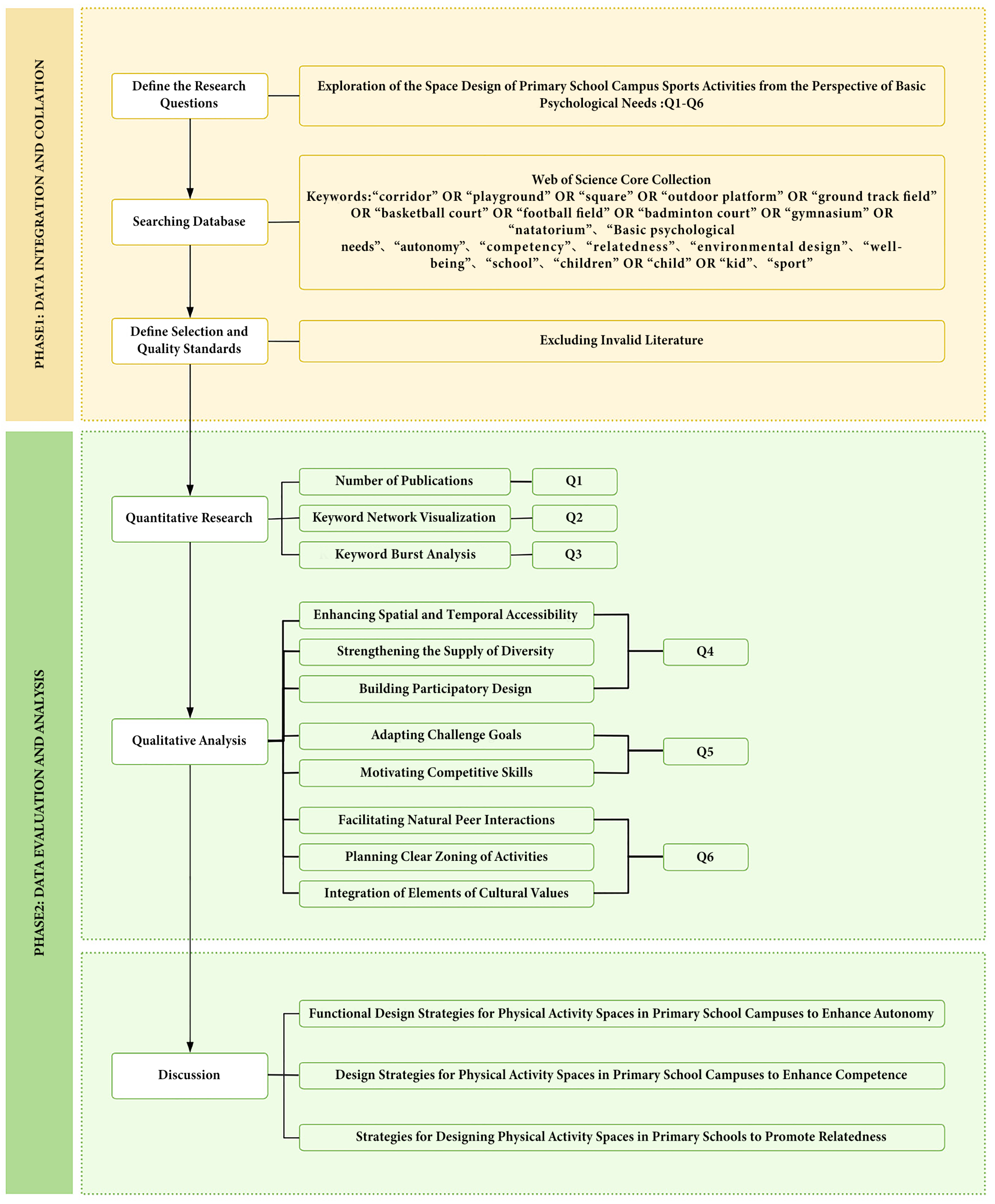
Figure 1. Research Methodology: Flowchart of the mixed-methods approach, illustrating the complete process from problem definition to discussion of findings. (Arrows indicate the sequential flow of the process.)
Buildings 16 00222 g001
Figure 2. Graph of trends in communications.
Buildings 16 00222 g002
Figure 3. Keyword clustering diagram.
Buildings 16 00222 g003
Figure 4. Keyword burst map.
Buildings 16 00222 g004
Table 1. Defined research questions.
General QuestionSub-QuestionsResearch Methods
From the perspective of exploring basic psychological needs, how can the physical activity space in primary school campus be designed to improve children’s happiness?Q1: Research statusQuantitative research
Q2: Research hotspots
Q3: Research trends
Q4: The relationship between autonomy and the design of physical activity spaces in primary school campusesQualitative analysis
Q5: The relationship between competence and the design of physical activity spaces in primary school campuses
Q6: The relationship between relatedness and the design of physical activity spaces in primary school campuses
Table 2. Detailed keyword statistics.
Search DimensionsKeywordAdjusted KeywordsReasons For Adjustment
Core Theory“Basic psychological needs,” “autonomy,” “competence,” “relatedness”Remain unchangedThis study adopts the theory of basic psychological needs as its core analytical perspective.
Event venue“corridor,” “playground,” “square,” “outdoor platforms,” “ground track field,” “basketball court,” “football field,” “badminton court,” “gymnasium,” “natatorium”Remain unchangedAn operational definition of “primary school physical education activity spaces”. Drawing upon comprehensive studies, this has been specified into a series of distinct spatial typologies using English keywords to ensure exhaustive retrieval.
Core premises“primary school,” “elementary school”“school”Reason for adjustment: The initial retrieval results were insufficient (only 123 articles), rendering analysis impracticable.
Theoretical Basis: Physical activity spaces in primary schools and broader educational institutions share significant commonalities in functional attributes and usage logic.
Adjustment effect: The number of retrieved results increased to 579, yielding richer data and a more comprehensive perspective while maintaining relevance to the core research focus.
Table 3. Keyword terms and number of searches used for data collection.
KeywordsNumber of Documents Searched
(TS = (“Basic psychological needs”) AND TS = (“children” OR “child” OR “kid”) AND TS = (sport))61
(TS = (“corridor” OR “playground” OR “square” OR “outdoor platform” OR “ground track field” OR
“basketball court” OR “football field” OR “badminton court” OR “gymnasium” OR “natatorium”) AND
TS = (“Basic psychological needs”) AND TS = (school))
9
(TS = (“corridor” OR “playground” OR “square” OR “outdoor platform” OR “ground track field” OR
“basketball court” OR “football field” OR “badminton court” OR “gymnasium” OR “natatorium”) AND
TS = (autonomy) AND TS = (school))
87
(TS = (“corridor” OR “playground” OR “square” OR “outdoor platform” OR “ground track field” OR
“basketball court” OR “football field” OR “badminton court” OR “gymnasium” OR “natatorium”) AND
TS = (competency) AND TS = (school))
124
(TS = (“corridor” OR “playground” OR “square” OR “outdoor platform” OR “ground track field” OR
“basketball court” OR “football field” OR “badminton court” OR “gymnasium” OR “natatorium”) AND
TS = (relatedness) AND TS = (school))
12
(TS = (“corridor” OR “playground” OR “square” OR “outdoor platform” OR “ground track field” OR
“basketball court” OR “football field” OR “badminton court” OR “gymnasium” OR “natatorium”) AND
TS = (“environmental design”) AND TS = (school))
7
(TS = (“corridor” OR “playground” OR “square” OR “outdoor platform” OR “ground track field” OR
“basketball court” OR “football field” OR “badminton court” OR “gymnasium” OR “natatorium”) AND
TS = (“well-being”) AND TS = (school))
279
Table 4. Coding Manual.
Core ThemeCodeOperational Definition
AutonomyA1—Enhancing spatial and temporal accessibilityThe spatial layout described in the literature reduces physical or time barriers to accessing activity areas.
A2—Strengthening the supply of diversityThe literature describes a variety of facilities, equipment, and activity scenarios designed to support free selection and exploration based on individual interests, abilities, and moods.
A3—Building participatory designThe literature indicates that the design process incorporates children’s participation, opinions, or ideas.
CompetenceC1—Adapting challenge goalsThe difficulty level of facilities or activities described in the literature is matched to the abilities of children of different ages, genders, and skill levels.
C2—Motivating competitive skillsThe literature describes the establishment of multiple difficulty levels within the same space or facility system.
RelatednessR1—Facilitating natural peer interactionsThe literature describes how spatial design naturally elicits or facilitates behaviours such as social interaction, conversation, and cooperative play among children.
R2—Planning clear zoning of activitiesThe literature describes the use of physical boundaries, ground markings, and other means to clearly demarcate functional zones within activity spaces.
R3—Integration of elements of cultural valuesThe literature mentions incorporating elements into spatial design that evoke cultural identity and collective memory.
Table 5. Frequency of design code appearances.
Core ThemeCodeFrequency of Occurrence
AutonomyA1—Enhancing spatial and temporal accessibilityn = 9
A2—Strengthening the supply of diversityn = 8
A3—Building participatory designn = 2
CompetenceC1—Adapting challenge goalsn = 6
C2—Motivating competitive skillsn = 5
RelatednessR1—Facilitating natural peer interactionsn = 4
R2—Planning clear zoning of activitiesn = 3
R3—Integration of elements of cultural valuesn = 2
Disclaimer/Publisher’s Note: The statements, opinions and data contained in all publications are solely those of the individual author(s) and contributor(s) and not of MDPI and/or the editor(s). MDPI and/or the editor(s) disclaim responsibility for any injury to people or property resulting from any ideas, methods, instructions or products referred to in the content.