Abstract
This study investigates ceramic bricks produced by partially replacing clay with Pb–Zn metallurgical residues (lead furnace dust and cyclone dust), fly ash, and carbonaceous additives. The novelty lies in the integrated multi-waste formulation and the combined FTIR–TGA–XRD analytical approach used to elucidate phase-formation mechanisms. The results show that firing promotes the development of quartz, mullite, iron oxides, and an extensive Fe–Pb–Zn–Si–O amorphous network, while higher residue contents enhance amorphization and suppress mullite crystallization. These microstructural changes correlate with reduced compressive strength (1.6–3.1 MPa) and high water absorption (32–36%), although all samples completed 15 freeze–thaw cycles. Heavy-metal leaching assessed by atomic absorption spectroscopy (AAS) revealed very low Pb (0.08–0.20 mg/L) and Zn (0.25–0.45 mg/L) release, well below international safety limits, demonstrating effective immobilization of hazardous ions within the glassy matrix. Overall, the study provides new insight into multi-waste interactions during sintering and confirms that controlled residue incorporation enables environmentally safe, non-load-bearing ceramic materials with reduced clay consumption.
1. Introduction
The construction industry is one of the largest global consumers of natural resources and generators of waste. According to the European Commission, construction activities account for nearly 40% of total raw material consumption and more than 30% of waste generation in Europe [1]. Although more than 750 million tons of industrial and construction waste are produced annually, only 30–40% undergo recycling [2]. This contributes to soil degradation, water contamination, and increased CO2 emissions, emphasizing the need for sustainable approaches to material production. Circular-resource strategies are increasingly adopted to reduce environmental impact and reintegrate industrial residues into building material manufacturing [1,3,4]. It is well established that microstructural modifications induced by various fillers can significantly affect the performance properties of materials [5].
Clay brick remains an essential construction material due to its mechanical strength, durability, and thermal stability. However, conventional brick production requires significant clay extraction and energy input. Numerous studies have demonstrated that incorporating industrial by-products—such as fly ash, metallurgical residues, sewage sludge, and agricultural waste—can reduce the environmental footprint while modifying or improving certain ceramic properties [6,7,8,9,10,11,12,13]. For example, Sutcu et al. [6] reported that fly ash enhances sintering and decreases firing temperature, while Chindaprasirt et al. [11] showed that combining fly ash with waste glass improves water resistance. Research by Taha et al. [7,8] and Ospanov et al. [9] confirmed that zinc-containing dusts and sewage sludge can partially replace clay and produce environmentally acceptable ceramic products.
Several studies have reported that ceramic materials produced with industrial wastes—such as fly ash, metallurgical dusts, electroplating sludge, and Pb–Zn residues—may exhibit varying degrees of heavy-metal mobility depending on firing conditions, glass-phase development, and mineral transformations [8,14,15]. Research shows that hazardous elements (Pb, Zn, Cd, Cr) can be partially immobilized within silicate or vitreous matrices, yet their long-term stability is strongly influenced by porosity, fluxing oxides, and the extent of vitrification [11,16,17]. Because of these factors, assessing the potential toxicity and leaching behavior of waste-derived bricks is essential for evaluating their environmental safety. Despite growing interest in waste-based ceramics, the toxicity of bricks incorporating Pb–Zn-bearing industrial residues remains insufficiently studied, indicating the need for a focused environmental assessment and experimental leaching analysis.
An important direction within this field is the use of carbonaceous additives—including coal dust, biomass, or graphite—which function as internal fuel and pore-forming agents, reducing density and enhancing thermal insulation [18,19,20]. Despite these advances, most studies focus on single-waste or two-waste systems, whereas multi-component industrial residues remain insufficiently explored [16]. In particular, the combined incorporation of Pb–Zn production dusts, fly ash, and carbon-based additives has not been systematically investigated, although such combinations may improve waste immobilization and enable synergistic mineral-phase transformations. Compositional variability within metallurgical dusts further complicates reproducibility, increasing the risk of heavy-metal leaching when immobilization is incomplete [8,14]. Moreover, firing regimes typically used for clay-based ceramics (900–1050 °C) [13,21] may require adjustment to ensure complete stabilization and glass-phase development. Long-term durability indicators—such as frost resistance and water stability—also remain insufficiently documented, while scaling laboratory formulations to industrial production continues to present challenges [9].
Additional studies have examined other classes of industrial by-products, including fluorogypsum and fluorohydrite, demonstrating that chemical activation enables their transformation into durable, environmentally safe binders for construction applications [22,23]. These findings support broader zero-waste and circular-economy principles. Recent advances in functional building materials highlight the growing potential of industrial by-products and engineered clay systems to enhance thermal, mechanical, and environmental performance. Studies have shown that the incorporation of aluminosilicate residues, mineral wastes, and modified clay composites can stimulate beneficial phase formation, promote glassy network development, and improve heavy-metal immobilization in ceramic matrices [24,25,26,27]. These works demonstrate that multi-source waste integration is a promising pathway for designing sustainable, high-performance construction materials, further reinforcing the relevance of combining Pb–Zn dust and fly ash in ceramic brick formulations.
The novelty of this study lies in the integrated use of Pb–Zn metallurgical dusts, fly ash, and carbonaceous additives within a single ceramic formulation, analyzed through a correlated FTIR–TGA–XRD approach. This provides comprehensive insight into multi-waste interactions during sintering, phase evolution, and microstructural development, while also clarifying the mechanisms of heavy-metal immobilization in complex ceramic systems.
In addition to the scientific context, the authors have prior experience in the development of waste-derived construction materials, including a patented technology for producing anhydrite binder from fluorogypsum residues [28]. This practical background supports the relevance of the current study and demonstrates the feasibility of converting industrial waste into environmentally safe and functional building materials.
The aim of this research is to determine optimal waste ratios that ensure effective Pb/Zn stabilization and acceptable physico-mechanical performance, thereby supporting the development of sustainable construction materials within circular-resource frameworks.
In contrast to earlier studies limited to one- or two-waste systems, the combined use of Pb–Zn dusts, fly ash, and carbonaceous additives provides complementary functions that are unattainable in binary mixtures. Their synergistic interaction during firing promotes the formation of mixed Fe–Pb–Zn–Si–O glassy domains, modifies mullite crystallization, and enhances Pb/Zn immobilization. This integrated multi-waste mechanism represents the key innovative contribution of the current work.
2. Materials and Methods
2.1. Raw Materials
The ceramic mixtures were prepared using local clay as the base material and two types of Pb–Zn metallurgical residues: lead furnace dust and cyclone dust. Fly ash was used as a supplementary siliceous additive, while a carbonaceous component (bituminous coal) served as an internal fuel promoting partial pore formation during firing. Only four formulations were produced, containing 20 wt.% and 25 wt.% of lead furnace dust and 20 wt.% and 25 wt.% of cyclone dust. No electrostatic precipitator dust (ESP) was incorporated into the final mixtures. All raw materials were dried and ground to ensure homogeneity before mixing. The compositions of the ceramic mixtures are summarized in Table 1.
Table 1.
Composition of ceramic mixtures (wt.%).
2.2. Preparation of Samples
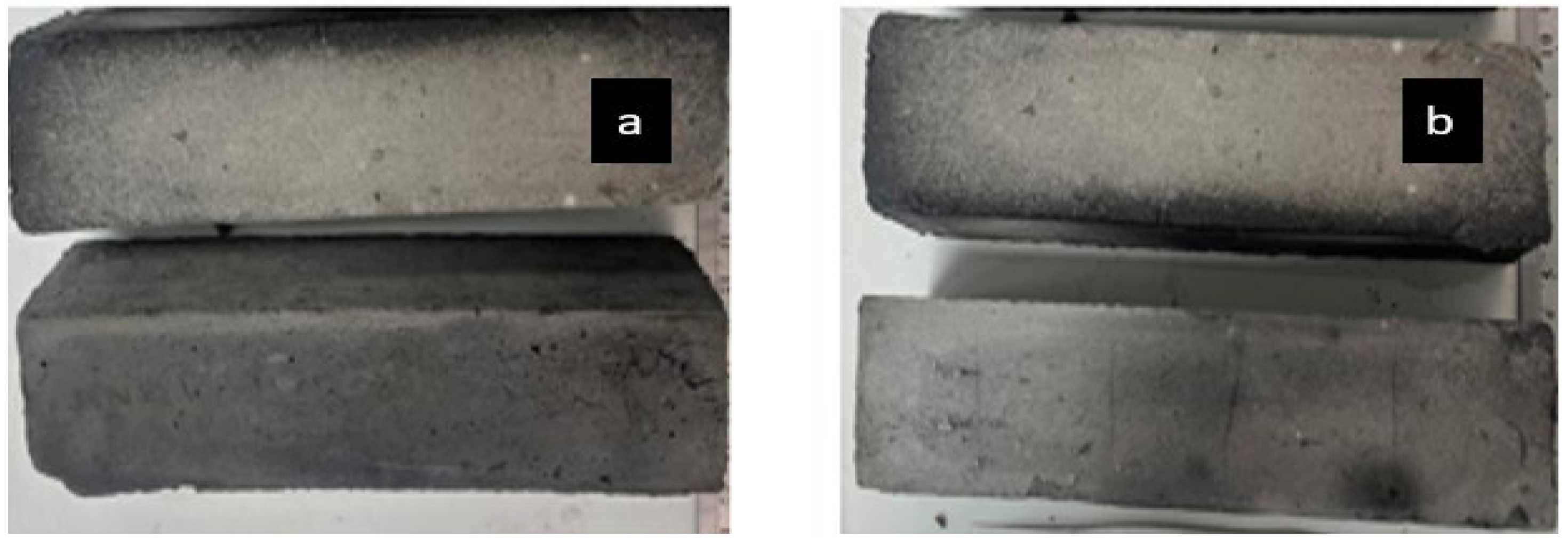
Dry components were mixed for 3–5 min and moistened to 18–22% to obtain a plastic mass. The mixture was molded into steel forms (160 × 40 × 40 mm), followed by two-stage drying: 48 h under ambient conditions and oven-drying at 105 °C. Firing was performed in a muffle furnace at 1000 °C with a 2 h holding period and subsequent furnace cooling. The appearance of the produced ceramic samples with different types and contents of Pb–Zn dusts is presented in Figure 1.
Figure 1.
Appearance of ceramic bricks produced using different types and contents of metallurgical dust additives: (a) bricks with 20% and 25% lead furnace dust; (b) bricks with 20% and 25% cyclone dust, respectively.
2.3. FTIR Analysis
FTIR spectra were recorded using an FT-801 spectrometer (Simex, Moscow, Russia) with a resolution of 1 cm−1 in the range of 500–4000 cm−1. The standard KBr pellet technique was applied, in which the sample was mixed with potassium bromide at a ratio of 1:10. Measurements were carried out at 25 °C, with 100 scans collected for each specimen. Prior to use, KBr was ground and pre-calcined at 200 °C for 3 h to remove residual moisture.
2.4. Thermogravimetric Analysis (TGA)
The thermal behaviour of raw materials was analysed using a differential thermogravimetric analyzer BXT-TGA 103 (BXT Instruments, Chongqing, China) under an argon atmosphere. Measurements were performed within the temperature range of 30–1000 °C at a heating rate of 10 ± 1 °C/min. The sample mass was approximately 20 ± 2 mg.
2.5. X-Ray Diffraction (XRD)
X-Ray diffraction (XRD) analysis was performed using an X’Pert PRO diffractometer (PANalytical, Almelo, The Netherlands) with Cu Kα radiation. Diffraction patterns were collected in the 2θ range of 20–90°, and the obtained data were used to identify crystalline phases and evaluate structural changes after firing.
2.6. SEM Morphology and EDS Composition of Raw Clay
The microstructural and energy-dispersive analysis of the clay powder was carried out using a SEM3200 scanning electron microscope (CIQTEK Co., Ltd., Hefei, China) equipped with a tungsten cathode. The observations were performed at an accelerating voltage of 15 kV under low-vacuum conditions. A backscattered electron (BSE) detector was used to obtain the images, and the microstructure was recorded at a magnification of 100×.
2.7. Mechanical and Durability Testing
Compressive Strength. Compressive strength was tested according to ASTM C67 [29] using standard loading procedures.
Water Absorption. Water absorption was evaluated following ISO 10545-3 [30] by immersing dried samples in water for 48 h.
Frost Resistance. Freeze–thaw resistance was assessed by cyclic exposure between −20 °C and +20 °C with visual inspection for cracks and spalling.
2.8. Heavy-Metal Leaching and AAS Analysis
Leached Pb and Zn concentrations were measured using an atomic absorption spectrometer Savant AA (GBC Scientific Equipment Pty Ltd., Keysborough, VIC, Australia; 2023). Crushed samples (<5 mm) were mixed with deionized water at a liquid–solid ratio of 10:1, shaken for 18 h, and filtered (0.45 µm). AAS measurements were performed in an air–acetylene flame using certified standard solutions. Detection limits were 0.005 mg/L for Pb and 0.01 mg/L for Zn. Measurements were performed in triplicate and compared with international regulatory limits (TCLP/EN 12457 [31,32]).
3. Results and Discussion
To ensure a clear interpretation of the results, this section presents the findings in three consecutive stages. First, the raw materials (clay loam, fly ash, lead furnace dust, cyclone dust (P-3), and coal) are characterized by FTIR, TGA, and XRD to establish their chemical, thermal, and phase features. Second, the same analytical techniques are applied to the fired ceramics to assess structural changes and phase evolution during sintering. Finally, the physico-mechanical and durability properties of the bricks are evaluated and related to the microstructural observations. This integrated approach clarifies how the composition and thermal behavior of the raw materials govern the microstructure, porosity, and overall performance of the fired ceramics.
3.1. Characterization of Raw Materials (Powders)
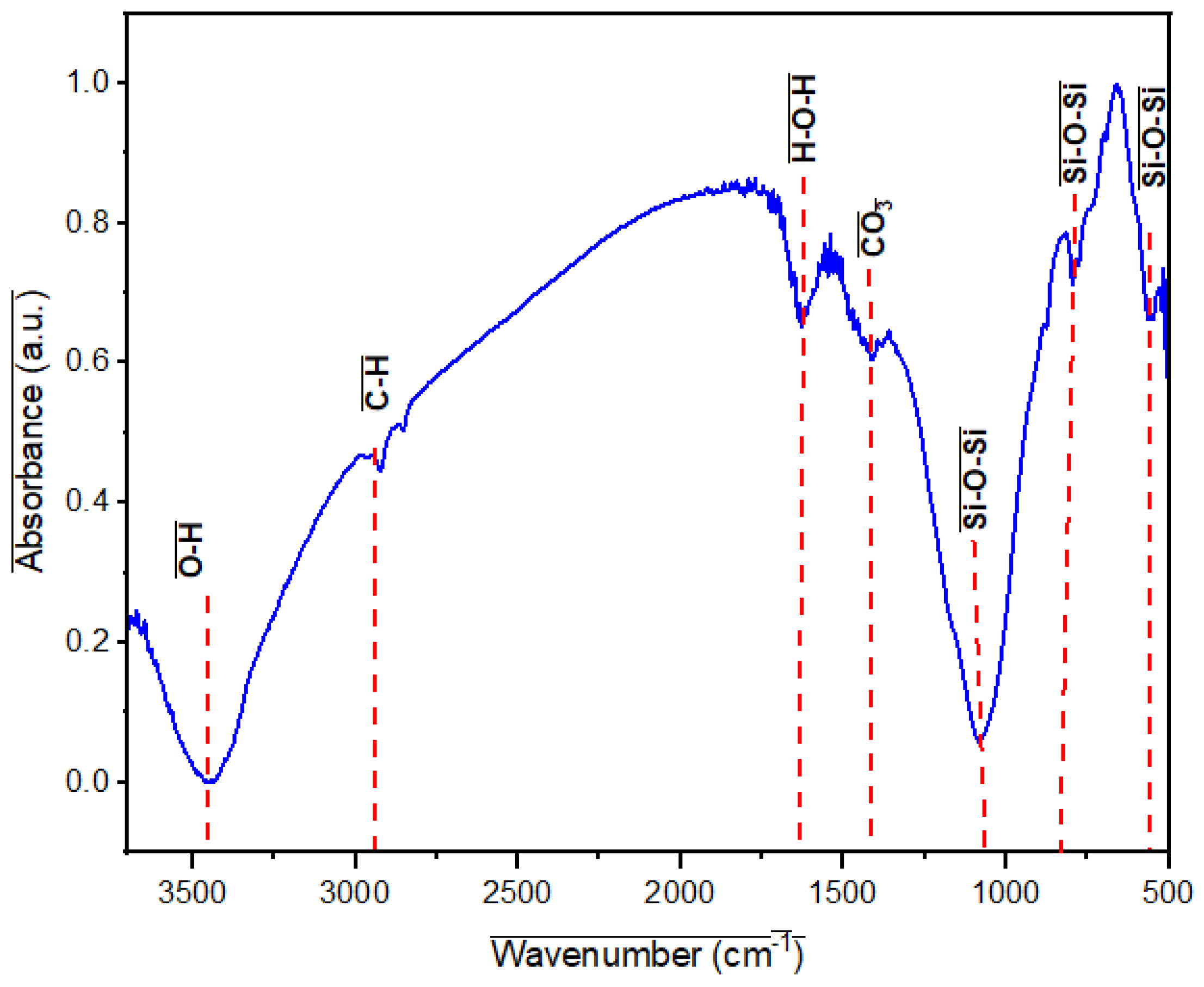
Fly Ash. Figure 2 shows the FTIR spectrum of fly ash obtained after complete fuel combustion. The broad band at 3436 cm−1 corresponds to O–H stretching of adsorbed water and surface hydroxyls, while the weak feature at 2920 cm−1 reflects trace C–H vibrations from residual organic fragments [33]. The band at 1640 cm−1 (H–O–H bending) confirms the presence of physically bound moisture.
Figure 2.
FTIR spectrum of fly ash.
A distinct absorption at ~1430 cm−1 is attributed to carbonate groups (CaCO3/MgCO3), typical for alkaline-earth components or secondary carbonation. The strong band in the 1080–1100 cm−1 region represents Si–O–Si asymmetric stretching in amorphous silica and quartz. The signal at 780–800 cm−1 corresponds to symmetric Si–O–Si vibrations, while the feature near 550 cm−1 indicates Si–O–Al bending in aluminosilicates or mixed silicate–phosphate units [34].
Overall, the spectrum indicates that the fly ash is dominated by an amorphous silicate phase with minor carbonate impurities and minimal organic residue, supporting its suitability as a mineral filler in ceramic formulations.
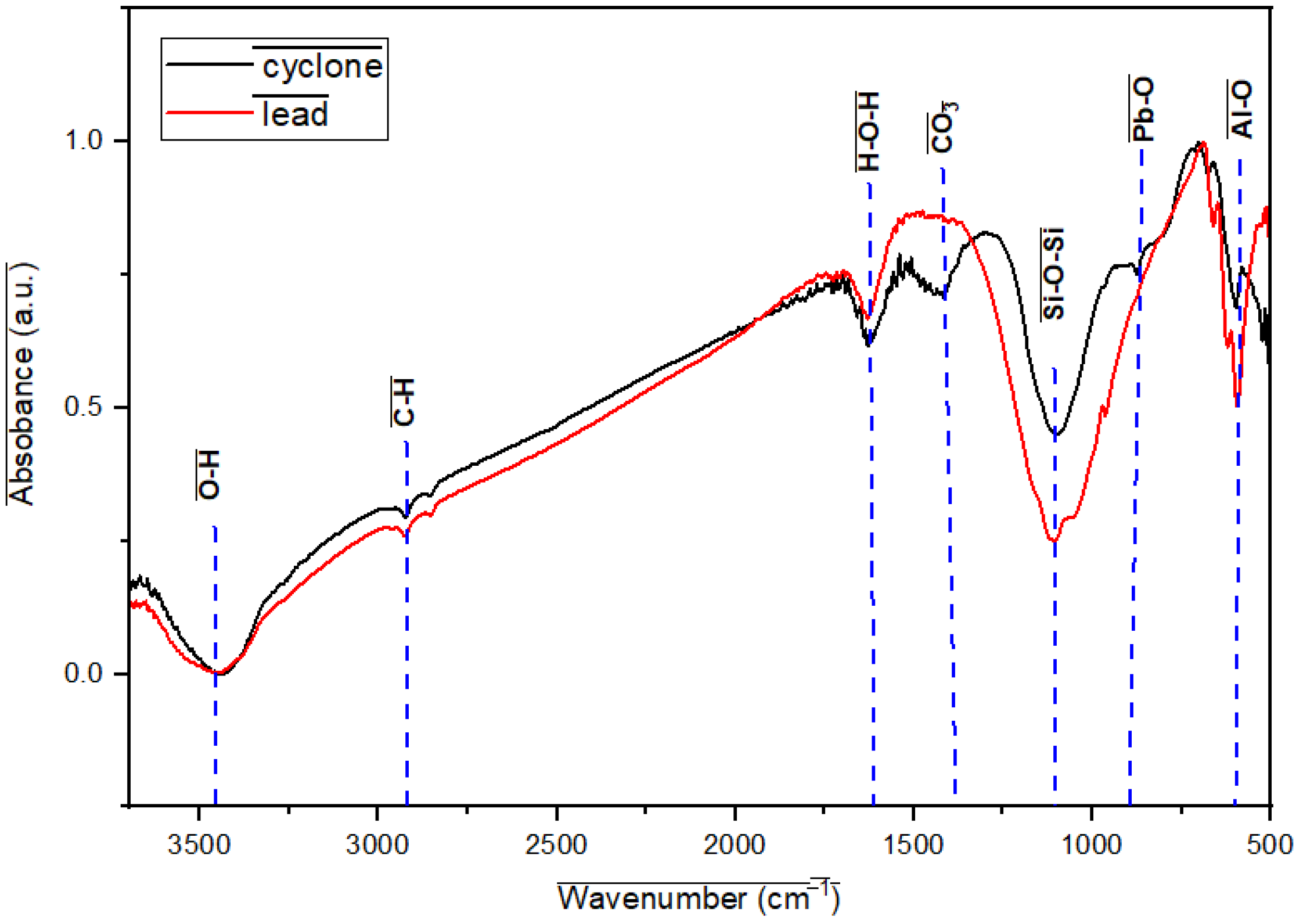
Lead Furnace and Cyclone Dust. Figure 3 presents the FTIR spectra of lead furnace dust and cyclone dust (P-3). Both materials show a broad O–H stretching band near 3430 cm−1 and a weak C–H feature at 2920 cm−1, reflecting adsorbed moisture and trace organic residues. The H–O–H bending mode at 1635 cm−1 indicates surface-bound hydration, while the band at ~1450 cm−1 corresponds to Ca/Mg carbonates originating from high-temperature metallurgical processes.
Figure 3.
FTIR spectrum of lead furnace and cyclone dust.
The strong absorption at 1080–1090 cm−1 is associated with Si–O–Si stretching, suggesting the presence of siliceous particles or secondary silicate phases formed during volatilization of the charge. The absorption band in the 600–900 cm−1 region is a superposition of several vibrational modes, including contributions from Pb–O and Zn–O bonds, as well as Fe–O and Si–O–(Al) bending vibrations typical of complex oxide and aluminosilicate systems present in metallurgical dusts. Of particular relevance are the deformation vibrations in the 600–900 cm−1 region, which are characteristic of Pb–O and Zn–O bonding and reflect the presence of PbO, Pb3O4, ZnO, and mixed oxide species typical of Pb–Zn smelting residues [33,35]. A signal near 520 cm−1 is attributed to aluminosilicate fragments entrained during dust formation.
Overall, the FTIR spectra confirm that both dusts possess a complex mixture of silicate, carbonate, iron-oxide, and Pb–Zn-oxide components formed through high-temperature volatilization and condensation in the smelting off-gas stream.
The FTIR spectra of the dusts contain characteristic absorption bands in the 600–900 cm−1 region, corresponding to Pb–O and Zn–O vibrations. These bands are typical for oxide and mixed oxide species formed in Pb–Zn metallurgical residues and are widely reported in the literature. Therefore, the presence of heavy-metal ions (Pb and Zn) in the raw dusts is supported by both our FTIR results and previous studies.
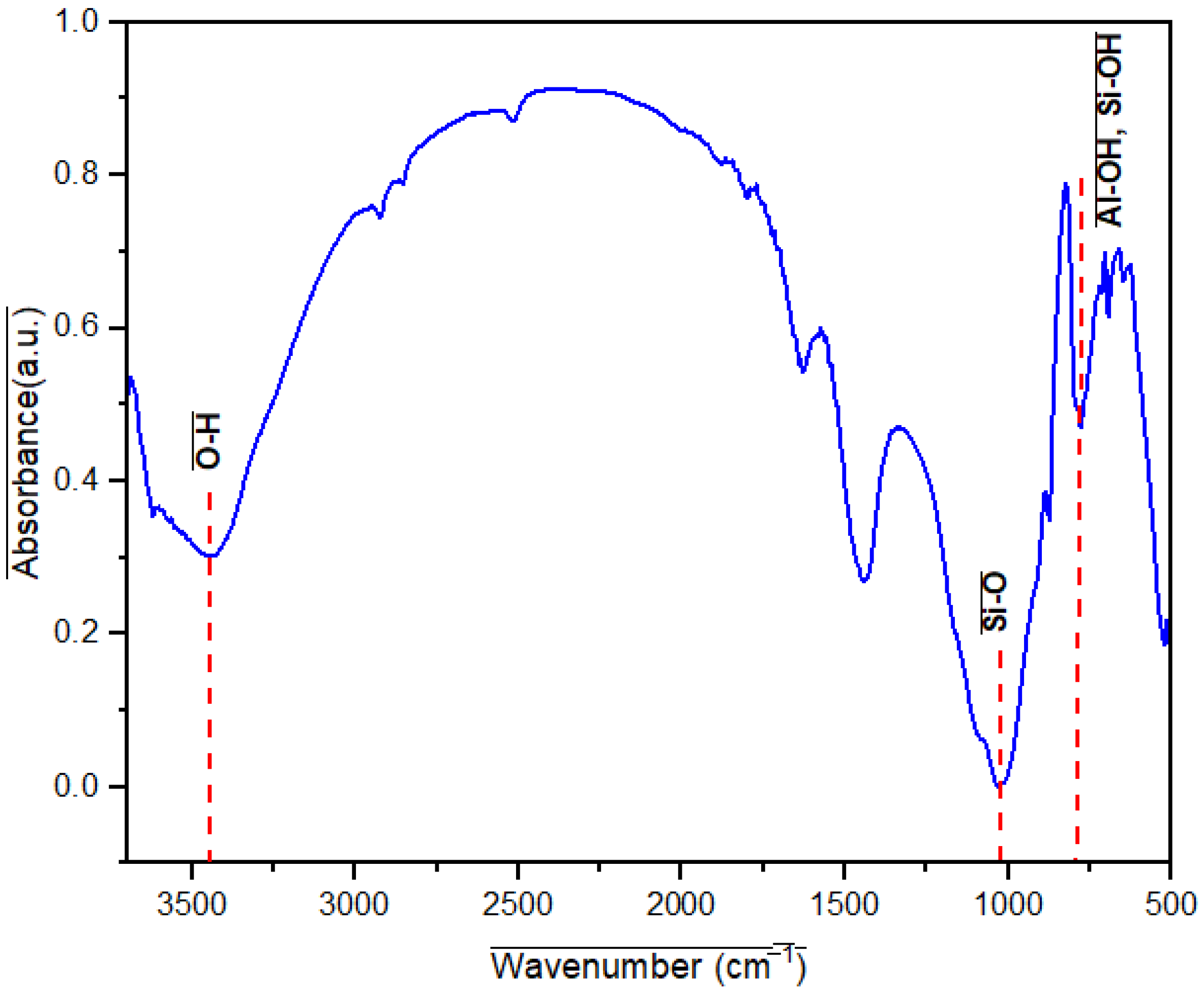
Clay Loam. Figure 4 shows the FTIR spectrum of the clay loam. The broad band in the 3600–3200 cm−1 region corresponds to O–H stretching vibrations of kaolinite, montmorillonite, and structurally bound water. A strong absorption at 1000–1100 cm−1 reflects Si–O stretching within aluminosilicate frameworks, indicating the presence of quartz and layered clay minerals. The bands at 800–600 cm−1 arise from Al–OH and Si–OH bending vibrations typical of phyllosilicates, confirming that the clay is dominated by aluminosilicate phases that form the primary structural matrix of the ceramic body [34,36].
Figure 4.
FTIR spectrum of clay loam.
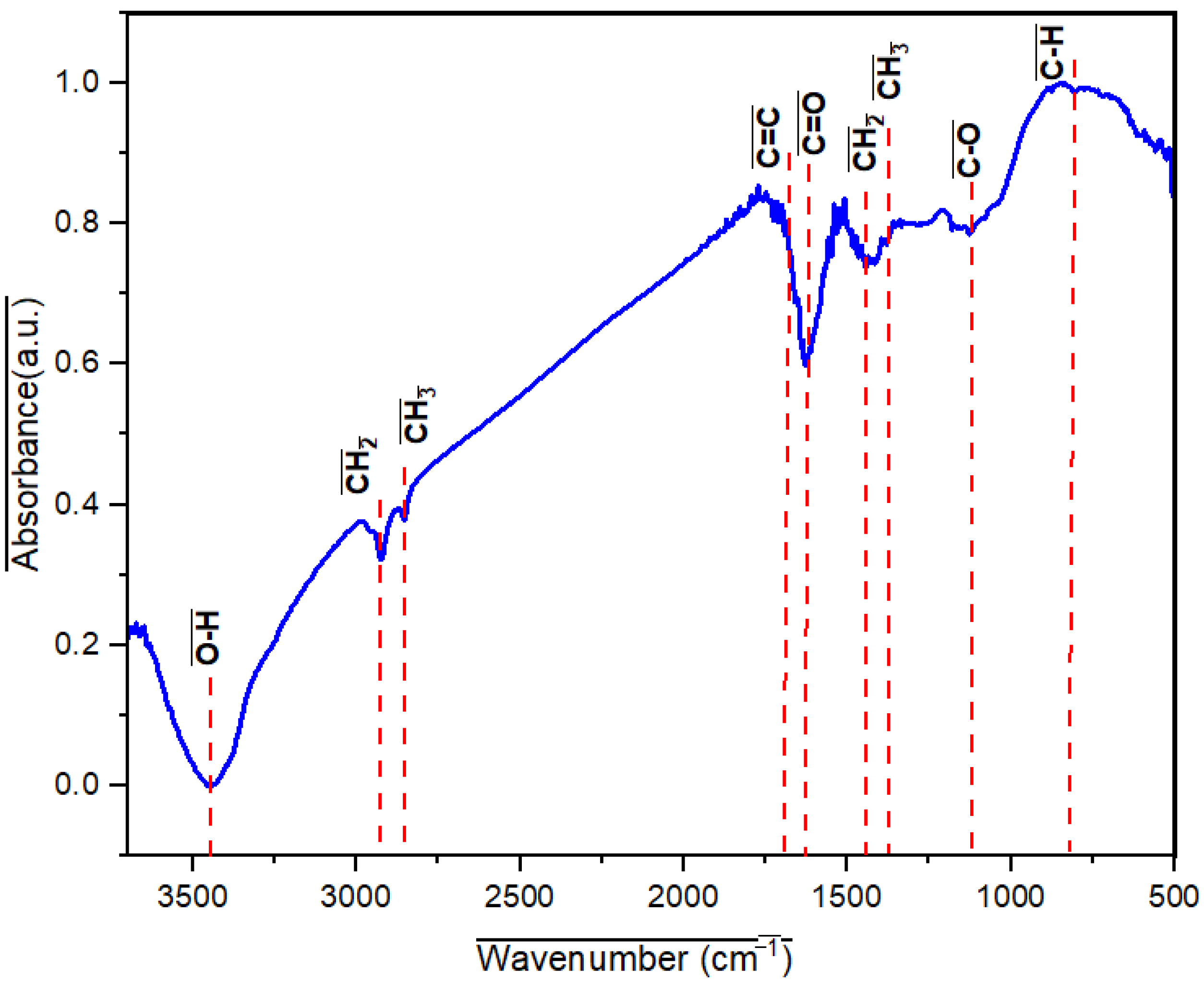
Bituminous Coal. Figure 5 shows the FTIR spectrum of bituminous coal. The broad band near 3420 cm−1 corresponds to hydroxyl groups (phenolic and carboxylic) and adsorbed moisture. The signals at 2920 and 2850 cm−1 represent aliphatic C–H stretching, indicating the presence of long-chain hydrocarbons.
Figure 5.
FTIR spectrum of bituminous coal.
Strong absorptions in the 1700–1600 cm−1 region originate from carbonyl (C=O) and aromatic C=C stretching [33], while the band at ~1450 cm−1 reflects CH2/CH3 deformation vibrations. The 1200–1000 cm−1 region is associated with C–O stretching in alcohols, ethers, and phenolic compounds. Out-of-plane aromatic C–H bending at 700–900 cm−1 indicates a polycyclic aromatic structure typical of medium-rank coals [37].
These spectral features confirm an intermediate metamorphic degree with a high proportion of aromatic carbon structures.
3.1.1. TGA of Raw Materials
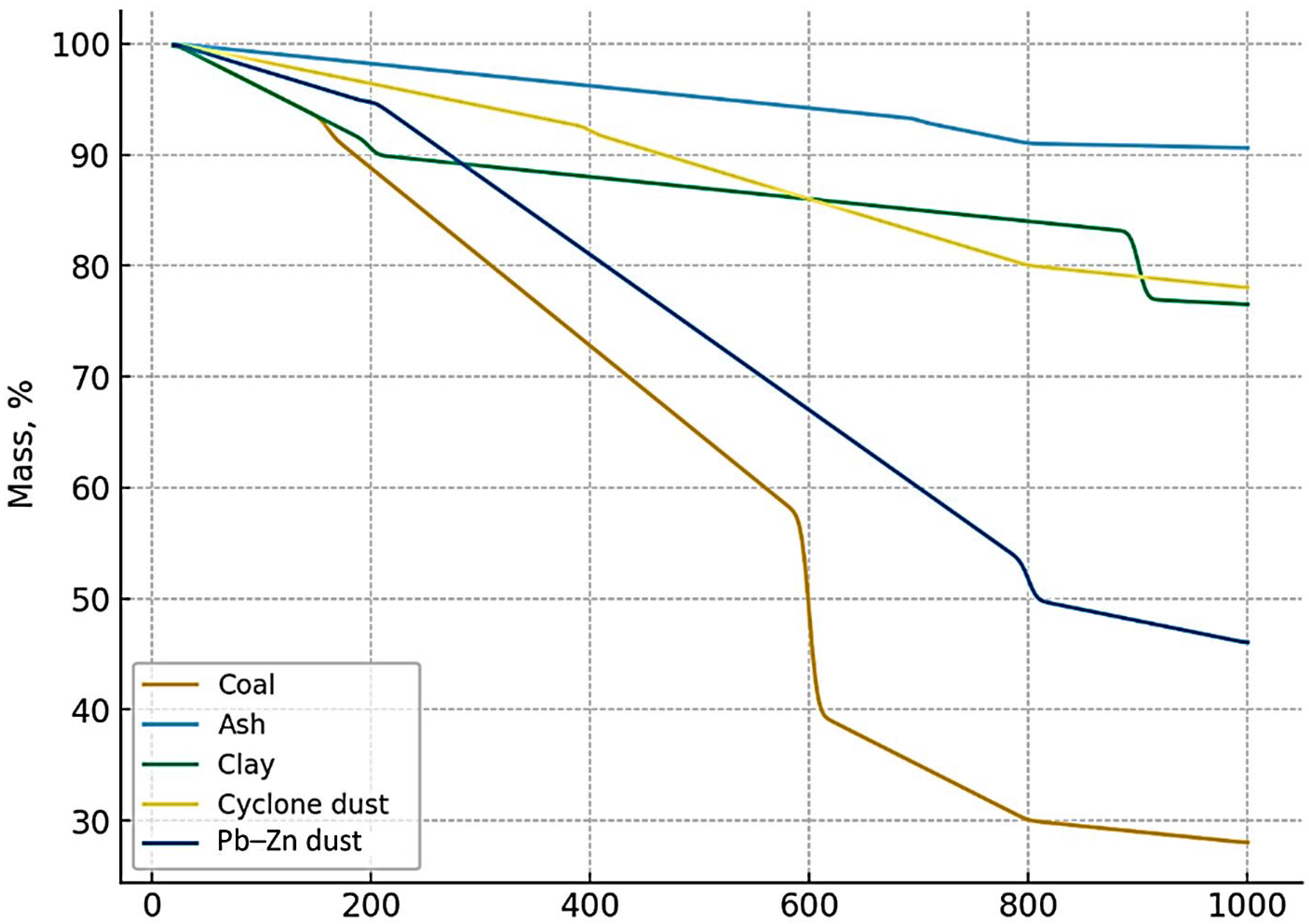
Figure 6 presents the TGA curves of bituminous coal, fly ash, clay loam, lead furnace dust, and cyclone dust (P-3).
Figure 6.
Comparative thermogravimetric analysis of coal, fly ash, clay soils, and dust samples.
Bituminous coal exhibits three typical stages: (i) moisture removal below 160 °C, (ii) intensive pyrolysis and volatile release between 200–600 °C, and (iii) oxidation of fixed carbon in the 400–800 °C range. The high residual mass above 800 °C corresponds to the mineral ash fraction [38].
Fly ash shows minimal mass loss at low temperatures and a characteristic decarbonation peak of CaCO3 near 750 °C. More than 90% of the mass remains at 1000 °C, reflecting the dominance of thermally stable silicate and oxide phases [39].
Clay loam demonstrates moisture release at 30–200 °C, followed by the dehydroxylation of kaolinite–illite phases around 500–520 °C and carbonate decomposition near 850–900 °C. The final residue consists mainly of SiO2, Al2O3, and Fe2O3, indicating negligible organic content [40].
The dust fractions differ in composition and thermal behavior. Cyclone dust—high residual mass (mineral phase) and a shift of the T_peak to higher temperatures, indicating low volatility. Radiation dust—a weak low-temperature peak (200–400 °C) and a broad carbon oxidation peak at 500–800 °C, reflecting a high proportion of fixed carbon [41].
3.1.2. X-Ray Diffraction (XRD) of Raw Materials
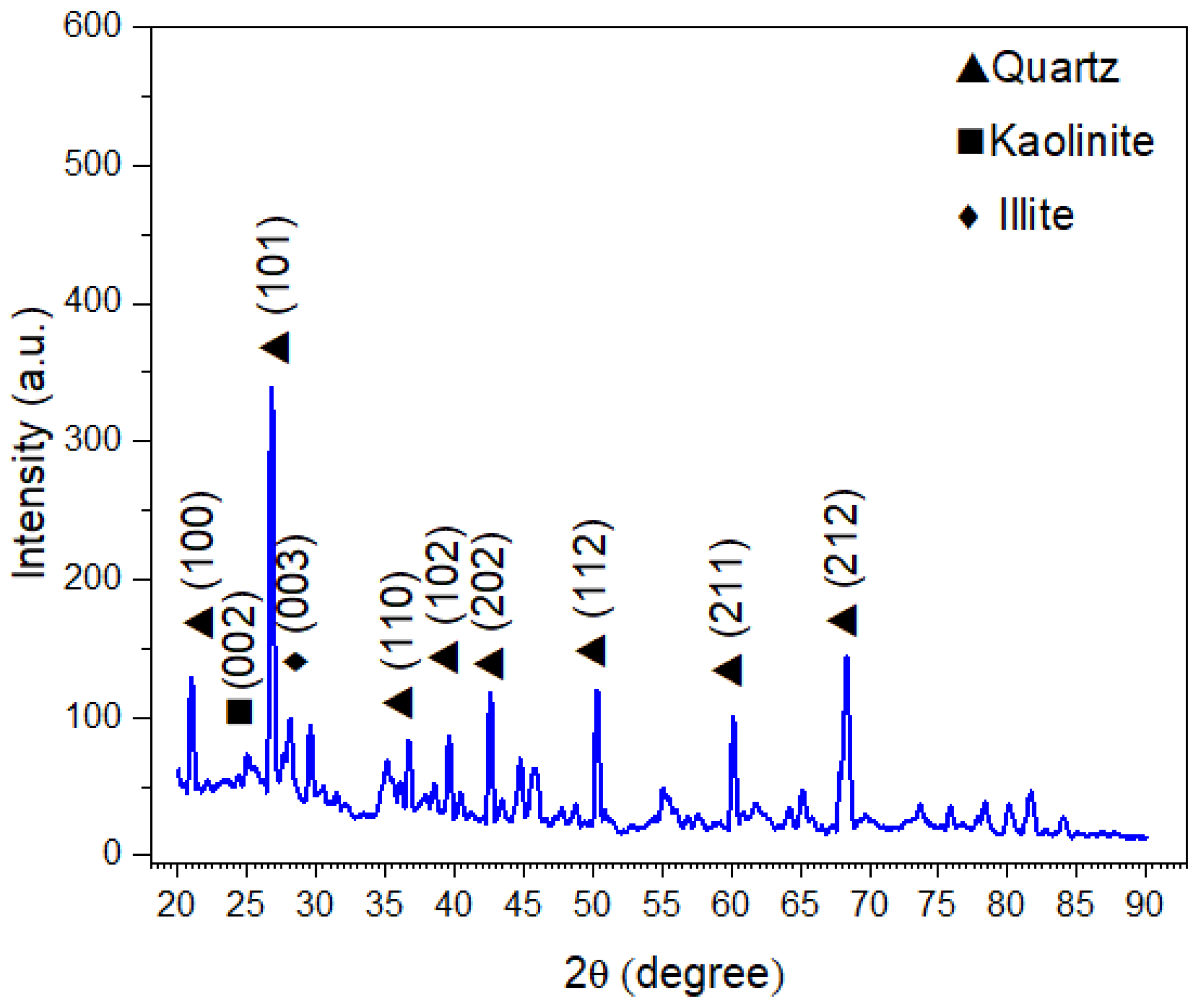
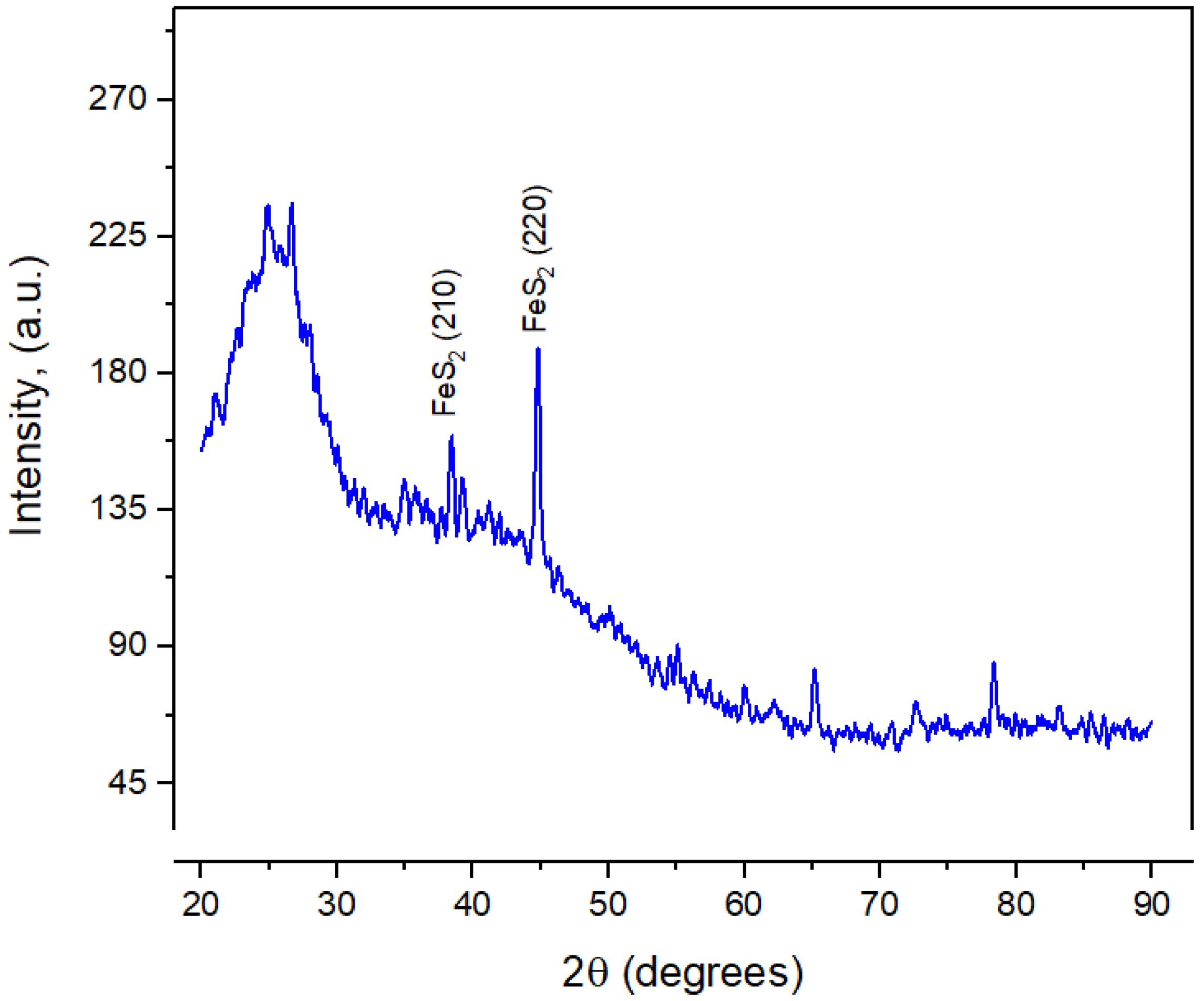
Figure 7, Figure 8, Figure 9, Figure 10 and Figure 11 present the XRD patterns of the raw materials, including clay soils (loam and clay loam), coal, fly ash, and metallurgical dusts (cyclone, convective, and radiation dust). The results confirm significant mineralogical differences among the components, which strongly influence sintering behavior and phase formation during firing.
Figure 7.
XRD pattern of clay soils.
Figure 8.
XRD pattern of coal.
Figure 9.
XRD pattern of fly ash.
Figure 10.
XRD pattern of cyclone dust.
Figure 11.
XRD pattern of lead furnace dust.
Clay soils. The XRD pattern of the clay soils (Figure 7) is dominated by quartz, which exhibits its characteristic reflections at 2θ = 20.8° (100), 26.6° (101), 36.5° (110), 39.8° (102), 50.1° (112), 59.9° (211), and 68.2° (212). A weak diffraction maximum at 2θ ≈ 24.9°, corresponding to kaolinite (002), is also observed, indicating the presence of residual kaolinitic components in the raw clay [42]. In addition, a minor shoulder near 2θ ≈ 26.9° is attributed to the illite (003) reflection, which partially overlaps with the intense quartz peak at 26.6°.
Overall, the mineralogical composition of the clay is typical for ceramic raw materials and is represented by quartz as the dominant phase and minor layered aluminosilicates.
Coal. The XRD pattern of the coal sample (Figure 8) is characterized by a broad diffuse halo in the range of 20–30° 2θ, which is typical for amorphous carbonaceous materials. This feature reflects the predominantly disordered structure of coal and the absence of well-developed crystalline phases [43].
Only two weak yet distinguishable diffraction peaks are observed, corresponding to pyrite (FeS2) [44]. These reflections appear at approximately 36–38° 2θ (210) and 46–48° 2θ (220), confirming the presence of minor crystalline sulfur–iron inclusions naturally occurring in coal.
No additional crystalline phases are detected, which indicates that the coal used in the ceramic mixture is largely amorphous and contributes mainly to the formation of a carbonaceous background rather than to the development of mineral phases during firing.
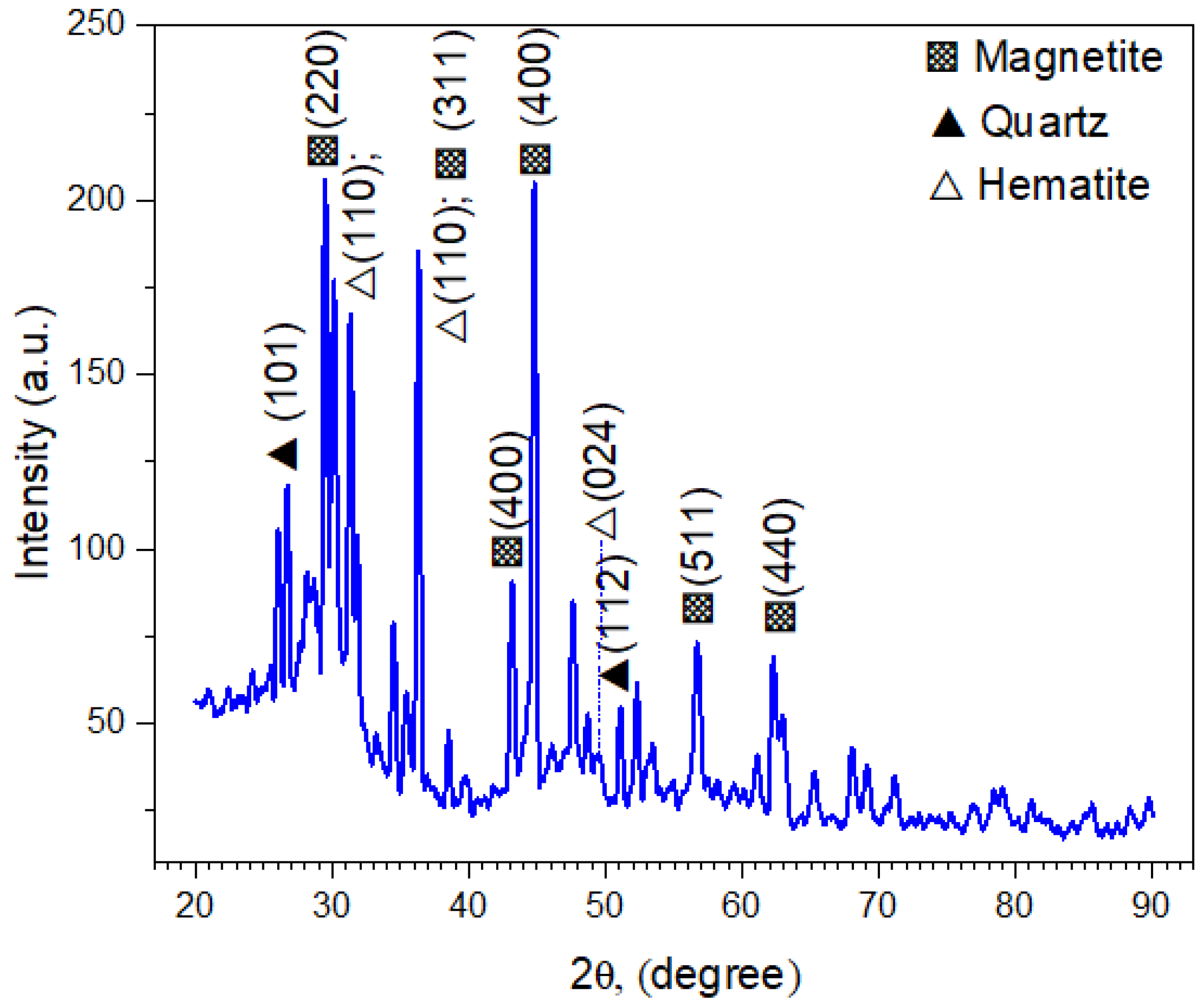
The XRD pattern of the fly ash (Figure 9) shows the presence of quartz (SiO2), magnetite (Fe3O4), and hematite (Fe2O3), which are the typical crystalline phases found in coal-derived fly ash. Quartz is identified by its characteristic reflections at 20.9° (100) and 26.6° (101), with a weaker reflection at 50.1° (112). Hematite is confirmed by the peaks at 33.2° (104), 35.6° (110), and 54.1° (116). Magnetite is clearly identified by the most intense reflection at 43.1° (400), along with additional peaks at 30.1° (220), 35.4° (311), 57° (511), and 62.5° (440).
The broad diffuse background in the 20–40° 2θ region indicates a substantial amount of amorphous aluminosilicate phase, typical for fly ash produced during high-temperature coal combustion. No other crystalline phases of notable intensity were detected.
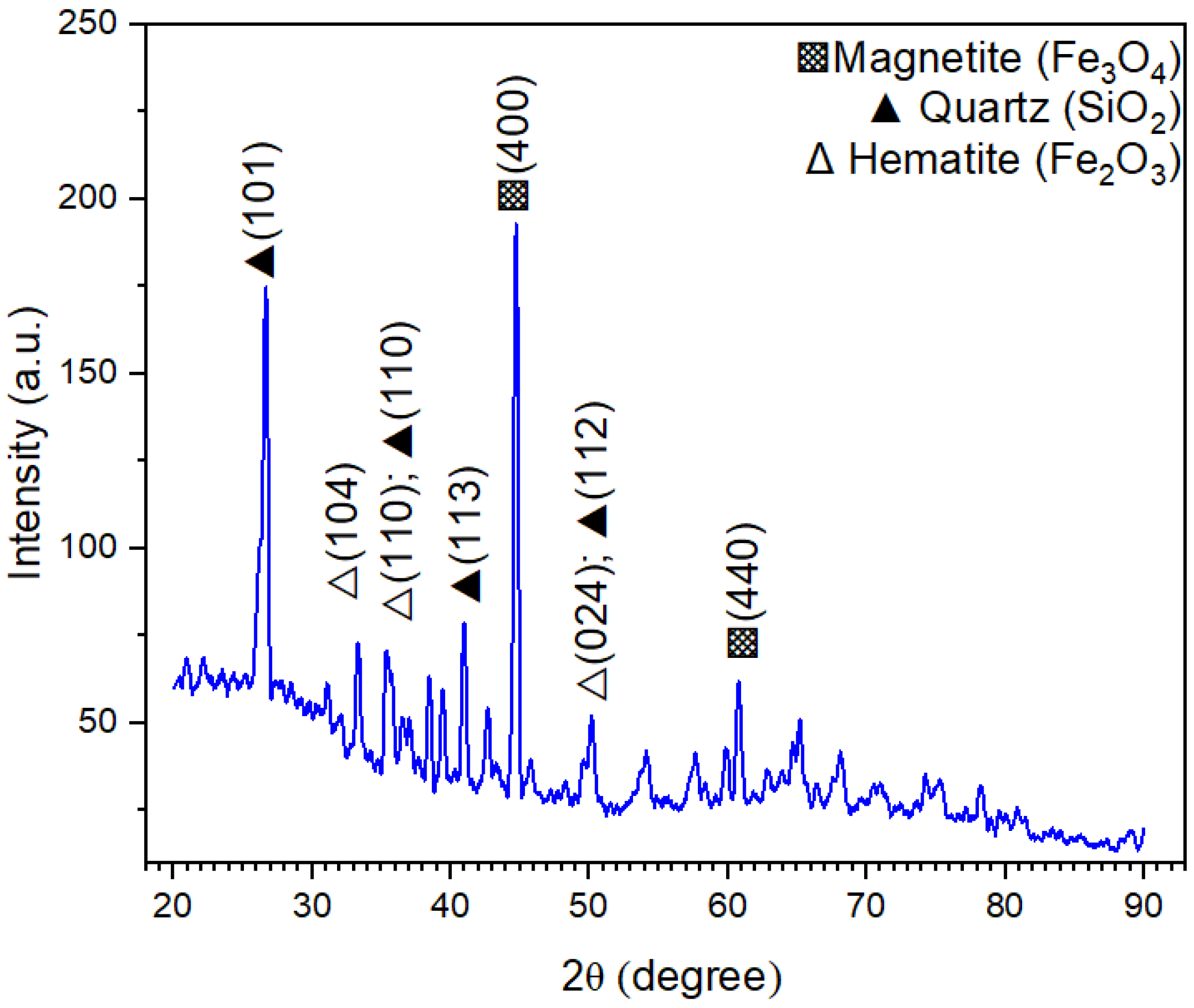
The X-Ray diffraction pattern of the cyclone dust (Figure 10) reveals the presence of quartz (SiO2), hematite (Fe2O3) and magnetite (Fe3O4), which represent the major crystalline phases typically found in high-temperature combustion residues [45]. The dominant reflection at 26.6° 2θ (101) corresponds to quartz, accompanied by additional peaks at 36.5° (110) and 50.1° (112). Iron-containing phases are identified by several reflections: hematite shows characteristic peaks at 33° (104), 35.4° (110) and 49.5° (024), while magnetite is confirmed by its intense reflection at 43.2° (400) together with a higher-angle peak at 56.7° (511).
The broad background and multiple low-intensity features across the 20–90° range indicate the presence of a significant amorphous aluminosilicate matrix, which is characteristic of cyclone-derived mineral dust generated during high-temperature coal combustion. No other crystalline phases of noticeable intensity were detected.
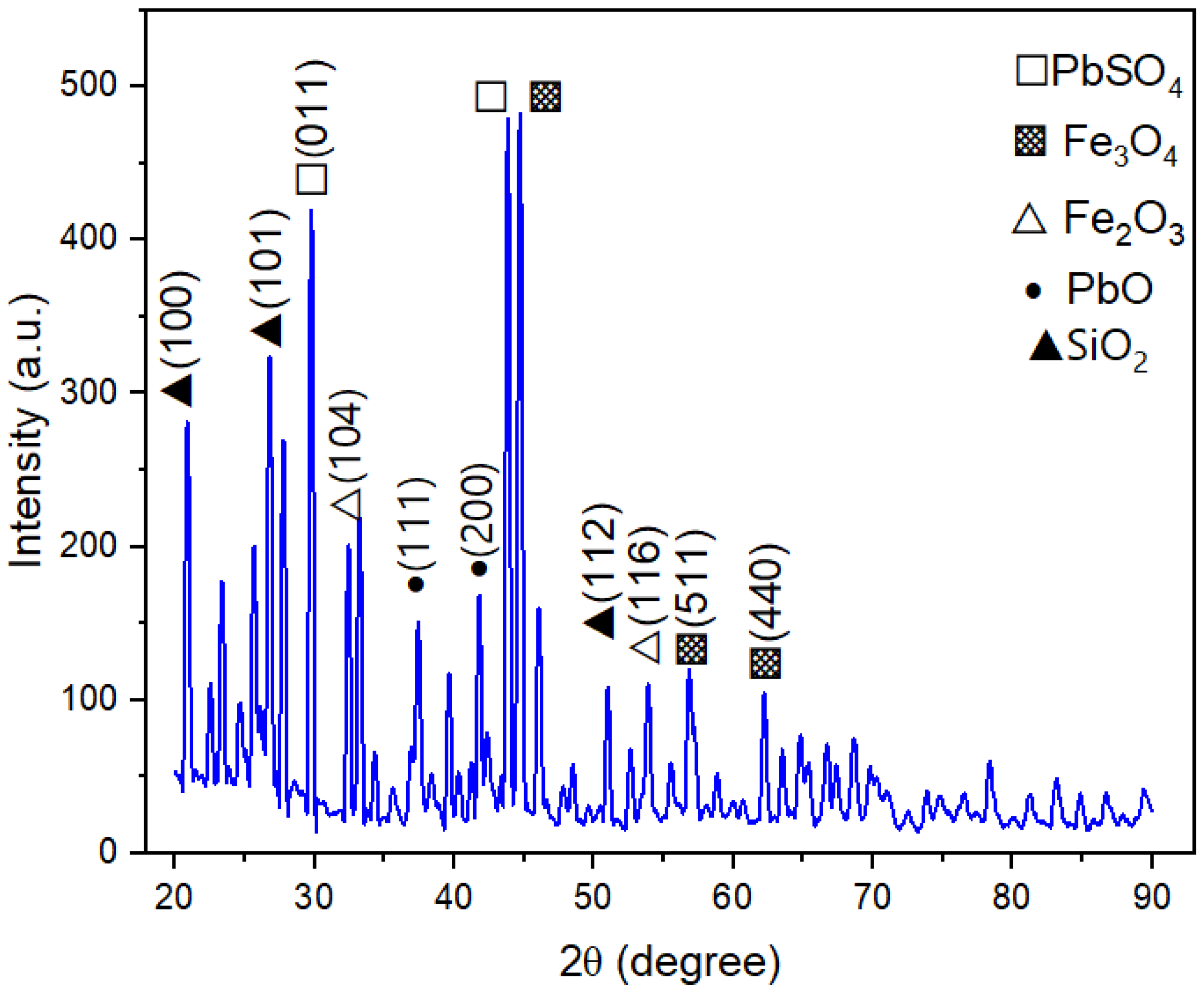
Lead furnace. The X-Ray diffraction pattern of the lead furnace dust (Figure 11) demonstrates a complex mineralogical composition characteristic of high-temperature metallurgical off-gas residues. The most prominent peak at 29° 2θ corresponds to anglesite (PbSO4), which is a typical sulfation product formed during lead smelting. The reflections of lead oxide (PbO) are identified at 36° (111) and 43° (200), confirming the presence of oxidized Pb-containing phases. Iron-bearing components are represented by both hematite (Fe2O3) and magnetite (Fe3O4). Hematite is detected by its characteristic reflections at 33° (104) and 54° (116), whereas magnetite is evidenced by the intense peaks near 43–44° (400) and 56.7° (511), along with the additional reflection at 62.5° (440).
The diffractogram also reveals crystalline quartz (SiO2) through its reflections at 20.8° (100), 26.6° (101) and 50.1° (112). The broad background and multiple overlapping features across the 20–90° range indicate the presence of an amorphous aluminosilicate matrix, which is typical for dust generated from high-temperature combustion and smelting processes [46].
Overall, the phase composition of the lead furnace dust is dominated by PbSO4, PbO, Fe2O3, Fe3O4, and SiO2, reflecting the oxidation–sulfation transformations occurring during pyrometallurgical processing.
3.1.3. SEM Morphology and EDS Composition of Raw Clay
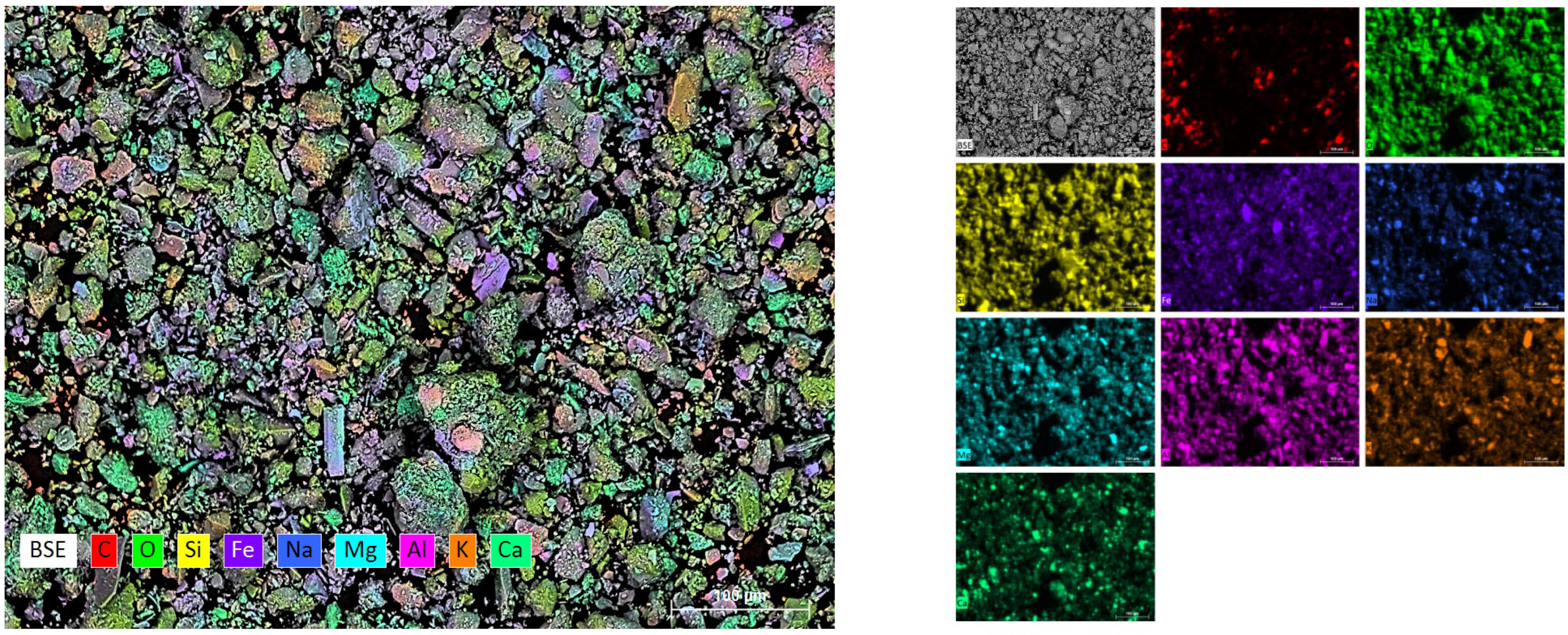
Figure 12 shows the SEM microstructure of the raw clay. The material consists of irregularly shaped aluminosilicate particles of varying sizes with a characteristically rough surface. The heterogeneous packing and angular grains indicate the presence of both fine and coarse fractions, which is typical for natural clays and may influence plasticity and densification during firing.
Figure 12.
SEM micrograph and corresponding EDS elemental distribution maps of the raw clay powder.
The corresponding EDS elemental maps confirm that the clay is dominated by Si, O, and Al, forming a continuous aluminosilicate matrix likely associated with kaolinite–illite-type minerals. Minor Na and K are uniformly distributed, suggesting the presence of alkali feldspar or illitic components. Ca appears in localized domains, presumably originating from carbonate or Ca–silicate phases. Fe-rich inclusions are visible as bright BSE spots and indicate small oxide or Fe–silicate particles. Carbon is detected in scattered areas, associated with organic residues or carbonate-containing grains. Mg occurs at low levels and is present within both the matrix and isolated particles. The quantitative elemental composition of the raw clay powder is summarized in Table 2.
Table 2.
Elemental composition (wt.%) of the raw clay powder determined by EDS analysis.
In summary, SEM/EDS results show that the raw clay is a heterogeneous multicomponent aluminosilicate system containing alkali, alkaline-earth, and iron-bearing inclusions, which will influence particle packing and microstructure development during sintering.
3.2. Characterization of Sintered Ceramics
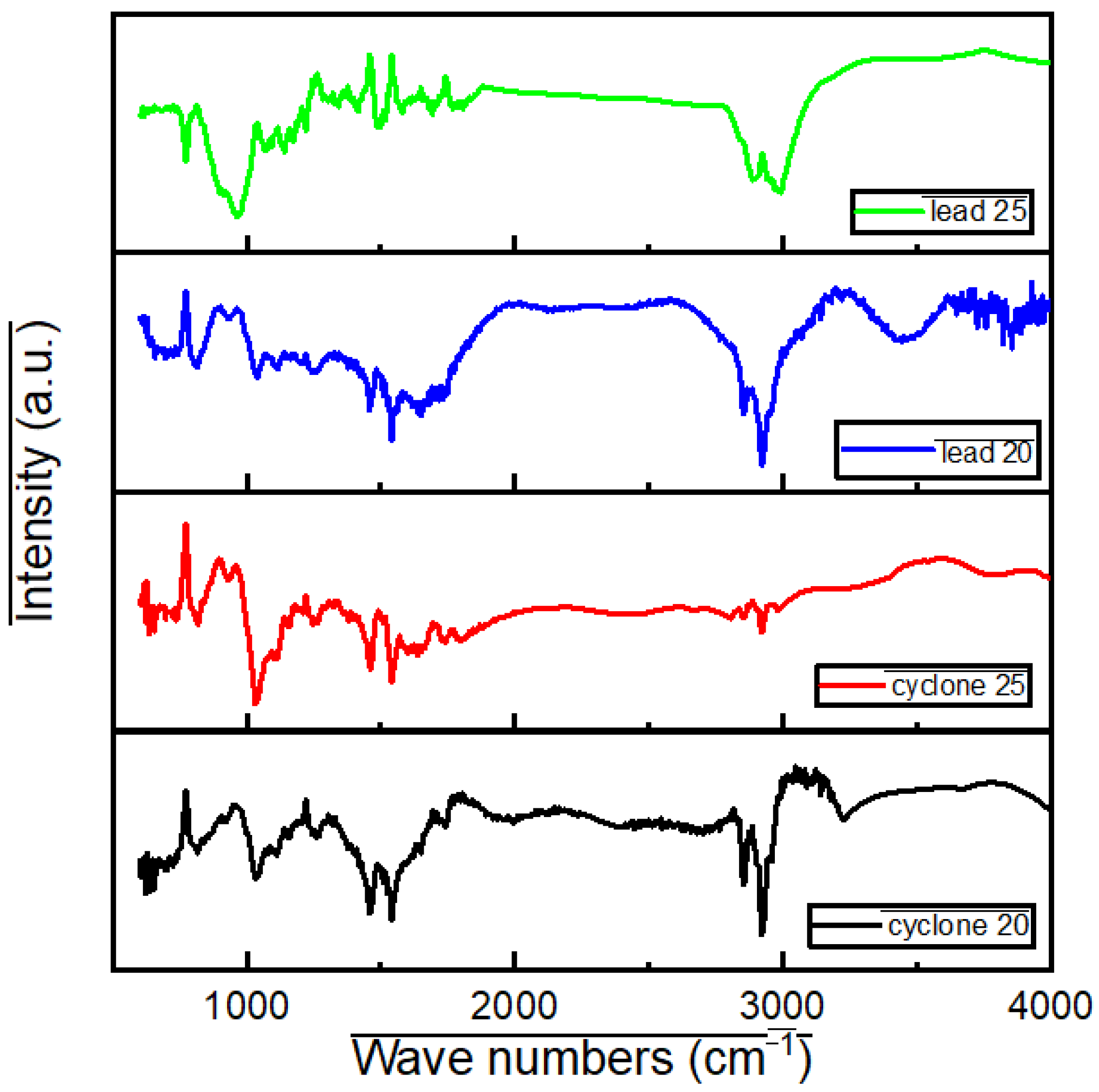
Figure 13 presents the FTIR spectra of bricks containing 20–25 wt.% lead furnace dust and cyclone dust (P-3). All samples retain the characteristic silicate absorption features, indicating the preservation of the aluminosilicate framework after firing.
Figure 13.
FTIR spectra of bricks with additions of lead furnace dust and cyclone dust.
The broad band at 3430–3450 cm−1 corresponds to O–H stretching of hydroxyl groups and weakly bound water [17], while the signal near 1640 cm−1 (H–O–H bending) further confirms structurally retained moisture [47]. In samples with 25 wt.% residue, a weak band at ~2920 cm−1 appears, associated with C–H stretching from residual carbonaceous fragments [15].
A distinct absorption at ~1430 cm−1—especially pronounced in cyclone-dust bricks—corresponds to the C–O stretching vibration of CO32− groups originating from CaCO3/MgCO3 or from incomplete carbonate decomposition during firing [48]. The dominant band in the 1080–1000 cm−1 range corresponds to asymmetric Si–O–Si and Si–O–Al stretching vibrations, characteristic of quartz, kaolinite derivatives, and amorphous silica [49]. Bricks containing lead furnace dust show slightly reduced intensity in this region, suggesting increased porosity and a higher degree of amorphization.
Bands at 780–800 cm−1 arise from symmetric Si–O–Si stretching in crystalline quartz, while the feature near 550 cm−1 is attributed to Al–O–Si bending vibrations in mullite-bearing aluminosilicate phases [17].
In general, the FTIR spectra demonstrate that the fundamental aluminosilicate structure is retained in all formulations, while the decrease in band intensities with increasing dust content suggests intensified amorphous-phase development, particularly in cyclone-dust-modified bricks.
3.2.1. Thermogravimetric Analysis (TGA) of Fired Samples
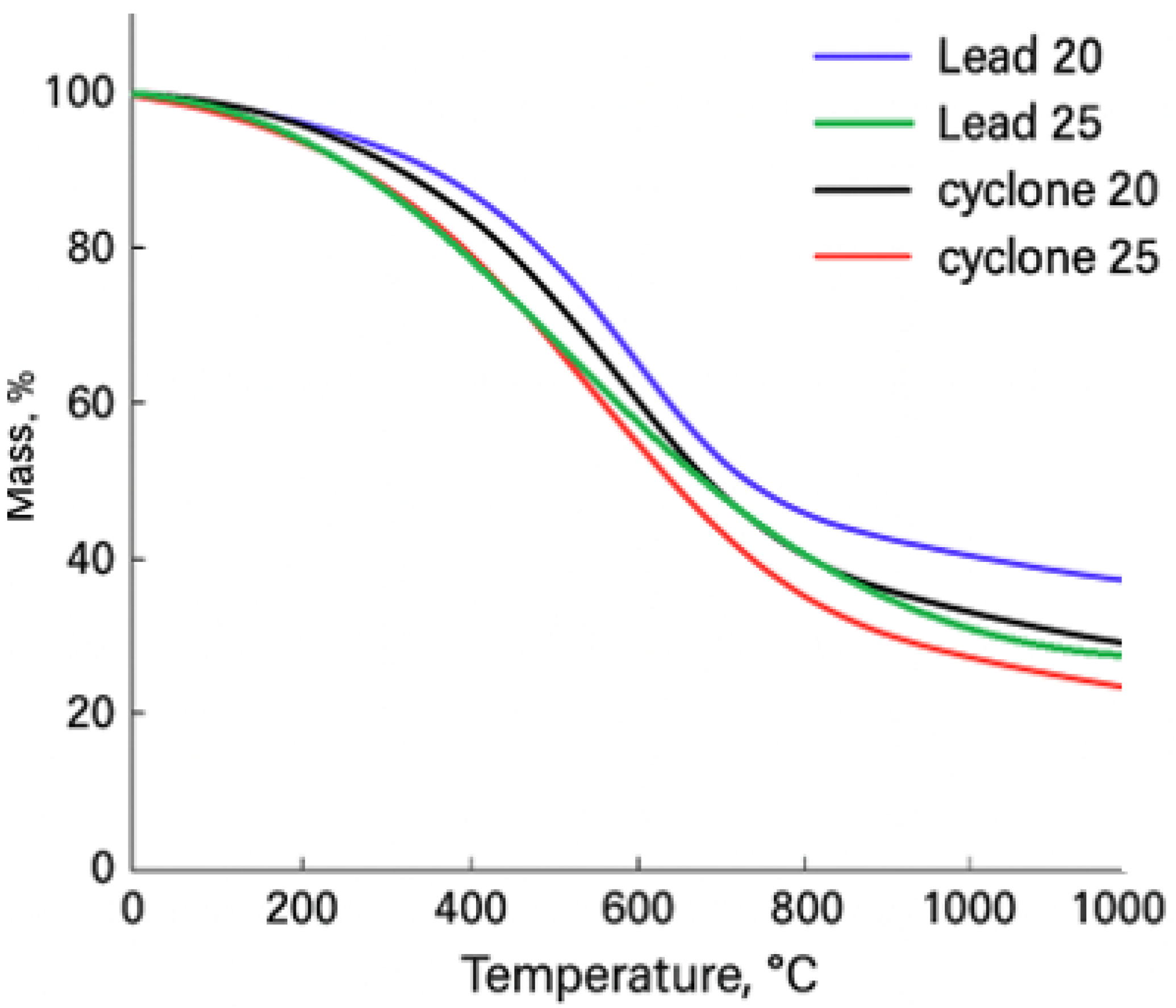
Thermogravimetric analysis of the fired bricks (Figure 14) reveals a three-stage mass-loss pattern typical for clay-based ceramics modified with industrial residues.
Figure 14.
Thermogravimetric curves of brick samples with additions of lead furnace dust and cyclone dust.
In the first stage (up to ~200 °C), a slight mass decrease corresponds to the removal of adsorbed and physically bound water [50]. This effect is slightly more pronounced in samples containing cyclone dust, consistent with its higher hygroscopicity.
The second stage (200–600 °C) is associated with the dehydroxylation of kaolinite–illite minerals and the oxidation of residual organic fragments originating from the coal additive [14,51]. Bricks containing higher proportions of metallurgical dust show a somewhat broader mass-loss interval, reflecting the presence of minor volatile oxide species.
The DTG peak corresponding to carbonate decomposition appears within the typical 520–800 °C range, which agrees with literature data [52]. This interval reflects the release of CO2 during CaCO3 → CaO transformation and the high-temperature structural rearrangements of the silicate matrix.
At 1000 °C, the residual mass of all samples remains within 85–90%, which is consistent with the thermal behavior of clay-based ceramics containing fly ash and metallurgical residues [6]. Bricks incorporating cyclone dust show slightly higher thermal stability, reflected by a smoother mass-retention profile in the high-temperature region.
3.2.2. X-Ray Diffraction (XRD) of Sintered Ceramics
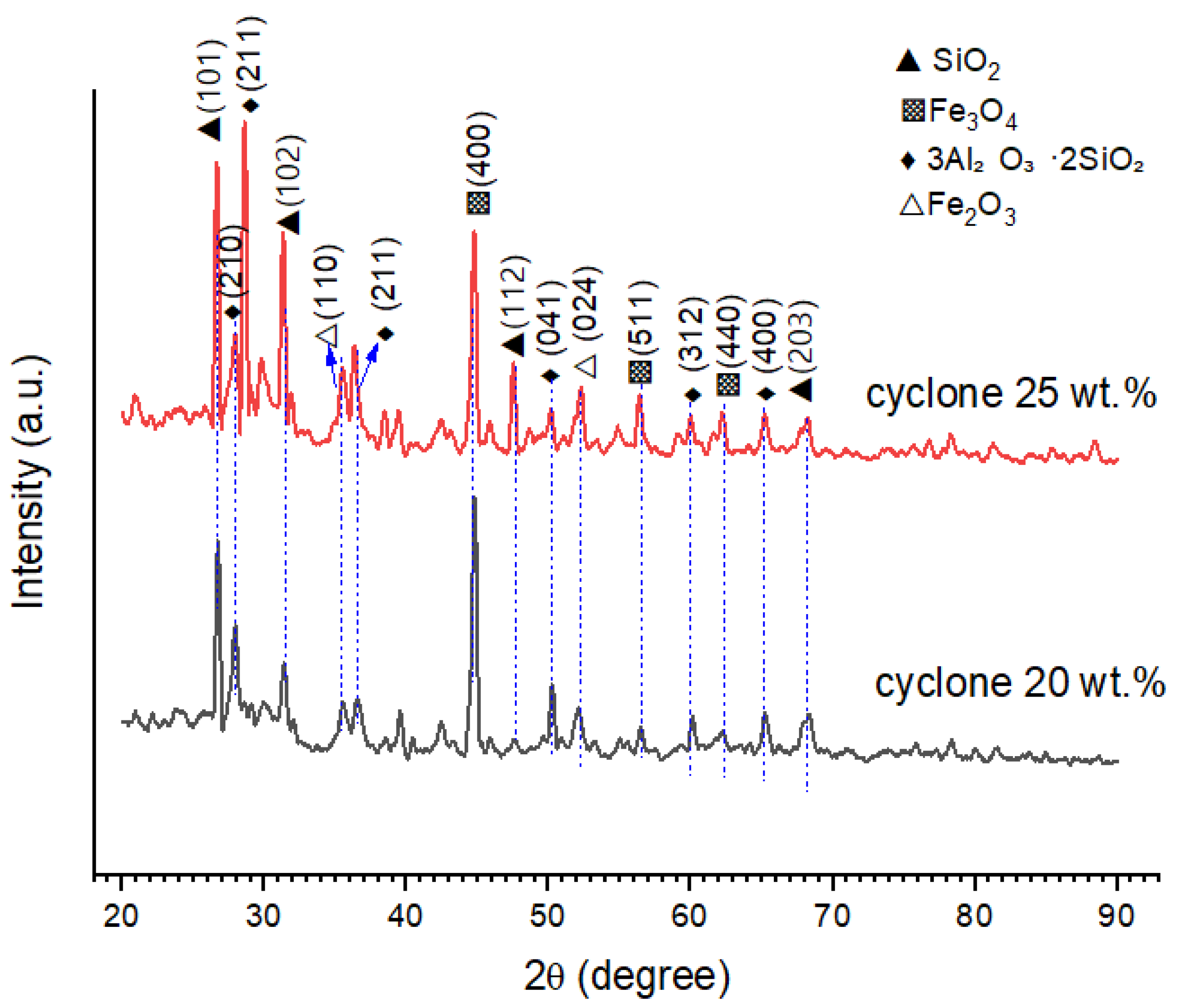
Figure 15 shows the XRD patterns of the fired bricks incorporating 20 and 25 wt.% cyclone dust. The dominant crystalline phases in both samples are quartz (SiO2), mullite (3Al2O3·2SiO2), and iron oxides (Fe2O3 and Fe3O4). Quartz is represented by its characteristic (101) and (102) reflections, while iron oxides are identified through Fe3O4 (400), (511), (440) and Fe2O3 (104), (110), (024) peaks.
Figure 15.
X-Ray diffraction patterns of ceramic bricks containing 20 and 25 wt.% cyclone dust.
A clear difference between the samples is observed in the intensity of the mullite reflections. The brick with 25 wt.% cyclone dust exhibits significantly stronger mullite peaks near 28°, 38°, 47.5° and 60° 2θ, whereas the 20 wt.% sample shows only weak or suppressed signals. The enhanced mullitisation at higher dust loading is associated with the presence of Fe2O3, Fe3O4, CaO, MgO and alkali oxides in the cyclone dust, which act as fluxing agents, reduce melt viscosity, accelerate Al–Si structural rearrangement and promote the nucleation and growth of mullite crystallites.
In contrast, the brick with 20 wt.% dust retains a higher amount of amorphous glassy phase, which limits mullite crystallisation and decreases peak intensity. The slightly stronger Fe-oxide reflections in the 25 wt.% sample further indicate enhanced participation of iron-containing species in melt–crystal transformation processes during firing.
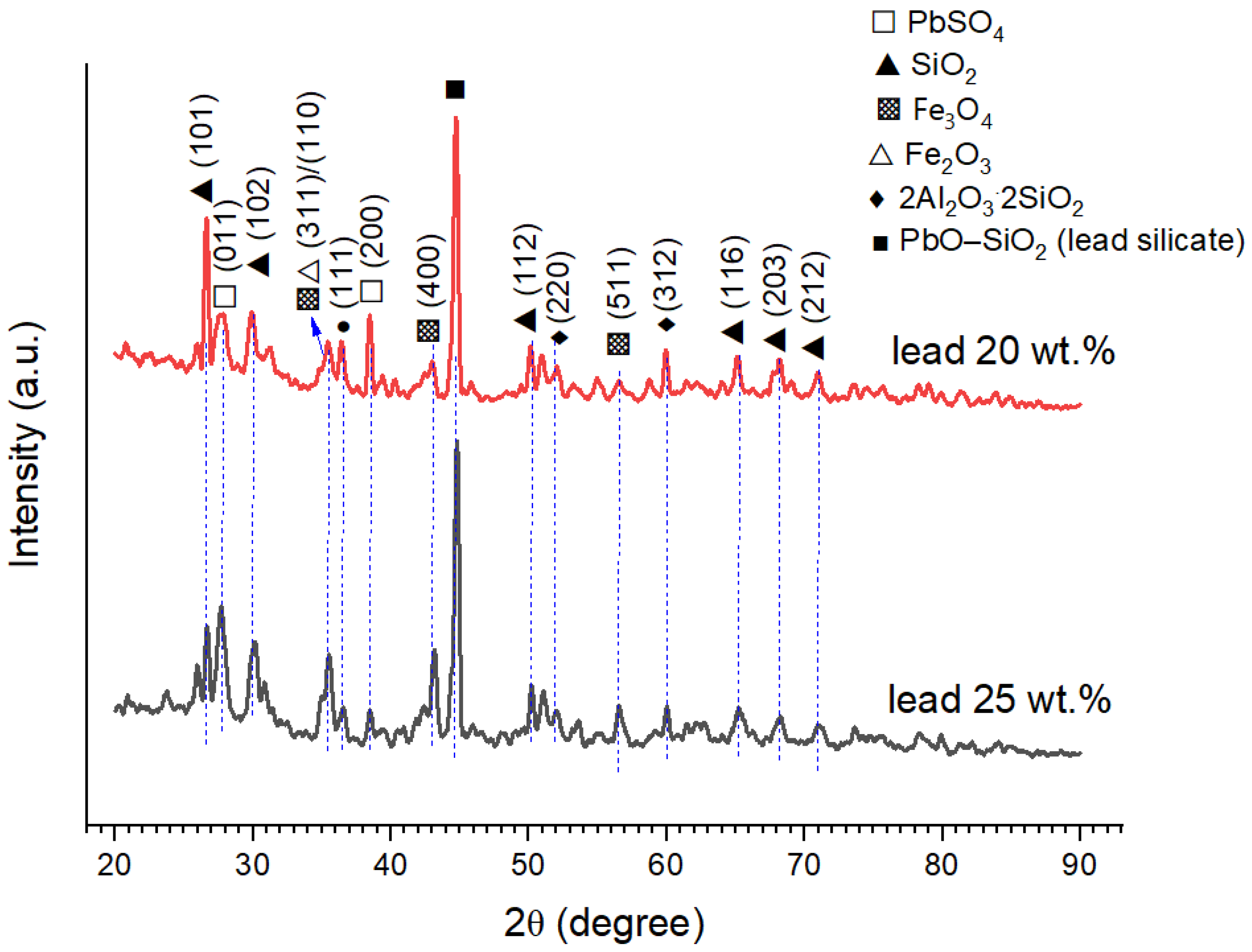
Figure 16 shows the XRD patterns of bricks containing 20 and 25 wt.% lead furnace dust. Quartz (SiO2) remains the major crystalline phase in both compositions, while the reflections of magnetite (Fe3O4) and hematite (Fe2O3) become more pronounced with increasing dust content, reflecting the higher concentration of Fe-bearing species introduced with the waste material. Mullite (3Al2O3·2SiO2) is present in both samples, although its relative intensity decreases at 25 wt.% lead furnace dust, suggesting partial suppression of aluminosilicate crystallisation due to fluxing effects of Pb-containing oxides.
Figure 16.
X-Ray diffraction patterns of ceramic bricks containing 20 and 25 wt.% lead furnace dust.
A distinct peak near 44.7° 2θ in the 20 wt.% sample indicates the formation of Pb–Si–O phases originating from the interaction of PbO with amorphous silica. The higher-residue sample (25 wt.%) exhibits a broader amorphous halo and reduced intensity of crystalline reflections, consistent with the development of a more extensive silicate–oxide glassy matrix incorporating Pb- and Fe-bearing species.
Overall, the XRD patterns demonstrate that increasing the content of lead furnace dust enhances amorphisation, modifies the balance between mullite and iron oxides, and promotes the formation of Pb-containing silicate networks within the ceramic matrix.
3.3. Physico-Mechanical and Durability Properties
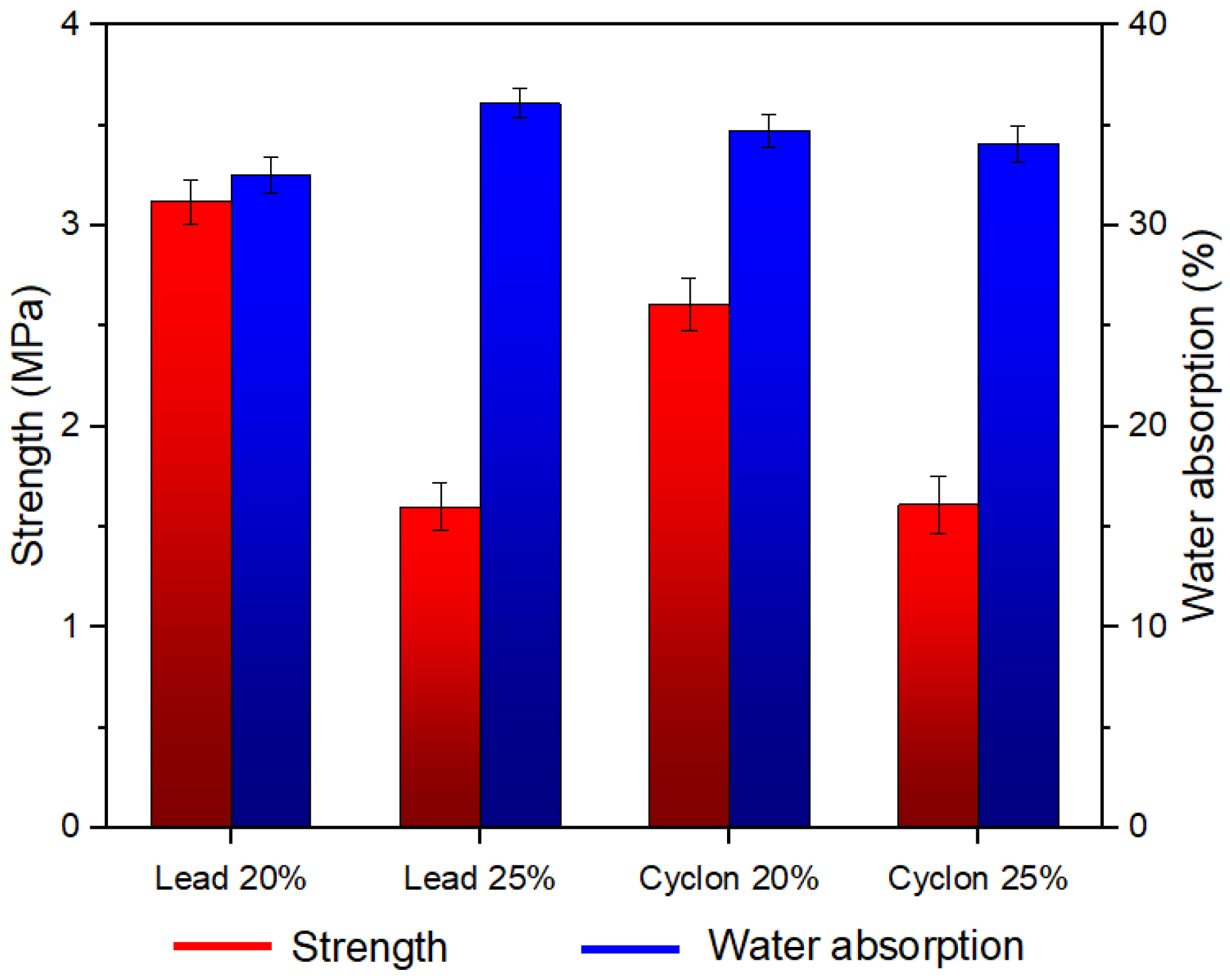
The compressive strength of the bricks ranged from 1.6 to 3.1 MPa. The reduced strength is associated with the elevated porosity formed during firing in the presence of metallurgical residues. The highest values were obtained for bricks with 20 wt.% lead furnace dust and 20 wt.% cyclone dust, whereas increasing the additive content to 25 wt.% resulted in a noticeable strength reduction, reflecting the detrimental influence of excess residue-derived particles on structural integrity (see Figure 17). Therefore, the developed bricks can be used only for non-load-bearing or insulating applications where high mechanical strength is not required.
Figure 17.
Compressive strength and water absorption of ceramic bricks containing different amounts and types of metallurgical dust additives.
Water absorption values (32.5–36.1%) substantially exceeded the typical limit for construction ceramics (<6%), indicating a highly porous microstructure. The lowest absorption was measured for the 20 wt.% lead furnace dust sample, while the highest value occurred at 25 wt.% addition. Despite differences in composition, all bricks exhibited high permeability and limited water resistance.
Strength–Porosity Relationship. The decrease in compressive strength with increasing dust content follows the classical Ryshkewitch–Duckworth relationship between strength and porosity:
where is the measured compressive strength, is the theoretical strength at zero porosity, P is porosity, and b is a structural coefficient describing microstructural discontinuity. Although the parameters of the equation were not determined experimentally, the model explains the observed trend: intensive gas release and pore formation in the 25 wt.% samples increase the effective pore volume, resulting in an exponential reduction in strength. This behavior is consistent with the microstructural features identified by XRD, FTIR, and TGA.
The combined results for compressive strength, water absorption, frost resistance, and heavy-metal leaching are summarized in Table 3.
Table 3.
Compressive strength, water absorption, frost resistance, and heavy-metal leaching (Pb, Zn) of ceramic bricks containing metallurgical dust additives.
All samples completed 15 freeze–thaw cycles; however, their actual frost resistance varied due to differences in porosity and densification. The denser 20 wt.% dust samples remained stable after testing, whereas the 25 wt.% compositions exhibited a less uniform structure formed during sintering. These differences arise from intensive gas release during carbon burnout and carbonate decomposition, incomplete densification at 1000 °C, and the presence of low-melting Pb-bearing oxides that promote pore coalescence. Therefore, the freeze–thaw results should be interpreted with caution, as high porosity may reduce long-term durability under cyclic freezing.
Improving resistance may involve pre-calcination of metallurgical residues, optimization of the heating schedule (particularly slower heating in the 200–600 °C range), and the use of minor plasticizing additives. The increased amorphous content observed by XRD correlates with reduced strength and water resistance, confirming that pore formation and partial glass-phase development weaken the ceramic matrix.
In addition to physico-mechanical performance, the environmental stability of the bricks was assessed through Pb and Zn leaching tests (Table 3). Pb concentrations ranged from 0.08 to 0.20 mg/L, and Zn from 0.25 to 0.45 mg/L, all of which are significantly below international limits (5 mg/L for Pb and 10 mg/L for Zn). Even at 25 wt.% residue content, heavy-metal mobility remained low, indicating effective immobilization of Pb and Zn within the ceramic matrix. These results show that the developed compositions combine acceptable mechanical behavior with high environmental durability, supporting their potential use in safe construction applications.
In summary, the reduced compressive strength and elevated water absorption arise from insufficient densification and the predominance of an amorphous Fe–Pb–Zn–Si–O phase. At higher dust contents, fluxing oxides disrupt the formation of a coherent aluminosilicate framework and suppress mullite crystallization, generating interconnected porosity and weak interparticle bonding. Nonetheless, such microstructures may be beneficial for lightweight insulating materials and contribute to stable incorporation of Pb–Zn-containing residues within the glassy matrix.
4. Conclusions
This study demonstrated how the incorporation of Pb–Zn metallurgical residues (lead furnace dust and cyclone dust), fly ash, and carbonaceous additives affects phase evolution, microstructure, mechanical behavior, and environmental stability of ceramic bricks fired at 1000 °C. A correlated FTIR–TGA–XRD approach clarified the sequence of structural transformations during sintering. XRD analysis confirmed the formation of quartz, mullite, hematite, magnetite, and a pronounced amorphous Fe–Pb–Zn–Si–O glassy network, especially at 25 wt.% residue content. Higher dust amounts reduced mullite crystallization, increased melt fluidity due to fluxing oxides (PbO, Fe2O3, CaO, MgO), and promoted interconnected porosity. These microstructural changes explain the decreased compressive strength (1.6–3.1 MPa) and high water absorption (32–36%), as well as the variability observed in freeze–thaw behavior.
Environmental safety was evaluated using atomic absorption spectroscopy (AAS). All brick compositions showed very low Pb (0.08–0.20 mg/L) and Zn (0.25–0.45 mg/L) leaching values, remaining far below international regulatory limits (Pb < 5 mg/L, Zn < 10 mg/L). These findings confirm effective immobilization of heavy-metal ions within the amorphous silicate matrix, even at higher dust contents.
Overall, the results demonstrate that multi-waste additives can be successfully integrated into clay-based ceramics, providing a viable pathway for the safe recycling of Pb–Zn industrial residues. While high porosity limits their use to non-load-bearing applications, the developed materials offer environmental benefits, resource conservation through reduced clay consumption, and stable immobilization of hazardous metals.
Author Contributions
A.K. and A.S. designed the experiments; M.B. and D.B. performed the experiments; Z.S. and D.B. and N.M. analyzed the data; A.K., A.S. and M.B. wrote, reviewed and edited the paper. All authors have read and agreed to the published version of the manuscript.
Funding
This research has been funded by the Committee of Science of the Ministry of Science and Higher Education of the Republic of Kazakhstan (Grant No. BR24993178).
Data Availability Statement
Data is contained within the article.
Conflicts of Interest
The authors declare no conflicts of interest regarding the publication of this manuscript.
References
- Kengesbekov, A.; Sagdoldina, Z.; Torebek, K.; Baizhan, D.; Kambarov, Y.; Yermolenko, M.; Maulet, M. Synthesis and Formation Mechanism of Metal Oxide Compounds. Coatings 2022, 12, 1511. [Google Scholar] [CrossRef]
- Akhtar, A.; Sarmah, A.K. Construction and Demolition Waste Generation and Properties of Recycled Aggregate Concrete: A Global Perspective. J. Clean. Prod. 2018, 186, 262–281. [Google Scholar] [CrossRef]
- Liu, B.; Zhao, W.; Jiang, Q.; Ao, Z.; An, T. Enhanced Adsorption Mechanism of Carbonyl-Containing Volatile Organic Compounds on Al-Decorated Porous Graphene Monolayer. Sustain. Mater. Technol. 2019, 21, e00103. [Google Scholar] [CrossRef]
- Rakhadilov, B.; Kengesbekov, A.; Kylyshkanov, M.; Bayatanova, L.; Amangeldyevna, A.S.; Bayandinova, M. Environmental Benefits of Fluorogypsum Reuse in the Production of Construction Materials. Buildings 2024, 14, 3618. [Google Scholar] [CrossRef]
- Skakov, M.; Bayandinova, M.; Kozhakhmetov, Y.; Tuyakbaev, B. Microstructure and Corrosion Resistance of Composite Based on Ultra-High-Molecular-Weight Polyethylene in Acidic Media. Coatings 2025, 15, 89. [Google Scholar] [CrossRef]
- Sutcu, M.; Erdogmus, E.; Gencel, O.; Gholampour, A.; Atan, E.; Ozbakkaloglu, T. Recycling of Bottom Ash and Fly Ash Wastes in Eco-Friendly Clay Brick Production. J. Clean. Prod. 2019, 233, 753–764. [Google Scholar] [CrossRef]
- Sabitova, A.; Mukhamediyarov, N.; Mussabayeva, B.; Rakhadilov, B.; Aitkazin, N.; Bayakhmetova, B.; Sharipkhan, Z.; Gaisina, B. The Effect of the Granulometric Composition of Slags on Non-Ferrous Metal Extraction Efficiency. Processes 2025, 13, 2113. [Google Scholar] [CrossRef]
- Taha, Y.; Benzaazoua, M.; Hakkou, R.; Mansori, M. Natural Clay Substitution by Calamine Processing Wastes to Manufacture Fired Bricks. J. Clean. Prod. 2016, 135, 847–858. [Google Scholar] [CrossRef]
- Ospanov, K.; Andraka, D.; Kuldeeva, E.; Munussov, I. Utilization of Sewage Sludge in the Sustainable Manufacturing of Ceramic Bricks. Sustainability 2025, 17, 6431. [Google Scholar] [CrossRef]
- Dai, Z.; Wu, Y.; Hu, L.; Zhang, W.; Mao, L. Evaluating Physical-Mechanical Properties and Long-Term Environmental Risks of Fired Clay Bricks with Electroplating Sludge. Constr. Build. Mater. 2019, 227, 116716. [Google Scholar] [CrossRef]
- Chindaprasirt, P.; Srisuwan, A.; Saengthong, C.; Lawanwadeekul, S.; Phonphuak, N. Synergistic Effect of Fly Ash and Glass Cullet on Fire Clay Bricks. J. Build. Eng. 2021, 44, 102942. [Google Scholar] [CrossRef]
- Khitab, A.; Riaz, M.S.; Jalil, A.; Khan, R.B.; Anwar, W.; Khan, R.A.; Arshad, M.T.; Kirgiz, M.S.; Tariq, Z.; Tayyab, S. Manufacturing of Clayey Bricks by Synergistic Use of Waste Brick and Ceramic Powders as Partial Replacement of Clay. Sustainability 2021, 13, 10214. [Google Scholar] [CrossRef]
- Moujoud, Z.; Harrati, A.; Manni, A.; Naim, A.; El Bouari, A.; Tanane, O. Study of Fired Clay Bricks with Coconut Shell Waste as a Renewable Pore-Forming Agent: Technological, Mechanical, and Thermal Properties. J. Build. Eng. 2023, 68, 106107. [Google Scholar] [CrossRef]
- Taha, Y.; Benzaazoua, M.; Edahbi, M.; Mansori, M.; Hakkou, R. Leaching and Geochemical Behavior of Fired Bricks Containing Coal Wastes. J. Environ. Manag. 2018, 209, 227–235. [Google Scholar] [CrossRef]
- Dey, A.; Ghosh, S.; Ghosh, S. Characterization of industrial byproducts using FTIR and XRD. Constr. Build. Mater. 2018, 160, 512–519. [Google Scholar] [CrossRef]
- Ferreira, J.F.; Costa, F.P.d.; Borborema, L.F.D.; Arimateia, R.R.d.; Leite, R.S.; Apolinário, R.C.; Pinto, H.C.; Rodrigues, A.M.; Neves, G.d.A.; Menezes, R.R. Incorporation of Bentonite Mining Waste in Ceramic Formulations for the Manufacturing of Porcelain Stoneware. Sustainability 2022, 14, 15973. [Google Scholar] [CrossRef]
- Hoffmann, B.; Ludwig, N. Infrared spectroscopy of wood ash: Analysis of moisture and phase composition. Biomass Bioenergy 2011, 35, 1208–1216. [Google Scholar] [CrossRef]
- Garcés, G.; Máthis, K.; Pérez, P.; Čapek, J.; Adeva, P. Effect of Reinforcing Shape on Twinning in Extruded Magnesium Matrix Composites. Mater. Sci. Eng. A 2016, 666, 48–53. [Google Scholar] [CrossRef]
- Kairbekov, Z.K.; Maloletnev, A.S.; Dzheldybaeva, I.M.; Sabitova, A.N.; Ermoldina, E.T. Application of modified iron-containing catalysts and preliminary ozonization of coal from the Shubarkol deposit to the hydrogenation of this coal. Solid Fuel Chem. 2017, 51, 365–369. [Google Scholar] [CrossRef]
- Kairbekov, Z.K.; Maloletnev, A.S.; Dzheldybaeva, I.M.; Sabitova, A.N.; Ermoldina, E.T. Application of Mechanochemical Activation and γ-Radiation to Increase the Reactivity of Coal from the Shubarkol Deposit in Hydrogenation. Solid Fuel Chem. 2018, 52, 21–25. [Google Scholar] [CrossRef]
- Sutcu, M.; Alptekin, H.; Erdogmus, E.; Er, Y.; Gencel, O. Characteristics of Fired Clay Bricks with Waste Marble Powder Addition as Building Materials. Constr. Build. Mater. 2015, 82, 1–8. [Google Scholar] [CrossRef]
- Rakhadilov, B.; Sagdoldina, Z.; Kengesbekov, A.; Kussainov, A.; Abdulina, S. Activation of Fluorohydride by Chemical Additives. Iran. J. Chem. Chem. Eng. 2024, 43, 12. [Google Scholar]
- Bayatanova, L.; Rakhadilov, B.; Kengesbekov, A.; Kylyshkanov, M.; Abdulina, S.; Adilkanova, M.; Sagdoldina, Z. Production of Anhydrite Binder from Waste Fluorangydrite. ChemEngineering 2023, 7, 28. [Google Scholar] [CrossRef]
- Zhang, L.; Peng, J.; Li, X.; Xu, Y.; Chen, H. Utilization of industrial solid wastes to enhance the performance of eco-friendly construction materials. J. Environ. Chem. Eng. 2022, 10, 108594. [Google Scholar] [CrossRef]
- Wang, F.; Li, Y.; Liu, J.; Zhang, Q.; Lu, H. Clay-based composites modified with layered minerals: Structure, thermal behavior, and mechanical performance. Appl. Clay Sci. 2022, 226, 106771. [Google Scholar] [CrossRef]
- Al-Shalif, B.; Hadzima, B.; Dobáková, M.; Juhás, J. Development of lightweight bricks with embedded functional additives for improved energy efficiency. Buildings 2023, 15, 4235. [Google Scholar] [CrossRef]
- Yan, H.; Zhou, S.; Luo, D.; Sun, X. Hybrid ceramic–mineral systems with multifunctional properties for sustainable construction. Mater. Lett. 2022, 316, 133257. [Google Scholar] [CrossRef]
- Bayatanova, L.B.; Abdullina, S.; Kylyshkanov, M.K.; Rakhadilov, B.K.; Kengesbekov, A.B.; Bayandinova, M.B.; Dautbayev, M. Method for Producing Anhydrite Binder. Patent of the Republic of Kazakhstan No. 2024/0883.1, 24 October 2024. [Google Scholar]
- ASTM C67-23; Standard Test Methods for Sampling and Testing Brick and Structural Clay Tile. ASTM International: West Conshohocken, PA, USA, 2023.
- ISO 10545-3:2018; Ceramic tiles—Part 3: Determination of water absorption, apparent porosity, apparent relative density and bulk density. International Organization for Standardization: Geneva, Switzerland, 2018.
- EPA Method 1311 (TCLP); Toxicity Characteristic Leaching Procedure. U.S. Environmental Protection Agency: Washington, DC, USA, 1992.
- EN 12457-2:2002; Characterization of Waste—Leaching—Compliance Test for Leaching of Granular Waste Materials and Sludges—Part 2: One Stage Batch Test at a Liquid to Solid Ratio of 10 L/kg for Materials with Particle Size Below 4 mm (Without or with Size Reduction). European Committee for Standardization: Brussels, Belgium, 2002.
- Nasui, M.; Mos, R.B.; Petrisor, T.; Gabor, M.S.; Varga, R.A.; Ciontea, L.; Petrisor, T. Synthesis, Crystal Structure and Thermal Decomposition of a New Copper Propionate [Cu(CH3CH2COO)2]·2H2O. J. Anal. Appl. Pyrolysis 2011, 92, 439–444. [Google Scholar] [CrossRef]
- Coates, J. Interpretation of Infrared Spectra, A Practical Approach. In Encyclopedia of Analytical Chemistry; John Wiley and Sons: Hoboken, NJ, USA, 2006; ISBN 978-0-470-02731-8. [Google Scholar]
- Baimoldanova, L.; Rakhadilov, B.; Kengesbekov, A.; Kuanyshbai, R. Influence of Mechanical Activation on the Evolution of TiSiCN Powders for Reactive Plasma Spraying. Crystals 2024, 14, 1005. [Google Scholar] [CrossRef]
- Słomkiewicz, P.M.; Szczepanik, B.; Garnuszek, M. Determination of Adsorption Isotherms of Aniline and 4-Chloroaniline on Halloysite Adsorbent by Inverse Liquid Chromatography. Appl. Clay Sci. 2015, 114, 221–228. [Google Scholar] [CrossRef]
- Yelyubayeva, G.; Shaimardan, T.; Abilov, Z.; Rakhimova, Z. Spectroscopic investigation of coal structure and its functional groups. Fuel 2023, 344, 127264. [Google Scholar]
- Chen, D.; Yin, L.; Wang, H.; He, P.; Shao, L. TG–DTG analysis of coal pyrolysis and oxidation processes. Fuel Process. Technol. 2018, 176, 157–167. [Google Scholar]
- Qi, L. Energy Harvesting Properties of the Functionally Graded Flexoelectric Microbeam Energy Harvesters. Energy 2019, 171, 721–730. [Google Scholar] [CrossRef]
- Emel’yanenko, V.N.; Turovtsev, V.V.; Fedina, Y.A. Thermodynamic Properties of Pyruvic Acid and Its Methyl Ester. Thermochim. Acta 2018, 665, 70–75. [Google Scholar] [CrossRef]
- Riley, R.; Gupta, S.; Andrews, R. Thermal characterization of carbonaceous dust fractions by TGA/DTG. J. Therm. Anal. Calorim. 2017, 127, 987–996. [Google Scholar]
- Cullity, B.D.; Stock, S.R. Elements of X-Ray Diffraction, 3rd ed.; Pearson: London, UK, 2014. [Google Scholar]
- Vassilev, S.V.; Baxter, D.; Andersen, L.K.; Vassileva, C.G. An Overview of the Chemical Composition of Biomass. Fuel 2010, 89, 913–933. [Google Scholar] [CrossRef]
- Klug, H.P.; Alexander, L.E. X-Ray Diffraction Procedures: For Polycrystalline and Amorphous Materials, 2nd ed.; Wiley-Interscience: Hoboken, NJ, USA, 1974. [Google Scholar]
- Querol, X.; Moreno, N.; Umaña, J.C.; Alastuey, A.; Hernández, E.; López-Soler, A.; Plana, F. Synthesis of Zeolites from Coal Fly Ash: An Overview. Int. J. Coal Geol. 2002, 50, 413–423. [Google Scholar] [CrossRef]
- Xu, J.; Wu, Y.; Li, Z.; Li, W. Phase transformation and crystallization of coal fly ash. J. Non-Cryst. Solids 2018, 481, 424–431. [Google Scholar] [CrossRef]
- Smith, B.C. Fundamentals of Fourier Transform Infrared Spectroscopy, 2nd ed.; CRC Press: Boca Raton, FL, USA, 2011. [Google Scholar]
- Farmer, V.C. (Ed.) The infrared spectra of minerals. In Mineralogical Society; Adlard & Son: Surrey, UK, 1974. [Google Scholar]
- Madejová, J.; Komadel, P. Baseline studies of the clay minerals society source clays: Infrared methods. Clays Clay Miner. 2001, 49, 410–432. [Google Scholar] [CrossRef]
- Su, D.; Cheng, Y. Effect of carbon-based materials on ceramic matrix composites: A review. Mater. Sci. Eng. A 2016, 667, 48–53. [Google Scholar]
- Bui, Q.B.; Nguyen, H.T.; Sebaibi, N. Eco-friendly fired bricks using clay and waste coal dust: Thermal insulation and strength performance. Constr. Build. Mater. 2022, 320, 126215. [Google Scholar] [CrossRef]
- Wang, Y.S.; Zhang, H.; Park, K.B.; Eun, H.; Lin, R.; Wang, X.Y. Utilizing CO2-activated wollastonite to develop sustainable ternary composite material: CO2 utilization, performance evaluation, and mechanism analysis. Constr. Build. Mater. 2025, 492, 142973. [Google Scholar] [CrossRef]
Disclaimer/Publisher’s Note: The statements, opinions and data contained in all publications are solely those of the individual author(s) and contributor(s) and not of MDPI and/or the editor(s). MDPI and/or the editor(s) disclaim responsibility for any injury to people or property resulting from any ideas, methods, instructions or products referred to in the content. |
© 2025 by the authors. Licensee MDPI, Basel, Switzerland. This article is an open access article distributed under the terms and conditions of the Creative Commons Attribution (CC BY) license.