Comparative Assessment of Climate-Responsive Design and Occupant Behaviour Across Türkiye’s Building Typologies for Enhanced Utilisation and Performance

Abstract
1. Introduction
2. Review of the Literature
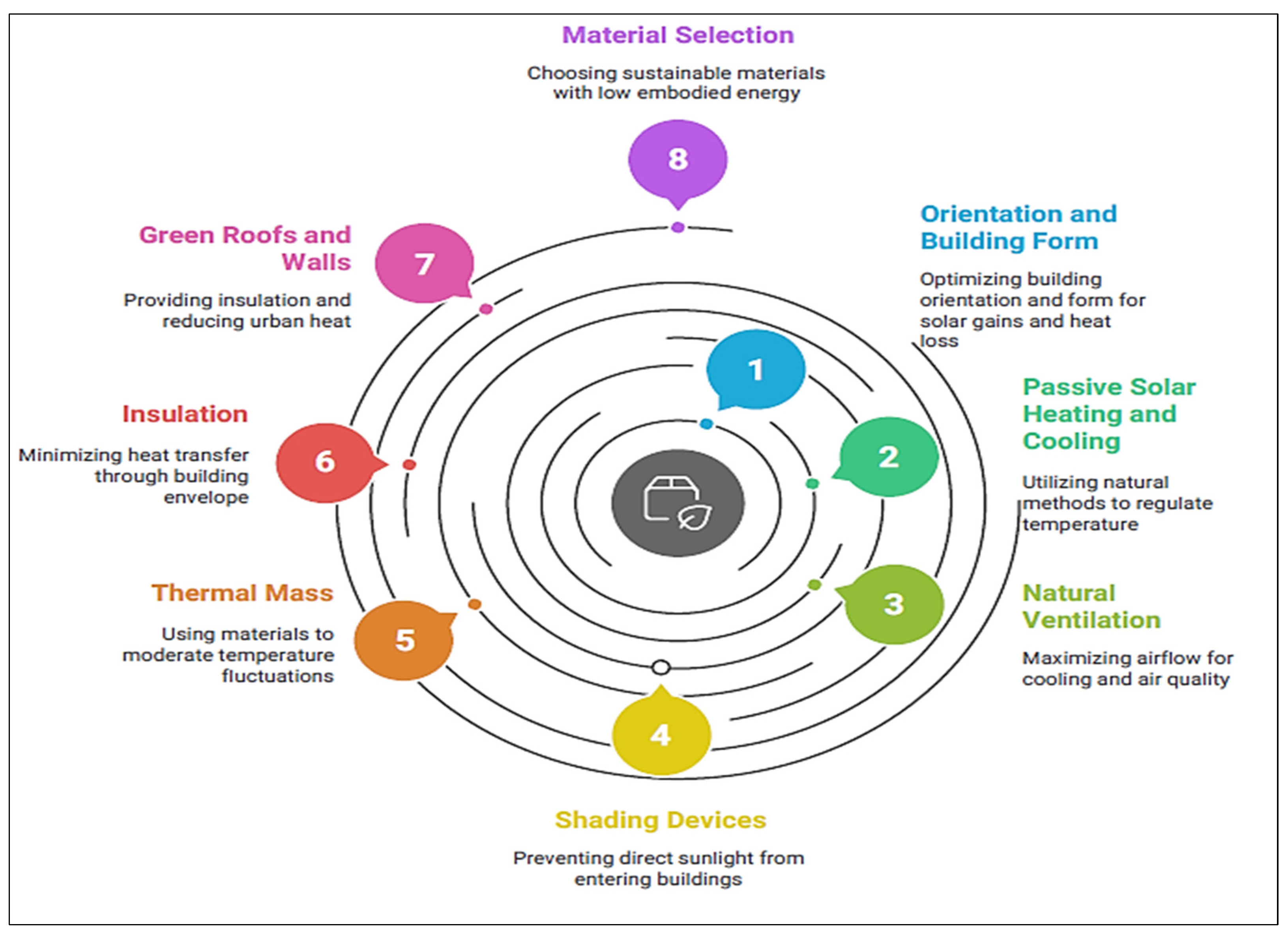
2.1. Thermal Comfort and Climate-Responsive Architectural Design Strategies
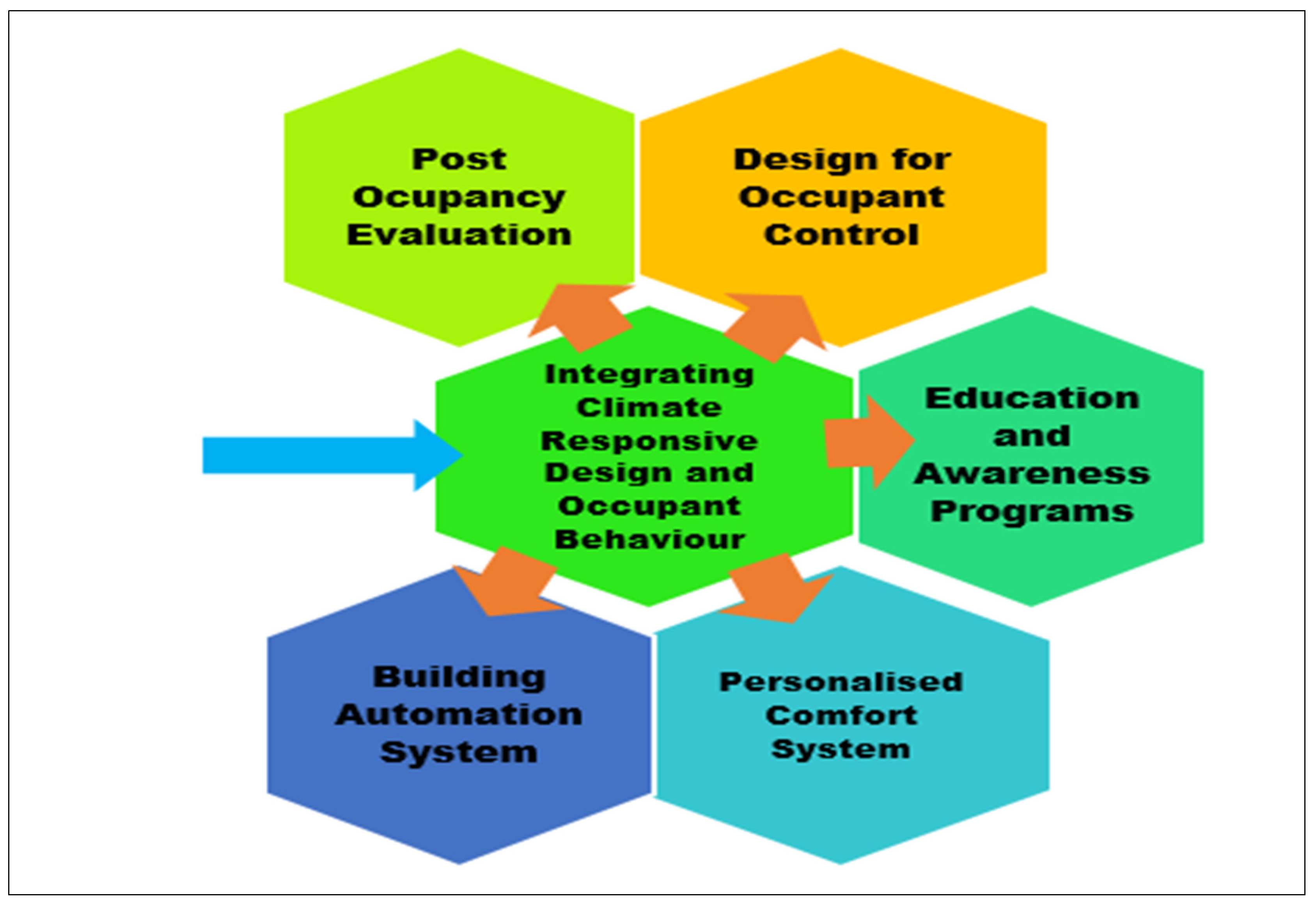
2.2. Energy Efficiency, Occupant Behaviour, and Its Impact on Energy Consumption
2.3. Theoretical Framework on Assessment of Climate-Responsive Design, Occupant-Driven IEQ and Energy Performance
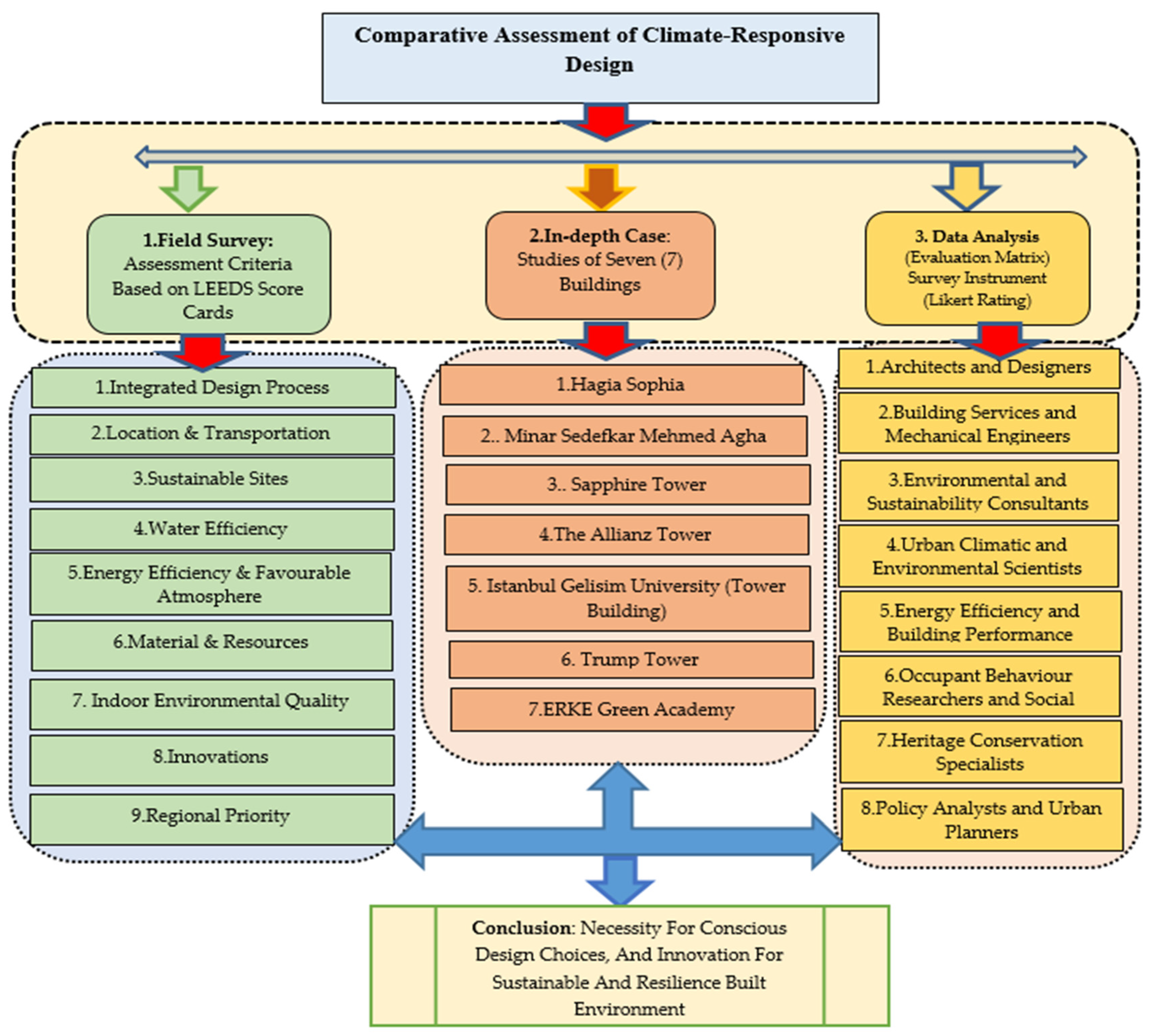
3. Materials and Methods
3.1. The Urban Context of Istanbul
3.2. Measurement of Variables
3.3. Field Survey
3.4. Data Analysis
- Integrated Process Performance
- Location and Transfer
- Sustainable Sites
- Water Efficiency
- Energy Efficiency and Favourable Environment
- Materials and Resources
- Indoor Environmental Quality
- Innovations
- Regional Priority
- Process and Context
- Integrated Design Process (j = 1);
- Location and Transfer (j = 2).
- Sustainable Resource Management
- Sustainable Sites (j = 3);
- Water Efficiency (j = 4).
- Energy and Environmental Performance
- Building Energy Efficiency and Favourable Environment (j = 5);
- Materials and Resources (j = 6);
- Indoor Environmental Quality (j = 7).
- Innovation and Regional Relevance
- Innovations (j = 8);
- Regional Priority (j = 9).
4. Results
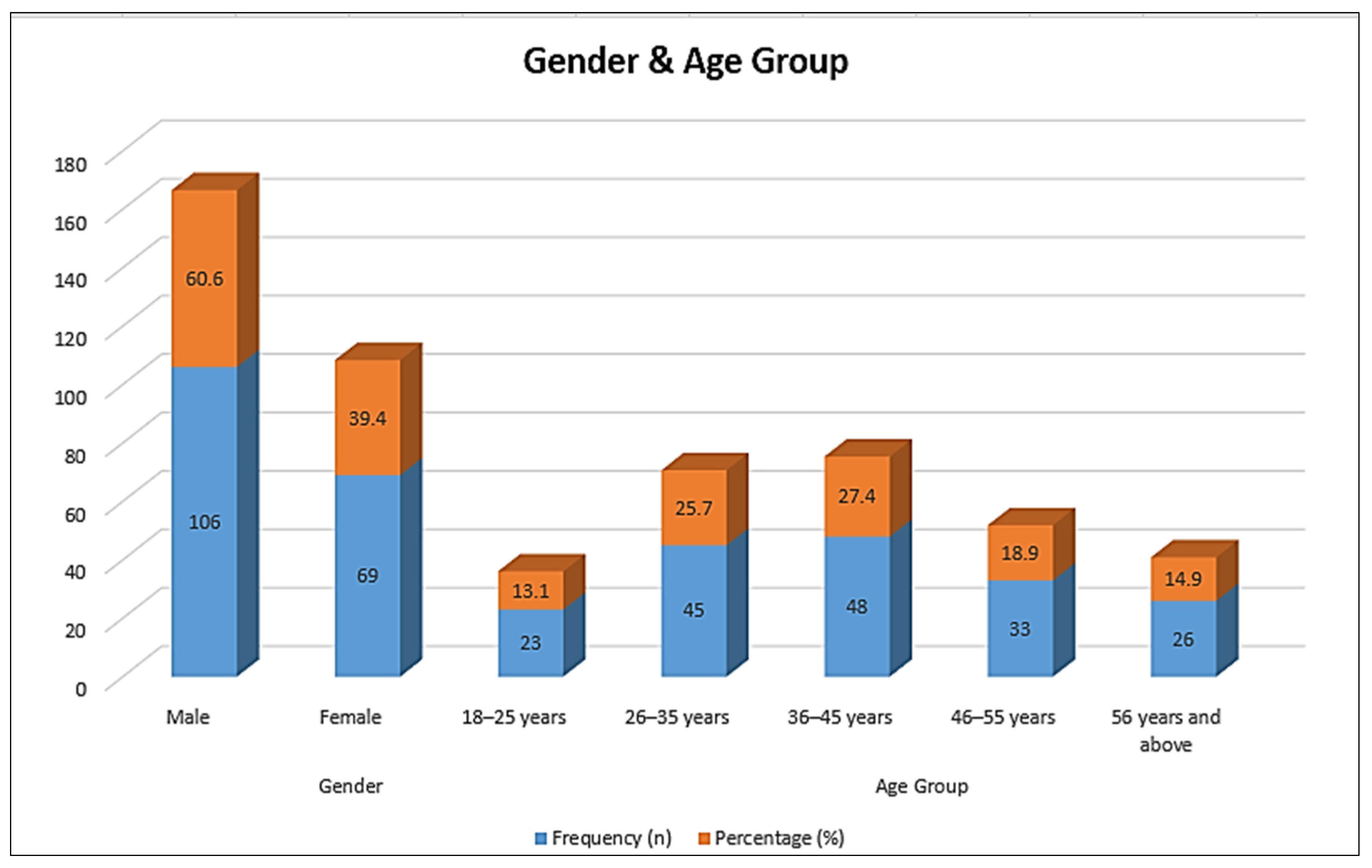
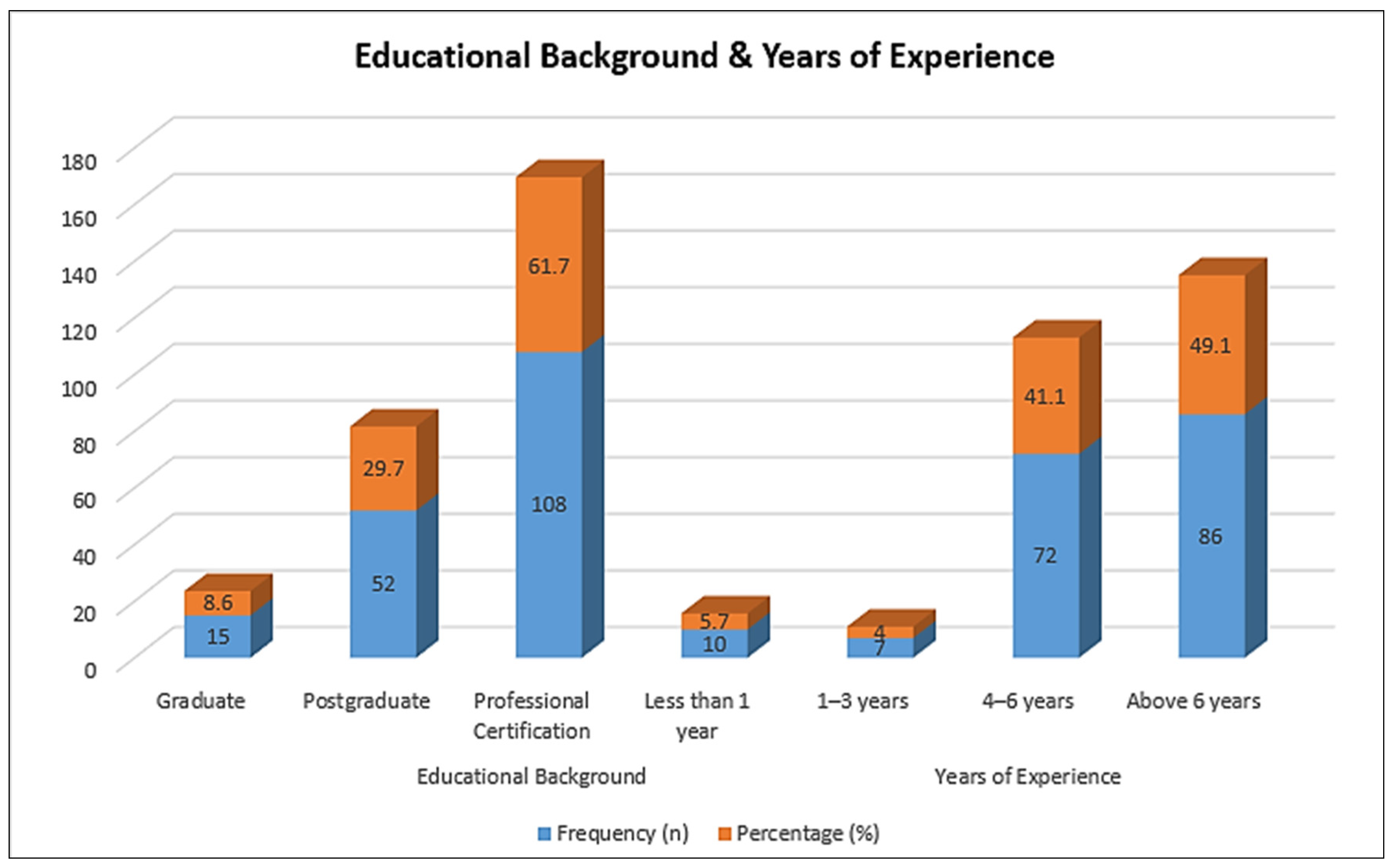
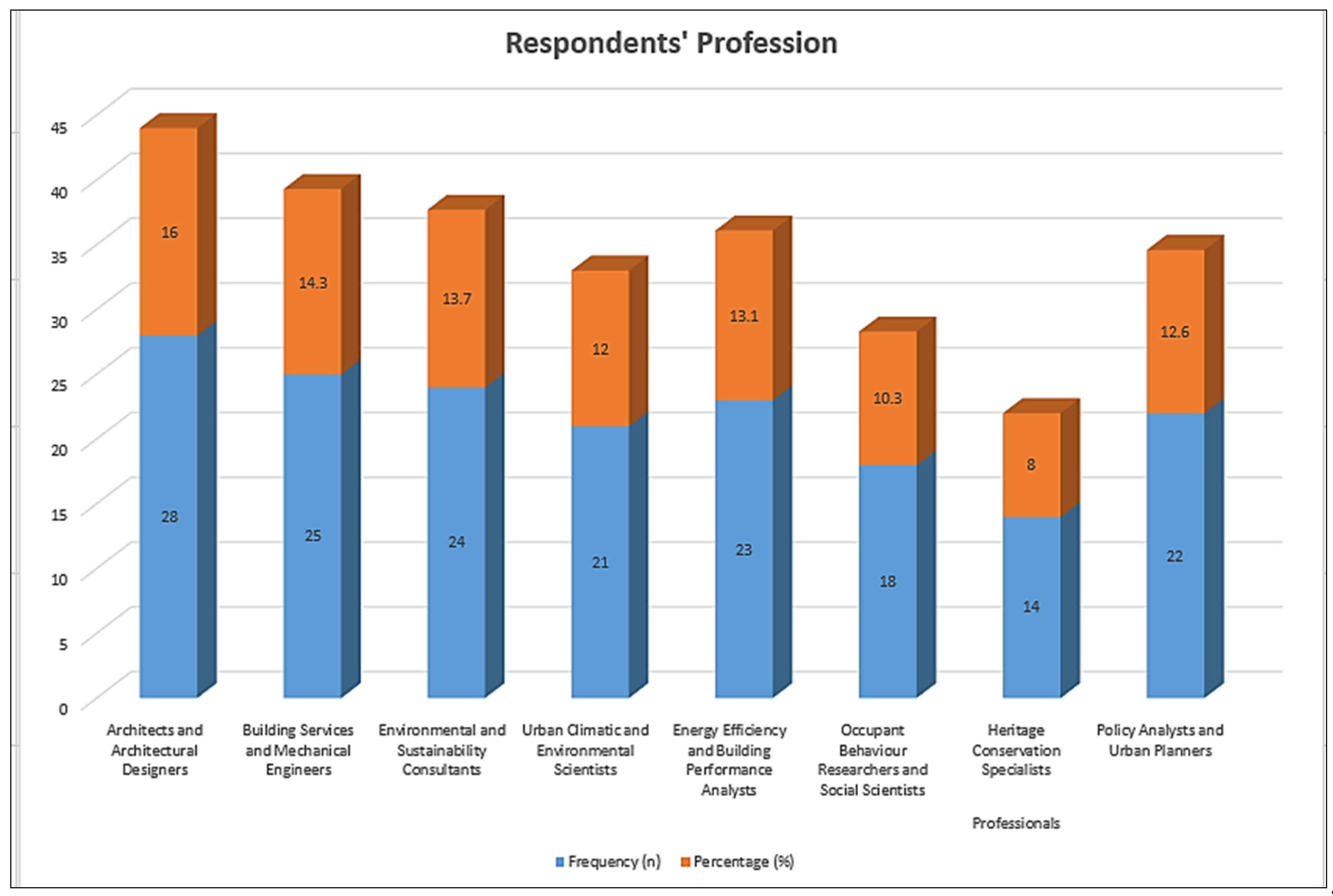
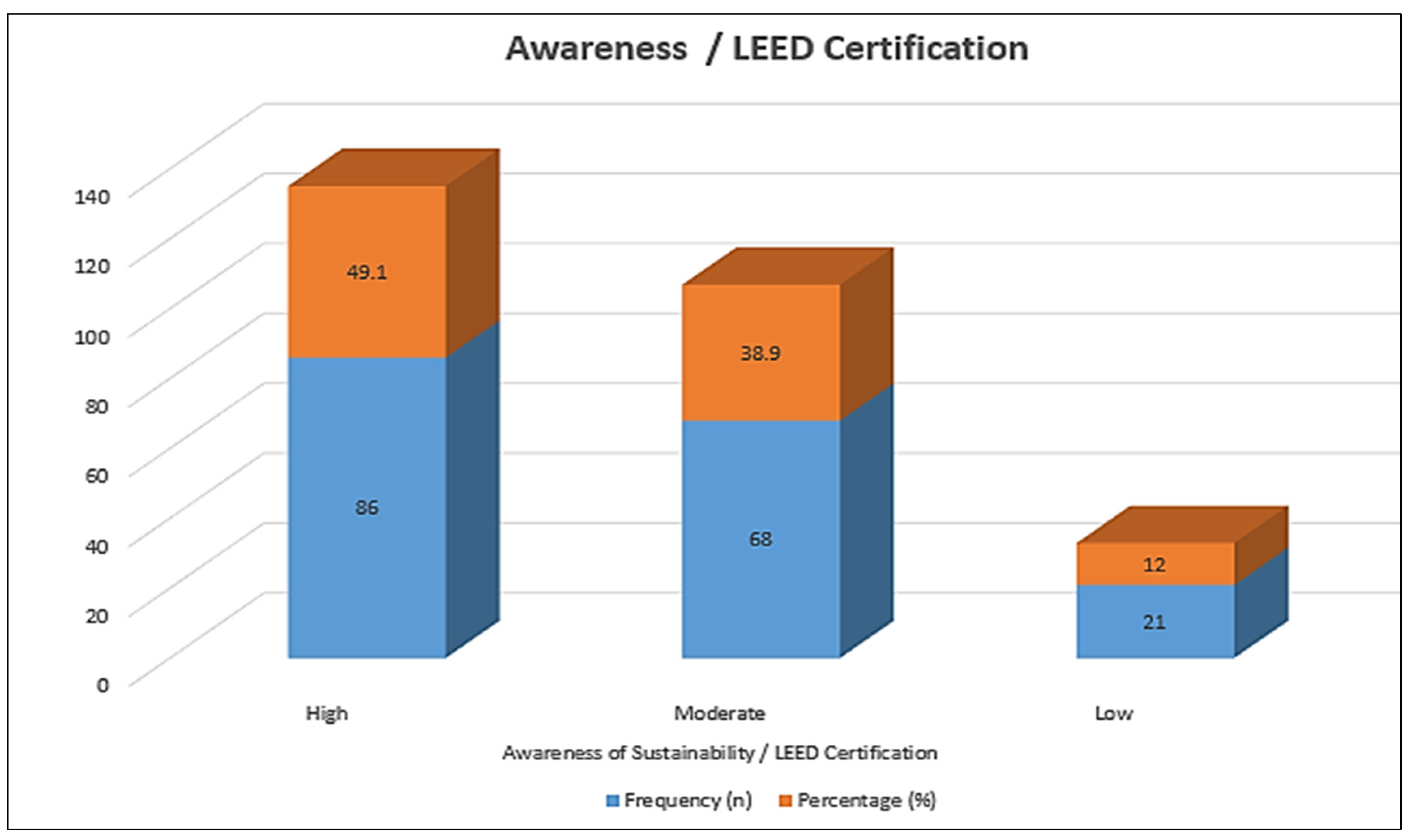
4.1. Demographic Results
4.2. Instrument Reliability and Validity
4.3. Qualitative Results of the Case Study Buildings

| Case Study Buildings | Design Strategy | Climate Responsiveness | Occupant-Centric Features | Findings | Picture |
|---|---|---|---|---|---|
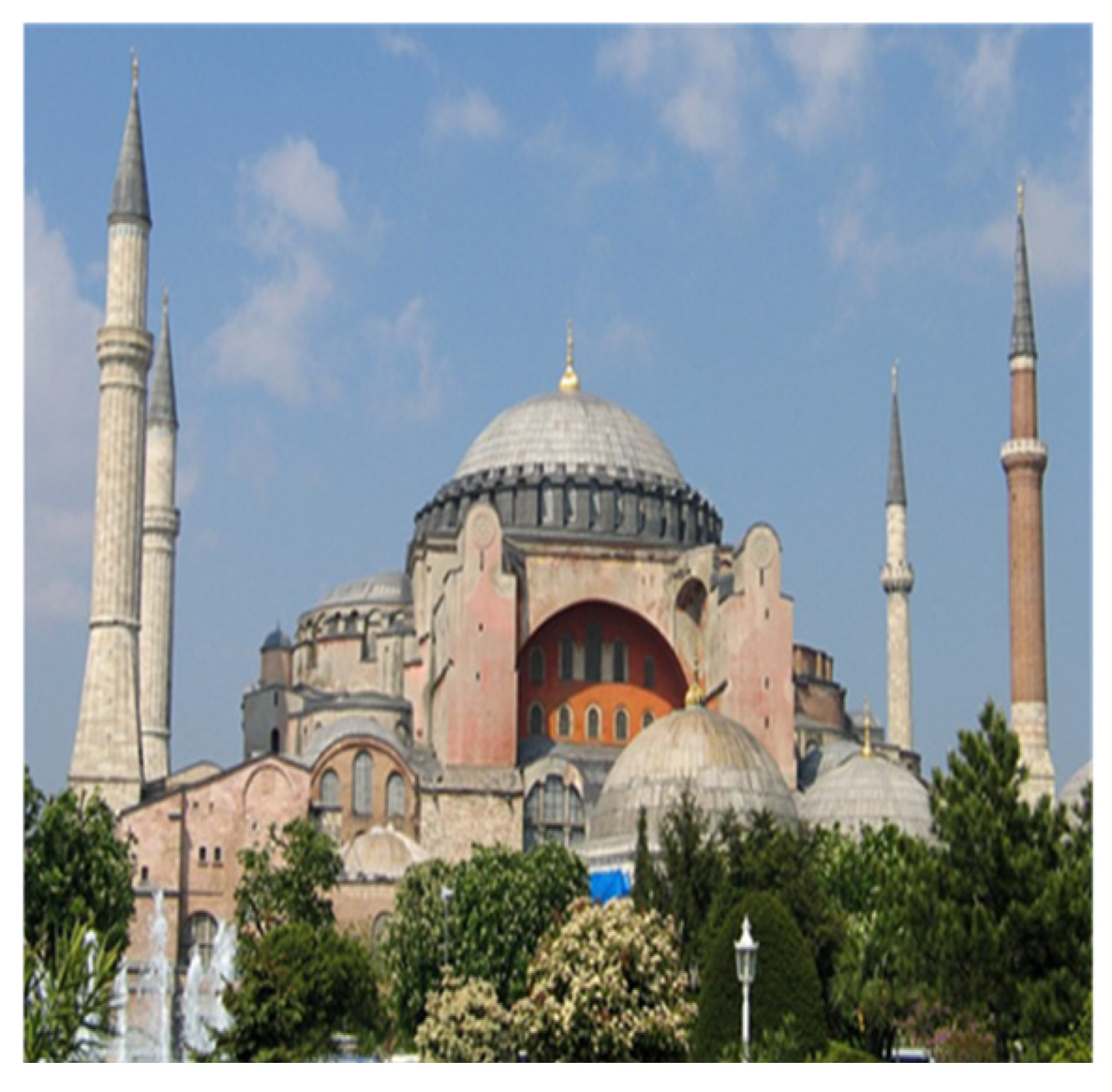
| 1. Hagia Sophia |
|
|
|
| Figure 8 |
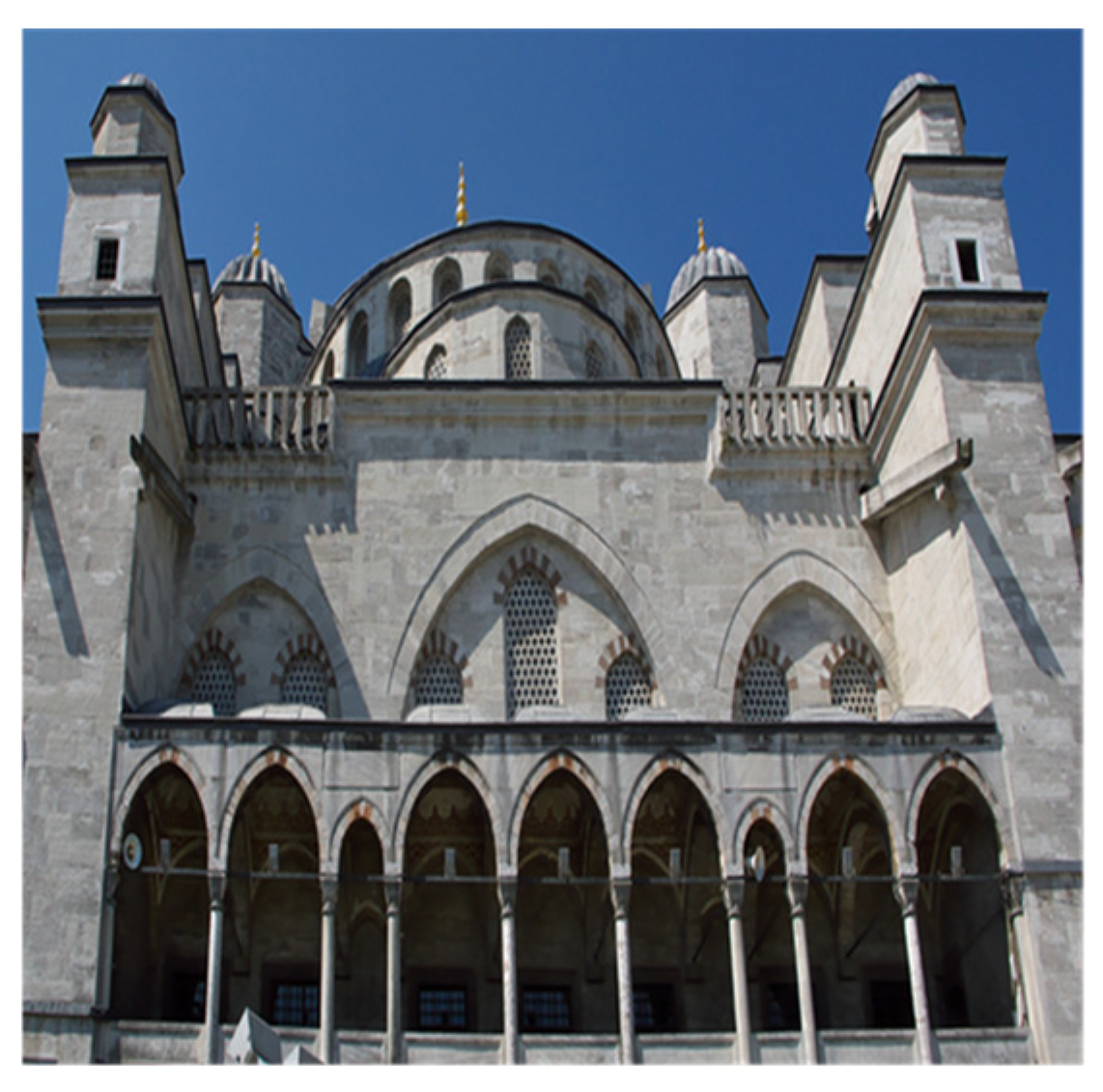
| 2. Sultan Ahmed Mosque |
|
|
|
| Figure 9 |
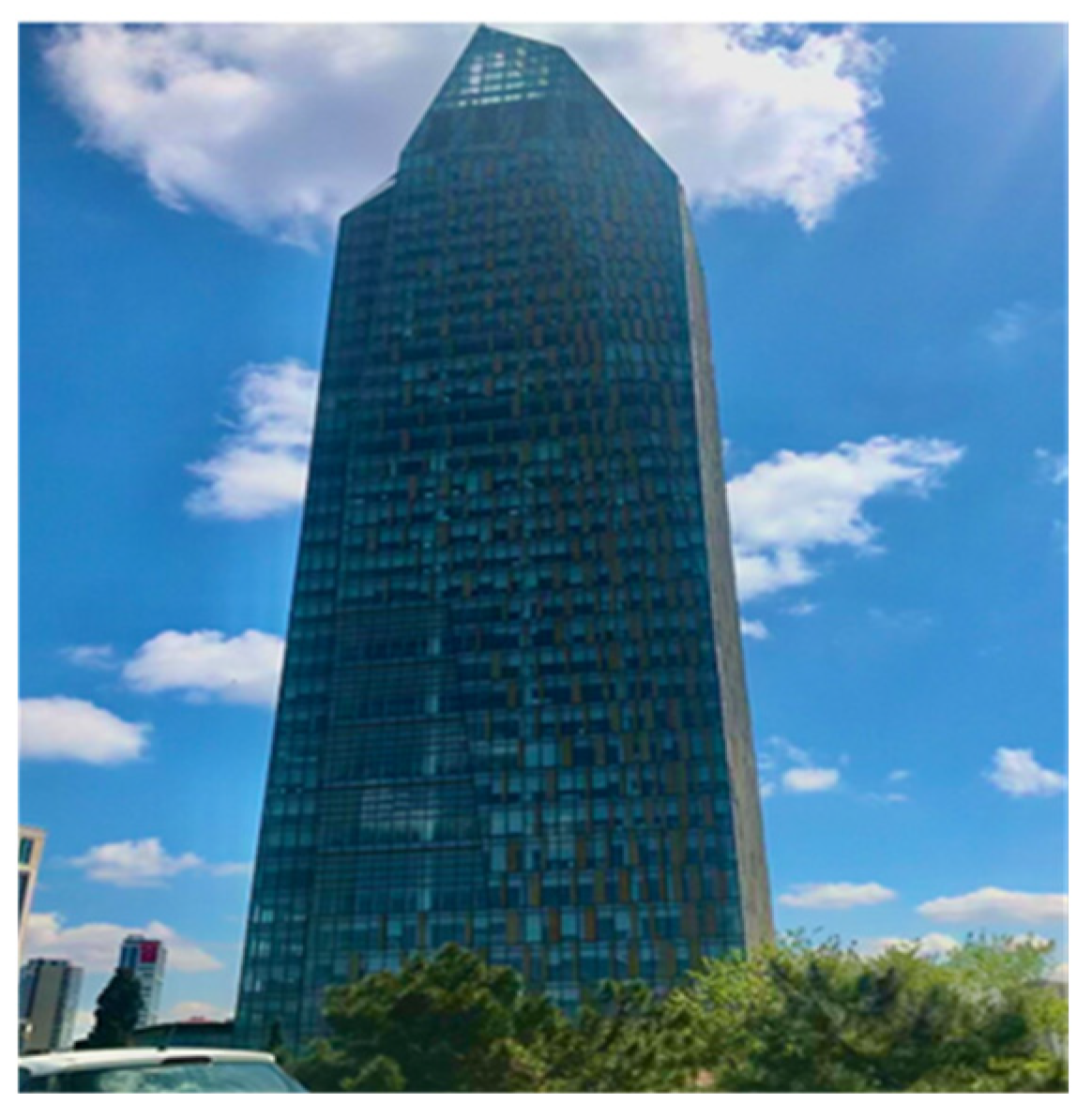
| 3. Sapphire Tower |
|
|
|
| Figure 10 |
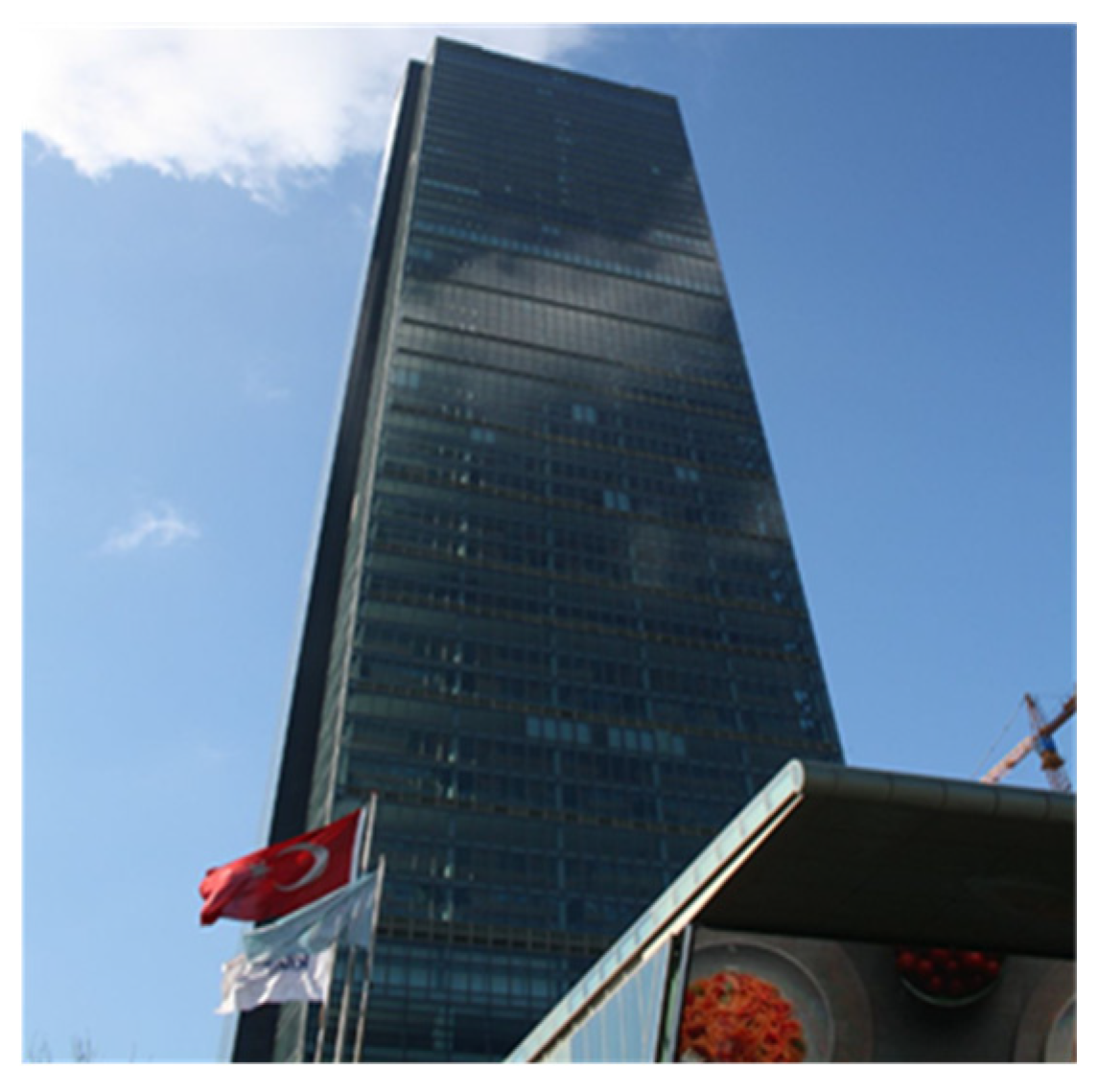
| 4. The Allianz Tower |
|
|
|
| Figure 11 |
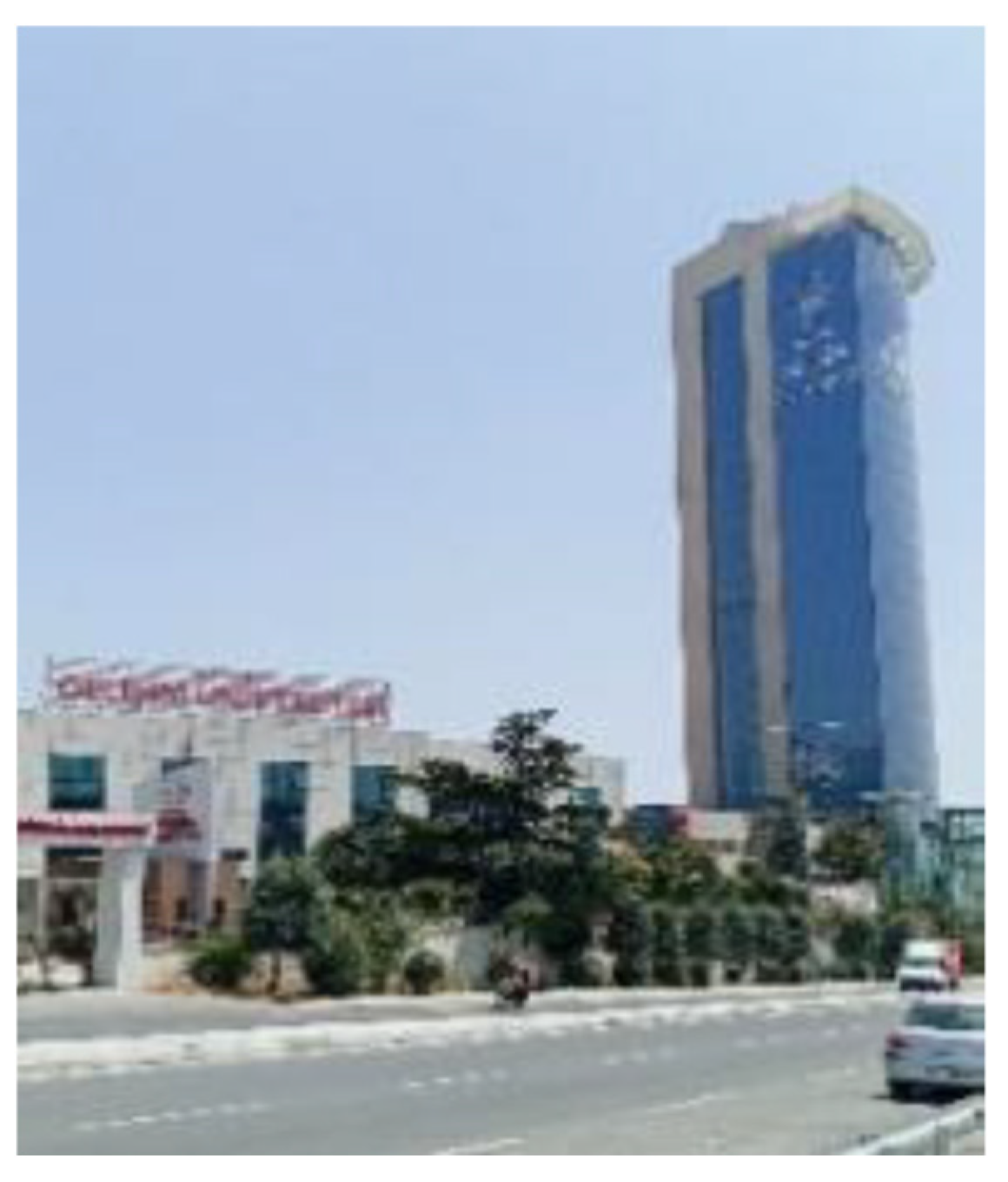
| 5. Istanbul Gelisim University (Tower Building) |
|
|
|
| Figure 12 |
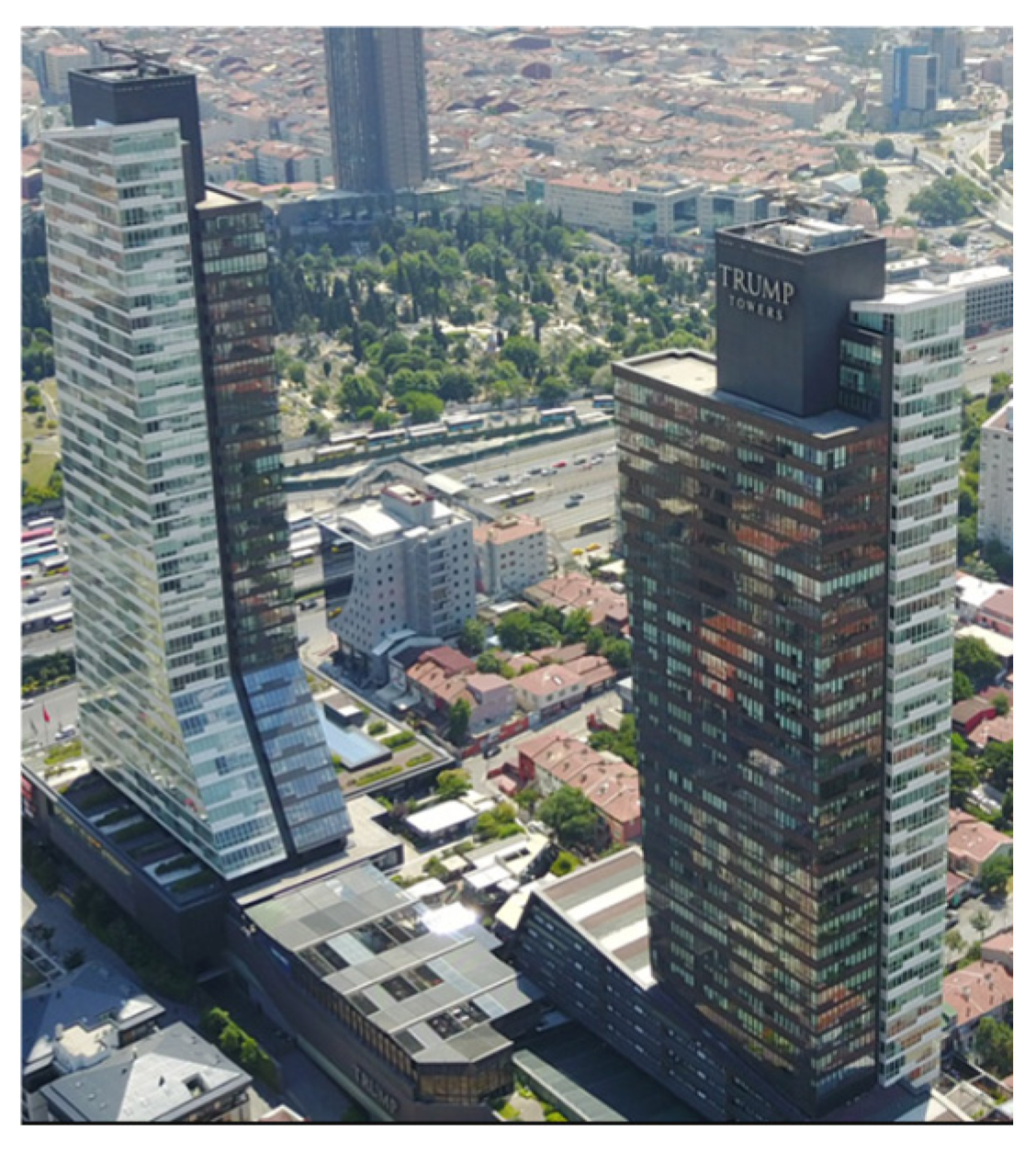
| 6. Trump Tower |
|
|
|
| Figure 13 |
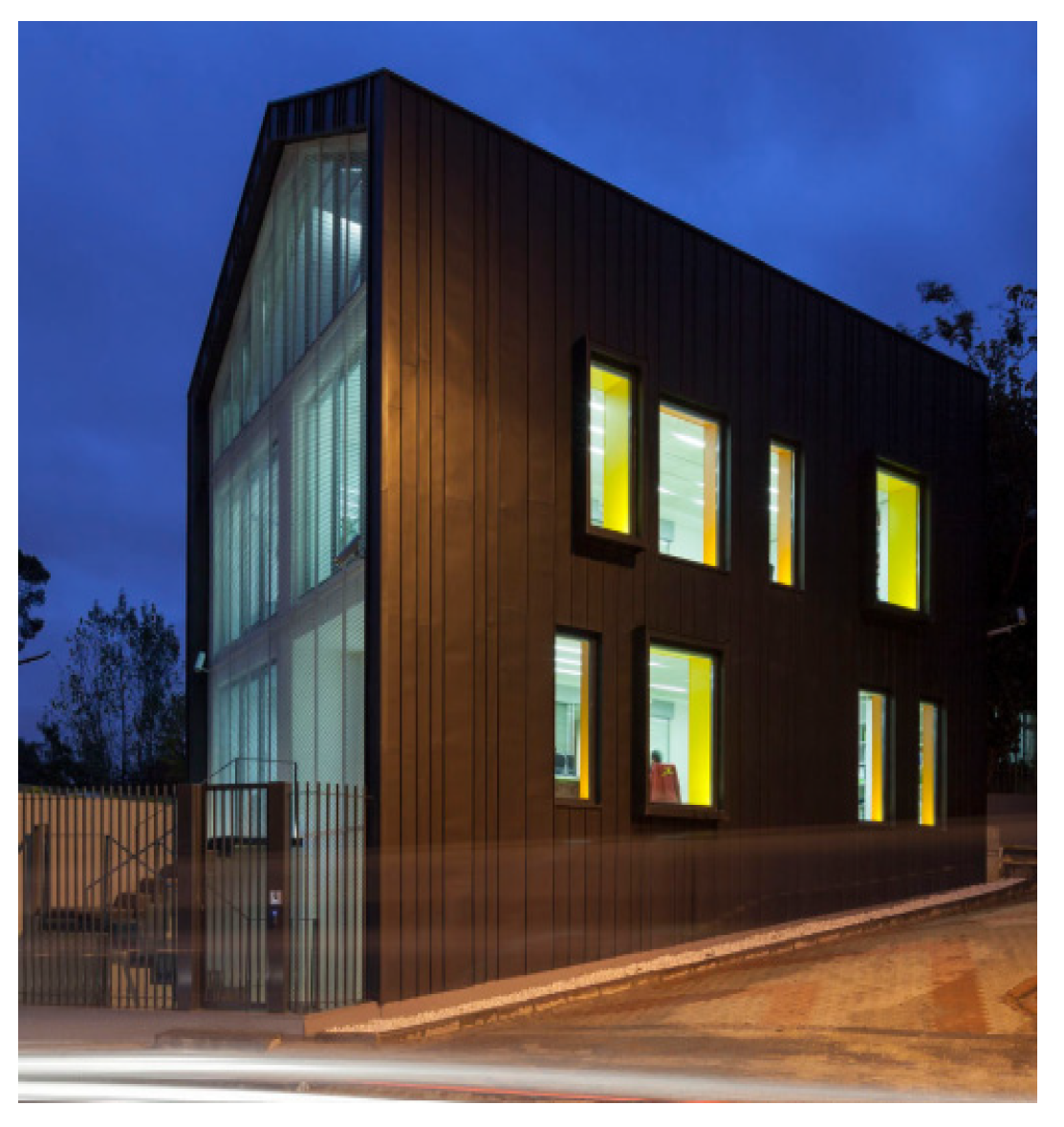
| 7. ERKE Green Academy |
|
|
|
| Figure 14 |


4.4. Results of the Integrative Design Performance Scores (IDPSs)
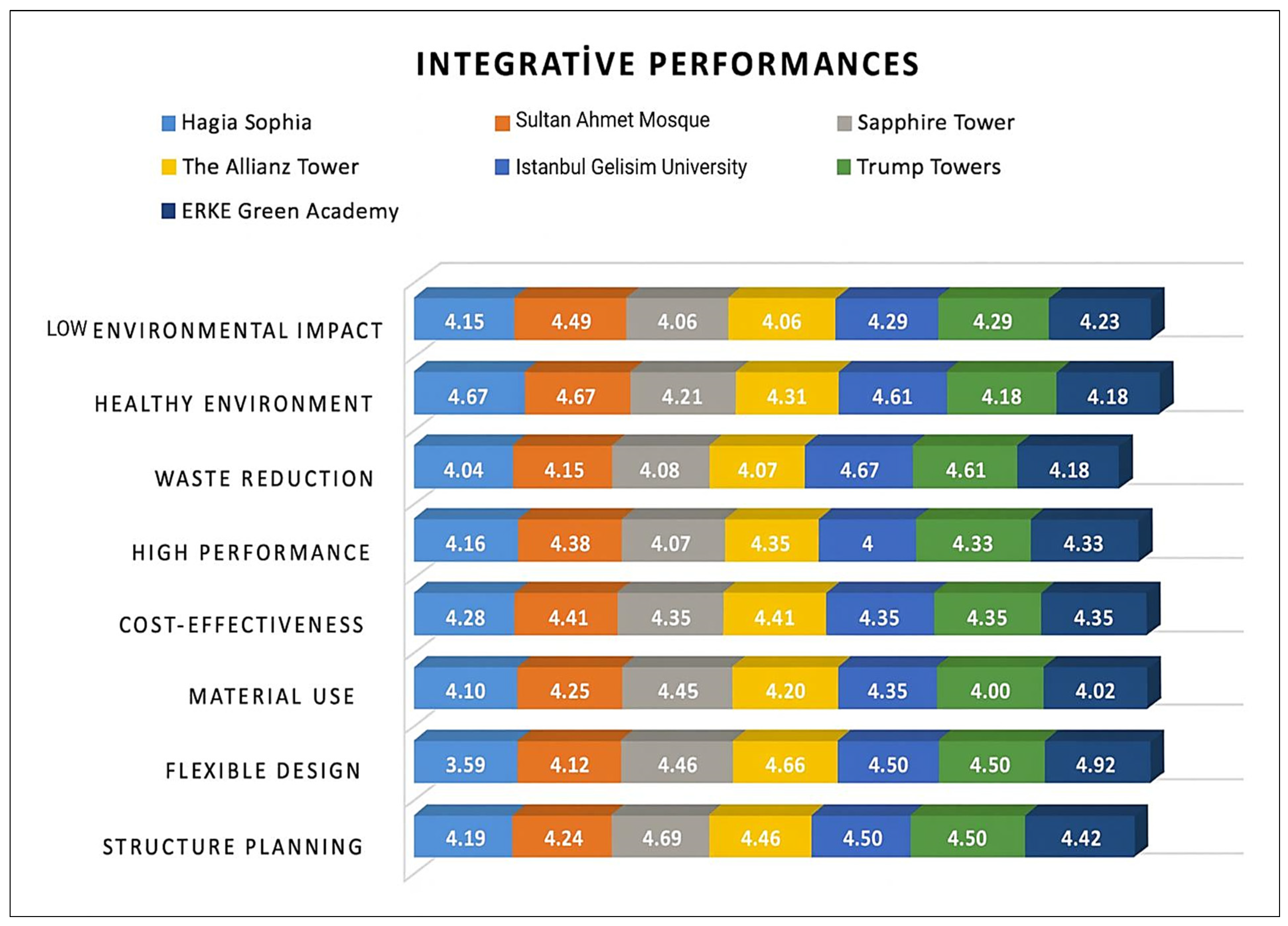
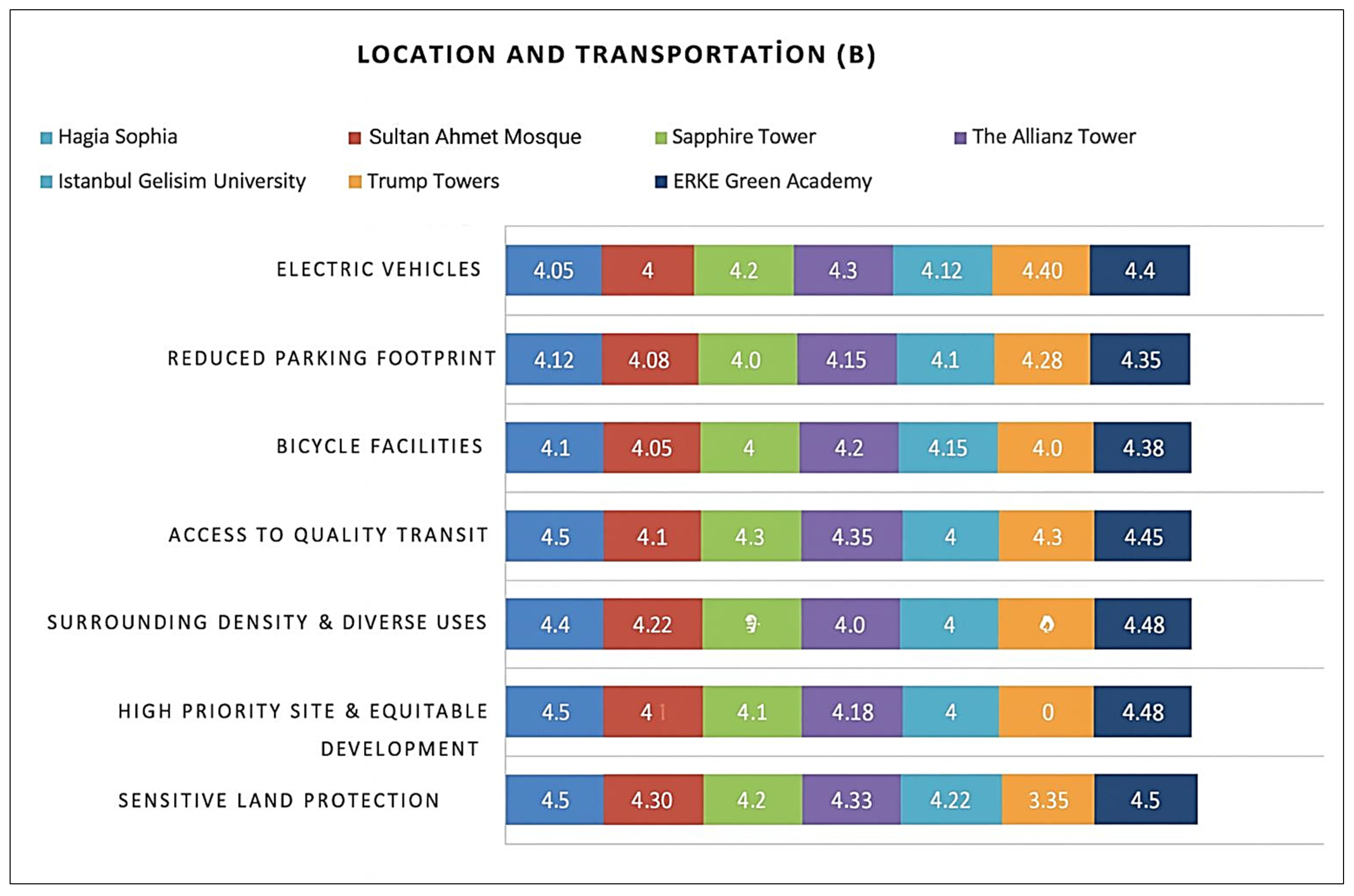
4.4.1. Results of the Integrated Performances (A) and Location and Transportation (B)
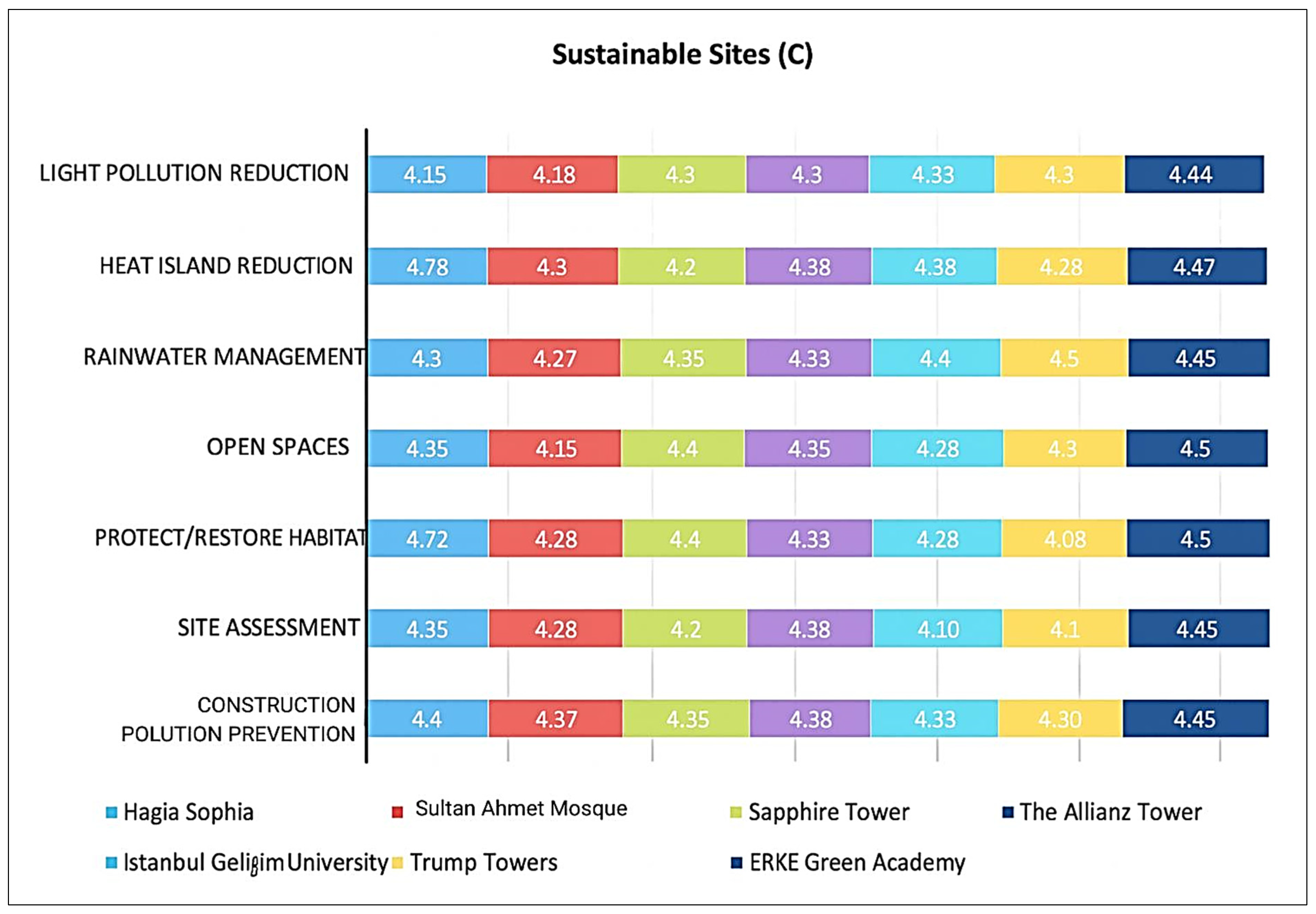
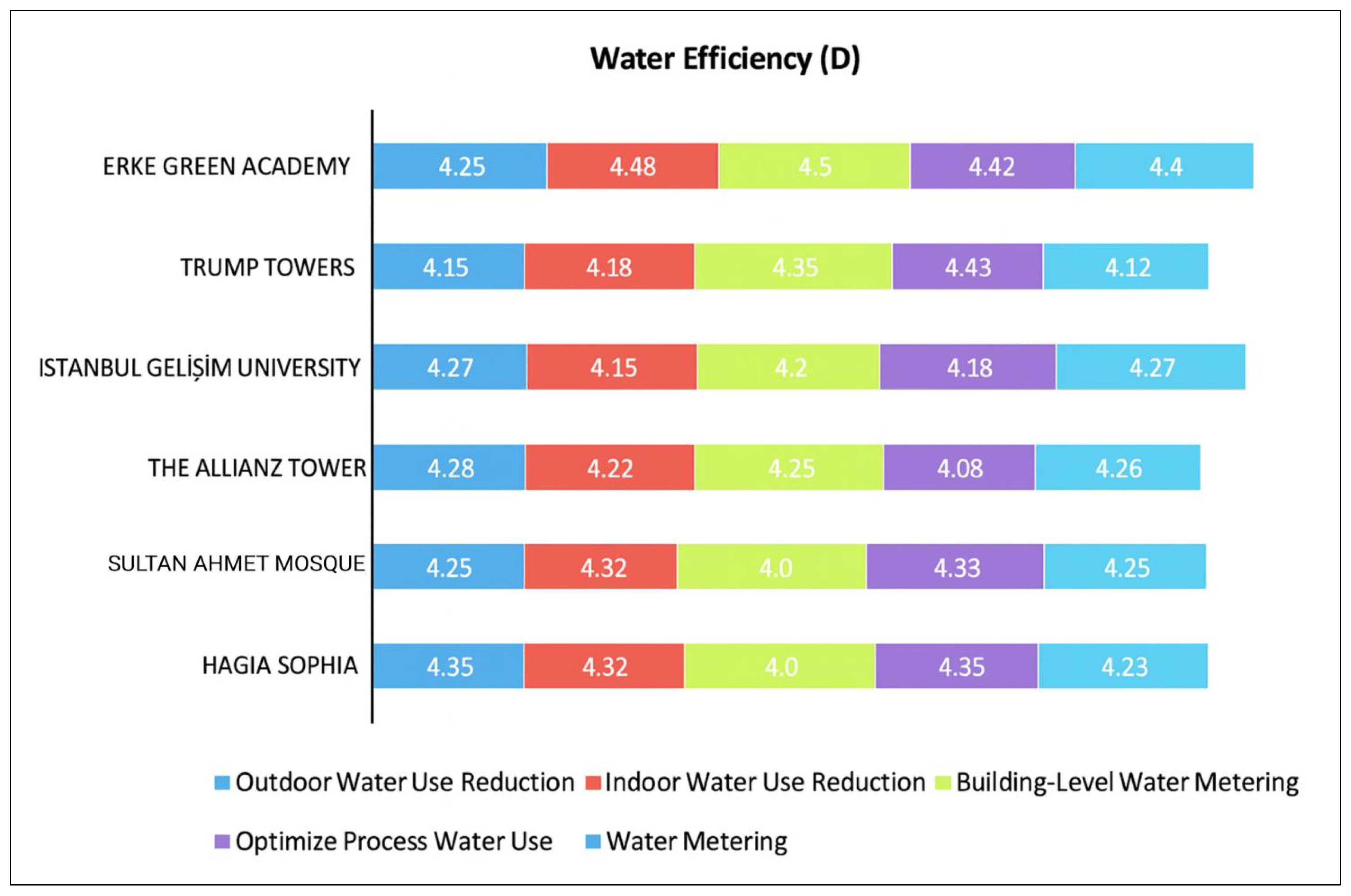
4.4.2. Results of the Sustainable Sites Criteria (C) and Water Efficiency Criteria (D)
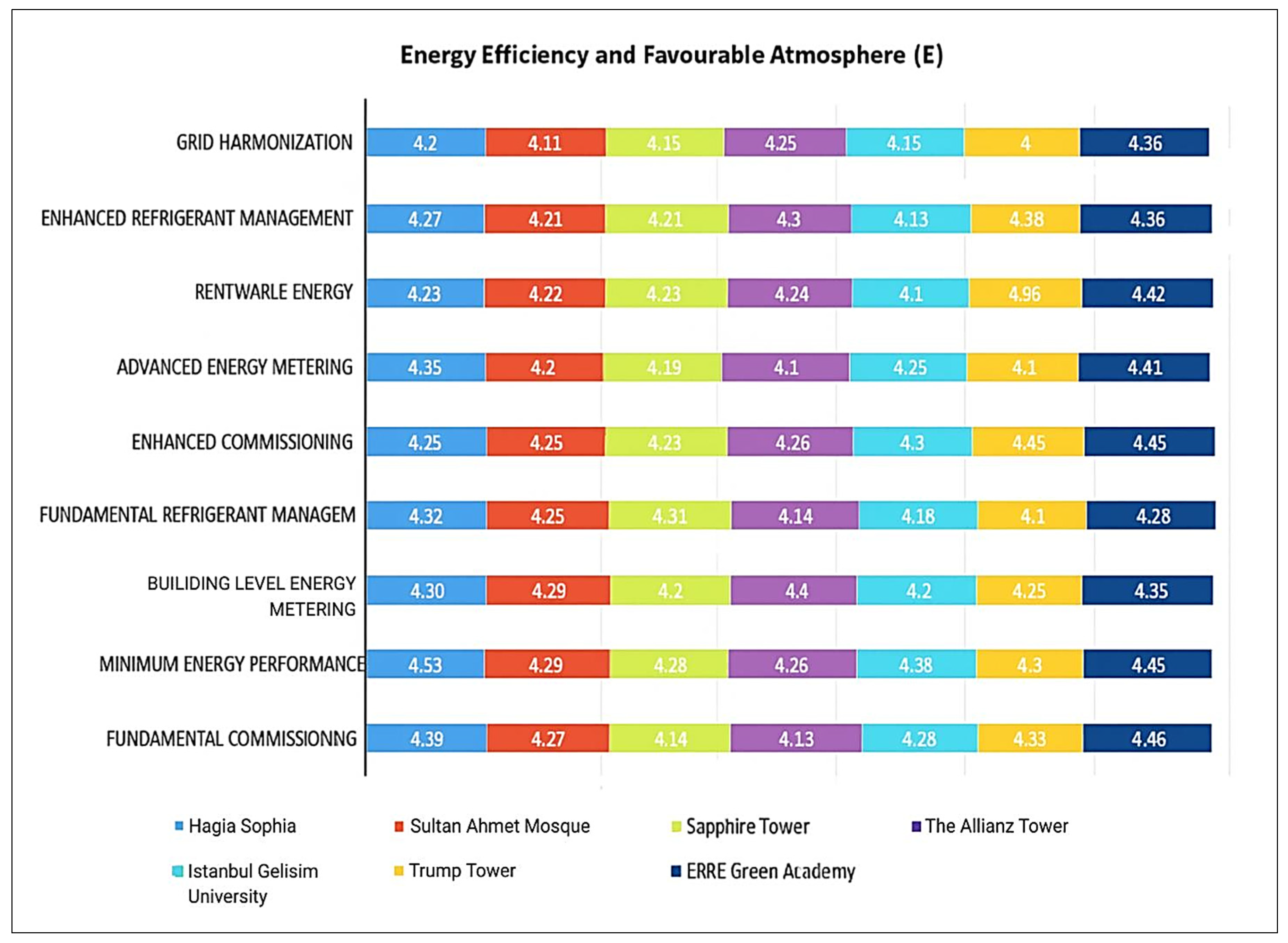
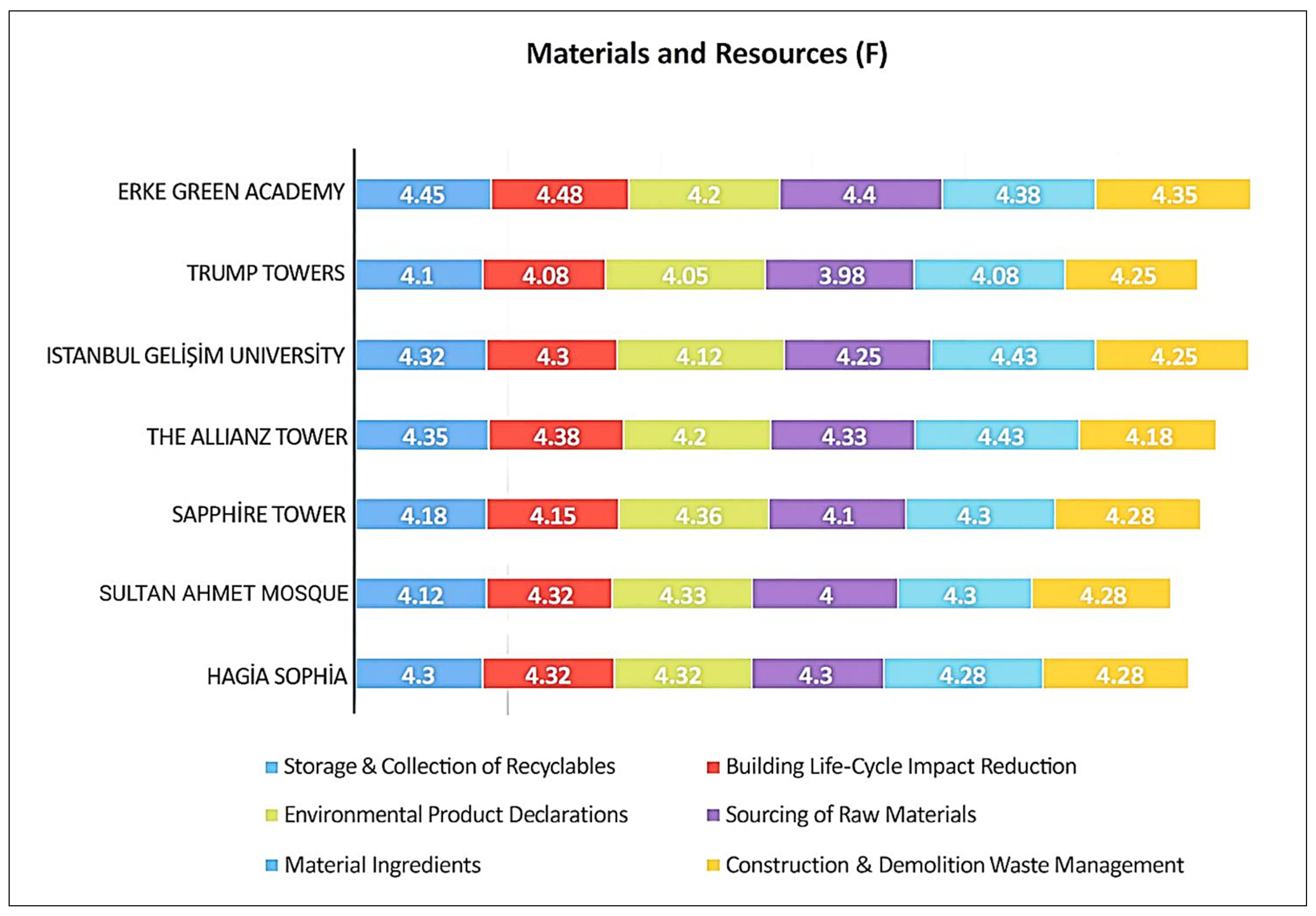
4.4.3. Energy Efficiency and Favourable Atmosphere (E) and Materials and Resources Sustainability Indicators (F)
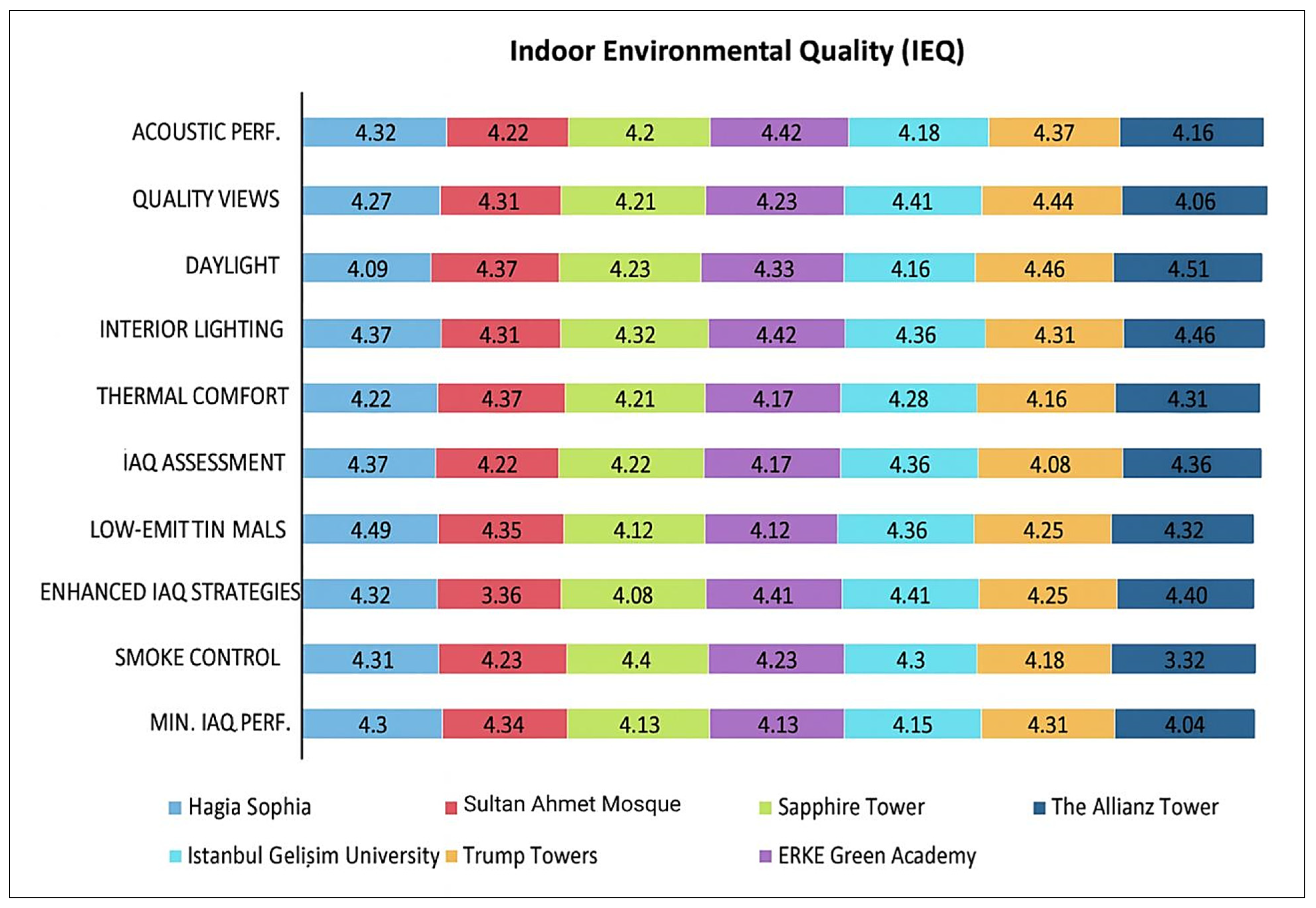
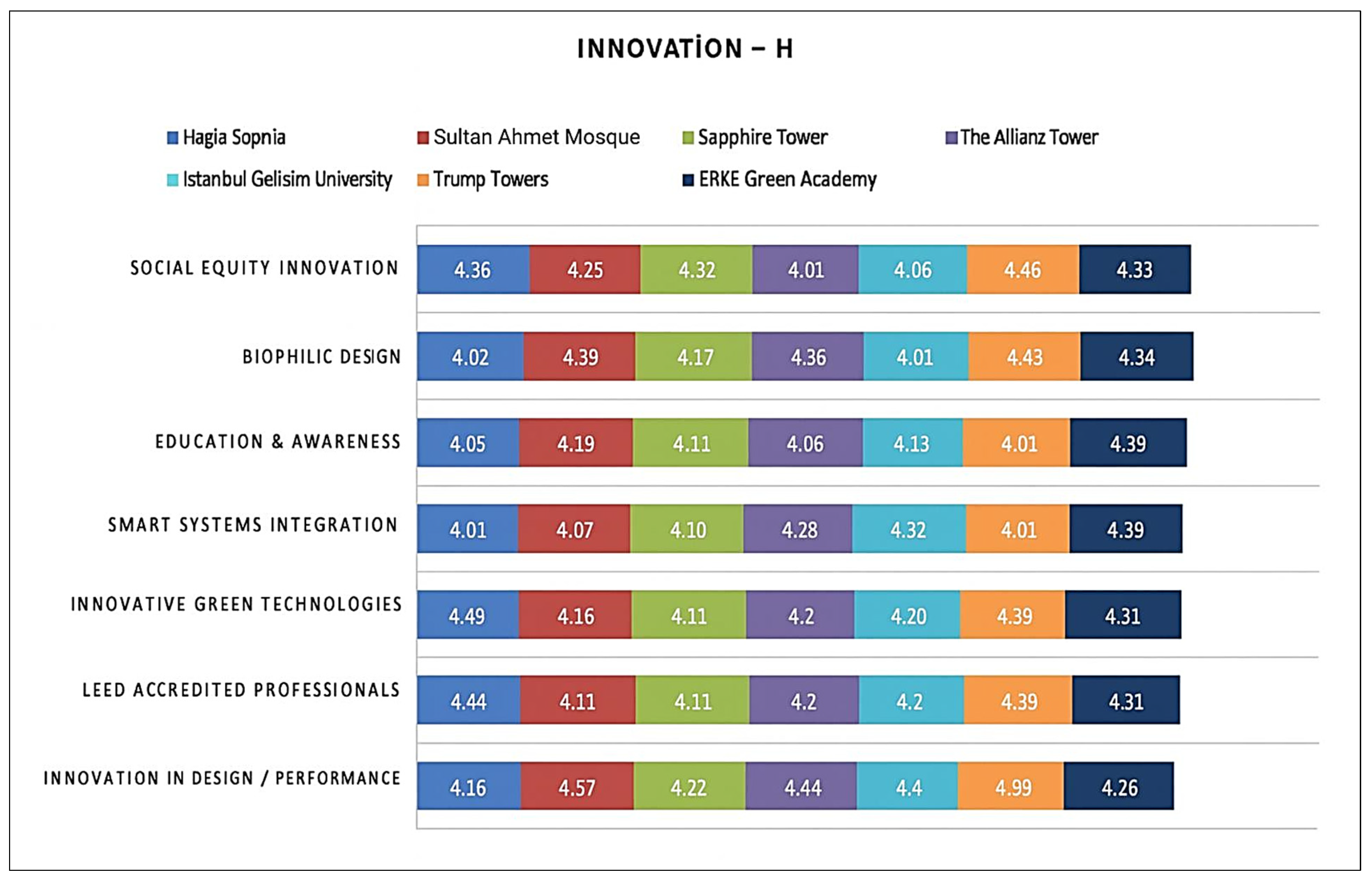
4.4.4. Results of the Indoor Environmental Quality (IEQ) Assessment-G and Innovation Criteria–H
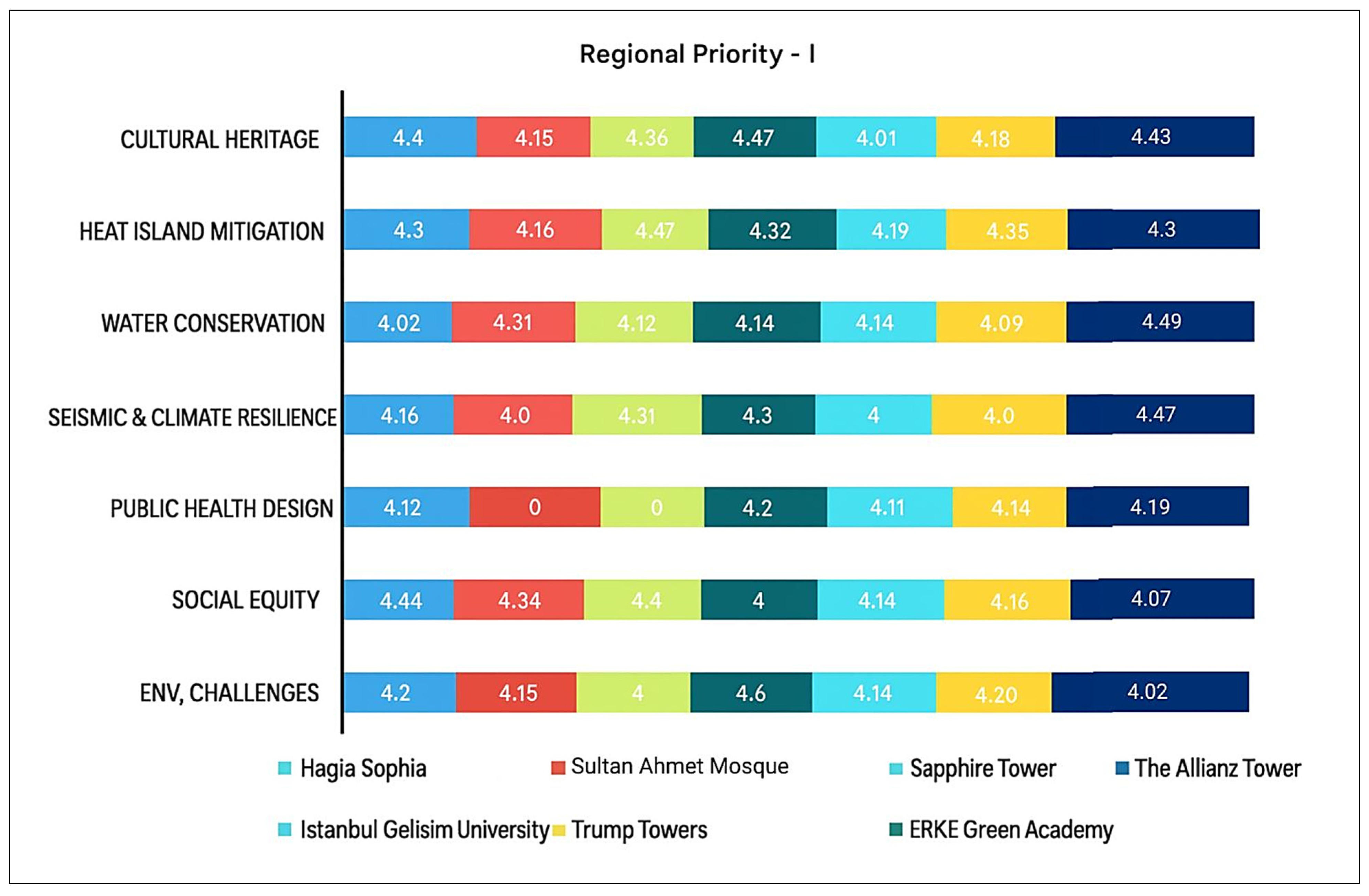
4.4.5. Results of the Regional Priority–I
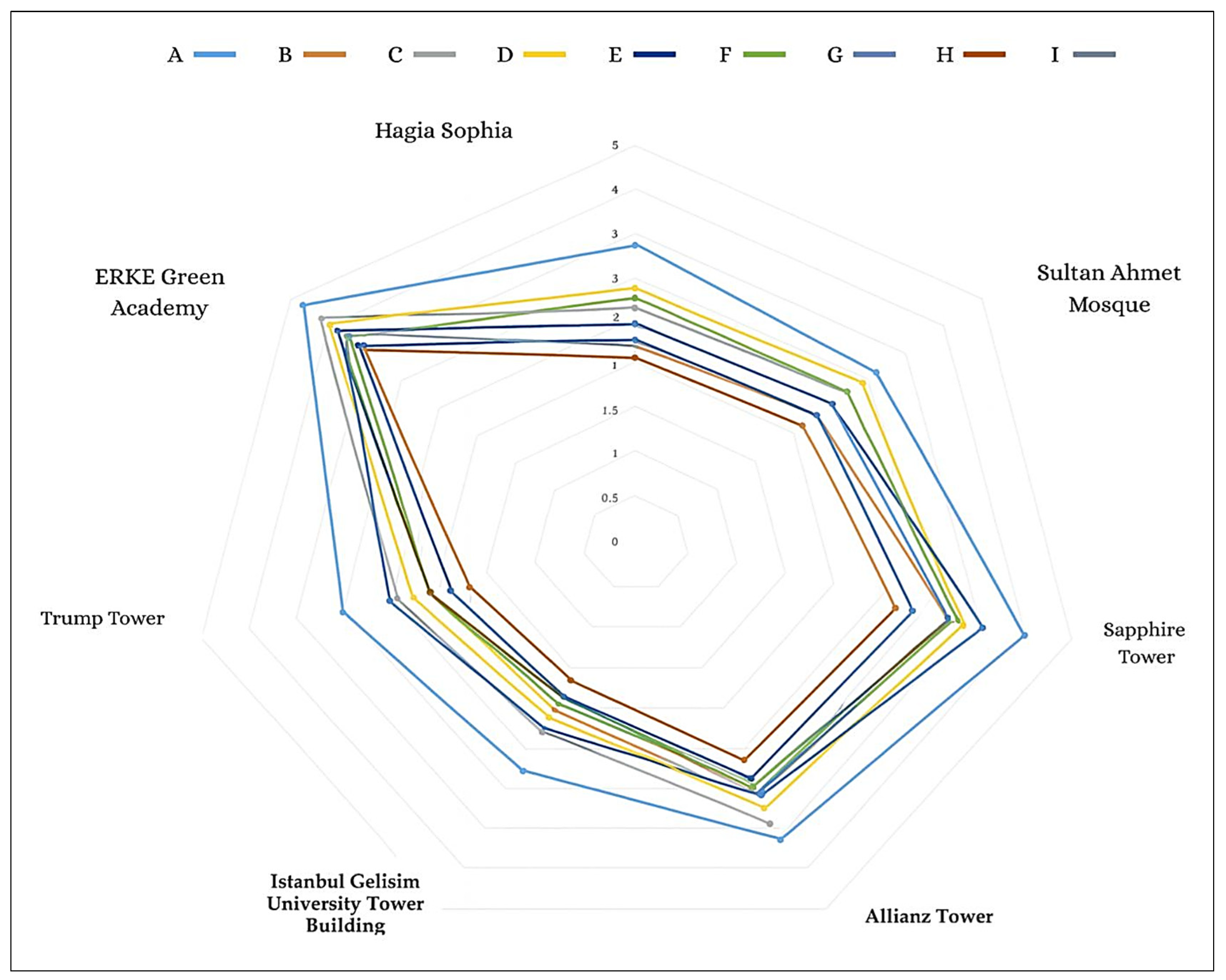
4.5. Results of the Comparative Sustainability Performance of Selected Case Study Buildings in Istanbul
4.6. Occupant Behaviour and Its Impact on IEQ and Sustainability
5. Discussion
5.1. Process and Context
5.1.1. Climate-Responsive and User-Centric Approaches in Istanbul’s Buildings
5.1.2. The Integrative Design Performance Criteria of the Buildings
5.2. Sustainable Resource Management
5.2.1. Location Indices and the Transportation Drives Related to the Buildings
5.2.2. Sustainable Site and Design Strategies of the Buildings
5.2.3. Water Efficiency Technologies of the Buildings
5.3. Energy and Environmental Performance
5.3.1. Buildings’ Energy Efficiency and Favourable Atmosphere
5.3.2. Materials and Resources Sustainability Indicators (F)
5.3.3. The Indoor Environmental Quality (IEQ) Assessment-G
5.4. Innovative and Regional Relevance
5.4.1. Innovative Green Technologies and Smart Systems Integration
5.4.2. The Buildings’ Regional Priority
5.5. Occupant Behaviours and Comfort Within Building Design
6. Conclusions
Supplementary Materials
Funding
Institutional Review Board Statement
Informed Consent Statement
Data Availability Statement
Acknowledgments
Conflicts of Interest
References
- Kovalchuk, N.; Shcherbakova, I. Modern technological solutions for the construction of energy-efficient buildings. E3S Web Conf. 2024, 531, 01022. [Google Scholar] [CrossRef]
- Bungau, C.C.; Bungau, T.; Prada, I.F.; Prada, M.F. Green buildings as a necessity for sustainable environment development: Dilemmas and challenges. Sustainability 2022, 14, 13121. [Google Scholar] [CrossRef]
- Zhang, M.; Yiğit, İ.; Adigüzel, F.; Hu, C.; Chen, E.; Siyavuş, A.E.; Elmaştaş, N.; Ustuner, M.; Kaya, A.Y. Impact of urban surfaces on microclimatic conditions and thermal comfort in Burdur, Türkiye. Atmosphere 2024, 15, 1375. [Google Scholar] [CrossRef]
- Han, M.; May, R.; Zhang, X.; Wang, X.; Pan, S.; Da, Y.; Jin, Y. A novel reinforcement learning method for improving occupant comfort via window opening and closing. Sustain. Cities Soc. 2020, 61, 102247. [Google Scholar] [CrossRef]
- Niza, I.L.; Bueno, A.M.; Broday, E.E. Indoor environmental quality (IEQ) and sustainable development goals (SDGs): Technological advances, impacts and challenges in the management of healthy and sustainable environments. Urban Sci. 2023, 7, 96. [Google Scholar] [CrossRef]
- Agboola, O.P.; Redzuan, F.L.M. Smart Technologies for Istanbul’s Urban Livability. In Building Sustainability, Thermal Comfort, and Energy Efficiency, 1st ed.; Zaki, S.A., Thapa, S., Eds.; Penerbit UTM Press: Johor Bahru, Malaysia, 2024; Volume 1, pp. 51–73. Available online: https://penerbit.utm.my/booksonline/building-sustainability-thermal-comfort-and-energy-efficiency/ (accessed on 16 April 2025).
- Chiang, C.L.; Calautit, J. Reducing building energy performance gap: Integrating agent-based modelling and building performance simulation. Buildings 2025, 15, 1728. [Google Scholar] [CrossRef]
- Turkish State Meteorological Service. Climate Data for Istanbul. Available online: https://mgm.gov.tr (accessed on 16 April 2025).
- Harputlugil, T.; de Wilde, P. Building Occupant Energy Labels (OEL): Capturing the human factors in buildings for energy efficiency. Sustainability 2025, 17, 1216. [Google Scholar] [CrossRef]
- Scislo, L.; Szczepanik-Scislo, N. Near real-time access monitoring based on IoT dynamic measurements of indoor air pollutant. In Proceedings of the 2023 IEEE 12th International Conference on Intelligent Data Acquisition and Advanced Computing Systems: Technology and Applications (IDAACS), Dortmund, Germany, 7–9 September 2023; pp. 729–734. [Google Scholar] [CrossRef]
- Sharma, V.; Vrushank, M. Human-centric HVAC control: Balancing comfort and energy efficiency. Eur. J. Adv. Eng. Technol. 2023, 10, 5. Available online: https://ecommons.udayton.edu/mee_grad_pub/5/ (accessed on 16 April 2025).
- World Green Building Council. World Green Building Trends 2018. Available online: https://worldgbc.org/article/world-green-building-trends-2018-smartmarket-report/ (accessed on 16 April 2025).
- ASHRAE Standard 55; Thermal Environmental Conditions for Human Occupancy. American Society of Heating, Refrigerating and Air-Conditioning Engineers: Atlanta, GA, USA, 2017.
- Sheikha, A. Evaluating the Impact of Hybrid Ventilation Strategies on Reducing the Cooling Load and Achieving Thermal Comfort of Buildings: Towards Arid Climate of UAE. Master’s Thesis, United Arab Emirates University, Al Ain, United Arab Emirates, 2024. Available online: https://scholarworks.uaeu.ac.ae/all_theses/1175/ (accessed on 16 April 2025).
- Zhang, Z.; Yao, J.; Zheng, R. Multi-objective optimization of building energy saving based on the randomness of energy-related occupant behavior. Sustainability 2024, 16, 1935. [Google Scholar] [CrossRef]
- Bouckaert, S.; Pales, A.F.; McGlade, C.; Remme, U.; Wanner, B.; Varro, L.; Spencer, T. Net Zero by 2050: A Roadmap for the Global Energy Sector. International Energy Agency, 2021. Available online: https://trid.trb.org/View/1856381 (accessed on 16 April 2025).
- Uwa, J.N.; Agboola, O.P. Applications of immersive technology in building construction phase: Fostering sustainability in the global context. In Applications of Immersive Technology in Architecture, Engineering and Construction: A Handbook; Prabhakaran, A., Mahamadu, A.-M., Booth, C.A., Manu, P., Eds.; Taylor & Francis Ltd.: London, UK, 2025; Chapter 8; pp. 1–320. [Google Scholar] [CrossRef]
- Laskari, M.; de Masi, R.F.; Karatasou, S.; Santamouris, M.; Assimakopoulos, M.N. On the impact of user behaviour on heating energy consumption and indoor temperature in residential buildings. Energy Build. 2022, 255, 111657. [Google Scholar] [CrossRef]
- Ebuy, H.T.; Bril El Haouzi, H.; Benelmir, R.; Pannequin, R. Occupant behavior impact on building sustainability performance: A literature review. Sustainability 2023, 15, 2440. [Google Scholar] [CrossRef]
- Alsherfawi Aljazaerly, A.; Okyere, S.A.; Mensah, S.L.; Abunyewah, M.; Frimpong, L.K.; Kita, M. Towards a socially sustainable built environment: A comparative assessment of urban neighbourhoods in Istanbul. Smart Sustain. Built Environ. 2024. [Google Scholar] [CrossRef]
- Avordeh, T.K.; Gyamfi, S.; Opoku, A.A. The role of demand response in residential electricity load reduction using appliance shifting techniques. Int. J. Energy Sect. Manag. 2022, 16, 605–635. [Google Scholar] [CrossRef]
- Ersoy, A.E.; Ugurlu, A. Bioenergy’s role in achieving a low-carbon electricity future: A case of Türkiye. Appl. Energy 2024, 372, 123799. [Google Scholar] [CrossRef]
- Nicol, J.F.; Humphreys, M.A. Adaptive thermal comfort and sustainable thermal standards for buildings. Energy Build. 2002, 34, 563–572. [Google Scholar] [CrossRef]
- Weyant, E. Research design: Qualitative, quantitative, and mixed methods approaches (Review of Creswell & Creswell, 2018). J. Transp. Land Use 2022, 19, 54–55. [Google Scholar] [CrossRef]
- Yan, D.; O’Brien, W.; Hong, T.; Feng, X.; Gunay, H.B.; Tahmasebi, F.; Mahdavi, A. Occupant behaviour modelling for building performance simulation: Current state and future challenges. Energy Build. 2015, 107, 264–278. [Google Scholar] [CrossRef]
- Chatzisarantis, N.L.D.; Stuart, J.H.B. Functional significance of psychological variables that are included in the Theory of Planned Behaviour: A Self-Determination Theory approach to the study of attitudes, subjective norms, perceptions of control and intentions. Eur. J. Soc. Psychol. 1998, 28, 303–322. Available online: https://onlinelibrary.wiley.com/doi/10.1002/(SICI)1099-0992(199805/06)28:3%3C303::AID-EJSP853%3E3.0.CO;2-6 (accessed on 16 April 2025). [CrossRef]
- Lotfabadi, P.; Iranmanesh, A. Evaluating the incorporation of ecological conscious building design methods in architectural education. Buildings 2025, 15, 1339. [Google Scholar] [CrossRef]
- Nour El-Din, M.; Poças Martins, J.; Ramos, N.M.; Pereira, P.F. Blockchain-secured digital twins for promoting smart energy performance-based contracts. Energies 2024, 17, 3392. [Google Scholar] [CrossRef]
- Feilden, B.M.; Jokilehto, J. Management Guidelines for World Cultural Heritage Sites; ICCROM: Rome, Italy, 1998; Available online: https://www.iccrom.org/publication/management-guidelines-world-cultural-heritage-sites (accessed on 16 April 2025).
- Citaristi, I. United Nations Human Settlements Programme—UN-Habitat. In The Europa Directory of International Organisations 2022; Routledge: London, UK, 2022; pp. 240–243. [Google Scholar]
- U.S. Green Building Council (USGBC). LEED v4.1 Building Design and Construction Scorecard; USGBC: Washington, DC, USA, 2019; Available online: https://certificationwiki.gbci.org/images/1/16/LEED_v4.1_BDC_Rating_System_tracked_July_2020.pdf (accessed on 16 April 2025).
- AlAwam, Y.S.; Alshamrani, O.S. Initial cost assessment stochastic model for green buildings based on LEED score. Energy Build. 2021, 245, 111045. [Google Scholar] [CrossRef]
- Sharifi, A.; Murayama, A. A critical review of neighbourhood sustainability assessment tools. Environ. Impact Assess. Rev. 2013, 38, 73–87. [Google Scholar] [CrossRef]
- Liu, M.; Heiselberg, P.K.; Antonov, Y.I.; Mikkelsen, F.S. Parametric analysis on heat transfer, daylight, and thermal comfort for a sustainable roof window with triple glazing and external shutter. Energy Build. 2019, 183, 209–221. [Google Scholar] [CrossRef]
- Kuranlıoğlu, D.; Tunahan, G.İ. Designing climate-responsive learning environments across Türkiye’s climatic zones. Erciyes Univ. J. Sci. 2025, 41, 282–317. [Google Scholar]
- Creswell, J.W.; Clark, V.L.P. Designing and Conducting Mixed Methods Research, 3rd ed.; Sage Publications: Thousand Oaks, CA, USA, 2017; Available online: https://www.cambridgeenglish.org/Images/735110-studies-in-language-testing-volume-43.pdf#page=53 (accessed on 16 April 2025).
- Azar, E.; Menassa, C.C. Evaluating the impact of extreme energy use behavior on occupancy interventions in commercial buildings. Energy Build. 2015, 97, 205–218. [Google Scholar] [CrossRef]
- Agboola, O.P.; Ojobo, H.; Uwa, J.N. A comparative evaluation of the influence of architectural founders on contemporary urban planning and design. In International Studies in Architecture, Planning and Design; Seruven Yayinevi: Istanbul, Türkiye, 2023; pp. 33–77. [Google Scholar]
- Hagia Sophia. Available online: https://commons.wikimedia.org/wiki/File%3AHagia_Sophia_09.JPG?utm (accessed on 27 September 2025).
- Sultan Ahmed Mosque. Available online: https://commons.wikimedia.org/wiki/File%3ASultanahmet_Camii._Istanbul.jpg?utm (accessed on 27 September 2025).
- Sapphire Tower. Available online: https://commons.wikimedia.org/wiki/File%3ASapphire-Istanbul.jpg?utm (accessed on 27 September 2025).
- The Allianz Tower. Available online: https://commons.wikimedia.org/wiki/File%3AAllianz_Tower_Istanbul.jpg (accessed on 27 September 2025).
- Yıldırım, S.G. A study on spatial expansion, transformation, and master planning in an urban university campus. Int. J. Soc. Humanit. Sci. Res. 2025, 12, 2158–2172. [Google Scholar] [CrossRef]
- Trump Tower. Available online: https://commons.wikimedia.org/wiki/File%3ATrump_Towers_Istanbul.jpg?utm (accessed on 27 September 2025).
- Etem, D.B.; Selçuk, S.A. Energy Efficiency in Green Building Certified Office Buildings: A Comparative Analysis. Online J. Art Des. 2022, 10, 173–189. Available online: https://adjournal.net/articles/104/10412.pdf (accessed on 16 April 2025).
- Agboola, O.P.; Nia, H.A.; Findikgil, M.M.; Yildirim, S.G. Assessing the effectiveness of the biophilic design approach in contributing to sustainable architectural goals. New Des. Ideas 2024, 8, 144–169. [Google Scholar] [CrossRef]
- Lotfabadi, P. Spatial lighting considerations to develop sustainable lighting design. Des. Dialogue J. 2025, 2, 36–51. Available online: https://designdialoguejournal.com/index.php/home/article/view/20 (accessed on 16 April 2025).
- Gong, D.; Huang, M.; Lin, H. Construction of an ecological security pattern in rapidly urbanising areas based on ecosystem sustainability, stability, and integrity. Remote Sens. 2023, 15, 5728. [Google Scholar] [CrossRef]
- Agboola, O.P.; Yassin, Y.N.H.M. AI applications in education: Enhancing human creativity through collaborative design. In Knowledge Management in Organisations; Uden, L., Ting, I.H., Eds.; Communications in Computer and Information Science; Springer: Cham, Switzerland, 2025; Volume 2563, pp. 45–69. [Google Scholar] [CrossRef]
- AlWaer, H.; Cooper, I. Changing the focus: Viewing design-led events within collaborative planning. Sustainability 2020, 12, 3365. [Google Scholar] [CrossRef]
- Nasrullah, N.; Syafri, S. Adaptive reuse in architecture: Transforming heritage buildings for modern functionality. J. Acad. Sci. 2024, 1, 395–406. [Google Scholar] [CrossRef]
- Herrera-Avellanosa, D.; Rose, J.; Thomsen, K.E.; Haas, F.; Leijonhufvud, G.; Brostrom, T.; Troi, A. Evaluating the implementation of energy retrofits in historic buildings: Energy conservation potential and lessons for upscaling. Heritage 2024, 7, 997–1013. [Google Scholar] [CrossRef]
- Yaman, G.Ö. Determination of optimum passive design parameters for industrial buildings in different climate zones using an ANN–PSO model. Sustainability 2025, 17, 2357. [Google Scholar] [CrossRef]
- Chen, L.; Baghoolizadeh, M.; Basem, A.; Ali, S.H.; Ruhani, B.; Sultan, A.J.; Salahshour, S.; Alizadeh, A. A comprehensive review of building-integrated photovoltaic systems (BIPV). Int. Commun. Heat Mass Transf. 2024, 159, 108056. [Google Scholar] [CrossRef]
- Uygun, U.; Akgül, Ç.; Gürsel Dino, İ.; Akınoğlu, B.G. Approaching net-zero energy building through utilization of BIPV for three cities in Türkiye—Preliminary calculations. In Proceedings of the PVCon, Ankara, Turkey, 4–6 July 2018. [Google Scholar]
- Demir, Y.C.; Aktacir, M.A. Experimental investigation of the BIPV system under Şanlıurfa meteorological conditions. Appl. Sci. 2023, 13, 11286. [Google Scholar] [CrossRef]
- Kartal, B.; Alkan, R.M. Solar energy-based model for decarbonization: A case study in Istanbul. Int. J. Eng. Geosci. 2025, 11, 64–77. [Google Scholar] [CrossRef]
- El Manony, A.; Elfatah, A. Methods and techniques for preserving urban heritage. Int. J. Archit. Eng. Urban Res. 2024, 7, 60–86. [Google Scholar] [CrossRef]
- de Bakker, C.; Aries, M.; Kort, H.; Rosemann, A. Occupancy-based lighting control in open-plan office spaces: A state-of-the-art review. Build. Environ. 2017, 112, 308–321. [Google Scholar] [CrossRef]
- Hosamo, H.; Mazzetto, S. Performance Evaluation of Machine Learning Models for Predicting Energy Consumption and Occupant Dissatisfaction in Buildings. Buildings 2024, 15, 39. [Google Scholar] [CrossRef]
- Yin, R.K. Case Study Research and Applications: Design and Methods, 6th ed.; SAGE Publications: Thousand Oaks, CA, USA, 2018. [Google Scholar]
- Watson, D.; Labs, K. Time-Saver Standards for Architectural Design Data, 8th ed.; McGraw-Hill: New York, NY, USA, 2016. [Google Scholar]
- Yudelson, J.; Meyer, U. The World’s Greenest Buildings: Promise Versus Performance in Sustainable Design; Routledge: London, UK, 2013. [Google Scholar]


| Construct/Category | Number of Items | Cronbach’s Alpha (α) | Interpretation |
|---|---|---|---|
| Integrative Design | 8 | 0.921 | Excellent |
| Location and Transportation | 8 | 0.907 | Excellent |
| Sustainable Sites | 7 | 0.894 | Good |
| Water Efficiency | 5 | 0.882 | Good |
| Energy and Atmosphere | 10 | 0.936 | Excellent |
| Materials and Resources | 6 | 0.905 | Excellent |
| Indoor Environmental Quality (IEQ) | 11 | 0.918 | Excellent |
| Innovation and Regional Priority | 4 | 0.873 | Good |
| Overall Scale | 59 | 0.936 | Excellent |
| Statistical Test | Value | Interpretation |
|---|---|---|
| Kaiser–Meyer–Olkin (KMO) Measure | 0.907 | Meritorious sampling adequacy |
| Bartlett’s Test of Sphericity | χ2(1711) = 6824.53 | Significant (p < 0.001) |
| Significance Level (p-value) | <0.001 | Correlation matrix suitable for EFA |
| Factor | Eigenvalue | % of Variance Explained | Cumulative Variance (%) |
|---|---|---|---|
| Factor 1—IEQ and Thermal Comfort | 12.84 | 21.76% | 21.76% |
| Factor 2—Energy and Atmosphere | 9.62 | 16.32% | 38.08% |
| Factor 3—Sustainable Sites | 6.24 | 10.58% | 48.66% |
| Factor 4—Materials and Resources | 4.92 | 8.35% | 57.01% |
| Factor 5—Water Efficiency | 3.41 | 5.79% | 62.80% |
| Factor 6—Integrative Design | 2.76 | 4.66% | 67.46% |
| Factor 7—Location and Transportation | 2.14 | 3.64% | 71.10% |
| Factor 8—Innovation and Regional Priority | 1.62 | 2.74% | 73.84% |
| Test Type | Indicator | Value/Range | Interpretation |
|---|---|---|---|
| Multicollinearity | Variance Inflation Factor (VIF) | 1.22–3.84 | No multicollinearity detected |
| Reliability Stability | Split-Half Reliability (Guttman) | 0.902 | Strong internal stability |
| Sampling Normality | Shapiro–Wilk Test | p > 0.05 for the majority of items | Approximately normal distribution |
| Item Adequacy | Anti-Image Correlations | 0.72–0.91 | Items suitable for factor extraction |
| Data Suitability | Determinant of R-matrix | 0.000276 | Acceptable for factor analysis |
| Behavioural Pattern | IEQ Metric | Correlation Coefficient (r) | Significance (p-Value) | Energy Impact | Interpretation |
|---|---|---|---|---|---|
| Window opening and relation to HVAC operation | Indoor temperature (°C) | −0.45 | 0.01 | ↑ Energy consumption | Frequent window opening lowers indoor temperature control efficiency, increasing HVAC energy use. |
| Preference for natural daylight | Illuminance (lux) | +0.62 | <0.001 | ↓ Lighting energy | Occupants’ use of daylight improves visual comfort and reduces artificial lighting demand. |
| Extended occupancy in meeting rooms | CO2 concentration (ppm) | +0.58 | <0.001 | ↑ Ventilation load | High occupancy drives CO2 accumulation, requiring more ventilation and energy consumption. |
| Use of personal heaters/fans | Local temperature variation | +0.51 | 0.003 | ↑ Localised energy use | Personal heating/cooling devices create uneven temperature distribution and extra energy load. |
| Night-time lighting left on | Illuminance (lux) | +0.12 | 0.23 | ↑ Lighting energy | Lighting left on at night increases energy use but has minimal impact on occupant visual comfort. |
| Participation in sustainability programmes | No direct IEQ metric | N/A | N/A | ↑ Sustainability engagement | Positive behaviour improves building sustainability practices without affecting IEQ. |
Disclaimer/Publisher’s Note: The statements, opinions and data contained in all publications are solely those of the individual author(s) and contributor(s) and not of MDPI and/or the editor(s). MDPI and/or the editor(s) disclaim responsibility for any injury to people or property resulting from any ideas, methods, instructions or products referred to in the content. |
© 2025 by the author. Licensee MDPI, Basel, Switzerland. This article is an open access article distributed under the terms and conditions of the Creative Commons Attribution (CC BY) license.
Share and Cite
Agboola, O.P. Comparative Assessment of Climate-Responsive Design and Occupant Behaviour Across Türkiye’s Building Typologies for Enhanced Utilisation and Performance. Buildings 2026, 16, 18. https://doi.org/10.3390/buildings16010018
Agboola OP. Comparative Assessment of Climate-Responsive Design and Occupant Behaviour Across Türkiye’s Building Typologies for Enhanced Utilisation and Performance. Buildings. 2026; 16(1):18. https://doi.org/10.3390/buildings16010018
Chicago/Turabian StyleAgboola, Oluwagbemiga Paul. 2026. "Comparative Assessment of Climate-Responsive Design and Occupant Behaviour Across Türkiye’s Building Typologies for Enhanced Utilisation and Performance" Buildings 16, no. 1: 18. https://doi.org/10.3390/buildings16010018
APA StyleAgboola, O. P. (2026). Comparative Assessment of Climate-Responsive Design and Occupant Behaviour Across Türkiye’s Building Typologies for Enhanced Utilisation and Performance. Buildings, 16(1), 18. https://doi.org/10.3390/buildings16010018