Article

Performance of Drilling–Mixing–Jetting Deep Cement Mixing Pile Groups in the Yellow River Floodplain Area

1
Qilu Expressway Company Limited, Jinan 250102, China
2
School of Qilu Transportation, Shandong University, Jinan 250002, China
3
Shenzhen Research Institute of Shandong University, Shenzhen 518057, China
*
Authors to whom correspondence should be addressed.
Buildings 2026, 16(1), 162; https://doi.org/10.3390/buildings16010162 (registering DOI)
Submission received: 17 November 2025 / Revised: 17 December 2025 / Accepted: 25 December 2025 / Published: 29 December 2025

Abstract

The Yellow River Floodplain region of Shandong Province is dominated by silty soils that challenge geotechnical construction. Drilling–Mixing–Jetting (DMJ) Deep Cement Mixing Pile groups have been adopted to improve the geotechnical properties of the soil. This study conducted field tests to evaluate column strength and numerically investigated the effects of area replacement ratio (7.10%, 10.66% and 14.21%) and column spacing. It is observed that the DMJ-integrated columns demonstrate enhanced soil–cement strength in the Yellow River Floodplain region, with sample strengths varying between 2 and 8 MPa. The electrical resistivity of soil–cement shows a strong linear correlation (Pearson’s R > 0.75) with unconfined compressive strength. Settlement reduction ratios range between 32.11% and 94.75% and increase with higher area replacement ratio (ARR) and applied stress but decrease with larger column spacing. Bearing capacity improvement factors are found to be increased with ARR, while column spacing has minimal effect, with values between 423.89 kPa and 431.61 kPa. Lateral displacement decreased with column installation and increasing area replacement ratio (ARR), while the effect of column spacing was confined to depths near the column head.

1. Introduction

Over the past four decades, China has achieved remarkable progress across multiple sectors of infrastructure development, including high-speed railways, long-span and cross-sea bridges, large dams, extensive tunnel systems, and large-scale land reclamation projects. Different ground improvement methods were selected and implemented based on the engineering demands of each project and the prevailing geotechnical characteristics of the foundation soils. The deep mixed column foundation is one of the widely employed techniques used to mitigate settlement and enhance the bearing capacity of problematic soil [1]. This technique involves the in situ mechanical mixing of soft soil with cementitious binders such as cement, lime, or their combination, through specialized deep mixing equipment, resulting in the formation of a composite soil–cement column with enhanced strength and stiffness [2,3,4].
Different researchers investigated the performance of the deep mixing method ranging from field testing [5], physical modelling [6,7], numerical modelling [8], and theoretical solutions [9]. For field applications, the length of the conventional DCM column ranges between 10 and 30 m, while the diameter ranges from 0.5 to 1.75 m [10,11]. However, depending on project requirements, the geometry of the hardened soil–binder mixed structure can be adapted, leading to the development of alternative configurations such as T-shaped DCM columns [12]. It exhibits greater efficiency and load bearing capacity than the conventional one. The T-shaped DCM column has a greater diameter in the uppermost head portion followed by a lower diameter body portion, which leads to possessing higher load bearing capabilities and higher efficacy [13]. The diameter and length of the head portion are critical factors influencing the column’s performance, as they determine the tip resistance contributed by the underlying soil and increased frictional resistance [5]. Generally, the length of the T-shaped DCM column is below 15 m In the existing studies and the enlarged column length ranges between 2 and 4 m. Yao et al. [14] proposed a cost-effective approach of column construction through varied strength along the column length. The column possesses approximately two to three times higher bearing capacity compared to conventional DCM columns. Further, the numerical evaluation of multi-flange systems indicated that the contribution of subsequent flanges to the overall load-bearing performance progressively diminished [15]. A large-diameter DCM technique, commercially known as the Reliable Accord Soil (RAS) method, was proposed to overcome the limitations of a conventional column, including being time-intensive due to a smaller diameter and being costly for large-scale projects, with a reduced column quality due to unidirectional blade rotation [16]. Further, a long, enlarged head ultra-deep T-shaped bidirectional dry jet mixing column (TDM) is introduced by Shang et al. [17]. The ultimate bearing capacity is substantially higher, reaching 720 kN, while the improved ground surpasses 872 kPa. Further, different researchers employed geosynthetics [18] or fiber-reinforced soil to enhance the load transfer mechanism of the column. Their introduction improves soil arching effects and stress transfer mechanisms while accelerating the primary consolidations, respectively [19]. The responses of several column patterns to the lateral deformation of the embankment slope, heaving, and stress-settlement behavior of the soft soil were investigated, and it was observed that the column failure is triggered by tilting and bending failure [20]. The bearing capacity and settlement of the pile group depend on several factors, including the effective length, diameter, spacing, and area ratio; so, column group optimization is essential for target capacity and serviceability [21]. Further, Singh et al. [22] investigated the influence of time-dependent embankment loading on T-shaped columns for improved composite ground considering various design parameters including the settlement, lateral deformation, pore pressure dissipation, and stress concentration ratio.

2. Problem Statement and Challenges in Field Installation of DCM Columns in the Yellow River Floodplain

Mostly, soft soil with a lower shear strength and high compressibility and water content is available in the Yellow River alluvial plain region of Shandong Province of China. It covers almost 1/3 of the total area of the province, dominating a large portion of the plain region [23]. This soil exhibits substantial settlement of the expressway foundations and overlying infrastructure, especially the northwest and southwest Shandong plains. Different ground improvement techniques including shotcrete piles, dynamic compaction, and roller-compacted foundations are being widely adopted with cement slurry jet grouting as one of the most common foundation treatment methods.
Traditional slurry jet grouting employs specialized equipment to mix cement slurry with in situ soil through the unidirectional rotation of blade drill bits, resulting in hardened cement–soil piles with high strength [24,25]. However, field observations in Shandong Province indicate persistent “sticking” phenomena while drilling through highly consolidated clay layers. The slurry fails to mix adequately and preferentially flows upward along the drill pipe causing cement waste and uneven pile quality, as illustrated in Figure 1. Such deficiencies limit the applicability of conventional jet grouting in the Yellow River Floodplain region, underscoring the need for optimized techniques suited to local geotechnical conditions. Recently, the deep cement mixing method, which integrates drilling, mixing, and jetting (DMJ), innovative construction equipment with intelligent control systems for slurry jet pile construction, was presented. It enables resolving severe pile formation quality defects in the Yellow River Floodplain while significantly reducing costs for slurry jet pile foundation reinforcement.
The DMJ method adopts an improved drilling tool, which is equipped with a pair of nozzles at the ends of the mixing blades and another pair at the drill rod, thereby providing a larger jetting range. Compared with conventional deep cement mixing (DCM) piles, the DMJ technique enables the construction of large-diameter piles, with pile diameters reaching up to 0.8 m, and allows for variation in the pile cross-section by adjusting the opening and closing of the two pairs of nozzles.
Since the upper portion of a DCM pile serves as the primary load-bearing zone, increasing the diameter of the upper part of the pile has a significant effect on enhancing the overall bearing capacity. In contrast to variable-section piles formed by simply enlarging the mixing diameter, DMJ piles achieve enlarged-diameter segments through high-pressure jetting, offering broader engineering applicability while avoiding the risk of mixing rig blockage associated with increased mixing diameters.
The relevant technologies have been successfully tested in the Jinan West Ring Expressway project and the Jinan–Heze Expressway.
In this study, the material quality and performance of the column developed using DMJ is investigated. Further, through a series of numerical simulations using PLAXIS 3D finite element software, different design parameters including the bearing capacity, lateral deformation characteristics, and stress distribution behavior of a strip footing resting on a group of columns of reinforced soil are investigated. The influence of the column spacing and improvement area ratio is also assessed on the settlement reduction ratio and aforementioned design parameters.

3. Field Testing

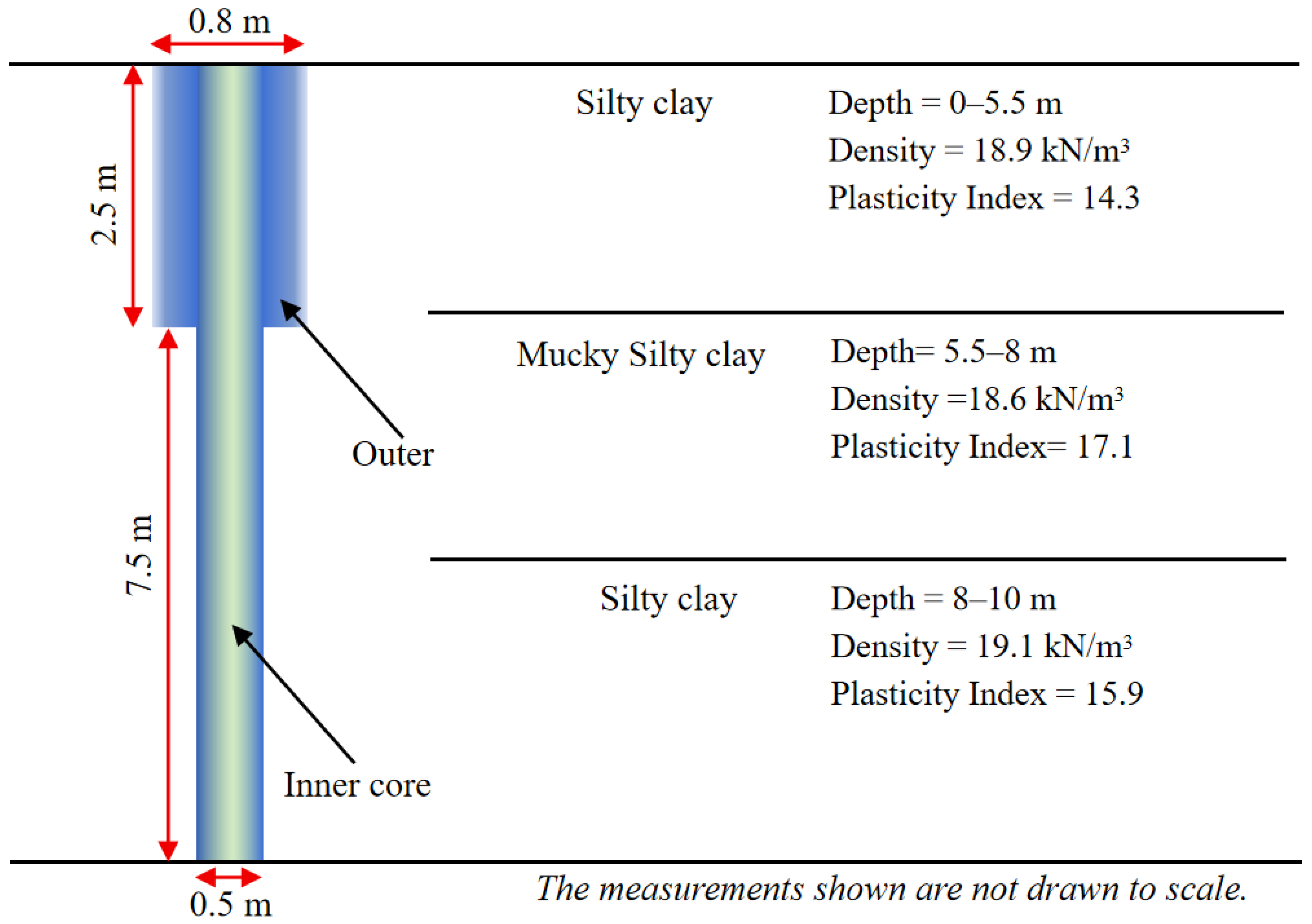
A full-scale test was conducted in the Yellow River Floodplain region of Qihe County, Dezhou City, Shandong Province. It covers more than one-third of the province, dominating a large portion of the plain region [23]. The soil is mainly composed of fine silt to silty clay. The details of the column and soil profile are highlighted in Figure 2 and described in detail in model development. The columns were developed to penetrate different soil layers across the depth, reflecting the stratified nature of the soil deposit. The column is constructed using Ordinary Portland Cement. In the DMJ column construction process, the inner section is subjected to both jetting and mixing actions, whereas the outer section undergoes jetting alone. As a result, the cement slurry in the inner zone achieves more uniform mixing with the soil, leading to enhanced strength and superior pile quality.
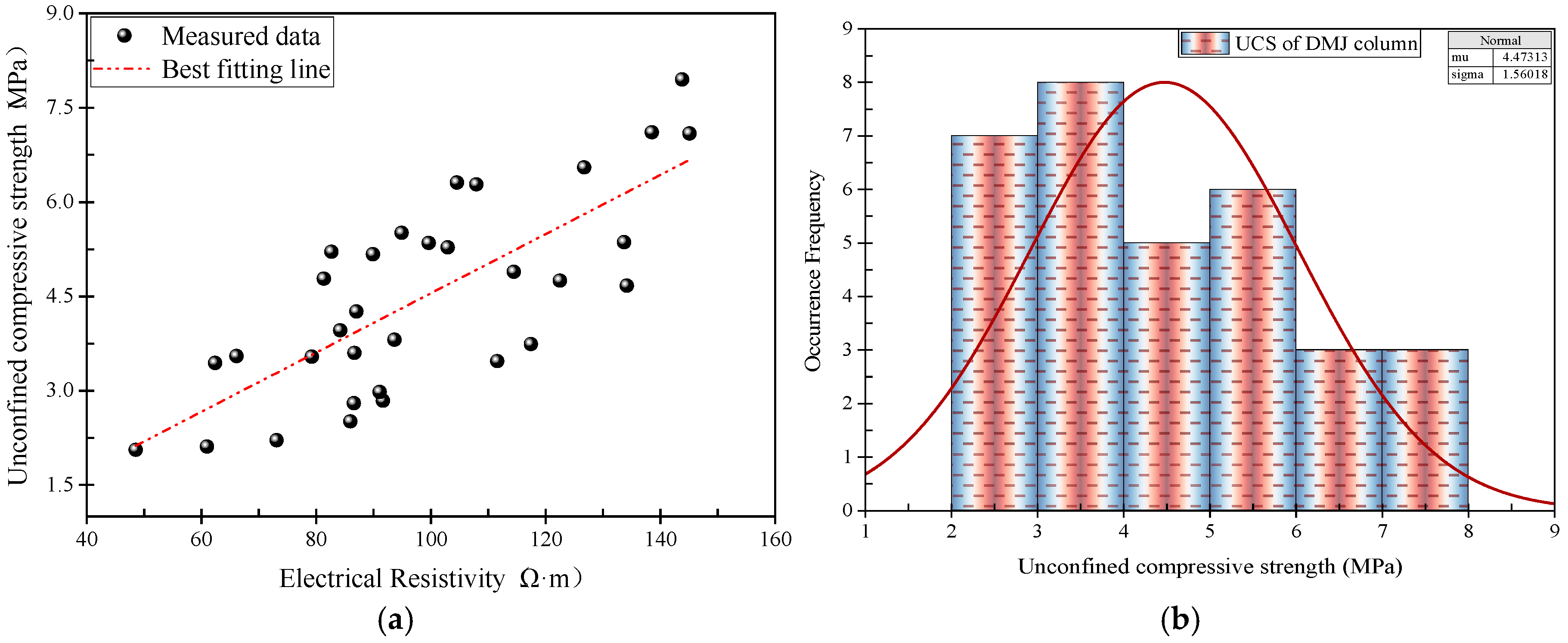
After 28 days of curing, core samples were extracted from various locations of the column, ranging from 0 m to 10 m. Following core drilling, the collected samples were carefully transported to the laboratory for further testing and analysis. Cylindrical specimens with a diameter and height of 80 ± 2 mm were prepared by trimming the extracted core samples to ensure uniform geometry. Subsequent indoor tests are conducted on these specimens, including density measurement, resistivity testing, moisture content analysis, and unconfined compressive strength testing. The relationship between strength, moisture content, and resistivity is analyzed, which serves as one of the evaluation criteria for pile formation quality. In this study, electrical resistivity testing was employed to examine the presence of voids and segregation, and to verify the homogeneity of cement distribution and mixing performance. The study employed an FT-300A1 electrical resistivity instrument, manufactured by Xigao Huadian Group Company Limited, Wuhan, China, featuring a sample holder integrated with a four-electrode system. The structure of the soil–cement mixture, water content, and other factors can be influenced by the electrochemical effect and kinetic phenomenon of direct current, resulting in an erroneous result [26,27]. Therefore, the electrical resistivity testing was conducted with a low-frequency alternating current under ambient room-temperature conditions. The moisture content of the core samples fluctuates around 25% during the test. Upon completion of the resistivity measurements, the same samples were subsequently employed to determine the corresponding unconfined compressive strength. The variation of the unconfined compressive strength with the electrical resistivity is highlighted in Figure 3a. It is observed that the electrical resistivity of the sample ranges from 48.41 Ωm to 145.23 Ωm. A trend line was developed to highlight the correlation between unconfined compressive strength and electrical resistivity. It is observed that the unconfined compressive strength of the column increases with the increase in the electrical resistivity. A similar trend was reported by previous studies [28]. It is noted that, although the column is developed in the same soil stratum, there is non-uniformity in the strength development, which may be triggered by the spatial variability of the in situ soil properties. In the case of the incomplete hydration or the presence of higher excess pore water, the sample provides a continuous conductive pathway, resulting in lesser resistance. Previous experimental studies highlighted that electrical resistivities of the cement paste depended on the curing time, water–cement ratio, and water–solid ratio [29]. Thus, the interaction of three components, namely soil particles, cement, and pore water, influence both the strength and electrical resistivity. In the regions with complete hydration and absence of excess pore water pressure, the cemented soil exhibits enhanced strength, accompanied by increased electrical resistivity due to the disruption of conductive pathways. Consequently, increasing cement content lowers porosity and moisture, weakening conductivity and increasing resistivity assuming complete hydration. Further, the distribution of the unconfined compressive strength of the samples is illustrated in Figure 3b, and occurrence frequency denotes the number of core samples within that statistical interval. It is observed that the strength of the samples ranges between 2 MPa and 8 MPa. However, average strength is found in the range of 4 to 5 MPa, with an occurrence of 8 frequencies as observed from the trend line.

4. Model Development and Validation

To conduct a series of numerical simulations, the field data is validated by developing a Plaxis 3D model. The model extends 24 m along the X and Y axes with a depth of 20 m along the Z axis. To ensure consistent soil behavior, the model is composed of four different soil layers, as discussed in the previous section. Furthermore, a T-shaped DCM column with a 0.8 m diameter at the head portion extending to 2.5 m is constructed, with a body section extending to 7.5 m and a diameter of 0.5 m, as illustrated in Figure 2. Due to its symmetrical behavior, only a quarter of the model is simulated to reduce computational effort and save time. During the model development, the interface between the soil and column is taken as 1, as reported in the previous studies [1]. Further, the Young’s modulus of the column is taken as 0.35 GPa, as the modulus of the column is in the range between 30 and 300 times the shear strength of the column. It is assumed that the water level is at the ground surface. The model is contained in the Z direction and allows settling in the Z direction while other directions remain constrained. The studies are mainly concentrated on the load-bearing capacity of the column. As suggested by previous researchers, the Mohr–Coulomb model is suitable, especially for investigating the load-bearing capacity [30,31]. The Mohr–Coulomb model in PLAXIS can be employed to analyze the stress–strain behavior of soil–cement columns, particularly for bearing capacity assessment. This model characterizes the shear strength of soil–cement columns through the internal friction angle and cohesion and is capable of simulating their fundamental stress–strain relationships. Consequently, this study adopts the Mohr–Coulomb model for all soil and columns. The detailed geotechnical properties of the soil are highlighted in Table 1. A schematic diagram of the column developed from the DMJ pile is illustrated in Figure 2. It is assumed that the inner core sample possess higher strength as compared with the portion developed from jetting.
According to previous studies, the footing performance can be substantially influenced by the distance of the boundary condition from the footing. Therefore, different researchers adopted a minimum of 5 times the width of the footing to minimize the influence of the footing. The geometrical shape and dimensions of the model are based on the area replacement ratio proposed by Sakr et al. [11]. Different steps in the finite elements are the initial phase, which is characterized by the generation of the initial stresses, followed by the installation of the column and footing. The model was constrained to move only in the vertical direction, with its base fixed. A default drainage condition was applied, with the bottom boundary set as impermeable.
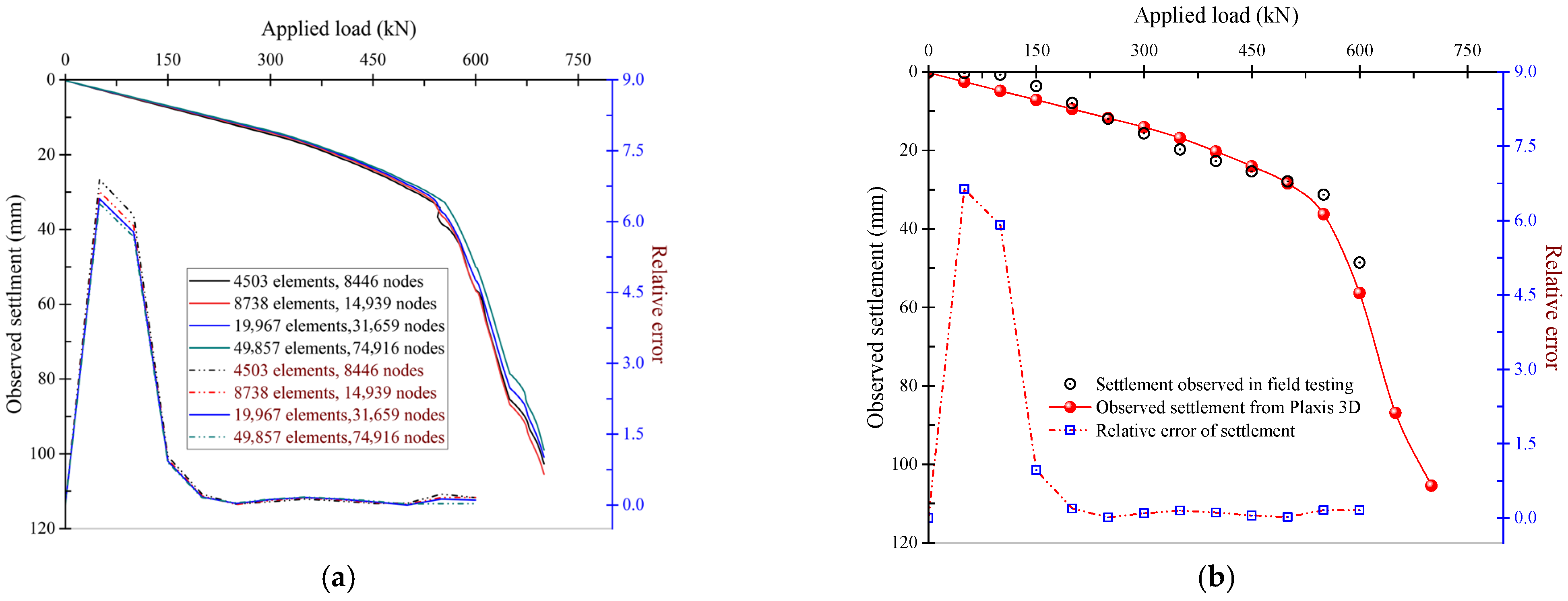
A comparative assessment of the settlement characteristics observed from the field testing and numerical investigation using the dataset as mentioned above is highlighted in Figure 4. Furthermore, a mesh sensitivity analysis is also conducted to assess the reliability of the proposed model. Figure 4a compares the load settlement curve and relative error with respect to field data. The variation in the settlement behavior of the composite soil ranges between 0 and 6.6% as the mesh of the model changes from fine to coarse. Consequently, the medium mesh is adopted in this study to achieve better results. The validated model data is further utilized to conduct a numerical investigation of the group behavior, as detailed in the following sections.

5. Results and Discussions

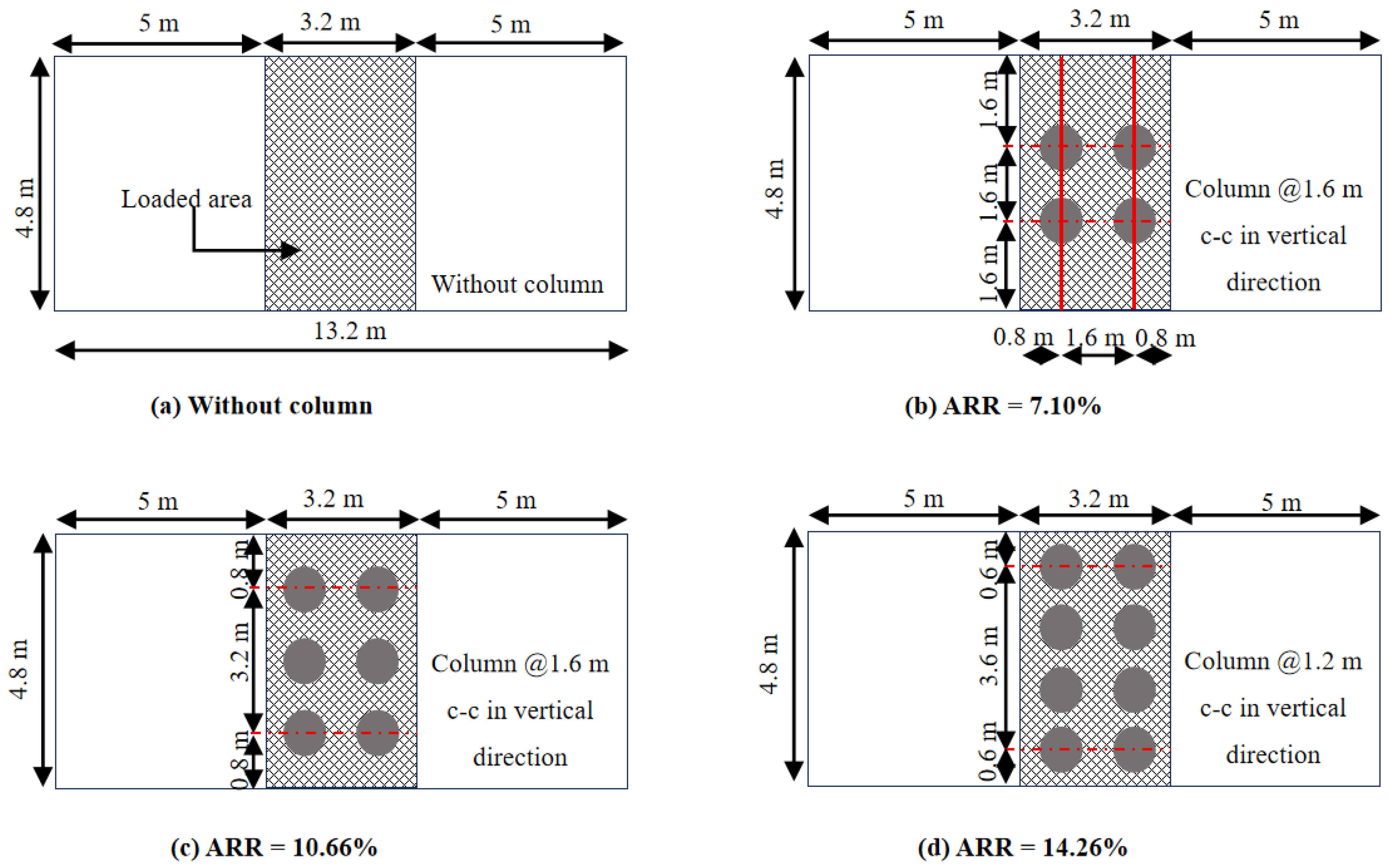
This section investigates the potential of the proposed T-shaped column with different structural arrangements to assess the suitability for the Yellow Floodplain region. Here, three different area replacement ratios (ARRs) were considered in comparison with the unreinforced soil. The geometrical configuration of each case of the column arrangement is illustrated in Figure 5, and the internal spacing of each pile within every schematic diagram is consistent. Here, the loaded area remained consistent, while the number of the columns is increased by two in each case.
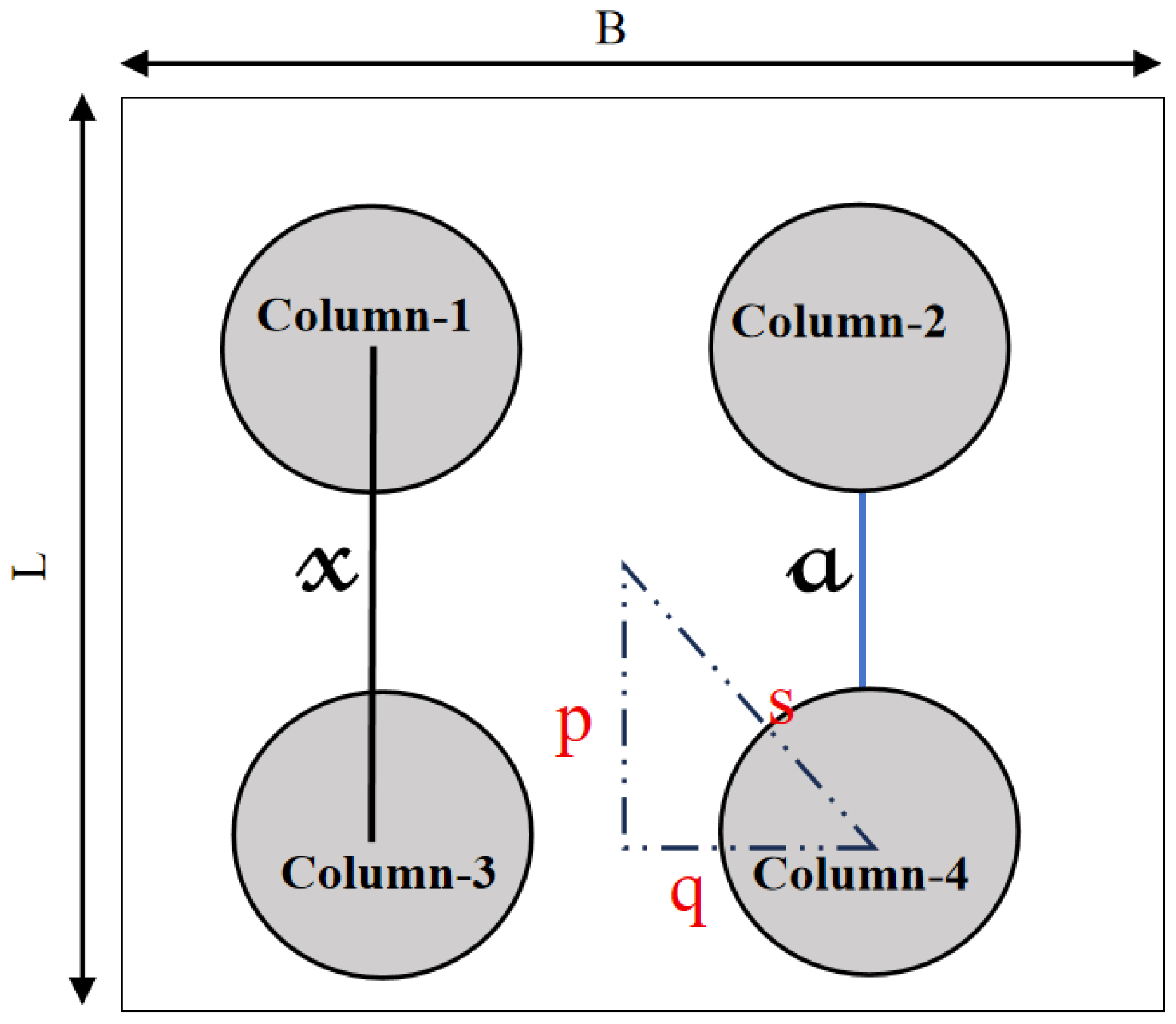
Figure 6 illustrates the determination of the column spacing under a constant value of ARR. Here, q represents half of the center-to-center distance between two consecutive columns along the width of the loaded area, and it remains consistent across all cases. The value x (where x = 2 p) denotes the center-to-center distance between two consecutive columns along the length of the loaded area. Additionally, a represents the edge distance between two consecutive columns. The spacing between the column is expressed in term of “s”, which is equal to the square root of the sum of the squares of p and q. In this study, four different values of “a” are used, i.e., 0.4 m, 0.8 m, 1.2 m, and 1.6 m. Here, the selection of values for “a” range from half the column head diameter to twice the column head diameter. Thus, the corresponding values of the column spacing are, respectively, 1 m, 1.13 m, 1.28 m, and 1.44 m.

5.1. Influence on Settlement Reduction Ratio

According to Sakr et al. [30], the area replacement ratio (ARR) of the DCM column can be expressed as the ratio of the column area (Ac) to the loaded area and can be expressed as follows:
A R R % = A c L o a d e d   A r e a 100
However, the above equation is suitable for a conventional DCM column, which has a consistent cylindrical geometry. The area replacement ratios based on the column diameter at the ground level during the installation of four, six, and eight T-shaped DCM columns are, respectively, 13.08, 19.63, and 26.18. However, in the case of the T-shaped DCM column, the geometry of the column varies in diameter in the head and body portion. Therefore, it would be difficult to express the area replacement of the T-shaped DCM column. Therefore, the concept of the equivalent diameter of the column is employed to determine the area ratio. According to Liu [5], the equivalent column diameter De can be expressed as follows:
Here, the terms Dh and Db represent the diameter of the head and body portion of the column, while the total length and head portion length of the column are represented by L and Lh, respectively. Based on the equivalent diameter, the area replacement ratio is expressed in this study and during the installation of four, six, and eight T-shaped DCM columns; the corresponding ARRs are, respectively, 7.10%, 10.66%, and 14.21%.
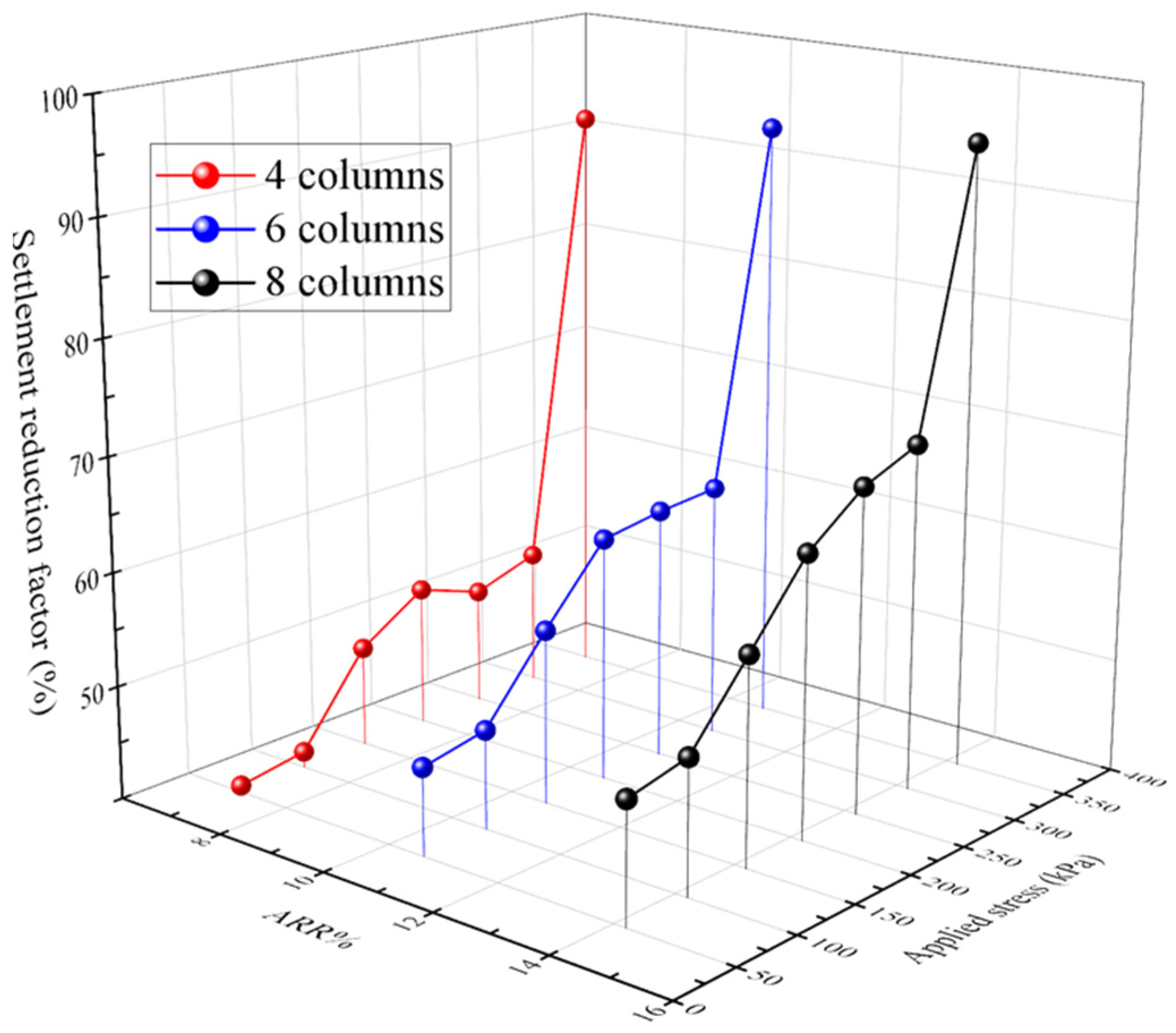
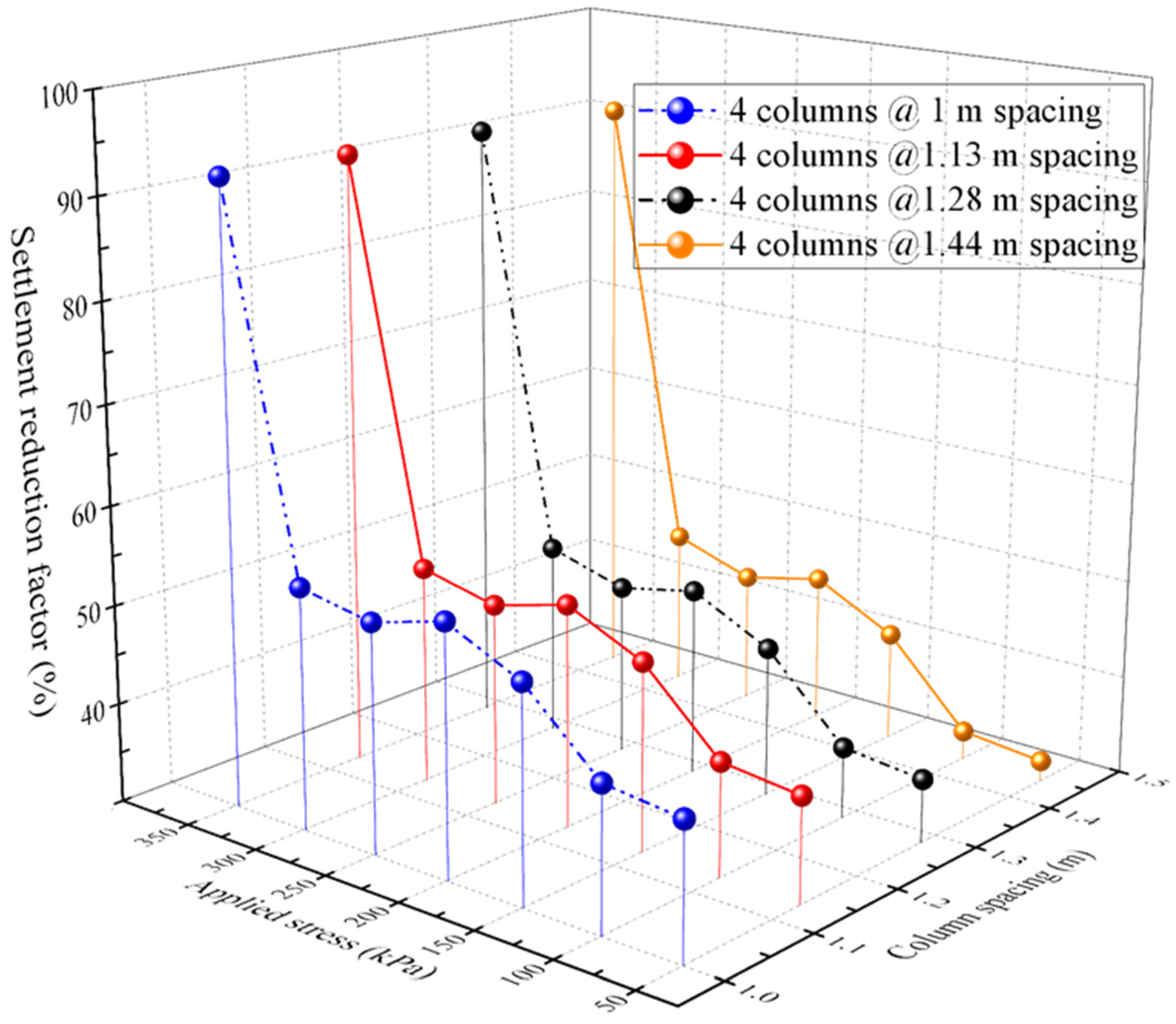
The relationship between the settlement reduction ratio (SRF) with different area replacement ratios of the column is illustrated in Figure 7. During the application of 49.74 kPa, the composite soil with ARRs of 7.10%, 10.66%, and 14.21% are illustrated, corresponding to SRFs of 40.61%, 47.73%, and 50.65%. A minimum SRF of 32.11% is observed while installing four columns at a spacing of 1.6 m, while the maximum SRF of 94.75% is observed in the case of installing eight columns. It is observed that the SRF increases with the increase of the ARR, and a similar pattern is followed during the application of varying stress levels. Sakr et al. [11] investigated the influence of both single row and double row arrangements of conventional DCM columns and observed that the percentage of settlement reduction increases with the increase of the area replacement ratio. In the case of the single column arrangement, the shear stress is mobilized around the perimeter of each column, while in the case of the two-row arrangement, the shear stress mobilized around the outer perimeter of the column group. Further, from Figure 7 it can be observed that the SRF increases gradually with the increase of the applied stress; however, a sudden variation of SRF is noticed as the applied stress shifts from 298.42 to 348.15 kPa. Further the variation of the settlement reduction ratio as a function of the column spacing under constant ARR is illustrated in Figure 8. In the case of 1 m spacing during the application of 49.74 kPa, 99.47 kPa, 149.21 kPa, 198.94 kPa, 248.68 kPa, 298.42 kPa, and 348.15 kPa, the corresponding SRF are observed to be 43.63, 44.48, 51.63, 55.17, 53.01, 54.35, and 92.17, respectively. It can be observed that with the increase in the applied stress, the SRF increases gradually. However, a significant increase is observed with the application of 348.15 kPa. The settlement reduction ratio is the difference in settlement between column-treated and untreated soil, expressed as a ratio to the settlement of the untreated soil [32]. The load–settlement curve shows that the untreated column exhibits an exponential increase in settlement once the applied stress exceeds its bearing capacity, resulting in a significant increase in the SRF with the application of 348.15 kPa. At the higher stress, the surrounding soil yields and the column begins to carry a disproportionately larger share of the externally applied load. Furthermore, under a consistent applied stress of with varied spacing ranges, the SRF is reduced gradually. For example, under the application of 298.42 kPa, the SRFs corresponding to a spacing of 1 m, 1.13 m, 1.28 m and, 1.44 m are, respectively, 54.35, 52.08, 49.58, and 45.93. A comparable pattern of progressive SRF reduction is evident when other types of stresses are applied.

5.2. Load Bearing Capacity

The bearing capacity of the column’s improve composite ground is assessed under different area replacement ratios. The bearing capacity of each case is expressed in a dimensionless parameter called improvement factor to refine the presentation of comparative results with respect to the unreinforced soil. According to Sakr et al. [30], the improvement factor (α) can be calculated as follows:
D e = B C r B C u n B C u n %
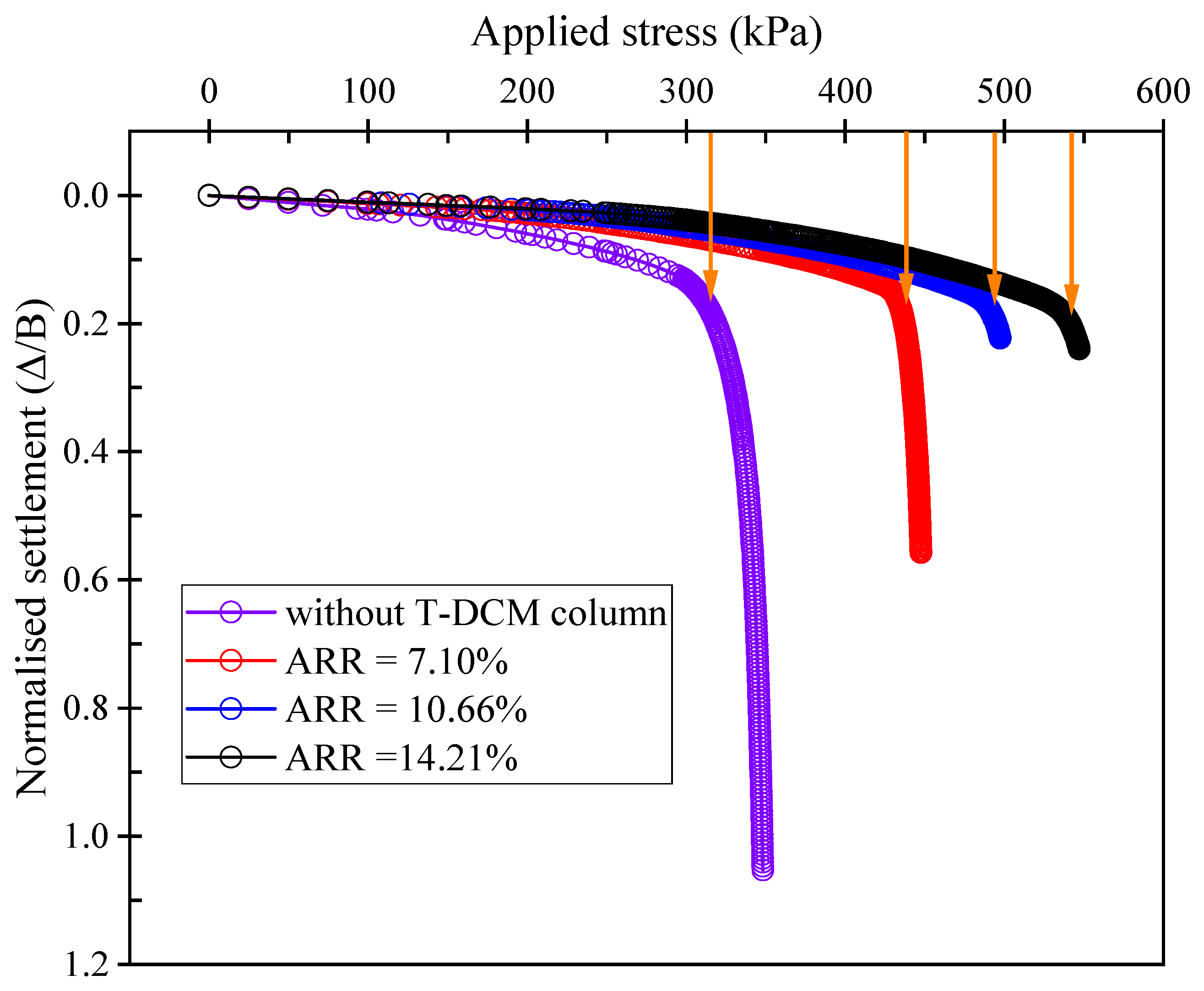
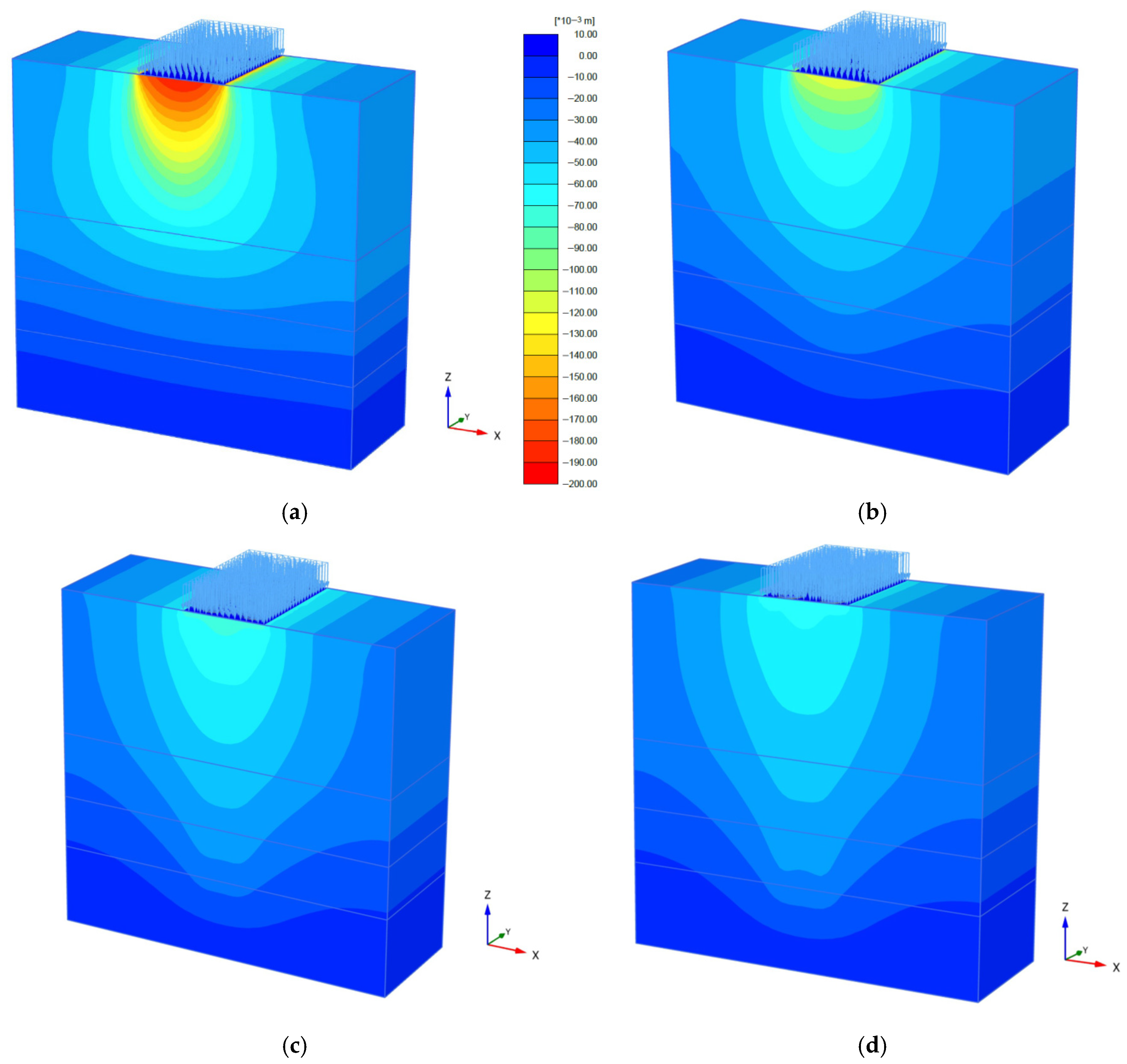
The behavior of the T-shaped DCM column’s improved soft soil can be assessed using the result of the numerical simulation. From Figure 9, it can be observed that the unreinforced composite soil possesses a bearing capacity of 336.36 kPa, and the corresponding settlement is 0.36 m. Here, the displacement shading curve of the column’s improved composite soil with various area replacement ratios under the application of a similar stress of 198.9 kPa is illustrated in Figure 10. It can be observed that with the increase of the area replacement ratio, the displacement contours tend to become more confined and localized around the treated zone. This might influence the load transfer and stress distribution behaviors and will be discuss in detail in another section. At the lower area replacement ratio, the shading curves usually illustrate a wider zone of the deformations, which reflects the substantial deformation characteristics of the soil due to insufficient column support. Conversely, a lesser composite deformation can be observed with a higher area replacement ratio. Further, it can be observed that, with the installation of the column, the load bearing capacity of the composite soil improved substantially. Thus, the ARRs of 7.10%, 10.66%, and 14.21% exhibit an improvement factor of 0.279, 0.438, and 0.586, respectively. It is clear that the applied vertical stress is shared between the columns and the surrounding soil.
A higher improvement factor is observed with the increase in the ARR. For both single- and double-row column installations, the improvement factor exhibited a quasi-linear increase with the area replacement ratio, with longer columns demonstrating a clear performance advantage [11]. It is reported that ARRs of 13.1%, 19.6%, and 26.2% exhibit an improvement factor of 48.9%, 72.3%, and 89.4%, respectively. The improvement factor exhibits different trends between fully penetrated and partially penetrated columns as the area replacement ratio (ARR) increases. With increasing ARR, the proportion of load carried by the stiffer columns rises due to the larger column area and reduced soil area, allowing the composite ground to sustain higher vertical stresses [31]. Even if the installation of the column enhanced the improvement factor, the settlement corresponding to the bearing capacity is higher compared to the unreinforced soil. While column installation improves the load bearing capacity and overall performance of the ground, the settlement corresponding to the enhanced load capacity exceeds that of unreinforced soil due to the combined influence of increased applied stress, resulting in higher compression of the soft soil around the stiffer column, stress concentration, and interaction effects. Thus, the corresponding settlements at a bearing capacity of ARR 7.10%, 10.66%, and 14.21% were observed to be 0.787 m, 0.511 m, and 0.561 m, respectively.
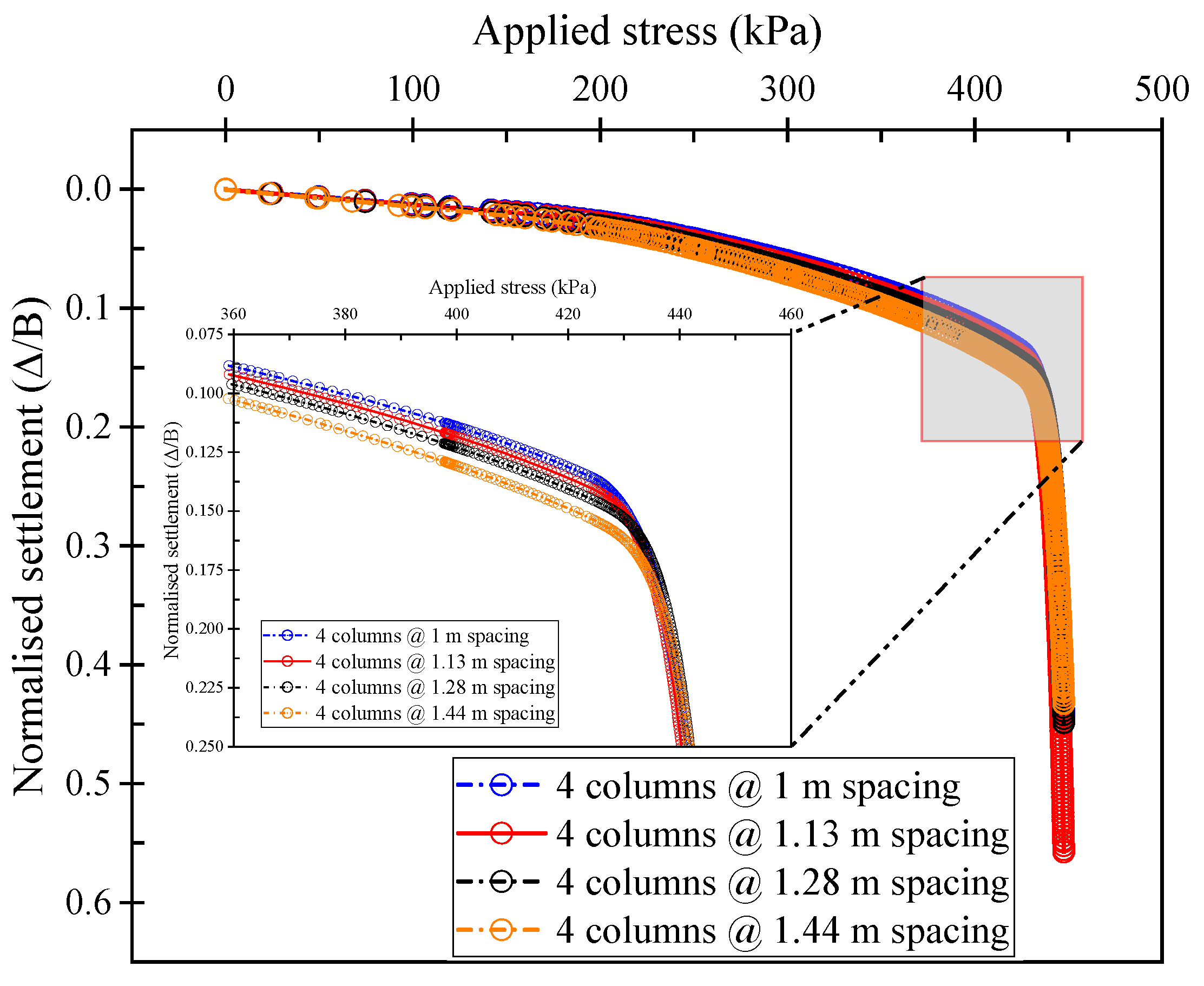
Further, the influence of the column spacing on the bearing capacity is assessed here. To obtain a more appealing presentation, a geometrical arrangement having an ARR of 7.10% and four columns is considered. As illustrated in Figure 11, a minimal variation in the bearing capacity of the center soil layer can be observed with the variation of the column spacing. Here, the bearing capacity ranges between 423.89 kPa, with a corresponding settlement of 0.43 m, and 431.61 kPa, with a corresponding settlement of 0.53 m. Elsamee [31] observed that the increase in the spacing between the columns enhanced the bearing capacities. However, Mali and Singh [32] reported that the pile load as a percentage of ultimate capacity almost remains consistent with the increase of the pile spacing. Furthermore, for any values of the assigned pile spacing, the corner pile carried the maximum applied load, followed by the edge pile and center pile, respectively.
Here, the term BC represents the bearing capacity of the soil. The soil types were designated by the corresponding suffix: “r” denotes the column reinforced soil, while “un” represents unreinforced soil. The BC of the footing is obtained by the intersection of the final and initial tangents through the double tangent line method. Figure 9 illustrates the comparative stress-normalized settlement curve of both column-reinforced and unreinforced soil. The settlement of the footing is expressed in terms of the normalized settlement to eliminate the scale effect, as suggested by different researchers. The corresponding data were measured at the center of the plan view, as highlighted in Figure 5. The measurement location remained consistent at 6.6 m along the X-axis and 2.4 m along the Y-axis.

5.3. Stress Variation Along the Depth

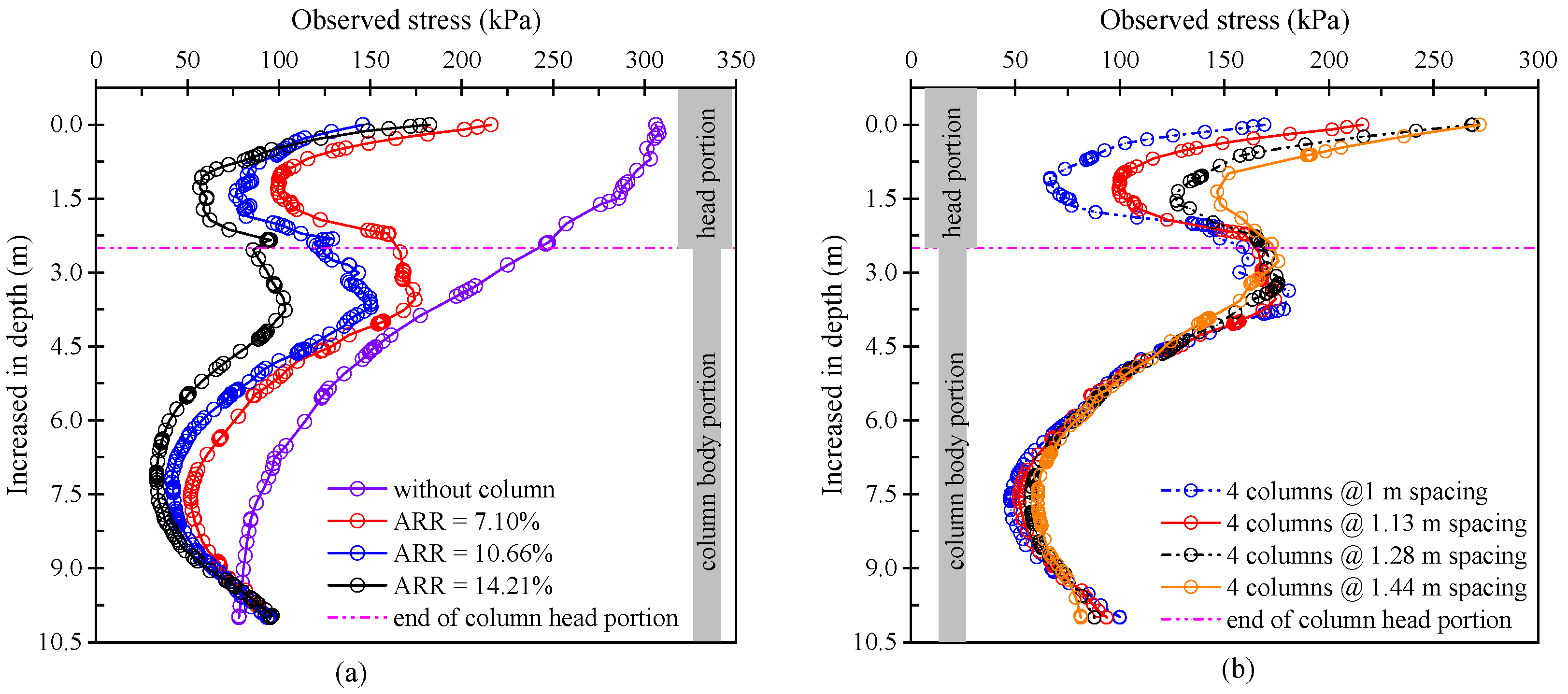
The variation of the observed stress with depth under different ARR values is illustrated in Figure 12a. It is observed that the stress profile of the untreated soil exhibits a higher stress of 307.82 kPa and reduces sharply with depth. As the soil remains untreated, the stress cannot distribute throughout the depth, leading to stress concentration in the shallow zone. However, the phenomenon of the stress distribution changed with the installation of the column. The stress–depth profiles clearly demonstrate that increasing the ARR enhances the overall stress transfer efficiency of the improved ground. Thus, the maximum stress carried by the soil at the lowest ARR values of 7.10%, 10.66%, and 14.21% is found to be 216.02 kPa, while at the maximum ARR value of 14.21% it is found to be 182.45 kPa. As the ARR of the column increases, the column able to carry higher externally applied load, leading to a minimal stress transfer to the surrounding soil. The column head portion plays a dominant role in redistributing surface loads. The sudden increase in the stress at depth might be due to the stress transfer from the columns through interface friction and end-bearing resistance.
Further, the stress distribution behavior at depth under varied column spacing is illustrated in Figure 12b. The maximum stresses borne by the soil at spacings of 1 m, 1.13 m, 1.28 m, and 1.44 m are, respectively, 180.86 kPa, 216.024 kPa, 268.78 kPa, and 272.15 kPa. The maximum stress is observed at the ground level for each case. It can be observed that even if each case possesses a consistent ARR, the spacing and arrangement of the column influence the stress distribution, particularly in the uppermost region.

5.4. Lateral Displacement

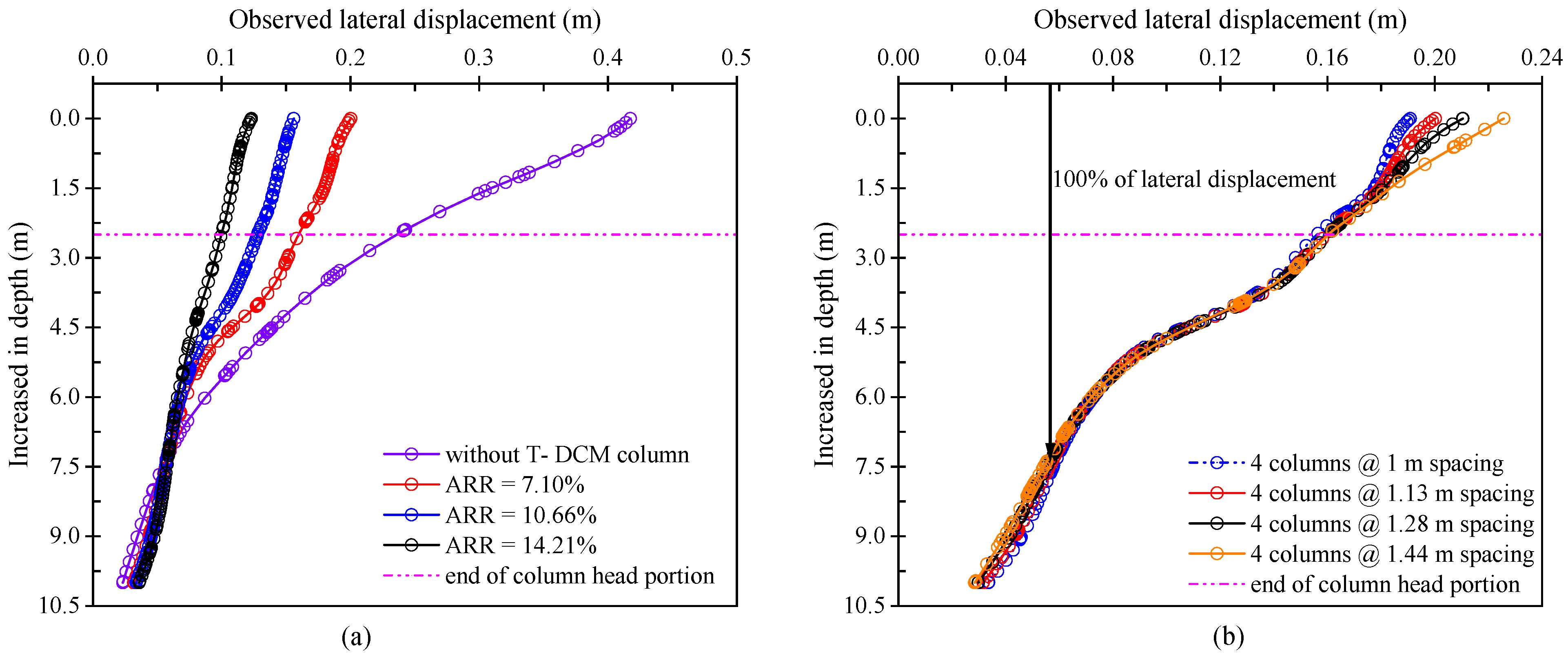
A comparative assessment of the lateral displacement of the soil layer with depth under different ARRs of the columns is illustrated in Figure 13a. A nonlinear reduction in lateral displacement with increasing depth can be observed. The soil layer without columns exhibits a maximum lateral displacement of 4.17 × 10⁻¹ m in the ground, which is increased by 70.51% in eight-column-reinforced soil. These phenomena might be due to the elastic–plastic behaviors of the soil, and this lateral displacement is most pronounced near the surface and progressively diminishes with depth owing to the increasing confining pressure of the surrounding soil and influence of the restricting effect of the unimproved soil layers below the column [33]. However, during the installation of the column, the lateral displacement in the shallow soil layers decreases, whereas that in the deeper layers remains nearly unchanged. Thus, the maximum lateral displacement recorded during the installation for 7.10%, 10.66%, and 14.21% ARR was approximately 2 × 10⁻¹ m, 1.56 × 10⁻¹ m, and 1.23 × 10⁻¹ m, respectively.
Further, the influence of the column spacing on the lateral displacement of the soil is also investigated and highlighted in Figure 13b. It can be observed that the lateral displacement change is pronounced in the shallow region and increases with the increase in the spacing between the columns. Maximum lateral displacements in soil with a spacing of 1 m, 1.13 m, 1.28 m, and 1.44 m are, respectively, 1.91 × 10⁻¹ m, 2 × 10⁻¹ m, 2.10 × 10⁻¹ m, and 2.26 × 10⁻¹ m. The corresponding rates of lateral displacement are, respectively, 2.26 × 10⁻² per meter of depth, 2.39 × 10⁻² per meter of depth, 2.53 × 10⁻² per meter of depth, and 2.75 × 10⁻² per meter of depth. In comparison to the lateral displacement at a depth of 10 below ground (total column length), spacings of 1 m, 1.13 m, 1.28 m, and 1.44 m exhibit a percentage increase of 5.93 × 10²%, 6.66 × 10²%, 7.46 × 10²%, and 8.44 × 10²%, respectively. Interestingly, 100% lateral displacement (with respect to bottom portion) occurs at depths of 6.46 m, 6.76 m, 7.07 m, and 7.25 m below the ground. Thus, it can be observed that uppermost portion of the soil layer experienced a maximum lateral displacement, which reduced with depth due to the combined effect of the confining pressure and restricting effect of the unimproved soil layers below the column [33].

6. Conclusions

The Yellow River Floodplain region of Shandong Province is characterized by the silty soil, which poses challenges for geotechnical construction. Conventional ground improvement methods are ineffective for these silty soils; however, DMJ piles have been adopted to enhance the engineering properties in the Yellow River Floodplain region. This study conducted field testing to assess the variation of the strengths of the columns developed by this method. Further, it numerically investigated the influence of the areas’ replacement ratio and column spacing. Based on the observations, the following conclusions were drawn:
  • Settlement reduction ratio increases with the increase in the value of area replacement ratio (ARR) and externally applied stress; however, the increase in the column spacing leads to a considerable reduction. A minimum SRF of 32.11% was recorded for four columns with larger spacing, while a maximum SRF of 94.75% occurred with eight columns.
  • The bearing capacity improvement factor was found to increase with the increase of the area replacement ratio (ARR). However, the influence of the column spacing on the bearing capacity improvement factor is found to have a minimal influence and ranges between 423.89 kPa and 431.61 kPa.
  • The unreinforced composite soil exhibited a 70.51% higher maximum lateral displacement, which was reduced with column installation and increasing area replacement ratio (ARR). Further, maximum lateral displacement occurred in the upper soil layer and decreased with depth due to increasing confining pressure and restraint from underlying unimproved soil layers.
  • Electrical resistivity of soil–cement for a given curing time and water–cement ratio showed strong correlation (linear correlation with Pearson’s R value more than 75%) with unconfined compressive strength and SPT blow count, indicating its potential for practical quality control of soil–cement.
  • The DMJ-integrated columns demonstrate enhanced soil–cement strength in the Yellow River Floodplain region, with sample strengths varying between 2 and 8 MPa and an average strength of 4–5 MPa.

Author Contributions

Conceptualization, K.Y. and Z.Y.; methodology, P.L.; software, Y.Z.; validation, T.L., H.W. and L.L.; formal analysis, L.L.; investigation, P.L.; resources, K.Y.; data curation, C.X.; writing—original draft preparation, Y.Z.; writing—review and editing, H.W.; visualization, P.L.; supervision, Z.Y.; project administration, C.X.; funding acquisition, Y.Z. All authors have read and agreed to the published version of the manuscript.

Funding

This research was funded by Shenzhen Science and Technology Program (JCYJ20250604124219025), Shandong Provincial Natural Science Foundation (ZR2024LZN002), and Jinan Science and Technology Bureau Project (202333051).

Data Availability Statement

The data supporting the conclusions of this study are included in this article. For further inquiries, please contact the corresponding authors directly.

Conflicts of Interest

Authors Peng Li, Tao Lei and Chao Xu were employed by the company Qilu Expressway Company Limited. The remaining authors declare that the research was conducted in the absence of any commercial or financial relationships that could be construed as a potential conflict of interest.

References

  1. Wonglert, A.; Jongpradist, P.; Jamsawang, P.; Larsson, S. Bearing capacity and failure behaviors of floating stiffened deep cement mixing columns under axial load. Soils Found. 2018, 58, 446–461. [Google Scholar] [CrossRef]
  2. Bellato, D.; Spagnoli, G.; Wiedenmann, U. Engineering and environmental aspects of offshore soil mixing. Proc. Inst. Civ. Eng.-Geotech. Eng. 2015, 168, 267–278. [Google Scholar] [CrossRef]
  3. Broms, B. Keynote lecture: Design of lime, lime/cement and cement columns. In Dry Mix Methods for Deep Soil Stabilization; Routledge: London, UK, 2017; pp. 125–154. [Google Scholar]
  4. Bruce, D.A.; Geosystems, E.C.O. An Introduction to the Deep Soil Mixing Methods as Used in Geotechnical Applications; United States Federal Highway Administration Office of Infrastructure: Washington, DC, USA, 2000.
  5. Liu, S.Y.; Du, Y.J.; Yi, Y.L.; Puppala, A.J. Field Investigations on Performance of T-Shaped Deep Mixed Soil Cement Column–Supported Embankments over Soft Ground. J. Geotech. Geoenviron. Eng. 2012, 138, 718–727. [Google Scholar] [CrossRef]
  6. Choudhary, S.; Singh, M.J.; Borana, L. Time-dependent settlement behaviour of clayey soil treated with deep cement mixed column. In Smart Geotechnics for Smart Societies; CRC Press: Boca Raton, FL, USA, 2023; pp. 752–757. [Google Scholar]
  7. Choudhary, S.; Singh, M.J.; Kamchoom, V.; Choi, C.E.; Borana, L. Experimental and numerical modelling of time-dependent behaviour in deep cement mixing column improved montmorillonitic clay. Ocean Eng. 2025, 332, 121451. [Google Scholar] [CrossRef]
  8. Singh, M.J.; Choudhary, S.; Borana, L. Numerical study on stress-strain characteristics of the deep cement mixing column improved soil. In Smart Geotechnics for Smart Societies; CRC Press: Boca Raton, FL, USA, 2023; pp. 735–740. [Google Scholar]
  9. Gong, Z.; Ouyang, H.; Dai, G.; Chen, X. A theoretical analysis method for stiffened deep cement mixing (SDCM) pile groups under vertical load in layer soils. Comput. Geotech. 2025, 183, 107211. [Google Scholar] [CrossRef]
  10. Kirsch, K.; Bell, A. Ground Improvement; CRC Press: Boca Raton, FL, USA, 2012. [Google Scholar]
  11. Sakr, M.A.; Elsawwaf, M.A.; Rabah, A.K. Numerical Study of Soft Clay Reinforced with Deep Cement Mixing Technique. Indian Geotech. J. 2022, 52, 1487–1504. [Google Scholar] [CrossRef]
  12. Chen, L.; Liu, S. Consolidation Calculation of Soft Ground Improved by T-Shape Deep Mixing Columns. In GeoCongress 2008; Proceedings; ASCE: Reston, VA, USA, 2012. [Google Scholar]
  13. Zhao, L.; Chen, Y.; Chen, W.; Wang, J.; Ren, C. The performance of T-shaped deep mixed soil cement column-supported embankments on soft ground. Constr. Build. Mater. 2023, 369, 130578. [Google Scholar] [CrossRef]
  14. Yao, K.; Singh, M.J.; Rong, Y.; Yao, Z. Optimized T-shaped soil-cement deep mixing column for sustainable ground improvement. Front. Built Environ. 2025, 11, 1628946. [Google Scholar] [CrossRef]
  15. Jamsawang, P.; Voottipruex, P.; Jongpradist, P.; Likitlersuang, S. Field and three-dimensional finite element investigations of the failure cause and rehabilitation of a composite soil-cement retaining wall. Eng. Fail. Anal. 2021, 127, 105532. [Google Scholar] [CrossRef]
  16. Nguyen, T.D.; Phan, T.N.; Likitlersuang, S. Evaluating the Applicability of Large-Diameter Cement Deep Mixing Method for Soft Ground Improvement: A Landmark Case Study in Vietnam. Int. J. Geosynth. Ground Eng. 2025, 11, 19. [Google Scholar] [CrossRef]
  17. Shang, Z.; Du, G.; Song, T.; Qiao, X.; Zhang, D.; Zhong, S.; Gao, C.; Zhai, S. Bearing characteristics of long enlarged head ultra-deep T-shaped bidirectional dry jet mixing column (TDM) improved ground. KSCE J. Civ. Eng. 2025, 29, 100174. [Google Scholar] [CrossRef]
  18. Nguyen, P.-L.T.; Tran, M.H.; Tran, T.D.; Nguyen, B.-P. Numerical Analysis of Arching Behavior of Geosynthetic-Reinforced and DCM Column-Supported Embankment with Geosynthetic Characteristics. Int. J. Geosynth. Ground Eng. 2023, 9, 56. [Google Scholar] [CrossRef]
  19. Singh, A.K.; Mishra, A. Influence of Load Transfer Platforms on the Performance of Embankments on Soft Soils Reinforced with Stone and DCM Columns. Int. J. Geosynth. Ground Eng. 2025, 11, 5. [Google Scholar] [CrossRef]
  20. Fulambarkar, S.; Manna, B.; Shahu, J.T. Effect of deep mixed column pattern on the performance of basal reinforced embankment resting on soft soil. Soils Found. 2025, 65, 101578. [Google Scholar] [CrossRef]
  21. Oliaei, M.; Heidarzadeh, H.; Mansouri, S. 3D Numerical Analyses for Optimization of Deep-Mixing Columns Combined by Raft Foundations. Indian Geotech. J. 2021, 51, 1338–1348. [Google Scholar] [CrossRef]
  22. Singh, M.J.; Gong, Q.; Yao, K.; Ma, C.; Jiang, H.; Yao, Z. Time-dependent performance of T-shaped deep cement-mixed columns under embankment loading with varying strength conditions. Structures 2025, 82, 110525. [Google Scholar] [CrossRef]
  23. Yao, K.; Yao, Z.; Song, X.; Zhang, X.; Hu, J.; Pan, X. Settlement evaluation of soft ground reinforced by deep mixed columns. Int. J. Pavement Res. Technol. 2016, 9, 460–465. [Google Scholar] [CrossRef]
  24. Croce, P.; Modoni, G. Design of jet-grouting cut-offs. Proc. Inst. Civ. Eng. Improv. 2007, 11, 11–19. [Google Scholar] [CrossRef]
  25. Lignola, G.P.; Flora, A.; Manfredi, G. Simple method for the design of jet grouted umbrellas in tunneling. J. Geotech. Geoenviron. Eng. 2008, 134, 1778–1790. [Google Scholar] [CrossRef]
  26. Ng, Y.C.H.; Kek, H.Y.; Hu, X.; Wong, L.N.; Teo, S.; Ku, T.; Lee, F.-H. An approach for characterising electrical conductivity of cement-admixed clays. Soils Found. 2022, 62, 101127. [Google Scholar] [CrossRef]
  27. Lee, D.; Kim, D.-J.; Lee, J.-S.; Tutumluer, E.; Byun, Y.-H. Evaluation of electrical resistivity of cement-based materials using time domain reflectometry. Measurement 2024, 236, 115166. [Google Scholar] [CrossRef]
  28. Huang, J.; Han, J. Two-dimensional parametric study of geosynthetic-reinforced column-supported embankments by coupled hydraulic and mechanical modeling. Comput. Geotech. 2010, 37, 638–648. [Google Scholar] [CrossRef]
  29. Ni, P.; Yi, Y.; Liu, S. Bearing capacity optimization of T-shaped soil-cement column-improved soft ground under soft fill. Soils Found. 2021, 61, 416–428. [Google Scholar] [CrossRef]
  30. Sakr, M.A.; Elsawwaf, M.A.; Rabah, A.K. Soft clay improved by deep cement mixing column technique. Arab. J. Geosci. 2022, 15, 1321. [Google Scholar] [CrossRef]
  31. Elsamee, W.A. Effect of pile spacing on ultimate capacity and load shearing for piled raft foundation. Int. J. Appl. Eng. Res. 2018, 13, 5955–5967. [Google Scholar]
  32. Mali, S.; Singh, B. Assessing the effect of governing parameters of bearing capacity determination of small piled rafts on clay soil. Arab. J. Geosci. 2021, 14, 2261. [Google Scholar] [CrossRef]
  33. Chai, J.C.; Miura, N.; Koga, H. Lateral Displacement of Ground Caused by Soil–Cement Column Installation. J. Geotech. Geoenviron. Eng. 2005, 131, 623–632. [Google Scholar] [CrossRef]
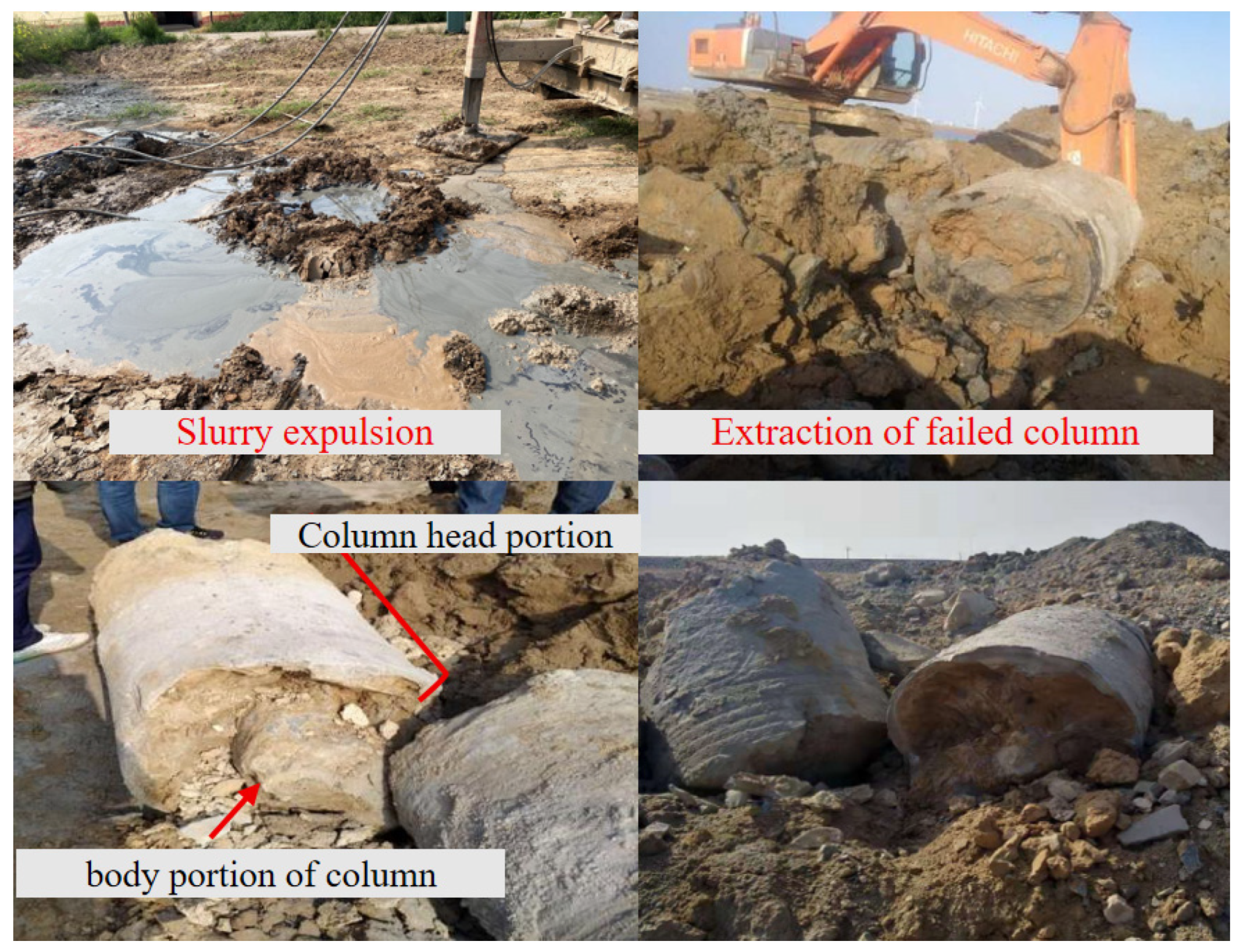
Figure 1. Cement waste and uneven pile quality drilling through highly consolidated clay layers.
Buildings 16 00162 g001
Figure 2. Schematic diagram of the column and soil profile.
Buildings 16 00162 g002
Figure 3. (a) relationship of column strength and resistivity, (b) distribution of column strength.
Buildings 16 00162 g003
Figure 4. (a) Mesh sensitivity analysis and (b) validation of the field data.
Buildings 16 00162 g004
Figure 5. Geometric layout and arrangement of column in the groups.
Buildings 16 00162 g005
Figure 6. Schematic diagram of column spacing determination.
Buildings 16 00162 g006
Figure 7. Relationship between SRF and different area replacement ratios of the columns.
Buildings 16 00162 g007
Figure 8. Relationship between SRF and different column spacing at constant ARR.
Buildings 16 00162 g008
Figure 9. Relationship between normalized settlement and applied stress under different ARR values.
Buildings 16 00162 g009
Figure 10. Displacement shading without columns and different ARRs under the application of a constant stress of 198.9 kPa. (a) No column. (b) ARR = 7.10%. (c) ARR = 10.66%. (d) ARR = 14.26%.
Buildings 16 00162 g010
Figure 11. Relationship between normalized settlement and applied stress under different spacing of columns at a constant ARR.
Buildings 16 00162 g011
Figure 12. Stress distribution behavior with depth (a) under different ARR values (b) at different column spacings.
Buildings 16 00162 g012
Figure 13. Lateral displacement behavior with depth (a) under different ARR values (b) at different column spacings.
Buildings 16 00162 g013
Table 1. Geotechnical properties of the testing site.
DepthMaterialDensity (kN/m3)Cohesion (kN/m2)Frictional Angle (°)Young’s Modulus (MPa)
0–5.5 mSilty Clay18.922.8014.67.00
5.5–8.0 mMucky Silty clay18.632.908.95.00
8.0–10.0 mSilty Clay19.126.2014.35.50
10.0–20.0 mSilty Clay19.223.515.57.50
OuterDMJ pile20.0350.020.0240.0
Inner coreDMJ pile20.0410.025350.0
Disclaimer/Publisher’s Note: The statements, opinions and data contained in all publications are solely those of the individual author(s) and contributor(s) and not of MDPI and/or the editor(s). MDPI and/or the editor(s) disclaim responsibility for any injury to people or property resulting from any ideas, methods, instructions or products referred to in the content.