Article

Experimental and Numerical Study of the Seismic Behavior of Single-Plane Trussed CFSST Composite Column Frames

School of Civil Engineering and Transportation, North China University of Water Resources and Electric Power, Zhengzhou 450045, China
*
Author to whom correspondence should be addressed.
Buildings 2026, 16(1), 114; https://doi.org/10.3390/buildings16010114 (registering DOI)
Submission received: 27 November 2025 / Revised: 19 December 2025 / Accepted: 23 December 2025 / Published: 26 December 2025
(This article belongs to the Section Building Structures)

Abstract

A trussed concrete-filled square steel tubular (CFSST) composite column frame is proposed for multi-story residential buildings. The frame provides high lateral resistance and can be integrated within wall systems. To evaluate its seismic performance, three full-scale specimens were subjected to quasi-static cyclic loading. The failure modes, load-carrying capacity, stiffness degradation, and energy dissipation characteristics were examined and compared. The results show that, compared to the H-shaped steel column frame (HK) with equivalent steel consumption, the trussed CFSST composite column frame exhibits an 88.3% increase in yield load and an 87.1% increase in peak load, together with significant improvements in stiffness and energy dissipation. Compared with an ordinary CFSST column frame (FK), the proposed system required 41% more steel but attained a 56% increase in load-carrying capacity, along with corresponding enhancements in stiffness and energy dissipation. Finite element (FE) models were developed based on the experimental results, and parametric analyses were performed to investigate the effects of corner-end column spacing, number of truss diagonal bars, truss joint type, axial compression ratio, and steel strength. Design recommendations are provided accordingly.

1. Introduction

In recent years, concrete-filled square steel tubular (CFSST) structures have been widely adopted for their high load-bearing capacity, excellent seismic performance, and superior stability [1,2]. In multi-story or low-rise residential frames, the side dimensions required to satisfy lateral resistance demands are typically larger than the wall thickness, resulting in interior column projections that reduce spatial aesthetics and occupant comfort. Conversely, CFSST columns sized to match the wall thickness often provide inadequate lateral capacity.
Several researchers have proposed forming L- or T-shaped columns using steel tubes and concrete to mitigate these limitations. Zheng et al. [3,4,5,6] and Liu et al. [7] examined the axial and eccentric compression behavior of single-cell irregular concrete-filled steel tubular (CFST) columns (Figure 1a) and developed simplified calculation approaches. Xiong et al. [8,9] reported that single-cell irregular CFST columns exhibit reduced steel confinement and are prone to steel-concrete separation under external loading. Zhou et al. [10], Wu et al. [11], Zhang et al. [12] and other researchers [13,14] investigated multi-cell irregular CFST columns (Figure 1b), emphasizing their compressive and flexural performance. Additionally, some other researchers [15,16,17] studied irregular CFST columns incorporating binding bars (Figure 1c) and found that the bars improved confinement of the core concrete.
For the L-shaped columns (Figure 1), the limb thickness t is typically taken as the wall thickness, while the limb width w is generally three to four times t [12]. Chinese design specifications [18] require the width-to-thickness ratio (w/t) of irregular columns in frame structures to remain below 4 to maintain structural stability. Enhancing the lateral performance of irregular CFST columns requires an increase in w/t. However, for the configuration in Figure 1, increasing this ratio reduces the confinement provided by the steel plates and consequently weakens the inherent advantages of CFST construction.
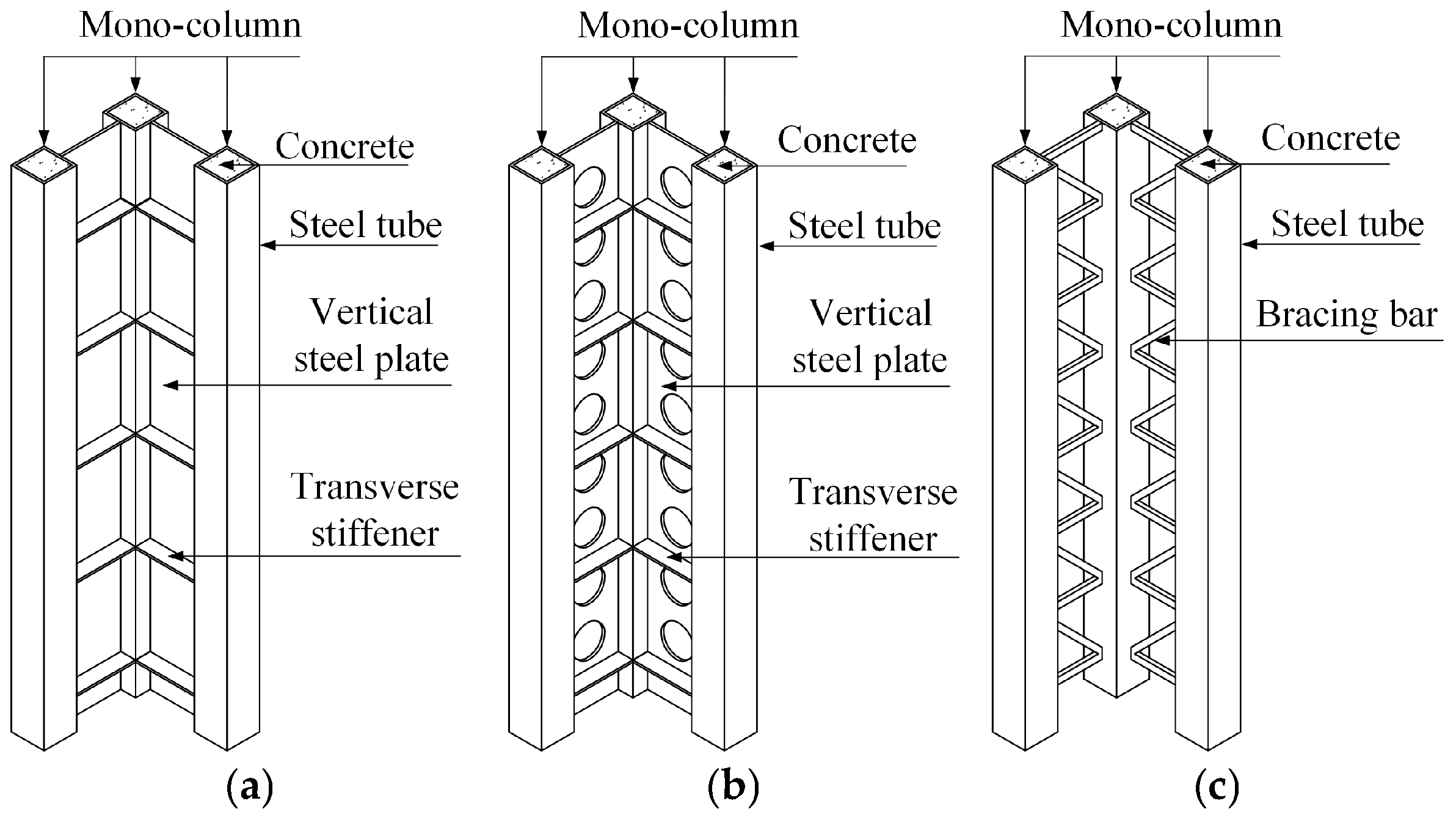
To enhance the mechanical performance of irregular CFST columns, Zhou et al. [19] and Xu et al. [20] examined configurations incorporating stiffened steel plate connections (Figure 2a,b) and reported improved load-carrying capacity and ductility. Liang, Zheng, and other researchers investigated trussed CFSST composite columns composed of multiple CFSST columns (Figure 2c), focusing on their axial compression behavior [21,22], eccentric compression response [23,24], and flexural performance [25,26]. Based on their parametric analyses, corresponding load-carrying capacity models were developed. Liu et al. [27] replaced the bracing bars in Figure 2c with bolt-connected diagonal members and examined the lateral behavior of the resulting composite columns under monotonic horizontal loading applied at the column top. Amer et al. [28] performed cyclic horizontal loading tests on bolt-connected trussed CFSST composite columns under sustained axial compression and used finite element (FE) simulations to evaluate the influence of key parameters on their mechanical performance. In terms of enhancing seismic performance, technologies such as self-centering beam-column joints [29], seismic isolation bearings [30], and novel self-centering shear links [31] are well-suited for integration with trussed CFSST composite column and can provide beneficial strengthening effects.
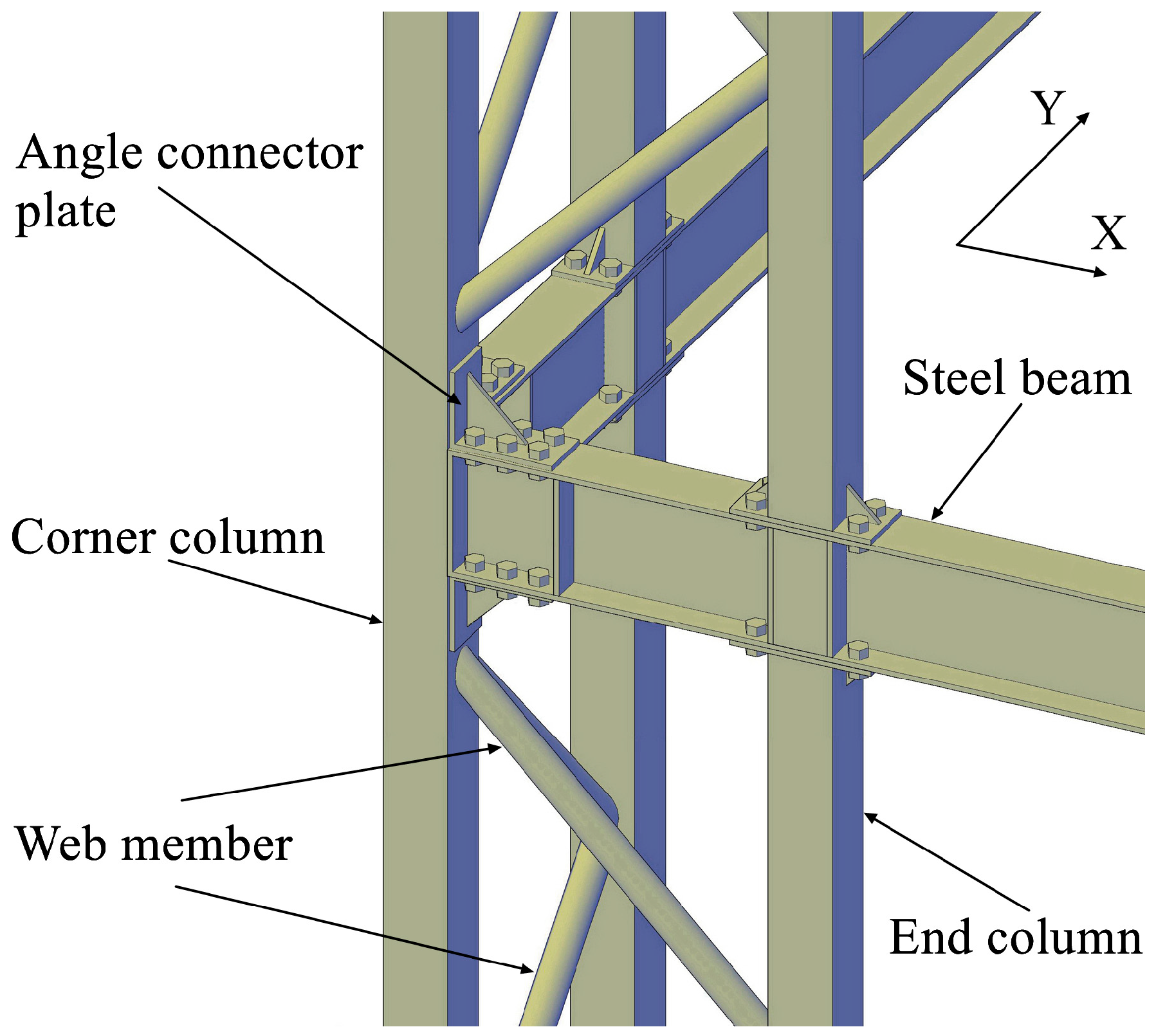
Existing research on trussed CFSST composite columns has focused on the mechanical behavior at the member level, with a notable lack of investigation at the structural system level. This paper aims to examine the mechanical performance of the integral structure (Figure 3), comprising trussed CFSST composite columns, angle-plate beam-column joints [32], and steel beams, through experimental and numerical simulation studies, thereby advancing the application of this new technology. In comparison with existing research, this study primarily offers two novel contributions. Firstly, it elevates the research subject from trussed CFSST composite columns to the structural system level for the first time. Secondly, it employs varying w/t ratios (the ratio of limb width to limb thickness) based on specific building dimensions, rather than treating this as a fixed parameter as is common in existing studies, which enhances the generality of the research findings.
To examine the seismic performance of frames incorporating trussed CFSST composite columns and to compare their mechanical behavior and economic efficiency with conventional structural systems, full-scale single-story, single-span H-shaped steel column frames (HKs), CFSST column frames (FKs), and trussed CFSST composite column frames (TKs) were fabricated and subjected to quasi-static cyclic loading. Their failure modes, hysteretic responses, stiffness degradation, and energy dissipation characteristics were analyzed and compared. FE models were subsequently developed and validated in ABAQUS. Parametric simulations were then performed by varying the spacing between corner and end columns, the number of truss diagonal bars, the truss joint configuration, and the axial compression ratio to evaluate their effects on frame hysteretic performance, providing a basis for the design of similar structural systems.

2. Test Overview

2.1. Specimen Design

The L-shaped trussed CFSST composite column frame in Figure 3 was found to provide negligible lateral resistance from the Y-direction truss under X-direction horizontal seismic loading. Accordingly, the specimens in this study were designed as single-plane composite columns.
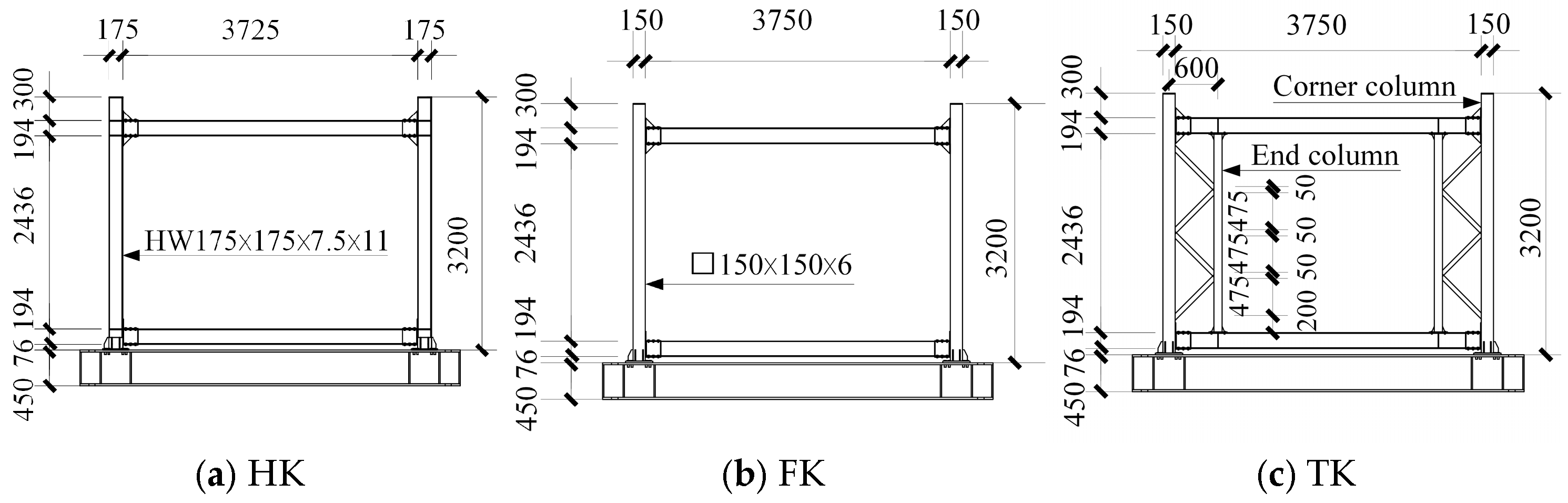
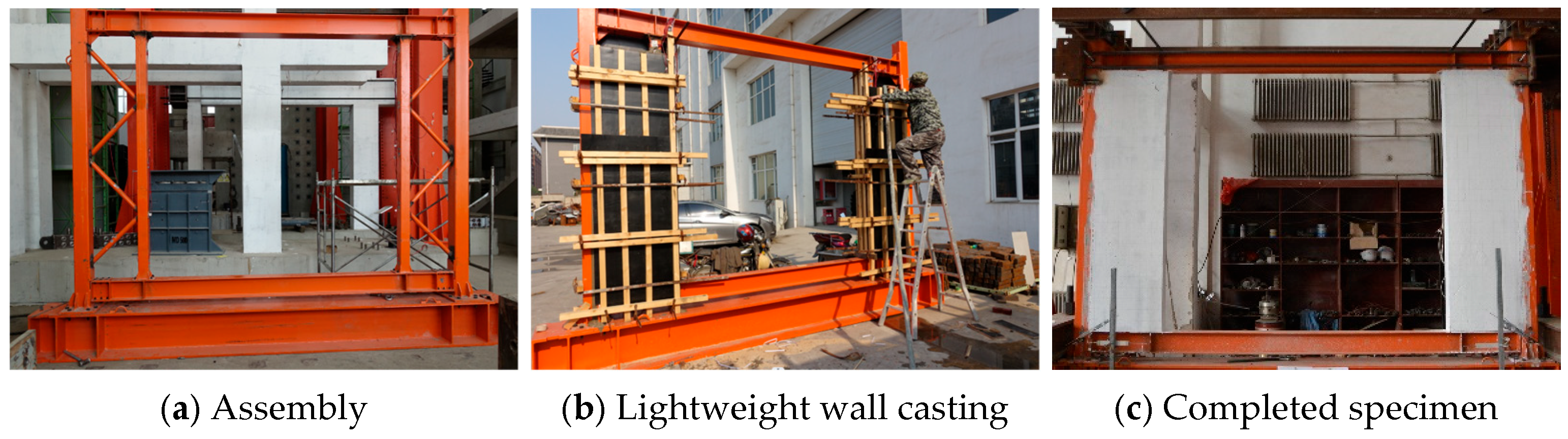
Three specimens were fabricated for testing: an HK, an FK, and a TK. Their geometric dimensions are presented in Figure 4, and the primary parameters are listed in Table 1. The fabrication procedure for specimen TK is illustrated in Figure 5. The hollow circular steel tube diagonal bars had a diameter of 50 mm, a wall thickness of 4 mm, and 45° end cuts, which were welded to both the end columns and the corner columns. Specimen TK was assembled to reflect practical construction conditions, in which lightweight insulation walls are cast around the trussed CFSST composite columns. The wall material consisted of low-density foamed concrete (LFC) with a density of 250 kg/m3 and an average cube compressive strength of 1.9 MPa.
All steel used in the specimens was Grade Q235B, with design tensile and compressive strengths of 215 MPa, a yield strength of 235 MPa, and an ultimate strength of 370 MPa. Sections cut from H-shaped members, steel tubes, and steel plates were tested for mechanical properties in accordance with Chinese standards [33], and the results are provided in Table 2. The CFSST columns were infilled with recycled concrete in which the coarse aggregate was fully replaced. Cube specimens of this concrete were cast and cured under standard conditions, and their mean compressive strength and elastic modulus were measured as 54.0 MPa and 30.2 GPa, respectively, following the procedure in reference [34]. For the beam-column connections, the steel beams were bolted to the angle connector plates welded to the columns using M12 grade 8.8 high-strength bolts. The column bases were anchored to the rigid foundation with M20 grade 8.8 high-strength bolts. All bolts were tightened using a torque wrench in accordance with the specified torque requirements and procedures of the Technical Specification for High Strength Bolt Connections of Steel Structures (JGJ82-2011) [35].

2.2. Loading Scheme

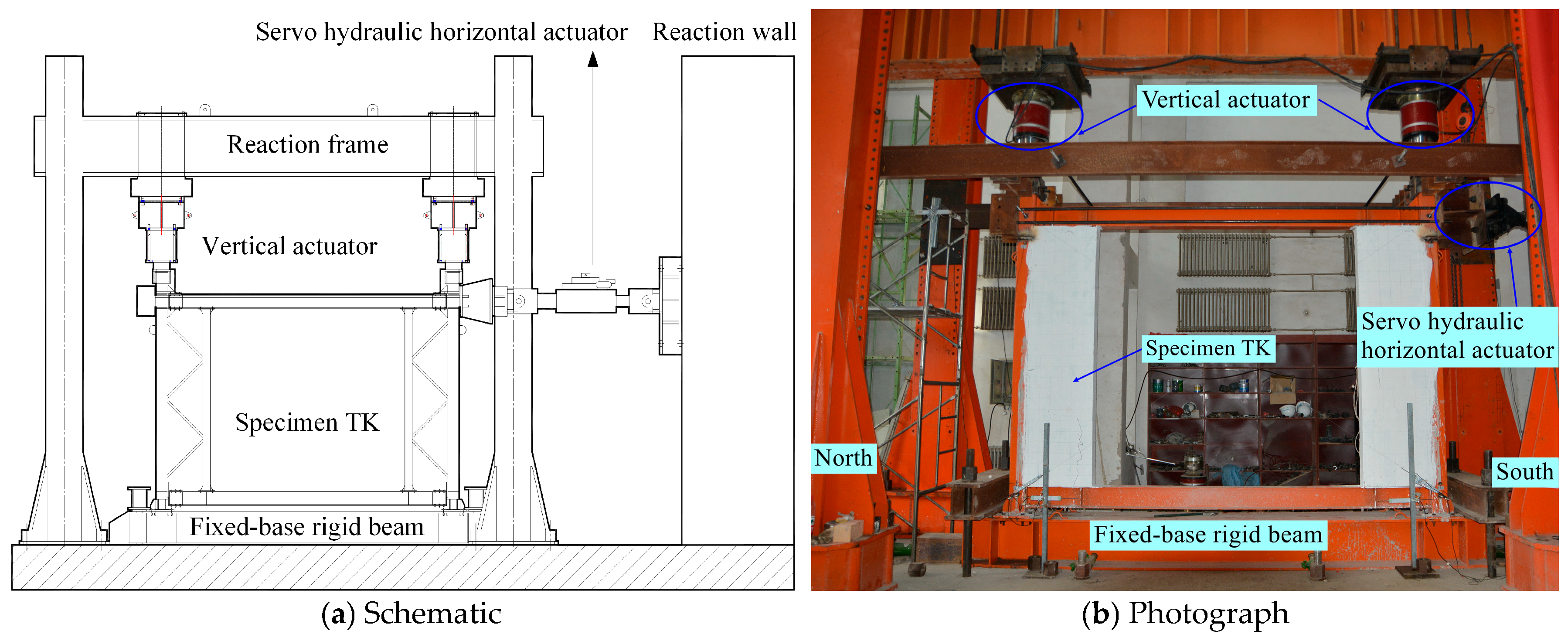
During testing, a vertical load was first applied at the column tops, followed by low-cycle horizontal loading applied at the beam axis. The vertical load was determined using a target axial compression ratio of 0.28, yielding a value of 499.5 kN. The loading setup is shown in Figure 6. Horizontal loads were applied using hydraulic actuators, and the column bases were anchored to the rigid foundation beams with high-strength bolts. Rigid bearing beams and horizontal jacks were employed to prevent out-of-plane rotation and horizontal sliding of the foundation beams. Rigid column caps were installed at the column tops to ensure uniform transfer of the vertical load. Lateral restraints were placed on the reaction frame to prevent out-of-plane instability during loading.
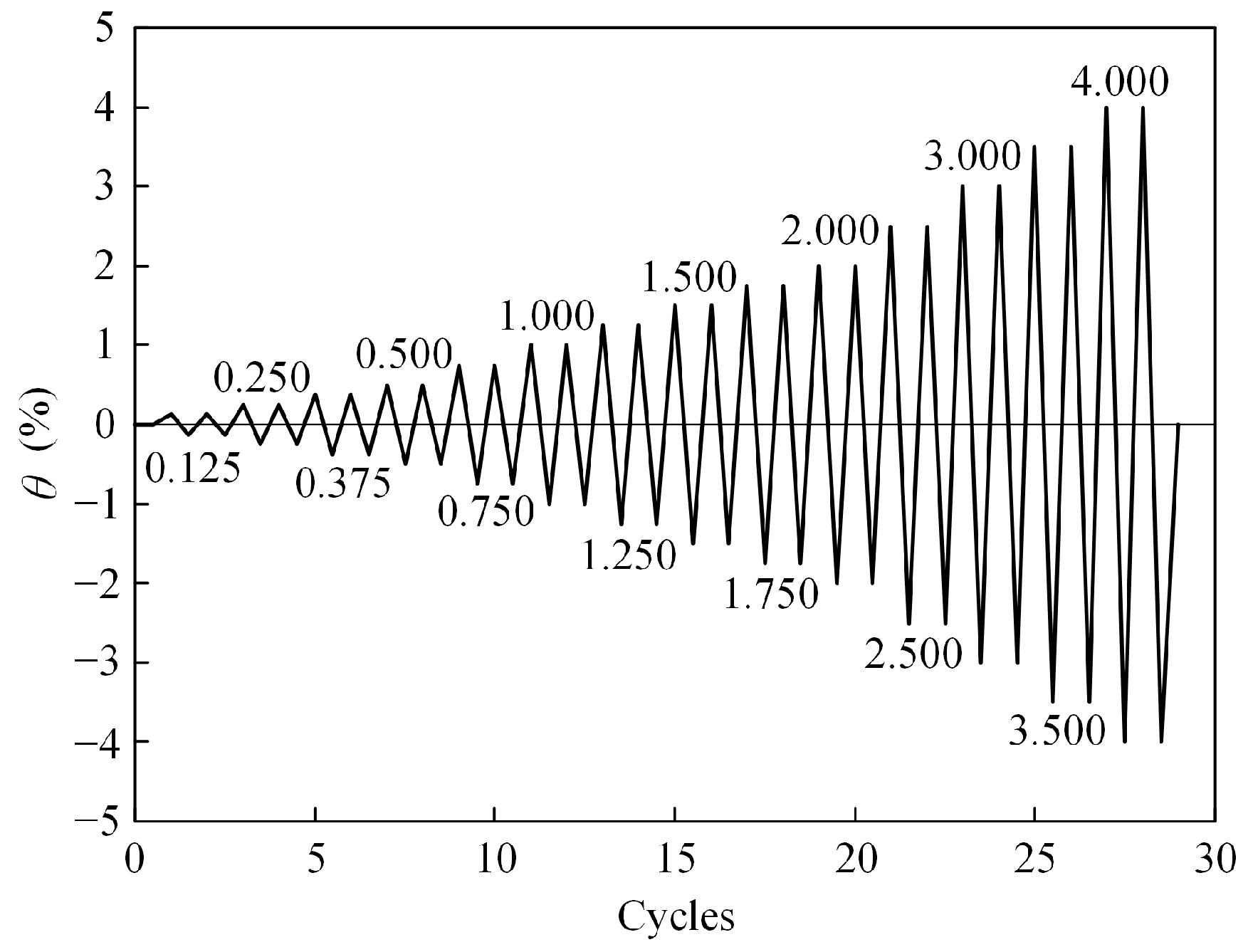
The loading process was controlled using the frame drift ratio θ (%), defined as the ratio of the horizontal displacement of the frame beam to the vertical distance from the column’s embedded end to the loading point. When θ was below 0.5%, the drift ratio was increased in increments of 0.125%; when θ ranged from 0.5% to 2%, the increment was 0.25%; and when θ exceeded 2%, the increment was 0.5%. Each loading step included two cycles, as shown in the loading protocol in Figure 7.
The vertical load at the column tops was applied in stages until the target value was reached, while the horizontal load was applied slowly and continuously. During horizontal loading, the pushing direction was taken as positive and the pulling direction as negative. Loading was terminated if any of the following conditions occurred: (1) in the descending branch of the load–displacement skeleton curve, the load decreased to 85% of the peak value [36]; (2) local or global instability developed in the H-shaped steel columns, creating a risk of excessive deformation; or (3) bolt failure occurred in the beam-column joints, resulting in a risk of excessive deformation.

2.3. Data Acquisition

During loading, displacement sensor D1 was placed along the axis of the upper frame beam to measure the horizontal displacement Δ of the steel beam and to calculate the corresponding drift ratio θ in real time. A force sensor was mounted at the horizontal loading end to record the applied horizontal force F. Displacement sensors D2 and D3 were positioned at the interfaces between the column bases and the foundation beams to monitor horizontal slip between the specimens and the foundation. A displacement sensor D4 was installed at the interface between the foundation beams and the floor to record any horizontal slip of the foundation beams relative to the ground.

3. Test Observations and Failure Processes

Under the combined action of constant vertical loading and low-cycle horizontal loading, all specimens underwent elastic, yielding, and plastic stages before reaching ultimate failure.
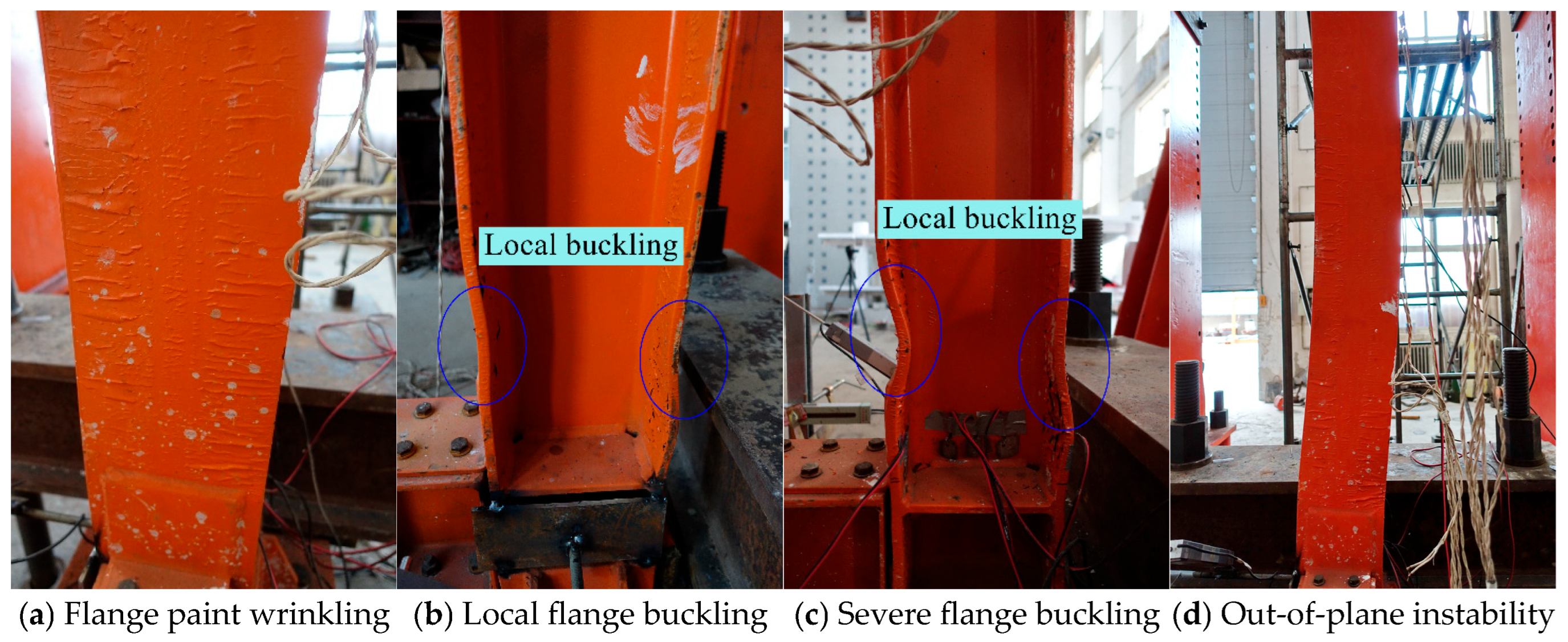
Specimen HK: At θ = 1.0%, no visible changes were observed. At θ = 1.25%, paint wrinkling developed on the compression flanges of the H-shaped steel columns (Figure 8a). At θ = 1.5%, light wrinkling appeared on the webs of the north and south columns. At θ = 1.75%, minor buckling formed on the compression flanges at the column bases (Figure 8b). At θ = 3.5%, pronounced flange buckling occurred at the base of the north column (Figure 8c), and out-of-plane instability developed in the south column (Figure 8d), after which loading was terminated.
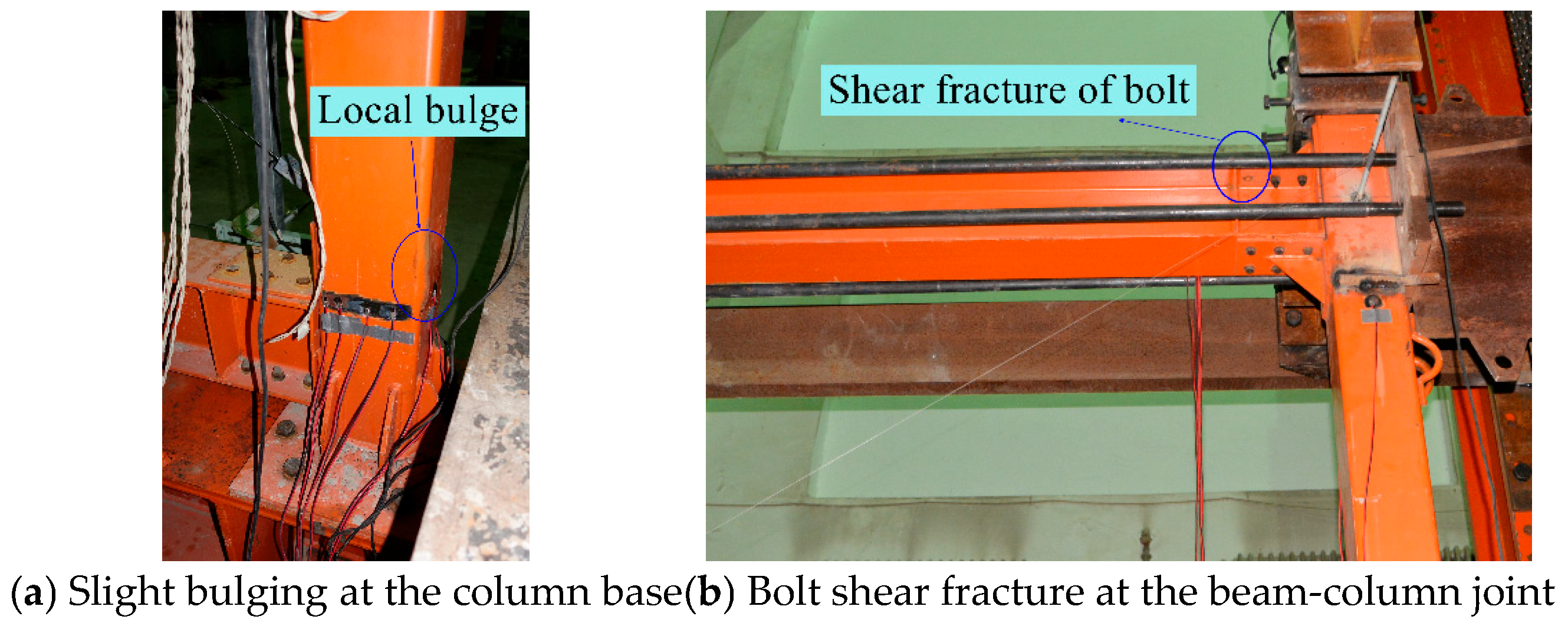
Specimen FK: At θ = 1.25%, continuous abnormal sounds were emitted from the CFSST columns. At θ = 2.5%, slight local bulging appeared in the steel tube within the compression zone at the base of the north CFSST column (Figure 9a). With further drift, shear fractures occurred in the bolts connecting the south CFSST column to the H-shaped steel beam (Figure 9b), after which loading was stopped.
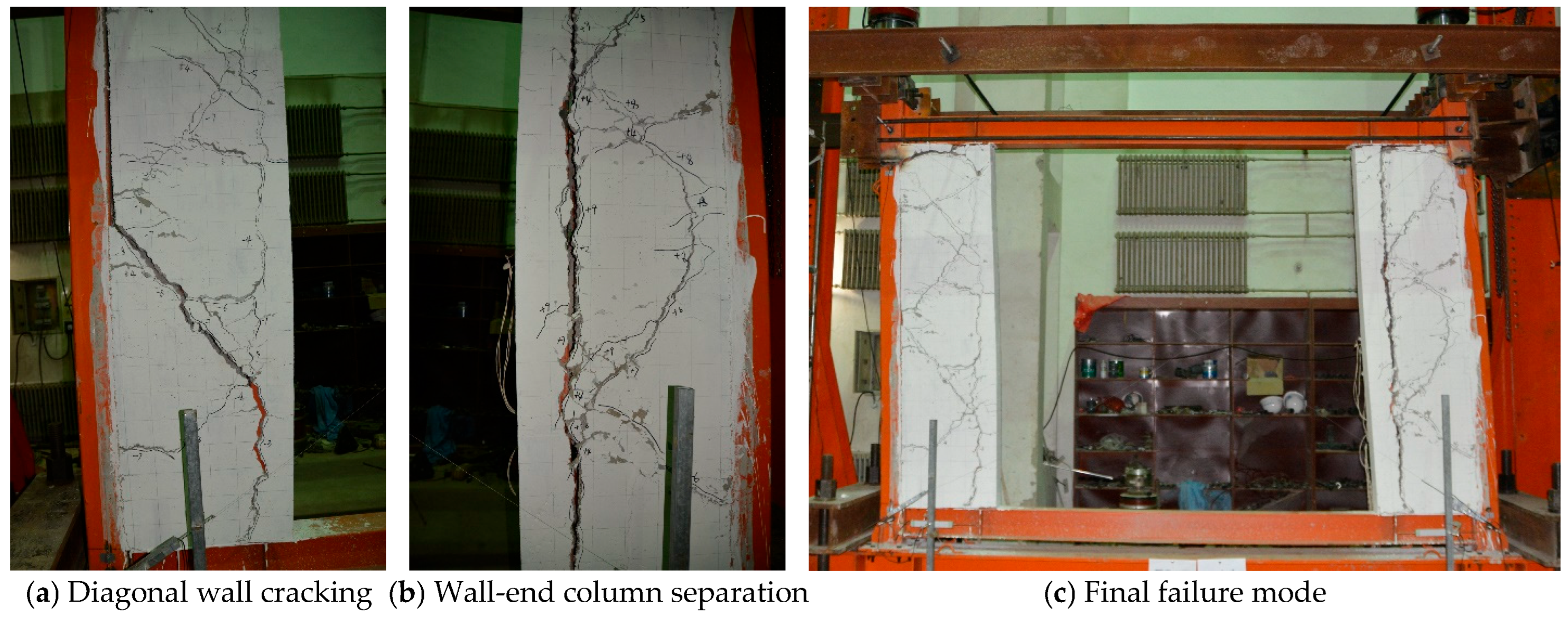
Specimen TK: At θ = 0.375%, vertical and diagonal cracks formed in the LFC walls on both sides and gradually propagated upward. As θ increased, both the number and width of cracks continued to enlarge. At θ = 1.75%, cracks at the edge of the south CFSST end column extended to the top of the wall, and widening cracks between the north wall and the CFSST corner column caused partial separation. At θ = 2.0%, diagonal cracks in the north LFC wall fully penetrated, exposing the CFSST end column embedded within the wall (Figure 10a). At θ = 3.0%, part of the south wall separated from the end column (Figure 10b), and deformation of the circular steel tubes at the welded ends became visible within the gaps. At θ = 4.0%, the gaps between corner columns, end columns, and LFC walls widened further. The final failure mode is shown in Figure 10c. When the load decreased to 85% of the peak value, the test was stopped.
Although the LFC wall in specimen TK obscured the experimental observation of weld failure at the truss joints, the extremely low tensile strength of the LFC material means its cracking behavior serves as a highly sensitive and visual indicator of underlying damage progression within the truss. At θ = 0.375%, the cracking in the LFC wall was an external manifestation of increased strain in the truss web members. When θ increased to the range of 1.75% and 2%, the cracks in the LFC wall progressively lengthened, widened, and some even developed into penetrating diagonal cracks. This indicated that the plastic deformation at the welded ends of the web members had intensified, leading to weld cracking, which coincided with the load-bearing capacity of specimen TK reaching its peak and beginning to decline. When θ exceeded 3%, separation between the LFC wall and the CFSST columns was observed, indicating fracture of multiple welds connecting the truss web members within the wall to the columns. Some of these weld fractures could be directly observed through the widened gaps between the LFC wall and the end columns. Consequently, the load-bearing capacity of specimen TK continued to decrease until final failure.

4. Test Results and Analysis

4.1. Hysteretic Curves

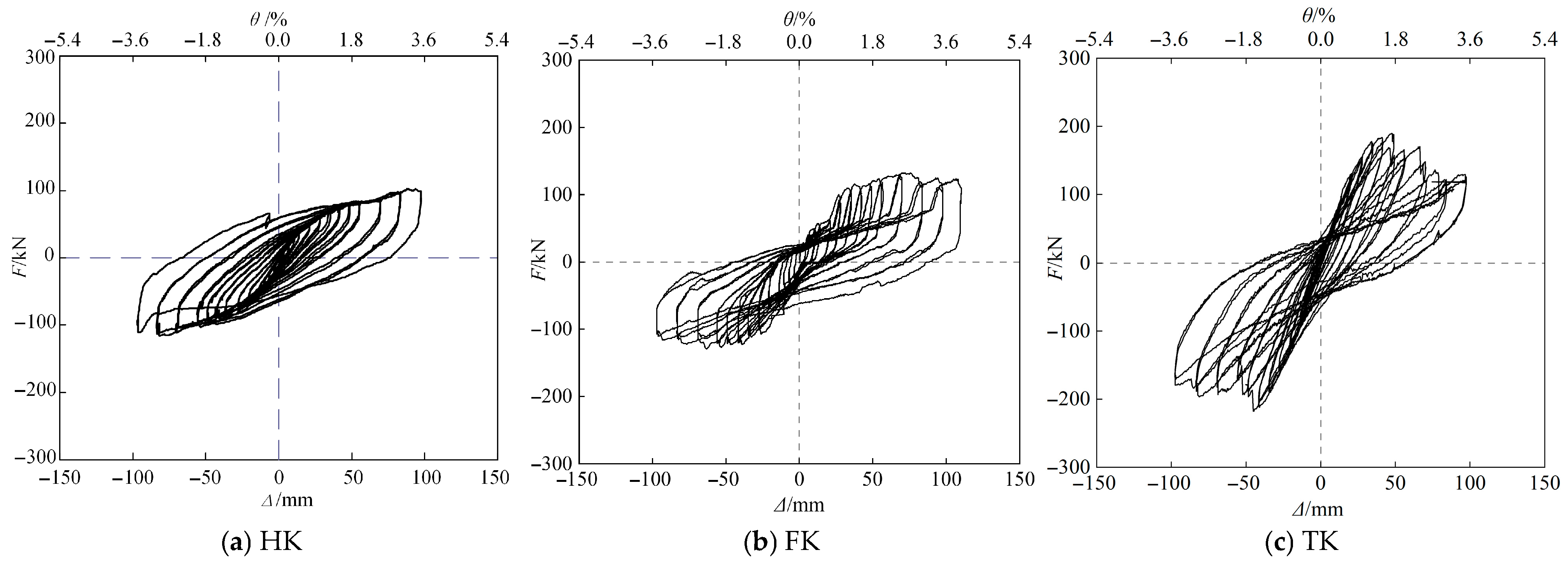
The load–displacement (FΔ) hysteretic curves for the three specimens are presented in Figure 11. The following observations were made:
(1)
Specimen HK: The hysteretic curve exhibited a spindle-shaped and relatively full form. As θ increased, the slope of the line connecting the peak points of each hysteresis loop to the origin gradually decreased, indicating continuous stiffness degradation. After yielding, the load reduction was not pronounced.
(2)
Specimen FK: The hysteretic curve showed noticeable pinching. During the initial cycles, the load-carrying capacity increased rapidly, followed by a slower rate of increase and eventually a slight reduction near the ultimate load. The extended load plateau indicated that the specimen maintained a relatively high load-carrying capacity under large deformations, demonstrating a clear advantage over HK.
(3)
Specimen TK: The hysteretic curve displayed a reverse S-shaped form with moderate pinching. Although the steel consumption of TK was similar to that of HK, its initial stiffness and load-carrying capacity were substantially higher than those of HK and FK. After reaching the peak load, the load decreased in a stepped manner with only minor reductions. The specimen sustained a high load-carrying capacity even as deformation continued to increase.

4.2. Skeleton Curves and Characteristic Points

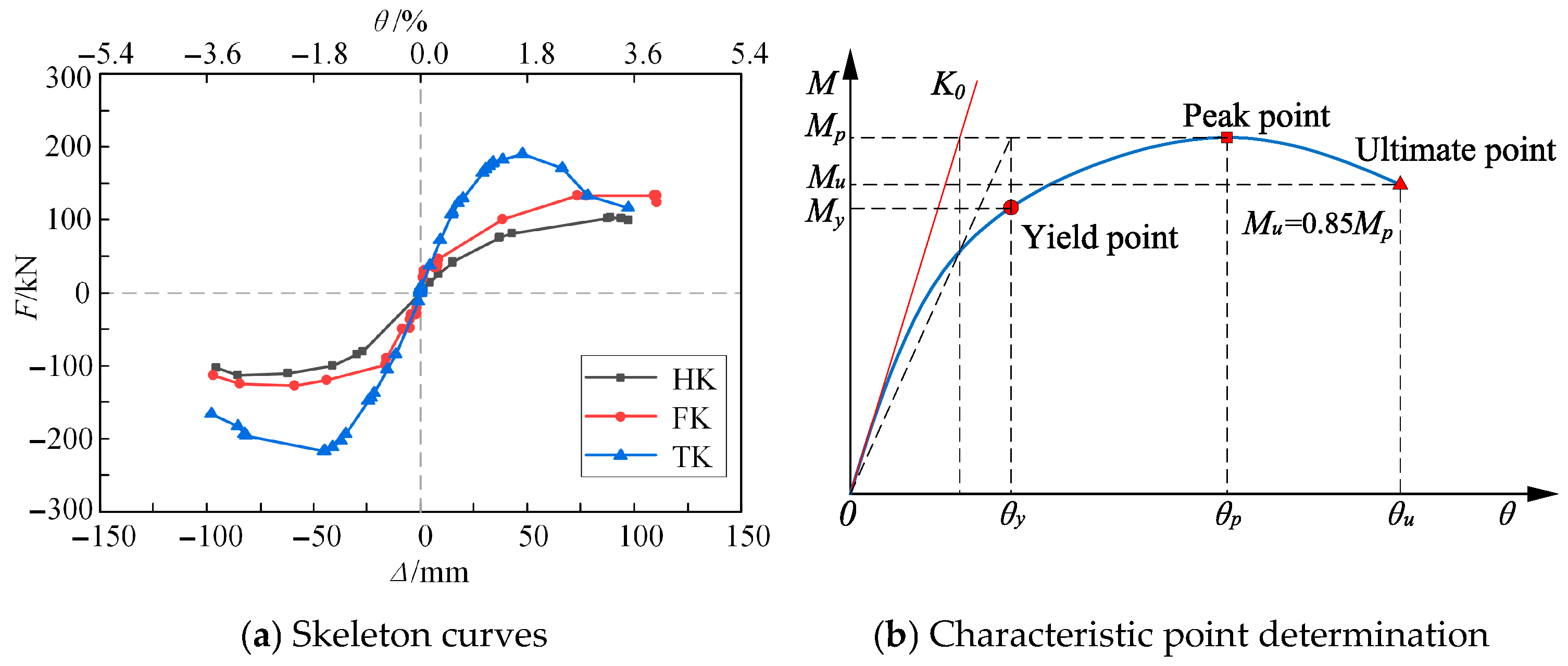
The FΔ skeleton curve was obtained by connecting the peak points of each loading step from the hysteretic loops to form an envelope. The skeleton curves of the three specimens are compared in Figure 12a. The characteristic points, including the yield load Fy, peak load Fp, and ultimate load Fu, were identified using the buckling moment method [28,37] (Figure 12b), and are summarized in Table 3. Specimen HK first entered the elastic stage, followed by a yield stage in which the skeleton curve remained approximately linear (Figure 12a). In the subsequent hardening stage, the curve slope gradually decreased, and although deformation continued to develop, the load F did not exhibit a significant reduction. For specimen FK, the load F remained slightly higher than that of HK beginning in the elastic stage. After yielding and subsequent hardening, F reached the peak load Fp, followed by a gradual decrease. Because loading was terminated early due to bolt failure, the ultimate load Fu on the skeleton curve exceeded 85% of Fp. Specimen TK exhibited three distinct stages on its skeleton curve:
Stage 1: A linear elastic stage up to the yield point;
Stage 2: A yielding and post-yield hardening stage with a clearly defined peak load Fp;
Stage 3: A load-carrying decline stage in which F decreased noticeably but with a relatively small reduction. These characteristics indicated that TK underwent a complete plastic deformation process and achieved a ductile failure mode.
By comparing the skeleton curves of the three specimens, it was observed that specimen TK exhibited a substantially higher load-carrying capacity than both HK and FK. Before yielding, TK demonstrated the greatest lateral stiffness. After yielding, it continued to maintain a high load-carrying capacity along with a noticeable level of residual stiffness. These findings indicate that the TK provides clear technical advantages over conventional HKs and CFSST column frames.
The numerical values of the characteristic points for each skeleton curve are presented in Table 3, where θy, θp, and θu denote the drift ratios corresponding to Fy, Fp, and Fu, respectively [36]. Comparison of specimens FK and HK showed that FK reached Fy and Fp values 1.17 and 1.20 times those of HK, while requiring only 69.1% of HK’s steel, indicating markedly improved cost efficiency. Specimen TK used 97.5% of the steel of HK but achieved Fy and Fp values 1.88 and 1.87 times higher, demonstrating superior practicality. Relative to FK, TK consumed 41% more steel yet attained Fy and Fp values 1.61 and 1.56 times greater and exhibited a substantially higher initial stiffness K0 (Figure 12b). These results confirm that the TK offered clear technical advantages over conventional structural systems.

4.3. Stiffness Degradation

The secant stiffness at the i-th loading step for each specimen is denoted as Ki [36] and calculated using Equation (1), where +Fi and −Fi denote the positive and negative peak loads at the i-th loading step, respectively, and +Δi and −Δi represent the corresponding displacements at these peak points.
K i = + F i + F i + i + i
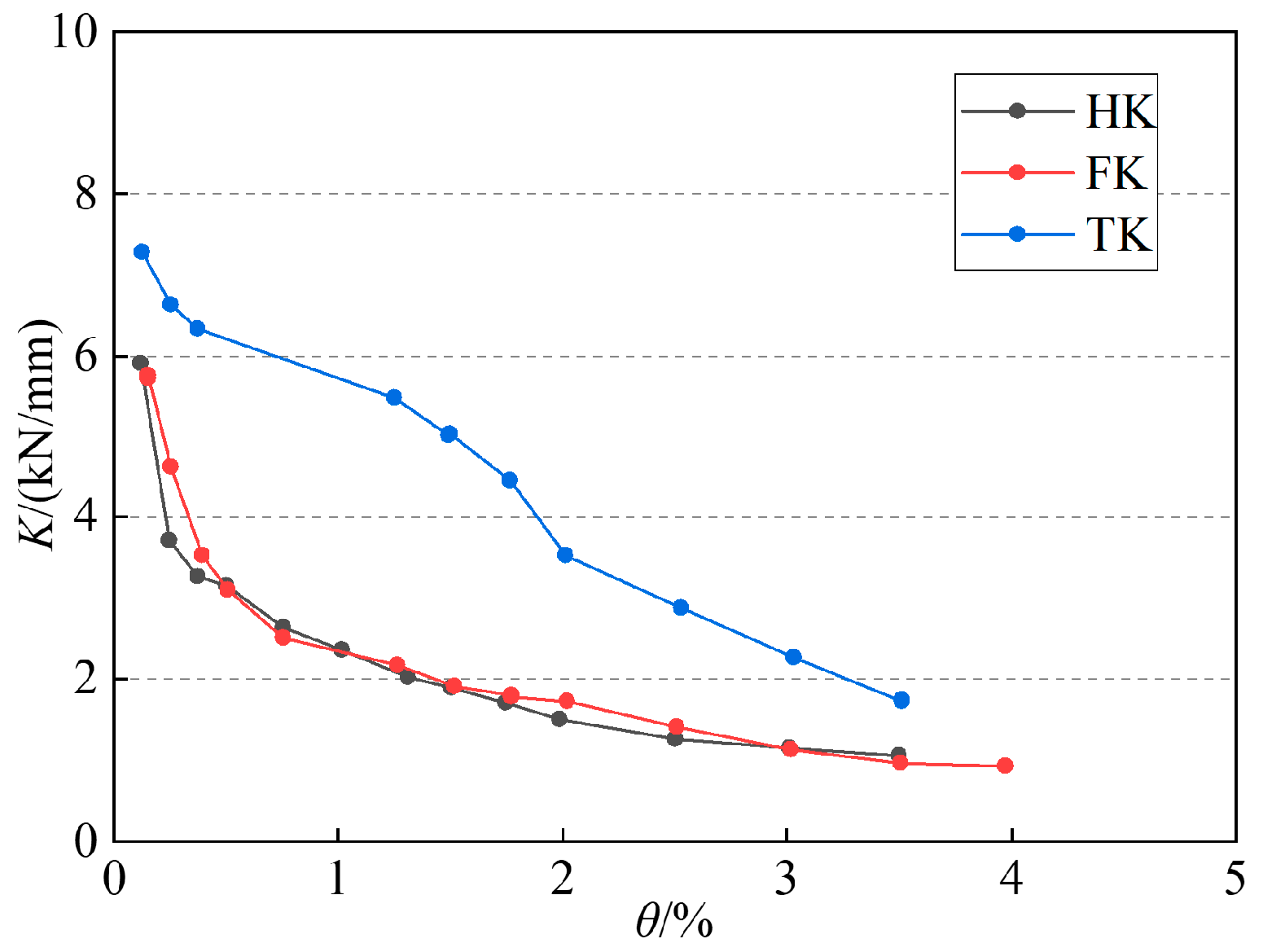
The stiffness-drift ratio (K-θ) relationships of the specimens are presented in Figure 13. For specimens HK and FK, stiffness decreased rapidly when θ was below 0.5%, after which the degradation gradually slowed as θ exceeded 0.5%. In contrast, specimen TK exhibited a smoother degradation trend, and its secant stiffness within θ < 2% was two to three times that of HK and FK. These results indicate that both the initial stiffness and the reduced rate of stiffness degradation are key advantages of the TK.
The initial stiffness K0 was defined as the secant stiffness at the first loading step. The yield stiffness Ky and peak stiffness Kp corresponded to the secant stiffness at the yield point and peak point, respectively. The values of K0, Ky, and Kp for each specimen are provided in Table 4. For specimen TK, K0, Ky, and Kp were 1.23, 4.31, and 2.57 times those of HK, and 1.27, 2.53, and 3.01 times those of FK, respectively. These results show that the TK possessed a pronounced stiffness advantage over traditional steel frames, particularly during the mid-to-late loading stages.

4.4. Deformation Capacity Analysis

The deformation capacity of each specimen was represented by θy, θp, and θu (Table 5). According to the relevant Chinese codes [38,39], the inter-story drift ratio limit for the elastoplastic stage of CFST frame structures is 1/50 (2.0%). All specimens exhibited θu values greater than 2.0%, indicating adequate elastoplastic deformation capacity without collapse (Table 5). Specimen TK exhibited a θp of 1.67%, indicating that it had already entered the post-peak capacity-decreasing stage when θ reached 2%. This indicates that the material capacity of the specimen was fully mobilized when the structure was designed according to the 2% drift limit. The θu value of 2.78% showed that the specimen retained substantial deformation capacity and a notable safety reserve at this design limit. From θ = 1.67% (peak load) to θ = 2.78% (failure), specimen TK experienced a continuous plastic deformation process, demonstrating strong seismic resilience.

4.5. Energy Dissipation Capacity

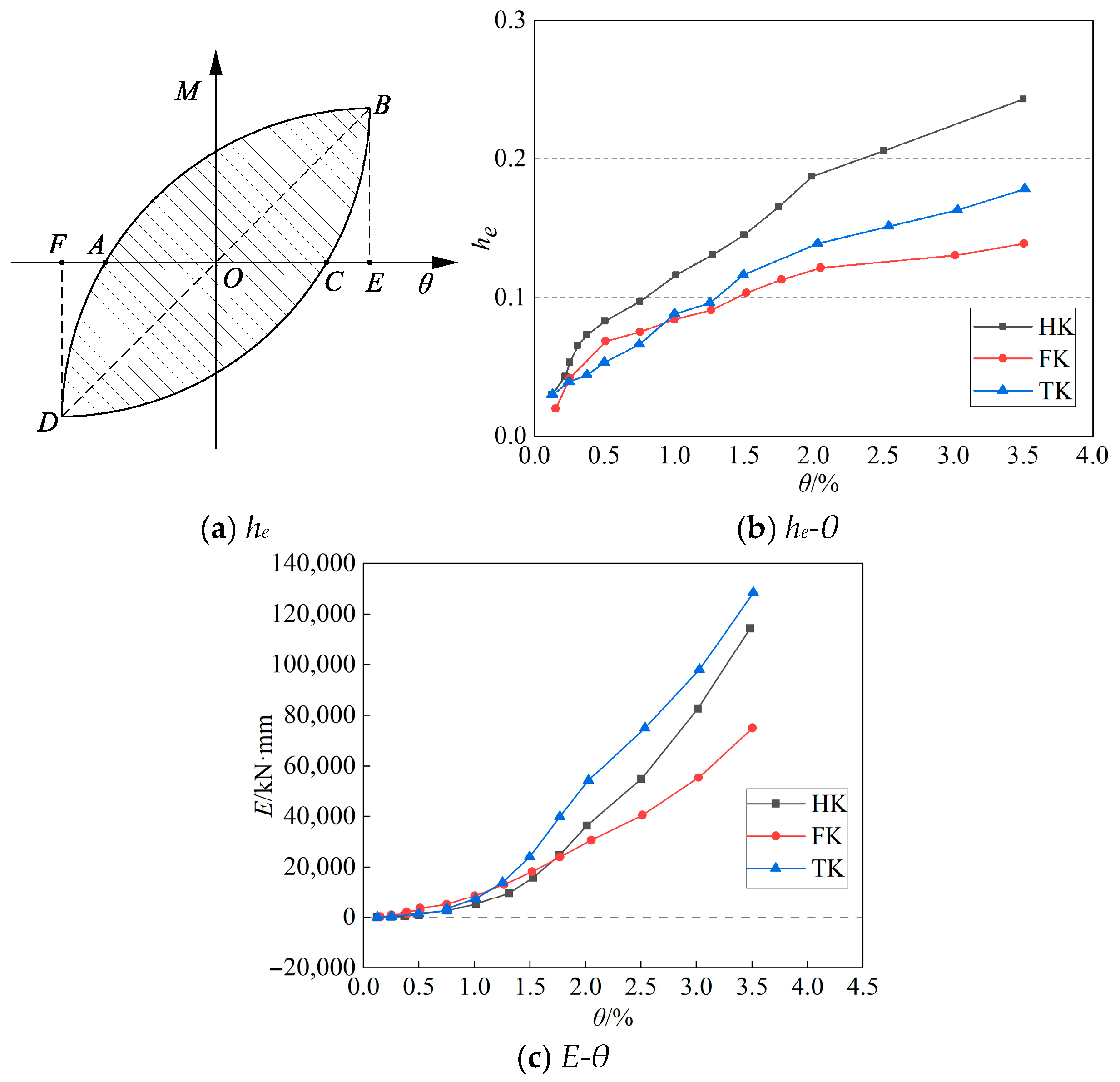
The energy dissipation capacity of each specimen was evaluated using the equivalent viscous damping coefficient he and the cumulative energy Ei [36]. The coefficient he is calculated using Equation (2):
h e = 1 2 π × S A B C D S   ( O B E + O D F )
where SABCD denotes the area enclosed by the hysteretic loop (Figure 14a), and SOBE and SODF represent the areas of triangles OBE and ODF, respectively. The relationships between he and θ and between E and θ for each specimen are presented in Figure 14b and Figure 14c, respectively.
As shown in Figure 14b, he increased progressively with θ for all specimens. Throughout loading, specimen HK exhibited higher he values than TK and FK, indicating more efficient energy dissipation per cycle and a more favorable single-cycle energy dissipation mechanism. However, because of its higher load-carrying capacity and favorable ductility, specimen TK achieved the greatest cumulative energy dissipation over the entire loading process (Figure 14c). In seismic design, the total energy dissipation by a structure is a critical indicator of collapse prevention. Therefore, although he values of TK were lower than those of HK, its substantially higher cumulative energy dissipation resulted in superior overall seismic performance compared with HK, despite using a similar amount of steel.

5. FE Simulation

In this section, the FE software ABAQUS (version 2020) was used to further examine the influence of various parameters on the seismic behavior of trussed CFSST composite column frames.

5.1. Modeling

5.1.1. Mesh Properties and Size

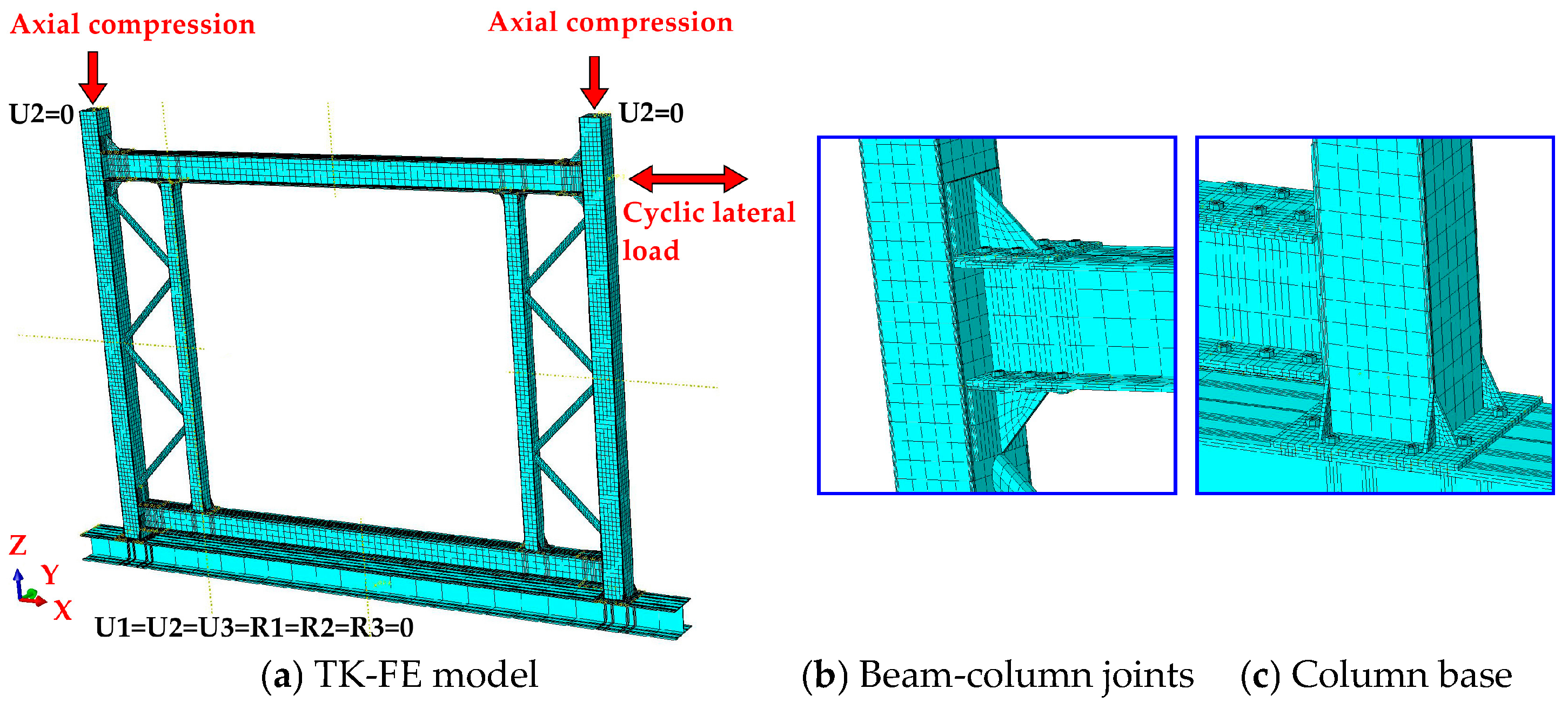
The FE model, designated TK-FE, was developed with the same geometric dimensions and loading scheme as specimen TK (Figure 15). The square steel tube columns, concrete core, beam-column joints, and H-shaped steel beams were modeled using C3D8R elements. To maintain computational efficiency while preserving accuracy, finer meshes were assigned to the beam-column joints and truss connections, whereas coarser meshes were used in the remaining regions [40].

5.1.2. Stress–Strain Relationships

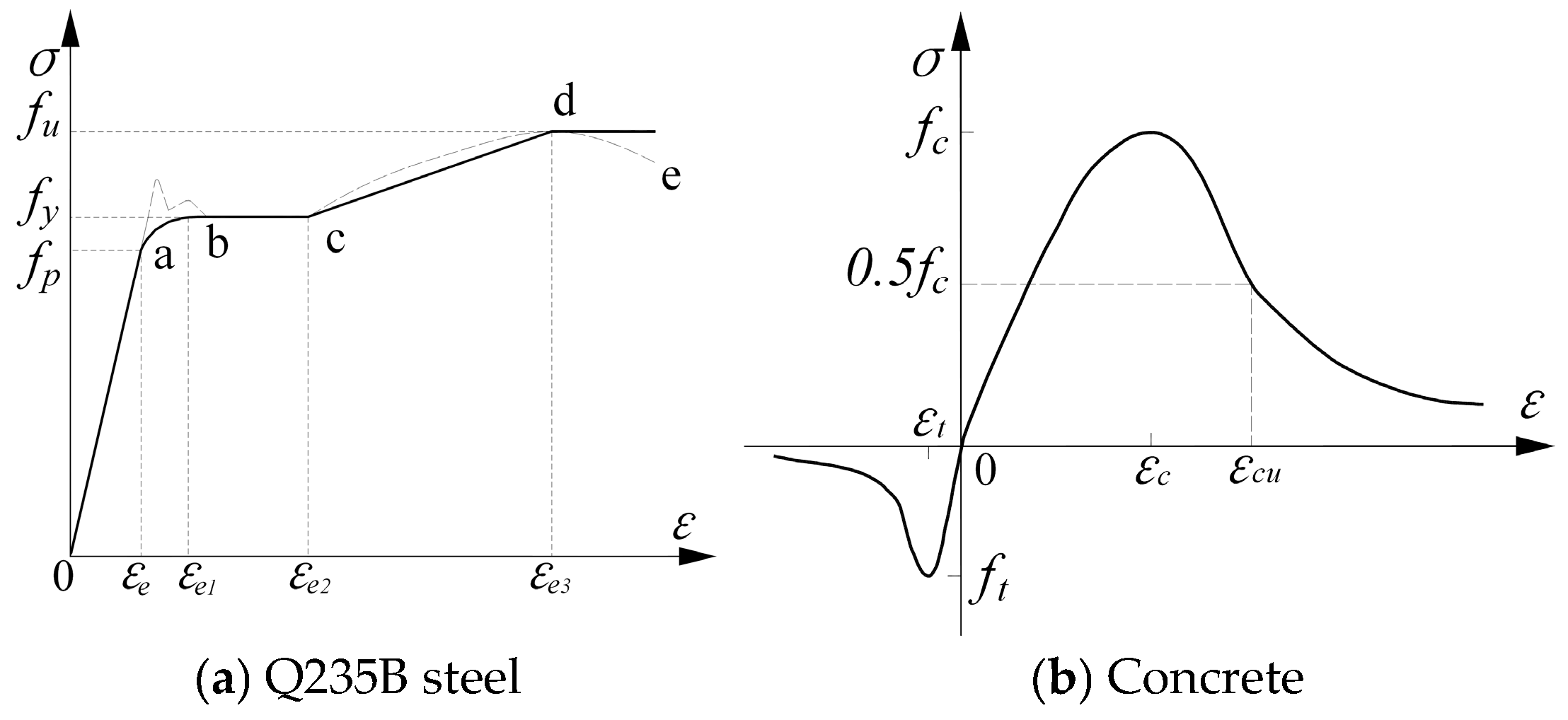
The Q235B steel was modeled using the stress–strain relationship provided in reference [41] (Figure 16a). The proportional limit, fp, defined as the stress at which the curve departs from linearity, was obtained from the material test results. The corresponding values of fy, fu, and E are listed in Table 2, and Poisson’s ratio was taken as 0.3. In Figure 16a, the strain parameters were defined as εe = 0.8fy/E, εe1 = 1.5εe, εe2 = 10εe1, and εe3 = 100εe1. High-strength bolt steel was modeled using a bilinear constitutive model with elastic and strain-hardening segments, and the hardening modulus was set to 0.01E [42]. The concrete behavior was simulated using the concrete damage plasticity model, with the following parameters: dilation angle = 38°, eccentricity = 0.1, and K = 0.667. To improve convergence in the static analysis, a viscosity coefficient of 10−5 was applied. The tensile and compressive stress–strain relationships followed the provisions of the Chinese code [43] (Figure 16b). The uniaxial tensile stress–strain model was computed using Equations (3)–(6):
σ = ( 1 d t ) E c ε
d t = 1 ρ t 1.2 0.2 x 5               ( x 1 ) 1 ρ t α t x 1 1.7 + x           ( x > 1 )
x = ε / ε t
ρ t = f t E c ε t
where αt denotes the parameter controlling the descending branch of the axial tensile stress–strain curve, ft represents the uniaxial tensile strength of concrete, εt signifies the peak tensile strain corresponding to ft, and dt indicates the uniaxial tensile damage evolution parameter.
The uniaxial compressive stress–strain response of concrete was calculated using Equations (7)–(11):
σ = ( 1 d c ) E c ε
d c = 1 ρ c n n 1 + x n                           ( x 1 ) 1 ρ c α c x 1 2 + x           ( x > 1 )
ρ c = f c E c ε c
n = E c ε c E c ε c f c
x = ε / ε c
where αc denotes the parameter governing the descending branch of the axial compressive stress–strain curve, fc represents the uniaxial compressive strength of concrete, εc indicates the peak compressive strain corresponding to fc, and dc signifies the uniaxial compressive damage evolution parameter.
Studies [44,45,46] have shown that low-density foamed concrete with a density below 300 kg/m3 exhibits an approximately zero tensile-to-compressive strength ratio. Due to the low density (250 kg/m3) of LFC wall in specimen TK, its structural contribution was not considered in the finite element modeling. The FE model includes only the trussed CFSST composite column frame, with the wall represented solely as a vertical load.

5.1.3. Interaction

The interaction between the concrete and the steel tube was modeled using the “face-to-face” contact method. Tangential behavior was defined using penalty friction, and normal behavior was defined as hard contact. A friction coefficient of 0.3 was assigned between steel plates [47] and 0.6 between the steel tube and concrete [48].

5.2. FE Model Verification

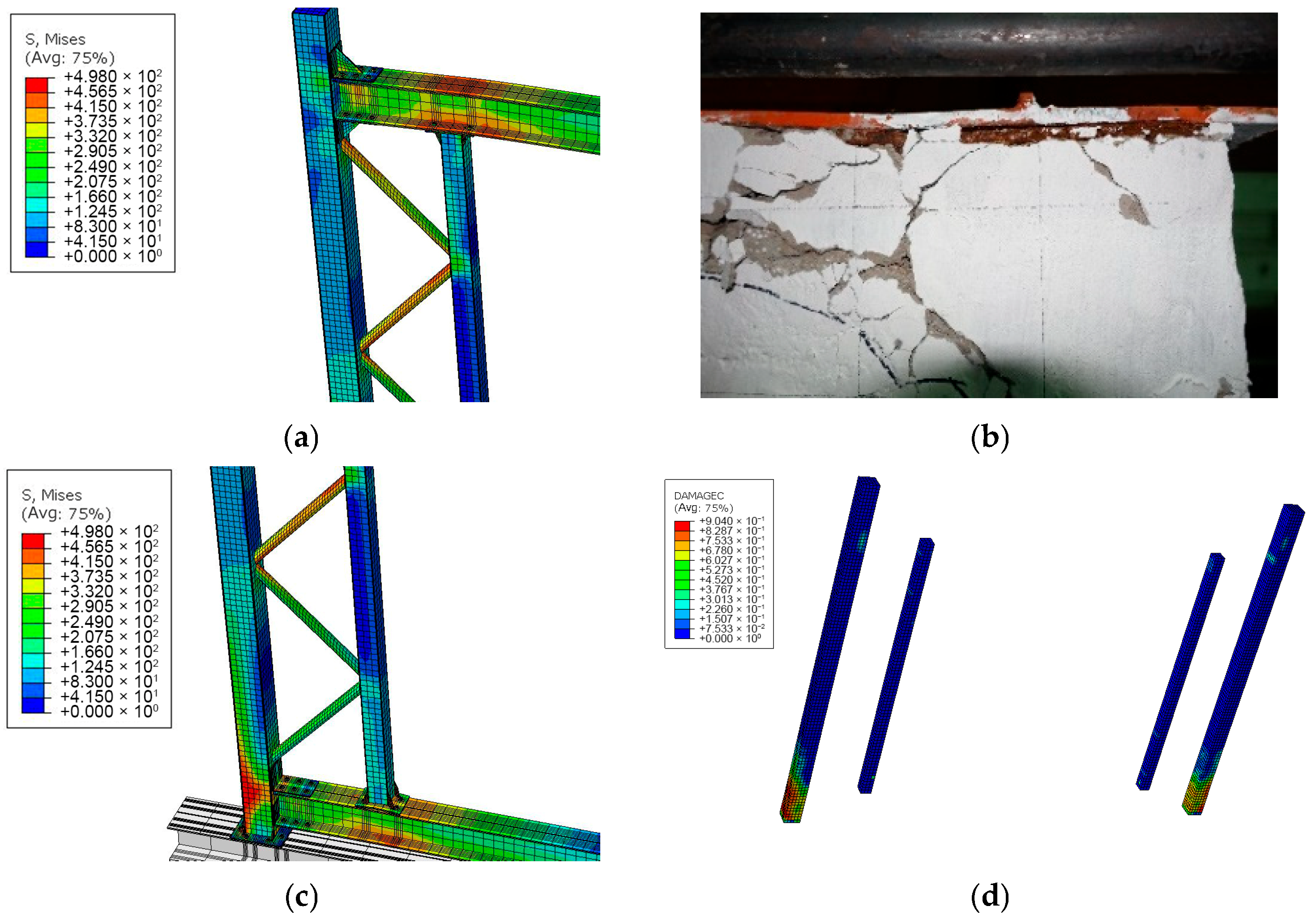
The Mises stress contours of TK-FE are presented in Figure 17. The figure shows high stress states in the outer steel tube of the corner column and near the welds of the diagonal truss members. The CFSST corner and end columns exhibited deformation but no pronounced failure. Furthermore, stress concentrations are present in the steel beam above and below the end column, consistent with the experimental observations.
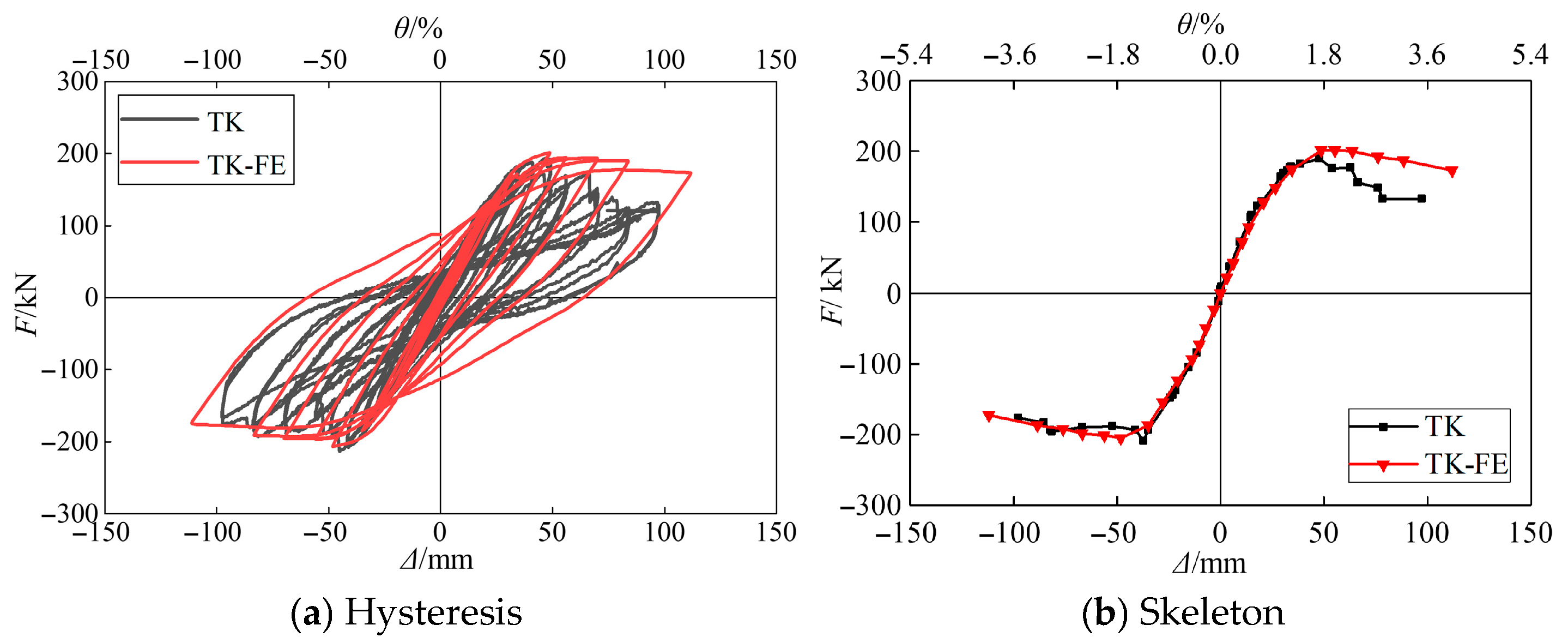
The FΔ curves of specimen TK and the FE model TK-FE are compared in Figure 18. The two curves show strong agreement before the peak load. In the post-peak descending stage, discrepancies appear in both the hysteretic and skeleton responses. These differences arise mainly because the strength and stiffness degradation of specimen TK were affected by random factors, such as welding residual stresses, while the TK-FE response reflects an idealized behavior without such uncertainties. The differences between the TK and TK-FE curves were quantified as follows: the positive peak load differed by 2.6%, the negative peak load by 1.8%, the positive ultimate load differed by 12.3%, and the negative ultimate load by 3.9%. Overall, these results indicate that the element selection, material parameters, and other modeling settings in FE analysis were appropriate, and the simulation was able to reliably reproduce the mechanical behavior of this frame type.

5.3. Parametric Analysis

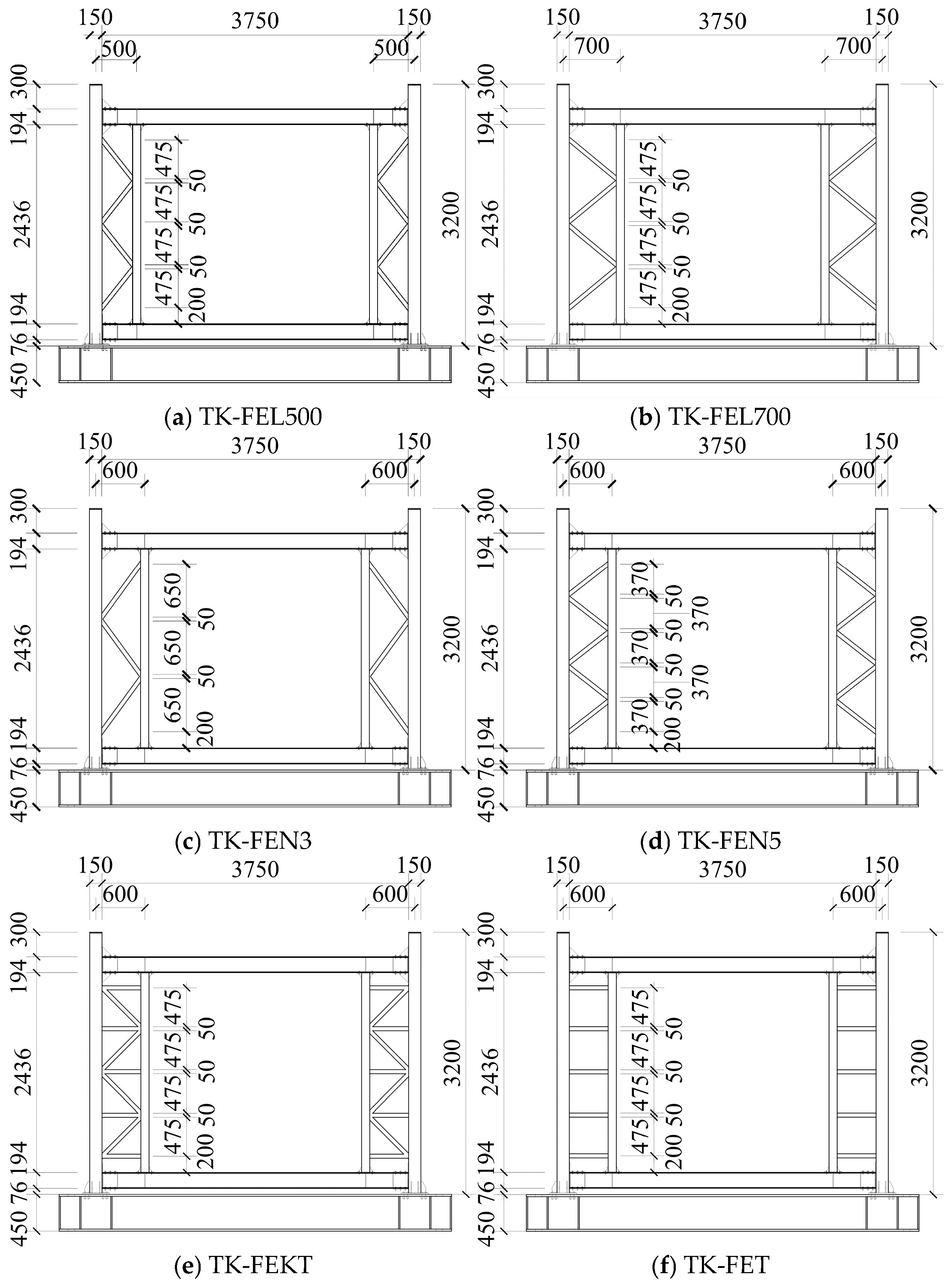
The reference model TK-FE had a 600 mm spacing between the corner and the end column, four truss diagonal bars, K-type truss joints, and a column axial compression ratio of 0.28. Q235B steel was assigned to all steel components except the bolts. To evaluate the effects of key parameters on the seismic performance of the frame, TK-FE was used as the baseline model. Each variable was modified individually, resulting in ten FE models (Table 6). The configurations and dimensions of selected models are illustrated in Figure 19.
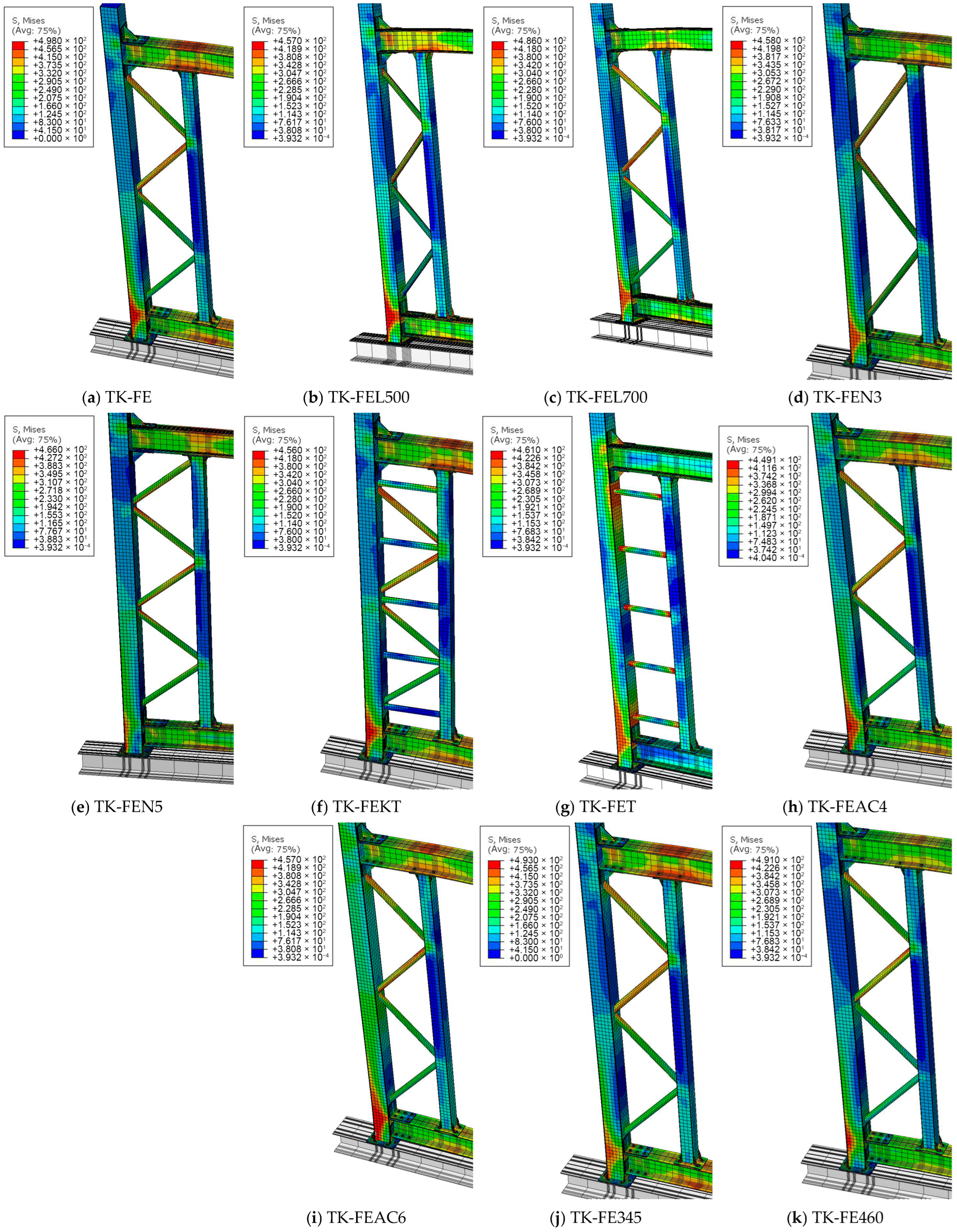
All models were analyzed under the same loading protocol and boundary conditions as those used in the experiment. The maximum drift ratio in the final loading cycle was θ = 4%. The Mises stress contours at the positive peak load for each model are presented in Figure 20.

5.3.1. Effect of Corner Column and End Column Spacing

From Figure 20a–c, the primary high-stress regions were located at the outer steel tube near the column base, the ends of truss diagonal bars, and the upper and lower ends of the end column. The outer steel tubes at the bases of all three models yielded, and the yielding areas were comparable. Pronounced stress concentration and local yielding developed at the diagonal bar ends in all models, with TK-FEL700 showing the largest yielding region, followed by TK-FE.
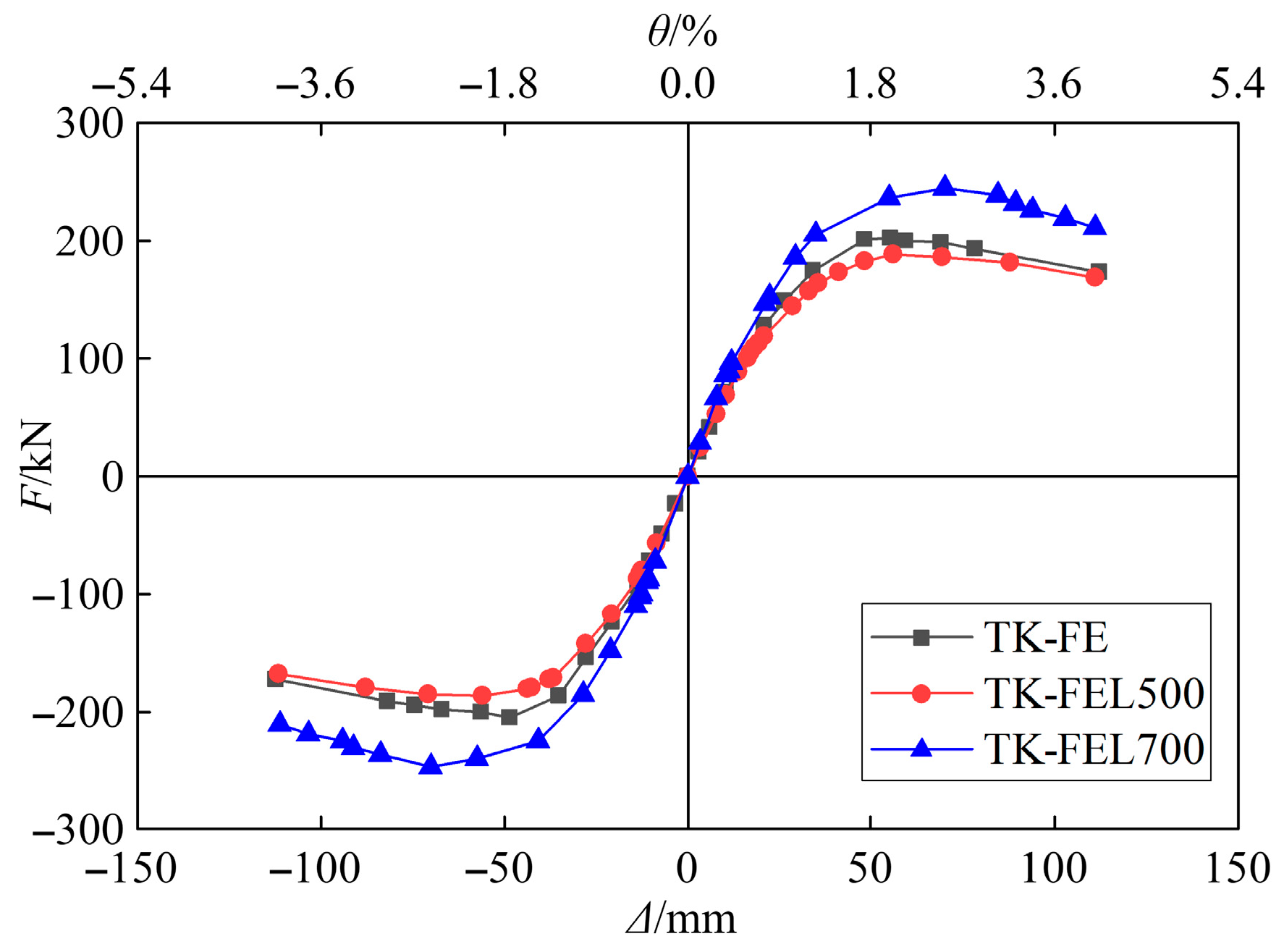
The FΔ skeleton curves of TK-FE, TK-FEL500 and TK-FEL700 are presented in Figure 21. The skeleton curves exhibited well-defined S-shaped trends. For Δ < 20 mm, the curves were nearly identical, whereas for Δ > 20 mm, TK-FEL700 demonstrated greater secant stiffness and load-carrying capacity. The yield loads of TK-FEL700 and TK-FEL500 were 1.23 and 0.92 times that of TK-FE, respectively, while their peak loads were 1.22 and 0.93 times that of TK-FE. These results indicate that increasing the spacing between the corner and end columns enhances the lateral load capacity of the frame. However, the slenderness ratio of the truss diagonal bars must be controlled in design to avoid instability, which could otherwise cause brittle structural failure.

5.3.2. Effect of Number of Truss Diagonal Bars

From Figure 20a,d,e, it was observed that increasing the number of truss diagonal bars reduced the yielding region on the outer side of the column base. The average stress in the diagonal bars decreased slightly, whereas the stress in the end column increased. The yielding areas at the ends of all diagonal bars remained comparable. In TK-FE, a high-stress concentration appeared at the top flange of the steel beam on the end column; therefore, the use of closed stiffeners (Figure 3) is recommended to prevent flange failure.
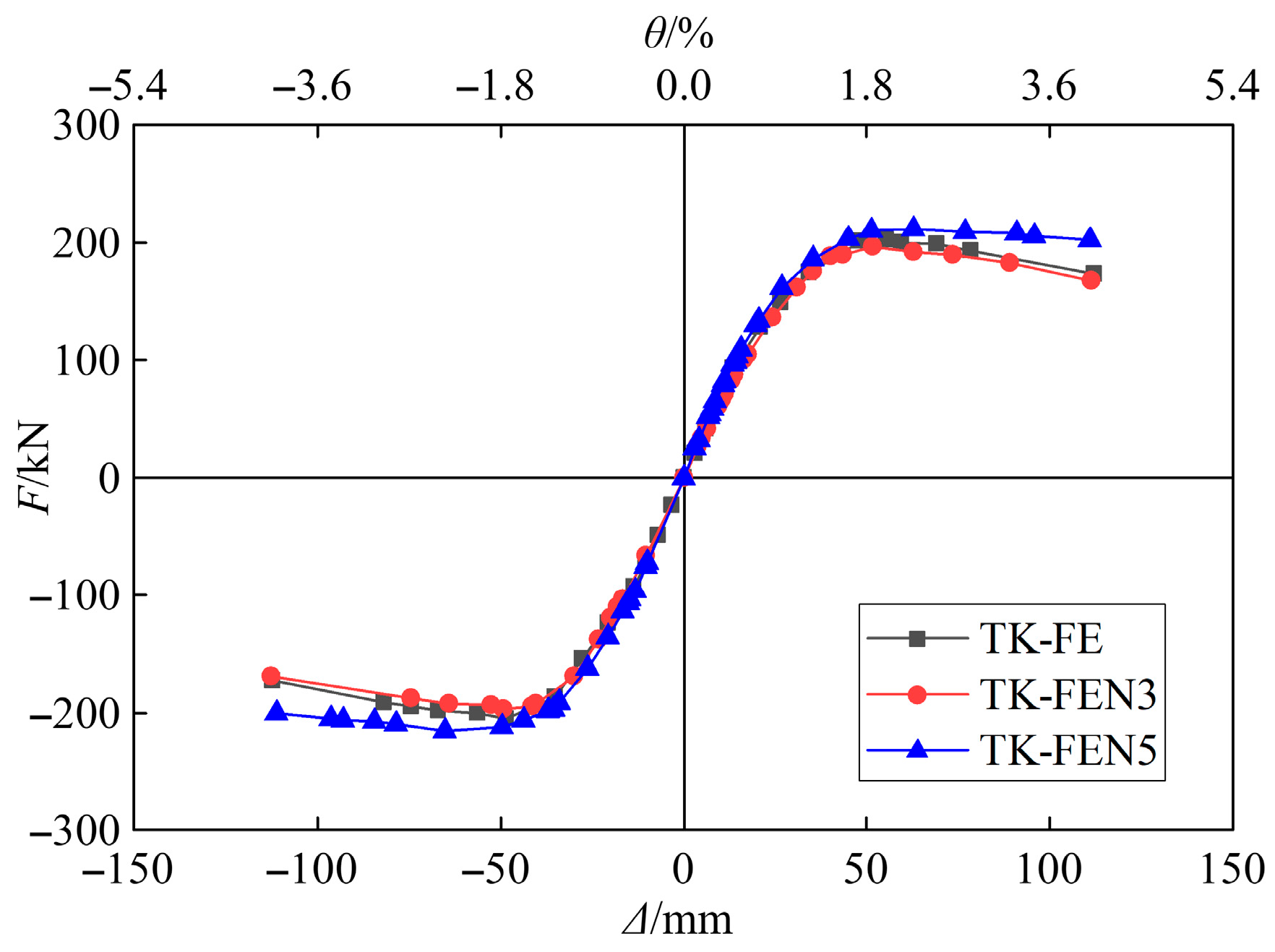
The FΔ skeleton curves of TK-FE, TK-FEN3 and TK-FEN5 are presented in Figure 22. For Δ < 40 mm, the skeleton curves of the three models were nearly identical. Beyond this point, the strength and stiffness of TK-FE and TK-FEN3 began to degrade, whereas TK-FEN5 exhibited slower strength degradation. These results indicate that increasing the number of truss diagonal bars does not substantially enhance the peak load but improves the structural ductility.

5.3.3. Effect of Joint Type

The horizontal truss web members in TK-FEKT experienced relatively low stress, while the diagonal web members carried stresses comparable to those in TK-FE (Figure 20a,f,g). Although TK-FEKT and TK-FET used more steel than TK-FE, the stress conditions in the columns did not improve significantly; in fact, the high-stress region in the corner column increased in TK-FET.
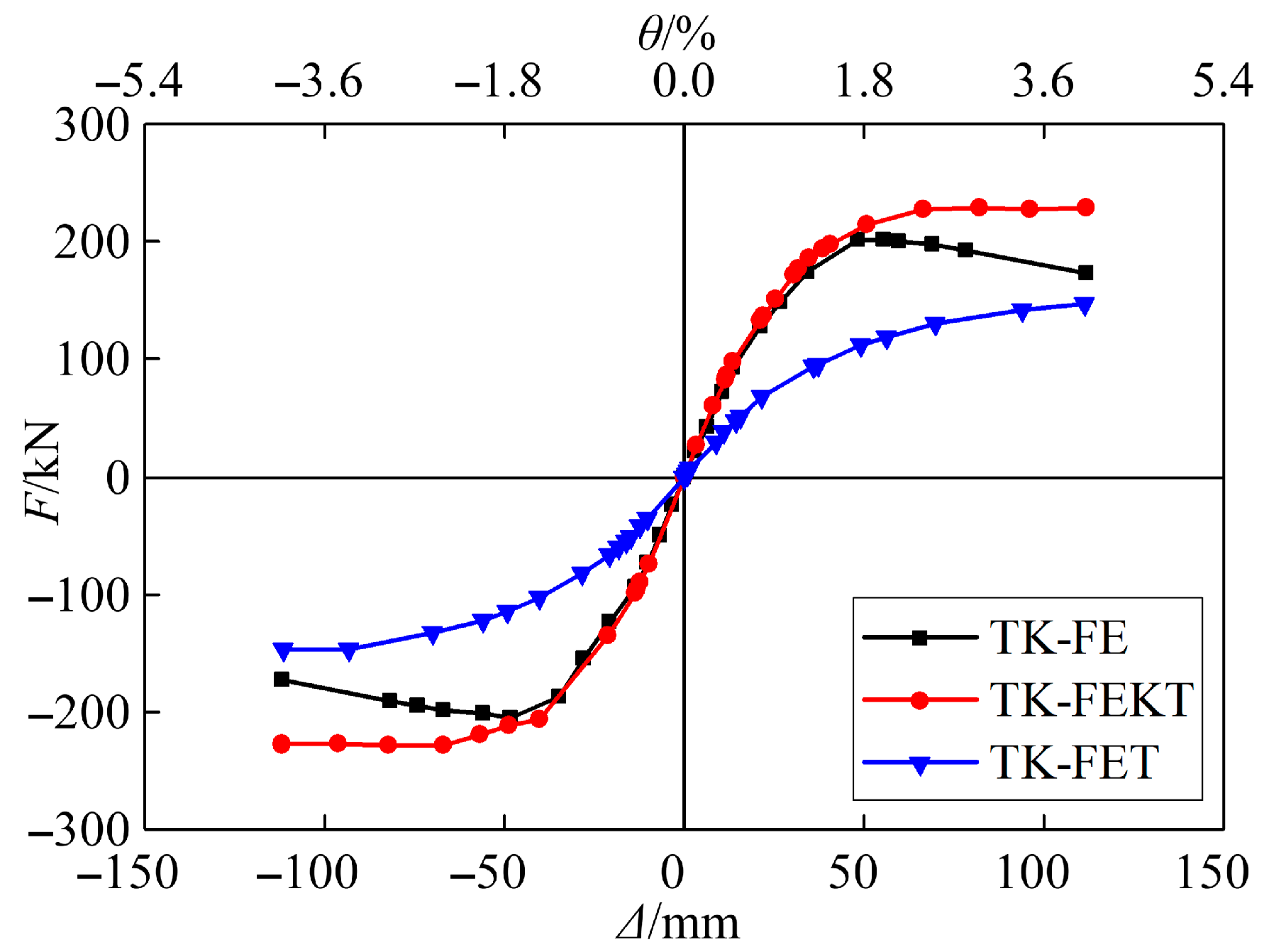
The FΔ skeleton curves of TK-FE, TK-FEKT and TK-FET are presented in Figure 23. The skeleton curves indicate that TK-FET exhibited reduced stiffness and load capacity. In contrast, TK-FEKT showed increases of 13.3% in yield load and 10.2% in peak load compared with TK-FE, with a relatively mild post-peak decline. Overall, the inclusion of horizontal truss web members provided only a slight improvement in load capacity and had minimal influence on the lateral stiffness of the structure.

5.3.4. Effect of Column Axial Compression Ratio

It was observed that increasing the column axial compression ratio u significantly elevated the overall stress level in the columns and expanded the yielding region at the column base, while the stress in the circular steel diagonal bars changed only slightly (Figure 20a,h,i).
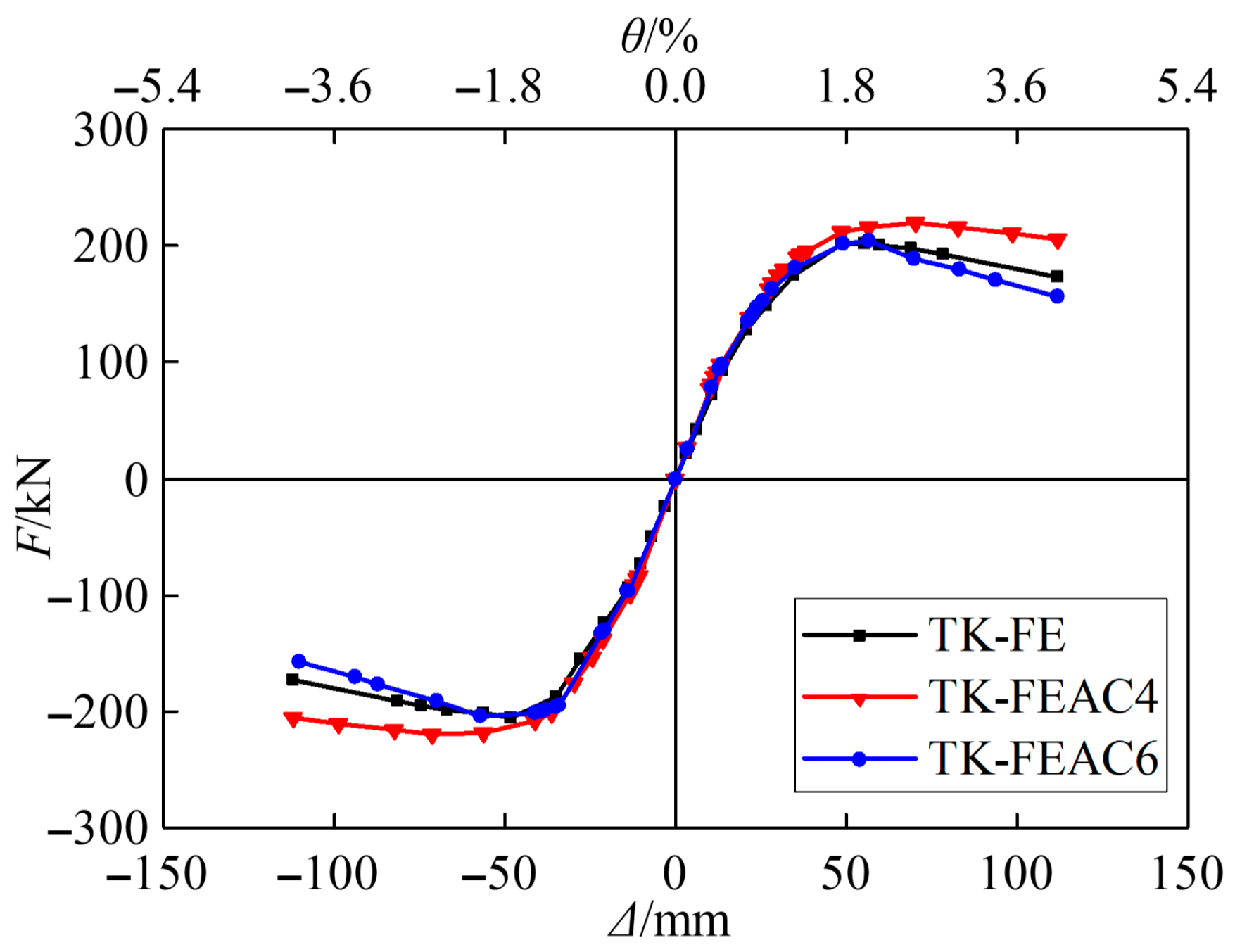
The FΔ skeleton curves of TK-FE, TK-FEAC4 and TK-FEAC6 are presented in Figure 24. According to the skeleton curves, the yield load and peak load of TK-FEAC4 (u = 0.4) were 8.6% and 4.9% higher than those of TK-FE (u = 0.28), respectively. In contrast, the yield and peak loads of TK-FEAC6 (u = 0.6) were essentially the same as those of TK-FE. These results show that the influence of axial compression ratio on structural behavior is relatively complex. For this frame type, increasing u from 0.28 to 0.4 enhanced concrete confinement and slightly increased lateral stiffness. When u was increased to 0.6, the skeleton curve of TK-FEAC6 nearly coincided with that of TK-FE during the initial loading stage; however, during the descending stage, the higher axial compression ratio accelerated stiffness and strength degradation, resulting in a lower ultimate load for TK-FEAC6 compared with TK-FE.

5.3.5. Effect of Steel Strength

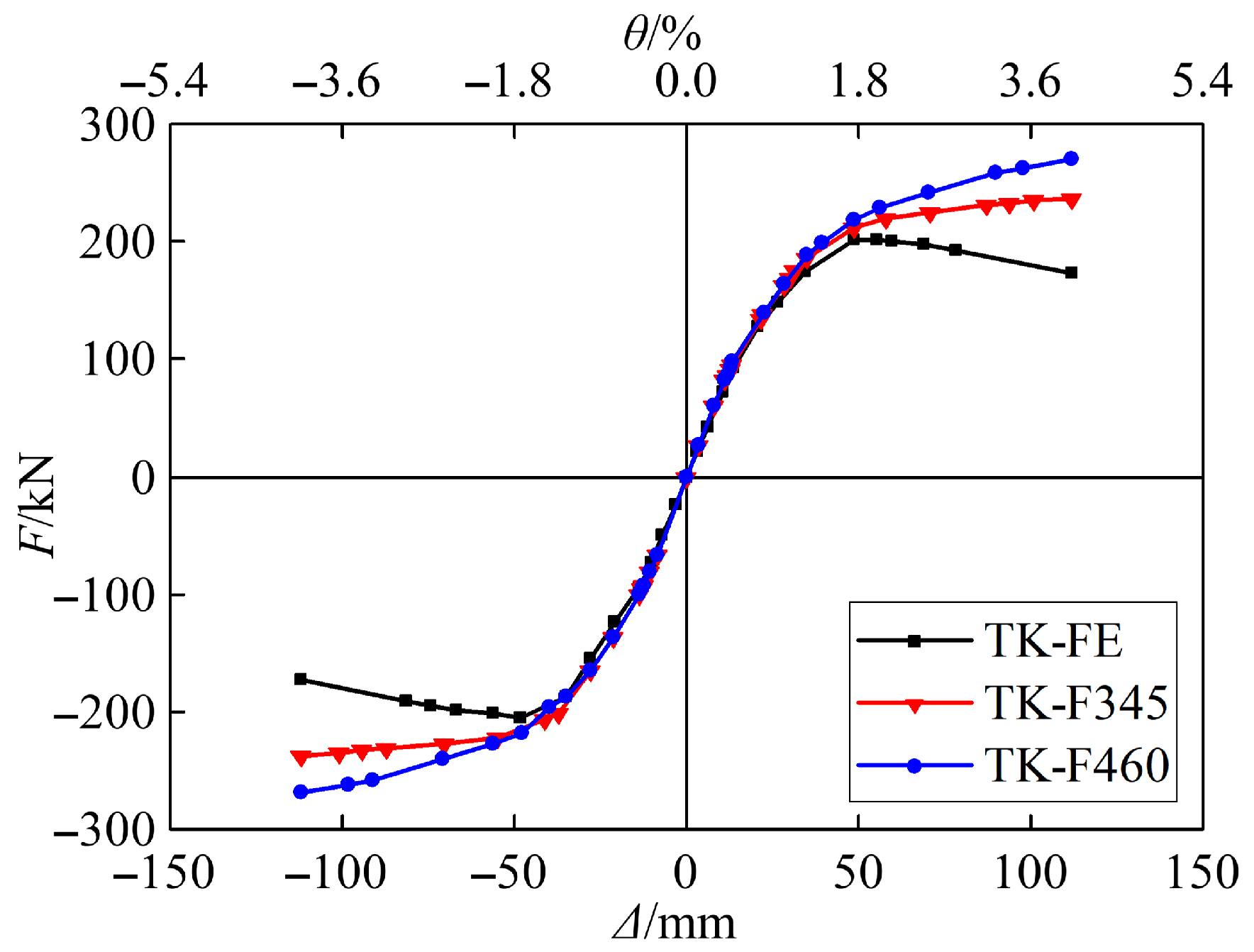
It was observed that increasing the steel strength reduced the extent of high-stress regions in the corner columns and enlarged the low-stress regions (Figure 20a,j,k). In particular, the stress level in the steel beam above the end column in TK-FE460 was markedly lower. The stress distributions in the truss diagonal bars and end columns were generally comparable across all three models, with yielding concentrated at the diagonal bar ends. The FΔ skeleton curves of TK-FE, TK-FE345 and TK-FE460 are presented in Figure 25. When θ reached 4%, the skeleton curves of TK-FE345 and TK-FE460 had not yet entered the descending branch, whereas TK-FE had already reached its failure criterion.

6. Conclusions and Recommendations

This study examined the hysteretic behavior of trussed CFSST composite column frames through experimental testing and numerical simulation. The main conclusions are summarized as follows:
(1)
Relative to an HK with comparable steel consumption, the TK achieved increases of 88.3% in yield load and 87.1% in peak load, along with markedly improved stiffness and cumulative energy dissipation, demonstrating a clear technical advantage.
(2)
Compared with a CFSST column frame, the TK required 41% more steel but achieved increases of 61% and 56% in yield load and peak load, respectively. Its initial and yield stiffnesses increased by 27% and 153%, respectively, and its cumulative energy dissipation and overall stiffness were significantly enhanced.
(3)
FE analysis indicated that: increasing the spacing between the corner and end columns improved the lateral stiffness and load capacity of the TK; the number of truss diagonal bars had minimal influence on the peak load; replacing K-type joints with KT-type or T-type joints increased the yield and peak loads by approximately 10% without affecting lateral stiffness; increasing the axial compression ratio produced modest gains in load capacity (within 10%), whereas excessively high ratios impaired structural performance; and steel strength exerted a substantial influence on load-carrying capacity and should be selected with due consideration of economic factors in design.
(4)
This study provides a structural system with high load-bearing capacity and regular indoor space for multi-story or low-rise frame residential buildings, and offers corresponding design basis and recommendations. However, it has limitations, such as the restricted number of specimens and the lack of investigation into multi-story frame models. Future research will address these aspects to achieve further refinement.

Author Contributions

Conceptualization, Z.Z. and P.Y.; methodology, Z.Z.; test, P.Y. and L.C.; investigation, Z.Z. and P.Y.; data curation, Z.Z. and P.Y.; writing—original draft preparation, P.Y. and L.C.; writing—review and editing, Z.Z. and P.Y.; funding acquisition, P.Y. and Z.Z. All authors have read and agreed to the published version of the manuscript.

Funding

This research was funded by Henan Science and Technology Department of China (No. 242102321151) and North China University of Water Resources and Electric Power (No. 202009006).

Data Availability Statement

The original contributions presented in the study are included in the article, further inquiries can be directed to the corresponding author.

Conflicts of Interest

The authors declare that the research was conducted in the absence of any commercial or financial relationships that could be construed as a potential conflict of interest.

Abbreviations

The following abbreviations are used in this manuscript:
CFSSTConcrete-filled square steel tube
CFSTConcrete-filled steel tube
FEFinite Element

References

  1. Han, L.-H.; Li, W.; Bjorhovde, R. Developments and advanced applications of concrete-filled steel tubular (CFST) structures: Members. J. Constr. Steel Res. 2014, 100, 211–228. [Google Scholar] [CrossRef]
  2. Rong, B.; Zhang, Y.; Sun, J.; Zhang, R. Experimental and numerical research on hysteretic behavior of CFST frame with diaphragm-through connections. J. Build. Eng. 2022, 45, 103529. [Google Scholar] [CrossRef]
  3. Zheng, Y.; Zhang, L.; Cai, J.; Lin, Y. Flexural behavior and design of stiffened and multi-cell cross-shaped CFST members. J. Constr. Steel Res. 2024, 220, 108870. [Google Scholar] [CrossRef]
  4. Zheng, Y.; Zeng, S. Design of L-shaped and T-shaped concrete-filled steel tubular stub columns under axial compression. Eng. Struct. 2020, 207, 110262. [Google Scholar] [CrossRef]
  5. Zheng, Y.; Lin, Y.; Ma, S. Axial compressive behavior of stiffened and multi-cell cross-shaped CFST stub columns. J. Constr. Steel Res. 2024, 213, 108399. [Google Scholar] [CrossRef]
  6. Zheng, Y.; Zeng, S. Flexural behaviour of stiffened and multi-cell L-shaped CFSTs considering different loading angles. J. Constr. Steel Res. 2021, 178, 106520. [Google Scholar] [CrossRef]
  7. Liu, X.; Xu, C.; Liu, J.; Yang, Y. Research on special-shaped concrete-filled steel tubular columns under axial compression. J. Constr. Steel Res. 2018, 147, 203–223. [Google Scholar] [CrossRef]
  8. Xiong, Q.; Chen, Z.; Kang, J.; Zhou, T.; Zhang, W. Experimental and finite element study on seismic performance of the LCFSTD columns. J. Constr. Steel Res. 2017, 137, 119–134. [Google Scholar] [CrossRef]
  9. Xiong, Q.; Chen, Z.; Zhang, W.; Du, Y.; Zhou, T.; Kang, J. Compressive behaviour and design of L-shaped columns fabricated using concrete-filled steel tubes. Eng. Struct. 2017, 152, 758–770. [Google Scholar] [CrossRef]
  10. Zhou, T.; Yang, Z.; Chen, Z.; Yu, Y. Seismic behavior of connections between H-beams and L-shaped column composed of concrete-filled steel tube mono-columns connected by double vertical plates. J. Constr. Steel Res. 2022, 198, 107513. [Google Scholar] [CrossRef]
  11. Wu, L.; Han, G.; Oluwadahunsi, S.; Sun, Y. Compressive capacity of cruciform-shaped concrete-filled steel tubes. Structures 2024, 69, 107592. [Google Scholar] [CrossRef]
  12. Zhang, W.; Li, G.; Xiong, Q.; Gui, H. Seismic behavior of wide-limb special-shaped columns composed of concrete-filled steel tubes. J. Constr. Steel Res. 2023, 205, 107887. [Google Scholar] [CrossRef]
  13. Liu, W.-H.; Wang, X.; Guo, Y.-L.; Tian, Z.-H.; Li, J.-Y.; Bai, W.-H. Experimental and numerical study of L-shaped irregularly concrete-filled steel tube columns under axial compression and eccentric compression. J. Build. Eng. 2024, 84, 108572. [Google Scholar] [CrossRef]
  14. Zhou, Y.; Lei, H. Experimental and theoretical study on the eccentric compression performance of novel L-shaped composite columns composed of HGM-filled square steel tubes. Structures 2025, 75, 108728. [Google Scholar] [CrossRef]
  15. Alatshan, F.; Osman, S.A.; Hamid, R.; Mashiri, F. Stiffened concrete-filled steel tubes: A systematic review. Thin Walled Struct. 2020, 148, 106590. [Google Scholar] [CrossRef]
  16. Hu, C.; Wang, Y.; Cheng, R.; Luo, J.; Gong, M. Design of improved multi-cell L-shaped CFST columns under compression and bending. Structures 2024, 68, 107194. [Google Scholar] [CrossRef]
  17. Zuo, Z.-L.; Cai, J.; Chen, Q.-J.; Liu, X.-P.; Yang, C.; Mo, T.-W. Performance of T-shaped CFST stub columns with binding bars under axial compression. Thin Walled Struct. 2018, 129, 183–196. [Google Scholar] [CrossRef]
  18. JGJ 149-2017; Technical Specification for Concrete Structures with Specially Shaped Columns. China Architecture & Building Press: Beijing, China, 2017.
  19. Zhou, T.; Xu, M.; Wang, X.; Chen, Z.; Qin, Y. Experimental study and parameter analysis of L-shaped composite column under axial loading. Int. J. Steel Struct. 2015, 15, 797–807. [Google Scholar] [CrossRef]
  20. Xu, M.; Zhou, T.; Chen, Z.; Li, Y.; Bisby, L. Experimental study of slender LCFST columns connected by steel linking plates. J. Constr. Steel Res. 2016, 127, 231–241. [Google Scholar] [CrossRef]
  21. Liang, Z.-S.; Han, L.-H. Trussed concrete-filled steel tubular hybrid structures subjected to axial compression: Performance and design calculation. Eng. Struct. 2024, 302, 117465. [Google Scholar] [CrossRef]
  22. Liang, Z.-S.; Han, L.-H.; Hou, C. Trussed square concrete-filled steel tubular hybrid structures subjected to axial compression. J. Constr. Steel Res. 2023, 211, 108171. [Google Scholar] [CrossRef]
  23. Zheng, L.-Q.; Li, G.-H.; Zhou, J.-Z.; Wang, Z.-Z. Behavior of three-chord concrete-filled steel tube built-up columns subjected to eccentric compression. J. Constr. Steel Res. 2021, 177, 106435. [Google Scholar] [CrossRef]
  24. Liang, Z.-S.; Han, L.-H. Performance of trussed concrete-filled steel tubular (CFST) hybrid structures subjected to eccentric compression. Eng. Struct. 2025, 334, 120068. [Google Scholar] [CrossRef]
  25. Liang, Z.-S.; Han, L.-H.; Wang, P. Performance and calculation of trussed concrete-filled steel tubular (CFST) hybrid structures subjected to bending. Eng. Struct. 2025, 325, 119478. [Google Scholar] [CrossRef]
  26. Kong, W.; Zhou, W.; Chen, L.; Liao, Q.; Zhu, Y.; Chen, Y. Flexural performance of steel fiber reinforced concrete filled stainless steel tubular trusses. Compos. Struct. 2023, 303, 116266. [Google Scholar] [CrossRef]
  27. Liu, X.; Chen, Z.; Du, Y.; Amer, M.; Zhang, Q.; Li, Y.; Chen, J. Experimental and theoretical studies on lateral behavior of prefabricated composite concrete-filled steel tubes truss column. Structures 2024, 66, 106920. [Google Scholar] [CrossRef]
  28. Amer, M.; Chen, Z.; Du, Y.; Kang, S.; Mashrah, W.A.H. Experimental and numerical investigations on seismic behaviors of prefabricated composite CFT column V/Z-shaped truss. J. Constr. Steel Res. 2025, 227, 109364. [Google Scholar] [CrossRef]
  29. Pei, Q.; Wu, C.; Cheng, Z.; Ding, Y.; Guo, H. The Seismic performance of new self-centering beam-column joints of conventional island main buildings in nuclear power plants. Materials 2022, 15, 1704. [Google Scholar] [CrossRef]
  30. Pei, Q.; Qi, P.; Xue, Z.; Zhong, J.; Zhang, Y. Design and experimental analysis of seismic isolation bearings for nuclear power plant containment structures. Buildings 2023, 13, 2366. [Google Scholar] [CrossRef]
  31. Hu, S.; Liu, S.; Zeng, S.; Zhang, B.; Xu, Z. Investigating seismic performance of a novel self-centering shear link in EBF utilizing experimental and numerical simulation. J. Constr. Steel Res. 2025, 224, 109129. [Google Scholar] [CrossRef]
  32. Zhang, Z.; Chen, L.; Cai, L.; Li, Y.; Mohd Yusoff, Z. An experimental evaluation of steel beam-HSST/CFSST column connection with varying joint configurations. Buildings 2025, 15, 3774. [Google Scholar] [CrossRef]
  33. GB/T 228.1-2021; Metallic Materials—Tensile Testing—Part 1: Method of Test at Room Temperature. China Planning Press: Beijing, China, 2021.
  34. GB/T 50107-2010; Standard for Evaluation of Concrete Compressive Strength. China Architecture & Building Press: Beijing, China, 2010.
  35. JGJ 82-2011; Technical Specification for High Strength Bolt Connections of Steel Structures. China Planning Press: Beijing, China, 2011.
  36. JGJ/T 101-2015; Specification for Seismic Test of Buildings. China Architecture & Building Press: Beijing, China, 2015.
  37. Ding, F.-X.; Chen, Y.-B.; Wang, L.; Pan, Z.-C.; Li, C.-Y.; Yuan, T.; Deng, C.; Luo, C.; Yan, Q.-W.; Liao, C.-B. Hysteretic behavior of CFST column-steel beam bolted joints with external reinforcing diaphragm. J. Constr. Steel Res. 2021, 183, 106729. [Google Scholar] [CrossRef]
  38. GB 50936-2014; Technical Code for Concrete Filled Steel Tubular Structures. China Architecture & Building Press: Beijing, China, 2014.
  39. GB 50011-2010; 2016 ed. Code for Seismic Design of Buildings. China Architecture & Building Press: Beijing, China, 2016.
  40. Rong, B.; Feng, C.; Zhang, R.; Liu, S.; You, G. Studies on performance and failure mode of T-shaped diaphragm-through connection under monotonic and cyclic loading. J. Mech. Mater. Struct. 2018, 13, 1–15. [Google Scholar] [CrossRef]
  41. Han, L. Concrete-Filled Steel Tubular Structures: Theory and Practice; Science Press: Beijing, China, 2022. (In Chinese) [Google Scholar]
  42. Yang, Z.; Cao, W.; Qiao, Q.; Zhang, J. Experimental and numerical study on the prefabricated double L-shaped beam-column joint with triangular stiffener. J. Build. Eng. 2023, 69, 106315. [Google Scholar] [CrossRef]
  43. GB 50010-2010; 2015 ed. Code for Design of Concrete Structures. China Architecture & Building Press: Beijing, China, 2015.
  44. Ruan, B.; Li, J.; Gan, Y.; Huang, J. Mesoscopic simulation of the mechanical behaviour of foam concrete subjected to large compressive deformation. Constr. Build. Mater. 2024, 418, 135367. [Google Scholar] [CrossRef]
  45. Liu, Y.; Zhao, Z.; Amin, M.N.; Ahmed, B.; Khan, K.; Arifeen, S.U.; Althoey, F. Foam concrete for lightweight construction applications: A comprehensive review of the research development and material characteristics. Rev. Adv. Mater. Sci. 2024, 63, 20240022. [Google Scholar] [CrossRef]
  46. Liu, M.; Zhang, H.; Lv, B.; Du, C.; Wang, J. Investigation on the yield and failure criterion of foamed concrete. J. Build. Eng. 2024, 84, 108604. [Google Scholar] [CrossRef]
  47. Chang, X.; Wei, Y.; Yun, Y. Analysis of steel-reinforced concrete-filled-steel tubular (SRCFST) columns under cyclic loading. Constr. Build. Mater. 2012, 28, 88–95. [Google Scholar] [CrossRef]
  48. Dong, H.; Qin, J.; Cao, W.; Zhao, L. Seismic behavior of circular CFST columns with different internal constructions. Eng. Struct. 2022, 260, 114262. [Google Scholar] [CrossRef]
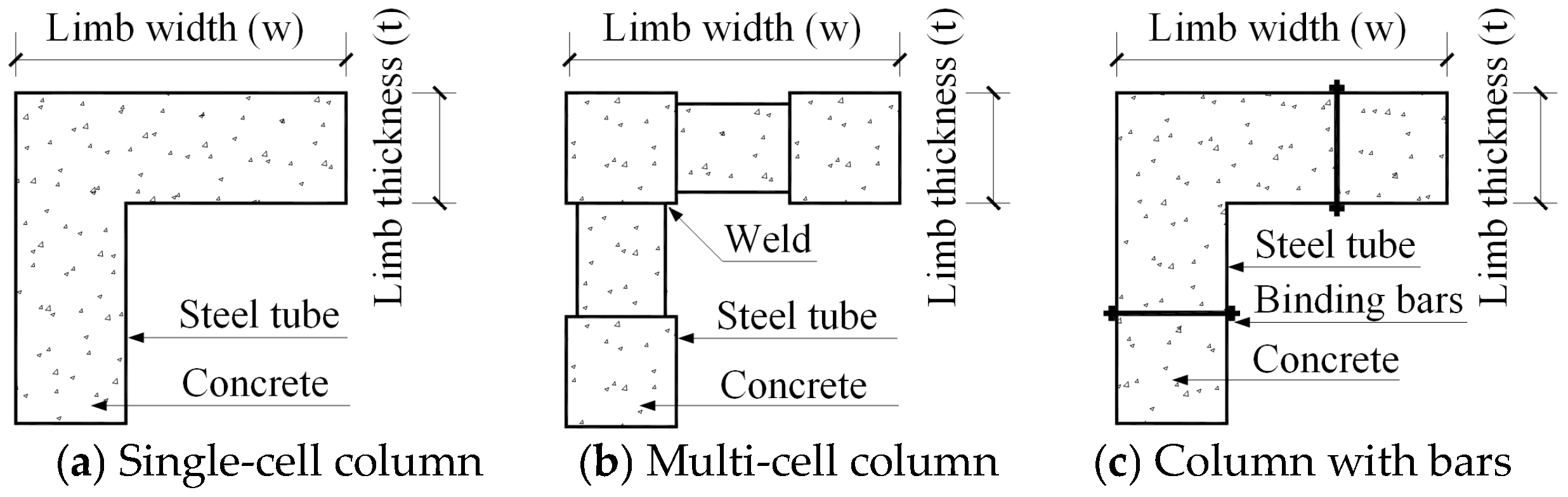
Figure 1. CFST columns with irregular cross sections.
Buildings 16 00114 g001
Figure 2. L-shaped columns formed by multiple CFSST columns and connectors: (a) Stiffened-steel-plate-connected L-shaped CFST composite column. (b) Perforated stiffened-steel-plate-connected L-shaped CFST composite column. (c) Trussed CFSST composite column.
Buildings 16 00114 g002
Figure 3. Trussed CFSST composite column frame.
Buildings 16 00114 g003
Figure 4. Specimen dimensions.
Buildings 16 00114 g004
Figure 5. Fabrication of specimen TK.
Buildings 16 00114 g005
Figure 6. Specimen loading setup.
Buildings 16 00114 g006
Figure 7. Loading protocol.
Buildings 16 00114 g007
Figure 8. Failure of specimen HK.
Buildings 16 00114 g008
Figure 9. Failure of specimen FK.
Buildings 16 00114 g009
Figure 10. Failure of specimen TK.
Buildings 16 00114 g010
Figure 11. Hysteresis curves of specimens.
Buildings 16 00114 g011
Figure 12. Skeleton curves and characteristic point identification.
Buildings 16 00114 g012
Figure 13. Stiffness degradation curves.
Buildings 16 00114 g013
Figure 14. Energy dissipation indicators.
Buildings 16 00114 g014
Figure 15. TK-FE model details.
Buildings 16 00114 g015
Figure 16. Material constitutive relationships.
Buildings 16 00114 g016
Figure 17. Mises stress contours of TK-FE: (a) Steel beam stress concentration at end column top; (b) Beam bottom flange deformation; (c) Steel tube yielding at corner column bottom; (d) Concrete plastic damage in columns.
Buildings 16 00114 g017
Figure 18. Comparison of FΔ curves for TK and TK-FE.
Buildings 16 00114 g018
Figure 19. Construction and dimensions of illustrated FE models.
Buildings 16 00114 g019
Figure 20. Mises stress contours of FE models.
Buildings 16 00114 g020
Figure 21. FΔ skeleton curves of TK-FE, TK-FEL500 and TK-FEL700.
Buildings 16 00114 g021
Figure 22. FΔ skeleton curves of TK-FE, TK-FEN3 and TK-FEN5.
Buildings 16 00114 g022
Figure 23. FΔ skeleton curves of TK-FE, TK-FEKT and TK-FET.
Buildings 16 00114 g023
Figure 24. FΔ skeleton curves of TK-FE, TK-FEAC4 and TK-FEAC6.
Buildings 16 00114 g024
Figure 25. FΔ skeleton curves of TK-FE, TK-FE345 and TK-FE460.
Buildings 16 00114 g025
Table 1. Specimen parameters.
SpecimenFrame Column TypeColumn Section (mm)Column Steel Weight (kg)
HKH-shaped steel columnHW 175 × 175 × 7.5 × 11251.2
FKCFSST column☐ 150 × 150 × 6173.5
TKCFSST columnCorner column 150 × 150 × 6244.9
End column 100 × 100 × 4
Diagonal bar Ø50 × 4
Table 2. Mechanical properties of steel.
Steel TypeDiameter/Thickness t (mm)Yield Strength fy (MPa)Ultimate Strength fu (MPa)Elastic Modulus E (GPa)Elongation δ (%)
CFSST column square tube wall6373.0444.3218.221.5
Beam flange9282.7431.0195.116.1
Beam web6296.0453.0202.230.7
Angle connector plates8318.0468.0202.919.1
H-shaped steel column flange11270.0418.0202.727.5
H-shaped steel column web7.5360.0460.0204.710.0
CFSST corner column wall (in composite column)6373444.3207.621.5
CFSST end column wall (in composite column)4414.0552.0204.827.3
Hollow circular steel tube wall4366.3424.3231.218.6
Table 3. Characteristic points of specimen skeleton curves.
SpecimenLoading DirectionYield PointPeak PointUltimate Point
Fy (kN)θy (%)Fp (kN)θp (%)Fu (kN)θu (%)
HKPositive89.41.78103.53.3499.13.52
Negative101.31.79112.13.47102.23.48
FKPositive109.11.52132.52.81122.63.98
Negative113.41.46125.92.34113.73.50
TKPositive169.81.36196.21.71164.22.49
Negative188.91.49207.51.62184.93.07
Table 4. Secant stiffnesses at characteristic skeleton points.
SpecimenInitial Stiffness K0Yield Secant Stiffness KyPeak Secant Stiffness Kp
(kN/mm)(kN/mm)(kN/mm)
Measured ValueRelative ValueMeasured ValueRelative ValueMeasured ValueRelative Value
HK5.91.001.271.001.361.00
FK5.720.972.161.701.160.85
TK7.281.235.474.313.492.57
Table 5. Deformation capacity of specimens.
SpecimenYield PointPeak PointUltimate Point
θy (%)Relative Valueθp (%)Relative Valueθu (%)Relative Value
HK1.791.003.411.003.501.00
FK1.490.832.580.763.741.07
TK1.430.801.670.492.780.79
Table 6. Finite element model parameters.
Model IDDifference from TK-FE
TK-FEL500Distance between the end column and angle column set to 500 mm
TK-FEL700Distance between the end column and angle column set to 700 mm
TK-FEN3Number of truss diagonal bars set to 3
TK-FEN5Number of truss diagonal bars set to 5
TK-FEKTTruss joint type changed to KT type
TK-FETTruss joint type changed to T type
TK-FEAC4Axial compression ratio set to 0.4
TK-FEAC6Axial compression ratio set to 0.6
TK-FE345Steel grade changed to Q345
TK-FE460Steel grade changed to Q460
Disclaimer/Publisher’s Note: The statements, opinions and data contained in all publications are solely those of the individual author(s) and contributor(s) and not of MDPI and/or the editor(s). MDPI and/or the editor(s) disclaim responsibility for any injury to people or property resulting from any ideas, methods, instructions or products referred to in the content.