Skip to Content
BuildingsBuildings
  • Article
  • Open Access

24 February 2025

Analysis of Development Trends and Associations in Intelligent Construction of Chinese Corporations


,
,
,
,
,
and
1
College of Architecture and Civil Engineering, Beijing University of Technology, Beijing 100124, China
2
China Construction Industry Association, Shijiazhuang 050000, China
*
Author to whom correspondence should be addressed.

Abstract

Intelligent construction, as a crucial driving force for the transformation and upgrading of the construction industry, is currently reshaping the production processes and management models throughout the entire life cycle of buildings. Nevertheless, construction enterprises are confronted with issues, such as great difficulties in system integration, complexity in multi-field collaboration, mismatch of technological requirements, and disharmony between standards and management processes during the process of promoting intelligent construction, which have restricted its in-depth application. This paper adopts a combination of questionnaire surveys and text mining methods to accurately gain insights into the actual situation of the application of intelligent construction in Chinese corporations. Cite Space is utilized to conduct keyword co-occurrence and clustering analyses and to construct the correlation atlas of the intelligent construction system, which are used to conduct in-depth analyses of its development trends and internal correlations. The research results demonstrate that aspects, such as building information modeling (BIM), smart construction sites, intelligent equipment, and prefabricated construction, exhibit significant development trends in the field of intelligent construction. Moreover, the precise matching between technology and the business needs of enterprises is of vital importance for the efficient implementation of intelligent construction. This research provides clear technological and management paths for intelligent construction in Chinese corporations, aiming to promote the standardization process of intelligent construction for enterprises and the industry and to facilitate the digital transformation and upgrading of the construction industry.

1. Introduction

Intelligent construction is a new construction model that deeply integrates the new generation of information technology with engineering construction. As the core driving force for the development of the construction industry, it is changing the production methods, management models, and layout of the entire industrial chain of the industry at an unprecedented speed. In July 2020, thirteen ministries and commissions including the Ministry of Housing and Urban–Rural Development of the People’s Republic of China (MOHURD) jointly issued the “Guiding Opinions on Promoting the Coordinated Development of Intelligent construction and Construction Industrialization” [1]. As the first intelligent construction-related policy released at the central level, it is planned in the document that by 2025, the policy system and industrial system for the coordinated development of intelligent construction and building industrialization in China will be basically established, and the levels of building industrialization, digitalization, and intellectualization will be significantly improved. In October 2022, the MOHURD released the “Notice on Announcing the Pilot Cities for Intelligent construction” [2], listing 24 cities including Beijing, Tianjin, and Xiong’an New Area as the pilot cities for intelligent construction. Subsequently, local governments responded actively, and all formulated implementation work plans for intelligent construction that were adapted to regional development, thus providing a powerful policy guarantee for the implementation of intelligent construction.
Currently, enterprise intelligent construction is in a critical period of rapid development and profound transformation. Various construction enterprises have successively increased their research and development investments in the field of intelligent construction to promote the application and expansion of intelligent technologies throughout the entire life cycle of buildings. However, in the process of promoting intelligent construction, enterprises are faced with core issues, such as high complexity and great difficulty in integrating multiple systems, complexity in multi-field collaboration, the mismatch of multi-level technological requirements, and the lack of coordination and unification between technical standards and management processes. It is difficult to achieve in-depth integration and efficient collaboration of intelligent technologies, which has seriously restricted the in-depth development and extensive application of enterprise intelligent construction. With the introduction of relevant policies guiding the development of intelligent construction at the national level and by regional governments, enterprises in various regions are gradually formulating and improving their own enterprise intelligent construction systems with distinct characteristics. Therefore, by thoroughly mining and analyzing a large amount of textual data, such as literature materials, policy and standard documents, and industry reports, we can accurately grasp the technological hotspots, frontier trends in the field of enterprise intelligent construction, and correlative relationships among technologies to provide scientific and precise bases and references for enterprises’ technological R&D directions, strategic planning, and decision-making.
As a representative of pioneer enterprises in the digital transformation of China’s construction industry, Beijing Construction Engineering Group (BCEG) possesses sound foundational conditions for intelligent construction and has achieved intelligent management and application throughout the entire process of project construction. Moreover, it is continuously enhancing its intelligent construction capabilities. At the present stage, in accordance with its own situation and development requirements, the BCEG has put forward the concept of enterprise-level intelligent construction. By aiming at creating efficiency, taking industrialization as the main line, basing on standardization, centering on construction technologies, and using informatization as the means, it realizes data generation on the virtual side through BIM technology and conducts simulation and data hosting. Through intelligent equipment, feedback on the real world is achieved. The construction work on a site is transferred to a factory for completion, and the factory’s capabilities are transplanted to the construction site. Thereby, the new generation of information technology and construction technology are deeply integrated, enriching and extending the construction capabilities and forming a new construction model that improves the quality of construction products. Meanwhile, the continuous investment and innovative practices of the group in intelligent construction have not only formed technical support and an innovative driving force within the enterprise but also gained high recognition from the industry. Consequently, this paper takes the BCEG as a practical case of intelligent construction for investigation and research. Therefore, this study conducts survey research based on the development practices of intelligent construction at the BCEG.
Scholars at home in China have carried out in-depth exploration and practice on various aspects, such as intelligent construction technologies, theories, and methods, and have formed a rich theoretical system and practical experience. Fan Q et al. [3] discussed the definition and main characteristics of intelligent construction and put forward the closed-loop control theory of perception, analysis, control, and continuous optimization in intelligent construction. Liu Z et al. [4] analyzed technologies such as BIM and the Industrial Internet of Things in intelligent construction and designed an intelligent construction system constructed around the whole life cycle of buildings. Wang G et al. [5] analyzed the overall development of intelligent construction, summarized the key technologies, typical application scenarios, and industrial classifications of intelligent construction, and constructed the technical system or industrial system of intelligent construction. Min Q et al. [6] proposed the all-factor digital and intelligent innovation system of “intelligent construction and intelligent transportation”, focusing on the field of transportation infrastructure, and elaborated, in detail, on the construction concepts in multiple dimensions and the whole process, such as design, data collaboration, prefabrication, and intelligent supervision. Yao J et al. [7] conducted in-depth research on the implementation path and innovative applications of an intelligent construction system in the transportation infrastructure industry. Qi C et al. [8] focused on the research of the intelligent construction technology system for railway prefabricated bridges and put forward an intelligent construction system that adapts to the characteristics of railway construction. Wang W et al. [9] discussed the compilation requirements of the high-speed railway intelligent construction standard system, carried out structural analysis on the high-speed railway intelligent construction standard system, proposed the architecture of the high-speed railway intelligent construction standard system, and further clarified the formulation contents of the standard system framework and each part. He X et al. [10] discussed the high-speed railway intelligent construction standard system in China, providing in-depth analysis and suggestions for the standardization of high-speed railway intelligent construction. Wu J et al. [11] proposed an enterprise-level intelligent construction implementation system with the new generation of information technology as the underlying support and “five key technologies—seven centers—four business domains” as the central line, providing a specific implementation framework for the construction of the intelligent construction system of construction enterprises.
In recent decades, intelligent construction has garnered significant attention worldwide, with numerous international studies exploring its theoretical foundations, technological applications, and industry implications. These studies provide valuable insights into the evolution and future directions of intelligent construction, offering a global perspective that complements domestic research. Building information modeling (BIM) has been a cornerstone of intelligent construction globally. Eastman et al. [12] highlighted BIM’s potential to revolutionize construction workflows by enabling collaborative design, construction, and operations through digital representations of physical and functional characteristics of places. BIM’s integration with emerging technologies, such as the Internet of Things (IoT) and artificial intelligence (AI), has further amplified its impact. For instance, Khemlani [13] discussed how BIM combined with IoT could facilitate the real-time monitoring and management of construction sites, enhancing efficiency and safety. The application of robotics in construction has also been a focal point of international research. Koskela and Vaurio [14] explored the use of automation and robotics to address labor shortages and improve precision in construction tasks. More recently, Liu et al. [15] examined the deployment of construction robots in high-rise building projects, demonstrating their ability to enhance productivity and reduce human error. These studies underscore the growing importance of robotic technology in shaping the future of intelligent construction. Prefabrication and modular construction have gained traction as key strategies for improving construction efficiency and sustainability. Teizer et al. [16] investigated the integration of prefabrication with BIM, showing how digital tools could optimize off-site manufacturing and on-site assembly processes. The combination of prefabrication and intelligent construction technologies has the potential to significantly reduce construction time and costs while maintaining high quality standards. International research has also emphasized the need for standardized frameworks to guide the implementation of intelligent construction technologies. Succar [17] proposed a BIM maturity framework to help organizations systematically adopt and integrate BIM into their operations. Similarly, the International Organization for Standardization (ISO) has developed standards to support the digital transformation of the construction industry. These frameworks provide essential guidance for enterprises seeking to adopt intelligent construction practices. Moreover, studies have explored the role of intelligent construction in promoting sustainable development. Chen et al. [18] analyzed how smart construction technologies could contribute to environmental, economic, and social sustainability in construction projects. The integration of intelligent construction with green building practices offers a pathway to achieving more sustainable and resilient built environments. In summary, international research on intelligent construction has covered a wide range of topics, from foundational technologies like BIM to innovative applications such as robotics and prefabrication. These studies highlight the transformative potential of intelligent construction and provide valuable lessons for enterprises and policymakers worldwide.
Despite the endeavors in the field of intelligent construction, a notable research void persists. The existing studies predominantly concentrate on constructing intelligent construction systems from holistic, partial, or object-oriented perspectives. These works have indeed propelled the development of intelligent construction to some extent. However, there is a dearth of research that comprehensively analyzes the development priorities of intelligent construction from an enterprise’s vantage point while simultaneously considering the internal logical relationships among core elements. This lack of in-depth enterprise-centric research poses several challenges. It hinders a thorough understanding of the development trajectory of enterprise intelligent construction. Without such understanding, it becomes difficult to accurately identify business requirements. In turn, this affects the effective promotion of the application and expansion of intelligent construction technologies. Moreover, it is arduous to address the complex issues of integration and coordination across multiple systems, fields, and levels. Consequently, the efficiency of implementing intelligent construction in enterprises remains less than optimal. This situation highlights the urgency of filling this research gap to enhance the overall efficacy of intelligent construction in the corporate context, which is crucial for clarifying business needs, accelerating technological adoption, and streamlining operations in a multi-faceted construction environment.
This research hypothesizes that by combining the questionnaire survey method and text mining, it can accurately identify the key technologies and application scenarios of enterprise-level intelligent construction in China. Additionally, it assumes that there is a significant relationship between the identified technologies and business requirements, and through in-depth analysis, it can effectively evaluate their matching degree. Furthermore, it expects that the results can provide a reliable basis for proposing targeted thoughts and suggestions to achieve precise matching and optimization between intelligent construction technologies and business needs. This study breaks through the bottlenecks of traditional research methods, which are characterized by insufficient exploration of in-depth information and single-data integration, as well as the limitations of traditional analysis methods in revealing the correlations within the intelligent construction system. It explores the potential mechanisms by which technological innovation, changes in management models, and market demand jointly drive the development of intelligent construction and reveals the crucial role of non-linear correlations and interactive influences among various elements of intelligent construction in shaping the industry ecosystem. This research not only contributes to enriching and improving the theoretical framework and practical experience of the enterprise intelligent construction system, but it is also conducive to regulating the market order, eliminating technical barriers, and promoting the efficient application of intelligent construction technologies across the entire industry, thus contributing to the intelligent transformation and upgrading of the construction industry.

2. Methods

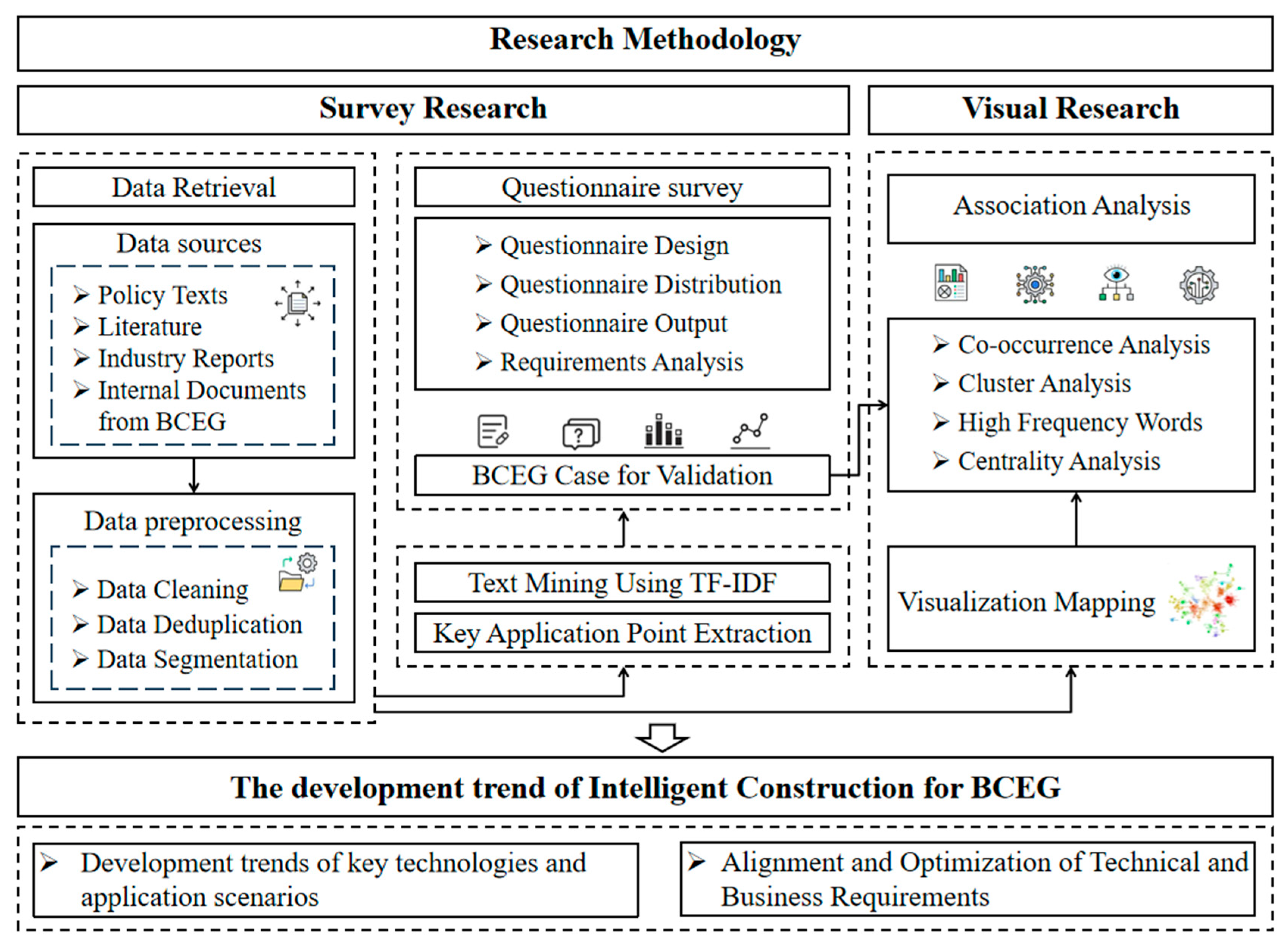
This section elaborates, in detail, the research roadmap for the development trend of enterprise intelligent construction and correlation analysis based on text mining. Specifically, the research contents and methods of this paper consist of two core parts, as shown in Figure 1.
Figure 1. Research roadmap.
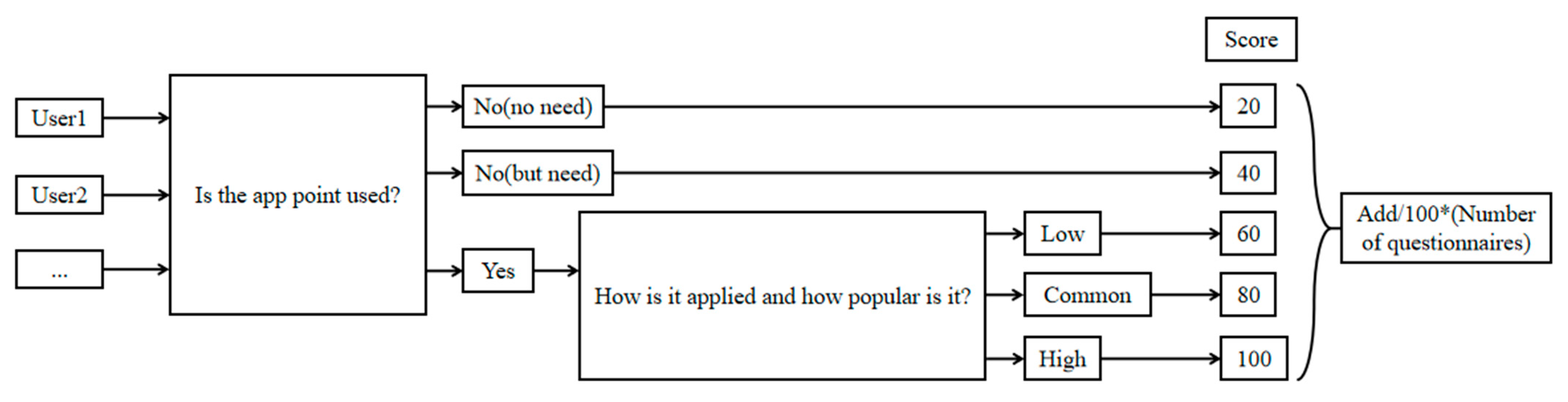
The first part of this paper aims to understand the current development status and trends of intelligent construction in Chinese corporations through multi-dimensional data collection and preprocessing, keyword extraction, and questionnaire survey analysis. The data are sourced from the relevant literature, policy and standard documents, and industry reports, as well as the internal data materials of Chinese construction corporations, to ensure the comprehensiveness and authority of the data. During the data preprocessing stage, operations such as cleansing, deduplication, and word segmentation were carried out, and then the data were integrated into a high-quality dataset. Subsequently, 138 key application points in the field of intelligent construction were extracted from the dataset by utilizing the TF-IDF method. Based on these 138 key application points, the design of the questionnaire was conducted from three aspects, i.e., the usage stage, the user, and the application situation, as well as the popularity degree. Finally, the questionnaire survey method was employed to conduct in-depth investigations on staff members in different positions within Chinese construction corporations from multiple aspects, aiming to understand the current development status, future trends, and the challenges and opportunities faced by intelligent construction.
The second part intends to deeply reveal the internal correlations and development laws within the enterprise’s intelligent construction system. By applying text analysis tools, like Cite Space, multi-angled correlational analyses, such as keyword co-occurrence and clustering, were carried out on the preprocessed text data. Statistics on high-frequency words, centrality, and other indicators were calculated. The analysis results are presented in the form of intuitive visual network diagrams, providing construction enterprises with a scientific and clear correlation map of the intelligent construction system. To ensure the robustness and reliability of the results, this research incorporated the BCEG case study as an empirical validation tool. Specifically, the BCEG case served as an example to test the effectiveness of the correlation analysis results obtained through text mining and keyword co-occurrence. By comparing the findings of the BCEG case with real-world data, the accuracy and relevance of the identified key application points and development trends were validated. This process was crucial for verifying the validity of the research findings and ensuring that they hold practical applicability for construction enterprises.
Additionally, the BCEG case played a critical role in the verification and validation of the internal correlations within the intelligent construction system. By applying this real-world case, the practical application of the identified key points and correlations within the intelligent construction domain was demonstrated. The results from the BCEG case further support the credibility and applicability of the research methodology, ensuring the validity of the correlations and trends identified through text mining and other data analysis techniques.

4. Association Analysis of Intelligent Construction System

4.1. Co-Occurrence Analysis

4.1.1. Co-Occurrence Network Construction

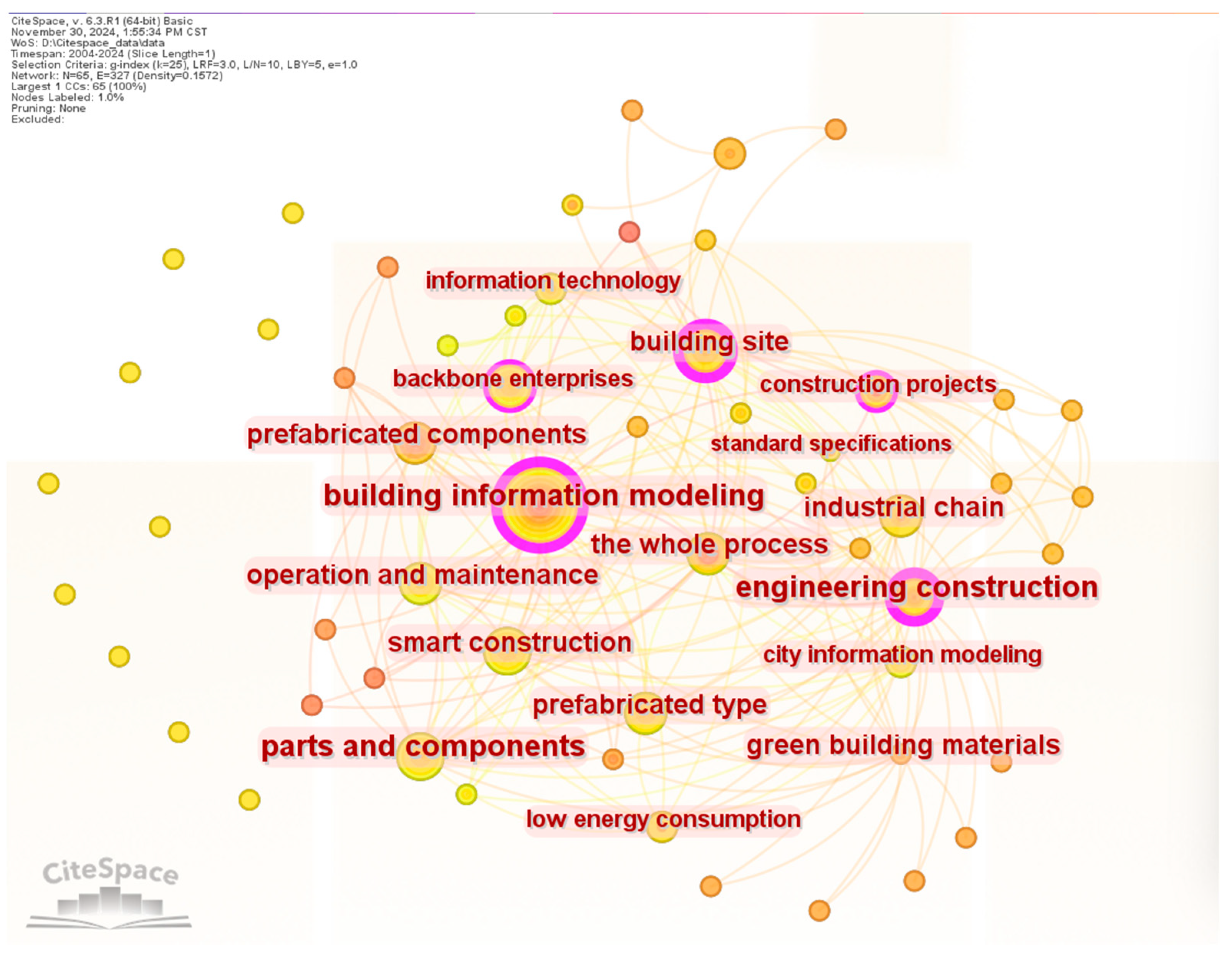
The co-occurrence network was constructed by performing format conversion on the preprocessed dataset to make it meet the text format requirements of Cite Space-6.3.1 software. During this process, the integrity and accuracy of the data were strictly verified to prevent information loss or errors. After importing the data into the software, analysis parameters were set, such as setting the time interval to be consistent with data retrieval, and appropriate keyword extraction algorithms were selected. Then, the keyword co-occurrence analysis function of Cite Space was used to construct a network map based on the co-occurrence frequencies of keywords in the text. In the visualized map, each keyword is represented by a node, and the size of the node is determined by the word frequency. The larger the node is, the higher the corresponding keyword’s word frequency is. The number of connections between nodes is the core indicator for measuring their centrality. The more connections a node has with other nodes, the stronger its centrality is. The color of the node is dynamically presented according to indicators such as word frequency and centrality. If a node can establish connections with many other nodes, it indicates that the keyword is a current research hotspot or a development focus.

4.1.2. Analysis of Results

The keyword co-occurrence analysis accurately locates the core elements and reveals that core technologies, construction models, key fields, enterprise elements, and standards and specifications are intertwined with each other and jointly form the core system of intelligent construction, demonstrating its internal logic and development priorities at multiple levels. As can be seen from the results shown in Figure 7 and Table 2, the keywords with centrality in the first sequence include “building information modeling (BIM)”, “part and components”, “prefabricated type”, “industrial chain”, “building site”, etc. As a key carrier of building information, BIM’s high centrality highlights its core position at the underlying technology level of intelligent construction. BIM technology empowers all stages of the whole life cycle of buildings in an all-around way to improve project quality, efficiency, and sustainability. “Part and components”, “prefabricated type”, and “industrial chain” represent the prefabricated construction model. Through the factory production of building components and on-site intelligent assembly, effects such as shortening the construction period and improving the precision and quality of components can be achieved. Moreover, it is deeply integrated with BIM technology, running through the whole process of intelligent management in component design, production, and assembly, and building an intelligent construction ecological chain with an efficient and collaborative full process. “Building site”, as the physical working space of a building, is a key field for intelligent construction technologies. It covers the deployment of various intelligent facilities and digital management practices on the construction site. For example, the in-depth integrated application of hardware facilities, such as intelligent tower cranes and environmental monitoring sensors and the software system of the construction site management platform, realizes the real-time dynamic control, management, and optimized allocation of elements, such as the people, machines, materials, methods, and environment on the construction site, laying a solid foundation for the efficient and orderly progress of construction projects and effectively driving the innovation and iterative upgrading of intelligent construction technologies in actual engineering scenarios.
Figure 7. Keyword co-occurrence map.
Table 2. Keyword centrality and word frequency statistics.
The keywords in the second sequence, such as “the whole process”, “operation and maintenance”, “city information modeling (CIM)”, and standard specification”, indicate that the development of intelligent construction in each stage of the whole life cycle of buildings is closely related and interacts with each other. The operation and maintenance stage, as a crucial and long-lasting part of the whole life cycle of buildings, utilizes intelligent technologies, such as the Internet of Things, big data, and artificial, intelligence to achieve real-time monitoring and fault diagnosis of equipment and facilities, improve operational efficiency, and reduce maintenance costs. CIM provides comprehensive information for building planning and design. It incorporates diverse data, such as urban geographical information, infrastructure layout, traffic flow, and energy supply, into the scope of building design considerations, prompting building design to precisely connect and collaboratively optimize with the overall urban development strategy in aspects like functional positioning, spatial layout, resource utilization, and environmental integration. This realizes the benign interaction and organic integration between individual buildings and the urban ecosystem, improves the quality of urban space and the comprehensive carrying capacity, and lays a foundation for resource sharing and collaborative services in the building operation and maintenance stage. In addition, intelligent construction standards are the foundation for the orderly construction and operation of intelligent construction. Its standard system serves as the framework system and technical guarantee for intelligent construction work, ensuring the consistency and compatibility of technology and management among different enterprises and projects, eliminating the technical barriers and information silos brought about by the application of new technologies, promoting the popularization and application of intelligent construction technologies, providing an institutional cornerstone and a framework of standardized guidance for the high-quality development of the intelligent construction industry, and enhancing the smart development level and core competitiveness of the construction industry.
The keywords “backbone enterprises” and “talent training” in the third sequence highlight the emphasis that intelligent construction places on the core competitiveness of enterprises and talent cultivation. Backbone enterprises continuously introduce and train innovative professionals with a compound knowledge background and practical abilities in fields such as construction engineering, information technology, and management science. Enterprises in the upstream and downstream of the construction industry chain continue to cooperate and conduct collaborative innovation in aspects like technological research and development, standard formulation, market expansion, and resource sharing, jointly achieving a virtuous cycle of the industrial ecosystem and an improvement in overall competitiveness.
In terms of keyword frequencies, as shown in Table 2, words such as “building information modeling”, “part and components”, and “the whole process” have relatively high frequencies, reflecting the high attention and in-depth exploration in the field of intelligent construction regarding the core technologies for digital transformation, the key elements of industrialized construction, and the systematic optimization of the whole construction process. This also indirectly verifies the fundamental, leading, and radiating roles of these key areas in promoting technological innovation and breakthroughs in intelligent construction, upgrading the industrial structure, and expanding application scenarios.

4.2. Cluster Analysis

4.2.1. Cluster Network Construction

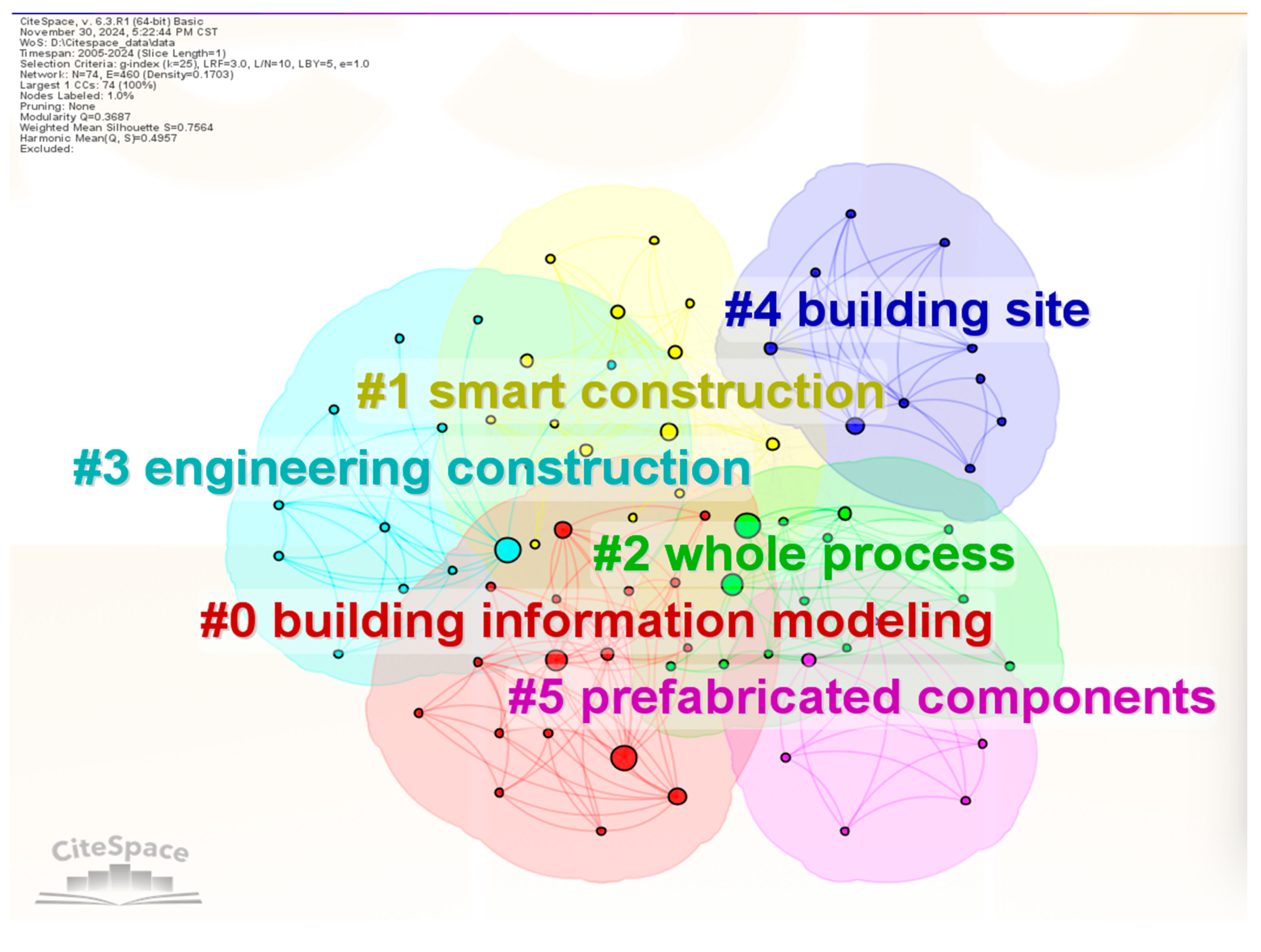
When constructing the keyword clustering map, the preprocessed intelligent construction dataset was imported into the Cite Space software, and the K-Means Clustering function was used to perform clustering operations based on the distribution of the feature vector space of the keywords in the dataset. The clustering parameters were adjusted according to the characteristics of the data, the initial value range of the number of clusters was reasonably set, and the most appropriate clustering division scheme was determined to ensure that each cluster had a high degree of similarity and thematic consistency within itself. Meanwhile, significant differences and independence were maintained among different clusters so that different core thematic areas could be clearly distinguished. After multiple rounds of iterative calculations and parameter optimizations, the keyword clustering map was finally constructed. Each cluster is presented in the form of a unique set of nodes in the map, and the connection relationships and layout structures among the nodes intuitively reflect the internal logical associations and hierarchical structures among different thematic sections in the field of intelligent construction, revealing the distribution trends of key development directions and core research themes in the field of intelligent construction from a clustering perspective.

4.2.2. Analysis of Results

The cluster analysis identified six core clustering themes. As shown, Figure 8 elaborates on the key development directions of intelligent construction from multiple aspects, covering the release of the efficiency of core technologies, the coordinated operation throughout the whole life cycle, the support for complex projects, the innovation in the management and control of construction sites, and the driving force of prefabricated industrialization. It comprehensively outlines the key development context of intelligent construction, from technology to application and from projects to industries, providing enterprises with clear paths for in-depth technological research, management optimization, and industrial upgrading during the transformation towards intelligent construction.
Figure 8. Keyword clustering map.
Cluster #0, “building information modeling”, highlights the core position and key effectiveness of BIM technology in the intelligent construction system. It runs through the whole life cycle of construction projects. During the whole life cycle of construction projects, in the design stage, its parametric and visual functions assist designers in precisely planning spaces, rationally selecting components, and preventing design conflicts. During construction, it lays a solid data foundation for progress control, resource allocation, and quality and safety management and control, promoting refined construction. In the operation and maintenance stage, it integrates equipment operation and space management data, supports preventive maintenance of facilities and the improvement in building performance, closely connects with the digitalization process of the construction industry, improves project coordination efficiency and comprehensive quality, leads intelligent construction to move towards high-level integration and intelligence, and reshapes the ecological environment of industry information management [20].
Cluster #1, “intelligent construction”, encompasses the innovative ecosystem of the integration of cutting-edge intelligent construction technologies and their scenario applications. The development of intelligent construction can not only drive the development of strategic emerging industries, such as emerging software, artificial intelligence, the Internet of Things, big data, and high-end equipment manufacturing, but it can also give birth to new industries, new business forms, and new models such as the construction industry Internet, construction robots, digital design, intelligent production, intelligent construction, and intelligent operation and maintenance. It has significant multiplier and marginal effects, which help to fully leverage the advantages of the super-large-scale market of the construction industry and effectively boost the development of the digital economy. It is an important measure to stabilize growth, expand domestic demand, and strengthen new drivers of development [21].
Cluster #2, “whole process”, illustrates the key points of the coordination of intelligent construction throughout the whole life cycle of buildings. In the planning stage, big data and artificial intelligence are utilized to determine the project’s positioning and objectives. In the design stage, an intelligent coordination platform is used to integrate the design ideas of multiple disciplines to ensure that the schemes are scientific and reasonable. In the construction stage, a digital platform is employed to integrate intelligent equipment and technologies, achieving precise management and control as well as dynamic optimization. In the operation and maintenance stage, relying on the Internet of Things and intelligent decision-making systems, the health status of the building throughout its whole life cycle is monitored, and the design and construction are reversely optimized. The development throughout the whole life cycle of buildings breaks down the barriers among project stages, constructs a value creation and transmission chain, and enhances the comprehensive benefits and competitiveness of enterprises.
Cluster #3, “engineering construction”, points out the core applications and technical support of intelligent construction in complex projects. In the practice of complex project construction, comprehensively and accurately identifying the core demands of the project is the crucial starting point. It deeply covers the meticulous analysis and precise positioning of multiple key dimensions, such as difficult technical breakthroughs, strict quality control nodes, bottlenecks in improving construction efficiency, and key points in preventing safety risks involved in complex project types, like super high-rise buildings, bridges, and underground projects. By focusing on the core needs of the project and integrating cutting-edge technologies to solve construction pain points, it can enhance the industrialization and intelligence levels of construction and demonstrate the effectiveness of intelligent construction in reshaping productivity and production relations in the industry.
Cluster #4, “building site”, presents the panorama of the transformation and innovative paths of intelligent management and control on the construction site. The smart construction site platform integrates face recognition and monitoring systems to conduct dynamic management and control of personnel, materials, and equipment all the time, optimize resource allocation, and reduce management risks. The environmental monitoring and dust suppression equipment are linked to conduct precise spraying according to the air quality, complying with environmental protection regulations. The intelligent upgrading of construction equipment is integrated with remote operation and maintenance. Maintenance strategies are formulated according to big data analysis to improve construction efficiency. The smart construction site focuses on the microscopic management on-site, innovates the extensive management mode, provides practical support and an innovative template for the implementation of intelligent construction projects, and lays a solid foundation for project implementation and the standardized system of operations.
Cluster #5, “prefabricated component”, demonstrates the key role and the driving effectiveness of prefabricated components in the industrialization process of intelligent construction. The component detailed design system based on BIM realizes the integrated innovation of standardization and personalization. The factory’s automated assembly line integrates robots and numerical control equipment to produce high-precision prefabricated parts and components according to the design model, ensuring the stability and consistency of quality. With the help of the Internet of Things, the logistics information is tracked through the component transportation and assembly management platform, and intelligent assembly is achieved on-site, accelerating the construction progress. The prefabricated construction model, with component production as the core link, reshapes the division of labor and cooperation system among upstream and downstream enterprises in the construction industry and becomes a key engine for the modernization and upgrading of the industry [18].

5. Discussion on the Development Trend of Intelligent Construction

5.1. Development Trends of Key Technologies and Application Scenarios

5.1.1. The In-Depth Development and Extensive Application of BIM

  • Data Integration and Collaborative Management throughout the Whole Life Cycle.
BIM technology is deeply applied throughout the whole life cycle of buildings. In the design stage, it utilizes its parametric and visual functions to assist in precise design and prevent conflicts. During the construction stage, combined with progress and cost information, it realizes refined management and control through 4D or 5D models. In the operation and maintenance stage, the BIM model integrates information, such as the operation data of building equipment and maintenance records, achieving real-time monitoring and intelligent management of building facilities [22].
  • Integration and Innovation with Emerging Technologies.
The integration trend of BIM technology with emerging technologies, such as the Internet of Things, big data, and artificial intelligence, has become increasingly prominent. The Internet of Things connects devices like sensors to the BIM model, enabling efficient collection and stable transmission of real-time data. Big data technology conducts in-depth analysis and mining of the massive data in the BIM model, as well as the real-time data collected by the Internet of Things, providing decision-making support for all stages of the building’s whole life cycle. Artificial intelligence technology can automatically and accurately identify key information, such as the types and quantities of components in the building model, significantly improving the efficiency of model management. In addition, machine learning algorithms are used to predict construction risks based on historical data and real-time monitoring data, providing timely and effective early warnings for safety management [23].

5.1.2. Innovative Practices of Smart Construction Sites

  • Multi-system Integration and Intelligent Management and Control.
The smart construction site is moving towards multi-system integration and intelligent management and control. Monitoring systems for personnel, equipment, and the environment are interconnected into a unified platform via the Internet of Things. The personnel management system realizes real-time attendance, trajectory tracking, and safety management through technologies such as face recognition. The equipment monitoring system monitors the operation of large-scale equipment in real time and gives fault warnings, significantly improving the reliability and safety of equipment operation. The environmental monitoring system monitors environmental indicators and is intelligently linked with dust suppression equipment, sprinkler systems, etc., realizing intelligent and precise control of the construction site environment and ensuring that the construction process strictly complies with environmental protection requirements [24].
  • Intelligent Decision-making and Efficient Collaboration.
Based on the strong support of big data analysis and artificial intelligence technology, the smart construction site management platform successfully realizes intelligent decision-making and efficient collaboration. Through a comprehensive and in-depth analysis of various types of data on the construction site, such as personnel flow data and equipment operation data, potential construction risks and management problems are effectively identified, thereby providing scientific and reliable decision-making bases for project managers. At the same time, the smart construction site platform effectively promotes real-time information sharing and efficient collaborative work among all participants in the project, significantly improving project management efficiency and ultimately realizing the refined management of the construction site [25].

5.1.3. Application Expansion of Intelligent Equipment

  • Diverse Applications of Construction Robots.
Construction robots have already become an important development direction in the field of intelligent construction. Their types are increasingly diverse, and their application scenarios continue to expand. The concrete-pouring robot, relying on its automated pouring function, effectively improves the pouring accuracy and efficiency and greatly reduces the errors and safety risks brought by manual operations. The wall-building robot precisely constructs walls in strict accordance with the preset wall parameters, significantly improving the wall quality and construction speed. It is especially suitable for standardized wall-building projects in large-scale building construction. The floor-laying robot can automatically complete the laying work of floor tiles, floors, and other materials, greatly reducing the labor intensity and significantly improving the automation level of decoration construction.
  • Integrated Application of Intelligent Equipment and Other Technologies.
Intelligent equipment is closely connected with the building information model through the Internet of Things technology, realizing the real-time, visual, and precise display of the equipment’s operating status in the model, which assists managers in remotely monitoring the equipment’s operation in real time. Combined with big data analysis technology, in-depth analysis of the operating data of intelligent equipment can effectively optimize the equipment’s operating parameters and maintenance strategies, thereby improving the equipment’s service life and operating efficiency [26].

5.1.4. Promotion of Prefabricated Construction

  • BIM-based Prefabricated Design and Production Optimization.
The prefabricated design system based on BIM technology realizes the in-depth integration of building design and component production. In the design stage, the parametric design function of BIM is utilized to achieve the standardized design of prefabricated components, effectively improving the universality and interchangeability of components. At the same time, BIM is used to conduct collision checks and simulated assemblies of components, detecting design problems in advance and optimizing the design scheme. In the production stage, BIM is directly converted into production and processing data, accurately guiding the factory’s automated production line for component production and ensuring the precision and quality of component production. Through the Internet of Things, the real-time monitoring of the component production process is realized. Information such as the processing progress and quality inspection data of components is transmitted to the management platform in real time, assisting production managers in adjusting the production plan in a timely manner and ensuring the on-time and quality delivery of components [27].
  • Intelligent Construction and Management of Prefabricated Buildings.
During the construction process of prefabricated buildings, intelligent construction technologies and management methods are widely applied. Construction robots and automated equipment are used for operations such as lifting and installing components, which significantly improves construction efficiency and installation accuracy and reduces construction safety risks. The prefabricated building construction management platform constructed through the Internet of Things and BIM technology realizes the real-time management of component transportation, on-site stacking, installation progress, and other links, ensuring the orderly progress of the construction process. At the same time, big data analysis technology is used to analyze the data in the construction process of prefabricated buildings, continuously optimizing the construction process and management flow and improving the overall quality and efficiency of prefabricated buildings [28].
To sum up, the development trends of key technologies and application scenarios, such as BIM, smart construction sites, intelligent equipment, and prefabricated construction, in the field of intelligent construction show remarkable characteristics of in-depth integration, innovation-driven, and efficient collaboration. The in-depth application of these technologies and scenarios will vigorously promote the steady progress of intelligent construction to a higher level, thus achieving the digital transformation and sustainable development of the construction industry.

5.2. Optimization Suggestions for Technical and Business Requirements

The matching degree between the business needs of the enterprises and intelligent construction technologies is a key factor in measuring the application effect of these technologies. Through the text mining and correlation analysis of Cite Space, the correlation network among key technologies and application scenarios, as well as the matching relationship between technologies and the enterprise’s business needs, are presented.
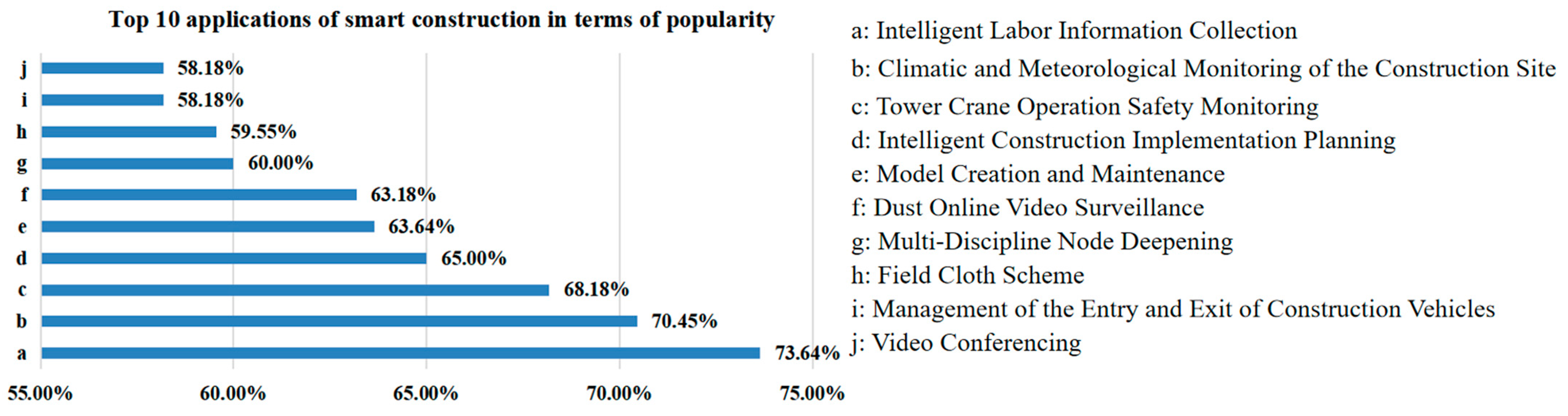
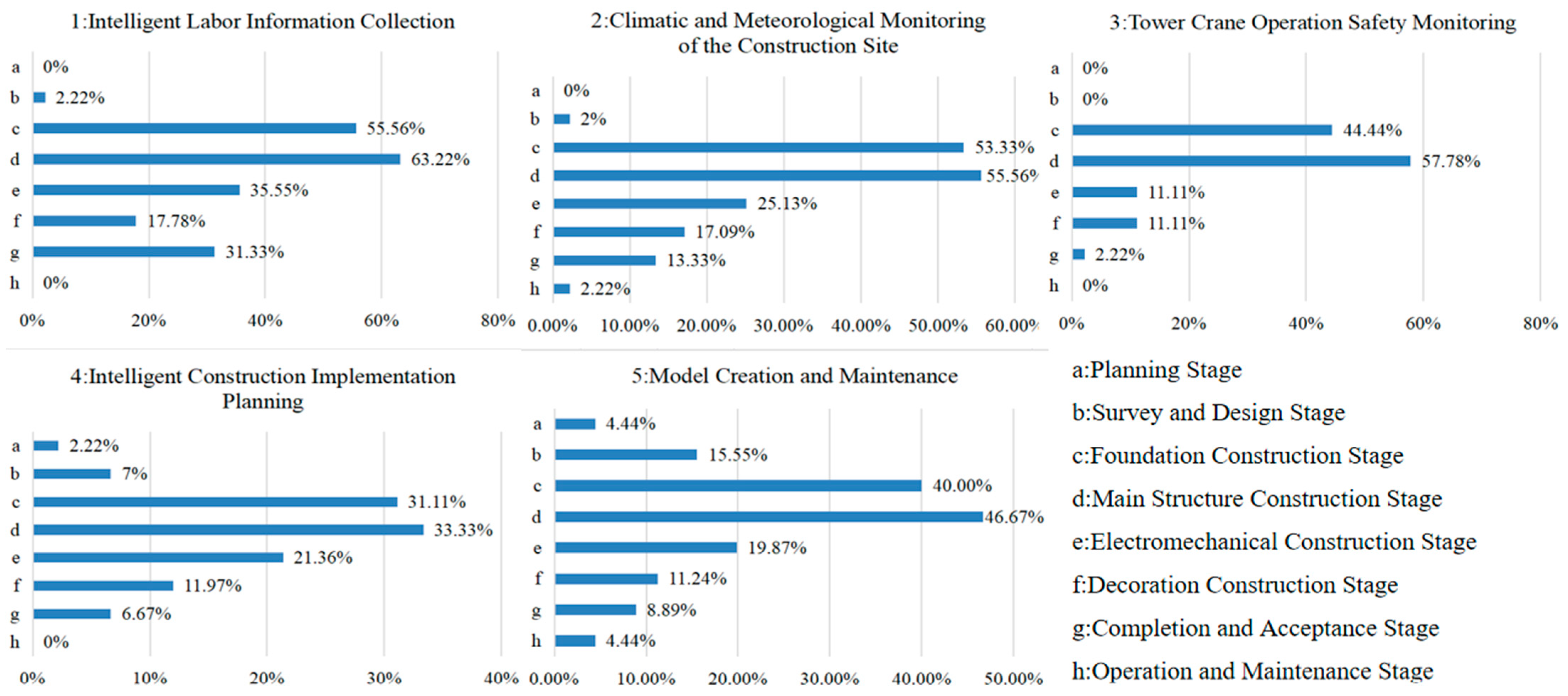
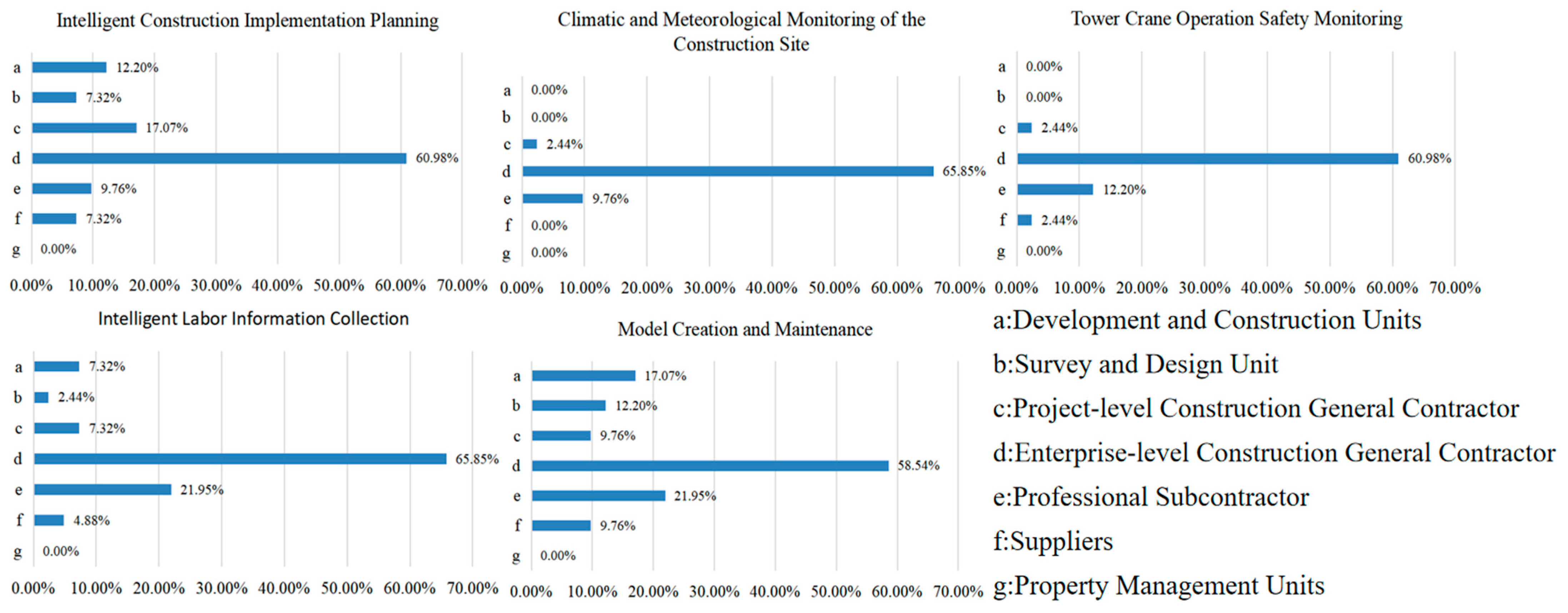
Currently, some intelligent construction technologies are widely applied within the group and highly match the business needs. For example, intelligent labor information collection technology can accurately grasp the dynamics of personnel on the construction site in real time, providing a crucial basis for the rational allocation of manpower and effectively improving construction efficiency. Tower crane operation safety monitoring technology can monitor the operation status of tower cranes in real time, issue timely warnings for potential safety hazards, and ensure construction safety. The intelligent construction implementation plan provides scientific planning and guidance for the orderly progress of projects. Model creation and maintenance technology help with precise simulation and efficient collaboration in all aspects. However, there are some technologies that do not match the business needs in application. For instance, the application technology of intelligent shield machines, the pre-assembly of road and bridge prefabricated components, and the application of residential building machines. Since the required hardware equipment is precise and complex, the purchase and maintenance costs are high, and they are only applicable to specific complex projects, their wide application is limited. This indicates that the promotion of technologies needs to fully consider the actual needs of projects, economic feasibility, and technological maturity to prevent waste of resources.
To achieve precise matching and optimization, construction enterprises should take several measures. Before introducing new technologies, a professional assessment team should be formed to conduct a comprehensive and systematic analysis of the functional characteristics, application scope, maturity, cost-effectiveness, etc., of the technologies to ensure that they can effectively solve practical problems and improve project benefits. In addition, a close communication mechanism should be established between technological innovation and business needs, and a regular communication platform should be built to promote in-depth cooperation and information sharing between the two sides. Business departments should promptly provide feedback on requirements and problems, while the technological R&D departments should introduce, in detail, the technological advantages and risks, jointly promoting the optimization of technologies and the expansion of their applications. Collaboration should be strengthened through regular meetings, joint project teams, etc. Importance should be attached to talent cultivation and team building, and technical training for employees should be carried out to enhance their understanding and application ability of intelligent construction technologies. Meanwhile, interdisciplinary compound talents should be actively introduced and cultivated to provide intellectual support for the implementation and continuous innovation of technologies.

6. Conclusions

This study, through the collection and analysis of multi-source data combined with a questionnaire survey and text mining techniques, systematically identifies the key technologies, application scenarios, and their interrelationships within the intelligent construction system. By employing visual network diagrams, this study provides an intuitive representation of the internal logic and development priorities of the intelligent construction system. Moreover, the matching analysis of technologies with business needs highlights the existing shortcomings in current intelligent construction practices, emphasizing the importance of professional pre-assessment and talent reserve. This study offers practical recommendations for the efficient implementation and continuous innovation of technologies. Furthermore, this research deeply explores the trends and internal correlations that characterize the development of intelligent construction within enterprises. It provides a clear technological and management pathway for companies promoting intelligent construction, fosters the standardization of practices within both enterprises and the industry, and supports the digital transformation and upgrading of the sector.
However, it is essential to acknowledge the potential challenges of exact replication in studies involving human judgment, particularly in tasks such as data cleaning. The variability in the results may stem from the inherent flexibility of the AI tools used and the subjective nature of the tasks involved. To address this, future research should focus on developing more standardized procedures and clear guidelines to minimize subjectivity and enhance reproducibility. Moreover, expanding the sample range in future studies could provide further insights and help refine both theoretical and practical aspects of intelligent construction.

Author Contributions

Conceptualization, X.Z. and S.L.; methodology, X.Z. and S.L.; software, Y.W., X.Z., X.Y., S.L. and M.F.; validation, Y.W., X.Z., X.Y., S.L. and M.F.; formal analysis, Y.W., X.Z., X.Y., S.L. and M.F.; investigation, Y.W., X.Z., X.Y., S.L. and M.F.; resources, Y.W., X.Z., X.Y., S.L., Y.T. and Q.Y.; data curation, Y.W., X.Z., X.Y., S.L., Y.T. and Q.Y.; writing—original draft preparation, Y.W., X.Y. and S.L.; writing—review and editing, X.Z. and S.L.; visualization, Y.W. and X.Y.; supervision, X.Z. and S.L. All authors have read and agreed to the published version of the manuscript.

Funding

This research was supported by the Humanities and Social Science Fund of Ministry of Education of China, Grant No. 23YJA630145.

Data Availability Statement

The raw data supporting the conclusions of this article will be made available by the authors on request.

Acknowledgments

The authors would like to thank Beijing University of Technology, Beijing, China.

Conflicts of Interest

The authors declare no conflicts of interest.

Appendix A

Serial NumberName of First-Level Application PointName of Second-Level Application PointTF-IDF Value
1Planning and AssuranceFeasibility Study and Planning of Intelligent Construction0.15
2Model Creation and MaintenanceModel Creation and Maintenance0.32
3Audio–visual Data CollectionAudio–visual Data Collection0.15
4Environmental Data CollectionClimatic and Meteorological Monitoring of Construction Site0.20
5Online Dust Video Surveillance
6Automatic Dust Spraying
7Intelligent Recognition of Bare Soil Coverage on Construction Site
8Acousto-optic Alarm for Excessive Noise on Construction Site
9Production Data CollectionAutomatic Detection of Concrete Moisture Content0.20
10Personnel Data CollectionIntelligent Labor Information Collection0.25
11Mechanical Data CollectionManagement of Construction Vehicle Entry and Exit0.25
12Safety Monitoring of Tower Crane Operation
13Digital Monitoring of Pile Driver
14Material Data CollectionIntelligent Whole-process Management of Material Information0.15
15Data ConnectivityData Connectivity with Group Management System0.28
16Connectivity with External Systems
17Full Coverage of Wireless Network in Tunnels
18Forward DesignPerformance Design and Optimization0.30
19Collaborative Design
20Deepening DesignConflict Check Based on Model0.36
21Coordination Meeting Based on Deepened Model
22Multidisciplinary Node Deepening
23Multi-scheme Comparison through Derivative Design
24Drawing Output from Model
25Conversion of Deepening Results into Fabrication Drawings
263D Technical Disclosure
27Site Layout Plan
28Scheme SimulationVirtual Showroom0.35
29Building Energy Efficiency Simulation Analysis
30Traffic Organization Simulation
31Demolition, Alteration, and Relocation Organization Simulation
32Construction Organization Plan Simulation
33Construction Progress Simulation
34Transportation Simulation of Large-scale Equipment
35Engineering Quantity CalculationCalculation of Reinforcement Engineering Quantity0.30
36Calculation of Component Engineering Quantity
37Calculation of Earthwork Quantity
38Calculation of Formwork and Scaffolding Engineering Quantity
39Auxiliary Project Quantity Verification for Settlement
40Comparison and Analysis of Engineering Quantities in Change Orders
41Daily Concrete Quantity List
42Auxiliary Ordering and Quota Material Withdrawal
43Dynamic Analysis of Material Resources
44Cost Forecasting and Control
45Application of UAV in Earthwork Quantity Measurement
46Visual Reporting3D-assisted Meeting Discussion and Decision-making0.22
47Promotional Video Production
48Production of Materials for Project Award Evaluation
49Application of Digital Exhibition Hall
50Video Conference
51PrefabricationPC Component Prefabrication0.40
52Prefabrication of Mechanical and Electrical Assembly Pipe Sections
53Prefabricated Machine Room
54Segment Prefabrication
55Prefabrication of Assembled Pipe Gallery
56Intelligent Steel Bar Prefabrication
57Prefabrication of Steel Structure Components
58Digital Prefabrication AssemblySteel Structure Prefabrication Assembly0.38
59Curtain Wall Prefabrication Assembly
60Prefabrication Assembly of Assembled Components
61Prefabrication Assembly of Mechanical and Electrical Pipelines
62Prefabrication Assembly of Road and Bridge Assembled Structures
63Formwork Assembly
64Quality ManagementDeformation Detection of Components upon Arrival0.22
65Intelligent On-site Measurement
66Application of Underground Pipeline Detector
67Quality Information Input and Management (Smart Construction Site)
68Quality Evaluation Based on Model
69Intelligent Image Recognition of Construction Quality Problems
70Concrete Pouring Record and Monitoring
71(Mass) Concrete (Wireless) Temperature Measurement
72Remote Video Quality Acceptance
73Intelligent Household Acceptance
74Intelligent Grouting
75Intelligent Curing
76Intelligent Compressive Testing of Concrete Cubes
77Intelligent Water Penetration Testing
78Intelligent Aggregate Particle Size Detection
79Intelligent Setting-out
80Intelligent Visual Quality Inspection Patrol
81Progress ManagementComparison between Planned and Actual Progress0.22
82Image-based Progress Recognition
83On-site Resource Matching
843D Brochure Production3D Brochure Production0.12
85Digital Management PlatformLabor Big Data Cloud Platform0.36
86Digital Asset Management Platform
87Operation and Maintenance Management Platform
88Intelligent Equipment and RobotsApplication of Welding Robots0.38
89Application of Concrete Floor Robots (Floor Leveling Machine, Floor Troweling Machine, Floor Grinder)
90Application of Layout Robots
91Application of Bricklaying/Paving Robots
92Application of Putty Grinding Robots
93Application of Spraying Robots (Interior and Exterior Spraying)
94Application of Plastering Robots
95Application of Material Transportation Robots
96Application of Tunnel Support Robots
97Application of Tunnel Cleaning Robots
98Application of Glass Curtain Wall Installation Robots
99Application of Steel Bar Tying Robots
100Application of Inspection Robots
101Application of Building 3D Printing Robots
102Application of 3D Laser Scanning Robots
103Application of Intelligent Concrete Pumping Equipment
104Application of Residential Building Machine
105Intelligent Hydraulic Climbing Formwork
106Application of Intelligent Roller
107Application of Intelligent Excavator
108Application of Intelligent Bulldozer
109Intelligent Shield Machine
110Application of Intelligent Carrier and Assembly Machine for Pipe Gallery
111Application of Automatic Sky Screen
112Application of Intelligent Piling Equipment
113New Scenarios of Intelligent Construction5G Technology Scenarios0.20
114Digital Remote Office
115Intelligent Drawing ReviewAI-assisted Design0.30
116BIM Drawing Review
117Intelligent MonitoringMonitoring and Early Warning of Formwork0.35
118Monitoring and Early Warning of Scaffolding
119Monitoring and Early Warning of Unloading Platform
120Lift Operation Monitoring
121Underground Water Level Monitoring
122Intelligent Water and Electricity Monitoring
123Intelligent Fire-fighting Monitoring
124Monitoring and Early Warning of Toxic and Harmful Gases
125Real-time Monitoring of Construction Waste Data
126Monitoring of Construction Site Sewage
127Remote Monitoring of Standard Curing Room
128Remote Monitoring of Mixing Station
129Health Monitoring of Construction Workers Based on Wearable Devices
130Monitoring of Construction Hazardous Areas
131Tunnel Construction Monitoring
132Monitoring and Early Warning of Ground Settlement
133Monitoring and Early Warning of Slope
134Monitoring and Early Warning of Anchor Rod Tensile Force
135Digital Monitoring of Dynamic Compaction
136Intelligent Grouting Pressure Monitoring
137Intelligent Tensioning Monitoring
138Monitoring and Early Warning of Structural Stress

References

  1. Guidance Opinions of the Ministry of Housing and Urban-Rural Development and Other Departments on Promoting the Coordinated Development of Intelligent Construction and Construction Industrialization. Superv. Test Cost Constr. 2020, 13, 11–14. (In Chinese)
  2. Qiu, Y. The Country has Identified 24 Pilot Cities for Intelligent Construction. Guangming Daily, 11 November 2022; (In Chinese). [Google Scholar] [CrossRef]
  3. Fan, Q.; Lin, P.; Wei, P.; Ning, Z. Closed-loop Control Theory of Intelligent Construction. J. Tsinghua Univ. (Sci. Technol.) 2021, 61, 660–670. (In Chinese) [Google Scholar]
  4. Liu, Z.; Wu, L.; Liu, Z. Multi-dimensional and Multi-scale Intelligent Construction System Oriented to the Whole Life Cycle. J. Tianjin Univ. (Nat. Sci. Eng. Technol. Ed.) 2024, 56, 1295–1306. (In Chinese) [Google Scholar]
  5. Wang, G.; Liu, M.; Wang, J. Research on the Current Situation and Trends of Intelligent Construction Development in China. Build. Struct. 2024, 54, 84–88. (In Chinese) [Google Scholar] [CrossRef]
  6. Min, Q.; Guo, Z.; Wang, E.; Yu, X.; Deng, M.; Chen, Y.; Yang, T.; Qin, J.; Yang, G. The All-factor Digital and Intelligent Innovation System of “Intelligent Construction + Intelligent Transportation”. China State-Own. Enterp. Manag. 2024, 1082–1087. (In Chinese) [Google Scholar]
  7. Yao, J.; Yuan, H.; Guo, Y.; Wu, Y. Implementation Paths and Innovative Applications of the Intelligent Construction System in the Transportation Infrastructure Industry. J. Transp. Res. 2024, 10, 53–60. (In Chinese) [Google Scholar]
  8. Qi, C.; Li, Z. Research on the Intelligent Construction Technology System of Railway Prefabricated Bridges. Railw. Constr. Technol. 2023, 1–4+27. (In Chinese) [Google Scholar] [CrossRef]
  9. Wang, W.; Guo, F.; He, X.; Lu, W.; Zhang, C.; Li, Z. Research on the Standard System of Intelligent Construction for High-Speed Railways. Chin. Railw. 2024, 21–29. (In Chinese) [Google Scholar]
  10. He, X.; Lu, W.; Zhang, Y.; Guo, F.; Zhang, C.; Xu, H. Discussion on the Standard System of Intelligent Construction for China’s High-Speed Railways. Railw. Tech. Stand. 2024, 6, 1–7. [Google Scholar]
  11. Wu, J.; Zhang, F. Implementation Paths for the Construction of Intelligent Construction Systems in Construction Enterprises. Constr. Econ. 2024, 45, 19–23. (In Chinese) [Google Scholar]
  12. Eastman, C.; Teizer, J.; Sacks, R. Building Information Modeling Handbook: A Guide to Building Information Modeling for Owners, Managers, Designers, Engineers and Contractors; John Wiley & Sons: Hoboken, NJ, USA, 2011. [Google Scholar]
  13. Khemlani, L. BIM and the Internet of Things. AECbytes. 2012. Available online: https://www.aecbytes.com/ (accessed on 29 October 2012).
  14. Koskela, L.; Vaurio, J. Application of the Last Planner Method to Improvement of Project Performance. In Proceedings of the 5th Annual Conference of the International Group for Lean Construction, Gold Coast, Australia, 16–17 July 1997; pp. 251–262. [Google Scholar]
  15. Liu, Y.; Wang, J.; Zhao, X. Application of Construction Robots in High-Rise Building Projects. J. Constr. Eng. Manag. 2020, 146, 04020001. [Google Scholar]
  16. Teizer, J.; Kim, Y.; Kim, D. Automated 3D Modeling of As-Built Conditions Using 3D Laser Scanning and Image-Based Photogrammetry for BIM. Autom. Constr. 2010, 19, 283–293. [Google Scholar]
  17. Succar, B. The Building Information Modelling Maturity Framework. In Proceedings of the 15th Conference of the International Council for Research and Innovation in Building and Construction (CIB), Noordwijk, The Netherlands; 2009; pp. 1–16. [Google Scholar]
  18. Chen, X.; Su, S.; Yuan, J.; Li, J.; Lou, F.; Wang, Q. Analyzing the Environmental, Economic, and Social Sustainability of Prefabricated Components: Modeling and Case Study. Sustainability 2024, 16, 342. [Google Scholar] [CrossRef]
  19. Wang, Z.; Wang, D.; Li, Q. Keyword Extraction from Scientific Research Projects Based on SRP-TF-IDF. Chin. J. Electron. 2021, 30, 652–657. [Google Scholar]
  20. Jin, R.; Hancock, C.; Tang, L.; Chen, C.; Wanatowski, D.; Yang, L. Empirical Study of BIM Implementation-Based Perceptions among Chinese Practitioners. J. Manag. Eng. 2017, 33. [Google Scholar] [CrossRef]
  21. Liang, P.; Yoo-Na, P.; Moo-Young, Y.; Hyuk, H.N.; Kim, J.-J. A Study on Chinese Smart Construction Strategy by SWOT Analysis. KIBIM Mag. 2018, 8, 1–12. [Google Scholar]
  22. Yin, X. Research on the Delicacy Management During the Whole Life Cycle of Engineering Project Based on BIM Technology. Fresenius Environ. Bull. 2020, 29, 11783–11789. [Google Scholar]
  23. Jang, S.; Lee, G.; Shin, S.; Roh, H. Lexicon-based content analysis of BIM logs for diverse BIM log mining use cases. Adv. Eng. Inform. 2023, 57, 102079. [Google Scholar] [CrossRef]
  24. Liu, H.; Song, J.; Wang, G. A Scientometric Review of Smart Construction Site in Construction Engineering and Management: Analysis and Visualization. Sustainability 2021, 13, 8860. [Google Scholar] [CrossRef]
  25. Kang, T.-W.; Byung-Kon, K.; Jung, Y. Deep learning platform architecture for monitoring image based real-time construction site equipment and worker. KIBIM Mag. 2021, 11, 24–32. [Google Scholar]
  26. Shishehgarkhaneh, M.B.; Keivani, A.; Moehler, R.C.; Jelodari, N.; Laleh, S.R. Internet of Things (IoT), Building Information Modeling (BIM), and Digital Twin (DT) in Construction Industry: A Review, Bibliometric, and Network Analysis. Buildings 2022, 12, 1503. [Google Scholar] [CrossRef]
  27. Zhou, D.; Chen, L.; Wei, G.; Zhang, J.; Guo, P.; Wang, H.; Zhao, J.; Huang, W. Technology Gap Analysis on the BIM-Enabled Design Process of Prefabricated Buildings: An Autoethnographic Study. Buildings 2024, 14, 3498. [Google Scholar] [CrossRef]
  28. Wang, Y.; Li, Y.; Zhuang, J. Research on the green development path of prefabricated building industry based on intelligent technology. Eng. Constr. Archit. Manag. 2024. [Google Scholar] [CrossRef]
Disclaimer/Publisher’s Note: The statements, opinions and data contained in all publications are solely those of the individual author(s) and contributor(s) and not of MDPI and/or the editor(s). MDPI and/or the editor(s) disclaim responsibility for any injury to people or property resulting from any ideas, methods, instructions or products referred to in the content.

Article Metrics

Citations

Article Access Statistics

Multiple requests from the same IP address are counted as one view.