Article

Indoor Light Environment Comfort Evaluation Method Based on Deep Learning and Evoked Potentials

1
School of Information and Control Engineering, Qingdao University of Technology, Qingdao 266520, China
2
College of Computer Science and Technology, Qingdao University, Qingdao 266071, China
3
School of Environmental and Municipal Engineering, Qingdao University of Technology, Qingdao 266520, China
4
Department of Statistics, The George Washington University, Washington, DC 20052, USA
*
Author to whom correspondence should be addressed.
Buildings 2025, 15(24), 4571; https://doi.org/10.3390/buildings15244571
Submission received: 29 October 2025 / Revised: 6 December 2025 / Accepted: 10 December 2025 / Published: 18 December 2025

Abstract

The optimal indoor lighting comfort can enhance physical and mental health and improve work efficiency. The traditional methods for evaluating lighting comfort have problems such as limited data analysis and poor subjectivity. To establish objective criteria, this study proposes a novel method combining deep learning and evoked potentials. This study collected visual evoked potentials across diverse indoor lighting conditions and employed Long Short-Term Memory (LSTM) and Gate Recurrent Unit (GRU) recurrent neural networks to classify temporal evoked electroencephalography data. The experimental results show that both LSTM and GRU achieve higher accuracy than the Feedforward Neural Network. Among them, LSTM performs best, reaching an accuracy of 80.16% while maintaining computational efficiency comparable to GRU. Such effective objective evaluation methods provide a scientific basis for optimizing indoor environments.

1. Introduction

1.1. Background

With the advancement of technology and the acceleration of urbanization, modern people spend more than 90% of their entire day indoors [1]. This trend makes a safe, comfortable and healthy indoor environment not only a fundamental prerequisite for safeguarding human physical and mental health [2], but also a core element for maintaining high productivity and social well-being. Indoor environmental comfort is a complex perception system formed by the coupling of multiple physical factors. It primarily includes sound environment, light environment, and thermal environment [3]. Among many factors, the light environment directly affects the human visual system. And through non-visual imaging effects, it profoundly affects the physiological rhythm, cognitive performance, and emotional state of the human body, and has the most direct and significant impact on work efficiency and physical and mental health [4,5]. Creating a comfortable and healthy indoor lighting environment has evolved from a simple spatial design requirement to an interdisciplinary frontier of shared interest in fields such as architecture, environmental psychology, and ergonomics. However, the development of this field has long been limited by a core challenge, which is how to establish an objective, accurate, and quantifiable paradigm for evaluating indoor light environment comfort.

1.2. Related Works

With increasing demand for living comfort, researchers have conducted extensive studies on indoor environmental comfort, particularly the indoor lighting environment. Wong et al. studied the acceptable level of noise in office buildings using a mathematical regression model, ultimately evaluating indoor comfort based on the model [6]. Fantozzi summarized the evaluation indicators of indoor environmental comfort in the evaluation of indoor environmental quality, including air quality, sound environment, light environment, and thermal environment [7]. Sugimoto found that human-perceived comfort decreases as illuminance increases within a specific range of illuminance by studying luminance [8]. Guo et al. investigated indoor environmental comfort through subjective questionnaires and established corresponding functional relationships for sound, thermal, and light environmental parameters, ultimately building an indoor overall environmental comfort evaluation model [9]. Yang et al. proposed an evaluation model for indoor environmental comfort using the fuzzy comprehensive evaluation method based on sound, thermal, light, and air quality environmental parameters in university classrooms and found that the indoor thermal environment has a significant impact on indoor environmental comfort [10]. Alshdiefat collected indoor environmental parameter data for twelve months and used response surface analysis to explore the mathematical relationship between indoor environmental factors such as air quality, humidity, illuminance, and indoor environmental comfort, ultimately finding that non-air quality parameteres such as illuminance have a relatively large impact on indoor environmental comfort [11]. Lu et al. researched indoor thermal comfort in buildings and obtained 1400 valid indoor thermal comfort evaluation results through subjective satisfaction questionnaires. Based on the survey results, they studied the thermal comfort in buildings through cluster and linear regression analysis methods [12]. Vieira studied the environmental comfort in the ICUs of hospitals and used the Carnot model as the evaluation model for human comfort [13]. Martinez-Molina et al. assessed indoor thermal comfort using a questionnaire in a historical building in Villar del Arzobispo, Spain, to explore indoor environmental comfort in historical constructions [14]. Nian et al. improved the PMV index proposed by professor Fanger by adding indoor environmental parameters such as CO2 concentration and established a computational model using a BP neural network, which improved the evaluation effect of the PMV index on indoor environmental comfort [15]. Shamsul’s research showed that people have higher comfort levels when living in an indoor lighting environment with an intensity of 4000 K [16]. Wang et al. used a multi-index comprehensive evaluation model including a questionnaire survey method and a weighted scoring method to evaluate the impact of air-source heat pumps on indoor environmental comfort to assess the regulating effect of air-source heat pumps on indoor thermal environments [17]. Liu et al. obtained the weights of different indoor environmental factors using vector similarity and explored the impact of different indoor environments on indoor environmental comfort evaluation by combining subjective questionnaire evaluation methods [18]. Although existing research has laid a certain foundation for the field of lighting design [19,20,21,22], the current evaluation methods are essentially based on subjective questionnaires and statistical analysis. The inherent limitations of this approach prevent it from providing objective and reliable assessments of indoor environmental comfort.
Different indoor environments can have an impact on human senses, such as lighting and sound [23]. External environmental stimuli are received by sensory organs and converted into neural signals, which are then transmitted to the cerebral cortex [24]. The cerebral cortex is the main area for human advanced cognition and information processing, including visual, auditory, and tactile areas [25]. These areas respond differently to different types of stimuli and produce different brainwave activities [26]. These brainwave activities can be transmitted outside the body through the scalp and skull, forming electroencephalography (EEG) signals [27], also known as electrophysiological signals. EEG signals can be recorded and measured using devices such as electrode arrays or EEG amplifiers to study human sensory and cognitive processes. Therefore, EEG activity can be seen as a biological electrical reaction of the human body to external environmental stimuli, reflecting the process of human perception and adaptation to environmental changes [28]. Peng et al. investigated the impact of the train environment on passenger comfort by collecting EEG data from 20 passengers and building a comfort assessment model based on features in the data and the LightGBM algorithm [29]. Küller et al. found that bright light can enhance central nervous system reactivity by studying specific waveforms of brainwaves under different illuminations [30]. These studies suggest that electrical signal activity in the human brain is related to environmental changes. In fact, EEG has been widely used for subjective feeling evaluation and cognitive tasks [31]. Guan et al. studied indoor comfort under the influence of various environmental factors based on subjective evaluation and EEG data. They found that the indoor environment significantly affects cerebral cortex activity [32]. Wu et al. collected EEG signals from 22 volunteers under different indoor thermal environments and used linear discriminant analysis or support vector machines as evaluation models to assess indoor thermal comfort [33]. This indicates that electrical signals generated by the human brain can serve as objective indicators to reflect indoor environmental comfort. However, many studies still have relatively primitive processing of EEG data. For example, Lu et al. estimated the comfort level of people in different environments by observing the latency of the P100 waveform, which is a biological potential signal of visual evoked potential and whose value is related to the reaction speed of the human eye [34]. Individual differences may cause significant differences in P100 latency. Therefore, when analyzing the relationship between EEG and indoor environmental comfort, there is a significant problem with relying on the P100 latency as a physiological parameter for analysis. Simply analyzing a specific waveform in EEG also has a problem of insufficient overall data analysis and inability to fully utilize all the information contained in EEG data. The research methods of analyzing specific EEG waveforms to study indoor environmental comfort have not fully excavated all the information of EEG data, and their processing efficiency is also not high. Therefore, using machine learning methods to process EEG data in different indoor environments and ultimately building a comfort evaluation model for indoor environments based on machine learning algorithms is of great significance.
Over time, traditional methods for analyzing EEG data have shown certain limitations. Consequently, many recent studies have applied machine learning techniques to detect and analyze bioelectrical signals. Researchers have combined machine learning technology with limb rehabilitation movement bioelectrical data to achieve analysis and evaluation of human body rehabilitation movements [35,36]. The application of machine learning technology in EEG analysis has gradually increased. Murtazina used support vector machines and artificial neural network methods to classify brain activity patterns by classifying collected EEG data [37]. EEG data are typical time series data; therefore, using RNN algorithm to analyze EEG data is a better choice. Chowdary et al. used deep learning methods such as LSTM to classify EEG brain wave data according to emotions, with a classification accuracy of over 95%, and achieved good results [38]. EEG signals are a type of bioelectrical signal of human brain activity that has temporal sequence characteristics. The sampling frequency is generally between tens and hundreds of hertz, and the electrical potential value of brain activity is recorded at each time point, resulting in data with high dimensionality and high spatiotemporal resolution. As a type of neural network that is suitable for processing time series data, RNN is more suitable for processing data with time-dependent relationships. Therefore, using RNN to process EEG data can better explore its time series information and capture the evolution of signals. In addition, using RNN can automatically enable more effective feature representations and improve classification performance. Therefore, it is necessary to use RNN to process EEG data. In this study, different indoor lighting conditions were collected to construct a deep learning-based indoor lighting comfort evaluation model using the RNN algorithm, thus achieving a more objective and accurate evaluation of indoor lighting comfort.

1.3. Research Gap and Contributions

Although progress has been made in the assessment of indoor light environment comfort in existing research, there are still some gaps in the current field. Firstly, in terms of methodology, the evaluation heavily relies on subjective questionnaires, and its results are susceptible to interference from participants’ psychological states and individual preferences, lacking a stable and objective physiological evaluation benchmark. Secondly, in terms of data analysis depth, even if physiological signals such as electroencephalography are used, most studies are limited to analyzing specific waveforms or frequency band power. This shallow feature extraction method cannot fully utilize the complete dynamic information contained in EEG as high-dimensional time series data. Thirdly, in terms of matching computational models with data characteristics, traditional machine learning models are difficult to effectively capture the complex temporal dependencies in EEG signals, resulting in limited model performance. Therefore, an automated evaluation framework that can model end-to-end deep temporal sequences based on objective physiological signals and optimize specifically for solving such problems is currently blank.
To find an objective and accurate evaluation method for indoor lighting environment comfort, this study collected EEG data from test subjects under different indoor lighting environments and used deep learning algorithms to process and classify these EEG data. In this way, a more objective and intuitive analysis of the comfort status of the indoor lighting environment is achieved. To overcome the limitations of current methods for evaluating indoor lighting environment comfort, this study constructed a new evaluation method by combining EEG and deep learning technology. This new method uses the mapping relationship between EEG data and environmental comfort level, processes data using recurrent neural network (RNN) models such as LSTM, and achieves classification analysis of EEG data, reducing the incompleteness of manual processing and analysis of data and the subjectivity of traditional questionnaire evaluation. In addition, this study compares the classification results of different RNN methods in terms of time and efficiency and provides a comprehensive discussion of the modeling results. The main contributions of this study are as follows:
(1)
A new objective evaluation paradigm for indoor lighting environment comfort has been proposed.
(2)
Realized deep end-to-end temporal modeling of EEG signals.

2. Methodology

When the human brain is exposed to different indoor lighting environments, the electrical signal activity in the brain cortex also varies. By capturing the brain electrical activity under different indoor lighting environment comfort levels using an evoked potential instrument (Haishen NDI-094 (Haishen (Suzhou) Medical Instruments Co., Ltd., Suzhou, China)) and recording the amplitude of these time-varying EEG data, we obtain a dataset of EEG time series data related to indoor lighting comfort levels. Based on LSTM/GRU and EEG, this study constructs a model for evaluating indoor lighting environment comfort to overcome the limitations of traditional subjective evaluation methods, and achieves objective and accurate classification of indoor lighting comfort through end-to-end learning of complete EEG temporal signals.

2.1. Environmental Setup

To simulate the actual indoor environment in daily life more accurately and realistically, the physical and psychological conditions of the participants in the experiment need to meet certain conditions. The specific conditions include the following:participants must have good physical health, normal intelligence, no harmful habits, sound mental health, normal reading and environmental evaluation abilities, normal hearing and vision, and no conditions such as color weakness, color blindness, or amblyopia. The visual acuity of experimental participants should be at least 5.0, or corrected visual acuity should reach 5.0 or higher when wearing glasses.
The psychological and physical conditions of the experimental personnel can cause interference with the experimental results. To ensure the normal operation of the experiment and the objective accuracy of the experimental results, it is necessary to exclude various external factors that may cause interference with the experimental results. Experimental personnel need to maintain a good psychological state for a period of time before the start of the experiment to reduce the impact of psychological fluctuations on human environmental perception. Excessive excitement or negative emotions can have a negative impact on the human body’s environmental perception ability. The experiment requires participants to avoid significant emotional fluctuations and ensure that the experimental results are not influenced by emotional factors. Within two days before the start of the experiment, participants are required to ensure that they do not consume alcoholic beverages or beverages containing caffeine or other stimulants, avoid smoking, and do not consume foods or drugs that cause physical stimulation. In addition, the experiment requires the participants to maintain a calm attitude as much as possible within 2 h before the start of the experiment and not participate in sports such as sprinting to ensure that their bodies do not become overly excited and avoid fatigue.
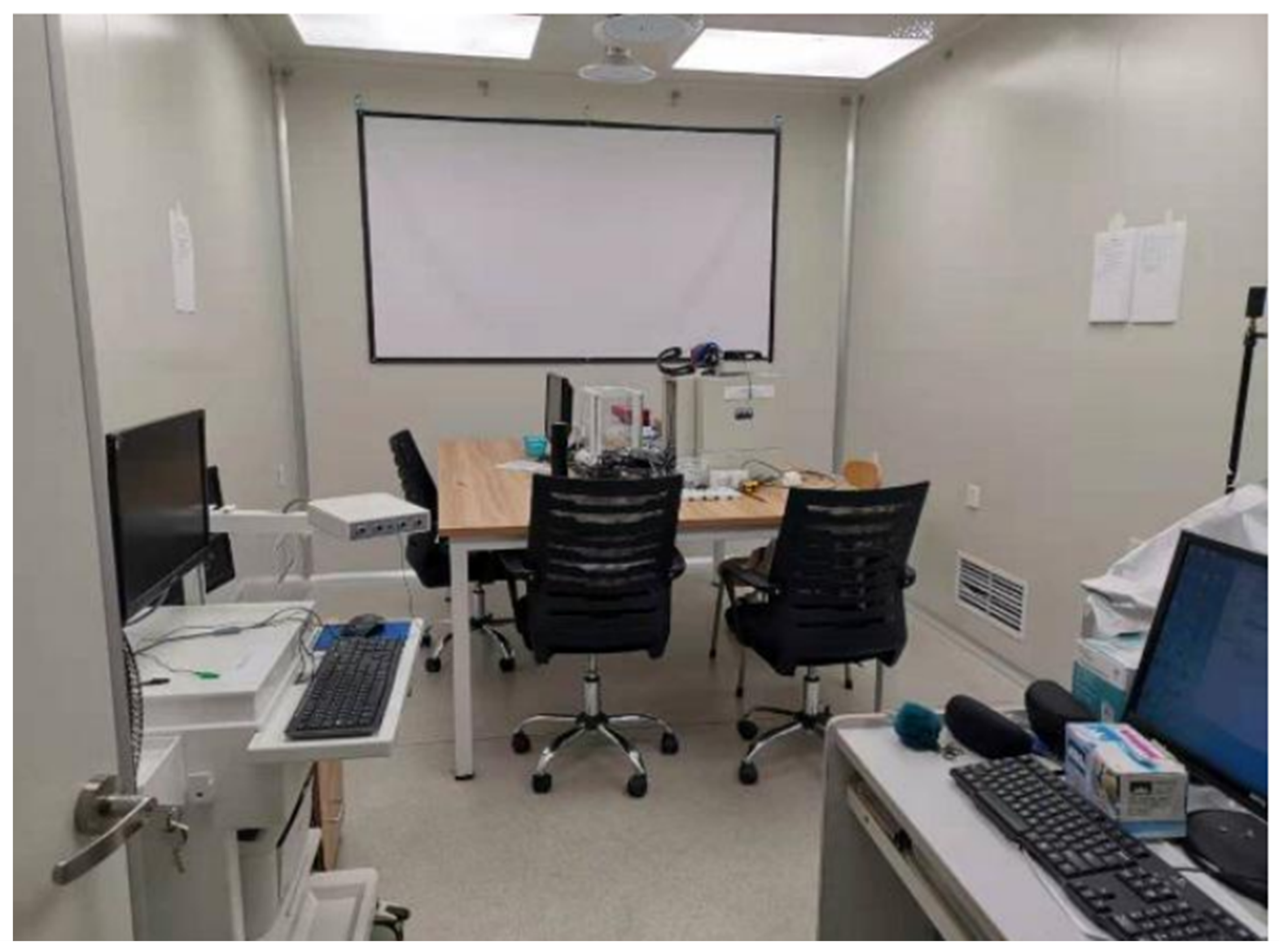
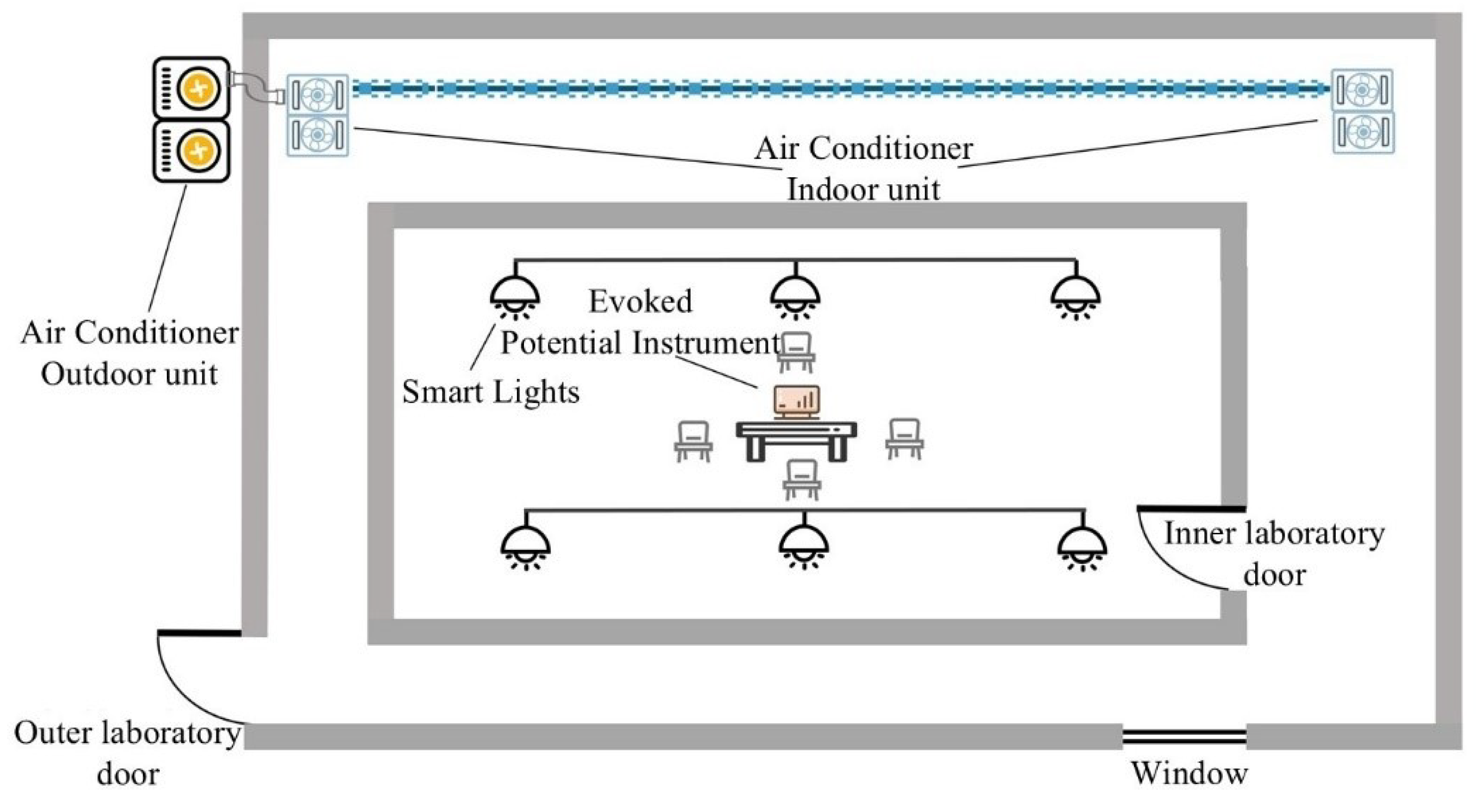
The experiment was conducted in a special double-layer double-room laboratory with a length of 5 m, a width of 3 m, and a height of 2.6 m. The laboratory has environmental control functions and can simulate various indoor environments by adjusting the comfort parameters of indoor temperature, illumination, noise, and humidity. The laboratory is divided into two layers, with a preparation room in the outer layer for test subjects to change into experimental clothes. The inner laboratory is the evoked potential acquisition room, and the temperature and humidity inside the inner laboratory are regulated through a return air vent. The temperature control accuracy inside the laboratory can reach ±0.5 °C, and the humidity control accuracy can reach ±5%. The air conditioning equipment is located in the outer laboratory to avoid the noise generated by the running of the air conditioning equipment to affect the experiment. Sound-absorbing materials are used between the air conditioning equipment and the inner laboratory to reduce noise. The adjustment of color temperature and illumination inside the inner laboratory relies on six intelligent lamps installed in the laboratory, which can adjust brightness and color temperature in real time. By controlling the illumination and color temperature through intelligent lamps, the experiment ensures that the indoor light environment is within the target value range of the experimental conditions. The interior design of the laboratory is shown in Figure 1.
A long desk is placed in the center of the small room for experimental participants to use, with the desktop 0.75 m above the ground. The brightness measurement point is fixed in the center of the long desktop in the room, making the light environment testing point as close as possible to the experimental participants. The brightness measurement point is approximately 0.80 m from the ground. All experimental lighting and color temperature measurements were conducted at the same measurement point. To simulate the daily work and living environment, the walls of the inner laboratory are painted milky white. The on-site environment of the inner laboratory is shown in Figure 2.

2.2. Data Acquisition

A total of 16 volunteers participated in the EEG data collection experiment, with males or females aged between 22 and 26. Among these 16 volunteers, there were a total of 9 male volunteers and 7 female volunteers. The basic information for the 16 experimental participants is shown in Table 1. A total of 13 volunteers had their vision corrected, including 8 male volunteers and 5 female volunteers. Among the three volunteers with uncorrected vision, there was one male and two females. The study was conducted in accordance with the Declaration of Helsinki, and the protocol was approved by the Ethics Committee, Medical College of Qingdao University (approval No. QDU-HEC-2024172).
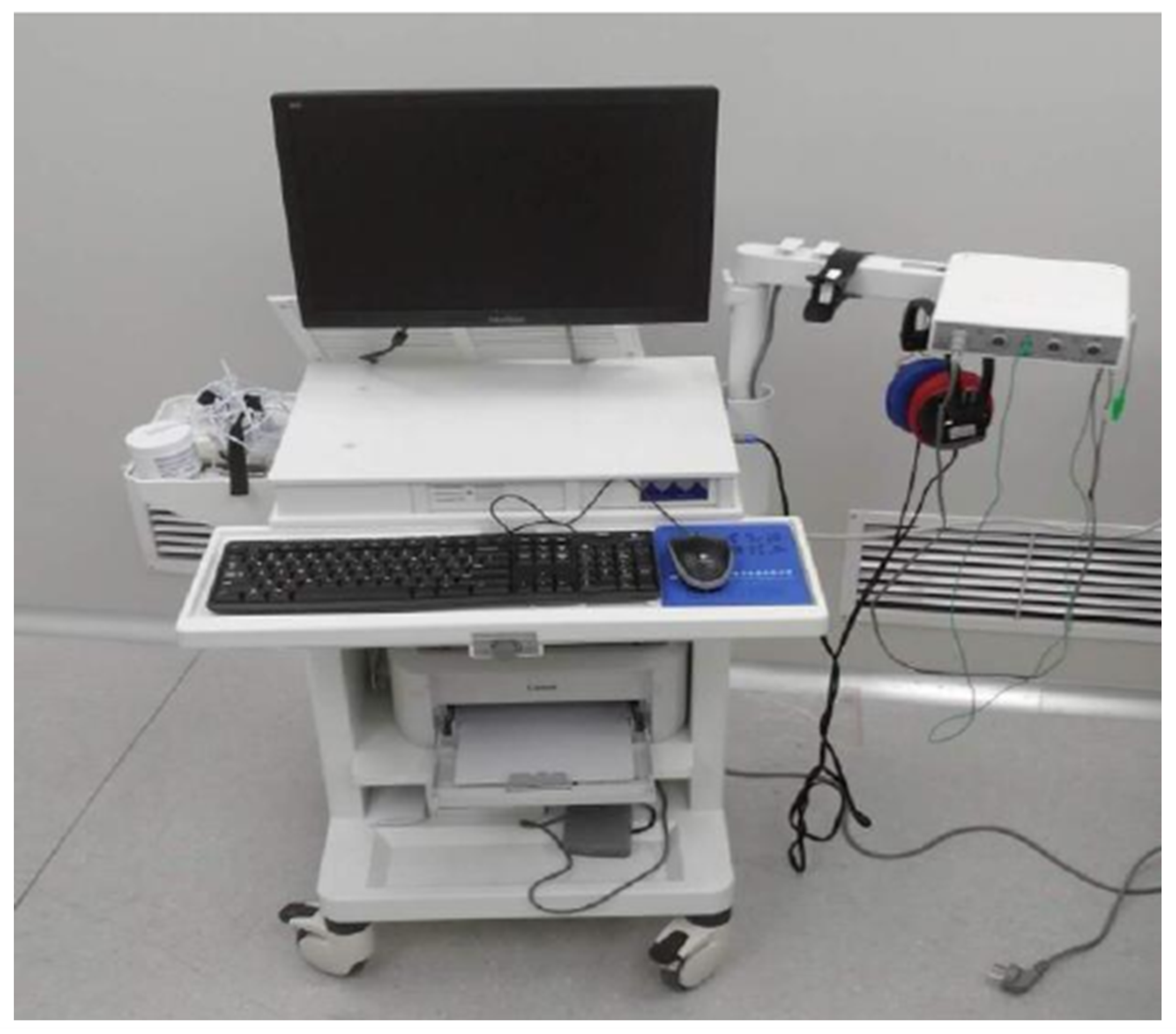
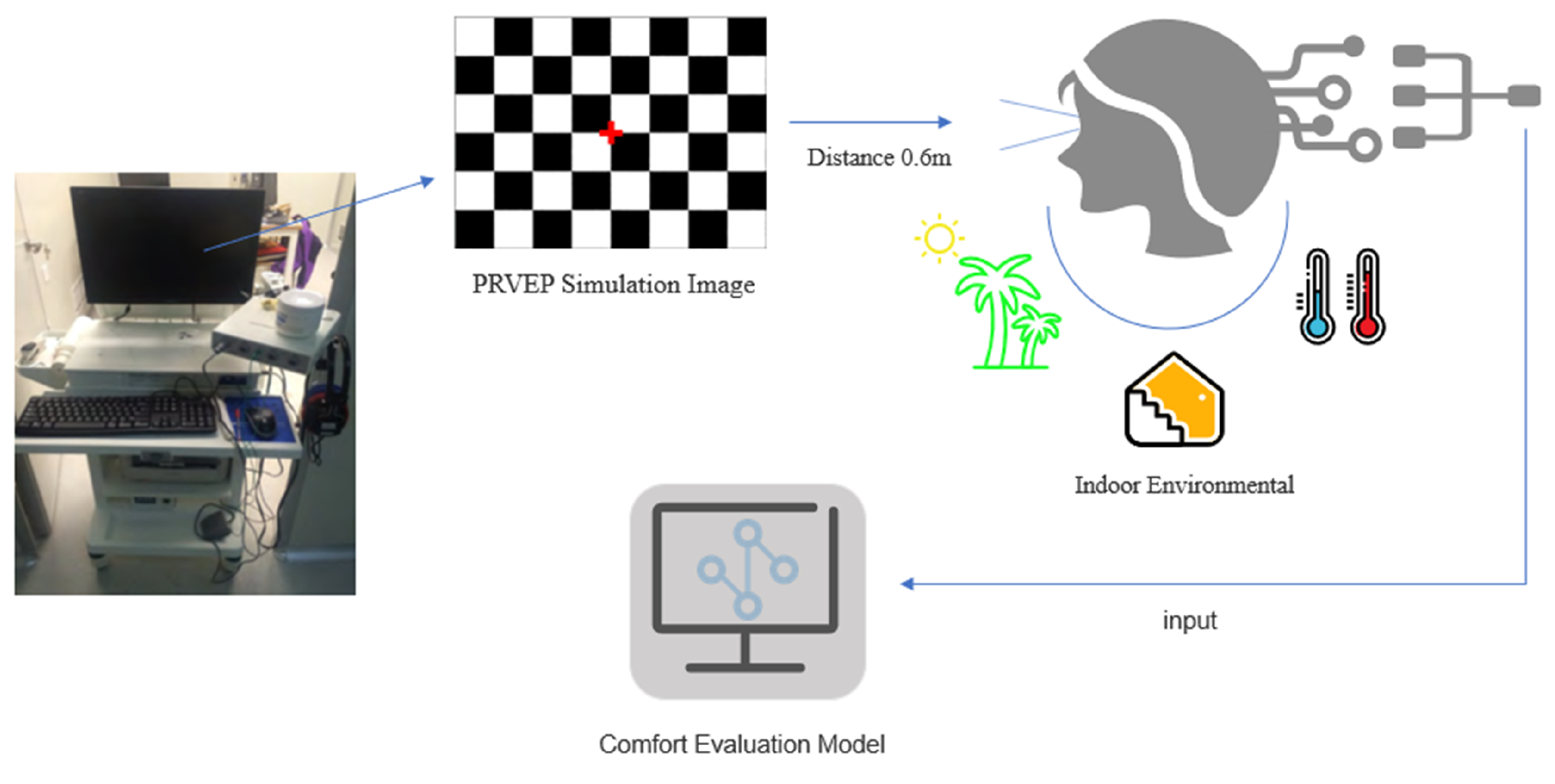
Electroencephalogram (EEG) data were collected from participants using the Haishen NDI-094 evoked potential instrument (Haishen NDI-094 (Haishen (Suzhou) Medical Instruments Co., Ltd., Suzhou, China)) in a simulated indoor environment with preset parameters, shown in Figure 3. Following the international 10–20 system, multiple electrodes were placed on the participant’s scalp. The recording electrode was positioned at Oz, the reference electrode at Cz, and the ground electrode on the forehead (AFz). Throughout the experiment, electrode impedance was maintained below 15 kΩ. Pattern Reversal Visual Evoked Potential (PRVEP) was employed as the primary stimulation method, shown in Figure 4. An 8 × 6 black-and-white checkerboard pattern was displayed to the subject and reversed at a frequency of 1.5 Hz to elicit visual evoked responses. Participants were instructed to focus binocularly on a red cross at the center of the screen, positioned approximately 0.6 m away. The EEG signals were recorded continuously using a bipolar lead montage at a sampling rate of 2000 Hz (0.5 ms per point), with an online analog band-pass filter of 0.1–100 Hz. Each PRVEP recording spanned 450 ms (900 data points). To enhance the signal-to-noise ratio, 150 trials were averaged. Offline, a 30 Hz low-pass zero-phase digital filter was applied to further reduce high-frequency noise.
The process of EEG acquisition experiments is divided into three stages: adaptation, evaluation, and collection. In the adaptation stage, the experimenter adjusts the environmental factors such as illumination, temperature, humidity, and sound pressure level in the laboratory according to the preset working conditions. Meanwhile, the test subjects change into comfortable experimental clothing and familiarize themselves with the evaluation questionnaire and experimental procedure in the preparation room. In the evaluation stage, the test subject enters the inner laboratory where the environmental parameters have been adjusted to the preset values. The test subject must sit quietly in the experimental illumination environment for 10 min to adapt to the laboratory environment, during which the test subject is prohibited from using any electronic devices. After adapting to the laboratory environment, the test subject completed the environmental comfort evaluation questionnaire. The collection stage began after the test subject completed the questionnaire. In this stage, the test subject wears the electrodes of the evoked potential instrument with the assistance of the experimenter, and then the visual evoked potential experiment is conducted. After the data collection for each indoor environmental condition, the test subject rests for 5 min. Under each working condition, each person spends approximately 15 min conducting the experiment. Sixteen test subjects underwent visual evoked potential data collection in the aforementioned stages, with one person per experiment. The experiment includes 27 different indoor environmental conditions, which cover a variety of typical conditions found in daily life and production throughout different seasons. The specific working conditions are presented in Table 2.
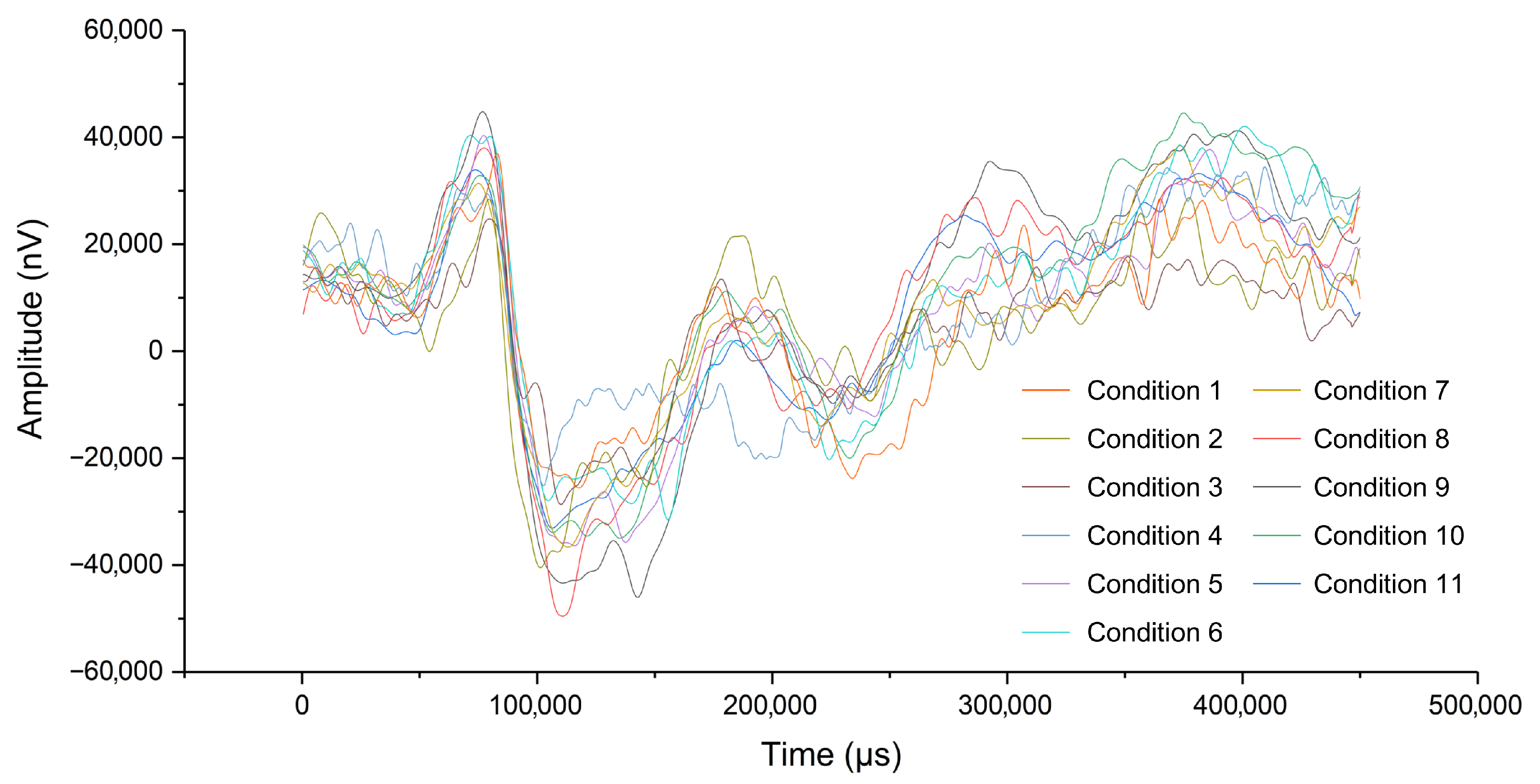
Under each experimental condition, every participant provided a subjective evaluation of the indoor comfort level, categorizing it as “uncomfortable”, “moderately comfortable”, or “relatively comfortable”. These responses were converted into discrete labels (0, 1, or 2) corresponding to the perceived comfort level. As a result, each recorded visual evoked potential (VEP) sample was assigned a label specific to both the participant and the experimental condition. The final dataset was constructed by aggregating all participant–condition combinations, with the resulting category distribution reflecting the frequency of individual subjective evaluations across the three comfort categories. In the VEP acquisition experiment, which encompassed 27 distinct working conditions, a total of 279 valid VEP samples were obtained. Each sample was recorded over a duration of 45,000 µs. With a sampling interval of 500 µs, every sample comprises 900 temporal data points, resulting in an evoked potential data length of 900 units. All VEP data were labeled according to the comfort ratings provided by participants under the corresponding experimental conditions, with the three labels (0/1/2) representing discomfort, moderate comfort, and relative comfort, respectively. Figure 5 illustrates the evoked potential waveforms collected from Tester 001 under working conditions 1 to 11. The vertical axis denotes the amplitude of the evoked potential in nanovolts (nV), while the horizontal axis represents the time in microseconds (µs).

2.3. Recurrent Neural Network

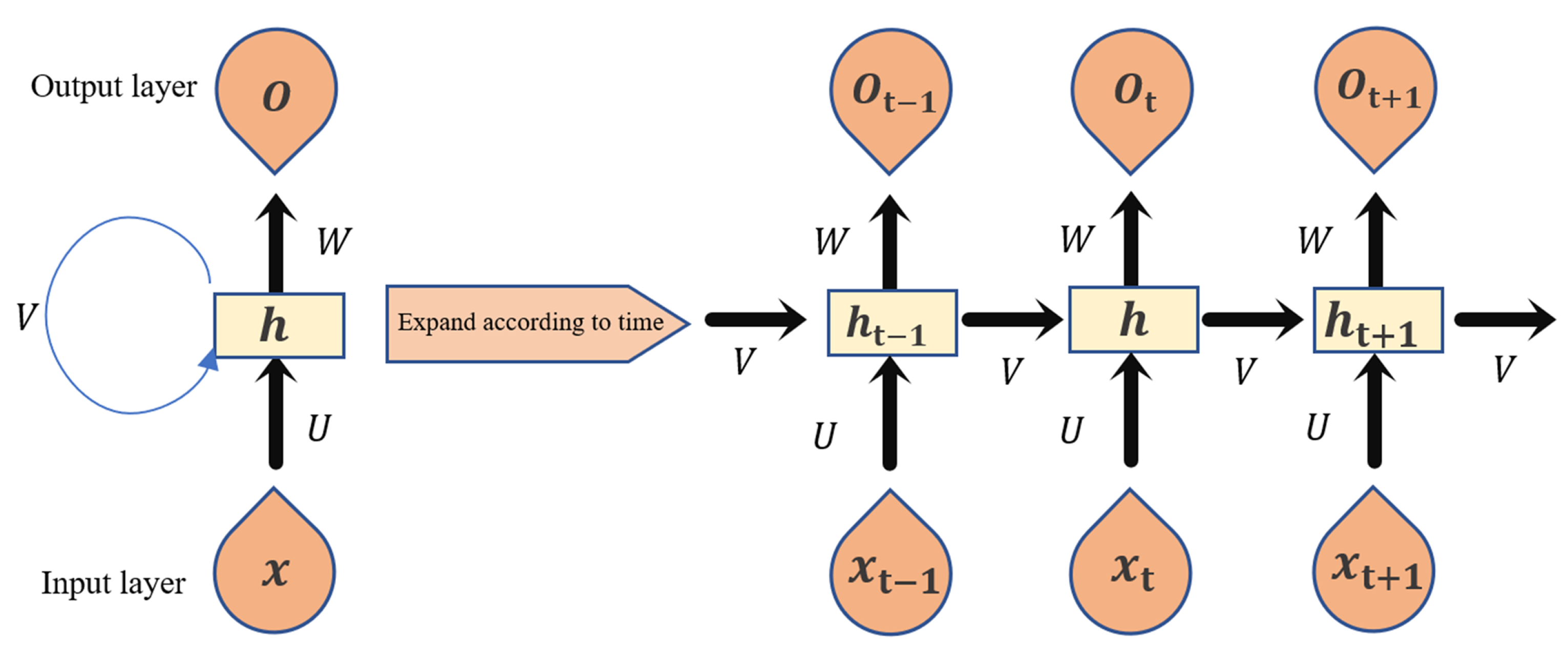
RNN is a type of neural network that takes sequential data as input, connects all the recurrent units in a chain, and recursively processes the sequence in the forward direction [39]. The internal recurrent structure of RNNs allows them to preserve information from previous time steps and maintain their long-term memory while processing time series data [40]. This structure enables RNNs to learn long-term dependencies from time series data and capture long-term patterns and trends. In time series data classification tasks, RNNs can consider the data at each time step and their relationships to make the final classification decision. Overall, RNNs’ internal recurrent structure and long-term dependencies make them particularly suitable for handling long sequential time series data such as EEG data. Figure 6 shows the general structure of an RNN. As shown in Figure 6, the output value at time t is represented by o t , and x t represents the input at time t. W and U are the parameter matrices in the network, with U representing the parameter matrix from the output layer to the hidden layer and W representing the parameter matrix from the hidden layer to the output layer. V represents the weight matrix for each time step. The relevant formulae for RNN are shown below [41].
o t = g ( V · s t )
s t = f ( U · x t + W · s t 1 )

2.4. LSTM and GRU

Due to the problem of vanishing gradients, RNNs have insufficient ability to store long-term information when processing long time series data. LSTM, as a kind of RNN, retains some of the characteristics of RNN while also incorporating the functions of preserving and forgetting information, which effectively solves the problem of short-term memory, and performs well in processing long time series data.
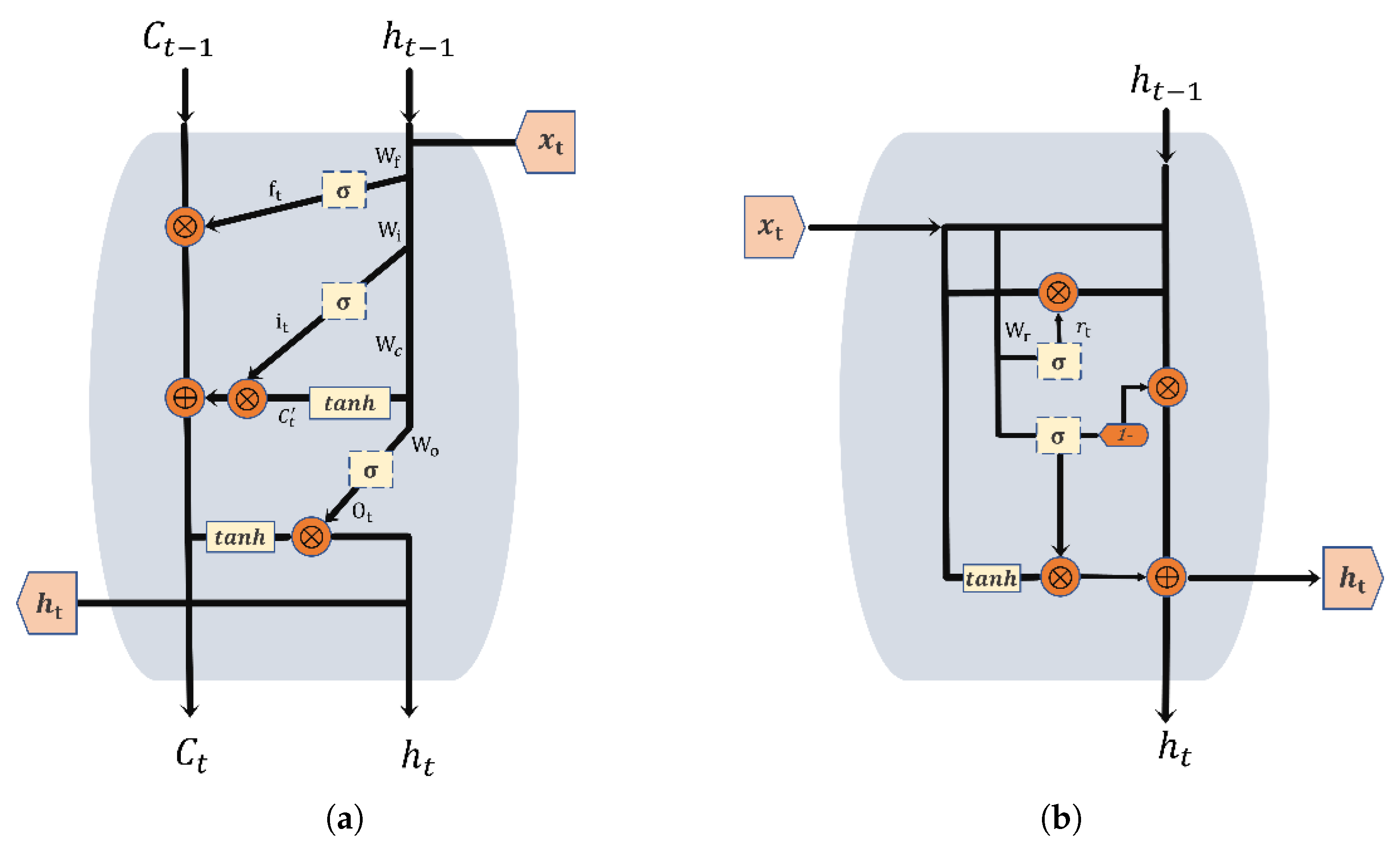
The structure and internal information flow of an LSTM cell are shown in Figure 7a. In an LSTM cell, the input usually consists of two parts: the previous output h t 1 , also known as the hidden state, and the current input x t . After being linearly transformed, these two inputs are fed into three gate controllers: the forget gate, the input gate, and the output gate [42]. The forget gate is used to control how the previous memory C t 1 affects the current memory unit, and its calculation formula is shown in (3), where W f and b f are the weight and bias of the forget gate, respectively, and σ is the sigmoid function. f t is the output of the forget gate, which has a value range of [ 0 , 1 ] , and it determines how much information of the cell state should be discarded. When f t approaches 1, the forget gate retains all the information of the cell state, while when f t approaches 0, the forget gate discards all the information of the cell state.
f t = σ ( W f [ h t 1 , x t ] + b f )
GRU and LSTM are two common architectures of recurrent neural networks that can be used for processing time series data. They both use gate mechanisms to control the flow of information, thereby solving the problem of vanishing and exploding gradients in traditional RNNs. Compared to LSTM, the GRU structure is more concise, faster, computationally efficient, and easier to train. In addition, in terms of gate mechanisms, LSTM has three gate controllers: input gate, forget gate, and output gate. The GRU has only two gate controllers: an update gate and a reset gate [43]. It can quickly decide whether to reset the hidden state at the current time step and how much of the information obtained at the current time step should be combined with the hidden state. The internal structure of the GRU is approximately shown in Figure 7b. The gate mechanism of GRU is simplified compared to that of LSTM, and this structure also reduces the number of GRU parameters.
Compared to GRU, the complex structure of LSTM can usually capture information with more complex time-dependent data, so LSTM may be more effective in processing long-term data such as EEG. The use of GRU or LSTM should depend on the specific situation. Overall, both GRU and LSTM are effective RNN architectures, but LSTM may be better suited for complex problems. GRU can be used for simple problems or time-sensitive scenarios because of its higher computational efficiency. Therefore, the decision to choose between GRU and LSTM should be based on the specific application requirements. In this study, both LSTM and GRU algorithms will be used to process EEG data under different indoor lighting conditions to seek the best results. LSTM and GRU improve the problem of long-term dependencies in RNN. By using a special structure to handle the propagation of information in the network, they allow neural networks to learn long-term dependencies in time series data and can better process temporal data. This study aims to analyze and evaluate indoor comfort by exploring EEG data. The EEG data collected in the experiment have obvious temporal characteristics. Therefore, LSTM and GRU recurrent neural networks will be used in this study to better extract useful information from EEG data and accurately classify and evaluate EEG data under different indoor lighting conditions. Therefore, this study will analyze and compare the accuracy and classification time of LSTM and GRU to compare their performance in processing long time series data.

2.5. Modeling

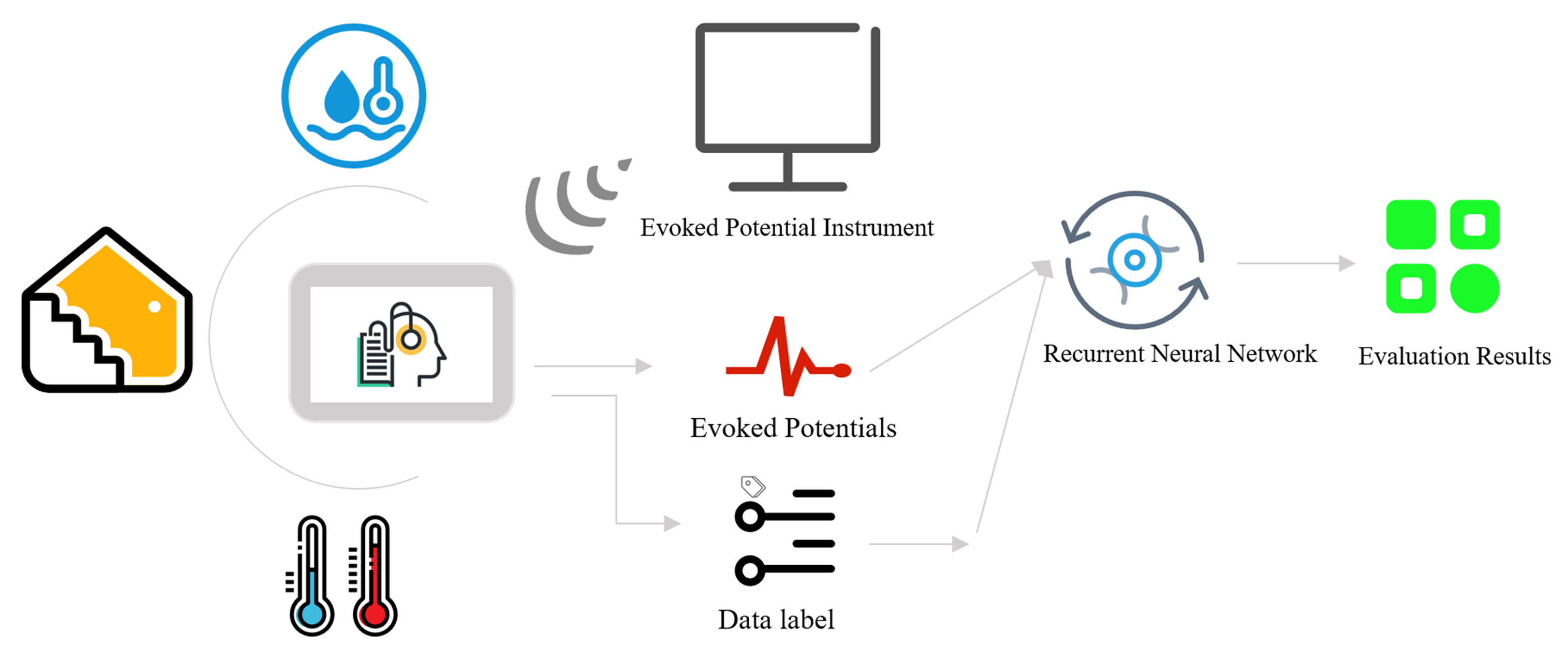
This study combines the advantages of using RNNs to process long-term sequential data and the mapping relationship between EEG data and indoor environmental comfort to construct an indoor lighting environment comfort evaluation model. Figure 8 shows the structure of the indoor lighting environment comfort evaluation model. The collected EEG data are combined with data labels and input into the recurrent neural network model for processing. Finally, the network model outputs a classification evaluation result of indoor environmental comfort.
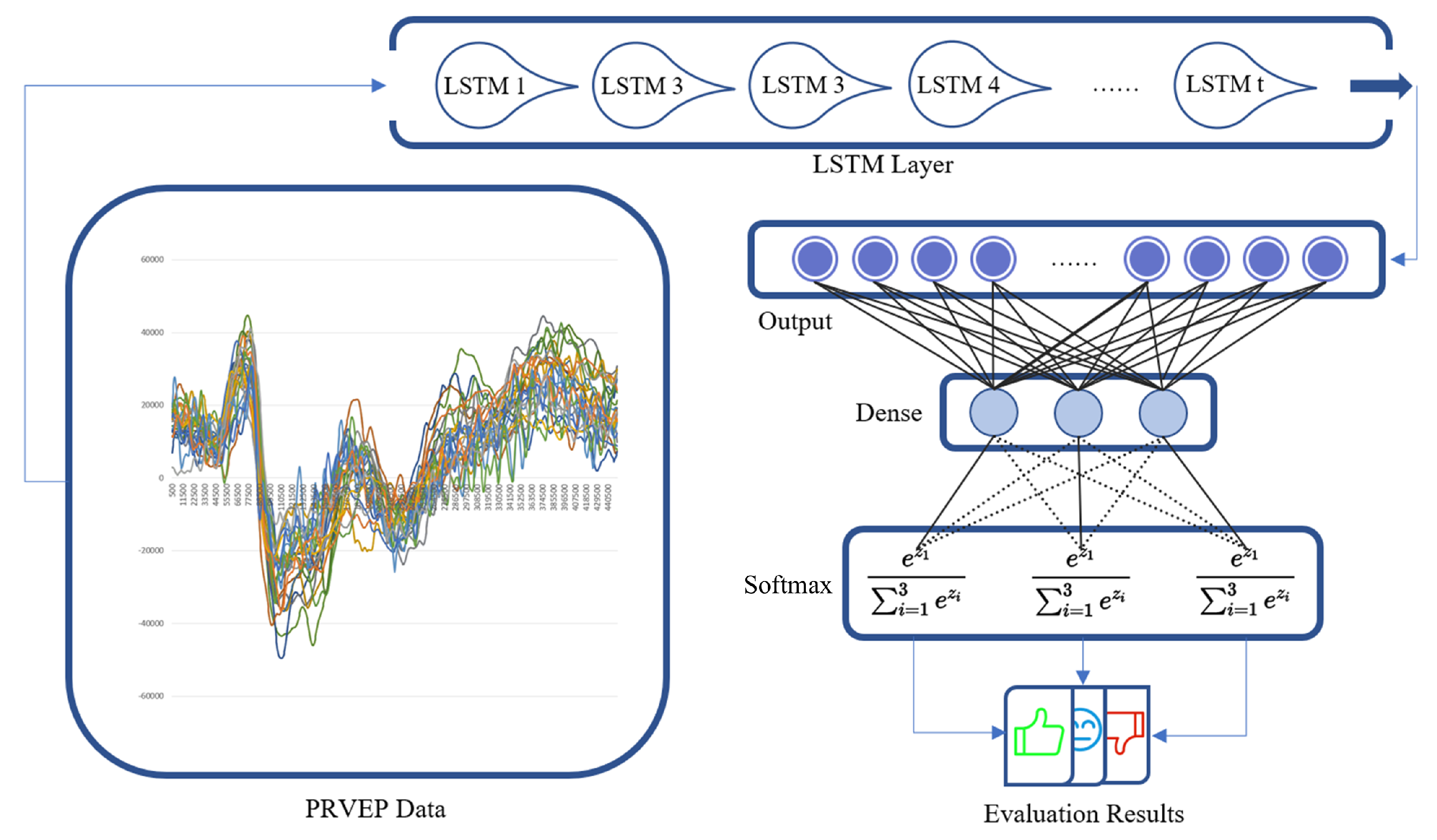
This study constructed an indoor lighting comfort evaluation model based on LSTM/GRU and EEG, as shown in Figure 9. The initial input of the model is the normalized indoor lighting-evoked potential data, which consists of n features. Assuming the input indoor lighting-evoked potential is x t = ( x t 1 , x t 2 , , x t n ) , we integrate these features into a s × n input matrix according to the time step s. Then, we feed this input matrix into the LSTM or GRU recurrent neural network model. In the recurrent neural network model, the time step s determines the number of times the sample is put in, and at each time step, we input the data sample into the model. The data are then classified based on the EEG data obtained at each time step through the hidden layer. The recurrent neural network model adopts a multilayer neural network model design, and to reduce the impact of data volume on experimental results and prevent overfitting, dropout layers are introduced between layers. Finally, using a fully connected layer as the endpoint, output the categories of indoor light environment comfort, and ultimately form a complete indoor light environment comfort evaluation model.
The system information of the experimental machine used for the research is as follows: the operating system is Windows 10, version number 22H2, the Central Processing Unit (CPU) is an Intel Core i9 12900k @3.9 GHz, and the machine has 64 GB of random access memory (RAM). The graphics card used in the machine is an NVIDIA GeForce RTX 3090 (nVidia Co., Santa Clara, CA, USA). Python version 3.7.2 is used as the primary language for the experiment. The machine learning numerical computing software framework used in the experiment is Google TensorFlow, and the version of TensorFlow used is TensorFlow 2.2.0.
After multiple experiments and result comparisons, this study adopted a multilayer LSTM structure in the design of the RNN architecture and parameters. The number of hidden layers in the neural network was set to 8, each with 64 units, and dropout layers were added between layers to control the percentage of neurons disconnected during linear transformations. The node retention probability parameter of the dropout layer was set to 0.8. Finally, a fully connected layer was used to form a complete recurrent neural network model. The structures of the GRU and LSTM were the same, both consisting of 8 hidden layers and a fully connected layer in the multilayer design. The models were trained using the Nadam optimizer with a constant learning rate of 0.001 and a batch size of 32. Compared with the Adam optimizer, the Nadam optimizer introduced a Nesterov momentum term, which can better estimate the direction of gradient descent, avoid becoming stuck in local minimum points, and improve the model’s generalization ability. Moreover, the Nadam optimizer can perform correction when updating parameters, thereby improving the efficiency and accuracy of training. The loss function used in this experiment was CategoricalCrossentropy. To improve the model performance and alleviate the problem of noise and incorrect labels in the training data, the label smoothing method was used to process the data labels. The label smoothing method smooths the probability distribution of training labels. Label smoothing is a regularization method used for classification problems that can reduce the overfitting degree of the model to noise or incorrect labels in the training data, prevent the model from overfitting during training, and improve the model’s generalization ability.
The training process was monitored using a validation set, and we implemented an early stopping routine with a patience of 20 epochs based on the validation loss to halt training if no improvement was observed and to prevent overfitting. The formula for label smoothing is shown in (4), where y ¯ i represents the smoothed label, y i represents the original label, K represents the total number of labels, and ϵ represents the smoothing parameter.
y ¯ i = ( 1 ϵ ) y i + ϵ K

3. Results and Discussion

This study collected indoor light environment EEG data based on an evoked potential instrument and a controllable environment laboratory and used GRU and LSTM algorithms to classify and evaluate the collected indoor light environment EEG.
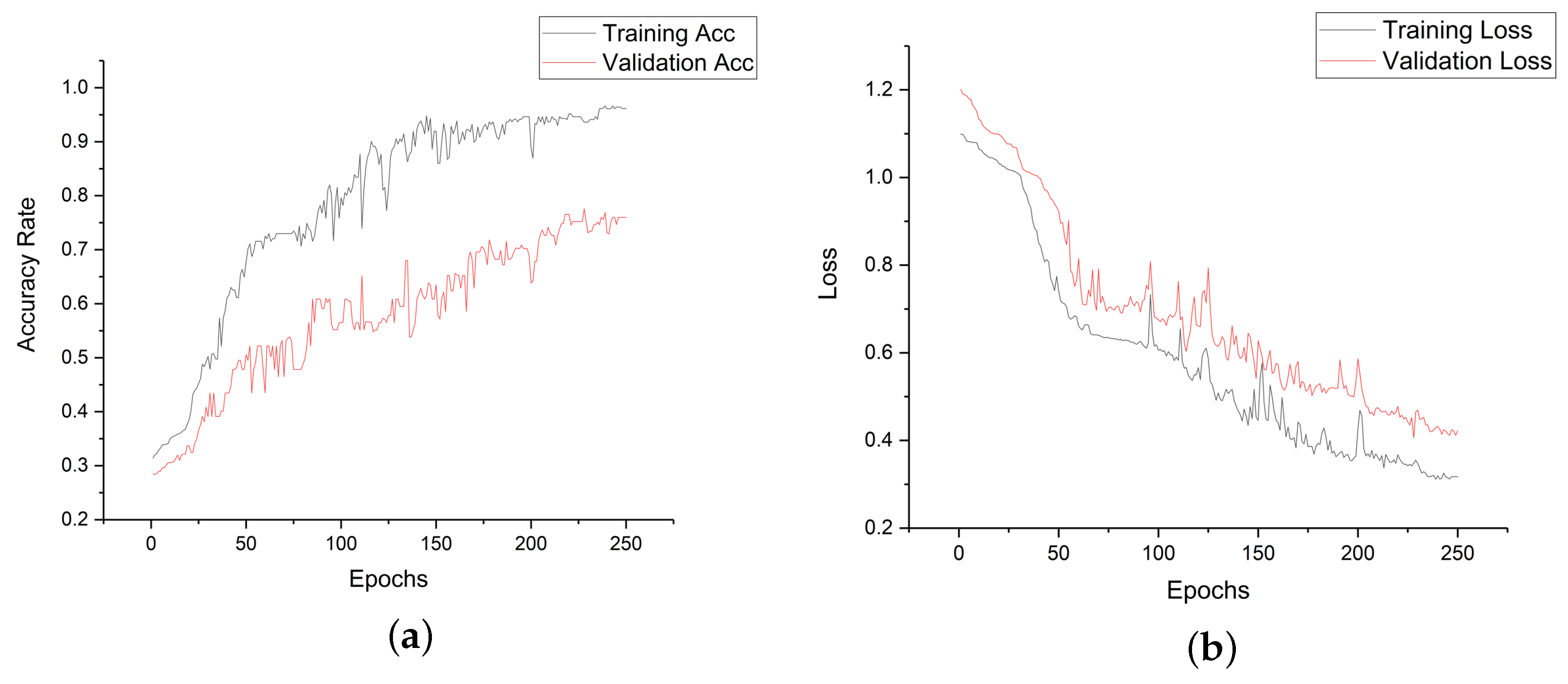
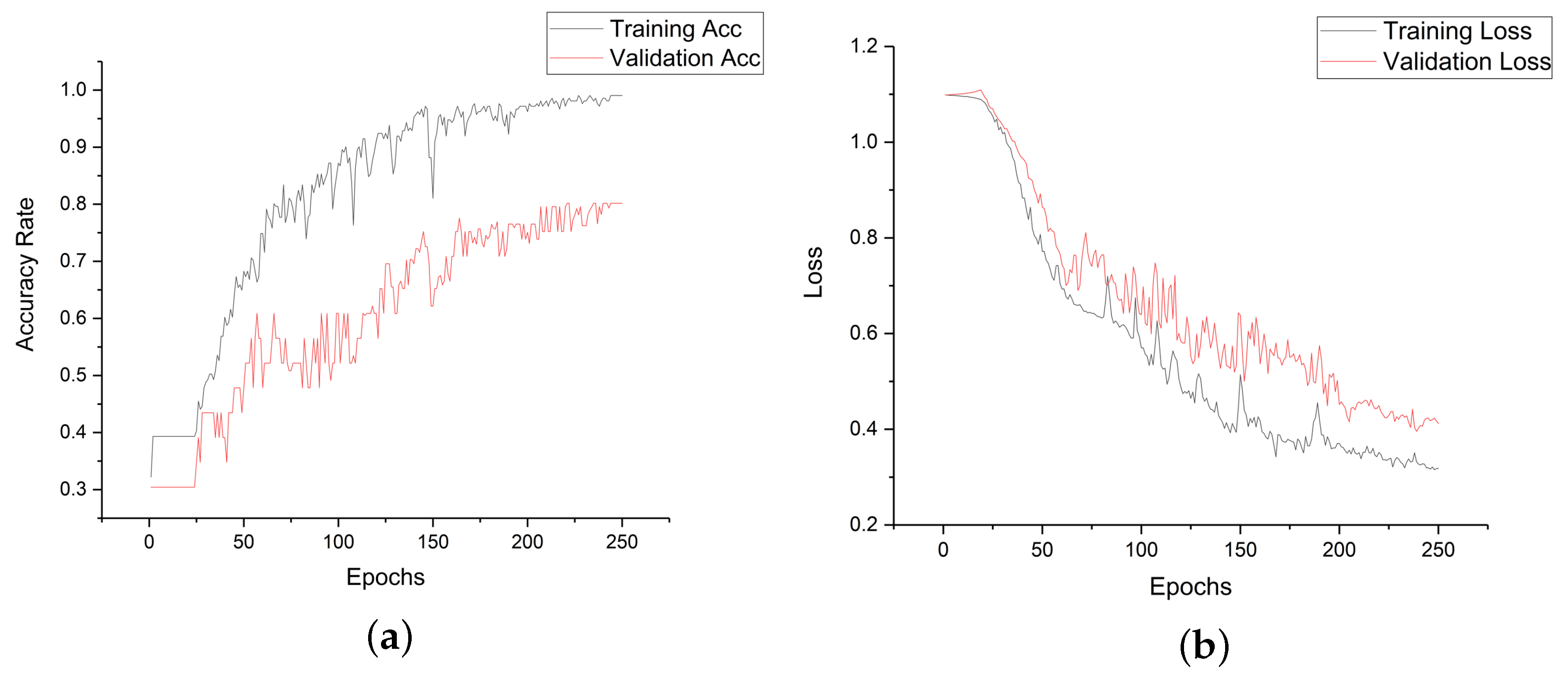
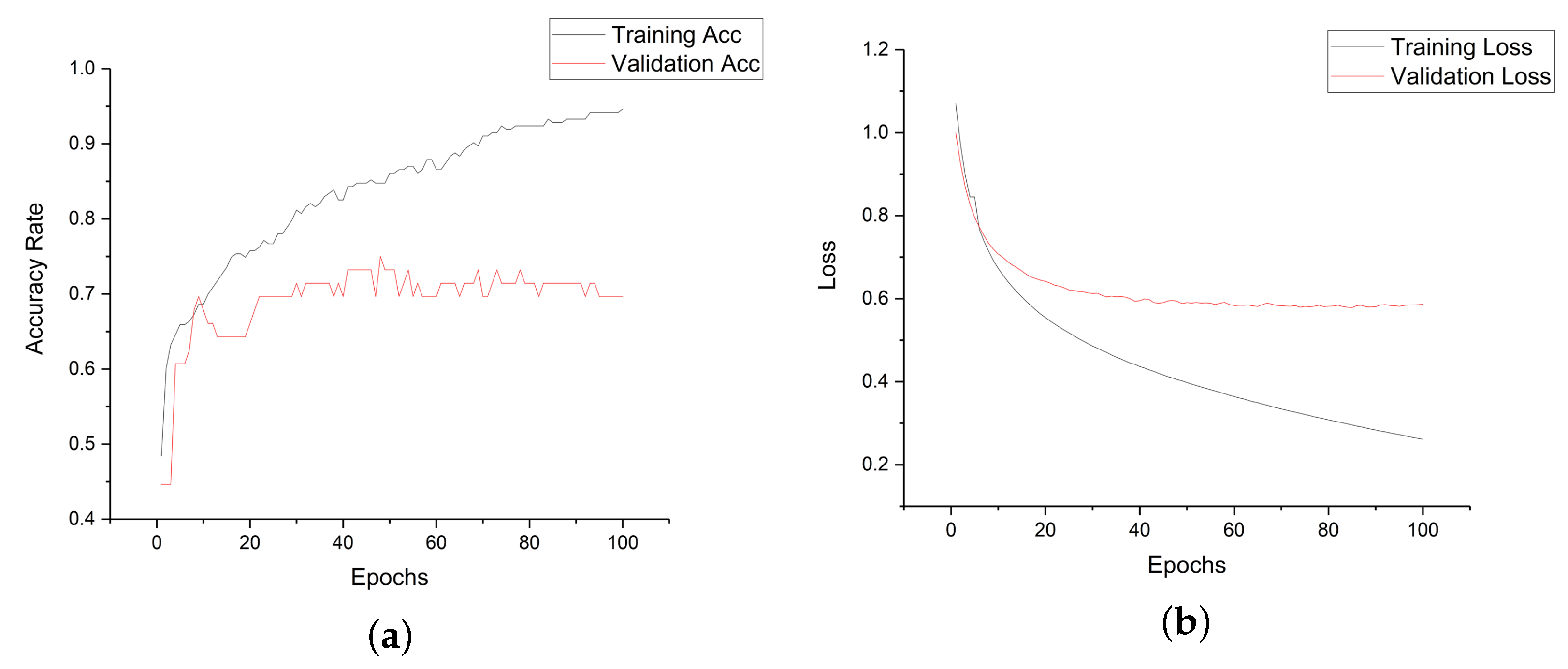
In order to rigorously evaluate the performance and generalization ability of the model, we segmented the dataset, with 75% of the data used as the training set for developing the model and 25% as an independent testing set. After 250 training cycles, the indoor lighting environment comfort evaluation model tends to converge, as shown in Figure 10 and Figure 11. At this point, the accuracy of GRU classification is 75.99%, and the classification time is 32.09 s. The accuracy of the LSTM classification is 80.16%, and the classification time is 36.21 s. To compare the performance and accuracy of recurrent neural network algorithms, this study also used a feedforward neural network (FNN) as a control. In this experiment, the number of hidden layers of the FNN is set to 5, the model optimizer used is the Nadam optimizer, and the loss function used is CategoricalCrossentropy. Figure 12 shows the loss and accuracy of the FNN for indoor lighting environment comfort classification after 100 epochs of training. The accuracy of the FNN classification is 69.74%, and the classification time is 2.31 s. As the number of model iterations increases, the loss and accuracy become stable.
In this study, we use four metrics to evaluate the performance of classification models: accuracy, precision, recall, and F1-score. Accuracy reflects the model’s performance differences across different categories. Precision measures the accuracy of the model in predicting positive samples, while recall measures the proportion of positive samples detected by the model in the true positive samples. The F1-score is a metric that comprehensively considers precision and recall, and it is the harmonic mean of precision and recall. The comparison of the performance of the FNN, LSTM, and GRU algorithms is shown in Table 3. Through analysis, it is found that LSTM has the best accuracy in the problem of indoor lighting comfort classification, followed by GRU, while FNN performs the worst. LSTM achieved an accuracy of 80.16 % in terms of accuracy, which can complete the task of evaluating indoor lighting comfort. The accuracy of LSTM was improved by 4.17% compared to GRU, but the time overhead was an additional 4.12 s compared to LSTM, which is due to the more complex structure of LSTM, resulting in a lower classification efficiency but an improved classification performance. The accuracy of the FNN in the problem of indoor lighting comfort classification is lower than that of LSTM and GRU, which is 69.64%. Although the time overhead of FNN is much lower than that of LSTM and GRU, its lower accuracy makes FNN not the optimal choice for solving the problem of indoor lighting comfort classification.
The analysis of precision, recall, and F1-score reveals a challenge in our model’s performance: while precision is high, the recall rates for the classes are relatively low. This pattern is often indicative of class imbalance within the dataset, where the distribution of samples across the three comfort levels is not uniform. A model trained on such imbalanced data may become biased towards the majority class, leading to a higher number of false negatives for the minority classes, which is reflected in a lower recall. To mitigate the potential negative effects of imbalance and improve generalization, we incorporated the label smoothing regularization technique during training. While this improved overall accuracy by approximately 8% compared to the baseline without label smoothing, it did not fully resolve the recall imbalance. Future iterations of the model will specifically target this issue.
The observed model bias, particularly the tendency to misclassify ‘moderate comfort’ samples as ‘discomfort’, while superficially a performance shortcoming, warrants a more nuanced interpretation from an application perspective. This systematic error can be attributed to the fundamental challenge of defining clear, physiological boundaries between contiguous subjective states. The ‘moderate comfort’ category, by its nature, represents a transitional zone between clear comfort and clear discomfort. It is plausible that the physiological signatures (VEP patterns) in this transitional state share more characteristics with the ‘discomfort’ state than with ‘relative comfort’. Consequently, the model learns a more conservative decision boundary, erring on the side of caution. Rather than being merely a limitation, this specific misclassification pattern holds significant practical value. In the context of indoor environmental assessment and smart building control, a system that prioritizes sensitivity to potential discomfort is highly desirable. A prediction of ‘discomfort’ for a state that is on the borderline functions as a valuable early warning. It signals that the current lighting environment is approaching a critical threshold that may lead to occupant unease. This allows a building management system to proactively adjust the lighting conditions preemptively, preventing the environment from degrading into a state of genuine discomfort. Therefore, this bias aligns well with the precautionary principle in human-centric building design, where the cost of a false positive is often far lower than the cost of a false negative.
Although current research prioritizes the end-to-end classification performance of deep learning models, the physiological interpretability of model decisions is a key consideration factor. The excellent accuracy of the LSTM model in classifying comfort indicates that it can automatically identify the most discriminative time periods in VEP signals. From the perspective of visual neurophysiology, a typical VEP waveform is defined by a series of negative and positive peaks, which are known to reflect early visual processing in the striatum and striatum cortex [44]. A large amount of literature has confirmed that the param of visual stimuli, including illuminance and color temperature, systematically adjust the latency and amplitude of these specific components [45]. Given this established knowledge, the discriminative power of our model is likely to stem from its learning sensitivity to these neurophysiological biomarkers. The LSTM architecture has advantages in simulating long-range dependencies and is particularly suitable for capturing temporal relationships and subtle changes in N75-P100-N135 sequences caused by different lighting conditions. Therefore, although attribution graphs were not explicitly visualized in this work, the high performance of our model provides strong indirect evidence that the learned patterns are not arbitrary, but consistent with potential visual neurophysiology influenced by illumination and CCT.

4. Conclusions

A good indoor environment comfort evaluation system is of great significance for improving indoor environment comfort and people’s quality of life. However, traditional indoor lighting environment comfort evaluation methods rely too much on subjectivity. Therefore, this study combines techniques such as EEG analysis, indoor environment design, and machine learning to propose a deep learning recursive neural network-based indoor environment comfort evaluation model, providing a new solution for indoor environment comfort evaluation. The experimental results show that compared with GRU and FNN models, the LSTM neural network algorithm achieve higher accuracy and lower time overhead in evaluating indoor lighting comfort, with an accuracy of 80.16%. This study selected the LSTM recurrent neural network with the best overall performance as the main evaluation model for indoor environmental comfort. This study provides a more objective evaluation method and a new evaluation approach for indoor environmental comfort assessment.
In future work, we will prioritize enhancing the model’s robustness and real-world applicability. The most immediate step is to expand the scale and diversity of the validation cohort, encompassing individuals of varying ages, cultural backgrounds, and visual acuity levels, to rigorously assess and improve the model’s generalizability. Concurrently, we will address the current limitation of suboptimal recall—an issue likely arising from class imbalance—by implementing and evaluating advanced techniques such as class-weighted loss functions and focal loss, with the aim of achieving more balanced performance across all comfort categories. Furthermore, we plan to explore the integration of consumer-grade wearable EEG devices to reduce operational costs and facilitate the transition of this assessment method from controlled laboratory settings to real-world deployment scenarios. Finally, a comparative analysis with additional baseline models will be incorporated to more comprehensively benchmark the performance of the proposed framework.

Author Contributions

Conceptualization, S.M., H.G. and X.S.; Methodology, S.M., S.L., and H.G.; Validation, S.L., X.Y. and X.S.; Formal analysis, X.Y. and X.S.; Writing—original draft, S.M. and S.L.; Writing—review and editing, X.Y., H.G. and X.S.; Visualization, S.L. and H.G.; Supervision, S.M. and X.S. All authors have read and agreed to the published version of the manuscript.

Funding

This research received no external funding.

Institutional Review Board Statement

The study was conducted in accordance with the Declaration of Helsinki, and approved by the Institutional Review Board of Medical College of Qingdao University (protocol code QDU-HEC-2024172 and date of approval [2 March 2024]).

Informed Consent Statement

Informed consent was obtained from all subjects involved in the study.

Data Availability Statement

The original contributions presented in this study are included in the article. Further inquiries can be directed to the corresponding author.

Conflicts of Interest

The authors declare no conflicts of interest.

References

  1. Irga, P.J.; Mullen, G.; Fleck, R.; Matheson, S.; Wilkinson, S.J.; Torpy, F.R. Volatile organic compounds emitted by humans indoors—A review on the measurement, test conditions, and analysis techniques. Build. Environ. 2024, 255, 111442. [Google Scholar] [CrossRef]
  2. Yang, T.; Zhao, L.; Li, W.; Wu, J.; Zomaya, A.Y. Towards healthy and cost-effective indoor environment management in smart homes: A deep reinforcement learning approach. Appl. Energy 2021, 300, 117335. [Google Scholar] [CrossRef]
  3. Weerasinghe, A.S.; Rasheed, E.O.; Rotimi, J. Occupants’ Decision-Making of Their Energy Behaviours in Office Environments: A Case of New Zealand. Sustainability 2023, 15, 2305. [Google Scholar] [CrossRef]
  4. Nikookar, N.; Sawyer, A.O.; Goel, M.; Rockcastle, S. Investigating the Impact of Combined Daylight and Electric Light on Human Perception of Indoor Spaces. Sustainability 2024, 16, 3691. [Google Scholar] [CrossRef]
  5. Chen, P.; Wang, L.; Wu, Y.; Liang, Z.; Yu, J.; Chen, T. Computational design of indoor lighting supported by artificial intelligence: Recent advances and future prospects. Build. Environ. 2025, 285, 113575. [Google Scholar] [CrossRef]
  6. Wong, L.T.; Mui, K.W.; Hui, P.S. A multivariate-logistic model for acceptance of indoor environmental quality (IEQ) in offices. Build. Environ. 2008, 43, 1–6. [Google Scholar] [CrossRef]
  7. Fantozzi, F.; Rocca, M. An Extensive Collection of Evaluation Indicators to Assess Occupants’ Health and Comfort in Indoor Environment. Atmosphere 2020, 11, 90. [Google Scholar] [CrossRef]
  8. Sugimoto, S.; Hataoka, H. Physiological effects of illuminance. J. Light Vis. Environ. 1986, 10, 1_15–1_20. [Google Scholar] [CrossRef]
  9. Guo, T.; Hu, S.; Liu, G. Evaluation Model of Specific Indoor Environment Overall Comfort Based on Effective-Function Method. Energies 2017, 10, 1634. [Google Scholar] [CrossRef]
  10. Yang, D.; Mak, C.M. Relationships between indoor environmental quality and environmental factors in university classrooms. Build. Environ. 2020, 186, 107331. [Google Scholar] [CrossRef]
  11. Kaushik, A.K.; Arif, M.; Syal, M.M.G.; Rana, M.Q.; Oladinrin, O.T.; Sharif, A.A.; Alshdiefat, A.A.S. Effect of Indoor Environment on Occupant Air Comfort and Productivity in Office Buildings: A Response Surface Analysis Approach. Sustainability 2022, 14, 15719. [Google Scholar] [CrossRef]
  12. Lu, S.; Liu, Y.; Sun, Y.; Yin, S.; Jiang, X. Indoor thermal environmental evaluation of Chinese green building based on new index OTCP and subjective satisfaction. J. Clean. Prod. 2019, 240, 118151. [Google Scholar] [CrossRef]
  13. Vieira, E.M.A.; Neves, A.I.A.; Falcão, C.A.; Sousa, R.V.C.; Carvalho, J.P.; Leite, W.K.S.; Da Silva, L.B. Comfort requirements assessment on indoor environmental quality in hospital’s ICU. In Proceedings of the Occupational Safety and Hygiene IV—Selected, Extended and Revised Contributions from the International Symposium Occupational Safety and Hygiene, Guimaraes, Portugal, 23–24 March 2016. [Google Scholar]
  14. Martinez-Molina, A.; Boarin, P.; Tort-Ausina, I.; Vivancos, J.L. Post-occupancy evaluation of a historic primary school in Spain: Comparing PMV, TSV and PD for teachers’ and pupils’ thermal comfort. Build. Environ. 2017, 117, 248–259. [Google Scholar] [CrossRef]
  15. Nian, F.; Wang, K. Study on indoor environmental comfort based on improved PMV index. In Proceedings of the 2017 3rd International Conference on Computational Intelligence & Communication Technology (CICT), Ghaziabad, India, 9–10 February 2017; pp. 1–4. [Google Scholar] [CrossRef]
  16. Shamsul, B.M.T.; Sia, C.C.; Ng, Y.G.; Karmegan, K.J.A.J. Effects of Light’s Colour Temperatures on Visual Comfort Level, Task Performances, and Alertness among Students. Am. J. Public Health Res. 2013, 1, 159–165. [Google Scholar] [CrossRef]
  17. Wang, Z.; Wang, F.; Ma, Z.; Bai, M.; Liu, S. Experimental investigation and evaluation of the performance of air-source heat pumps for indoor thermal comfort control. J. Mech. Sci. Technol. 2018, 32, 1437–1447. [Google Scholar] [CrossRef]
  18. Liu, H.; Shi, H. Evaluating the overall comfort of undergraduates by using the punishment substitution method. Indoor Built Environ. 2022, 31, 1577–1593. [Google Scholar] [CrossRef]
  19. Islam, M.S.; Dangol, R.; Hyvärinen, M.; Bhusal, P.; Puolakka, M.; Halonen, L. User acceptance studies for LED office lighting: Lamp spectrum, spatial brightness and illuminance. Light. Res. Technol. 2015, 47, 54–79. [Google Scholar] [CrossRef]
  20. Te Kulve, M.; Schlangen, L.; van Marken Lichtenbelt, W. Interactions between the perception of light and temperature. Indoor Air 2018, 28, 881–891. [Google Scholar] [CrossRef]
  21. Lee, J.; Moon, J.W.; Kim, S. Analysis of Occupants’ Visual Perception to Refine Indoor Lighting Environment for Office Tasks. Energies 2014, 7, 4116–4139. [Google Scholar] [CrossRef]
  22. Shen, E.; Hu, J.; Patel, M. Energy and visual comfort analysis of lighting and daylight control strategies. Build. Environ. 2014, 78, 155–170. [Google Scholar] [CrossRef]
  23. Tong, L.; Zhang, M.Z.; Hu, S.T.; Zhang, X. Experimental study on thermal sensation and physiological parameter changes under the interaction of environmental temperature and taste. Energy Build. 2025, 345, 116093. [Google Scholar] [CrossRef]
  24. McKinley, M.J.; Denton, D.A.; Ryan, P.J.; Yao, S.T.; Stefanidis, A.; Oldfield, B.J. From sensory circumventricular organs to cerebral cortex: Neural pathways controlling thirst and hunger. J. Neuroendocrinol. 2019, 31, e12689. [Google Scholar] [CrossRef]
  25. Saadon-Grosman, N.; Asher, T.; Loewenstein, Y. On the geometry of somatosensory representations in the Cortex. NeuroImage 2025, 317, 121321. [Google Scholar] [CrossRef]
  26. Godenzini, L.; Alwis, D.; Guzulaitis, R.; Honnuraiah, S.; Stuart, G.J.; Palmer, L.M. Auditory input enhances somatosensory encoding and tactile goal-directed behavior. Nat. Commun. 2021, 12, 4509. [Google Scholar] [CrossRef]
  27. Noachtar, S.; Remi, J.; Kaufmann, E. Electroencephalography—An Update. Klin. Neurophysiol. 2022, 53, 243–252. [Google Scholar] [CrossRef]
  28. Teplan, M. Fundamentals of EEG Measurement. Meas. Sci. Rev. 2002, 2, 1–21. [Google Scholar]
  29. Peng, Y.; Lin, Y.; Fan, C.; Xu, Q.; Xu, D.; Yi, S.; Zhang, H.; Wang, K. Passenger overall comfort in high-speed railway environments based on EEG: Assessment and degradation mechanism. Build. Environ. 2022, 210, 108711. [Google Scholar] [CrossRef]
  30. Küller, R.; Wetterberg, L. Melatonin, cortisol, EEG, ECG and subjective comfort in healthy humans: Impact of two fluorescent lamp types at two light intensities. Light. Res. Technol. 1993, 25, 71–80. [Google Scholar] [CrossRef]
  31. Shan, X.; Yang, E.; Zhou, J.; Chang, V.W.C. Human-building interaction under various indoor temperatures through neural-signal electroencephalogram (EEG) methods. Build. Environ. 2018, 129, 46–53. [Google Scholar] [CrossRef]
  32. Guan, H.; Hu, S.; Lu, M.; He, M.; Zhang, X.; Liu, G. Analysis of human electroencephalogram features in different indoor environments. Build. Environ. 2020, 186, 107328. [Google Scholar] [CrossRef]
  33. Wu, M.; Li, H.; Qi, H. Using electroencephalogram to continuously discriminate feelings of personal thermal comfort between uncomfortably hot and comfortable environments. Indoor Air 2020, 30, 534–543. [Google Scholar] [CrossRef]
  34. Lu, M.; Hu, S.; Mao, Z.; Liang, P.; Xin, S.; Guan, H. Research on work efficiency and light comfort based on EEG evaluation method. Build. Environ. 2020, 183, 107122. [Google Scholar] [CrossRef]
  35. Stinear, C.M.; Byblow, W.D.; Ackerley, S.J.; Smith, M.C.; Borges, V.M.; Barber, P.A. PREP2: A biomarker-based algorithm for predicting upper limb function after stroke. Ann. Clin. Transl. Neurol. 2017, 4, 811–820. [Google Scholar] [CrossRef]
  36. Bembenek, J.P.; Kurczych, K.; Karliński, M.; Członkowska, A. The prognostic value of motor-evoked potentials in motor recovery and functional outcome after stroke—A systematic review of the literature. Funct. Neurol. 2012, 27, 79–84. [Google Scholar] [CrossRef] [PubMed]
  37. Murtazina, M.S.; Avdeenko, T.V. Classification of Brain Activity Patterns Using Machine Learning Based on EEG Data. In Proceedings of the 2020 1st International Conference Problems of Informatics, Electronics, and Radio Engineering (PIERE), Novosibirsk, Russia, 10–11 December 2020; pp. 219–224. [Google Scholar] [CrossRef]
  38. Chowdary, M.K.; Anitha, J.; Hemanth, D.J. Emotion Recognition from EEG Signals Using Recurrent Neural Networks. Electronics 2022, 11, 2387. [Google Scholar] [CrossRef]
  39. Kumar, M.; Kumar, D.R.; Khatti, J.; Samui, P.; Grover, K.S. Prediction of bearing capacity of pile foundation using deep learning approaches. Front. Struct. Civ. Eng. 2024, 18, 870–886. [Google Scholar] [CrossRef]
  40. Tasneem, S.; Ageeli, A.A.; Alamier, W.M.; Hasan, N.; Safaei, M.R. Organic catalysts for hydrogen production from noodle wastewater: Machine learning and deep learning-based analysis. Int. J. Hydrogen Energy 2024, 52, 599–616. [Google Scholar] [CrossRef]
  41. Meng, D.; Chen, X.; Wei, Z.; Ji, S. Prediction of flexural and uniaxial compressive strengths of sea ice with optimized recurrent neural network. Ocean. Eng. 2023, 288, 115921. [Google Scholar] [CrossRef]
  42. Zhang, Y.; Gu, Z.; Thé, J.V.; Yang, S.X.; Gharabaghi, B. The Discharge Forecasting of Multiple Monitoring Station for Humber River by Hybrid LSTM Models. Water 2022, 14, 1794. [Google Scholar] [CrossRef]
  43. Mahjoub, S.; Chrifi-Alaoui, L.; Marhic, B.; Delahoche, L. Predicting Energy Consumption Using LSTM, Multi-Layer GRU and Drop-GRU Neural Networks. Sensors 2022, 22, 4062. [Google Scholar] [CrossRef]
  44. Graham, S.L.; Klistorner, A. The Visual Evoked Potential in Humans. In Stimulation and Inhibition of Neurons; Pilowsky, P.M., Farnham, M.M.J., Fong, A.Y., Eds.; Humana Press: Totowa, NJ, USA, 2013; pp. 287–299. [Google Scholar]
  45. Bornstein, M.H.; Mash, C.; Arterberry, M.E.; Gandjbakhche, A.; Nguyen, T.; Esposito, G. Visual stimulus structure, visual system neural activity, and visual behavior in young human infants. PLoS ONE 2024, 19, e0302852. [Google Scholar] [CrossRef] [PubMed]
Figure 1. Laboratory internal design.
Buildings 15 04571 g001
Figure 2. Inner laboratory on-site environment.
Buildings 15 04571 g002
Figure 3. Evoked potential instrument.
Buildings 15 04571 g003
Figure 4. PRVEP collection process.
Buildings 15 04571 g004
Figure 5. Visual evoked potential data of tester 001.
Buildings 15 04571 g005
Figure 6. Structure diagram of RNN.
Buildings 15 04571 g006
Figure 7. LSTM cell and GRU cell schematic diagram. (a) LSTM cell schematic. (b) GRU cell schematic.
Buildings 15 04571 g007
Figure 8. Evaluation model of indoor light environment comfort.
Buildings 15 04571 g008
Figure 9. Indoor light environment comfort evaluation model based on LSTM/GRU and EEG.
Buildings 15 04571 g009
Figure 10. GRU accuracy curve and loss curve. (a) GRU accuracy curve. (b) GRU loss curve.
Buildings 15 04571 g010
Figure 11. LSTM accuracy curve and loss curve. (a) LSTM accuracy curve. (b) LSTM loss curve.
Buildings 15 04571 g011
Figure 12. FNN accuracy curve and loss curve. (a) FNN accuracy curve. (b) FNN loss curve.
Buildings 15 04571 g012
Table 1. Basic information of testers.
Maximum Age (Year)Minimum Age (Year)Average Age (Year)
Male262223.9
Female252223.3
All Tester262223.6
Table 2. Indoor environmental conditions.
ConditionsTemperature (°C)Illuminance (lx)Decibel (dB)Color-Temperature (K)
118100505700
218100504000
318100503000
418300505700
518300503000
618300504000
718500503000
818500504000
918500505700
1022300504000
1122500503000
1222300505700
1322500503000
1422500504000
1522500505700
1622100503000
1722100505700
1822100504000
1926500503000
2026500505700
2126500504000
2226300505700
2326300504000
2426300503000
2526100505700
2626100503000
2726100504000
Table 3. FNN, LSTM and GRU performance comparison.
AlgorithmAccuracyPrecisionRecallF1-ScoreTime
FNN69.64%73.58%41.96%53.44%2.31s
LSTM80.16%89.18%44.54%59.41%36.21s
GRU75.99%83.96%42.85%56.74%32.09s
Disclaimer/Publisher’s Note: The statements, opinions and data contained in all publications are solely those of the individual author(s) and contributor(s) and not of MDPI and/or the editor(s). MDPI and/or the editor(s) disclaim responsibility for any injury to people or property resulting from any ideas, methods, instructions or products referred to in the content.