
Article

Balancing Thermal Comfort and Energy Efficiency of a Public Building Through Adaptive Setpoint Temperature
1
Sustainable Architecture Certification Business Division, Chungyeon Corp., Seoul 06248, Republic of Korea
2
Department of Architectural Engineering, University of Ulsan, Ulsan 44610, Republic of Korea
3
Green Building Division, Nogsaegdociro Co., Ulsan 44926, Republic of Korea
*
Author to whom correspondence should be addressed.
Buildings 2025, 15(24), 4568; https://doi.org/10.3390/buildings15244568
Submission received: 24 November 2025 / Revised: 5 December 2025 / Accepted: 15 December 2025 / Published: 18 December 2025

Abstract

Buildings account for a substantial share of global energy use, with cooling and heating systems contributing significantly to this demand. Conventional fixed setpoint temperatures overlook occupants’ thermal adaptability, often resulting in unnecessary energy consumption. Although adaptive setpoint temperatures have been investigated in residential and conventional office buildings, their applicability to public buildings, where occupancy is highly variable and indoor–outdoor thermal exchange occurs frequently, remains insufficiently explored. This study examines the performance of an adaptive cooling setpoint strategy in a public building in South Korea through simulation and in situ evaluation. A calibrated simulation model was used to compare cooling energy consumption between fixed and adaptive setpoint temperatures. Simulations indicated an overall 9.0% reduction in cooling energy use, with monthly savings exceeding 11.0% during cooling-dominant months. Validation results confirmed a 7.7% daily energy reduction, while survey results verified that occupant thermal comfort was maintained. The study findings indicate that adaptive thermal comfort-based setpoint temperature control shows promise for effective application in public buildings with similar operational characteristics, improving energy efficiency without compromising occupant comfort. This approach offers a practical pathway for sustainable HVAC operation in buildings with dynamic occupancy and operation features.

1. Introduction

1.1. Overview

Buildings account for a substantial portion of global energy consumption. According to the International Energy Agency (IEA), approximately 40% of total energy consumption occurs in buildings [1]. Among all end-uses, Heating, Ventilation, and Air-Conditioning (HVAC) systems represent the largest portion of building energy demand [2]. Consequently, many national energy conservation policies prioritize reducing the energy consumed by HVAC systems. Most previous energy-saving efforts have focused on retrofit measures, including HVAC equipment upgrades, enhanced airtightness, and improved thermal insulation. However, the energy performance of buildings is influenced not only by their thermal characteristics and system efficiency but also by operational practices. This point is particularly significant because rebound effects, where occupants demand more stringent indoor conditions following efficiency upgrades, can diminish the expected energy savings from retrofit measures [3].
HVAC systems are primarily operated to maintain satisfactory indoor thermal conditions. One practical and widely studied operational strategy for reducing HVAC energy use is adjusting the setpoint temperature, which directly influences system load and energy demand. Numerous studies have quantified the impact of cooling and heating setpoint adjustments on energy consumption. For example, Hoyt et al. [4] demonstrated that adjusting cooling and heating setpoint temperatures by 1 °C and 3 °C, respectively, produced HVAC energy savings ranging from 32% to 73% across seven climate zones. Spyropoulos and Balaras [5] observed that reducing the heating setpoint to 20 °C and increasing the cooling setpoint to 26 °C resulted in annual energy savings of up to 45% in Greek bank branches. Palut et al. [6] reported that increasing cooling setpoints by up to 4 °C reduced annual HVAC energy use by one-third in a Swiss office building. Saidur [7] similarly found that raising cooling setpoints from 22 °C to 26 °C yielded up to 24% energy savings in Malaysian offices. Additional studies [8,9,10] consistently confirm the strong influence of setpoint temperature on HVAC energy use. A key limitation of most prior studies is assumption that HVAC systems operate with fixed setpoint temperatures throughout the cooling and heating season. Such static operation does not reflect real-world human thermal adaptability. Extensive research has shown that thermal comfort perception is dynamic and varies with outdoor climate conditions [11,12]. Incorporating this adaptability into HVAC operation, by defining setpoints based on adaptive thermal comfort, offers an opportunity to reduce energy consumption without compromising occupant comfort.
Several studies have evaluated adaptive thermal comfort-based setpoint temperatures, commonly referred to as adaptive setpoint temperatures. Sánchez-Guevara et al. [13] estimated 20–80% energy savings in Spanish residential buildings using monthly adaptive setpoint temperatures derived from ASHRAE’s adaptive comfort model. Wang et al. [14] found that adaptive setpoint temperatures provided the greatest energy savings (up to 50%) among several control strategies tested across five climate zones. Similarly, other study [15] demonstrated 10–46% energy reductions in residential buildings depending on climate conditions. Although most studies have focused on residential buildings, a few studies have assessed adaptive thermal comfort in non-residential buildings. Van der Linden et al. [16] examined adaptive setpoints in two office buildings in the Netherlands, one modern building with comfort-sensitive occupants and an older building with less sensitive occupants. Sánchez-García et al. [17] evaluated adaptive setpoints as a strategy to reduce office energy consumption under future climate scenarios. Another simulation-based study [18] reported up to 82% heating energy savings in a museum using adaptive setpoint control.

1.2. Research Gap

Despite growing interest in adaptive thermal comfort, most studies have concentrated on residential and conventional office buildings. Prior studies further indicate that behavioral engagement in pro-environmental actions, linking intentions to measurable energy savings, is more effective in residential and private office buildings [19,20]. In such environments, occupants often tolerate broader indoor temperature ranges due to the direct financial implications of energy use [21,22]. By contrast, public buildings operate under fundamentally different conditions. Occupants typically have minimal personal incentives to engage in energy-saving behavior, and their willingness or ability to adapt to varying indoor conditions may be limited [23,24]. Moreover, public buildings often experience highly variable and non-predefined occupancy, along with frequent entry and exit, which can increase thermal exchange between indoor and outdoor environments. Such conditions raise important questions whether adaptive setpoint control can maintain acceptable comfort while reducing energy consumption in public buildings.
Although several studies have demonstrated energy savings from adaptive setpoint temperatures, only a limited number have concurrently evaluated their impact on occupant comfort through real-world implementation. Evidence regarding their broader applicability across different building types, particularly public buildings, remains sparse. To address this gap, this study examines the performance of adaptive thermal comfort-based cooling setpoint control in a public building. The following research questions guide the study: (1) Can adaptive setpoint temperatures maintain acceptable indoor thermal conditions in a public building characterized by highly variable occupancy and frequent indoor–outdoor thermal exchange? (2) How much energy can adaptive setpoint temperatures save in this type of building? (3) Given that thermal comfort perceptions vary across building types, how does adaptive setpoint control influence occupant comfort in a public building context?

1.3. Objectives

To answer these questions, this study evaluates the energy-saving potential and occupant comfort implications of applying adaptive setpoint temperatures in a public building located in Ulsan, South Korea. A simulation model of the case study building is used to estimate cooling energy consumption under conventional fixed and adaptive setpoint temperatures. To validate the estimated energy savings, the proposed method is implemented in the case study building, enabling assessment of both energy reduction and occupant thermal comfort.
The reminder of this paper is structured as follows: Section 2 describes the study methodology, including the case study building, simulation modeling, and the adaptive thermal comfort model. Section 3 presents simulation-based energy savings associated with adaptive setpoint control. Section 4 provides the in situ validation results, and Section 5 summarizes the key conclusions and implications of the study.

2. Methods

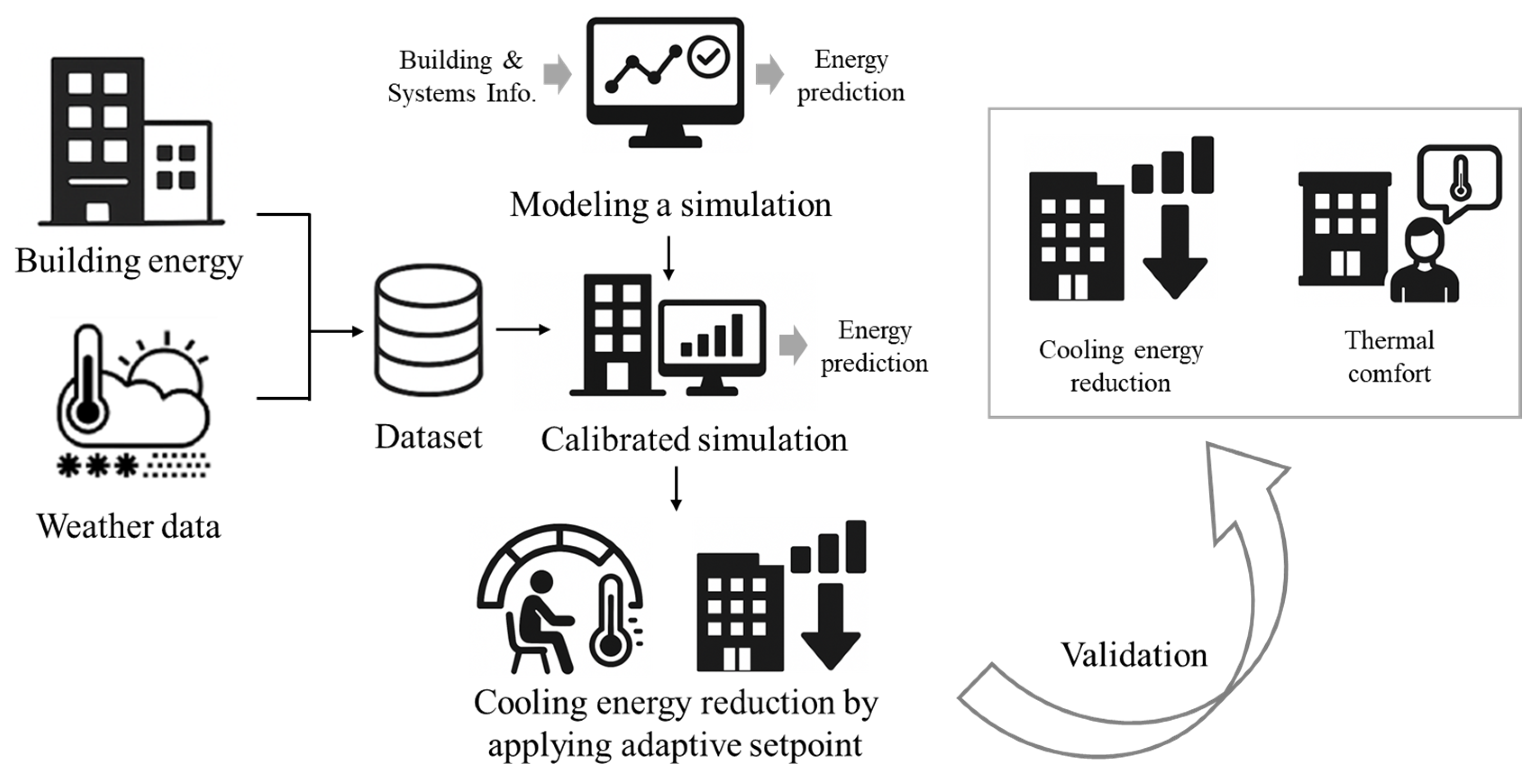
This study aimed to propose an energy-efficient HVAC control method that accounts for both energy reduction and occupant thermal comfort by applying an adaptive thermal comfort-based cooling setpoint temperature. The methodological procedure is shown in Figure 1. An office building located in Ulsan, South Korea, was selected as the case study. The building was modeled using DesignBuilder v7/EnergyPlus v9.4 building energy simulation program. To enhance model reliability, calibration was performed to align the simulation outputs with actual building energy consumption, focusing sequentially on weather files, building envelope, HVAC systems, and operation schedules. Following model calibration, adaptive thermal comfort-based cooling setpoints were implemented and compared with the conventional fixed setpoints to evaluate potential energy savings through simulation. A six-day in situ experiment was also conducted in the same building to assess real-world energy savings and thermal comfort under both setpoint conditions using measured data and occupant surveys.

2.1. Case Study Building

This study was conducted on an office building located in Ulsan, South Korea. The building, completed in 2019, is a reinforced concrete structure consisting of four stories. It serves as a multifunctional facility for cultural activities and public gatherings. The building has a total floor area of 929.05 m2. The internal space is zoned by function: a lecture hall on the first floor, an exhibition hall on the second floor, a 5D theater and VR experience room on the third floor, and a café on the fourth floor. The building is equipped with an air-conditioning system that is used when cooling or heating is required. In this context, some clarification regarding the applicability of the adaptive comfort model is needed. When de Dear and Brager [25] first introduced the model in 1998, it was considered applicable only to naturally ventilated buildings because the original RP-884 database used to develop the model consisted predominantly of such buildings. Subsequent work by Parkinson et al. [26], however, by expanding the research and incorporating a wider range of building types, demonstrated that the adaptive comfort model can also be applied to buildings with air-conditioning systems, provided that occupants are given adaptive opportunities, such as operable windows or fans. The case study included an air-conditioning system; however, occupants have control over their indoor environment through operable facade openings. Therefore, the concept of adaptive comfort is considered applicable to this building.
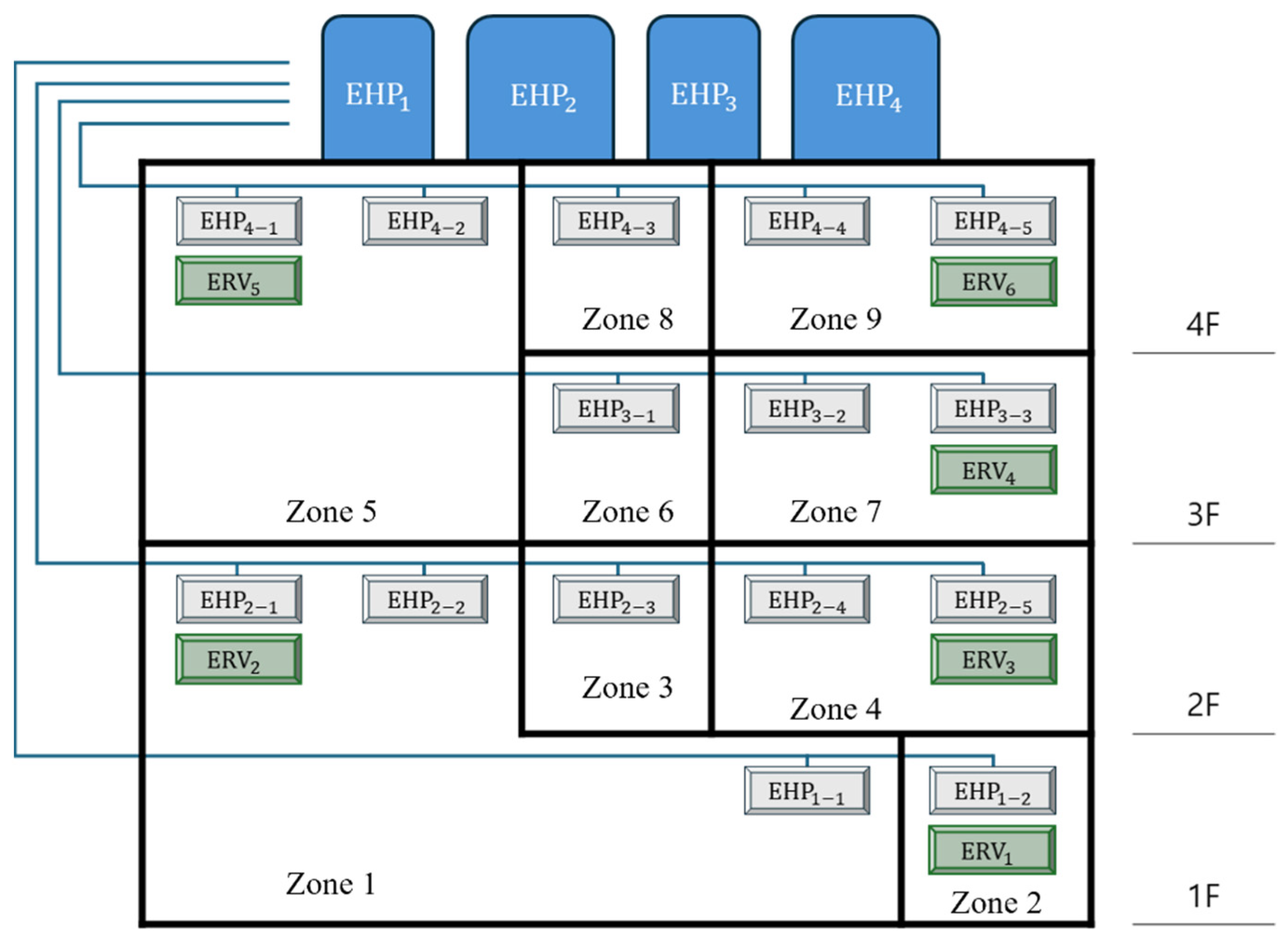
The HVAC system of the building consists of Electric Heat Pumps (EHPs) and Energy Recovery Ventilators (ERVs), both of which use electricity as the primary energy source. Each EHP outdoor unit is connected to multiple indoor units. The building is equipped with four outdoor units and fifteen indoor units, classified into three types of outdoor units and four types of indoor units based on capacity. For instance, indoor units EHP1-1 and EHP1-2 on the first floor, as shown on Figure 2, are connected to the rooftop outdoor unit EHP1. Figure 2 presents the configuration showing how the indoor units from all the nine thermal zones in the case study building are connected to their respective EHP outdoor units. The ERV system transfers heat from exhaust air to incoming fresh air using a heat exchanger, enabling heat recovery ventilation that reduces energy consumption associated with HVAC. Six ERV units are installed in the building, consisting of three models with different rated airflows. In addition, the case study building is equipped with a Building Energy Management System (BEMS). BEMS integrates control, monitoring, and operational functions to maintain indoor comfort and manage energy use efficiently. It offers real-time data visualization, monitoring, and query capabilities, enabling building operators to obtain insights for energy planning and operational optimization. The system also supports HVAC system control and adjustment. Energy consumption data collected via BEMS can be used for simulation calibration and performance verification.

2.2. Energy Simulation Modeling and Calibration

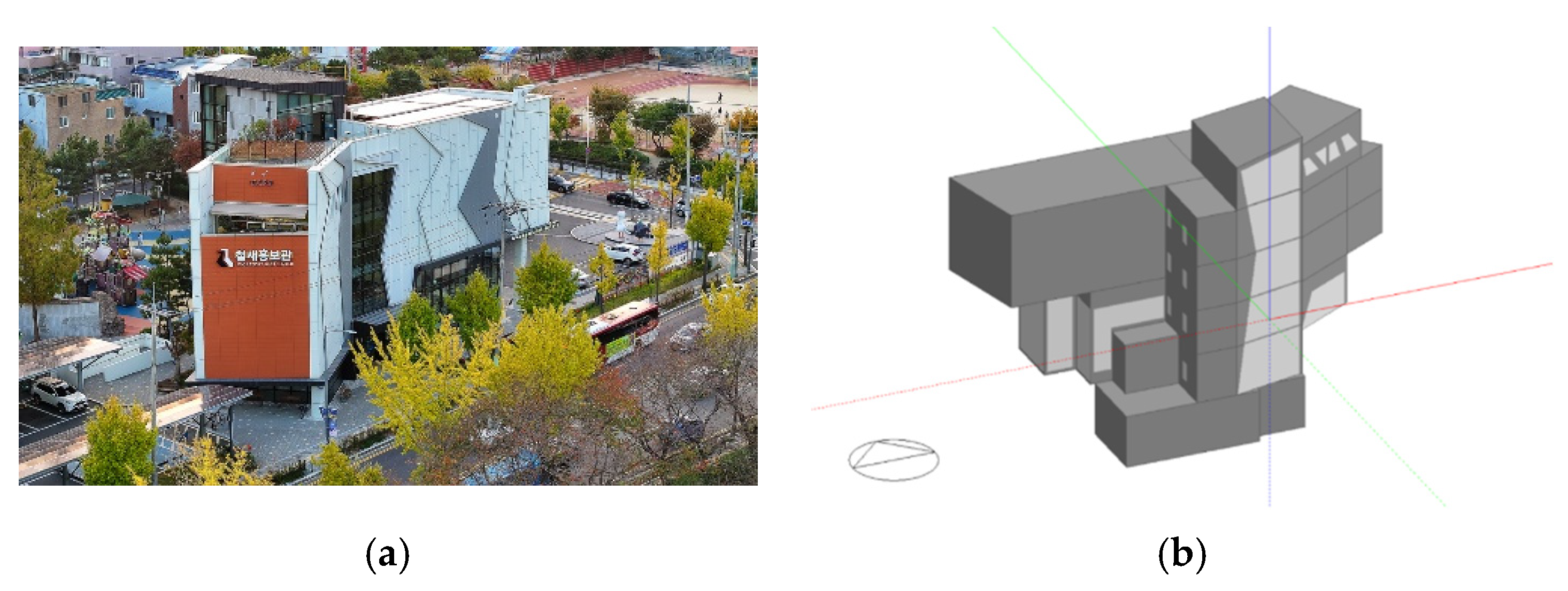
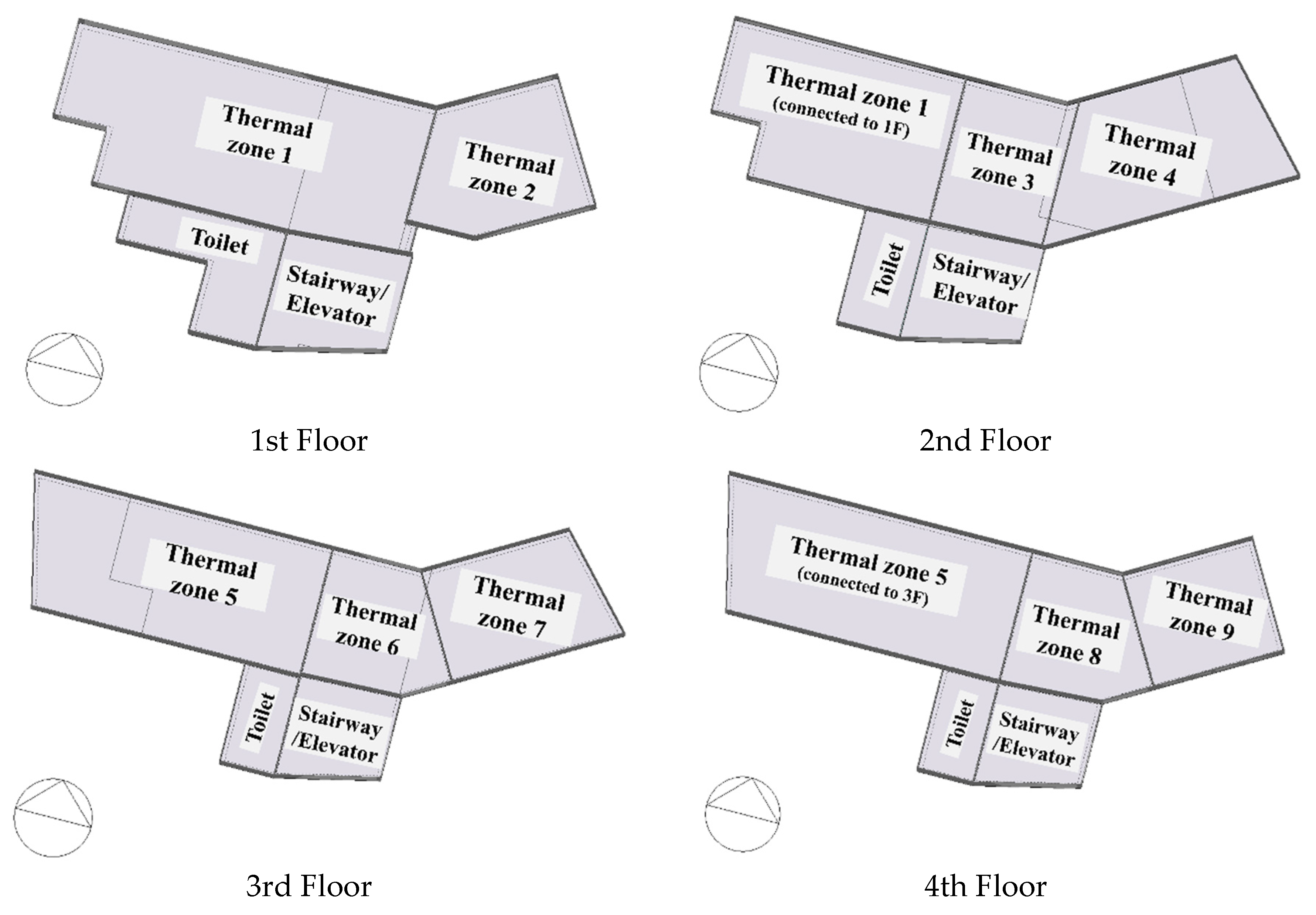
A detailed energy simulation model of the case study building was developed using DesignBuilder v7 as the user interface and EnergyPlus v9.4 as the simulation engine. The model incorporated accurate representations of the building geometry, envelope properties, internal loads, and HVAC system configuration based on design documents. Figure 3 shows a view of the case study building and the energy simulation model developed for this study. As illustrated in Figure 4, the model consists of nine air-conditioned zones and two non-air-conditioned zones (toilet and stairways) on each floor. Before model calibration, the cooling system was designed to provide an indoor temperature of 20 °C in all thermal zones. This value was to be calibrated based on the cooling information for each thermal zone from the BEMS in the case study building.
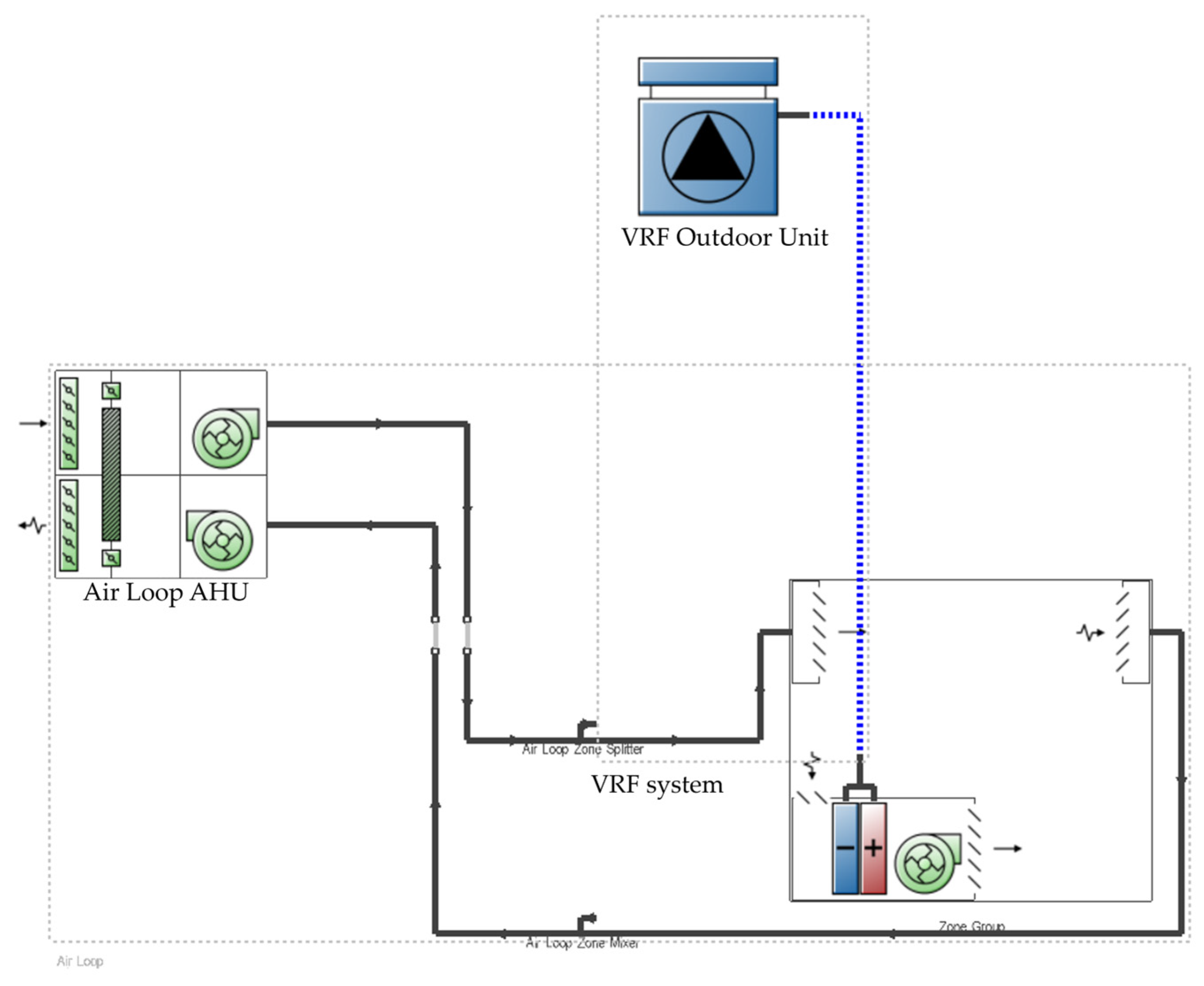
The envelope characteristics used in the initial model were based on as-built documentation and included an external wall U-value of 0.229 W/m2·K, a roof U-value of 0.138 W/m2·K, and a window U-value of 0.961 W/m2·K with a Solar Heat Gain Coefficient (SHGC) of 0.5. The air infiltration rate was set to 3.0 air changes per hour at 50 Pascals, meeting local energy code requirements for new public buildings in South Korea. For the air-conditioning system, a detailed HVAC schematic was developed within DesignBuilder. The Variable Refrigerant Flow (VRF) HVAC template was used to model the EHP system installed in the case study building. The model includes four outdoor VRF units connected to multiple indoor units, mirroring the actual system configuration in the building. In addition, an air handling unit (AHU) is included to model the building’s ventilation, which is done through ERV. Figure 5 presents the HVAC schematic developed in the simulation model. The specifications of the EHP equipment obtained from the construction documents are presented in Table 1 and were applied in the model. For the indoor units, an efficiency of 0.7 was assigned, while the supply airflow rate was autosized. The performance efficiency of the ERV was modelled as 0.71 for heating and 0.62 for cooling, based on the construction documents, while the ventilation airflow rate was set to 0.0094 m3/s-person to match the minimum ventilation rate [27]. Also, the construction documents indicate that no preheating coil is installed in the ERV in the case study building, and this condition was reflected in the simulation model.
The HVAC system was modeled as a set of zone-level EHP units with an average coefficient of performance (COP) of approximately 3.5. A centralized scheduling system was included to replicate operational control strategies.
To improve the model’s predictive accuracy, a calibration process was performed using measured energy data from the year 2022. The calibration procedure followed a manual iterative method based on ASHRAE Guideline 14 [28]. The process included three primary steps:
(1)
Weather file: Instead of using Typical Meteorological Year (TMY) data, actual hourly weather data for 2022 (Actual Meteorological Year, AMY) was utilized in the simulation. The local weather data was obtained from the Korea Meteorological Administration.
(2)
Building envelope and HVAC systems: Thermal performance parameters with high uncertainty were adjusted within reasonable bounds. This included U-values for the external wall, roof, floor, and windows, as well as SHGC, infiltration rate, and COP of the HVAC system. To account for potential thermal bridging and insulation deterioration over time, U-values were increased by approximately 3 to 30% relative to design specifications in the construction documents. Infiltration rates were modified to match observed nighttime load patterns, and cooling COP values were adjusted to reflect part-load degradation.
(3)
Internal loads and operation schedule: Lighting and plug loads were calibrated using sub-metered electrical data. Occupancy-related internal gains were redefined based on visitor statistics and operation schedules, as the building is publicly accessible only during specific hours and days. Actual occupancy was found to be lower than initially assumed, particularly in exhibition zones, and internal gains were reduced accordingly. HVAC operation schedules were synchronized with BEMS logs, which indicated typical system operation from 9:00 AM to 6:00 PM, with nighttime setbacks and closure on Mondays.
The calibration process was carried out until the simulation results met the hourly data acceptance criteria recommended by ASHRAE Guideline 14, which require a CV(RMSE) less than 30% and an absolute MBE less than 10% (Equations (1) and (2)).
C V R M S E % = 1 n     1 ( X a c t u a l X s i m u l a t e d ) 2 X a c t u a l ¯ × 100
M B E   % = ( X a c t u a l X s i m u l a t e d ) X a c t u a l × 100
where, Xactual is the actual value, Xsimulated is the predicted value, and n is the number of values being compared.

2.3. Adaptive Setpoint Control Strategy

With the calibrated simulation model as the baseline, an adaptive cooling setpoint control strategy was evaluated to explore the potential for energy savings and improved thermal comfort. In this approach, the cooling setpoint is dynamically adjusted based on prevailing outdoor conditions, following the adaptive comfort model outlined in ASHRAE Standard 55-2020 [26].
Firstly, daily outdoor temperatures during the cooling season (June to September 2022) were extracted from the measured weather data. A Prevailing Mean Outdoor Temperature (PMOT) was calculated using a 7-day exponentially weighted moving average, following the method recommended by de Dear and his colleagues [25]. The PMOT for each day was calculated using the ASHRAE 55 adaptive model equation (Equation (3)):
P M O T   =   ( T e x t , d 1   +   0.8 T e x t , d 2   +   0.6 T e x t , d 3   +   0.5 T e x t , d 4 + 0.4 T e x t , d 5 + 0.3 T e x t , d 6 +   0.2 T e x t , d 7 ) 3.8 [ ° C ]
In the equation, Text,d1 refers to the average outdoor temperature on the day prior to the target day for calculating the prevailing mean outdoor temperature (PMOT), and the Text,d−2 refers to the average outdoor temperature two days before the target day, and so forth. For example, if the PMOT is to be calculated for the 28th of the month, Text,d−1 corresponds to the mean outdoor temperature on the 27th, and Text,d−2 corresponds to that of the 26th. The calculation method effectively reflects recent climatic conditions experienced by occupants and serves as a key criterion for determining whether the adaptive comfort model can be applied on a given day. According to ASHRAE Standard 55, the adaptive comfort model is applicable only when the PMOT falls between 10 °C and 33.5 °C; outside this range, its applicability is restricted.
The comfort temperature based on PMOT is expressed in Equation (4). This comfort temperature represents the indoor temperature at which occupants feel most comfortable when adapted to their environment, and it serves as the baseline for indoor environmental design. ASRHAE Standard 55 specifies two acceptability categories 80% and 90%-centered around the comfort temperature. The upper and lower limits for the 80% acceptability range are defined in Equations (5) and (6), respectively, while those for the 90% acceptability range are defined in Equations (7) and (8).
C o m f o r t   t e m p e r a t u r e = 0.31 P M O T + 17.8   [ ° C ]
80% acceptability:
U p p e r   l i m i t   =   0.31 P M O T   + 17.8   +   3.5   [ ° C ]   ( 10   ° C PMOT 33.5   ° C )
L o w e r   l i m i t = 0.31 P M O T + 17.8     3.5   [ ° C ]   ( 10   ° C PMOT 33.5   ° C )
90% acceptability:
U p p e r   l i m i t   =   0.31   ×   P M O T   +   17.8   +   2.5   [ ° C ]   ( 10   ° C PMOT 33.5   ° C )
L o w e r   l i m i t = 0.31 × P M O T + 17.8     2.5   [ ° C ]   ( 10   ° C PMOT 33.5   ° C )
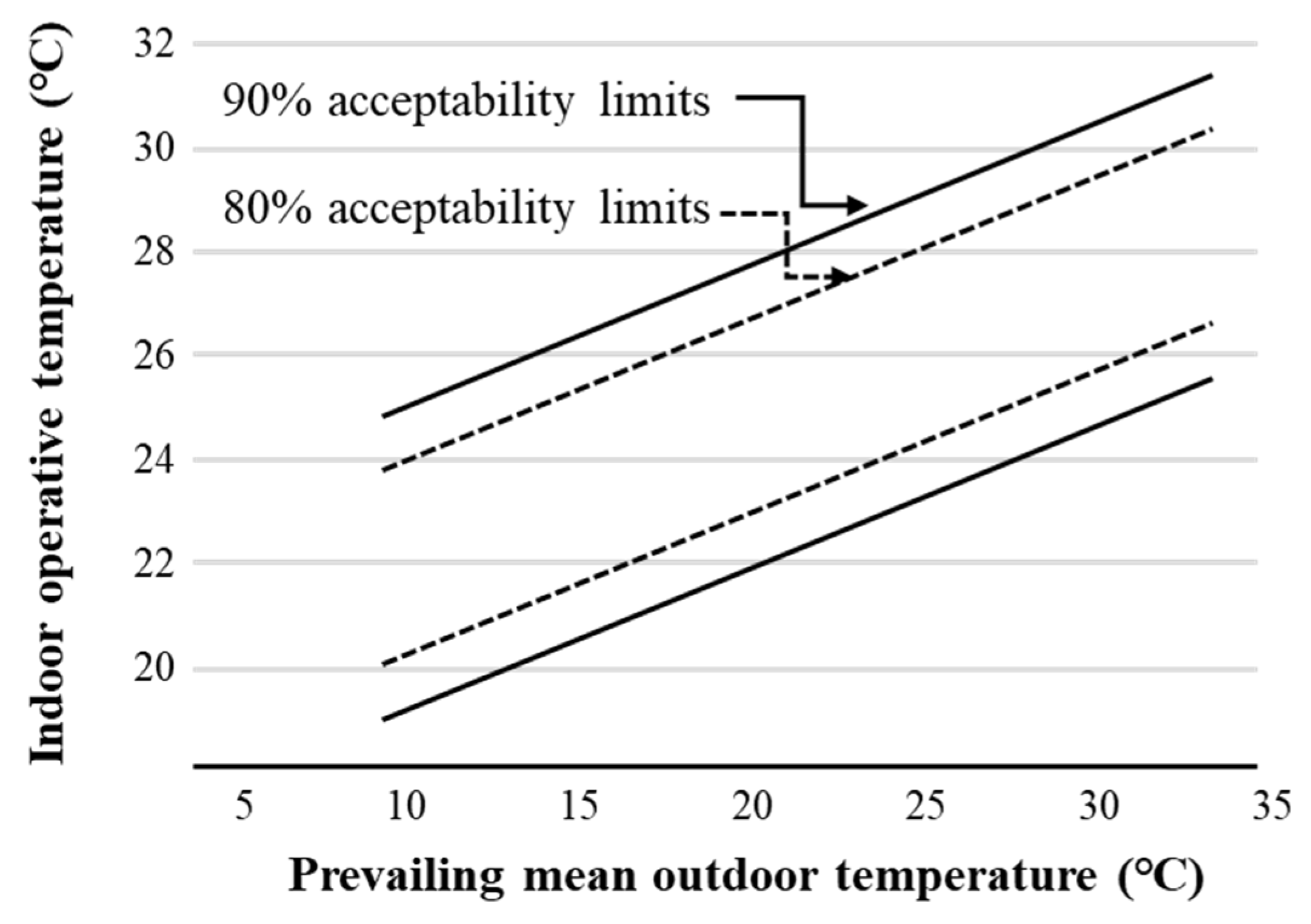
Here, acceptability denotes the proportion of occupants who feel thermally comfortable with their indoor thermal conditions. The 80% acceptability category allows for a wider temperature range, offering more flexibility in thermal comfort, whereas the 90% acceptability category has a narrower range, ensuring higher thermal satisfaction. For instance, if the PMOT is 25 °C, the 80% acceptability range is 22.1 °C to 29.1 °C, while the 90% acceptability range is 23.1 °C to 28.1 °C. The 90% range offers conditions closer to the comfort temperature, targeting higher satisfaction, whereas the 80% range permits a slightly broader variation, prioritizing operational flexibility. Figure 6 illustrates the 80% and 90% acceptability ranges as a function of PMOT.
Accordingly, in this study, the PMOT was calculated for the research period (June to September 2022) based on daily mean outdoor temperature, and its compliance with the applicability range (10 °C ≤ PMOT ≤ 33.5 °C) was verified. Using the calculated PMOT, the upper and lower limits for both 80% and 90% acceptability categories were determined. The calculated comfort temperature was then selected as the daily cooling setpoint temperature. This daily setpoint was applied to building simulation, and the results were compared with those obtained from a fixed setpoint control to quantify potential energy savings.

3. Results and Discussion

3.1. Calibrated Simulation Model

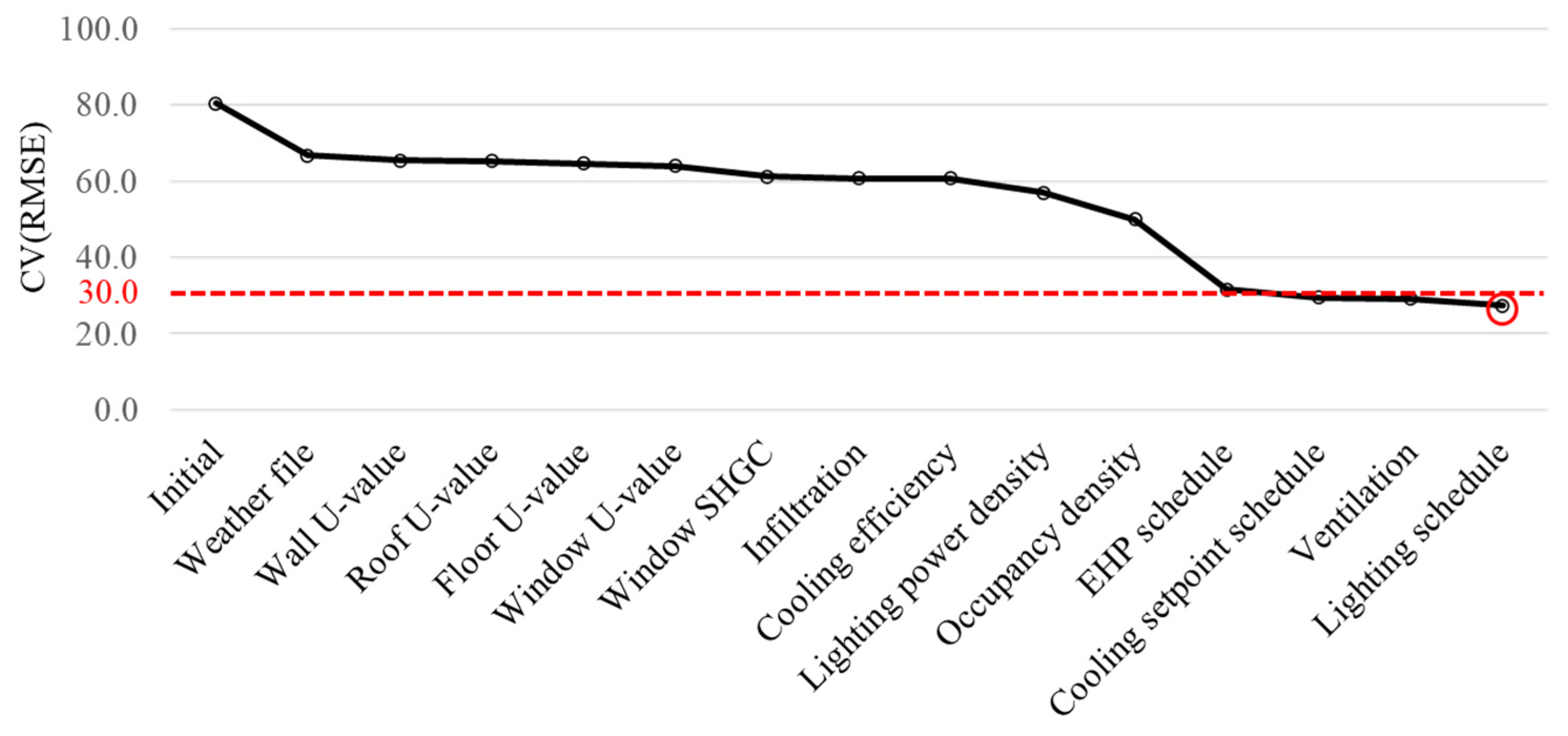
A comparison between the initial simulation model, before calibration, and the actual building’s hourly cooling energy consumption during the cooling season (June to September 2022) revealed substantial discrepancies, with an MBE of −14.8% and a CV(RMSE) of 80.5%. These results indicated a significant deviation between the model and actual performance, necessitating model calibration. Accordingly, the model was calibrated using the method described in the previous section to meet the reliability criteria specified in ASHRAE Guideline 14 [28].
Firstly, the accuracy of the initial simulation model was improved by updating the weather file. Instead of the TMY weather file used in the initial model, an AMY weather file was created using measured meteorological data from 2022 and applied in the simulation. As a result, although the MBE increased slightly from −14.8% to 23.7%, the CV(RMSE) decreased substantially from 80.5% to 66.8%, representing a 13.7% reduction, thereby enhancing the overall accuracy of the model. To investigate the reasons behind these results, a comparison was conducted for outdoor temperature, one of the most influential weather parameters affecting cooling energy consumption. Specifically, outdoor temperature from the TMY weather file and the AMY weather file were compared for the study period from June to September 2022. When comparing the mean outdoor temperature over the entire cooling period, the TMY data yielded an average of 23.5 °C, whereas the AMY data showed an average of 24.5 °C, indicating only a small difference. However, since this study evaluates statistical indicators based on hourly data, a detailed comparison of hourly outdoor temperatures was performed rather than relying solely on overall averages. The hourly comparison revealed that in 1618 out of 2736 total hours (approximately 60%), outdoor temperature in the AMY file was higher than that in the TMY file. Conversely, in 1091 h (40%), the outdoor temperature in the TMY file was higher. Overall, the hourly outdoor temperatures in AMY were generally higher than those of the TMY. Furthermore, the absolute differences between the hourly outdoor temperatures in the TMY and AMY weather data were calculated, and the maximum deviation reached 14.1 °C, with an average difference of 3.4 °C. In conclusion, the comparison of outdoor temperatures confirmed that significant differences exist between TMY data and AMY data for the target year 2022. Incorporating weather data for the specific year plays an important role in improving the accuracy of the simulation model.
Secondly, based on the simulation model incorporating the calibrated weather file, further calibration was conducted in sequence for the building envelope and HVAC system. First, the initial U-value of the exterior wall in the simulation model was 0.229 W/m2·K. Simulations were performed by increasing the U-value in increments of 3%, up to 30%. The lowest CV(RMSE) of 65.5% was achieved when the U-value was increased by 3% (to 0.236 W/m2·K). Next, the calibration of the roof U-value was performed. Similarly, increasing the initial value (0.138 W/m2·K) by 3% to 0.142 W/m2·K yielded the lowest CV(RMSE) of 65.4%. Subsequently, with the roof U-value adjusted to 0.142 W/m2·K, the CV(RMSE) decreased to 65.3%. Calibrating the floor U-value from its initial value of 0.208 W/m2·K to 0.270 W/m2·K further reduced the CV(RMSE) to 64.7%, and adjusting the window U-value from 0.961 W/m2·K to 1.249 W/m2·K resulted in a CV(RMSE) of 64.0%. Overall, the adjustments to the U-values of the exterior wall, roof, and floor were relatively modest compared to those of the windows. This is likely because the building was constructed relatively recently, thus the deterioration of insulation performance was not severe, limiting changes in U-values. In contrast, the windows exhibited a high initial U-value compared to other envelope components and represented the primary pathway for heat gain, making thermal performance degradation more pronounced and resulting in a greater increase in U-value. Following the calibration of the building envelope U-values, further adjustments were made to the window solar heat gain coefficient (SHGC) and infiltration rate. The SHGC was calibrated to 0.399, and the infiltration rate was adjusted to 0.42 ACH. After these adjustments, the CV(RMSE) resulting from the building envelope calibration improved to 60.8%. Finally, for the HVAC system, the lowest CV(RMSE) was obtained using the initial coefficient of performance (COP) for the cooling system; therefore, no further calibration of the HVAC system parameters was performed.
Thirdly, calibration was performed for the internal heat gains and operation schedules. For lighting power density (LPD), the initial averaged values were recalculated and input separately for each zone, resulting in CV(RMSE) reduction to 57.0%. Regarding the number of occupants, through inquiry with building staff, it was confirmed that there are no significant variations in the number of visitors throughout the year. Accordingly, occupant density in the model was calibrated based on the total number of visitors to the building in 2022, which provided an estimate of actual occupancy levels. The occupant density decreased from 0.111 people/m2 before calibration to 0.030 people/m2 after calibration, reducing the CV(RMSE) to 50.0%. For the indoor EHP schedule, units not in operation were set to “off”, and for units with irregular schedules, the average operating hours were calculated for each unit and incorporated into the model. This adjustment yielded the largest reduction in CV(RMSE) among all calibration parameters, lowering the value by 18.4% to 31.7%. Next, the cooling setpoint schedule was calibrated by incorporating the actual cooling setpoint temperatures of the building into the indoor unit schedules, reducing the CV(RMSE) from 31.7% to 29.5%. The ventilation schedule was then refined by calculating the average daily operating hours for each ventilation equipment on days of operation and applying these values, resulting in a marginal CV(RMSE) reduction of 0.4% bringing it down to 29.1%. Lastly, the lighting schedule was calibrated by comparing the average hourly lighting energy consumption during the cooling season with the simulated lighting energy consumption, and adjusting the fraction values accordingly, which further reduced the CV(RMSE) to 27.3%. Figure 7 presents the CV(RMSE) changes associated with each stage of the calibration process.
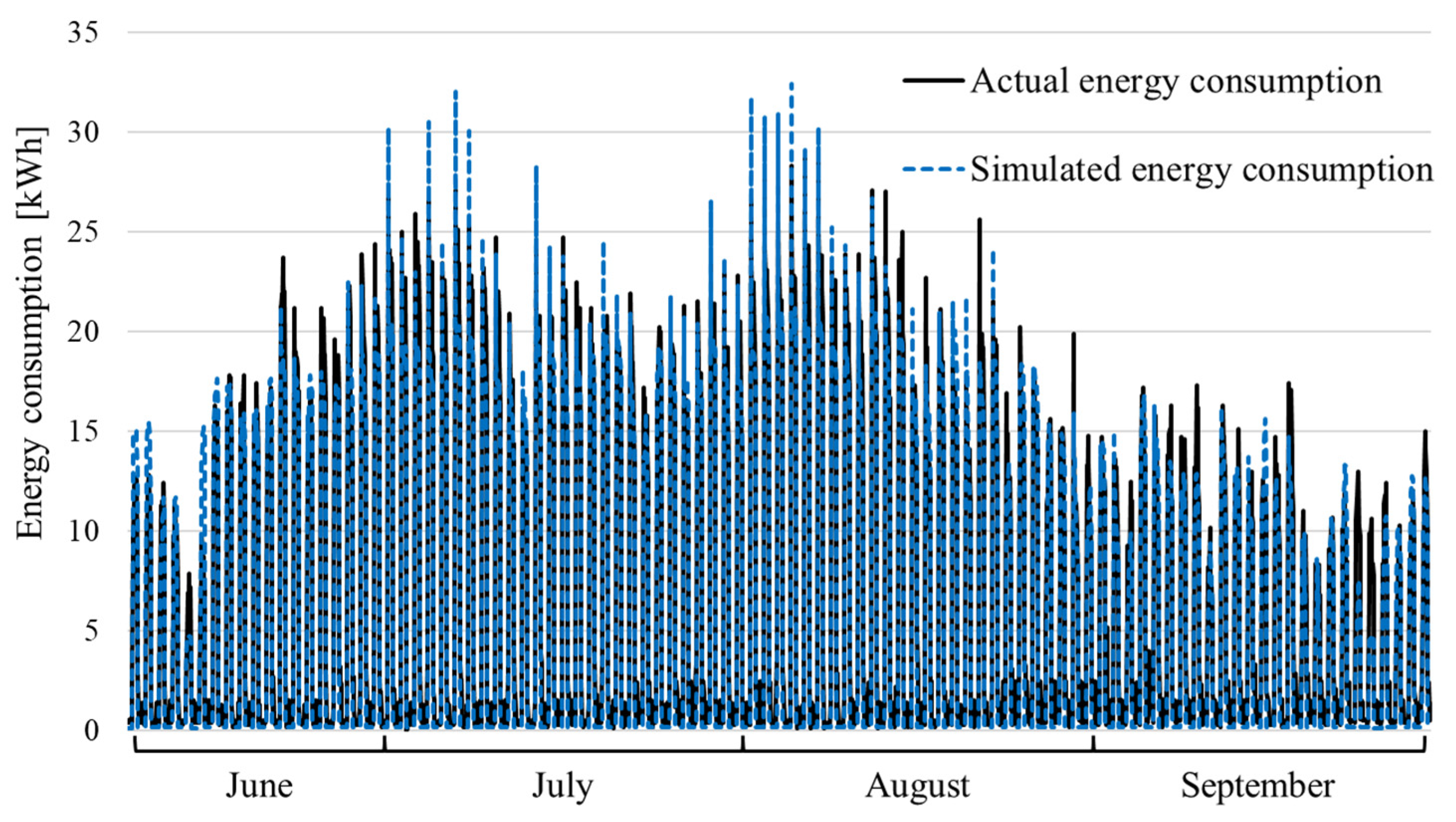
Finally, Figure 8 compares the energy consumption of the actual building with that of the simulation model after calibration. The results clearly indicate that the accuracy of the simulation model improved significantly following calibration. The final CV(RMSE) and MBE values were 27.3% and 8.2% respectively, meeting the ASHRAE Guideline 14 reliability criteria for hourly data, CV(RMSE) within 30% and MBE within ±10%, demonstrating that the calibrated simulation model is reliable.

3.2. Prediction of Energy-Saving Potential Through Adaptive Setpoint Temperature Control

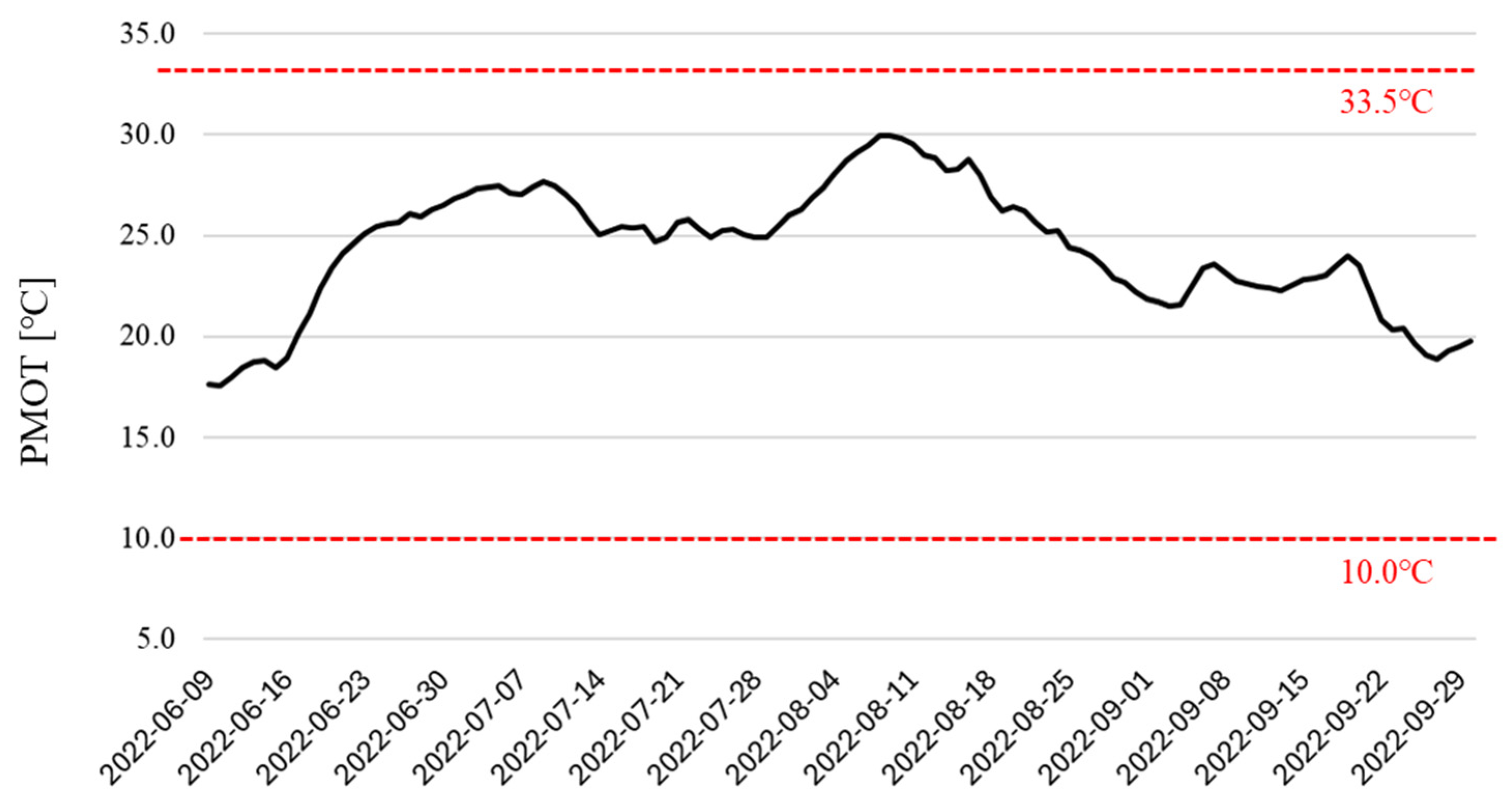
The calibrated simulation model satisfied the ASHRAE Guideline 14 reliability criteria for hourly data, indicating that it is a reliable representation of the actual building’s energy performance. The model was configured with the same cooling setpoint as the actual building, maintaining a constant setpoint throughout operation. Therefore, this calibrated simulation model served as the baseline for evaluating the potential energy savings of applying an adaptive comfort model-based setpoint control strategy. To this end, the PMOT was calculated, which is both a key criterion for determining the applicability of the adaptive comfort model and a measure that reflects recent climatic conditions experienced by occupants. PMOT values were derived using daily mean outdoor temperatures from June to September 2022, obtained from the Korea Meteorological Administration. Figure 9 presents the PMOT values during the cooling period. These values fell within the applicability range specified in ASHRAE Standard 55, between 10 °C and 33.5 °C, indicating that the adaptive comfort model could be applied throughout the study period.
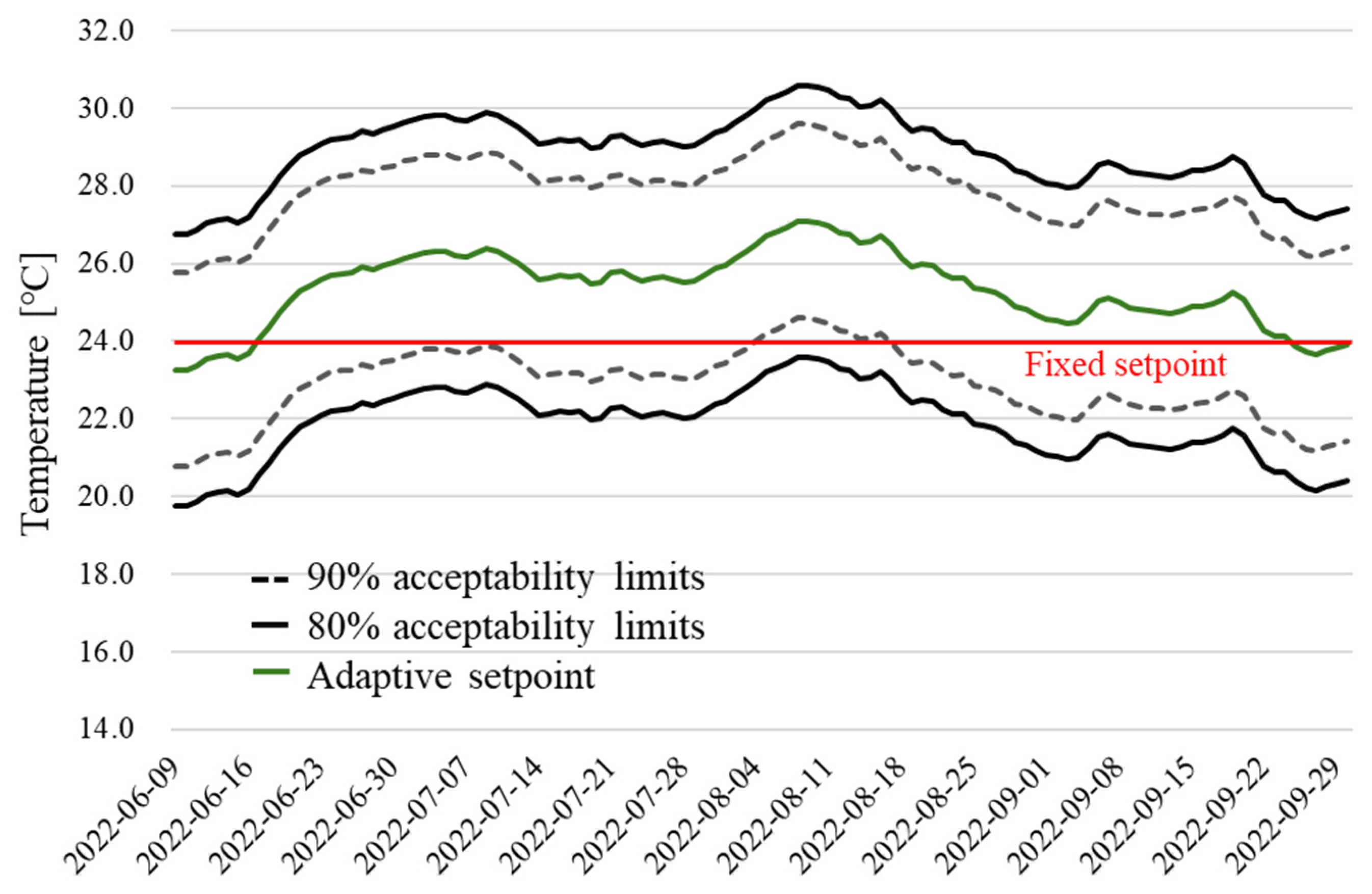
Subsequently, the PMOT values were used to determine the 80% and 90% acceptability ranges for the study period. These ranges represent the indoor temperature conditions under which occupants are expected to perceive thermal comfort. The 80% acceptability range indicates the temperatures at which 80% of occupants feel comfortable and generally encompasses a broader range of temperatures. In contrast, the 90% acceptability range corresponds to a narrower band, reflecting the conditions under which 90% of occupants experience comfort, thereby prioritizing higher thermal satisfaction. These acceptability criteria are useful for balancing thermal comfort and energy savings. For instance, applying the 80% acceptability range as the cooling setpoint allows for slightly greater flexibility in occupant satisfaction, potentially maximizing energy savings. Conversely, adopting the 90% acceptability range places a stronger emphasis on occupant satisfaction and stricter thermal comfort, though this may limit the achievable energy savings. However, due to various internal heat gains within the building, discrepancies can occur between the setpoint temperature and the actual indoor temperature. To address this, the cooling setpoint was determined within the acceptability range so as to maintain comfort while promoting energy savings. Figure 10 illustrates the 80% and 90% acceptability ranges along with the corresponding adaptive cooling setpoints.
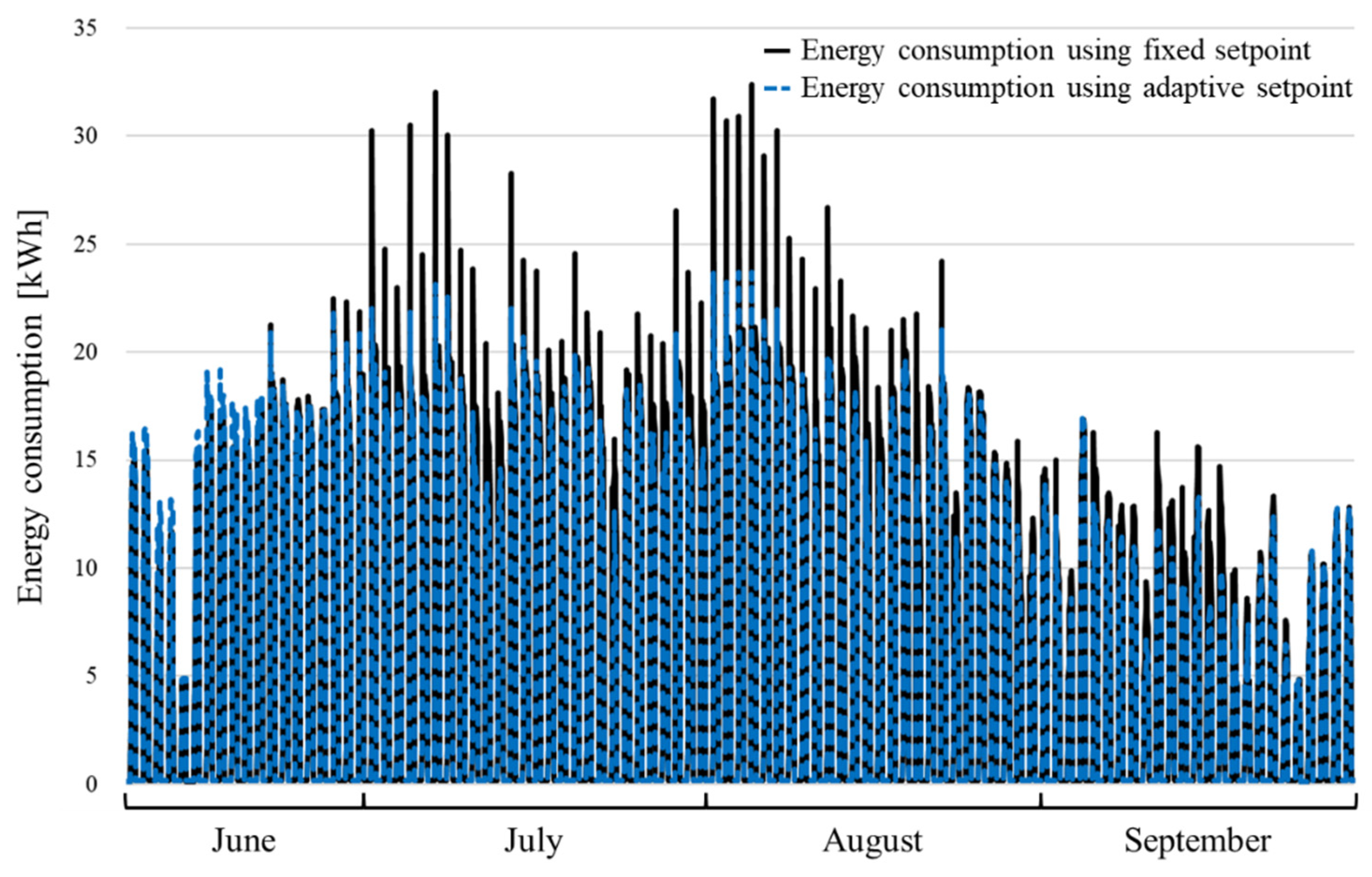
For example, when comparing a fixed setpoint of 24 °C with an adaptive setpoint, the latter adjusts dynamically in response to variations in PMOT, reflecting changes in outdoor temperature, whereas the fixed setpoint remains constant. The adaptive setpoints were applied on a daily basis in the simulation, and the resulting energy consumption was compared with that of the fixed setpoint model to assess potential energy savings. Figure 11 presents the simulated energy consumption for both the fixed and adaptive cooling setpoints, while Table 2 summarizes the total cooling-period energy consumption and corresponding energy savings. On a monthly basis, the results show that in June, the adaptive setpoint consumed more energy than the fixed setpoint. This was primarily due to specific spaces, such as offices and the café, having adaptive setpoints below 24 °C, resulting in increased energy consumption compared with the fixed setpoint. Excluding June, the adaptive setpoint yielded energy savings in July, August, and September of 550.6 kWh, 494.4 kWh, and 303.2 kWh, corresponding to monthly savings rates of 12.0%, 11.8%, and 12.4%, respectively. Over the entire cooling period from June to September, total energy use was 13,895 kWh for the fixed setpoint model and 12,650 kWh for the adaptive setpoint model, representing a reduction of 1245 kWh. Overall, the application of the adaptive comfort model-based cooling setpoint resulted in a total cooling-period energy savings of 9.0%.

4. In Situ Performance Evaluation

The simulation results confirmed that applying an adaptive comfort model-based cooling setpoint can achieve energy savings, suggesting its potential as an effective HVAC system operation strategy. However, these findings are limited to simulation results; without validation in an actual building, it is difficult to ensure the practical applicability and reliability of the approach. Therefore, this study conducted an in situ experimental verification to determine the extent to which the adaptive setpoint temperature reduces energy consumption compared to the fixed setpoint approach in an actual building. In addition, to assess the impact of the adaptive setpoint on occupants’ thermal comfort, an occupant thermal comfort survey was conducted in parallel.
The field experiment was carried out in the case study building in Ulsan, South Korea used for the simulation. Excluding the building’s closure day (Monday), the experiment was conducted over six days from 23 July to 28 July 2024, with adaptive and fixed setpoints applied alternately on consecutive days. A parallel experiment, such as applying fixed and adaptive setpoints simultaneously in the building, was not feasible because the thermal zones in the building exhibit differing indoor environments, HVAC operation, and energy use characteristics. Implementing different setpoint control strategies in inherently dissimilar zones would confound the comparison and prevent meaningful validation results. Therefore, alternating-day testing was adopted as the most practical method for comparing the two strategies under the most comparable operating conditions achievable. The adaptive setpoint temperature was applied on three days (24, 26, and 28 July), while the fixed setpoint temperature, the building’s existing cooling setpoint, was applied on the other three days (23, 25, and 27 July). The adaptive setpoint was determined using the same procedure described earlier. First, the PMOT for the day was calculated based on the daily mean outdoor temperature provided by the Korea Meteorological Administration, and its compliance with the acceptable range was confirmed. Next, the upper and lower limits for 80% and 90% acceptability were derived, and the comfort temperature, the temperature at which occupants feel most comfortable when acclimatized, was selected as the cooling setpoint. Both the adaptive and fixed setpoints were applied during building operation hours (from 9 a.m. to 5 p.m.). Energy consumption data during this period were collected via the building’s BEMS and subsequently compared to estimated energy savings. The validation approach minimized the influence of seasonal and weekly variations by intentionally selecting a week with no special events in the case study building, ensuring consistent building operation throughout the experiment, and by comparing days with similar outdoor thermal conditions. Despite these measures, the method cannot completely eliminate the effects of minor day-to-day variations in weather and occupancy. Therefore, the observed differences in energy use should be interpreted as performance under real operating conditions rather than as a fully causal estimate.
To evaluate the effect of the adaptive setpoint on occupants’ thermal comfort, a survey was conducted during the experimental period. The questionnaire, developed using Google Forms, consisted of three simple questions covering thermal sensation, satisfaction, and preference, key metrics for assessing thermal comfort. Table 3 presents the survey questions and corresponding response options. The first question assessed thermal sensation using the ASHRAE 7-point scale [29], ranging from “hot”, “warm”, “slightly warm”, “neutral”, “slightly cool”, “cool”, to “cold”. This reflects occupants’ subjective perception of indoor temperature. The second question measured satisfaction with the indoor temperature using a 5-point scale [30]: “very satisfied”, “satisfied”, “neutral”, “dissatisfied”, and “very dissatisfied”. The third question evaluated occupants’ thermal preference regarding the indoor thermal conditions, using a 5-point scale [31] centered on “no change”, ranging from “much cooler” to “much warmer”. Respondents could select only one answer per question, enabling an evaluation of thermal comfort under the adaptive setpoint. The survey was distributed in QR code format for easy access and targeted both building staff and visitors. To gain a broader understanding of the method’s impact on thermal comfort in a public building with diverse occupant types, the thermal comfort survey was intentionally designed to include responses from both staff and visitors. Staff provided responses throughout the day, reflecting prolonged exposure to indoor conditions, while visitors offered transient impressions. Although the approach introduces variability in respondent types, it captures the range of comfort perceptions naturally present in the building, thereby supporting the validation of the method under real-world application conditions. Staff were encouraged to complete the survey four times daily (10 a.m., 1 p.m., 3 p.m., and 5 p.m.), as their extended exposure to the indoor environment throughout the day was expected to yield more reliable responses based on sustained experience with the setpoints.

4.1. Cooling Energy Reduction

To determine the adaptive setpoint temperature, the PMOT for each experimental day was calculated using the daily mean outdoor temperatures from the preceding seven days, based on data provided by the Korea Meteorological Administration. The PMOTs were 28.4 °C for 24 July, 28.5 °C for 26 July, and 29.0 °C for 28 July. These values satisfied the applicability range of the adaptive comfort model (10 °C ≤ PMOT ≤ 33.5 °C), confirming that the model could be applied on each experimental day. Using these PMOT values, the comfort temperature and the upper and lower limits for 80% and 90% acceptability were determined. To align with the simulation conditions, the comfort temperature was selected as the adaptive setpoint temperature. The final setpoint temperatures for the experimental period are presented in Table 4. Unlike the fixed setpoint, which varied between rooms and reflected the conventional HVAC operation in the building, the adaptive setpoint was uniformly applied to all cooling units in the building and was maintained from 9 a.m. to 5 p.m. The two values shown for the office and café indicate the two setpoint temperatures that were set by occupants on days that the HVAC system was operated under conventional settings.
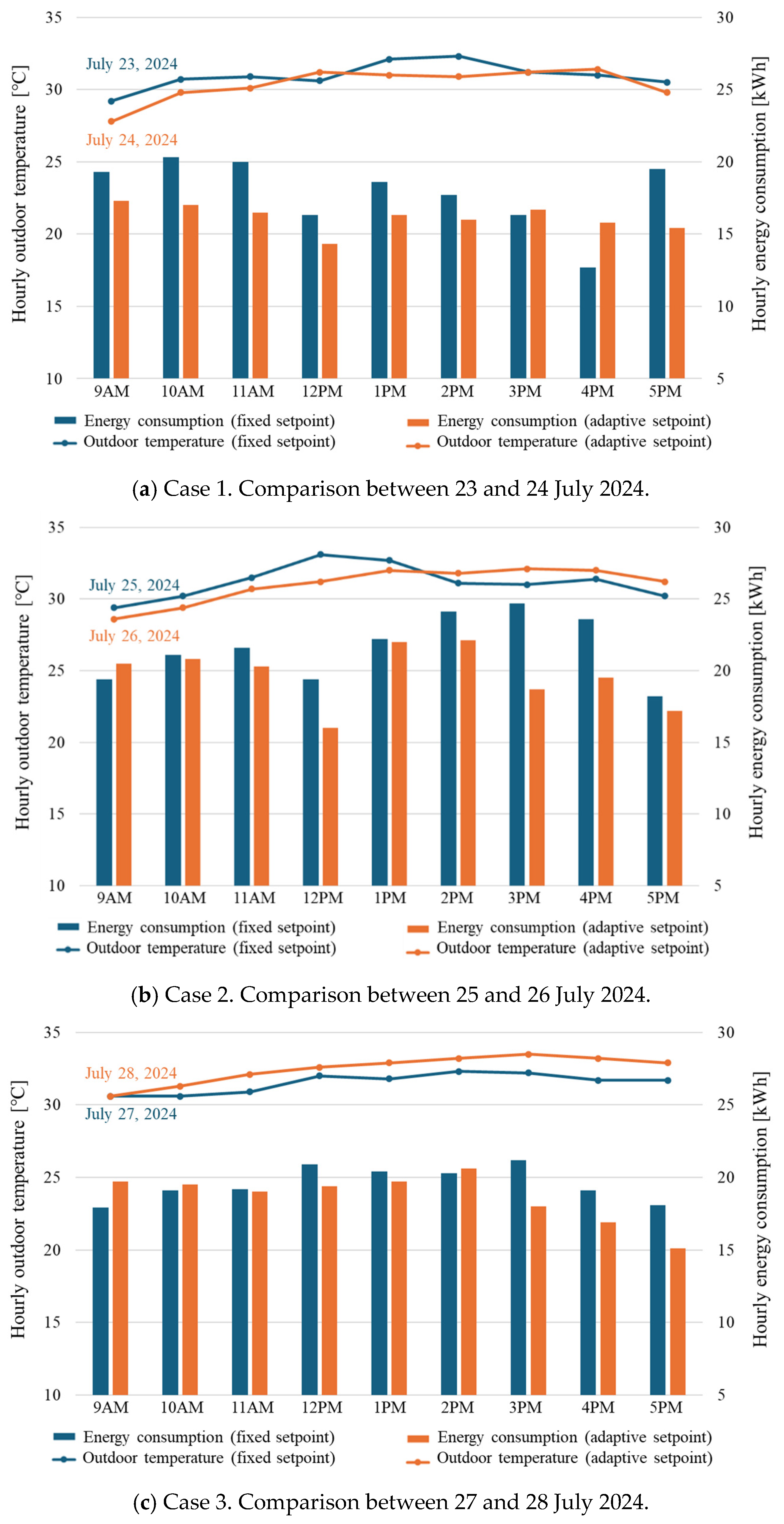
Energy consumption under the fixed and adaptive setpoints was then compared and analyzed. The energy consumption data were collected from the building’s BEMS during operating hours, and comparison days were selected based on similar mean outdoor temperatures and system operating hours to minimize confounding variables. Since indoor unit operating hours were identical for both conditions, the selection was based on days with comparable mean outdoor temperatures. Table 5 lists the selected comparison days for the fixed and adaptive setpoints. Case 1 compares 23 July (fixed setpoint) and 24 July (adaptive setpoint), with mean outdoor temperatures of 30.9 °C and 30.4 °C, respectively. Case 2 compares 24 July (31.2 °C) and 26 July (31.0 °C), and case 3 compares 27 July and 28 July. Figure 12 presents the hourly energy consumption and outdoor temperature for each case. In case 1 (Figure 12a), the outdoor temperatures for the two setpoints differed by up to 1.4 °C at 9 a.m. and 2 p.m. but were otherwise similar. Except for 3 p.m. and 4 p.m., the fixed setpoint day (23 July) consistently showed higher hourly energy consumption. In case 2 (Figure 12b), outdoor temperatures were higher on the fixed setpoint day (25 July) during the morning, peaking at noon before declining, with a maximum difference of 1.9 °C compared to the adaptive setpoint day (26 July). Hourly energy consumption on the adaptive setpoint day was generally lower, particularly in the afternoon. In case 3 (Figure 12c), outdoor temperatures were generally higher on the adaptive setpoint day (28 July) but followed similar trends for both conditions. As in case 2, afternoon differences in energy consumption were more pronounced, likely due to the increased cooling demand to maintain the fixed setpoint during peak outdoor temperatures.
Table 6 summarizes daily energy consumption and energy savings for the experimental period. In all three cases, daily energy consumption was lower under the adaptive setpoint. In case 1, the daily energy consumption was 160.7 kWh for the fixed setpoint and 145.3 kWh for the adaptive setpoint, representing a 9.6% reduction. In case 2, consumption decreased from 194.3 kWh (fixed setpoint) to 177.1 kWh (adaptive setpoint), an 8.9% reduction. In case 3, consumption fell from 176.2 kWh to 167.9 kWh, a 4.7% reduction. Overall, the application of the adaptive setpoint resulted in a 4.7–9.6% reduction in daily energy consumption compared to the fixed setpoint. The total energy consumption during fixed setpoint days was 531.2 kWh, compared to 490.3 kWh for adaptive setpoint days, corresponding to an overall 7.7% reduction during the experimental period. These observed savings were slightly lower than the 9.0% reduction predicted by the simulation for the entire cooling period. The difference can be attributed to the experimental study’s shorter duration (23–28 July 2024) and the specific conditions during the test period, compared to the simulation’s four-month dataset (June–September 2022). Differences in outdoor temperature, indoor environmental conditions, or building operation patterns between the two considered summer periods could also contribute to the discrepancy. For instance, relatively lower outdoor temperatures or reduced internal cooling loads during the experimental period could result in smaller savings. These variations are considered natural, and the close agreement between the two results supports the reliability of both the simulation and experimental findings.

4.2. Occupant Thermal Comfort

During the experimental period, the application of the adaptive setpoint temperature demonstrated measurable energy savings, and a parallel survey was conducted to assess its impact on occupants’ thermal comfort. The survey included both days when the adaptive setpoint was applied and days when the conventional fixed setpoint was used, enabling a direct comparison of thermal comfort outcomes under the two conditions. As described earlier, the questionnaire comprised questions on thermal sensation, thermal satisfaction, and thermal preference, and was administered via Google Forms, a cloud-based data management tool provided by Google Inc., Mountain View, CA, USA (https://docs.google.com/forms/u/0/, accessed on 23 November 2025). To facilitate easy participation, the survey was also provided in the form of QR code.
The survey targeted staff members of the case-study building and visiting occupants. Staff members, who remained indoors for extended periods, were encouraged to respond at four fixed times per day to ensure consistent exposure to the indoor environment and thus improve the reliability of responses. In total, 73 valid responses were collected: 27 on fixed setpoint days and 46 on adaptive setpoint days. It should be noted that, given the relatively small sample size, the survey results are intended to indicate directional trends in occupant thermal comfort under the two setpoints rather than to provide definitive statistical evidence.
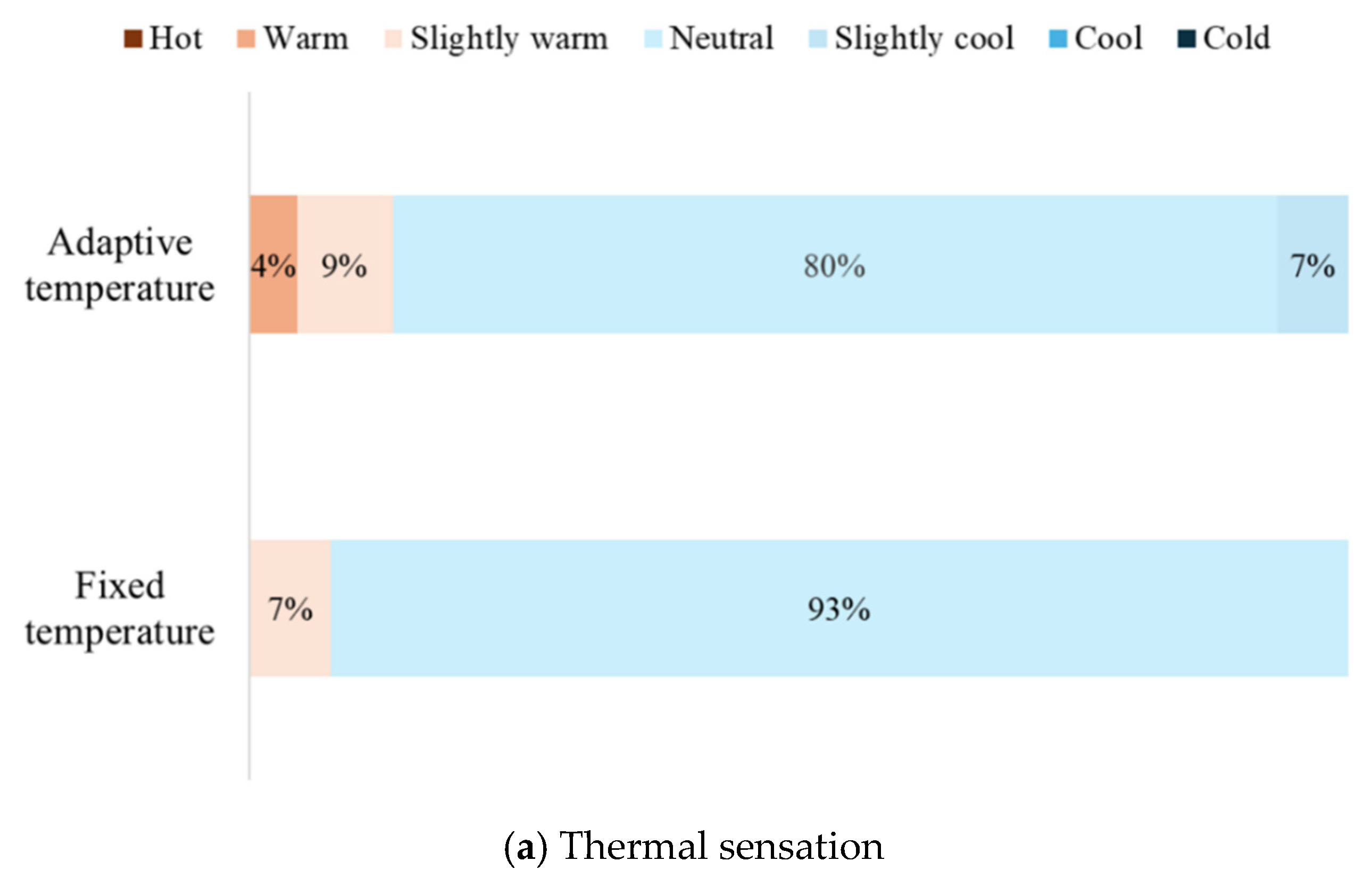
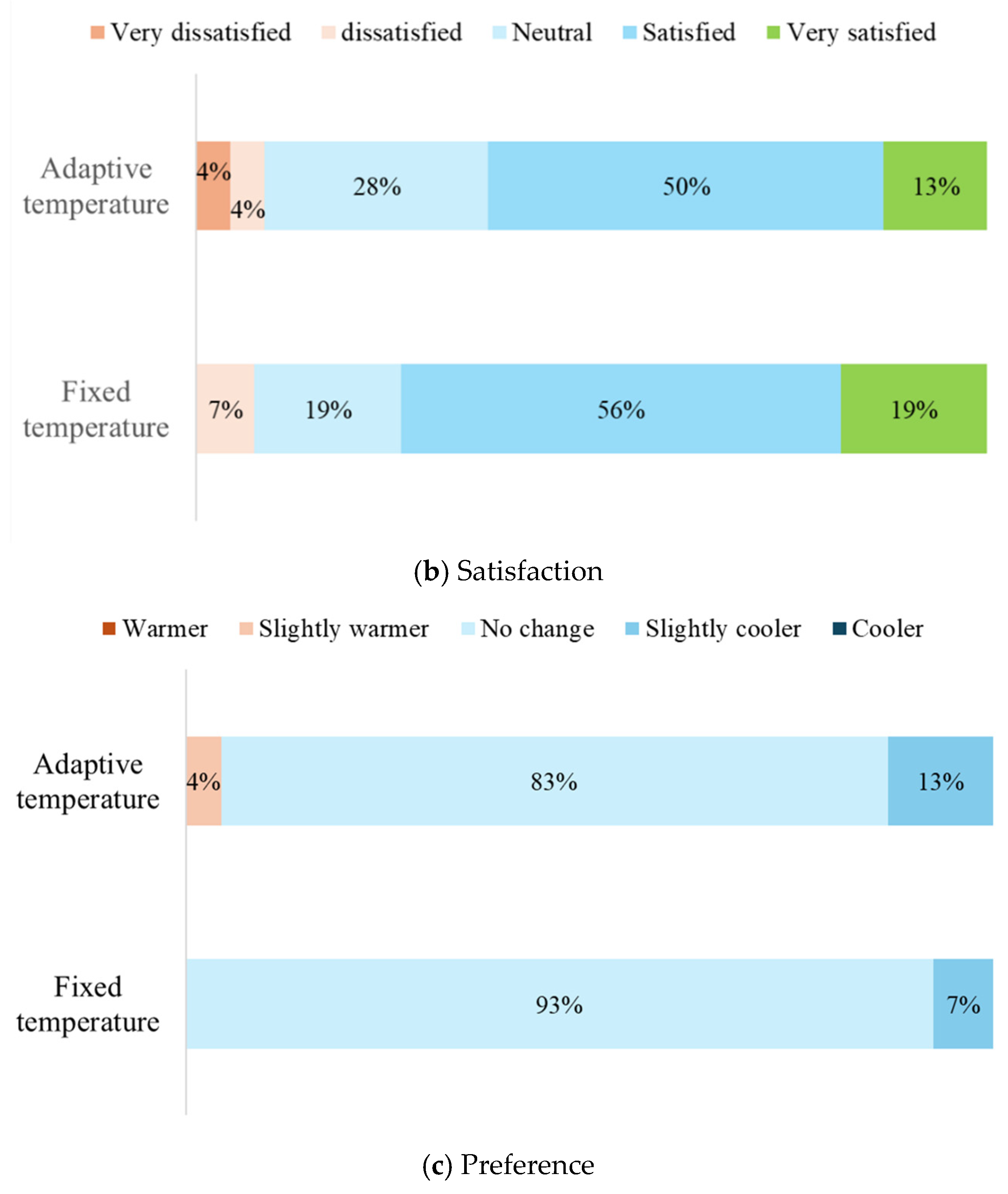
The results are presented in Figure 13. Figure 13a shows thermal sensation responses, reflecting occupants’ subjective evaluations of the indoor temperature. On fixed setpoint days, 93% of respondents rated the indoor temperature as “neutral” and 7% as “slightly warm”. On adaptive setpoint days, 80% reported “neutral”, 9% “slightly warm”, 7% “slightly cool”, and 4% “warm”. The variation in occupants responses on adaptive setpoint days was likely due to differences in individual activity levels. Figure 13b presents thermal satisfaction results. On fixed setpoint days, 93% reported feeling “neutral”, “satisfied”, or “very satisfied”, while 7% reported “dissatisfied”. On adaptive setpoint days, 92% reported “neutral”, “satisfied”, or “very satisfied”, and 8% reported “dissatisfied” or “very dissatisfied”. Figure 13c shows thermal preference results. On fixed setpoint days, 93% preferred “no change” in indoor temperature, and 7% preferred it “slightly cooler”. On adaptive setpoint days, 83% preferred “no change”, 13% preferred “slightly cooler”, and 4% preferred “slightly warmer”. Notably, on adaptive setpoint days, all respondents who reported “warm” or “slightly warm” thermal sensations (13%) preferred a “slightly cool” (7%), 4% preferred a “slightly warmer” temperature, while the remaining 3% were satisfied with the current conditions. These differences likely reflect variations in personal activity levels and clothing insulation among respondents. Overall, on fixed setpoint days, 93% rated the indoor temperature as “neutral”, 93% expressed “neutral” to “very satisfied” thermal satisfaction, and 93% preferred “no change” in temperature. On adaptive setpoints days, the corresponding figures were 80%, 92%, and 83%, respectively. These results indicate minimal differences in perceived thermal comfort between the two setpoint control strategies, suggesting that adaptive setpoint control can achieve energy savings without significantly compromising occupants’ thermal comfort.

5. Conclusions

This study aimed to propose an efficient HVAC system control strategy that simultaneously addresses energy savings and occupant comfort by applying an adaptive thermal comfort model-based cooling setpoint to a public office building located in Ulsan, South Korea. First, the target building was modeled using a building energy simulation program, and the potential for energy savings with the adaptive setpoint temperature was estimated through setpoint control simulations. To ensure the reliability of the findings, a field experiment was conducted to verify whether the estimated energy savings could be replicated in an actual building. In addition, a survey was performed to assess the impact of the adaptive thermal comfort model-based setpoint on occupants’ thermal comfort. The main conclusions are as follows:
(1)
Using the building envelope and system operation data, the simulation model was developed, yielding a CV(RMSE) of 80.5% and an MBE of −14.8%. The model was then calibrated to improve accuracy, resulting in a CV(RMSE) of 27.3% and an MBE of 8.2%, meeting the reliability criteria specified in ASHRAE Guideline 14.
(2)
To determine the adaptive setpoint temperature, daily mean outdoor temperatures from June to September 2022 were collected and used to calculate the PMOT, which met the applicability range of the adaptive thermal comfort model specified in ASHRAE Standard 55. The corresponding comfort temperature was then used as the adaptive setpoint temperature.
(3)
The adaptive setpoint temperature was applied to the simulation model on a daily basis, and the cooling energy consumption from June to September 2022 was compared with that of a base model with a fixed setpoint temperature. Results showed that the total cooling energy consumption during the period was 13,895 kWh for the fixed setpoint and 12,650 kWh for the adaptive setpoint, corresponding to an overall energy saving of 9.0%. Monthly analysis revealed savings of 12.0%, 11.8%, and 12.4% in July, August, and September, respectively, with no significant savings in June.
(4)
From 23 to 28 July 2024, a six-day in situ field experiment was conducted in which the adaptive and fixed setpoints were alternated on a daily basis. The fixed setpoint was applied on 23, 25, and 27 July, and the adaptive setpoint on 24, 26, and 28 July. When comparing days with similar outdoor temperature conditions, the adaptive setpoint reduced daily energy consumption by 4.7–9.6% compared to the fixed setpoint. Over the entire experiment, total energy consumption was 531.2 kWh for fixed setpoint days and 490.3 kWh for adaptive setpoint days, yielding an overall savings of 7.7%.
(5)
The simulated and measured energy savings rates were 9.0% and 7.7%, respectively. The simulation covered a four-month cooling period in 2022, whereas the field experiment was carried out for a six-day period in July 2024. Differences in study duration and conditions, including outdoor temperature, indoor environment, and building operation patterns between the two years, likely contributed to the variation in results. Nonetheless, the energy savings from both approaches were found to be of similar magnitude.
(6)
The occupant thermal comfort survey conducted during the field experiment showed that on fixed setpoint days, 93% of responses to all three questions (thermal sensation, thermal satisfaction, and thermal preference) were positive. On adaptive setpoint days, positive responses were 80% for thermal sensation, 92% for thermal satisfaction, and 83% for thermal preference. These results indicate that the adaptive setpoint did not significantly reduce thermal comfort compared to the fixed setpoint.
This study confirms that an adaptive thermal comfort model-based cooling setpoint is effective for reducing cooling energy consumption while maintaining occupant comfort, thus offering a viable strategy for efficient HVAC system operation. However, some limitations of this study are noted. First, while the comfort survey yielded meaningful insights, the results should be interpreted as indicative of occupant perception of thermal comfort under the adaptive setpoints rather than as definitive statistical evidence, due to the relatively small sample size and heterogeneity of responses from staff and visitors. Increasing the sample size and analyzing differences across occupant groups would allow for a more nuanced assessment of the adaptive setpoint’s application. Second, the present study focused solely on the cooling season; extending the analysis to include the heating season would enable the evaluation of year-round energy-saving potential. Third, the research was conducted in one public building in Ulsan, South Korea, assessing the proposed setpoint control method to various buildings with different operational characteristics and local climate conditions would help verify its broader applicability. Addressing these limitations in future work would strengthen the study’s findings and further support the adaptive thermal comfort model-based setpoint as a key strategy for enhancing HVAC system efficiency.

Author Contributions

S.H.J.: Conception of the work and analysis of the data; A.I.: Drafting the manuscript; Y.-A.L.: Revising the manuscript; K.H.K.: Supervision. All authors have read and agreed to the published version of the manuscript.

Funding

This research was supported by the Regional Innovation System & Education (RISE) program through the Ulsan RISE Center, funded by the Ministry of Education (MOE) and the Ulsan Metropolitan City, Republic of Korea (2025-RISE-07-001).

Institutional Review Board Statement

This study was conducted in accordance with the principles of the Declaration of Helsinki. Formal ethical approval was not required because the research involved a fully anonymized, minimal-risk survey that collected no personally identifiable or sensitive information.

Informed Consent Statement

Informed consent was obtained from all subjects involved in the study. Participants were informed about the purpose of the study prior to participation, and consent was obtained verbally at the time of the survey. Participation was entirely voluntary.

Data Availability Statement

The data used in this study will be made available upon request. As the dataset includes detailed building-level energy consumption, operational information, and thermal comfort measurements, public sharing is limited due to proprietary restrictions. However, the corresponding author will provide access to the data upon request for the purposes of transparency or research reproducibility.

Acknowledgments

This research was carried out as part of the Regional Innovation System & Education (RISE) program through the Ulsan RISE Center, funded by the Ministry of Education (MOE) and the Ulsan Metropolitan City, Republic of Korea (2025-RISE-07-001).

Conflicts of Interest

Author So Hyeon Jeong was employed by the company Chungyeon Corp. Author Young-A Lee was employed by the company Nogsaegdociro Co. The remaining authors declare that the research was conducted in the absence of any commercial or financial relationships that could be construed as a potential conflict of interest.

References

  1. International Energy Agency (IEA). Transition to Sustainable Buildings. Available online: https://www.iea.org/reports/transition-to-sustainable-buildings (accessed on 20 December 2024).
  2. Pérez-Lombard, L.; Ortiz, J.; Pout, C. A review on buildings energy consumption information. Energy Build. 2008, 40, 394–398. [Google Scholar] [CrossRef]
  3. Galvin, R.; Gubernat, A. The rebound effect and Schatzki’s social theory: Reassessing the socio-materiality of energy consumption via a German case study. Energy Res. Soc. Sci. 2016, 22, 183–193. [Google Scholar] [CrossRef]
  4. Hoyt, T.; Arens, E.; Zhang, H. Extending air temperature setpoints: Simulated energy savings and design considerations for new and retrofit buildings. Build. Environ. 2015, 88, 89–96. [Google Scholar] [CrossRef]
  5. Spyropoulos, G.N.; Balaras, C.A. Energy consumption and the potential of energy savings in Hellenic office buildings used as bank branches—A case study. Energy Build. 2011, 43, 770–778. [Google Scholar] [CrossRef]
  6. Palut, M.P.J.; Canziani, O.F. Contribution of Working Group II to the Fourth Assessment Report of the Intergovernmental Panel on Climate Change 2007; The Intergovernmental Panel on Climate Change (IPCC): Geneva, Switzerland, 2007. [Google Scholar]
  7. Saidur, R. Energy consumption, energy savings, and emission analysis in Malaysian office buildings. Energy Policy 2009, 37, 4104–4113. [Google Scholar] [CrossRef]
  8. Fernandez, N.; Katipamula, S.; Wang, W.; Huang, Y.; Liu, G. Energy savings modelling of re-tuning energy conservation measures in large office buildings. J. Build. Perform. Simul. 2015, 8, 391–407. [Google Scholar] [CrossRef]
  9. Moon, J.W.; Han, S.-H. Thermostat strategies impact on energy consumption in residential buildings. Energy Build. 2011, 43, 338–346. [Google Scholar] [CrossRef]
  10. Yamtraipat, N.; Khedari, J.; Hirunlabh, J.; Kunchornrat, J. Assessment of Thailand indoor set-point impact on energy consumption and environment. Energy Policy 2006, 34, 765–770. [Google Scholar] [CrossRef]
  11. Mishra, A.K.; Ramgopal, M. Field studies on human thermal comfort—An overview. Build. Environ. 2013, 64, 94–106. [Google Scholar] [CrossRef]
  12. Nicol, J.F.; Humphreys, M.A. Adaptive thermal comfort and sustainable thermal standards for buildings. Energy Build. 2002, 34, 563–572. [Google Scholar] [CrossRef]
  13. Sánchez, C.S.-G.; Mavrogianni, A.; González, F.J.N. On the minimal thermal habitability conditions in low income dwellings in Spain for a new definition of fuel poverty. Build. Environ. 2017, 114, 344–356. [Google Scholar] [CrossRef]
  14. Wang, C.; Pattawi, K.; Lee, H. Energy saving impact of occupancy-driven thermostat for residential buildings. Energy Build. 2020, 211, 109791. [Google Scholar] [CrossRef]
  15. Sánchez-García, D.; Bienvenido-Huertas, D.; Tristancho-Carvajal, M.; Rubio-Bellido, C. Adaptive comfort control implemented model (ACCIM) for energy consumption predictions in dwellings under current and future climate conditions: A case study located in Spain. Energies 2019, 12, 1498. [Google Scholar] [CrossRef]
  16. Van der Linden, A.; Boerstra, A.; Raue, A.; Kurvers, S.; de Dear, R. Adaptive temperature limits: A new guideline in The Netherlands: A new approach for the assessment of building performance with respect to thermal indoor climate. Energy Build. 2006, 38, 8–17. [Google Scholar] [CrossRef]
  17. Sánchez-García, D.; Rubio-Bellido, C.; del Río, J.J.M.; Pérez-Fargallo, A. Towards the quantification of energy demand and consumption through the adaptive comfort approach in mixed mode office buildings considering climate change. Energy Build. 2019, 187, 173–185. [Google Scholar] [CrossRef]
  18. Kramer, R.; Maas, M.; Martens, M.; van Schijndel, A.; Schellen, H. Energy conservation in museums using different setpoint strategies: A case study for a state-of-the-art museum using building simulations. Appl. Energy 2015, 158, 446–458. [Google Scholar] [CrossRef]
  19. Organ, S.; Proverbs, D.; Squires, G. Motivations for energy efficiency refurbishment in owner-occupied housing. Struct. Surv. 2013, 31, 101–120. [Google Scholar] [CrossRef]
  20. Park, E.; Kwon, S.J. What motivations drive sustainable energy-saving behavior?: An examination in South Korea. Renew. Sustain. Energy Rev. 2017, 79, 494–502. [Google Scholar] [CrossRef]
  21. Dixon, T. Commercial property retrofitting: What does “retrofit” mean, and how can we scale up action in the UK sector? J. Prop. Investig. Financ. 2014, 32, 443–452. [Google Scholar] [CrossRef]
  22. Gliedt, T.; Hoicka, C.E. Energy upgrades as financial or strategic investment? Energy Star property owners and managers improving building energy performance. Appl. Energy 2015, 147, 430–443. [Google Scholar] [CrossRef]
  23. Manika, D.; Gregory-Smith, D.; Wells, V.K.; Graham, S. Home vs. workplace energy saving attitudes and behaviors: The moderating role of satisfaction with current environmental behaviors, gender, age, and job duration. In Proceedings of the 2015 Winter Marketing Educators’ Conference—Marketing in a Global, Digital and Connected World, San Antonio, TX, USA, 13–15 February 2015. [Google Scholar]
  24. Agha-Hossein, M.M.; Tetlow, R.; Hadi, M.; El-Jouzi, S.; Elmualim, A.; Ellis, J.; Williams, M. Providing persuasive feedback through interactive posters to motivate energy-saving behaviours. Intell. Build. Int. 2015, 7, 16–35. [Google Scholar] [CrossRef]
  25. de Dear, R.; Brager, G.S. Developing an adaptive model of thermal comfort and preference. ASHRAE Trans. 1998, 104, 145–167. [Google Scholar]
  26. Parkinson, T.; de Dear, R.; Brager, G. Nudging the adaptive thermal comfort model. Energy Build. 2020, 206, 109559. [Google Scholar] [CrossRef]
  27. Sung, H.J.; Kim, S.H.; Kim, H. Analysis of Building Retrofit, Ventilation, and Filtration Measures for Indoor Air Quality in a Real School Context: A Case Study in Korea. Buildings 2023, 13, 1033. [Google Scholar] [CrossRef]
  28. Haberl, J.S.; Claridge, D.E.; Culp, C. ASHRAE’s Guideline 14-2002 for Measurement of Energy and Demand Savings: How to Determine what was really saved by the retrofit. In Proceedings of the Fifth International Conference for Enhanced Building Operations, Pittsburgh, PA, USA, 11–13 October 2005. [Google Scholar]
  29. American Society of Heating, Refrigerating and Air-Conditioning Engineers. Thermal Environmental Conditions for Human Occupancy; American Society of Heating, Refrigerating and Air-Conditioning Engineers: Peachtree Corners, GA, USA, 2004; Volume 55. [Google Scholar]
  30. Kwon, M.; Remøy, H.; Bogaard, M.V.D. Influential design factors on occupant satisfaction with indoor environment in workplaces. Build. Environ. 2019, 157, 356–365. [Google Scholar] [CrossRef]
  31. Thapa, S. Revisiting thermal comfort in the cold climate of Darjeeling, India–Effect of assumptions in comfort scales. Build. Environ. 2021, 203, 108095. [Google Scholar] [CrossRef]
Figure 1. Flowchart of the study method.
Buildings 15 04568 g001
Figure 2. HVAC and ERV systems in the case study building.
Buildings 15 04568 g002
Figure 3. View of (a) the case study building and (b) the developed simulation model.
Buildings 15 04568 g003
Figure 4. Floor plan and air-conditioned zones included in the simulation model.
Buildings 15 04568 g004
Figure 5. A schematic of the HVAC system.
Buildings 15 04568 g005
Figure 6. The 80% and 90% acceptability ranges based on PMOT.
Buildings 15 04568 g006
Figure 7. Improvements in CV(RMSE) through the calibration procedures (Red circle indicates the final CV(RMSE) of the calibrated model).
Buildings 15 04568 g007
Figure 8. Comparison between the energy consumption of the actual building and that of the simulations after calibration.
Buildings 15 04568 g008
Figure 9. PMOT during the cooling period.
Buildings 15 04568 g009
Figure 10. 80% and 90% acceptability ranges and adaptive setpoint temperature.
Buildings 15 04568 g010
Figure 11. Comparison of simulated energy consumption between fixed and adaptive setpoints.
Buildings 15 04568 g011
Figure 12. Comparison of hourly energy consumption using fixed and adaptive setpoints for: (a) Case 1, (b) Case 2, and (c) Case 3.
Buildings 15 04568 g012
Figure 13. Survey results during the experimental period: (a) thermal sensation, (b) satisfaction, and (c) preference.
Buildings 15 04568 g013aBuildings 15 04568 g013b
Table 1. Specifications of the outdoor electric heat pump in the simulation model.
EHP UnitFloorModeCapacity (kW)COP
EHP11FCooling23.34.85
Heating25.94.80
EHP2, EHP42F & 4FCooling57.03.17
Heating63.03.75
EHP33FCooling29.24.42
Heating32.84.56
Table 2. Cooling period energy consumption and reductions.
MonthEnergy Consumption Using
Fixed Setpoint [kWh]
Energy Consumption Using
Adaptive Setpoint [kWh]
Reduction (%)
June26522755−3.9
July4604405412.0
August4200370611.8
September2439213612.4
Total13,89512,6509.0
Table 3. Survey questions and corresponding response options.
Survey QuestionResponse Option
Thermal sensationHow do you perceive the current indoor temperature?Hot
Warm
Slightly warm
Neutral
Slightly cool
Cool
Cold
SatisfactionHow satisfied are you with the current indoor temperature?Very satisfied
Satisfied
Neutral
Dissatisfied
Very dissatisfied
PreferenceHow would you like to adjust the current indoor temperature?Much cooler
Slightly cooler
No change
Slightly warmer
Much warmer
Table 4. Final setpoints for the experimental period.
Room Usage TypeFixed Temperature [°C]Adaptive Temperature [°C]
23, 25, and 27 July 202424, 26, and 28 July 2024
Office24, 2626
Lecture hall23
Exhibition hall22
Hall (2nd floor)22
VR experience room22
Hall (3rd floor)22
5D theatre22
Café25, 26
Hall (4th floor)22
Table 5. Selected comparison days for the fixed and adaptive setpoints.
Fixed SetpointAdaptive Setpoint
DateMean Outdoor Temperature [°C]DateMean Outdoor Temperature [°C]
Case 123 July 202430.924 July 202430.4
Case 225 July 202431.226 July 202431.0
Case 327 July 202431.528 July 202432.5
Table 6. Daily energy consumption and reductions for the experimental period.
Energy Consumption
(Fixed Setpoint) [kWh]
Energy Consumption
(Adaptive Setpoint) [kWh]
Reduction [%]
Case 1160.7145.39.6
Case 2194.3177.18.9
Case 3176.2167.94.7
Total531.2490.37.7
Disclaimer/Publisher’s Note: The statements, opinions and data contained in all publications are solely those of the individual author(s) and contributor(s) and not of MDPI and/or the editor(s). MDPI and/or the editor(s) disclaim responsibility for any injury to people or property resulting from any ideas, methods, instructions or products referred to in the content.