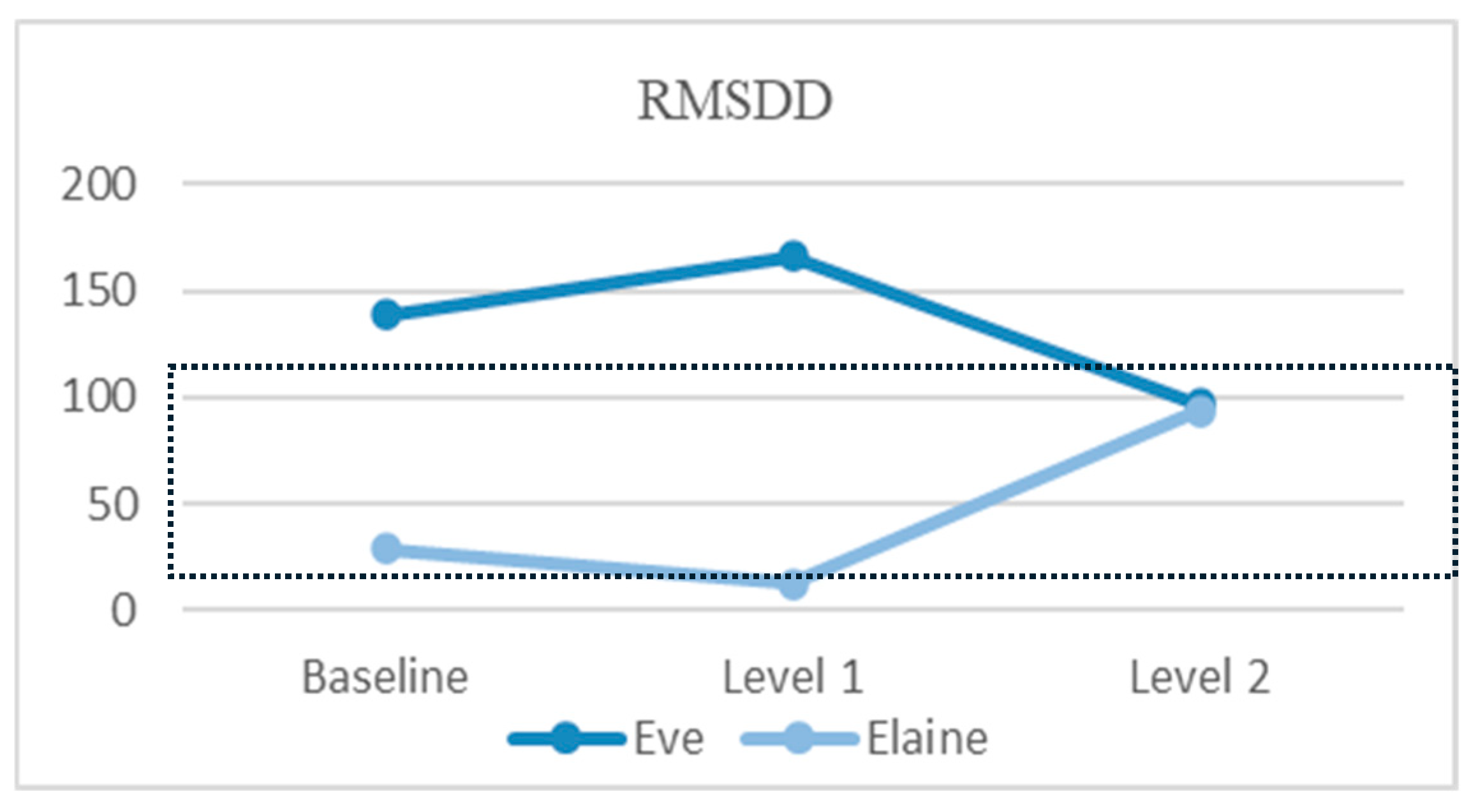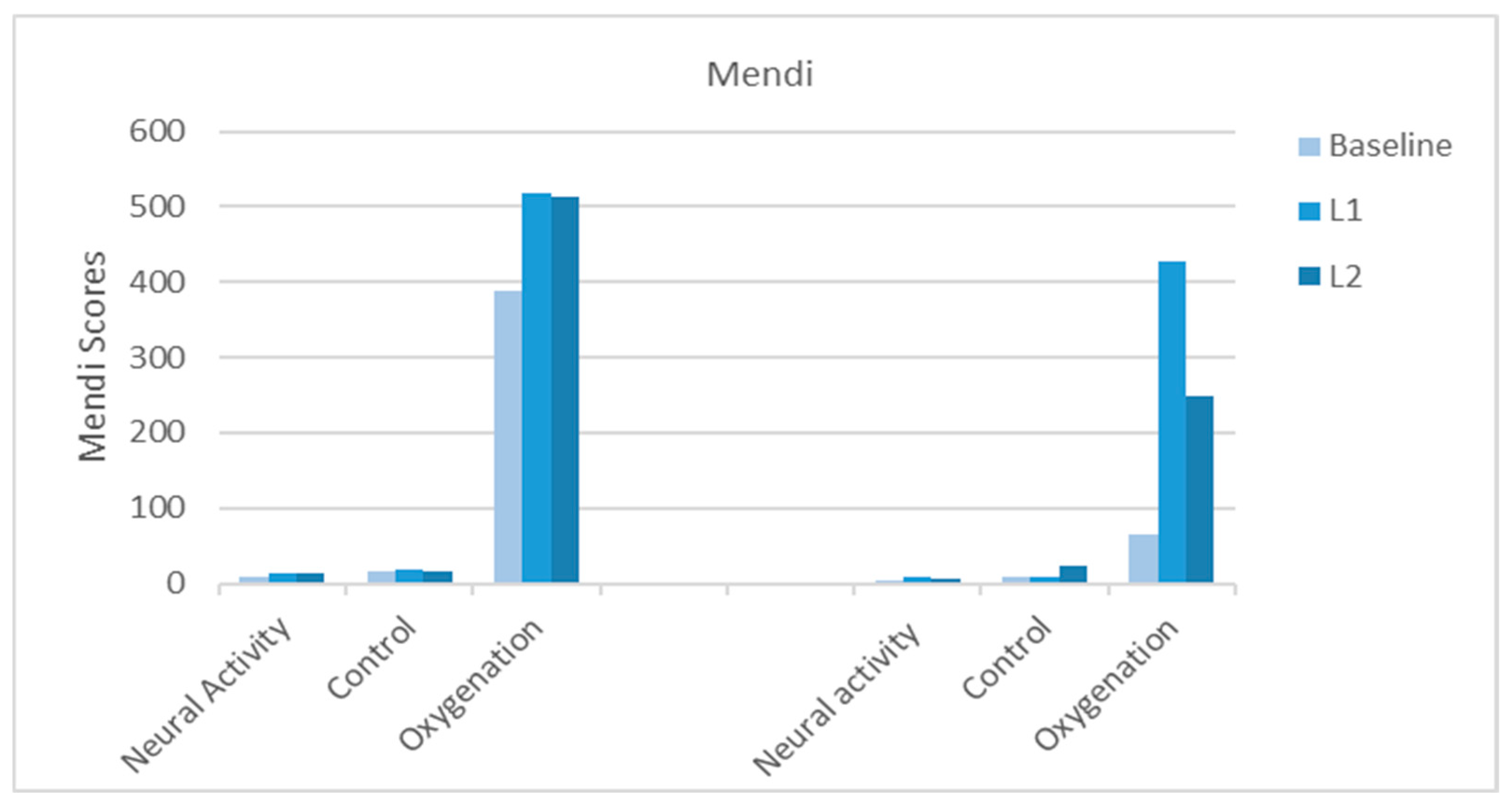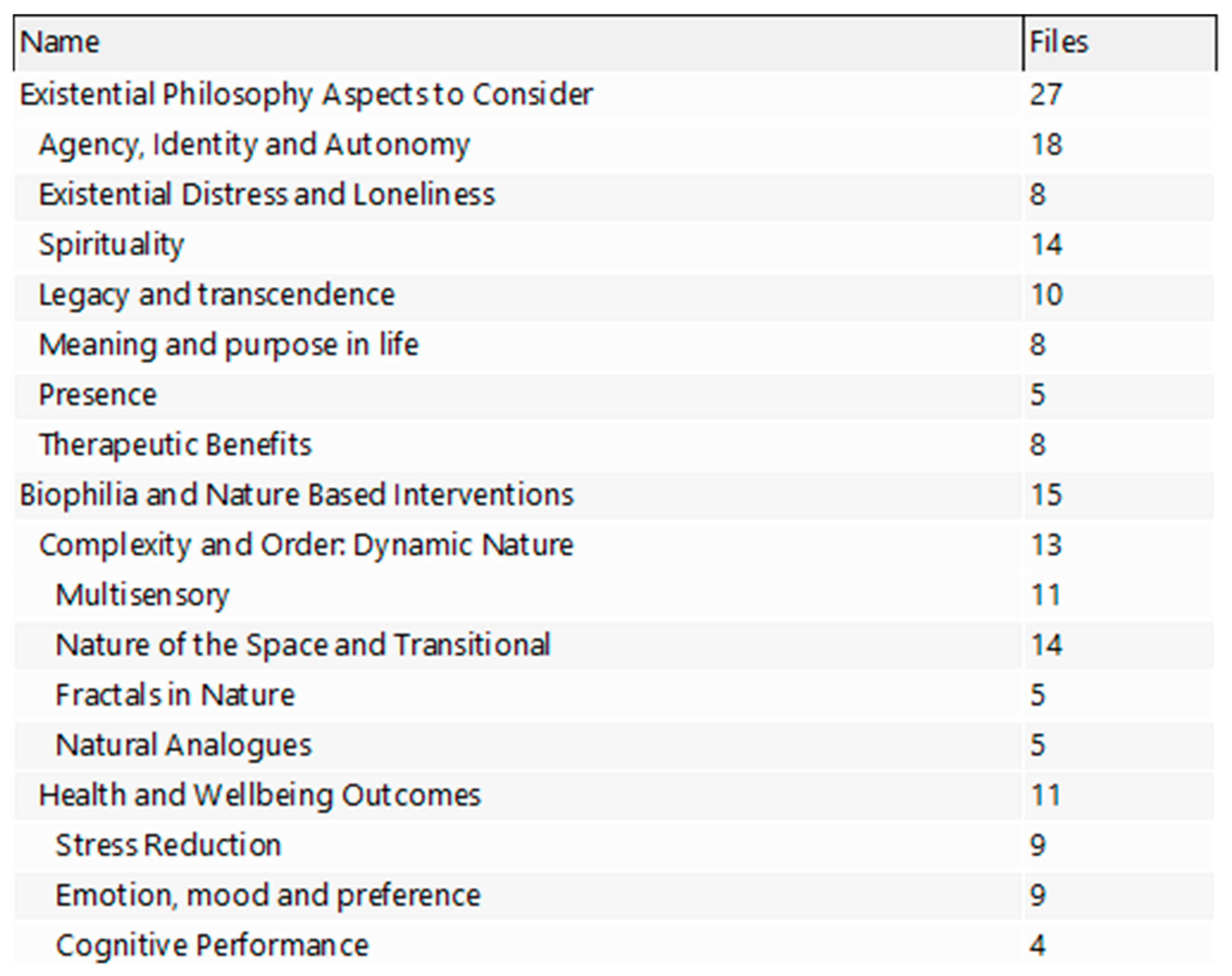

A Biophilic Therapeutic Framework for Ageing Well in Care Settings



Abstract
1. Introduction
2. Materials and Methods
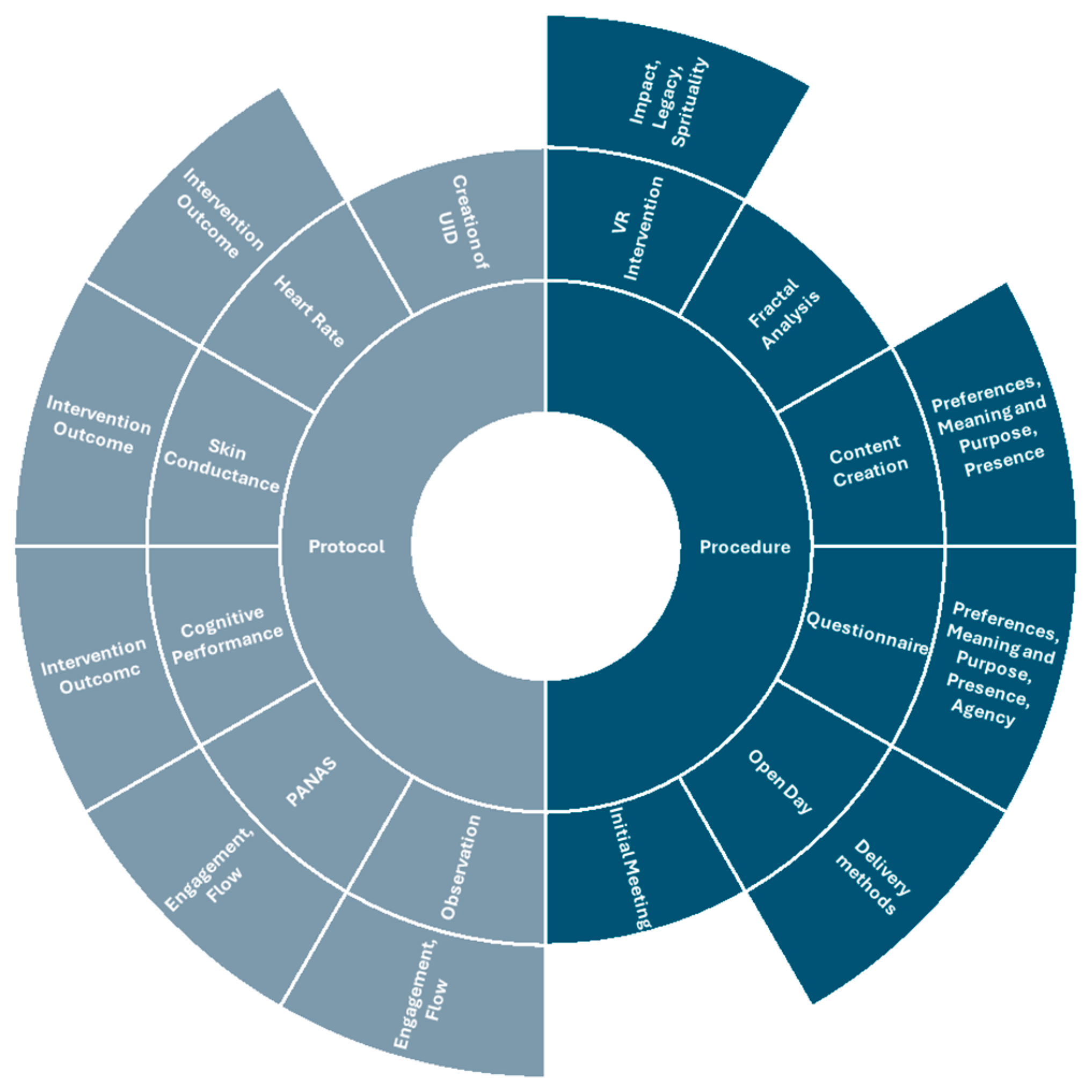
Pre-Feasibility Study Procedure
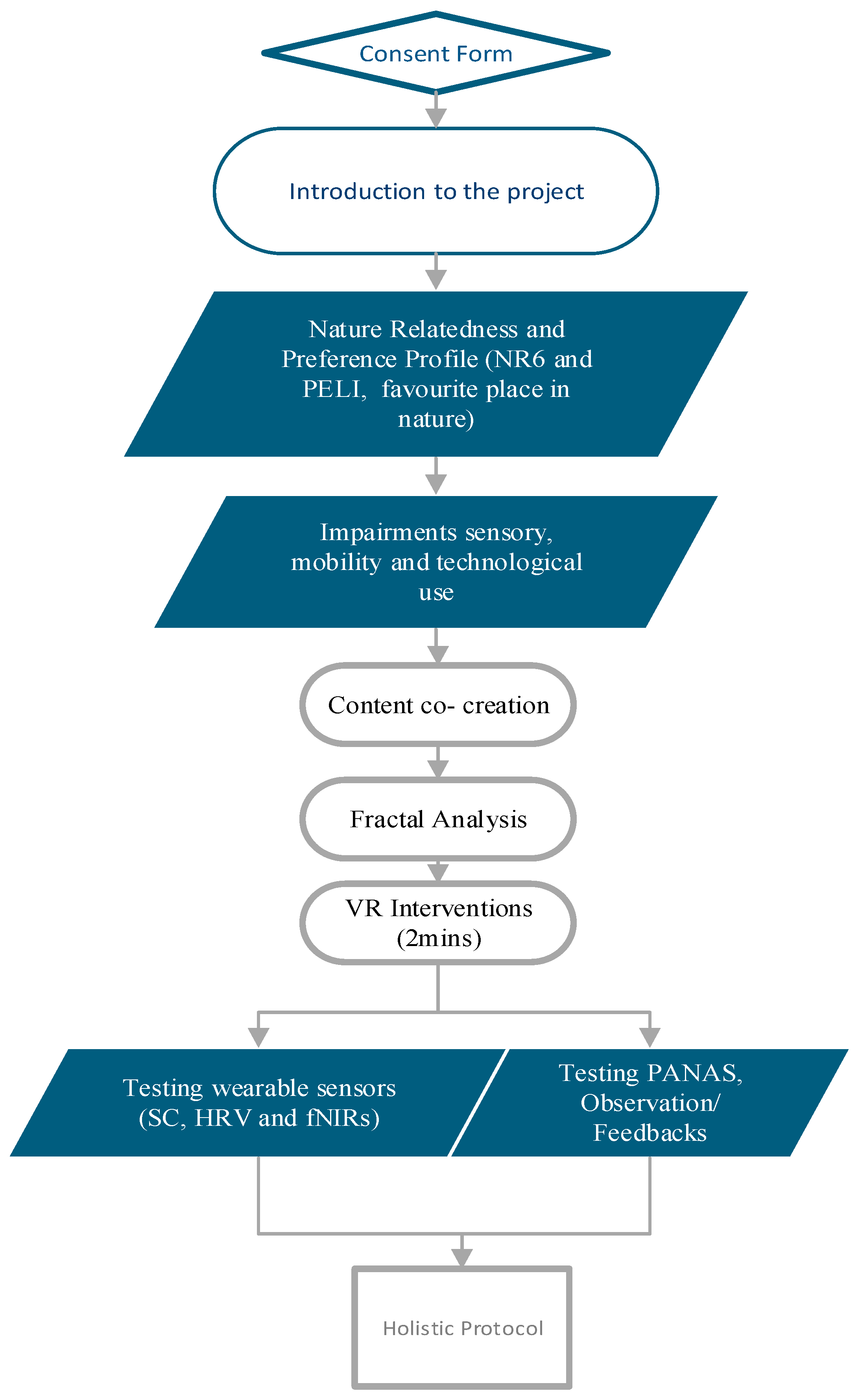
- Demographic questions: Age, gender, and previous profession.
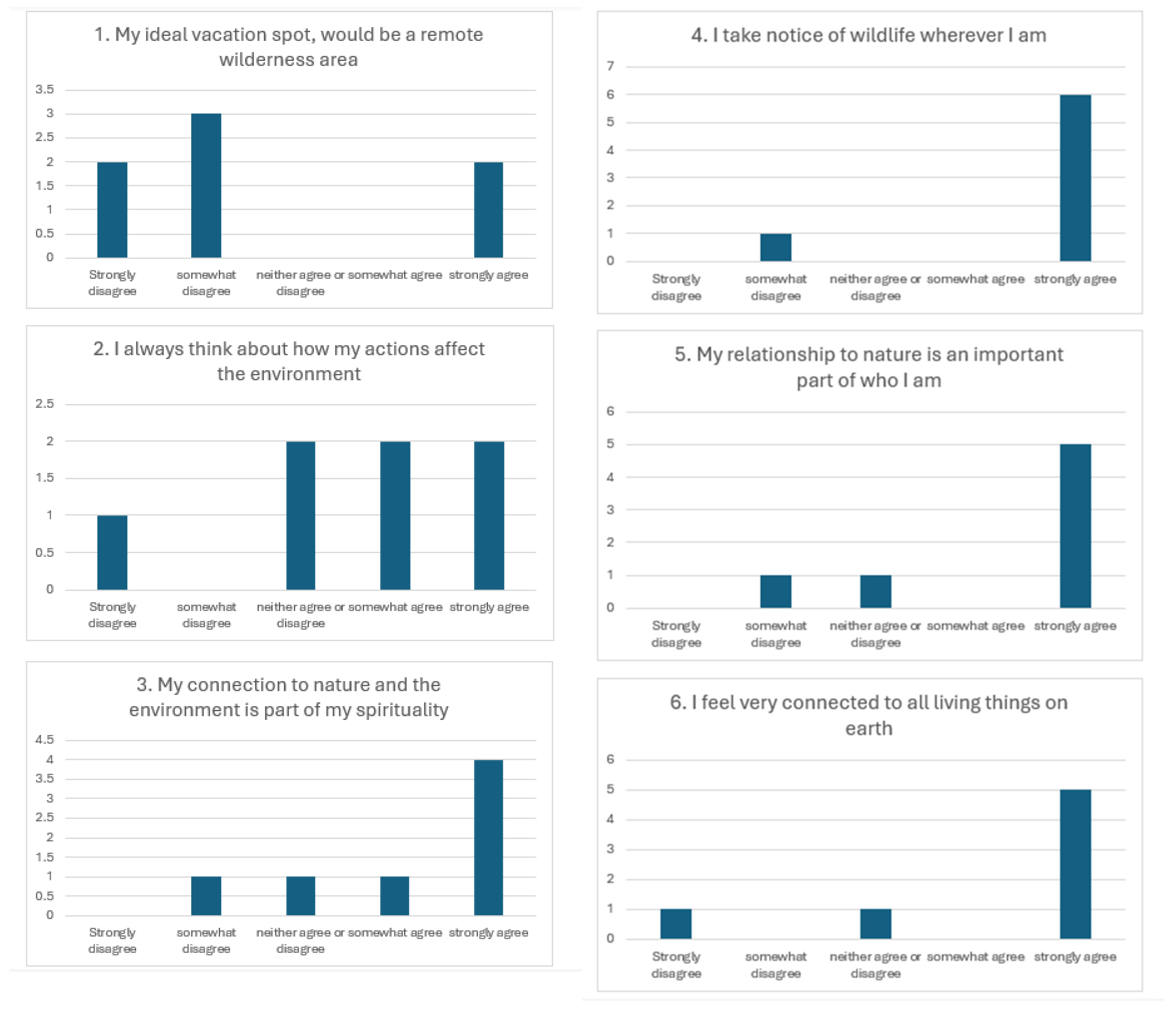
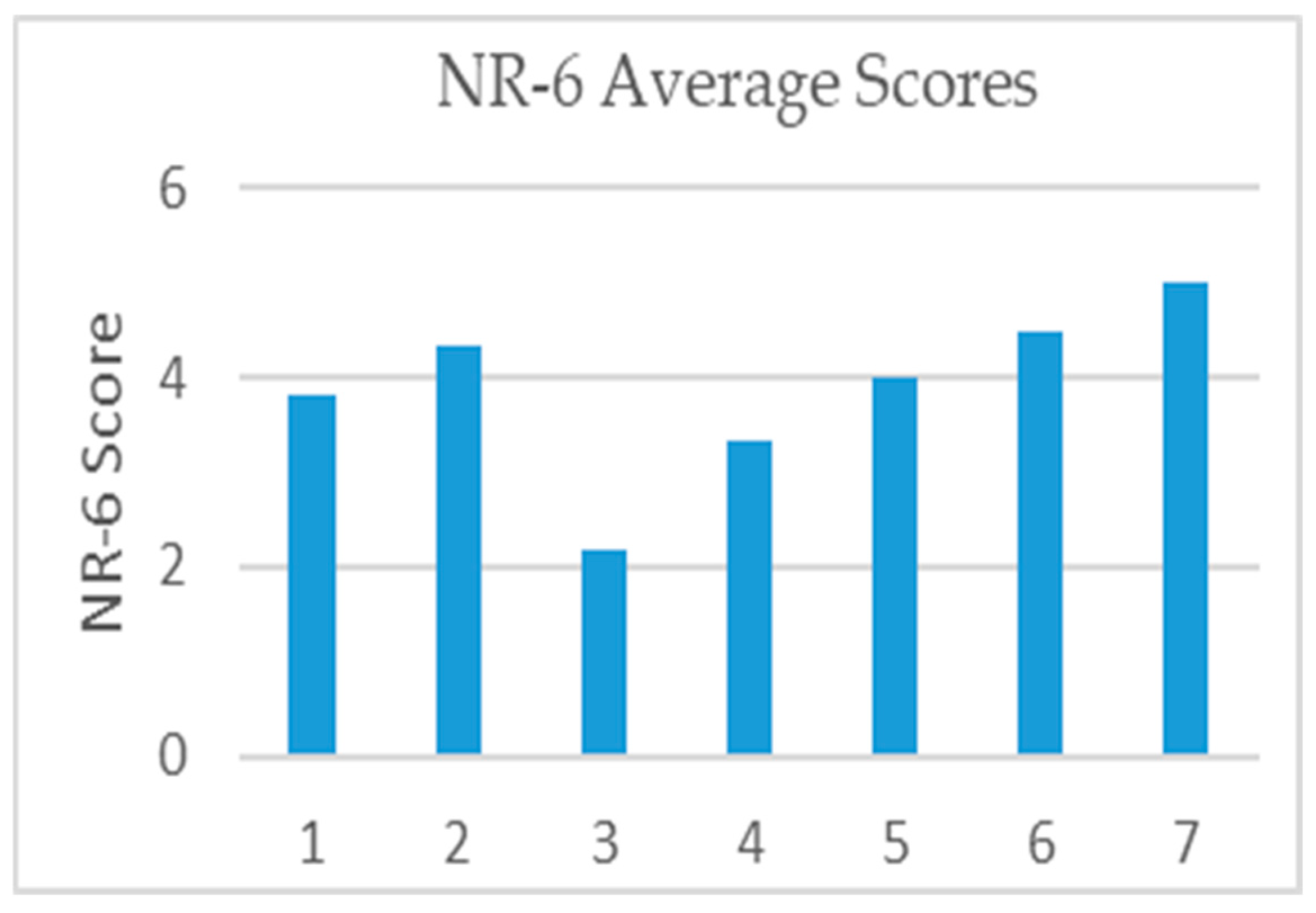
- The six-item Nature Relatedness Scale (NR-6) to assess connections and behaviours towards nature [28].
- The PELI questionnaire to identify preferences related to outdoor activities, weather, temperature, and frequency [29].
- Three open questions on sensory, mobility impairments and technological use, and favourite places in nature.

- Level 1—a fractal dimension value around 1.5 (no visible dynamic and sensory qualities): a still landscape scene.
- Level 2—a fractal dimension value above 1.7 (dynamic and sensory qualities): a highly immersive scene.
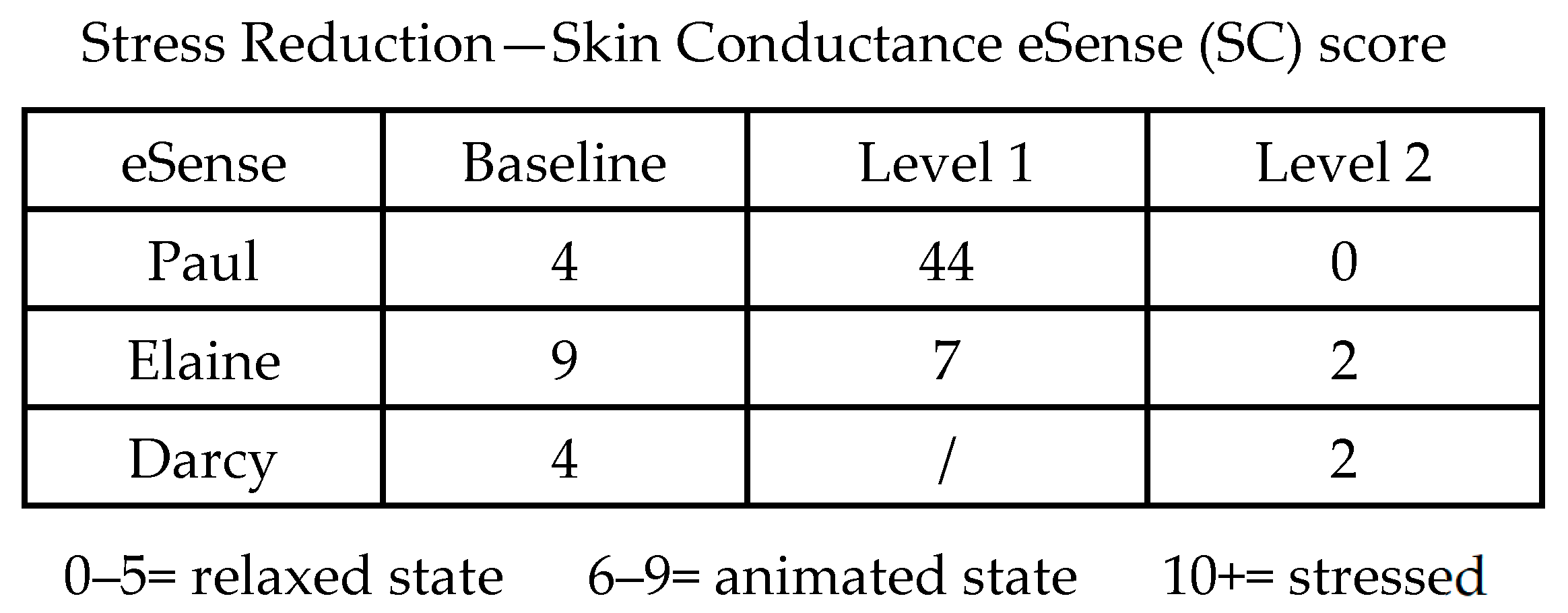
- Wearable sensors (BTMP protocol).
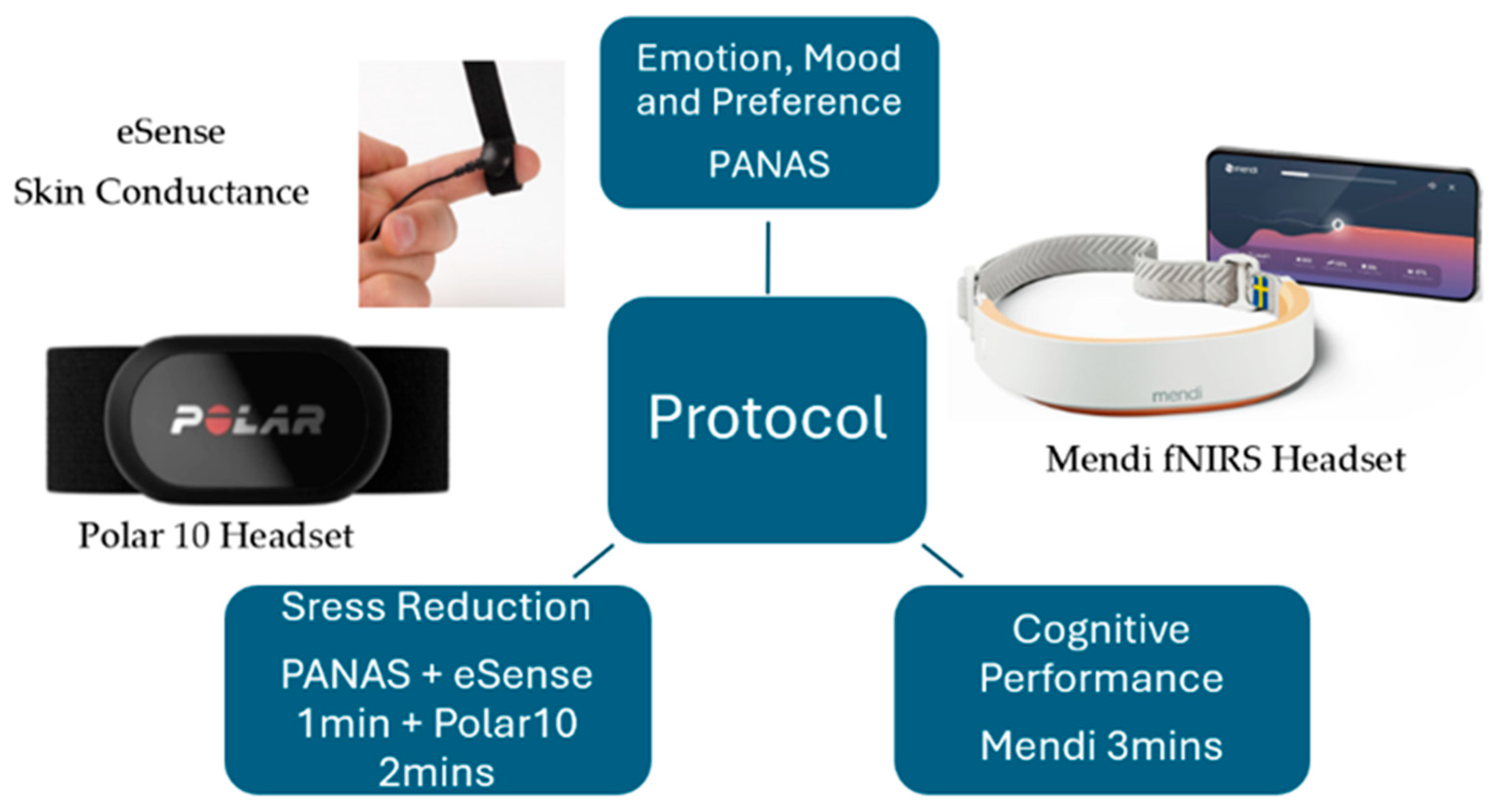
3. Results and Discussion
- Nature Preference Questionnaire
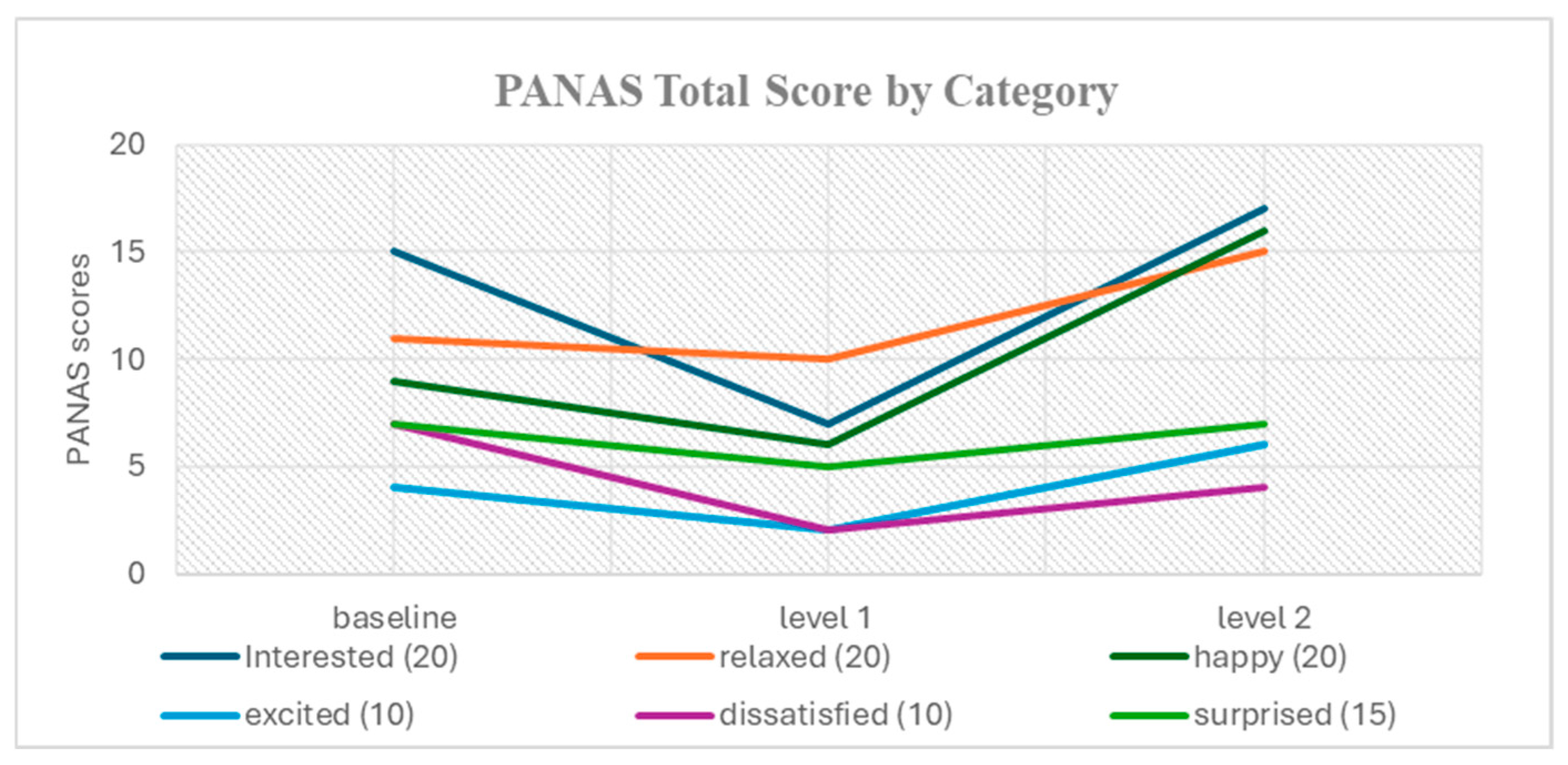
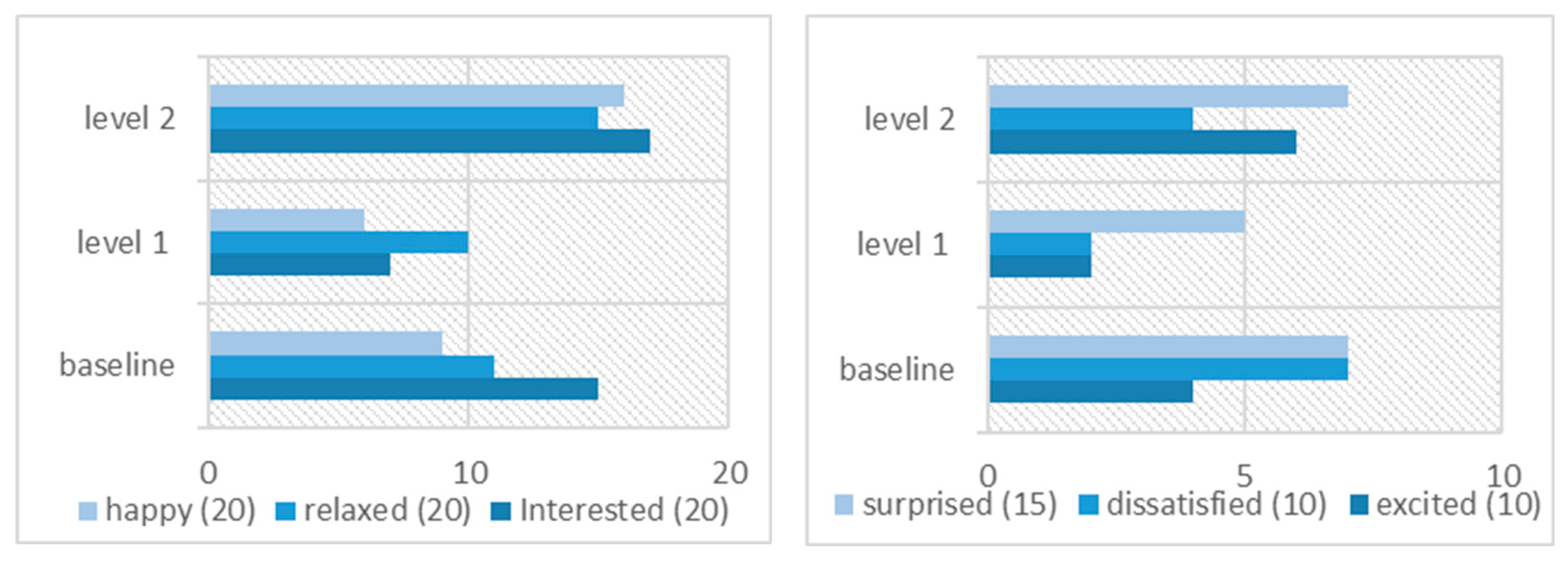
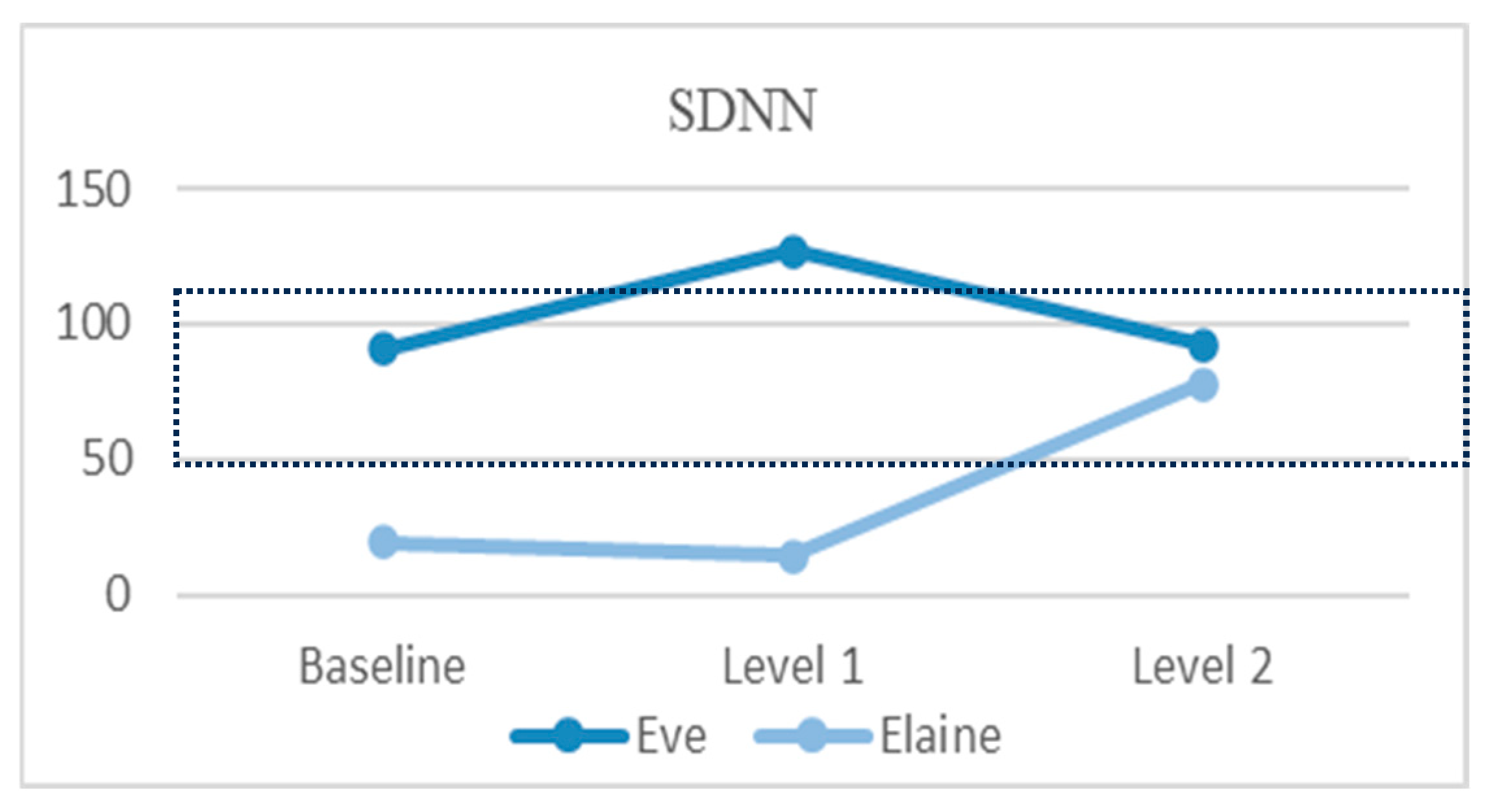
- Psychophysiological outcomes
- Existential and spiritual aspects
4. Conclusions and Future Research
- A larger sample size of 20+ participants for data generalisation, with a control group.
- Practical design interventions (Complexity and Order assessed in situ).
- Focus groups employed to provide a space to in which share ideas around nature in care settings, maximise agency, impact, and legacy, and reflect preferences.
- Further exploration of organised complexity for the application category of Nature of the Space (transitional spaces, mobility and wayfinding, perceptual coherence).
- Assessment of VR interventions in care settings for engagement and absorption, for which a flow/presence questionnaire could be employed.
Author Contributions
Funding
Institutional Review Board Statement
Informed Consent Statement
Data Availability Statement
Acknowledgments
Conflicts of Interest
Appendix A

| Article Number and Source | CS | SR | TA | NI | FG | RT | ED | PS | ES | PP | QL |
|---|---|---|---|---|---|---|---|---|---|---|---|
| 1 [39] | x | ||||||||||
| 2 [40] | x | ||||||||||
| 3 [41] | x | x | x | ||||||||
| 4 [42] | x | x | |||||||||
| 5 [43] | x | x | x | ||||||||
| 6 [44] | x | x | |||||||||
| 7 [45] | x | x | |||||||||
| 8 [46] | x | ||||||||||
| 9 [47] | x | x | |||||||||
| 10 [48] | x | ||||||||||
| 11 [10] | x | ||||||||||
| 12 [49] | x | x | |||||||||
| 13 [50] | x | x | x | x | |||||||
| 14 [18] | x | ||||||||||
| 15 [51] | x | ||||||||||
| 16 [52] | x | ||||||||||
| 17 [53] | x | ||||||||||
| 18 [54] | x | x | x | ||||||||
| 19 [55] | x | ||||||||||
| 20 [56] | x | ||||||||||
| 21 [57] | x | ||||||||||
| 22 [58] | x | x | x | x | |||||||
| 23 [59] | x | x | |||||||||
| 24 [60] | x | x | |||||||||
| 25 [61] | x | x | |||||||||
| 26 [62] | x | x | |||||||||
| 27 [63] | x | x | |||||||||
| 28 [64] | x | x | |||||||||
| 29 [65] | x | x |
Appendix B
Appendix C
References
- Ulrich, R.S. Biophilic Theory and Research for Healthcare Design; Wiley: Hoboken, NJ, USA, 2008; Available online: https://www.researchgate.net/publication/285328585_Biophilic_theory_and_research_for_healthcare_design (accessed on 22 February 2023).
- Xing, Y.; Stevenson, N.; Thomas, C.; Hardy, A.; Knight, A.; Heym, N.; Sumich, A. Exploring biophilic building designs to promote wellbeing and stimulate inspiration. PLoS ONE 2025, 20, e0317372. [Google Scholar] [CrossRef] [PubMed]
- Xing, Y.; Kar, P.; Bird, J.J.; Sumich, A.; Knight, A.; Lotfi, A.; van Barthold, B.C. Developing an AI-Based Digital Biophilic Art Curation to Enhance Mental Health in Intelligent Buildings. Sustainability 2024, 16, 9790. [Google Scholar] [CrossRef]
- Xing, Y.; Williams, A.; Knight, A. Developing a biophilic behavioural change design framework—A scoping study. Urban For. Urban Green. 2024, 94, 128278. [Google Scholar] [CrossRef]
- Adityo, A. Role of Neuroscience and Artificial Intelligence in Biophilic Architectural Design Based on the Principle of Symbiosis. J. Artif. Intell. Arch. 2024, 3, 81–94. [Google Scholar] [CrossRef]
- NHS. The Framework for Enhanced Health in Care Homes the Framework for Enhanced Health in Care Homes 2020/21-Version 2. 2020. NHS England—Enhanced Health in Care Homes Framework. Available online: https://www.england.nhs.uk/publication/enhanced-health-in-care-homes-framework/ (accessed on 29 March 2023).
- du Feu, M.; Fergusson, K. Sensory impairment and mental health. Adv. Psychiatr. Treat. 2003, 9, 95–103. [Google Scholar] [CrossRef]
- NHS. ROAM II—Research on Outdoor Activities in Care Homes. Latest News Around Nottinghamshire Trust. Available online: https://www.nottinghamshirehealthcare.nhs.uk/latest-news/roam-ii-research-on-outdoor-activities-in-care-homes-2136 (accessed on 22 February 2023).
- Yeo, N.; White, M.; Alcock, I.; Garside, R.; Dean, S.; Smalley, A.; Gatersleben, B. What is the best way of delivering virtual nature for improving mood? An experimental comparison of high definition TV, 360° video, and computer generated virtual reality. J. Environ. Psychol. 2020, 72, 101500. [Google Scholar] [CrossRef]
- Lee, E.J.; Park, S.J. A Framework of Smart-Home Service for Elderly’s Biophilic Experience. Sustainability 2020, 12, 8572. [Google Scholar] [CrossRef]
- Terrapin Bright Green. 14 Patterns of Biophilic Design. Available online: https://www.terrapinbrightgreen.com/reports/14-patterns/ (accessed on 22 February 2023).
- Alves, S.; Gulwadi, G.B.; Nilsson, P. An Exploration of How Biophilic Attributes on Campuses Might Support Student Connectedness to Nature, Others, and Self. Front. Psychol. 2022, 12, 793175. [Google Scholar] [CrossRef]
- Salingaros, N.A. The Biophilic Index Predicts Healing Effects of the Built Environment introduction: Biophilia and its effects on people. JBU J. Biourbanism 2019, 8, 13–34. [Google Scholar]
- Lavdas, A.A.; Schirpke, U. Aesthetic preference is related to organized complexity. PLoS ONE 2020, 15, e0235257. [Google Scholar] [CrossRef]
- Taylor, R.P.; Spehar, B.; Van Donkelaar, P.; Hagerhall, C.M. Perceptual and Physiological Responses to Jackson Pollock’s Fractals. Front. Hum. Neurosci. 2011, 5, 10034. [Google Scholar] [CrossRef]
- Loveday, L. Fractals: The Hidden Beauty and Potential Therapeutic Effect of the Natural World. Available online: www.magdalenfarm.org.uk (accessed on 13 March 2023).
- Yu, C.-P.; Lee, H.-Y.; Lu, W.-H.; Huang, Y.-C.; Browning, M.H. Restorative effects of virtual natural settings on middle-aged and elderly adults. Urban For. Urban Green. 2020, 56, 126863. [Google Scholar] [CrossRef]
- Huntsman, D.D.; Bulaj, G. Healthy Dwelling: Design of Biophilic Interior Environments Fostering Self-Care Practices for People Living with Migraines, Chronic Pain, and Depression. Int. J. Environ. Res. Public Health 2022, 19, 2248. [Google Scholar] [CrossRef]
- White, M.P.; Yeo, N.L.; Vassiljev, P.; Lundstedt, R.; Wallergård, M.; Albin, M.; Lõhmus, M. A prescription for “nature”—The potential of using virtual nature in therapeutics. Neuropsychiatr. Dis. Treat. 2018, 2018, 3001–3013. [Google Scholar] [CrossRef]
- Huang, L.-C.; Yang, Y.-H. The Long-term Effects of Immersive Virtual Reality Reminiscence in People With Dementia: Longitudinal Observational Study. JMIR Serious Games 2022, 10, e36720. [Google Scholar] [CrossRef]
- Yin, J.; Zhu, S.; MacNaughton, P.; Allen, J.G.; Spengler, J.D. Physiological and cognitive performance of exposure to biophilic indoor environment. Build. Environ. 2018, 132, 255–262. [Google Scholar] [CrossRef]
- Yin, J.; Yuan, J.; Arfaei, N.; Catalano, P.J.; Allen, J.G.; Spengler, J.D. Effects of biophilic indoor environment on stress and anxiety recovery: A between-subjects experiment in virtual reality. Environ. Int. 2020, 136, 105427. [Google Scholar] [CrossRef]
- Shuda, Q.; Bougoulias, M.E.; Kass, R. Effect of nature exposure on perceived and physiologic stress: A systematic review. Complement. Ther. Med. 2020, 53, 102514. [Google Scholar] [CrossRef]
- Liu, N.; Yücel, M.A.; Tong, Y.; Minagawa, Y.; Tian, F.; Li, X. Editorial: FNIRS in neuroscience and its emerging applications. Front. Neurosci. 2022, 16, 960591. [Google Scholar] [CrossRef]
- Izzetoglu, K.; Bunce, S.; Izzetoglu, M.; Onaral, B.; Pourrezaei, K. fNIR spectroscopy as a measure of cognitive task load. In Proceedings of the 25th Annual International Conference of the IEEE Engineering in Medicine and Biology Society, Cancun, Mexico, 17–21 September 2003; pp. 3431–3434. [Google Scholar] [CrossRef]
- Huo, C.; Xu, G.; Li, W.; Xie, H.; Zhang, T.; Liu, Y.; Li, Z. A review on functional near-infrared spectroscopy and application in stroke rehabilitation. Med. Nov. Technol. Devices 2021, 11, 100064. [Google Scholar] [CrossRef]
- Haddaway, N.R.; Macura, B.; Whaley, P.; Pullin, A.S. ROSES Reporting standards for Systematic Evidence Syntheses: Pro forma, flow-diagram and descriptive summary of the plan and conduct of environmental systematic reviews and systematic maps. Environ. Evid. 2018, 7, 7. [Google Scholar] [CrossRef]
- Nisbet, E.K.; Zelenski, J.M. The NR-6: A new brief measure of nature relatedness. Front. Psychol. 2013, 4, 813. [Google Scholar] [CrossRef]
- Van Haitsma, K.S. PELI-Nursing Home-MDS 3.0 Section F-Version 2.0. Preference Based Living. 2014. Available online: https://www.preferencebasedliving.com/for-practitioners/practitioner/assessment/peli-questionnaires/peli-nursing-home-mds-3-0-section-f-version-2-0/ (accessed on 20 March 2023).
- Watson, D.; Clark, L.A. The PANAS-X: Manual for the Positive and Negative Affect Schedule—Expanded Form; University of Iowa: Iowa City, IA, USA, 1994. [Google Scholar] [CrossRef]
- eSense Skin Response: Stress Tracking Biofeedback Wearable with iOS/Android App. Available online: https://www.iphoneness.com/cool-finds/esense-skin-response/ (accessed on 24 October 2025).
- Amazon.co.uk: Sports & Outdoors. Polar H10 Heart Rate Monitor—ANT Plus, Bluetooth—Waterproof HR Sensor with Chest Strap—Built-in memory, Software Updates (H10, M-XXL, Black). Available online: https://www.amazon.co.uk/Polar-Monitor-Bluetooth-Waterproof-Sensor/dp/B07PM54P4N/ref=asc_df_B07PM54P4N?tag=bingshoppinga21&linkCode=df0&hvadid=79989546378269&hvnetw=o&hvqmt=e&hvbmt=be&hvdev=c&hvlocint=&hvlocphy=41423&hvtargid=pla-4583589104859483&th=1&psc=1 (accessed on 24 October 2025).
- Mendi.io. The Mendi Headset. Available online: https://www.mendi.io/products/mendi (accessed on 24 October 2025).
- Kjellgren, A.; Buhrkall, H. A comparison of the restorative effect of a natural environment with that of a simulated natural environment. J. Environ. Psychol. 2010, 30, 464–472. [Google Scholar] [CrossRef]
- Browning, M.H.E.M.; Mimnaugh, K.J.; van Riper, C.J.; Laurent, H.K.; LaValle, S.M. Can Simulated Nature Support Mental Health? Comparing Short, Single-Doses of 360-Degree Nature Videos in Virtual Reality with the Outdoors. Front. Psychol. 2020, 10, 2667. [Google Scholar] [CrossRef]
- van der Vaart, W.; van Oudenaarden, R. The practice of dealing with existential questions in long-term elderly care. Int. J. Qual. Stud. Health Well-Being 2018, 13, 1508197. [Google Scholar] [CrossRef]
- Kellehear, A.; Garrido, M. Existential ageing and dying: A scoping review. Arch. Gerontol. Geriatr. 2022, 104, 104798. [Google Scholar] [CrossRef]
- Wilder, W.D.; Csikszentmihalyi, M.; Csikszentmihalyi, I.S. Optimal Experience: Psychological Studies of Flow in Consciousness. Optim. Exp. 1989, 24, 690. [Google Scholar] [CrossRef]
- Suri, R. Working with the Elderly: An Existential—Humanistic Approach. J. Humanist. Psychol. 2009, 50, 175–186. [Google Scholar] [CrossRef]
- Ounalli, H.; Mamo, D.; Testoni, I.; Murri, M.B.; Caruso, R.; Grassi, L. Improving Dignity of Care in Community-Dwelling Elderly Patients with Cognitive Decline and Their Caregivers. The Role of Dignity Therapy. Behav. Sci. 2020, 10, 178. [Google Scholar] [CrossRef]
- Kittelson, S.; Scarton, L.; Barker, P.; Hauser, J.; O’MAhony, S.; Rabow, M.; Guay, M.D.; Quest, T.E.; Emanuel, L.; Fitchett, G.; et al. Dignity Therapy Led by Nurses or Chaplains for Elderly Cancer Palliative Care Outpatients: Protocol for a Randomized Controlled Trial. JMIR Res. Protoc. 2019, 8, e12213. [Google Scholar] [CrossRef]
- Grewe, F. The Soul’s Legacy: A Program Designed to Help Prepare Senior Adults Cope with End-of-Life Existential Distress. J. Health Care Chaplain. 2016, 23, 1–14. [Google Scholar] [CrossRef]
- Cheng, J.O.-Y.; Lo, R.; Chan, F.; Woo, J. A Pilot Study on the effectiveness of Anticipatory Grief Therapy for Elderly Facing the end of Life. J. Palliat. Care 2010, 26, 261–269. [Google Scholar] [CrossRef]
- Spalding, M.; Khalsa, P. Aging Matters: Humanistic and Transpersonal Approaches to Psychotherapy with Elders with Dementia. J. Humanist. Psychol. 2010, 50, 142–174. [Google Scholar] [CrossRef]
- Nissen, K.G. Young clinicians dealing with death: Problems and opportunities. Palliat. Support. Care 2015, 14, 587–592. [Google Scholar] [CrossRef]
- Hațegan, V. The Practice of Counseling Between Philosophy and Spirituality, an Interdisciplinary Approach—ProQuest. Available online: https://www.proquest.com/docview/2501297425?accountid=14693 (accessed on 8 November 2023).
- Tong, A.; Cheung, K.L.; Nair, S.S.; Tamura, M.K.; Craig, J.C.; Winkelmayer, W.C. Thematic Synthesis of Qualitative Studies on Patient and Caregiver Perspectives on End-of-Life Care in CKD. Am. J. Kidney Dis. 2014, 63, 913–927. [Google Scholar] [CrossRef]
- Pulido, M.L.; Fernández, P.C. From the Suffering of Old Age to the Fullness of Senectitude, a Philosophical Approach. Philosophia 2022, 50, 2069–2083. [Google Scholar] [CrossRef]
- Mari, T.; Hua, H.; Gunasagaran, S.; Veronica, N.G.; Srirangam, S.; Kuppusamy, S. Biophilic Design for Elderly Homes in Malaysia for Improved Quality of Life. J. Eng. Sci. Technol. 2023, 18, 96–112. [Google Scholar]
- Scott, T.; Masser, B.; Pachana, N. Using indoor plants and natural elements to positively impact occupants of residential aged-care facilities. In Proceedings of the XXIX International Horticultural Congress on Horticulture: Sustaining Lives, Livelihoods and Landscapes (IHC2014), Brisbane, Australia, 17 August 2014; pp. 7–12. [Google Scholar] [CrossRef]
- Peters, T.; Verderber, S. Biophilic Design Strategies in Long-Term Residential Care Environments for Persons with Dementia. J. Aging Environ. 2021, 36, 227–255. [Google Scholar] [CrossRef]
- Engelen, L.; Rahmann, M.; de Jong, E. Design for healthy ageing—The relationship between design, well-being, and quality of life: A review. Build. Res. Inf. 2021, 50, 19–35. [Google Scholar] [CrossRef]
- Noone, S.; Innes, A.; Kelly, F.; Mayers, A. The nourishing soil of the soul’: The role of horticultural therapy in promoting well-being in community-dwelling people with dementia. Dementia 2015, 16, 897–910. [Google Scholar] [CrossRef]
- Scott, T.L.; Jao, Y.-L.; Tulloch, K.; Yates, E.; Kenward, O.; Pachana, N.A. Well-Being Benefits of Horticulture-Based Activities for Community Dwelling People with Dementia: A Systematic Review. Int. J. Environ. Res. Public Health 2022, 19, 10523. [Google Scholar] [CrossRef] [PubMed]
- Barreiros, C.; Veas, E.; Pammer, V. Bringing Nature into our Lives: Using Biophilic Design and Calm Computing Principles to Improve Well-Being and Performance; Lecture Notes in Computer Science (including subseries Lecture Notes in Artificial Intelligence and Lecture Notes in Bioinformatics); Springer: Cham, Switzerland, 2018; Volume 10902 LNCS, pp. 99–109. [Google Scholar] [CrossRef]
- Verderber, S.; Koyabashi, U.; Dela Cruz, C.; Sadat, A.; Anderson, D.C. Residential Environments for Older Persons: A Comprehensive Literature Review (2005–2022). Sage J. 2023, 16, 291–337. [Google Scholar] [CrossRef]
- Douglass-Molloy, H.; Law, M.M.; Le, B.; Katz, N. Spiritual distress in dialysis: A case report. Prog. Palliat. Care 2022, 31, 219–222. [Google Scholar] [CrossRef]
- Söderman, A.; Harstäde, C.W.; Östlund, U.; Blomberg, K. Community nurses’ experiences of the Swedish Dignity Care Intervention for older persons with palliative care needs—A qualitative feasibility study in municipal home health care. Int. J. Older People Nurs. 2021, 16, e12372. [Google Scholar] [CrossRef] [PubMed]
- Tanaka, K. Depression-linked beliefs in older adults with depression. J. Clin. Nurs. 2019, 29, 228–239. [Google Scholar] [CrossRef]
- Sundström, M.; Blomqvist, K.; Edberg, A.; Rämgård, M. The context of care matters: Older people’s existential loneliness from the perspective of healthcare professionals—A multiple case study. Int. J. Older People Nurs. 2019, 14, e12234. [Google Scholar] [CrossRef]
- Sjöberg, M.; Edberg, A.; Rasmussen, B.H.; Beck, I. Being acknowledged by others and bracketing negative thoughts and feelings: Frail older people’s narrations of how existential loneliness is eased. Int. J. Older People Nurs. 2018, 14, e12213. [Google Scholar] [CrossRef]
- Fay, Z.; Oboyle, C. How specialist palliative care nurses identify patients with existential distress and manage their needs. Int. J. Palliat. Nurs. 2019, 25, 233–243. [Google Scholar] [CrossRef]
- Österlind, J.; Ternestedt, B.; Hansebo, G.; Hellström, I. Feeling lonely in an unfamiliar place: Older people’s experiences of life close to death in a nursing home. Int. J. Older People Nurs. 2016, 12, e12129. [Google Scholar] [CrossRef]
- Bormann, J.E.; Liu, L.; Thorp, S.R.; Lang, A.J. Spiritual wellbeing mediates PTSD change in veterans with military-related PTSD. Int. J. Behav. Med. 2011, 19, 496–502. [Google Scholar] [CrossRef] [PubMed]
- Pati, D.; Freier, P.; O’boyle, M.; Amor, C.; Valipoor, S. The Impact of Simulated Nature on Patient Outcomes. HERD: Health Environ. Res. Des. J. 2015, 9, 36–51. [Google Scholar] [CrossRef] [PubMed]




| Countryside Scene | Fractal D | Woodland Scene | Fractal D |
|---|---|---|---|
 | 1.70 High Countryside scene and swaying tree above/sitting underneath a tree |  | 1.71 High Woodland scene with birds and water. |
 | 1.47 Medium Distant views of the countryside; field and sky views; landscape scene. |  | 1.47 Medium Distant woodlands: view of tree outlines and clouds. |
Disclaimer/Publisher’s Note: The statements, opinions and data contained in all publications are solely those of the individual author(s) and contributor(s) and not of MDPI and/or the editor(s). MDPI and/or the editor(s) disclaim responsibility for any injury to people or property resulting from any ideas, methods, instructions or products referred to in the content. |
© 2025 by the authors. Licensee MDPI, Basel, Switzerland. This article is an open access article distributed under the terms and conditions of the Creative Commons Attribution (CC BY) license (https://creativecommons.org/licenses/by/4.0/).
Share and Cite
Thomas, C.; Xing, Y.; Knight, A.; Brown, D.J. A Biophilic Therapeutic Framework for Ageing Well in Care Settings. Buildings 2025, 15, 4558. https://doi.org/10.3390/buildings15244558
Thomas C, Xing Y, Knight A, Brown DJ. A Biophilic Therapeutic Framework for Ageing Well in Care Settings. Buildings. 2025; 15(24):4558. https://doi.org/10.3390/buildings15244558
Chicago/Turabian StyleThomas, Carolyn, Yangang Xing, Andrew Knight, and David J. Brown. 2025. "A Biophilic Therapeutic Framework for Ageing Well in Care Settings" Buildings 15, no. 24: 4558. https://doi.org/10.3390/buildings15244558
APA StyleThomas, C., Xing, Y., Knight, A., & Brown, D. J. (2025). A Biophilic Therapeutic Framework for Ageing Well in Care Settings. Buildings, 15(24), 4558. https://doi.org/10.3390/buildings15244558