Article

Convergence and Divergence: A Comparative Study of the Residential Cultures of Tujia and Miao Traditional Villages in Western Hunan, China


1
School of Architecture and Planning, Hunan University, Changsha 410082, China
2
College of Landscape Architecture, Central South University of Forestry and Technology, Changsha 410004, China
*
Authors to whom correspondence should be addressed.
Buildings 2025, 15(24), 4539; https://doi.org/10.3390/buildings15244539
Submission received: 10 November 2025 / Revised: 8 December 2025 / Accepted: 10 December 2025 / Published: 16 December 2025
(This article belongs to the Section Architectural Design, Urban Science, and Real Estate)

Abstract

This study examines the traditional villages of the Tujia and Miao ethnic groups in Xiangxi Prefecture, western Hunan, and clarifies their spatial distribution and residential cultures through ArcGIS-based spatial analysis combined with extensive field investigation. On the basis of a systematic comparative framework, it explores differences in village patterns, architectural forms, and folk belief systems between the two groups. The results indicate that (1) in terms of spatial distribution, Miao villages are mainly located to the south of the Wuling Mountains, while Tujia villages are concentrated to the north, with the mountainous ranges of Baojing and Guzhang counties forming a clear transitional belt; (2) regarding village layout, Miao villages are generally clustered with “mountain-backed and water-adjacent”, whereas Tujia villages tend to adopt a more dispersed and defensive pattern than “mountain-anchored and water-distanced”; (3) in dwelling form, both groups share similar basic spatial organization, yet Miao dwellings exhibit greater diversity in construction materials, including timber, stone, and rammed earth; (4) in terms of belief and ritual, distinct folk practices and symbolic systems are embedded in the spatial organization and decorative features of each group’s villages. These findings deepen the understanding of cultural diversity among ethnic minorities in western Hunan and provide a theoretical basis for authenticity-oriented conservation and the sustainable development of traditional villages in ethnic regions.

1. Introduction

Western Hunan is located in the hinterland of the Wuling Mountains in central China. As a typical region with a high concentration of traditional ethnic minority villages, it is home to more than 30 ethnic groups, including the Tujia, Miao, Dong, and Yao peoples. The long-term coexistence and interaction of these communities have fostered distinctive village spatial patterns, architectural styles, and a moral and ethical framework embedded within the rural social fabric [1]. From the perspective of cultural geography, the ethnic landscape of western Hunan lies at the intersection of the Ba and Chu cultural spheres. Through centuries of historical evolution and population migration, local cultures have become deeply integrated with Ba, Chu, and shamanic traditions while simultaneously incorporating elements of the surrounding Han culture, forming a rich and complex regional cultural system. The traditional villages preserved in this region serve as both material carriers and living representations of this heritage, embodying the core essence of western Hunan’s folk culture. With rapid socioeconomic development and ongoing modernization, cultural exchange and integration among different ethnic groups have intensified, leading to increasingly blurred spatial boundaries and hybridized cultural identities. Against this background, a systematic analysis of the spatial distribution and residential cultural characteristics of traditional ethnic villages in western Hunan is of both academic and practical significance. Focusing on the traditional villages of the Tujia and Miao ethnic groups within the Xiangxi Tujia and Miao Autonomous Prefecture (hereinafter referred to as Xiangxi Prefecture), this study aims to provide a theoretical basis and practical guidance for the authenticity-oriented preservation and sustainable development of traditional villages in ethnic minority regions [2,3].
Over the past decades, extensive research has been conducted on rural settlements and vernacular architecture, addressing topics such as settlement morphology, dwelling typologies, and the relationship between built form, environment, and local ways of life [4,5,6]. In the Chinese context, studies on traditional villages and ethnic minority settlements have highlighted the adaptive strategies of local communities to complex mountain environments, the deep interweaving of lineage organization and spatial structure, and the role of ritual practice in shaping village space [7,8]. Internationally, research on vernacular architecture has increasingly emphasized cultural identity, place-making, and heritage values, arguing that everyday dwelling environments constitute an important medium through which social memory and ethnic identity are reproduced [9,10,11]. However, much of this literature tends to focus either on single-ethnic case studies or on generalized rural settlement types, and comparative analyses that systematically examine the spatial and cultural differences between neighboring ethnic groups within the same region remain relatively limited.
At the same time, the rapid development of geographic information systems (GISs) and spatial analysis has provided powerful tools for investigating the distribution, clustering, and environmental adaptability of rural settlements. Many studies have employed GIS to map traditional villages, identify spatial patterns, and evaluate the relationships between settlements and topography, hydrology, transportation networks, or land-use structures [12,13]. These approaches have contributed to a more objective understanding of spatial organization at the regional scale and have supported planning and decision-making for rural revitalization and cultural heritage protection. Nevertheless, in the field of ethnic minority village studies, GIS-based analyses are still often confined to descriptive mapping or quantitative pattern recognition, with relatively weak integration of cultural interpretation, ethnographic evidence, and local knowledge. As a result, the potential of combining spatial analysis with in-depth cultural research to illuminate how ethnic traditions, belief systems, and social structures are inscribed in settlement space has not been fully realized.
In western Hunan, existing research on Tujia and Miao traditional villages has primarily concentrated on individual model villages, architectural typologies, or the documentation of intangible cultural practices such as festivals, folk rituals, and crafts [14,15]. These studies have provided rich empirical materials and have underscored the heritage value of local villages. However, several gaps remain. First, the spatial distribution and regional differentiation of Tujia and Miao villages within the Xiangxi Prefecture have not been systematically quantified or visualized, making it difficult to compare their village patterns at a broader territorial scale. Second, the relationships between village form, dwelling architecture, and belief systems across the two ethnic groups have rarely been examined within a unified analytical framework. Third, there is still a lack of integrated studies that combine GIS-based spatial analysis with field investigation and cultural interpretation to reveal how different ethnic groups negotiate environmental constraints, security considerations, and ritual demands in their everyday dwelling environments.
To address these gaps, this study takes the traditional villages of the Tujia and Miao ethnic groups in Xiangxi Prefecture as its research object and constructs a comparative framework that integrates ArcGIS-based spatial analysis with extensive field investigation. Specifically, the study (i) maps and analyzes the spatial distribution of Tujia and Miao villages at the prefectural scale, identifying their respective location characteristics and regional clustering patterns; (ii) compares village layouts, dwelling forms, and construction materials to reveal differences and commonalities in residential culture and environmental adaptation; and (iii) interprets how folk beliefs, ritual practices, and symbolic systems are embedded in village space and architectural decoration for each group. By linking quantitative spatial patterns with qualitative cultural analysis, this research not only deepens the understanding of cultural diversity and spatial differentiation among ethnic minorities in western Hunan, but also provides evidence-based insights for the conservation planning and sustainable development of traditional villages in multi-ethnic mountainous regions.

2. Materials and Methods

2.1. Study Areas

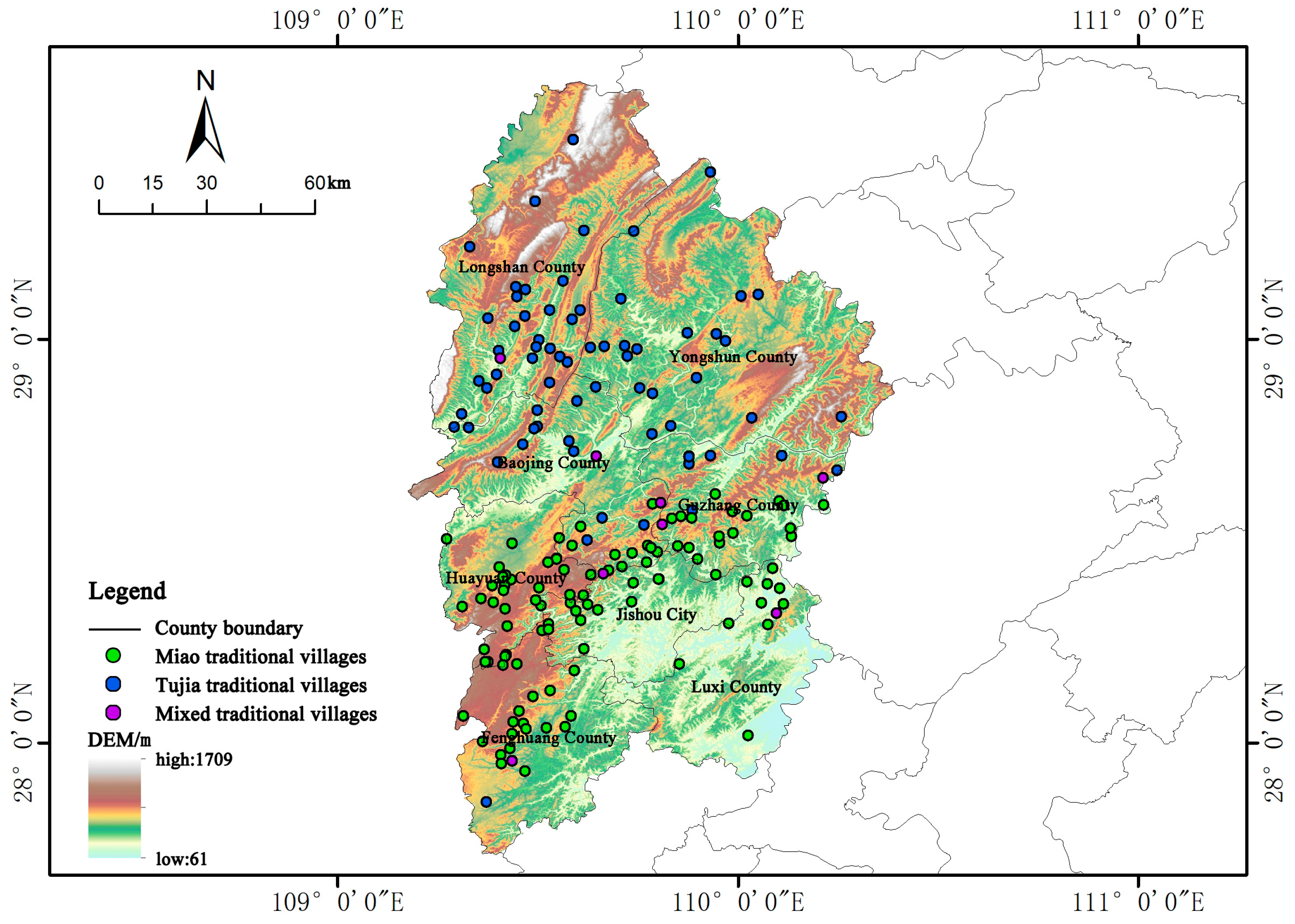
Xiangxi Tujia and Miao Autonomous Prefecture (hereafter referred to as Xiangxi Prefecture) is located in the northwestern part of Hunan Province, at the junction of Hunan, Hubei, Guizhou, and Chongqing. It administers seven counties and one city: Baojing County, Huayuan County, Longshan County, Yongshun County, Luxi County, Fenghuang County, Guzhang County, and Jishou City (Figure 1). As an important part of the Wuling Mountains region, Xiangxi Prefecture is dominated by medium–low mountain and hill landforms, with deeply incised river valleys and scattered basin plains. The area experiences a subtropical monsoon climate characterized by abundant rainfall and distinct seasonal changes, providing relatively favorable conditions for dryland agriculture and village construction on limited flat land.
Xiangxi Prefecture is a typical multi-ethnic region where various ethnic groups have coexisted for centuries, characterized by large-scale intermingling at the regional scale and localized clustering at the village scale. A total of 43 ethnic groups in this area, among which the Tujia and Miao constitute the dominant populations and have formed a high concentration of traditional ethnic villages [16]. Influenced by the mountainous topography, river systems, and historical migration routes, Tujia and Miao villages display notable differences in their spatial distribution, village patterns, and residential cultures. Against this geographical and cultural background, Xiangxi Prefecture provides a representative case for examining how different ethnic groups adapt to similar mountain environments while developing distinct village spaces and dwelling traditions.

2.2. Data Sources

Xiangxi Prefecture was selected as the study area for this research. The administrative division, watershed boundary, and DEM data used in this paper were obtained from the Geospatial Data Cloud website (https://www.gscloud.cn); the water system and river network were downloaded and processed from the National Geographic Information Resource Catalog Service System (https://www.webmap.cn). Information on traditional villages was drawn from six official batches of the List of Traditional Chinese Villages issued by the Ministry of Housing and Urban–Rural Development, encompassing a total of 8155 villages (http://www.chuantongcunluo.com/). Through a combination of field interviews and historical document review, Tujia and Miao traditional villages were verified, and the precise geographic coordinates (latitude and longitude) of each village were confirmed (Table 1).

2.3. Methods

This study adopts a mixed-method approach that combines GIS-based spatial analysis with intensive field investigation and qualitative cultural interpretation.

2.3.1. GIS Spatial Analysis

First, information on traditional villages inhabited by the Tujia and Miao ethnic groups in Xiangxi Prefecture was collected from local statistical yearbooks, official village lists, and planning documents, and was supplemented and verified through field reconnaissance. For each village, basic attributes such as ethnic affiliation, administrative location, and surrounding environmental conditions were recorded. The geographic coordinates of all identified villages were then imported into ArcGIS 10.7 to construct a spatial database of Tujia and Miao traditional villages in the study area. On this basis, spatial analysis tools in ArcGIS—including point distribution visualization, kernel density estimation and Ripley’s K-function—were employed to examine, at the prefectural scale, the overall distribution patterns, degrees of clustering or dispersion, and regional differentiation of the two types of villages.
(1) Kernel Density Estimation (KDE). KDE is a graphical representation of the spatial clustering characteristics of traditional villages. It calculates the density of point elements around each output raster [17]. In this study, the spatial distribution density of traditional villages is measured by kernel density analysis. The formula is as follows:
F ( x ) = 1 n h Σ i = 1 n k ( x     x i h )
where F(x) is the kernel density value at the location of the traditional village; h is the search radius, also known as the broadband (h > 0); n is the number of known points within the broadband, or the number of samples studied; k is the kernel function that represents the spatial weights; and (xxi) is the distance between the estimation point x and sample points xi.
(2) Ripley’s K-function. To evaluate the spatial clustering or dispersion of traditional villages across multiple distance scales, this study employs Ripley’s K-function, a second-order point-pattern statistic widely used in spatial analysis [18]. At the regional scale, each traditional village can be regarded as a point feature; therefore, Ripley’s K-function is suitable for describing the spatial interaction among village points and for comparing the distribution characteristics of Tujia and Miao villages.
For a given distance d , the K-function K ( d ) can be expressed in simplified form as:
K ( d ) =   A n 2   i = 1 n j = 1 j i n ω i j 1 I ( d i j   d )
where A is the area of the study region, n is the total number of village points, d i j is the distance between village i and village j , I ( ) is an indicator function that equals 1 when d i j d and 0 otherwise, and ω i j is an edge correction weight to account for boundary effects. Under the assumption of complete spatial randomness (CSR), the theoretical expectation of K ( d ) is π d 2 .
In order to facilitate interpretation, the empirical K ( d ) values for Tujia and Miao villages are transformed into the corresponding L ( d ) function and then compared with the CSR expectation:
L ( d ) = K ( d ) π   d
If L ( d ) > 0 , the village points exhibit clustering at distance d ; if L ( d ) < 0 , the pattern tends toward spatial dispersion; and if L ( d ) 0 , the distribution is close to random. In this study, Ripley’s K-function is calculated separately for Tujia and Miao villages using the Multi-Distance Spatial Cluster Analysis (Ripley’s K Function) tool in ArcGIS 10.7, allowing a comparative assessment of the degree and scale of clustering for the two ethnic settlement systems.

2.3.2. In-Depth Field Research

Second, a number of representative Tujia and Miao traditional villages were selected for in-depth field surveys and on-site mapping. Sample selection comprehensively considered ethnic representativeness, preservation condition, accessibility, and coverage of different landform types and river-valley environments. During fieldwork, the overall layouts of the villages were documented through in situ sketching and photographic recording, and the forms of dwellings, construction materials, and façade characteristics were systematically observed and described. At the same time, semi-structured interviews were conducted with village cadres, clan elders, and other key informants to collect information on village history, periods of formation, folk beliefs, ritual activities, and related aspects of village life (Table 2).

2.3.3. Cultural Interpretation

Finally, drawing on concepts and approaches from cultural anthropology and ethnic history, the collected spatial and ethnographic data were integrated within a comparative analytical framework. The Tujia and Miao villages were compared in terms of site selection, spatial layout, residential building materials and styles, as well as traditional folk cultural practices and belief systems associated with village space. Through this process, the residential cultural characteristics of Tujia and Miao traditional villages were identified.

3. Results

3.1. Historical Origins and Spatial Distribution of the Tujia and Miao Peoples

In the ethnic minority region of western Hunan, the Tujia and Miao peoples are the two largest ethnic groups by population, and their origins have long been a central topic in historical and ethnological research. Scholarly discussions have generated diverse perspectives on their formation and development. One mainstream view holds that the Tujia trace their ancestry to the pre-Qin era, when indigenous inhabitants of the Wuling Mountains gradually established stable settlements through long-term livelihood practices [19,20]. From the Spring and Autumn and Warring States periods onward, displaced Ba tribes pushed eastward by Qin military expansion, together with the Peng clan migrating from Jiangxi and subsequently flourishing in western Hunan, collectively forming the ethnic base through continuous cultural and demographic integration. Historically, the Tujia have mainly inhabited the Wuling Mountains south of the Yangtze River, in a transboundary area spanning Hunan, Hubei, Chongqing, and Guizhou, thereby occupying a key position in the regional geography of China [21].
The Miao people possess an even older and more widely documented historical lineage. Ancient texts such as The Book of Documents and Records of the Grand Historian describe their ancestral connection to the “Jiuli” tribal alliance that existed in the middle and lower reaches of the Yellow River approximately 5000 years ago. During this period, conflicts between the tribal leader Chiyou and the Yan–Huang alliance led to a prolonged southward migration of Miao ancestors. By the Qin and Han dynasties, substantial Miao populations had already settled in western Hunan and eastern Guizhou, where they gradually formed a distinctive regional cultural system [22].
Geospatial analysis reveals a significant overlap in the present-day distribution of the two ethnic groups in western Hunan. As of April 2023, official data from the List of Chinese Traditional Villages (six batches jointly issued by multiple ministries) identify 178 protected traditional villages in Xiangxi Autonomous Prefecture. Multi-source verification combining fieldwork, in-depth interviews, and archival research classifies these villages into 69 Tujia villages, 102 Miao villages, and 5 mixed Tujia–Miao villages (Figure 2).
The ridge zone of the Baojing-Guzhang section in the Wuling Mountains forms a natural north–south boundary between the primary settlement areas of the two ethnic groups. Geomorphologically, the ridge acts as a major watershed and terrain divide, creating contrasting river-valley systems and ecological niches on its two sides that better match the historically differentiated livelihood strategies and settlement preferences. At the same time, historical migration fronts and tusi–county jurisdictions repeatedly used this mountain line as a frontier, so that over time the ridge was reinforced as an ethnic boundary, while passes and market nodes along it fostered intensive cross-border interaction, giving rise to a belt of mixed Tujia–Miao villages as a transitional contact zone [23,24].
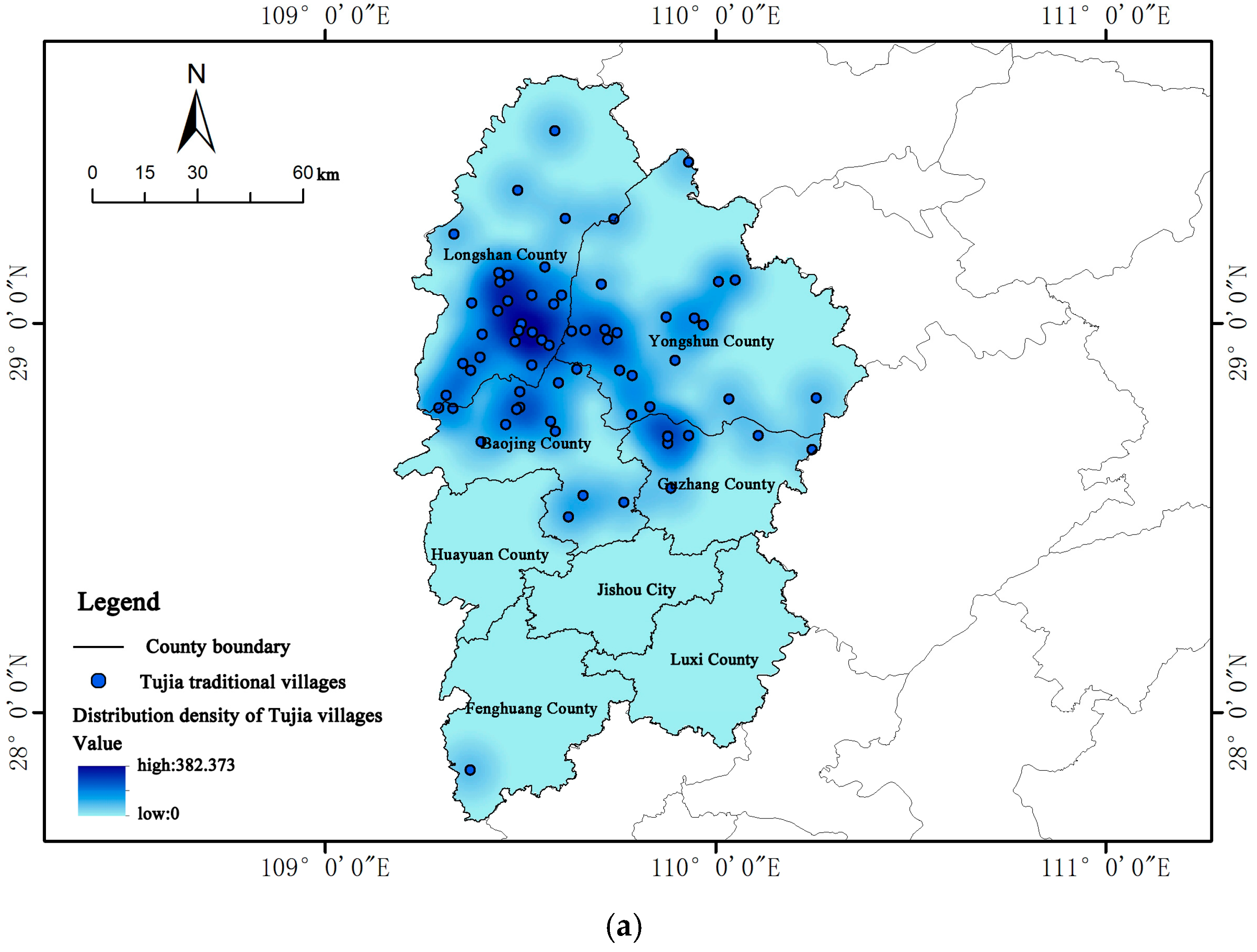
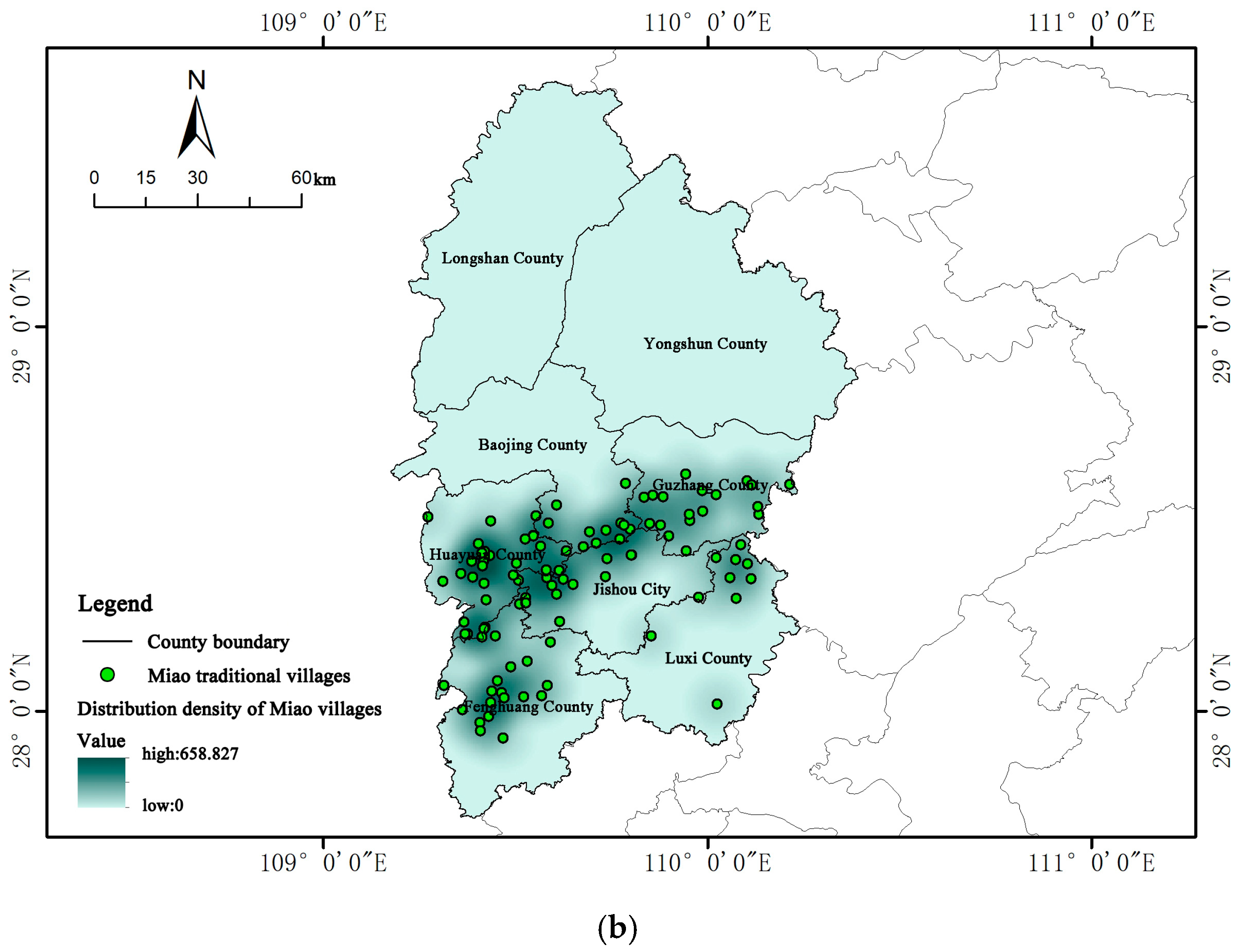
Kernel density analysis reveals that Tujia traditional villages are primarily concentrated along the border between southern Longshan and western Yongshun, with scattered settlements found in other areas such as Baojing and Guzhang (Figure 3a). In contrast, Miao traditional villages are extensively clustered across the Huayuan-Baojing-Jishou-Guzhang-Luxi region, with some villages concentrated within Fenghuang County (Figure 3b). Compared to the relatively dispersed distribution of Tujia villages, Miao villages exhibit significantly greater cohesion.
Ripley’s K-function was further applied to examine the multi-scale clustering characteristics of traditional villages inhabited by the Tujia and Miao ethnic groups. In both cases, the observed K-function (red curve) lies consistently above the theoretical expectation under complete spatial randomness (blue curve) and the simulated confidence envelope, indicating that the distributions of ethnic villages in Xiangxi Prefecture are significantly clustered rather than random across the analyzed distance range.
However, clear differences emerge when comparing the two ethnic groups. At comparable distance scales, the observed K-values for Miao villages (Figure 4a) are systematically higher than those for Tujia villages (Figure 4b), and the deviation of the Miao curve from the CSR expectation is more pronounced. This implies that Miao villages exhibit a stronger and more persistent clustering effect, with high-density agglomerations formed within specific mountain valleys and river basins. In contrast, the Tujia K-curve remains closer to the theoretical line, suggesting a relatively weaker degree of clustering and a more even or dispersed distribution pattern at the regional scale.
These results are consistent with the mapped point patterns and kernel-density surfaces: Miao settlements tend to concentrate in several contiguous core areas, whereas Tujia villages are more widely scattered along the ridges and mid-slopes of the Wuling Mountains. The Ripley’s K-function analysis therefore quantitatively confirms that, although both ethnic village systems display non-random clustering, the spatial aggregation of Miao villages is stronger than that of Tujia villages.

3.2. Comparative Analysis of Tujia and Miao Village Patterns

Traditional villages, as tangible carriers and spatial representations of human production and everyday life, embody regional economic trajectories and preserve local cultural memory. They provide important empirical cases for analyzing human–land relationships and cultural ecology. The formation and evolution of such villages result from the combined influence of multiple factors, including the natural environment, socioeconomic conditions, cultural customs, and religious beliefs.
Located in the core area of the Wuling Mountains, Xiangxi Tujia and Miao Autonomous Prefecture is characterized by a landscape dominated by high mountains and low hills, with steep elevation differences, intersecting valleys, and only limited flat arable land. Influenced by traditional feng shui concepts and ecological wisdom—such as “leaning against mountains while facing water” and “embracing shade while holding yang”—traditional villages in Xiangxi typically exhibit spatial configurations that are closely integrated with the surrounding topography and hydrology, forming village patterns highly adapted to the mountainous ecosystem.
Although both the Tujia and Miao inhabit the same natural geographic unit of the Wuling Mountains, they display clear differences in village site selection and spatial organization due to variations in cultural traditions and trajectories of social development. Divergent worldviews, production methods, and everyday customs have led each group to develop distinctive spatial logics and planning models in response to similar environmental conditions. These contrasts not only highlight the strong imprint of ethnic culture on the built environment, but also reveal differentiated adaptive strategies for coping with local geographic constraints. A detailed comparative analysis of these village patterns therefore provides a crucial basis for understanding cultural diversity and the formation mechanisms of regional cultural landscapes in western Hunan, and forms the focus of the following subsections.

3.2.1. Village Site Selection

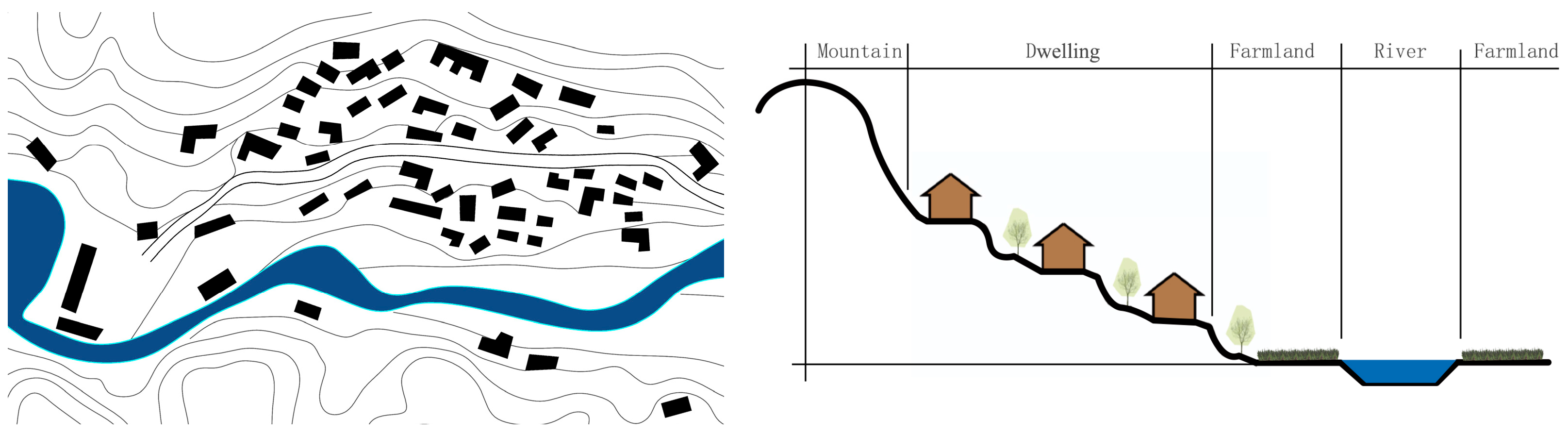
As a fundamental resource for human survival and development, water exerts a strong influence on the spatial organization and construction patterns of traditional villages. “Following mountain contours and settling near water” is a common principle for villages in mountainous regions. Miao traditional villages in Xiangxi typically adopt a “mountain-backed and water-adjacent” spatial configuration [25]. Topographically, they are often situated on relatively steep, mid- to high-elevation slopes, a strategy historically associated with defense against warfare and external threats, as well as adaptation to mountain-based agricultural practices. Culturally, feng shui traditions among the Miao endow this siting model with symbolic meanings: mountains are regarded as protective “dragon veins”, while nearby water symbolizes wealth, prosperity, and lineage continuity [26]. For example, Dehang Village in Jishou City is composed of tiered houses cascading along Panggu Peak and extending beside the Dong River (Figure 5), illustrating the close integration of village and landscape.
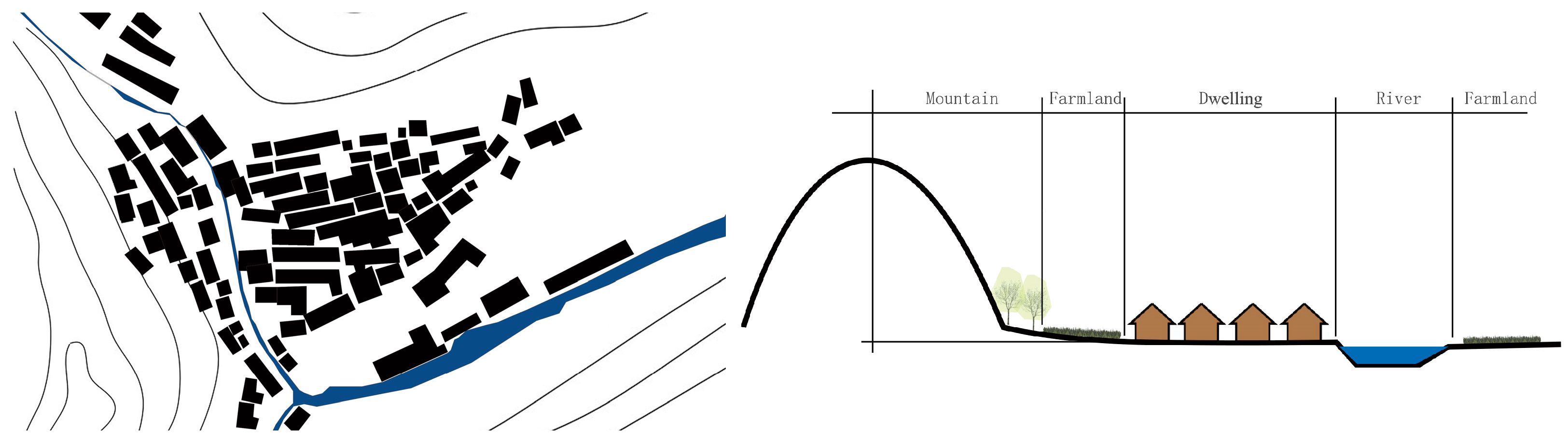
In contrast, Tujia villages follow a markedly different siting logic. According to the Yongshun County Annals: Customs, Tujia villages “scatter along valleys, invariably selecting lofty and precipitous terrain, traversing steep ridges with ease”, which reflects a clear preference for elevated and defensible sites. Hydrologically, Tujia villages generally maintain a deliberate distance from major rivers. For instance, Hengzhang Village in Baojing County is arranged along the slopes of Wolong Mountain and set back from the river, exemplifying a “mountain-anchored and water-distanced” siting pattern (Figure 6). This approach corresponds to the environmental conditions of the Wuling Mountains, where abundant rainfall and pronounced seasonal fluctuations in river discharge create considerable flood risks. By choosing higher ground away from main waterways, Tujia communities effectively reduced flood hazards, demonstrating a form of practical environmental risk management and adaptive ecological wisdom developed through long-term habitation in mountain environments [27,28].
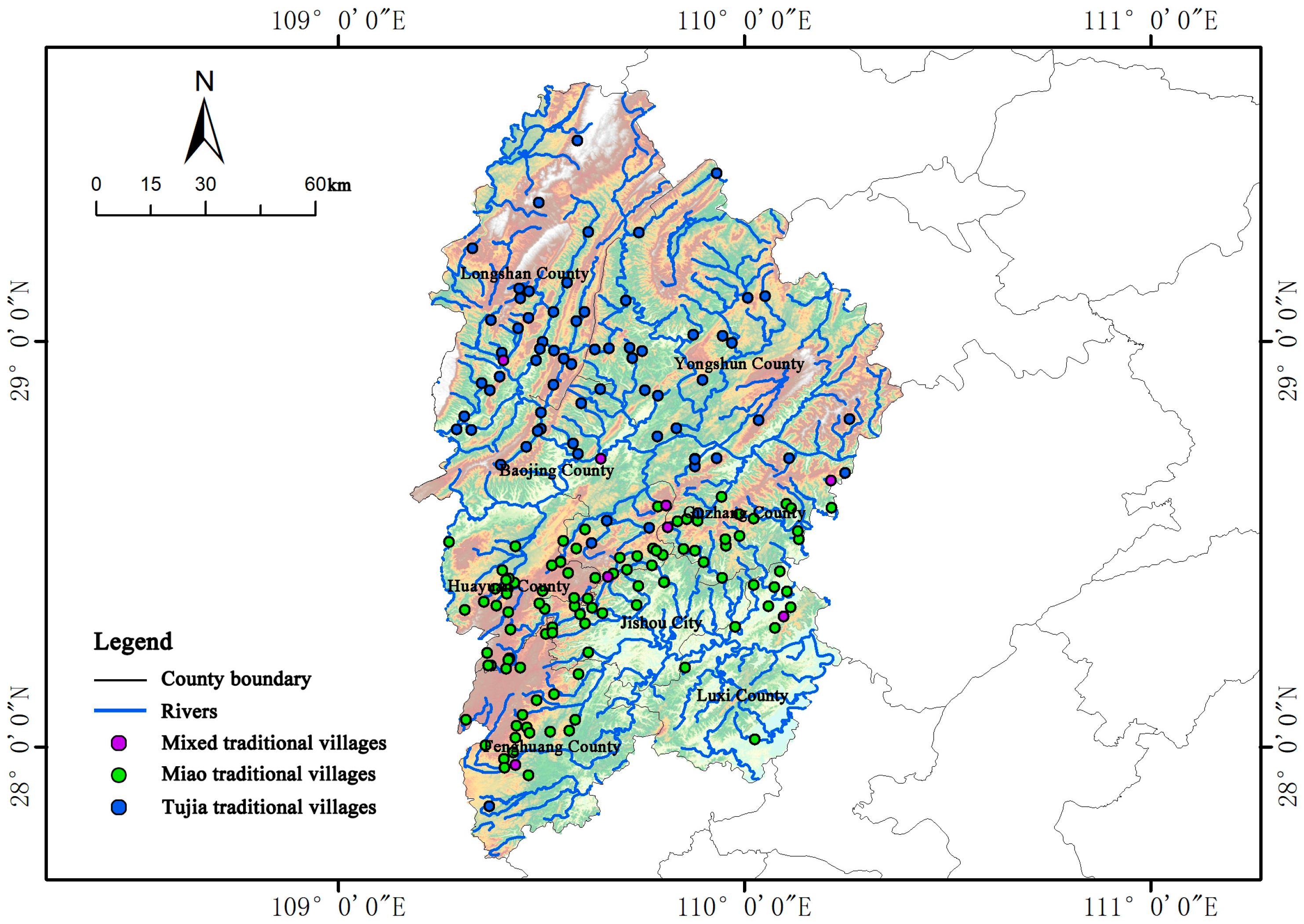
The overlay of traditional village distribution maps with the river network (Figure 7), together with GIS-based calculations of the shortest distance from each village point to the nearest river, likewise confirms this overall “water-oriented” tendency. Within a 1000 m buffer from the river, there are 44 Tujia villages and 56 Miao villages (Table 3); in absolute terms, Miao settlements thus constitute a larger near-water settlement system, while more than half of the Tujia villages also fall within this near-river zone despite their smaller overall number. This indicates that, at the level of site-selection practice, both ethnic groups remain strongly anchored in river systems as a fundamental ecological basis.

3.2.2. Village Layout

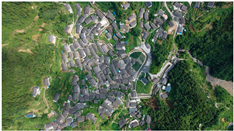
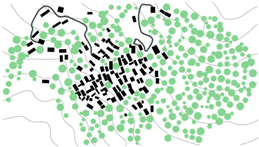
Constrained by the rugged, river-incised terrain of western Hunan and the scarcity of buildable land, Miao villages have developed centripetal spatial organizations that follow the “mountain-backed and water-adjacent” principle. This inward-focused pattern produces tightly clustered residential fabrics. Ancestral traditions that emphasize kinship cohesion further reinforce such organization: many Miao villages are composed of single or dominant lineages, ranging from only a few to several hundred households. As a result, they tend to form compact, agglomerative layouts characterized by minimal spacing between dwellings and high building density.
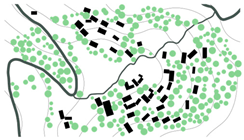
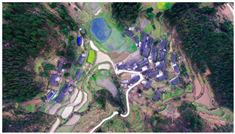
By contrast, the Tujia “mountain-anchored and water-distanced” strategy positions villages on mid-slope elevations [29]. The widespread cultural practice of adult children forming separate households also shapes village structure, giving rise to dispersed spatial patterns in which detached dwellings are scattered across adjacent slopes and valley shoulders [30]. These configurations rarely exhibit overlapping building frontages or continuous roofscapes and instead display greater openness and morphological diversity (Table 4). Such dispersion not only responds to the constraints of mountainous terrain, but also reflects Tujia values that stress household autonomy and disaster-risk reduction through spatially distributed living.
The contrasting layout paradigms of the two groups represent adaptive spatial strategies rooted in both environmental conditions and cultural transmission. The Miao agglomerative model prioritizes kinship solidarity and collective defense, whereas the Tujia dispersed arrangement balances topographic adaptation with household independence. Together, they illustrate how distinct ethnic groups have developed context-specific village systems that integrate ecological adaptation with social organization in western Hunan.

3.3. Comparative Analysis of Tujia and Miao Dwellings

Traditional dwellings in the ethnic minority regions of western Hunan exhibit pronounced ethnic and regional characteristics shaped by the combined influences of natural environments, socioeconomic conditions, cultural customs, and underlying philosophical beliefs. Over centuries of continuous migration and cultural exchange, the Tujia and Miao have developed certain convergences in construction techniques and spatial organization. Long-term coexistence and everyday interaction have produced shared features such as the widespread use of timber as a primary building material and the prevalence of sloped roofs adapted to humid mountain climates.
At the same time, deeply embedded cultural traditions sustain clear differences in architectural expression at the level of detail. Distinct decorative motifs, spatial sequences, and functional organizations reveal the unique residential identities of each ethnic group. In this sense, Tujia and Miao dwellings constitute an architectural dialogue of “unity in diversity”, in which common structural and climatic adaptations coexist with differentiated cultural inscriptions. This interplay between convergence and divergence not only manifests the pluralistic and inclusive character of the built environment in western Hunan, but also provides an important lens for understanding how ethnic identity is materialized and reproduced through everyday dwelling space [31].

3.3.1. Construction Materials and Decoration

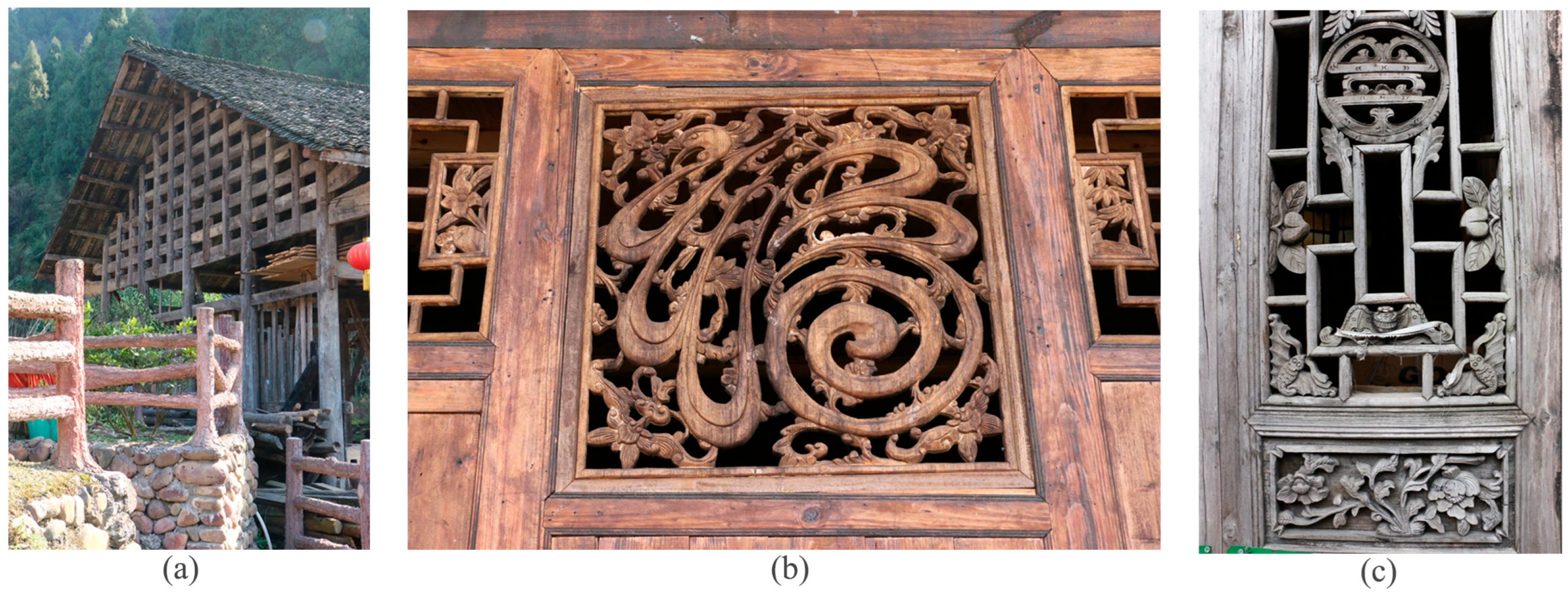
The timber structural system of traditional Tujia dwellings is based on the chuandou-style construction, characterized by a high degree of modularity and structural stability achieved through the systematic arrangement of vertical posts and horizontal beams (Figure 8a). The region’s abundant forest resources provided favorable material conditions for construction, enabling local craftsmen to make extensive use of native timber species. This practice reflects both the Tujia people’s ecological awareness in adapting to their mountain environment and the close synergy between vernacular building techniques and regional resource conditions [32].
To enrich the visual composition of the chuandou-style construction, Tujia artisans employ a variety of decorative strategies. The façade ornamentation system selectively incorporates elements from Han Chinese architecture, resulting in a distinctive synthesis of artistic expression (Figure 8b). Structural components such as beams and queti (corbel brackets) frequently display finely executed relief and openwork carvings featuring floral, zoomorphic, and auspicious motifs. These decorative elements function not only as esthetic embellishments, but also as cultural symbols that articulate the Tujia people’s aspirations for prosperity, protection, and well-being (Figure 8c).
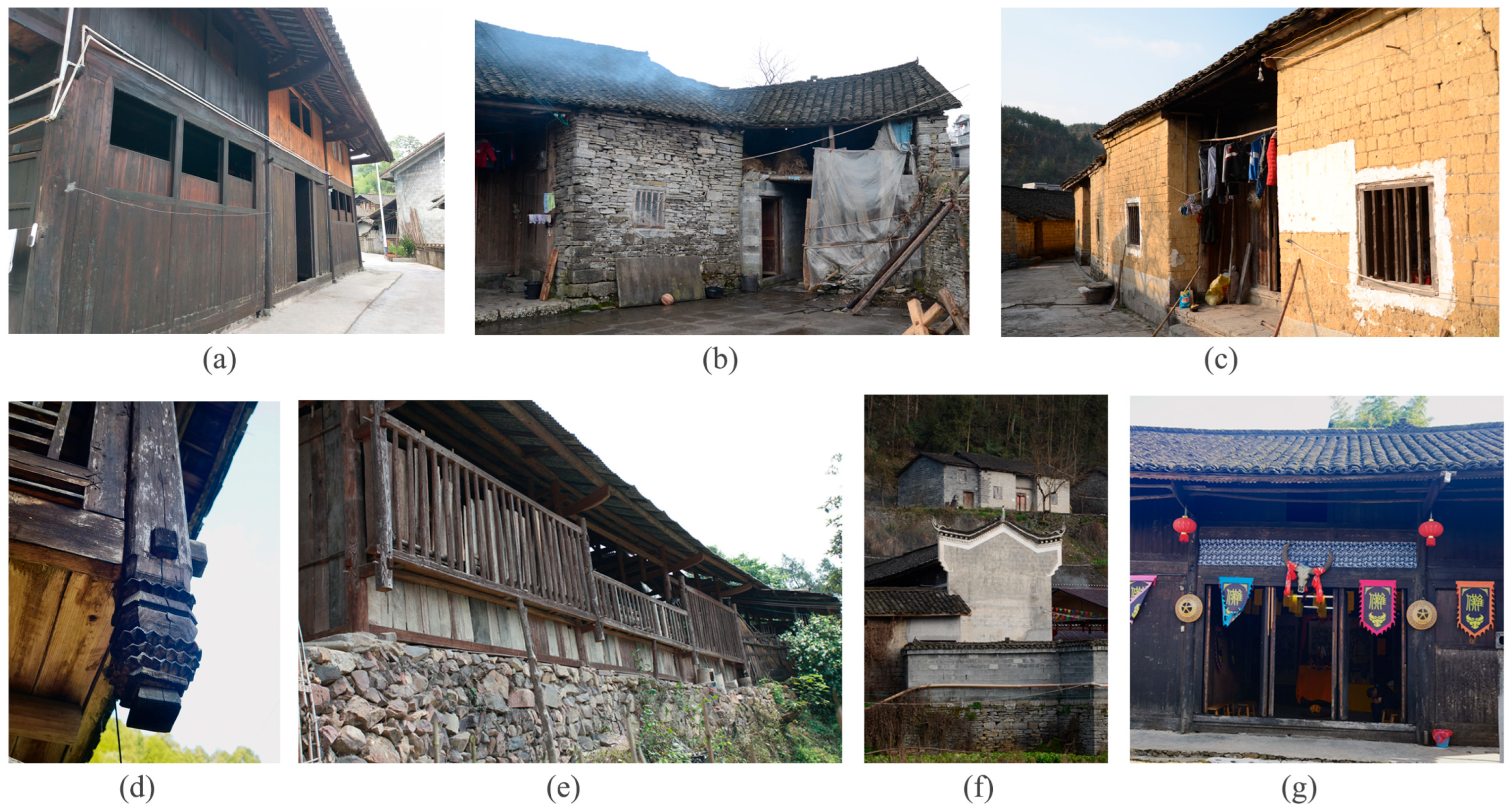
Traditional Miao dwellings in western Hunan display considerable diversity in material composition. In the load-bearing structure, timber serves as the principal construction material because of its favorable mechanical performance and ease of processing, forming the main system for load transfer. For enclosing structures, a combination of wood (Figure 9a), brick, stone (Figure 9b), and rammed earth (Figure 9c) is commonly employed. Wood, with its natural thermal insulation properties, is frequently used for walls, doors, and windows; brick and stone, valued for their durability and fire resistance, are typically applied to foundations and lower wall sections; and rammed earth, produced through traditional ramming techniques, provides robust yet cost-effective enclosure walls. Most of these materials, particularly timber and stone, are sourced locally from the surrounding mountainous terrain, reflecting both the adaptive construction practices of Miao ancestors and the close relationship between vernacular architecture and regional ecosystems.
In contrast to the ornamental richness of Tujia dwellings, Miao architectural decoration emphasizes a more restrained esthetic achieved through material diversity and refined craftsmanship. In addition to floral, animal, and auspicious motifs carved on wooden doors and windows, distinctive structural and decorative elements include “hanging melon” columns (Figure 9d) and “beauty’s recliner” balustrades (Figure 9e). Brick-and-stone dwellings often feature varied firewall along roof ridges (Figure 9f). Furthermore, the ox, regarded as an important totemic symbol, holds special significance in Miao culture. In some villages, bull’s head ornaments are displayed above the main entrance, signifying reverence for this sacred animal and invoking protection and prosperity for the household (Figure 9g) [33,34].

3.3.2. Planar Form and Spatial Configuration

Through long-term historical evolution, the Tujia and Miao peoples have developed typologically distinct residential layouts—primarily linear row houses, L-shaped stilted houses (single-cantilever), and U-shaped stilted houses (double-cantilever)—in response to environmental constraints, economic conditions, and functional needs. Beneath their apparent similarities in geometric composition, structural systems, and roof forms, the differing logic of spatial organization reveals important aspects of each group’s residential culture.
The Tujia linear row house represents a three-bay prototype characterized by simple rectilinear geometry and a single main volume. Functional expansion typically occurs either by adding a subsidiary wing for auxiliary use, or by horizontally extending the building in odd-numbered bays (three or five), strictly following the Confucian “hall–chamber principle”. This configuration establishes a hierarchical order along the central axis, with the central room as the spatial core, thereby embodying Confucian ethics in spatial form and reflecting the Tujia people’s assimilation of Han cultural norms.
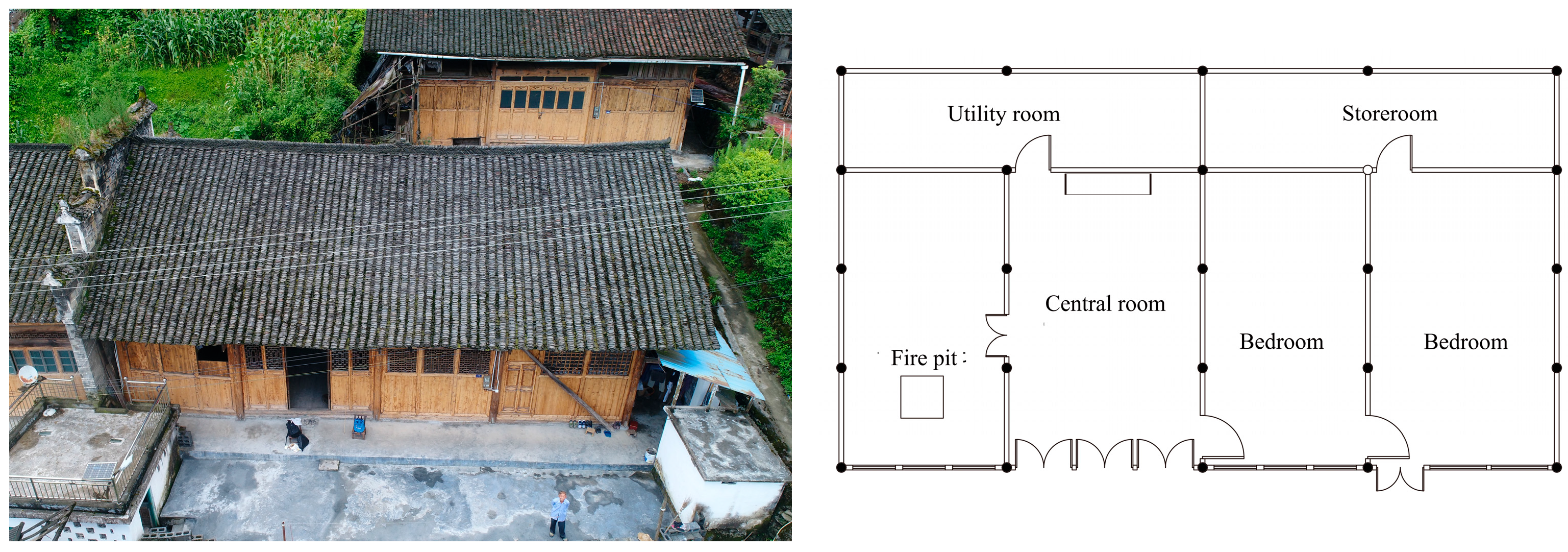
By contrast, Miao linear houses deviate markedly from these conventions. The four-bay configuration is the most common type, while field surveys in Zhongzhai Village and Lijia Village have also documented two-bay examples (Figure 10), which directly challenge the widespread Chinese vernacular axiom that “one or two bays are incomplete; three bays form a whole” [35]. This variation primarily reflects the constraints of mountainous terrain, as local residents explain: “the plot is too narrow to accommodate a three-bay frame”. The resulting zero-lot-line clustering and close side-by-side attachment of houses correspond to the compact village layout of Miao settlements, optimize the use of extremely limited land resources, and strengthen communal defense through physical connectivity. These features illustrate the Miao people’s adaptive responses to environmental and spatial limitations in high-density mountain settings [36].
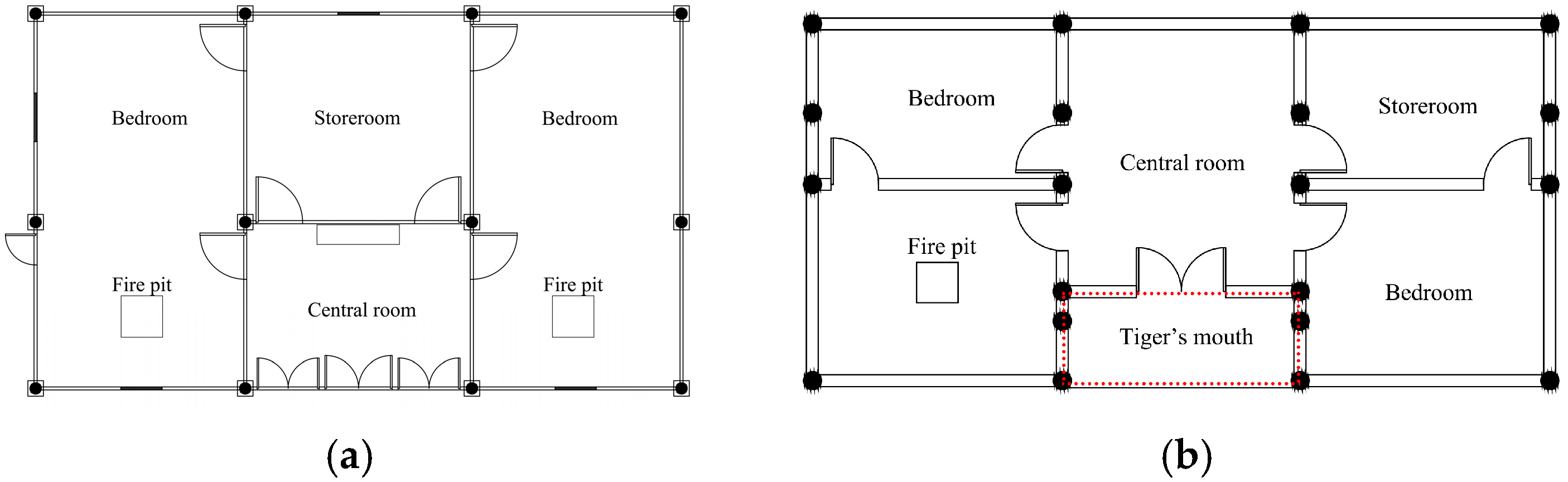
The spatial configuration differences between Tujia and Miao traditional dwellings in western Hunan are most clearly expressed in the design logic and functional construction of their core space—the central room. In Tujia dwellings, the central room is typically characterized by an open, unobstructed layout, and in some cases the entrance door is even omitted altogether. This intentional weakening of physical boundaries between interior and exterior spaces enhances natural ventilation and daylighting, while simultaneously creating a sense of spaciousness and ceremony. Culturally, the northern wall of the central room usually accommodates an altar dedicated to “Heaven, Earth, Nation, Ancestors, and Teachers”, which serves as the primary locus for ancestral worship and ceremonial activities. This configuration reflects the patriarchal clan structure and long-standing ancestor-veneration practices deeply rooted in Tujia culture. Indoors, spatial customs further reflect hierarchical family structures. In Tujia dwellings, the room to the left of the central room is traditionally reserved for the eldest family member, symbolizing authority, seniority, and generational continuity.
By contrast, Miao dwellings display markedly different spatial characteristics in their central rooms. First, the frequent incorporation of loft structures lowers the clear ceiling height and creates a vertical stratification of functions. Second, altar designs are often simplified, with non-essential elements removed to free a larger contiguous ritual area in front, consistent with the requirements of Miao polytheistic worship and collective ceremonial performance. A particularly distinctive feature is the approximately one-meter recessed entrance space of the hall, known as the “Tiger’s Mouth” (Figure 11b). This transitional zone functions both as a spatial buffer between the exterior and the ritual core and as a geomantic device for “accumulating wealth and qi”, thereby embodying the integration of Miao folk beliefs and feng shui principles in dwelling space [37].
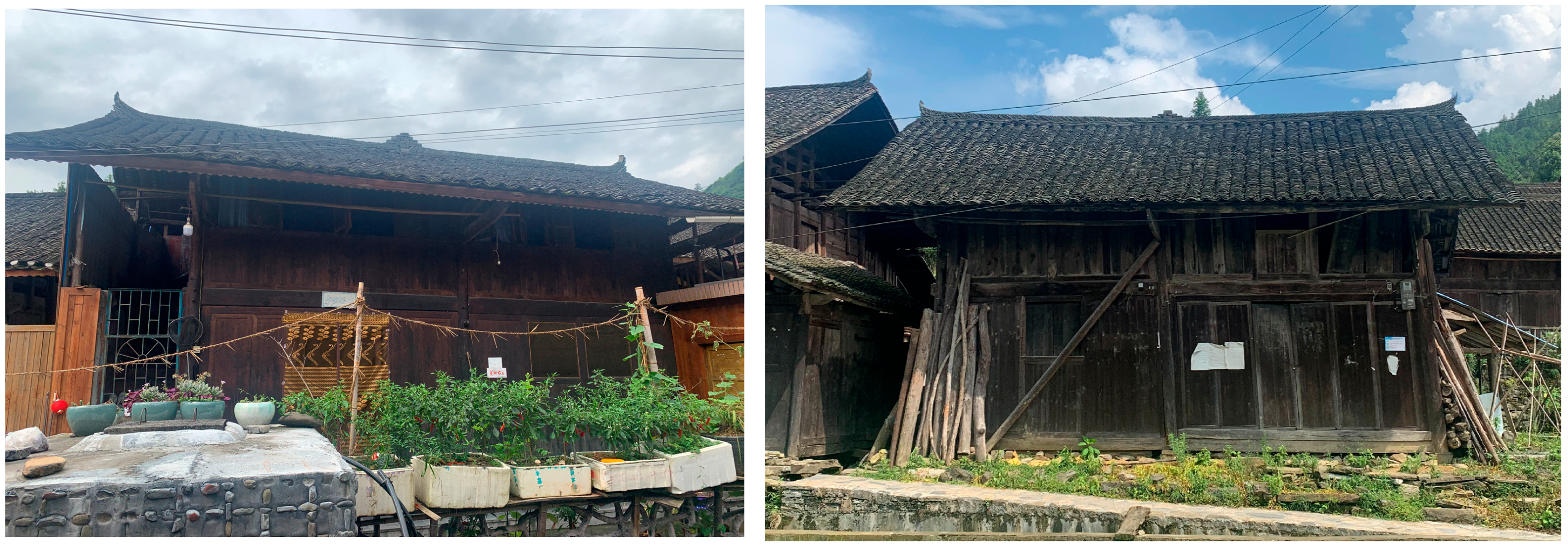
These spatial conventions are closely linked to broader regional differences in construction materials. In the northern part of Xiangxi Prefecture, where the Tujia are concentrated, traditional dwellings rely predominantly on timber structures, as discussed earlier. By contrast, in the southern areas of the prefecture, Miao houses make extensive use of stone masonry. In the central belt where Tujia and Miao communicate interface and interact frequently, however, Miao dwellings increasingly adopt timber as the principal wall material, and some houses also incorporate distinctive fire-sealing gables, reflecting a hybridization of construction practices in this inter-ethnic contact zone. Processes of cultural integration have also fostered architectural hybridization in mixed Tujia–Miao villages. In Mixi Village, Baojing County, for example, Miao houses have replaced the traditional tiger’s mouth entrance with a Tujia-style spatial configuration: the central room is shifted to the first bay on the right, directly adjoining the kitchen hearth, while the two bays on the left are used as bedrooms (Figure 12). This spatial transformation not only illustrates the cultural interpenetration resulting from prolonged coexistence, but also reveals the adaptive evolution of traditional dwellings under conditions of social change and intercultural exchange [38].

3.4. Comparative Analysis of Folk Beliefs Between Tujia and Miao Ethnic Groups

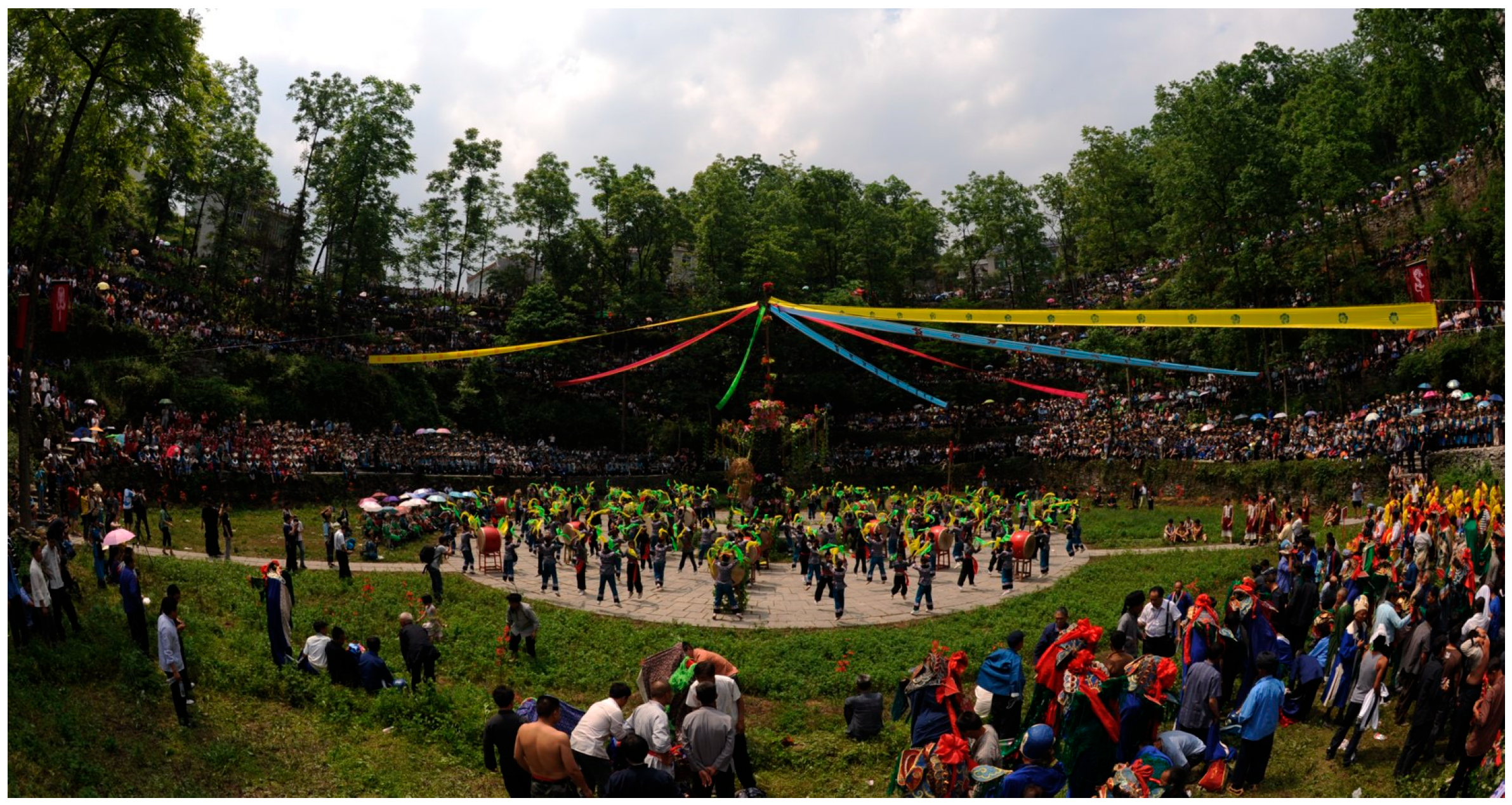
The traditional customs and folk beliefs of ethnic minorities in western Hunan are clearly reflected in their residential cultures. Among the Miao, nature worship and totemism occupy central positions within the spiritual worldview. As noted above, the bovine totem frequently appears in architectural ornamentation. In addition, sacred symbols such as the maple tree, butterfly, and fish represent aspirations for familial prosperity, fertility, and transformative renewal [39]. These belief systems are materialized in emblematic structures such as totem poles erected at the center of communal plazas, around which village spaces are concentrically organized—an architectural manifestation of social cohesion and collective identity.
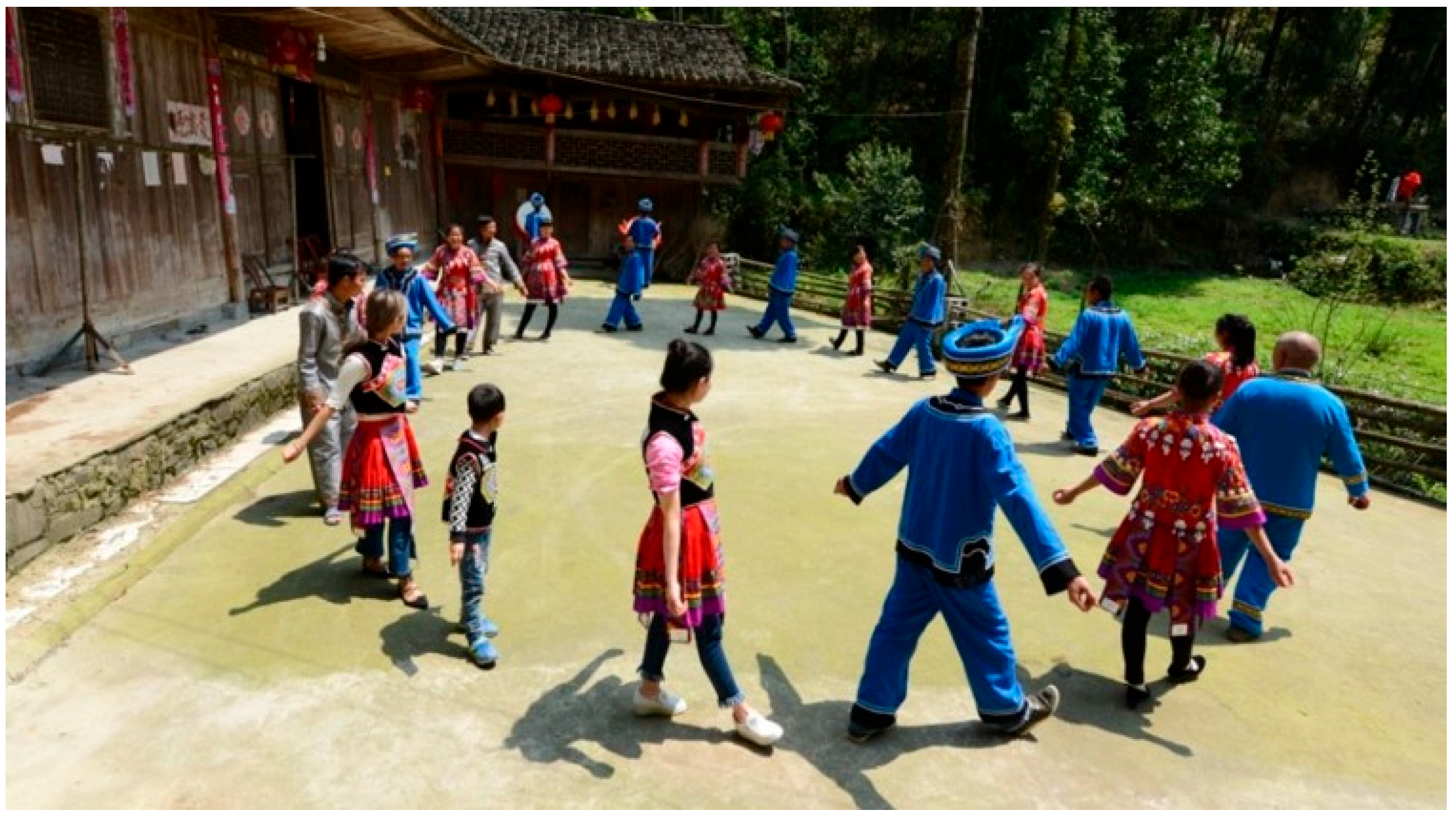
During major festivals and ritual occasions, villagers adorned with silver jewelry and brightly colored traditional costumes gather from surrounding terraces and valleys at these sacred plazas, where they perform sacrificial rites, folk dances, Nuoxi dramas, suona ensembles, flower-drum performances, and martial arts displays (Figure 13). These ceremonial practices not only reinforce communal solidarity, but also perpetuate a living Miao cosmology in which spatial, social, and spiritual realms remain closely intertwined.
Unlike Miao villages, which typically feature a central sacrificial plaza, the folk beliefs of the Tujia people are primarily expressed through the indoor and outdoor spaces of individual dwellings. Each traditional Tujia household includes a flat, open courtyard that serves as an everyday outdoor activity area [40,41]. These yards provide flexible semi-public spaces where residents often gather to perform ethnic dances such as the Hand-Waving Dance (Figure 14)—a ritual dedicated to honoring ancestors and praying for prosperity, abundant harvests, and longevity. During major festivals, these courtyards also function as venues for a variety of communal celebrations and folk performances, further reinforcing social cohesion and collective identity within the village.
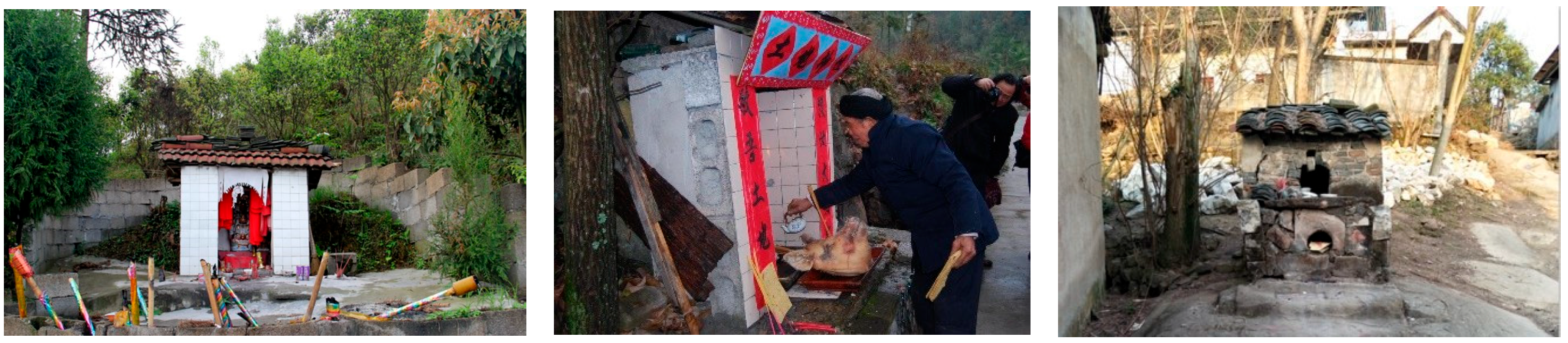
Over time, sustained cultural interaction and the influence of Han religion and ritual have given rise to new syncretic practices. In many mixed or increasingly acculturated villages, land temples of varying scale and form have been constructed near houses or at village entrances to pray for household safety and protection from natural calamities (Figure 15). These sites illustrate the ongoing evolution and layering of belief systems within the multi-ethnic context of western Hunan, where Tujia, Miao, and Han traditions are continuously negotiated and reinterpreted [42].

4. Conclusions and Discussion

4.1. Conclusions

Through systematic field investigation and comparative analysis, this study shows that although the traditional dwellings of the Tujia and Miao ethnic groups in western Hunan share certain similarities in construction techniques and spatial composition—largely attributable to their shared mountain environment and long-term cultural interaction—distinct differences persist in their residential cultures. These variations arise from unique ethnic traditions, religious beliefs, and production–lifestyle practices, and are primarily reflected in the following aspects.
(1) Geographical distribution. The Baojing–Guzhang branch range of the Wuling Mountains forms a distinct north–south divide, with Miao villages concentrated mainly to the south of the ridge and Tujia villages to the north. Ripley K function analysis indicates that the spatial distributions of both ethnic village systems deviate markedly from complete spatial randomness and exhibit significant clustering, but that Miao villages display a stronger aggregation effect across multiple distance scales. By contrast, the clustering of Tujia villages is relatively weaker, while most mixed Tujia–Miao villages form a band-shaped cluster along the Baojing–Guzhang ridge, constituting a transitional contact belt between the two core settlement zones. This spatial configuration reflects not only the shaping influence of regional geomorphology and hydrological systems on village formation, but also the gradually differentiated spatial strategies and settlement choices developed by the two ethnic groups through long-term historical migration and environmental adaptation.
(2) Village layout. Miao villages follow the principle of “mountain-backed and water-adjacent”, featuring compact, centripetal, and densely built spatial structures. In contrast, Tujia villages adopt a defensive siting philosophy of “mountain-anchored and water-distanced”, resulting in more dispersed layouts and dynamic morphologies. These divergent patterns reflect different ways of balancing access to water, arable land, and defensive advantages, and are closely linked to differences in social organization, kinship structure, and cultural values.
(3) Dwelling form. Although Tujia and Miao traditional dwellings share broadly comparable functional layouts, their material selection and structural expression differ markedly. Miao architecture employs a wider range of materials—timber, stone, and rammed earth—than its Tujia counterpart, a distinction that is closely related to variations in resource accessibility. Tujia dwellings emphasize the integrity of timber chuandou-style construction and the articulation of structural components, while Miao dwellings exhibit greater heterogeneity in wall construction and decorative details. In the central mixed belt of Xiangxi Prefecture, frequent inter-ethnic contact has further fostered architectural hybridization.
(4) Folk beliefs and ritual space. Distinct spiritual systems among the Tujia and Miao profoundly shape village spatial organization and architectural detailing. Miao belief systems are closely associated with nature worship and totemism, and are materialized in central sacrificial plazas, totem poles, and zoomorphic ornaments such as bovine motifs. Tujia beliefs, by contrast, are primarily expressed through the courtyard and hall of the dwelling, with ancestral altars, fire pits, and spatial hierarchies within the house embodying patriarchal clan structures and ancestor-veneration practices. In mixed villages, emerging hybrid forms—such as the introduction of land temples and the replacement of tiger’s mouth entrances with Tujia central room layouts—further illustrate the dynamic evolution of belief systems in a multi-ethnic context.
Taken together, these findings suggest that Tujia and Miao traditional villages in western Hunan constitute a highly differentiated yet interconnected cultural landscape, in which common environmental adaptations coexist with ethnic-specific spatial logics and symbolic systems. From a theoretical perspective, the study enriches research on vernacular architecture and ethnic villages by demonstrating how macro-scale spatial distribution, meso-scale village patterns, and micro-scale dwelling spaces jointly express ethnic identity and cultural memory. The integration of GIS-based spatial analysis with ethnographic fieldwork provides a useful framework for linking quantitative spatial patterns with qualitative cultural interpretation in multi-ethnic mountain regions.
From a practical perspective, the comparative insights obtained in this study offer a basis for more nuanced conservation and planning strategies. For Miao villages, protection and renewal efforts should pay particular attention to the integrity of compact village layouts, central sacrificial plazas, and totemic symbols, as well as to the continuity of ritual routes and festival spaces. For Tujia villages, conservation policies should focus on maintaining the relationship between dwellings and mid-slope settings, preserving chuandou timber structures and courtyard-based ritual spaces, and carefully guiding the transformation of traditional layouts under contemporary housing demands. In mixed Tujia–Miao villages, design guidelines need to recognize and respect emerging hybrid forms without erasing the distinctive cultural signatures of each group, thereby supporting authenticity-oriented conservation and culturally sensitive tourism development.

4.2. Discussion

This study has several limitations. First, although the sample of traditional villages is relatively extensive at the prefectural scale, the number of villages selected for in-depth architectural and ethnographic analysis remains limited, and cannot fully capture the internal diversity within each ethnic group. Second, the spatial analysis mainly relies on cross-sectional data; the lack of long-term historical spatial datasets constrains the ability to trace temporal dynamics in village distribution and form. Third, while the study combines GIS techniques with qualitative fieldwork, the quantitative analysis of architectural details and social networks is still preliminary. Future research could expand the sample range, incorporate multi-temporal spatial data and higher-resolution architectural surveys, and employ more systematic methods (e.g., spatial statistics, social network analysis, or participatory mapping) to further explore the relationships among ethnic identity, village patterns, and everyday dwelling practices.
Despite these limitations, the research deepens the understanding of ethnic spatial diversity in western Hunan and provides both theoretical and practical references for the authentic preservation, stylistic continuity, and sustainable development of traditional villages. The findings contribute to refining the theoretical framework of traditional village conservation and to promoting the integrated advancement of cultural heritage protection, rural revitalization, and local economic development in multi-ethnic mountainous regions.

Author Contributions

Conceptualization, G.C.; methodology, M.Z.; software, M.Z.; validation, G.C.; formal analysis, M.Z.; investigation, G.C. and M.Z.; resources, S.H.; data curation, G.C. and M.Z.; writing—original draft preparation, G.C.; writing—review and editing, M.Z. and S.H.; funding acquisition, S.H. and G.C. All authors have read and agreed to the published version of the manuscript.

Funding

This research was enabled by National Natural Science Foundation of China (51978250), Hunan Provincial Social Science Achievement Evaluation Committee Project (XSP24YBC158) and Postgraduate Scientific Research Innovation Project of Hunan Province (CX20250593, CX20250588).

Data Availability Statement

All data generated or analyzed during this study are included in this article.

Acknowledgments

We acknowledge the support of the project funding. Moreover, we greatly appreciate the valuable and insightful comments from anonymous reviewers.

Conflicts of Interest

The authors declare no conflicts of interest.

References

  1. Li, T.; Li, C.; Zhang, R.; Cong, Z.; Mao, Y. Spatial Heterogeneity and Influence Factors of Traditional Villages in the Wuling Mountain Area, Hunan Province, China Based on Multiscale Geographically Weighted Regression. Buildings 2023, 13, 294. [Google Scholar] [CrossRef]
  2. Wen, Q.; Zhao, Y.; Huang, X.; Wang, G. A Digital Analysis of the “L”-Shaped Tujia Dwellings in Southeast Chongqing Based on Shape Grammar. Buildings 2025, 15, 900. [Google Scholar] [CrossRef]
  3. Li, G.; Kang, T.; Fu, C.; Jiao, Y.; Hu, W. Spatiotemporal evolutionary characteristics of landscape carrying capacity in mountainous traditional villages during rural tourism development. Herit. Sci. 2025, 13, 237. [Google Scholar] [CrossRef]
  4. Xu, H.; Wang, Z.; Liu, Y.; Xia, H.; Qian, Z.; Hu, C.; Liu, T. Wind Environment Adaptability and Parametric Simulation of Tujia Sanheyuan Courtyard Dwellings in Southeastern Chongqing, China. Sustainability 2025, 17, 7715. [Google Scholar] [CrossRef]
  5. Tang, C.; He, S.; Qiu, T.; He, C.; Xu, J.; Tang, W.; Li, Y. Predicting the Health Behavior of Older Adults in Western Hunan Villages Using Machine Learning Algorithms. Buildings 2024, 14, 1895. [Google Scholar] [CrossRef]
  6. Ding, C.; Zhuo, X.; Xiao, D. Ethnic differentiation in the internal spatial configuration of vernacular dwellings in the multi-ethnic region in Xiangxi, China from the perspective of cultural diffusion. Herit. Sci. 2024, 12, 3. [Google Scholar] [CrossRef]
  7. Ding, C.B.; Xiao, D.W.; Tao, J. Heritage and divergence: A comparative study of village dwelling cultures of the Yao ethnic group in southern Hunan and northern Guangdong. J. Hum. Settl. West China 2024, 39, 157–162. (In Chinese) [Google Scholar]
  8. Min, T.; Zhang, T. Cultural Resilience from Sacred to Secular: Ritual Spatial Construction and Changes to the Tujia Hand-Waving Sacrifice in the Wuling Corridor, China. Religions 2025, 16, 811. [Google Scholar] [CrossRef]
  9. Min, T.; Zhang, T. Resilience Mechanisms in Local Residential Landscapes: Spatial Distribution Patterns and Driving Factors of Ganlan Architectural Heritage in the Wuling Corridor. Heritage 2025, 8, 458. [Google Scholar] [CrossRef]
  10. Bigiotti, S.; Santarsiero, M.L.; Del Monaco, A.I.; Marucci, A. A Typological Analysis Method for Rural Dwellings: Architectural Features, Historical Transformations, and Landscape Integration: The Case of “Capo Due Rami”, Italy. Land 2025, 14, 374. [Google Scholar] [CrossRef]
  11. Moya-Olmedo, P.; Núñez-González, M. Triana: Unveiling Urban Identity and Dwelling Architecture in the Modern Era. Heritage 2025, 8, 182. [Google Scholar] [CrossRef]
  12. Ran, D.; Li, Y.; Li, X.; Zhang, B.; Cao, Y. Research on the form and formation mechanisms of Tujia traditional settlement in the Wuling Mountains, China. Sci. Rep. 2025, 15, 21336. [Google Scholar] [CrossRef] [PubMed]
  13. Liu, Y.; Liu, L.; Xu, R.; Yi, X.; Qiu, H. Spatial distribution of toponyms and formation mechanism in traditional villages in Western Hunan, China. Herit. Sci. 2024, 12, 171. [Google Scholar] [CrossRef]
  14. Fan, J.; Zheng, B.; Zhang, B.; Huang, Z.; Liu, J. Research on the Revitalization Path of Ethnic Villages Based on the Inheritance of Spatial Cultural Genes—Taking Tujia Village of Feng Xiang Xi in Guizhou Province as a Case Study. Sustainability 2023, 15, 1303. [Google Scholar] [CrossRef]
  15. Wang, Z.; Zhou, Q.; Man, T.; He, L.; He, Y.; Qian, Y. Delineating Landscape Features Perception in Tourism-Based Traditional Villages: A Case Study of Xijiang Thousand Households Miao Village, Guizhou. Sustainability 2024, 16, 5287. [Google Scholar] [CrossRef]
  16. Ding, C.; Xiao, D. Study on the Spatial Divergence of Hunan Minority Characteristic Villages. Landsc. Archit. 2023, 40, 114–119. (In Chinese) [Google Scholar]
  17. Fischer, M.M.; Getis, A. Handbook of Applied Spatial Analysis: Software Tools, Methods and Applications; Springer: Berlin, Germany, 2010. [Google Scholar]
  18. Zhang, Y.; Li, J. Constructing a “Clustered—Boundary—Cellular” Model: Spatial Differentiation and Sustainable Governance of Traditional Villages in Multi-Ethnic China. Sustainability 2025, 17, 9268. [Google Scholar] [CrossRef]
  19. Huang, B.Q. Comprehensive review of studies on the origin of the Tujia ethnic group. Guizhou Ethn. Stud. 1999, 2, 83–93. (In Chinese) [Google Scholar]
  20. Lei, X. Ethnic self-awareness and the construction of “ancestral identity”: The case of the “Ba people” in the Tujia ancestral identity. J. South-Cent. Minzu Univ. (Humanit. Soc. Sci.) 2010, 30, 28–32. (In Chinese) [Google Scholar]
  21. Li, Y.; Du, J.; Ran, D.; Yi, C. Spatio-temporal distribution and evolution of the Tujia traditional settlements in China. PLoS ONE 2024, 19, e0299073. [Google Scholar] [CrossRef]
  22. Jiao, J.C. The migration process of the Miao people as reflected in oral classics. Guizhou Ethn. Stud. 2018, 39, 190–194. (In Chinese) [Google Scholar]
  23. Zhu, J.; Xu, W.; Xiao, Y.; Shi, J.; Hu, X.; Yan, B. Temporal and spatial patterns of traditional village distribution evolution in Xiangxi, China: Identifying multidimensional influential factors and conservation significance. Herit. Sci. 2023, 11, 261. [Google Scholar] [CrossRef]
  24. Zhao, W.; Xiao, D.; Li, J.; Xu, Z.; Tao, J. Research on Traditional Village Spatial Differentiation from the Perspective of Cultural Routes: A Case Study of 338 Villages in the Miao Frontier Corridor. Sustainability 2024, 16, 5298. [Google Scholar] [CrossRef]
  25. Luo, S.H. Study on Spatial Characteristics and Influencing Factors of Traditional Villages in Xiangxi Prefecture. Master’s Thesis, Hunan University, Changsha, China, 2021. (In Chinese). [Google Scholar]
  26. Ma, Y.B. Living Analysis of Miao Architectural Culture in Guizhou; Guizhou People’s Publishing House: Guiyang, China, 2005. (In Chinese) [Google Scholar]
  27. Wang, Y.S.; Yuan, M.; Pang, H. Morphological characteristics and cultural connotations of Tujia Diaojiaolou in western Hubei. J. South-Cent. Minzu Univ. (Humanit. Soc. Sci.) 2018, 38, 59–63. (In Chinese) [Google Scholar]
  28. Gao, C.; Wang, J.P.; Ren, Y.P. Comparative study of settlement and architectural space of Miao and Tujia stilted dwellings under Central Plains cultural influence. Urban. Archit. 2019, 16, 17–21. [Google Scholar]
  29. Ma, Q.Y. Study on the differences between Tujia and Miao folk houses in Xiangxi area. Design 2020, 33, 124–125. (In Chinese) [Google Scholar]
  30. Liu, S. Vernacular Dwellings in Western Hunan; China Architecture & Building Press: Beijing, China, 2008. (In Chinese) [Google Scholar]
  31. Li, Q. Comparative analysis of Tujia and Miao stilted dwellings in Chongqing and Sichuan. Sichuan Archit. Sci. Res. 2013, 2, 318–320. (In Chinese) [Google Scholar]
  32. Gong, T.; An, X. A Study on the Techniques of Building Large-scale Wooden Works for the Tujia Nationality in the West of Hubei Province: Taking “YaoShiTou” as an Example. Decoration 2020, 5, 103–107. (In Chinese) [Google Scholar]
  33. Riccio, T. Zhuiniu Water Buffalo Ritual of the Miao: Cultural Narrative Performed. Religions 2022, 13, 303. [Google Scholar] [CrossRef]
  34. Tian, N. From Ancestors to “Gaxian”: The Occurrence of the Ritual of Tomb Sacrifice of the Miao Ethnic Group in Xiangxi: A Case Study of Jixin Miao Village in Fenghuang County, Western Hunan. J. Hunan Univ. Sci. Technol. (Soc. Sci. Ed.) 2022, 25, 169–177. (In Chinese) [Google Scholar]
  35. Wang, H.; Zheng, Y.; Ye, J.C. On the Significance of the Study of Hall/Room Patterns in Dazhuangshi Biji. J. Archit. Hist. 2021, 2, 30–36. (In Chinese) [Google Scholar]
  36. Man, Y. Comparative Study of Residential Space of Miao and Tujia Ethnic Groups in Western Hunan. Master’s Thesis, Jilin Jianzhu University, Changchun, China, 2018. (In Chinese). [Google Scholar]
  37. Liu, J.; Long, B. Differences of stilted building from a typological perspective. Archit. J. 2011, S2, 142–147. (In Chinese) [Google Scholar]
  38. Chen, S.L.; Li, X.F.; Tang, S.K. Types and evolution of hall-space layouts in traditional dwellings of western Hunan. Archit. J. 2022, 2, 82–87. (In Chinese) [Google Scholar]
  39. Wang, H. On the “Multiple Children” Symbol of the Totem Worship of the Miao Nationality in Guizhou. Guizhou Ethn. Stud. 2019, 40, 65–69. (In Chinese) [Google Scholar]
  40. Wang, L.; Bai, G.X. Ritual dance and body practice: Symbolic interpretation of Tujia’s waving ceremony. J. Ethnol. Stud. 2022, 43, 143–148. (In Chinese) [Google Scholar]
  41. Lin, J.F.; Shan, W.B. Soul lineage, ancestral lineage and cultural lineage: Exploring how the Baishou tradition contributes to the shared spiritual home of the Chinese nation. J. Hubei Minzu Univ. (Philos. Soc. Sci.) 2025, 43, 62–72. (In Chinese) [Google Scholar]
  42. Yan, W.; Shu, Y. Tujia folk beliefs and their ethnic spirit. Guizhou Ethn. Stud. 2021, 42, 130–136. (In Chinese) [Google Scholar]
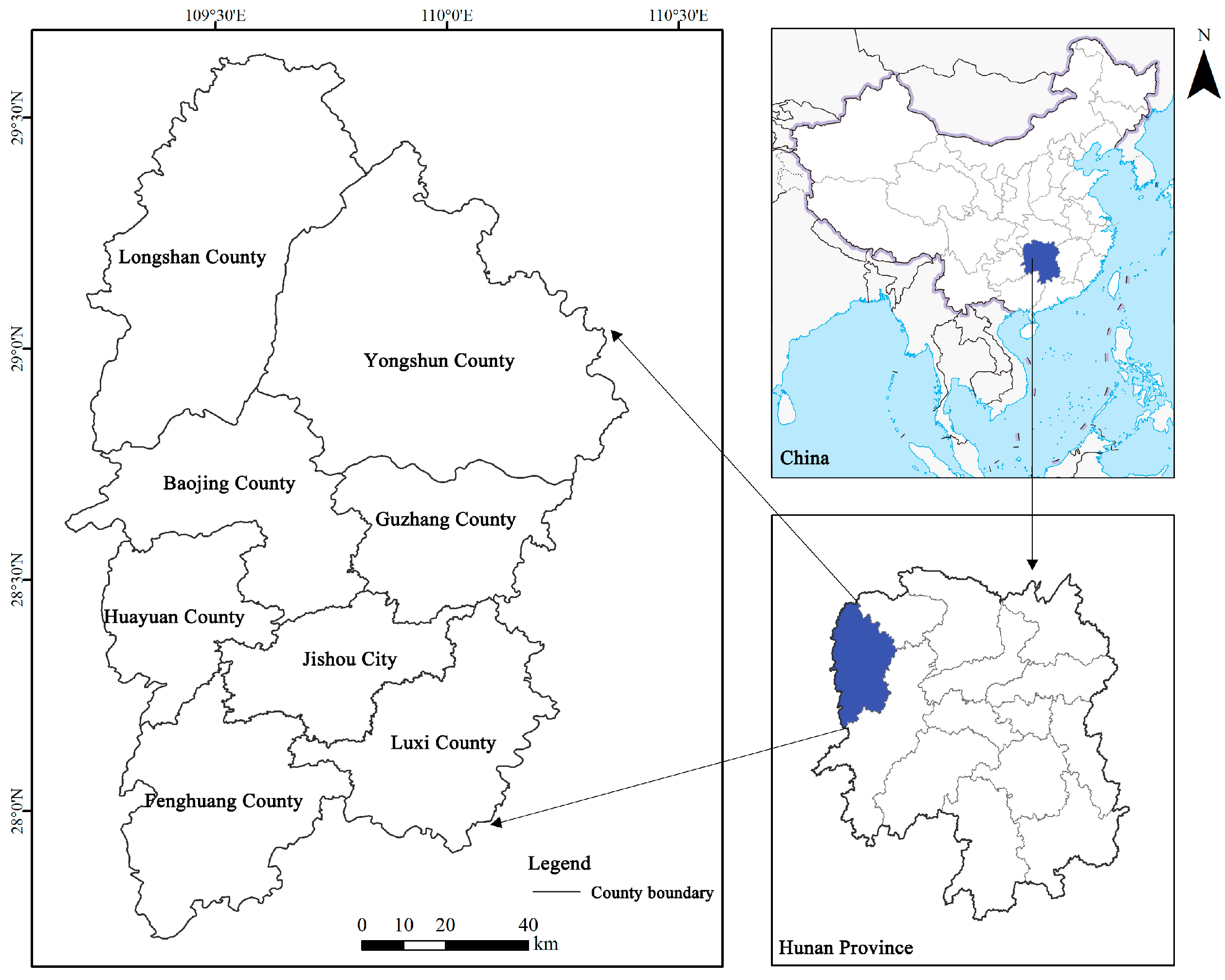
Figure 1. Study area: Xiangxi Tujia and Miao Autonomous Prefecture. This map is based on the standard map with the review number GS (2019) 1652 downloaded from the Standard Map Service website of the Map Technical Review Center, Ministry of Natural Resources of China (http://bzdt.ch.mnr.gov.cn/download.html, accessed on 15 September 2023). The base map has not been modified.
Buildings 15 04539 g001
Figure 2. Spatial distribution status of Tujia and Miao traditional villages in Xiangxi Prefecture.
Buildings 15 04539 g002
Figure 3. Kernel density of the traditional villages: (a) kernel density of Tujia traditional villages; (b) kernel density of Miao traditional villages.
Buildings 15 04539 g003aBuildings 15 04539 g003b
Figure 4. Ripley’s K function of traditional villages’ agglomeration: (a) Tujia villages; (b) Miao villages.
Buildings 15 04539 g004
Figure 5. Layout and site selection diagram of Dehang Village (Miao), Jishou City.
Buildings 15 04539 g005
Figure 6. Layout and site selection diagram of Hengzhang Village (Tujia), Baojing County.
Buildings 15 04539 g006
Figure 7. Distribution of Tujia and Miao traditional villages along the river system in Xiangxi Prefecture.
Buildings 15 04539 g007
Figure 8. Materials and decorative details of Tujia traditional dwellings: (a) chuandou-style construction; (b) Han Chinese decorative elements; (c) animal and plant carved ornaments.
Buildings 15 04539 g008
Figure 9. Materials and decorative details of Miao traditional dwellings: (a) wooden dwelling; (b) brick-and-stone dwelling; (c) rammed earth dwellings; (d) hanging melon; (e) beauty’s recliner; (f) firewall; (g) bull’s head totem.
Buildings 15 04539 g009
Figure 10. Two bay-one shaped dwellings in Zhongzhai Village and Lijia Village, Guzhang County.
Buildings 15 04539 g010
Figure 11. Floor plan of dwelling cases: (a) a wooden Tujia dwelling in Shubi village, Longshan County; (b) a brick-and-stone Miao dwelling in Huangmaoping Village, Fenghuang County.
Buildings 15 04539 g011
Figure 12. A dwelling in Mixi Village, Baojing County.
Buildings 15 04539 g012
Figure 13. Totem Pole and Sacrificial Activities in Dongwei Village, Huayuan County.
Buildings 15 04539 g013
Figure 14. Tujia people dance hand waving dance on the courtyard in Xilong Village, Yongshun County.
Buildings 15 04539 g014
Figure 15. Different scales and forms of land temples in Tujia and Miao traditional villages.
Buildings 15 04539 g015
Table 1. Indicator-based Statistical Data for Selected Traditional Villages.
Village NameCountyLongitude/
Latitude
AttributeFormation PeriodEthnicArea/km2Folk Culture
LanhuadongYongshun110.0342/
28.80708
AdministrativeQing DynastyTujia16.6Hand-Waving Dance, Tujia Brocade Patterns, DaLiuZi Playing, Crying-Wedding Songs
DamingYongshun110.0507/
29.11616
NaturalMing DynastyTujia1.58Hand-Waving Dance, DaLiuZi Playing
XilongYongshun109.7166/
28.98801
AdministrativeQing DynastyTujia20Hand-Waving Dance, DaLiuZi Playing
LaocheLongshan109.5027/
28.99814
AdministrativeMing DynastyTujia29.23Hand-Waving Dance, Tujia Brocade Patterns, Tima Songs, DaLiuZi Playing, MaoGuSi Dance
LongbiGuzhang109.8489/
28.48839
NaturalMing DynastyMiao12Miao Drums
DongweiHuayuan109.3960/
28.25243
NaturalMing DynastyMiao6.88Miao Drums, Zhuiniu, Crying-Wedding Songs
DongshaoHuayuan109.4352/
28.27553
NaturalQing DynastyMiao2.3Zhuiniu, Crying-Wedding Songs
MixiBaojing109.8069/
28.59480
AdministrativeMing DynastyTujia and Miao12.5Hand-Waving Dance, Tujia Brocade Patterns, DaLiuZi Playing, Crying-Wedding Songs
…………………………………………
MituoFenghuang109.4469/
28.19519
NaturalMing DynastyMiao6.2Miao Embroidery, Crying-Wedding Songs
Table 2. Excerpts from the interviewers’ information.
NameVillageGenderAgeIdentity
MaDongxi Village, Guzhang CountyMale40Cadre
ShiWengcao Village, Guzhang CountyMale31Cadre
LongJiulong Village, Guzhang CountyMale60Doctor
ZhangZimu Village, Guzhang CountyMale74Craftsman
XiangXilong Village, Yongshun CountyMale49Resident
WuGupo Village, Huayuan CountyMale61Resident
XiangMixi Village, Baojing CountyFemale36Resident
WangLiangdeng Village, Fenghuang CountyFemale37Resident
Table 3. Statistical table of the distance from traditional villages to the nearest river.
Distance to Nearest River <100 m100–500 m500–1000 m>1000 m
Number of Tujia villages 1421925
Number of Miao villages 16231746
Table 4. Layout forms and examples of traditional villages of Tujia and Miao ethnic groups in western Hunan.
NamePhotoLayout ViewFeature Description
Laosiyan Village, Guzhang CountyBuildings 15 04539 i001Buildings 15 04539 i002Tujia village, faces north with its southern elevation higher than the northern. Surrounded by mountains on the east, west, and south, the Youshui River flows along its northern edge. Dwellings are scattered throughout the terrain.
Xina Village, Yongshun CountyBuildings 15 04539 i003Buildings 15 04539 i004Tujia village, surrounded by mountains on three sides, with dwellings built along the slopes and nestled beside the river, creating a picturesque scene of staggered heights.
Lanhuadong Village, Yongshun CountyBuildings 15 04539 i005Buildings 15 04539 i006Tujia village, surrounded by mountains, with steep slopes and towering peaks. Dwellings are built on the flat areas along the surrounding hillsides, forming a dispersed cluster layout.
Wengcao Village, Guzhang CountyBuildings 15 04539 i007Buildings 15 04539 i008Miao village, encircled by mountains, nestled along both banks of a small stream, and situated on the gentle slopes of a basin. Dwellings are arranged along the foothills, with houses clustered closely together to form a labyrinthine network of alleys.
Dongxi Village, Guzhang CountyBuildings 15 04539 i009Buildings 15 04539 i010Miao village, nestles among towering mountains, oriented north to south. Its dwellings are built in harmony with the terrain, forming a compact, terraced layout.
Disclaimer/Publisher’s Note: The statements, opinions and data contained in all publications are solely those of the individual author(s) and contributor(s) and not of MDPI and/or the editor(s). MDPI and/or the editor(s) disclaim responsibility for any injury to people or property resulting from any ideas, methods, instructions or products referred to in the content.