Characterization of the Biodeterioration Caused by the Fungus Serpula lacrymans in Lignocellulosic Materials of Building Envelopes

 ,
,  ,
,  , and
, and
Abstract
1. Introduction
2. Materials and Methods
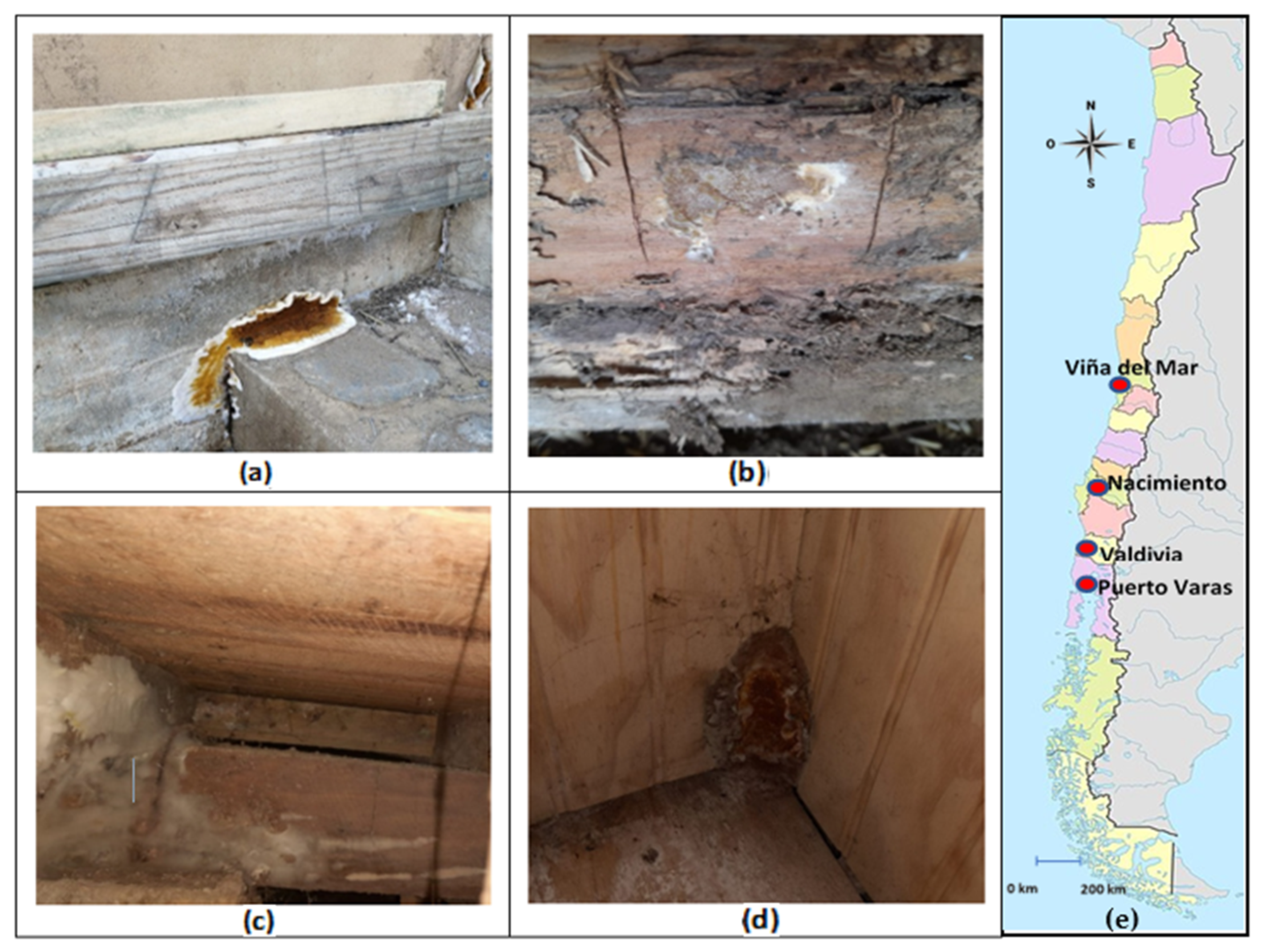
2.1. Sampling and Treatment
2.2. Identification of Strains Through PCR
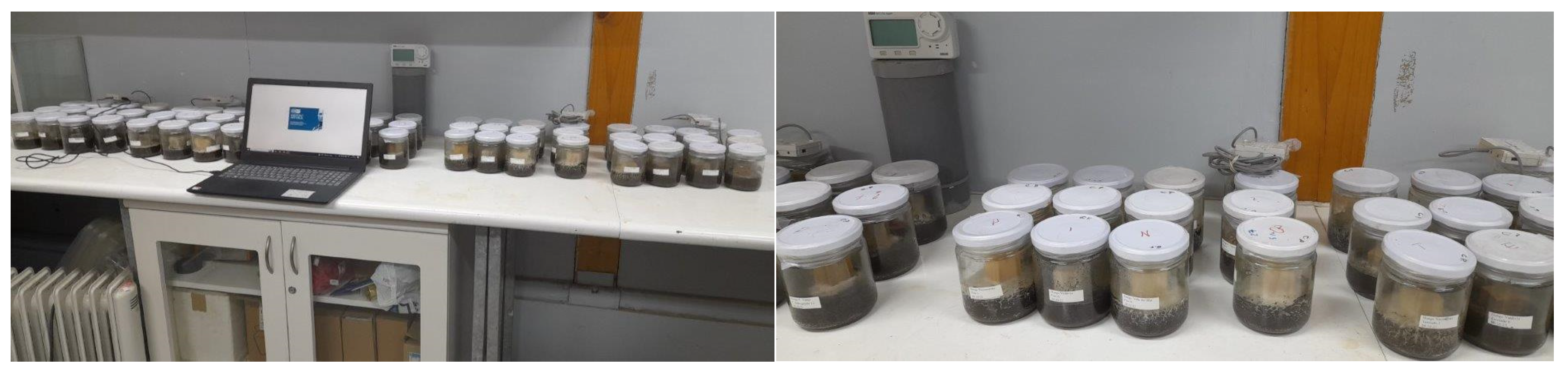
2.3. Sample Biodeterioration per City at 90 Days
2.4. Mechanical Strength Tests
2.5. Statistical Analysis
3. Results and Discussion
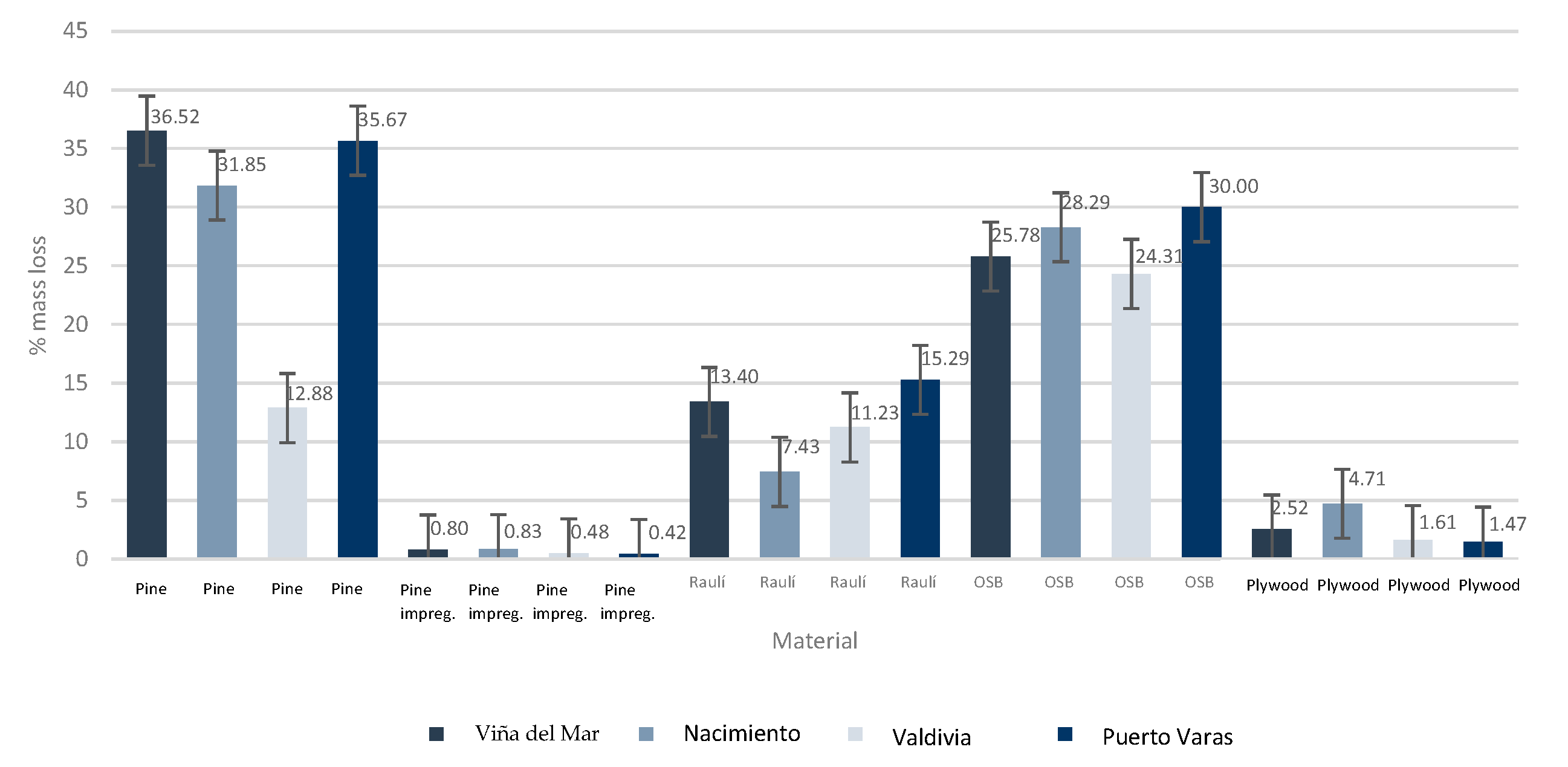
3.1. Sample Biodeterioration per Locality at 90 Days
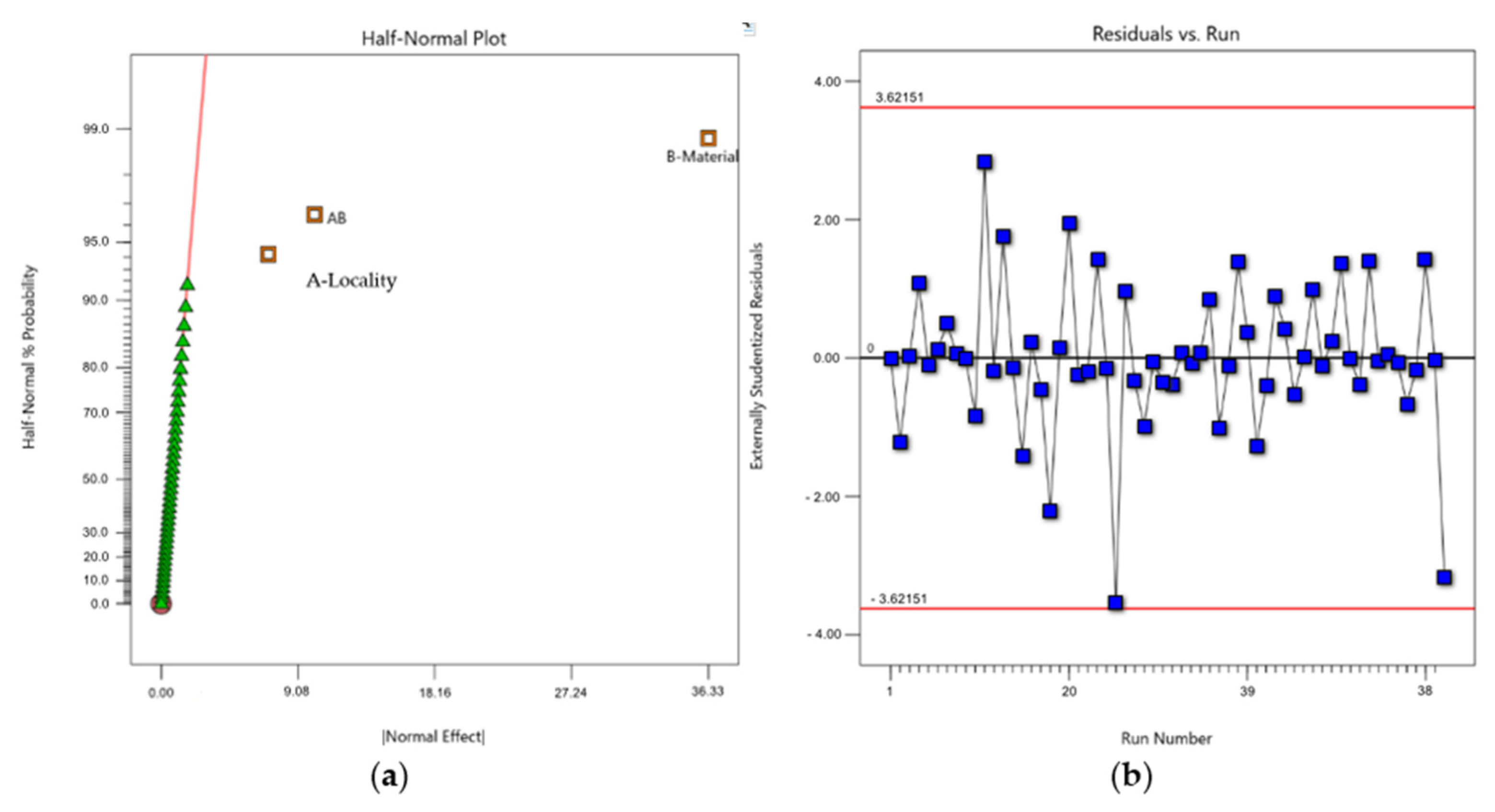
3.2. Statistical Analysis per Locality at 90 Days
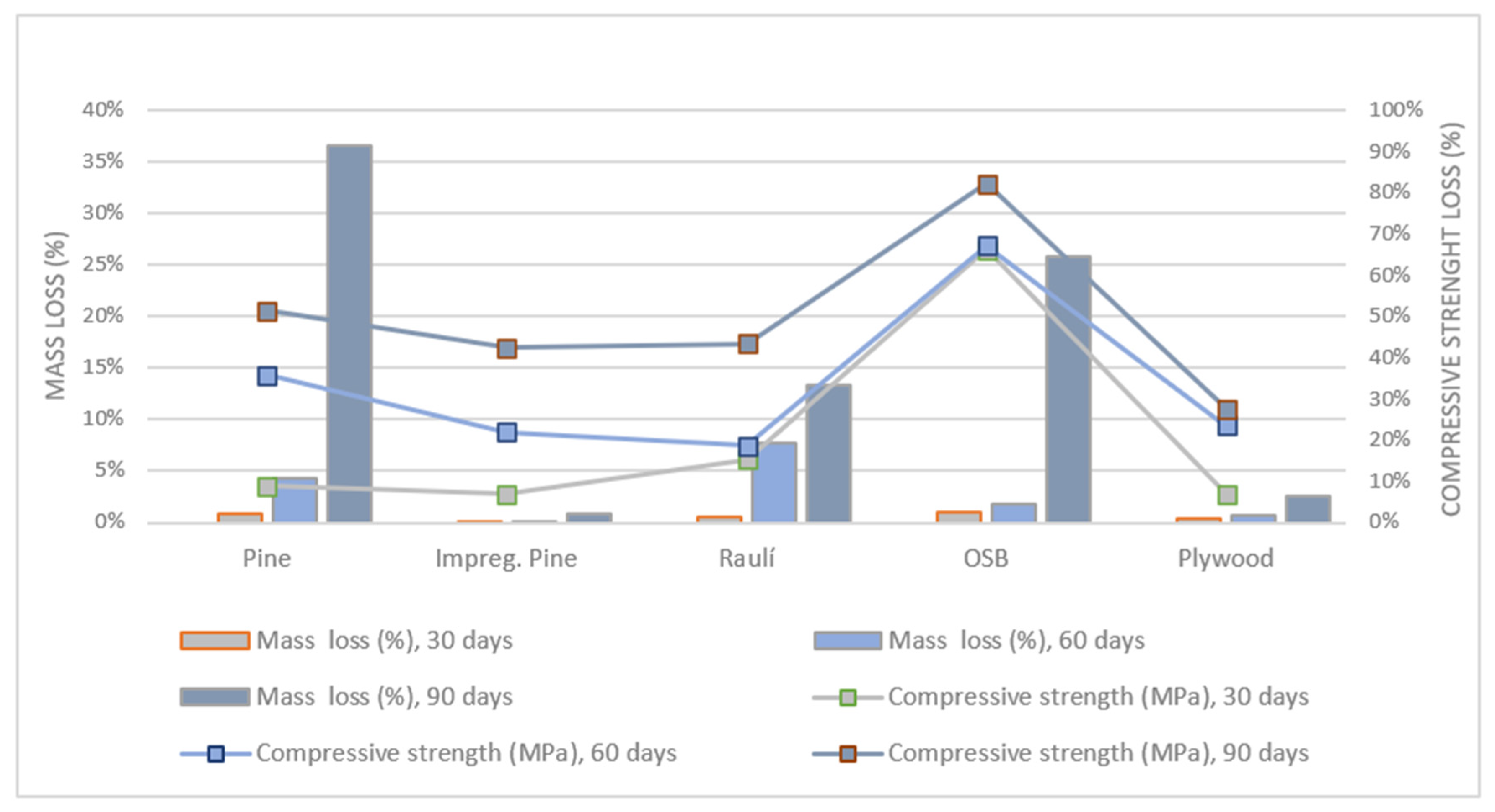
3.3. Results of Mass Loss Related to Compression Strength Loss
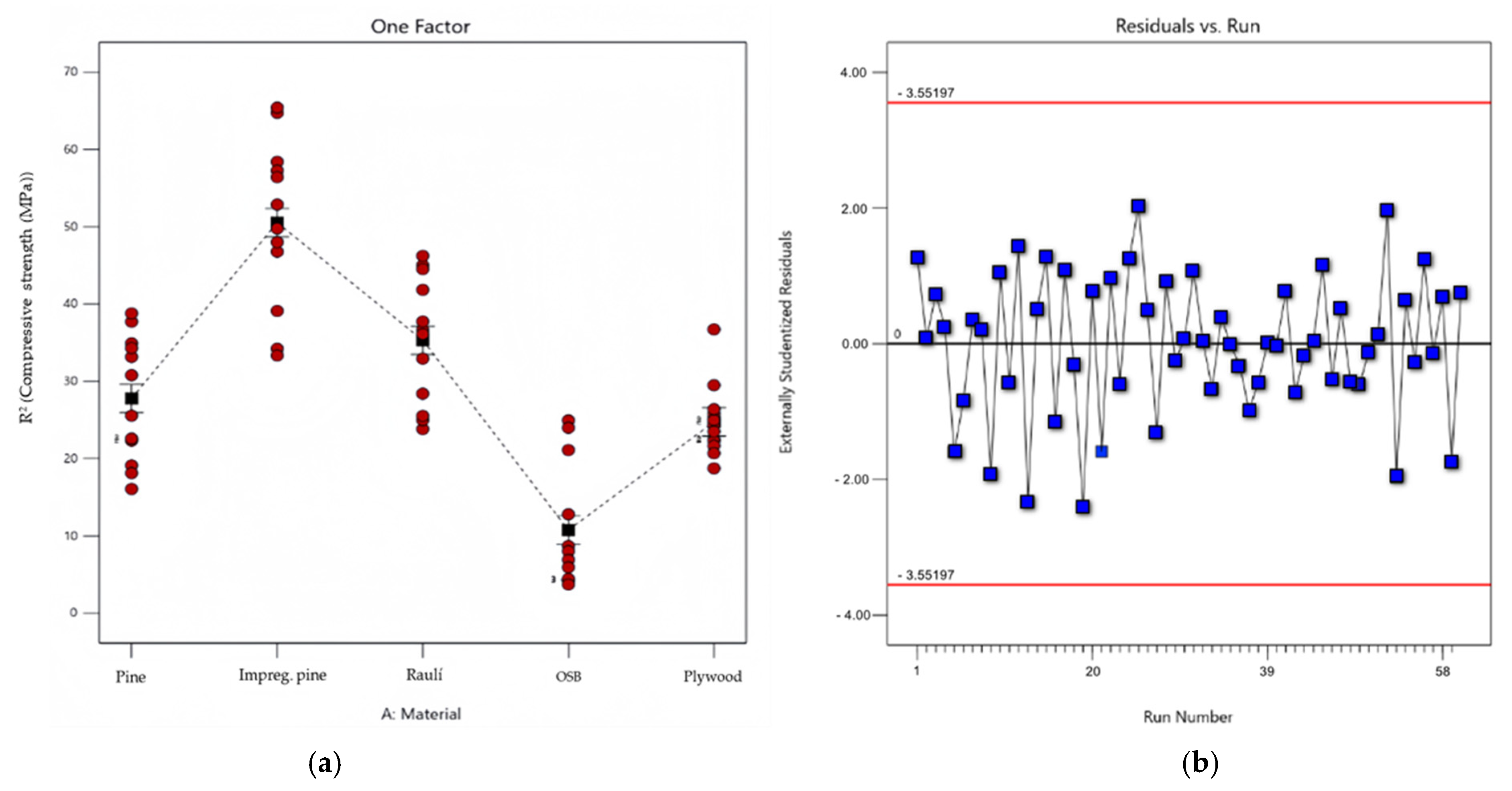
3.4. Statistical Analysis of the Mass Loss Related to the Compression Strength Loss
4. Conclusions
Author Contributions
Funding
Data Availability Statement
Acknowledgments
Conflicts of Interest
References
- Di Carlo, E.; Barresi, G.; Palla, F. Biodeterioration. In Biotechnology and Conservation of Cultural Heritage, 2nd ed.; Barresi, G., Palla, F., Eds.; Springer: Cham, Switzerland, 2022; pp. 1–30. [Google Scholar] [CrossRef]
- Wirth, A.; Pacheco, F.; Toma, N.; Valiati, V.; Tutikian, V.; Gomes, L. Análisis sobre el crecimiento de hongos en diferentes revestimientos aplicados a sistemas ligeros. Rev. Ing. De Construcción 2019, 34, 5–14. [Google Scholar] [CrossRef]
- Bodeker, I.T.M.; Clemmensen, K.E.; de Boer, W.; Martin, F.; Olson, A.; Lindahl, B.D. Ectomycorrhizal Cortinarius species participate in enzymatic oxidation of humus in northern forest ecosystems. New Phytol 2014, 203, 245–256. [Google Scholar] [CrossRef] [PubMed]
- Alshammari, N.; Ameen, F.; AlKahtani, M.D.F.; Stephenson, S. Characterizing the assemblage of wood-decay fungi in the forests of northwest Arkansas. J. Fungi 2021, 7, 309. [Google Scholar] [CrossRef] [PubMed]
- Unger, A.; Schniewind, A.P.; Unger, W. Conservation of Wood Artifacts: A Handbook; Springer: Berlin/Heidelberg, Germany, 2001; p. 578. [Google Scholar]
- Balasundaram, S.V.; Hess, J.; Durling, M.B.; Lindahl, B.D.; Hietala, A.M.; Kauserud, H.; Klymiuk, I.; Martin, F.M.; Olson, Å.; Winka, K.; et al. The fungus that came in from the cold: Dry rot’s pre-adapted ability to invade buildings. ISME J. 2018, 12, 791–801. [Google Scholar] [CrossRef]
- Rosato, V.G.; Traversa, L.P. Bioalteration, Protection, and Conservation of Wood; Multidisciplinary Training Laboratory for Technological Research (LEMIT): La Plata, Argentina, 2017. Available online: https://ri.conicet.gov.ar/bitstream/handle/11336/160050/CONICET_Digital_Nro.8b67b300-39a1-4330-8d5c-dafb771382a6_B.pdf?sequence=5&isAllowed=y (accessed on 20 February 2024).
- Clausen, C.A.; Kartal, S.N. Accelerated detection of brown-rot decay: Comparison of soil block test, chemical analysis, mechanical properties, and immunodetection. For. Prod. J. 2003, 53, 90–94. Available online: https://www.fpl.fs.usda.gov/documnts/pdf2003/claus03b.pdf (accessed on 20 February 2024).
- Ortiz, R.; Jamet, A.; Herrera, P.; Vindigni, G.; Pereira, A. Determination of the models of biodeterioration in elements of wood produced by rot fungi in building of the zone of historic conservation of Valparaíso, Chile. Rev. De La Construcción 2011, 10, 82–89. [Google Scholar] [CrossRef]
- Witomski, P.; Olek, W.; Bonarski, J.T. Changes in strength of Scots pine wood (Pinus silvestris L.) decayed by brown rot (Coniophora puteana) and white rot (Trametes versicolor). Constr. Build. Mater. 2016, 102, 162–166. [Google Scholar] [CrossRef]
- García, V.R.; Benítez, G.; Martínez, M.; Velázquez, C. Wood preservatives and microbial exudates with antagonistic activity against biological agents. Rev. Mex. Fitopatol. 2017, 36, 56–78. [Google Scholar] [CrossRef]
- Walsh-Korb, Z.; Avérous, L. Recent developments in the conservation of materials properties of historical wood. Prog. Mater. Sci. 2019, 102, 167–221. [Google Scholar] [CrossRef]
- Maurice, S.; Coroller, L.; Debaets, S.; Vasseur, V.; Le Floch, G.; Barbier, G. Modelling the effect of temperature, water activity and pH on the growth of Serpula lacrymans. J. Appl. Microbiol. 2011, 111, 1436–1446. [Google Scholar] [CrossRef]
- Gabriel, J.; Švec, K. Occurrence of indoor wood decay basidiomycetes in Europe. Fungal Biol. Rev. 2017, 31, 212–217. [Google Scholar] [CrossRef]
- Palfreyman, J.W. The domestic dry rot fungus, Serpula lacrymans, its natural origins and biological control. In Ariadne Workshop; SpringerLink: Berlin/Heidelberg, Germany, 2001; Available online: https://arcchip.itam.cas.cz/w08/w08_palfreyman2.pdf (accessed on 20 February 2024).
- White, N.A.; Dehal, P.K.; Duncan, J.M.; Williams, N.A.; Gartland, J.S.; Palfreyman, J.W.; Cooke, D.E. Análisis molecular de la variación intraespecífica entre aislados de construcción y “silvestres” de Serpula lacrymans y su relación con S. himantioides. Investig. Micológica 2001, 105, 447–452. [Google Scholar] [CrossRef]
- Gadd, G.; Watkinson, S.; Dyer, P.S. (Eds.) Fungi in the Environment; Cambridge University Press: Cambridge, UK, 2007; ISBN 9781139462105. [Google Scholar]
- Schmidt, O. Indoor wood-decay basidiomycetes: Damage, causal fungi, physiology, identification and characterization, prevention and control. Mycol. Prog. 2007, 6, 261–279. [Google Scholar] [CrossRef]
- Steenkjær, A.; Green, F.; Clausen, C.; Jensen, B. Tolerance of Serpula lacrymans to copper-based wood preservatives. Int. Biodeterior. Biodegrad. 2005, 56, 173–177. [Google Scholar] [CrossRef]
- Jennings, D.H.; Bravery, A.F. Serpula Lacrymans: Fundamental Biology and Control Strategies; Wiley: Chichester, UK, 1991; ISBN 978-0-471-93058-7. [Google Scholar]
- Goodell, B.; Winandy, J.E.; Morrell, J.J. Fungal Degradation of Wood: Emerging Data, New Insights and Changing Perceptions. Coatings 2020, 10, 1210. [Google Scholar] [CrossRef]
- Côté, W.A.; Timell, T.E.; Zabel, R.A. Distribution of lignin in compression Wood of red spruce (Picea rubens Sarg.). Holz Roh-Werkst. 1966, 24, 432–438. [Google Scholar] [CrossRef]
- Eastwood, D.C.; Floudas, D.; Binder, M.; Majcherczyk, A.; Schneider, P.; Aerts, A.; Asiegbu, F.O.; Baldwin, T.; Choi, C.; Cullen, D.; et al. The plant cell wall–decomposing machinery underlies the functional diversity of forest fungi. Science 2011, 333, 762–765. [Google Scholar] [CrossRef]
- Langer, G.J.; Bußkamp, J.; Terhonen, E.; Blumenstein, K. Chapter 10—Fungi Inhabiting Woody Tree Tissues. In Forest Microbiology; Asiegbu, F.O., Kovalchuk, A., Eds.; Academic Press: Cambridge, MA, USA, 2021; pp. 175–205. ISBN 978-0-12-822542-4. [Google Scholar]
- Goodell, B.; Zhu, Y.; Kim, S.; Kafle, K.; Eastwood, D.; Daniel, G.; Jellison, J.; Yoshida, M.; Groom, L.; Pingali, S.V.; et al. Modification of the nanostructure of lignocellulose cell walls via a non-enzymatic lignocellulose deconstruction system in brown rot wood-decay fungi. Biotechnol. Biofuels 2017, 10, 179. [Google Scholar] [CrossRef]
- Kulikova, N.A.; Klein, O.I.; Stepanova, E.V.; Tcherdyntseva, B.A.; Vorob’ev, E.A.; Arinbasarova, A.Y. Use of basidiomycetes in industrial waste processing and utilization technologies: Fundamental and applied aspects (review). Appl. Biochem. Microbiol. 2011, 47, 565–579. [Google Scholar] [CrossRef]
- Hyde, K.D.; Al-Hatmi, A.M.S.; Andersen, B.; Boekhout, T.; Buzina, W.; Dawson, T.L.; Eastwood, D.C.; Jones, E.B.G.; de Hoog, S.; Kang, Y.; et al. The world’s ten most feared fungi. Fungal Divers. 2018, 93, 161–194. [Google Scholar] [CrossRef]
- Kauserud, H.; Svegården, I.B.; Sætre, G.P.; Knudsen, H.; Stensrud, Ø.; Schmidt, O.; Högberg, N. Asian origin and rapid global spread of the destructive dry rot fungus Serpula lacrymans. Mol. Ecol. 2007, 16, 3350–3360. [Google Scholar] [CrossRef] [PubMed]
- Goodell, B.; Jellison, J.; Liu, J.; Daniel, G.; Paszczynski, A.; Fekete, F.; Krishnamurthy, S.; Jun, L.; Xu, G. Low molecular weight chelators and phenolic compounds isolated from wood decay fungi and their role in the fungal biodegradation of Wood. J. Biotechnol. 1997, 53, 133–162. [Google Scholar] [CrossRef]
- Ortiz, R.; Jamet, A.; Herrera, P.; Vindigni, G.; Pereira, A. Influence of incipient decay caused by the brown-rot fungy Serpula lacrimans, on the mechanical properties of normal and parallel compression to the fiver in Pinus radiata D. Don. Inf. Constr. 2011, 63, 69–74. [Google Scholar] [CrossRef]
- Arantes, V.; Goodell, B. Current understanding of brown-rot fungal biodegradation mechanisms: A review. In Deterioration and Protection of Sustainable Biomaterials; ACS Symposium Series 1158; American Chemical Society: Washington, DC, USA, 2014; pp. 3–21. [Google Scholar] [CrossRef]
- Branysova, T.; Demnerova, K.; Durovic, M.; Stiborova, H. Microbial biodeterioration of cultural heritage and identification of the active agents over the last two decades. J. Cult. Herit. 2022, 55, 245–260. [Google Scholar] [CrossRef]
- Savković, Ž.; Stupar, M.; Unković, N.; Knežević, A.; Vukojević, J.; Ljaljević Grbić, M. Fungal deterioration of cultural heritage objects. In Biodegradation Technology of Organic and Inorganic Pollutants; IntechOpen: London, UK, 2021; pp. 267–288. [Google Scholar] [CrossRef]
- Indrie, L.; Oana, D.; Ilieş, M.; Ilieş, D.C.; Lincu, A.; Ilieş, A.; Ilieş, M.; Oana, I. Indoor air quality of museums and conservation of textiles art works. Case study: Salacea Museum House, Romania. Ind. Textila 2019, 70, 88–93. [Google Scholar] [CrossRef]
- Isola, D.; Lee, H.-J.; Chung, Y.-J.; Zucconi, L.; Pelosi, C. Once upon a Time, There Was a Piece of Wood: Present Knowledge and Future Perspectives in Fungal Deterioration of Wooden Cultural Heritage in Terrestrial Ecosystems and Diagnostic Tools. J. Fungi 2024, 10, 366. [Google Scholar] [CrossRef]
- Beata, G. The Use of -Omics Tools for Assessing Biodeterioration of Cultural Heritage: A Review. J. Cult. Herit. 2020, 45, 351–361. [Google Scholar] [CrossRef]
- Trovão, J.; Portugal, A. Current knowledge on the fungal degradation abilities profiled through biodeteriorative plate essays. Appl. Sci. 2021, 11, 4196. [Google Scholar] [CrossRef]
- Savković, Ž.; Stupar, M.; Unković, N.; Ivanović, Ž.; Blagojević, J.; Vukojević, J.; Ljaljević Grbić, M. In vitro biodegradation potential of airborne Aspergilli and Penicillia. Sci. Nat. 2019, 106, 8. [Google Scholar] [CrossRef]
- van Niekerk, P.B.; Brischke, C.; Niklewski, J. Estimating the service life of timber structures concerning risk and influence of fungal decay—A review of existing theory and modelling approaches. Forests 2021, 12, 588. [Google Scholar] [CrossRef]
- Baldwin, R.C.; Streisel, R.C. Detection of fungal degradation at low weight loss by differential scanning calorimetry. Wood Fiber Sci. 1985, 17, 315–326. Available online: https://wfs.swst.org/index.php/wfs/article/view/20 (accessed on 20 February 2024).
- UNE EN 252; Field Test Method for Determining the Relative Protective Effectiveness of a Wood Preservative in Ground Contact. AENOR: Madrid, Spain, 2015. Available online: https://www.une.org/encuentra-tu-norma/busca-tu-norma/norma?c=N0054740 (accessed on 28 November 2025).
- UNE EN 113-2; Durability of Wood and Wood-Based Products—Test Method Against Wood Destroying Basidiomycetes—Part 2: Assessment of Inherent or Enhanced Durability. AENOR: Madrid, Spain, 2021. Available online: https://tienda.aenor.com/norma-une-en-113-2-2021-n0065767 (accessed on 9 November 2025).
- UNE EN 113-3; AENOR Spanish Association for Standardization and Certification. Durability of Wood and Wood-Based Products—Test Method Against Wood Destroying Basidiomycetes—Part 3: Assessment of Durability of Wood-Based Panels. AENOR: Madrid, Spain, 2023. Available online: https://tienda.aenor.com/norma-une-en-113-3-2023-n0071768 (accessed on 20 February 2024).
- Råberg, U.; Edlund, M.L.; Terziev, N.; Bjurman, J.; Homan, S.; De Troya, T.; Gérardin, P.; Militz, H. Testing and evaluation of natural durability of wood in above ground conditions in Europe—An overview. J. Wood Sci. 2005, 51, 429–440. [Google Scholar] [CrossRef]
- UNE-EN 350; AENOR Spanish Association for Standardization and Certification. Durability of Wood and Wood-Based Products—Testing and Classification of the Durability to Biological Agents of Wood and Wood-Based Materials. AENOR: Madrid, Spain, 2017. Available online: https://tienda.aenor.com/norma-une-en-350-2016-n0057545 (accessed on 20 February 2024).
- NCh789/1:2023; Instituto Nacional de Normalización de Chile, INN. Maderas—Parte 1: Durabilidad de la Madera. INN: Santiago, Chile, 2023. Available online: https://ecommerce.inn.cl/nch7891202360751 (accessed on 20 February 2024).
- Watkinson, S.C.; Eastwood, D.C. Serpula lacrymans, wood and buildings. In Advances in Applied Microbiology; Laskin, A.I., Sariaslani, S., Gadd, G.M., Eds.; Academic Press: Cambridge, MA, USA, 2012; Volume 78, pp. 121–149. [Google Scholar] [CrossRef]
- Van Acker, J.; Van den Bulcke, J.; Forsthuber, B.; Grüll, G. Wood Preservation and Wood Finishing. In Springer Handbook of Wood Science and Technology; Niemz, P., Teischinger, A., Sandberg, D., Eds.; Springer Handbooks; Springer: Cham, Switzerland, 2023. [Google Scholar] [CrossRef]
- Brischke, C. Timber. In Long-Term Performance and Durability of Masonry Structures; Woodhead Publishing: Duxford, UK, 2019; pp. 129–168. ISBN 9780081021101. [Google Scholar] [CrossRef]
- UC Center for Wood Innovation (CIM UC). Database and Indicators for Monitoring the Construction in Chile; Project Developed Within the Framework of the Agreement Collaboration and Transfer Between the Pontifical Catholic University of Chile and the Ministry of Housing and Urban Planning (MINVU). First Electronic Edition in Pdf. 2023. Volume 1, pp. 26–28. Available online: https://madera.uc.cl/images/recursos/Base_de_datos_e_indicadores_para_el_seguimiento_de_la_construccio%CC%81n_en_Chile.pdf (accessed on 20 February 2024).
- Ministry of the Environment of Chile. Prevention and/or Atmospheric Decontamination Plans (PADP). 2024. Available online: https://ppda.mma.gob.cl/ (accessed on 20 February 2024).
- National Institute of Standardization of Chile. Treated Wood—Classification According to Operational Damage Risk and Sampling (NCh 819); INN: Santiago, Chile, 2019; Available online: https://ecommerce.inn.cl/nch819201968329 (accessed on 20 February 2024).
- Vilgalys, R.; Hester, M. Rapid genetic identification and mapping of enzymatically amplified ribosomal DNA from several Cryptococcus species. J. Bacteriol. 1990, 172, 4238–4246. [Google Scholar] [CrossRef] [PubMed]
- E10-22; American Wood Protection Association Standard. Laboratory Method for Evaluating the Decay Resistance of Wood-Based Materials Against Pure Basidiomycete Cultures: Soil/block Test. AWPA: Birmingham, AL, USA, 2022.
- National Institute of Standardization of Chile. Wood—Determination of Mechanical Properties—Compression Parallel to Grain (NCh 973); INN: Santiago, Chile, 2018; Available online: https://ecommerce.inn.cl/nch973201863083 (accessed on 20 February 2024).
- Espinoza Maldonado, R.; Bobadilla, A.; Rubio-Bellido, C. Application of Environmental and Biological Frequency Indicators to Assess the Serpula lacrymans Fungus in Wooden Dwellings. Buildings 2024, 14, 589. [Google Scholar] [CrossRef]
- Thornton, J.; Wazny, J. Comparative Laboratory Testing of Strains of the Dry Rot Fungus Serpula lacrymans (Schum. ex Fr.) S.F. Gray, I. Growth and Decay Capacity. Holzforschung 1986, 40, 309–313. [Google Scholar] [CrossRef]
- Martínez, Á.T.; Speranza, M.; Ruiz-Dueñas, F.J.; Ferreira, P.; Camarero, S.; Guillén, F.; Martínez, M.J.; Gutiérrez, A.; Río Andrade, J.C.D. Biodegradation of lignocellulosics: Microbial, chemical, and enzymatic aspects of the fungal attack of lignin. Int. Microbiol. 2005, 8, 195–204. [Google Scholar]
- Crisostomo, M.C.; Del Menezzi, C.H.S. Evaluation of the Effect of Thermo-mechanical Treatment on the Resistance of Commercial OSB to Decay Fungi. Mater. Sci. 2019, 25, 190–194. [Google Scholar] [CrossRef]
- La Corporación de Desarrollo Tecnológico (CDT). Compendio Técnico de Materiales—Maderas; Número 11; CDT: Santiago, Chile, 2011; Available online: www.registrocdt.cl (accessed on 20 February 2024).
- Amusant, N.; Arnould, O.; Pizzi, A.; Depres, A.; Mansouris, R.H.; Bardet, S.; Baudassé, C. Biological properties of an OSB eco-product manufactured from a mixture of durable and non-durable species and natural resins. Eur. J. Wood Wood Prod. 2009, 67, 439–447. [Google Scholar] [CrossRef]
- Fojutowski, A.; Kropacz, A.; Noskowiak, A. Determination of wood-based panels resistance to wood attacking fungi. Folia For. Pol. 2009, 49, 79–88. Available online: https://ffp.matlibhax.com/pdf/40/Folia%20Forestalia%20Pol%2040-9%20Fojutowski%20et%20al.pdf (accessed on 20 February 2024).
- Li, W.; Van den Bulcke, J.; De Windt, I.; Defoirdt, N.; Dhaene, J.; Dierick, M.; Van Acker, J. Relating MOE decrease and mass loss due to fungal decay in plywood and MDF using resonalyser and X-ray CT scanning. Int. Biodeterior. Biodegrad. 2016, 110, 113–120. [Google Scholar] [CrossRef]
- Curling, S.; Clausen, C.A.; Winandy, J.E. The Effect of Hemicellulose Degradation on the Mechanical Properties of Wood During Brown Rot Decay; IRG Secretariat: Stockholm, Sweden, 2001; Available online: https://www.researchgate.net/profile/Simon-Curling/publication/252465886_The_effect_of_hemicellulose_degradation_on_the_mechanical_properties_of_wood_during_brown_rot_decay/links/0c96053208c90ba174000000/The-effect-of-hemicellulose-degradation-on-the-mechanical-properties-of-wood-during-brown-rot-decay.pdf (accessed on 20 February 2024).
- Bravery, A.F.; Lea, R.G. Assessing the Fungus Resistance of Wood Based Composites. In Proceedings of the IUFRO Symposium on the Protection of Wood-Based Composites, Zvolen, Slovakia, 25–27 August 1987; pp. 67–86. [Google Scholar]
- Araya Olguin, R.J. Moisture Transport and Changes in Mechanical Properties in Oriented Strand Board: Experimental and Modeling. Master’s Thesis, University of Alberta, Edmonton, AB, Canada, 2021. [Google Scholar] [CrossRef]
- Changotra, R.; Rajput, H.; Liu, B.; Murray, G. Occurrence, fate, and potential impacts of wood preservatives in the environment: Challenges and environmentally friendly solutions. Chemosphere 2024, 348, 141291. [Google Scholar] [CrossRef]
- Li, W.Z.; Van den Bulcke, J.; Mannes, D.; Lehmann, E.; De Windt, I.; Dierick, M.; Van Acker, J. Impact of internal structure on water-resistance of plywood studied using neutron radiography and X-ray tomography. Constr. Build. Mater. 2014, 73, 171–179. [Google Scholar] [CrossRef]
- Zhuang, B.; Cloutier, A.; Koubaa, A. Analysis of the interaction between internal porosity and oriented strand board performance using X-ray computed tomography. Eur. J. Wood Wood Prod. 2023, 81, 99–109. [Google Scholar] [CrossRef]
- Zhang, B.; Wu, Q.; Wang, L.; Han, G. The influence of in-plane density variation on engineering properties of oriented strandboard: A finite element simulation. In Proceedings of the McMat2005, Baton Rouge, LO, USA, 1–3 June 2005; American Society of Mechanical Engineers: New York, NY, USA, 2005; pp. 255–260. [Google Scholar]


Disclaimer/Publisher’s Note: The statements, opinions and data contained in all publications are solely those of the individual author(s) and contributor(s) and not of MDPI and/or the editor(s). MDPI and/or the editor(s) disclaim responsibility for any injury to people or property resulting from any ideas, methods, instructions or products referred to in the content. |
© 2025 by the authors. Licensee MDPI, Basel, Switzerland. This article is an open access article distributed under the terms and conditions of the Creative Commons Attribution (CC BY) license (https://creativecommons.org/licenses/by/4.0/).
Share and Cite
Espinoza Maldonado, R.; Rubio-Bellido, C.; Bobadilla-Moreno, A.; Navarrete, J.; Herrera, P. Characterization of the Biodeterioration Caused by the Fungus Serpula lacrymans in Lignocellulosic Materials of Building Envelopes. Buildings 2025, 15, 4513. https://doi.org/10.3390/buildings15244513
Espinoza Maldonado R, Rubio-Bellido C, Bobadilla-Moreno A, Navarrete J, Herrera P. Characterization of the Biodeterioration Caused by the Fungus Serpula lacrymans in Lignocellulosic Materials of Building Envelopes. Buildings. 2025; 15(24):4513. https://doi.org/10.3390/buildings15244513
Chicago/Turabian StyleEspinoza Maldonado, Rodrigo, Carlos Rubio-Bellido, Ariel Bobadilla-Moreno, José Navarrete, and Paula Herrera. 2025. "Characterization of the Biodeterioration Caused by the Fungus Serpula lacrymans in Lignocellulosic Materials of Building Envelopes" Buildings 15, no. 24: 4513. https://doi.org/10.3390/buildings15244513
APA StyleEspinoza Maldonado, R., Rubio-Bellido, C., Bobadilla-Moreno, A., Navarrete, J., & Herrera, P. (2025). Characterization of the Biodeterioration Caused by the Fungus Serpula lacrymans in Lignocellulosic Materials of Building Envelopes. Buildings, 15(24), 4513. https://doi.org/10.3390/buildings15244513