Article

A Multi-Segment Beam Approach for Capturing Member Buckling in Seismic Stability Analysis of Space Truss Structures

1
State Key Laboratory of Coastal and Offshore Engineering, Dalian University of Technology, Dalian 116000, China
2
School of Civil Engineering and Architecture, Wuhan University of Technology, Wuhan 430070, China
3
School of Civil Engineering, Tsinghua University, Beijing 100084, China
*
Author to whom correspondence should be addressed.
Buildings 2025, 15(24), 4447; https://doi.org/10.3390/buildings15244447
Submission received: 5 November 2025 / Revised: 4 December 2025 / Accepted: 5 December 2025 / Published: 9 December 2025
(This article belongs to the Special Issue Advanced Analysis and Design for Steel Structure Stability)

Abstract

This study addresses a fundamental shortcoming in conventional dynamic stability analyses of space trusses: traditional rod elements or unsegmented beam models fail to capture member buckling under severe seismic excitation, often mischaracterizing structural failure modes, namely mistaking collapse due to instability for mere loss of loadbearing capacity. To overcome this limitation, we propose a multi-segment beam numerical method that discretizes each member into multiple segments enhanced with high order shape functions. Validation through modal analyses of simply supported beams, isolated space trusses, and space truss–frame systems reveals that while conventional unsegmented beam models accurately predict low order vibration frequencies, they entirely neglect member buckling in higher modes. Under strong earthquake loading, these models misleadingly indicate global stability accompanied by gradual degradation of load capacity. In contrast, the multi-segment beam model simultaneously resolves low order global vibrations and high order local buckling phenomena, unveiling progressive seismic instabilities triggered by member buckling. Dynamic stability analyses confirm that the multi-segment approach reliably identifies the true critical failure mode. This paper recommends that in the modal analysis and seismic stability analysis of space trusses, the space truss members should be divided into three segments with cubic shape functions selected for the analysis. This methodology thus provides precise predictions of failure mechanisms and critical seismic thresholds, enabling dependable safety evaluations for long-span spatial structures in seismic regions.

1. Introduction

In the dynamic stability analysis of space trusses, bar elements and unsegmented beam elements are conventionally employed in numerical simulations. These modeling strategies effectively represent the physical behavior of spatial structures, while the discretization of individual members aligns with established engineering design principles. Nevertheless, this discretization approach wherein each structural member is represented by a single element does not capture the effects of member buckling. The significance of buckling on structural stability, however, is considerable, especially in the analysis of spatial systems like space trusses and reticulated shells, where it can critically influence the global dynamic response. Qi [1] and Chen et al. [2] considered that member buckling exerts significant influences on the failure mode of a spatial structure. The more refined finite element model that considers member buckling has also been used for dynamic stability analysis [3,4]. Liu et al. [5] and Ding et al. [6] introduced the criterion for member buckling and the mechanical model after member buckling proposed by Marshall et al. [7] into the constitutive model of materials to assess the stability of individual members. The plastic hinge model has also been used in dynamic stability analysis [8,9]. The consideration of member buckling has been addressed through the implementation of multi-segment beam methodology in prior research [10]. At the elemental level, scholars have further developed mechanical models that explicitly incorporate buckling behavior [11]. Previous research [12] demonstrates that significant analytical discrepancies arise when employing non-segmented beam elements including individual members in the static stability assessment of structural frames. Substantial improvements in solution accuracy have been achieved through either enhancing the order of shape functions or refining the beam formulation itself [13,14,15]. Several investigators have adopted numerical approaches grounded in multi-segment beam theory for stability analysis of reticulated shell structures [10,16]. The academic consensus indicates that this modeling strategy not only elevates computational precision but also effectively captures member buckling phenomena [16]. In summary, the load-bearing capacity of space trusses may be substantially overestimated when member buckling effects are neglected in their dynamic stability assessment. Furthermore, while the stability analysis of individual members and reticulated shells is typically treated as a static problem, there remains a notable absence of established guidelines for element selection (comprising bar elements, unsegmented beam elements, and multi-segmented beam elements) specifically applicable to the dynamic stability analysis of space trusses [17,18]. Additionally, some researchers have employed machine learning methods to analyze structural safety, providing a novel approach for failure mode analysis of space trusses [19,20].
To resolve this methodological gap, the theoretical rationale and fundamental mechanics underlying the application of a multi-segment beam model in modal and dynamic stability analyses of space trusses are investigated, with reference to the modal characteristics of beam elements in simply supported configurations. On this basis, a multi-segment beam methodology for seismic stability assessment of space truss structures is introduced, establishing a rigorous analytical framework for evaluating structural dynamic stability under intense seismic excitation.
This study investigates space trusses, employing a multi-segment beam model for their simulation based on the following assumptions: grid nodes are idealized as rigid connections, neglecting the stiffness contributions of bolt ball and welded ball joints; the base connections between the columns and the foundation are treated as rigid, with soil structure interaction disregarded. The analysis also does not account for the effect of cumulative member damage on the dynamic stability of the spatial grid. Notwithstanding these specific modeling choices, the proposed methodology possesses broader applicability, extending to other spatial lattice structures such as reticulated shells.

2. The Multi-Segment Beam Method

In this section, the multi-segment beam numerical simulation method proposed for dynamic stability analysis of space trusses is recognized for its dual capacity to enhance solution accuracy while simultaneously accounting for member instability. Nevertheless, the underlying rationale for employing multi-segment beam elements remains insufficiently examined, resulting in an absence of established criteria for selecting appropriate element types and segmentation schemes in the dynamic stability analysis of space trusses. Consequently, this study seeks to elucidate the validity and fundamental mechanisms of utilizing multi-segment beam models for dynamic stability assessment of such structures.

2.1. Modal Analysis of Simply Supported Beams

2.1.1. Approximate Solution in Modal Analysis of Simply Supported Beams

The free vibration of an ideal simply supported beam with a uniform cross-section (Figure 1a) is evaluated. The free vibration equation of the undamaged system is given by the following:
E I 4 v ( x , t ) x 4 + m ¯ 2 v ( x , t ) t 2 = 0
where E I and m ¯ separately represent the flexural rigidity and mass per unit length; v ( x , t ) represents the transverse displacement response of a simply supported beam. Using the method of separation of variables, assume the form of the solution is as follows:
v ( x , t ) = ϕ ( x ) Y ( t )
Equation (2) indicates that the amplitude of free vibration varies with time according to Y ( t ) and moves in accordance with the specified form ϕ ( x ) .
The boundary conditions of this beam are as follows:
ϕ ( 0 ) = 0 , E I ϕ ( 0 ) = 0 ϕ ( L ) = 0 , E I ϕ ( L ) = 0
The natural vibration frequency is calculated to be the following [21]:
ω n = n 2 π 2 E I m ¯ L 4
When n = 1, the natural vibration frequency can be expressed as follows:
ω 1 = π 2 E I m ¯ L 4
The corresponding curve for the mode of vibration is shown as a half wave sine function ϕ 1 = sin π x L . When n = 2, 3, …, the natural vibration frequency ω is four and nine times ω 1 , and so on (Figure 1b).
(1)
Rayleigh method for modal analysis of simply supported beams
When using the Rayleigh method, it is necessary to assume the deformed shape of a beam in the basic vibration mode. Suppose that the generalized coordinates show resonant vibration under free vibration, expressed as follows:
v ( x , t ) = ϕ ( x ) Z 0 sin ω t
where ϕ ( x ) denotes the shape function, which represents the ratio of the displacement at any point x to the reference displacement or the generalized coordinates Z ( t ) . The vibration frequency is calculated by letting the maximum strain energy be equivalent to the maximum kinetic energy in the motion process. The bending strain energy of the beam is written as follows:
V = 1 2 0 L E I 2 v x 2 2 d x
The kinetic energy of the beam is as follows:
T = 1 2 0 L m ¯ v ˙ 2 d x
Letting the maximum potential energy be equal to the maximum kinetic energy, the square of the frequency is calculated to be as follows:
ω 2 = 0 L E I ϕ ( x ) 2 d x 0 L m ¯ ϕ ( x ) 2 d x
Supposing that the shape function is a parabola, ϕ ( x ) = ( x / L ) ( x / L 1 ) , then the following is obtained:
ω 2 = 120 E I m ¯ L 4
Assuming a sinusoidal form for the shape function, ϕ ( x ) = sin ( π x / L ) , we obtain the following:
ω 2 = π 4 E I m ¯ L 4
The second frequency is approximately 20% lower than the first. The accuracy of the Rayleigh method in frequency estimation is inherently dependent on the assumed displacement function. The closer this function approximates the actual mode shape of the analytical solution, the greater the precision of the resulting calculation.
(2)
Finite element method for modal analysis of simply supported beams
The finite element method effectively systematizes the Rayleigh method by employing constructed displacement functions typically of a simplified form to formulate element stiffness and mass matrices for solving corresponding engineering problems. These displacement functions may assume any mathematically admissible form, provided they satisfy essential nodal and internal continuity requirements. When applying the finite element method to the modal analysis of a simply supported beam, the constructed displacement function is as follows:
v ( x ) = ψ 1 ( x ) v 1 + ψ 2 ( x ) v 2 + ψ 3 ( x ) v 3 + ψ 4 ( x ) v 4
When the element is divided into one and two segments, we obtain ω 1 = 9.91 E I m ¯ L 4 and ω 1 = 9.80 E I m ¯ L 4 , respectively. Although the shape function in Equation (8) provides only an approximation of the actual deflected form, the overall solution for the entire beam achieves satisfactory accuracy when the beam is subdivided into a sufficient number of finite elements.

2.1.2. Numerical Simulation of Modal Analysis of Simply Supported Beams

In the modal analysis, the following characteristic equation must be solved:
k ω 2 m v ^ = 0
The eigenvalue ω 2 represents the square of the free vibration frequency, the corresponding displacement vector v ^ denotes the corresponding shape of the vibration system, which is termed the eigenvector or mode of vibration. If | | k ω 2 m | | = 0 , N roots of the function can be found and the values ( ω 1 2 , ω 2 2 , ω 3 2 , , ω N 2 ) represent N possible vibration frequencies of the system.
Upon examining a uniformly cross-sectioned circular steel tube simply supported beam with parameters detailed in Table 1, numerical simulation was conducted using the BEAM188 element. As evidenced by Table 2, when higher order shape functions are employed for the BEAM188 element [22], a relatively accurate first order natural frequency can be obtained with only a minimal element discretization (three to five segments). The definition of the shape function can be referenced in the ANSYS 2023 R1. Help documentation by consulting the KEYOPT parameter settings for BEAM188. In the absence of element segmentation, the first order shape function is limited to simulating linear deformation patterns and fails to capture curved forms, such as the sinusoidal half wave mode. The first order natural frequency computed using the linear shape function yields a value of 475.26 Hz, exceeding the theoretical solution by a factor of 26 and thus indicating substantial inaccuracy. By contrast, the application of quadratic and cubic shape functions enables the simulation of curvature-dependent deformation, producing first order natural frequencies of 20.01 Hz and 18.27 Hz, respectively. These values correspond to errors of 10.8% and 1.2% relative to the theoretical benchmark (Table 3).
Notwithstanding the selected shape function, the accurate simulation of higher order natural frequencies remains unattainable without implementing element segmentation. When employing the quadratic shape function, the simulated second and third order natural frequencies exhibit substantial discrepancies of 425.1% and 166.2%, respectively, relative to their theoretical counterparts. Utilization of the cubic shape function yields similarly significant inaccuracies, with errors of 26.1% for the second order and 165.2% for the third order natural frequency. These deviations become progressively more pronounced for successively higher vibrational modes.
This limitation arises because employing a single element provides no nodal displacement at the mid-span of the member, thereby precluding the simulation of the sinusoidal half wave form characteristic of the fundamental vibration mode. When the member is discretized into multiple elements (e.g., three or five segments), nodal displacement occurs at the center of the uniformly cross-sectioned, simply supported beam. Although the simulated first order mode shape does not manifest as a perfectly smooth sinusoidal half wave, it converges progressively toward this idealized form as the number of element subdivisions increases. Under an equivalent element discretization scheme, the numerical solution demonstrates progressively closer convergence to the theoretical solution with increasing order of the shape function. This behavioral pattern observed for the second, third, and higher order vibrational modes mirrors that of the fundamental mode. When the uniformly cross-sectioned, simply supported beam is subdivided into fifty segments, the resulting first mode shape exhibits a close approximation to the idealized sinusoidal half wave form.
The modal analysis of a simply supported beam and the comparison with analytical values indicate that when employing cubic shape functions and dividing the simply supported beam into three segments, the numerical error has already fallen below 0.5%. Therefore, it is recommended to use cubic shape functions combined with a three-segment discretization for such analyses. It should be noted that modal analysis constitutes a linear analysis method, where variations in computational time-costs associated with different shape functions and segment numbers are negligible within the range of up to 50 segments.

2.2. Modal Analysis of a Space Truss

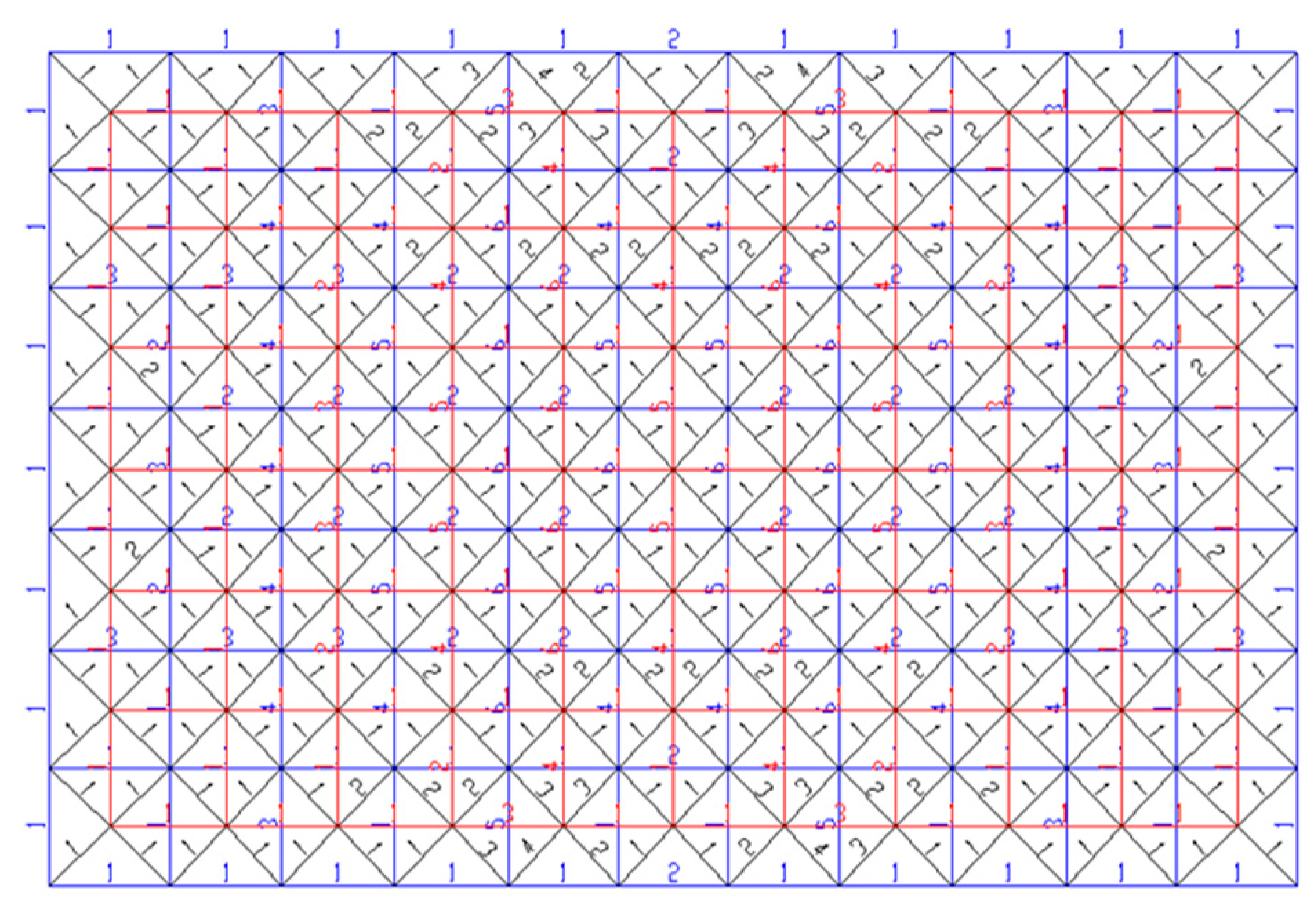
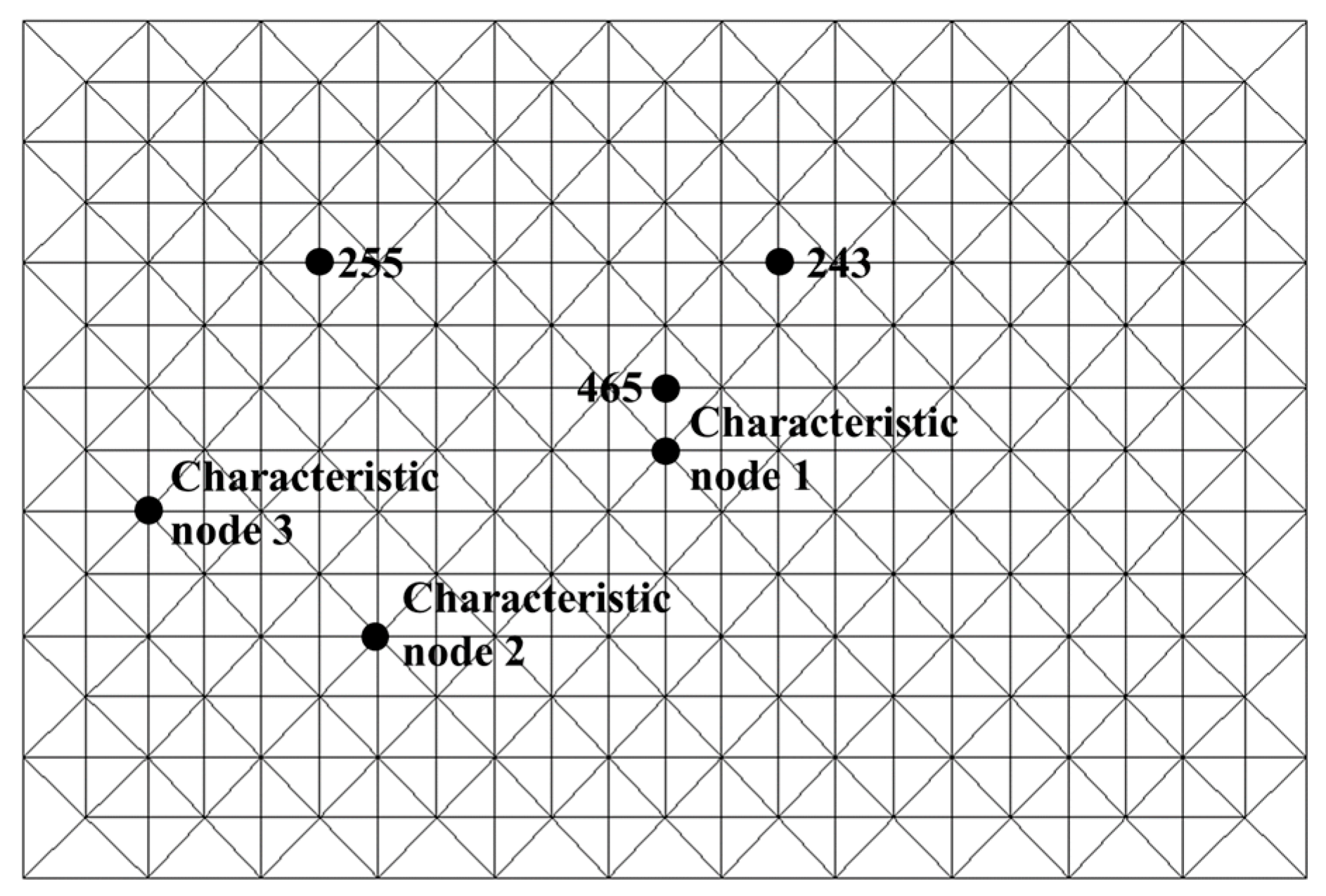
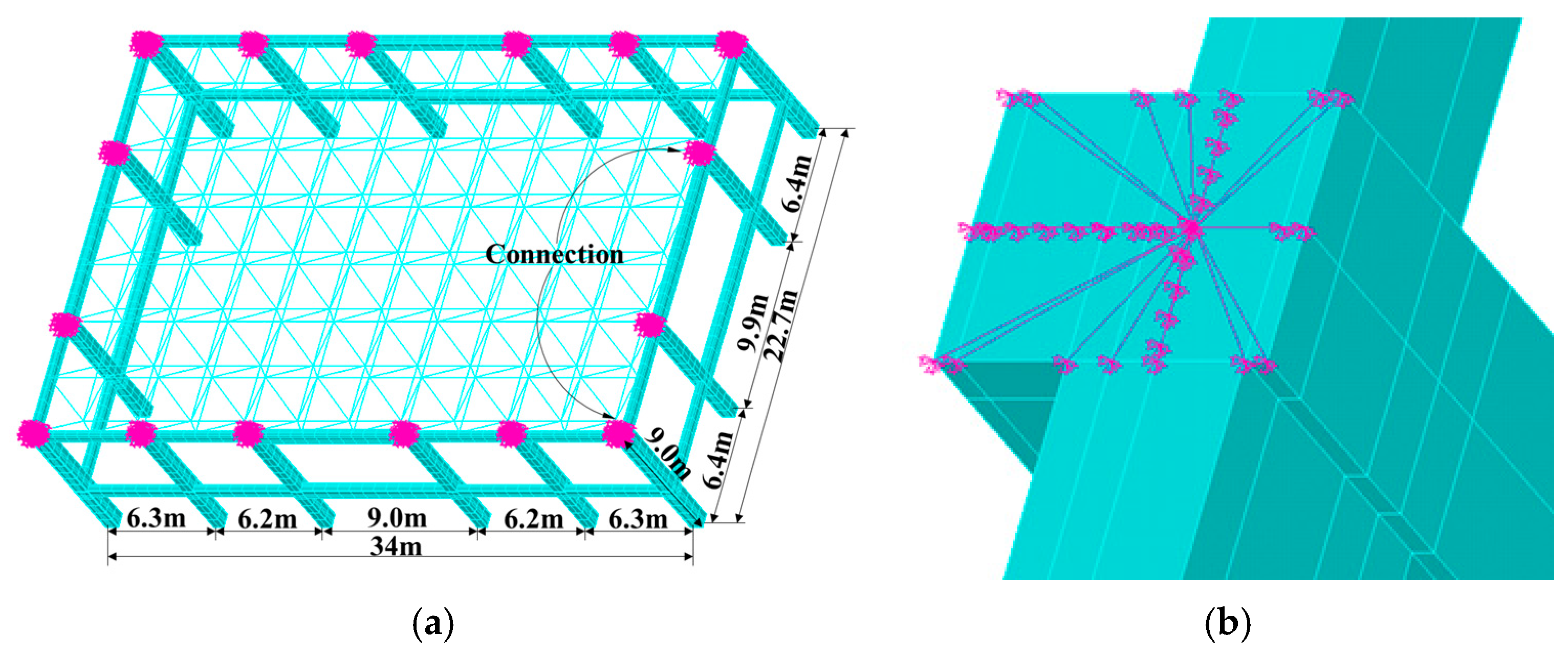
The space truss features plan dimensions of 22.4 m × 34 m with a height of 1.6 m. Member cross-sections were determined through a full stress design methodology, with detailed specifications provided in Table 4. Section numbering and spatial distribution of the truss members are illustrated in Figure 2. To investigate application of the multi-segment beams in the space truss, a single space truss model (Figure 3) and a whole model (Figure 4a) are established. The fixed hinge support is used for analyzing the space truss alone; when considering the lower frame, the rigidity is larger because steel plate supports are commonly used for the space truss and frame support in practical engineering [22]. In ANSYS analysis, beam elements were employed to model the space truss, while solid elements are adopted for concrete beam columns of the lower frame. The two are connected using the rigid region method (Figure 4b).

2.2.1. Modal Analysis of the Space Truss Alone

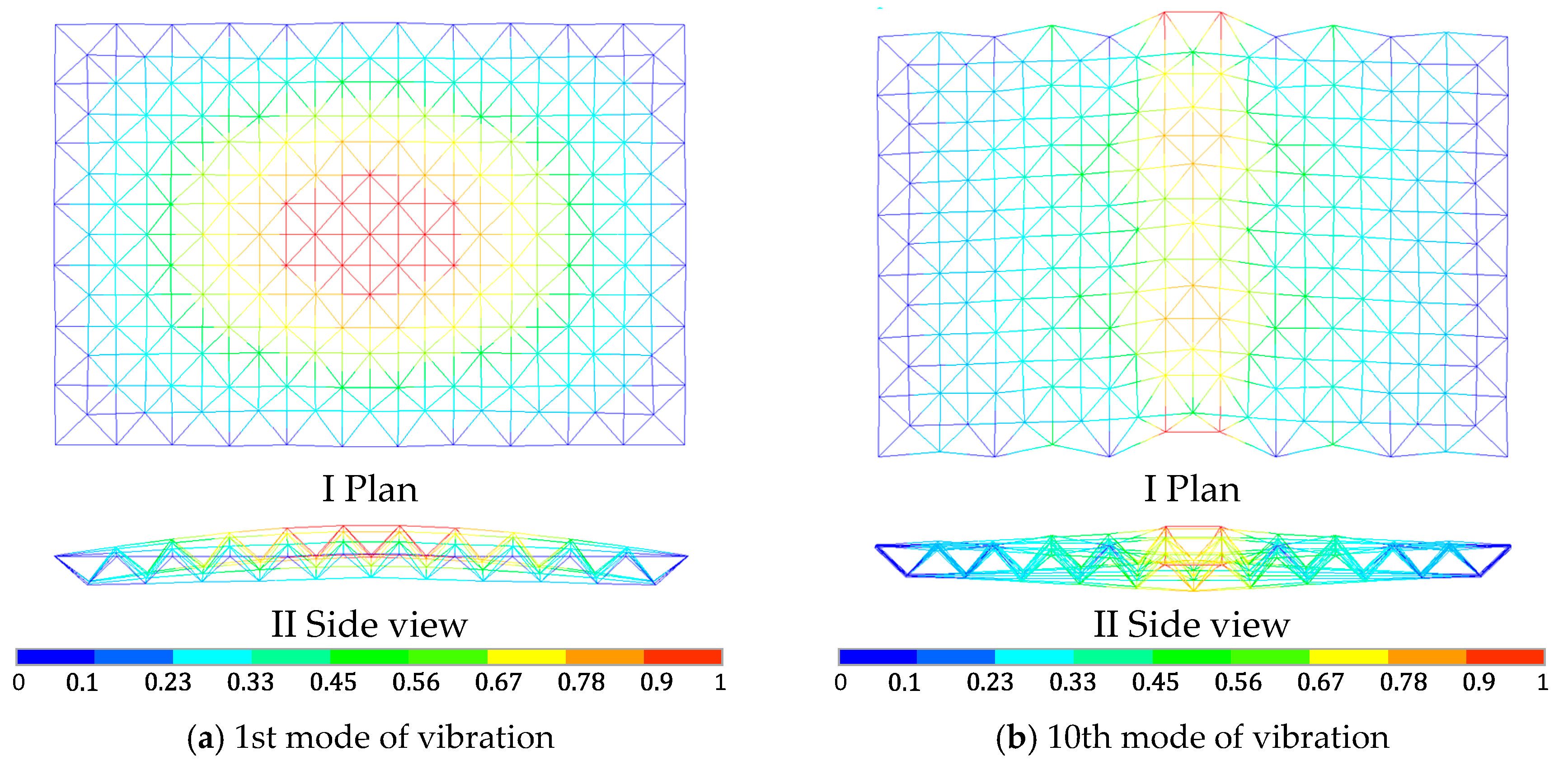
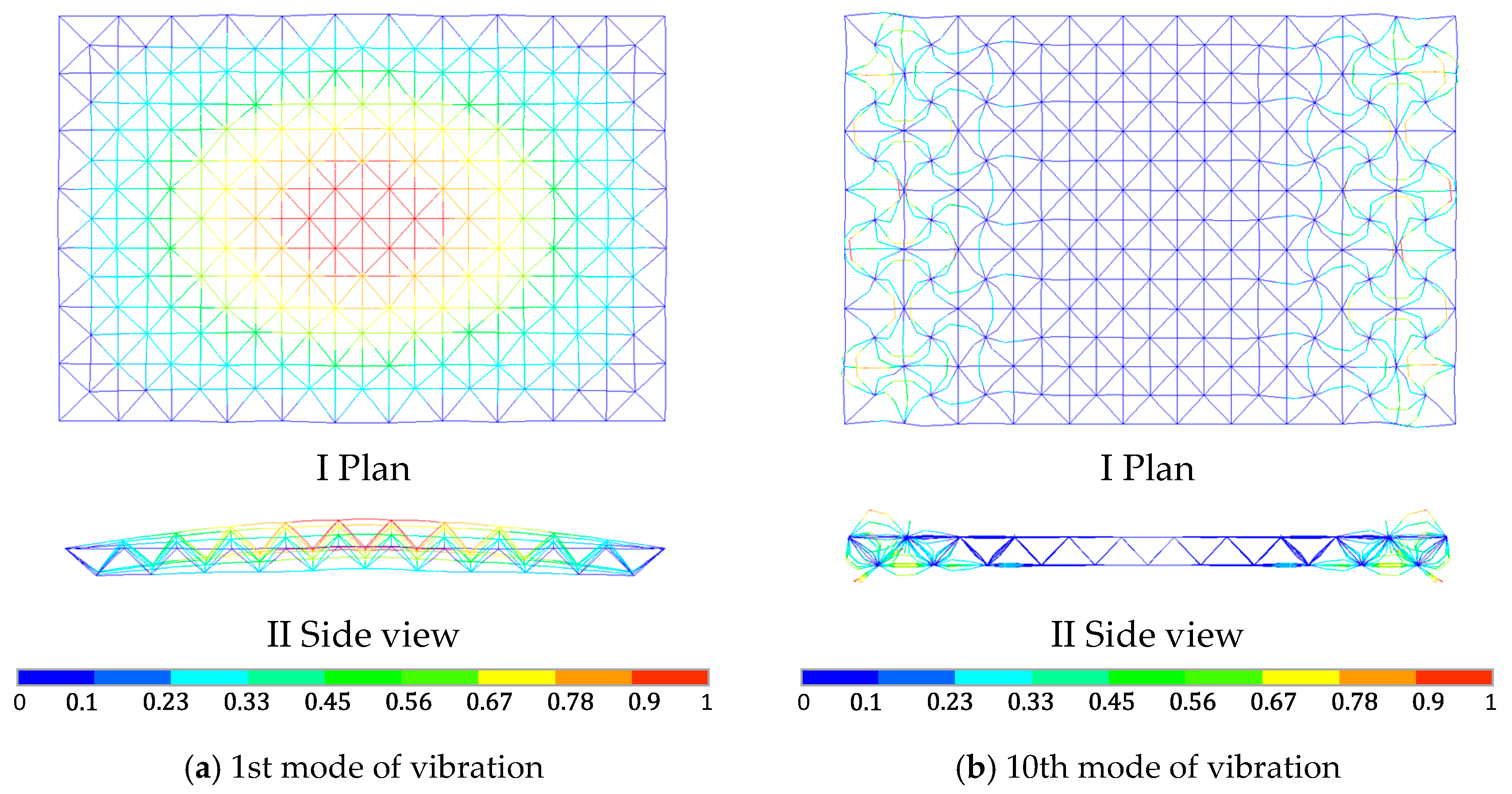
As evidenced by Figure 5 and Figure 6 and Table 5, member buckling cannot be simulated under the high order mode of vibration (tenth order) if BEAM188 elements are not segmented, although the first order natural vibration frequency has approached the exact value. After considering segmentation, the high order mode of vibration of the space truss can be accurately simulated, which can capture member buckling.
Higher order vibrational modes exert a non-negligible influence on the dynamic response analysis of the space truss. If members of the space truss are not segmented, member buckling cannot be captured under the high order mode of vibration, potentially leading to significant inaccuracies in the dynamic response predictions. In practical design, although the strength and stability of single members are verified, member buckling occurs under the high order mode of vibration in the modal analysis of space trusses. This indicates that member buckling of space trusses is non-negligible.
Dynamic stability is a geometric non-linear problem and its analysis calls for selection of appropriate elements, which ultimately is the selection of accurate shape functions. Generally, a higher order approximation in the shape functions yields a more precise computation of the fundamental natural frequency. This finding explains why the first order natural vibration frequency of BEAM188 elements using the cubic shape function and divided into one segment is approximate to the results when using the first order shape function and segmenting the element into 50 segments. When using a low order shape function, taking the first order natural vibration frequency of BEAM188 elements as an example, it is 9.41 Hz if using the first order shape function and dividing the elements into 20 segments. This indicates that when using a low order shape function, the elements need to be divided into many segments to reach the same accuracy as that using the high order shape function.
When employing BEAM188 elements, nodes of the space truss are processed to have rigid connections. In practical applications, structural nodes often deviate from idealized pinned conditions, exhibiting behavior that more closely approximates semi-rigid connections. Given that the space truss primarily sustains nodal loads and is predominantly influenced by axial forces, the use of beam element modeling does not substantially alter the outcomes of the dynamic stability analysis.

2.2.2. Modal Analysis of the Space Truss Considering the Lower Frame

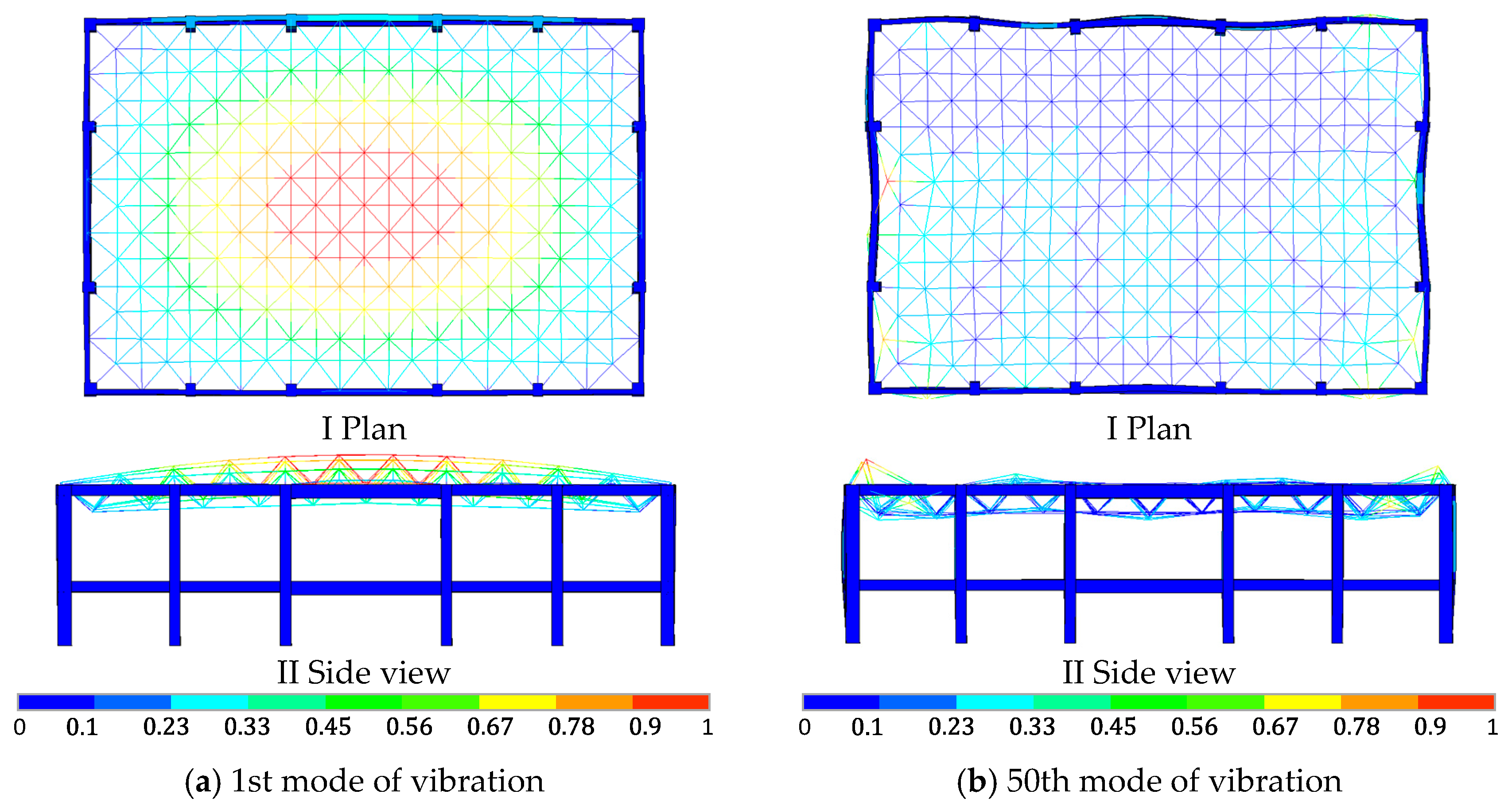
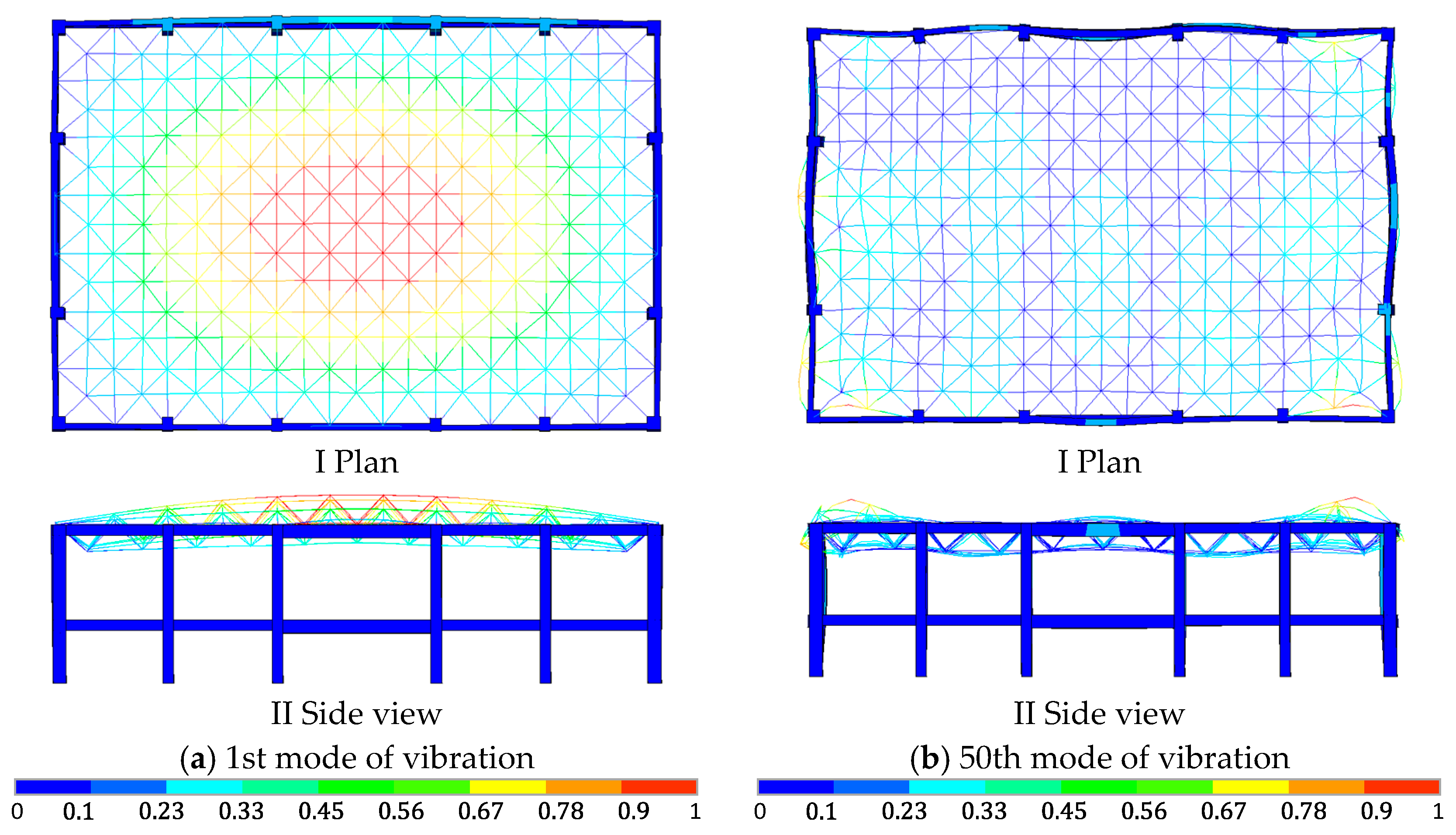
As illustrated in Figure 7 and Figure 8 and Table 6, the integrated model incorporating the supporting frame exhibits a fundamental mode shape analogous to that of the space truss without the lower frame, while its first order natural vibration frequency is lower than that of the space truss without the lower frame. This is because the mass of the whole model is increased when adding the lower frame, so that the frequency is lower than that of the space truss alone. Akin to conclusions pertaining to the space truss alone, the first order natural vibration frequency of the beam without segmentation is close to the exact value, while member buckling cannot be simulated under the high order mode of vibration (50th order). After segmenting the beam, the high order mode of vibration of the space truss can be accurately simulated, which also reflects member buckling in the structure.
The modal analysis results of a single space truss and a space truss with a lower frame indicate the following: when using cubic shape functions with three segments of the space truss members, the numerical solution closely approximates the result obtained by dividing members into fifty segments. Therefore, it is recommended to employ cubic shape functions combined with three segments. The computational time-cost differences among various combinations of shape functions and segment numbers in modal analysis are negligible.

3. Dynamic Analysis of Space Trusses

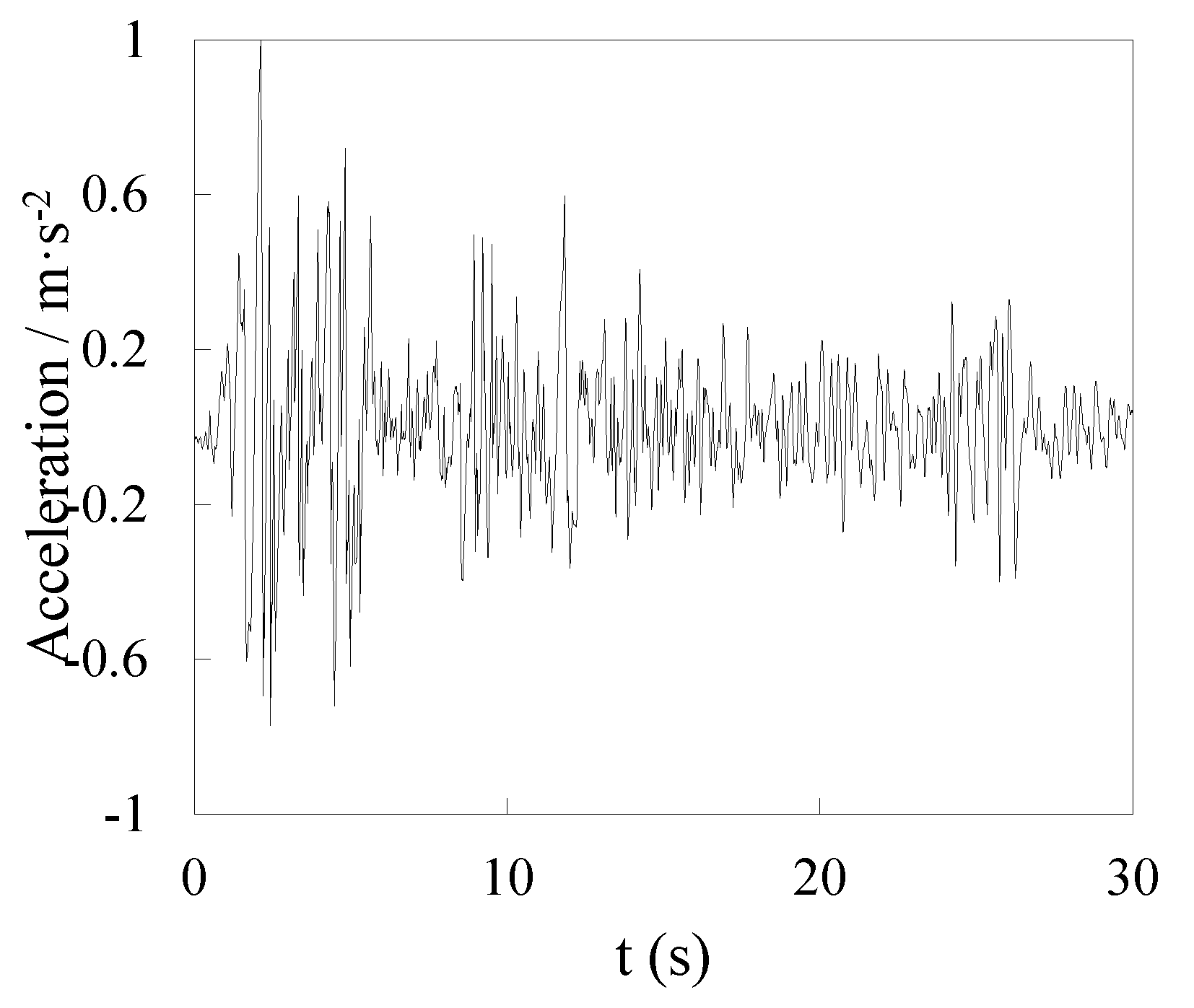
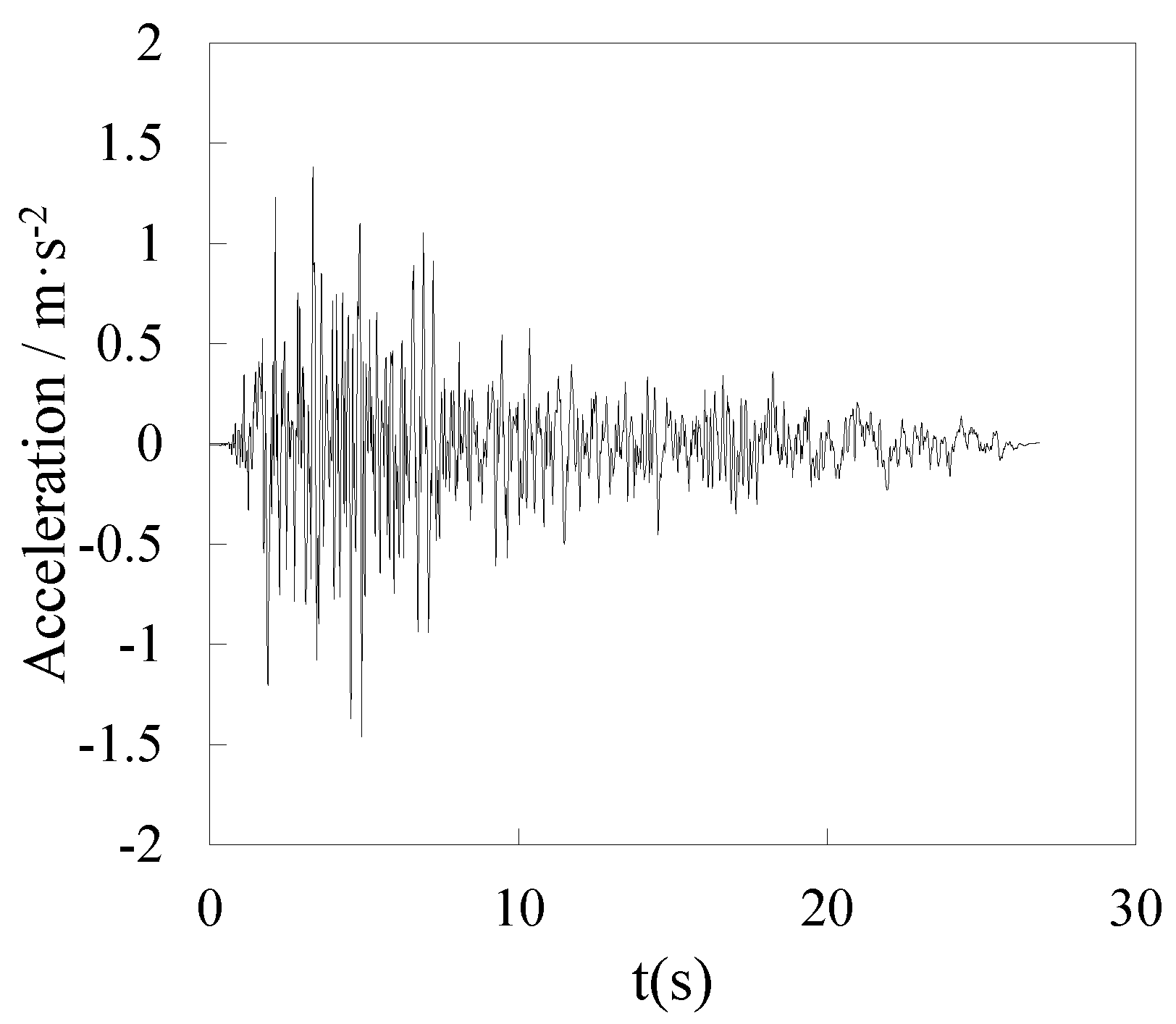
The ideal elastoplastic model is used for circular steel tubes in the upper steel space truss, with the yield stress of 235 MPa, while the stress–strain relationship of the lower frame concrete follows the Code for Design of Concrete Structures (GB 50010-2010) [23], for which the compressive strength of concrete cubes is 30 MPa. El Centro waves (1940) (Figure 9) with a duration of 10 s are used for analysis and applied to one horizontal direction, another horizontal direction, and the vertical direction after being adjusted accordingly by factors of 1, 0.85, and 0.65 [24]. The three-direction ground motions are input, and the acceleration amplitudes are separately set to be 0.1 g, 0.2 g, 0.3 g, 0.4 g, 0.5 g, 0.6 g, 0.7 g, 0.8 g, 0.9 g, and 1.0 g. The division of the members of the space truss is shown in Figure 10. In the dynamic analysis, both the multi-segment beam model and the non-segmented beam element model employ quadratic shape functions.

3.1. Selection Indicators for Space Trusses Under Seismic Action
3.1.1. Indicators of Dynamic Instability

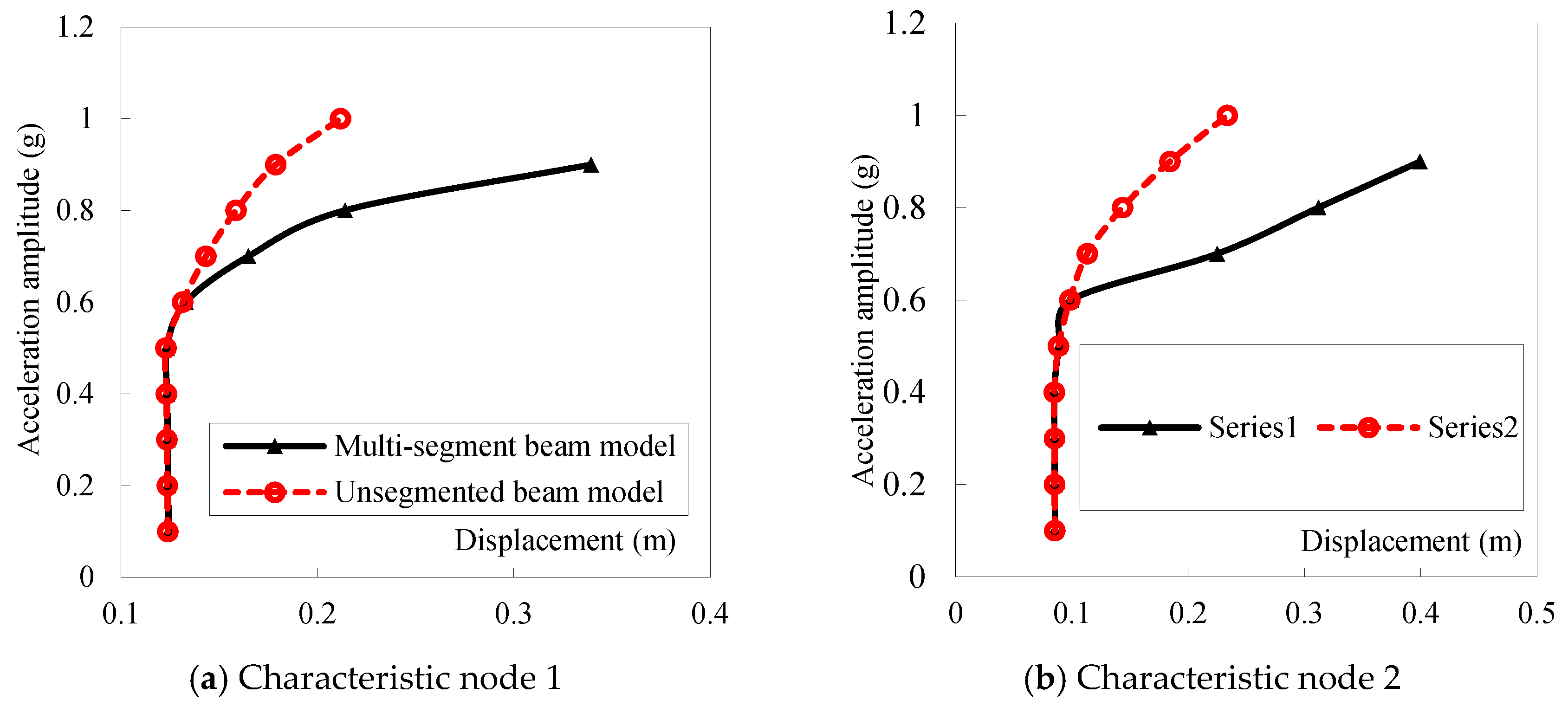
Assessing the dynamic stability of space trusses through the examination of their system responses represents the intuitive and effective methodology [25,26,27]. In the absence of dynamic instability, the maximum nodal displacement demonstrates a gradual progression without abrupt transitions as the seismic load amplitude increases, indicating that the applied loading remains insufficient to induce structural destabilization. Conversely, when the space truss approaches a state of dynamic instability, even a minimal increment in load amplitude can precipitate a pronounced, discontinuous jump in the structural displacement response. The locations of the characteristic nodes utilized for this analysis within the space truss are identified in Figure 3.
The dynamic stability of the structure is characterized by the load amplitude maximum displacement curve. Each point on the curve corresponds to the maximum displacement caused by a specific load amplitude. Prior to the onset of dynamic instability, the maximum displacement may either remain substantially constant or exhibit only gradual growth with increasing seismic amplitude, devoid of any discernible discontinuities indicative of load levels insufficient to provoke structural destabilization. Conversely, upon the occurrence of instability, even a marginal increase in load amplitude precipitates a discontinuous jump in structural displacement. This response characteristic effectively captures the global kinematic behavior of the structural system.

3.1.2. Indicators of Dynamic Strength

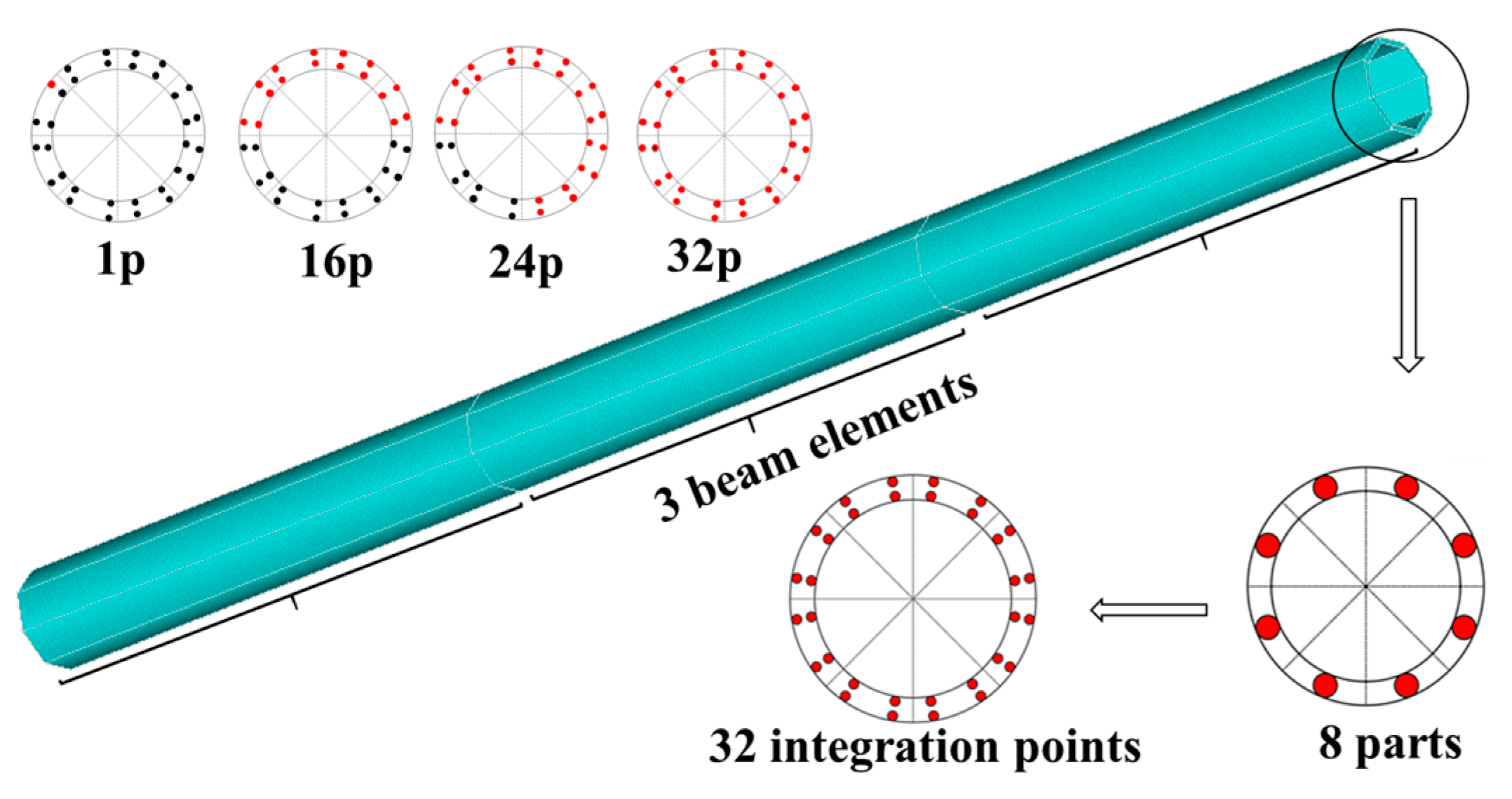
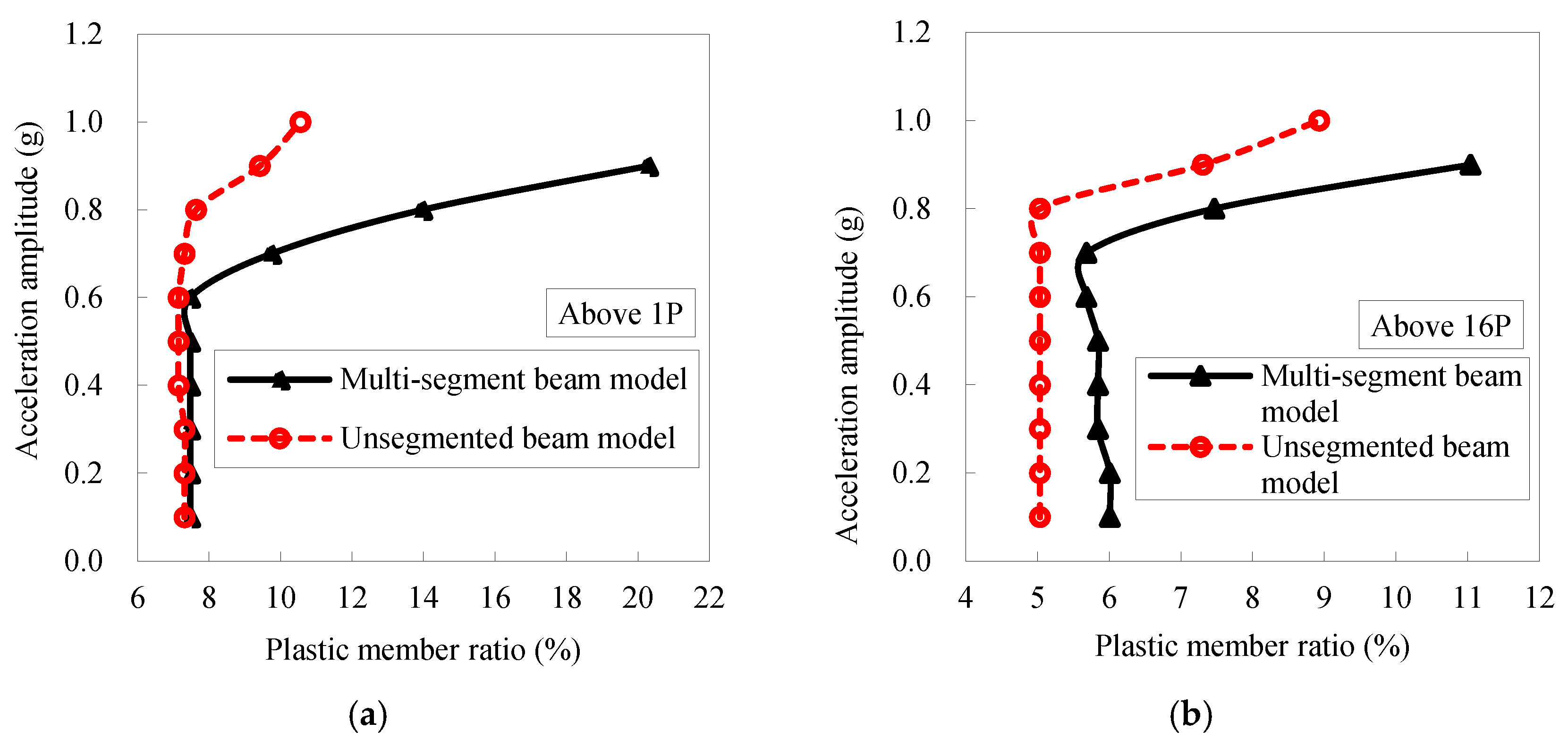
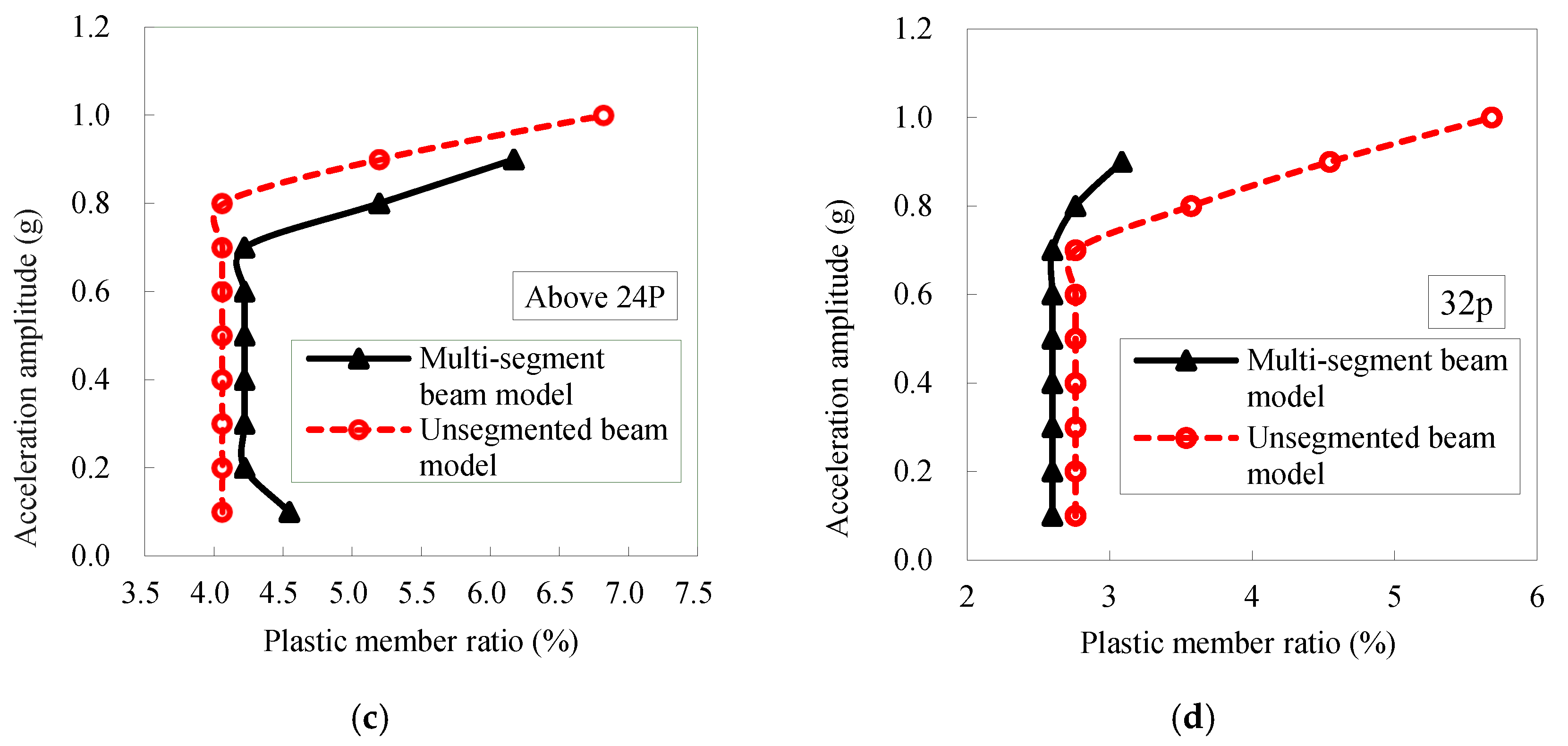
Members of a space truss enter the plastic state under strong earthquake action. In the present research, the proportion of yielded members in the space truss is used to judge the plastic development degree of the space truss [25,26,27], to determine whether the truss may fail in load carrying capacity terms. There are 32 integration points in the BEAM188 elements (Figure 10). To expound the plastic development degree of cross-section of members, 1P and 2P are defined to represent the cases that one and two integral points enter the plastic state. Likewise, 32P indicates that the whole cross-section has yielded. The proportions of members with more than 1P, 16P, 24P, and 32P in the total number of members are used to characterize the extent of the development of plasticity in various members in the space truss [28,29].

3.2. Dynamic Stability Analysis of Space Trusses

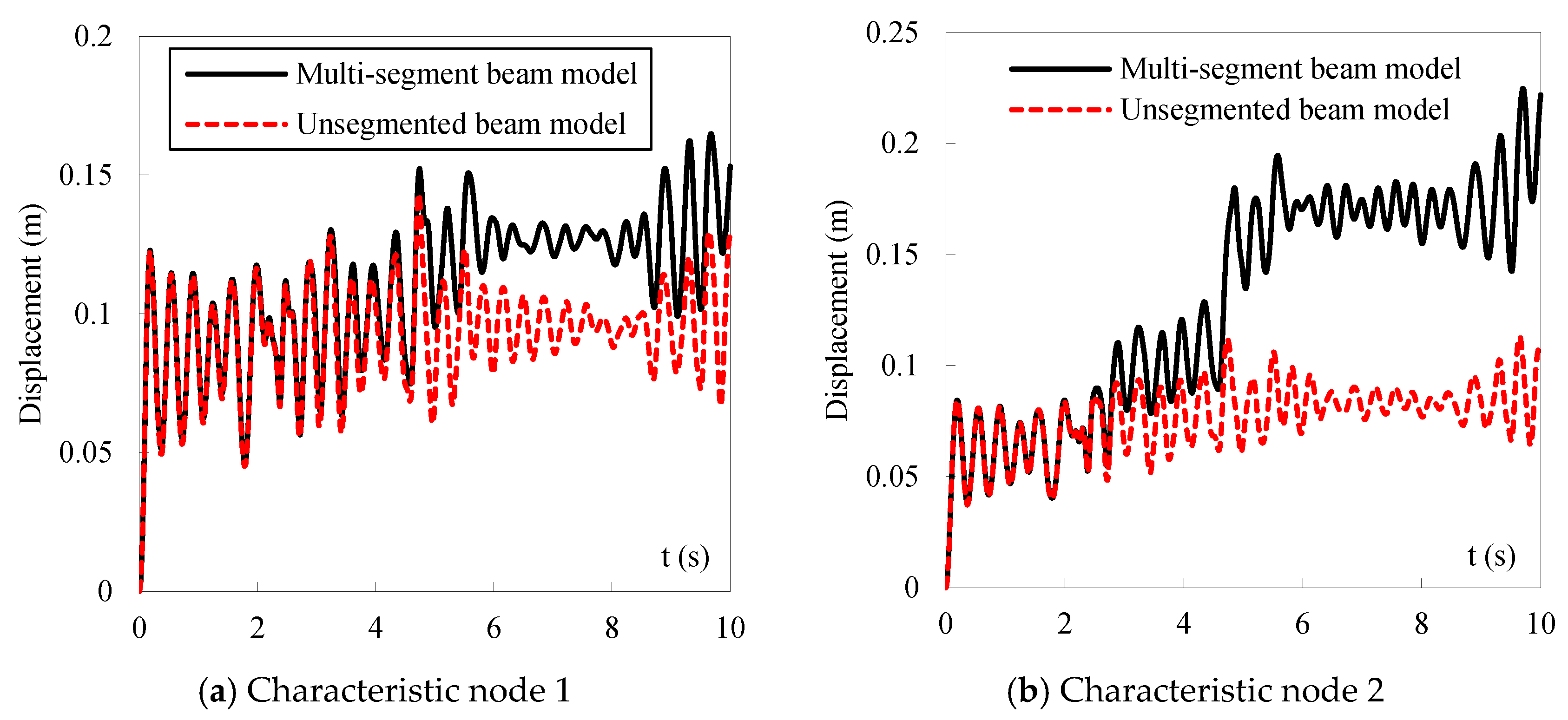
The acceleration amplitude displacement curve and the time history curve of characteristic nodes in the space truss are displayed in Figure 11 and Figure 12. It can be seen from the figures that, at under accelerations of 0.1 g to 0.6 g, the acceleration amplitude displacement curve remains unchanged and the time history curve of the nodes changes slightly with the increasing load amplitude. The simulation results of the multi-segment beam model are akin to those of the unsegmented beam model, with displacement responses in the low order mode of vibration and the space truss remaining free from buckling.
Under an acceleration of 0.7 g, an inflection point appears on the acceleration amplitude displacement curve in the multi-segment beam model, and the time history curve of the nodes differs in shape to those at 0.1 g to 0.6 g. As shown in the time history curve of the nodes, the displacement responses of the nodes in the space truss in the multi-segment beam model from 0 s to 4 s change following a similar trend to that at 0.1 g to 0.6 g. However, the nodal displacement exhibits step changes after 4 s; in comparison, the nodal displacement in the unsegmented beam model does not undergo significant change. At 0.8 g to 0.9 g, the member buckling and local instability of the space truss using the multi-segment beam model become more intense, while member buckling is not observed in the space truss using the unsegmented beam model. At 1.0 g, the maximum displacement of members in the space truss is 0.233 m (equivalent to 1 in 97 of the span) when using the unsegmented beam model; because the displacement of members is too large to converge in the multi-segment beam model of the space truss, the space truss has buckled.
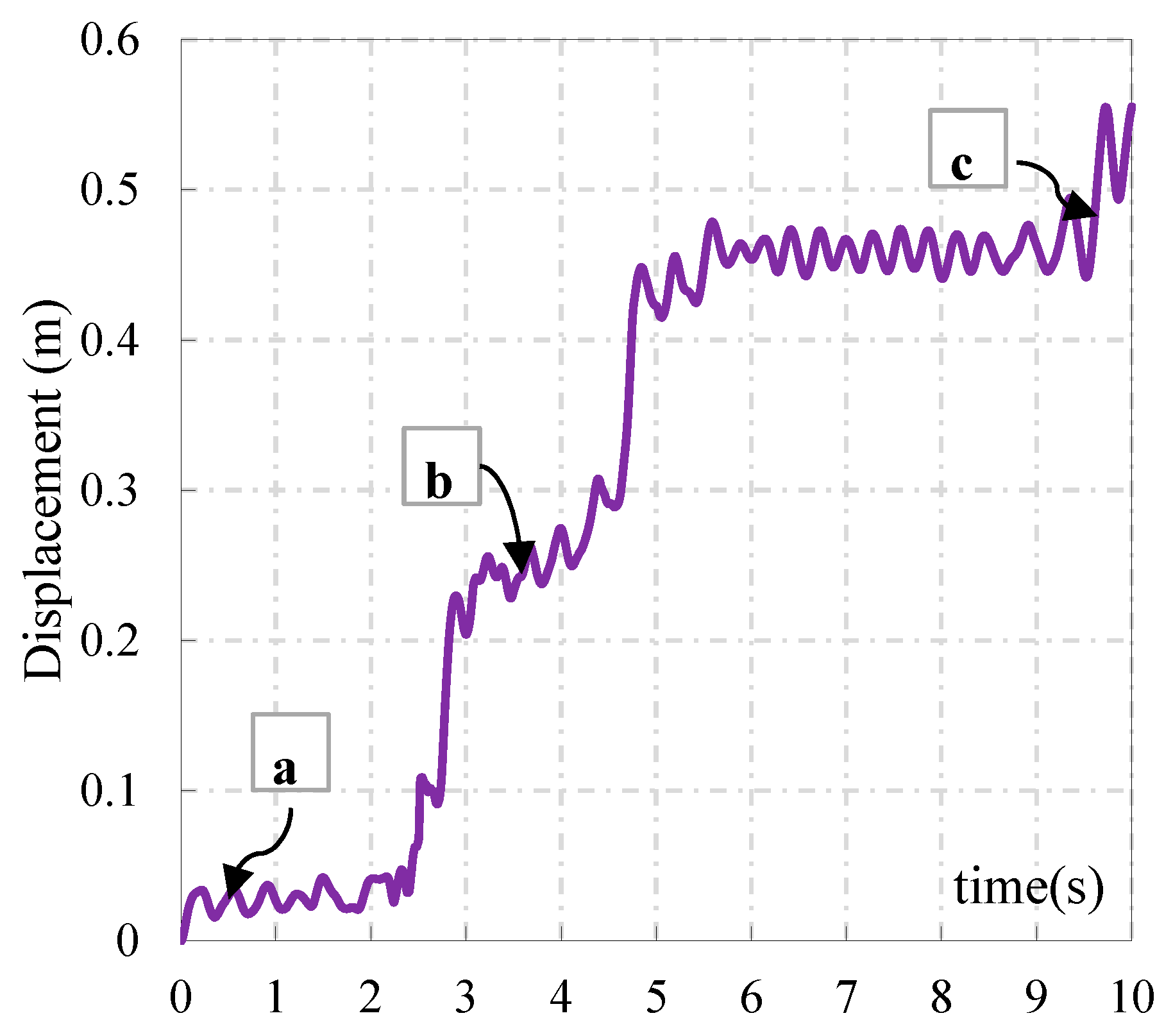
We will take the displacement time history curve of characteristic node 3 of the 0.7 g truss structure with the multi-segment beam (Figure 13) and the deformation diagrams of the truss structure at moments a, b, and c (corresponding to 0.18 s, 3.62 s, and 9.74 s) as examples.
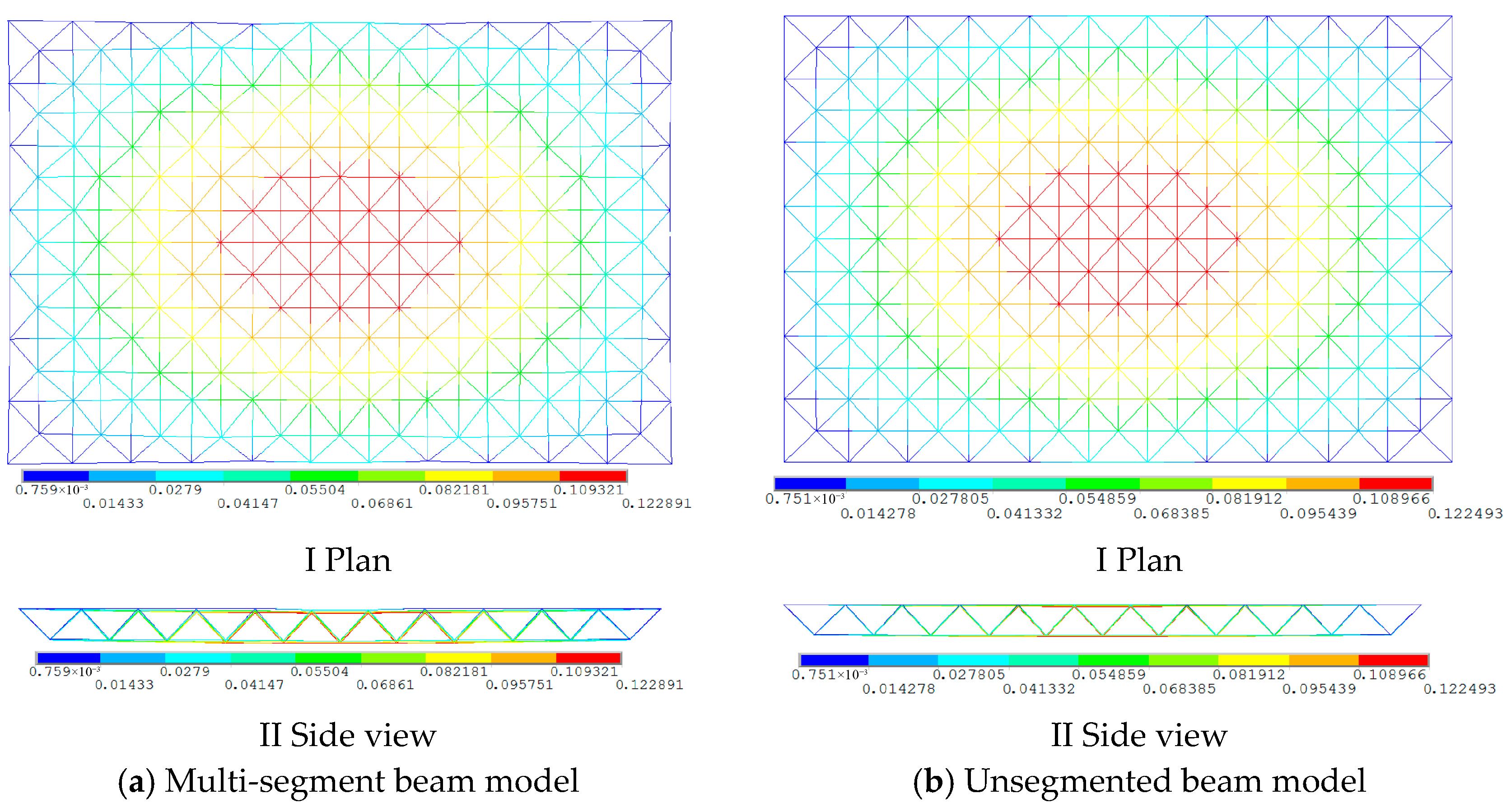
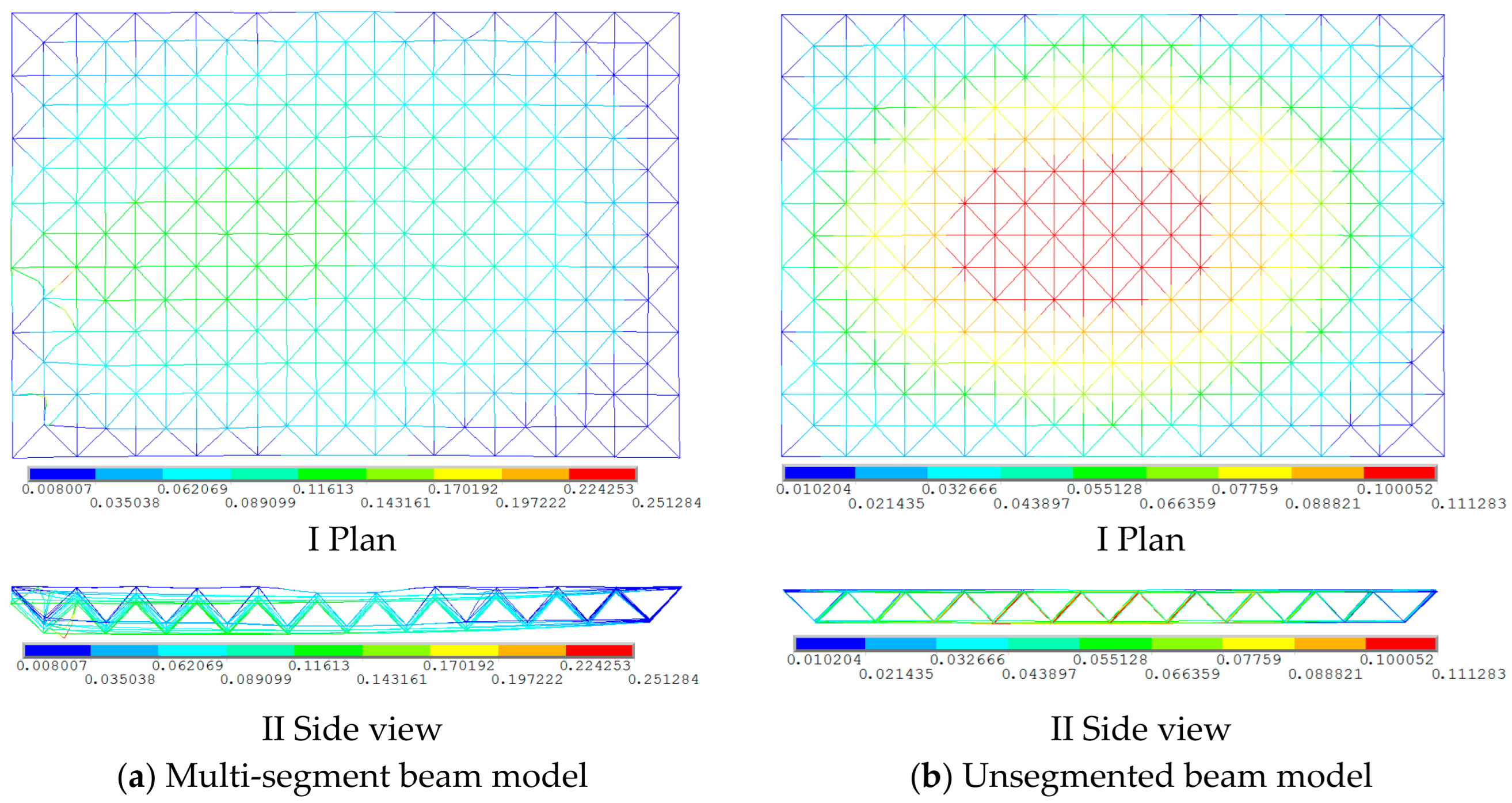
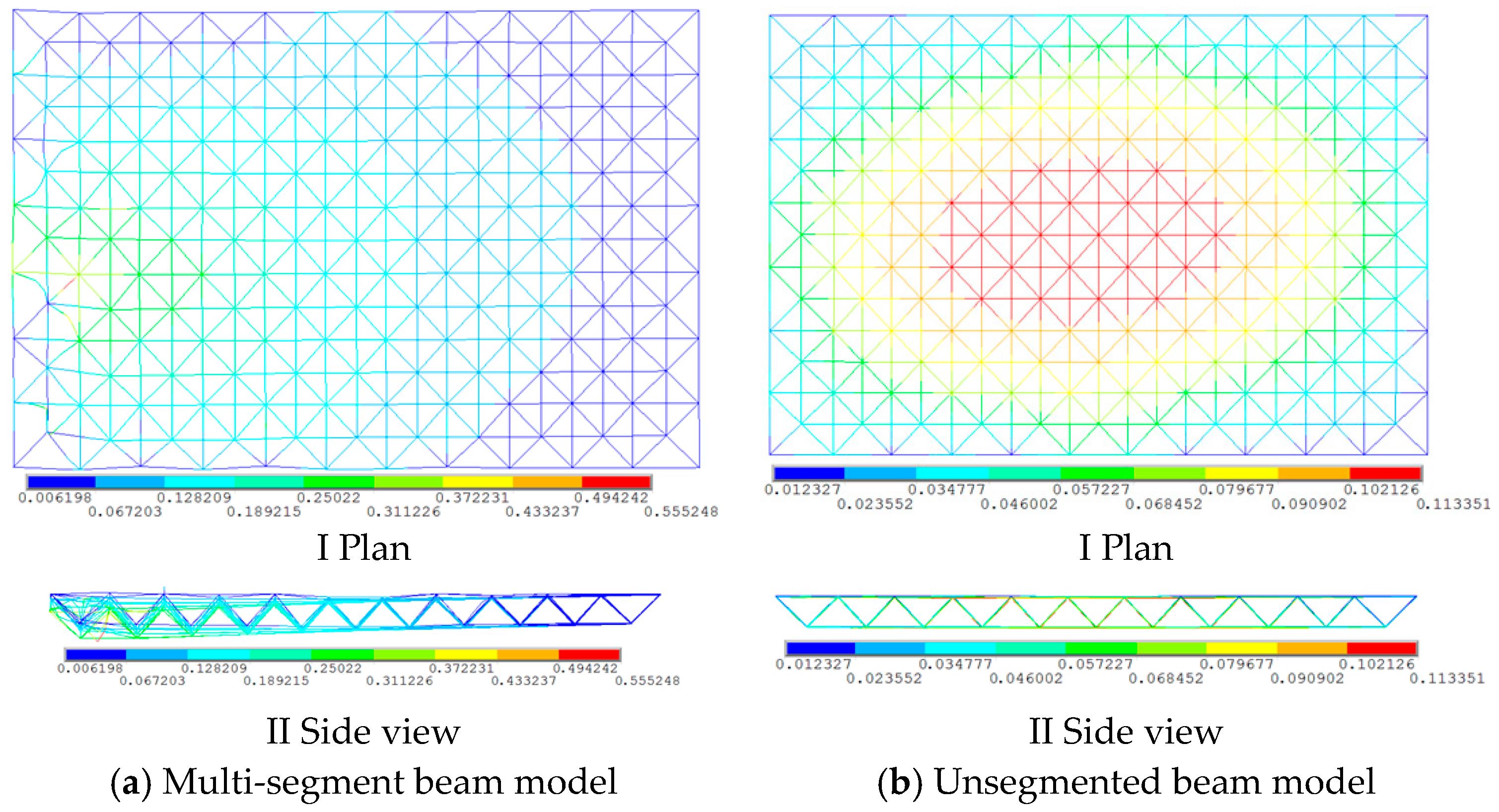
At 0.18 s (Figure 14a), the space truss is stable and the maximum displacement of the space truss using the multi-segment beam model is 0.12 m; at 3.62 s (Figure 15a), member buckling and local instability occur in the space truss using the multi-segment beam model and the maximum displacement is 0.25 m; at 9.74 s (Figure 16a), the number of buckled members in the space truss continues to increase in the multi-segment beam model and the area of local instability expands, with the maximum displacement of 0.55 m (1 in 41 of the span). When using the unsegmented beam model, the displacement of members in the space truss is separately 0.12, 0.11, and 0.11 m at 0.18, 3.62, and 9.74 s and no member buckling is observed in the space truss (Figure 14b, Figure 15b and Figure 16b).
For the same model, because member buckling cannot be considered in unsegmented beams, the nodal deformation in the space truss is much smaller under the same load (or no member buckling occurs); while if the multi-segment beam model is used, member buckling has occurred under 0.7 g. In view of the mode of vibration of the space truss, the structure generally shows overall deformation under the low order mode of vibration while the space truss is more prone to local instability and member buckling under the high order mode of vibration. Under the same high order mode of vibration, the mode of vibration of members in the space truss shows essential differences when using the unsegmented and multi-segment beam models. The real mode of vibration of the structure cannot be simulated and member buckling cannot be considered if the beams are not segmented. The mode of vibration is reasonable and member buckling can be simulated if segmented beams are used. Under strong earthquake action, it can be preliminarily determined that the structure is destabilized if the structure does not vibrate under the low order mode of vibrations. Furthermore, combined with the appearance of the obvious inflection point on the load amplitude displacement curve, it further indicates that the space truss structure has been destabilized under the load.

3.3. Dynamic Strength of Space Trusses

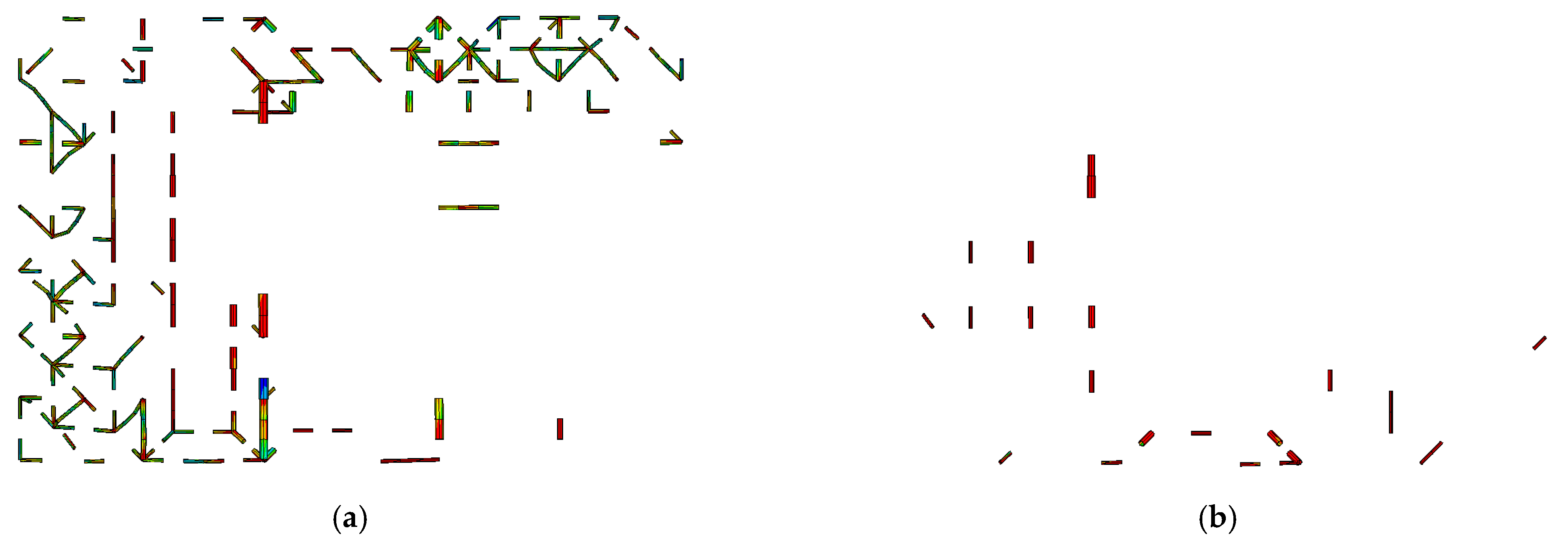
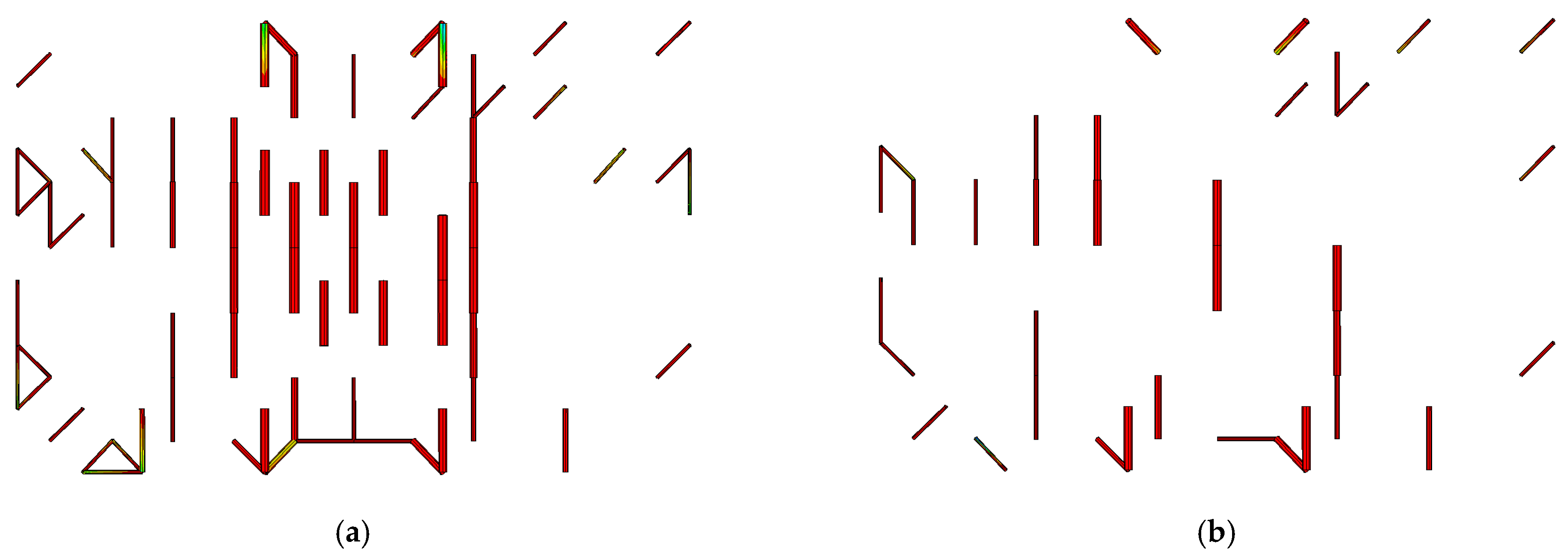
As displayed in Figure 17, Figure 18 and Figure 19, the proportions of members with more than 1P and with 32P are 20% and 3% in the multi-segment beam model of the space truss under 0.9 g; these proportions are 12% and 6% in the unsegmented beam model; the two models differ slightly in terms of the proportions of members with more than 16P and 24P. When simulating the members in the space truss using the multi-segment beam model, the plastic yield of members that have more than 1P occurs on the four sides of the space truss; if the unsegmented beam model is adopted for members of the space truss, the plastic yield of members with more than 1P is mainly distributed in the center and four sides (mainly in the center) of the space truss. When the multi-segment beam model is used to simulate members in the space truss, the plastic yield of members with 32P is mainly distributed at the edges and left side of the space truss; plastic yield of members with 32P is mainly found in the center and four sides (mainly in the center) of the space truss if the unsegmented beam model is used.
When using the multi-segment beam model for members of the space truss, the stress on the members is found to decrease due to member buckling under strong earthquake action, so the proportion of members with 32P is relatively low. If the unsegmented beam model is used, member buckling is not considered under the strong earthquake action, so there is a relatively larger proportion of members with 32P; the proportions of members with 32P are relatively low (3% and 6%).
It is noteworthy that mesh generation in the finite element analysis process may affect the accuracy of simulation results: the more numerous the segmented elements, the more accurate the results. For the stability analysis, dividing an element into one segment and multiple segments leads to significant influences on the results. This is because the properties of members have changed upon member buckling. Analysis of the whole space truss suggests that the members of the space truss are buckled and damaged under 0.7 g; displacement of members increases and the damage is also aggravated under 0.8 g to 1.0 g; however, in the range of 0.1 g to 0.6 g, the space truss is not obviously damaged, no member buckling occurs, nodal displacement is small, and only a few members enter the plastic state across the whole cross-section. This explains why there is a relatively large proportion of members with a completely plastic cross-section (32P) when using unsegmented beams for members of the space truss, which is characterized as failure in load carrying capacity terms. However, members of the space truss have been buckled before the whole cross-section thereof enters the plastic state in practice.

4. Failure Modes of Space Trusses Under Seismic Action

The failure mode identification of space truss structures under seismic action may be established through results derived from incremental dynamic analysis. This methodology entails evaluating three primary indicators: the presence of a significant inflection point in the nodal acceleration amplitude displacement relationship, the emergence of divergence in the displacement time history curve of representative nodes following an initial jump, and the proportion of structural members that have yielded. Synthesizing these criteria enables the classification of failure modes under intense seismic excitation as either stability-governed or strength-governed. Reliance upon a single response parameter or superficial deformation characteristics proves insufficient for determining the fundamental failure mechanism of space truss structures [30,31,32,33]. Consequently, this section employs Incremental Dynamic Analysis in conjunction with a multi-segment beam modeling approach to examine failure modes across three distinct configurations: defect-free trusses, trusses incorporating member geometric imperfections, and trusses with combined nodal and member imperfections.

4.1. The Method for Applying Geometric Imperfections to the Space Truss

The geometric imperfections can be conveniently introduced into the truss structure using the eigenmode imperfection method, which involves applying imperfections based on the buckling modes obtained from an eigenvalue buckling analysis. The process begins by solving the eigenvalue equation:
K E + λ i K G ϕ i = 0
where K E is the elastic stiffness matrix, K G is the geometric stiffness matrix, λ i is the i-th eigenvalue, and ϕ i is the eigenvector corresponding to λ i , which represents the deformation shape of the structure under the corresponding buckling load, i.e., the buckling mode. It characterizes the instability form of the structure in the elastic stage.

4.1.1. The Method for Applying Geometric Imperfections to the Members

Eigenvalue buckling analysis of the space truss was conducted using multi-segment beam elements (each member divided into three segments). The resulting lowest positive buckling mode was used to simulate geometric imperfections in the members, with an imperfection amplitude set to l/250 (where l is the member length) [34].

4.1.2. Application Method Considering Both Nodal and Member Geometric Imperfections

A comprehensive space truss model that incorporates both nodal and member geometric imperfections can be developed through a two-step modeling procedure. First, an eigenvalue buckling analysis is performed on the model using single segment beam elements. The resulting lowest positive buckling mode is then adopted as the updated configuration to introduce nodal geometric imperfections into a secondary model. In this secondary model, each member is subdivided into three segments to account for member buckling behavior. A subsequent eigenvalue buckling analysis is conducted on this refined model. Finally, the geometric imperfections for the members are introduced based on the lowest positive buckling mode obtained from this second analysis.

4.2. Identification of Failure Modes for Space Trusses Under Seismic Action
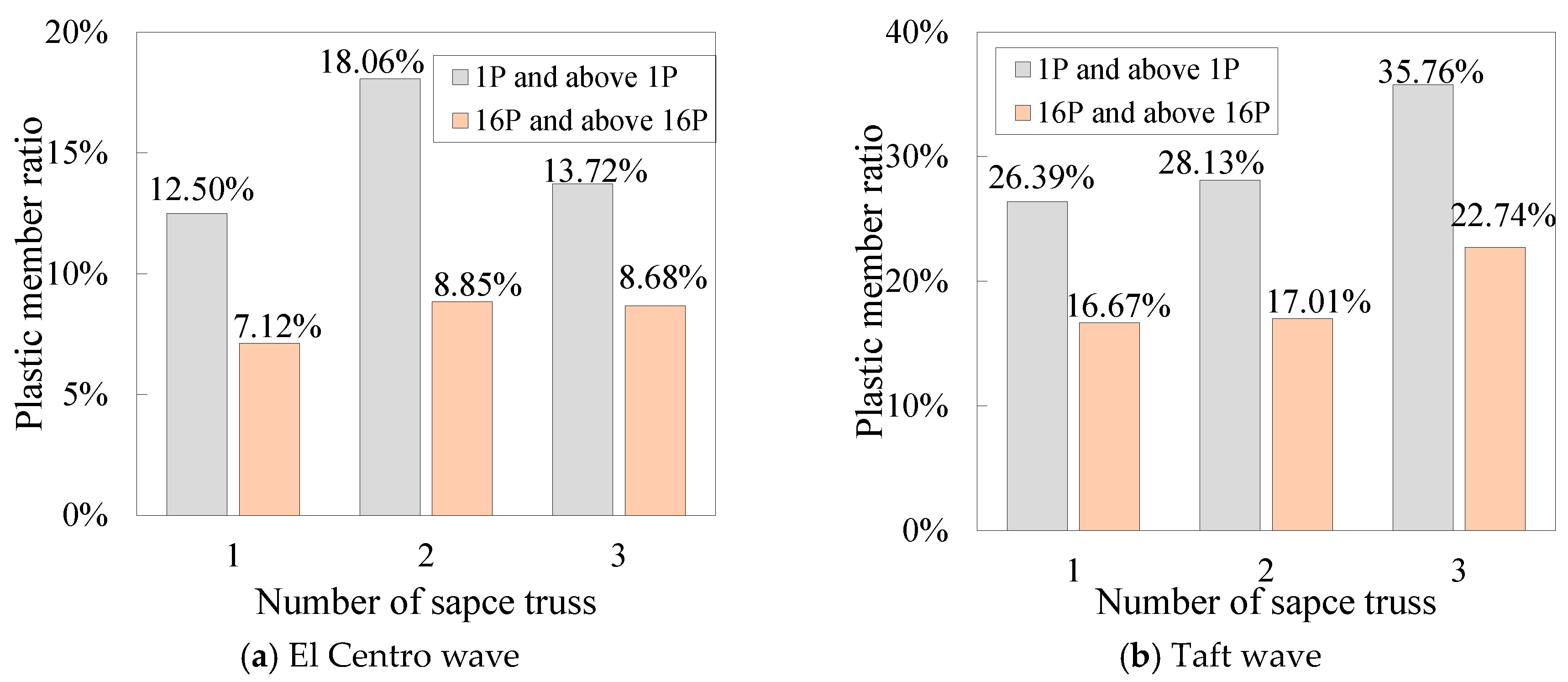
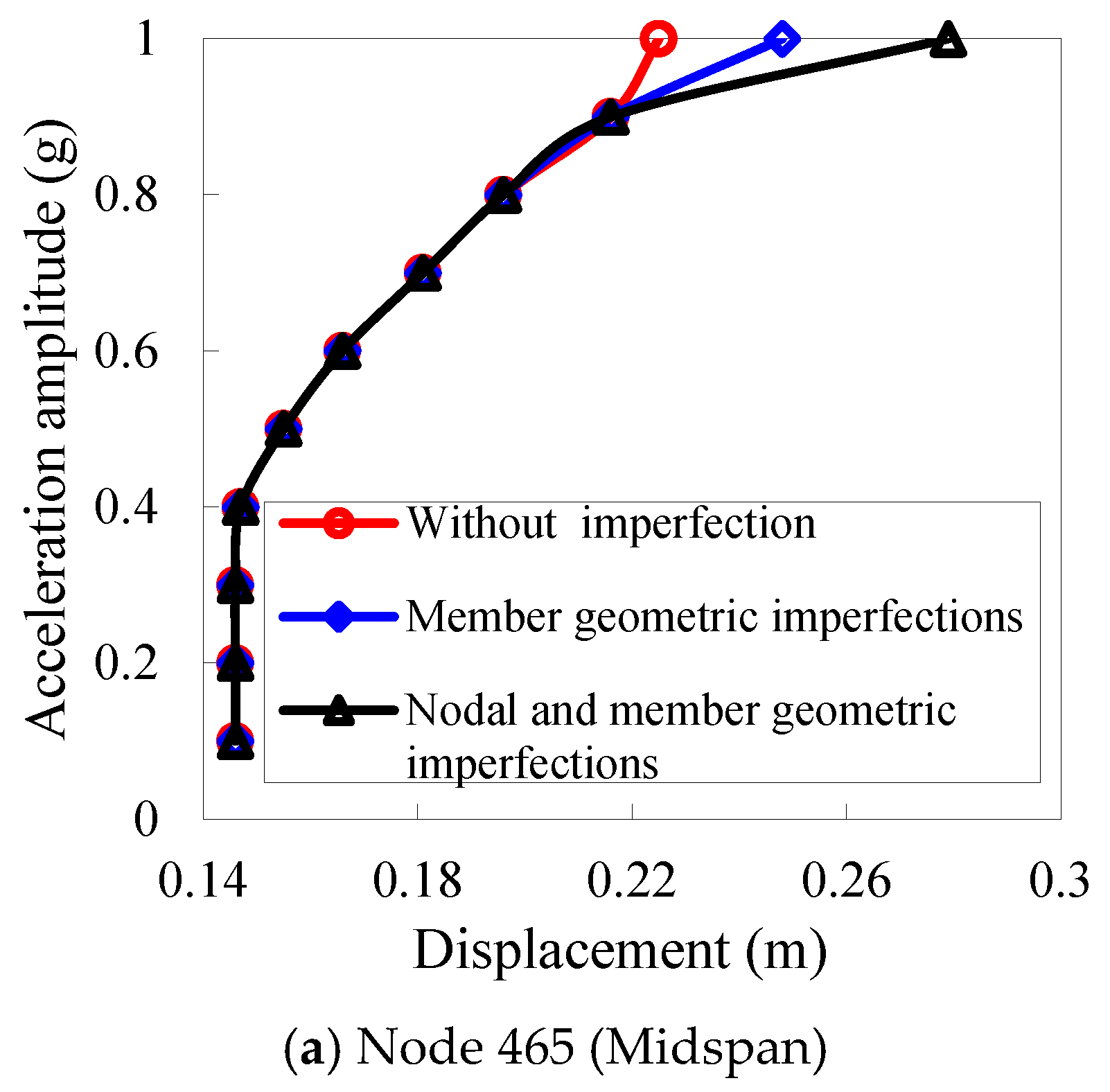
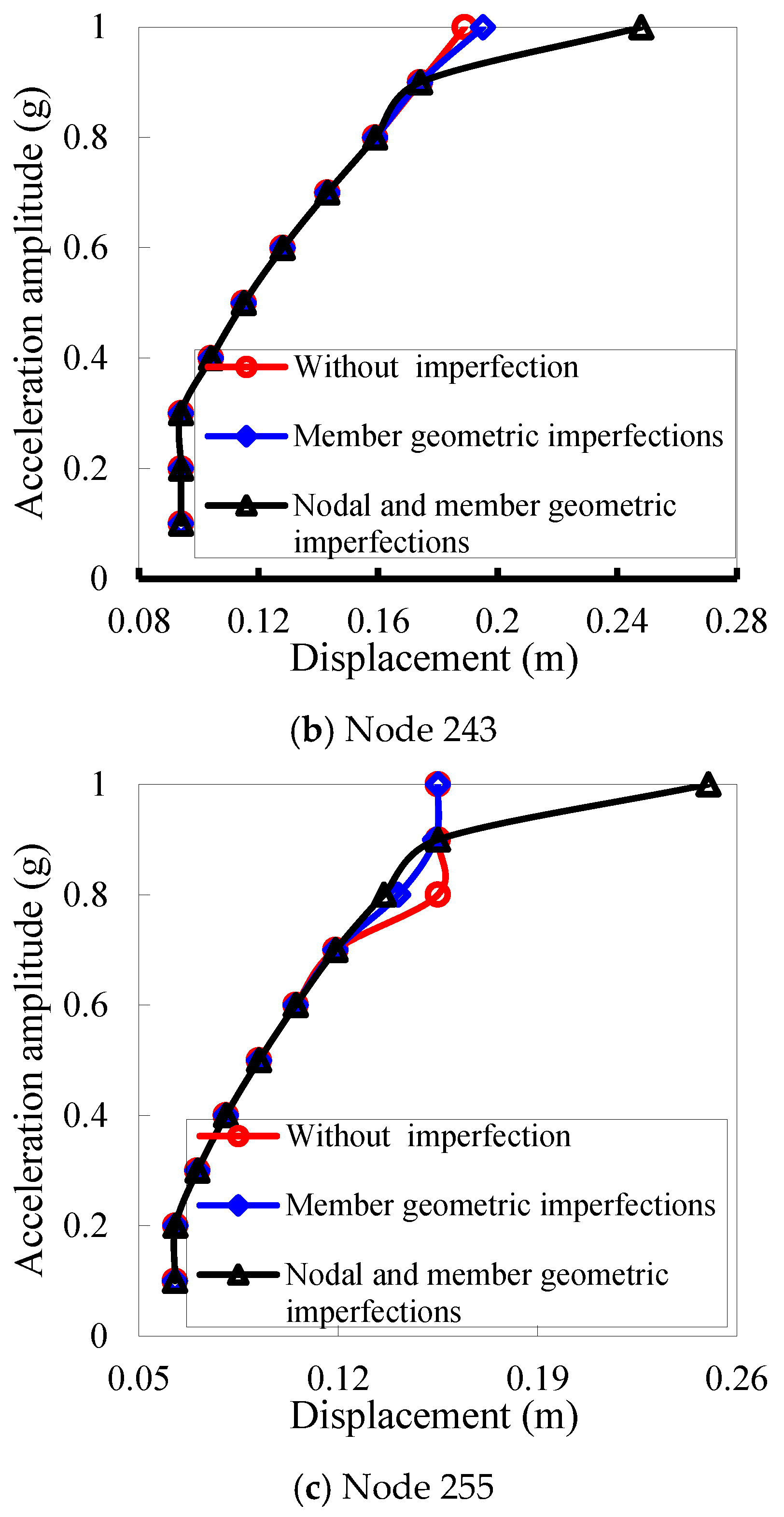
Under the excitation of the El Centro wave, the horizontal displacement of the space truss structure is relatively small. However, as the amplitude of the seismic wave increases, the vertical deformation becomes more significant. When the peak ground acceleration reaches 0.6 g, the time history curve of the mid-span displacement begins to exhibit jumps, and the peak acceleration–displacement curve shows a distinct inflection point, indicating the onset of dynamic instability in the structure (Figure 20). The proportion of members that have yielded (those at plasticity 1P and above) is only 12.50%, while the proportion of members at plasticity 16P and above is 7.12%. However, after introducing geometric imperfections, particularly when both nodal imperfections and member geometric imperfections are considered collectively, the number of buckling members within the deforming truss structure increases. Consequently, the proportions of yielded members at 1P and above, and 16P and above, rise to 13.72% and 8.68%, respectively (Figure 23a). This indicates that the space truss undergoes significant dynamic instability rather than strength failure.
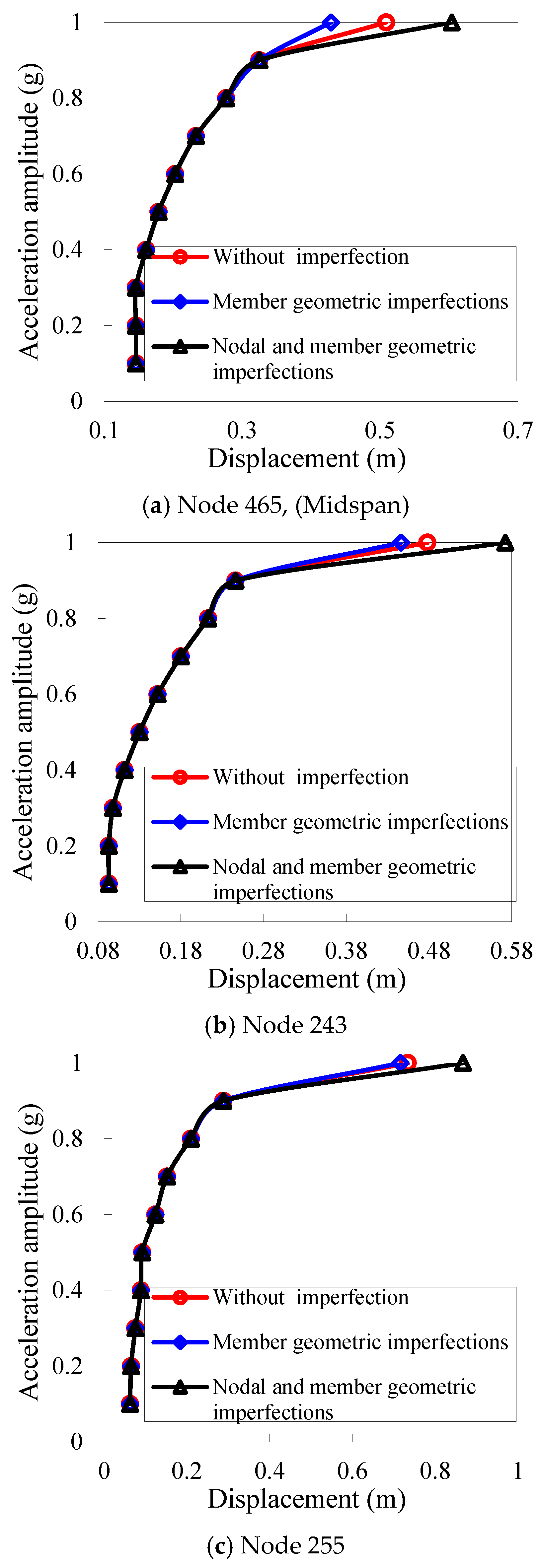
Under the excitation of the Taft wave (1952) (Figure 21), the space truss structure exhibits considerable overall deformation. As shown in the peak acceleration–displacement curve of the mid-span node (Figure 22), the inflection point occurs at a higher peak ground acceleration compared to the El Centro wave. Furthermore, prior to the distinct inflection point in the peak acceleration–displacement curve, a significant proportion of members in the truss had already yielded. Before reaching 0.9 g, the proportion of plastic members in the defect-free truss model shows a gradual increasing trend with the rise in seismic acceleration.
Figure 21. Taft wave.
Buildings 15 04447 g021
Figure 22. Acceleration amplitude displacement curve of the space truss under the Taft wave.
Buildings 15 04447 g022
Based on the analysis of dynamic failure and stability performance of the defect-free space truss, the space truss with member geometric imperfections, and the space truss incorporating both nodal and member geometric imperfections, and according to the deformation and response indicators derived from the preceding analysis, the following conclusions can be drawn: Regardless of the presence of geometric imperfections in the space truss, member instability occurs under seismic action. Under seismic excitation, member instability develops concurrently with plasticity. To determine the specific dynamic failure mode of the space truss, further investigation is required, combining the characteristics of the peak acceleration–displacement curve and the nodal time history curves.
Under Taft wave excitation, the inflection point in the characteristic point’s acceleration–displacement curve of the truss structure requires a larger acceleration to appear compared to El Centro wave excitation. Furthermore, a distinct difference is observed in the proportion of space truss members that have entered plasticity levels 1P and above, and 16P and above, under these two seismic excitations. Under El Centro wave excitation, the proportions of members reaching plasticity of 1P and above, and 16P and above, are both less than 20% and 10%, respectively, for space truss structures with different geometric imperfections (Figure 23a). Under Taft wave excitation, the proportion of members reaching plasticity 1P and above exceeds 20% for the space truss with different geometric imperfections, while the proportion at level 16P and above averages more than 15%. Furthermore, before the inflection point appears in the characteristic point’s acceleration–displacement curve, the proportion of yielded members has already surpassed the corresponding proportions observed under El Centro wave excitation at a peak acceleration of 1.0 g for all geometric imperfection cases (Figure 23b). The limits of 20% and 10% for the proportions of space truss members having reached plasticity levels 1P and above, and 16P and above, respectively, can serve as an indicator for determining the onset of dynamic instability in the space truss.
Based on the results, the presence of jumps in the displacement time history curve of characteristic nodes can be used to assess both local and global instability of the space truss. Specifically, a jump in the time history curve of a local member end node indicates the occurrence of local instability, while jumps in the displacement time history of mid-span nodes and a majority of member end nodes can be used to determine global instability of the space truss. An example of this is the space truss with combined nodal and member geometric imperfections under El Centro wave excitation.
Figure 23. The 1.0 g plastic members’ proportion of the space truss with different imperfections. Note: Model numbers 1 to 3 represent the imperfection-free space truss model, the space truss model with member geometric imperfections, and the space truss model with nodal and member geometric imperfections, respectively.
Buildings 15 04447 g023
When an inflection point appears in the characteristic point’s acceleration–displacement curve of the space truss and the displacement time history curve exhibits a jump, if the proportions of members having reached plasticity 1P and above and 16P and above are less than 20% and 10%, respectively, and the time history curve gradually diverges despite relatively small structural deformation, the structure can be determined to have experienced dynamic stability failure. If, at the occurrence of the inflection point in the characteristic point’s acceleration–displacement curve of the space truss, the proportions of members having reached plasticity 1P and above and 16P and above are already close to 20% and 10%, respectively, and no significant jump is observed in the displacement time history curve, then with a further increase in acceleration, the plastic member ratio continues to rise, structural deformation increases abruptly, and the displacement time history curve exhibits persistent divergence; the failure mode can be determined as strength-type failure.

5. Conclusions

This study investigates the dynamic stability of space trusses under intense seismic loading, accounting for the practical occurrence of member buckling during seismic actions. The rationale and underlying mechanics of employing multi-segment beam models were elucidated. Using incremental dynamic analysis, the multi-segment beam methodology was utilized to evaluate the dynamic stability of space trusses when subjected to severe earthquake excitation. The conclusions are as follows:
  • In the modal analysis of the simply supported beam, the first natural frequency can be accurately captured using higher order (quadratic or cubic) shape functions even without segmentation; however, both lower and higher order vibration modes fail to adequately represent member buckling. Upon incorporating segmentation, higher order modes are simulated with greater fidelity, allowing the effects of member buckling to be properly reflected. Consequently, employing multi-segment beam models is strongly recommended for the modal analysis of simply supported beams.
  • In the modal analysis of space trusses modeled with beam elements, neglecting beam segmentation precludes the consideration of member buckling. Conversely, employing multi-segment beams enables the manifestation of member buckling under higher order vibration modes. Therefore, it is advisable to adopt multi-segment beam models for the modal analysis of space trusses, as this approach yields more accurate and reliable natural frequencies and mode shapes.
  • Member buckling under intense seismic excitation cannot be captured when modeling space truss members as unsegmented beams, and consequently, no global instability is observed. This simplification leads to the erroneous conclusion that the space truss primarily fails due to loss of load carrying capacity rather than instability, thereby overestimating its true stability. In contrast, employing multi-segment beam models allows the analysis to incorporate the effects of member buckling on overall structural stability. The presence of an inflection point and bifurcation in the relationship between ground motion amplitude and nodal displacement clearly signifies that the space truss undergoes instability under strong earthquake loading, rather than mere capacity failure.
  • Considering nodal and member geometric imperfections hastens the failure of a space truss. However, these imperfections do not change its fundamental failure mode under consistent seismic excitation. If an incremental dynamic analysis reveals a distinct inflection point on the acceleration–displacement curve of the truss nodes, followed by divergence in the nodal displacement time history post-jump, and if less than 20% and 10% of members have yielded at plasticity levels of 1P and above, and 16P and above respectively, the structure’s failure is deemed as dynamic stability failure. Conversely, without a distinct inflection point, with gradual divergence in mid-span displacement and significantly higher percentages of members yielding beyond the mentioned plasticity levels, the failure is classified as strength-type.
This paper primarily investigates dynamic instability and member buckling phenomena in space trusses. Recent machine learning studies have indicated that fatigue-related material variability significantly influences failure modes [35,36]. Therefore, subsequent research will incorporate the effects of fatigue characteristics of space truss members on failure mechanisms.

Author Contributions

Conceptualization, X.B.; methodology, X.F.; software, X.F.; validation, X.B.; formal analysis, X.F.; investigation, X.F.; investigation, S.W.; data curation, X.F.; writing—original draft preparation, X.F.; writing—review and editing, X.B.; visualization, X.F.; supervision, X.B. All authors have read and agreed to the published version of the manuscript.

Funding

This work is funded by the National Key Research and Development Program of China (Grant No. 2022YFC3003603) and the National Natural Science Foundation of China (Grant No. 52478497). The financial support is highly appreciated.

Data Availability Statement

The original contributions presented in this study are included in the article material.

Conflicts of Interest

The authors declare that they have no known competing financial interests or personal relationships that could have appeared to influence the work reported in this paper.

References

  1. Lin, Q. Dynamic Damage Mechanisms of Single Layer Latticed Shells under Strong Earthquakes. Ph.D. Thesis, Tianjin University, Tianjin, China, 2011. [Google Scholar]
  2. Chen, Z.; Zong, L.; Ding, Y.; Shi, Y. Improved physical theory model for strut members in long-span spatial structures. J. Constr. Steel. Res. 2019, 153, 85–100. [Google Scholar] [CrossRef]
  3. Zhang, Y.; Luo, Y.; Guo, X.; Li, Y. A new damage detection method of single-layer latticed shells based on combined modal strain energy index. Mech. Syst. Signal Process. 2022, 172, 109011. [Google Scholar] [CrossRef]
  4. Zhang, Y.; Luo, Y.; Guo, X.; Li, Y. An updated parametric hysteretic model for steel tubular members considering compressive buckling. J. Constr. Steel. Res. 2021, 187, 106953. [Google Scholar] [CrossRef]
  5. Liu, J.; Tian, L.; Ma, R.; Meng, X. Phenomenological hysteretic model for fixed-end steel equal-leg angle: Development and application. Thin-Walled Struct. 2023, 183, 110335. [Google Scholar] [CrossRef]
  6. Ding, Y.; Chen, Z.; Liang, Z.; Yan, J. A theoretical strut model for severe seismic analysis of single-layer reticulated domes. J. Constr. Steel. Res. 2017, 128, 661–671. [Google Scholar] [CrossRef]
  7. Marshall, P.W.; Gates, W.E.; Anagnostopoulos, S.W. Inelastic dynamic analysis of tubular offshore structures. In Proceedings of the ninth annual offshore technology conference, Houston, TX, USA, 2–5 May 1977. [Google Scholar]
  8. Richard Liew, J.Y.; Punniyakotty, N.M.; Shanmugam, N.E. Advanced analysis and design of spatial structures. J. Constr. Steel. Res. 1997, 42, 21–48. [Google Scholar] [CrossRef]
  9. Tang, J.Y.R.L. Advanced plastic hinge analysis for the design of tubular space frames. Eng. Struct. 2000, 22, 769–783. [Google Scholar] [CrossRef]
  10. Fan, F.; Yan, J.; Cao, Z. Stability of reticulated shells considering member buckling. J. Constr. Steel Res. 2012, 77, 32–42. [Google Scholar] [CrossRef]
  11. Su, C. Research on the Limited Capacity of Rigid Large-Span Steel Space Structures. Ph.D. Thesis, Tongji University, Shanghai, China, 2006. [Google Scholar]
  12. So, A.K.W.; Chan, S.L. Buckling and geometrically nonlinear analysis of frames using one element/member. J. Constr. Steel Res. 1991, 20, 271–289. [Google Scholar] [CrossRef]
  13. Iu, C.K.; Bradford, M.A. Higher-order non-linear analysis of steel structures, part I: Elastic second-order formulation. Adv. Steel Constr. 2012, 8, 168–182. [Google Scholar]
  14. Iu, C.K.; Bradford, M.A. Higher-order non-linear analysis of steel structures, part II: Refined plastic hinge formulation. Adv. Steel Constr. 2012, 8, 183–198. [Google Scholar]
  15. Chan, S.L.; Zhou, Z.H. Elastoplastic and large deflection analysis of steel frames by one element per member. II: Three hinges along member. J. Struct. Eng.-ASCE 2004, 130, 545–553. [Google Scholar] [CrossRef]
  16. Fan, F.; Yan, J.; Cao, Z. Elasto-plastic stability of single-layer reticulated domes with initial curvature of members. Thin-Walled Struct. 2012, 60, 239–246. [Google Scholar] [CrossRef]
  17. Li, P.; Huang, M.; Zhang, T.; Bao, H.; Jian, B.; Xiong, G.; Zheng, Y. Global stability analysis of a cable-stiffened glulam-latticed shell. Structures 2024, 67, 106944. [Google Scholar] [CrossRef]
  18. Yang, D.; Hu, Q.; Zhang, Q.; Zhou, G.; Wang, H.; Zhu, B. Stability analysis and design method of single-layer latticed shells with semi-rigid joints. J. Constr. Steel Res. 2025, 228, 109466. [Google Scholar] [CrossRef]
  19. Wang, Q.; Liu, Q.; Ma, Z.; Wang, J.; Ni, Y.; Ren, W.; Wang, H. Data interpretation and forecasting of SHM heteroscedastic measurements under typhoon conditions enabled by an enhanced Hierarchical sparse Bayesian Learning model with high robustness. Measurement 2024, 230, 114509. [Google Scholar] [CrossRef]
  20. Wang, Q.; Zhang, C.; Ma, Z.; Ni, Y. Modelling and forecasting of SHM strain measurement for a large-scale suspension bridge during typhoon events using variational heteroscedastic Gaussian process. Eng. Struct. 2022, 251, 113554. [Google Scholar] [CrossRef]
  21. Chopra, A.K. Dynamics of Structures: Theory and Applications to Earthquake Engineering, 3rd ed.; Prentice Hall: Saddle River, NJ, USA, 2011. [Google Scholar]
  22. Moaveni, B.S. Finite Element Analysis Theory and Application with ANSYS, 3rd ed.; Pearson: London, UK, 1999. [Google Scholar]
  23. GB 50010-2010; Code for Design of Concrete Structures. China Building Industry Press: Beijing, China, 2015.
  24. GB 50011-2010; Code of Seismic Design of Buildings. China Building Industry Press: Beijing, China, 2016.
  25. Yu, Z.; Zhi, X.; Fan, F.; Lu, C. Failure mechanism of single-layer saddle-curve reticulated shells with material damage accumulation considered under severe earthquake. Int. J. Steel Struct. 2012, 12, 125–137. [Google Scholar] [CrossRef]
  26. Yu, Z.; Zhi, X.; Fan, F.; Lu, C. Effect of substructures upon failure behavior of steel reticulated domes subjected to the severe earthquake. Thin-Walled Struct. 2011, 49, 1160–1170. [Google Scholar] [CrossRef]
  27. Nie, G.; Zhi, X.; Fan, F.; Dai, J. Seismic performance evaluation of single-layer reticulated dome and its fragility analysis. J. Constr. Steel Res. 2014, 100, 176–182. [Google Scholar] [CrossRef]
  28. Li, W.; Zhi, X.; Fan, F. Influence of the roofing system on the seismic performance of single-layer spherical reticulated shell structures. Buildings 2022, 12, 155. [Google Scholar] [CrossRef]
  29. Lu, J.; Ning, Q.; Lu, X.; Yang, F.; Wang, Y. Shaking table tests and numerical analysis conducted on an aluminum alloy single-layer spherical reticulated shell with fully welded connections. Buildings 2024, 14, 1354. [Google Scholar] [CrossRef]
  30. Yue, F.; Chen, S.; Yang, F.; Fang, X.; Zhao, W. Determination method of failure mode of grid structures under earthquake actions. Earthq. Resist. Eng. Retrofit. 2024, 46, 64–71. [Google Scholar]
  31. Shen, S.; Zhi, X. Failure mechanism of reticular shells subjected to dynamic actions. China Civil. Eng. J. 2005, 38, 11–20. [Google Scholar]
  32. Shen, B. Research on the Collapse Mechanism of Spatial Trusses. Master’s Thesis, Tianjin University, Tianjin, China, 2007. [Google Scholar]
  33. Zhang, C.; Wu, H.; Gao, B. Failure modes and their numerical descriptions of grid structures subjected to earthquake. J. Vib. Shock. 2011, 30, 45–50. [Google Scholar]
  34. JGJ-2010; Technical Specification for Spatial Grid Structure. China Building Industry Press: Beijing, China, 2010.
  35. Bagheri, M.; Malidarreh, N.R.; Ghaseminejad, V.; Asgari, A. Seismic resilience assessment of RC superstructures on long–short combined piled raft foundations: 3D SSI modeling with pounding effects. Structures 2025, 81, 110176. [Google Scholar] [CrossRef]
  36. Naeim, B.; Javadzade Khiavi, A.; Khajavi, E.; Taghavi Khanghah, A.R.; Asgari, A.; Taghipour, R.; Bagheri, M. Machine learning approaches for fatigue life prediction of steel and feature importance analyses. Infrastructures 2025, 11, 295. [Google Scholar] [CrossRef]
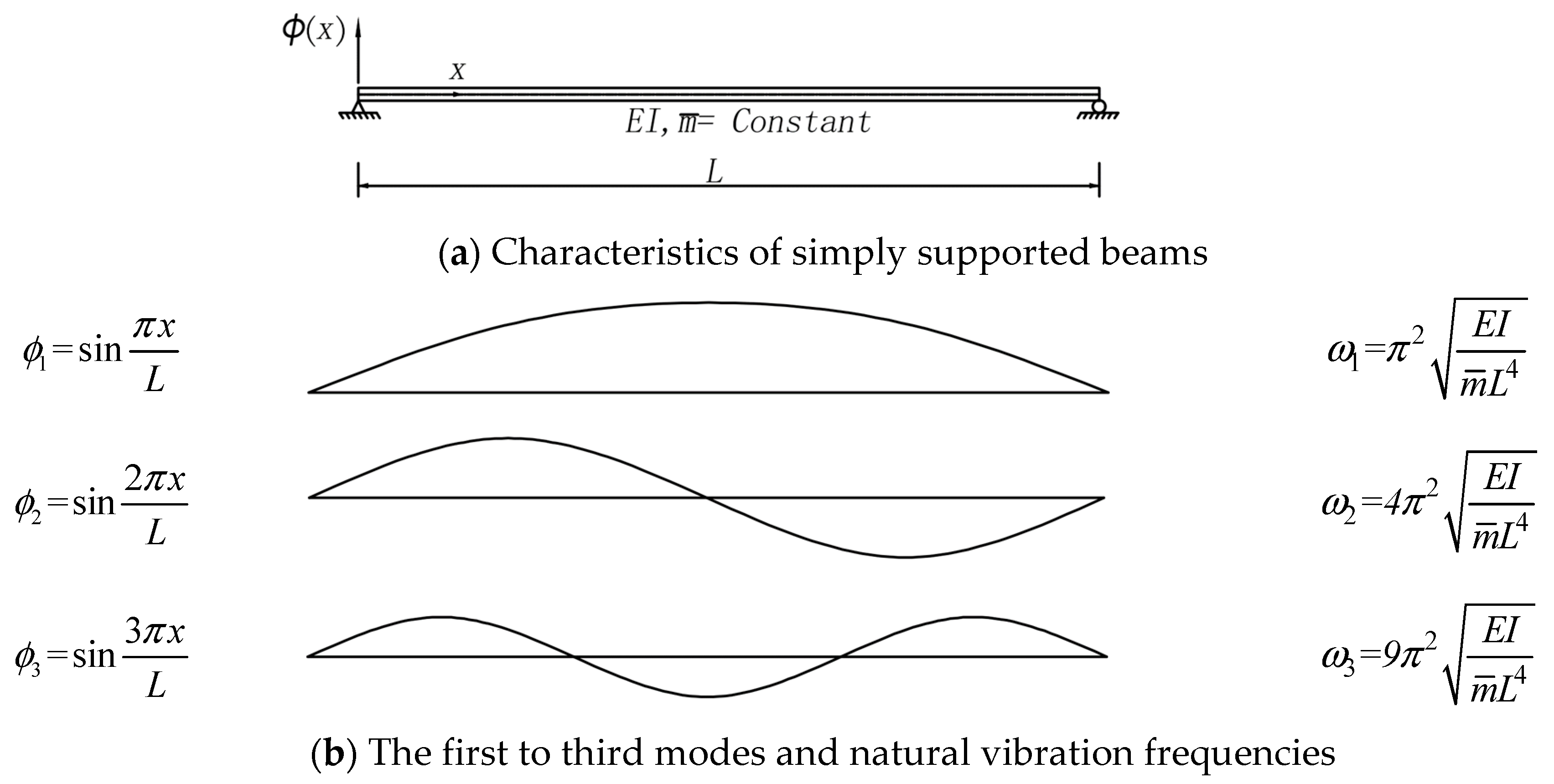
Figure 1. Modal analysis of simply supported beams.
Buildings 15 04447 g001
Figure 2. Section numbers and distribution of the space truss members.
Buildings 15 04447 g002
Figure 3. Single space truss model and characteristic nodes.
Buildings 15 04447 g003
Figure 4. Whole model of a space truss with lower frame. (a) Axonometric view, (b) Connection between space truss and lower frame.
Buildings 15 04447 g004
Figure 5. Mode of vibration of space trusses using the unsegmented beam model with linear (quadratic and cubic) shape function.
Buildings 15 04447 g005
Figure 6. Mode of vibration of space trusses using the multi-segment beam model with linear (quadratic and cubic) shape function.
Buildings 15 04447 g006
Figure 7. Mode of vibration of space trusses considering the lower frame using the unsegmented beam model with linear (quadratic and cubic) shape function.
Buildings 15 04447 g007
Figure 8. Mode of vibration of space trusses considering the lower frame using the multi-segment beam model with linear (quadratic and cubic) shape function.
Buildings 15 04447 g008
Figure 9. El Centro wave.
Buildings 15 04447 g009
Figure 10. Schematic diagram of the element division, grid division, and integration point of the BEAM188 element.
Buildings 15 04447 g010
Figure 11. Acceleration amplitude displacement curve of the space truss.
Buildings 15 04447 g011
Figure 12. Displacement time history curve of the space truss at 0.7 g.
Buildings 15 04447 g012
Figure 13. Displacement time history curve of characteristic node 3 of the space truss at 0.7 g.
Buildings 15 04447 g013
Figure 14. Deformation diagram of the space truss at 0.18 s under 0.7 g (deformed shape enlarged by 3 times).
Buildings 15 04447 g014
Figure 15. Deformation diagram of the space truss at 3.62 s under 0.7 g (deformed shape enlarged by 3 times).
Buildings 15 04447 g015
Figure 16. Deformation diagram of the space truss structure at 9.74 s under 0.7 g (deformed shape enlarged by 3 times).
Buildings 15 04447 g016
Figure 17. Plastic ratio curve of space trusses with the multi-segment beam model and the unsegmented beam model. (a) Comparison of plastic ratio curves of space truss members above 1P; (b) Comparison of plastic ratio curves of space truss members above 16P; (c) Comparison of plastic ratio curves of space truss members above 24P; (d) Comparison of 32P plastic ratio curves of space truss members.
Buildings 15 04447 g017aBuildings 15 04447 g017b
Figure 18. Distribution diagram of plastic members of the space truss with the multi-segment beam model. (a) Distribution of 1P plastic members of space truss at 0.9 g; (b) Distribution of 32P plastic members of space truss at 0.9 g.
Buildings 15 04447 g018
Figure 19. Distribution diagram of plastic members of the space truss with the unsegmented beam model. (a) Distribution of 1P plastic members of space truss at 0.9 g; (b) Distribution of 32P plastic members of space truss at 0.9 g.
Buildings 15 04447 g019
Figure 20. Acceleration amplitude displacement curve of the space truss under the El Centro wave.
Buildings 15 04447 g020aBuildings 15 04447 g020b
Table 1. Parameters of simply supported beams ( 60   mm × 3.5   mm ).
Elastic modulus E = 2.1 × 10 11 Pa
Length L = 3   m
Sectional area A = 6.2125 × 10 4   m 2
Inertial moment of beam I x = I y = 2.4884 × 10 7   m 4
First order circular frequency ω 1 = π 2 E I m ¯ L 4 = 113.40   rad / s
First order natural vibration frequency f 1 = ω 1 / 2 π = 18.06   Hz
Table 2. The frequencies of simply supported beams (Hz).
Number of Beam
Element Segments
Linear Shape FunctionQuadratic Shape FunctionCubic Shape Function
1st2nd3rd1st2nd3rd1st2nd3rd
1475.26 950.53 1664.70 20.01 379.32 432.63 18.27 91.12 431.05
224.04 75.94 442.16 18.24 79.65 156.07 18.04 72.78 173.85
320.43 120.17 223.74 18.07 74.26 177.82 18.03 71.91 162.65
518.85 86.04 242.25 18.04 72.18 164.17 18.03 71.84 160.65
1018.23 75.07 177.34 18.03 71.86 160.81 18.03 71.83 160.56
2018.08 72.63 164.55 18.03 71.84 160.58 18.03 71.83 160.56
5018.04 71.96 161.19 18.03 71.83 160.56 18.03 71.83 160.56
Theoretical solution18.0672.24162.5418.0672.24162.5418.0672.24162.54
Table 3. The frequencies and theoretical solution errors of simply supported beams (%).
Number of Beam
Element Segments
Linear Shape FunctionQuadratic Shape FunctionCubic Shape Function
1st2nd3rd1st2nd3rd1st2nd3rd
12531.61215.8924.210.8425.1166.21.226.1165.2
233.15.1172.11.010.3−4.0−0.10.77.0
313.166.337.70.12.89.4−0.2−0.50.1
54.419.149.1−0.1−0.11.0−0.2−0.6−1.2
100.93.99.1−0.2−0.5−1.1−0.2−0.6−1.2
200.10.51.3−0.2−0.6−1.2−0.2−0.6−1.2
50−0.1−0.4−0.8−0.2−0.6−1.2−0.2−0.6−1.2
Note: Error = (fFEMfTheo)/fTheo, fFEM is a finite element solution, fTheo is a theoretical solution.
Table 4. Space truss section specifications and frame beam column dimensions.
TypeNumberSection Specifications (mm × mm)TypeSection Dimension (mm × mm)
Circular
steel
tube
1 ϕ 60 × 3.5 Columna × b = 750 × 750 (corner column)
a × b = 600 × 750 (intermediate column)
2 ϕ 75.5 × 3.75
3 ϕ 88.5 × 4
4 ϕ 114 × 4 Beamb × h = 300 × 600
b × h = 400 × 750
5 ϕ 140 × 4
6 ϕ 159 × 6
Note: Column section, a × b = length × width; beam section, b × h = width × depth.
Table 5. First and tenth natural vibration frequencies of a space truss alone (Hz).
Number of Beam
Element Segments
Linear Shape FunctionQuadratic Shape FunctionCubic Shape Function
1st10th1st10th1st10th
19.6439.829.5027.099.4122.59
39.4625.559.4222.139.4122.04
59.4323.349.4122.059.4122.03
109.4222.359.4122.049.4122.03
209.4122.119.4122.039.4122.03
509.4122.059.4122.039.4122.03
Table 6. First and fiftieth order natural vibration frequencies of space trusses considering the lower frame (Hz).
Number of Beam
Element Segments
Linear Shape FunctionQuadratic Shape FunctionCubic Shape Function
1st50th1st50th1st50th
12.8216.512.8116.412.8116.36
32.8116.402.8116.362.8116.36
52.8116.372.8116.362.8116.36
102.8216.412.8216.412.8216.41
202.8316.442.8316.442.8316.44
502.8316.442.8316.442.8316.44
Disclaimer/Publisher’s Note: The statements, opinions and data contained in all publications are solely those of the individual author(s) and contributor(s) and not of MDPI and/or the editor(s). MDPI and/or the editor(s) disclaim responsibility for any injury to people or property resulting from any ideas, methods, instructions or products referred to in the content.