
Article

Effects of Surface Roughness and Interfacial Agents on Bond Performance of Geopolymer–Concrete Composites


1
College of Architecture and Civil Engineering, Beijing University of Technology, Beijing 100124, China
2
School of Civil Engineering, Chang’an University, Xi’an 710061, China
3
Institute of Materials Research and Engineering, Agency for Science Technology and Research, Singapore 138634, Singapore
*
Author to whom correspondence should be addressed.
Buildings 2025, 15(24), 4446; https://doi.org/10.3390/buildings15244446
Submission received: 23 September 2025 / Revised: 30 November 2025 / Accepted: 5 December 2025 / Published: 9 December 2025
(This article belongs to the Section Building Materials, and Repair & Renovation)

Abstract

This study investigates the effects of surface roughness and interfacial agents on the bond performance of geopolymer–concrete composites (GCCs). Firstly, cement concrete substrates with four surface roughness conditions, including cast surface, drawn surface, chiseled surface and split surface, were prepared and their surface roughness was quantitatively characterized by the Joint Roughness Coefficient (JRC) based on the 3D surface morphology reconstruction technique. The GCC specimens were prepared by casting geopolymer concrete on cement concrete substrates and using three interfacial agents in the bonding interface. Then, the splitting tensile tests were conducted on GCC specimens and the effect of surface roughness and interfacial agents on the bonding strength and failure behavior of GCC was discussed. Finally, the empirical model of the bonding strength of the GCC was proposed by considering surface roughness, interfacial agent, and geopolymer tensile strength simultaneously. The results show that with increasing JRC, the bonding strength of GCC shows a trend of slow increase followed by significant increase, and the failure modes transitioned from interfacial debonding to concrete matrix failure. Among the bonding agents, geopolymer slurry achieved the highest bonding strength, followed sequentially by untreated interfaces, SBR-modified cement paste, and expansive agent-modified cement paste. The results also show that the empirical model can accurately predict the interface splitting tensile strength of GCC under different surface roughness and interfacial agents, with a prediction accuracy of 0.92.

1. Introduction

The gradual deterioration of concrete structures over time significantly compromises their service life, making timely and effective repair of damaged components a critical research focus in civil engineering [1,2,3]. Among various repaired techniques, the application of new concrete onto existing substrates remains the most prevalent approach, necessitating superior bond performance between fresh and aged concrete [4]. Currently, the ordinary Portland cement-based materials are the commonly used repair materials due to their inherent compatibility with concrete substrates [5,6,7,8]. Nevertheless, the environmental consequences associated with the large-scale production and application of these cement-based materials raise substantial sustainability concerns. There is an urgent need to develop alternative repair materials capable of effectively replacing conventional cement-based materials in structural repair applications.
Geopolymers, recognized as an ideal substitute for traditional cement-based materials, have garnered significant research interest in the construction materials field in recent years due to their excellent mechanical properties and environmental compatibility [9,10,11]. Particularly promising is their potential utilization as repair materials for concrete structure reinforcement engineering [12,13]. Synthesized through alkali-activated silica-alumina industrial byproducts, geopolymer repair materials demonstrate substantially reduced carbon footprints while enhancing resource efficiency and sustainability [14,15,16]. The geopolymer can achieve rapid strength development and maintains exceptional performance in corrosive and high-temperature environments [17,18,19]. The development of geopolymer repair materials not only broadens the engineering application of geopolymer but also holds significant practical importance for advancing green restoration technologies. Furthermore, the cost-effectiveness and low-carbon properties of geopolymers provide compelling economic and environmental advantages in practical engineering applications. However, the distinct chemical composition and synthesis mechanisms differentiating geopolymers from conventional cement-based materials necessitate urgent investigation into their interfacial compatibility with existing concrete substrates [20,21,22].
The interfacial bonding mechanism generally comprises three primary components: physical friction, chemical adhesion, and mechanical interlocking [23]. Extensive research confirms that the bonding interface is the weak and vulnerable region in repaired concrete structures [24,25,26]. Microstructural analyses consistently reveal that the bonding interface is the initial site for pore formation and crack nucleation, and the load-induced crack propagation further leads to progressive mechanical degradation [27,28]. Tensile stress conditions particularly predispose the interface to failure, underscoring the critical importance of interfacial tensile strength evaluation in repair material development. Considering that interfacial debonding constitutes the predominant failure mode, a comprehensive understanding of interface behavior under load becomes paramount for ensuring structural safety and long-term durability.
Currently, research on geopolymer repair materials mainly focus on mix proportion optimization. The bonding mechanical properties and interfacial failure modes between geopolymers and concrete have been investigated, and various geopolymer repair materials have been developed [29,30,31]. The key parameters influencing interfacial bond performance have been analyzed, including substrate strength, surface moisture conditions, microcrack density, and interface cleanliness [32,33,34,35]. However, previous studies predominantly examine geopolymer bonding performance under uniform interfacial roughness conditions, so research on interfacial roughness is limited. Surface roughness emerges as a critical determinant of interfacial strength, and mechanical pretreatment techniques (chiseling, hammering, sandblasting, chemical etching) significantly enhance the bond performance through improved frictional resistance and mechanical interlocking [36,37,38]. Some truly remarkable and important studies have been conducted on surface roughness through various construction and cutting methods, which are important to attain the required surface roughness in practical engineering applications. G. Basar et al. further explored the CO2 laser cutting parameters on surface roughness, and successfully established phenomenological models using hybrid artificial intelligence techniques [39]. E.H. Lu et al. innovatively proposed a surface roughness measurement method based on machine vision technology utilizing the finite element method (FEM), enabling higher measurement accuracy in surface roughness assessment [40]. In addition, the interface treatment with interfacial agents can further enhance the bond performance by porosity reduction and interfacial transition zone densification, such as cementitious slurries, polymer-modified binders, and epoxy adhesive [41]. The interface agents serve as widely employed auxiliary materials in concrete repair projects, and their compatibility with geopolymer repair systems and the mechanisms of their synergistic effects remain unclear.
Therefore, this study aims to systematically investigate the macroscopic bonding mechanical properties of GCC with different surface roughness and interface agents, elucidating the bonding mechanisms and mechanical properties between geopolymers and concrete. Four cement concrete substrates with different interface roughness were prepared, and the roughness was further characterized quantitatively through JRC. Three interfacial agents were applied before geopolymer concrete casting in the concrete substrates. Splitting tensile tests were conducted on the GCC specimens to evaluate the bond performance, and the interfacial tensile strength prediction model based on experimental data was proposed.

2. Experimental and Methods

2.1. Materials

In this study, GCC specimens were prepared using cement, slag, metakaolin, natural sand, gravel, sodium hydroxide, sodium silicate solution, and tap water. The Ordinary Portland Cement (OPC) used in this study is P.O. 42.5 from Zhucheng Yangchun Cement Co., Ltd in Shang Dong Province, China. The loss on ignition and specific surface area of cement are 4.0% and 358.0 m2/kg, respectively. Table 1 shows the chemical composition of cement. Figure 1 shows the metakaolin and granulated blast furnace slag used in this study. As shown in Figure 1, the metakaolin was obtained by calcining the kaolin at 800.0 °C, followed by 1250-mesh sieving. The metakaolin displayed a brick-red color, with particle sizes below 14.0 μm. The S95 granulated blast furnace slag displayed a gray color, with an average particle size of 15.0 μm. The specific gravity and the specific surface area of slag were 2.85 g/cm3 and 455.0 m2/kg. Figure 1 further shows the composition of metakaolin and slag obtained by the X-ray fluorescence (XRF) test. The main composition of metakaolin is SiO2 and Al2O3, which means it is a low-calcium silica-aluminum material. The contents of CaO, SiO2 and Al2O3 in slag are 38.53%, 30.67%, and 15.9%, respectively. The addition of high-calcium slag can improve the mechanical properties of the metakaolin-based geopolymer.
The alkali activator used in the preparation process of geopolymer was configured by mixing the 99.0% pure sodium hydroxide, sodium silicate solution (density: 1.384 g/cm3, SiO2/Na2O modulus: 3.24), and tap water. The modulus of sodium silicate solution was adjusted to 1.3 by adding the 8.0 mol/L sodium hydroxide solution, and the alkali activator was obtained by cooling to ambient temperature. The aggregates used in this study are natural river sand (0.15–4.75 mm, fineness modulus: 2.70) and water-washed crushed limestone (2.36–16.00 mm).

2.2. Specimen Preparation

2.2.1. Preparation of Cement Concrete Substrate with Different Surface Roughness

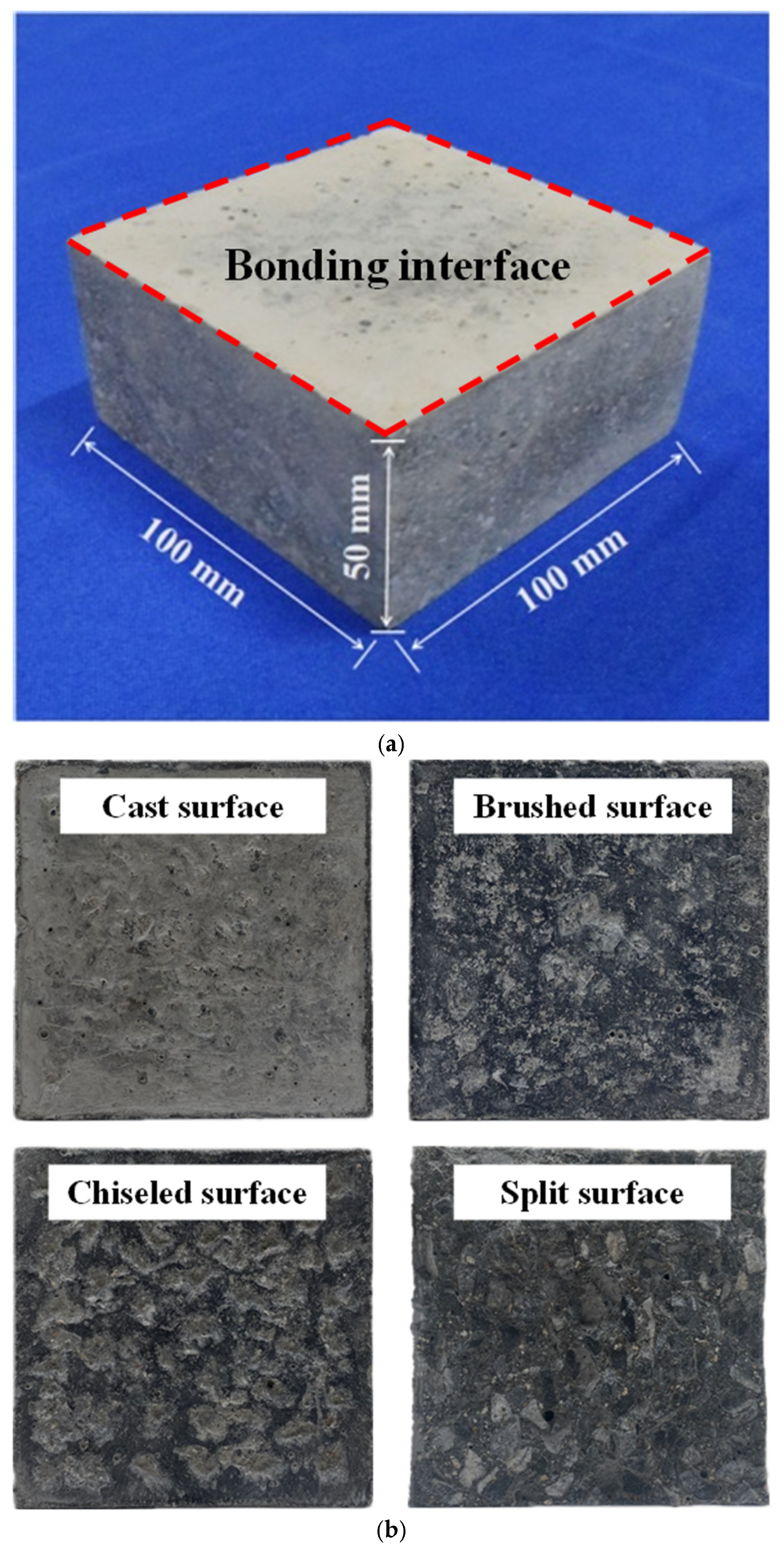
Figure 2 shows the cement concrete substrate with different surface roughness. Table 2 shows the mix proportions of the cement concrete and geopolymer concrete. As shown in Figure 2, the substrate with the dimensions of 100.0 mm × 100.0 mm × 50.0 mm was first prepared using the cement concrete in this study. According to the mix proportions in Table 2, the cement, sand, and gravel were added to the HJW-60 drum concrete mixer (Qiuzhen Instrument and Equipment Co., Ltd., Hebei Province, China) with a mixing speed of 45 r/min. The water was gradually added to the mixer, and continuously mixed 5 min. The fresh concrete slurry was then cast into 100.0 mm × 100.0 mm × 50.0 mm cube molds and consolidated using a vibration table. Then, according to the GB/T 50082-2024, the concrete was placed in the constant temperature and humidity curing chamber with 20.0 °C temperature and 95% humidity [42]. After curing for 24 h, the concrete substrate was demolded and continuously cured for 27 days. The 28-day compressive strength of the cement concrete matrix was quantified as 43.9 MPa.
As shown in Figure 2b, to systematically evaluate the interfacial roughness influence on the splitting tensile performance of GCC specimens, four surface treatment methods were conducted on the bonding interface of the concrete substrates, which were cast surface, brushed surface, chiseled surface, and split surface. The cast surface refers to the original surface of the substate after vibration and plastering during the preparation process. The brushed surface refers to the surface where the slurry was removed by using a stainless steel brush (Grade 304, bristle diameter 0.3 mm). The chiseled surface refers to the surface of substate after manually roughening with a hammer and chisel. The split surface is the surface that naturally fractures on the 100.0 mm × 100.0 mm × 100.0 mm concrete cube after the splitting test.

2.2.2. The Preparation of GCC Specimens Using Different Interfacial Agents

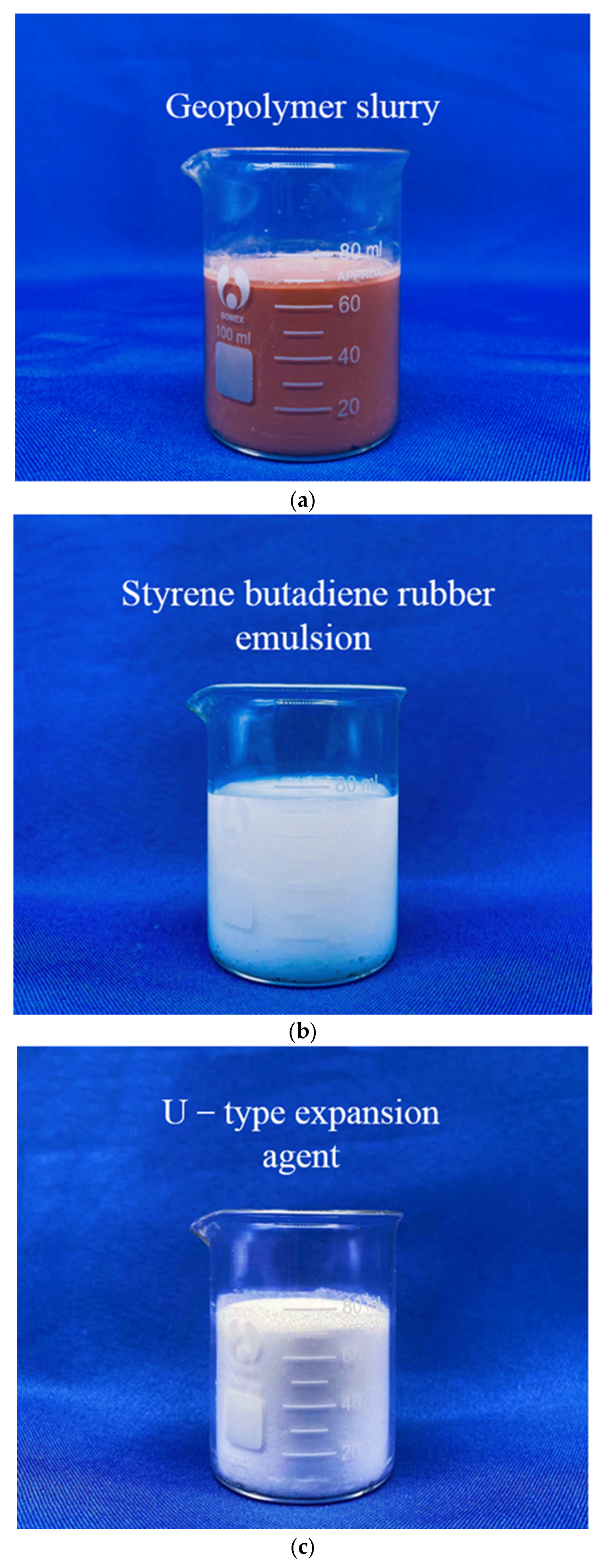
To enhance the interfacial bonding strength between cement concrete and geopolymer concrete, a 0.5 mm thick interfacial binder layer was applied to the substrate surface prior to casting the geopolymer concrete. Figure 3 shows the interfacial agents used in this study. As shown in Figure 3, three types of interfacial agents were used in this study, including geopolymer slurry, the cement paste with 10.0% styrene-butadiene rubber (SBR) emulsion, and the cement paste blended with 10.0% U-type expansion agent. The styrene-butadiene rubber (SBR) and U-type expansion agent are the two most widely used commercial interface agents in engineering practice [43,44]. Many scholars have investigated the effect of styrene-butadiene rubber (SBR) and U-type expansion agent on the concrete repair materials, finding that the incorporation of styrene-butadiene rubber (SBR) and U-type foaming agent enhances the mechanical properties of concrete [45,46]. The geopolymer slurry was prepared by mixing the metakaolin, slag, and alkali activator under the same solid–liquid ratio as the geopolymer concrete. The SBR emulsion and U-type expansion agent are the most commonly used interfacial agents in engineering and were used in this study. Additionally, a control group of geopolymer–concrete composite (GCC) specimens without interfacial agent was prepared for comparative analysis.
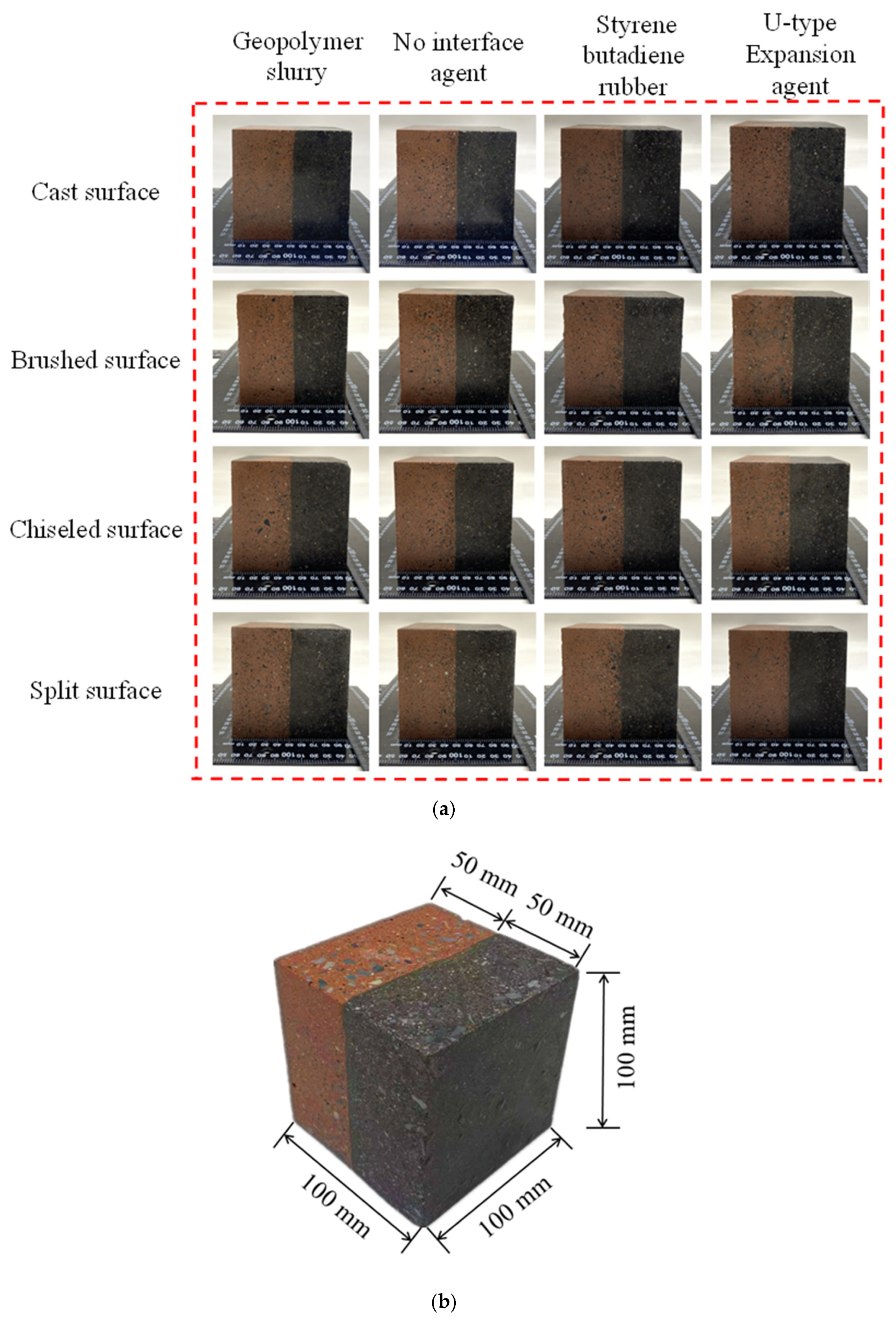
Figure 4 is the GCC specimens with different surface roughness and interfacial agents. The preparation process for the GCC specimens in this experiment was shown as follows [47]. According to the mix proportions of the geopolymer concrete in Table 2, the metakaolin, slag, and aggregates was firstly added to the mixer and mixed for 2 min to ensure uniformity. The alkali activator was gradually added to the mixer and continuously mixed for 10 min until achieving optimal fluidity in the mixture. The interfacial agents were applied to the old concrete surface using a bristle brush. Due to different in the concrete surface roughness, it is difficult to measure the thickness of the bonding agent layer. Therefore, prior to application on the old concrete, we first applied the agent ten consecutive times on a flat concrete surface and measured the thickness. The thickness measured using a thickness gauge was about 0.5 mm. The geopolymer concrete was casted on the surface of the concrete substrate. The bonding interface of the concrete substrate was brushed with the interfacial agent and then placed at the bottom of a 100.0 mm × 100.0 mm × 100.0 mm mold. The geopolymer concrete slurry was casted into the mold. Specimens were consolidated using a vibration table to ensure dense interfacial bonding. A waterproof plastic film was applied to the surface of the geopolymer concrete to prevent external moisture from affecting the early stages of the geopolymerization reaction [48,49,50]. After demolding, the GCC specimens were placed in the constant temperature and humidity curing chamber with 20.0 °C temperature and 95% humidity for 28 d. To ensure experimental accuracy, three GCC specimens were prepared for each group, and a total of 48 GCC specimens with different surface roughness and interfacial agents were prepared.

2.3. Methods

2.3.1. Surface Roughness Measurement

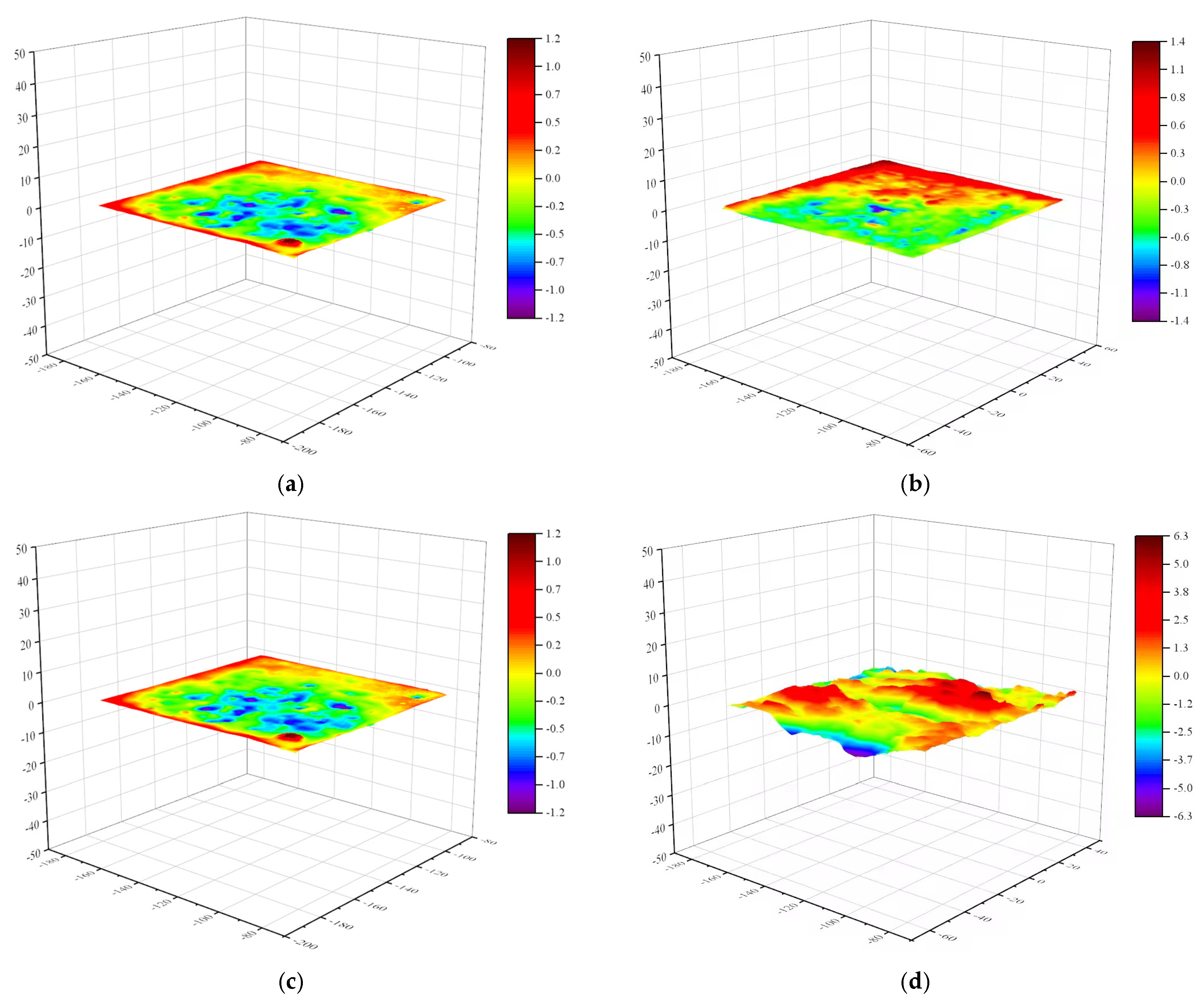
In this paper, the roughness of the concrete surface was quantified using JRC values proposed by Tse and Cruden [51]. The detailed test method was as follows. Firstly, photographs of the concrete substrate surface were captured at varying angles using a camera, with the resulting images imported into Reality Capture software 1.0 for three-dimensional model reconstruction. The Reality Capture software 1.0 is a free image acquisition and modeling software. The completed three-dimensional model was imported into Rhino 3D 8.0 software for digital image processing. Rhino 3D 8.0 software is a 3D modeling tool. Following image processing, each point on the 3D model could be accurately and comprehensively marked in the form of three-dimensional coordinates. Subsequently, a 3D point cloud with a 1.0 mm point spacing was employed to reconstruct the interface of the concrete substrate. Finally, ten roughness contour lines were selected from the interface to calculate the JRC of the cement concrete substrate surface. Based on the empirical relationship between JRC and Z2, the JRC for each roughness profile was calculated by the following:
JRC 2 D = 32.2 + 32.47 log Z 2
and
Z 2 = 1 L x = 0 x = L ( d z d x ) 2 d x 1 / 2 = 1 L i = 1 N 1 ( z i + 1 z i ) 2 x i + 1 x i 1 / 2 = 1 L i = 1 N - 1 ( Δ z ) 2 Δ x 1 / 2
where JRC2D represents the roughness value of an individual contour line. ∆x represents the sampling interval of the points along a single contour curve (1.0 mm in this paper), ∆z represents the vertical difference between two neighboring points along the contour, and L is the length of the projection of the contour line (length of the specimen 100.0 mm).
Finally, the roughness of the concrete matrix interface was quantified by calculating the average of the JRC2D values for the ten selected contour lines as follows:
JRC = 1 10 i = 1 10 ( JRC 2 D ) i
where JRC represents the roughness of the entire substrate interface.
In this experiment, to investigate the effect of interfacial roughness on the bonding properties between cement concrete and geopolymer concrete, cement concrete substrates with four different interfacial roughness levels were prepared. The JRC values for the four types of cement concrete substrates were 1.42, 3.59, 9.48, and 12.58, corresponding to the cast surface, brushed surface, chiseled surface, and split surface, respectively, as illustrated in Figure 5.

2.3.2. Splitting Tensile Test

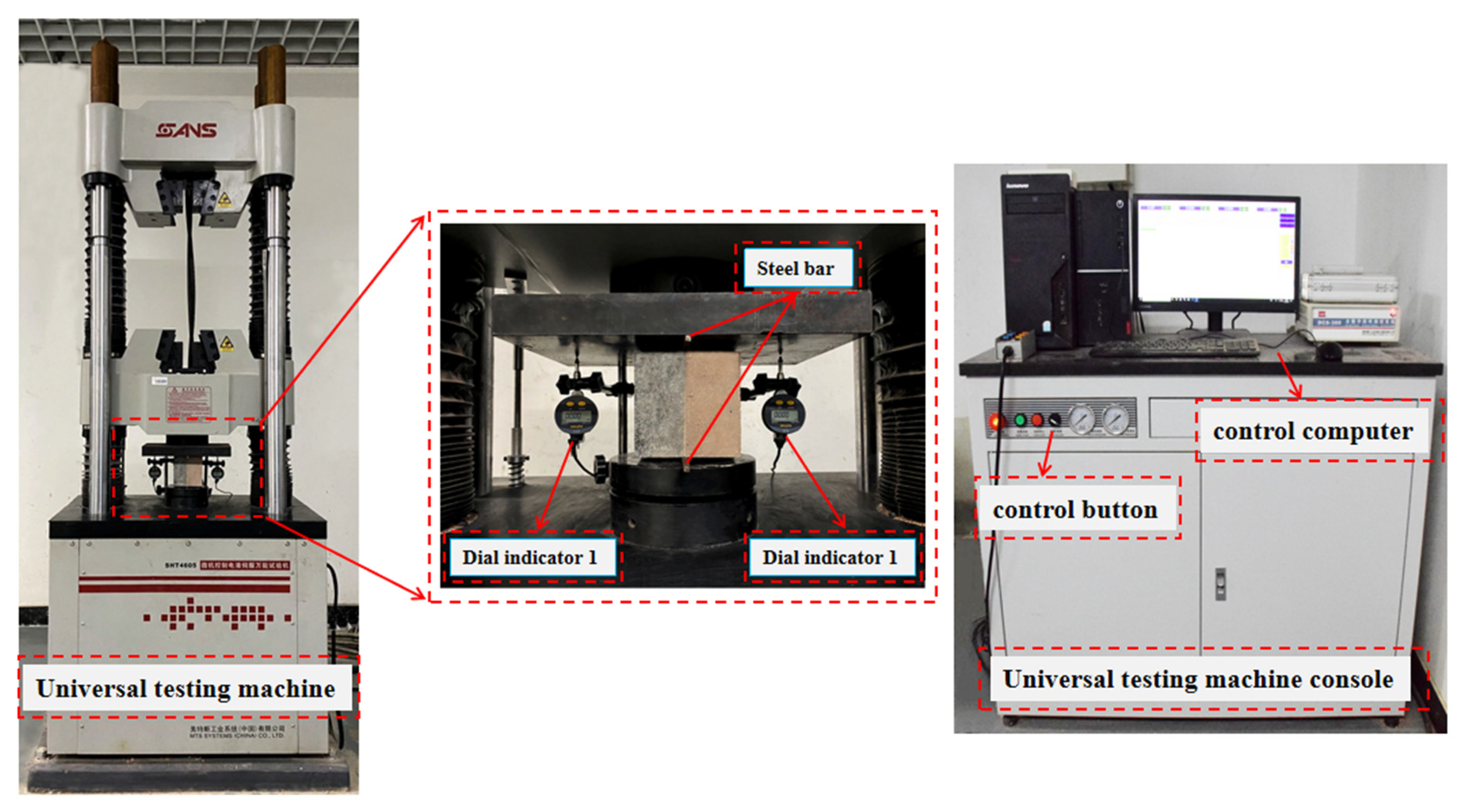
In this experiment, the SHT4605 electro-hydraulic servo universal testing machine (MTS) from Jinan Chengyu testing Equipment Co, Ltd of Shandong Province, China, located in the Geotechnical Engineering Laboratory at Beijing University of Technology, was utilized to test the splitting tensile strength of GCC specimens, as shown in Figure 6. According to GB/T 50081-2019 [52], the load control method employed stress control, and the loading rate was maintained at 0.05 MPa/s until splitting failure of the GCC specimens occurred. The failure load of the GCC specimen was recorded, and the splitting tensile strength was subsequently calculated. Displacements during the test were recorded using two dial indicators. The splitting tensile strength was calculated as follows
f t s = 2 F C π A
where fts denotes the splitting tensile strength, F represents the failure load, C is the size conversion factor of 0.85, and A refers to the splitting surface area.

3. Results and Discussion

3.1. Splitting Tensile Load–Displacement Curve

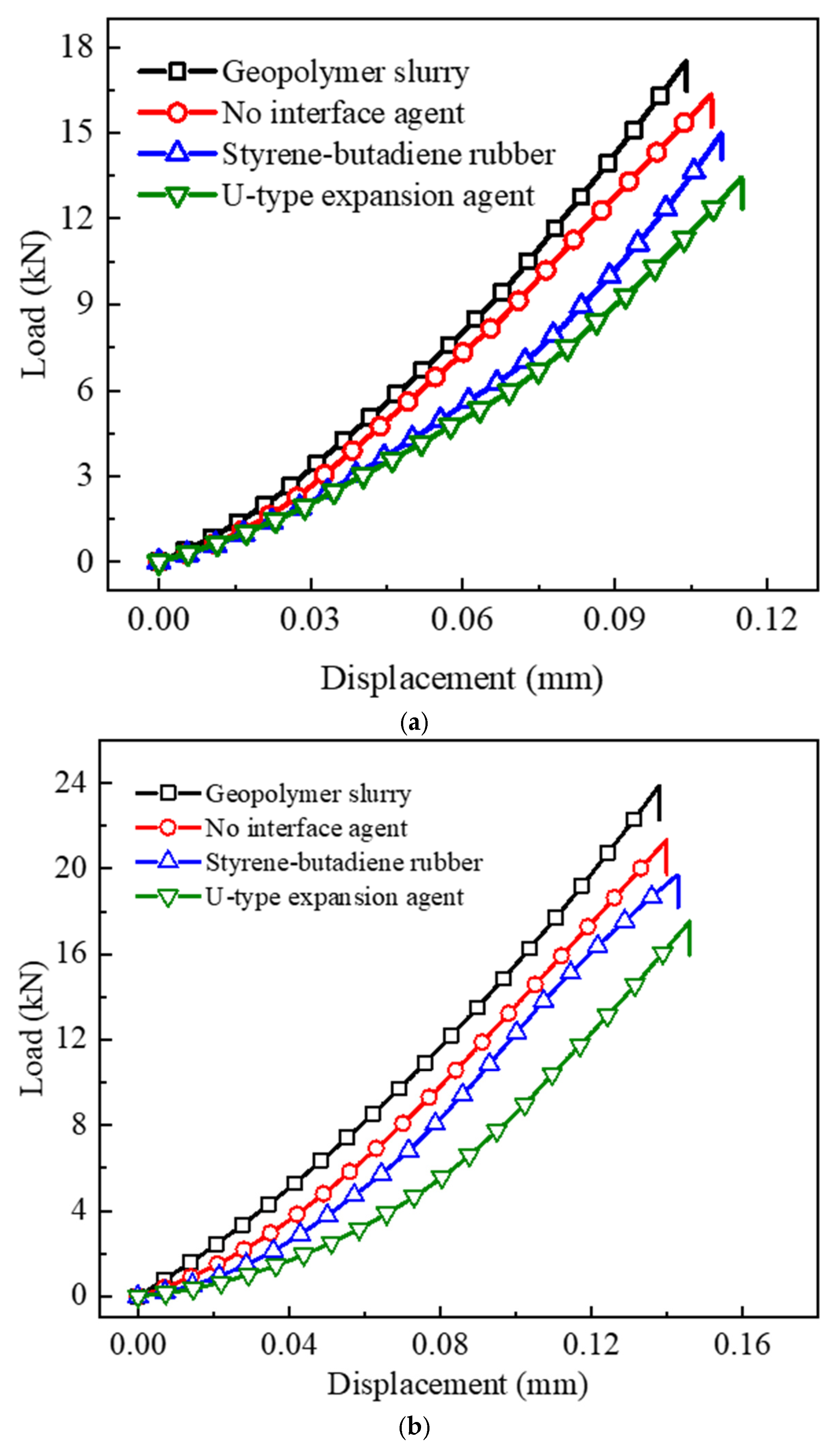
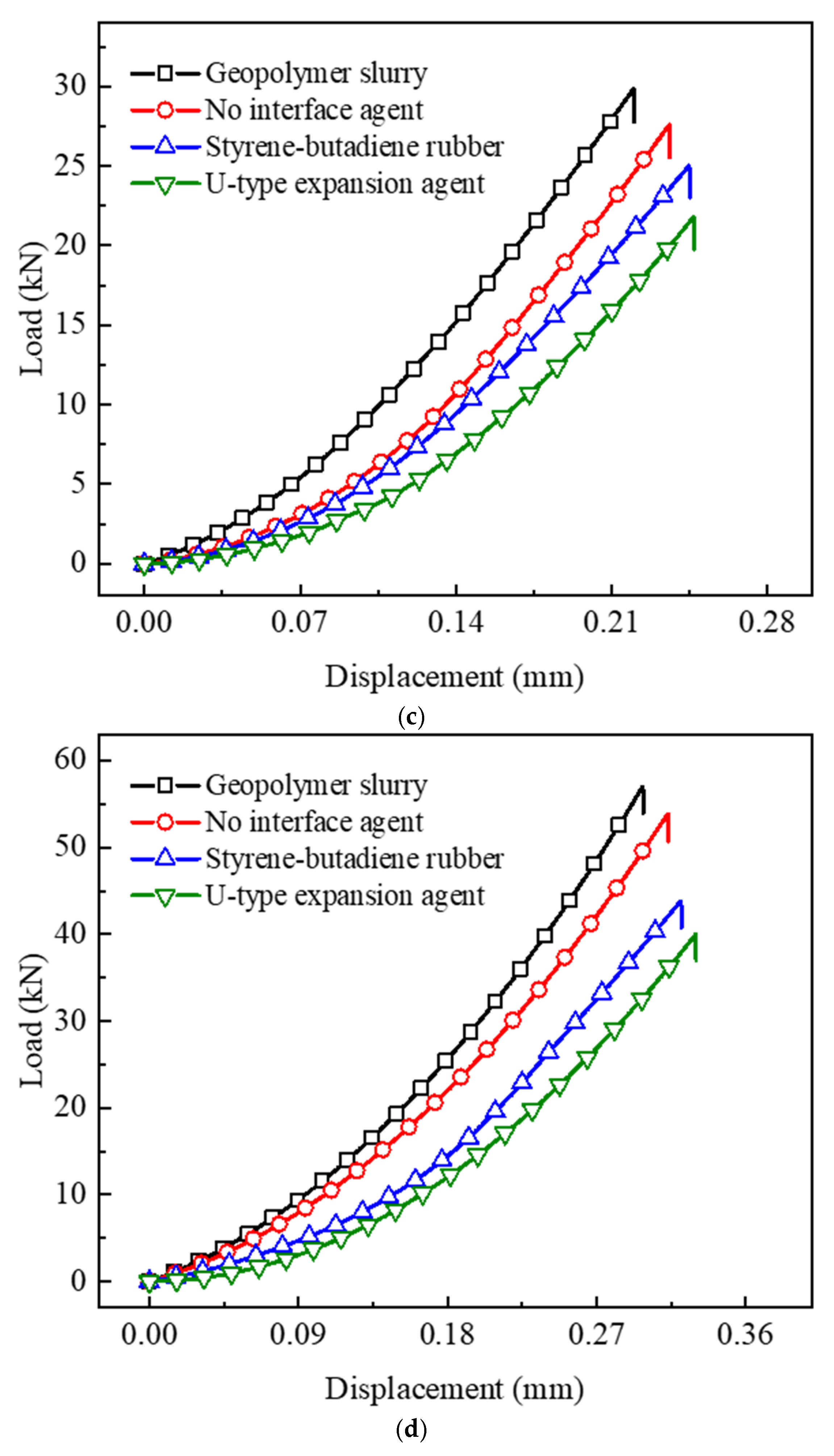
Figure 7 shows the splitting tensile load–displacement curves of the GCC specimens. As shown in Figure 7, the load–displacement curves of the GCC specimens display similar characteristics across four different interface roughness conditions. These curves are primarily divided into three distinct stages. The first stage occurs during the initial half of the curve’s ascent, where the splitting tensile load of the GCC specimens demonstrates a gradually increasing trend. In the second stage, the splitting tensile load increases approximately linearly with displacement. In the third stage, after reaching its peak, the load decreases rapidly while the displacement ceases to increase significantly, indicating that the GCC specimen was damaged due to splitting and could no longer withstand the load.
A comparison of the curves under different interfacial agents shows that the peak loads and curve slopes of GCC specimens follow this descending order: geopolymer paste, no interface agent, cement paste mixed with 10.0% styrene butadiene rubber emulsion, and cement paste mixed with 10.0% U-type expansion agent. Conversely, the final displacement exhibits the opposite trend. The experimental results indicate that the peak load of concrete composite specimens is maximized when geopolymer slurry is used as the interfacial agent. In this case, the bond strength between geopolymer concrete and cement concrete reaches its maximum; however, this improvement is accompanied by increased brittleness in the repaired structure. Additionally, when cement paste mixed with 10.0% U-type expansion agent or cement paste mixed with 10.0% styrene butadiene rubber emulsion is employed as the interfacial agent, the peak load of GCC specimens becomes lower than that of specimens without an interfacial agent. This demonstrates that the two aforementioned interface agents are unsuitable for bonding geopolymer concrete and cement concrete.

3.2. Failure Mode

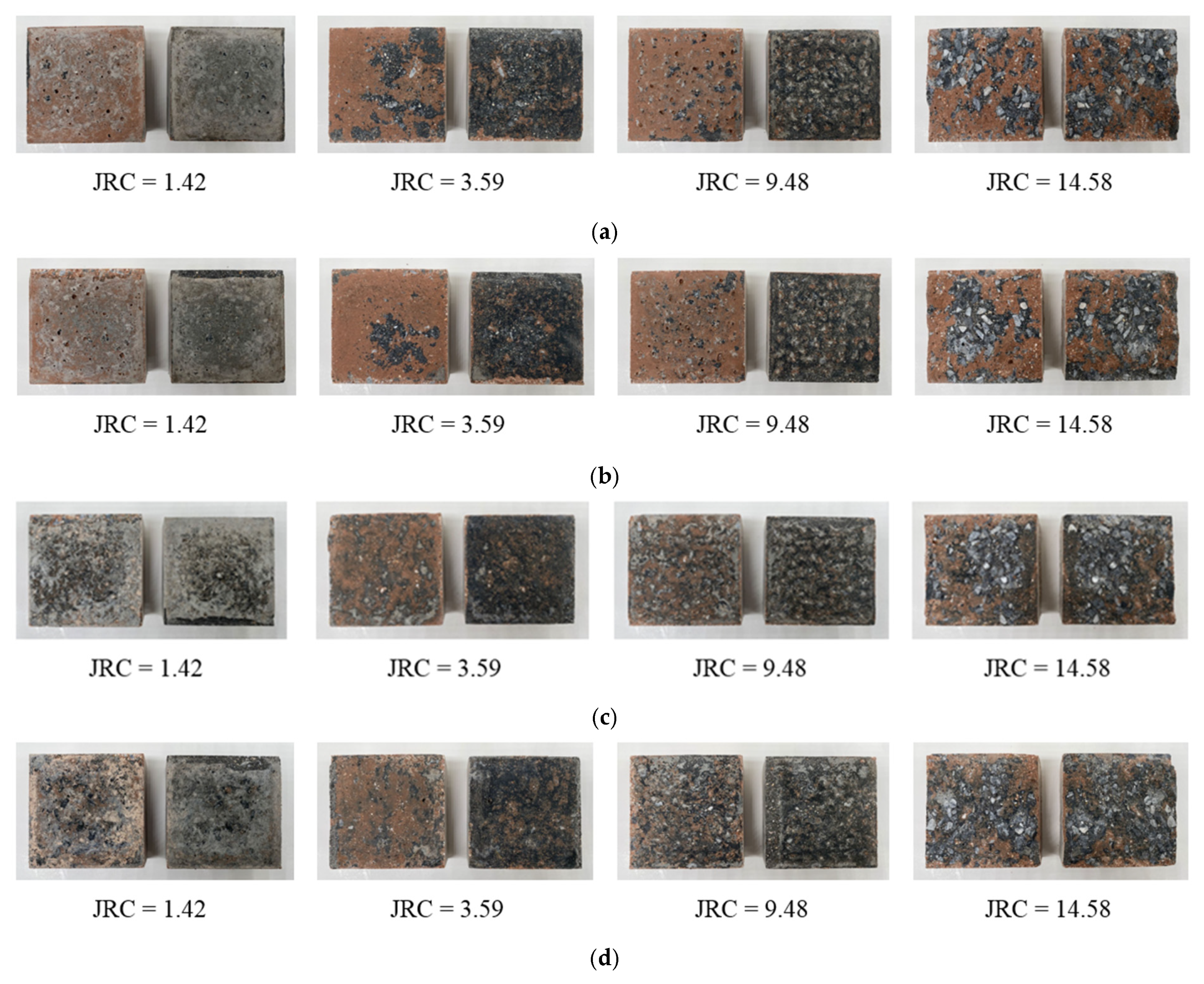
Figure 8 shows the failure pattern diagrams of GCC specimens with different interface roughness and interfacial agents. As shown in Figure 8, all GCC specimens were divided into two parts along the bonding surface: the left half consisting of geopolymer concrete and the right half composed of cement concrete. When the JRC value is 1.42, the bonding surface of the damaged GCC specimens appears relatively flat and exhibits no significant spalling. The observed damage is characteristic of interface debonding, suggesting weak bonding strength at the interface. As the interface roughness increases, a small amount of residual geopolymer slurry adheres to the concrete matrix, while residual cement slurry remains on the geopolymer concrete side. In this case, fracture failure primarily occurs in the slurry between the two concrete surfaces near the interface, indicating improved bond performance. When the JRC value is 14.58, the damage is no longer concentrated along the bonding interface; instead, fracture damage primarily occurs within both concrete materials. Splitting-induced damage to limestone aggregates is clearly visible on the fracture surface. This damage approximates the split tensile strength of the concrete monolith, demonstrating maximum bond strength. The findings indicate that increasing interfacial roughness effectively enhances the bond between geopolymer concrete and cement concrete. In addition, interface roughness significantly influences the damage pattern of repaired concrete structures.

3.3. Effects of Interface Roughness and Interfacial Agents on Splitting Tensile Strength

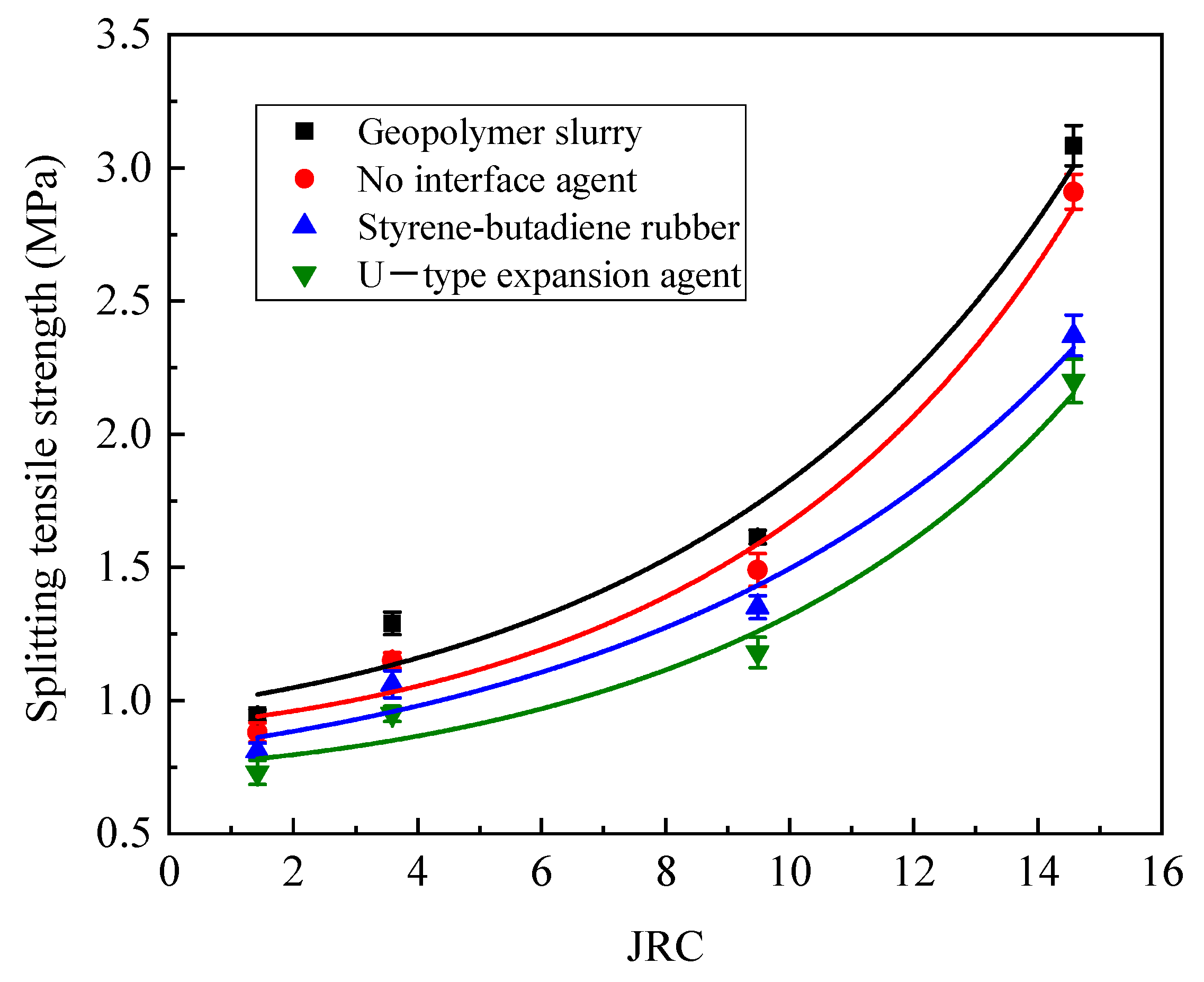
Figure 9 shows the effect of interface roughness on the splitting tensile strength of GCC specimens. As shown in Figure 9, as the interface roughness (JRC) increases, the splitting tensile strength exhibits a trend of slow growth followed by rapid growth. The splitting tensile strengths of the GCC specimens were 0.95 MPa, 0.88 MPa, 0.81 MPa, and 0.73 MPa when JRC was 1.42, whereas the splitting tensile strengths of the specimens increased to 3.08 MPa, 2.91 MPa, 2.37 MPa, and 2.20 MPa when JRC was 14.58. The splitting tensile strength of the GCC specimens measured on the split surface (JRC = 14.58) was approximately three times higher than that of the cast surface (JRC = 1.42). The results indicate that the effect of interface roughness on the splitting tensile strength of composite specimens is substantial. The bonding properties between geopolymer concrete and cement concrete are primarily influenced by chemical adhesion forces, mechanical interlocking, and van der Waals forces at the bonding interface [53,54]. The surface friction and mechanical interlock usually depend on the roughness of the surface treatment of concrete substrates [55]. As the interface roughness (JRC) increases, the splitting tensile strength exhibits a trend of slow growth followed by rapid growth. The main reason might be that increasing roughness can increase the specific surface area of concrete, enhancing mechanical interlock and interfacial shear friction between geopolymer concrete and concrete substrate. The mechanical interlock and friction have a certain limiting effect on the displacement, so the splitting tensile strength increases. This phenomenon has been reported by many scholars [56,57].
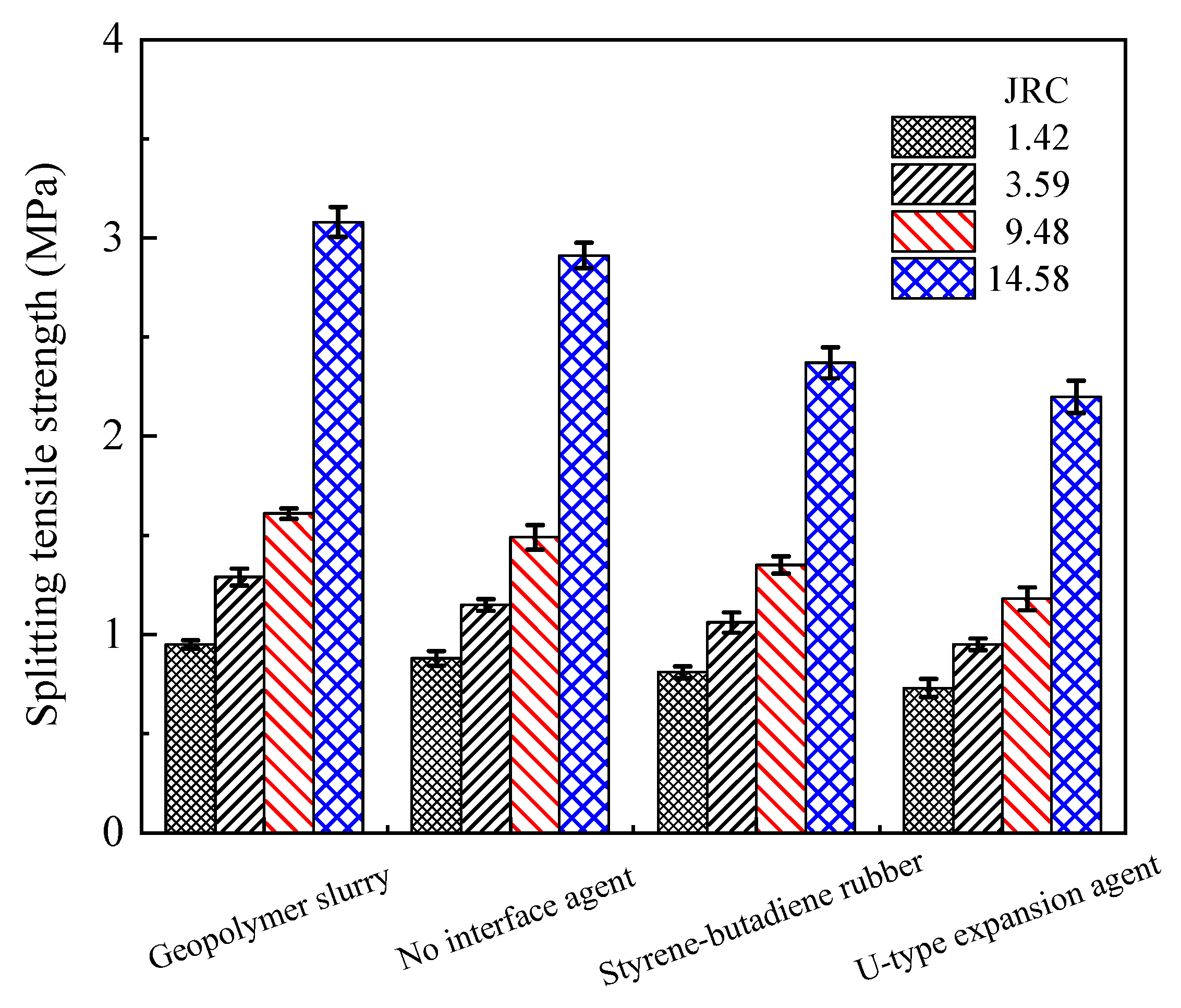
Figure 10 shows the splitting tensile strength of GCC specimens with different interfacial agents. It was observed that GCC specimens exhibit the highest splitting tensile strength at varying interfacial roughness levels when geopolymer slurry is used as the interfacial agent. Compared to specimens without an interfacial agent, the splitting tensile strength of GCC specimens utilizing geopolymer slurry as an interfacial agent increased by 8.0% to 12.2%. This indicates that selecting an appropriate interfacial agent can significantly enhance the bond strength between geopolymer and cement concrete. The reason can be attributed to the fact that the use of an interfacial agent reduces microcracks caused by the shrinkage of fresh concrete during the curing process and enhances the mechanical properties of the interface [58,59,60]. Additionally, due to the limitations of the cement concrete substrate, geopolymer concrete tends to accumulate bubbles at the interface during curing, leading to increased micro-defects. The use of interfacial agents in the repair of old concrete can effectively mitigate this phenomenon.
Furthermore, it was found that the splitting tensile strength of GCC specimens decreased when cement paste mixed with 10.0% styrene-butadiene rubber emulsion or cement paste mixed with 10.0% U-type expansion agent were applied as interfacial agents. The research findings are inconsistent with those of previous scholars concerning cement-based concrete, who observed that the addition of styrene-butadiene rubber (SBR) and U-type foaming agents enhances the mechanical properties of concrete. This is because cement-based interfacial agents introduce additional planes at the interface between geopolymer and cement concrete, inhibiting effective interlocking between the old and new concrete and reducing interfacial bond strength [61]. This demonstrates that not all types of interfacial agents can enhance the bonding properties between geopolymer and cement concrete. Geopolymer slurry achieved the highest bonding strength, followed sequentially by untreated interfaces, SBR-modified cement paste, and expansive agent-modified cement paste. This indicates that applying geopolymer slurry to the existing concrete surface markedly enhances the bond between the geopolymer and the concrete substrate.
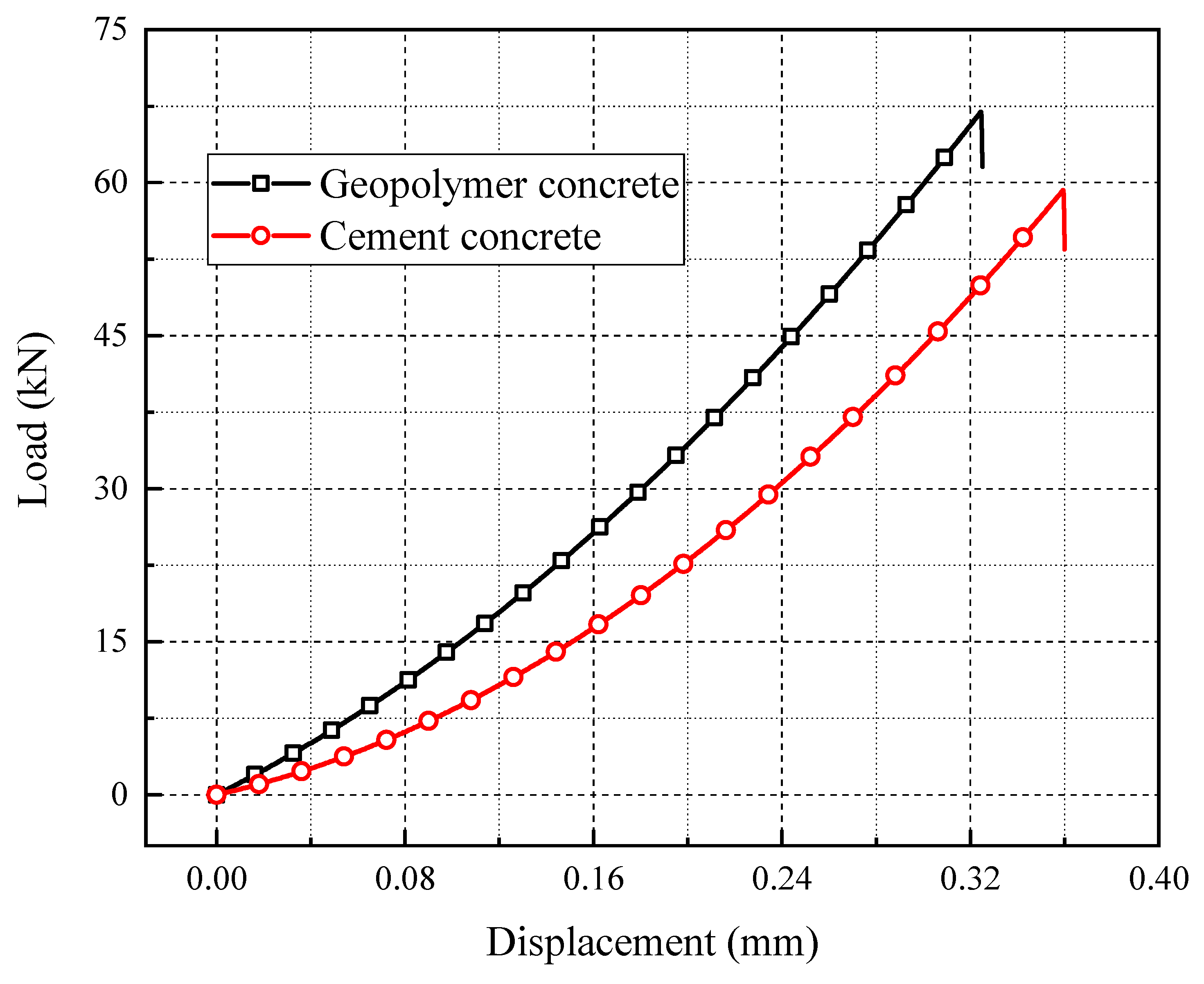
Figure 11 is the comparison between the load–displacement curves of geopolymer concrete and cement concrete under splitting load. As shown in Figure 11, the splitting tensile strengths of cement concrete and geopolymer concrete measured in this experiment are 3.21 MPa and 3.63 MPa, respectively. To evaluate the repair effectiveness of using geopolymer concrete on cement concrete substrates, the splitting tensile strength of GCC specimens was compared with that of two types of intact concrete specimens (C40 cement concrete and geopolymer concrete).
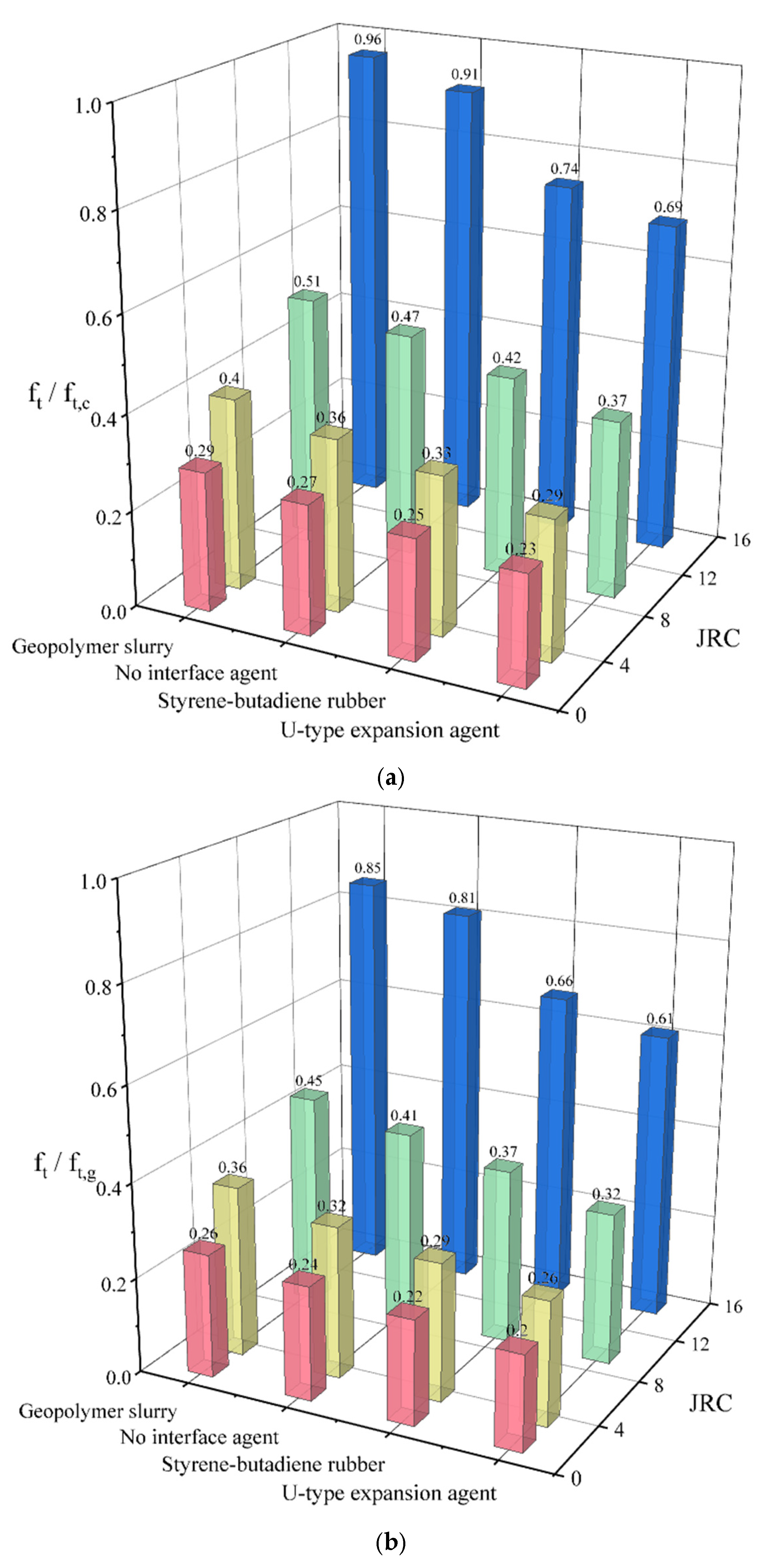
Figure 12 is the repair effectiveness analysis of GCC. The repair efficiency indicated the contribution of the bonding strength between cement concrete and geopolymer concrete. The repair effectiveness was calculated by dividing the splitting tensile strength of GCC specimens with splitting tensile strength of cement concrete or geopolymer concrete. As shown in Figure 12a,b, the repair effectiveness of geopolymer concrete on cement concrete was poorest when cement paste mixed with 10.0% U-type expansion agent was used as the interfacial agent and the interface roughness (JRC) was 1.42. The splitting tensile strength of the GCC specimens reached only 23.0% of that of cement concrete and 20.0% of that of geopolymer concrete. In contrast, when geopolymer slurry was employed as the interfacial agent with an interface roughness (JRC) of 14.58, the repair effectiveness of geopolymer on cement concrete was optimal. The splitting tensile strength of GCC specimens achieved 96.0% of cement concrete’s splitting tensile strength and 85.0% of geopolymer concrete’s splitting tensile strength. These results demonstrate that the interface plays a critical role in reinforcing concrete structures. Proper interfacial design can significantly improve the repair effectiveness of geopolymer concrete on cement concrete. Additionally, the average splitting tensile strength of specimens with varying interface roughness reached 46.0% to 67.0% of cement concrete’s strength and 41.0% to 59.0% of geopolymer concrete’s strength. For specimens with different interfacial agents, these values were 6.0% to 27.0% for cement concrete and 6.0% to 24.0% for geopolymer concrete. Therefore, both interface roughness and interfacial agents affect interfacial bonding, but the influence of interface roughness is more significant.

3.4. The Establishment of Bonding Strength Prediction Model

In practical engineering applications, the interface bond strength is a critical parameter influencing the repairs effectiveness of geopolymer. Core drilling methods could damage the repaired interface, causing further deterioration to the old concrete. There is an urgent need to develop a novel, non-destructive method for predicting interface bond strength. Many scholars have proposed distinct formulas for splitting tensile strength applicable to both old and new concrete [62,63]. However, most repair materials for new concrete remain cement-based. The applicability of these formulas to geopolymer concrete requires further investigation. To provide a reference for engineering projects utilizing geopolymer concrete as repair materials, this paper presents the splitting tensile strength at the interface between geopolymer concrete and cement concrete.
In practical engineering, the splitting tensile strength of old concrete must be accurately determined, while the splitting tensile strength of geopolymer concrete (used as repair material) can be measured through laboratory tests. Therefore, based on the splitting tensile strength of geopolymer concrete and considering the interface roughness and interface agent. The splitting tensile strength of the interface between geopolymer concrete and cement concrete is calculated as follows:
f t = K α 1 α 2 f t N
where ft is the splitting tensile strength of the interface between geopolymer concrete and cement concrete, α1 is the influence coefficient of interface roughness, α2 is the influence coefficient of interface agent, ftN is the tensile strength of geopolymer concrete, and K is the correction coefficient.
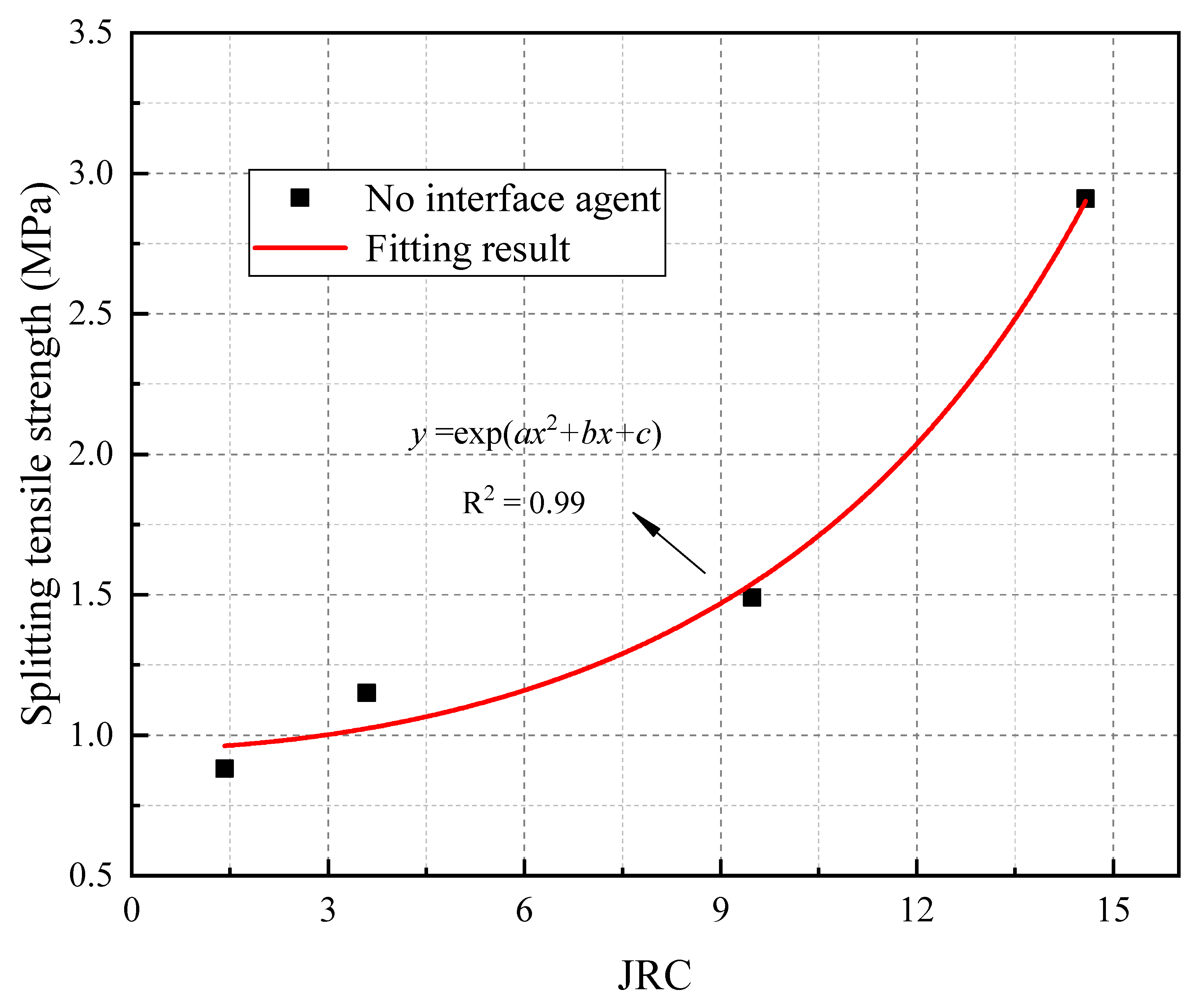
Figure 13 is the regression analysis of JRC and splitting tensile strength. As shown in Figure 13, there is a positive correlation between the interface roughness and the splitting tensile strength of GCC specimens. In addition, the tensile strength of the geopolymer concrete cured for 28 days in this study was measured at 3.63 MPa. Therefore, the influence coefficient of interface roughness, denoted as α1, is calculated as follows:
α 1 = y 3.63 = A exp ( a x 2 + b x + c )
where α1 is the influence coefficient of interface roughness, y represents the fitting formula, A is the calculation coefficient of 0.2755 in the present study, x denotes the interface roughness JRC, and a, b, and c are the fitting coefficients listed in Table 3. Regarding the effect of interface agent selection on the splitting tensile strength between geopolymer concrete and cement concrete, the influence coefficient of the interface agent (denoted as α2) was 1.00 when no interfacial agent was applied. Additionally, α2 values were 1.08, 0.89, and 0.80 for interface agents composed of geopolymer slurry, cement paste mixed with 10.0% styrene-butadiene rubber emulsion, and cement paste mixed with 10.0% U-type expansion agent, respectively.
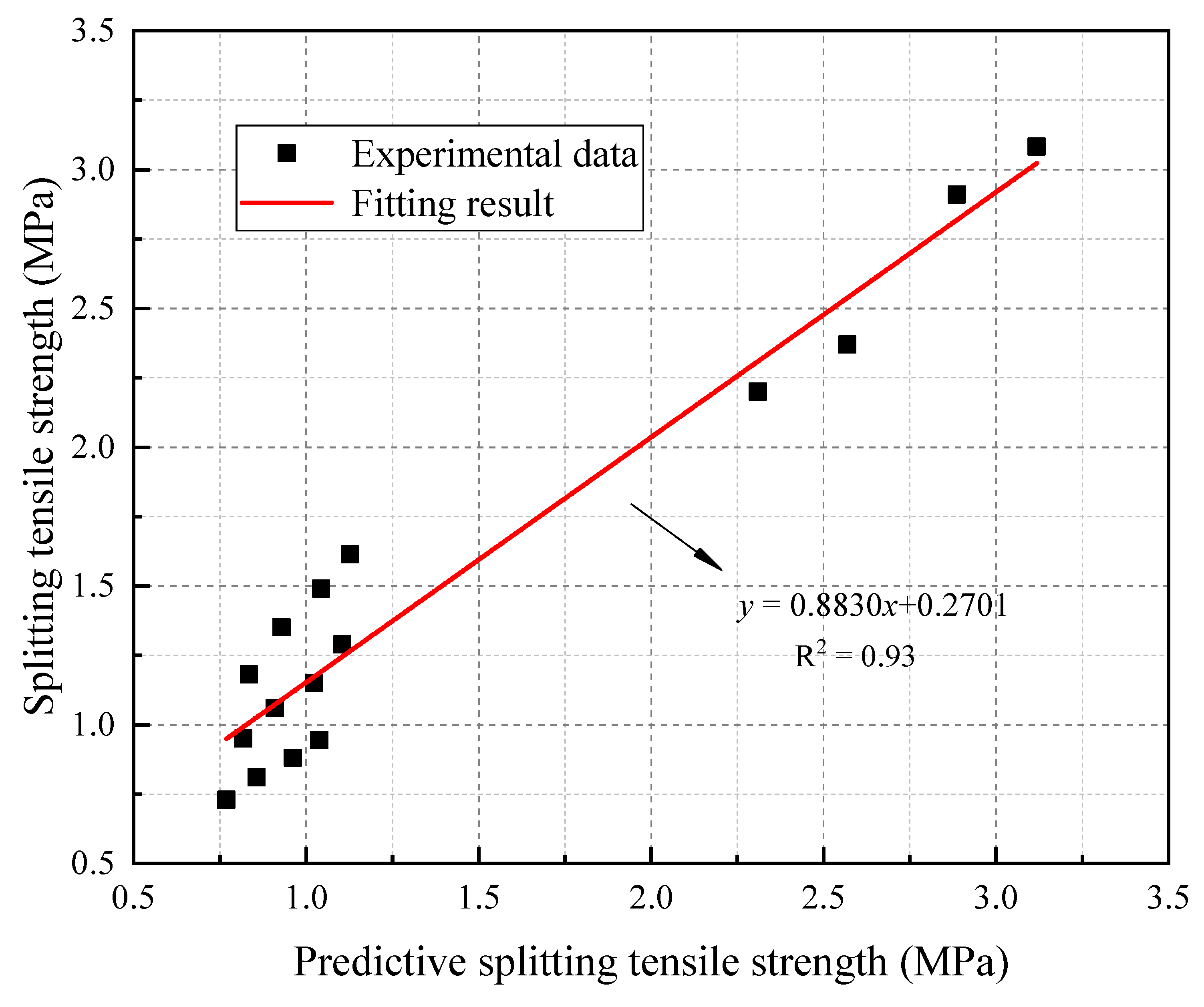
Equation (6) was incorporated into Equation (5), and the correction coefficient K was determined through experimental data fitting. Figure 14 is the experimental and predicted splitting tensile strength values. As shown in Figure 14, K yielded a value of 0.8830, with a coefficient of determination (R2) of 0.93. The splitting tensile strength at the interface between geopolymer concrete and conventional cement concrete is subsequently calculated as follows:
f t = A K exp ( a x 2 + b x + c ) α 2 f t N
where ft is the splitting tensile strength at the interface between geopolymer concrete and cement concrete, A is the calculated coefficient (0.2755 in this study), K is the correction coefficient (0.8830 in this study), x is the interface roughness JRC (joint roughness coefficient), ftN is the splitting tensile strength of the geopolymer concrete, and a, b, and c are the fitting coefficients listed in Table 3. When no interfacial agent was applied, α2 was measured as 1.00. Additionally, α2 values were assigned as 1.08, 0.89, and 0.80 when the interfacial agents consisted of geopolymer slurry, cement paste mixed with 10.0% styrene-butadiene rubber emulsion, and cement paste mixed with 10.0% U-type expansion agent, respectively. It accurately predicts the bonding performance between geopolymers and concrete using parameters including roughness, bonding agent, concrete splitting tensile strength, and geopolymer splitting tensile strength. All these parameters can be obtained through laboratory testing, enabling non-destructive prediction of the performance of repair interfaces in real engineering projects. The predicted model can provide a scientific reference for the practical engineering application of geopolymer concrete as a repair material. The machine learning is a frontier intelligent technology that has progressively found application within the field of building materials design. Based on the experimental results presented in this manuscript, future research may establish an experimental database and utilize machine learning techniques to further realize rapid prediction and monitoring of the bonding performance between geopolymers and old concrete.
This paper primarily focuses on investigating the macroscopic bonding mechanical properties of GCC with different surface roughness and interface agents. The empirical model of the bonding strength of the GCC was proposed by considering surface roughness, interfacial agent, and geopolymer tensile strength simultaneously. The study results can guide the practical implementation of geopolymer remediation projects. However, the microstructural characteristics of the bonding interface through SEM, EDS, XRD, and MIP holds significant importance for elucidating the prevailing trends in mechanical behavior. The influence of microstructure characteristics in the interfacial transition zone on the macroscopic bonding mechanical properties will be further explored in future research. Moreover, in the real-scale structural repairs, the stresses, shrinkage, and temperature gradients are more complex, significantly affecting the bond performance between geopolymers and concrete. Future research can further explore the long-term durability of geopolymer–concrete bonding under complex service conditions involving stresses, shrinkage, and temperature gradients.

4. Conclusions

This study investigates the influence of interface roughness and agents on the bonding strength of geopolymer–concrete composite (GCC) specimens. Four interface roughness levels and three agents were evaluated in GCC specimens. Interface roughness was quantified via JRC using 3D interface reconstruction. The impacts of roughness and agent variations on splitting tensile strength were analyzed, and a predictive formula for interfacial splitting tensile strength between geopolymer and conventional cement concrete was developed.
(1)
As the interface roughness (JRC) increased, the splitting tensile strength exhibited a corresponding upward trend, characterized by gradual growth followed by rapid growth. The splitting tensile strength of GCC specimens with split surfaces was approximately three times higher than that of those with cast surfaces. In practical engineering applications, concrete surfaces require chipping to achieve a degree of roughness approximating that of the split surfaces.
(2)
The interfacial agents ranked in descending order of their effect on splitting tensile strength were geopolymer paste, no interface agent, cement paste mixed with 10.0% styrene-butadiene rubber emulsion, and cement paste mixed with 10.0% U-type expansion agent. Geopolymer slurry can be used as an interface agent to concrete surfaces, which effectively enhances the bond strength between geopolymer concrete and old concrete.
(3)
Interface roughness significantly influenced the failure mode of GCC specimens. Increasing JRC values shifted the failure mode from interfacial bonding failure to splitting tensile failure within both concrete types.
(4)
A empirical formula for calculating the splitting tensile strength of the interface between geopolymer concrete and cement concrete was developed, which can provide a scientific reference for the practical engineering application of geopolymer concrete as a repair material.
(5)
In actual structural repair projects, complex factors such as stress, shrinkage, and temperature gradients significantly influence the bonding performance between geopolymers and concrete. Future research may further explore the long-term durability of geopolymer–concrete composite structures under complex service conditions, alongside the degradation mechanisms of their microstructures.

Author Contributions

Conceptualization, L.F.; Validation, W.Z., J.L., and Y.Z.; Investigation, B.L. and D.C.; Writing—original draft, B.L. and D.C.; Writing—review and editing, W.Z., J.L., Y.Z., and L.F.; Supervision, L.F. All authors have read and agreed to the published version of the manuscript.

Funding

This work is supported by the Fundamental Research Funds for the Central Universities, CHD (NO. 300102285102).

Data Availability Statement

The raw data supporting the conclusions of this article will be made available by the authors on request.

Conflicts of Interest

The authors declare no conflicts of interest.

References

  1. Peng, G.; Niu, D.T.; Hu, X.P.; Pan, B.X.; Zhong, S. Experimental study of the interfacial bond strength between cementitious grout and normal concrete substrate. Constr. Build. Mater. 2021, 273, 122057. [Google Scholar] [CrossRef]
  2. Feng, S.; Xiao, H.G.; Liu, M.; Zhang, F.L.; Lu, M.Y. Shear behaviour of interface between normal-strength concrete and UHPC: Experiment and predictive model. Constr. Build. Mater. 2022, 342, 127919. [Google Scholar] [CrossRef]
  3. Xu, X.F.; Cui, S.A.; Cao, Z.Y.; Zhang, S.H.; Ju, J.W.; Liu, P.; Wang, X.W. Study on the interfacial bonding performance of basalt ultra-high performance concrete repair and reinforcement materials under severe service environment. Constr. Build. Mater. 2023, 400, 132624. [Google Scholar] [CrossRef]
  4. Abdulrahman, H.; Muhamad, R.; Visintin, P.; Shuki, A.A. Mechanical properties and bond stress-slip behaviour of fly ash geopolymer concrete. Constr. Build. Mater. 2022, 327, 126909. [Google Scholar] [CrossRef]
  5. Shi, C.; Zou, X.W.; Yang, L.; Wang, P.; Niu, M.D. Influence of humidity on the mechanical properties of polymer-modified cement-based repair materials. Constr. Build. Mater. 2020, 261, 119928. [Google Scholar] [CrossRef]
  6. Al-Zahrani, M.M.; Maslehuddin, M.; Al-Dulaijan, S.U.; Ibrahim, M. Mechanical properties and durability characteristics of polymer- and cement-based repair materials. Cem. Concr. Compos. 2003, 25, 527–537. [Google Scholar] [CrossRef]
  7. Shu, X.J.; Zhao, Y.; Liu, Z.; Zhao, C. A study on the mix proportion of fiber-polymer composite reinforced cement-based grouting material. Constr. Build. Mater. 2022, 328, 127025. [Google Scholar] [CrossRef]
  8. Isla, F.; Luccion, B.; Ruano, G.; Torrijos, M.C.; Morea, F.; Giaccio, G.; Zerbino, R. Mechanical response of fiber reinforced concrete overlays over asphalt concrete substrate: Experimental results and numerical simulation. Constr. Build. Mater. 2015, 93, 1022–1033. [Google Scholar] [CrossRef]
  9. Colangelo, F.; Roviello, G.; Ricciotti, L.; Ferrándiz-Mas, V.; Messina, F.; Ferone, C.; Tarallo, O.; Cioffi, R.; Cheeseman, C.R. Mechanical and thermal properties of lightweight geopolymer composites. Cem. Concr. Compos. 2018, 86, 266–272. [Google Scholar] [CrossRef]
  10. Shaikh, F.U.A.; Fairchild, A.; Zammar, R. Comparative strain and deflection hardening behaviour of polyethylene fibre reinforced ambient air and heat cured geopolymer composites. Constr. Build. Mater. 2018, 163, 890–900. [Google Scholar] [CrossRef]
  11. Al-Mashhadani, M.M.; Canpolat, O.; Aygormez, Y.; Uysal, M.; Erdem, S. Mechanical and microstructural characterization of fiber reinforced fly ash based geopolymer composites. Constr. Build. Mater. 2018, 167, 505–513. [Google Scholar] [CrossRef]
  12. Zanotti, C.; Borges, P.H.R.; Bhutta, A.; Banthia, N. Bond strength between concrete substrate and metakaolin geopolymer repair mortar: Effect of curing regime and PVA fiber reinforcement. Cem. Concr. Compos. 2017, 80, 307–316. [Google Scholar] [CrossRef]
  13. Alanazi, H.; Yang, M.J.; Zhang, D.L.; Gao, Z.L. Bond strength of PCC pavement repairs using metakaolin-based geopolymer mortar. Cem. Concr. Compos. 2016, 65, 75–82. [Google Scholar] [CrossRef]
  14. Li, Z.H.; Zhang, W.; Wang, R.L.; Chen, F.Z.; Jia, X.C.; Cong, P.T. Effects of Reactive MgO on the Reaction Process of Geopolymer. Materials 2019, 12, 526. [Google Scholar] [CrossRef] [PubMed]
  15. Zhong, W.L.; Zhang, Y.H.; Fan, L.F. High-ductile engineered geopolymer composites (EGC) prepared by calcined natural clay. J. Build. Eng. 2023, 63, 105456. [Google Scholar] [CrossRef]
  16. Zhong, W.L.; Zhang, Y.H.; Fan, L.F.; Li, P.F. Effect of PDMS content on waterproofing and mechanical properties of geopolymer composites. Ceram. Int. 2022, 48, 26248–26257. [Google Scholar] [CrossRef]
  17. Fan, J.C.; Zhu, H.G.; Shi, J.; Li, Z.H.; Yang, S. Influence of slag content on the bond strength, chloride penetration resistance, and interface phase evolution of concrete repaired with alkali activated slag/fly ash. Constr. Build. Mater. 2020, 263, 120639. [Google Scholar] [CrossRef]
  18. Fan, J.C.; Zhang, B. Repair of ordinary Portland cement concrete using alkali activated slag/fly ash: Freeze-thaw resistance and pore size evolution of adhesive interface. Constr. Build. Mater. 2021, 300, 124334. [Google Scholar] [CrossRef]
  19. Li, M.S.; Luo, R.; Qin, L.L.; Liu, H.; Duan, P.; Jing, W.; Zhang, Z.H.; Liu, X.H. High temperature properties of graphene oxide modified metakaolin based geopolymer paste. Cem. Concr. Compos. 2021, 125, 104318. [Google Scholar] [CrossRef]
  20. Kumar, S.; Das, C.S.; Lao, J.C.; Alrefaei, Y.; Dai, J.G. Effect of sand content on bond performance of engineered geopolymer composites (EGC) repair material. Constr. Build. Mater. 2022, 328, 127080. [Google Scholar] [CrossRef]
  21. Albidah, A.; Alghannam, M.; Abbas, H.; Almusallam, T.; Al-Salloum, Y. Characteristics of metakaolin-based geopolymer concrete for different mix design parameters. J. Mater. Res. Technol. 2021, 10, 84–98. [Google Scholar] [CrossRef]
  22. Pouhet, R.; Cyr, M. Formulation and performance of flash metakaolin geopolymer concretes. Constr. Build. Mater. 2016, 120, 150–160. [Google Scholar] [CrossRef]
  23. Wang, Y.S.; Peng, K.D.; Alrefaei, Y.; Dai, J.G. The bond between geopolymer repair mortars and OPC concrete substrate: Strength and microscopic interactions. Cem. Concr. Compos. 2021, 119, 103991. [Google Scholar] [CrossRef]
  24. Xiong, Y.; Yin, J. A review on microscopic property of concrete’s aggregate-mortar interface transition zone. Appl. Mech. Mater. 2016, 847, 544–552. [Google Scholar] [CrossRef]
  25. Qiu, H.; Zhu, Z.M.; Wang, M.; Wang, F.; Luo, C.S.; Wan, D.Y. Study of the failure properties and tensile strength of rock-mortar interface transition zone using bi-material Brazilian discs. Constr. Build. Mater. 2020, 236, 117551. [Google Scholar] [CrossRef]
  26. Granrut, M.D.; Simon, A.; Dias, D. Artificial neural networks for the interpretation of piezometric levels at the rock-concrete interface of arch dams. Eng. Struct. 2019, 178, 616–634. [Google Scholar] [CrossRef]
  27. Feng, S.; Xiao, H.G.; Li, H. Comparative studies of the effect of ultrahigh-performance concrete and normal concrete as repair materials on interfacial bond properties and microstructure. Eng. Struct. 2020, 222, 111122. [Google Scholar] [CrossRef]
  28. Zhang, Y.; Zhu, P.; Liao, Z.Q.; Wang, L.H. Interfacial bond properties between normal strength concrete substrate and ultra-high performance concrete as a repair material. Constr. Build. Mater. 2020, 235, 117431. [Google Scholar] [CrossRef]
  29. Li, X.Q.; Sun, Q.S.; Li, J.F.; Liu, Y.C.; Sun, H.P.; Zhang, C. Experimental study on the shear performance of the bonding interface between geopolymer concrete and cement concrete. J. Build. Eng. 2025, 103, 112193. [Google Scholar] [CrossRef]
  30. Aslanbay, Y.G.; Aslanbay, H.H.; Özbayrak, A.; Kucukgoncu, H.; Astas, O. Comprehensive analysis of experimental and numerical results of bond strength and mechanical properties of fly ash based GPC and OPC concrete. Constr. Build. Mater. 2024, 416, 135175. [Google Scholar] [CrossRef]
  31. Wang, Z.H.; Su, L.W.; Mai, Z.H.; Yang, S.; Liu, M.M.; Li, J.L.; Xie, J.H. Bond durability between geopolymer-based CFRP composite and OPC concrete substrate in seawater environments. J. Build. Eng. 2024, 93, 109817. [Google Scholar] [CrossRef]
  32. Bentz, D.P.; De la Varga, I.; Munoz, J.F.; Spragg, R.P.; Graybeal, B.A.; Hussey, D.S.; Jacobson, D.L.; Jones, S.Z.; LaManna, J.M. Influence of substrate moisture state and roughness on interface microstructure and bond strength: Slant shear vs. pull-off testing. Cem. Concr. Compos. 2018, 87, 63–72. [Google Scholar] [CrossRef] [PubMed]
  33. Santos, D.S.; Santos, P.M.D.; Dias-da-Costa, D. Effect of surface preparation and bonding agent on the concrete-to-concrete interface strength. Constr. Build. Mater. 2012, 37, 102–110. [Google Scholar] [CrossRef]
  34. Sabah, S.H.A.; Hassan, M.H.; Bunnori, N.M.; Johari, M.A.M. Bond strength of the interface between normal concrete substrate and GUSMRC repair material overlay. Constr. Build. Mater. 2019, 216, 261–271. [Google Scholar] [CrossRef]
  35. Zhai, Y.; Gao, H.; Wang, T.A. Research on the dynamic response and failure characteristics of concrete-granite specimens with varied interface roughness. J. Mater. Civ. Eng. 2023, 35, 04022407. [Google Scholar] [CrossRef]
  36. Shen, Y.J.; Wang, Y.Z.; Yang, Y.; Sun, Q.; Luo, T.; Zhang, H. Influence of surface roughness and hydrophilicity on bonding strength of concrete-rock interface. Constr. Build. Mater. 2019, 213, 156–166. [Google Scholar] [CrossRef]
  37. Courard, L.; Piotrowski, T.; Garbacz, A. Near-to-surface properties affecting bond strength in concrete repair. Cem. Concr. Compos. 2014, 46, 73–80. [Google Scholar] [CrossRef]
  38. Rashid, K.; Ahmad, M.; Ueda, T.; Deng, J.; Aslam, K.; Nazir, I.; Sarwar, M.A. Experimental investigation of the bond strength between new to old concrete using different adhesive layers. Constr. Build. Mater. 2020, 249, 118798. [Google Scholar] [CrossRef]
  39. Basar, G.; Der, O.; Guvenc, M.A. AI-powered hybrid metaheuristic optimization for predicting surface roughness and kerf width in CO2 laser cutting of 3D-printed PLA-CF composites. J. Thermoplast. Compos. 2025, 38, 7. [Google Scholar] [CrossRef]
  40. Lu, E.H.; Ren, W.X.; Dai, H.Q.; Zhu, X.L. Investigations on electromagnetic wave scattering simulation from rough surface: Some instructions for surface roughness measurement based on machine vison. Precis. Eng. 2023, 82, 156–168. [Google Scholar] [CrossRef]
  41. GB/T 18046-2008; Ground Granulated Blast Furnace Slag Used for Cement and Concrete. General Administration of Quality Supervision, Inspection and Quarantine of the People’s Republic of China: Beijing, China, 2008.
  42. GB/T 50082-2024; Standard for Test Methods of Long-Term Performance and Durability of Concrete. Ministry of Housing and Urban-Rural Development of PRC: Beijing, China, 2024.
  43. Singh, M.; Goswami, J.; Santra, R. Effect of Styrene Butadiene Ratio on Mechanical Properties of Concrete Mixture. Polym-Plast. Technol. 2012, 51, 1334–1339. [Google Scholar] [CrossRef]
  44. Assaad, J.J.; Gerges, N. Styrene-butadiene rubber modified cementitious grouts for embedding anchors in humid environments. Tunn. Undergr. Space Technol. 2019, 84, 317–325. [Google Scholar] [CrossRef]
  45. Gao, X.; Liu, C.; Shui, Z.H.; Yu, R. Effects of expansive additives on the shrinkage behavior of coal gangue based alkali activated materials. Crystals 2021, 11, 816. [Google Scholar] [CrossRef]
  46. Chen, D.; Deng, J.J.; Cheng, B.Q.; Wang, Q.; Zhao, B.J. New anticracking glass-fiber-reinforced cement material and integrated composite technology with lightweight concrete panels. Adv. Civ. Eng. 2021, 2021, 7447066. [Google Scholar] [CrossRef]
  47. Zhong, W.L.; Sun, Y.H.; Zhao, X.; Fan, L.F. Study on synthesis and water stability of geopolymer pavement base materials using waste sludge. J. Clean. Prod. 2024, 445, 141331. [Google Scholar] [CrossRef]
  48. Hai, R.; Zheng, J.H.; Li, J.W.; Hui, C.; Liu, J.X. Preparation mechanism and properties of thermal activated red mud and its geopolymer repair mortar. Case Stud. Constr. Mater. 2024, 20, e02853. [Google Scholar] [CrossRef]
  49. Shi, Y.; Zhao, Q.; Xue, C.; Jia, Y.; Guo, W.; Zhang, Y.; Qiu, Y. Preparation and curing method of red mud-calcium carbide slag synergistically activated fly ash-ground granulated blast furnace slag based eco-friendly geopolymer. Cem. Con. Compos. 2023, 139, 104999. [Google Scholar] [CrossRef]
  50. Shi, X.S.; Su, Y.P.; Luo, J.Q.; Zhang, Y.H.; Hu, R.H. Preparation and performance optimization of fly ash- slag- red mud based geopolymer mortar: Simplex-centroid experimental design method. Constr. Build. Mater. 2024, 450, 138573. [Google Scholar] [CrossRef]
  51. Tse, R.; Cruden, D. Estimating joint roughness coefficient. Int. J. Rock Mech. Min. Sci. 1979, 16, 303–307. [Google Scholar] [CrossRef]
  52. GB/T 50081-2019; Standard for Test Methods of Concrete Physical and Mechanical Properties. Ministry of Housing and Urban-Rural Development of the People’s Republic of China: Beijing, China, 2019.
  53. Ummin, O.; Li, Y.; Li, K.; Chen, Y.Y.; Jia, H.Y.; Zuo, J. Influence of surface roughness and interfacial agent on the interface bonding characteristics of polyurethane concrete and cement concrete. J. Build. Eng. 2024, 91, 109596. [Google Scholar] [CrossRef]
  54. Yang, L.; Chai, J.Q.; Li, Y.L.; Wang, R.J.; Yuan, Q.; Cao, Z.L. Experimental investigation of the interfacial bonding properties between polyurethane mortar and concrete under different influencing factors. Constr. Build. Mater. 2023, 408, 133800. [Google Scholar] [CrossRef]
  55. Daneshvar, D.; Behnood, A.; Robisson, A. Interfacial bond in concrete-to-concrete composites: A review. Constr. Build. Mater. 2022, 359, 1291995. [Google Scholar] [CrossRef]
  56. Santos, P.M.; Julio, E.N. Correlation between concrete-to-concrete bond strength and the roughness of the substrate surface. Constr. Build. Mater. 2007, 21, 1688–1695. [Google Scholar] [CrossRef]
  57. Santos, P.; Júlio, E. Development of a laser roughness analyser to predict in situ the bond strength of concrete-to-concrete interfaces. Mag. Concr. Res. 2008, 60, 329–337. [Google Scholar] [CrossRef]
  58. Chen, P.; Li, Y.H.; Zhang, J.X.; Zhang, Z.W.; Wang, D.H. Influence of interface agent and form on the bonding performance and impermeability of ordinary concrete repaired with alkali-activated slag cementitious material. J. Build. Eng. 2024, 94, 110043. [Google Scholar] [CrossRef]
  59. Liu, H.; Zou, H.N.; Zhang, J.Y.; Zhang, J.; Tang, Y.; Zhang, J.; Guo, Y.; Xiao, J.Y. Interface bonding properties of new and old concrete: A review. Front. Mater. 2024, 11, 1389785. [Google Scholar] [CrossRef]
  60. Ouyang, J.X.; Guo, R.X.; Wang, X.Y.; Fu, C.S.; Wan, F.X.; Pan, T.H. Effects of interface agent and cooling methods on the interfacial bonding performance of engineered cementitious composites (ECC) and existing concrete exposed to high temperature. Constr. Build. Mater. 2023, 376, 131054. [Google Scholar] [CrossRef]
  61. He, Y.; Zhang, X.; Hooton, R.D.; Zhang, X.W. Effects of interface roughness and interface adhesion on new-to-old concrete bonding. Constr. Build. Mater. 2017, 151, 582–590. [Google Scholar] [CrossRef]
  62. Zhu, H.B.; Fu, Z.H.; Wang, Y.; Zhang, N. Study on splitting tensile strength of interface between the full lightweight ceramsite concrete and ordinary concrete. Case Stud. Constr. Mater. 2023, 18, e01829. [Google Scholar] [CrossRef]
  63. Huang, H.; Yuan, Y.J.; Zhang, W.; Gao, Z.C. Bond behavior between lightweight aggregate concrete and normal weight concrete based on splitting-tensile test. Constr. Build. Mater. 2019, 209, 306–314. [Google Scholar] [CrossRef]
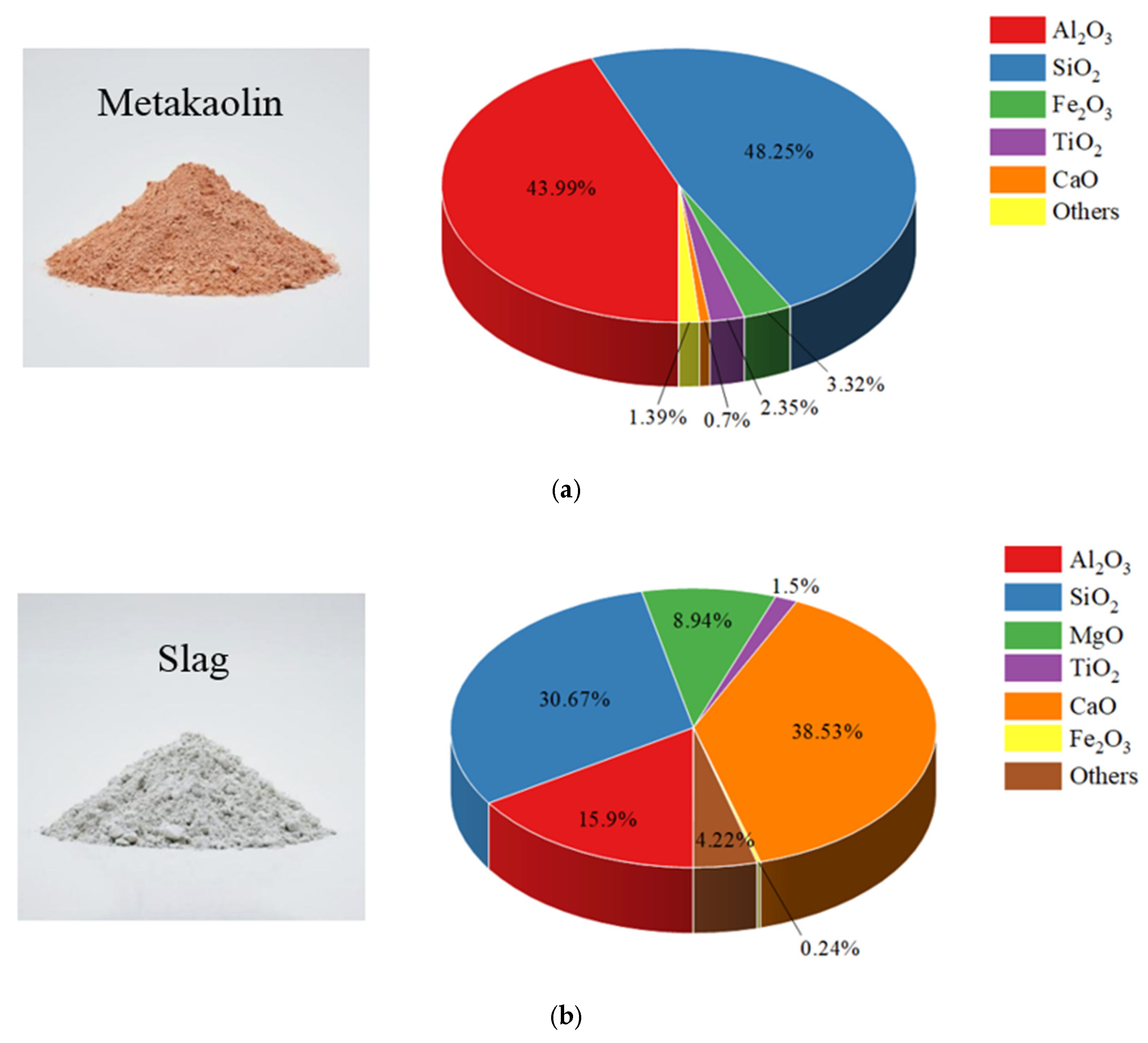
Figure 1. The raw materials of geopolymer used in this study, (a) Metakaolin, (b) Slag.
Buildings 15 04446 g001
Figure 2. The cement concrete substrate with different surface roughness. (a) The dimensions of the concrete substrate, (b) The bonding surface with different roughness.
Buildings 15 04446 g002
Figure 3. Interfacial bonding agents used in this study, (a) Geopolymer slurry, (b) Styrene butadiene rubber, (c) U-type expansion agent.
Buildings 15 04446 g003
Figure 4. The GCC specimens with different surface roughness and interface agents, (a) Specimens from different experimental groups, (b) Dimensions for splitting tensile test.
Buildings 15 04446 g004
Figure 5. The interface roughness characterization by JRC values for different bonding surfaces. (a) The JCR of cast surface: 1.42, (b) The JCR of brushed surface: 3.59, (c) The JCR of chiseled surface: 9.48, (d) The JCR of split surface: 14.58.
Buildings 15 04446 g005
Figure 6. Experimental setup for the splitting tensile test used in this study.
Buildings 15 04446 g006
Figure 7. Load–displacement curves of GCC with varying interface roughness and bonding agents. (a) JRC = 1.42, (b) JRC = 3.59, (c) JRC = 9.48, (d) JRC = 14.58.
Buildings 15 04446 g007aBuildings 15 04446 g007b
Figure 8. Failure modes of GCC specimens with different JCR and interface agents. (a) Geopolymer slurry, (b) No interface agent, (c) SBR emulsion, (d) U-type expansion agent.
Buildings 15 04446 g008
Figure 9. Correlation between interface roughness (JRC) and splitting tensile strength of GCC.
Buildings 15 04446 g009
Figure 10. Effect of interfacial agents on splitting tensile strength of GCC.
Buildings 15 04446 g010
Figure 11. Comparison between the load–displacement curves of geopolymer concrete and cement concrete under splitting load.
Buildings 15 04446 g011
Figure 12. Repair effectiveness analysis of GCC to cement concrete and geopolymer concrete. (a) Cement concrete, (b) Geopolymer concrete.
Buildings 15 04446 g012
Figure 13. Regression analysis of JRC and splitting tensile strength.
Buildings 15 04446 g013
Figure 14. Comparison between the experimental and predicted splitting tensile strength values.
Buildings 15 04446 g014
Table 1. The chemical composition of Portland cement.
CaO (%)SiO2 (%)Al2O3 (%)Fe2O3 (%)MgO (%)SO3 (%)Cl− (%)Others (%)
51.4224.998.264.033.712.510.045.04
Table 2. Mix design proportions for the geopolymer–concrete composite (GCC).
MaterialCement
(kg/m3)
Metakaolin
(kg/m3)
Slag
(kg/m3)
Gravel
(kg/m3)
Sand
(kg/m3)
Water
(kg/m3)
Activator
(kg/m3)
Cement concrete425.2--1301.1586.7187.1-
Geopolymer concrete-212.5212.51300.0650.0-300.1
Table 3. Fitting coefficients of the proposed model.
Coefficient aCoefficient bCoefficient c
0.00500.0035−0.0540
Disclaimer/Publisher’s Note: The statements, opinions and data contained in all publications are solely those of the individual author(s) and contributor(s) and not of MDPI and/or the editor(s). MDPI and/or the editor(s) disclaim responsibility for any injury to people or property resulting from any ideas, methods, instructions or products referred to in the content.