Article

Experimental Investigation of Metamaterial-Inspired Periodic Foundation Systems with Embedded Piezoelectric Layers for Seismic Vibration Attenuation †

1
Department of Civil Engineering, Faculty of Engineering and Architecture, Erzincan Binali Yildirim University, 24100 Erzincan, Türkiye
2
Department of Nanoscience and Nanotechnology, Faculty of Art and Science, Burdur Mehmet Akif Ersoy University, 15100 Burdur, Türkiye
3
Department of Electrical and Electronics Engineering, Faculty of Engineering and Architecture, Erzincan Binali Yildirim University, 24100 Erzincan, Türkiye
4
Department of Electronics and Automation, Vocational School, Erzincan Binali Yildirim University, 24100 Erzincan, Türkiye
5
Opticianry Programme, Gölhisar Vocational School of Health Services, Burdur Mehmet Akif Ersoy University, 15100 Burdur, Türkiye
*
Author to whom correspondence should be addressed.
This article is an extended version of our conference paper presented at the International Yıldırım Bayezid Scientific Research and Innovation Symposium (IYBSRIS 2025), Bursa, Türkiye, 9–10 May 2025, and published in the symposium proceedings (Vol. 2, pp. 173–187).
Buildings 2025, 15(24), 4399; https://doi.org/10.3390/buildings15244399
Submission received: 30 October 2025 / Revised: 24 November 2025 / Accepted: 3 December 2025 / Published: 5 December 2025

Abstract

Seismic metamaterial-inspired periodic foundations have emerged as promising vibration-mitigation concepts capable of attenuating seismic wave propagation within specific frequency bands. This study presents an experimental investigation on the dynamic response of periodic foundation configurations, with and without embedded piezoelectric layers, to evaluate their vibration-attenuation characteristics. The experimental program employed a shake table driven by a 0.75 kW servo motor and included excitation step counts of 3000, 4000, and 5000. Accelerometers mounted on the specimen surfaces recorded vibration data at 80 ms intervals. Three foundation configurations were tested: (i) a conventional reinforced concrete block, (ii) a one-dimensional periodic foundation composed of alternating concrete and rubber layers, and (iii) a periodic foundation incorporating piezoelectric modules. Time-domain and frequency-domain analyses showed that the periodic foundations achieved notable reductions in both peak and RMS accelerations, especially near resonance frequencies. The configuration, including piezoelectric layers, exhibited similar attenuation performance while also generating measurable instantaneous voltage outputs under vibration. However, these voltage peaks—reaching a maximum of 1.64 V—represent only a laboratory-scale, proof-of-concept demonstration of electromechanical coupling rather than a practical or continuous form of energy harvesting, given the inherently sporadic nature of seismic excitation. Overall, the results confirm that the tested system is not a full metamaterial in the classical sense but rather a metamaterial-inspired periodic arrangement capable of inducing band-gap-based vibration attenuation. The inclusion of piezoelectric elements provides auxiliary sensing and micro-energy-generation capabilities, offering a preliminary foundation for future multifunctional seismic-protection concepts.

1. Introduction

Earthquakes are natural phenomena that impose significant economic burdens through structural damage and pose severe threats to human life through building collapses. In this context, each country establishes its own seismic design codes tailored to its local ground conditions and seismic characteristics. For instance, the Turkish Building Earthquake Code [1] defines various earthquake ground motion levels and specifies acceptable damage limits for structures based on their intended use. During rare, highly destructive earthquakes corresponding to the DD-1 level, structural systems are expected to experience limited yet tolerable body damage without exceeding the collapse prevention limit. At the DD-2 level, repairable and relatively moderate structural damages are deemed acceptable. However, since the occurrence times of major earthquakes cannot be predicted and widespread structural damage can result in extensive destruction, severe administrative and economic challenges may arise regarding urban planning and structural safety. Consequently, developing next-generation isolation techniques capable of directly dissipating incoming seismic energy without causing any structural damage has become a contemporary and high-priority research topic in engineering.
Recent studies have revealed the wave propagation control capability of seismic metamaterials and their special subclass: phononic crystals [2,3,4,5,6]. Seismic metamaterials can physically restrict the propagation of seismic waves by generating band gaps within specific frequency ranges, thereby filtering earthquake energy before it reaches the structure [7,8,9]. Based on this principle, numerous studies have investigated the potential application of seismic metamaterials as alternative isolation systems. The proposed methods vary according to their intended application scales and practical feasibility.
Although certain studies have suggested seismic isolation at the urban scale, such approaches face substantial challenges regarding field implementation [10]. Another approach involves barrier-based systems developed to attenuate seismic waves in the surrounding soil before they reach the protected structure. These systems rely on physical configurations that limit the propagation of surface waves [11,12,13,14,15,16,17,18,19]. In this article, we extend and significantly improve upon the initial findings reported in the conference paper presented at IYBSRIS 2025 [20], offering a more comprehensive experimental investigation and advanced analysis of periodic foundation systems. In this study, an alternative approach—periodic foundation systems—was experimentally investigated. Periodic foundations consist of structural bases composed of materials with different elastic moduli arranged in a periodic manner. Previous studies have shown that structures equipped with periodic foundations exhibit significantly lower acceleration responses under identical vibration conditions compared with those with conventional foundations [21,22,23,24,25,26].
Within the scope of this study, a periodic foundation system supported by experimental-scale piezoelectric sensors was developed to attenuate low-frequency waves, which are of particular interest in earthquake engineering. In addition to experimentally demonstrating that this system exhibits superior damping performance against waves with lower frequency content compared with non-piezoelectric periodic foundations [27,28], it was also determined, for the first time in an integrated manner, that electrical energy can be harvested through piezoelectric sensors under vibrational excitation.
It is important to clarify that the present system should not be considered a full metamaterial in the classical sense. Rather, it represents a metamaterial-inspired periodic foundation whose dynamic response arises from its engineered impedance mismatch between rubber and concrete layers. Classical elastic metamaterials rely on sub-wavelength resonant units, whereas the current laboratory-scale prototype operates in the long-wavelength regime. The integration of piezoelectric components introduces an active energy-conversion capability, but this does not alter the fact that the structure remains fundamentally a periodic foundation with metamaterial-like attenuation characteristics. Although the system does not qualify as a classical metamaterial, it exhibits band-gap–induced vibration attenuation through its periodic impedance-contrast configuration. Therefore, throughout this paper, the term ‘metamaterial-inspired periodic foundation’ is adopted to more accurately describe the system.
In the first part of this study, the experimental specimen was modeled using the COMSOL Multiphysics software (version 5.4) package, and its frequency band-gap formation capacity and mode shapes were evaluated. In the second part, the acceleration responses of the experimental specimens under vibration were measured, and the energy dissipation characteristics associated with the frequency band gaps of the periodic structure were demonstrated. In the third part, the ability of the experimental specimen incorporating piezoelectric sensors to generate electrical energy under vibrational excitation—and thus, its potential use for energy harvesting—was experimentally demonstrated, along with its contribution to energy attenuation within lower frequency ranges. However, the voltage outputs observed in this study represent momentary, microwatt-scale peaks and should be interpreted strictly as a proof-of-concept rather than a practically utilizable seismic energy source.
As a result of this study, it was experimentally demonstrated that next-generation isolation systems based on metamaterials possess the potential not only for damage mitigation but also for sustainable energy utilization.

2. Materials and Methods

2.1. Phononic Crystal Structure and Modeling

In this study, a one-dimensional phononic crystal structure reinforced with piezoelectric layers (Local Manufacturer, Istanbul, Türkiye) was modeled to mitigate seismic vibrations. The system consisted of sequentially arranged layers of rubber (blue) (NAR Kaucuk ve Zemin Sistemleri San. Tic. A.Ş., Eskişehir, Türkiye) and concrete (gray). The concrete was prepared in-house at the March 13 Structural Mechanics Laboratory of Erzincan Binali Yıldırım University, and no commercial supplier was used. Each layer had a thickness of h = 4 cm, with a periodic unit cell size of a = 8 cm. The layers were 30 cm × 30 cm, and the overall system was designed as a three-dimensional setup. The analytical model is presented in Figure 1.
The modeling and numerical calculations were carried out using COMSOL Multiphysics 5.4 (COMSOL AB, Stockholm, Sweden). The Solid Mechanics module was used, and the material properties were defined as summarized in the table. For concrete, the density was set to 2400 kg/m3, Young’s modulus to 24.392 GPa, and Poisson’s ratio to 0.2. For rubber, the density was 915 kg/m3, Young’s modulus was 0.15 MPa, and Poisson’s ratio was 0.4. To account for the rubber layers’ nonlinear behavior, the Neo-Hookean model was used with the ‘Hyperelastic Material’ option enabled.
Excitation was applied to the bottom surface in the form of a uniform harmonic shear stress simulating a vertically upward-propagating planar SH-wave, while the top surface was left free for transmission measurements. Low-reflection boundary conditions and absorbing layers were introduced at the side surfaces to minimize boundary effects and reflections. The model dimensions were chosen to be sufficiently larger than the wavelengths at the working frequencies to suppress edge scattering.
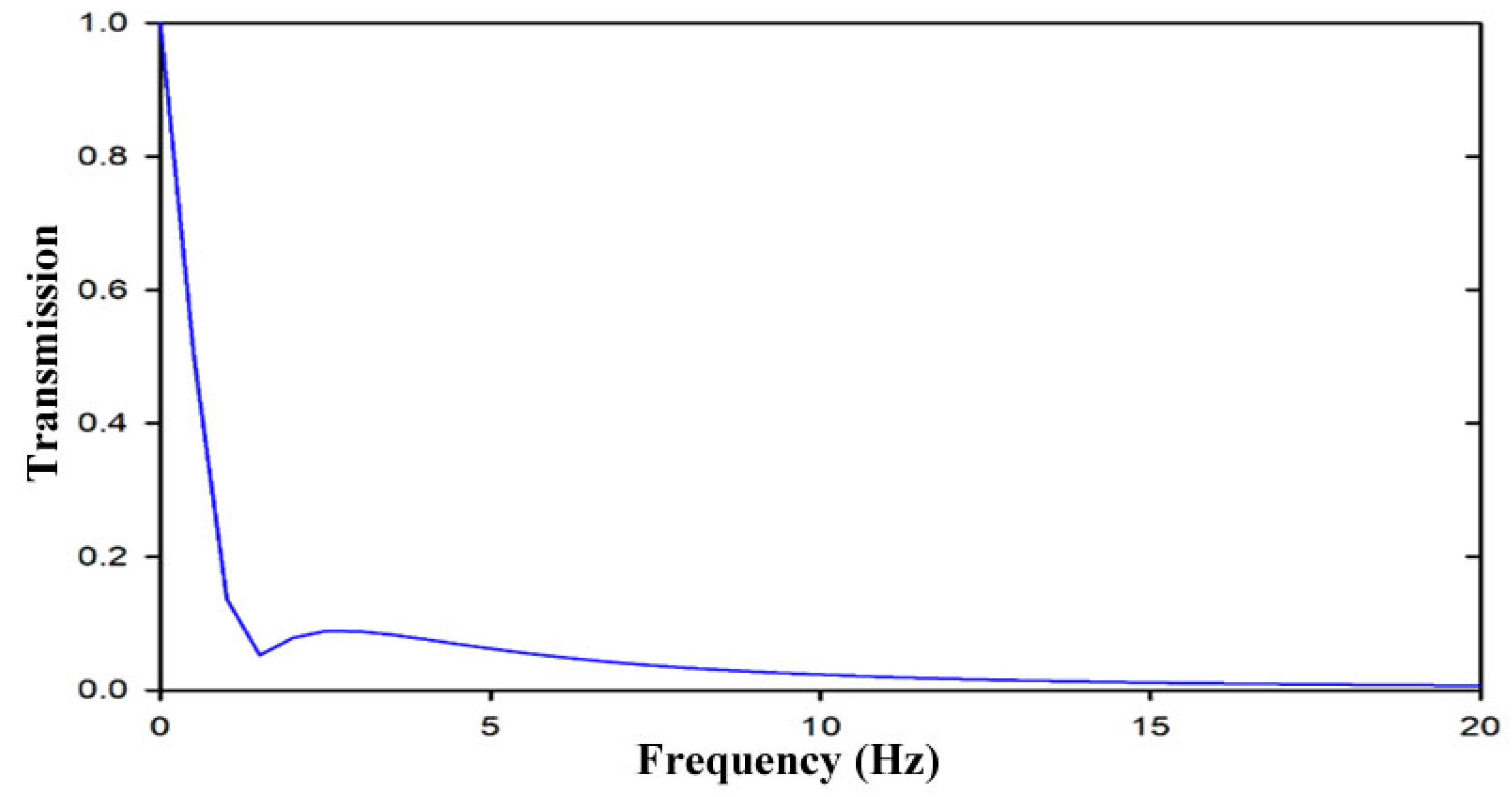
The transmission behavior of the concrete–rubber layered sandwich system under SH-wave (shear-horizontal polarization) excitation was investigated in the frequency domain via the finite element method. The linear complex system was solved using a direct solver, performing a frequency sweep from 0 to 20 Hz in 0.5 Hz increments. Transmission spectra were measured for the system subjected to SH-wave excitation.
As illustrated in Figure 2, the transmission spectrum shows that the layered concrete–rubber structure behaves as a distinct low-pass mechanical filter above 1 Hz. Transmission remains relatively high at very low frequencies (≈0–0.5 Hz) but decreases sharply in the 1–2 Hz band, where a reduction of ≈−25.6 dB is achieved at 1.5 Hz (T = 0.052). A shallow local peak (T ≈ 0.089; ≈−21.1 dB) occurs around 2.5–3 Hz, after which transmission again decreases. Beyond 6 Hz, the structure maintains strong and stable isolation with T ≤ 0.05 (≥−26 dB), reaching T = 0.023 (≈−32.7 dB) at 10 Hz and T = 0.0066 (≈−43.6 dB) at 20 Hz. These spectral characteristics indicate that effective suppression of wave transmission begins at frequencies above 1 Hz, primarily due to the impedance contrast arising from the stiffness and damping mismatch between concrete and rubber.
It is important to note that the proposed periodic foundation is conceptually different from widely used seismic isolation devices such as laminated rubber bearings (LRBs) and friction pendulum bearings (FPBs). Conventional isolators rely on mechanical flexibility and controlled restoring forces to shift the structural period and reduce seismic demand. In contrast, the periodic foundation operates based on elastic wave propagation and attenuation mechanisms, generating frequency band gaps that suppress shear-wave transmission without requiring mechanical bearings or sliding interfaces.
Furthermore, the inclusion of piezoelectric layers enables simultaneous vibration mitigation and energy harvesting, providing a multi-functional capability not present in classical isolation systems. While the present study does not aim to replace established isolator technologies, the results demonstrate the potential of periodic metamaterial-inspired periodic foundations as a complementary approach for future multi-functional isolation systems.
It should be noted that the frequency of input excitation in our shake table tests was significantly higher than that typically observed in natural earthquakes. While natural seismic events typically involve lower frequencies, high-frequency excitation is still relevant for studying the system’s performance in controlled settings. These higher frequencies serve to establish a baseline for the system’s behavior under various conditions, though future studies should explore the response under more representative seismic frequencies.

2.2. Shake Table Design

A shake table was designed to transfer artificially generated motion, simulating ground excitation, to the structural elements under study. The literature documents numerous shake table designs driven by various actuation systems—hydraulic, electromechanical, stepper motor, servo motor, and others—each offering different performance envelopes regarding frequency and amplitude [29,30,31].
Acceleration measurements were acquired using ADXL345 three-axis accelerometers (supplied by Robotistan Elektronik Ticaret A.Ş., İstanbul, Türkiye) positioned at predetermined locations and an Arduino Mega 2560 microcontroller (supplied by SAMM Teknoloji İletişim San. ve Tic. A.Ş., Kocaeli, Türkiye). The measurement and control systems were integrated so that the shake table control panel simultaneously recorded the acceleration time histories; the recorded data were subsequently analyzed for their frequency content and peak acceleration values. The system had a gross payload capacity of approximately 80 kg and drove a 40 cm × 40 cm table fabricated from ST35 steel.
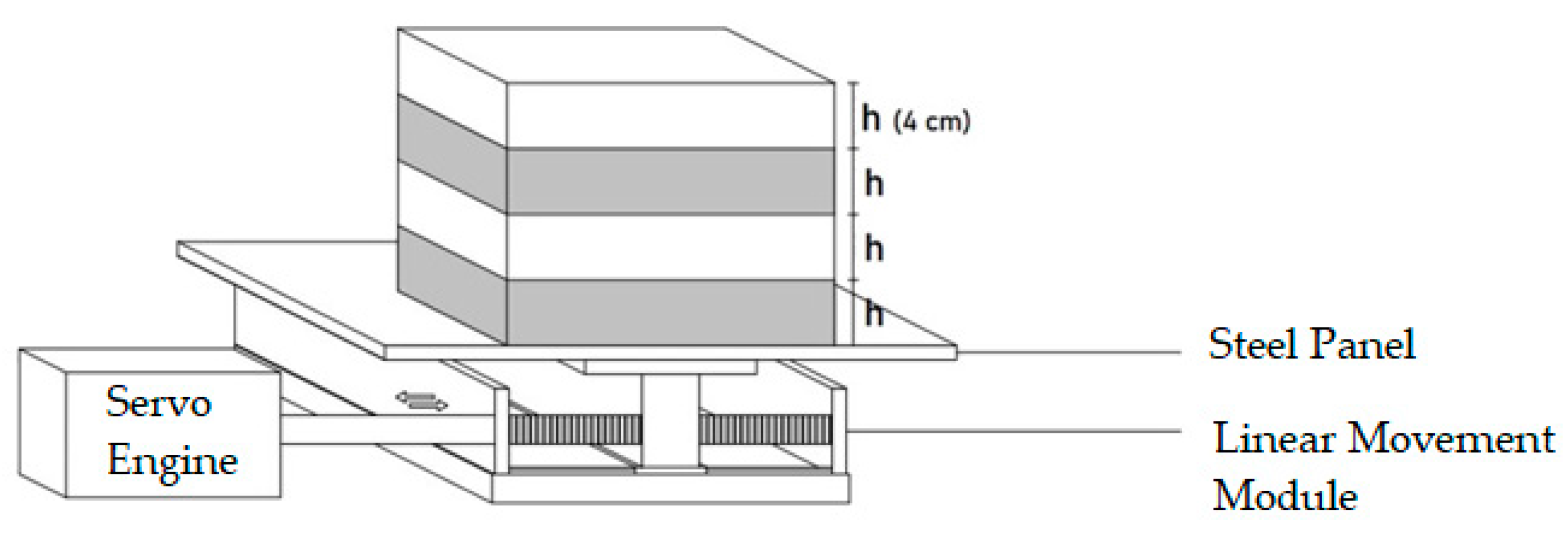
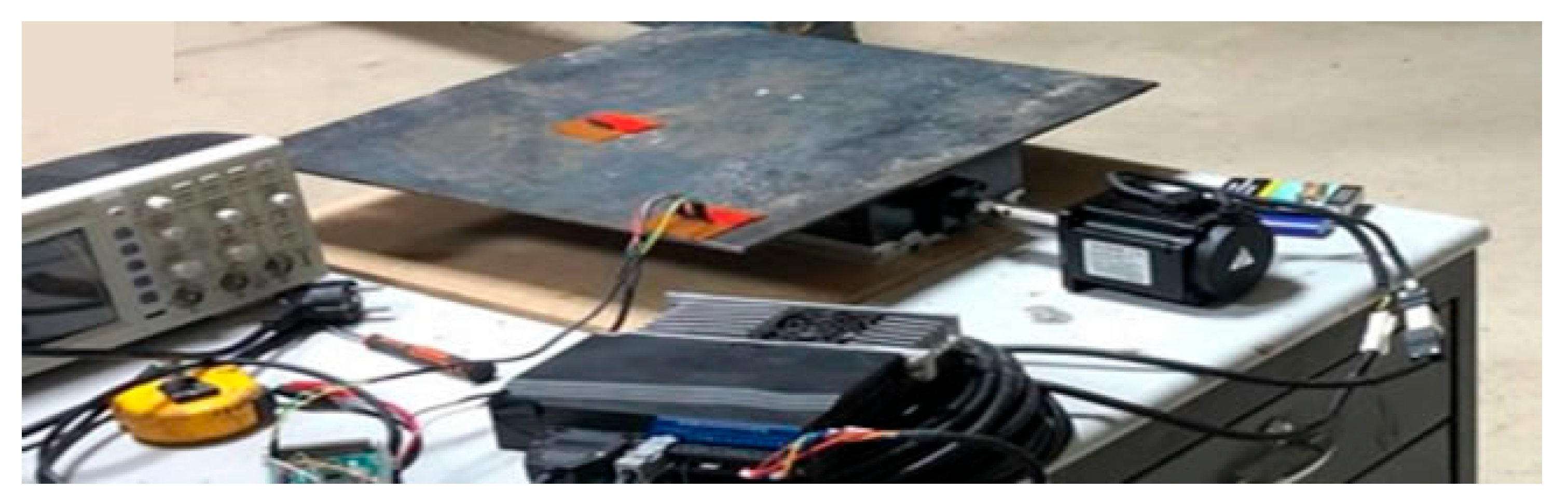
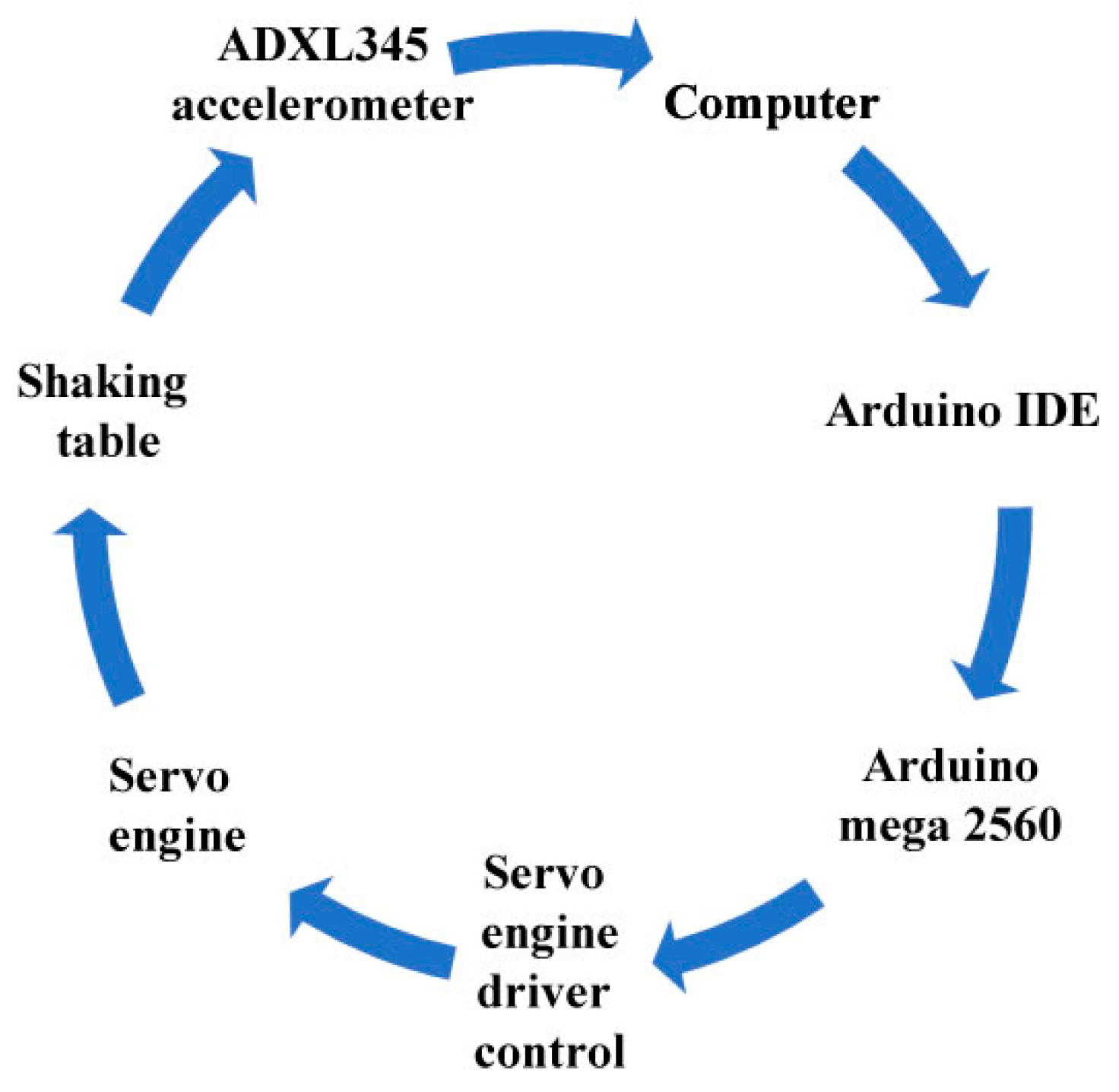
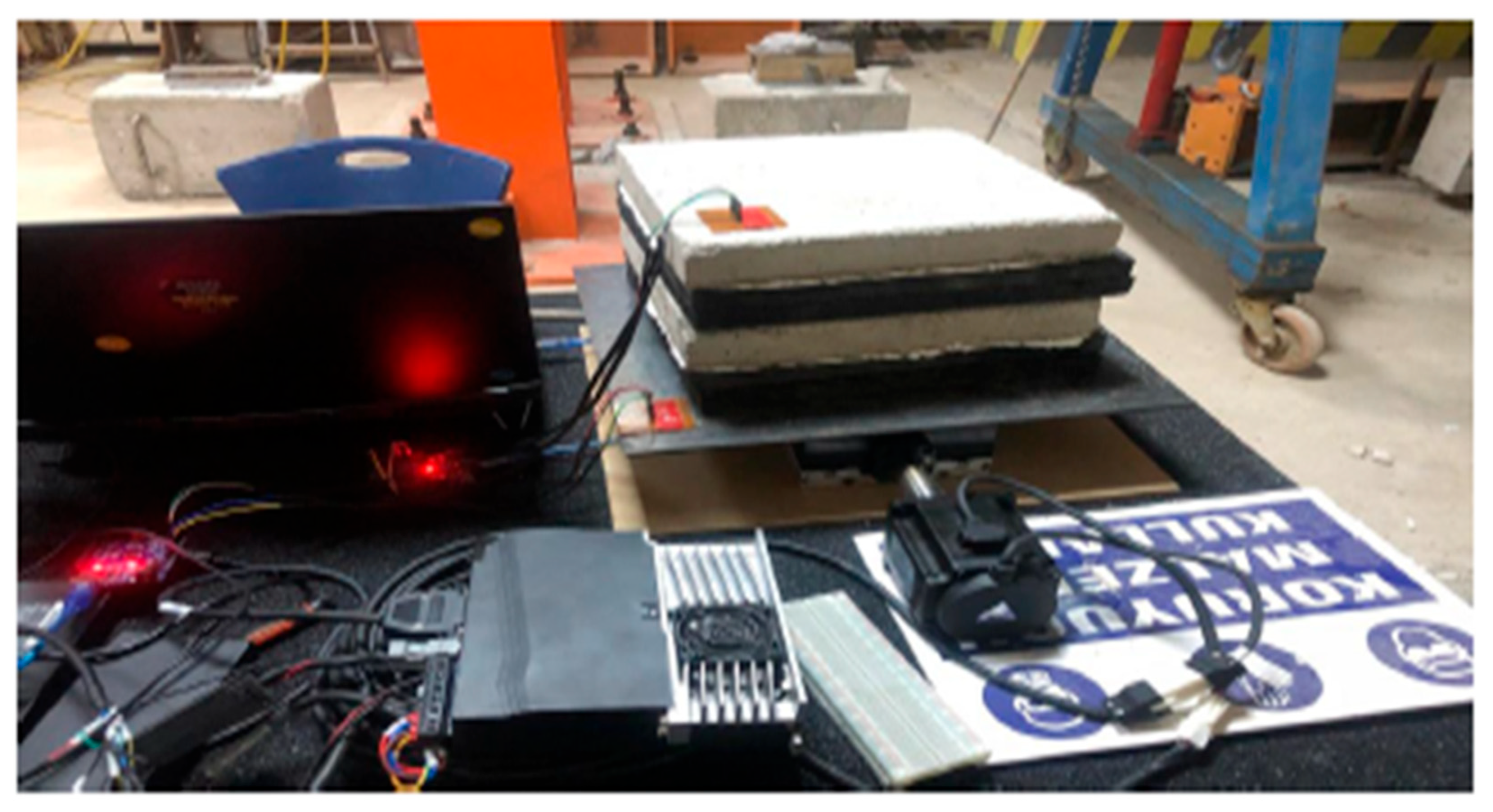
Horizontal excitation was generated using a 750 W servo motor (Model 80LZ750, SNK Mekatronik Tic. Ltd. Şti., Ankara, Türkiye) coupled to a DKZM 15 linear motion module (SNK Mekatronik Tic. Ltd. Şti., Ankara, Türkiye). The maximum horizontal displacement achievable by the shake table was approximately 7.5 cm. The main components of the system and the Arduino IDE-based control architecture are illustrated in Figure 3, Figure 4, Figure 5 and Figure 6 referenced below.
The brand/model, technical capacity, and connection specifications of the Arduino control system, servo motor, and sensor components are shown in Table 1.
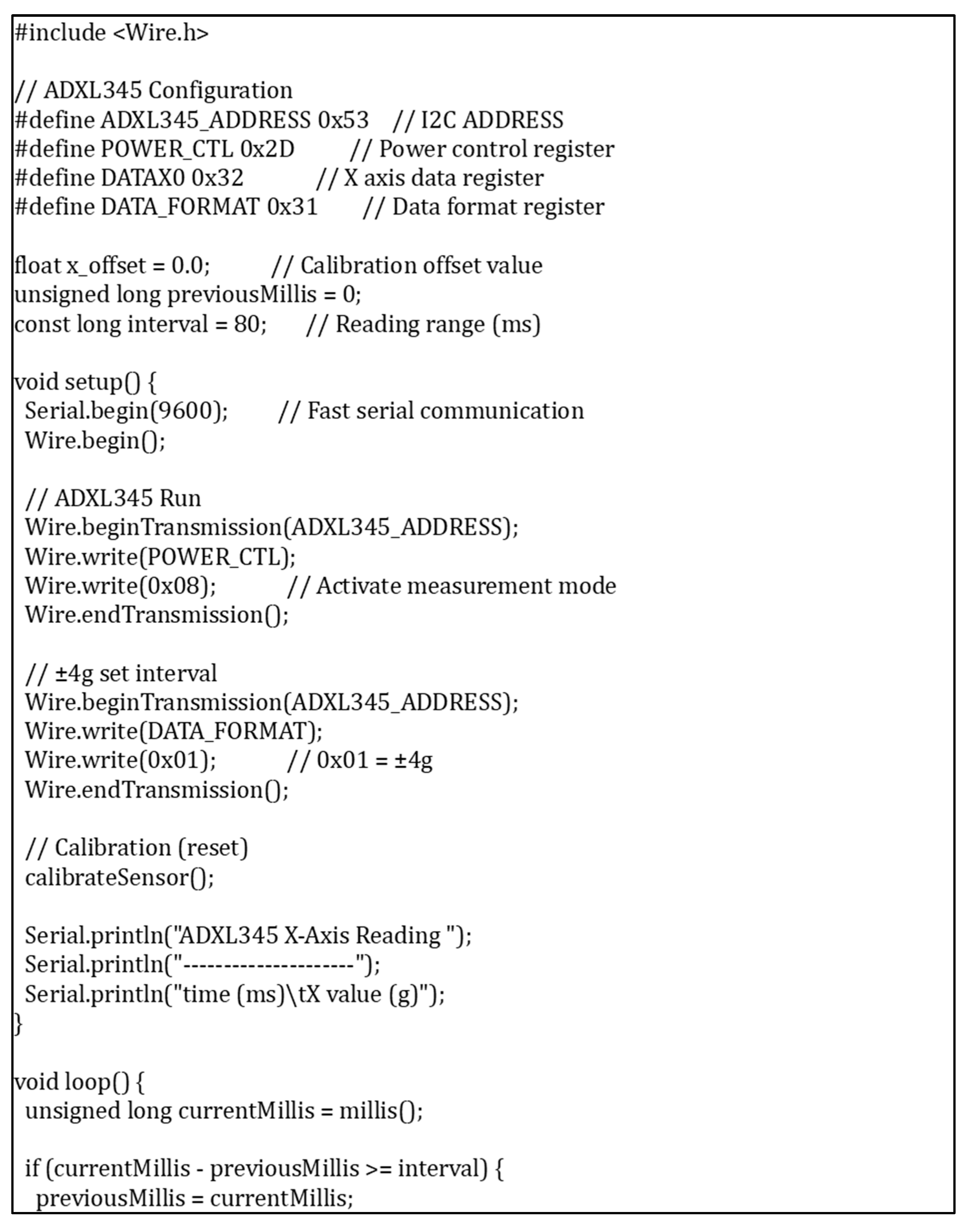
Sample code for the Arduino cards was prepared using the Arduino IDE (Arduino S.r.l., Turin, Italy), as shown in Figure 7.
To strengthen the scientific basis of the experimental design, it is essential to emphasize that the selected geometry and material configuration were derived from wave impedance theory. The alternating concrete–rubber layers were chosen to create a strong impedance mismatch, enabling partial reflection and attenuation of vertically propagating SH-waves. The specimen dimensions ensured that the tested frequencies corresponded to the long-wavelength regime, where periodic foundations exhibit pronounced filtering behavior. The boundary conditions and excitation protocol were also selected deliberately to suppress side reflections, enabling a controlled assessment of transmission behavior rather than a general laboratory demonstration. Thus, the experimental setup was not arbitrary; it was specifically structured to reveal the attenuation mechanisms underlying periodic foundations.

2.3. Preparation of Test Specimens

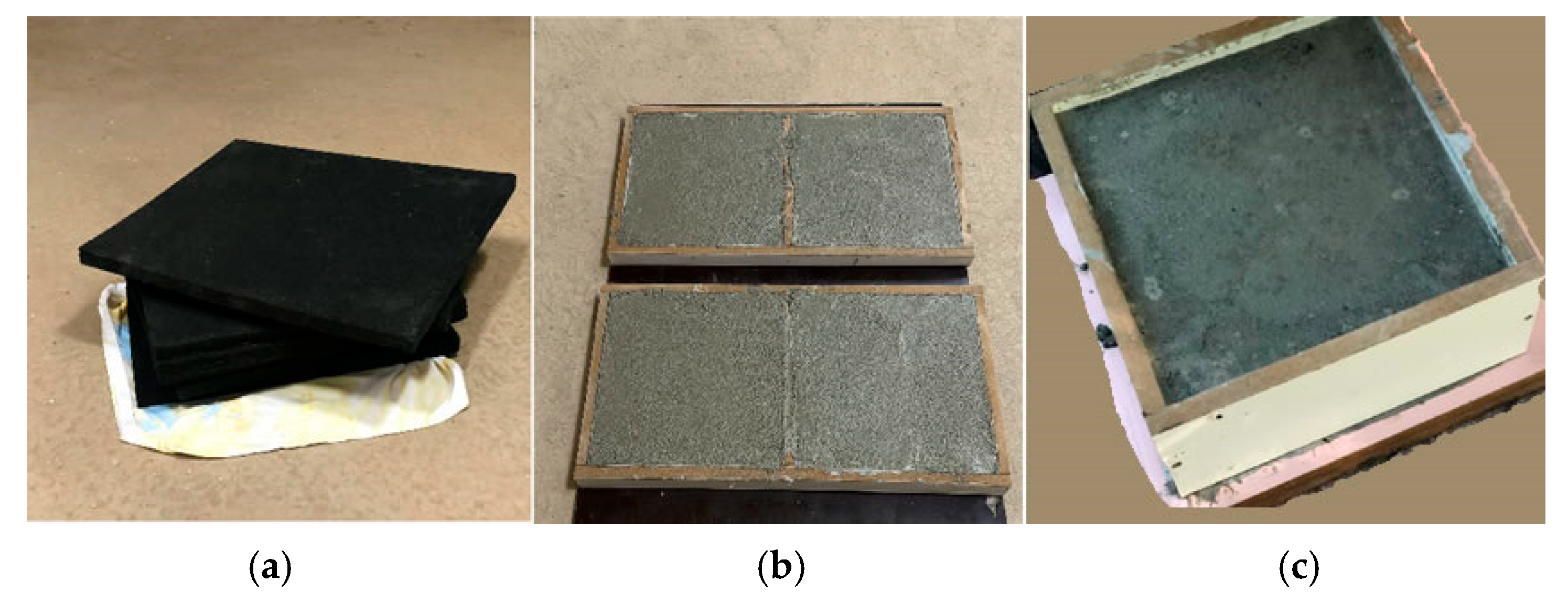
The specimens were prepared in scaled dimensions to represent soil–structure interaction and to ensure suitability for laboratory testing. Each concrete foundation specimen had a base area of 30 × 30 cm and a thickness of 4 cm, while the conventional foundation specimen had a base area of 30 × 30 cm and a thickness of 16 cm. These dimensions were selected to provide a scaled representation of soil–structure interaction under laboratory conditions while ensuring practicality in handling and installation. The scaling ratio was determined based on similar experimental studies in the literature and the need to observe the dynamic response within feasible limits. The rubber layers were cut to the required test dimensions using commercial rubber sheets supplied by NAR Kaucuk ve Zemin Sistemleri San. Tic. A.Ş. (Eskişehir, Türkiye). After casting, the concrete specimens were covered with moist cloths to prevent water loss and to initiate curing. Following curing, the specimens were cut to the desired test dimensions. The stages of the production process are shown in detail in Figure 8, while the physical and mechanical properties of the materials are summarized in Table 2. Concrete specimens were prepared in accordance with TS EN 12390-2 [32], then cured in a water tank for 28 days at 20 ± 2 °C and ≥95% relative humidity. After curing, the plates were conditioned to room temperature before testing.
It should be mentioned that the frequency of excitation used in our shake table tests is considerably higher than the typical frequencies associated with natural seismic events. This higher excitation frequency was intentionally chosen to study the behavior of the system under extreme conditions. While the results may not directly correspond to real-world earthquakes, the tests provided a controlled environment to assess the system’s response and performance.
It should also be noted that the test specimens were designed only to support their self-weight during the vibration experiments. Axial load-bearing capacity and compressive loading conditions were not included in the present study, as the experimental program focused solely on the dynamic response of the periodic foundation. Therefore, the results reported herein do not represent the vertical load-bearing performance of the system.

2.4. Experimental Specimen Types and Instrumentation Details

The experiments in this study were limited to isolated foundations, and superstructures and axial loads were not considered. While this approach provides valuable data on the foundation’s seismic performance, future studies should incorporate superstructures and axial loads to fully capture the dynamic interaction between the foundation and the entire structure under real seismic conditions.
The experimental configurations investigated in this study were as follows:
  • One-dimensional periodic foundation: A one-dimensional (1D) metamaterial structure composed of alternating rubber and reinforced concrete blocks. This configuration was designed to attenuate vibration energy in the z-direction through frequency band gaps. Compared with the conventional foundation, the 1D periodic structure distributes vibration energy across target frequencies based on metamaterial principles.
  • Conventional foundation: A reference configuration consisting solely of a reinforced concrete block, without any isolation layers or metamaterial properties.
  • Piezoelectric-integrated 1D foundation (Piezo-1D): A periodic foundation structure integrated with piezoelectric sensors (supplied by a local manufacturer, Istanbul, Türkiye) to provide both vibration attenuation and energy-harvesting capabilities.
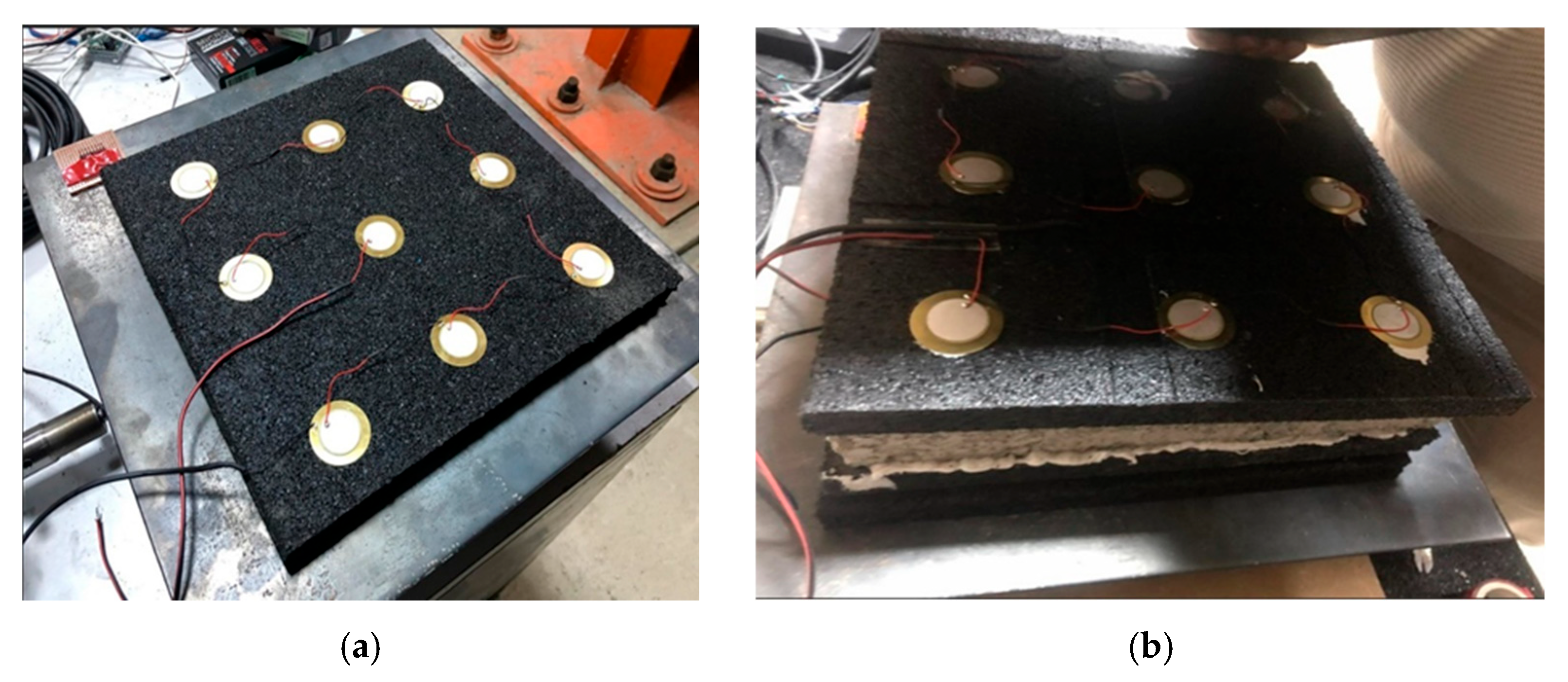
The piezoelectric sensors were embedded in the rubber layers using a commercially supplied polyurethane adhesive (local manufacturer, Türkiye) at 10 cm intervals. The positive and negative electrodes of the piezoelectric modules were interconnected and connected to an oscilloscope for electrical output measurements. The properties and placement details of the piezoelectric sensors are presented in Table 3.
It should be noted that the inclusion of piezoelectric layers in this study serves primarily as a proof-of-concept aimed at demonstrating electromechanical coupling rather than supplying usable electrical power. Given the inherently sporadic and aleatory nature of seismic events, the voltage levels obtained from the embedded piezoelectric elements should not be interpreted as practical or continuous energy sources.
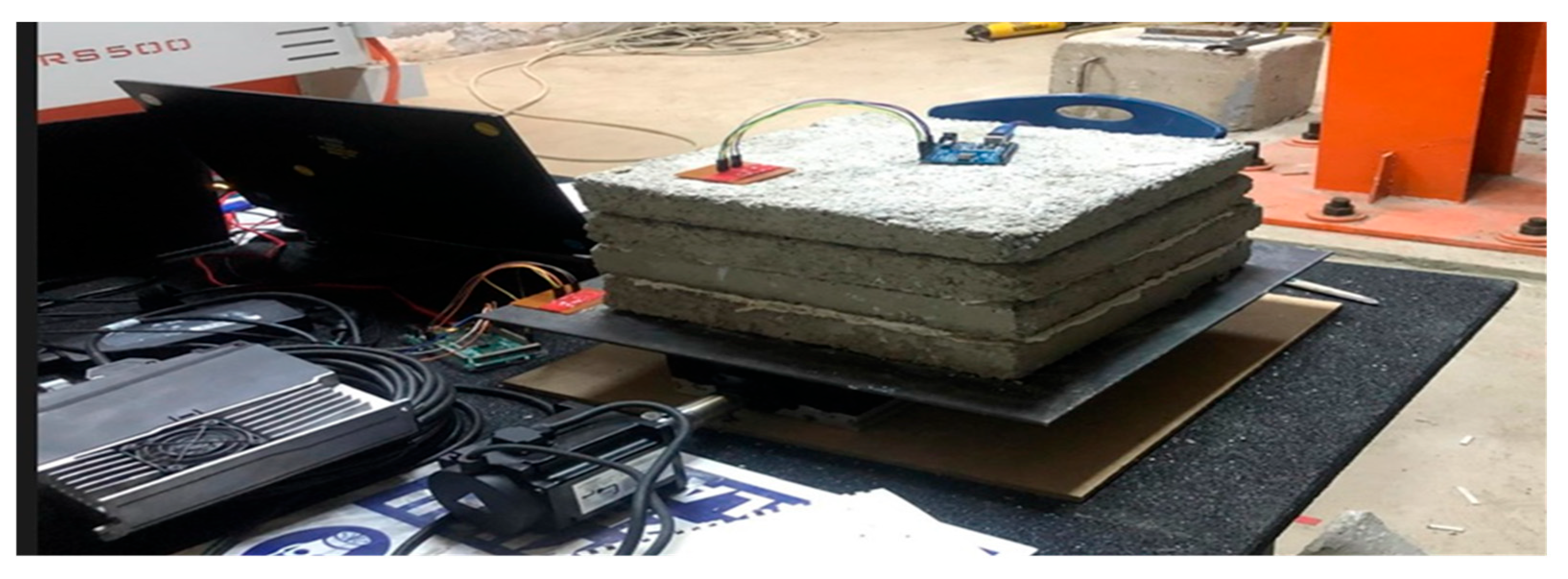
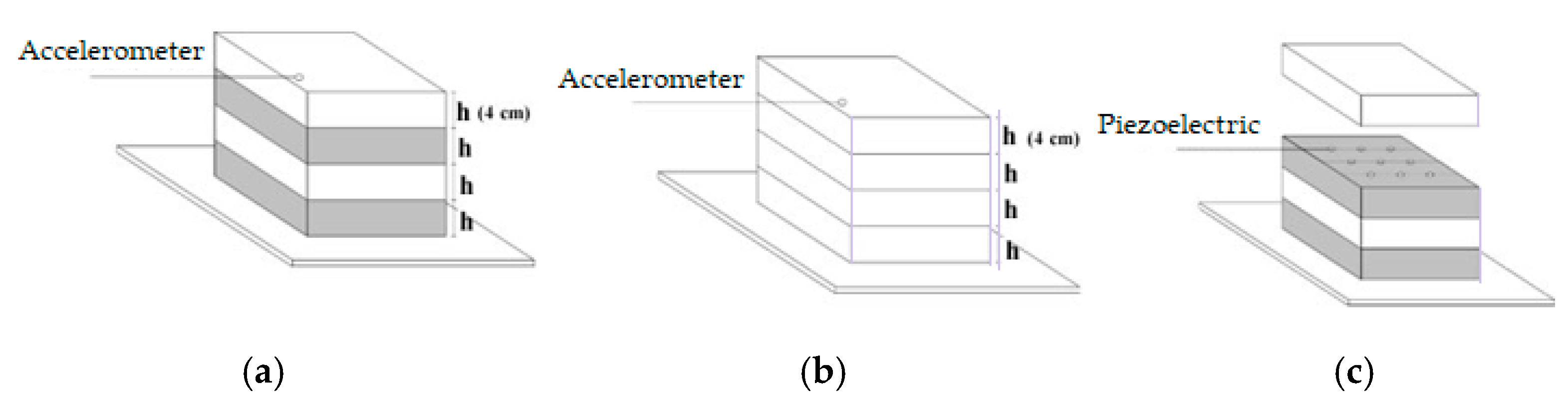
The experimental specimens are illustrated in Figure 9, Figure 10 and Figure 11, while their schematic representation is given in Figure 12.
Because seismic ground acceleration propagates through the structure and amplifies in the upper layers, accelerometers were placed on the top surfaces of the specimens, where the maximum acceleration response was expected.

3. Experimental Program

3.1. Applied Vibration Protocols

In this study, different random and periodic vibration protocols were applied to evaluate the dynamic responses of the test specimens under seismic loading. The servo motor’s motion was controlled using the Arduino IDE, and vibration scenarios were generated by varying the motor’s step count. Each excitation lasted for 20.667 s, during which the damping performance of the systems was analyzed.
The applied vibration protocols were intended exclusively to evaluate the dynamic isolation behavior of the foundation system. No vertical load or superstructure mass was introduced; thus, the test setup did not replicate the load-bearing conditions of a practical foundation under service loads.
Acceleration responses were recorded by accelerometers positioned on the top layers of the specimens, with a sampling interval of 80 ms. For the piezoelectric-integrated specimen, an additional random vibration excitation lasting 20 s was applied to evaluate its energy-harvesting potential. During this process, the voltage outputs from the piezoelectric sensors were recorded via an oscilloscope.
The servo motor’s rotational motion was converted to linear displacement via a lead screw mechanism. A pulse-frequency-based control system was used, in which vibration was generated according to the frequencies defined in the Arduino software (Arduino IDE 2.3.4). However, because the mechanical system’s actual vibration frequency did not precisely match the pulse frequency sent to the servo motor, the induced excitations were considered random. The theoretical rotational frequency of the motor was calculated using the following equations:
Motor Step Duration = 2 × Pulse Width,
Rotation Period = Motor Step Count × Step Duration,
Rotation Frequency 1/Rotation Period,
For a pulse width of 5 µs, the total step duration was 10 µs. The theoretical rotation frequencies for step counts of 3000, 4000, and 5000 were calculated as 33, 25, and 20 Hz, respectively. As expected, the excitation frequency decreased with increasing step count.
The number of excitation steps influences the energy content and spectral distribution of the harmonic input. Therefore, different pulse durations may activate different modal responses, leading to small variations in the observed dominant frequencies, even though the natural frequencies of the structure remain unchanged.
The vibration parameters applied to the test specimens are summarized in Table 4.
The vibration protocols in this study were applied only to the isolated foundation. However, future research should consider the effects of superstructures and axial loads to fully evaluate the performance of the foundation in a real-world seismic context. This will provide a more complete understanding of the foundation’s behavior under seismic excitation.

3.2. Assessment Methodology

In this study, the assessment methodology focused solely on the isolated foundation, without including axial loads or superstructures. While this provides a baseline for the performance of isolated foundations, further studies should expand the methodology to include these critical elements to better reflect real-world applications.
The assessment methodology was limited to the transmission, damping, and vibration characteristics of the periodic foundation. Since the load-bearing capacity was outside the scope of the current experimental design, the findings should be interpreted strictly within the context of dynamic-only excitation.
Moreover, this study primarily focused on the instantaneous voltage variations generated by the piezoelectric layers. Future studies will incorporate continuous monitoring of the power output to better characterize the energy-harvesting process over time and assess its efficiency under a range of dynamic conditions.
However, the electrical measurements obtained from the piezoelectric layers were included only as a proof-of-concept to demonstrate instantaneous electromechanical coupling, rather than as a primary performance indicator of the system.
Given the inherently sporadic and aleatory nature of seismic events, the voltage signals recorded in this study should not be interpreted as continuous or practically utilizable energy outputs.
The acceleration data obtained from the experimental tests were analyzed using SeismoSignal v2025 Release 1 (SeismoSoft Ltd., Pavia, Italy) software. Within the scope of these analyses, time-domain acceleration–time graphs were generated. The acceleration data were also subjected to a Fourier transform to obtain frequency spectra, enabling evaluation of the vibration frequency content.
The following indicators were adopted for comparative evaluations of system responses:
  • Maximum acceleration values;
  • Root-mean-square (RMS) values of acceleration;
  • Electrical output signals from piezoelectric sensors;
  • Frequency spectra obtained via Fourier transform;
  • Observed deformation effects under repeated vibrations.
This methodological approach enabled an objective comparison of the seismic performance of the conventional foundation, periodic foundation, and piezoelectric-integrated periodic foundation, in both the time and frequency domains.

4. Experiment Results

As the experiments were conducted without any superstructure mass or axial loading, the results presented in this section describe only the dynamic response of the isolated foundation. Determining whether the system can sustain practical service loads requires additional experiments incorporating vertical loading and structural masses, which have been identified as important future research steps.
While the experiments were conducted solely on the isolated foundation, it is acknowledged that real-world applications typically involve both the foundation and the superstructure, as well as axial loads. These elements are crucial for understanding the complete dynamic interaction between the foundation and the structure during seismic events. Therefore, while the results obtained provide valuable insights into the performance of isolated foundations, they are limited to the foundation itself. Further experiments incorporating the superstructure and axial loads are needed to extend the applicability of these findings to practical engineering scenarios.

4.1. Results of 4000-Step Vibration Excitation

In the Arduino software, the step count was set to 4000 with a pulse width of 5 microseconds, and the specimens were subjected to vibration for a total duration of 20.667 s. The theoretical rotational frequency of the motor was calculated as 25 Hz in Section 3.1. The accelerometers placed on the top layers of the specimens recorded their dynamic responses throughout the test. The acceleration records were analyzed in both the time and frequency domains using acceleration–time histories and fast Fourier transform (FFT).
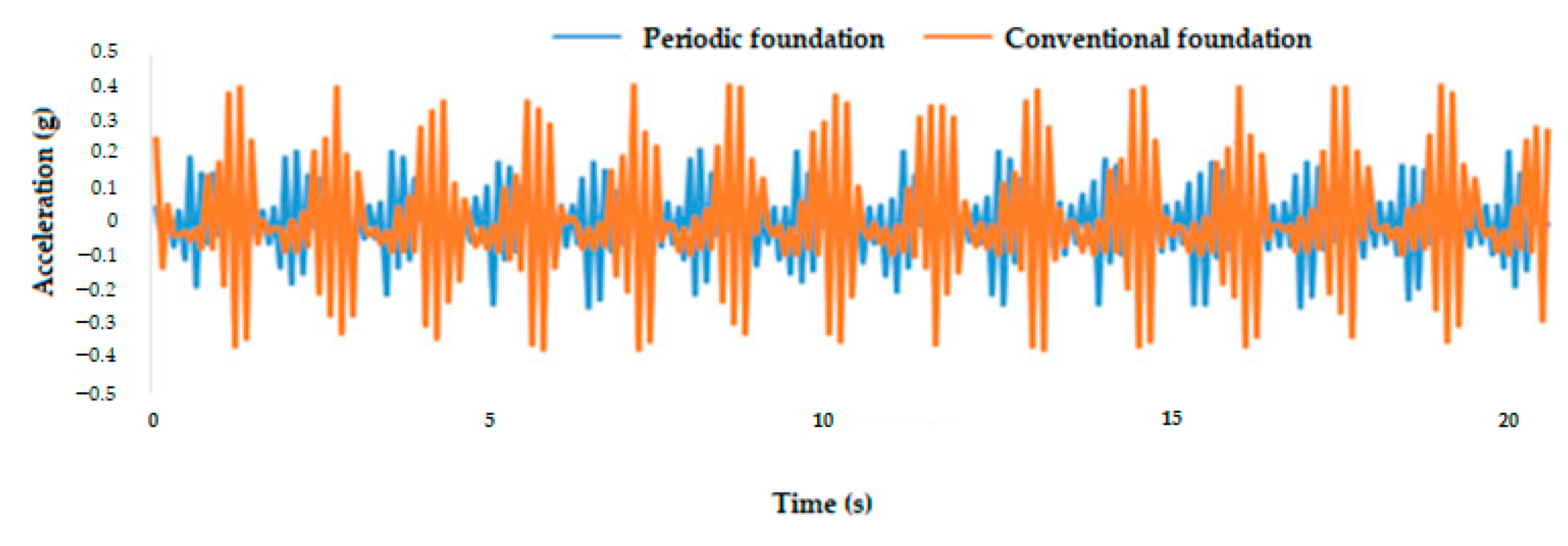
As shown in Figure 13, the maximum acceleration of the periodic foundation was 38% lower than that of the conventional foundation. Similarly, the root-mean-square (RMS) acceleration, which represents the average response over the vibration period, was 43% lower in the periodic foundation. These results clearly demonstrate that the periodic foundation not only exhibited lower peak acceleration responses but also significantly reduced overall dynamic responses during excitation.
The comparative results of dynamic responses under 4000-step excitation are summarized in Table 5.
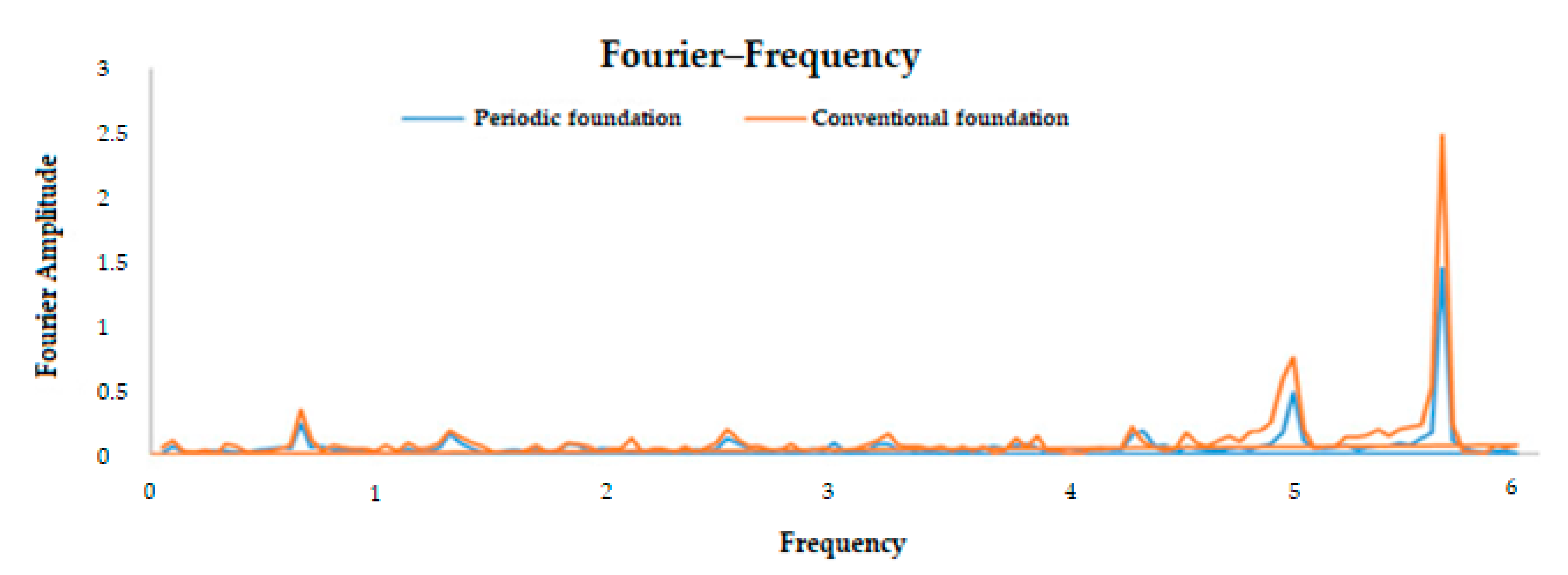
FFT analyses of the acceleration records were also conducted using SeismoSignal software to identify dominant frequencies and damping performance in the frequency domain. As illustrated in Figure 14, the dominant frequency band was observed between 5 and 6 Hz. In this range, the amplitude response of the periodic foundation was 42% lower than that of the conventional foundation. While the traditional specimen exhibited sudden amplitude spikes, the periodic foundation showed more stable, consistently lower-amplitude responses.
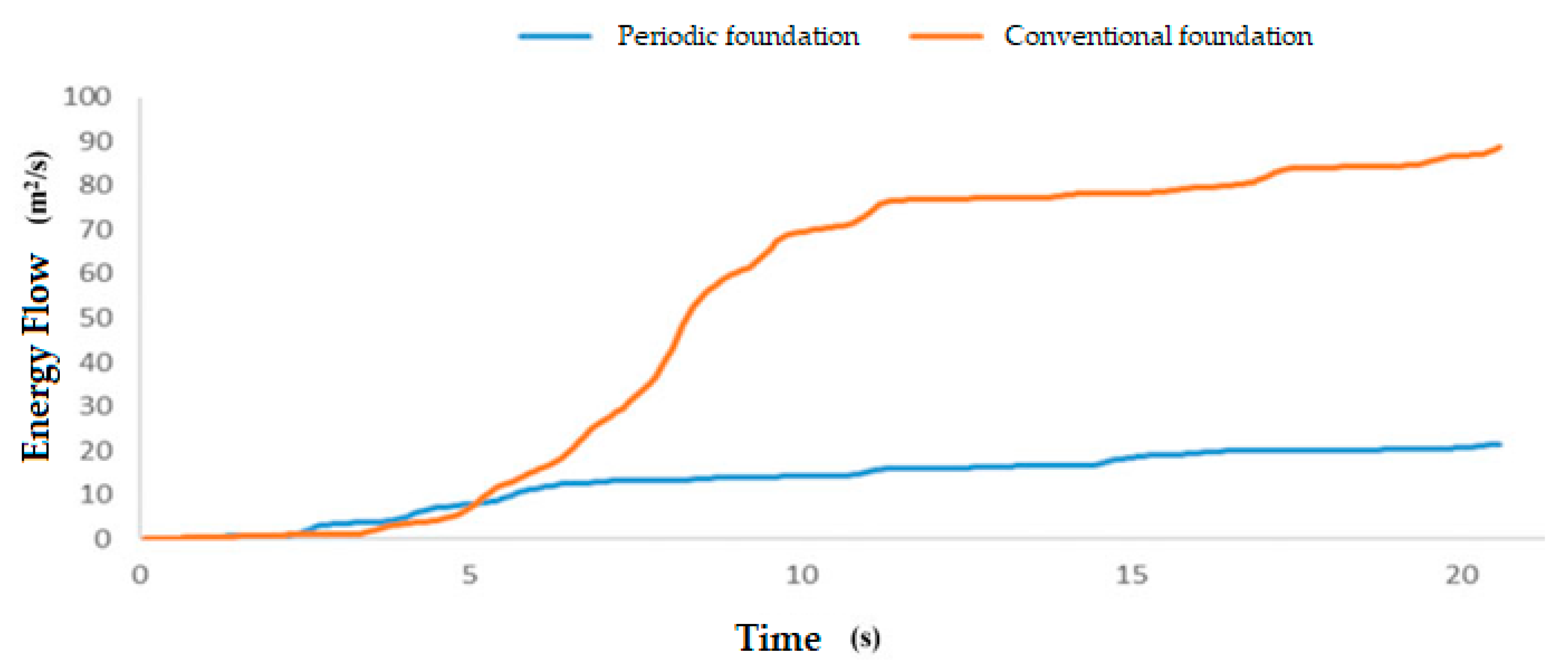
The energy flow analysis provided by SeismoSignal, presented in Figure 15, shows the cumulative energy transfer of the input ground motion to the structural system. It was observed that energy transfer in the conventional foundation increased rapidly and to higher magnitudes, whereas in the periodic foundation, it increased more gradually and remained at lower levels. This finding indicates that periodic foundations limit energy transmission and protect structural components from excessive stresses that may arise from sudden or repeated loading.
It should be noted that the slight variation observed in the dominant response frequencies across the 3000-, 4000-, and 5000-step excitations does not indicate a change in the natural frequencies of the system. The structure’s physical properties remained constant during all tests. The variation arises from differences in the frequency content and energy distribution of the input excitation. Longer pulse sequences introduce different modal participation levels and stronger nonlinear contributions from the rubber layers, which leads to minor shifts in the peak frequencies observed in the measured spectra.
The input excitation frequency in this test was significantly higher than those typically found in natural seismic events. Although this may limit direct comparisons with real earthquake conditions, the test provided valuable insights into the damping and vibration isolation capabilities of the periodic foundation system. Further studies are needed to assess the performance of the system under more representative seismic frequencies.

4.2. Results of 3000-Step Vibration Excitation

In the Arduino software, the step count was set to 3000 with a pulse width of 5 microseconds, and the specimens were subjected to vibration for a total duration of 20.667 s. The theoretical rotational frequency of the motor was calculated as 33 Hz in Section 3.1. The accelerometers placed on the top surfaces of the specimens recorded their dynamic responses during the test. The acceleration records were analyzed in both the time and frequency domains using acceleration–time plots and FFT analyses.
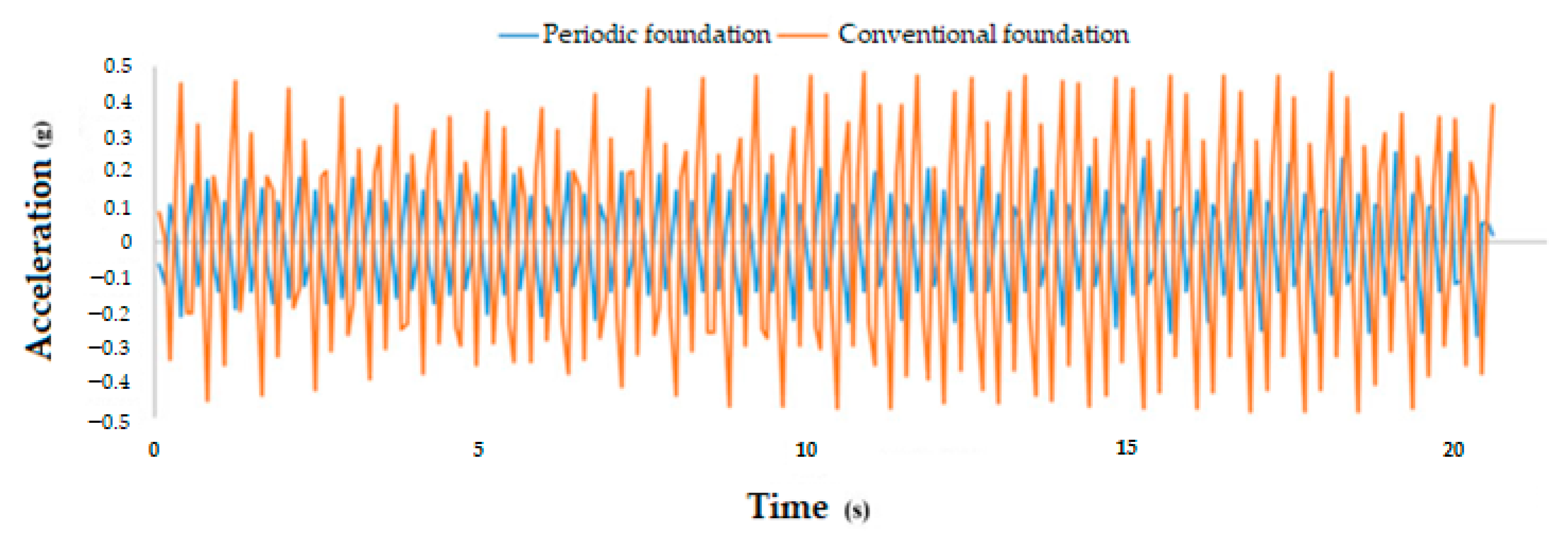
As illustrated in Figure 16, the maximum acceleration of the periodic foundation was 45% lower than that of the conventional foundation. Similarly, the RMS acceleration, which represents the average response during excitation, was 57% lower in the periodic foundation. These results indicate that the periodic foundation provided significantly reduced dynamic responses compared with the conventional system. This outcome is attributed to the overlap between the excitation frequency content and the band-gap frequencies of the periodic foundation. Therefore, the damping performance was considerably more effective. The results confirm that when vibration frequencies fall within the band-gap regions of periodic structures, the attenuation effect becomes markedly evident. Accordingly, the development of broader band-gap ranges, particularly in the low-frequency domain relevant to earthquake engineering, is critical for the successful implementation of metamaterial-inspired periodic isolation systems.
The comparative results regarding the dynamic responses under 3000-step excitation are summarized in Table 6.
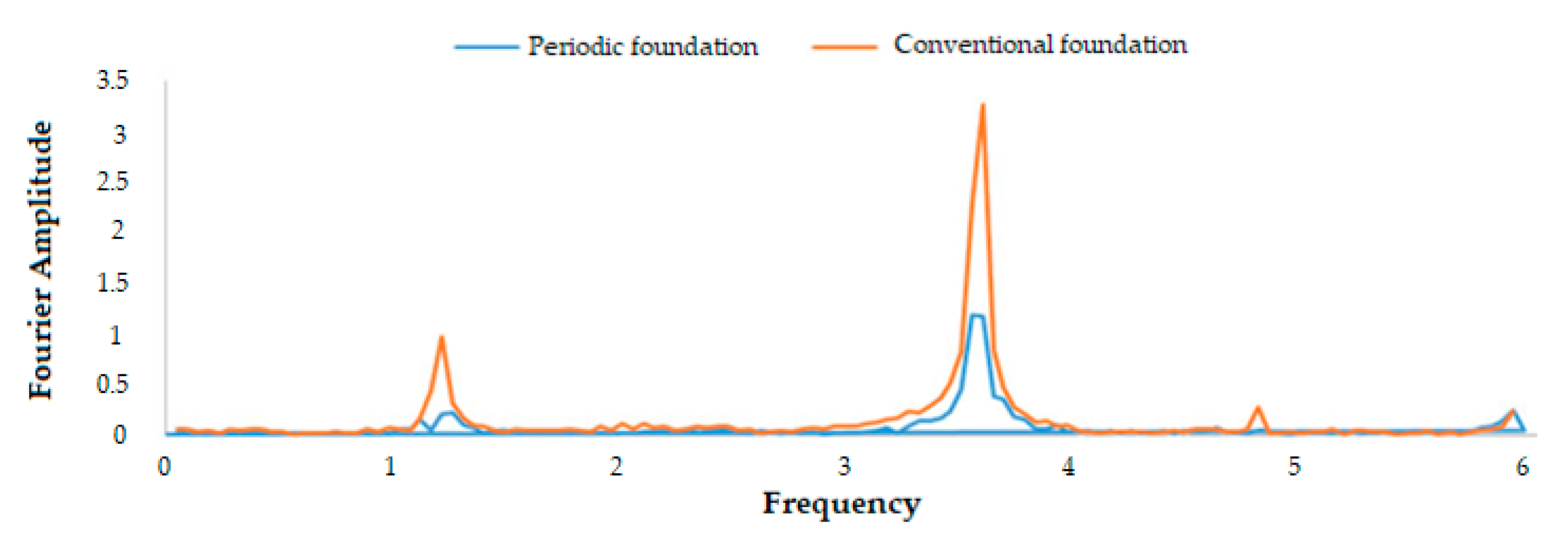
FFT analyses were also performed using SeismoSignal software. As presented in Figure 17, the dominant frequency band was observed between 3 and 4 Hz. In this frequency range, the amplitude of the periodic foundation was 63% lower than that of the conventional foundation. While sudden amplitude spikes were observed in the traditional specimen, the periodic foundation exhibited more stable, consistently lower amplitudes.

4.3. Results of 5000-Step Vibration Excitation

4.3.1. Energy-Harvesting Performance of Piezoelectric Sensors

Piezoelectric materials generate electrical energy in response to applied mechanical stress. In this study, piezoelectric sensors were embedded in the rubber layers of the periodic foundation to investigate their energy-harvesting potential under vibration and their contribution to damping performance.
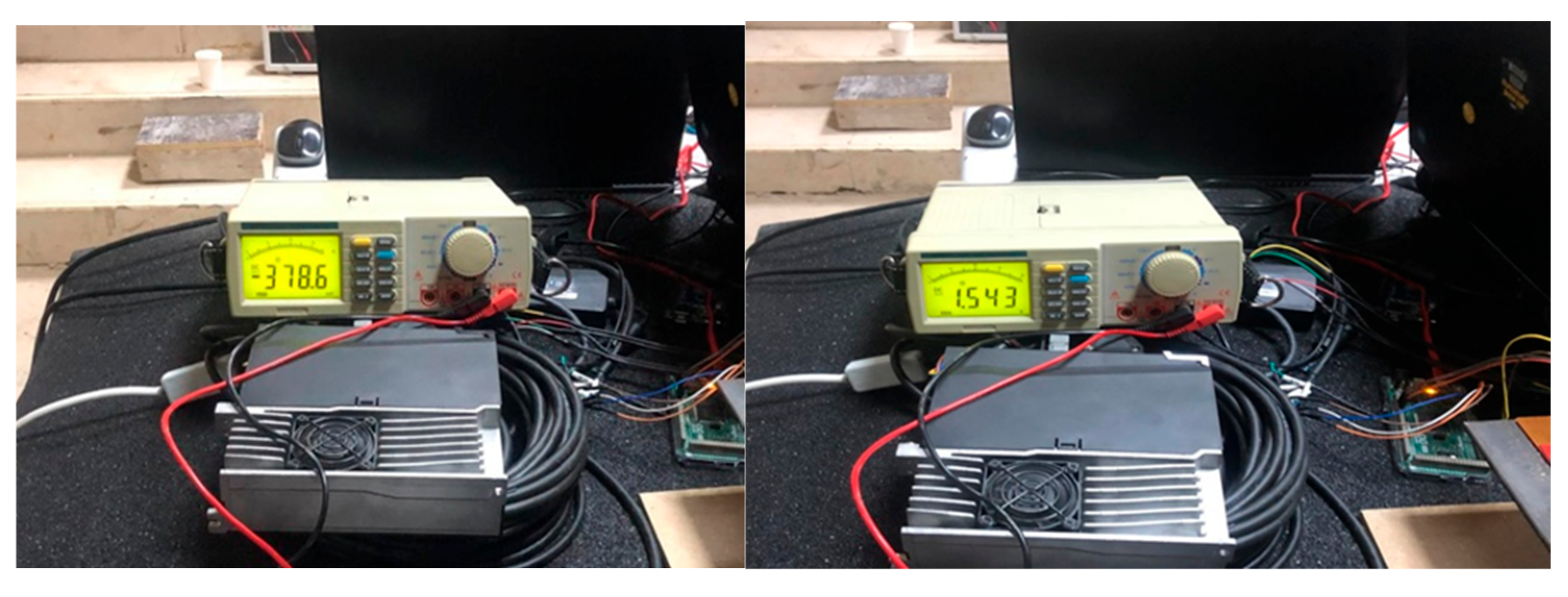
In this experimental setup, the servo motor step count was set to 5000, while all other parameters remained unchanged. Figure 18 presents a side-by-side comparison of the voltage outputs of the piezoelectric-integrated periodic foundation under static (no vibration) and dynamic (vibrating) conditions.
In the static condition, the system generated approximately 0.30 V. During vibration, however, the voltage output increased nearly fivefold, reaching 1.54 V. This significant increase observed in the small-scale experimental setup demonstrates the potential of piezoelectric materials to convert mechanical vibration energy into electrical energy.
While this study presents the instantaneous voltage variations for the piezoelectric sensors, the importance of the time history of power output for a comprehensive understanding of energy-harvesting performance is acknowledged. Due to experimental limitations, only peak voltage measurements were recorded. Future studies will aim to provide continuous power output data to capture the temporal characteristics of energy harvesting, which will provide deeper insights into the system’s energy generation capabilities under dynamic loading conditions.
It is important to note that the total electrical energy harvested by the embedded piezoelectric elements is several orders of magnitude smaller than the mechanical energy present in actual seismic events. The peak voltage of 1.64 V observed in this study corresponds to microwatt-level instantaneous power, which is not intended for building-scale energy supply. Instead, the purpose of the piezoelectric integration is to explore the feasibility of powering low-demand components such as wireless sensor nodes, structural health monitoring modules, or self-powered accelerometers. Therefore, the proposed foundation system should be considered a laboratory-scale proof-of-concept demonstrating dual functionality (attenuation + micro-energy harvesting), rather than an economic energy production method. Future research involving larger piezoelectric arrays and full-scale excitation conditions will be required to evaluate field applicability.

4.3.2. Damping Performance of Piezoelectric-Integrated Periodic Foundation

In this test, the Arduino software was set to 5000 steps with a pulse width of 5 microseconds, and the specimens were subjected to vibration for 20.667 s. The theoretical rotational frequency of the motor was calculated as 20 Hz in Section 3.1. Accelerometers placed on the top surfaces of the specimens recorded their dynamic responses during excitation. The acceleration records were analyzed in both the time and frequency domains using acceleration–time plots and FFT analyses.
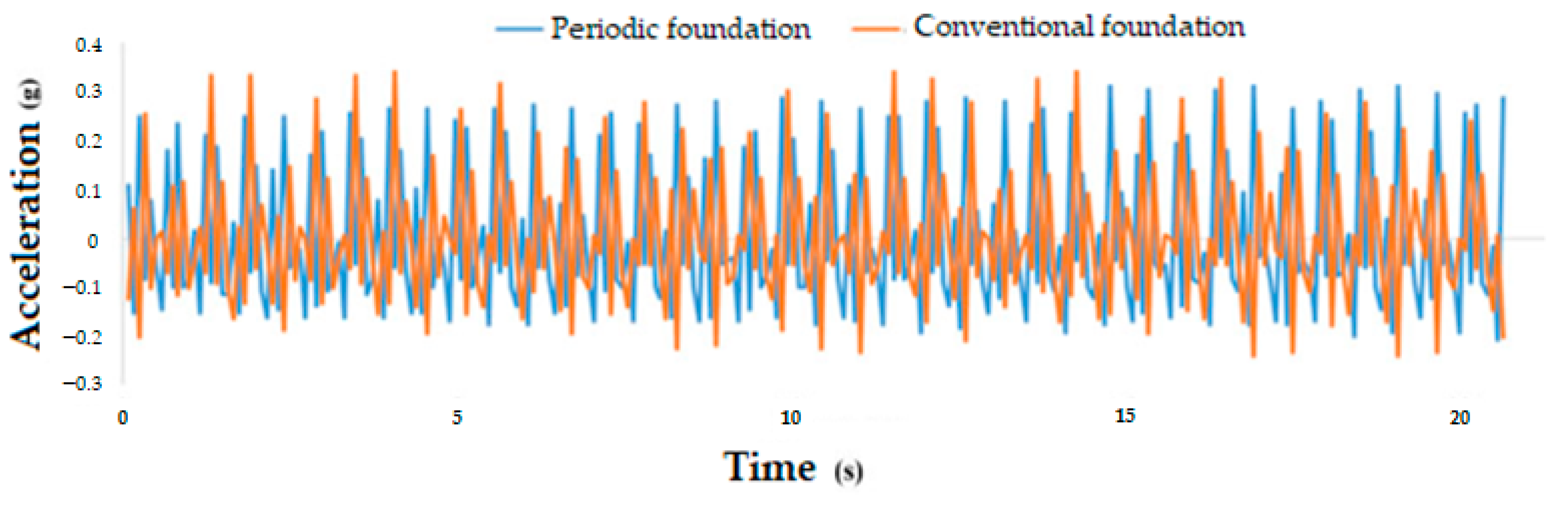
As shown in Figure 19, the maximum acceleration of the piezoelectric-integrated periodic foundation was 10% lower than that of the conventional foundation. However, the RMS acceleration was 6% higher than that of the conventional specimen.
The comparative acceleration results for the two systems are summarized in Table 7.
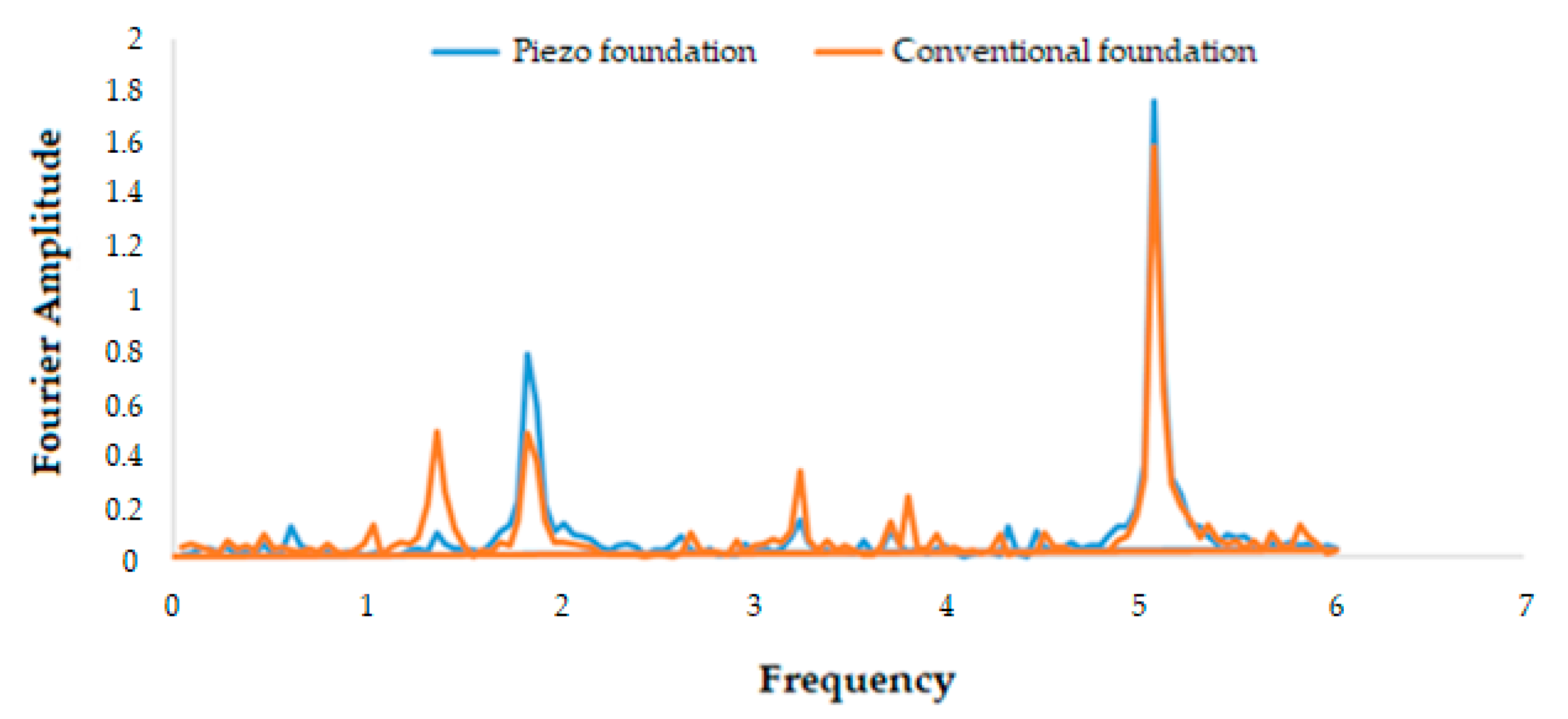
The frequency-domain comparison of the two systems is presented in Figure 20. Although the maximum acceleration response of the piezoelectric-integrated foundation was lower, the slightly higher RMS values may be attributed to the geometric arrangement and material properties of the piezoelectric modules. These results suggest that improvements in the sensor layout or material selection could enhance both the damping efficiency and energy-harvesting capacity, highlighting the need for further experimental studies.
Despite this observation, the system incorporating piezoelectric sensors demonstrated the most effective damping at the lowest excitation frequency tested, confirming its potential for attenuating low-frequency seismic vibrations; moreover, the integrated system successfully combined vibration mitigation with simultaneous energy harvesting.
It should be emphasized that the damping improvement observed in the piezoelectric-integrated system arises primarily from the structural periodicity, while the contribution of the piezoelectric layers is secondary and passive.
In conclusion, the piezoelectric-enhanced periodic foundation system was shown to do the following:
  • Reduce the amplitude of seismic-induced accelerations transmitted to the structure;
  • Create frequency band gaps at low-frequency ranges relevant to earthquake engineering;
  • Generate measurable electrical energy under vibration.
Thus, these findings confirm the dual functionality of piezoelectric-integrated metamaterial-inspired periodic foundations as both vibration isolation and energy-harvesting systems, representing a critical initial experimental step toward multi-functional seismic protection technologies.
Although the isolation performance observed in this study is comparable in some aspects to that of conventional devices, it should be emphasized that the proposed system also offers unique multi-functional advantages, namely, band-gap-based wave filtering and integrated energy harvesting. These functionalities are not available in typical LRB or FPB systems. Nevertheless, full-scale comparisons and hybrid configurations combining classical isolators with metamaterial-inspired periodic concepts constitute important future research directions.
While the excitation frequency used in this test was higher than typical seismic frequencies, it served to investigate the energy-harvesting potential of the piezoelectric sensors. The results indicate that piezoelectric materials can effectively convert mechanical vibration energy into electrical energy, even under the higher-frequency conditions used in this study. However, future work should focus on testing the system under more realistic seismic conditions to assess its full potential in energy harvesting and vibration isolation.
Although the reduction in transmitted motion in periodic foundations is conceptually expected, the scientific novelty of this study lies in experimentally demonstrating a dual-function layered foundation capable of both seismic attenuation and energy conversion. Furthermore, the comparative testing of three distinct foundation types under identical excitation provides new insight into the individual roles of material periodicity and piezoelectric coupling. These experimental findings validate not only the attenuation mechanism but also the feasibility of integrating energy-harvesting components into periodic foundations for future field-scaled applications.
This dual-function behavior should therefore be interpreted as an initial laboratory-scale demonstration rather than a fully optimized hybrid isolation mechanism.

5. Conclusions

One-dimensional (1D) periodic foundations have been shown to mitigate vibration energy transmitted to structural components under seismic excitation, resulting in substantial reductions in both peak and root-mean-square (RMS) acceleration values when compared with conventional foundations. Such attenuation of energy transfer offers notable advantages for structural control strategies. Moreover, integrating piezoelectric sensors with metamaterial-inspired periodic systems provides a promising avenue to enhance damping performance at lower frequencies and enable energy-harvesting applications. Nonetheless, this research domain remains in its nascent stages, necessitating extensive analytical modeling and experimental validation.
Quantitative analyses demonstrated that the concrete–rubber layered system achieved significant attenuation in the transmitted SH-wave energy. The transmission decreased by approximately 25–26 dB within the 1–2 Hz range, while a local peak of around –21 dB was observed at 2.5–3 Hz. Beyond 6 Hz, the attenuation increased steadily, reaching –32.7 dB at 10 Hz and –43.6 dB at 20 Hz. These reductions confirm the effectiveness of the periodic foundation as a frequency-selective vibration mitigation solution.
It should be emphasized that this research represents a laboratory-scale proof of concept. Although the findings highlight promising potential for vibration isolation and energy transfer reduction, further studies involving large-scale prototypes, realistic boundary conditions, and in situ seismic excitation are required before practical engineering implementation. Therefore, the conclusions should be interpreted as an indication of feasibility rather than a finalized design solution. The piezoelectric component should therefore be regarded as a conceptual supplementary feature rather than a practical energy-production mechanism under realistic seismic conditions.

Author Contributions

Conceptualization, A.K., H.Y. and M.F.O.; Methodology, M.F.O., N.K. and A.K.; Software, N.K. and Y.B.; Validation, M.F.O., A.K. and H.Y.; Formal Analysis, M.F.O., N.K. and F.E.C.Ç.; Investigation, M.F.O., D.S. and F.E.C.Ç.; Resources, A.K. and H.Y.; Data Curation, M.F.O., D.S. and F.E.C.Ç.; Writing—Original Draft Preparation, M.F.O. and D.S.; Writing—Review and Editing, A.K., H.Y. and F.E.C.Ç.; Visualization, N.K. and Y.B.; Supervision, A.K. and H.Y.; Project Administration, A.K.; Funding Acquisition, A.K. All authors have read and agreed to the published version of the manuscript.

Funding

This research was funded by Erzincan Binali Yıldırım University Scientific Research Projects Coordination Unit (BAP) under the project grant number FCD-2024-1033.

Data Availability Statement

The data supporting the findings of this study are available from the corresponding author upon reasonable request. Due to institutional policies and ongoing experimental studies within the project FCD-2024-1033, the datasets are not publicly available at this time.

Acknowledgments

The authors gratefully acknowledge the financial and technical support provided by the Scientific Research Projects Coordination Unit of Erzincan Binali Yıldırım University (Project No: FCD-2024-1033). The authors also thank the laboratory staff of the Civil Engineering Department for their valuable assistance during the experimental setup and testing phases.

Conflicts of Interest

The authors declare no conflicts of interest. The funders had no role in the design of the study; in the collection, analyses, or interpretation of data; in the writing of the manuscript; or in the decision to publish the results.

References

  1. Turkish Building Earthquake Code; Ministry of Environment, Urbanization and Climate Change of the Republic of Türkiye: Ankara, Türkiye, 2018. Available online: https://www.resmigazete.gov.tr/eskiler/2018/03/20180318M1-2-1.pdf (accessed on 28 October 2025). (In Turkish)
  2. Bao, J.; Shi, Z.; Xiang, H. Dynamic responses of a structure with periodic foundations. J. Eng. Mech. 2012, 138, 761–769. [Google Scholar] [CrossRef]
  3. Khelif, A.; Adibi, A. Phononic Crystals; Springer: Berlin, Germany, 2015; pp. 1–10. [Google Scholar] [CrossRef]
  4. Kushwaha, M.S.; Halevi, P.; Dobrzynski, L.; Djafari-Rouhani, B. Acoustic band structure of periodic elastic composites. Phys. Rev. Lett. 1993, 71, 2022. [Google Scholar] [CrossRef] [PubMed]
  5. Sigalas, M.M.; Economou, E.N. Elastic and acoustic wave band structure. J. Sound Vib. 1992, 158, 377–382. [Google Scholar] [CrossRef]
  6. Liu, Z.; Dong, H.-W.; Yu, G.-L.; Cheng, L. Achieving ultra-broadband and ultra-low-frequency surface wave bandgaps in seismic metamaterials through topology optimization. Compos. Struct. 2022, 295, 115863. [Google Scholar] [CrossRef]
  7. Colombi, A.; Roux, P.; Guenneau, S.; Gueguen, P.; Craster, R.V. Forests as a natural seismic metamaterial: Rayleigh wave bandgaps induced by local resonances. Sci. Rep. 2016, 6, 19238. [Google Scholar] [CrossRef] [PubMed]
  8. De Espinosa, F.M.; Jimenez, E.; Torres, M. Ultrasonic band gap in a periodic two-dimensional composite. Phys. Rev. Lett. 1998, 80, 1208. [Google Scholar] [CrossRef]
  9. Jia, G.; Shi, Z. A new seismic isolation system and its feasibility study. Earthq. Eng. Eng. Vib. 2010, 9, 75–82. [Google Scholar] [CrossRef]
  10. Achaoui, Y.; Ungureanu, B.; Enoch, S.; Brûlé, S.; Guenneau, S. Seismic waves damping with arrays of inertial resonators. Extrem. Mech. Lett. 2016, 8, 30–37. [Google Scholar] [CrossRef]
  11. Achaoui, Y.; Antonakakis, T.; Brûlé, S.; Craster, R.V.; Enoch, S.; Guenneau, S. Clamped seismic metamaterials: Ultra-low frequency stop bands. New J. Phys. 2017, 19, 063022. [Google Scholar] [CrossRef]
  12. Brûlé, S.; Javelaud, E.H.; Enoch, S.; Guenneau, S. Experiments on seismic metamaterials: Molding surface waves. Phys. Rev. Lett. 2014, 112, 133901. [Google Scholar] [CrossRef]
  13. Çelebi, E.; Fırat, S.; Beyhan, G.; Çankaya, İ.; Vural, İ.; Kırtel, O. Field experiments on wave propagation and vibration isolation by using wave barriers. Soil Dyn. Earthq. Eng. 2009, 29, 824–833. [Google Scholar] [CrossRef]
  14. Huang, J.; Shi, Z. Application of periodic theory to rows of piles for horizontal vibration attenuation. Int. J. Geomech. 2013, 13, 132–142. [Google Scholar] [CrossRef]
  15. Miniaci, M.; Krushynska, A.; Bosia, F.; Pugno, N.M. Large-scale mechanical metamaterials as seismic shields. New J. Phys. 2016, 18, 083041. [Google Scholar] [CrossRef]
  16. Pu, X.; Shi, Z. Periodic pile barriers for Rayleigh wave isolation in a poroelastic half-space. Soil Dyn. Earthq. Eng. 2019, 121, 75–86. [Google Scholar] [CrossRef]
  17. Chen, Z.; Wang, G.; Lim, C.W. Artificially engineered metaconcrete with wide bandgap for seismic surface-wave manipulation. Eng. Struct. 2023, 276, 115375. [Google Scholar] [CrossRef]
  18. Ni, A.; Shi, Z.; Meng, Q.; Lim, C.W. A novel buried periodic in-filled pipe barrier for Rayleigh wave attenuation: Numerical simulation, experiment and applications. Eng. Struct. 2023, 297, 116971. [Google Scholar] [CrossRef]
  19. Xiong, J.; Ren, F.; Li, S.; Tian, S.; Li, Y.; Mo, J. A study on low-frequency vibration mitigation by using the metamaterial-tailored composite concrete-filled steel tube column. Eng. Struct. 2024, 305, 117673. [Google Scholar] [CrossRef]
  20. Oz, M.F.; Kumbasaroglu, A.; Yalciner, H.; Babacan, Y.; Korozlu, N.; Cimilli Catir, F.E. Investigation of Seismic Behavior of Reinforced Concrete Structures Insulated with Seismic Meta-Materials in Earthquake Engineering. In Proceedings of the International Yıldırım Bayezid Scientific Research and Innovation Symposium (IYBSRIS 2025), Bursa, Türkiye, 9–10 May 2025; Bursa Technical University: Bursa, Türkiye, 2025; Volume 2, pp. 173–187. [Google Scholar]
  21. Casablanca, O.; Ventura, G.; Garesci, F.; Azzerboni, B.; Chiaia, B.; Chiappini, M.; Finocchio, G. Seismic isolation of buildings using composite foundations based on metamaterials. J. Appl. Phys. 2018, 123, 174903. [Google Scholar] [CrossRef]
  22. Yan, Y.; Laskar, A.; Cheng, Z.; Menq, F.; Tang, Y.; Mo, Y.L.; Shi, Z. Seismic isolation of two-dimensional periodic foundations. J. Appl. Phys. 2014, 116, 044908. [Google Scholar] [CrossRef]
  23. Yan, Y.; Cheng, Z.; Menq, F.; Mo, Y.L.; Tang, Y.; Shi, Z. Three-dimensional periodic foundations for base seismic isolation. Smart Mater. Struct. 2015, 24, 075006. [Google Scholar] [CrossRef]
  24. Witarto, W.; Wang, S.J.; Yang, C.Y.; Nie, X.; Mo, Y.L.; Chang, K.C.; Tang, Y.; Kassawara, R. Seismic isolation of small modular reactors using metamaterials. AIP Adv. 2018, 8, 045307. [Google Scholar] [CrossRef]
  25. Witarto, W.; Wang, S.J.; Yang, C.Y.; Wang, J.; Mo, Y.L.; Chang, K.C.; Tang, Y. Three-dimensional periodic materials as seismic base isolators for nuclear infrastructure. AIP Adv. 2019, 9, 045014. [Google Scholar] [CrossRef]
  26. Xiang, H.J.; Shi, Z.F.; Wang, S.J.; Mo, Y.L. Periodic materials-based vibration attenuation in layered foundations: Experimental validation. Smart Mater. Struct. 2012, 21, 112003. [Google Scholar] [CrossRef]
  27. Hou, Z.; Wu, F.; Liu, Y. Phononic crystals containing piezoelectric material. Solid State Commun. 2004, 130, 745–749. [Google Scholar] [CrossRef]
  28. Zou, X.Y.; Chen, Q.; Liang, B.; Cheng, J.C. Control of the elastic wave bandgaps in two-dimensional piezoelectric periodicstructures. Smart Mater. Struct. 2007, 17, 015008. [Google Scholar] [CrossRef]
  29. Damcı, E.; Şekerci, Ç. Development of a low-cost single-axis shake table based on Arduino. Exp. Tech. 2019, 43, 179–198. [Google Scholar] [CrossRef]
  30. Putra, N.A.I.E.; Syam, R.; Renreng, I.; Harianto, T.; Wibowo, N.R. The development of earthquake simulator. EPI Int. J. Eng. 2021, 4, 134–139. [Google Scholar] [CrossRef]
  31. Mahdavi, M. Performance Evaluation of ARI-I Shake Table. Master’s Thesis, Istanbul Technical University, Institute of Science and Technology, Istanbul, Turkey, 2014. Available online: http://hdl.handle.net/11527/13906 (accessed on 29 October 2025).
  32. TS EN 12390-2; Testing Hardened Concrete—Part 2: Making and Curing Test Specimens. Turkish Standards Institution (TSE): Ankara, Türkiye, 2019.
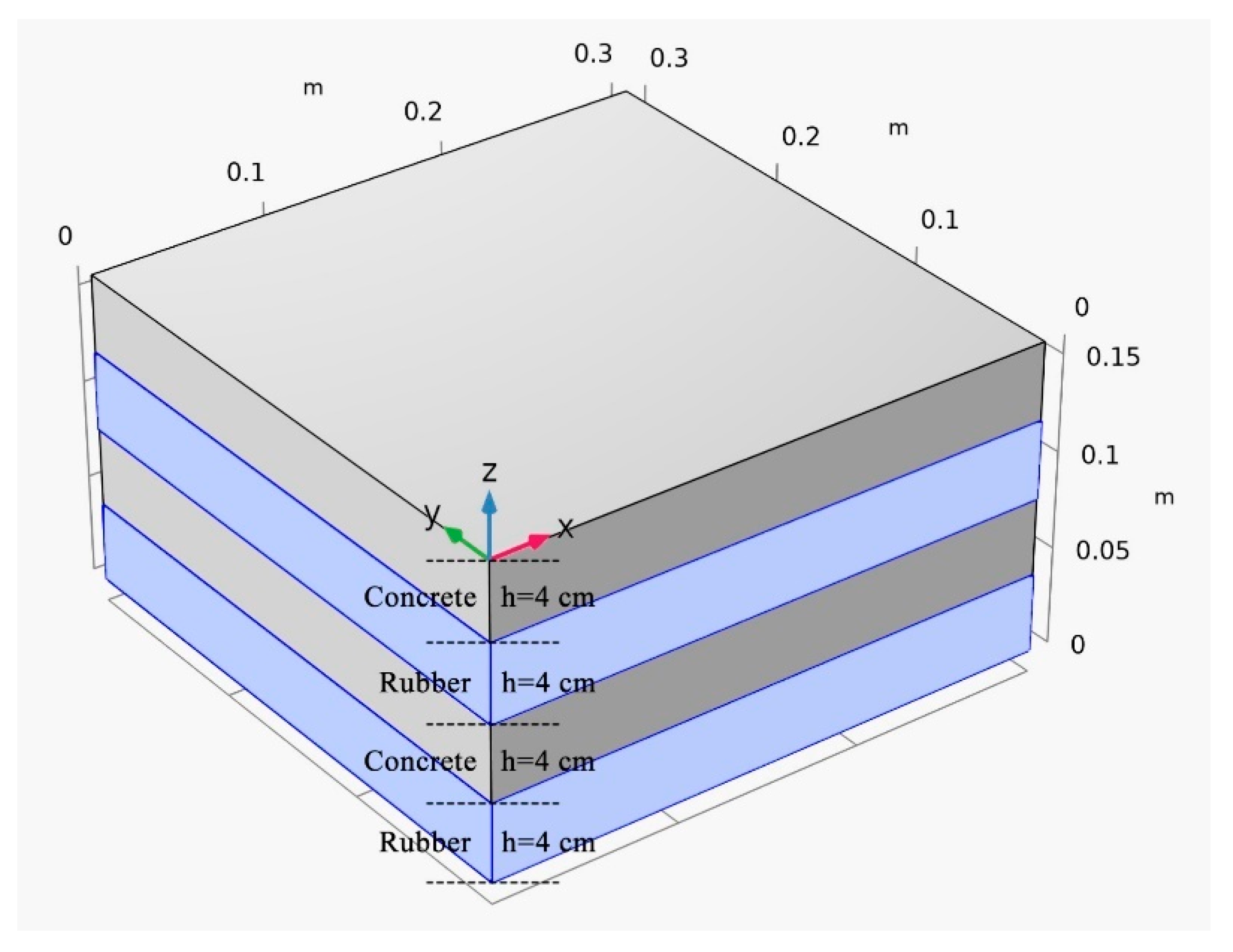
Figure 1. A schematic representation of the concrete–rubber layered periodic foundation system.
Buildings 15 04399 g001
Figure 2. The transmission spectrum of the concrete–rubber layered system.
Buildings 15 04399 g002
Figure 3. An ADXL345 three-axis accelerometer was used to measure vibration responses in the experimental setup, and the Arduino Mega 2560 microcontroller was used to process and log the sensor data.
Buildings 15 04399 g003
Figure 4. A schematic flow diagram of the Arduino IDE-based control system and the principal components comprising the experimental apparatus.
Buildings 15 04399 g004
Figure 5. A schematic representation of the shake table system showing the servo motor (vibration source), linear motion module, steel table, and test specimen.
Buildings 15 04399 g005
Figure 6. A photograph showing the general connections and instrumentation of the shake table as installed in the laboratory.
Buildings 15 04399 g006
Figure 7. Arduino code.
Buildings 15 04399 g007
Figure 8. The production process of the test specimens: (a) rubber layers cut to test dimensions; (b) concrete plates after curing; (c) casting of fresh concrete into the mold before initial setting.
Buildings 15 04399 g008
Figure 9. A 1D metamaterial periodic foundation composed of alternating rubber and concrete layers, with a servo motor, control unit, and accelerometer connected to a computer.
Buildings 15 04399 g009
Figure 10. A conventional foundation specimen consisting of a solid reinforced concrete block with a servo motor, control unit, and accelerometer connections.
Buildings 15 04399 g010
Figure 11. (a) Embedding and wiring of piezoelectric sensors into rubber layers; (b) a general view of the piezoelectric-integrated periodic foundation.
Buildings 15 04399 g011
Figure 12. Schematic representations: (a) a specimen representing the periodic foundation composed of rubber and concrete layers; (b) a specimen representing the conventional concrete foundation; (c) a specimen representing the piezoelectric-integrated periodic foundation.
Buildings 15 04399 g012
Figure 13. Comparative acceleration–time responses: blue—periodic foundation; orange—conventional foundation.
Buildings 15 04399 g013
Figure 14. Comparison of Fourier amplitude spectra for periodic and conventional foundations under 4000-step excitation.
Buildings 15 04399 g014
Figure 15. Time-dependent comparison of energy flow percentages for periodic and conventional foundation systems under vibration excitation.
Buildings 15 04399 g015
Figure 16. Comparison of acceleration–time responses of periodic and conventional foundation specimens under 3000-step vibration excitation.
Buildings 15 04399 g016
Figure 17. Comparison of frequency spectra for periodic and conventional foundations in the 3000-step scenario, obtained via Fourier transformation.
Buildings 15 04399 g017
Figure 18. Voltage values obtained from piezoelectric sensors under static and dynamic (vibrating) conditions. The left indicator shows 378 millivolts recorded in the stationary state, while the right indicator shows 1.5 volts generated during vibration.
Buildings 15 04399 g018
Figure 19. Comparison of acceleration–time responses between the piezoelectric-supported periodic foundation and the conventional foundation in the 5000-step vibration scenario.
Buildings 15 04399 g019
Figure 20. Comparison of Fourier amplitude spectra in the frequency domain for the piezoelectric-supported and conventional foundation systems in the 5000-step vibration scenario.
Buildings 15 04399 g020
Table 1. The brand/model, technical capacity, and connection specifications of the Arduino control system, servo motor, and sensor components: (A) technical specifications of control and sensor components; (B) performance parameters of the vibration system.
(A) Technical Specifications of Control and Sensor Components
ComponentBrand/ModelTechnical SpecificationsConnection Type/Protocol
Microcontroller Card Arduino Mega 256054 digital I/O, 16 analog input, 256 KB Flash, 16 MHz operating frequencyUSB, UART
datadatadata
Vibration Sensor (Accelerometer)
Piezoelectric Sensor
ADXL345
-
3-axis, ±16 g measurement range, digital output, 13-bit resolution
3.3/5 V reading range, analog signal output
I2C/SPI
Positive/negative/electrode
Motor Driver Board(LZ100)Position, speed, and torque control mode; overspeed, overload, etc., protection mode; 5-LED digital display; PWM supportedPWM/Digital
Servo Motor(80LZ750)Metal gear, 180° rotation angle, 0.75 kW, torque: 2.39 Nm, 5000 rpmPWM
(B) Performance Parameters of the Vibration System
ParameterValue/RangeExplanation
Working DirectionSingle axis (X-direction)Horizontal movement only
Maximum DisplacementApprox. 7.5 cmMeasured from the table center
Burden Capacity~80 kgSystem load limit, including test specimen
Table Dimensions40 cm × 40 cmManufactured from ST35 steel
Measurement Resolution13-bit (ADXL345 sensor)Digital data generation on each axis
Control SoftwareArduino IDE-based (Version 2.3.4)Frequency/amplitude control via user interface
Table 2. Physical and mechanical properties of concrete and rubber specimens.
ConcreteRubber
Density (kg/m3)2.400915
Young’s modulus (GPa)24.3920.15
Poisson’s ratio0.20.4
Table 3. Technical specifications and placement details of piezoelectric sensors.
PropertyValue/Description
Disc diameter35 mm
Placement range 10 cm
Number of layers2 rubber plates (top and bottom)
Number of sensors9 sensors × 2 layers = 18
Table 4. Parameters of the vibration protocols applied to the test specimens.
Parameter1D Periodic FoundationConventional FoundationPiezo Periodic Foundation
Pulse width5 µs5 µs5 µs
Motor step count3000/40003000/4000/50005000
Assessment parameterAcceleration (g)Acceleration (g)Acceleration (g)
Parameter 1D periodic foundationConventional foundationPiezo periodic foundation
Table 5. Comparison of maximum and RMS acceleration responses for periodic and conventional foundation systems under the applied vibration protocol.
SystemMaximum Acceleration (g)RMS Acceleration (g)
Periodic foundation0.250690.11227
Conventional foundation0.405760.19682
Table 6. Maximum and RMS acceleration values of periodic and conventional foundations tested in the 3000-step scenario.
SystemMaximum Acceleration (g)RMS Acceleration (g)
Periodic Foundation0.267070.13044
Conventional Foundation0.48360.30265
Table 7. Maximum and RMS acceleration values recorded for the piezoelectric-supported periodic foundation and the conventional foundation under the 5000-step test condition.
SystemMaximum Acceleration (g)RMS Acceleration (g)
Periodic Foundation0.312780.15644
Conventional Foundation0.349910.14197
Disclaimer/Publisher’s Note: The statements, opinions and data contained in all publications are solely those of the individual author(s) and contributor(s) and not of MDPI and/or the editor(s). MDPI and/or the editor(s) disclaim responsibility for any injury to people or property resulting from any ideas, methods, instructions or products referred to in the content.