
Article

Adopting Large Language Models in the Construction Industry: Drivers, Barriers, and Strategic Implications from China


1
School of Management, Shanghai University, Shanghai 200444, China
2
Shenzhen Institute of Advanced Technology, Chinese Academy of Sciences, Shenzhen 518055, China
3
College of Civil and Transportation Engineering, Shenzhen University, Shenzhen 518060, China
*
Authors to whom correspondence should be addressed.
Buildings 2025, 15(23), 4296; https://doi.org/10.3390/buildings15234296
Submission received: 18 September 2025 / Revised: 27 October 2025 / Accepted: 30 October 2025 / Published: 27 November 2025
(This article belongs to the Section Construction Management, and Computers & Digitization)

Abstract

The rapid advancement of AI, especially large language models (LLMs), brings opportunities and challenges to industries. In construction, LLMs can enhance project coordination, support decision-making and reduce workload, but adoption is limited by hallucination, data security and domain complexity. This study investigates the current state of LLM adoption in China’s construction industry through a four-step approach, including a comprehensive literature review to identify potential drivers and barriers, questionnaire design and data collection for empirical analysis, and the application of the Entropy Weight Method (EWM) to quantify and rank the relative importance of each factor. The findings reveal that the top drivers originate at the company level, including strategic partnerships, internal research teams, and staff training—highlighting the central role of organizational readiness in enabling LLM integration. Conversely, the most critical barriers are embedded in the construction domain itself, including knowledge gaps, workflow integration, and data heterogeneity, which reflect structural limitations in the sector. Although LLM implementation remains in its early stages, survey responses show widespread optimism among stakeholders regarding its future potential. The study proposes several actionable strategies for both construction firms and policymakers to facilitate effective LLM adoption. Moreover, the identified drivers and barriers are not exclusive to construction but are also relevant to other digitally transforming sectors—such as manufacturing, healthcare, and energy—offering broader implications for AI adoption in complex, project-based environments.

1. Introduction

The construction industry is a cornerstone of global economic development, accounting for 13% of the global economy and providing extensive employment opportunities [1]. This is also the case in China, where the construction industry plays a pivotal role in economic growth and contributes significantly to national development [2]. In 2023, the output value of China’s construction industry reached $4.3 trillion, accounting for 6.8% of the gross domestic product (GDP) [3]. However, technological innovation in the construction industry usually lags behind other industries, with low levels of informatization, hindering productivity improvement in this sector [4]. Over the past two decades, productivity growth in the sector has averaged only 1% annually [5]. In addition, the construction industry faces many challenges such as schedule delay, cost overrun, substandard quality, and high environmental impacts [6]. Leveraging information and intelligent technologies in engineering projects presents a promising pathway to address these challenges effectively [7,8].
Recently, information and intelligent technologies such as Building Information Modeling (BIM), the Internet of Things (IoT), Artificial Intelligence (AI), and Digital Twin (DT) have been explored in the construction industry [9,10]. However, despite their gradual adoption, their application remains limited due to challenges such as diverse data formats, non-standardized construction knowledge, and inconsistent technical interfaces [11]. Additionally, these technologies are difficult to use, and team members with limited coding experience struggle to fully articulate their ideas [12]. As a result, the lack of integration among data, workers, and intelligent tools hinders these technologies from fully empowering construction projects [13].
The emergence of Large Language Models (LLMs)—advanced neural network-based models with billions of parameters, trained on vast amounts of unlabeled text data through self-supervised learning—offers a promising solution [14]. Benefiting from scaling laws and emergent capabilities, large language models possess unprecedented generalization and comprehension abilities. In the context of construction project management, domain-specific LLMs can interpret unstructured managerial instructions expressed by personnel, retrieve relevant multimodal knowledge—such as regulatory standards, contractual clauses, and BIM data—and invoke digital tools via software application programming interfaces (APIs) (Figure 1) [15,16]. These capabilities position them as ideal intelligent hubs for construction management, bridging the gap between human expertise and digital tools and thus enhancing decision-making efficiency and reducing manual workload across project phases.
Utilizing deep learning techniques and large datasets, LLMs have demonstrated their remarkable capabilities across various language-related tasks, including text synthesis, translation, summarization, and question-answering (Q & A) [17]. Furthermore, fine-tuning LLMs for specific domains can significantly enhance their utility. For example, in the biomedical field, LLMs can support clinical decision-making and medical education by assisting physicians in analyzing medical records, research papers, and clinical guidelines [18,19,20,21]. In education, LLMs help students convert math word problems into representative equations [22,23]. In economics, LLMs can analyze and process complex financial data, such as market trends, investment strategies, and risk management, enabling investors to make more informed decisions [24]. In the field of social media, LLMs can detect biases and misinformation, assisting platforms in maintaining the authenticity of information [25,26,27]. In the construction industry, LLMs have been used to improve construction project management through task automation, information integration, and intelligent forecasting, offering more efficient and intelligent solutions [6,28].
Despite the promising potential of LLMs to improve efficiency in the construction industry, their implementation remains in its infancy [29]. Compared to industries such as healthcare and finance, the adoption of LLMs in construction is far less widespread [30]. This is largely due to the diversity of data formats and the low levels of informatization within the construction industry [6]. Additionally, challenges such as a lack of transparency in model explanations [31], as well as the significant costs, data requirements, and computational demands, further hinder their application [32]. Another critical concern is the susceptibility of LLMs to generating hallucinations in the construction industry, where incorrect outputs can lead to substantial economic losses and pose serious risks to the health and safety of workers [6].
Building upon these implementation challenges, a clear research gap exists regarding the systematic identification and prioritization of the drivers and barriers influencing LLM adoption. To bridge this gap, several recent studies have sought to explore this domain. Saka et al. [6] identified opportunities and limitations of GPT models in the construction industry through literature review, expert discussions, and a case study. Similarly, Ghimire et al. [33] outlined potential opportunities and challenges of applying LLMs in construction based on bibliometric analysis and word-frequency mapping; however, they did not systematically categorize the influencing factors, which limits the clarity of how different factors interact and affect the adoption of LLMs in construction, thereby constraining the depth of analysis and obscuring the underlying mechanisms shaping these opportunities and challenges. To address this gap, Heo and Na [34] employed the Unified Theory of Acceptance and Use of Technology (UTAUT) model to analyze key factors affecting construction practitioners’ adoption intention toward LLM-driven AI technologies, though their study did not provide a comprehensive analysis of both drivers and barriers. In response, this study takes China as a representative context and applies the entropy weight method (EWM) to systematically identify the enablers and barriers to the application of LLMs in the construction industry. Furthermore, it offers strategic implications for construction companies and policymakers to facilitate effective integration of LLM technologies. The remainder of the paper is organized as follows: Section 2 introduces LLMs, their related technologies and applications in the construction industry. Section 3 outlines the research methodology, conducted in four phases. Section 4 shows the analysis of the research findings, while Section 5 offers a discussion of the results. Finally, Section 6 concludes the paper and highlights potential directions for further research.

2. Literature Review

2.1. LLMs

LLMs are a category of language models that utilize neural networks with billions of parameters, trained on enormous quantities of unlabeled text data using a self-supervised learning approach [14]. The origins of LLMs can be traced to the emergence and evolution of neural network-based approaches in the field of Natural Language Processing (NLP) [35]. Statistical methods and n-gram models were among the earliest approaches to developing language models [36], but they lacked the ability to comprehend semantics [37]. Since then, researchers have focused on advancing neural network development and leveraging larger datasets [17]. An important milestone was the creation of the Recurrent Neural Network (RNN) [38], which enabled the modeling of sequential data, including language. However, RNN faced limitations such as gradient vanishing and long-term dependencies [39]. The advent of transformer architecture successfully addressed some of the key shortcomings of RNN in handling sequential data. The transformer architecture, introduced by Vaswani et al. [40] represents a paradigm shift in neural network design for sequential data processing. While fundamentally operating within the supervised learning framework during fine-tuning, transformers uniquely incorporate self-supervised learning during the pre-training phase. Their novel self-attention mechanism dynamically computes weighted relationships between all input elements simultaneously, overcoming the positional constraints of previous recurrent architectures [40]. The architecture implements an efficient two-stage training paradigm: (1) unsupervised pre-training on massive text corpora using masked language modeling objectives, followed by (2) task-specific supervised fine-tuning [41].
The transformer architecture has played a crucial role in the development of current LLMs [41,42,43]. OpenAI’s GPT [41,42] and Google’s BERT [43] were foundational models based on the Transformer. GPT adopts the decoder component of the Transformer architecture and employs a unidirectional autoregressive prediction model that processes information from left to right [41,42]. In contrast, BERT utilizes the encoder component and adopts a bidirectional prediction model, incorporating both preceding and succeeding contexts [43]. In 2023, Meta released the LLaMA model series, which optimized the Transformer architecture and was trained on more extensive datasets, achieving significant performance improvements. Building on LLaMA, researchers have developed derivative models, such as Baichuan, incorporating optimizations for multilingual support and model efficiency. Table 1 shows LLMs released in recent years.

2.2. LLMs in the Construction Industry

The introduction of LLMs has unlocked new possibilities for optimizing workflows and driving innovation in the construction industry [59]. Traditionally, a substantial portion of construction workflows has been consumed by repetitive and time-intensive tasks, such as drafting, data analysis, and document preparation. With the advent of LLMs, these tasks can now be automated or significantly accelerated, allowing professionals to shift their focus toward creative and strategic activities [6]. Furthermore, the application of LLMs across various stages of construction projects enhances efficiency and collaboration [6]. In China, construction-specific LLMs encompassing the entire life cycle of a project have been developed in recent years, with Table 2 showcasing several representative examples.
During the investment preparation phase, LLMs facilitate more effective collaboration among stakeholders through real-time information analysis and forecasting [60]. In the design phase, LLMs can generate architectural visualizations based on specific requirements and constraints [61]. Liao et al. [62] introduced StructGAN, a method designed to optimize the structural design of high-rise shear-wall residential buildings. During the construction phase, LLMs can assist with task identification and scheduling based on specific project requirements [63]. Prieto et al. [64] conducted a study testing ChatGPT’s ability to generate logical schedules and sequences that meet project demands. Users can access the model through a user interface or API to query specific parameters of building components [64]. Moreover, LLMs demonstrate considerable potential in risk identification during construction project execution. As evidenced by Gundidza et al. [65], the implementation of GPT-4 architecture offers a novel methodology for predicting and classifying delay risk factors in road construction projects. During the operation and maintenance phase, LLMs can analyze historical data and sensor readings to identify potential failures, enabling maintenance teams to take preventive measures and perform repairs or replacements at optimal times [6]. Uddin et al. [66] conducted a study involving 42 construction project students to investigate the impact of ChatGPT on hazard identification capabilities. Similarly, Smetana et al. [67] utilized OpenAI’s GPT-3.5 model to enhance text-based event analysis in the context of highway construction safety, using data from the OSHA Severe Injury Report (SIR) database.

2.3. Drivers and Barriers to the Application of LLMs in the Construction Industry

To the best of the authors’ knowledge, the literature on the drivers and barriers to the application of LLMs specifically in the construction industry is rather limited. However, studies on the general limitations of LLMs offer insights into potential challenges and opportunities relevant to their adoption in this sector. For instance, LLMs are prone to hallucinations, producing inaccurate or misleading information, which undermines system performance and fails to meet user expectations [68]. In terms of data, fine-tuning LLMs requires structured datasets, which are often difficult to obtain in the construction industry. Additionally, construction datasets come in various formats, and ensuring interoperability among these datasets incurs significant costs [69]. On the security front, concerns over data breaches and cyberattacks remain critical issues [70]. From a financial perspective, the high upfront investment required to implement LLMs poses a significant challenge for companies [71]. Moreover, workers are often skeptical about their effectiveness and lack a clear understanding of the extent to which these models have been adopted [59]. Despite these insights, existing research lacks a systematic analysis of the drivers and barriers specific to LLMs in the construction industry. This gap makes it difficult to develop targeted strategies to address these challenges and effectively leverage the potential benefits of LLMs.

3. Methodology

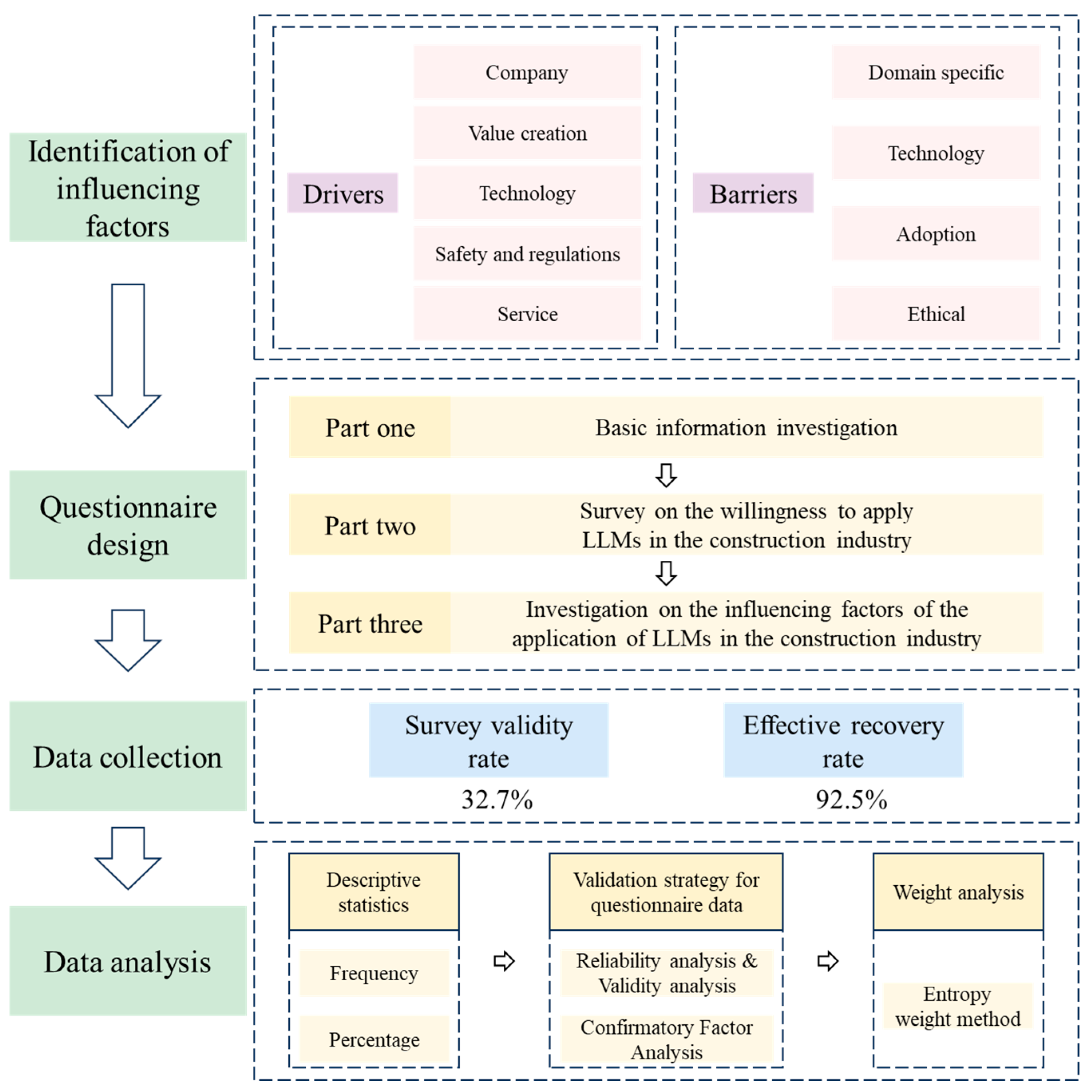
This study employs a quantitative research approach and takes China as a case study to explore the drivers and barriers influencing the application of LLMs in the construction industry through a questionnaire survey. China is selected as it witnesses the rapid adoption of over 200 domain-specific LLMs, making it a suitable subject for such research and investigation. Moreover, China is the largest construction contractor in the world [72], indicating significant potential and value of implementing AI techniques such as LLMs. This study adopts a systematic four-step research framework, including the identification of influencing factors, questionnaire design, data collection, and data analysis, as shown in Figure 2.

3.1. Identification of Influencing Factors

According to Grant et al. [71], a literature review serves as a foundational method for synthesizing prior research and consolidating existing knowledge. Through this approach, this study systematically identifies key drivers and barriers that may influence the adoption of LLMs in the construction industry. The analysis reveals 17 drivers and 19 barriers (see Table 3). Drivers are systematically categorized into five levels. At the “Company (DA)” level, corporate governance and strategic implementation capabilities are important factors influencing the adoption of LLMs. The “Value creation (DB)”-level drivers highlight how LLMs create value for construction companies by enhancing operational efficiency, improving decision-making, and reducing costs. The “Technology (DC)”-level drivers investigate the critical importance of sustained technical innovation, supporting digital ecosystems, and developmental frameworks for effective LLM implementation. Within the “Safety and regulations (DD)” level, cybersecurity protocols, policy frameworks, and compliance mechanisms emerge as essential safeguards for ethical and secure LLM deployment. Lastly, the “Service (DE)”-level drivers demonstrate that end-user experience may also influence organizational adoption patterns of LLM solutions. Barriers are systematically categorized into four levels. The “Domain-specific (construction industry) (BA)”-level barriers explore the role of domain-specific challenges play in the adoption of LLMs in the construction industry. The “Technology (BB)”-level barriers reflect inherent limitations in current LLM architectures and infrastructure that constrain their practical applicability. The “Adoption (BC)”-level barriers capture organizational and operational difficulties encountered during actual implementation within construction firms. In the end, the “Ethical (BD)”-level barriers encompass critical concerns regarding data privacy, model security, and potential misuse scenarios specific to construction applications.
The differential categorization stems from distinct literature foundations: (1) Barriers were derived exclusively from construction-specific LLM studies, reflecting the industry’s unique technological and operational constraints; (2) Drivers were extrapolated from cross-sector evidence (e.g., finance, healthcare) due to the paucity of construction-focused driver studies—existing literature predominantly discusses applications, limitations, and future directions rather than adoption enablers. This dual approach ensures comprehensive coverage while acknowledging the nascent stage of domain-specific LLM research. The cross-industry driver framework was carefully adapted through expert validation to ensure construction relevance.
It is noteworthy that our analysis has identified several drivers and barriers that are associated with the technical characteristics of LLMs, distinguishing them from conventional digital transformation factors in the construction industry. These LLM-specific determinants—including but not limited to “Algorithm and model optimization (DC1)” and “Model instability and training difficulties (BB1)”—were systematically identified through: (1) Comprehensive literature review: A rigorous examination of LLM-related studies and construction digitalization research; (2) Empirical case analysis: In-depth evaluation of practical LLM implementations in construction projects. This dual-validation approach ensures that the identified factors are both theoretically grounded and practically relevant, thereby establishing a specialized framework for analyzing drivers and barriers to the application of LLMs in the construction industry.

3.2. Questionnaire Design

The questionnaire is designed based on the influencing factors identified through the literature review, consisting of three sections. The first section collects basic demographic information about the respondents, including gender, education level, job position, and years of work experience. The second section evaluates respondents’ willingness to adopt LLMs in the construction industry by assessing their attitudes toward LLM applications using a scale ranging from “very optimistic” to “very pessimistic”. The third section investigates the importance of each identified factor influencing the adoption of LLMs in the construction industry, using a five-point Likert scale, where higher values indicate greater importance. Specifically, “1” represents “very unimportant,” “2” represents “unimportant,” “3” represents “neutral,” “4” represents “important,” and “5” represents “very important”.

3.3. Data Collection

This study conducts a survey between October and December 2024, distributing 300 questionnaires and receiving 106 responses, with 98 valid. Respondents in this study are all engineering and construction professionals from regions such as Beijing, Shanghai, Guangdong, and Chongqing, including personnel at junior, middle, and senior levels of both management and technical roles. According to Akintoye [91], the typical survey validity rate in construction research ranges from 20% to 30%, which in this study is 32.7%, exceeding the average and indicating an acceptable response rate. Furthermore, the effective recovery rate is 92.5%, suggesting reliable results for further analysis.

3.4. Data Analysis

The collected data are analyzed using the Statistical Package for the Social Science (SPSS 25) through a four-step approach, including descriptive statistics, reliability and validity assessment, confirmatory factor analysis (CFA), and weight analysis.

3.4.1. Descriptive Statistics Analysis

Prior to data analysis, the collected questionnaires are first screened by removing invalid responses and coding the valid ones. Subsequently, descriptive statistics (frequencies and percentages) are used to analyze respondents’ demographic backgrounds and their willingness to adopt LLMs.

3.4.2. Validation Strategy for Questionnaire Data

(1)
Reliability and validity analysis
Before examining the significance of the drivers and barriers influencing the application of LLMs in the construction industry, reliability and validity analyses of the questionnaire are conducted. Reliability analysis evaluates the stability and consistency of the results measured by the questionnaire scales, ensuring their reliability and credibility [92]. In this study, Cronbach’s alpha is used to assess whether the items collectively measure the same dimension, with values ranging from 0 to 1. A coefficient closer to 1.0 indicates higher internal consistency among the items [92]. Validity analysis assesses the effectiveness and appropriateness of the questionnaire, specifically examining whether the design of the questionnaire items is reasonable [93]. For this purpose, the Kaiser-Meyer-Olkin (KMO) test and Bartlett’s test of sphericity are applied to evaluate the factorability of the data. The KMO measure requires values above 0.60 as the minimum threshold for factor analysis adequacy, while Bartlett’s test needs to demonstrate statistical significance (p < 0.05) to reject the null hypothesis of an identity correlation matrix [94,95].
(2)
CFA method for evaluating the reasonability of questionnaire design
As the questionnaire design categorizes the influencing factors based on the literature review, a CFA is separately conducted to investigate whether the design of the influencing factors in the questionnaire is reasonable. Average Variance Extracted (AVE) and Construct Reliability (CR) methods are employed for such analysis, as they are widely used to assess the convergent validity and internal consistency of the measurement model [96]. Based on the AVE and CR results, the degree of extraction for the measurement indicators within each factor is assessed. Generally, an AVE greater than 0.5 is considered acceptable, with values closer to 1 indicating higher extraction levels for the measurement indicators, while CR values greater than 0.7 are required [96].

3.4.3. Weight Analysis for Determining the Importance of Influencing Factors

Common methods used for this purpose include the Delphi method, Principal Component Analysis (PCA), Analytic Hierarchy Process (AHP), and Entropy Weight Method (EWM) [97,98,99]. The Delphi method is employed to gather expert consensus on complex issues, particularly useful for handling uncertain or incomplete information as it leverages the collective wisdom of experts. However, the effectiveness of this method depends on the quality and diversity of the experts, and there is a risk of subjective bias [100]. PCA is widely used to reduce dimensionality and identify the most significant factors by transforming the original variables into principal components, particularly advantageous for pattern recognition in large datasets. However, the results of PCA can sometimes be difficult to interpret and are sensitive to the assumption of data normality [101]. AHP excels in handling qualitative data and is particularly suited for decision-making involving expert judgment. However, the results may be subjective, as they heavily rely on expert opinions [102]. In contrast to PCA and AHP, the EWM can handle large datasets and does not depend on subjective expert input. It allocates weights to factors based on the entropy calculation of each factor, ensuring that those with higher informational value are assigned higher weights [103,104]. Furthermore, EWM enables us to directly assess the relative importance of each factor, which is crucial for our study. Therefore, we chose the EWM to analyze the importance of the drivers and barriers of LLM applications in the construction industry.

4. Results

4.1. Descriptive Statistics Analysis

4.1.1. Demographic Characteristics of the Respondents

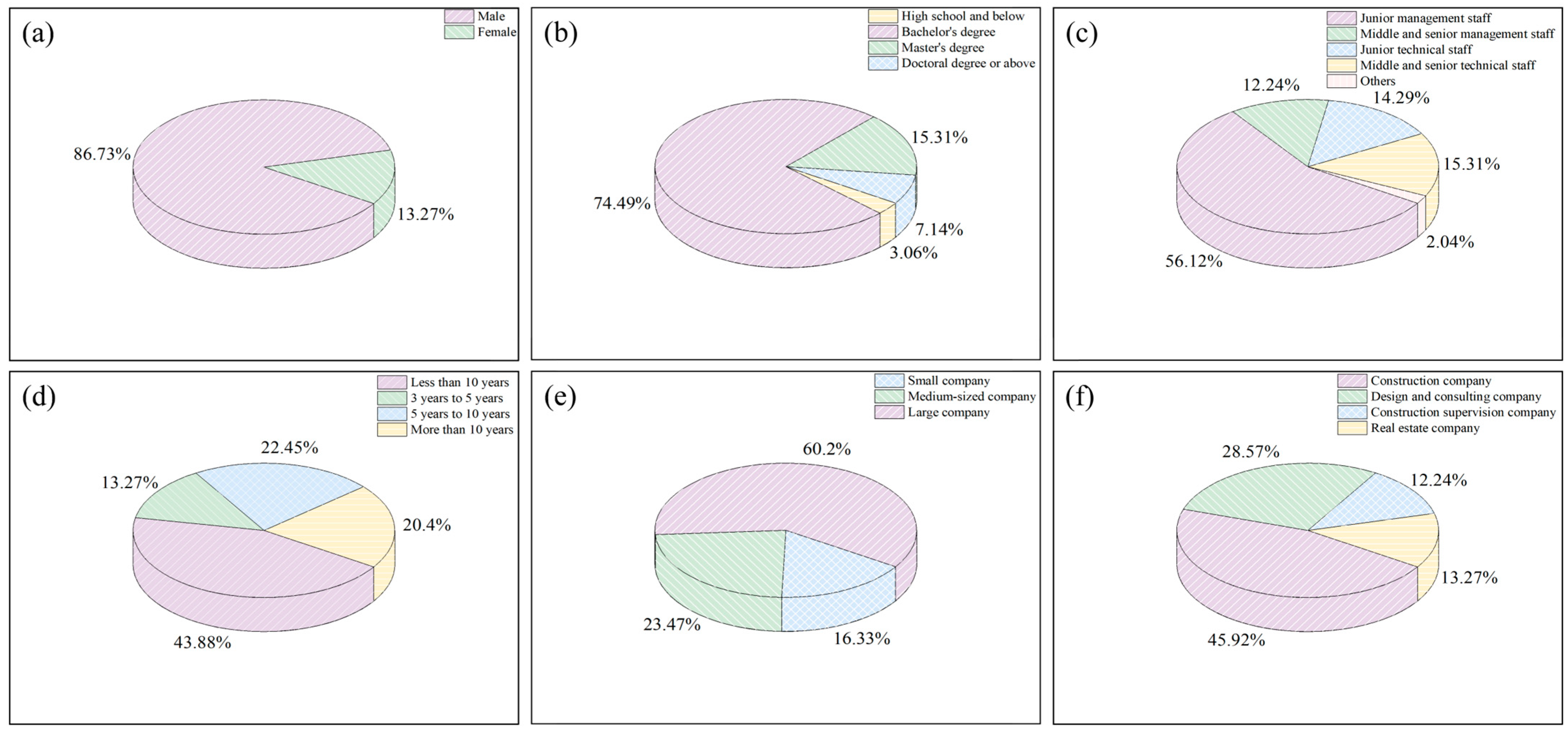
This section summarizes the demographic characteristics of the respondents, including gender, educational background, job position, years of experience in construction projects and their respective stages, understanding level with LLMs, as well as the size of the company and the degree of application of LLMs in the company. Figure 3 shows that the majority of respondents are male, accounting for 86.7%. Additionally, 97% of the respondents hold a bachelor’s degree or higher, reflecting the overall high level of education among professionals in China’s construction industry. Regarding job positions, 68.4% of respondents are in management roles, while 31.6% are technical staff or hold other positions. Among the respondents, 56.1% have more than three years of work experience. In terms of company size, the sample is predominantly composed of employees from large companies, accounting for 60.2% of the total. Regarding company type, the majority of respondents work in construction companies (45.9%), followed by design and consulting companies (28.6%), construction supervision companies (12.2%), and real estate companies (13.3%). This distribution enhances the representativeness of the sample across key segments of the construction industry.
Concerning the application of LLMs, the data shows that only 36.7% of respondents are familiar with and have participated in actual LLM applications in construction projects. Additionally, 73.5% of respondents’ companies have not yet applied LLMs or have only made preliminary attempts to use them. This suggests that, although the potential of LLMs in the construction industry is recognized, their practical adoption and implementation are still in the early stages.

4.1.2. Respondents’ Willingness to Adopt LLMs

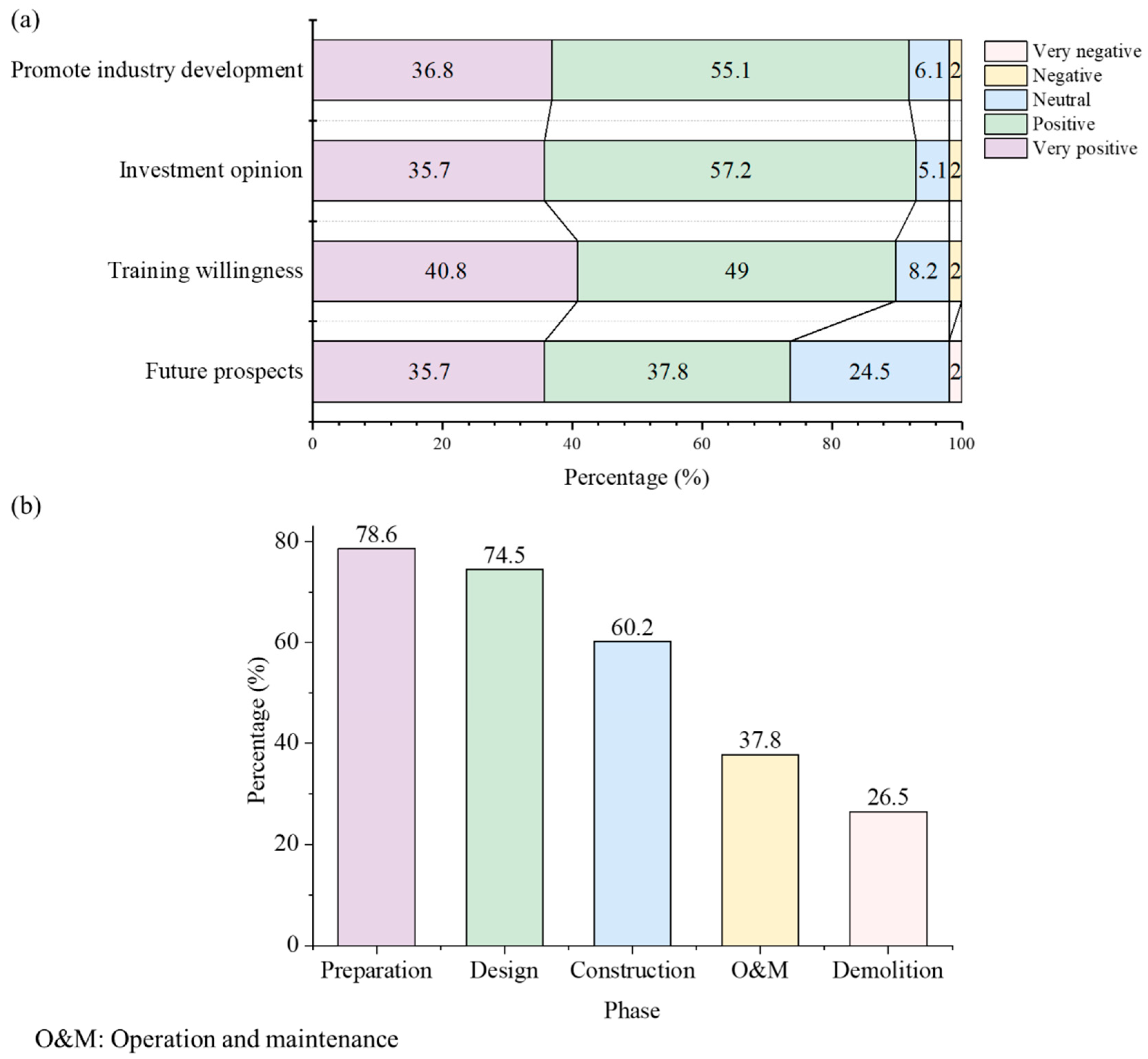
According to Figure 4, 73.5% of respondents believe that the future prospects of applying LLMs in the construction industry are optimistic, and 89.8% of respondents are willing to participate in training and exchange activities related to the application of LLMs. Additionally, 92.9% of respondents support increased investment by companies in the application of LLMs in the future. The majority of respondents (91.9%) believe that the application of large models will drive the digital transformation of the industry.
In the assessment of the demand for LLMs across different phases of construction, 78.6% of respondents believe that the preparation phase of construction requires the most support from LLMs, while 74.5% consider the design phase as the critical period for LLM applications. Additionally, 60.2% of respondents think that the construction phase requires the most support from LLMs. In contrast, few respondents believe that the operation and maintenance phase (37.8%) and the demolition phase (26.5%) require support from LLMs.

4.2. Validation Strategy for Questionnaire Data

4.2.1. Reliability and Validity Analysis

This study uses Cronbach’s alpha coefficient method to conduct reliability analysis on the collected questionnaire data, with the results presented in Table 4. The Cronbach’s alpha is 0.964 for the drivers and 0.957 for the barriers, indicating excellent reliability of the questionnaire.
According to Table 5, the KMO value is 0.921 for the drivers and 0.898 for the barriers, both of which exceed the suggested threshold of 0.60, indicating that the data are suitable for factor analysis. Furthermore, Bartlett’s test of sphericity values for both the drivers and barriers are 0.000, which is less than 0.05. This indicates that the correlation matrix of the variables in the dataset significantly diverges from the identity matrix, suggesting that a data reduction technique such as factor analysis is suitable to use.

4.2.2. CFA Results for Evaluating the Reasonability of Questionnaire Design

According to Table 6, the values of AVE and CR for the factors of drivers and barriers generally meet the acceptable thresholds, indicating good convergent validity and reliability. All factors exhibit AVE values above 0.5, with Service (Factor 5) of drivers showing the highest AVE of 0.867, suggesting strong explanatory power. Similarly, the CR values for all factors exceed the recommended threshold of 0.7, with Service (Factor 5) of drivers and Domain-specific (Factor 1) of barriers showing excellent reliability (CR = 0.928 and 0.925, respectively). The results of the CFA demonstrate that the design of the five types of drivers and four types of barriers in the questionnaire exhibits high validity and reliability.

4.3. Weight Analysis for Determining the Importance of Influencing Factors

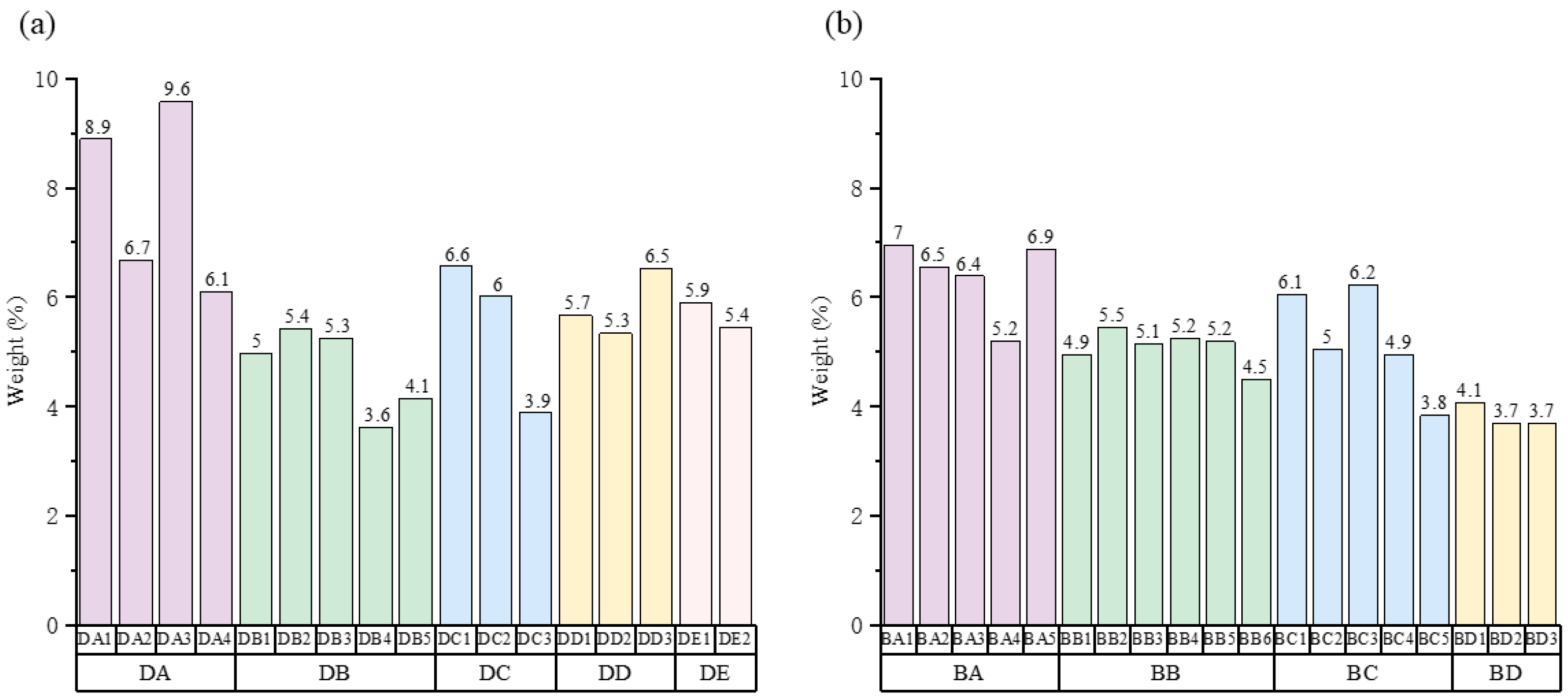
Figure 5 illustrates the importance levels of various drivers and barriers, determined using the EWM. The top three most important drivers are: “Collaborating with advanced technology companies (DA3)”, “Having research and development teams (DA1)”, and “Staff training (DA2)”. This indicates that the “Company (DA)” level plays the most significant role in promoting the application of LLMs in the construction industry. The second most important driver category is at the “Safety and Regulations (DD)” level, with “Supervision by regulatory authorities (DD3)” being the most significant driver within this category. Following closely is the “Service (DE)” level category, where the most critical driver is “24/7 Response (DE1)”. Additionally, the “Technology (DC)” level also presents a relatively important driver category, with “Algorithm and model optimization (DC1)” identified as its key driver. In contrast, the “Value Creation (DB)” level exhibits a lower overall importance, with “Cost reduction (DB4)” being the least significant factor.
The top three most important barriers are: “Requirement for construction-specific knowledge (BA1)”, “Integration with workflows (BA5)”, and “Handling unstructured and heterogeneous data (BA2)”. This indicates that the “Domain-specific (construction industry) (BA)” level plays the most significant role in hindering the application of LLMs in the construction industry. The second most important category of barriers is found at the “Adoption (BC)” level, with “High upfront investment costs (BC3)” identified as the most significant barrier within this category. Following this, the “Technology (BB)” level is the next most important category, where “Computational resource requirements (BB2)” stands out as its key barrier. The barriers at the “Ethical level (BD)” generally hold lower significance, with “Social concerns about job automation (BD2)” and “Potential for misuse (BD3)” being the least important.

5. Discussion

Using the EWM, this study identified the relative importance of various drivers and barriers to LLM adoption in construction. The following sections discuss these findings, their implications, and provide recommendations.

5.1. Drivers to the Application

The EWM analysis identified the top three drivers as “Collaborate with advanced technology companies (DA3)”, “Having research and development teams (DA1)”, and “Staff training (DA2)”. As all are company-level factors, this underscores the central role of corporate strategy and organizational capabilities in driving LLM adoption, a finding consistent with existing literature [105,106]. As the primary driver, “Collaborate with advanced technology companies (DA3)” highlights the value of external partnerships. For a traditionally less digitalized industry, such collaboration provides access to cutting-edge tools and knowledge, allowing firms to leverage advanced LLMs without the time and cost of in-house development—a pattern also observed during earlier BIM adoption [107,108].
“Having research and development teams (DA1)” enables construction firms to customize and adapt emerging technologies to their specific operational requirements. For example, from the late 1980s to the early 2000s, many Japanese construction companies initiated a surge of research and applications on automated construction systems, proposing different versions of systems [109]. “Staff training (DA2)” is another key driving factor in increasing technology adoption rates. Pan et al. explored the vocational training of construction workers in Guangdong Province of China and identified its position in the global political-economic spectrum of skill formation [110]. These findings are consistent with research on the Technology Organization Environment (TOE) framework [111], confirming that “Having research and development teams (DA1)” and “Staff training (DA2)” are the two key drivers for the successful application of LLMs in the construction industry.
The prominence of “Algorithm and model optimization (DC1)” as the primary driver at the “Technology (DC)” level underscores the critical role of continuously improving the accuracy, efficiency, and applicability of LLMs. In the construction industry, projects often involve complex and dynamic environments, making the ability of LLMs to provide accurate and reliable results essential. Algorithm and model optimization can enhance the performance of LLMs by improving their ability to process large volumes of data, adapt to specific construction-related tasks, and provide actionable insights. This finding is consistent with existing literature, which emphasizes the role of algorithmic advancements in driving the adoption of AI technologies [112,113]. For example, Demiss et al. [113] proposed an advanced hybrid deep learning architecture integrating convolutional neural networks (CNN) and recurrent neural networks (RNN). This model effectively addresses the inherent ambiguity and imprecision in construction duration estimation, thereby enabling more nuanced and adaptive project management practices [113].
The “Safety and regulations (DD)” level represents another crucial category in our driver’s framework, particularly given the construction industry’s stringent compliance requirements and risk sensitivity. The most important driver in the Safety and regulations (DD) level is “Supervision by regulatory authorities (DD3)”. The construction industry’s inherent risk sensitivity and complex stakeholder ecosystem make “Supervision by regulatory authorities (DD3)” particularly critical for LLM adoption in China. Unlike sectors where AI errors may cause reversible damage, construction projects face irreversible consequences from model hallucinations in critical areas like structural calculations, security evaluations, and contractual interpretations. This finding is consistent with existing literature, which emphasizes the role of regulatory frameworks in promoting the adoption of AI technologies [76,77,114]. For example, studies have shown that industries with strong regulatory oversight are more likely to adopt AI technologies, as they provide clear frameworks for compliance and risk management [114].
Our findings reveal that the “Value Creation (DB)”-level drivers demonstrate relatively lower importance weights than other levels, showing nuanced discrepancies from prior research. For example, while existing literature frequently emphasizes “Cost reduction (DB4)” as a major driver of AI adoption in the construction industry [78], our analysis places it at a lower level of importance. This difference may be attributed to the substantial upfront investment required for adopting LLMs, which includes not only technology but also training, data preparation, and infrastructure. Therefore, companies may view cost reduction as a long-term outcome rather than an immediate short-term financial benefit. In contrast, companies may focus more on optimizing processes and improving quality in the short term, with cost savings becoming more apparent as the technology matures and gradually integrates into daily operations. Furthermore, the study revealed that while the “Service (DE)”-level drivers ranked prominently in aggregate importance, their constituent factors exhibited relatively moderate individual significance. This phenomenon may stem from the fact that “Service (DE)”-level drivers are predominantly perceived as fundamental operational requirements rather than differentiating competitive advantages within the construction industry context.

5.2. Barriers to the Application

The top three barriers—“Requirement for construction-specific knowledge (BA1)”, “Integration with workflows (BA5)”, and “Handling unstructured and heterogeneous data (BA2)”—are all domain-specific, underscoring the complexity of applying LLMs in this knowledge-intensive field. “Requirement for construction-specific knowledge (BA1)” is the most significant barrier, reflecting the difficulty in encoding the vast and intricate knowledge required for construction projects. Construction projects involve a wide range of specialized knowledge, including architectural design, engineering principles, regulatory compliance, and project management practices. This knowledge is often contextual, experiential, and difficult to quantify, making it challenging for LLMs to accurately interpret and apply it. This finding aligns with existing literature, which highlights the challenges of applying AI technologies in fields with high levels of specialized knowledge [81,85].
“Integration with workflows (BA5)” and “Handling unstructured and heterogeneous data (BA2)” are also key barriers. Currently, the application of LLMs in the construction industry remains limited to basic functions such as Q & A and image generation, failing to integrate with core construction management workflows including cost control, schedule management, and quality assurance. This disconnection significantly hinders their broader adoption and practical implementation [81]. The reason for this phenomenon is that LLMs are pretrained in general language tasks rather than construction-specific processes like schedule optimization or cost estimation, creating a fundamental capability gap.
Moreover, the diverse and non-standardized nature of engineering project data—encompassing design blueprints, sensor readings, progress reports, and other heterogeneous formats presents substantial challenges for effective LLM deployment in real-world construction scenarios [81]. Several factors contribute to this issue: First, the inherent difference between the data formats in engineering projects and the standardized text and image data typically used for training LLMs plays a significant role. LLMs are generally trained on structured datasets such as news articles, social media posts, and formal documents, which exhibit a relatively simple and consistent structure. In contrast, engineering data includes a variety of specialized formats, such as blueprints, specifications, and progress tables, often containing industry-specific terminology, graphics, and tabular data. As these types of data were not sufficiently represented in the model’s training process, the model struggles to comprehend and extract valuable insights from engineering-related data, leading to a reduction in performance when deployed in such contexts. Additionally, the large volume of engineering data, combined with its low information density, exacerbates the issue. For instance, a document such as a several-hundred-page standard may contain only a small fraction of relevant information for a given task. While the entire document needs to be processed by the model, the majority of the content may not be immediately relevant to the specific query or task at hand. This challenge is further compounded by the model’s requirement to read through and comprehend long texts, which not only increases computational load but also hampers the model’s ability to focus on and extract key information effectively. Consequently, the presence of excessive and irrelevant data in long-form texts impairs the model’s ability to identify and leverage the most valuable information, thus affecting the overall model performance.
The most significant barrier at the “Adoption (BC)” level is “High upfront investment costs (BC3)”, which aligns with existing research and reflects the substantial financial resources required to implement LLMs in the construction industry [81,87]. Adopting LLMs typically involves significant costs, including purchasing hardware and software, developing custom models, and training staff. For many construction companies, particularly small and medium-sized enterprises (SMEs), these costs may be prohibitive, making it difficult to justify the investment in LLMs. The second most significant barrier is “Resistance to new technologies (BC1)”. The construction industry is traditionally conservative, and many companies are hesitant to adopt new technologies that may disrupt their existing workflows or require significant operational changes [81,87]. A similar barrier has also been observed in previous technology adoptions, such as BIM [115]. Such resistance is particularly strong among managers and decision-makers who are unfamiliar with the potential benefits of LLMs.
According to the EWM analysis, “Computational resource requirements (BB2)” have been identified as the most significant barrier at the “Technology (BB)” level, indicating that the computing infrastructure required for LLMs is a key limiting factor in their adoption. Due to their large-scale models and complex algorithms, LLMs require substantial computational power, especially in data processing, model training, and running large-scale simulations. In the construction industry, many companies lack the necessary infrastructure to support such high computational demands. This represents a significant barrier to the adoption of LLMs, as companies must invest in upgrading their IT systems, purchasing powerful hardware, and potentially managing high power consumption—all of which are substantial costs for companies that have not yet fully digitized [81,88]. It is interesting to find that our results diverge from prior literature regarding barriers, particularly in the relative importance of model hallucinations. Notably, our findings on barriers diverge from prior literature concerning model hallucinations, which we found to be a secondary concern [85,88,92]. This discrepancy likely stems from the industry’s early adoption stage, where practitioners are more immediately focused on foundational challenges like data integration. Furthermore, most respondents lacked direct experience with construction-specific LLMs, limiting their awareness of hallucination risks. However, as LLM use matures, the significance of this barrier will likely increase.
The “Ethical (BD)” level includes three barriers: “Data privacy and security (BD1)”, “Social concerns about job automation (BD2)”, and “Potential for misuse (BD3)”. Although previous literature has discussed the importance of ethical factors [81,87,88], the analysis shows that, compared to barriers in other categories, these factors have a lower weight. Many construction companies, when adopting LLMs, focus primarily on addressing more immediate and practical challenges, such as integrating the technology into existing workflows, ensuring data compatibility, and meeting the computational demands required for efficient LLM operation. While ethical concerns are important, they are often seen as secondary, especially in the early stages of LLM adoption. Furthermore, the urgency to achieve measurable business outcomes, such as improved efficiency and cost reduction, often overshadows concerns about ethical issues.

5.3. Implications for Corporate Transformation and Policy-Making

For construction companies, the findings underscore the need to cultivate internal capabilities (“Having research and development teams (DA1)” and “Staff training (DA2)”) while pursuing strategic partnerships (“Collaborate with advanced technology companies (DA3)”). Such strategic partnerships not only enable the direct acquisition of advanced LLM capabilities but also mitigate the risks associated with internal development, especially in the early stages of adoption. To enhance these capabilities, construction companies can leverage “industry-academia-research collaboration” models. For instance, through partnerships with universities or research institutes, companies can outsource early-stage research and development tasks, thus reducing costs while simultaneously benefiting from the specialized knowledge and expertise of academic institutions. These collaborations can also extend to staff training, with research institutions providing targeted training for the construction company’s technical personnel. This approach ensures that internal staff can keep pace with advancements in LLM technology, while also fostering a knowledge exchange that supports long-term growth.
Additionally, during the initial phases of adopting LLMs, construction companies may focus on hiring a core team of developers responsible for the algorithm’s implementation and product development. This allows companies to ensure the operational viability of LLMs with relatively low upfront costs. In the longer term, once the benefits of LLMs are realized, companies can gradually build their in-house AI teams, supported by training from academic and research institutions. By adopting this approach, construction firms can ensure the continuous improvement of their capabilities while enhancing the adoption and integration of LLMs into their operations. By aligning these drivers—“Having research and development teams (DA1)”, “Staff training (DA2)”, and “Collaborating with advanced technology companies (DA3)”—with their organizational strategy, construction companies can accelerate the adoption of LLMs and fully integrate these technologies into their operations, thereby enhancing efficiency, decision-making, and overall competitiveness.
“Computational resource requirements (BB2)” represent a significant barrier, indicating that construction companies must invest in upgrading their technological infrastructure. Given the unique and often unstructured nature of construction data, such as DWG, IFC, and other industry-specific formats, customized parsing methods are essential to transform raw, “unclean” data into clean, usable information. Moreover, the challenge of handling vast amounts of data and bridging the knowledge gap in the construction domain necessitates advanced techniques, such as Retrieval-Augmented Generation (RAG), to collaboratively enhance LLMs. By integrating these technologies, companies can not only optimize the processing of construction-specific data but also ensure the efficient and accurate deployment of LLMs. Additionally, exploring cloud-based solutions or forming strategic partnerships with technology providers specializing in AI and computational resources can further mitigate the impact of these barriers, thereby facilitating the broader adoption of LLMs in the construction industry.
Companies should also address the challenge of “Integration with workflows (BA5)” to facilitate the seamless adoption of LLMs into daily operations. To achieve this, it is essential to explore the implementation of intelligent agents or Model Context Protocol (MCP)-based systems. These frameworks enable the integration of existing management tools—such as cost estimation, scheduling, and resource allocation systems—by allowing LLMs to interact with these tools through structured protocols, rather than relying on LLMs to generate all outputs independently. By leveraging such systems, companies can enhance the efficiency and accuracy of LLM applications, ensuring they complement and augment existing workflows rather than disrupting them.
For policymakers, to facilitate the adoption of LLMs in the construction industry, they should consider providing financial incentives, such as subsidies or tax breaks, to support the substantial upfront costs associated with AI adoption. For instance, Shenzhen provides a subsidy of up to 10 million yuan (approximately 1.5 million USD) for demonstration projects in the application of AI. Additionally, Shenzhen has established an AI Industry Investment Fund to guide social capital toward entrepreneurial enterprises and high-quality projects within the AI sector. In Beijing, an annual allocation of 100 million yuan (approximately 15 million USD) in computing power vouchers is available for companies to apply for and use for computing resource rental. Meanwhile, Hangzhou annually selects no more than 10 outstanding specialized models with advanced performance that have been successfully implemented in the city, offering subsidies of up to 5 million yuan (approximately 750,000 USD) per project. Additionally, policymakers should work to establish clear regulatory frameworks to address ethical issues such as data privacy, security, and the potential misuse of AI technologies. In 2024, China released the “Guidelines for the Construction of a National Comprehensive Standardization System for the Artificial Intelligence Industry,” aiming to promote the standardization of the AI industry. The guidelines seek to establish unified standards to regulate AI products and services. However, they should also provide construction companies with clear guidelines on how to ensure compliance with data protection laws and the ethical use of LLMs.

5.4. Broader Implications for LLM Adoption Across Industries

The drivers and barriers identified in this study transcend the construction industry, offering transferable insights for LLM adoption in other industries. The critical role of organizational capabilities (e.g., R & D teams, staff training) and strategic partnerships also mirrors findings from manufacturing [116] and healthcare [117], indicating that internal expertise and collaboration with technology providers are generally pivotal for scaling AI solutions. Similarly, “Integration with workflows (BA5)” resonates with challenges observed in the logistics industry [118,119], suggesting that industries reliant on legacy systems face analogous hurdles in embedding LLMs into operational processes. Relevant recommendations proposed in this study, such as collaborating with R & D teams and technology providers, implementing tailored staff training, and leveraging domain-specific expertise, could therefore be widely applied in broader industries.
Moreover, the “Technology (DC)”-level barriers are pervasive across industries. For instance, the energy industry’s adoption of LLMs for predictive maintenance similarly grapples with high computational costs and model customization needs [120], while the legal industry’s use of LLMs for contract analysis faces parallel challenges in handling unstructured data [121]. These commonalities underscore that while industry-specific adaptations are necessary, core technological prerequisites for LLM adoption are broadly applicable.

6. Conclusions

The application of LLMs in the construction industry improves project management through enhanced efficiency and intelligent decision-making capabilities. While LLMs demonstrate significant potential in this domain, their adoption faces several challenges. This study systematically analyzes the drivers and barriers to LLM adoption in China’s construction industry, aiming to facilitate more effective implementation. A four-step methodology is adopted, comprising a comprehensive literature review, structured questionnaire design, questionnaire distribution, and quantitative analysis. The findings indicate that the top three drivers are at the company level, highlighting the crucial role that companies play in LLM application in the construction industry. Conversely, the top three barriers are at the domain-specific (construction industry) level, emphasizing that industry-specific challenges are pivotal in the adoption of LLMs. Furthermore, the study reveals that the majority of respondents are optimistic about the application of LLMs in the construction industry, although their actual implementation and use remain in the early stages. For example, during the design phase, LLMs can assist in generating architectural visualizations or exploring alternative design options in response to textual prompts. However, such tools should be regarded as creative aids rather than replacements—the architect’s interpretive and imaginative role remains essential and irreplaceable in the conceptualization of architectural design.
This study provides both theoretical and practical contributions to understanding the adoption of LLMs in the construction industry. Theoretically, it proposes a structured framework that categorizes the key drivers and barriers shaping LLM adoption, integrating LLM-specific technological attributes with cross-sectoral insights from digital transformation research. This framework bridges emerging AI capabilities with domain-specific challenges that remain underexplored in the existing literature. Practically, the empirical results yield actionable recommendations for construction firms and policymakers, offering targeted strategies to overcome implementation barriers and facilitate technology adoption. These insights create a robust foundation for future research while delivering valuable guidance for practitioners navigating LLM integration complexities. Moreover, the identified drivers and barriers are not exclusive to the construction industry but also extend to other industries undergoing digital transformation, such as manufacturing, healthcare, and energy, where LLM adoption faces similar challenges and opportunities.
Despite these contributions, certain limitations warrant acknowledgment. The existing literature on LLM adoption drivers and barriers in the construction industry remains limited, which may constrain the theoretical depth of the study. Second, the sampling strategy may not fully represent all construction subsectors and organizational scales, potentially affecting findings’ generalizability. For example, technological adoption patterns may differ significantly between large firms and small-to-medium enterprises. Additionally, potential response biases may stem from variations in respondents’ technical expertise and industry experience. Future studies could strengthen the insights of this work by incorporating qualitative approaches such as interviews or case studies to illustrate real-world experiences of LLM adoption. These qualitative methods would complement the quantitative data, providing a richer understanding of the challenges and opportunities faced by construction firms during LLM integration. Expanding the sampling strategy to include diverse organizational types and sizes, as well as leveraging qualitative insights from industry practitioners, will further enhance the validity and depth of the findings.

Author Contributions

Conceptualization, L.M. and X.Z.; methodology, R.J. and J.T.; software, C.W.; validation, L.L.; formal analysis, Z.Y.; investigation, X.Z.; resources, L.M.; data curation, L.M. and J.T.; writing—original draft preparation, X.Z.; writing—review and editing, R.J., J.T. and C.W.; visualization, Z.Y.; supervision, R.J. and C.W.; project administration, L.M.; funding acquisition, R.J. and C.W. All authors have read and agreed to the published version of the manuscript.

Funding

The study is supported by grants from the National Natural Science Foundation of China (72204248, 52208324), the Guangdong Basic and Applied Basic Research Foundation (2023A1515011162), and Shenzhen Science and Technology Program (RCBS20221008093307015).

Data Availability Statement

The data presented in this study are available on request from the corresponding author. The data are not publicly available due to containing sensitive information related to research participants’ personal privacy and confidentiality agreements signed with the participating institutions.

Conflicts of Interest

The authors declare that they have no conflicts of interest.

References

  1. Ofori, G. Nature of the construction industry, its needs and its development: A review of four decades of research. J. Constr. Dev. Ctries. 2015, 20, 115. [Google Scholar]
  2. Chuai, X.; Lu, Q.; Huang, X.; Gao, R.; Zhao, R. China’s construction industry-linked economy-resources-environment flow in international trade. J. Clean. Prod. 2021, 278, 123990. [Google Scholar] [CrossRef]
  3. Ju, Z.; Solopova, N.A. Sustainable Development of Construction Industry in China. In Proceedings of the 5th International Conference on Urban Engineering and Management Science (ICUEMS2024), Tianjin, China, 2–4 August 2024; p. 03018. [Google Scholar]
  4. Leviäkangas, P.; Paik, S.M.; Moon, S. Keeping up with the pace of digitization: The case of the Australian construction industry. Technol. Soc. 2017, 50, 33–43. [Google Scholar] [CrossRef]
  5. João Ribeirinho, M.; Mischke, J.; Strube, G.; Sjödin, E.; Luis, J. The Next Normal in Construction; McKinsey & Company: New York, NY, USA, 2020. [Google Scholar]
  6. Saka, A.; Taiwo, R.; Saka, N.; Salami, B.A.; Ajayi, S.; Akande, K.; Kazemi, H. GPT models in construction industry: Opportunities, limitations, and a use case validation. Dev. Built Environ. 2024, 17, 100300. [Google Scholar] [CrossRef]
  7. Zhu, H.; Hwang, B.-G.; Ngo, J.; Tan, J.P.S. Applications of smart technologies in construction project management. J. Constr. Eng. Manag. 2022, 148, 04022010. [Google Scholar] [CrossRef]
  8. Wu, J.; Li, L.; Teng, B. Research on synergistic development paths of intelligent construction and construction industrialization—A case study of Shenyang, China. J. Build. Eng. 2025, 102, 112077. [Google Scholar] [CrossRef]
  9. Karan, E.P.; Irizarry, J.; Haymaker, J. BIM and GIS integration and interoperability based on semantic web technology. J. Comput. Civ. Eng. 2016, 30, 04015043. [Google Scholar] [CrossRef]
  10. Oke, A.E.; Aliu, J.; Fadamiro, P.O.; Akanni, P.O.; Stephen, S.S. Attaining digital transformation in construction: An appraisal of the awareness and usage of automation techniques. J. Build. Eng. 2023, 67, 105968. [Google Scholar] [CrossRef]
  11. Lou, J.; Lu, W.; Xue, F. A review of BIM data exchange method in BIM collaboration. In Proceedings of the 25th International Symposium on Advancement of Construction Management and Real Estate, Wuhan, China, 28–30 November 2020; Springer: Singapore, 2021; pp. 1329–1338. [Google Scholar]
  12. Wang, N.; Issa, R.R.; Anumba, C.J. Query answering system for building information modeling using BERT NN Algorithm and NLG. In Proceedings of the ASCE International Conference on Computing in Civil Engineering 2021, Orlando, FL, USA, 12–14 September 2021; pp. 425–432. [Google Scholar]
  13. Alreshidi, E.; Mourshed, M.; Rezgui, Y. Factors for effective BIM governance. J. Build. Eng. 2017, 10, 89–101. [Google Scholar] [CrossRef]
  14. Shen, Y.; Heacock, L.; Elias, J.; Hentel, K.D.; Reig, B.; Shih, G.; Moy, L. ChatGPT and other large language models are double-edged swords. Radiology 2023, 307, e230163. [Google Scholar] [CrossRef]
  15. Akinosho, T.D.; Oyedele, L.O.; Bilal, M.; Ajayi, A.O.; Delgado, M.D.; Akinade, O.O.; Ahmed, A.A. Deep learning in the construction industry: A review of present status and future innovations. J. Build. Eng. 2020, 32, 101827. [Google Scholar] [CrossRef]
  16. Forth, K.; Borrmann, A. Semantic enrichment for BIM-based building energy performance simulations using semantic textual similarity and fine-tuning multilingual LLM. J. Build. Eng. 2024, 95, 110312. [Google Scholar] [CrossRef]
  17. Raiaan, M.A.K.; Mukta, M.S.H.; Fatema, K.; Fahad, N.M.; Sakib, S.; Mim, M.M.J.; Ahmad, J.; Ali, M.E.; Azam, S. A review on large Language Models: Architectures, applications, taxonomies, open issues and challenges. IEEE Access 2024, 12, 26839–26874. [Google Scholar] [CrossRef]
  18. Pal, S.; Bhattacharya, M.; Lee, S.-S.; Chakraborty, C. A domain-specific next-generation large language model (LLM) or ChatGPT is required for biomedical engineering and research. Ann. Biomed. Eng. 2024, 52, 451–454. [Google Scholar] [CrossRef]
  19. Kung, T.H.; Cheatham, M.; Medenilla, A.; Sillos, C.; De Leon, L.; Elepaño, C.; Madriaga, M.; Aggabao, R.; Diaz-Candido, G.; Maningo, J. Performance of ChatGPT on USMLE: Potential for AI-assisted medical education using large language models. PLoS Digit. Health 2023, 2, e0000198. [Google Scholar] [CrossRef]
  20. Sallam, M. ChatGPT utility in healthcare education, research, and practice: Systematic review on the promising perspectives and valid concerns. Healthcare 2023, 11, 887. [Google Scholar] [CrossRef]
  21. Korngiebel, D.M.; Mooney, S.D. Considering the possibilities and pitfalls of Generative Pre-trained Transformer 3 (GPT-3) in healthcare delivery. NPJ Digit. Med. 2021, 4, 93. [Google Scholar] [CrossRef] [PubMed]
  22. Zhang, J.; Wang, L.; Lee, R.K.-W.; Bin, Y.; Wang, Y.; Shao, J.; Lim, E.-P. Graph-to-tree learning for solving math word problems. In Proceedings of the 58th Annual Meeting of the Association for Computational Linguistics, Virtual, 5–10 July 2020; pp. 3928–3937. [Google Scholar]
  23. Kasneci, E.; Seßler, K.; Küchemann, S.; Bannert, M.; Dementieva, D.; Fischer, F.; Gasser, U.; Groh, G.; Günnemann, S.; Hüllermeier, E. ChatGPT for good? On opportunities and challenges of large language models for education. Learn. Individ. Differ. 2023, 103, 102274. [Google Scholar] [CrossRef]
  24. Korinek, A. Generative AI for economic research: Use cases and implications for economists. J. Econ. Lit. 2023, 61, 1281–1317. [Google Scholar] [CrossRef]
  25. Radwan, A.; Amarneh, M.; Alawneh, H.; Ashqar, H.I.; AlSobeh, A.; Magableh, A.A.A.R. Predictive analytics in mental health leveraging LLM embeddings and machine learning models for social media analysis. Int. J. Web Serv. Res. 2024, 21, 1–22. [Google Scholar] [CrossRef]
  26. Abramski, K.; Citraro, S.; Lombardi, L.; Rossetti, G.; Stella, M. Cognitive network science reveals bias in gpt-3, gpt-3.5 turbo, and gpt-4 mirroring math anxiety in high-school students. Big Data Cogn. Comput. 2023, 7, 124. [Google Scholar] [CrossRef]
  27. Sobieszek, A.; Price, T. Playing games with AIs: The limits of GPT-3 and similar large language models. Minds Mach. 2022, 32, 341–364. [Google Scholar] [CrossRef]
  28. Wang, Y.; Luo, H.; Fang, W. An integrated approach for automatic safety inspection in construction: Domain knowledge with multimodal large language model. Adv. Eng. Inform. 2025, 65, 103246. [Google Scholar] [CrossRef]
  29. Sun, M.; Zhao, R.; Xue, F. The Opportunities and Challenges of Multimodal GenAI in the Construction Industry: A Brief Review. Intelligence 2025, 24, 25. [Google Scholar]
  30. Hadi, M.U.; Al Tashi, Q.; Shah, A.; Qureshi, R.; Muneer, A.; Irfan, M.; Zafar, A.; Shaikh, M.B.; Akhtar, N.; Wu, J. Large language models: A comprehensive survey of its applications, challenges, limitations, and future prospects. Authorea Prepr. 2024, 1, 1–26. [Google Scholar] [CrossRef]
  31. Fujiwara, K.; Sasaki, M.; Nakamura, A.; Watanabe, N. Measuring the Interpretability and Explainability of Model Decisions of Five Large Language Models; Open Science Framework: Charlottesville, VA, USA, 2024. [Google Scholar]
  32. Yang, J.; Jin, H.; Tang, R.; Han, X.; Feng, Q.; Jiang, H.; Zhong, S.; Yin, B.; Hu, X. Harnessing the power of llms in practice: A survey on chatgpt and beyond. ACM Trans. Knowl. Discov. Data 2024, 18, 1–32. [Google Scholar] [CrossRef]
  33. Ghimire, P.; Kim, K.; Acharya, M. Opportunities and Challenges of Generative AI in Construction Industry: Focusing on Adoption of Text-Based Models. Buildings 2024, 14, 220. [Google Scholar] [CrossRef]
  34. Heo, S.; Na, S. Ready for departure: Factors to adopt large language model (LLM)-based artificial intelligence (AI) technology in the architecture, engineering and construction (AEC) industry. Results Eng. 2025, 25, 104325. [Google Scholar] [CrossRef]
  35. Hadi, M.U.; Qureshi, R.; Shah, A.; Irfan, M.; Zafar, A.; Shaikh, M.B.; Akhtar, N.; Wu, J.; Mirjalili, S. A survey on large language models: Applications, challenges, limitations, and practical usage. Authorea Prepr. 2023, 1, 1–26. [Google Scholar] [CrossRef]
  36. Brown, P.F.; Della Pietra, V.J.; Desouza, P.V.; Lai, J.C.; Mercer, R.L. Class-based n-gram models of natural language. Comput. Linguist. 1992, 18, 467–480. [Google Scholar]
  37. Haidar, M.A.; O’Shaughnessy, D. Topic n-gram count language model adaptation for speech recognition. In Proceedings of the 2012 IEEE Spoken Language Technology Workshop (SLT), Miami, FL, USA, 2–5 December 2012; pp. 165–169. [Google Scholar]
  38. Xiao, J.; Zhou, Z. Research progress of RNN language model. In Proceedings of the 2020 IEEE International Conference on Artificial Intelligence and Computer Applications (ICAICA), Dalian, China, 27–29 June 2020; pp. 1285–1288. [Google Scholar]
  39. Fang, W.; Chen, Y.; Xue, Q. Survey on research of RNN-based spatio-temporal sequence prediction algorithms. J. Big Data 2021, 3, 97. [Google Scholar] [CrossRef]
  40. Vaswani, A.; Shazeer, N.; Parmar, N.; Uszkoreit, J.; Jones, L.; Gomez, A.N.; Kaiser, Ł.; Polosukhin, I. Attention is all you need. In Proceedings of the Advances in Neural Information Processing Systems, Long Beach, CA, USA, 4–9 December 2017. [Google Scholar]
  41. Radford, A.; Narasimhan, K.; Salimans, T.; Sutskever, I. Improving Language Understanding by Generative Pre-Training; OpenAI: San Francisco, CA, USA, 2018. [Google Scholar]
  42. Radford, A.; Wu, J.; Child, R.; Luan, D.; Amodei, D.; Sutskever, I. Language models are unsupervised multitask learners. OpenAI Blog 2019, 1, 9. [Google Scholar]
  43. Devlin, J. Bert: Pre-training of deep bidirectional transformers for language understanding. arXiv 2018, arXiv:1810.04805. [Google Scholar] [CrossRef]
  44. Islam, R.; Moushi, O.M. Gpt-4o: The cutting-edge advancement in multimodal llm. Authorea Prepr. 2024, 47–60. [Google Scholar] [CrossRef]
  45. Kurokawa, R.; Ohizumi, Y.; Kanzawa, J.; Kurokawa, M.; Sonoda, Y.; Nakamura, Y.; Kiguchi, T.; Gonoi, W.; Abe, O. Diagnostic performances of Claude 3 Opus and Claude 3.5 Sonnet from patient history and key images in Radiology’s “Diagnosis Please” cases. JPN J. Radiol. 2024, 42, 1399–1402. [Google Scholar] [CrossRef] [PubMed]
  46. Team, G.; Georgiev, P.; Lei, V.I.; Burnell, R.; Bai, L.; Gulati, A.; Tanzer, G.; Vincent, D.; Pan, Z.; Wang, S. Gemini 1.5: Unlocking multimodal understanding across millions of tokens of context. arXiv 2024, arXiv:2403.05530. [Google Scholar] [CrossRef]
  47. Achiam, J.; Adler, S.; Agarwal, S.; Ahmad, L.; Akkaya, I.; Aleman, F.L.; Almeida, D.; Altenschmidt, J.; Altman, S.; Anadkat, S. Gpt-4 technical report. arXiv 2023, arXiv:2303.08774. [Google Scholar] [CrossRef]
  48. Jayaseelan, N. LLaMA 2: The New Open Source Language Model. J. Mach. Learn. Res. 2023, 24, 1–15. [Google Scholar]
  49. Makridis, G.; Oikonomou, A.; Koukos, V. Fairylandai: Personalized fairy tales utilizing chatgpt and dalle-3. arXiv 2024, arXiv:2407.09467. [Google Scholar] [CrossRef]
  50. Wu, S.; Koo, M.; Blum, L.; Black, A.; Kao, L.; Scalzo, F.; Kurtz, I. A comparative study of open-source large language models, gpt-4 and claude 2: Multiple-choice test taking in nephrology. arXiv 2023, arXiv:2308.04709. [Google Scholar] [CrossRef]
  51. Anil, R.; Dai, A.M.; Firat, O.; Johnson, M.; Lepikhin, D.; Passos, A.; Shakeri, S.; Taropa, E.; Bailey, P.; Chen, Z. Palm 2 technical report. arXiv 2023, arXiv:2305.10403. [Google Scholar] [CrossRef]
  52. Daras, G.; Dimakis, A.G. Discovering the hidden vocabulary of dalle-2. arXiv 2022, arXiv:2206.00169. [Google Scholar] [CrossRef]
  53. Villegas, R.; Babaeizadeh, M.; Kindermans, P.-J.; Moraldo, H.; Zhang, H.; Saffar, M.T.; Castro, S.; Kunze, J.; Erhan, D. Phenaki: Variable length video generation from open domain textual descriptions. In Proceedings of the International Conference on Learning Representations, Virtual, 25–29 April 2022. [Google Scholar]
  54. Taylor, R.; Kardas, M.; Cucurull, G.; Scialom, T.; Hartshorn, A.; Saravia, E.; Poulton, A.; Kerkez, V.; Stojnic, R. Galactica: A large language model for science. arXiv 2022, arXiv:2211.09085. [Google Scholar] [CrossRef]
  55. Borsos, Z.; Marinier, R.; Vincent, D.; Kharitonov, E.; Pietquin, O.; Sharifi, M.; Roblek, D.; Teboul, O.; Grangier, D.; Tagliasacchi, M. Audiolm: A language modeling approach to audio generation. IEEE/ACM Trans. Audio Speech Lang. Process. 2023, 31, 2523–2533. [Google Scholar] [CrossRef]
  56. Chen, M.; Tworek, J.; Jun, H.; Yuan, Q.; Pinto, H.P.D.O.; Kaplan, J.; Edwards, H.; Burda, Y.; Joseph, N.; Brockman, G. Evaluating large language models trained on code. arXiv 2021, arXiv:2107.03374. [Google Scholar] [CrossRef]
  57. Reddy, M.D.M.; Basha, M.S.M.; Hari, M.M.C.; Penchalaiah, M.N. Dall-e: Creating images from text. UGC Care Group I J. 2021, 8, 71–75. [Google Scholar]
  58. Fawzi, A.; Balog, M.; Huang, A.; Hubert, T.; Romera-Paredes, B.; Barekatain, M.; Novikov, A.; Ruiz, F.J.; Schrittwieser, J.; Swirszcz, G. Discovering faster matrix multiplication algorithms with reinforcement learning. Nature 2022, 610, 47–53. [Google Scholar] [CrossRef]
  59. Onatayo, D.; Onososen, A.; Oyediran, A.O.; Oyediran, H.; Arowoiya, V.; Onatayo, E. Generative AI Applications in Architecture, Engineering, and Construction: Trends, Implications for Practice, Education & Imperatives for Upskilling—A Review. Architecture 2024, 4, 877–902. [Google Scholar] [CrossRef]
  60. Abioye, S.O.; Oyedele, L.O.; Akanbi, L.; Ajayi, A.; Delgado, J.M.D.; Bilal, M.; Akinade, O.O.; Ahmed, A. Artificial intelligence in the construction industry: A review of present status, opportunities and future challenges. J. Build. Eng. 2021, 44, 103299. [Google Scholar] [CrossRef]
  61. Momade, M.H.; Durdyev, S.; Estrella, D.; Ismail, S. Systematic review of application of artificial intelligence tools in architectural, engineering and construction. Front. Eng. Built Environ. 2021, 1, 203–216. [Google Scholar] [CrossRef]
  62. Liao, W.; Lu, X.; Huang, Y.; Zheng, Z.; Lin, Y. Automated structural design of shear wall residential buildings using generative adversarial networks. Autom. Constr. 2021, 132, 103931. [Google Scholar] [CrossRef]
  63. You, H.; Ye, Y.; Zhou, T.; Zhu, Q.; Du, J. Robot-enabled construction assembly with automated sequence planning based on ChatGPT: RoboGPT. Buildings 2023, 13, 1772. [Google Scholar] [CrossRef]
  64. Prieto, S.A.; Mengiste, E.T.; García de Soto, B. Investigating the use of ChatGPT for the scheduling of construction projects. Buildings 2023, 13, 857. [Google Scholar] [CrossRef]
  65. Gundidza, F.; Kikuchi, M.; Ozono, T. Enhanced Classification of Delay Risk Sources in Road Construction Using Domain-Knowledge-Driven Large Language Models. In Proceedings of the Pacific Rim International Conference on Artificial Intelligence, Kyoto, Japan, 18–24 November 2024; pp. 308–319. [Google Scholar]
  66. Uddin, S.J.; Albert, A.; Ovid, A.; Alsharef, A. Leveraging ChatGPT to aid construction hazard recognition and support safety education and training. Sustainability 2023, 15, 7121. [Google Scholar] [CrossRef]
  67. Smetana, M.; Salles de Salles, L.; Sukharev, I.; Khazanovich, L. Highway Construction Safety Analysis Using Large Language Models. Appl. Sci. 2024, 14, 1352. [Google Scholar] [CrossRef]
  68. Ji, Z.; Lee, N.; Frieske, R.; Yu, T.; Su, D.; Xu, Y.; Ishii, E.; Bang, Y.J.; Madotto, A.; Fung, P. Survey of hallucination in natural language generation. ACM Comput. Surv. 2023, 55, 1–38. [Google Scholar] [CrossRef]
  69. Shehzad, H.M.F.; Ibrahim, R.B.; Yusof, A.F.; Khaidzir, K.A.M.; Iqbal, M.; Razzaq, S. The role of interoperability dimensions in building information modelling. Comput. Ind. 2021, 129, 103444. [Google Scholar] [CrossRef]
  70. You, Z.; Feng, L. Integration of industry 4.0 related technologies in construction industry: A framework of cyber-physical system. IEEE Access 2020, 8, 122908–122922. [Google Scholar] [CrossRef]
  71. Korinek, A. LLMs Level Up—Better, Faster, Cheaper: June 2024 Update to Section 3 of “Generative AI for Economic Research: Use Cases and Implications for Economists. J. Econ. Lit. 2024, 61, 1–38. [Google Scholar]
  72. Co, C.Y. Chinese contractors in developing countries. Rev. World Econ. 2014, 150, 149–171. [Google Scholar] [CrossRef]
  73. Kamel Rahimi, A.; Pienaar, O.; Ghadimi, M.; Canfell, O.J.; Pole, J.D.; Shrapnel, S.; van der Vegt, A.H.; Sullivan, C. Implementing AI in Hospitals to Achieve a Learning Health System: Systematic Review of Current Enablers and Barriers. J. Med. Internet Res. 2024, 26, e49655. [Google Scholar] [CrossRef] [PubMed]
  74. Verma, A.A.; Murray, J.; Greiner, R.; Cohen, J.P.; Shojania, K.G.; Ghassemi, M.; Straus, S.E.; Pou-Prom, C.; Mamdani, M. Implementing machine learning in medicine. Cmaj 2021, 193, E1351–E1357. [Google Scholar] [CrossRef]
  75. Wilson, A.; Saeed, H.; Pringle, C.; Eleftheriou, I.; Bromiley, P.A.; Brass, A. Artificial intelligence projects in healthcare: 10 practical tips for success in a clinical environment. BMJ Health Care Inform. 2021, 28, e100323. [Google Scholar] [CrossRef]
  76. Gill, M.A.; Zhou, X.; Nabi, F.; Genrich, R.; Gururajan, R. Would Business Applications such as the FinTech benefit by ChatGPT? If so, where and how? In Proceedings of the 2023 IEEE International Conference on Web Intelligence and Intelligent Agent Technology (WI-IAT), Venice, Italy, 26–29 October 2023; pp. 541–546. [Google Scholar]
  77. Steen, L.E.A.; Vevle, S.R. Generative Artificial Intelligence Use in Financial Institutions Drivers, Barriers & Future Development; University of Agder: Kristiansand, Norway, 2024. [Google Scholar]
  78. Kar, S.; Kar, A.K.; Gupta, M.P. Modeling drivers and barriers of artificial intelligence adoption: Insights from a strategic management perspective. Intell. Syst. Account. Financ. Manag. 2021, 28, 217–238. [Google Scholar] [CrossRef]
  79. Lakkaraju, K.; Jones, S.E.; Vuruma, S.K.R.; Pallagani, V.; Muppasani, B.C.; Srivastava, B. LLMs for Financial Advisement: A Fairness and Efficacy Study in Personal Decision Making. In Proceedings of the Fourth ACM International Conference on AI in Finance, Brooklyn, NY, USA, 27–29 November 2023; pp. 100–107. [Google Scholar]
  80. Eche, T.; Schwartz, L.H.; Mokrane, F.-Z.; Dercle, L. Toward generalizability in the deployment of artificial intelligence in radiology: Role of computation stress testing to overcome underspecification. Radiol. Artif. Intell. 2021, 3, e210097. [Google Scholar] [CrossRef]
  81. Taiwo, R.; Bello, I.T.; Abdulai, S.F.; Yussif, A.-M.; Salami, B.A.; Saka, A.; Zayed, T. Generative AI in the Construction Industry: A State-of-the-art Analysis. arXiv 2024, arXiv:2402.09939. [Google Scholar] [CrossRef]
  82. Zhang, X.; Yang, Q. Xuanyuan 2.0: A large chinese financial chat model with hundreds of billions parameters. In Proceedings of the 32nd ACM international Conference on Information and Knowledge Management, Birmingham, UK, 21–25 October 2023; pp. 4435–4439. [Google Scholar]
  83. Li, Y.; Wang, S.; Ding, H.; Chen, H. Large language models in finance: A survey. In Proceedings of the Fourth ACM International Conference on AI in Finance, Brooklyn, NY, USA, 27–29 November 2023; pp. 374–382. [Google Scholar]
  84. Leiner, T.; Bennink, E.; Mol, C.P.; Kuijf, H.J.; Veldhuis, W.B. Bringing AI to the clinic: Blueprint for a vendor-neutral AI deployment infrastructure. Insights Into Imaging 2021, 12, 11. [Google Scholar] [CrossRef] [PubMed]
  85. Wu, S.; Shen, Q.; Deng, Y.; Cheng, J. Natural-language-based intelligent retrieval engine for BIM object database. Comput. Ind. 2019, 108, 73–88. [Google Scholar] [CrossRef]
  86. Botao, Z.; Wanlei, H.; Ziwei, H.; ED, L.P.; Junqing, T.; Hanbin, L. A building regulation question answering system: A deep learning methodology. Adv. Eng. Inform. 2020, 46, 101195. [Google Scholar] [CrossRef]
  87. Saka, A.B.; Oyedele, L.O.; Akanbi, L.A.; Ganiyu, S.A.; Chan, D.W.; Bello, S.A. Conversational artificial intelligence in the AEC industry: A review of present status, challenges and opportunities. Adv. Eng. Inform. 2023, 55, 101869. [Google Scholar] [CrossRef]
  88. Samsi, S.; Zhao, D.; McDonald, J.; Li, B.; Michaleas, A.; Jones, M.; Bergeron, W.; Kepner, J.; Tiwari, D.; Gadepally, V. From words to watts: Benchmarking the energy costs of large language model inference. In Proceedings of the 2023 IEEE High Performance Extreme Computing Conference (HPEC), Boston, MA, USA, 25–29 September 2023; pp. 1–9. [Google Scholar]
  89. Xiao, J.; Huang, Q.; Chen, X.; Tian, C. Large Language Model Performance Benchmarking on Mobile Platforms: A Thorough Evaluation. arXiv 2024, arXiv:2410.03613. [Google Scholar] [CrossRef]
  90. Fan, A.; Gokkaya, B.; Harman, M.; Lyubarskiy, M.; Sengupta, S.; Yoo, S.; Zhang, J.M. Large language models for software engineering: Survey and open problems. In Proceedings of the 2023 IEEE/ACM International Conference on Software Engineering: Future of Software Engineering (ICSE-FoSE), Melbourne, Australia, 14–20 May 2023; pp. 31–53. [Google Scholar]
  91. Akintoye, A. Analysis of factors influencing project cost estimating practice. Constr. Manag. Econ. 2000, 18, 77–89. [Google Scholar] [CrossRef]
  92. Taherdoost, H. Validity and reliability of the research instrument; how to test the validation of a questionnaire/survey in a research. Int. J. Acad. Res. Manag. 2016, 5, 28–36. [Google Scholar] [CrossRef]
  93. Shrestha, N. Factor analysis as a tool for survey analysis. Am. J. Appl. Math. Stat. 2021, 9, 4–11. [Google Scholar] [CrossRef]
  94. Kaiser, H.F. An index of factorial simplicity. Psychometrika 1974, 39, 31–36. [Google Scholar] [CrossRef]
  95. Mapanga, A.; Miruka, C.O.; Mavetera, N. Barriers to effective value chain management in developing countries: New insights from the cotton industrial value chain. Probl. Perspect. Manag. 2018, 16, 22–35. [Google Scholar] [CrossRef]
  96. Brown, T.A.; Moore, M.T. Confirmatory Factor Analysis. In Handbook of Structural Equation Modeling; Guilford Press: New York, NY, USA, 2012; Volume 361, p. 379. [Google Scholar]
  97. Pliego-Martínez, O.; Martínez-Rebollar, A.; Estrada-Esquivel, H.; de la Cruz-Nicolás, E. An Integrated Attribute-Weighting Method Based on PCA and Entropy: Case of Study Marginalized Areas in a City. Appl. Sci. 2024, 14, 2016. [Google Scholar] [CrossRef]
  98. Wu, G.; Duan, K.; Zuo, J.; Zhao, X.; Tang, D. Integrated sustainability assessment of public rental housing community based on a hybrid method of AHP-entropy weight and cloud model. Sustainability 2017, 9, 603. [Google Scholar] [CrossRef]
  99. Wu, R.M.; Zhang, Z.; Yan, W.; Fan, J.; Gou, J.; Liu, B.; Gide, E.; Soar, J.; Shen, B.; Fazal-e-Hasan, S. A comparative analysis of the principal component analysis and entropy weight methods to establish the indexing measurement. PLoS ONE 2022, 17, e0262261. [Google Scholar] [CrossRef] [PubMed]
  100. Boutte, J.P. Information Technology Decision Making for the Intelligence Community: A Delphi Study. Ph.D. Thesis, University of Phoenix, Phoenix, AZ, USA, 2010. [Google Scholar]
  101. Houle, D.; Mezey, J.; Galpern, P. Interpretation of the results of common principal components analyses. Evolution 2002, 56, 433–440. [Google Scholar] [CrossRef] [PubMed]
  102. Munier, N.; Hontoria, E. Uses and Limitations of the AHP Method; Springer: Berlin/Heidelberg, Germany, 2021. [Google Scholar]
  103. Zhu, Y.; Tian, D.; Yan, F. Effectiveness of entropy weight method in decision-making. Math. Probl. Eng. 2020, 2020, 3564835. [Google Scholar] [CrossRef]
  104. Güzelci, O.Z.; Şener, S.M. An Entropy-Based Design Evaluation Model for Architectural Competitions through Multiple Factors. Entropy 2019, 21, 1064. [Google Scholar] [CrossRef]
  105. Ozorhon, B.; Oral, K. Drivers of innovation in construction projects. J. Constr. Eng. Manag. 2017, 143, 04016118. [Google Scholar] [CrossRef]
  106. Meng, X.; Brown, A. Innovation in construction firms of different sizes: Drivers and strategies. Eng. Constr. Archit. Manag. 2018, 25, 1210–1225. [Google Scholar] [CrossRef]
  107. Cao, D.; Wang, G.; Li, H.; Skitmore, M.; Huang, T.; Zhang, W. Practices and effectiveness of building information modelling in construction projects in China. Autom. Constr. 2015, 49, 113–122. [Google Scholar] [CrossRef]
  108. Abbasnejad, B.; Nepal, M.P.; Ahankoob, A.; Nasirian, A.; Drogemuller, R. Building Information Modelling (BIM) adoption and implementation enablers in AEC firms: A systematic literature review. Archit. Eng. Des. Manag. 2021, 17, 411–433. [Google Scholar] [CrossRef]
  109. Cai, S.; Ma, Z.; Skibniewski, M.J.; Guo, J. Construction automation and robotics: From one-offs to follow-ups based on practices of Chinese construction companies. J. Constr. Eng. Manag. 2020, 146, 05020013. [Google Scholar] [CrossRef]
  110. Pan, W.; Chen, L.; Zhan, W. Positioning construction workers’ vocational training of Guangdong in the global political-economic spectrum of skill formation. Eng. Constr. Archit. Manag. 2021, 28, 2489–2515. [Google Scholar] [CrossRef]
  111. Zhong, Y.; Chen, Z.; Ye, J.; Zhang, N. Exploring critical success factors for digital transformation in construction industry–based on TOE framework. Eng. Constr. Archit. Manag. 2024, 32, 4227–4249. [Google Scholar] [CrossRef]
  112. Lu, Y. Artificial intelligence: A survey on evolution, models, applications and future trends. J. Manag. Anal. 2019, 6, 1–29. [Google Scholar] [CrossRef]
  113. Demiss, B.A.; Elsaigh, W.A. Application of novel hybrid deep learning architectures combining Convolutional Neural Networks (CNN) and Recurrent Neural Networks (RNN): Construction duration estimates prediction considering preconstruction uncertainties. Eng. Res. Express 2024, 6, 032102. [Google Scholar] [CrossRef]
  114. De Almeida, P.G.R.; dos Santos, C.D.; Farias, J.S. Artificial intelligence regulation: A framework for governance. Ethics Inf. Technol. 2021, 23, 505–525. [Google Scholar] [CrossRef]
  115. Ma, X.; Darko, A.; Chan, A.P.; Wang, R.; Zhang, B. An empirical analysis of barriers to building information modelling (BIM) implementation in construction projects: Evidence from the Chinese context. Int. J. Constr. Manag. 2022, 22, 3119–3127. [Google Scholar] [CrossRef]
  116. Ge, J.; Su, X.; Zhou, Y. Organizational socialization, organizational identification and organizational citizenship behavior: An empirical research of Chinese high-tech manufacturing enterprises. Nankai Bus. Rev. Int. 2010, 1, 166–179. [Google Scholar] [CrossRef]
  117. Vinberg, S. Health and Performance in Small Enterprises: Studies of Organizational Determinants and Change Strategy. Ph.D. Thesis, Luleå Tekniska Universitet, Luleå, Sweden, 2006. [Google Scholar]
  118. Kobayashi, T.; Tamaki, M.; Komoda, N. Business process integration as a solution to the implementation of supply chain management systems. Inf. Manag. 2003, 40, 769–780. [Google Scholar] [CrossRef]
  119. Issaoui, Y.; Khiat, A.; Bahnasse, A.; Ouajji, H. Toward smart logistics: Engineering insights and emerging trends. Arch. Comput. Methods Eng. 2021, 28, 3183–3210. [Google Scholar] [CrossRef]
  120. Park, C.; Kim, M. Utilization and challenges of artificial intelligence in the energy sector. Energy Environ. 2024, 0958305X241258795. [Google Scholar] [CrossRef]
  121. Adnan, K.; Akbar, R. An analytical study of information extraction from unstructured and multidimensional big data. J. Big Data 2019, 6, 91. [Google Scholar] [CrossRef]
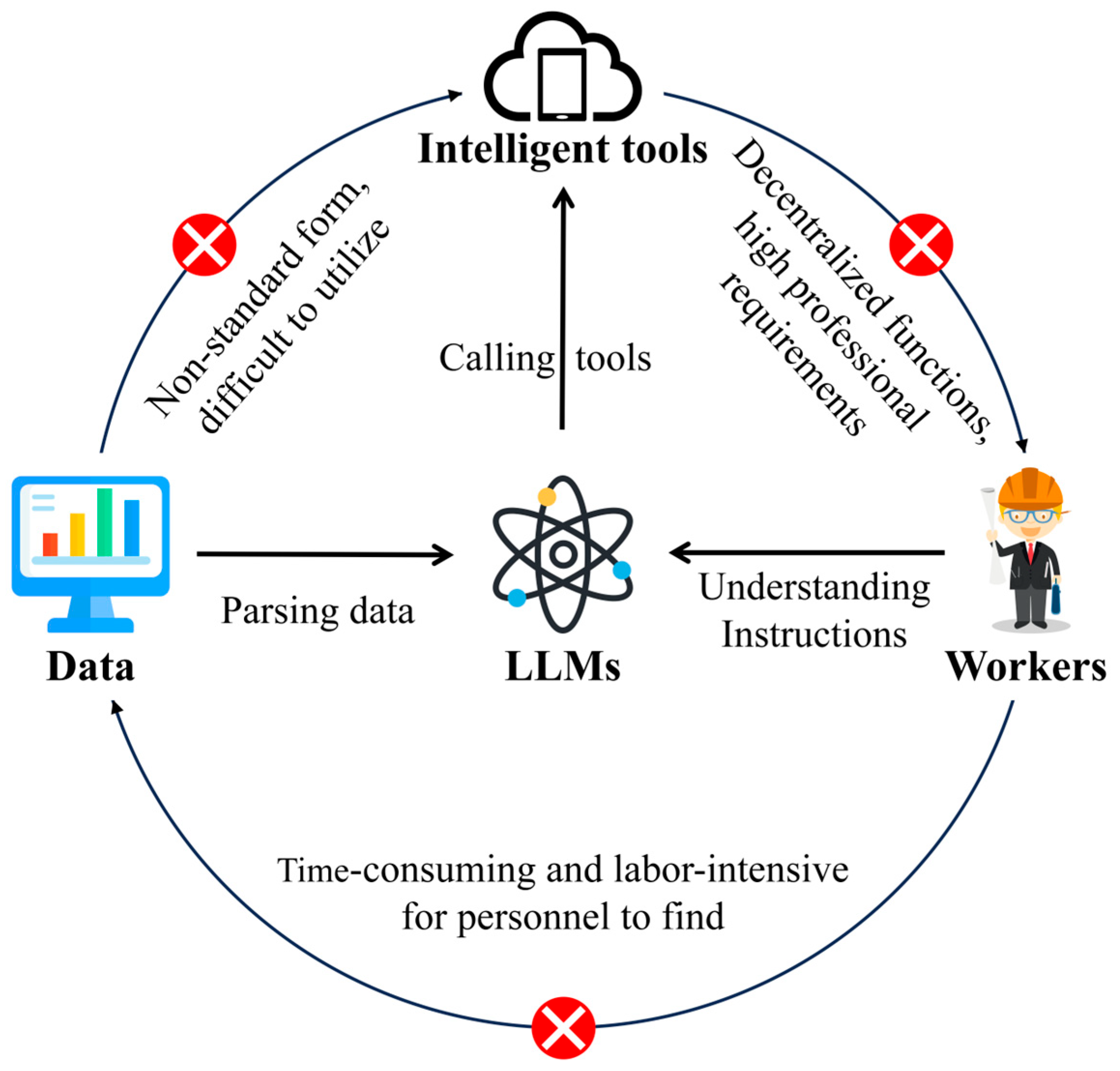
Figure 1. Synergy challenges in the construction industry.
Buildings 15 04296 g001
Figure 2. Methodological framework.
Buildings 15 04296 g002
Figure 3. (a) Gender; (b) Highest education; (c) Position; (d) Years of work; (e) Size of company; (f) Type of company.
Buildings 15 04296 g003
Figure 4. (a) Intention to apply LLMs; (b) The phase that requires LLMs support the most (Multiple choices).
Buildings 15 04296 g004
Figure 5. (a) Weight of drivers; (b) Weight of barriers.
Buildings 15 04296 g005
Table 1. LLMs released in recent years.
NameDeveloperRelease YearAccessReference
GPT-4oOpenAI2024API[44]
Claude 3.5Anthropic2024API[45]
Gemini 1.5 ProGoogle DeepMind2024API[46]
GPT-4OpenAI2023API[47]
LLaMA 2Meta2023Open source[48]
DALLE-3OpenAI2023API[49]
ClaudeAnthropic2023Open source[50]
PaLM 2Google2023Open source[51]
DALLE-2OpenAI2022API[52]
PhenakiGoogle2022API[53]
GalacticaMeta2022API[54]
AudioLMGoogle2022API[55]
CodexOpenAI2021API[56]
DALL-EOpenAI2021API[57]
AlphaTensorDeepMind2021Open source[58]
Table 2. Application of LLMs in China’s Construction Industry.
NameDeveloperRelease YearFunction
ConstructionGPTShanghai Construction No. 4 (Group) Co., Ltd. (Shanghai, China)2024Intelligent Q & A and intelligent search for engineering drawings
CivilGPTTongji University2024Professional calculations, standardized queries, design optimization, teaching and research, etc.
AecGPTGlodon2024Data analysis and prediction, intelligent assisted design, construction simulation and optimization, etc.
Zhuo LingVanyitech2023Intelligent Interaction between LLMs and Engineering Drawings
SiKongSiKong Society2023Architectural auxiliary design, drawing review guidance, comprehensive scoring, environmental simulation, etc.
Table 3. Identified drivers and barriers to the application of LLMs in the Construction Industry.
Primary FactorCodeSub-FactorDescriptionReferences
Drivers
Company
(Factor D1)
DA1Having research and development teamsSome construction companies already have AI research and development teams[6,73,74]
DA2Staff trainingEmployees receive training on LLMs, AI, and other knowledge[6,73,75,76]
DA3Collaborate with advanced technology companiesCollaborate with advanced technology companies such as Baidu and Tencent[77]
DA4Robust performance monitoring and evaluationThe company’s performance monitoring and evaluation system is well-established[73]
Value creation
(Factor D2)
DB1Improve work efficiencyImprove efficiency, simplify operations, increase productivity, and automate tasks[12,77,78,79]
DB2Provide technical assistanceAssist employees, virtual assistants, train and guide technology to make decisions faster[77,78,80]
DB3Improve product qualityAccurate model results, improved quality, and enhanced competitive advantage[77,80,81,82]
DB4Cost reductionBased on prediction and reducing human errors, the cost of repetitive work can be reduced[78]
DB5Sustained demandSustainable processes that meet business needs[59,78]
Technology
(Factor D3)
DC1Algorithm and model optimizationThe algorithms and models of LLMs are continuously optimized to make their application in the construction industry more precise and efficient[12,76,82]
DC2Software and hardware supportResearch and development of software and hardware related to LLMs in the construction industry[6]
DC3Ecological structureThe application of LLMs in the construction industry requires the construction of a complete ecosystem[17]
Safety and regulations
(Factor D4)
DD1Network security measuresNetwork security measures such as fraud detection, anomaly detection, and threat prediction are implemented to ensure the safety of work[12,77,83]
DD2Introduce policiesIntroduce policies to clarify the compliance of management[77]
DD3Supervision by regulatory authoritiesRegulatory authorities oversee the network environment[76,77]
Service
(Factor D5)
DE124/7 ResponseSupports 24/7 access with fast response times[76,78,81]
DE2PersonalizationProvide personalized services to customers[12,77,81,84]
Barriers
Domain-
specific (construction industry)
(Factor D1)
BA1Requirement for construction-specific knowledgeThe knowledge of architecture is complex, and a large amount of professional knowledge cannot be encoded by machines[81,85]
BA2Handling unstructured and heterogeneous dataBuilding data exists in various, unstructured formats, making it difficult to process[81,86]
BA3Lack of large-curated datasetsMost construction companies have not processed their project data into a format that can be used to train LLMs[12,65,81,87]
BA4Bias in existing datasetsBuilding datasets typically exhibit significant regional biases[81]
BA5Integration with workflowsNot yet integrated with construction management workflows, such as construction cost management, schedule management, quality management, etc.[6,81]
Technology
(Factor D2)
BB1Model instability and training difficultiesModel instability and training difficulties[81]
BB2Computational resource requirementsThe demand for computility, model size, and model quality has increased[81,88]
BB3Assessing output qualityEvaluating quality often relies on subjective manual review by domain experts, and developing and integrating better quality assurance techniques is crucial for building LLMs[81]
BB4Potential for hallucination and factual inconsistenciesThe model generates information that is not factual or unfounded[79,83,88]
BB5Lack of explainabilityProfessionals are unable to understand the intention or principle behind the model results[76,81,83,87]
BB6Adaptation to specific systemsCompatible with specific systems (such as the domestic Kirin system)[89]
Adoption
(Factor D3)
BC1Resistance to new technologiesConstruction companies rely heavily on established processes and work methods, and managers are unwilling to modify or replace traditional models[81,87]
BC2Lack of skills and expertiseConstruction companies lack relevant technical talents[81,87]
BC3High upfront investment costsThe initial investment cost for applying LLMs is high[81,87]
BC4Unclear governance frameworksThe introduction of risk management frameworks and technical standards lags behind the rapid development of LLMs[81]
BC5Code controllability requirementsCode controllability requirements, such as requiring source code, may face resistance from developers[90]
Ethical
(Factor D4)
BD1Data privacy and securityPrivacy information leakage[87,88]
BD2Social concernsSociety’s concerns about automated work, such as construction workers being replaced by machines[81]
BD3Potential for misuseModel abuse, generating content that violates laws, regulations, and ethical principles[81,83,88]
Table 4. Cronbach’s alpha coefficient.
Study VariablesCronbach’s AlphaN of Items
Drivers0.96417
Barriers0.95719
Table 5. Results of the KMO and Bartlett’s test of sphericity.
DriversBarriers
Kaiser-Meyer-Olkin Measure of Sampling Adequacy.0.921Kaiser-Meyer-Olkin Measure of Sampling Adequacy.0.898
Bartlett’s Test of SphericityApprox. Chi-Square1687.635Bartlett’s Test of SphericityApprox. Chi-Square1722.260
df136df171
Sig.0.000Sig.0.000
Table 6. Values of AVE and CR.
DriversAVECRBarriersAVECR
DriversBarriers
Company0.6870.897Domain-specific0.7120.925
Value creation0.7080.923Technology0.5720.889
Technology0.8050.924Adoption0.6410.899
Safety and regulations0.7710.91Ethical0.6520.849
Service0.8670.928
Disclaimer/Publisher’s Note: The statements, opinions and data contained in all publications are solely those of the individual author(s) and contributor(s) and not of MDPI and/or the editor(s). MDPI and/or the editor(s) disclaim responsibility for any injury to people or property resulting from any ideas, methods, instructions or products referred to in the content.