Article

Data-Driven Assessment and Renewal Strategies for Public Space Vitality in Aged Residential Areas


College of Civil Engineering and Architecture, Shandong University of Science and Technology, Qingdao 266500, China
*
Author to whom correspondence should be addressed.
Buildings 2025, 15(23), 4299; https://doi.org/10.3390/buildings15234299

Submission received: 16 October 2025 / Revised: 20 November 2025 / Accepted: 25 November 2025 / Published: 27 November 2025
(This article belongs to the Section Architectural Design, Urban Science, and Real Estate)

Abstract

Under the background of urban stock renewal, the quality improvement of public spaces in aged residential areas is confronted with challenges such as inefficient data collection, disconnection between subjective and objective evaluations, and insufficient dynamic adaptability. To address these issues, this study develops and applies a data-driven framework to achieve an objective, precise, and diagnostically powerful evaluation. Focusing on the Zhongshan Road Sub-district of Qingdao and based on 46 typical public space samples, we utilize a Fully Convolutional Network (FCN) for the semantic segmentation of panoramic images, deriving nine objective spatial indicators. We then combine morphological classification and Principal Component Analysis (PCA) to uncover latent correlations and use K-means clustering to pinpoint framework blind spots and heterogeneous spatial types. The results not only diagnose the specific vitality deficits of different spatial types but also demonstrate the method’s capacity to support targeted renewal strategies. This data-driven approach provides a reference framework for achieving precise and objective assessment in urban renewal, moving beyond subjective assumptions to offer a robust theoretical and empirical foundation for governance.

1. Introduction

With the urbanization process in China shifting from incremental expansion to stock renewal, improving the quality of public spaces in aged residential areas has become a core proposition of urban governance [1]. Public spaces in aged residential areas refer to the open space bodies existing in the residential areas, mainly including small squares, public green spaces, parking lots, entertainment venues, etc., to meet residents’ daily leisure and recreation needs [2]. This type of space occupies a small area and is numerous. It is a necessary carrier for residents’ daily social interaction and a key medium for maintaining community identity. As a typical coastal aging city, with 20.8% of its population aged 60 and above city-wide and 25.92% in the Shinan District according to the Qingdao Seventh National Population Census Bulletin, Qingdao’s residential areas built between 1980 and 2000 generally faced challenges such as the decline of public space functions and the insufficiency of age-friendly facilities, as identified in the city’s official Urban Renewal Special Planning and the 2025 renovation project list [3,4]. Moreover, the city receives over 100 million tourist visits annually, significantly intensifying the pressure on public infrastructure. This predicament is especially acute in mixed-use areas near scenic spots, where public spaces struggle to meet residents’ needs while also adapting to tourist flows, leading to functional alienation, a phenomenon noted in the city’s cultural and tourism development context [5].
However, the effectiveness of renewal efforts is severely hampered by significant methodological shortcomings in current assessment practices. These limitations can be categorized into two interrelated issues:
(1)
Technical Weaknesses in Diagnostic Tools: Inefficient, Manual Data Collection: The quantification of spatial elements relies on labor-intensive manual interpretation, which is not easily replicable for large-area studies. Over-reliance on Subjective Evaluation: Prevailing assessment frameworks lack objectivity, being prone to perceptual biases that obscure the root causes of spatial problems. Isolated, Non-Systemic Analysis: The prevailing approach focuses on renovating individual spaces in isolation, lacking a systematic logic for district-wide prioritization and intervention.
(2)
Resulting Practical Problems: These technical weaknesses indirectly lead to the persistent, on-the-ground issues observed in aged residential areas: a general lack of spatial vitality, an imbalance in functional configuration, and systematic deficiencies in critical areas such as accessibility and ecological quality. The core challenge is a fundamental disconnect between outdated diagnostic methods and the complex, systemic nature of the problems they are meant to solve.
To bridge this practical gap, this study has established a clear goal: to build a data-driven system that directly addresses these practical issues. This methodology employs a Fully Convolutional Network (FCN) for the automated semantic segmentation of panoramic images. The derived multi-indicator dataset is then processed through Principal Component Analysis (PCA) to reduce dimensionality and uncover the principal structural contradictions. Finally, K-means clustering is applied to these principal components to objectively classify spatial types and derive systematic, referenceable renewal guidance.
The significance of this research lies in its capacity to provide a clear direction for action. By moving beyond mere data presentation to offer a replicable framework for a “problem diagnosis-spatial positioning-targeted strategy”, it aims to transform urban renewal from a subjective, reactive process into an objective, proactive, and strategic one. This provides a theoretical basis and practical toolset for precise renovation and enhanced governance of public spaces in aged residential areas.

2. Literature Review

The advent of big data and computer vision has revolutionized urban image analysis, enabling the precise identification of spatial elements like sky, sidewalks, buildings, and greenery from scene imagery through deep learning. This technological progress has catalyzed several key research streams relevant to public space assessment.
A prominent line of inquiry focuses on auditing and quantifying the built environment using street view imagery. Early work by Kelly et al. [6] and Wilson et al. [7] established the use of Google Street View for reliable environmental auditing and feature extraction. This approach has been extended to specific urban qualities, such as ecological assessment, where Zhang et al. [8] optimized the Panorama View Green View Index (PVGVI) to decode green space structures.
Moving beyond objective quantification, another significant strand of research integrates human perception into spatial evaluation. Han et al. [9] leveraged the SegNet model to uncover correlations between street view elements and perceived psychological stress. Similarly, Li et al. [10] combined panoramic imagery, virtual reality, and deep learning to create a model for measuring Visual Walkability Perception (VWP).
Parallel to these technical studies, a vital policy framework provides the socio-technical context for aging populations. The World Health Organization’s (WHO) “Global Age-friendly Cities” framework [11] establishes “outdoor spaces and buildings” as a core domain, demanding accessible, inclusive, and well-designed public realms to promote active and healthy aging.
Globally, data-driven approaches are increasingly applied across diverse geographical contexts. The foundational work by Biljecki and Ito [12] systematically reviewed the deployment of street view imagery in urban analytics across multiple international cities, establishing a common methodological ground. Subsequent studies have demonstrated specific applications, such as assessing ecological impacts of urban form in European settings [13], sensing urban physical environments for public health research across various regions including Europe [14], and analyzing urban regeneration challenges in Middle Eastern cities like Dubai [15]. These international efforts collectively validate the transferability of data-driven spatial analysis methods, while simultaneously highlighting the critical importance of contextual adaptation, a challenge that our study addresses within the specific context of aged residential areas in China.
In the Chinese context, research aligns with these international technical trends while addressing localized challenges. Long Ying et al. [16] proposed “Pictorial Urbanism” for human-scale urban morphology research. Wang Hongyan et al. [17] optimized the DeepLabv3+ model to extract the Green View Index within Beijing. Li Haiwei et al. [18] measured street age-friendliness using a human–machine adversarial framework and ResNet50. Shao Yuhan et al. [19] utilized multi-source data to explore recreation patterns in community parks.
Despite these advancements, a clear research gap persists. While substantial research exists on public spaces at the city or street scale [20,21,22,23], and on community public spaces from social and planning perspectives [24,25,26], there is a scarcity of studies that apply integrated deep learning and data-driven approaches to assess public spaces at the finer-grained residential area scale.

3. Methods

3.1. Spatial Quality Evaluation Indicator System

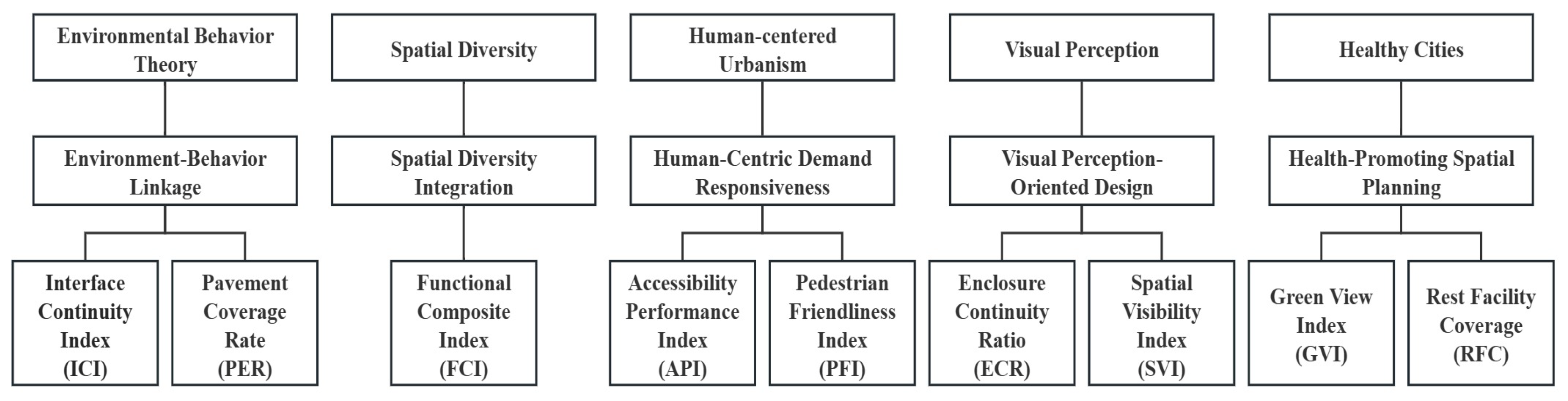
This study integrates five theoretical dimensions: Environmental Behavior Theory, Spatial Diversity, Human-centered Urbanism, Visual Perception, and Healthy Cities [27,28,29,30,31,32]. It deconstructs spatial elements, establishes a scientific assessment framework, and constructs a universal evaluation index system for the quality of public spaces in aged residential areas [33,34]. Through the aspects of Environment–Behavior Linkage, Spatial Diversity Integration, Human-Centric Demand Responsiveness, Visual Perception-Oriented Design, and Health-Promoting Spatial Planning, a complementary assessment framework is formed, as shown in Figure 1, providing a theoretical framework and practical path for the renewal of existing residential areas.
The common disordered spatial organization and unbalanced functional configuration in aged residential areas directly affect the occurrence frequency and type characteristics of residents’ daily behaviors. The Environment–Behavior Linkage is based on the theory of Environmental Behavior Theory, focusing on the indicators of Interface Continuity Index (ICI) and Pavement Coverage Rate (PER). Quantifying the guiding efficiency of spatial morphology on behavioral activities reveals the internal mechanism for enhancing spatial vitality. Spatial Diversity Integration is based on the theory of Spatial Diversity, covering spatial functions such as commercial services, cultural, and sports and leisure. It analyzes the differentiated characteristics of spatial usage efficiency by constructing a Functional Composite Index (FCI).
Human-Centric Demand Responsiveness follows the Human-centered Urbanism paradigm, emphasizing users’ subjectivity. Constructing the Accessibility Performance Index (API) and the Pedestrian Friendliness Index (PFI), it systematically evaluates the adaptability of the quality of public spaces in aged residential areas to the physiological needs and psychological perceptions of residents. Visual Perception-Oriented Design is based on the Visual Perception mechanism, introducing Enclosure Continuity Ratio (ECR) and Spatial Visibility Index (SVI), and quantitatively analyzing the guiding efficacy of spatial morphology elements on Visual Perception and their catalytic effect on resident behavior [35]. It should be noted that the ECR and SVI of semantic segmentation recognition are affected by the spatial scale. When the physical scale of the Enclosed Spaces is significantly larger than that of the Open Spaces, their SVI may present an abnormally high value due to the absolute area effect. To address this and other potential biases, the study employs morphological classification as a typified analytical strategy. This approach prioritizes relative, type-specific patterns over absolute, point-by-point comparisons, reducing analytical complexity and ensuring the conclusions are both typical and scalable for the renewal of large-scale aged residential areas. The creation of Health-Promoting Spatial Planning is centered around the framework of Healthy Cities, with a focus on building an assessment system for environmental health support. Through indicators such as the Green View Index (GVI) and the Rest Facility Coverage (RFC) of recreational facilities, the support capacity of the spatial environment for residents’ physical recovery and psychological adjustment is quantified [36]. These indicators provide a theoretical basis for assessing the potential of spaces to foster psychological restoration and perceived coherence, linking physical attributes to core concepts in environmental psychology [37,38].
This evaluation system and nine detailed indicators cover the core elements of public spaces quality, while fully considering the spatial constraints and renewal challenges of existing aged residential areas.

3.2. Study Area and Data Source

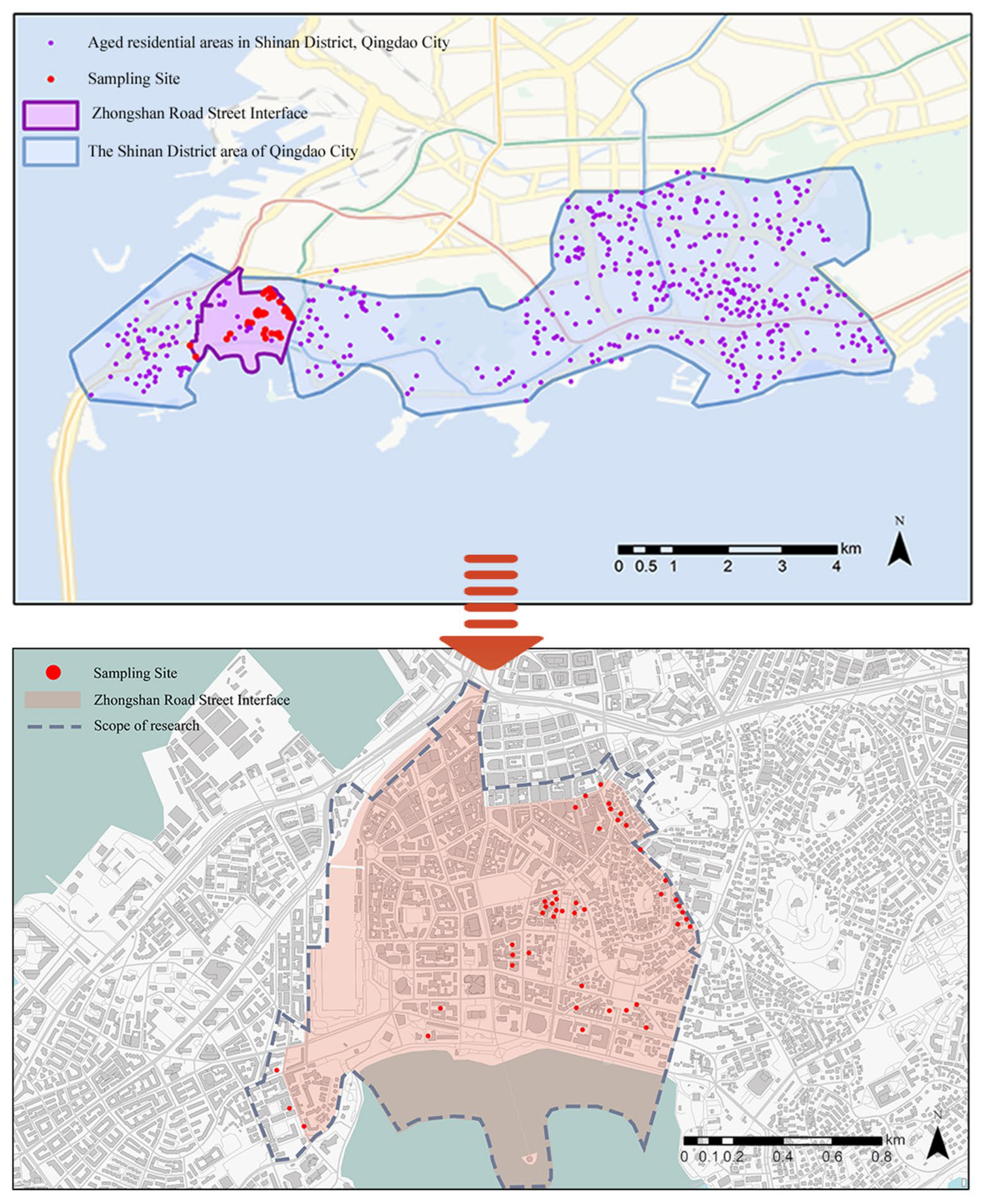
This research is based on the background of urban renewal in Qingdao City and takes Zhongshan Road Sub-district in Shinan District as the research object. Through the Spatial Analysis of residential distribution in Qingdao by ArcGIS (10.8.1), it can be seen that Zhongshan Road Sub-district is located in the peak residential density area of Shinan District, and the public spaces renewal of its aged residential areas has significant demonstration value. As a key node for the organic renewal of the historical urban area, the renovation of the public spaces in the residential area of this region has significant practical significance. Firstly, the facilities in the public spaces of the residential area are aging and damaged, the green layout is disorderly, and there is a lack of activity space. There is an urgent need to improve the quality of the space. Secondly, it shoulders the dual mission of protecting the appearance of historical districts and rejuvenating the spatial vitality of aged residential areas. Thirdly, the renovation practice has a transmission effect on the renewal of old urban areas in cities.
The selection of 46 public spaces samples was based on policy support and to ensure representativeness and consistency with urban renewal priorities. Referring to the “ Qingdao 2025 list of old residential area renovation projects”, the aged residential areas to be renovated within the Zhongshan Road Sub-district have been determined. In these eligible residential areas, we conducted on-site investigations and visits for analysis, and classified all public spaces defined in the urban renewal plan of Qingdao City, including pocket parks, green Spaces, parking lots and activity areas. We adopt the form of sampling to ensure that the samples within the final study area cover spatial elements as comprehensively as possible and are preliminarily classified according to spatial morphology.
The spatiotemporal distribution characteristics of the study area are shown in Figure 2.

3.3. Technical Workflow

This study adopts the technical path of “data collection-element analysis-quantitative evaluation-cluster attribution” and, through multimodal data fusion and deep learning methods, systematically evaluates the quality of public spaces in aged residential areas.
(1)
Panoramic data collection
A comprehensive visit was conducted to the aged residential areas within the research area, and 46 sampling points in public spaces with the most typical characteristics of aged residential areas in Qingdao City were selected. Four on-site images were taken for each sampling point as the original samples. The camera was shot from a human viewpoint with a height of 1.6 m, with dimensions (width and height) set at 800 × 400. The horizontal field of view (FOV) was 360° full coverage, and the vertical field of view (Pitch) was optimized to 8°. The panoramic image acquisition adopts a double-person review system (chief photographer + navigator) to reduce errors. The space–time synchronization error between the lidar and the camera is less than 0.2 s. The specific parameters are shown in Table 1.
(2)
FCN-based semantic segmentation
An overall screening of the images obtained from the previous research will be conducted first, and the most representative panoramic image for each sampling point will be selected as the target image. The core criterion for screening is the integrity of the elements in the image, that is, to ensure that the final image selected for each sampling point can comprehensively cover all kinds of spatial feature elements, for subsequent precise identification and analysis. Then, the luminance and chromaticity of the selected sample images are corrected to eliminate related interferences [35].
This study adopted the FCN to achieve semantic segmentation of panoramic images of aged residential areas in Qingdao, and 150 spatial element labels based on the ADE_20K dataset were extracted [36]. The results were manually verified on a 10% random sample, and contextual outliers were excluded to ensure the accuracy of local spatial element identification.
(3)
Quantitative calculation of public space quality
Based on the 9 evaluation indicators in the public spaces quality evaluation system, the results obtained from deep learning analysis are calculated. The specific method is as follows.
ICI is achieved by identifying interface elements through semantic segmentation and is quantified by the ratio of the total sum of continuous interface elements to the total sum of all interface elements. Its calculation formula is:
I C I   = L c o n t i n u o u s / L t o t a l
Here, L c o n t i n u o u s represents the total length of continuous interface elements (for example, building facades, fences). L t o t a l represents the sum of all interface elements.
PER is derived from identifying site elements based on semantic segmentation, and is the total of hard paving elements divided by the total of all site elements. Its calculation formula is
P E R = A p a v e d / A t o t a l
Among them, A p a v e d represents the total sum of hard paving elements, and A t o t a l represents the total sum of all site elements.
FCI, two data sources, namely semantic segmentation and POI Spatial Analyst analysis, are combined. Its calculation formula is
F C I = 0.5 p i m p + 0.5 q i n q
Among them, p represents the proportion of commercial elements in semantic segmentation, and q represents the proportion of commercial POI points in the total POI. It should be noted that when the pixel ratio is 0, to avoid the situation of ln(0), it is replaced with a very small number, 1 × 10⁻¹⁰.
API is calculated by combining semantic segmentation and width detection. Its calculation formula is
A P I = i = 1 n W i / 0.9 + S i / 8 × R
Among them, W i represents the width of barrier-free facilities (unit: meters), S i represents the slope of barrier-free facilities (unit: %), and R represents the proportion of barrier-free facility elements.
PFI is determined by means of semantic segmentation and field measurement. Its calculation formula is
P F I = L s i d e w a l k / L t o t a l   r o a d × W e f f e c t i v e / 2.5
Among them, L s i d e w a l k represents the total sum of pedestrian road elements, L t o t a l   r o a d represents the total sum of all road elements, and W e f f e c t i v e represents the effective width of the road.
ECR relies on semantic segmentation and on-site measurement, and is reflected by the ratio of the proportion of enclosed interface elements to the distance of the visible space. Its calculation formula is
E C R = H e n c l o s u r e / D v i e w
Among them, H e n c l o s u r e represents the proportion of the elements enclosing the interface, and D v i e w represents the visible space distance.
SVI is based on semantic segmentation to identify sky elements, and the calculation method is the ratio of the proportion of sky elements to the total sum of all interface elements. Its calculation formula is
S V I = S s k y / V t o t a l
Among them, S s k y represents the proportion of sky elements, and V t o t a l represents the total of all interface elements.
GVI combines semantic segmentation to identify vegetation elements and field of view analysis, and is measured by the ratio of the total of vegetation elements to the total of the visible space range. Its calculation formula is
G V I = G v e g e t a t i o n / V v i e w
Among them, G v e g e t a t i o n represents the total of vegetation elements, and V v i e w represents the total of the visible space range.
RFC relies on semantic segmentation to identify recreational facilities, that is, the ratio of the total number of recreational facility elements to the total number of all site elements. Its calculation formula is:
R F C = N f a c i l i t y / A s i t e
Among them, N f a c i l i t y represents the total sum of recreational facilities elements, and A s i t e represents the total sum of all site elements.
Through the quantitative calculation of the above indicators, this study can systematically evaluate the quality of the public spaces in aged residential areas and provide a scientific basis for the optimization of urban design.
(4)
Analysis of spatial quality indicator results
The nine evaluation indicators of public spaces quality in aged residential areas constructed based on the multi-dimensional theoretical framework are classified according to the spatial morphology. First, divide all Spaces into three forms: enclosed space, transitional space and open space. As different spatial morphologies can lead to different performances of the nine indicators, classification is helpful for subsequent analysis and the proposal of targeted update strategies. Then, the principal component analysis method is used to extract the key factors, and the spatial type differences are identified through K-means clustering. This study adopts an overall analysis strategy from macro to micro to reveal the intrinsic causes of quality defects. Furthermore, conducting classification first is a prerequisite for the subsequent PCA and k-means clustering analyses. Through data analysis, regression verification and adjustment of the classification are carried out.
This unsupervised approach prioritizes allowing the data to reveal inherent structures and dominant patterns without imposing pre-defined weights, thereby maintaining objectivity in the spatial diagnosis. The above methods can not only effectively extract the characteristic elements of public spaces, but also handle large-scale and complex spatial images, overcome the limitations of traditional manual analysis, and replace the subjective assumptions and small-scale measurement methods in the existing evaluation of public spaces’ quality. Using semantic segmentation models and deep learning algorithms, subjective evaluation biases are overcome to achieve data-driven spatial classification. Provide the quantitative basis for the precise renewal of aged residential areas and help enhance spatial vitality.

4. Results

The dataset of the nine evaluation indicators was subsequently analyzed to uncover the underlying structure of spatial quality. PCA was employed for dimensionality reduction, and K-means clustering was applied for objective classification, thereby establishing a basis for subsequent analysis.

4.1. Characterization of Public Space Forms

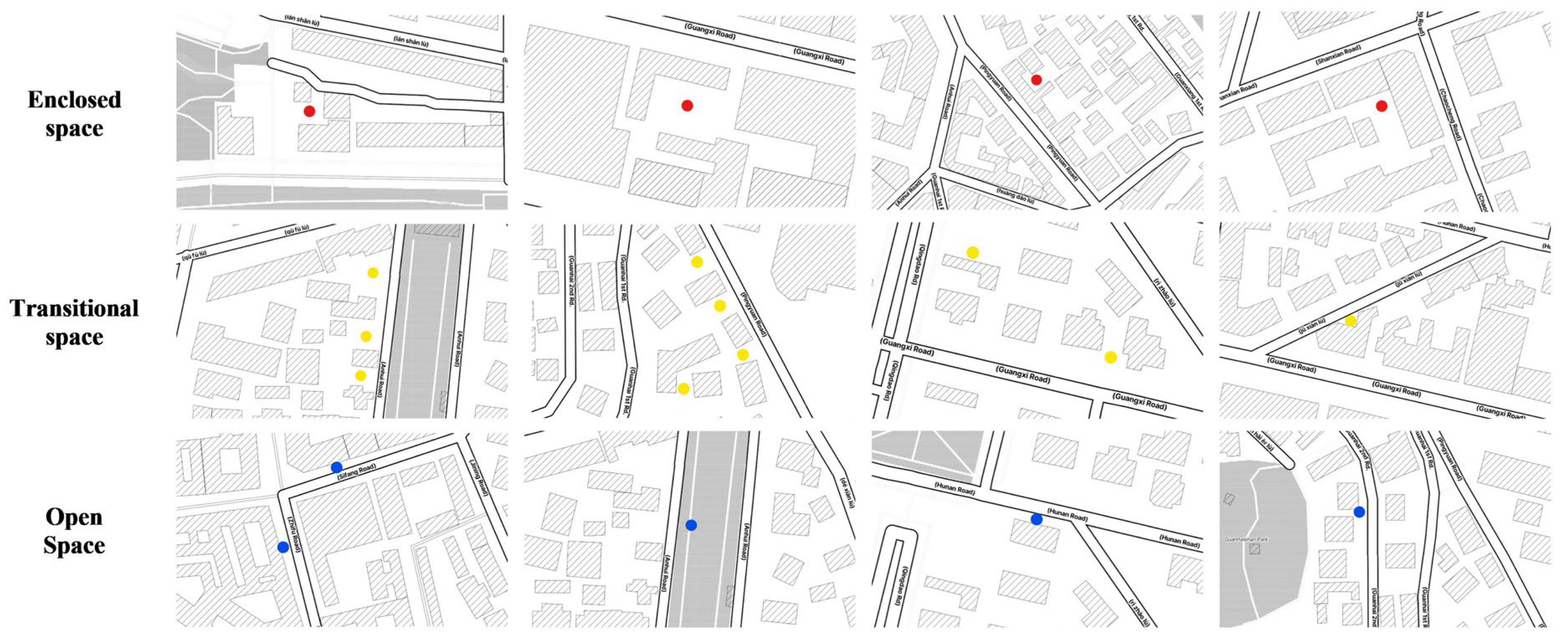
Based on semantic segmentation technology, this study quantitatively analyzed 46 sampling points of public spaces in aged residential areas within the study area. Combined with four morphological indicators (ICI, PER, ECR, SVI), the samples were classified into three types of spatial morphology through manual interpretation: Enclosed Spaces, Transitional Spaces, and Open Spaces (Figure 3).
As shown in Figure 3, “Enclosed Spaces” refers to the courtyard space formed by the enclosure of buildings, accounting for 39.1% of the total sampling points. “Transitional Spaces” are irregular and narrow spaces, accounting for 39.1% of the total number of sampling points. The “Open Spaces” are located on one side of the street and integrate with the interface of the street space, accounting for 21.8% of the total sampling points.
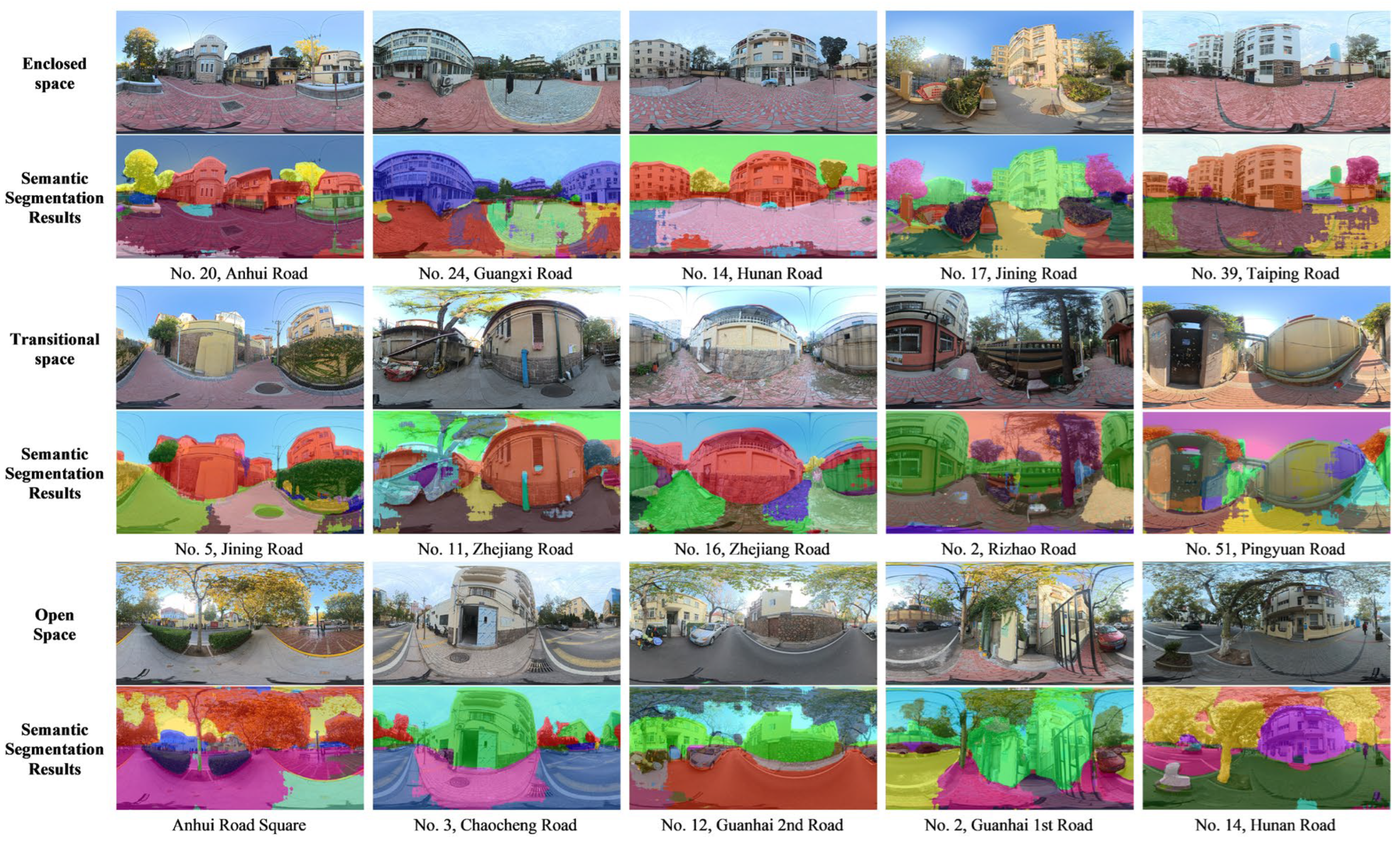
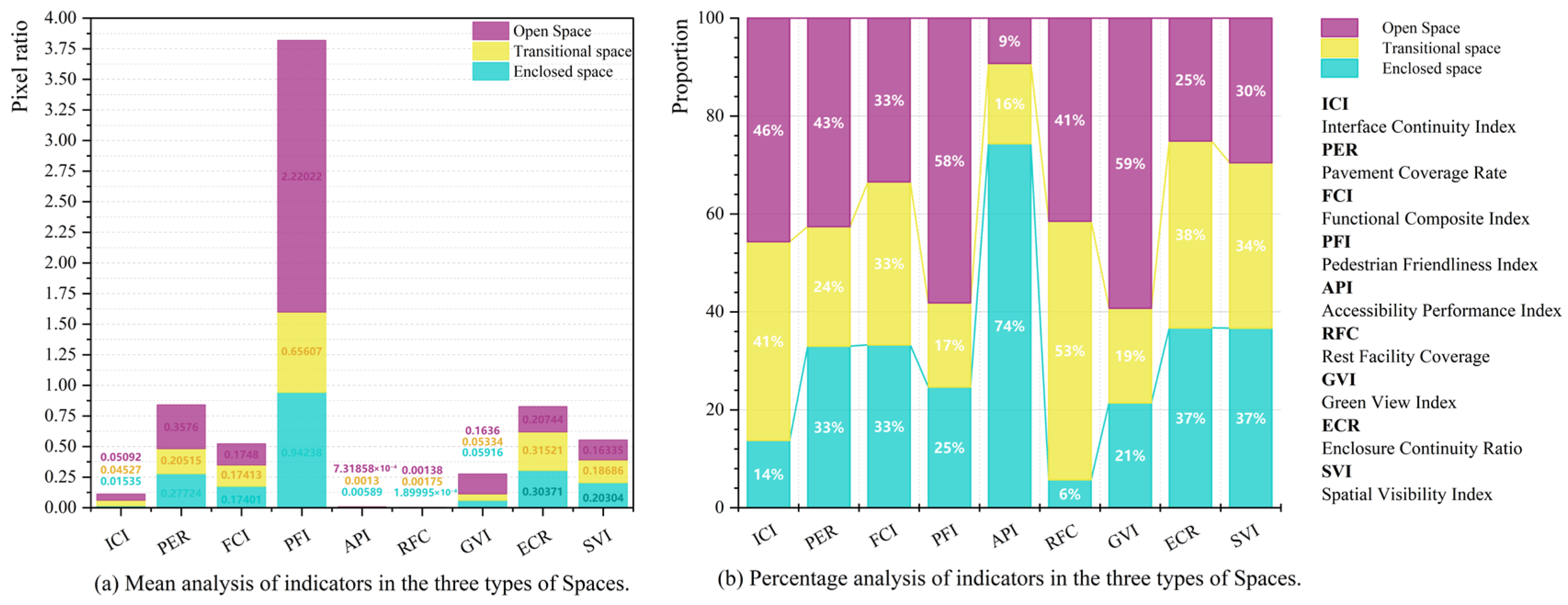
Semantic segmentation of the spatial images accurately identified the distribution characteristics of elements such as greenery, paving, buildings, and the sky (Figure 4). A comparative analysis of the nine evaluation indicators across the three morphological types revealed distinct performance profiles (Figure 5):
(1)
Enclosed Spaces were characterized by high ECR and low RFC. API performance was also notable.
(2)
Transitional Spaces demonstrated high RFC, but low GVI and the lowest API among the three types.
(3)
Open Spaces showed high PFI and GVI, but low API and the lowest ECR.

4.2. Public Space Quality Evaluation Model

4.2.1. Principal Component Analysis

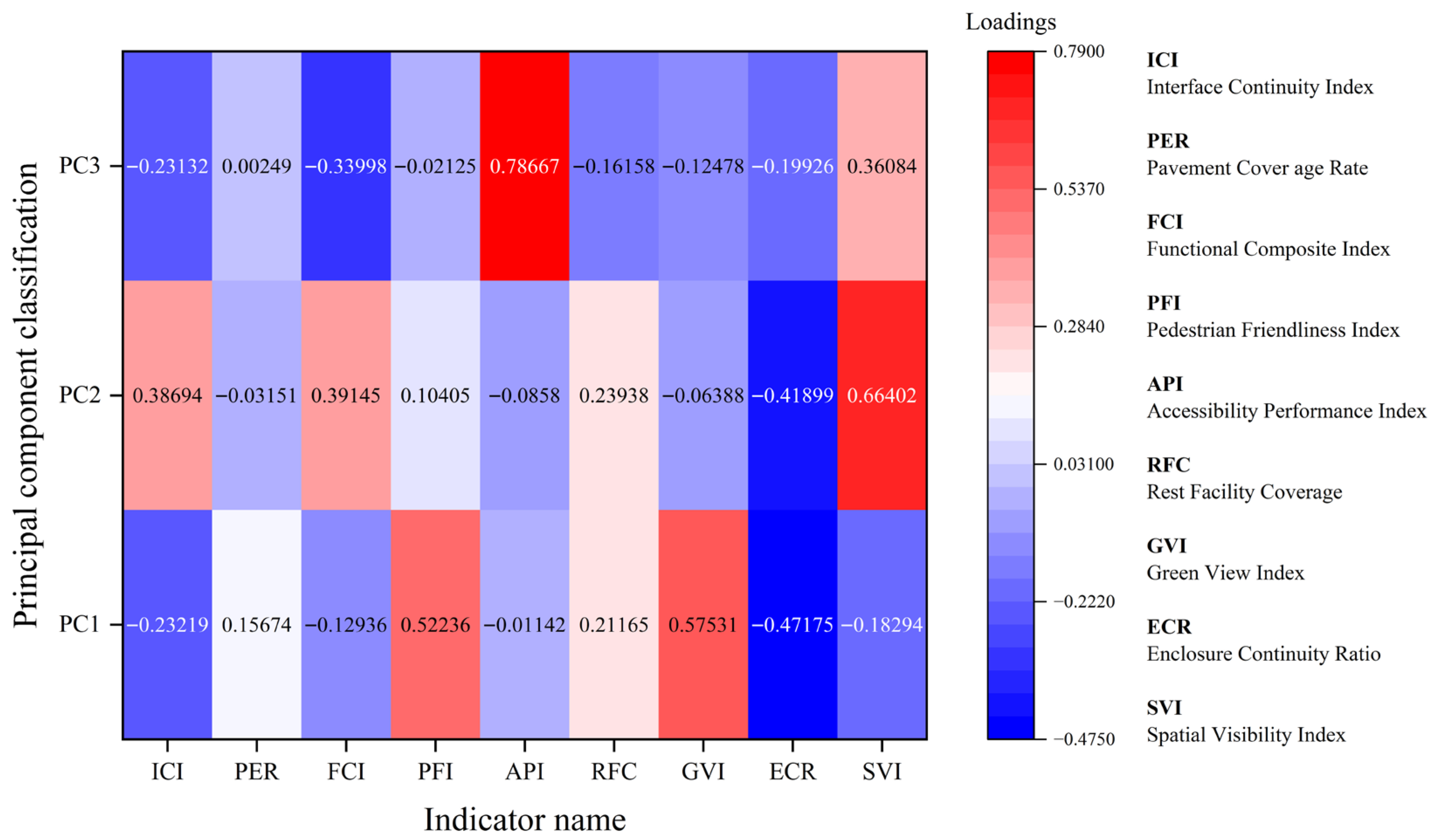
PCA was conducted on the Z-score standardized (formula: Z = ( ( X μ ) ) σ , where μ is the mean and σ is the standard deviation) values of all nine indicators to reduce data dimensionality and identify the primary components of variation. On the premise of retaining all 9 theoretical preset indicators, the top three principal components with prominent cumulative variance contribution rate of 54.87% (Table 2). The load matrix heatmap visually presents the correlation strength and direction between each index and the principal component, as shown in Figure 6.
(1)
PC1 (27.3% of variance) was characterized by positive loadings on ECR and negative loadings on GVI, framing a primary axis of variation between spatial enclosure and ecological elements.
(2)
PC2 (14.9% of variance) was defined by a positive loading on the SVI, corresponding to a dimension of visual openness.
(3)
PC3 (12.7% of variance) was marked by a positive loading on the API, highlighting a dimension of age-friendly accessibility.

4.2.2. K-Means Clustering

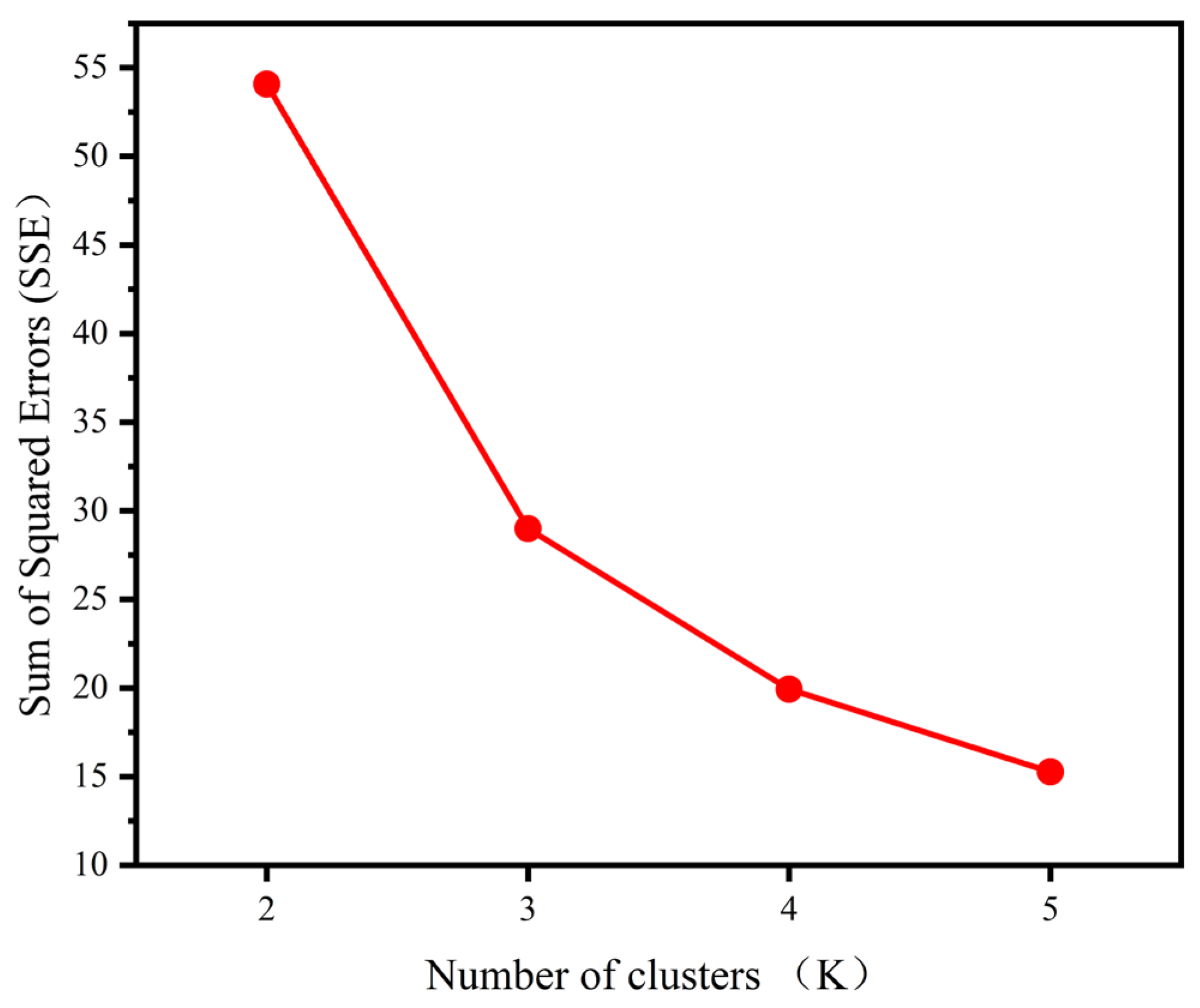
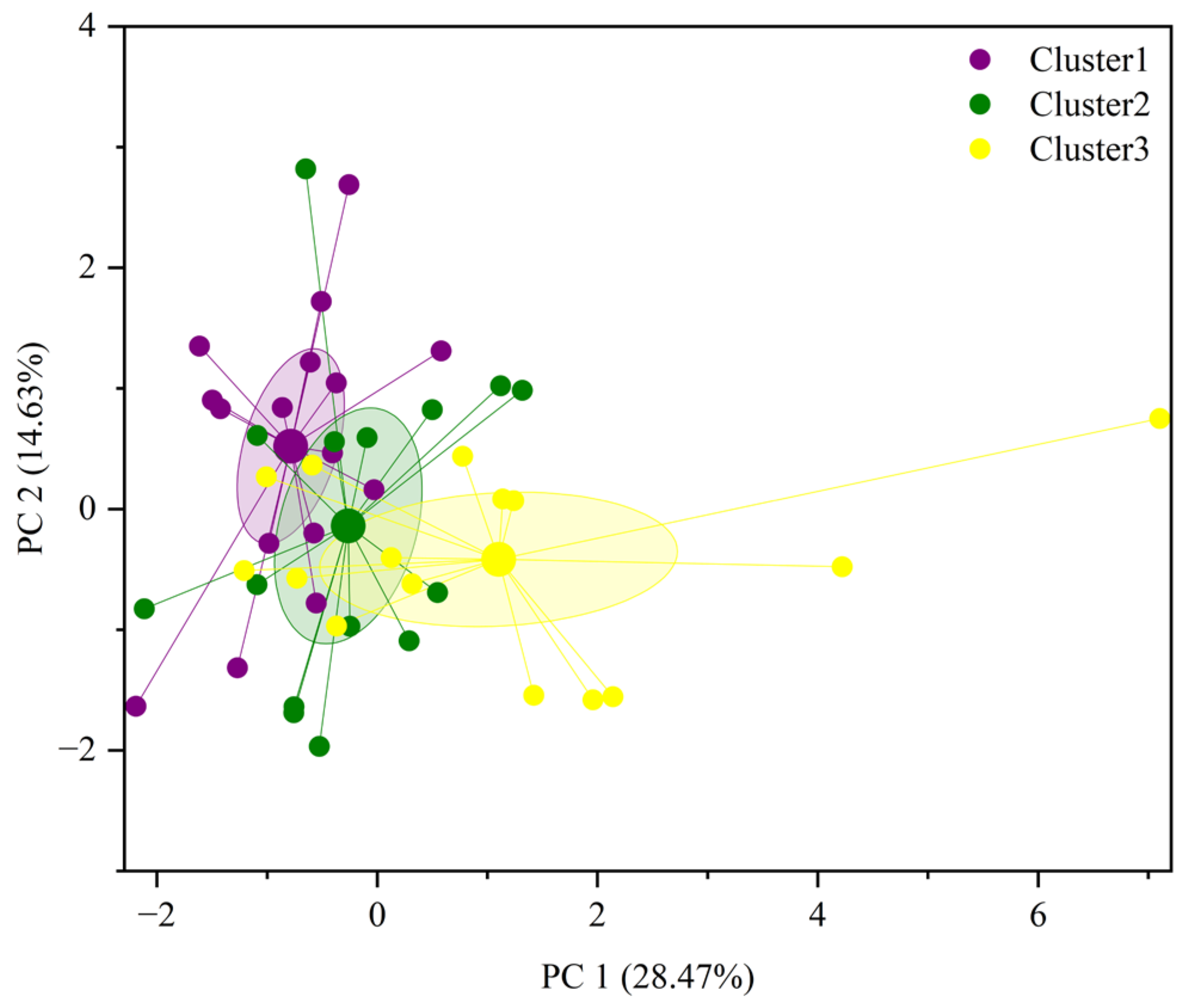
K-means clustering was applied to the standardized data of the nine indicators to objectively classify the public spaces. The elbow method determined the optimal number of clusters to be three (K = 3), as indicated by the inflection point in the sum of squared errors (Figure 7). The distribution of the 46 samples across the resulting three clusters (Cluster 1, Cluster 2, Cluster 3) is visualized in the dimensionally reduced space of the first two principal components (Figure 8).
To statistically validate the objectivity and practical relevance of the clustering result, a cross-tabulation analysis against the theoretical morphological classification was performed (Table 3). A Chi-square test of independence revealed a highly significant association between the data-driven clusters and the manual typology (χ2 = 69.2, p < 0.0001). This strong congruence provides robust evidence that the clustering not only captures inherent data patterns but also aligns meaningfully with established spatial theories, thereby confirming the validity of the three-cluster solution.
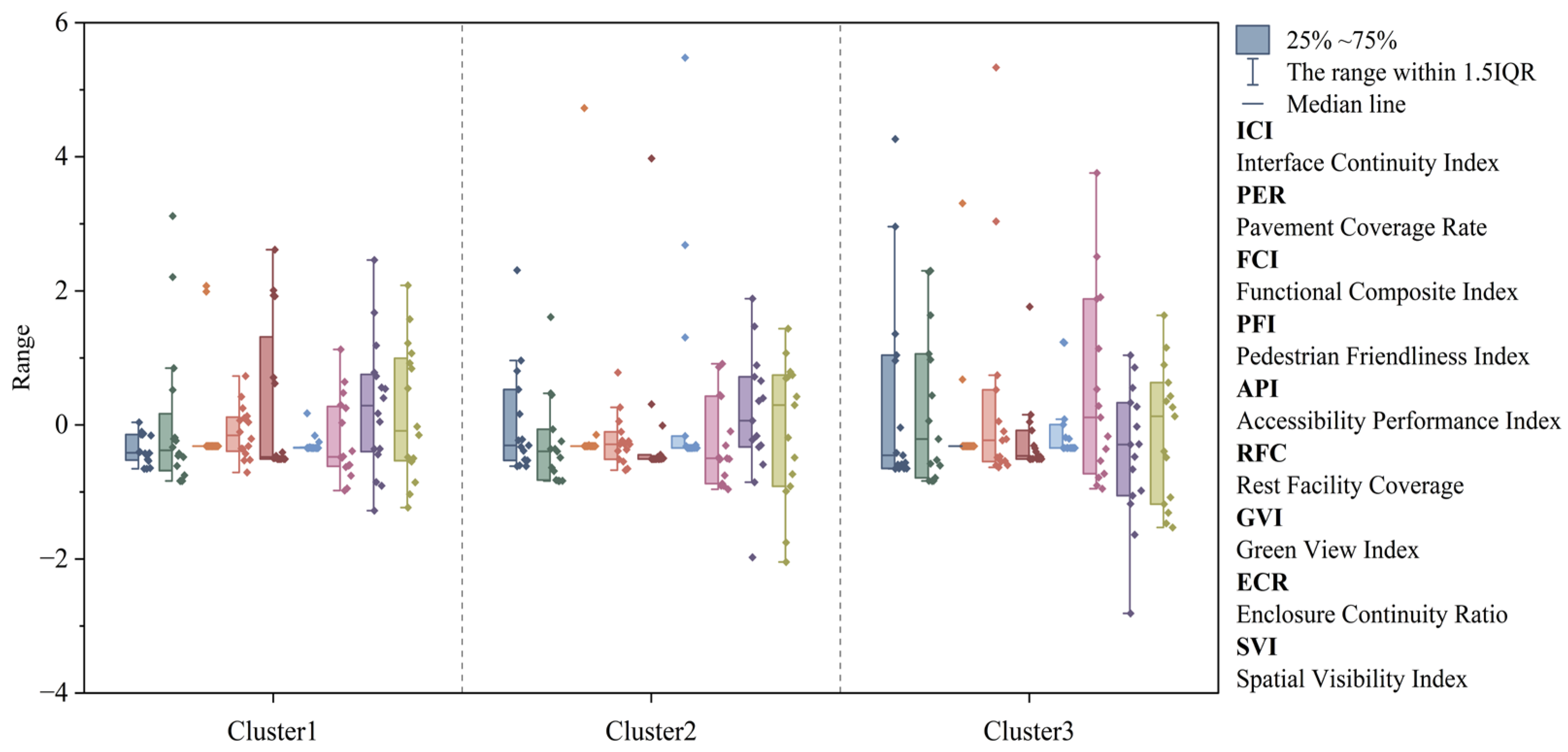
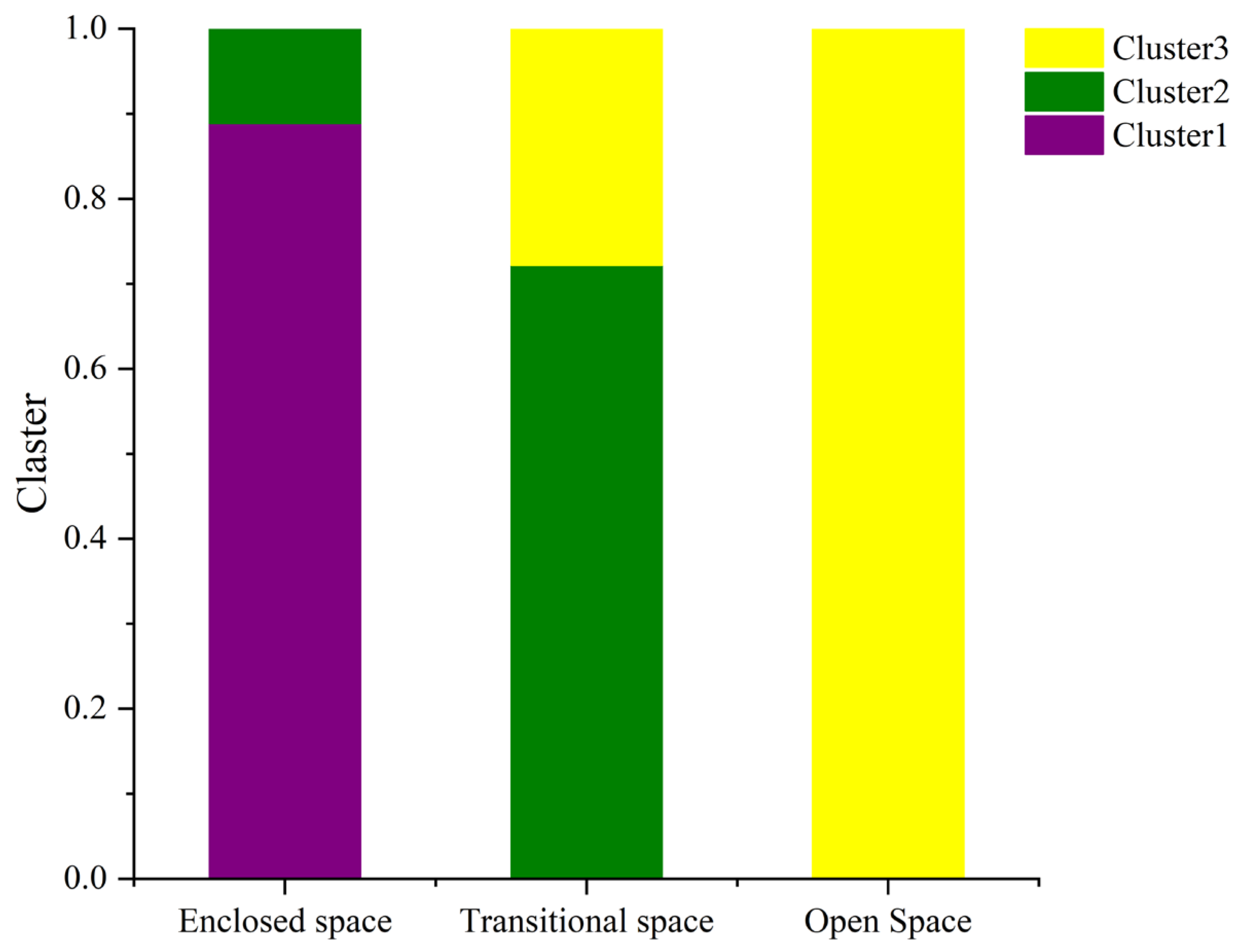
A cross-analysis was performed to compare the data-driven clusters with the manually interpreted morphological classification (Table 4, Figure 9). The standardized distributions of all nine evaluation indicators across the three clusters are detailed in Figure 10.

5. Discussion

5.1. The Interplay Between Morphological Classification and Data-Driven Analytics

The initial morphological classification into Enclosed, Transitional, and Open Spaces was achieved through manual interpretation. This approach was taken to incorporate nuanced spatial semantics and human cognitive logic, ensuring the classification aligns with the characteristics of the human settlement environment [29,31]. This tripartite scheme finds resonance in established urban theory, with Enclosed Spaces reflecting the defined “outdoor rooms” vital for social interaction [30], and Human-centred Urbanism providing a theoretical basis for evaluating spatial belonging [31].
The subsequent PCA and K-means clustering served to validate and refine this theoretical classification. The high congruence between the data-driven clusters and the manual typology (Table 3), particularly for Enclosed Spaces (88.89% in Cluster 1) and Open Spaces (100% in Cluster 3), verifies the theoretical rationality of the initial morphological framework. More importantly, the divergence observed, where 27.78% of Transitional Spaces were grouped with Open Spaces in Cluster 3, reveals critical nuances. This discrepancy is primarily driven by severe deficiencies in API and PER, indicating that a space’s functional quality can cause it to deviate from its expected morphological type. This empirical verification sets the stage for a deeper exploration of the underlying structural contradictions revealed by the data.

5.2. Interpreting Core Structural Contradictions

The PCA reduced the nine evaluation indicators into three principal components, which collectively explain 54.87% of the total variance (Table 2). These components reveal the underlying structural contradictions in public space quality. Furthermore, the PCA results provide a robust, data-driven validation and refinement of the initial morphological classification. More importantly, the factor loadings allow us to interpret these components as core theoretical constructs: PC1 and PC3 directly correspond to the typical shortcomings of Enclosed and Open Spaces, respectively, verifying the theoretical rationality of the typology. Meanwhile, PC2 explains gradient features that the discrete morphological classification failed to capture.

5.2.1. The Ecological-Enclosure Trade-Off (PC1)

As the dimension with the strongest explanatory power, the first component (PC1) is defined by a strong negative correlation between the GVI and the ECR. This quantifies a fundamental “ecological-enclosure trade-off” particularly evident in Enclosed Spaces. This construct captures a core tension in environmental design between the Healthy Cities principle of restorative natural exposure (high GVI) and the Environmental Behavior Theory principle of spatial definition and safety (high ECR). This finding suggests that the spatial morphology which fosters a sense of enclosure may inherently constrain greenery integration, posing a clear challenge for holistic quality improvement. This objective spatial configuration may also reflect a latent conflict in user experience, while high enclosure can foster a sense of safety and definition [30], the concomitant lack of greenery may simultaneously undermine the restorative psychological benefits associated with natural elements, which are central to the Healthy Cities framework. This trade-off suggests that spaces strong in one aspect of environmental support may be inherently weak in another, posing a clear challenge for holistic quality improvement. Furthermore, this spatial configuration may also influence microclimatic conditions; for instance, high enclosure with low greenery could exacerbate heat stress during summer months, while open spaces with insufficient shading may fail to provide adequate thermal comfort.

5.2.2. The Domain Perception Imbalance (PC2)

The second component (PC2) highlights the role of the SVI. This underscores a balance dilemma in Open Spaces, where high visual transparency (a positive attribute) may, when excessive, lead to a weakened sense of spatial domain and belonging, a concern central to Human-centred Urbanism [31]. This objective characteristic could potentially translate into a perceptual dilemma for users, where the feeling of openness coexists with a diminished sense of territorial identity and emotional safety, factors crucial for fostering spontaneous and sustained social interaction. This tension carries particular significance in the context of post-pandemic public space design, which emphasizes creating environments that support both community well-being and psychological comfort.

5.2.3. Systemic Deficits in Age-Friendliness (PC3)

The third component (PC3) reveals a systemic deficit in age-friendliness, predominantly characterized by critically low API values, with Transitional Spaces being particularly weak in this dimension. The low API values, often resulting from unprocessed height differences and a lack of ramps, reduce the age inclusiveness of the space and decrease the space utilization efficiency of the elderly and people with mobility impairments.
This finding underscores a direct contradiction to the principles of inclusive design advocated by both the World Health Organization’s (WHO) Age-friendly Cities framework [39,40,41,42] and Human-centred Urbanism [43,44,45,46]. The WHO framework prioritizes accessible outdoor spaces as a foundational domain, while Human-centred Urbanism emphasizes adapting the material environment to users’ needs.
The systematic lack of age-friendly facilities, as quantified by PC3, highlights a significant gap between the current state of aged residential areas and these established standards. Beyond the physical barrier, this deficit likely induces psychological impacts, such as increased perceived risk and frustration among elderly residents, thereby discouraging outdoor activity and undermining their overall well-being. This demands urgent and targeted intervention.

5.3. Informing Differentiated Renewal Strategies

The integration of PCA and K-means clustering results provides a robust, data-driven foundation for formulating differentiated renewal strategies. The clusters identify which spaces need priority intervention, while the principal components diagnose why they are underperforming, enabling precisely targeted actions.
For Enclosed Spaces (Cluster 1), characterized by high enclosure but significantly insufficient ecological quality and a lack of recreational facilities (presenting a “closed-low activity” contradiction), the core renewal imperative is to address the ecological-enclosure trade-off (PC1). Strategies should focus on ecological retrofitting, such as vertical greening [47,48,49], and facility activation through the embedding of rest nodes, thereby enhancing vitality without compromising spatial definition.
For Transitional Spaces (Cluster 2), which exhibit heterogeneity and instability as some samples deviate due to a critical lack of barrier-free facilities or insufficient paving, the strategy must tackle the systemic age-friendly deficits (PC3). This requires precision upgrading, specifically targeting the supplementation of barrier-free facilities and paving improvements to secure their multifunctional role and stabilize their performance [50].
For Open Spaces (Cluster 3), which have the advantage of high load capacity but suffer from a low API and single functions that challenge diverse usage, the strategy requires balanced consolidation to address both the domain perception imbalance (PC2) and age-friendly deficits (PC3). The priority is to enhance inclusiveness by adding barrier-free facilities, while using flexible paving and multi-functional modules to improve the sense of spatial belonging and functional complexity [51].

5.4. Synthesis and Practical Implications

This study constructs a complete analytical chain, progressing from theory-guided morphological classification to data-driven PCA and K-means clustering. This integrated model breaks through the limitations of traditional single methods by establishing a closed-loop verification between theoretical presupposition and data evidence [52,53,54]. The process not only verified the typical problems of different spatial types but, more importantly, revealed gradient characteristics and blind spots within the theoretical framework itself, such as the misalignment of functionally degraded transitional spaces.
The synthesis of our findings demonstrates that the enclosed ecological contradiction (PC1), the open domain perception imbalance (PC2), and the transitional age-friendly defect (PC3) constitute the core structural challenges in renewing aged residential areas. The critical advancement offered by this research lies in linking these quantitative contradictions to specific spatial types identified through clustering. This connection provides a dual-value output: a methodological framework for systematic spatial diagnosis, and a spatial positioning basis for differentiated intervention. For practitioners, this translates to an actionable, closed-loop management process: from large-scale, typological problem identification to the precise targeting of renewal strategies.
Consequently, this study offers a reproducible and scalable analysis framework for the evidence-based renewal of aged residential areas, moving urban renewal practice from generalized approaches towards precision governance.
This study acknowledges the socio-ethical dimensions of data-driven urban governance. While our framework provides objective diagnostics, it is designed to support, not replace, participatory processes. Aligning with reparative urban science [52], it uses data to identify spatial inequities and create transparent evidence for inclusive community dialogue.

6. Conclusions

Against the backdrop of urban development shifting from large-scale incremental construction to improving the quality and efficiency of existing resources, enhancing the quality of public spaces in aged residential areas is an essential approach to urban refined governance, which holds profound significance for shaping the city’s appearance, optimizing urban functions, and improving the quality of life of residents.
This study takes the public spaces of the aged residential areas in Zhongshan Road Sub-district, Shinan District, Qingdao City as an example. Based on deep learning technology, an evaluation system for the public spaces of the aged residential areas was constructed, and a multi-dimensional analysis of the quality of the public spaces was conducted. In the quality analysis of public spaces, the FCN model is utilized to conduct semantic segmentation of public spaces images and extract spatial elements. Based on the analytical results, multi-dimensional evaluations and analyses were conducted on the target public spaces from the perspectives of spatial morphology classification, PCA, and K-means clustering methods, aiming at the spatial problems existing in the public spaces of the aged residential areas within the region and proposing reasonable improvement strategies for them. The research leads to the following conclusions:
(1)
The multi-dimensionality of contradictions requires classified governance. The public spaces in aged residential areas generally have complex problems, such as an imbalance between ecological benefits and functional allocation, insufficient age-friendly facilities, and a decline in spatial vitality. Systematic diagnosis is needed to achieve precise governance. For Enclosed Spaces, priority should be given to addressing ecological isolation and mitigating heat island effects through vertical greening and the use of high-albedo materials. For Open Spaces, a balance between openness and a sense of belonging should be maintained, coupled with the installation of shade structures and permeable paving to enhance thermal comfort. For Transitional Spaces, the focus should be on making up for the facilities’ shortcomings and improving microclimatic conditions by introducing ventilation corridors and shade-providing vegetation.
(2)
Human–machine collaboration enhances the scientific nature of decision-making. The semantic segmentation of FCN, the analysis of spatial contradictions by PCA and K-means clustering are integrated for verification to construct a full-chain framework of “data collection-element interpretation-strategy generation”, which improves the diagnostic efficiency compared with traditional methods, breaks through the subjective limitations of traditional evaluation, and provides a humanized basis for the improvement of spatial quality.
(3)
The practical framework can be replicated and promoted. The research results support the renewal practice of Zhongshan Road Sub-district in Qingdao City, verify the feasibility of data-driven technology in urban renewal, and provide standardized analysis tools and differentiated renewal paths for the public spaces renovation of aged residential areas in similar cities.
In conclusion, through multi-method and multi-dimensional analysis, this study provides a scientific basis and effective reference for improving the quality of public spaces in aged residential areas, which has reference value for promoting the refined renewal of cities.
This study has certain limitations that also point to promising directions for future research. The methodological scope presents inherent constraints, while the findings would benefit from validation across broader geographical contexts. Future work should aim to develop more comprehensive assessment frameworks by integrating multi-dimensional data sources, with particular emphasis on incorporating user emotional responses and psychological perceptions. Such integration would advance the current model toward a more holistic understanding of human-centered public space quality, bridging the gap between objective spatial metrics and subjective user experience.

Author Contributions

Writing—original draft, Y.S.; Conceptualization, Y.S.; Methodology, Y.S.; Data curation, Y.S.; Formal analysis, Y.S.; Investigation, Y.S., Y.Z. and J.W.; Visualization, Y.S. and T.Z.; Writing—review and editing, T.Z.; Supervision, T.Z.; Project administration, T.Z. All authors have read and agreed to the published version of the manuscript.

Funding

This research received no external funding.

Data Availability Statement

The data that support the findings of this study are available from the corresponding author upon reasonable request.

Acknowledgments

The author sincerely thanks Zhou Tong for his equipment support and guidance in manuscript writing and proofreading. Special gratitude is extended to Zhu Hongshui for checking the grammar and to Zhao Yaning and Wang Jiabin for their research assistance. The author is also grateful to the local residents for their cooperation during field surveys and data collection.

Conflicts of Interest

The authors declare no conflicts of interest.

References

  1. Wu, Z.; Yan, J.; Xu, H.; Chen, Z.; Wei, R.; Wu, T.; Geng, X. Top Ten Key Issues in Urban and Rural Planning Discipline Development (2024–2025). Urban Plan. Forum 2024, 8–11. [Google Scholar] [CrossRef]
  2. Du, Y.; Jin, Y. Performance Evaluation of Public Open Spaces in Community Life Circles: A Case Study of Central Shanghai. Mod. Urban Res. 2018, 101–108. [Google Scholar] [CrossRef]
  3. Qingdao Municipal Bureau of Natural Resources and Planning. (2023, March 10). Qingdao Urban Renewal Special Plan (2021–2035). Available online: http://zrzygh.qingdao.gov.cn/zxfw/zrzyghggzyxx/ghgl/ghcajpzjg/zxgh/202303/t20230310_7043945.shtml (accessed on 1 April 2025).
  4. Qingdao Municipal People’s Government. (2025, January 7). Qingdao 2025 List of Old Residential Area Renovation Projects (Notice No. 1). Available online: http://www.qingdao.gov.cn/zwgk/xxgk/cxjs/gkml/gwfg/202501/P020250107406057641930.pdf (accessed on 1 April 2025).
  5. Qingdao Municipal Bureau of Culture and Tourism. (2025, January 6). The 14th Five-Year Plan for Cultural and Tourism Development of Qingdao (2021–2025). Available online: http://www.qingdao.gov.cn/zwgk/xxgk/whly/gkml/ghjh/202501/t20250106_8786501.shtml (accessed on 1 April 2025).
  6. Kelly, C.M.; Wilson, J.S.; Baker, E.A.; Miller, D.K.; Schootman, M. Using Google Street View to audit the built environment: Inter-rater reliability results. Ann. Behav. Med. 2013, 45 (Suppl. S1), 108–112. [Google Scholar] [CrossRef]
  7. Wilson, J.S.; Kelly, C.M.; Schootman, M.; Baker, E.A.; Banerjee, A.; Clennin, M.; Miller, D.K. Assessing the built environment using omnidirectional imagery. Am. J. Prev. Med. 2012, 42, 193–199. [Google Scholar] [CrossRef]
  8. Zhang, L.; Wang, L.; Wu, J.; Li, P.; Dong, J.; Wang, T. Decoding urban green spaces: Deep learning and Google Street View measure greening structures. Urban For. Urban Green. 2023, 87, 128028. [Google Scholar] [CrossRef]
  9. Han, X.; Wang, L.; Seo, S.H.; He, J.; Jung, T. Measuring perceived psychological stress in urban built environments using Google Street View and deep learning. Front. Public Health 2022, 10, 891736. [Google Scholar] [CrossRef] [PubMed]
  10. Li, Y.; Yabuki, N.; Fukuda, T. Measuring visual walkability perception using panoramic street view images, virtual reality, and deep learning. Sustain. Cities Soc. 2022, 86, 104140. [Google Scholar] [CrossRef]
  11. World Health Organization. Global Age-Friendly Cities: A Guide; World Health Organization: Geneva, Switzerland, 2007. [Google Scholar]
  12. Biljecki, F.; Ito, K. Street view imagery in urban analytics and GIS: A review. Landsc. Urban Plan. 2021, 215, 104217. [Google Scholar] [CrossRef]
  13. Persson, A.S.; Ekroos, J.; Olsson, P.; Smith, H.G. Wild bees and hoverflies respond differently to urbanisation, human population density and urban form. Landsc. Urban Plan. 2020, 204, 103901. [Google Scholar] [CrossRef]
  14. Kang, Y.; Zhang, F.; Gao, S.; Lin, H.; Liu, Y. A review of urban physical environment sensing using street view imagery in public health studies. Ann. GIS 2020, 26, 261–275. [Google Scholar] [CrossRef]
  15. Alawadi, K. Rethinking Dubai’s urbanism: Generating sustainable form-based codes. Cities 2017, 60, 353–366. [Google Scholar] [CrossRef]
  16. Long, Y.; Zhou, Y. Image Urbanism: A New Approach to Human-Scale Urban Morphology Research. Plan. Stud. 2017, 33, 7. [Google Scholar] [CrossRef]
  17. Wang, H.; Che, X.; Xu, X.; Xu, S.; Li, H. Extracting Green View Index from Street View Images Using DeepLabv3+: A Case Study within Beijing’s Third Ring Road. Bull. Surv. Map. 2024, 88–94. [Google Scholar] [CrossRef]
  18. Li, H.; Chen, C.; Liu, X.; Wu, Y.; Chen, S. Spatial Effects of Street Age-Friendliness Using Street View Images and Machine Learning. J. Geo.-Inf. Sci. 2024, 26, 1469–1485. [Google Scholar] [CrossRef]
  19. Shao, Y.; Lu, H. Associations Between Recreational Patterns and Spatial Characteristics of Community Parks: A Case Study of Shanghai. Landsc. Archit. 2024, 31, 32–40. [Google Scholar] [CrossRef]
  20. Chen, Y. Streetscape Reconstruction: Creating Vibrant Public Spaces. Chin. Landsc. Archit. 2018, 34, 6. [Google Scholar] [CrossRef]
  21. Yao, Y.; Li, S. Current Research on Urban Green Spaces from a Public Health Perspective. Chin. Landsc. Archit. 2018, 34, 7. [Google Scholar] [CrossRef]
  22. Yao, C. Everyday Public Life in Urban Public Spaces: Case Studies of Yangpu Creative Market, Xuhui Riverside, and Hongkou Civic Station. City Plan. Rev. 2021, 45, 30–37. [Google Scholar] [CrossRef]
  23. Webster, C.; Zhang, B.; Li, J. Property Rights, Public Spaces, and Urban Design. Urban Plan. Int. 2008, 23, 3–12. [Google Scholar] [CrossRef]
  24. Li, X.; Cao, C. Community Social Organizations and the Production of Community Public Spaces. Urban Probl. [CrossRef]
  25. Yuan, Y. Evaluating Community Planning Implementation from a Public Space Perspective: An Empirical Study of Caoyang New Village. Urban Plan. Forum 2013, 87–94. [Google Scholar] [CrossRef]
  26. Li, X. Inclusive Design: Public Space Renewal Strategies for All-Age Communities. Urban Dev. Stud. 2019, 26, 5. [Google Scholar] [CrossRef]
  27. Li, D. Introduction to Environmental Behavior Theory; Tsinghua University Press: Beijing, China, 1999. [Google Scholar]
  28. Li, Y.; Fu, C. Creating Vibrant Public Spaces Guided by Environmental Behavior Theory. Huazhong Archit. 2010, 28, 70–72. [Google Scholar] [CrossRef]
  29. Gehl, J. Life Between Buildings: Using Public Space; Van Nostrand Reinhold: New York, NY, USA, 1987. [Google Scholar]
  30. Whyte, W.H. City: Rediscovering the Center; Doubleday: New York, NY, USA, 2012. [Google Scholar] [CrossRef]
  31. Gehl, J. Cities for People; Island Press: Washington, DC, USA, 2002. [Google Scholar]
  32. Graham, C.H. Behavior and the psychophysical methods: An analysis of some recent experiments. Psychol. Rev. 1952, 59, 62–70. [Google Scholar] [CrossRef]
  33. Weng, L.; Wei, W.; Hong, M. The Impact of Spatial Visual Elements on Community Public Space Satisfaction: A Case Study of Wuhan. In Proceedings of the 2022 China Urban Planning Annual Conference, Wuhan, China, 23–27 June 2022; Wuhan University: Wuhan, China, 2023; pp. 711–722. [Google Scholar] [CrossRef]
  34. Song, W. Landscape Perception and Design of Outdoor Activity Spaces. Ph.D. Thesis, Dalian University of Technology, Dalian, China, 2013. [Google Scholar]
  35. Shao, Y.; Ye, D.; Ye, Y. Large-Scale Measurement of Street Interface Permeability Using Street View Data and Deep Learning: A Case Study of Shanghai. Urban Plan. Int. 2023, 38, 39–47. [Google Scholar] [CrossRef]
  36. Yao, Y.; Liang, Z.; Yuan, Z.; Liu, P.; Bie, Y.; Zhang, J.; Wang, R.; Wang, J.; Guan, Q. A human-machine adversarial scoring framework for urban perception assessment using street-view images. Int. J. Geogr. Inf. Sci. 2019, 33, 2363–2384. [Google Scholar] [CrossRef]
  37. Kaplan, S. The Restorative Benefits of Nature: Toward an Integrative Framework. J. Environ. Psychol. 1995, 15, 169–182. [Google Scholar] [CrossRef]
  38. Korpela, K.M.; Hartig, T. Restorative qualities of favorite places. J. Environ. Psychol. 1996, 16, 221–233. [Google Scholar] [CrossRef]
  39. Han, J.; Chan, E.H.W.; Yung, E.H.K.; Qian, Q.K.; Lam, P.T.I. A Policy Framework for Producing Age-Friendly Communities from the Perspective of Production of Space. Int. J. Environ. Res. Public Health 2022, 19, 2031. [Google Scholar] [CrossRef]
  40. Kathy, B.; Patricia, O. Assessing Age-Friendly Community Progress: What Have We Learned? Gerontol. 2021, 62, 6–17. [Google Scholar] [CrossRef]
  41. Zhang, X.; Warner, M.E. Cross-Agency Collaboration to Address Rural Aging: The Role of County Government. J. Aging Soc. Policy 2024, 36, 24. [Google Scholar] [CrossRef] [PubMed]
  42. Rémillard-Boilard, S.; Buffel, T.; Phillipson, C. Developing Age-Friendly Cities and Communities: Eleven Case Studies from around the World. Int. J. Environ. Res. Public Health 2020, 18, 133. [Google Scholar] [CrossRef] [PubMed]
  43. Arentshorst, M.E.; Peine, A. From niche level innovations to age-friendly homes and neighbourhoods: A multi-level analysis of challenges, barriers and solutions. Technol. Anal. Strateg. Manag. 2018, 30, 1325–1337. [Google Scholar] [CrossRef]
  44. Bhuyan, M.R.; Lane, A.P.; Moogoor, A.; Močnik, Š.; Yuen, B. Meaning of age-friendly neighbourhood: An exploratory study with older adults and key informants in Singapore. Cities 2020, 107, 102940. [Google Scholar] [CrossRef]
  45. Hoof, J.V.; Marston, H.R.; Kazak, J.K.; Buffel, T. Ten questions concerning age-friendly cities and communities and the built environment. Build. Environ. 2021, 199, 107922. [Google Scholar] [CrossRef]
  46. Loos, E.; Sourbati, M.; Behrendt, F. The Role of Mobility Digital Ecosystems for Age-Friendly Urban Public Transport: A Narrative Literature Review. Int. J. Environ. Res. Public Health 2020, 17, 7465. [Google Scholar] [CrossRef]
  47. Su, W.; Zhang, L.; Chang, Q. Nature-based solutions for urban heat mitigation in historical and cultural block: The case of Beijing Old City. Build. Environ. 2022, 225, 109600. [Google Scholar] [CrossRef]
  48. Liu, Y.; Zhang, M.; Zhang, Y. Vertical greening for public buildings retrofitting and urban carbon neutrality: A nature-based solution and design practice in China. Ecol. Eng. 2025, 216, 107617. [Google Scholar] [CrossRef]
  49. Wen, D.; Liu, M.; Yu, Z. Quantifying Ecological Landscape Quality of Urban Street by Open Street View Images: A Case Study of Xiamen Island, China. Remote Sens. 2022, 14, 3360. [Google Scholar] [CrossRef]
  50. Duivenvoorden, E.; Hartmann, T.; Brinkhuijsen, M.; Hesselmans, T. Managing public space—A blind spot of urban planning and design. Cities 2021, 109, 103032.1–103032.3. [Google Scholar] [CrossRef]
  51. He, X.; Zhou, Y. Urban spatial growth and driving mechanisms under different urban morphologies: An empirical analysis of 287 Chinese cities. Landsc. Urban Plan. 2024, 248, 16. [Google Scholar] [CrossRef]
  52. Rob, K. The ethics of smart cities and urban science. Philosophical transactions of the Royal Society. Math. Phys. Eng. Sci. 2016, 374, 20160115. [Google Scholar]
  53. So, W. Reparative Urban Science: Challenging the Myth of Neutrality and Crafting Data-Driven Narratives. Plan. Theory Pract. 2024, 25, 389–406. [Google Scholar] [CrossRef]
  54. Di Caro, P.; Ferrara, P.L. Introduction to Urban Science: Evidence and Theory of Cities as Complex Systems. J. Reg. Sci. 2022, 63, 253–254. [Google Scholar] [CrossRef]
Figure 1. System for evaluating the spatial quality of public spaces in aged residential areas.
Buildings 15 04299 g001
Figure 2. Study area: the distribution of aged residential areas in Shinan District, Qingdao City and the distribution of 46 sampling points in Zhongshan Road Sub-district.
Buildings 15 04299 g002
Figure 3. Abstract display of sampling points classified by morphology.
Buildings 15 04299 g003
Figure 4. The semantic segmentation image display of some sampling points within the research area.
Buildings 15 04299 g004
Figure 5. Quality evaluation of nine spatial indicators of public spaces in aged residential areas based on morphological classification.
Buildings 15 04299 g005
Figure 6. Heat map of the load matrix obtained by PCA.
Buildings 15 04299 g006
Figure 7. Determination of the optimal cluster number (K) using the elbow method. (The distinct inflection point at K = 3 indicates the optimal balance between model complexity and explanatory power).
Buildings 15 04299 g007
Figure 8. Spatial distribution of the three clusters in the principal component space.
Buildings 15 04299 g008
Figure 9. Matching result between morphological classification and K-means clustering labels.
Buildings 15 04299 g009
Figure 10. Distribution of standardized indicators across the three clusters.
Buildings 15 04299 g010
Table 1. Equipment for panoramic image acquisition in public spaces of aged residential areas.
Data TypeAcquisition DeviceTechnical SpecificationsPost-Processing Standards
Spatial panoramic imageryInsta360 0NE RS
panoramic camera
Resolution: 8192 × 4096 px, F0V: 360° × 180°,
HDR mode enabled
Auto-stitching via PTGui Pro 12
Chromatic aberration compensation coefficient: 0.73
Table 2. Eigenvalues: Cumulative variance contribution rate of the first three principal components obtained by PCA.
Principal Component NumberEigenvaluePercentage of Variance (%)Cumulative (%)
12.454727.274527.2745
21.3382514.8694542.14394
31.1457512.7305854.87452
Table 3. Cross-tabulation between K-means clusters and morphological classification.
Morphological ClassificationCluster 1Cluster 2Cluster 3Total
Enclosed Space162018
Transitional Space013518
Open Space001010
Total16151546
Note: The association was statistically significant (χ2 = 69.2, p < 0.001).
Table 4. Cross-data analysis of K-means clustering results.
Morphological ClassificationCluster 1Cluster 2Cluster 3
Enclosed Space88.89%11.11%0.00%
Transitional Space0.00%72.22%27.78%
Open Space0.00%0.00%100.00%
summation34.78%32.61%32.61%
Disclaimer/Publisher’s Note: The statements, opinions and data contained in all publications are solely those of the individual author(s) and contributor(s) and not of MDPI and/or the editor(s). MDPI and/or the editor(s) disclaim responsibility for any injury to people or property resulting from any ideas, methods, instructions or products referred to in the content.