Exploring Livable Communities in Urban Renewal: Case Study of China’s Metropolises

Abstract
1. Introduction
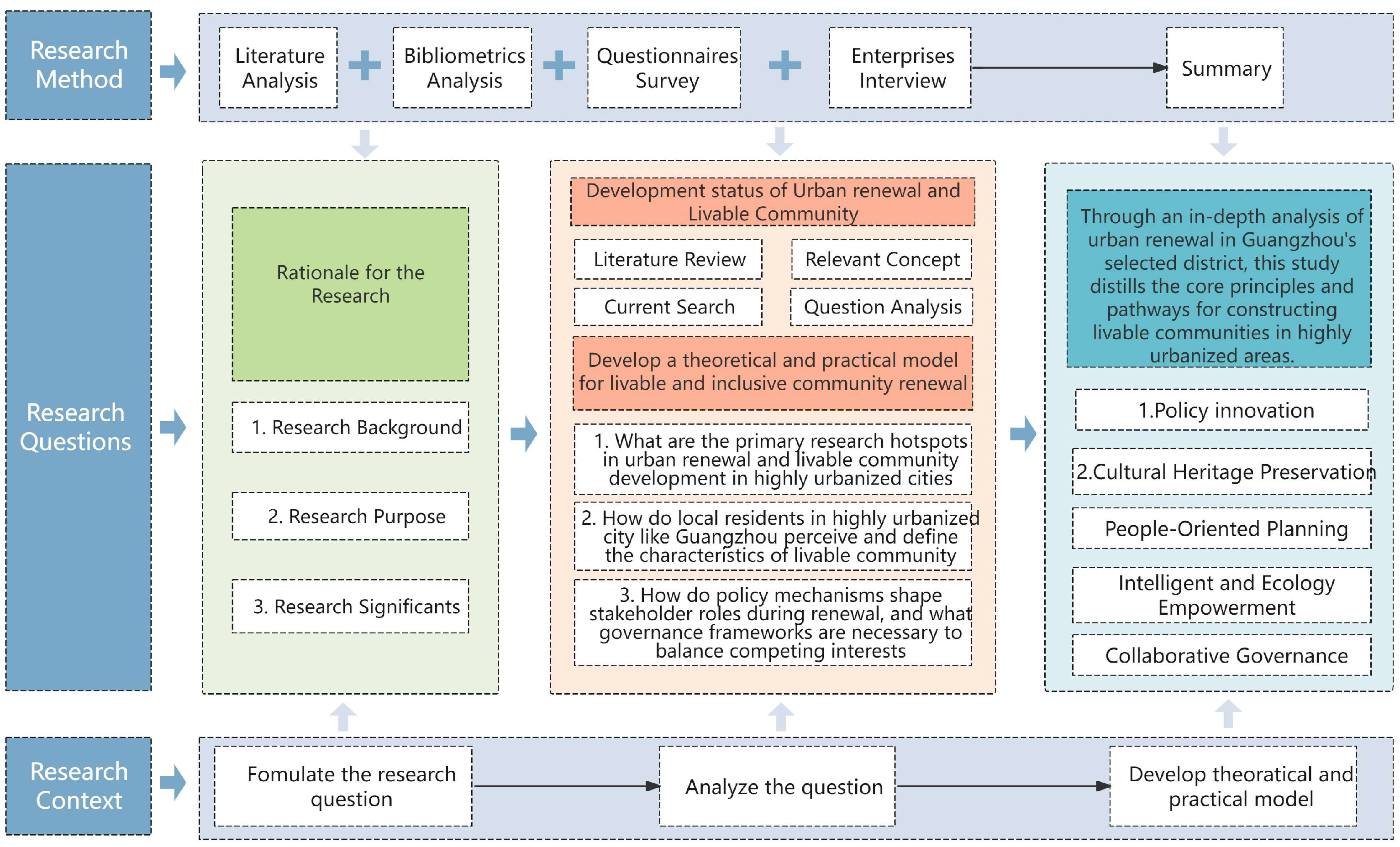
2. Materials and Methods
2.1. Theoretical Research (Literature Review and Bibliometric Analysis)
2.2. Field Research (Questionnaire Survey and Enterprise Interviews)
3. Results
3.1. Analysis of CNKI Literature Clustering Results
3.1.1. Data Source Analysis
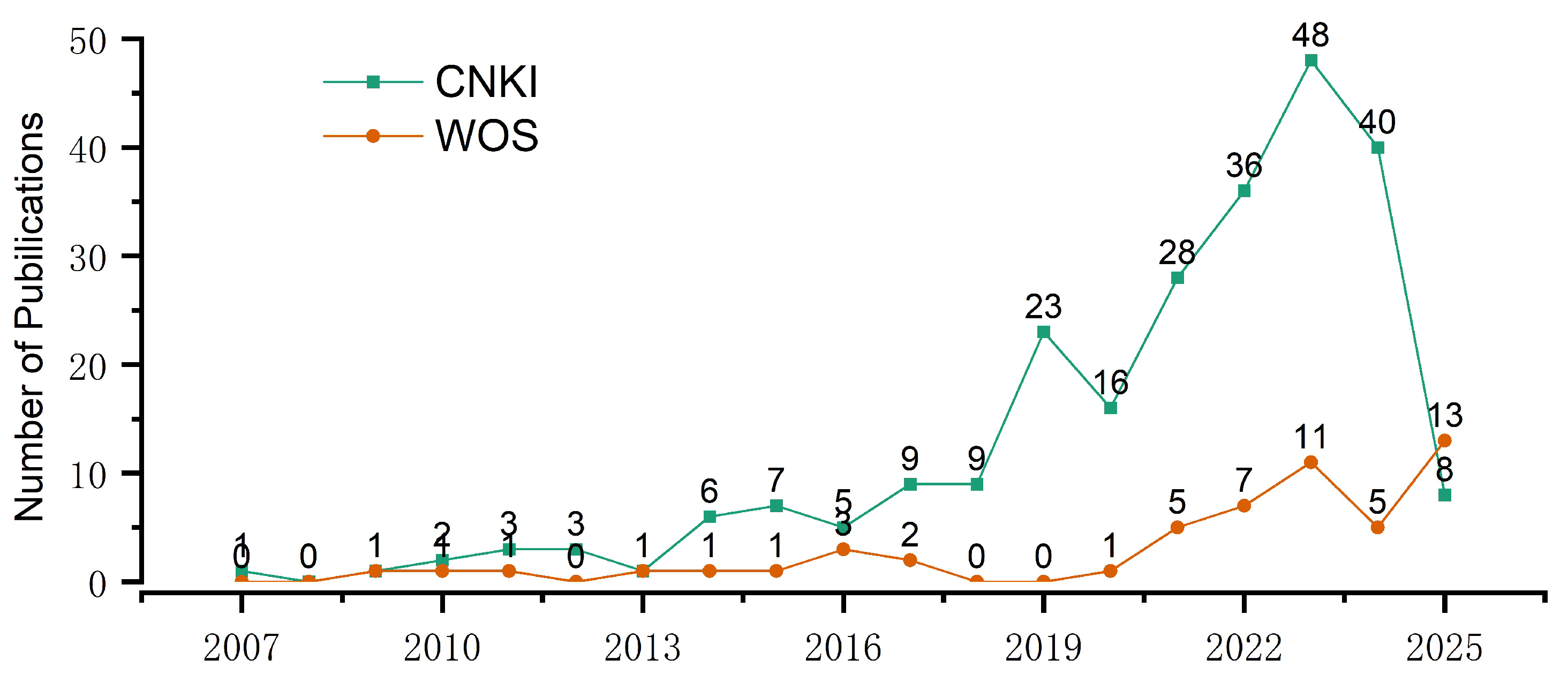
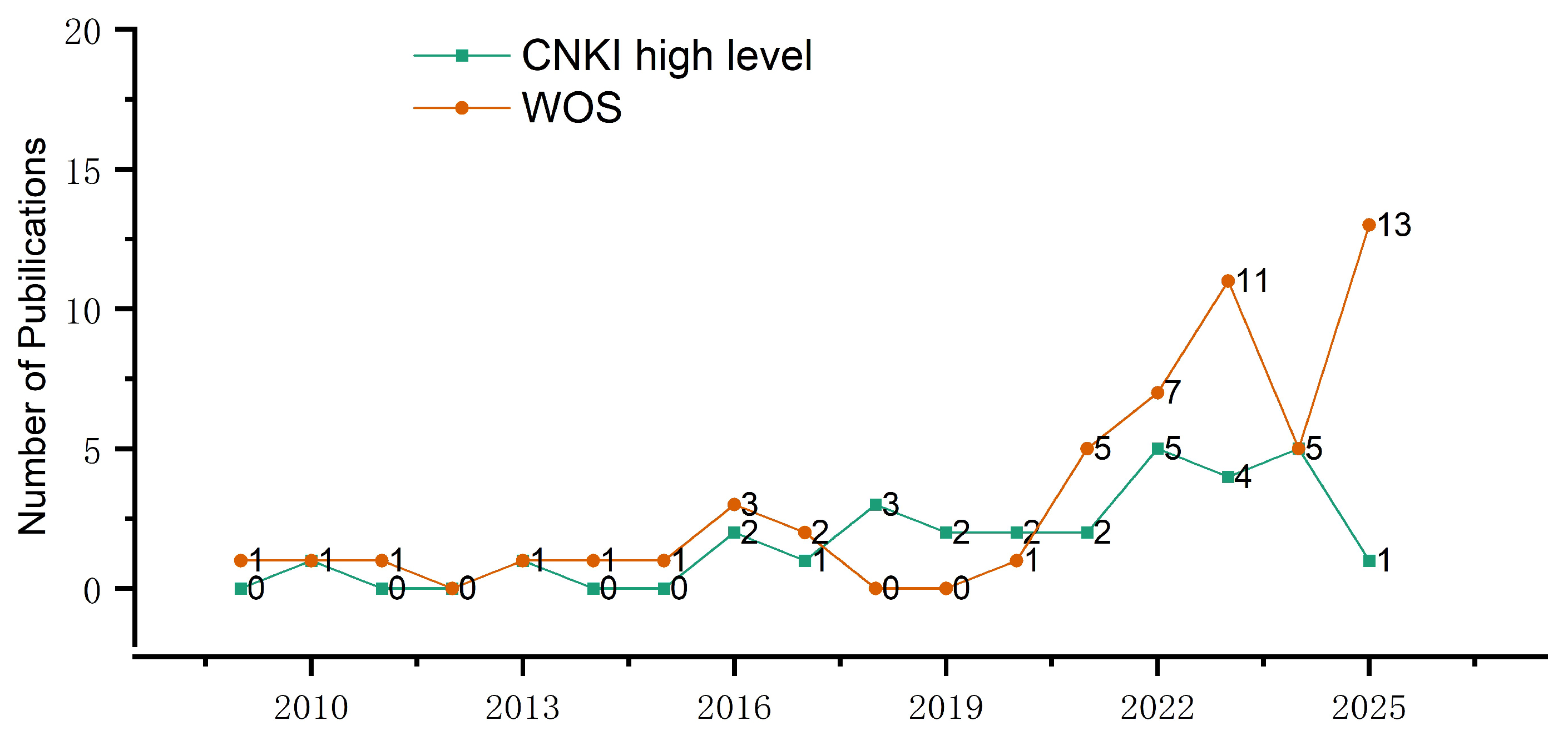
- Temporal Distribution Analysis
- 2.
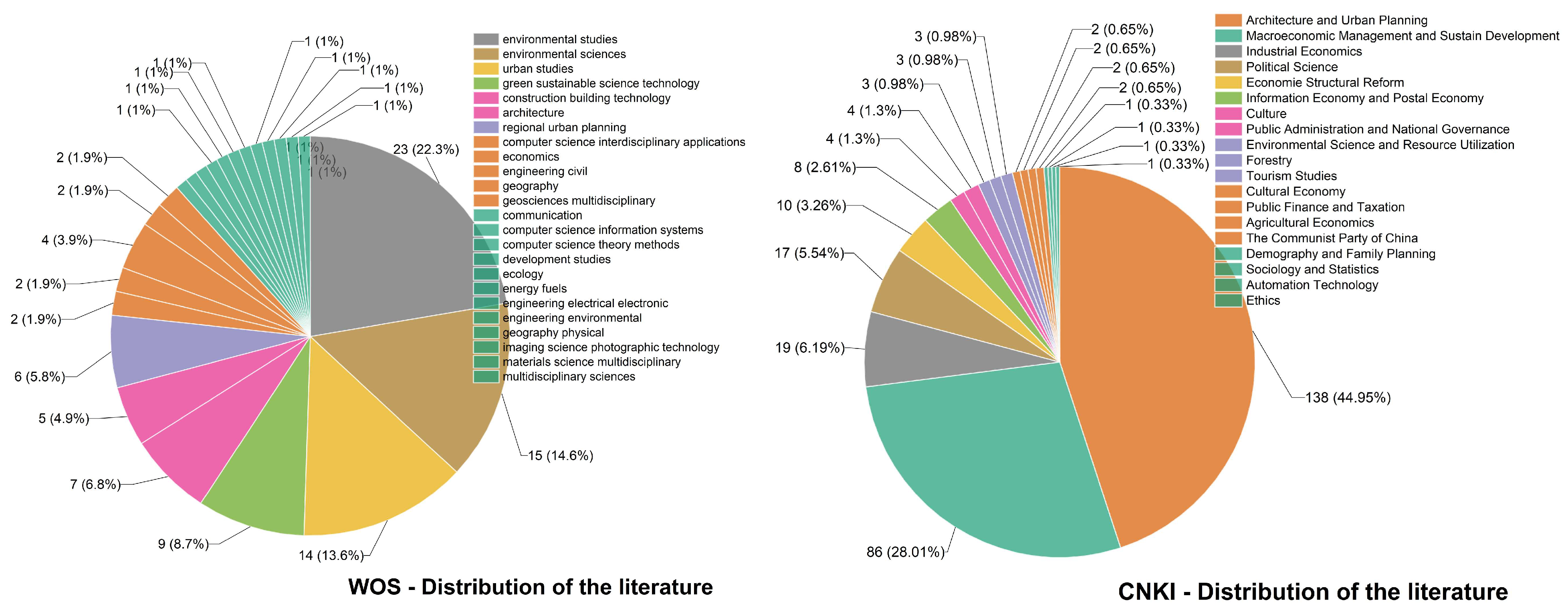
- Distribution of Scientific Fields and Research Topics
3.1.2. Analysis of Research Hotspots and Frontiers
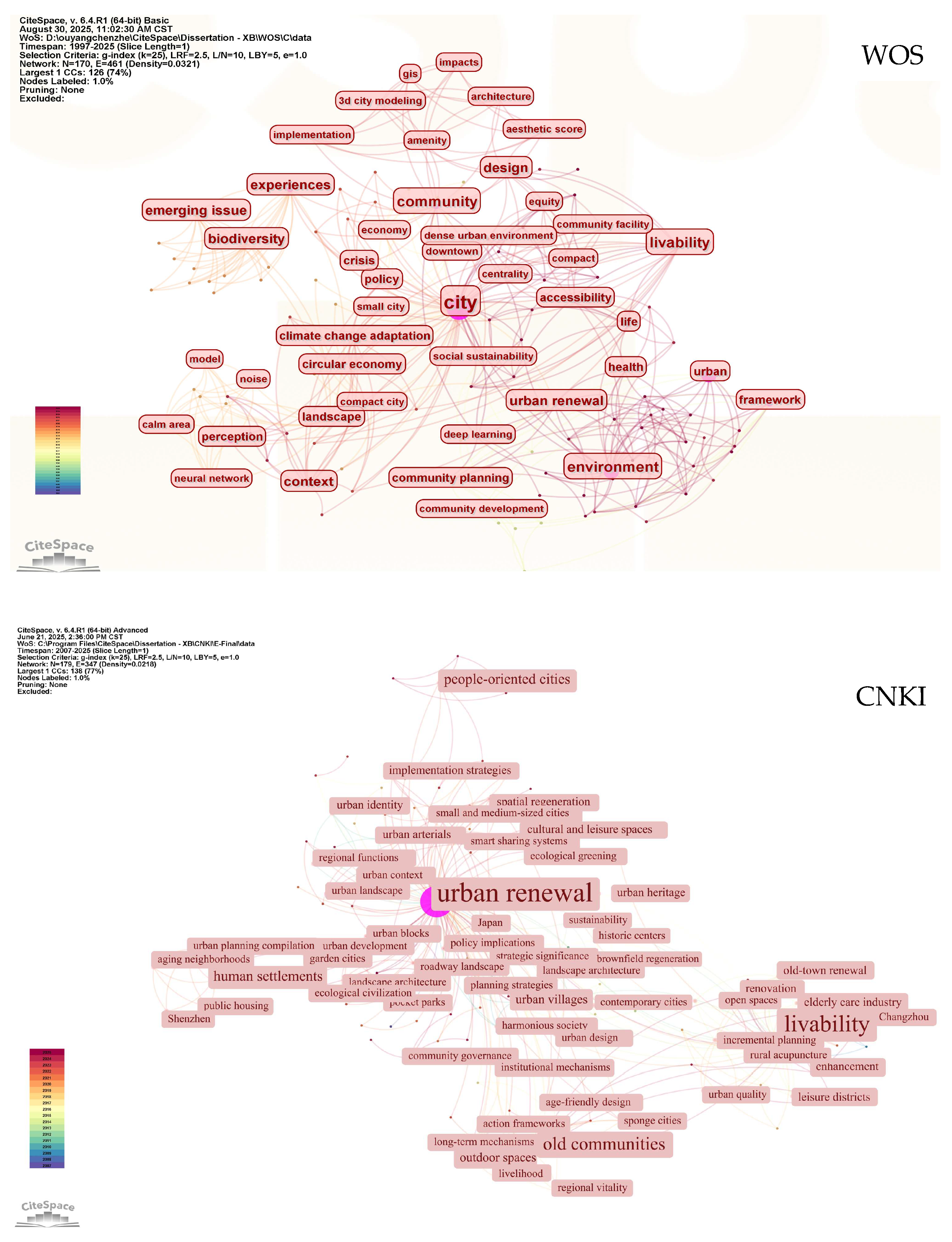
- Network Visualization
- 2.
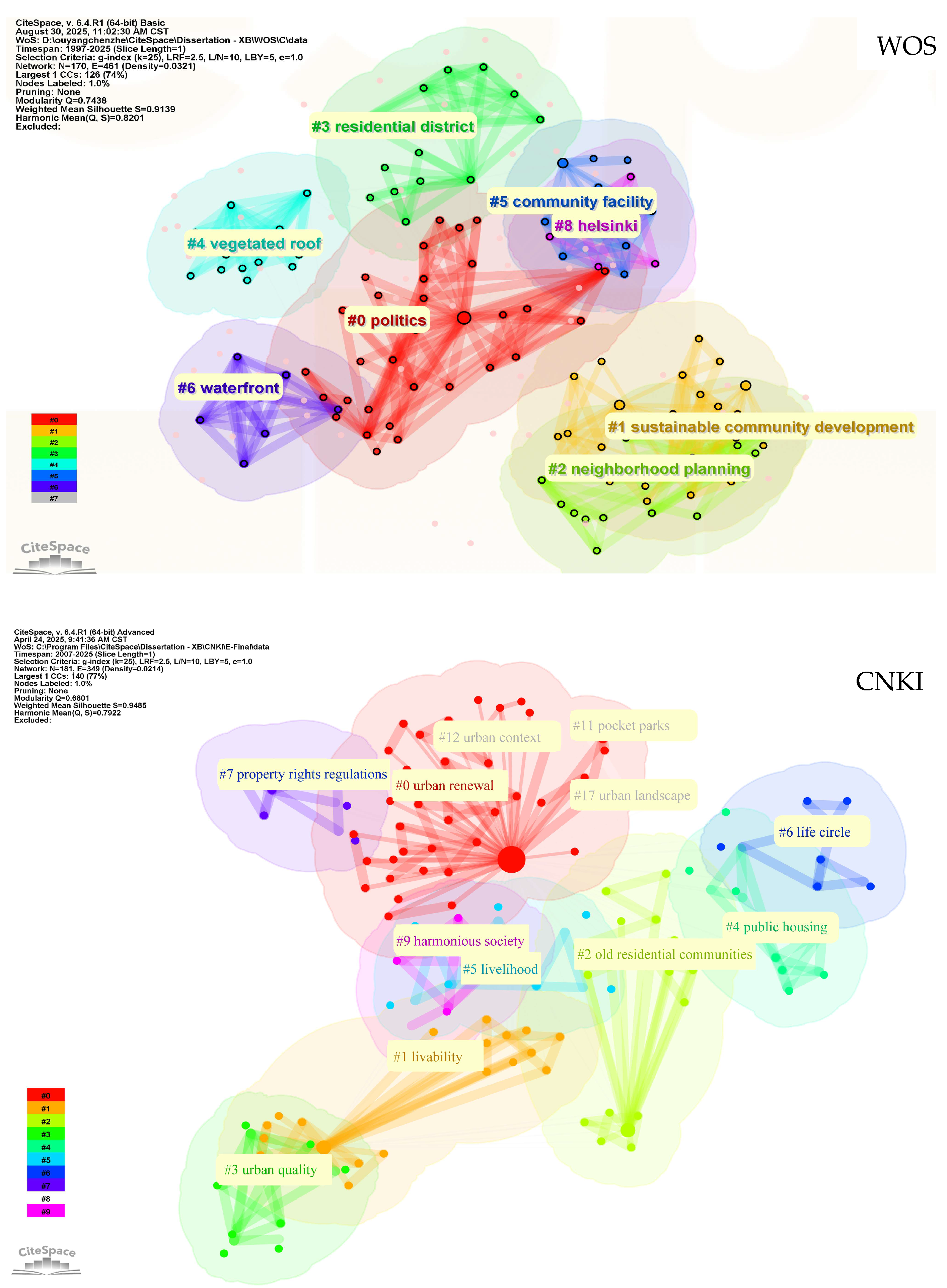
- Thematic Clustering Analysis
- 3.
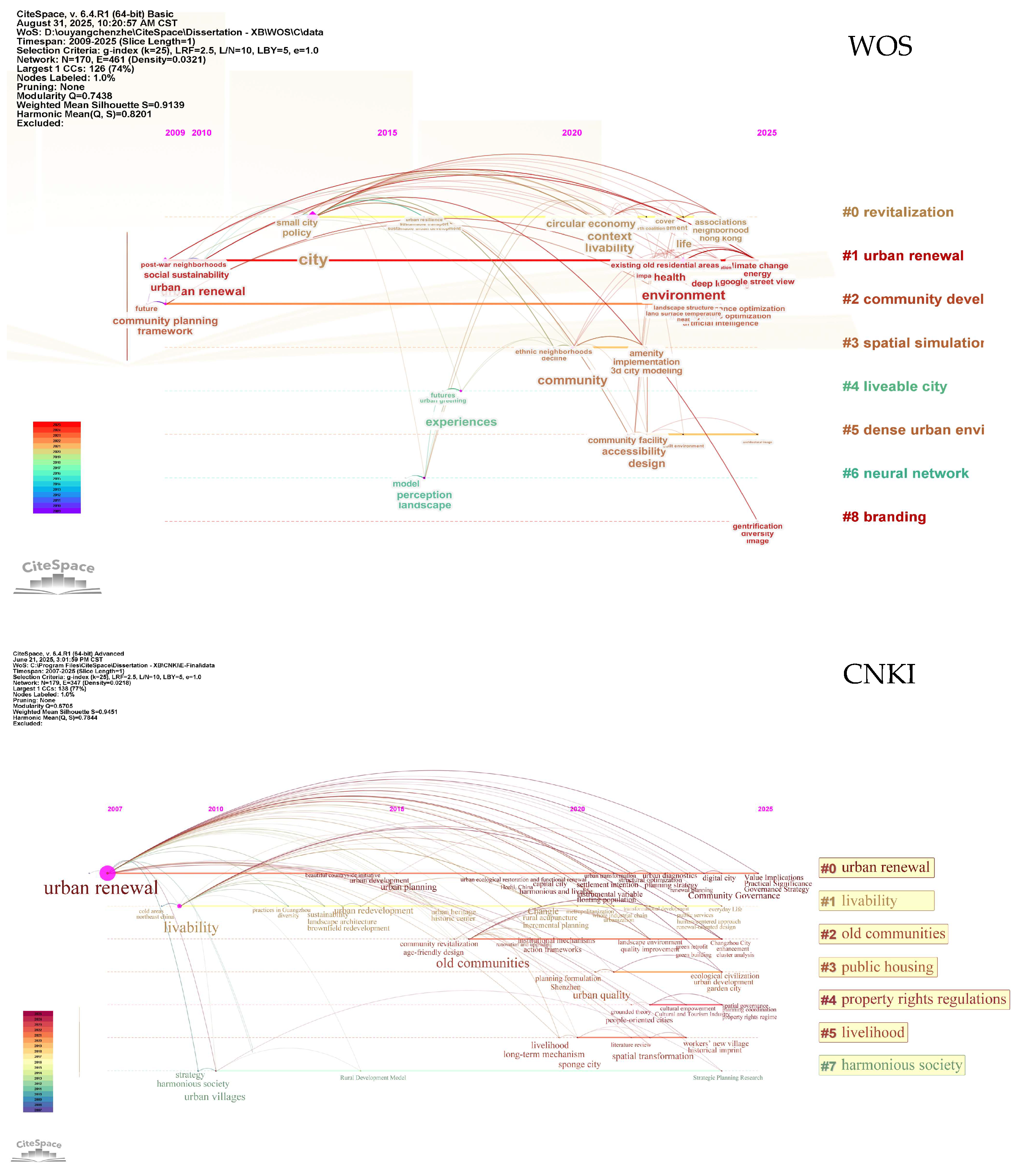
- Timeline Clustering and Keyword Burst Analysis
3.2. Analysis of Questionnaire Conclusion
3.2.1. Questionnaire Design and Data Collection
- 1.
- Survey Procedure
- (1)
- Pre-survey Preparation
- (2)
- Data Collection
- (3)
- Data Analysis
- 2.
- Selection of Participants
- (1)
- Sampling Method
- (2)
- Stratification Dimensions
- (3)
- Special Treatments
3.2.2. Analysis of Survey Results
- 1.
- Analysis of Intentions and Demand Preferences for Relocation Housing
- (1)
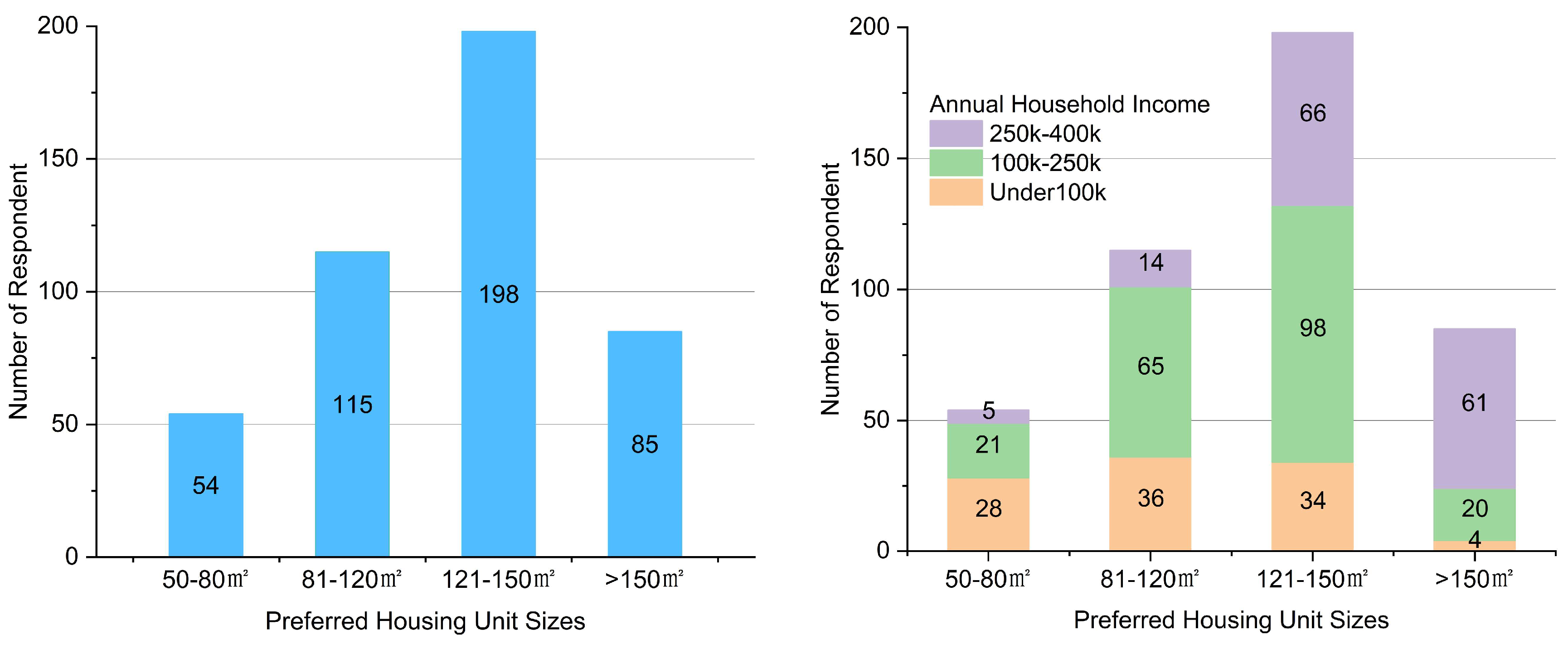
- House Type Selection Tendency
- (2)
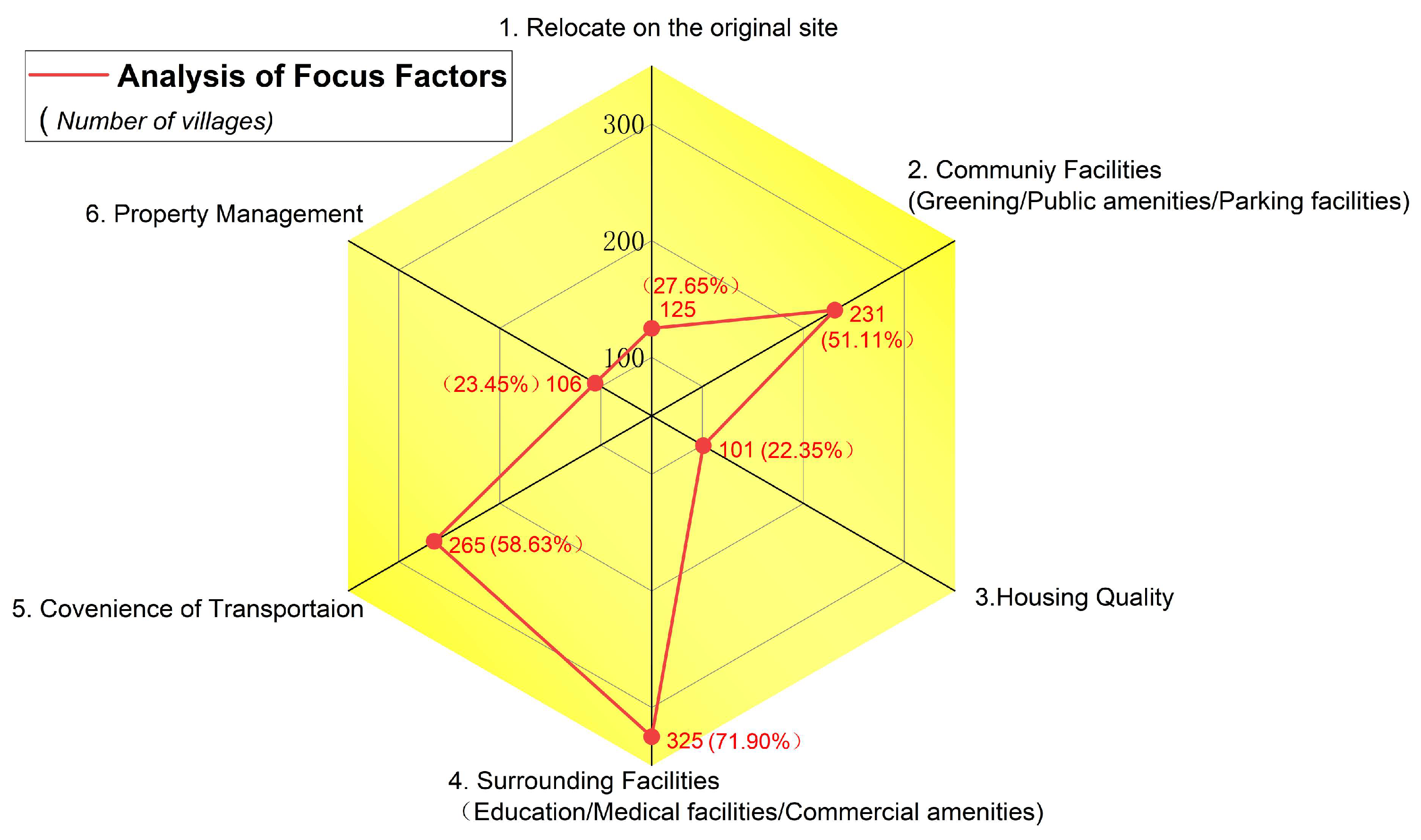
- Analysis of Focus Factors
- (3)
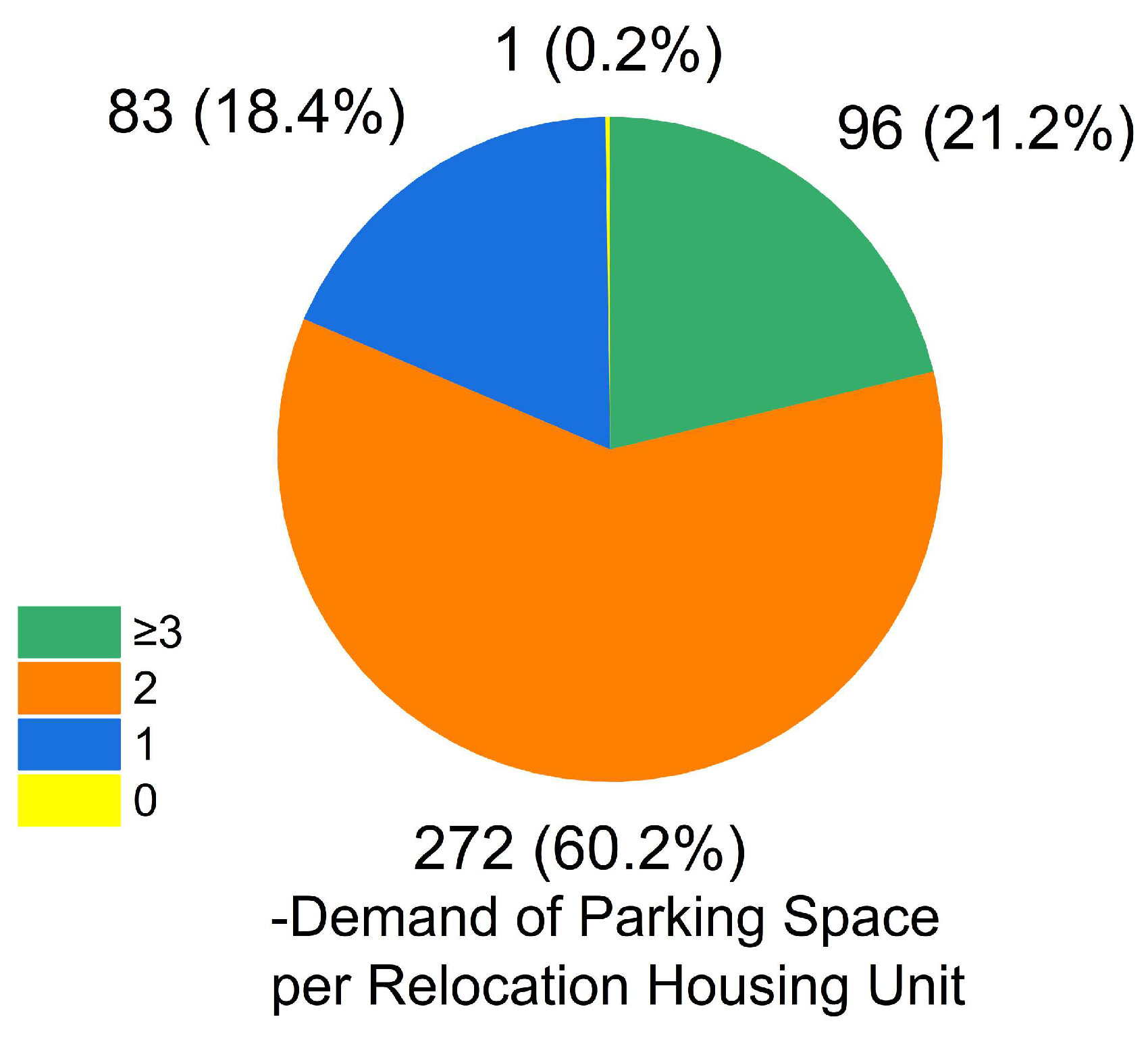
- Parking Space Demand
- 2.
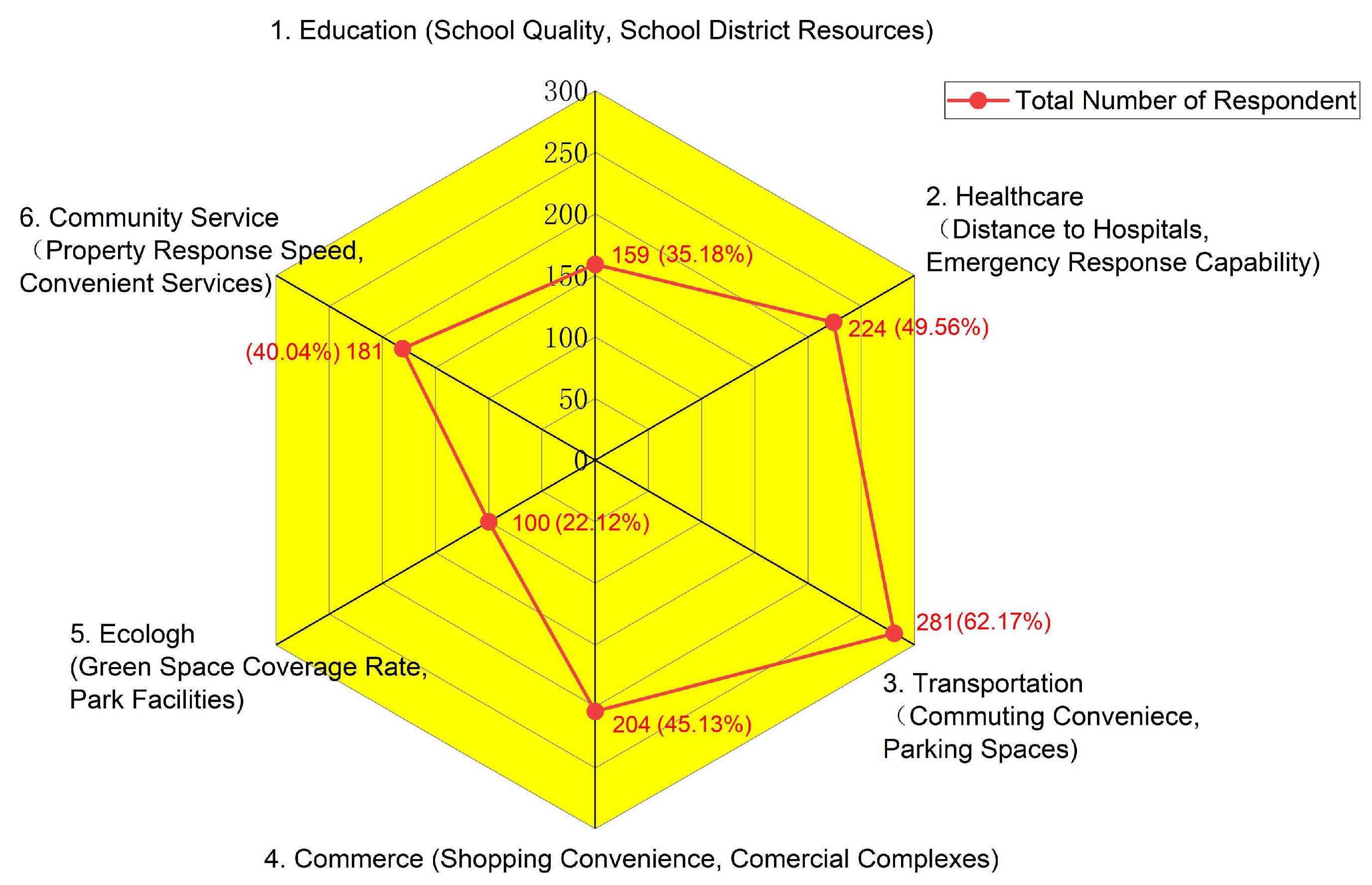
- Priority of Supporting Facilities Demand in Relocation Communities
- (1)
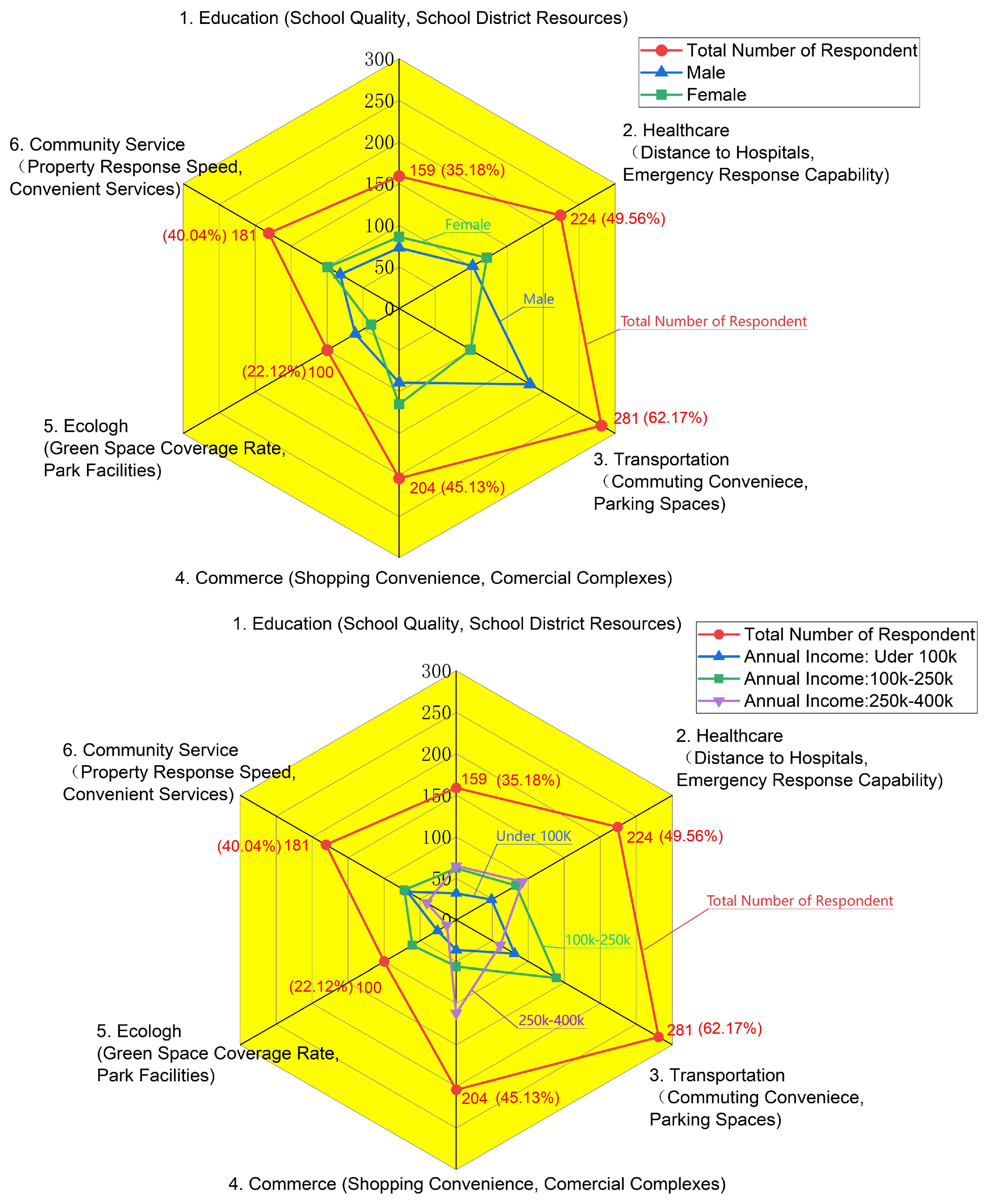
- Analysis of Public Facilities Demand
- (2)
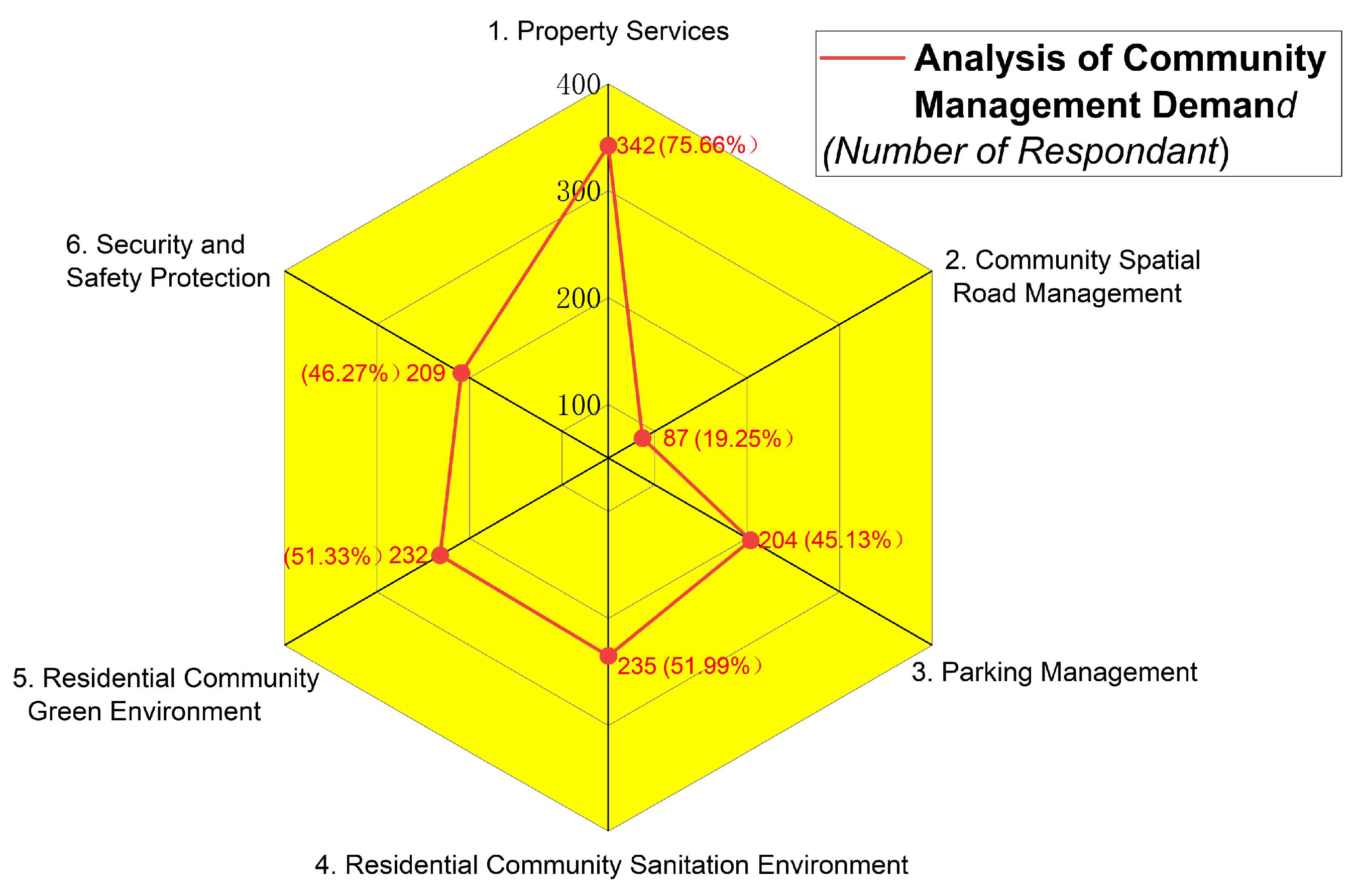
- Analysis of Community Management Demand
- (3)
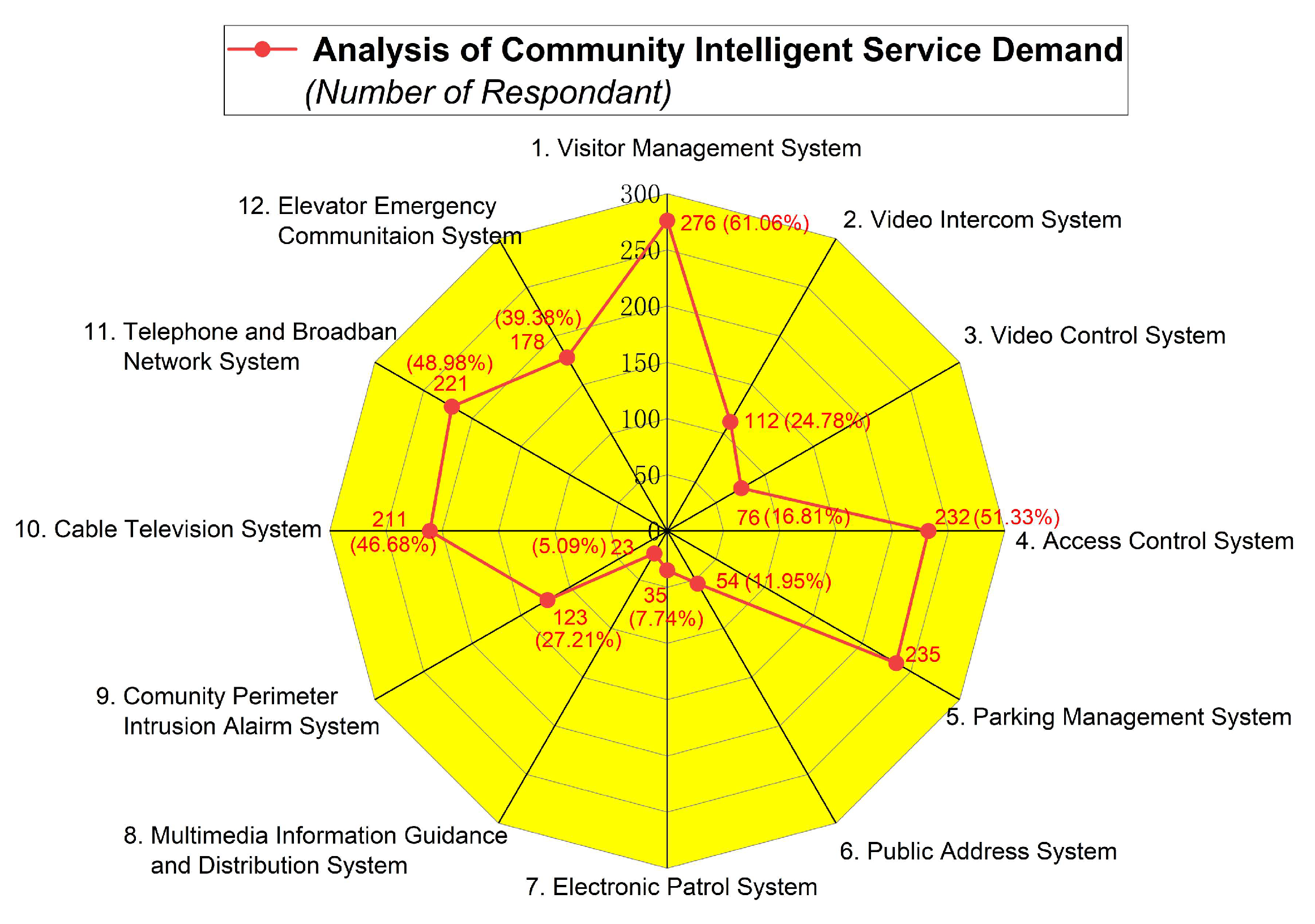
- Analysis of Community Intelligent Service Demand
- (4)
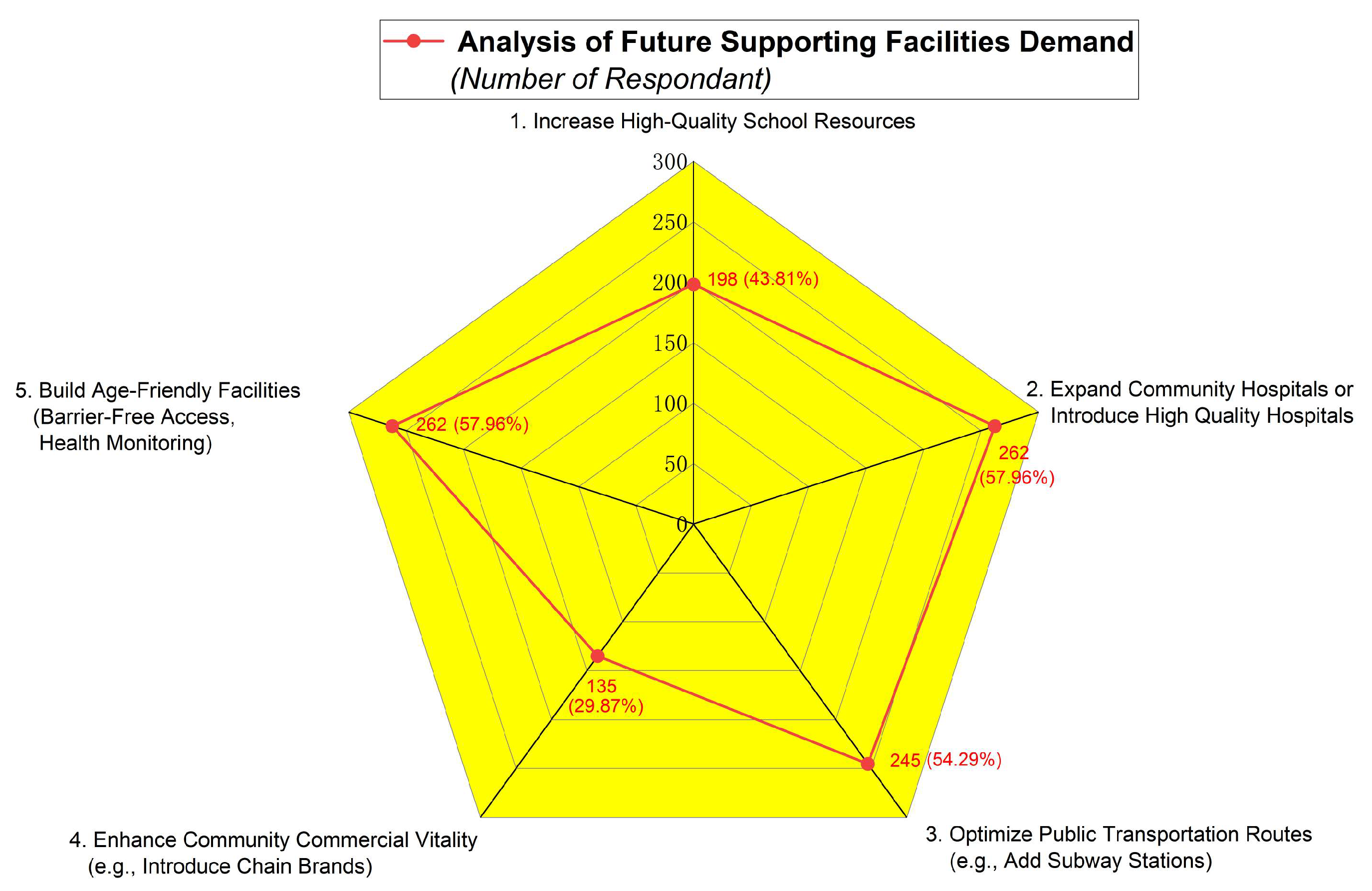
- Analysis of Future Supporting Facilities Demand
- (5)
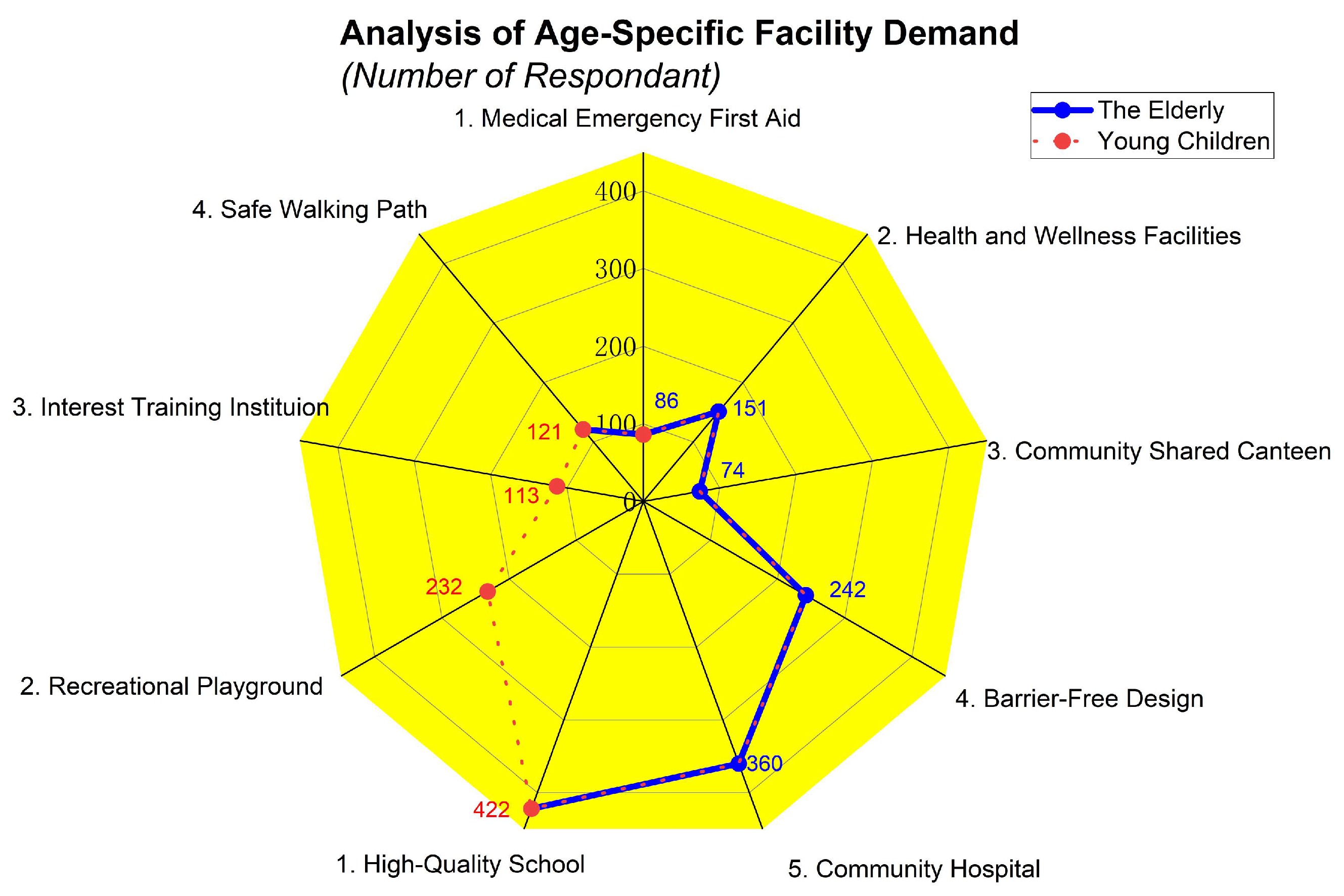
- Analysis of Age-Specific Facility Demand
- (6)
- Villagers’ Daily Community Cultural Activities
- 3.
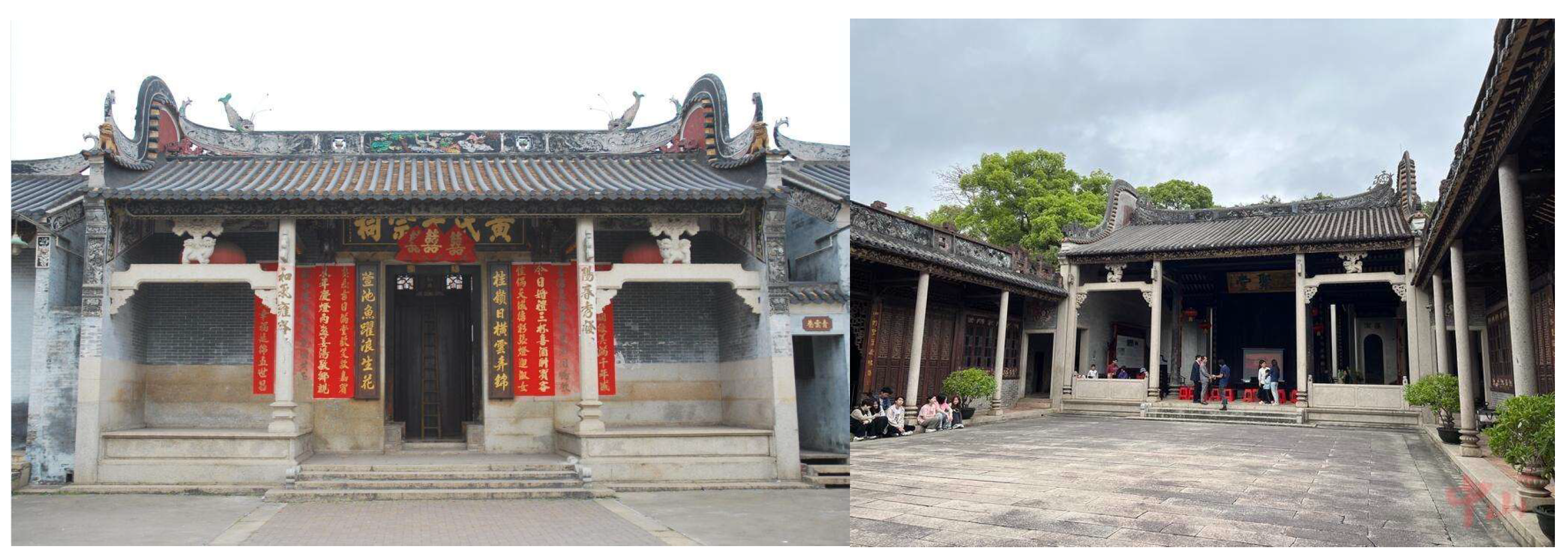
- Renovation Approaches for Traditional Architecture (e.g., Ancestral Halls)
- 4.
- Cross-Analysis of Demand Influencing Factors
- (1)
- Income (economic constraints) and family structure (spatial needs) are the core driving factors for “hard needs” such as house type and parking space, and their influence intensity can be quantified through regression coefficients (e.g., β = 0.82 for the impact of income on house type preference);
- (2)
- Age (physiological conditions and living habits) is a key variable for “differentiated needs” such as medical care, barrier-free facilities, and intelligent services, and strong correlations (r = 0.68–0.72) confirm its regularity;
- (3)
- Gender and occupation affect the focus of needs through the division of social roles, but their influence intensity is weaker than that of income and age (e.g., gender has no significant impact.
3.3. Analysis of Enterprise Symposium Conclusions
- (1)
- Open Coding: Independently labeled raw data with initial codes (e.g., “covered walkway demand,” “ancestral hall retention”) based on semantic meaning.
- (2)
- Axial Coding: By integrating initial codes around “demand types” and “spatial attributes,” several sub-categories were summarized (e.g., “physical space optimization,” “cultural heritage preservation”).
- (3)
- Selective Coding: Core categories such as “physical space adaptability,” “cultural gene continuity,” and “psychological need satisfaction” were extracted to form a logical framework of villagers’ demands.
- To verify the coding results, two validation methods were implemented.
- (1)
- Triangulation Validation: Comparing symposium data with questionnaire results (e.g., 96.15% of villagers supporting ancestral hall retention in surveys vs. 94.3% in symposiums) to confirm consistency;
- (2)
- Member Checking: Feeding back coded conclusions to 15 participating villagers for verification, with 86.7% confirming the conclusions matched their actual demands.
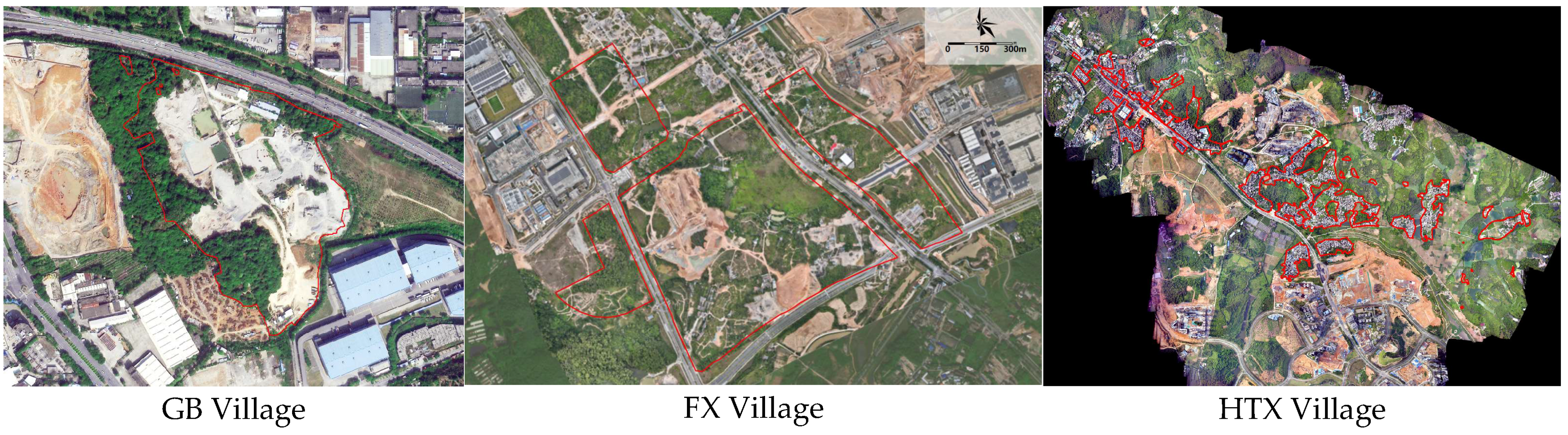
3.3.1. Analysis of Urban Project Symposium in a District of Guangzhou
- FX Village Project
- 2.
- HTX Village project
- 3.
- GB Village Project
3.3.2. Extraction of Common Demands
4. Discussion
4.1. Concept and Characteristics of High Urbanization
4.2. Characteristics of Livable and Friendly Communities in High-Urbanization Context
- Human-Centered Design Principles:
- 2.
- Optimized Architectural Functionality:
- 3.
- Integrated Urban Planning Strategies:
4.3. Challenges in Developing Livable Communities Under High Urbanization
4.4. Approaches to Addressing Challenges
4.4.1. Policy-Level Interventions
4.4.2. Urban Planning Interventions
4.5. People-Industry-City Integration
5. Research Contributions and Conclusions
5.1. Research Contributions
5.1.1. Innovation in Research Perspective
5.1.2. Breakthrough in Practical Pathways
5.1.3. Practical Guidance Value
5.2. Research Challenges and Limitations
5.3. Conclusions
5.3.1. Research Findings
- Clear Core Logic of Livable Communities: Resolving the “Efficiency-Inclusiveness” Contradiction through Five-Dimensional Synergy
- 2.
- Formed Five-Dimensional Implementation Pathways: Accurately Addressing the Three Core Research Questions with Practical Verification
- 3.
- Practical Implications Realized: Focusing on “Systematic Quality Improvement” with Dynamic Balance Required
5.3.2. Policy Recommendations
- Prioritize the Implementation of the Five-Dimensional Pathways to Target the Three Research Questions
- 2.
- Strengthen the Dynamic Balance and Adaptation Mechanism
- 3.
- Promote Replicable Strategies with a Focus on Systematic Improvement
Author Contributions
Funding
Institutional Review Board Statement
Informed Consent Statement
Data Availability Statement
Conflicts of Interest
References
- Zhou, M.H.; Lu, Y.J.; Xu, Y.L.; Wu, J. Research on urban renewal of Times Square in New York from a governance perspective. Shanghai Urban Plan. 2023, 3, 128–135. [Google Scholar]
- Dong, M.L.; Chen, T.; Wang, L.Y. Development course and policy evolution of urban renewal in western cities. Hum. Geogr. 2009, 109, 42–46. [Google Scholar]
- Von Hoffman, A. The lost history of urban renewal. J. Urban. Int. Res. Placemak. Urban Sustain. 2008, 1, 281–301. [Google Scholar] [CrossRef] [Scilit]
- Chronopoulos, T. Morality, social disorder, and the working class in Times Square, 1892–1954. Australas. J. Am. Stud. 2011, 30, 1–19. [Google Scholar]
- He, J.H.; Chen, S.N.; Qi, D.J.; Chen, B.M.; Zhu, W.P. Planning gain system and practice in urban renewal: A case study of King’s Cross Station area renewal in London, UK. City Plan. Rev. 2025, 49, 33–45. [Google Scholar]
- Adelfio, M.; Hamiduddin, I.; Miedema, E. London’s King’s Cross redevelopment: A compact, resource efficient and ‘liveable’ global city model for an era of climate emergency? Urban Res. Pract. 2021, 14, 180–200. [Google Scholar] [CrossRef] [Scilit]
- Keddie, J.; Tonkiss, F. The market and the plan: Housing, urban renewal and socio-economic change in London. City Cult. Soc. 2010, 1, 57–67. [Google Scholar] [CrossRef] [Scilit]
- National Bureau of Statistics. Statistical Communique of the People’s Republic of China on the 2024 National Economic and Social Development. 2025. Available online: https://www.stats.gov.cn/sj/zxfb/202502/t20250228_1958817.html (accessed on 18 May 2025).
- Guangzhou Bureau of Statistics. Population Scale and Distribution in Guangzhou. 2024. Available online: https://tjj.gz.gov.cn/stats_newtjyw/tjsj/tjgb/qtgb/content/post_10186269.html (accessed on 18 May 2025).
- Zheng, S.Q. Shortage and spatial imbalance of public service resources: Housing price problems and urban efficiency loss. Explor. Free. Views 2016, 5, 38–40. [Google Scholar]
- Lin, J.J.; Zhang, J.X. Characteristics and mechanisms of concurrent urban growth and shrinkage in Beijing. City Plan. Rev. 2023, 47, 90–100. [Google Scholar]
- Wan, C.W.; Ye, Y.M.; Jiang, X.J.; Ye, D.; Tang, Y.K. Urban renewal mechanism and transformation logic in megacities from the perspective of general renewal governance structure: A case study of Guangzhou. City Plan. Rev. 2025, 49, 85–96. [Google Scholar]
- Xie, W.; Jiang, R.; Xu, M.; Guan, Z.; Cheng, Y.; Zhong, Q. Evaluation and optimization of negative space at urban village boundaries: Case study of Guangzhou Shipai Village. In Proceedings of the 2024 China Urban Planning Annual Conference, Hefei, China, 7–9 September 2024; pp. 557–569. [Google Scholar] [CrossRef]
- Zhang, J.X.; Hu, H.J. Development, planning and governance innovation of metropolitan areas under new development environment. Econ. Geogr. 2023, 43, 17–25. [Google Scholar] [CrossRef]
- Wen, S.X.; Liao, J.H.; Cai, H.H.; Chen, X.L. Spatial restructuring and cultural practice in historic districts during urbanization: Case study of Yongqing Fang, Guangzhou. Prog. Geogr. 2021, 40, 161–170. [Google Scholar] [CrossRef] [Scilit]
- Zhang, L.Z.; Ye, Y.M. Forty years of urban village renewal governance: Evolution and prospects of academic thought. City Plan. Rev. 2022, 46, 103–114. [Google Scholar]
- Qiu, Y.X.; Wu, J.L.; Liang, R.; Chen, G. Exploring the value of public space in urban villages based on multi-agent interaction patterns: A case study of Chengjiexi Village, Yuancun, Guangzhou. Community Des. 2020, 6, 6–14. [Google Scholar]
- Shi, N. Habitat III, New Urban Agenda and their implications for China. City Plan. Rev. 2017, 41, 9–21. [Google Scholar]
- State Council of China. Proposal for the 14th Five-Year Plan for Economic and Social Development and Long-Range Objectives Through 2035. 2020. Available online: https://www.gov.cn/zhengce/2020-11/03/content_5556991.html (accessed on 18 May 2025).
- Government of the People’s Republic of China. Outline of the 14th Five-Year Plan for National Economic and Social Development and Long-Range Objectives Through the Year 2035 (Full Text). 2021. Available online: https://www.gov.cn/zhuanti/shisiwu/ie/index.html (accessed on 21 October 2025).
- Liu, X.T.J. Urban public space revitalization: Barcelona’s practices. Chin. Overseas Archit. 2024, 10, 37–44. [Google Scholar] [CrossRef]
- Roe, J.; Roe, A. Restorative environments and promoting physical activity among older people. In The Palgrave Handbook of Ageing and Physical Activity Promotion; Springer International Publishing: Berlin/Heidelberg, Germany, 2018; pp. 485–505. [Google Scholar]
- Thompson, C.W.; Roe, J.; Aspinall, P.; Mitchell, R.; Clow, A.; Miller, D. More green space is linked to less stress in deprived communities: Evidence from salivary cortisol patterns. Landsc. Urban Plan. 2012, 105, 221–229. [Google Scholar] [CrossRef] [Scilit]
- Beatley, T.; Newman, P. Biophilic cities are sustainable, resilient cities. Sustainability 2013, 5, 3328–3345. [Google Scholar] [CrossRef] [Scilit]
- Beatley, T. Biophilic cities and healthy societies. Urban Plan. 2017, 2, 1–4. [Google Scholar] [CrossRef] [Scilit]
- Mesimäki, M.; Hauru, K.; Kotze, D.J.; Lehvävirta, S. Neo-spaces for urban livability? Urbanites’ versatile mental images of green roofs in the Helsinki metropolitan area, Finland. Land Use Policy 2017, 61, 587–600. [Google Scholar] [CrossRef] [Scilit]
- Glaeser, E.L.; Luca, M.; Moszkowski, E. Gentrification and Neighborhood Change: Evidence from Yelp; National Bureau of Economic Research: Cambridge, MA, USA, 2020. [Google Scholar]
- Jaszczak, A.; Kristianova, K.; Pochodyła, E.; Kazak, J.K.; Młynarczyk, K. Revitalization of public spaces in Cittaslow towns: Recent urban redevelopment in Central Europe. Sustainability 2021, 13, 2564. [Google Scholar] [CrossRef] [Scilit]
- Zou, B. Transition from incremental planning to stock planning: Theoretical analysis and practical responses. Urban Plan. Forum 2015, 5, 12–19. [Google Scholar] [CrossRef]
- Tan, J.J.; Chang, J.; Xie, D.X. Exploration of micro-regeneration in Yongqing Fang, Enning Road, Guangzhou. Planners 2018, 34, 62–67. [Google Scholar]
- Liu, Y.F.; Cui, C.; Wan, Y. Practical exploration and theoretical framework research on sustainable urban renewal. J. Nat. Resour. 2025, 40, 39–57. [Google Scholar]
- Chan, T.S.; Shaw, I. Gender-sensitive research in a Chinese community. Asian Soc. Work. Policy Rev. 2016, 10, 90–102. [Google Scholar] [CrossRef] [Scilit]
- Kenning, G.; Ee, N.; Xu, Y.; Luu, B.L.; Ward, S.A.; Goldwater, M.B.; Lewis, E.; Radford, K.; Anstey, K.J.; Lautenschlager, N.T.; et al. Intergenerational practice in the community—What does the community think? Soc. Sci. 2021, 10, 374. [Google Scholar] [CrossRef] [Scilit]
- Yao, Z.H.; Li, H.Y. Research framework and planning responses for residential block renewal under all-age friendliness orientation. Planners 2024, 40, 34–41. [Google Scholar]
- Wang, S.F.; Zhang, X.Y.; Fei, Y. Guangzhou urban renewal and spatial innovation practices and strategies. Planners 2019, 35, 46–52. [Google Scholar]
- Wang, J.J.; Chen, Z.R.; Zhou, X.T.; Zhan, M. Activation model of existing public housing using “urban acupuncture”: Guangzhou case. Trop. Geogr. 2024, 44, 1249–1262. [Google Scholar] [CrossRef]
- Liu, G.; Yi, Z.; Zhang, X.; Shrestha, A.; Martek, I.; Wei, L. An evaluation of urban renewal policies of Shenzhen, China. Sustainability 2017, 9, 1001. [Google Scholar] [CrossRef] [Scilit]
- Pozoukidou, G.; Angelidou, M. Urban planning in the 15-minute city: Revisited under sustainable and smart city developments until 2030. Smart Cities 2022, 5, 1356–1375. [Google Scholar] [CrossRef] [Scilit]
- Huang, S.X.; Cai, Y.N. Knowledge mapping of domestic urban growth boundary research: Based on CNKI data (1996–2019). Trop. Geogr. 2021, 41, 256–264. [Google Scholar] [CrossRef]
- AlRyalat, S.A.S.; Malkawi, L.W.; Momani, S.M. Comparing bibliometric analysis using PubMed, Scopus, and Web of Science databases. J. Vis. Exp. (JoVE) 2019, 152, e58494. [Google Scholar]
- Zhong, D.; Luo, S.; Zheng, L.; Zhang, Y.; Jin, R. Epilepsy occurrence and circadian rhythm: A bibliometrics study and visualization analysis via CiteSpace. Front. Neurol. 2020, 11, 984. [Google Scholar] [CrossRef] [Scilit]
- Huang, Y.; Zheng, Z. Research hotspots and trend analysis of energy security based on citespace knowledge graph. Chem. Technol. Fuels Oils 2023, 59, 1024–1033. [Google Scholar] [CrossRef] [Scilit]
- Wang, J. Evaluation of urban village reconstruction based on villagers’ satisfaction: Evidence from 1425 surveys in Zhengzhou. Planners 2015, 31 (Suppl. S2), 268–271. [Google Scholar]
- Rohe, W.M. From local to global: One hundred years of neighborhood planning. J. Am. Plan. Assoc. 2009, 75, 209–230. [Google Scholar] [CrossRef] [Scilit]
- Mao, L.Q. Urban renewal planning of city centers focusing on creating urban vitality: A case study of Gera, Germany. Planners 2007, 5, 90–95. [Google Scholar]
- Zhang, X.; Wu, D.H.; Yin, Y. The strategic significance of Chongqing proposing the goal of a livable Chongqing. Shanxi Archit. 2010, 36, 9–10. [Google Scholar] [CrossRef]
- Xu, K.Y.; Wang, D.F. Research on the renovation and improvement of old residential areas in Changzhou under the construction of livable cities: Taking Wujin District, Changzhou City as an example. Urban Constr. Theory Res. (Electron. Ed.) 2024, 31, 37–39. [Google Scholar] [CrossRef]
- Liu, Y. Exploring strategies for renovating old residential communities with a focus on elderly-friendly barrier-free environments: A case study of the demonstration project in Binhu Community, Ezhou City, Hubei Province. Constr. Sci. Technol. 2019, 11, 38–44. [Google Scholar] [CrossRef]
- Wang, C.H.; Li, Z.W. Practice and exploration of old residential area renewal and renovation under the background of urban renewal: A case study of Zhonghua North Village renewal in Kunshan. Mod. Urban Res. 2019, 11, 104–112. [Google Scholar]
- Yan, X.T. Research on improving the livable environment of old residential areas under the background of urban renewal. China Hous. Facil. 2023, 7, 88–90. [Google Scholar]
- Chen, Y. Research on urban renewal strategies under the background of digital city development. New Urban Constr. Technol. 2024, 33, 28–30. [Google Scholar]
- Fang, C.L. Progress and prospects of China’s urbanization and urban agglomerations over 40 years of reform. Econ. Geogr. 2018, 38, 1–9. [Google Scholar] [CrossRef]
- Xu, K.D. China’s urbanization. China Dev. Obs. 2013, 4, 53–56. [Google Scholar]
- Han, J.B. Urban design institutions based on urbanization rate and governance traditions: Cases from seven developed countries. City Plan. Rev. 2024, 48, 67–72. [Google Scholar]
- Guan, C.H. New characteristics of China’s urbanization process. People’s Trib. 2023, 2, 62–65. [Google Scholar]
- Zhang, W.; Liu, J.Y.; Wang, C.Q. Evolution and implications of Singapore’s community facility planning system. Planners 2019, 35, 18–25. [Google Scholar]
- Tang, S.; Zhang, J.X. Resilient governance-oriented control of urban reserved space: China-Singapore comparison. Urban Plan. Forum 2023, 5, 29–36. [Google Scholar] [CrossRef]








| Village | Registered Households (Households) | Population (Persons) | Houses (Buildings) |
|---|---|---|---|
| GB Village | 229 | 654 | 392 |
| FX Village | 1696 | 8476 | 4471 |
| HTX Village | 5490 | 8114 | 5287 |
| Total | 7415 | 17,244 | 10,150 |
| Characteristic Dimension | Classification | Number of Samples | Total Number of Samples |
|---|---|---|---|
| Gender | Male | 232 | 452 |
| Female | 220 | ||
| Age | Under 25 years old | 50 | 452 |
| 26–35 years old | 84 | ||
| 36–45 years old | 102 | ||
| 46–55 years old | 104 | ||
| Over 56 years old | 112 | ||
| Occupation | Civil Servant/Institution Staff | 38 | 452 |
| Corporate White—Collar Worker | 112 | ||
| Private Business Owner | 116 | ||
| Freelancer | 85 | ||
| Others | 101 | ||
| Annual Family Income | Below 100,000 yuan | 102 | 452 |
| 100,000–250,000 yuan | 204 | ||
| 250,000–400,000 yuan | 146 |
| Primary Category | Research Findings | Corresponding Implementation Pathways | Practical Impacts |
|---|---|---|---|
| Theoretical & Demand Level | 1. Clarified the core research focus of urban renewal and livable community development: the integration of the “people-industry-city” system and the balance between efficiency and inclusiveness (responds to Research Question 1). 2. Identified residents’ definition of livable communities: including non-material needs such as cultural memory, convenient services, and participation rights (responds to Research Question 2). | 1. Cultural Heritage Preservation 2. People-Oriented Planning | 1. Cultural Heritage Preservation: Preserves the community’s cultural core (e.g., revitalization of historical buildings), enhances residents’ sense of community identity, and meets the non-material needs for livability. 2. People-Oriented Planning: Optimizes the allocation of public service facilities (e.g., schools, hospitals) through a closed-loop process of “demand collection—customized planning—effect feedback,” aligning with residents’ core demand for livable communities: “convenient life and comfortable space.” |
| Governance & Policy Level | 1. Key to resolving interest conflicts: Clarifying the roles of stakeholders (government as guide, market as operator, residents as participants) (responds to Research Question 3). 2. Proposed a dynamic policy calibration mechanism: Addressing urban renewal pain points such as “prioritizing speed over quality” (responds to Research Question 3). | 1. Policy Innovation 2. Collaborative Governance | 1. Policy Innovation: Establishes a framework of “government guidance, market operation, and people’s livelihood priority,” prioritizes villager resettlement, ensures community stability, and achieves a virtuous cycle of “industrial attraction—environmental improvement—livelihood enhancement.” 2. Collaborative Governance: Balances cultural preservation, livelihood improvement, and economic benefits through policy safeguards (government supervision), corporate social responsibility (profit-sharing), and residents’ participatory decision-making (right to voice), forming a multi-win governance pattern. |
| Technological & Sustainable Level | 1. Clarified the development direction of livable communities in highly urbanized areas: intelligence and ecological sustainability (responds to Research Question 1). 2. Verified the role of smart and ecological technologies in improving livability (supplements empirical support for Research Question 1). | Smart and Ecological Empowerment | 1. Application of smart community management systems: Creates convenient and efficient living scenarios (e.g., smart parking, online government services), enhancing residents’ quality of life. 2. Implementation of green ecological technologies: Builds low-carbon and sustainable spatial environments (e.g., green corridors, vertical greening), promoting the transformation of urban development models toward “greenization and intellectualization,” which aligns with academic research focuses and practical needs for livable community development in highly urbanized cities. |
| Overall System Level | 1. Distilled the core logic of livable community construction: Resolving the contradiction between “pursuit of efficiency” and “inclusive development” through the synergistic innovation of five dimensions (policy, culture, planning, technology, governance) (comprehensively responds to Research Questions 1/2/3). 2. Developed a replicable model for improving livability in high-density urban villages. | Synergy of Five Pathways: Policy Innovation + Cultural Heritage Preservation + People-Oriented Planning + Smart and Ecological Empowerment + Collaborative Governance | 1. Promotes the transformation of urban renewal from “extensive physical reconstruction” to “refined systematic quality improvement,” avoiding the limitations of single-dimensional renewal. 2. Provides a replicable template for Guangzhou and similar high-density cities (e.g., strategies of “demand-driven renewal” and “culture-empowered transformation”), facilitating the coordinated advancement of “urban sustainable development” and “improvement of residents’ quality of life.” |
Disclaimer/Publisher’s Note: The statements, opinions and data contained in all publications are solely those of the individual author(s) and contributor(s) and not of MDPI and/or the editor(s). MDPI and/or the editor(s) disclaim responsibility for any injury to people or property resulting from any ideas, methods, instructions or products referred to in the content. |
© 2025 by the authors. Licensee MDPI, Basel, Switzerland. This article is an open access article distributed under the terms and conditions of the Creative Commons Attribution (CC BY) license (https://creativecommons.org/licenses/by/4.0/).
Share and Cite
Xiang, B.; Liang, M.; Ma, J.; Ouyang, C.; Lu, J. Exploring Livable Communities in Urban Renewal: Case Study of China’s Metropolises. Buildings 2025, 15, 4072. https://doi.org/10.3390/buildings15224072
Xiang B, Liang M, Ma J, Ouyang C, Lu J. Exploring Livable Communities in Urban Renewal: Case Study of China’s Metropolises. Buildings. 2025; 15(22):4072. https://doi.org/10.3390/buildings15224072
Chicago/Turabian StyleXiang, Ben, Mingjie Liang, Jianjun Ma, Chenzhe Ouyang, and Jiaxin Lu. 2025. "Exploring Livable Communities in Urban Renewal: Case Study of China’s Metropolises" Buildings 15, no. 22: 4072. https://doi.org/10.3390/buildings15224072
APA StyleXiang, B., Liang, M., Ma, J., Ouyang, C., & Lu, J. (2025). Exploring Livable Communities in Urban Renewal: Case Study of China’s Metropolises. Buildings, 15(22), 4072. https://doi.org/10.3390/buildings15224072