Article

Impact Performance of Precast Concrete Sandwich Panels for Prefabricated Residential Buildings

1
Zhonghai Hongyang Real Estate (Hefei) Co., Ltd., Hefei 230031, China
2
School of Civil Engineering, Hefei University of Technology, Hefei 230009, China
*
Author to whom correspondence should be addressed.
Buildings 2025, 15(22), 4024; https://doi.org/10.3390/buildings15224024
Submission received: 13 October 2025 / Revised: 1 November 2025 / Accepted: 5 November 2025 / Published: 7 November 2025
(This article belongs to the Section Building Structures)

Abstract

Precast concrete sandwich panels (PCSPs) have been widely adopted for constructing exterior walls in prefabricated residential buildings, but they face threats from impact loads such as natural disasters, terrorist attacks, and runaway vehicles. Their impact performance directly affects the overall safety and durability of the structure. However, research on the impact performance of such exterior walls remains limited. In this study, LS-DYNA R11 software is employed to establish a numerical model of PCSPs. The proposed numerical simulation method is validated by comparing the results with existing experimental data. On the basis of this numerical method and adopting an actual prefabricated residential building project as the background, the damage behavior of three distinct types of PCSPs in a bedroom is numerically investigated under varying impact location and energy conditions. The results demonstrate that the interior wythe of the PCSPs studied in this work exhibit excellent stability under external impact loading, with the most of damage absorbed by the exterior wythe, which provides effective protection to the interior wythe. Compared with windowed PCSPs subjected to impact, loads at the same energy level exhibit concrete spalling and a more pronounced dynamic response. Additionally, the windowed surface of L-shaped PCSPs is more susceptible to generating significant dynamic responses, with the non-windowed side exhibiting at least 13.2% lower maximum displacement under impact compared to the windowed side.

1. Introduction

Prefabricated residential buildings, with their factory-prefabricated and onsite assembled model, offer significant advantages in terms of increasing productivity and quality, reducing pollution, and promoting energy conservation and environmental protection. Such buildings have become a key direction for green development in the construction industry. Precast concrete sandwich panels (PCSPs) comprise interior and exterior reinforced concrete wythes with core insulation and are bonded together through connectors to form a three-layer sandwich structure. PCSPs offer high strength, resistance to multiple hazards, durability, sustainability, energy efficiency, and multifunctional esthetics. They are frequently utilized as load-bearing or non-load-bearing walls in the outside structures of prefabricated residential buildings.
The structural characteristics of PCSPs have emerged as a research hotspot because of their distinctive structure. An outline of their construction and associated studies has been given by scholars [1,2]. Their static performance is currently the main research subject. With respect to shear resistance, Joseph et al. [3] conducted through-thickness shear tests to evaluate shear resistance and reported that, in small-scale PCSP samples, reducing the thickness of the expanded polystyrene core and the presence of the core itself increased the through-thickness shear strength of the PCSP. Kinnane et al. [4] examined PCSPs with steel plate connectors of different sizes and demonstrated the impact of the connectors on the load-bearing capacity, stiffness, and failure modes. Additionally, research on static flexural and compression behavior has been thoroughly conducted. Joseph et al. [5,6] investigated the bending performance of prototype insulated PCSPs featuring continuous truss-shaped shear connectors, along with the flexural behavior of PCSPs subjected to punching loads. Sushil et al. [7,8] performed experimental and theoretical investigations on the performance of fiber-reinforced polymer (FRP) grid-reinforced geopolymer concrete sandwich wall panels subjected to axial and lateral loading. The findings indicated that an increase in the slenderness ratio decreases the axial load capacity, whereas a greater insulation layer thickness increases the ultimate load capacity of slender panels. Load eccentricities significantly diminish the axial bearing capacity.
Research on the impact performance of structural members has been relatively well documented for precast concrete systems, concrete slabs, and wall elements. Waqas et al. [9] applied gene expression programming to predict the performance of bamboo fiber-reinforced concrete hybrid beams. Li et al. [10] investigated the similarities and differences in impact response between wet-connected precast and cast-in-place beams, identifying the key influencing parameters. Recent studies [11,12] have conducted in-depth investigations into the impact resistance of precast reinforced concrete barriers featuring grouted sleeve and steel angle-to-plate connections, as well as unbonded post-tensioned precast concrete beam-column sub-assemblages. This research significantly enriches the diversity of studies on the impact response mechanisms of precast concrete components. Research [13,14,15] has aimed to examine the performance of precast concrete shear walls subjected to impact loading via pendulum impact testing and numerical analysis, and an innovative method and empirical model for swiftly assessing the impact resistance of concrete shear walls have been introduced. Additionally, the mechanical response and damage progression of concrete slab components, which function as essential load-bearing and lateral force-resisting elements in structures, under impact loads have garnered significant interest from both academia and engineering practice [16,17].
In addition to investigations into the impact resistance of concrete slabs, researchers have analyzed the behavior of composite panels under impact conditions. Wang et al. [18] proposed a novel stiffener-enhanced steel–concrete–steel (SESCS) sandwich panel and performed drop-weight impact testing; all the tested panels exhibited a composite failure mechanism consisting of global bending and local indentation. Compared with the unstiffened steel–concrete–steel sandwich panels, the SESCS sandwich panels exhibited increased impact toughness. Jung et al. [19] integrated the effect of front steel plates into established impact resistance equations for steel–plate concrete walls, proposed an analytical criterion for assessing impact load-bearing capacity, and established a finite element model to numerically forecast the impact response of steel–plate concrete walls. Fan et al. [20] conducted drop-weight impact experiments on four varieties of structural samples, which were composed of ultra-high-performance fiber-reinforced concrete face sheets and cores of steel and polyurethane foam, and analyzed the differences in the impact response. Liu et al. [21] examined the low-velocity impact response of sandwich panel-reinforced concrete composite slabs via experimental and numerical approaches. The test results demonstrated that the shear failure of the reinforced concrete slabs substantially decreased in the sandwich panels, whereas the impact resistance of the composite slabs with elevated reinforcement ratios increased. Zhang et al. [22] performed finite element analysis on composite panels including glass-fiber-mesh-reinforced mortar, which enhanced the adhesion between extruded foamed polystyrene (XPS) and ultra-high performance concrete (UHPC) layers, and assessed the role of each layer in heat transfer, load-bearing capacity, and impact resistance.
Notably, PCSPs exhibit a more complex stress mechanism under impact loading because of their composite structural qualities and prefabricated assembly process features. As a result, several researchers are also interested in their impact resistance qualities. Yang et al. [23] performed drop-hammer tests on precast lightweight concrete sandwich panels composed of non-sintered coal ash ceramsite concrete and thermally blocking shear connectors, and demonstrated that their distinctive sandwich structure and material characteristics increase their impact resistance. A further study [24] examined the flexural performance of sandwich panels with alkali-resistant glass textile-reinforced concrete and changed the number of textile layers, core thicknesses, and interface types at diverse impact velocities. Hosan et al. [25] reported that precast concrete sandwich panels with recycled tire crumb rubber demonstrate increased performance under low-velocity drop weight impact, resulting in greater resilience, reduced permanent deflection, and improved damage behavior, and thereby effectively absorbing impact energy and providing a sustainable alternative to traditional core materials. Furthermore, Shang et al. [26] elucidated the synergistic effect of polypropylene fibers and glass fiber grids on impact resistance using a detailed FE model, demonstrating clear practical relevance, though limited discussion of prior work constrains the generalizability of conclusions.
In summary, current research on the structural performance of sandwich panels has focused primarily on static behavior, with insufficient exploration of the impact performance of PCSPs. Despite existing investigations, a significant gap remains in the study of the impact performance of PCSPs employed in actual engineering applications. Prefabricated residential buildings inevitably face sudden dynamic loads triggered by natural disasters such as earthquakes and typhoons, as well as instantaneous loads due to anthropogenic activities, including car collisions, explosive impacts, and the descent of heavy objects. Exterior walls that are in direct contact with the external environment may directly endure these impact loads. Damage to exterior walls is unavoidable following impact loading, and their impact resistance directly affects the overall safety and durability of the building. Therefore, research on the impact resistance of PCSPs holds significant theoretical and engineering value.
In this study, the influence of shock loads on PCSPs in engineering applications was assessed, thereby focusing on the dynamic response of three types of PCSPs in prefabricated residential housing projects under different impact location and velocity conditions. Finite element models of the PCSP were simulated in LS-DYNA R11 software, with the numerical results corroborated against experimental data from other studies to validate model dependability. A finite element model of the examined PCSPs was subsequently developed to perform a parametric analysis of the impact behavior of precast concrete sandwich panels and to assess the impact resistance performance of PCSPs. The research process is shown in Figure 1.

2. Prefabricated Residential Buildings and Their External Walls

2.1. Prefabricated Residential Buildings

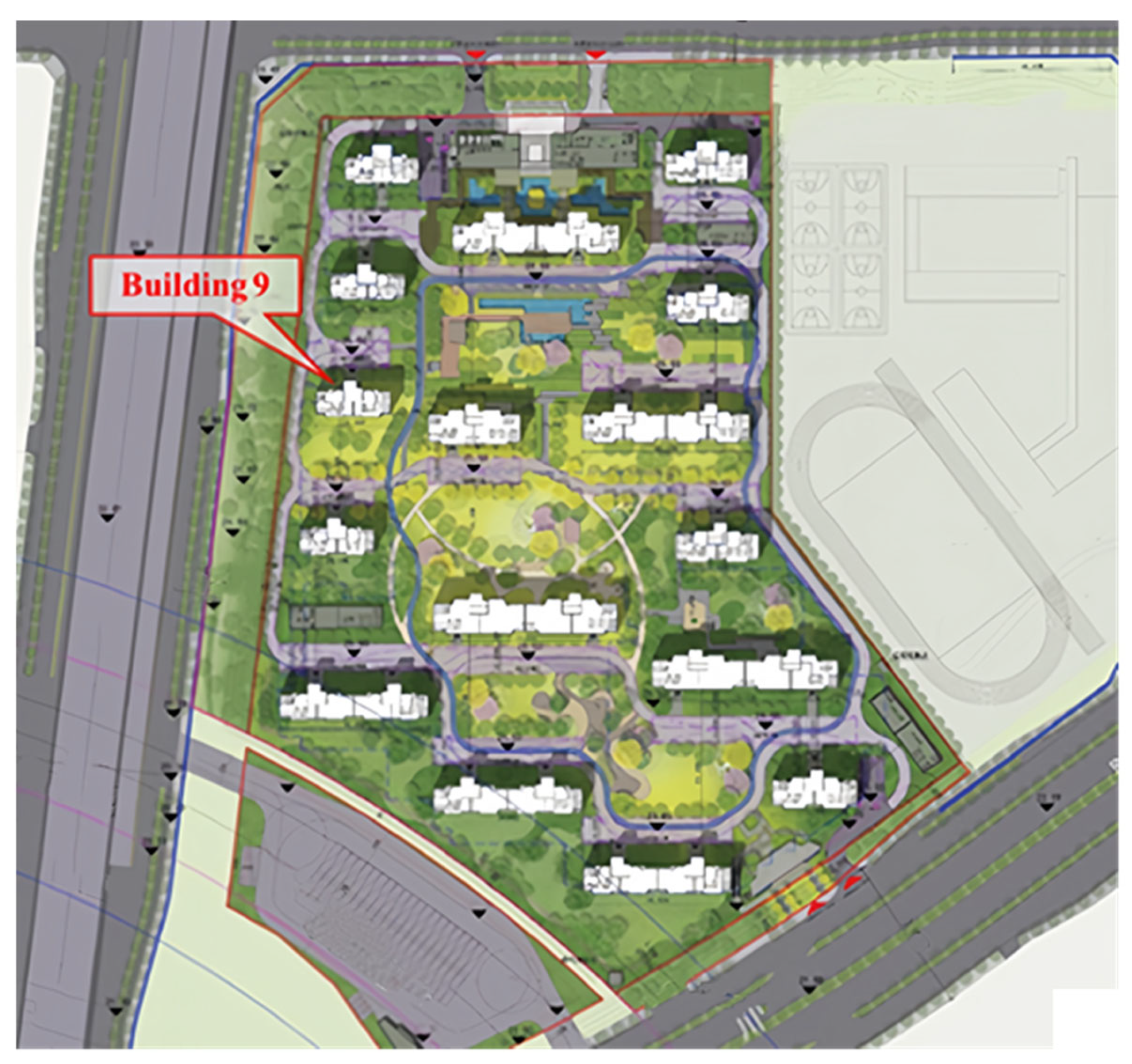
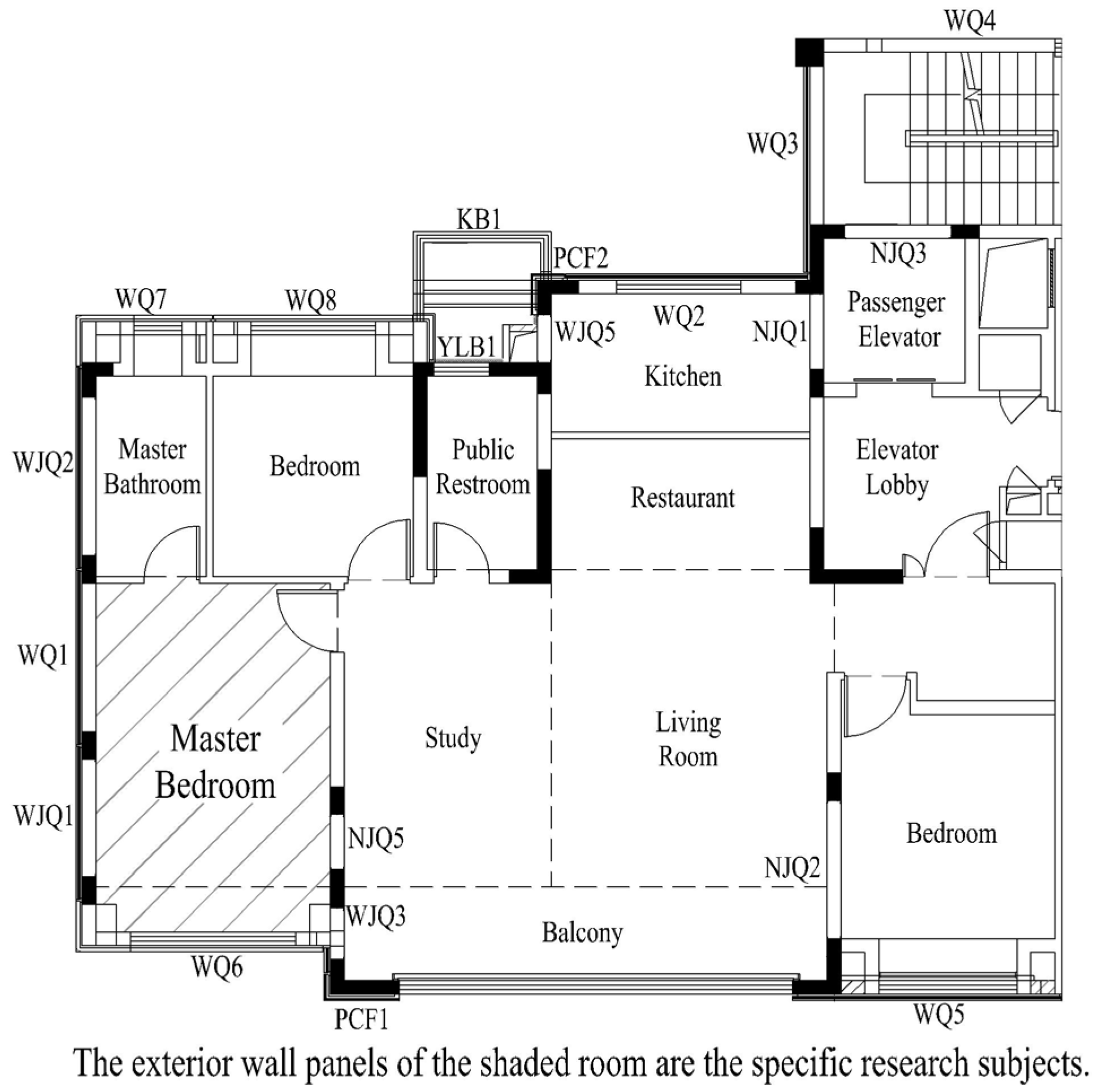
The overall layout of a prefabricated residential community is shown in Figure 2. In terms of plan qualities, the peripheral buildings of the community occur near urban roadways, public spaces, or exterior parcels. Consequently, they encounter an increased risk of impact from potential objects, including uncontrolled vehicles with complicated, high-intensity loads. In this study, building 9 is designated the research subject because of its western location near the complex boundary adjacent to a highway. The floor plan is shown in Figure 3. The master bedroom in the diagram represents a diverse array of PCSP types, encompassing external walls (EW1), external shear walls (ESW1), and L-shaped exterior walls with windows (EW2). The use of external wall panels in the master bedroom as the specific research subjects effectively illustrates the impact resistance of various types of wall panels.

2.2. External Walls

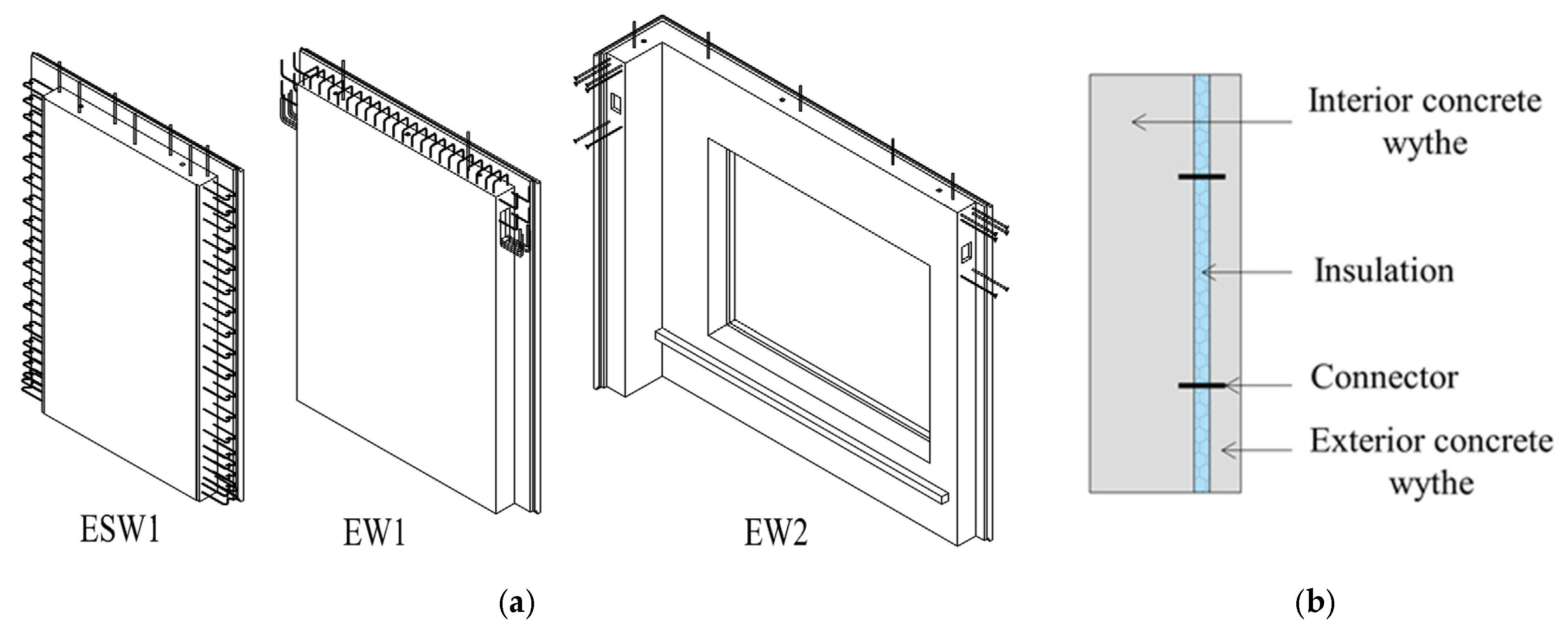
The core subject of this study is the use of PCSPs as external wall panels for prefabricated buildings, as shown in Figure 4. As shown in Figure 4a, the three types of PCSPs greatly differ in size and configuration. The vertical and horizontal reinforcing bars in the shear wall extend from the edges to interconnect with adjacent beams, slabs, or columns. The structural details of the PCSP are shown in Figure 4b. The insulation layer comprises a 30 mm thick XPS board; the exterior wythe is 60 mm thick, and the interior wythe is 200 mm thick. Both wythes are fortified with steel reinforcement bars. Nevertheless, the rebar configuration is excluded from the figure for clarity because of its intricacy. The interior and exterior wythes are interconnected and secured with FRP connectors.

3. Experimental Simulation Verification

3.1. Experimental Overview

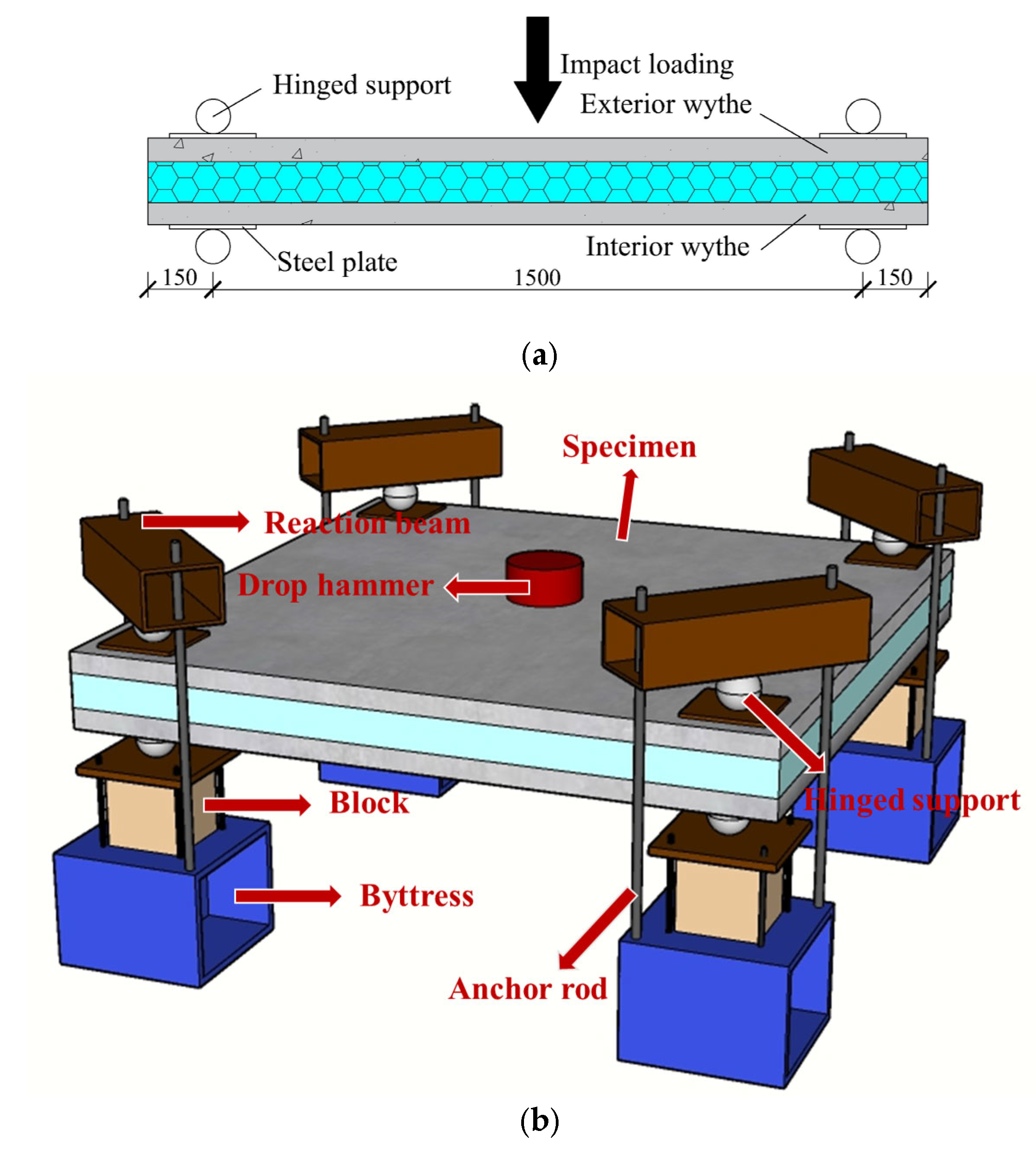
In this section, a reliable finite element model is established by simulating the experimental content from [23]. In the experimental study, a high-performance drop hammer test system was used to conduct single-impact tests on precast lightweight concrete sandwich panels. The geometric dimensions and material properties of the test samples are summarized in Table 1. Each PCSP was secured within the testing apparatus, with the loading and support configuration illustrated in Figure 5. The panels were simply supported at four points on both the top and bottom surfaces, 150 mm from the panel edges, with steel plates positioned between the supports and the panel to mitigate local stress concentration. A 125 kg drop hammer was employed, and the impact energy was varied by adjusting the release height.

3.2. Validation Model Parameter Settings

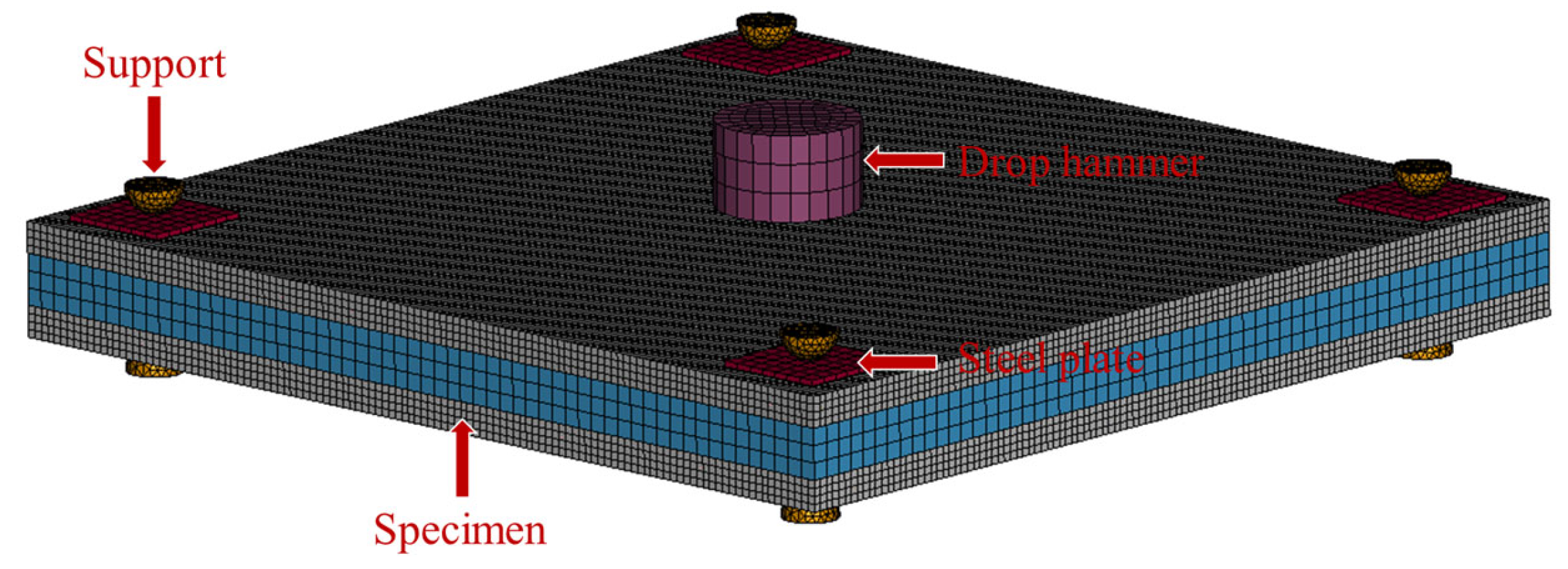
In this study, explicit simulations were conducted in nonlinear finite element program LS-DYNA R11. The developed finite element model is shown in Figure 6. The model mainly comprises concrete wythes, an insulation layer, steel reinforcement, connectors, steel plates, supports, and a drop hammer. Spherical hinge supports were engineered at the edges of the panel, and steel plates were positioned between the supports and the panel. The model comprised eight-node hexahedral solid elements (SOLID164) with single-point integration to represent the concrete, core insulation, drop hammer, steel plates, and supports, whereas three-node beam elements (BEAM161) were used to describe the steel reinforcement and connectors.
The keyword *MAT_PLASTIC_KINEMATIC in LS-DYNA R11 was used to designate the material properties for the reinforcing steel and connectors in the panel, including a density of 7800 kg/m3 and an elastic modulus of 210 GPa. This model demonstrates significant cost-effectiveness and is applicable to various element types, including beam (Hughes-Liu and Truss), shell, and solid elements. The continuous surface cap model (*MAT_159, CSCM) was employed to simulate the behavior of the concrete. This model is user-friendly, as it generates default parameters for concrete via the input of the following three fundamental factors: compressive strength, maximum aggregate size, and units. The specifications were defined as follows: a compressive strength of 37.76 MPa; a uniaxial compressive strength of 33.23 MPa; a density of 1674 kg/m3; and a maximum aggregate size of 20 mm. The insulating material for the sandwich was XPS. The XPS insulation was characterized as an elastic isotropic material with a density of 31.5 kg/m3, a Poisson’s ratio of 0.28, and an elastic modulus of 13.7 MPa. The supports, steel plates, and drop hammer exhibited minimal deformation upon impact. Hence, they were represented using a stiff material model (*MAT_020), with the weight of the drop hammer regulated at 125 kg by adjusting the material density.
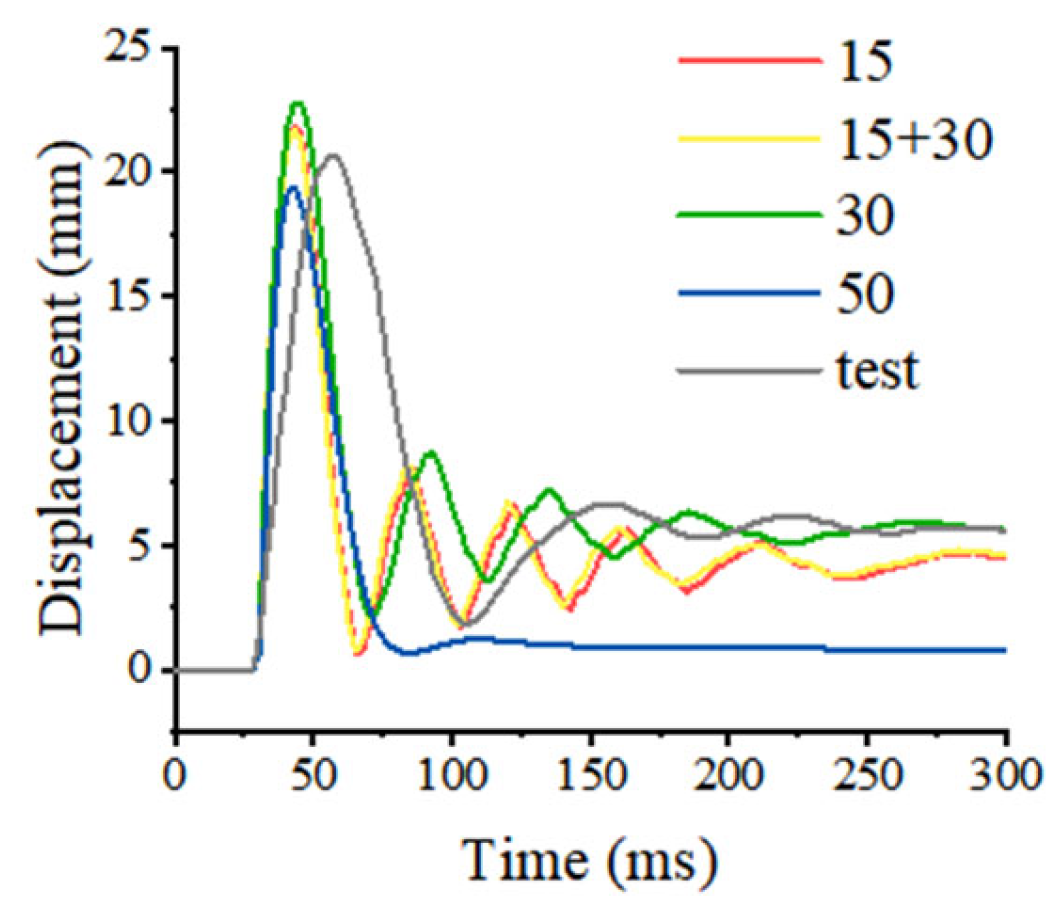
The findings of comparative analysis following several mesh refinement calculations on the concrete wythe and the insulation layer of the PCSP are shown in Figure 7. The simulation findings demonstrate that employing a 50 mm element size for the full wall panel produces considerable discrepancies, whereas 15 mm and 30 mm element sizes offers superior alignment. Among them, the 15 mm element size achieved the best fitting accuracy. To increase the computational efficiency, a model based on a 15 mm element size for the concrete wythe and a 30 mm element size for the insulation layer was developed, which likewise demonstrated great concordance. As a result, the size of the steel reinforcement and concrete element is set to 15 mm, the size of the insulation layer is 30 mm, and the size of the drop hammer is 50 mm. This design attained a significant level of precision in reproducing the experimental outcomes while preserving computational efficiency. All remaining solid components were discretized using a 30 mm element size.
The contact between the distributed reinforcement and concrete, as well as between the connectors and concrete, was defined using the keyword *CONSTRAINED_LAGRANGE_IN_SOLID to achieve perfect bonding, and the bond-slip effect between steel and concrete was neglected [14]. The keyword *CONTACT_ERODING_SINGLE_SURFACE was employed to define the contact between the PCSP and the drop hammer, as well as between the supports and steel plates, with a dynamic friction coefficient set to 0.3. The keyword *CONTACT_AUTOMATIC_SURFACE_TO_SURFACE_TIED was applied to define the tied contact between the panel and the steel plates. Additionally, an automatic single-surface contact was applied globally to all the other interactions. The boundary conditions were simulated by constraining degrees of freedom at the eight supports (hemispherical hinges). The keyword *INITIAL_VELOCITY_GENERATION was applied to assign the initial velocity to the drop hammer. Hourglass control was implemented to mitigate deviations in the results caused by hourglass energy effects due to irregular mesh distortions during finite element calculations.

3.3. Model Validation

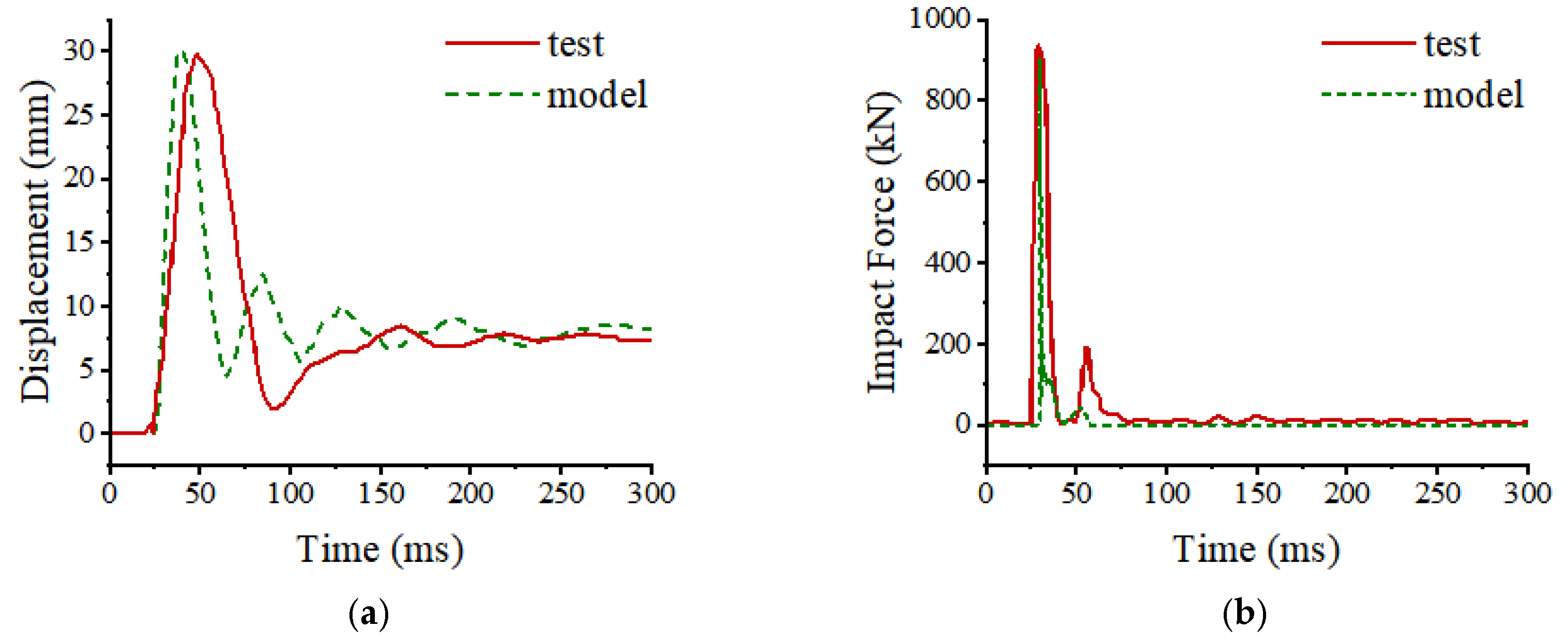
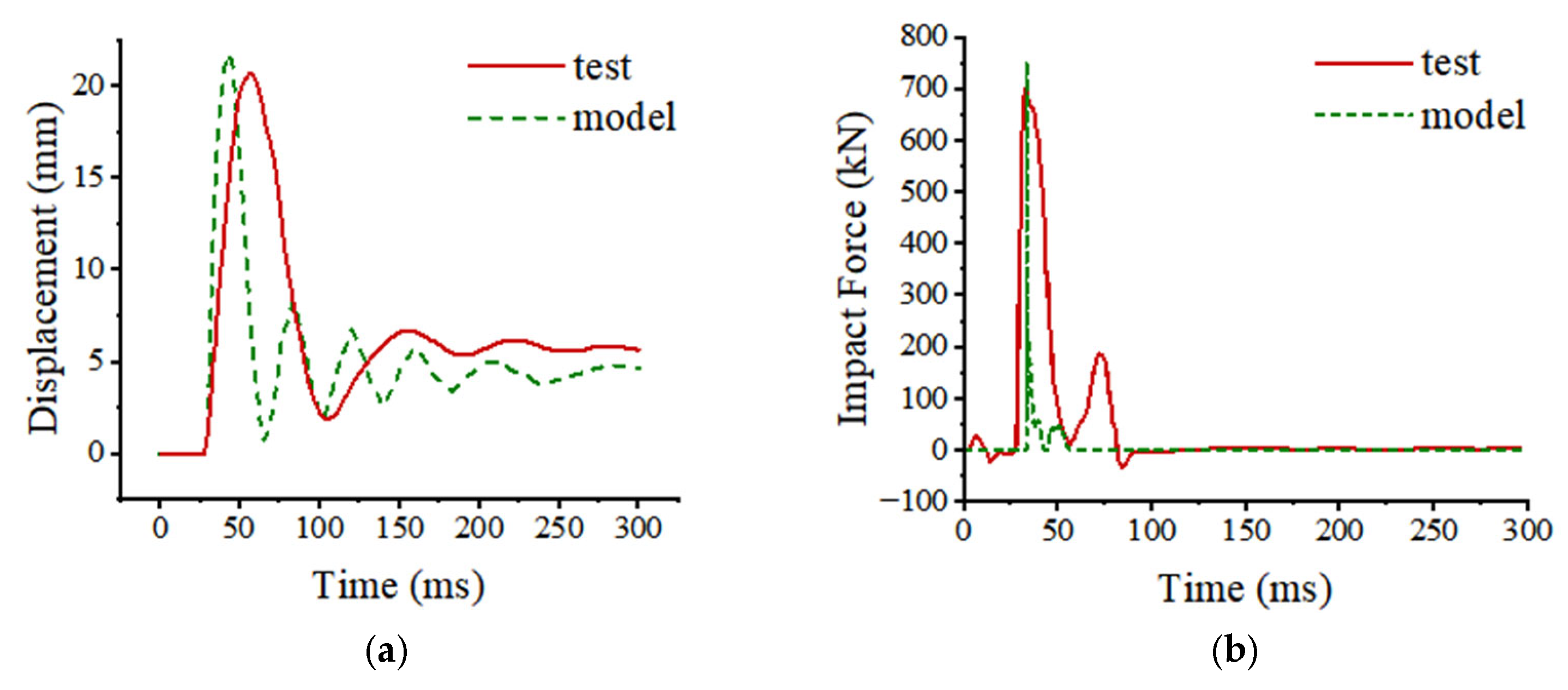
Choosing ISW1 and ISW3 as examples, the finite element calculation results were compared with the experimental results. The impact force–time history curves and displacement–time history curves are shown in Figure 8 and Figure 9, respectively. The characteristic values of the experimental and simulated curves are listed in Table 2.
The numerical calculation findings, as shown in Figure 8 and Figure 9, notably agree with the experimentally obtained values. As shown in Figure 8a and Figure 9a, the mid-span displacements in both the simulation and experiment swiftly increase to a peak value, then decrease to a trough, and ultimately stabilize with periodic oscillations, with a slightly shorter oscillation period observed in the numerical simulations. For specimen ISW1, the maximum displacements recorded in the experiment and numerical simulation were 20.73 mm and 20.62 mm, respectively, resulting in a minor discrepancy of just 0.53%. The residual displacements for ISW1 were 5.65 mm in the experimental data and 5.61 mm in the simulation, differing by only 0.71%. In the case of specimen ISW3, the maximum displacements were 29.69 mm (experimental) and 30.19 mm (simulated), which corresponds to a difference of 1.68%. The residual displacements for ISW3 were 7.53 mm (experimental) and 7.94 mm (simulated), revealing a discrepancy of 5.44%. Overall, the time–history curves of the mid-span deflection obtained from the numerical simulations align closely with the experimental measurements. The impact force–time histories of the numerical simulations and the experimental measurements for ISW1 and ISW3 are compared in Figure 8b and Figure 9b, respectively. For ISW1, the experimental impact force measured was 733.17 kN, whereas the simulated value was 751.88 kN, resulting in an error of 2.55%. For ISW3, the experimental value was 967.03 kN, and the simulated value was 936.98 kN, leading to an error of 3.10%. The minimal error values demonstrate the model’s high predictive accuracy for impact response. While discrepancies persist in vibration response recorded after the impact peak between experimental and simulation data, the numerical model successfully captures both the magnitude of impact force peaks and the overall behavioral trends of the curves. In conclusion, the error margin derived from the preceding study is minimal, and the numerical simulation precisely forecasts the experimental outcomes, affirming the dependability of this numerical model.

4. Numerical Model of PCSPs

4.1. Research Subjects and Parameters

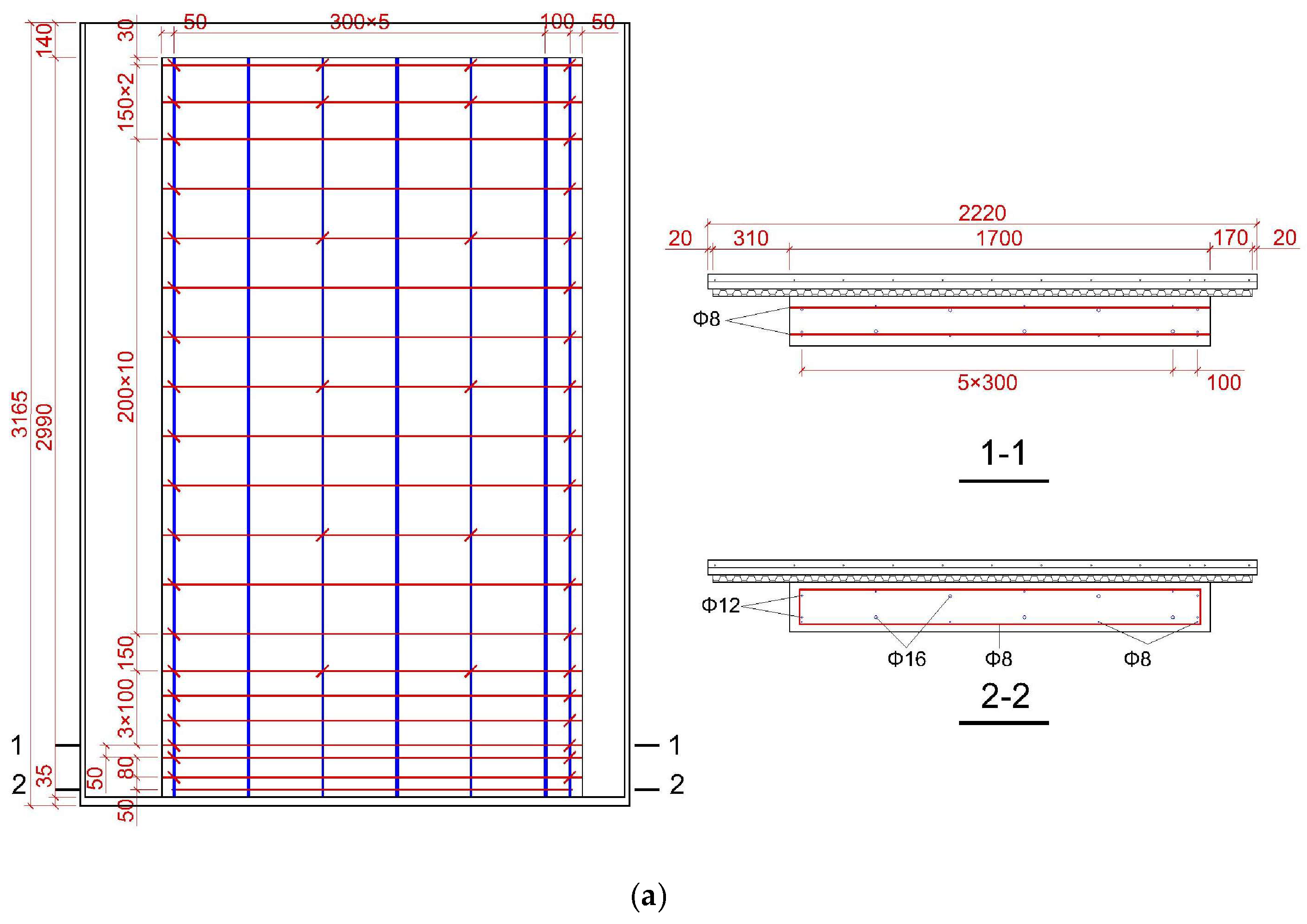
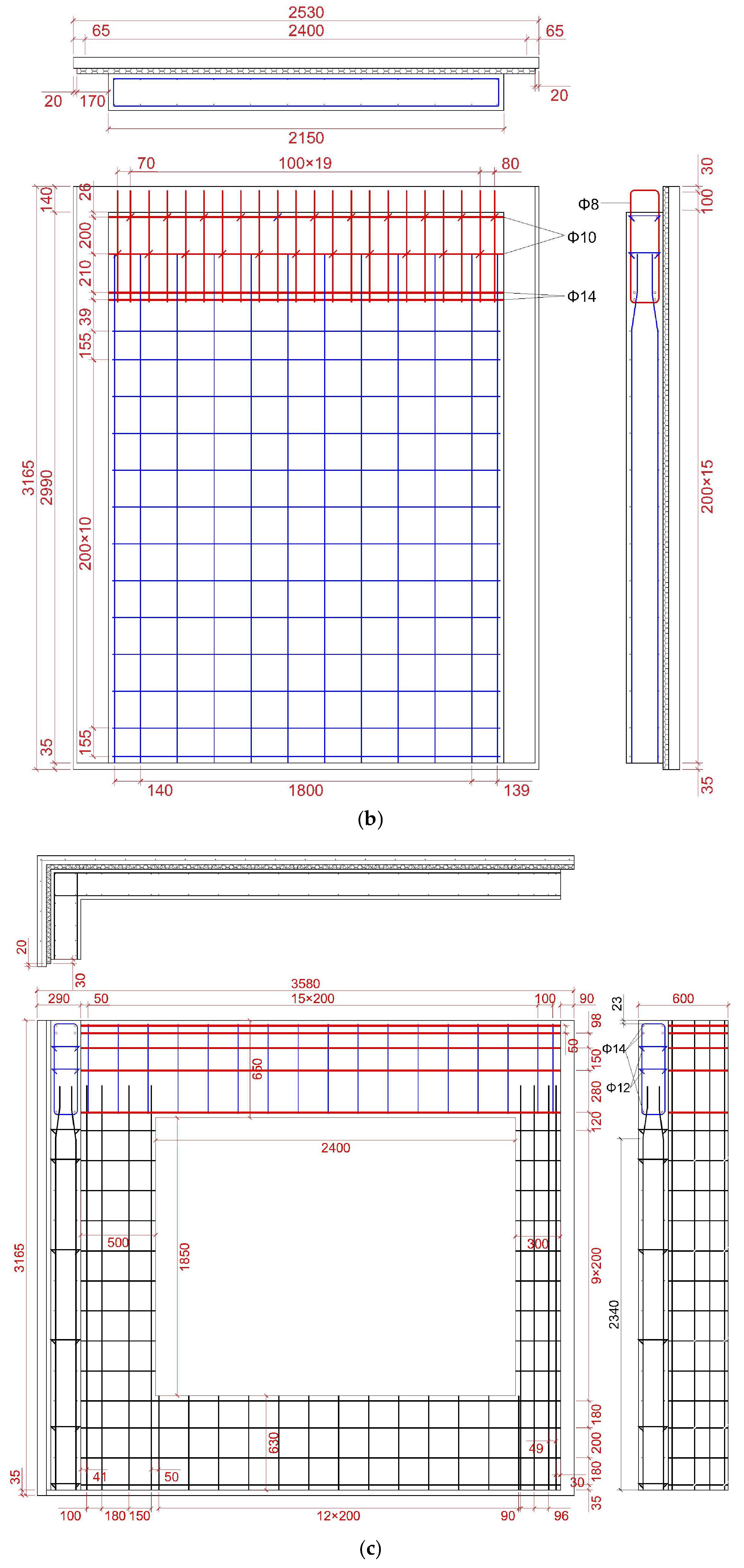
This research focuses on the three PCSPs outlined in Section 2.2. Their reinforcement adheres to the reinforcement pattern described in [27] with suitable simplifications. All exterior wythes utilize a single-layer, two-way reinforcing configuration with a spacing of 200 mm. The thickness of the concrete cover is always 20 mm. The interior and exterior wythes are interconnected by standard FRP connectors, with a specified gap of 500 mm between the tie bars. The dimensions and configurations of the three PCSPs along with precise reinforcement specifications for the interior wythe are shown in Figure 10.
ESW1 is an external shear external wall panel that demonstrates substantial changes in reinforcement relative to other exterior wall panels, such as EW1. It utilizes a greater number of large-diameter steel bars, as shown in Figure 10a. The panel is reinforced with seven longitudinal bars with a diameter of 8 mm, four bars with a diameter of 12 mm, and five bars with a diameter of 16 mm. All the transversely distributed reinforcements consist of 8 mm-diameter bars. The reinforcement configuration of EW1 is notably different from that of ESW1, as shown in Figure 10b. Except where specified in the diagram, all the other steel bars have a diameter of 6 mm. As shown in Figure 10c, EW2 is an L-shaped exterior wall panel that features window openings. Unless otherwise noted, the reinforcement represented by blue lines has a diameter of 6 mm, whereas the reinforcement indicated by black lines has a diameter of 8 mm.
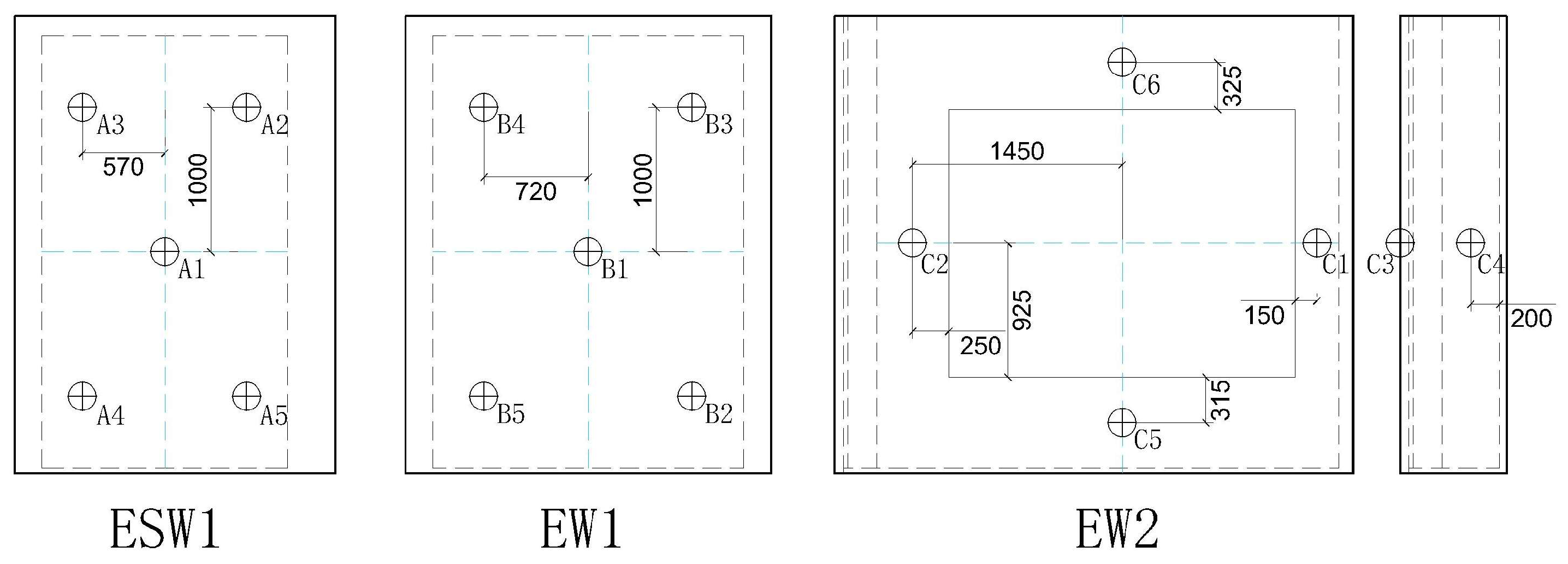
To investigate the differences in the impact resistance of wall panels under various conditions, multiple finite element models were developed in this study by varying the following three parameters: the type of wall panel, impact velocity, and impact location. The main objective was to analyze how modifications in these parameters influence the impact force, displacement, and overall behavior of the wall panels under impact loading. The wall panel types included three distinct categories, and impact velocities of 6 m/s, 8 m/s, and 10 m/s were selected. These velocities corresponded to impact energies of 3600 J, 6400 J, and 10,000 J (which are E = 0.5mv2, where E (J) is the impact energy, m (kg) is the mass of the drop hammer, and v is the impact velocity (m/s)). The impact is simulated using a flat impactor with a diameter of 300 mm to represent blunt impact, focusing on the panel’s response under non-penetrating impacts. The distribution of impact loading locations is shown in Figure 11. The impact load was applied to the exterior wythe of the structure. In particular, points A1 and B1 are perpendicular to the centerline of the interior wythe. In the EW2 wall panel, points C5 and C6 are located on the centerline of the window opening. The impact load is perpendicular to the wall corner at point C3. Additional impact locations are described in detail in the figure. The models used for this study were categorized and summarized on the basis of the variations in parameters, as detailed in Table 3. In the table, panel types ESW1, EW1, and EW2 are labeled P1, P2, and P3, respectively.

4.2. Numerical Model

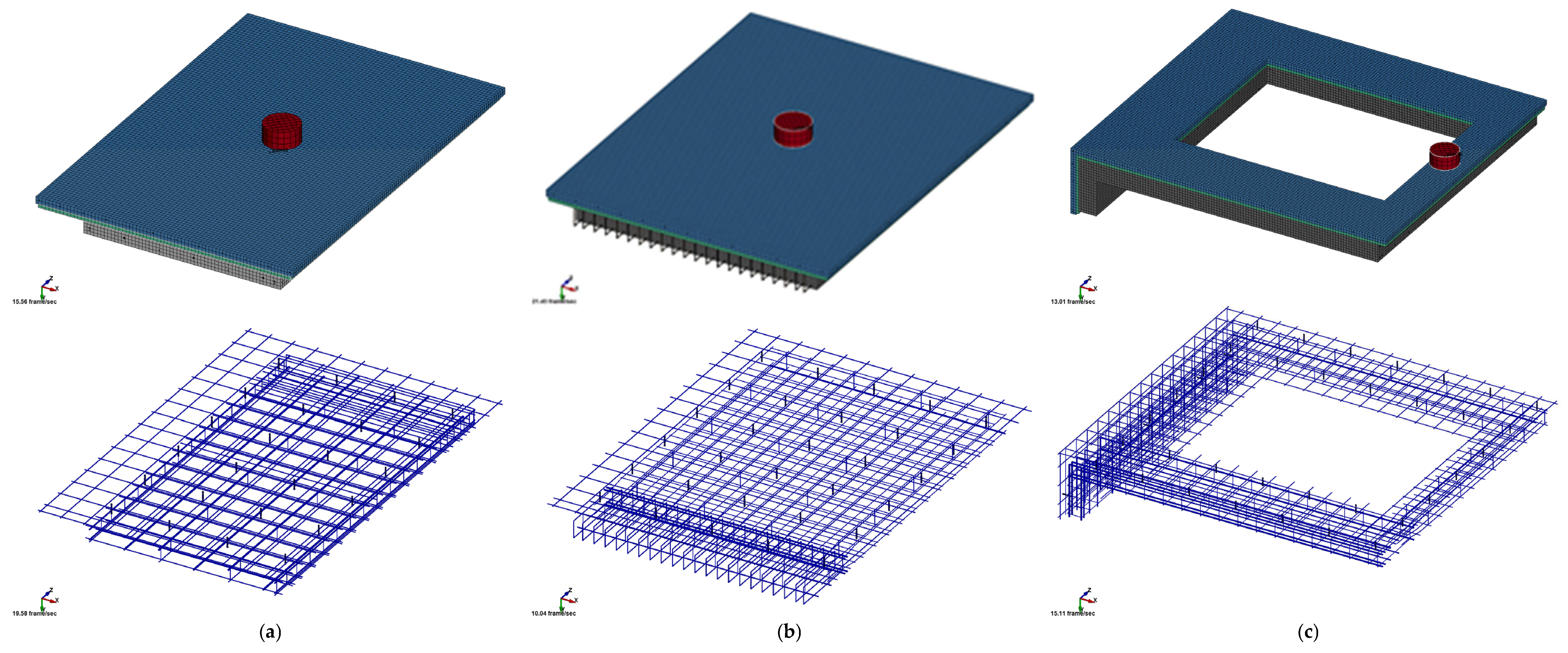
The modeling was conducted on the basis of the material models and corresponding contact settings introduced in Section 3.2. The same material keywords were employed, with only the concrete material parameters and boundary conditions varied for the simulations. Concrete grade C30 was used, with a uniaxial compressive strength of 20.1 MPa and a density of 2400 kg/m3. For the CSCM concrete model, its incorporated erosion capability was used, with an input erosion parameter value for erosion = 1.1. The steel reinforcement employed HRB400 (hot-rolled ribbed steel bar with a yield strength of 400 MPa), possessing a density of 7800 kg/m3 and an elastic modulus of 210 GPa. The XPS material had a density of 31.5 kg/m3, a Poisson’s ratio of 0.28, and an elastic modulus of 13.7 MPa. Furthermore, the simulated boundary conditions were simplified as fixed constraints applied around the perimeter of the interior wythe to better represent the realistic embedded condition of precast panels in actual structures. The three wall panels were modeled on the basis of the detailed information provided in Figure 11, with specific modeling schematics shown in Figure 12.
Similarly, the impact force was controlled by keeping the impact mass constant and varying the initial impact velocity. The impact mass for the parametric analysis was set to 200 kg [28]. Furthermore, as revealed by the mesh analysis in Section 3.2, a 30 mm mesh size also provides excellent fitting results. Therefore, a mesh size of 30 mm was adopted for the concrete wythe to appropriately increase the computational efficiency of the finite element model.

5. Finite Element Analysis

5.1. Effect of the Impact Velocity

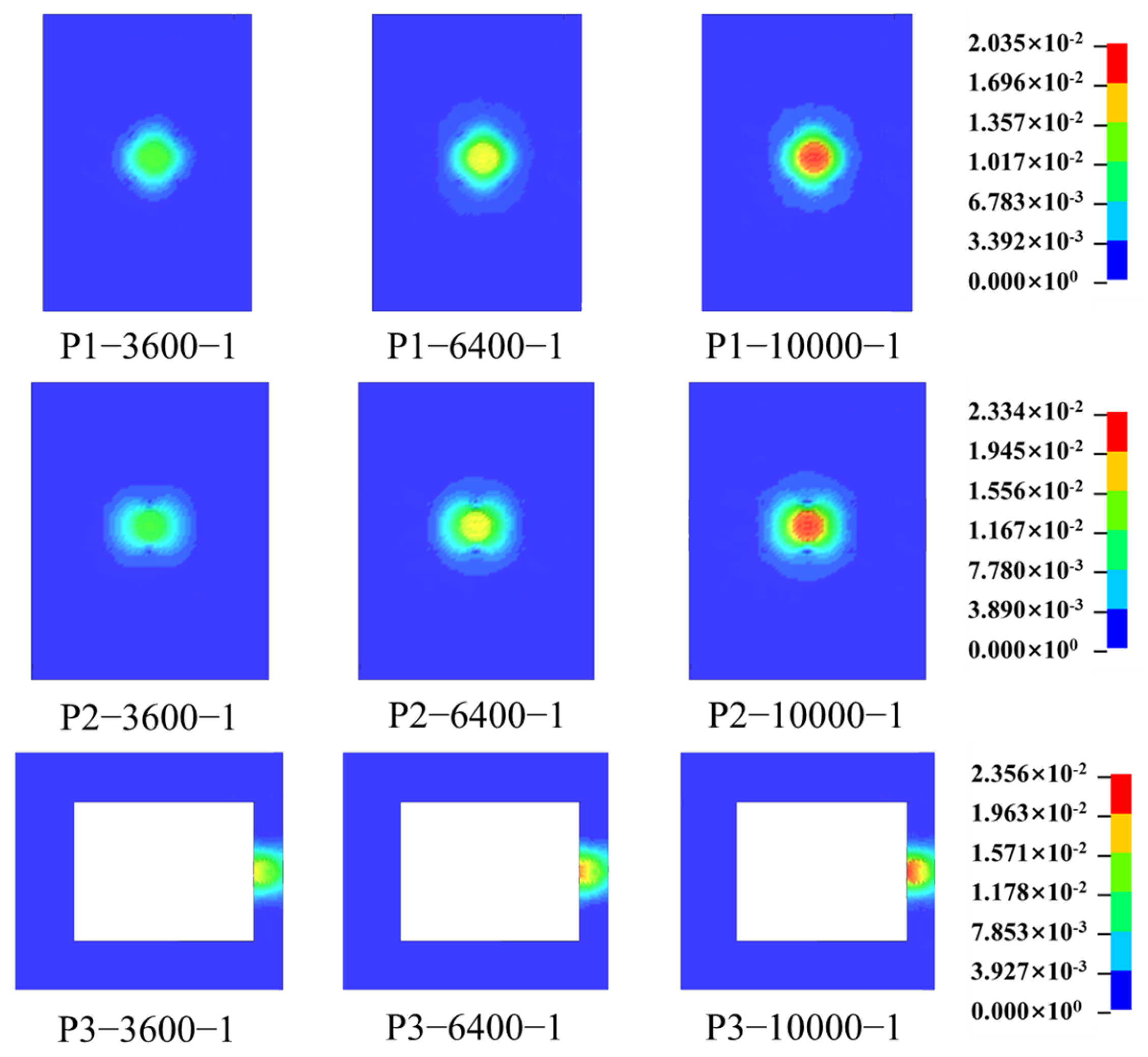
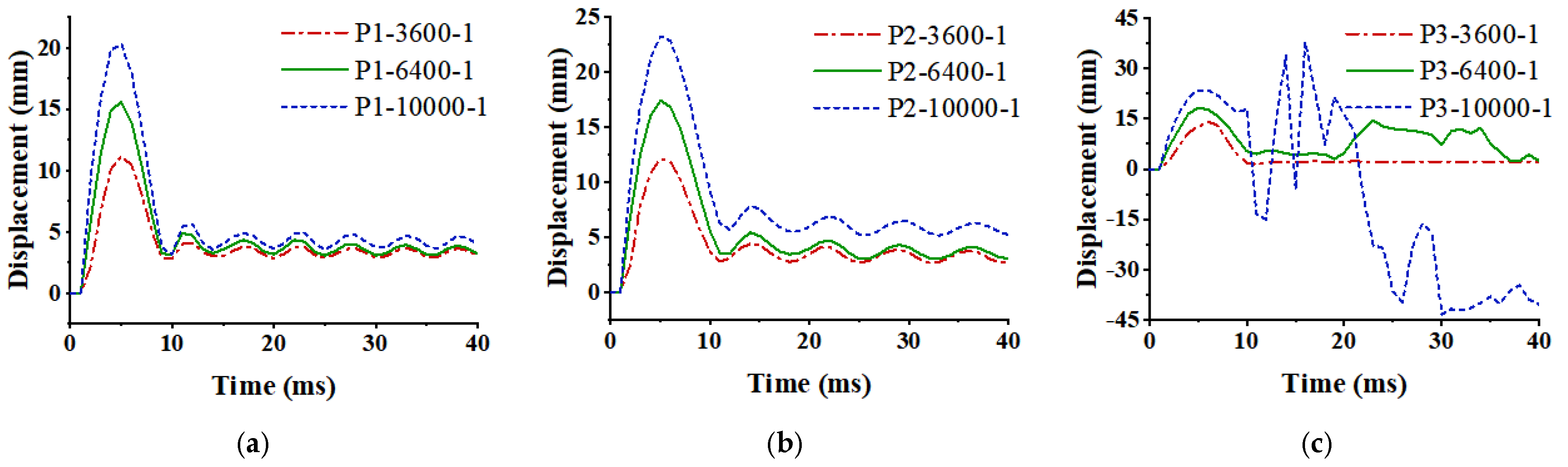
The finite element analysis results revealed the maximum displacement, peak impact force, steel reinforcing strain, and damage distributions of the PCSP. The displacement distribution diagrams and displacement–time history curves of the three types of PCSPs subjected to varying impact velocities are shown in Figure 13 and Figure 14, respectively. The characteristic values derived from the numerical simulation results are summarized in Table 4. The displacement distribution of the PCSP under impact loading demonstrates a pattern radiating from the point of impact toward the periphery (Figure 13). The maximum displacements for P1 and P2 are observed near the center of the load application area, but P3 exhibits considerable displacement in the region adjacent to the window. For P1, at impact velocities of 6 m/s, 8 m/s, and 10 m/s, the maximum displacements are 11.22 mm, 15.64 mm, and 20.35 mm, respectively (Figure 14). As the impact velocity increases from 6 m/s to 8 m/s, the maximum displacement increases by 39.39%; similarly, an increase from 8 m/s to 10 m/s results in a 30.12% increase in maximum displacement. As shown in Figure 14b, P2 exhibits a pattern similar to that of P1. The severe damage to the P3 concrete caused the abnormal fluctuations in the curve depicted in Figure 14c. When PCSPs experience impact loading, an increase in the impact velocity results in increased maximum and residual displacements. The maximum displacement reaches its peak quickly and then exhibits periodic oscillations.
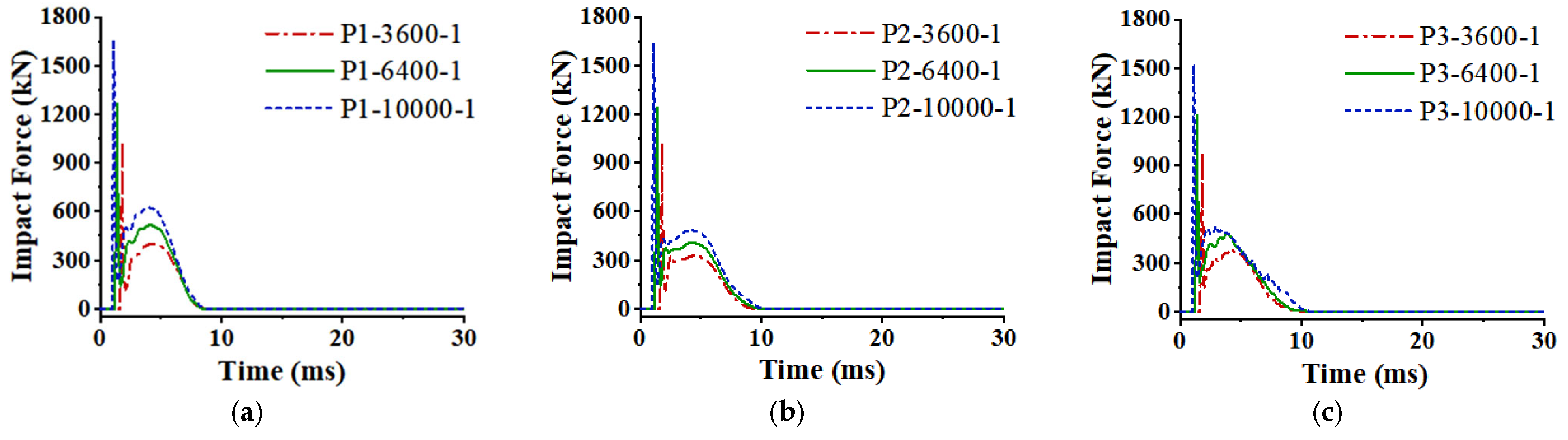
The impact force–time history curves exhibit an initial peak when the drop hammer contacts the wall panel (Figure 15). They subsequently decline sharply, increase to a secondary peak, decrease to zero, and ultimately stabilize. P1 experiences maximum impact forces of 1032 kN, 1263 kN, and 1658 kN when it is subjected to impact loads at velocities of 6 m/s, 8 m/s, and 10 m/s, respectively. As the impact velocity increases from 6 m/s to 8 m/s, the maximum impact force increases by 22.38%. Moreover, as the velocity increases from 8 m/s to 10 m/s, the maximum impact force increases by 31.27%. The summary of the peak impact force data in Table 4 indicates that both P2 and P3 tend to be analogous to P1. The time–history curves of the impact force are significantly affected by the impact velocity. The impact force peaks rapidly, and as the impact velocity increases, the maximum impact force correspondingly increases.
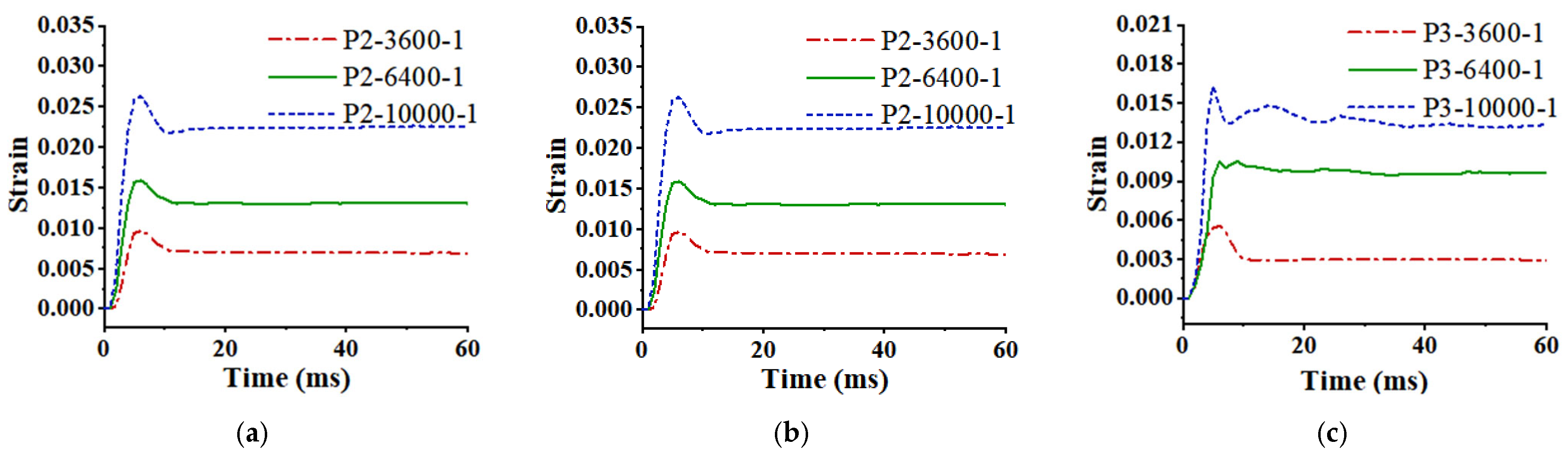
The strain–time history curves of the reinforcing steel, which are markedly affected by the impact velocity, are shown in Figure 16. The reinforcing strain rapidly peaks just before declining to a stable level. Upon application of impact loads at velocities of 6 m/s, 8 m/s, and 10 m/s, the maximum reinforcement strain observed are 0.005565, 0.01014, and 0.01459, respectively. With increasing impact velocity from 6 m/s to 8 m/s, the peak strain increases by 82.21%. Moreover, as the velocity increases from 8 m/s to 10 m/s, the maximum strain increases by 43.89%. This suggests that the maximum reinforcement strain generally increases with increasing impact velocity. Furthermore, the reinforcement yields at impact stresses at velocities surpassing 6 m/s. The maximum reinforcement strain is consistently detected near the periphery of the impact zone, where the drop hammer contact the wall panel.
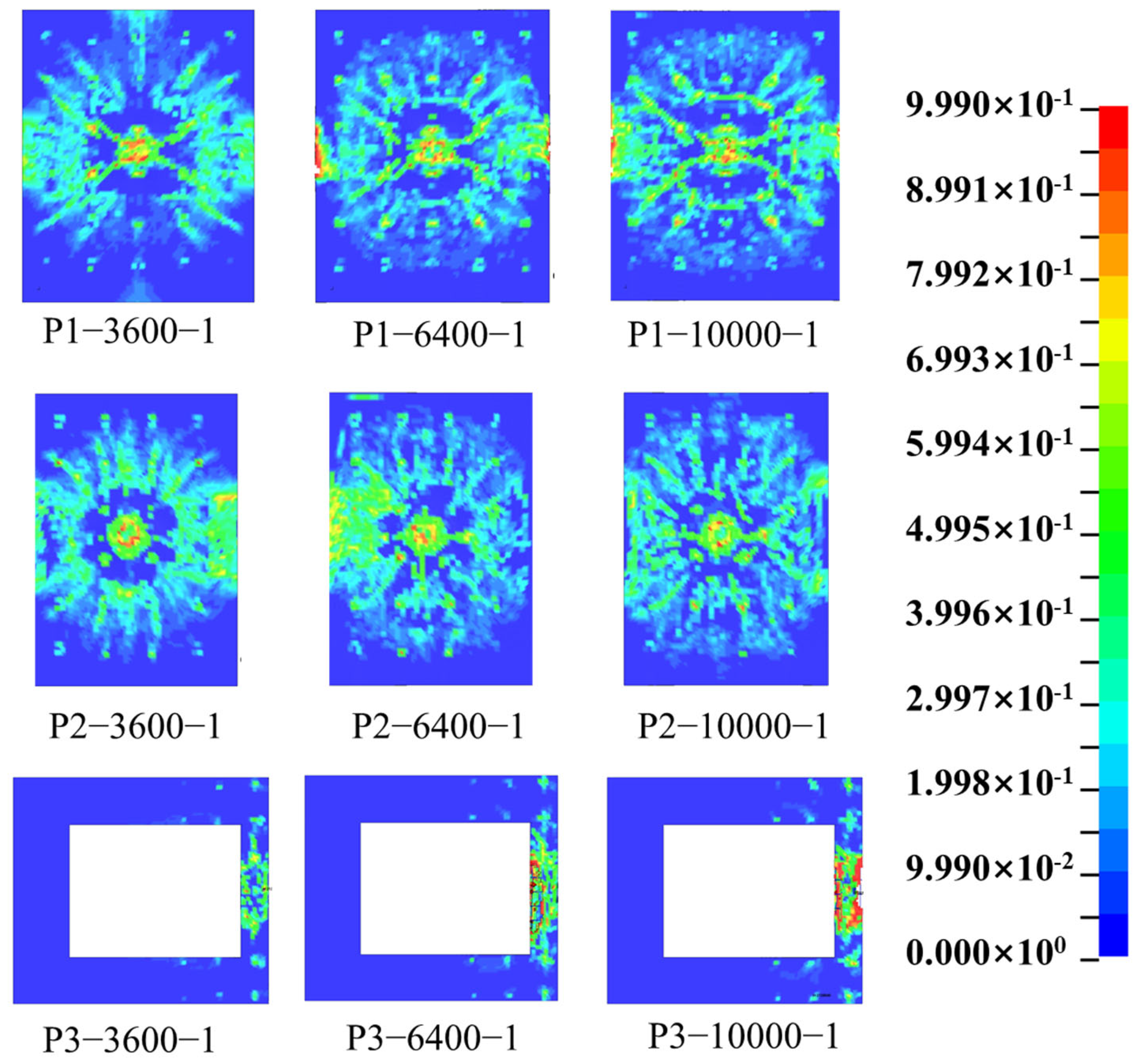
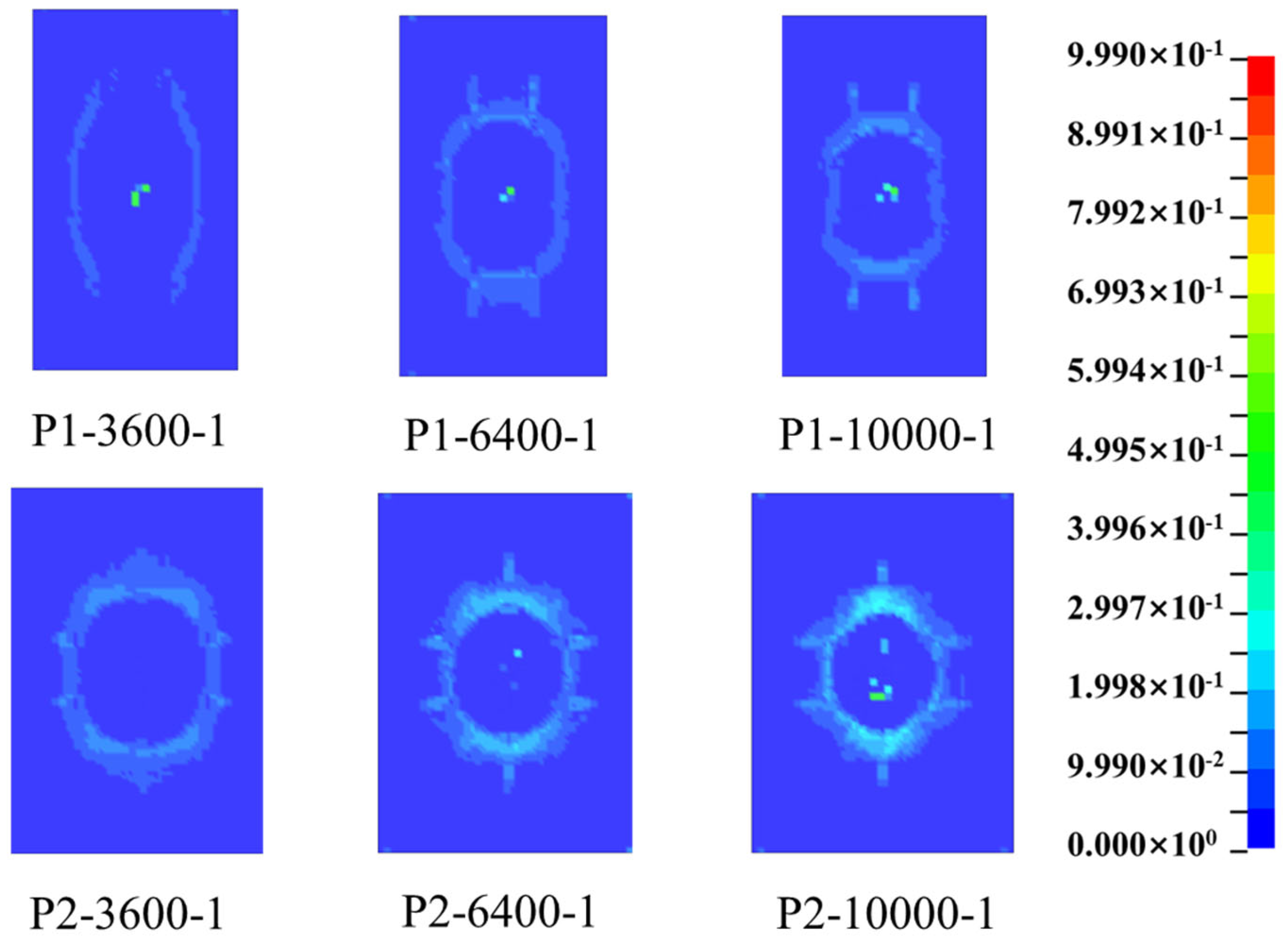
The effective plastic strain nephogram of the exterior wythe is shown in Figure 17. The damage distribution in the PCSP has a pattern that radiates outward from the center. As the impact velocity increases, the damage patterns near the core become more concentrated. The effective plastic strain nephogram and damage distribution for P3 reveal that considerable damage and failure in the concrete transpire at impact energy values of 6400 J and 10,000 J. This finding indicates that, as the impact velocity increases, the damage to the concrete exterior wythe increases, especially adjacent to the windowed side. The effective plastic strain nephogram of the interior wythe is shown in Figure 18, indicating that damage in the interior wythe of P1 and P2 intensifies despite a reduction in the overall damaged area. A greater impact load on the exterior wythe causes a more concentrated load on the interior wythe, yielding a more localized and pronounced response.

5.2. Effect of the Impact Location

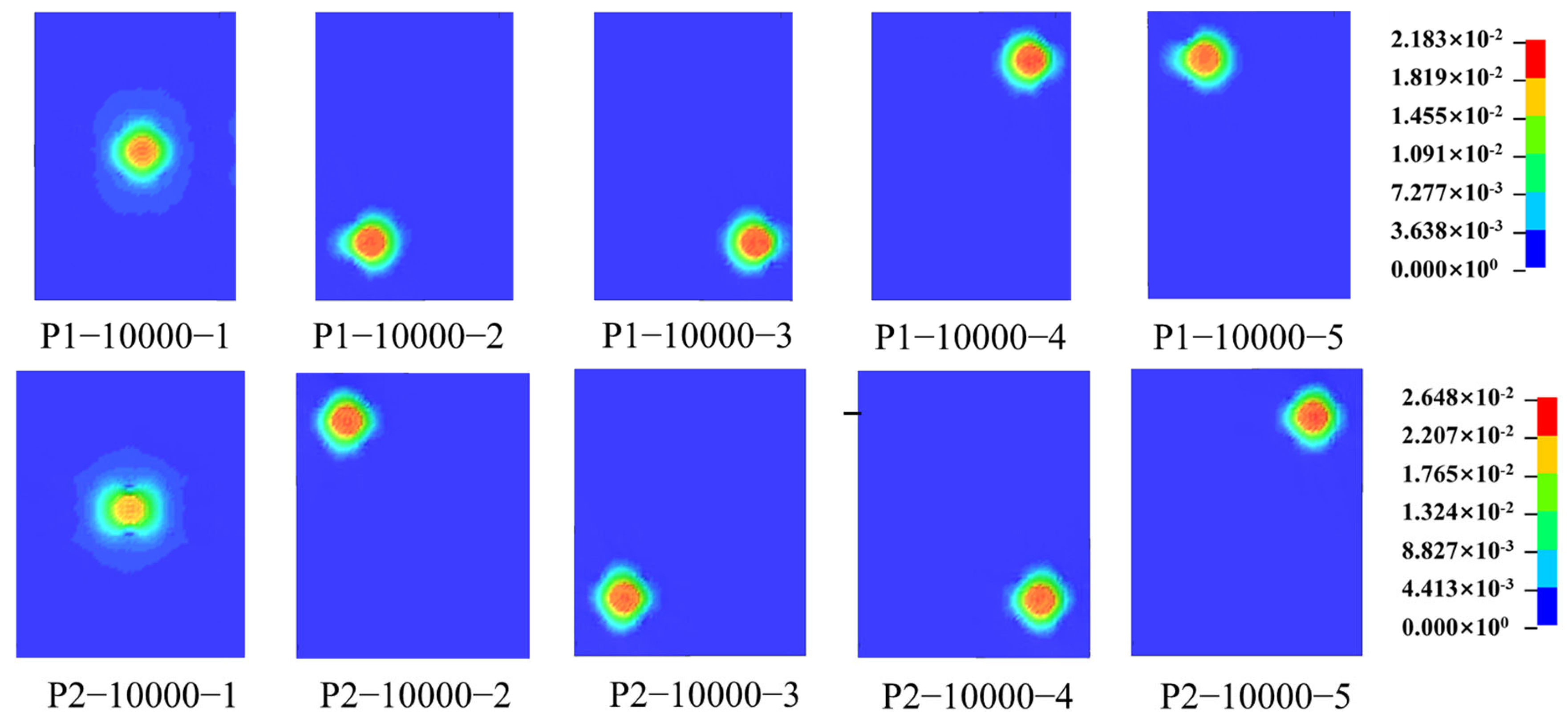
The displacement distribution and effective plastic strain distribution of the three types of PCSPs at different impact locations are shown in Figure 19, Figure 20 and Figure 21. The displacement distributions uniformly demonstrate diffusion from the impact load center to the peripheries, with minor deviations contingent upon the load application position (Figure 19). P1 and P2 exhibit analogous displacement distribution patterns across all load application positions, except the axial impact load position, as shown in Figure 13. The maximum displacements for P1 at points A2, A3, A4, and A5 are 20.9 mm, 21.07 mm, 21.34 mm, and 21.83 mm, respectively. The maximum displacements at impact load points B2, B3, B4, and B5 for P2 are 26.26 mm, 26.25 mm, 26.43 mm, and 26.48 mm, respectively. Consequently, the displacement distributions across different situations exhibit negligible changes. The analysis of the greatest displacements of component P1 at positions A2, A3, A4, and A5 indicates that they all exceed the maximum displacement observed at the central position. A5 has the greatest value, which increases by 7.27% relative to that of A1. Analysis of the largest displacements of P2 at action positions B2, B3, B4, and B5 indicates that each surpasses the maximum displacement observed at the central position. B5 demonstrates the greatest displacement, which increases by 13.45% relative to that of B1. Compared with those applied centrally, impact loads applied eccentrically to windowless PCSPs produce greater displacement responses. This occurs because the warping caused by the eccentric impact of the drop weight generates a combination of bending and torsional moments. Eccentrically positioned PCSPs bear a greater proportion of the impact force, thereby inducing greater displacement responses.
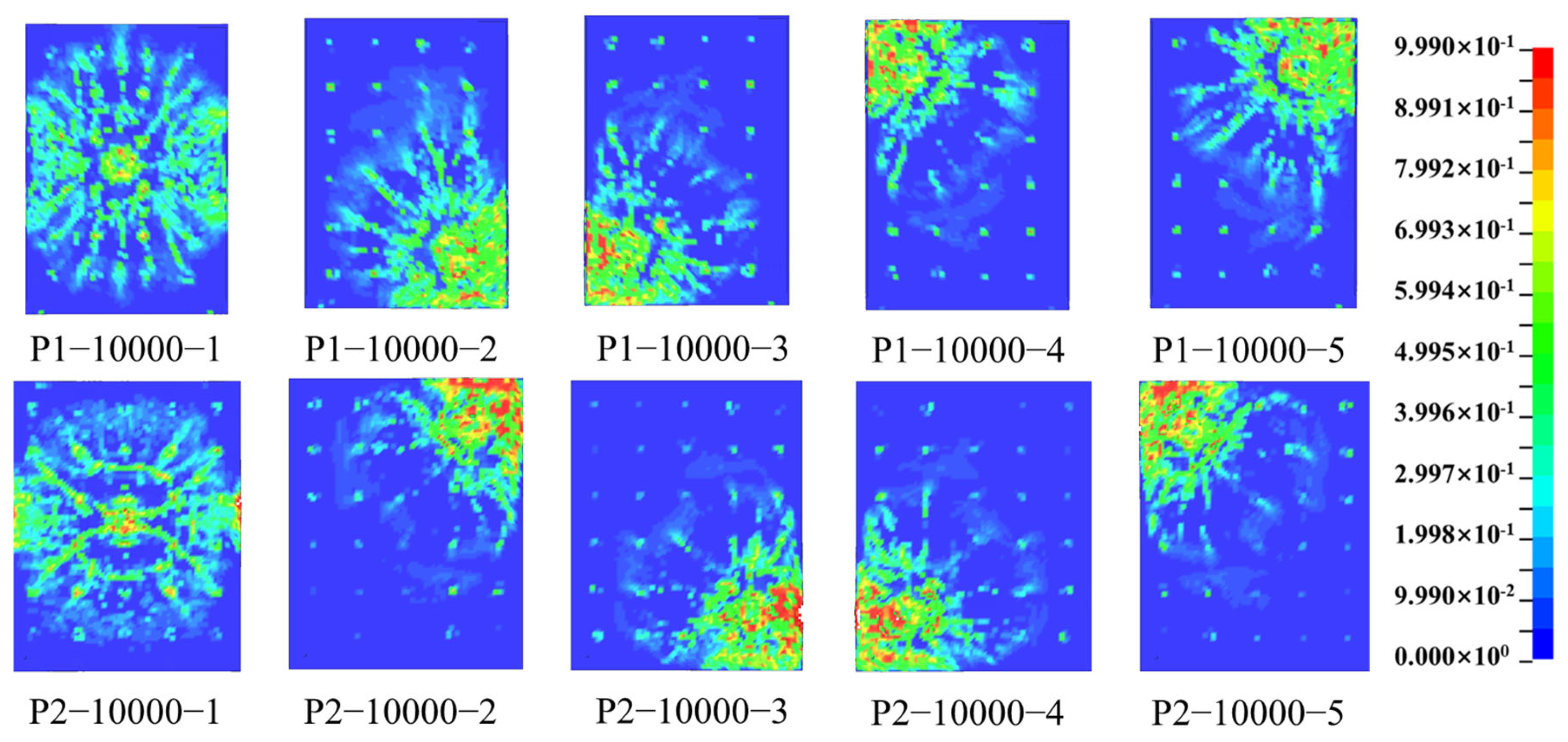
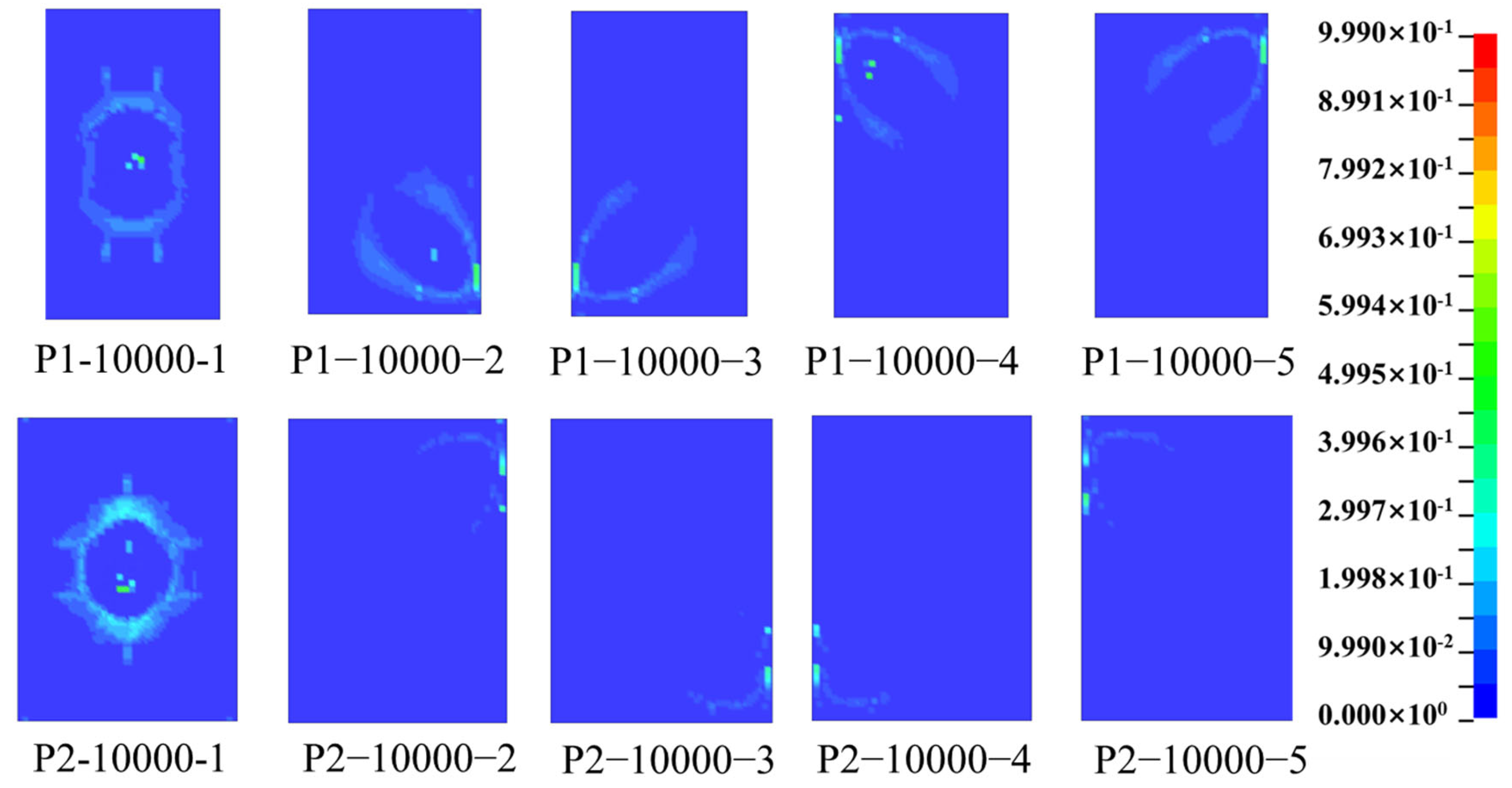
The damage distribution in the exterior wythe consistently propagates from the center of the impact force to the margins, with minor deviations based on the load application position (Figure 20). The damage patterns for P1 and P2 are similar under the four distinct eccentric impact loads. In contrast to the centrally loaded scenario, the affected region is reduced; nonetheless, the failure is more concentrated and severe, suggesting that edge-applied impact loads elicit a more significant localized reaction. The damage to the exterior wythe is greater than that to the interior wythe (Figure 21). The effective plastic strain contour plots of the interior wythe under the four eccentric impact loads at points P1 and P2 are notably similar. The impact positions chosen for analysis at P1 and P2 exhibit a uniform symmetrical distribution. Nonetheless, as illustrated in Figure 10, the reinforcing configuration of the interior wythe is not entirely symmetrical with respect to the left–right and top–bottom orientations. This elucidates the rationale behind the nuanced variations in the disparate impact sites.
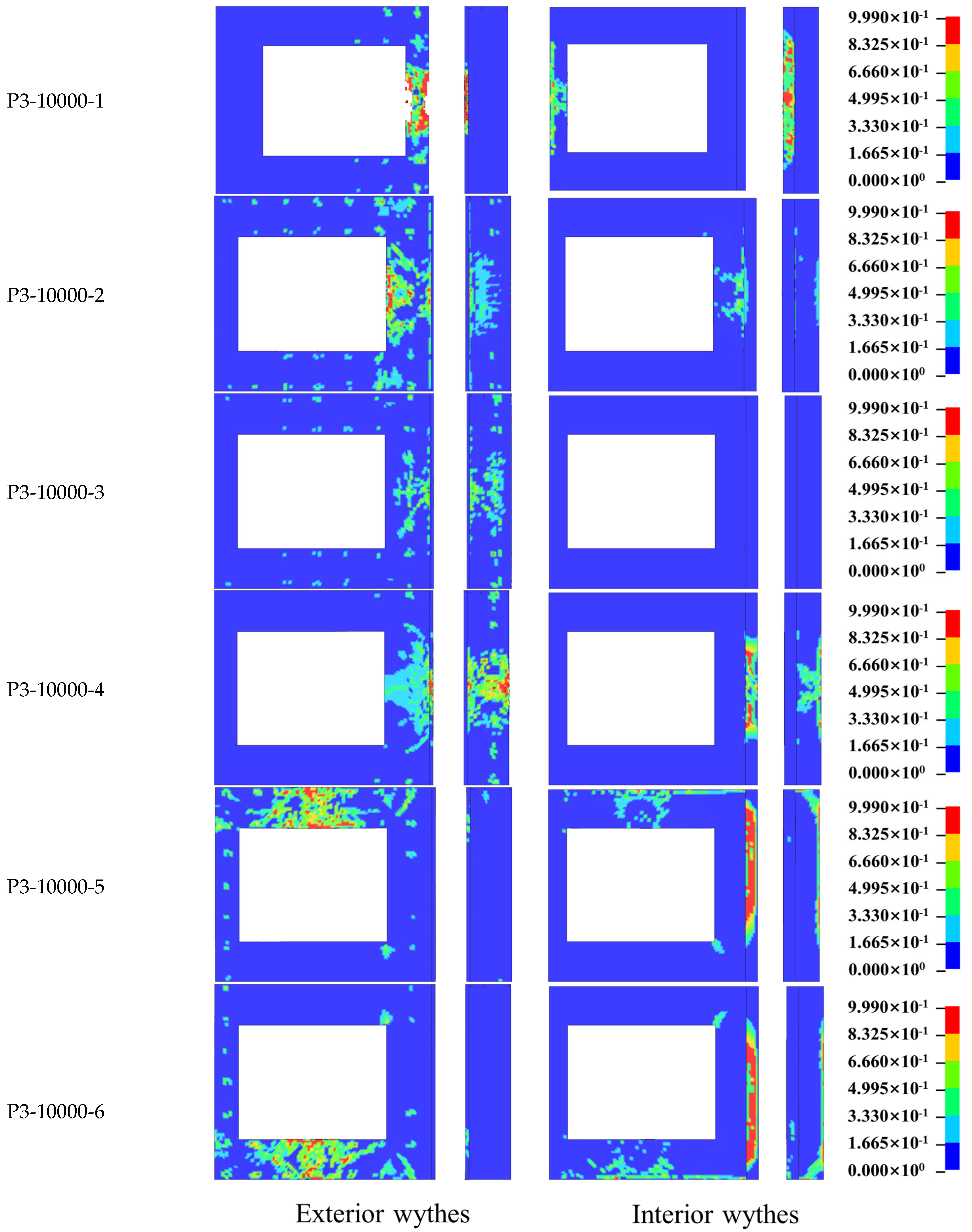
The maximum displacements of P3 under impact loads of equivalent energy, applied at various sites, were examined. Upon applying the impact to the windowed side of the L-shaped panel (locations C1, C2, C5, and C6), the greatest displacements surpassed 22 mm, with the smallest value recorded being 22.28 mm. In contrast, impact on the non-windowed side (location C4) resulted in a maximum displacement of 19.34 mm, representing a reduction of at least 13.2% compared to the windowed side. The minimal displacement of 6.20 mm occurred when the impact was applied at the corner. The effective plastic strain distributions for both the interior and exterior wythes of P3 are shown in Figure 22. Observing the effective plastic strain distribution on the exterior wythe of each model reveals that P3-10000-1 exhibits significant failure and the most pronounced localized damage, where some concrete elements were eliminated. P3-10000-3 reveals the sparsest damage patterns on its exterior wythe, whereas the other models demonstrate normal localized damage, with significant damage occurring at the edges near the window openings. When the effective plastic strain distribution on the interior wythe of each model was observed, the interior wythe of P3-10000-3 remained virtually undamaged. P3-10000-2 exhibited minor damage, characterized by slight localized cracks, without significant damage at the supported boundary. P3-10000-5 and P3-10000-6 experienced substantial damage at the short L-shaped boundary edges. In summary, P3 has the strongest response when the impact load acts on C1 and the weakest response when the load acts on C3. As an integrated L-shaped wall panel, the impact load does not directly act on the wall surface at the corner region. The direct contact area between the impact load and the wall panel is small, and only a portion of the impact energy is transferred to the wall panel, resulting in a smaller dynamic response at this point. When an impact force is applied to a windowed surface, the structural response intensifies with increasing distance between the point of impact of the drop hammer and the corner. This phenomenon arises because wall corners exhibit increased structural stiffness resulting from the combined constraints of two perpendicular panels. Conversely, when the impact load is applied farther from the corner, the impact site must absorb a larger fraction of the impact energy, leading to an increased dynamic response.

5.3. Effect of the Panel Type

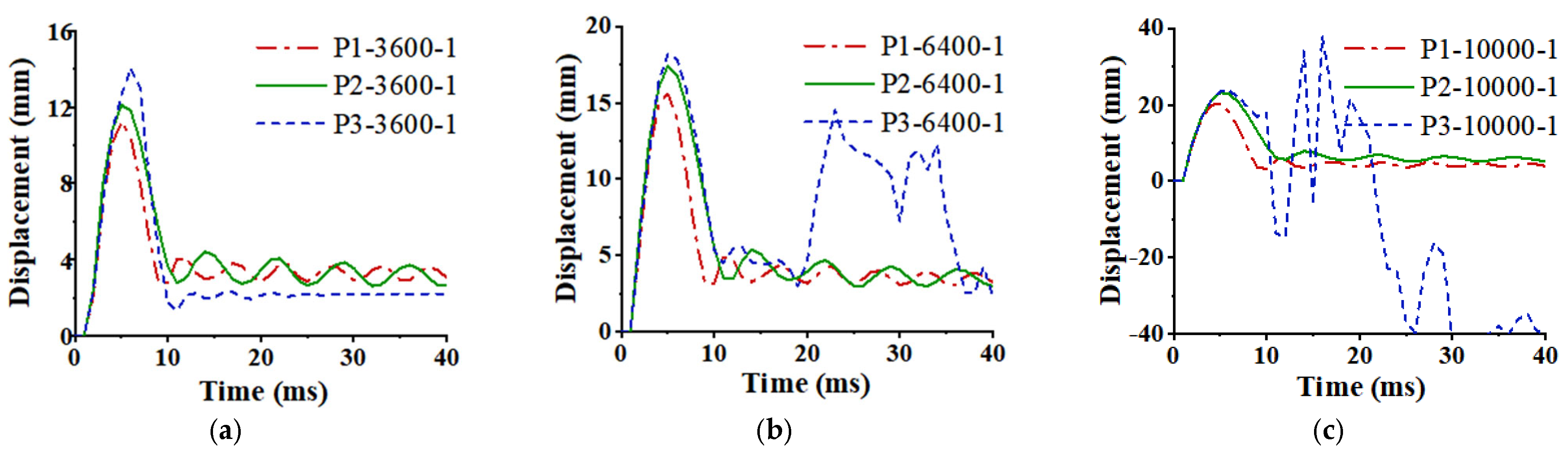
A comparison of the displacement–time history curves for panels P1, P2, and P3 subjected to impact loads applied perpendicularly to the exterior wythe is shown in Figure 23. At three different impact velocities, the maximum displacement of P2 consistently exceeds that of P1. The vibration periods of the time–history curves differ, with P1 displaying a shorter period than P2 does. The larger span of P2 accounts primarily for the reduced overall stiffness observed under identical boundary conditions when the interior wythe is fixed along all four edges. The displacement curve of P3 exhibits distinct characteristics. At an impact energy of 3600 J, the maximum displacement time history exhibits a consistent pattern. Under elevated impact loads, substantial damage and concrete spalling occur, resulting in a notable increase in displacement.
The maximum displacements of specimen P1 under impact at locations A2, A3, A4, and A5 are marginally greater than the displacement observed at the center (A1). A5 has the greatest displacement, which is 7.27% greater than that of A1. Similarly, for specimen P2 subjected to impact at locations B2, B3, B4, and B5, the maximum displacement exceeds that at the center (B1), with B5 exhibiting the greatest value—an increase of 13.45% relative to that of B1. The analysis reveals that the increase in maximum displacement is more significant at P2 than at P1 across various impact locations. The analysis of the effective plastic strain distribution of P1 and P2 indicates that P2 displays a larger extent of high plastic strain (marked in red) and greater damage than P1 does. The results indicate that P2 is more sensitive to variations in impact location than P1 is because of its larger span and the reinforcement configuration of its interior wythe.
Figure 24 and Figure 25 show the effective plastic strain distributions of the exterior and interior wythes for P1, P2, and P3, respectively. When identical impact loads are applied to the windowed side of P3, the damage to the exterior wythe is more concentrated and susceptible to localized failure than the damage to the windowless panels P1 and P2 is. P3 exhibits larger vulnerable areas owing to the existence of the opening. Compared with those in P1 and P2, the damage observed in the interior wythe in P3 is more pronounced. Owing to the window opening, the reduced integrity and overall stiffness of P3 result in a more localized structural response under impact. As a result, an increased amount of energy is conveyed to the interior wythe, leading to a more pronounced response in this component.

5.4. Discussion of the Impact Performance of PCSPs

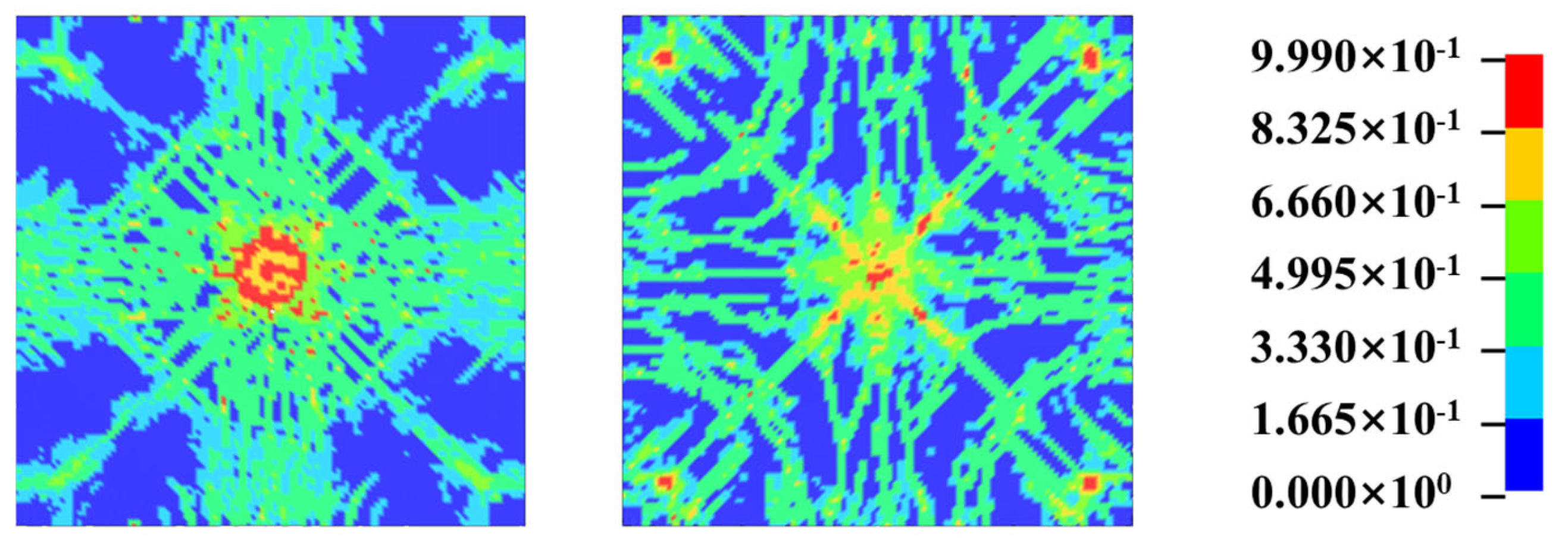
According to the results from the previously indicated numerical models, when subjected to impact energy greater than 3600 J, all the reinforcing bars in the exterior wythe demonstrate yielding behavior. Compared with the interior wythe, the exterior wythe of windowless PCSPs experience considerably greater damage under diverse impact loadings. Concurrent analysis of PCSPs simulated in Section 3 of this paper—featuring uniform reinforcing dimensions and thicknesses in both the exterior and interior wythes, along with a substantial insulation layer—demonstrates significant damage in both wythes, as illustrated in Figure 26. This damage pattern markedly differs from the findings obtained in PCSPs examined in this study. This mismatch occurs because the examined PCSPs encompass a smaller insulation layer and exhibit significant variations in thickness and composition between the exterior and interior wythes. The thickness of the concrete wythes of these PCSPs exceeds that of the exterior wythe by more than threefold, hence increasing the rigidity. An increase in the thickness of the insulation layer decreases the overall rigidity of the wall panel, increasing the likelihood of local buckling in the concrete wythe. A decrease in the thickness of the insulation layer inhibits force transmission. Compared with those for a hinged support, the boundary conditions chosen for the interior wythe, with fixed support along its perimeter, offer increased structural rigidity, leading to reduced damage to the interior wythe. The outer covering of this type of PCSP offers protection against external impact loads, preserving overall structural stability.

6. Conclusions

In this study, the effectiveness of PCSPs applied in prefabricated residential structures subjected to impact loads was examined. This study offers a comprehensive account and verification of finite element modeling for PCSPs subjected to impact loads utilizing LS-DYNA R11. A finite element model of the target structure was developed on the basis of the validated numerical model, and a parametric study was performed to analyze the effects of the impact velocity, panel type, and impact location on the behavior of PCSPs. The principal results drawn from this study are as follows:
(1) The finite element analysis results indicated that the impact response of PCSPs under impact loading, derived from numerical simulations, agrees closely with prior experimental tests. This illustrates the validity of the finite element model employed in this study for assessing the impact response of PCSPs.
(2) Under impact loading, an increase in the impact velocity resulted in increased maximum displacement, residual displacement, peak impact force, and reinforcing strain. The displacement distribution exhibited a diffusion pattern radiating from the impact center to the periphery. The damage distribution within the exterior wythe also emanated outward from the impact point. As the impact velocity increased, the severity of damage to the interior wythe increased, but the affected area decreased in size.
(3) In the examined windowless PCSPs, the dynamic responses fluctuated minimally when the load application points were modified, except at the central impact load application point. The largest displacements resulting from eccentric impact loads were consistently greater than those from central impact loads. At equivalent impact velocities, the maximum displacement of L-shaped PCSPs with windowed surfaces under impact loading was much greater than that with windowless surfaces. Moreover, as impact loads were applied to windowed surfaces, the structural responses intensified with increasing distance between the drop hammer and the corner. Surfaces with windows demonstrated markedly greater dynamic responses to impact loads than those without windows did.
(4) Under identical impact loads, compared with shear-resistant PCSPs, PCSPs with larger spans demonstrated greater maximum displacements, more pronounced damage, and increased susceptibility to variations at the impact site. Upon the application of impact to the windowed side of L-shaped PCSPs, damage to the exterior wythe was more concentrated, whereas the interior wythe experienced more severe damage. Compared with windowless PCSPs, windowed PCSPs exhibited increased sensitivity to the localized impact loading.
(5) Compared to previously studied PCSPs, the panels in this work exhibit markedly reduced damage in the interior wythe, a result of its threefold thickness advantage and perimeter-fixed boundary conditions. The exterior wythe absorbs the majority of the impact damage, offering a level of external protection.
It should be noted that the conclusions of this study are obtained at the impact speeds of 6 m/s, 8 m/s and 10 m/s. The impact performance of the PCSPs at higher impact speeds needs to be further studied in the future.

Author Contributions

Conceptualization, Z.Y., Y.Z., Y.F. and J.H.; software, X.C.; validation, Y.F.; investigation, Z.Y., Y.Z., J.N. and X.L.; resources, Z.Y., Y.Z., J.N. and X.L.; data curation, X.C.; writing—original draft preparation, Z.Y., X.C. and Y.F.; writing—review and editing, Z.Y., Y.Z., J.N., X.L., X.C., Y.F. and J.H.; supervision, Y.F.; project administration, Z.Y. and Y.F.; funding acquisition, Z.Y., Y.Z., J.N., X.L. and J.H. All authors have read and agreed to the published version of the manuscript.

Funding

This research was funded by [the National Natural Science Foundation of China] grant number [52208158] and [the Hefei Zhenru Mansion (Baohe District, Plot BH202307)] grant number [ZHHY-040119-000482].

Data Availability Statement

The original contributions presented in this study are included in the article. Further inquiries can be directed to the corresponding author.

Conflicts of Interest

Author Zhi Yao, Yunguang Zhang, Jingbo Ni, and Xuefeng Ling were employed by the company Zhonghai Hongyang Real Estate (Hefei) Co., Ltd. The remaining authors declare that the research was conducted in the absence of any commercial or financial relationships that could be construed as a potential conflict of interest.

Abbreviations

PCSPPrecast concrete sandwich panel
FRPFiber-reinforced polymer
SESCSStiffener-enhanced steel–concrete–steel
XPSExtruded foamed polystyrene
UHPCUltra-high performance concrete
CSCMContinuous surface cap model

References

  1. Sah, P.T.; Lacey, W.A.; Hao, H.; Chen, W.S. Prefabricated concrete sandwich and other lightweight wall panels for sustainable building construction: State-of-the-art review. J. Build. Eng. 2024, 89, 109391. [Google Scholar] [CrossRef]
  2. O’Hegarty, R.; Kinnane, O. Review of precast concrete sandwich panels and their innovations. Constr. Build. Mater. 2020, 233, 117145. [Google Scholar] [CrossRef]
  3. Joseph, R.D.J.; Prabakar, J.; Alagusundaramoorthy, P. Experimental studies on through-thickness shear behavior of EPS based precast concrete sandwich panels with truss shear connectors. Compos. Part B 2019, 166, 446–456. [Google Scholar] [CrossRef]
  4. Kinnane, O.; West, R.; Hegarty, O.R. Structural shear performance of insulated precast concrete sandwich panels with steel plate connectors. Eng. Struct. 2020, 215, 110691. [Google Scholar] [CrossRef]
  5. Joseph, R.D.J.; Prabakar, J.; Alagusundaramoorthy, P. Experimental study on the flexural behavior of insulated concrete sandwich panels with wires as shear connectors. Alex. Eng. J. 2019, 58, 901–908. [Google Scholar] [CrossRef]
  6. Joseph, R.D.J.; Prabakar, J.; Alagusundaramoorthy, P. Flexural behavior of precast concrete sandwich panels under different loading conditions such as punching and bending. Alex. Eng. J. 2018, 57, 309–320. [Google Scholar] [CrossRef]
  7. Sushil, K.; Chen, B.Q.; Xu, Y.Y.; Guo, D.J. Axial-flexural behavior of FRP grid-reinforced geopolymer concrete sandwich wall panels enabled with FRP connectors. J. Build. Eng. 2022, 47, 103907. [Google Scholar]
  8. Sushil, K.; Chen, B.Q.; Xu, Y.Y.; Guo, D.J. Structural behavior of FRP grid reinforced geopolymer concrete sandwich wall panels subjected to concentric axial loading. Compos. Struct. 2021, 270, 114117. [Google Scholar] [CrossRef]
  9. Waqas, H.A.; Bahrami, A.; Sahil, M.; Khan, A.P.; Ejaz, A.; Shafique, T.; Tariq, Z.; Ahmad, S.; Özkılıç, Y.O. Performance prediction of hybrid bamboo-reinforced concrete beams using gene expression programming for sustainable construction. Materials 2023, 16, 6788. [Google Scholar] [CrossRef] [PubMed]
  10. Li, H.W.; Chen, W.S.; Hao, H. Dynamic response of precast concrete beam with wet connection subjected to impact loads. Eng. Struct. 2019, 191, 247–263. [Google Scholar] [CrossRef]
  11. Zhao, H.; Xie, Z.W.; Yang, B.H.; Li, L.J.; Wang, R.; Chen, W.S. Impact resistance performance of precast reinforced concrete barriers with grouted sleeve and steel angle-to-plate connections. Eng. Struct. 2024, 316, 118533. [Google Scholar] [CrossRef]
  12. Guo, Z.K.; Yu, P.; Huang, X.H.; Chen, X.; Yao, Y.K. Numerical investigation on dynamic behaviour of unbonded post-tensioned precast concrete beam column sub-assemblages under drop impact loading. J. Build. Eng. 2025, 113, 113954. [Google Scholar] [CrossRef]
  13. Zhou, Y.; Zhang, X.; Yi, F.; Sun, J.M.; Ni, J.; Li, T.; Yi, W.J. Impact resistance and performance of precast shear walls with various connections under axial and lateral loads. Eng. Struct. 2024, 318, 118748. [Google Scholar] [CrossRef]
  14. Xu, N.; Cheng, X.; Li, Y.; Zhou, Y.J.; Liu, F.F. Numerical studies on dynamic responses and residual axial compressive force capacity of RC shear walls subjected to impact loads. Structures 2025, 74, 108619. [Google Scholar] [CrossRef]
  15. Zhang, R.B.; Lin, M.F.; Jin, L.; Du, X.L. Influence of Axial Load and Transverse Impact Velocity on the Behavior of Concrete Shear Walls Reinforced with GFRP Bars. J. Compos. Constr. 2023, 27, 04023013. [Google Scholar] [CrossRef]
  16. Abhishek, M.; Seema. Reinforced concrete slab under projectile impact—A review. Mater. Today Proc. 2023, 93, 475–479. [Google Scholar]
  17. Dala’ien, A.N.R.; Syamsir, A.; Bakar, A.S.M.; Usman, F.; Abdullah, J.M. Failure Modes Behavior of Different Strengthening Types of RC Slabs Subjected to Low-Velocity Impact Loading: A Review. J. Compos. Sci. 2023, 7, 246. [Google Scholar] [CrossRef]
  18. Wang, Y.H.; Prasad, T.S.; Liu, S.T.; Zhai, X.M. Experimental and numerical studies on novel stiffener-enhanced steel-concrete-steel sandwich panels subjected to impact loading. J. Build. Eng. 2022, 45, 103479. [Google Scholar] [CrossRef]
  19. Jung, J.; Yoon, Y.; Jang, W.H.; Hong, J. Investigation on the resistance of steel-plate concrete walls under high-velocity impact. J. Constr. Steel Res. 2019, 162, 105732. [Google Scholar] [CrossRef]
  20. Fan, W.; Xie, R.H.; Michael, D.; Yin, H.F.; Lai, K.Y.; Wu, Q.L. Crashworthiness and energy absorption of UHPFRC-steel composite sandwich structures under impact loading. Compos. Struct. 2023, 311, 116813. [Google Scholar] [CrossRef]
  21. Liu, K.; You, Y.Z.; Elchalakani, M.; Kang, B.S. Dynamic behavior of sandwich panel-reinforced concrete composite slabs under low-velocity impact. Eng. Struct. 2025, 333, 120131. [Google Scholar] [CrossRef]
  22. Zhang, T.S.; Yuan, J.M.; Pang, H.X.; Huang, Z.M.; Guo, Y.Q.; Wei, J.X.; Yu, Q.J. UHPC-XPS insulation composite board reinforced by glass fiber mesh: Effect of structural design on the heat transfer, mechanical properties and impact resistance. J. Build. Eng. 2023, 75, 106935. [Google Scholar] [CrossRef]
  23. Yang, Y.M.; Ge, Z.S.; Li, Y.Q.; Xiong, Y.; Yuan, Q. Study on impact resistance of precast light-weight concrete sandwich panels. Structures 2023, 47, 966–975. [Google Scholar] [CrossRef]
  24. Yang, T.; Zhu, D.J.; Guo, S.C.; Zillur, M.R.; Chen, C. Flexural behaviors of sandwich panels with AR-glass textile reinforced concrete under low-velocity impact. J. Build. Eng. 2023, 69, 106238. [Google Scholar] [CrossRef]
  25. Hosan, A.; Basir, A.; Shaikh, A.U.F.; Chen, W.S. Precast concrete sandwich panels with recycled tire crumb rubber and expanded polystyrene foam cores under low-velocity drop weight impact. Struct. Concr. 2025, 26, 2688–2703. [Google Scholar] [CrossRef]
  26. Shang, Y.Y.; Li, P.C.; Tang, X.Y.; Xiong, G. Numerical Analysis of Impact Resistance of Prefabricated Polypropylene Fiber-Reinforced Concrete Sandwich Wall Panels. Buildings 2025, 15, 3015. [Google Scholar] [CrossRef]
  27. 15G365-1; Precast Concrete Shear Wall Exterior Wall Panels. Ministry of Housing and Urban-Rural Development: Beijing, China, 2015. (In Chinese)
  28. Zhu, W.J. Research on Lateral Impact Behavior and Residual Bearing Behavior of Circular Concrete Filled Steel Tubular Columns with Void Gaps. Master’s Thesis, Hefei University of Technology, Hefei, China, 2024. (In Chinese). [Google Scholar]
Figure 1. Research flowchart.
Buildings 15 04024 g001
Figure 2. Overall layout of a prefabricated residential community.
Buildings 15 04024 g002
Figure 3. Floor plan of building 9.
Buildings 15 04024 g003
Figure 4. Schematic diagrams of PCSPs: (a) Axonometric drawing of PCSPs and (b) composition of PCSPs.
Buildings 15 04024 g004
Figure 5. Loading and fixing device: (a) schematic diagram of the impact load and (b) drop weight test setup [23].
Buildings 15 04024 g005
Figure 6. Numerical model meshing.
Buildings 15 04024 g006
Figure 7. Comparison of multimesh division results for specimen ISW1.
Buildings 15 04024 g007
Figure 8. Comparison of time-history curves of ISW1: (a) Displacement and (b) Impact force.
Buildings 15 04024 g008
Figure 9. Comparison of time–history curves of ISW3: (a) Displacement and (b) impact force.
Buildings 15 04024 g009
Figure 10. Schematic illustration of PCSPs: (a) ESW1, (b) EW1, and (c) EW2.
Buildings 15 04024 g010aBuildings 15 04024 g010b
Figure 11. Distributions of impact loading locations.
Buildings 15 04024 g011
Figure 12. Geometric details of the PCSP: (a) P1, (b) P2, and (c) P3.
Buildings 15 04024 g012
Figure 13. Y-displacement (m) distributions of PCSPs under different impact loadings.
Buildings 15 04024 g013
Figure 14. Displacement–time history curve: (a) P1, (b) P2, and (c) P3.
Buildings 15 04024 g014
Figure 15. Impact force–time history curve: (a) P1, (b) P2, and (c) P3.
Buildings 15 04024 g015
Figure 16. Strain–time history curve for the reinforcing steel: (a) P1, (b) P2, and (c) P3.
Buildings 15 04024 g016
Figure 17. Effective plastic strain distributions of exterior wythes.
Buildings 15 04024 g017
Figure 18. Effective plastic strain distributions of interior wythes.
Buildings 15 04024 g018
Figure 19. Displacement distributions of P1 and P2.
Buildings 15 04024 g019
Figure 20. Effective plastic strain distributions of exterior wythes for P1 and P2.
Buildings 15 04024 g020
Figure 21. Effective plastic strain distributions of interior wythes for P1 and P2.
Buildings 15 04024 g021
Figure 22. Effective plastic strain distributions of the interior and exterior wythes for P3.
Buildings 15 04024 g022
Figure 23. Displacement–time history curves at a constant impact velocity: (a) 3600 J, (b) 6400 J, and (c) 10,000 J.
Buildings 15 04024 g023
Figure 24. Effective plastic strain distributions of exterior wythes for P1, P2, and P3.
Buildings 15 04024 g024
Figure 25. Effective plastic strain distributions of interior wythes for P1, P2, and P3.
Buildings 15 04024 g025
Figure 26. Effective plastic strain distributions of the exterior and interior wythes of ISW3.
Buildings 15 04024 g026
Table 1. Design parameters of the impact test for the PCSP [23].
Panel
Number
Impact
Energy (J)
Number of Shear
Connectors
Wythe
Thickness
(mm)
ISW124503655
ISW336753655
Table 2. Characteristic values of the numerical simulation and testing.
Panel
Number
Test/ModelMaximum Displacement (mm)Lowest Trough Value (mm)Residual
Displacement
(mm)
Maximum Impact Force(kN)
ISW1test20.731.625.65733.17
model20.621.865.61751.88
ISW3test29.691.807.53967.03
model30.194.527.94936.98
Table 3. Design parameters of the impact test for PCSPs.
Panel NumberPanel TypeImpact Energy (J)Locations of the Hammer
P1-3600-1ESW13600A1
P1-6400-16400A1
P1-10000-110,000A1
P1-10000-2A2
P1-10000-3A3
P1-10000-4A4
P1-10000-5A5
P2-3600-1EW13600B1
P2-6400-16400B1
P2-10000-110,000B1
P2-10000-2B2
P2-10000-3B3
P2-10000-4B4
P2-10000-5B5
P3-3600-1EW23600C1
P3-6400-16400C1
P3-10000-110,000C1
P3-10000-2C2
P3-10000-3C3
P3-10000-4C4
P3-10000-5C5
P3-10000-6C6
Table 4. Design parameters of the numerical simulation for PCSPs.
Panel NumberMaximum Displacement (mm)Peak Impact Force (kN)Maximum Reinforcement Strain
P1-3600-111.2210320.005565
P1-6400-115.6412630.01014
P1-10000-120.3516580.01459
P1-10000-220.916570.02134
P1-10000-321.0716600.02553
P1-10000-421.3416600.02281
P1-10000-521.8316570.02009
P2-3600-112.1610160.009655
P2-6400-117.4212390.01587
P2-10000-123.3416410.02631
P2-10000-226.2616800.02594
P2-10000-326.2516810.0237
P2-10000-426.4316840.02389
P2-10000-526.4816840.02717
P3-3600-114.049730.005553
P3-6400-118.2112100.01049
P3-10000-123.5615200.01628
P3-10000-223.6216000.03026
P3-10000-36.1974390.002218
P3-10000-419.3416200.01868
P3-10000-522.4815900.01712
P3-10000-622.5415500.01649
Disclaimer/Publisher’s Note: The statements, opinions and data contained in all publications are solely those of the individual author(s) and contributor(s) and not of MDPI and/or the editor(s). MDPI and/or the editor(s) disclaim responsibility for any injury to people or property resulting from any ideas, methods, instructions or products referred to in the content.