Article

Research on BIM Modeling of Steel Bridges Based on IFC Extensions

1
School of Emergency Science, Xihua University, Chengdu 610039, China
2
Kunming Atide Software Co., Ltd., Kunming 650106, China
*
Author to whom correspondence should be addressed.
These authors contributed equally to this work.
Buildings 2025, 15(18), 3376; https://doi.org/10.3390/buildings15183376

Submission received: 13 August 2025 / Revised: 5 September 2025 / Accepted: 15 September 2025 / Published: 17 September 2025
(This article belongs to the Special Issue Novel Steel and Steel-Concrete Composite Structures)

Abstract

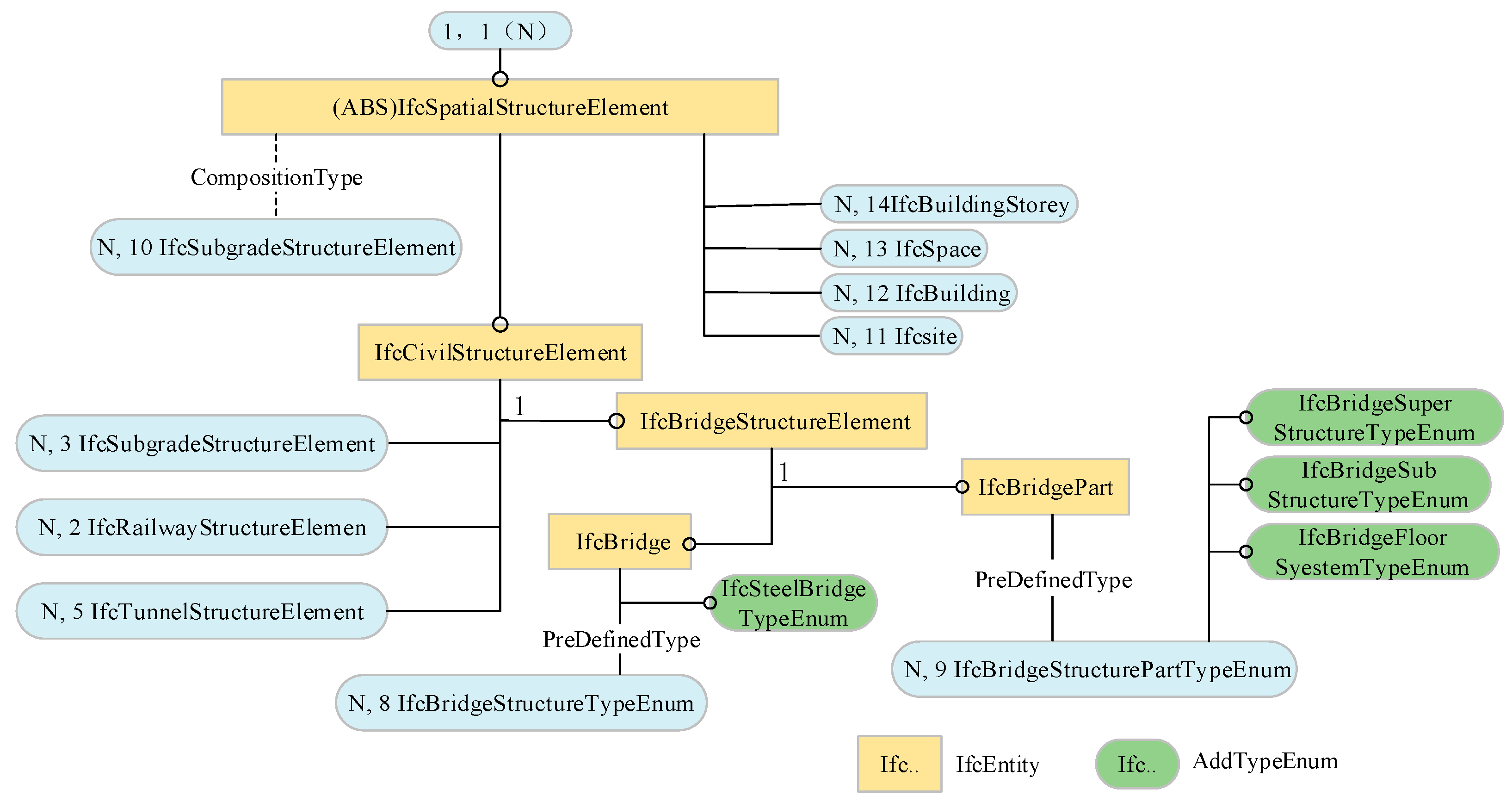
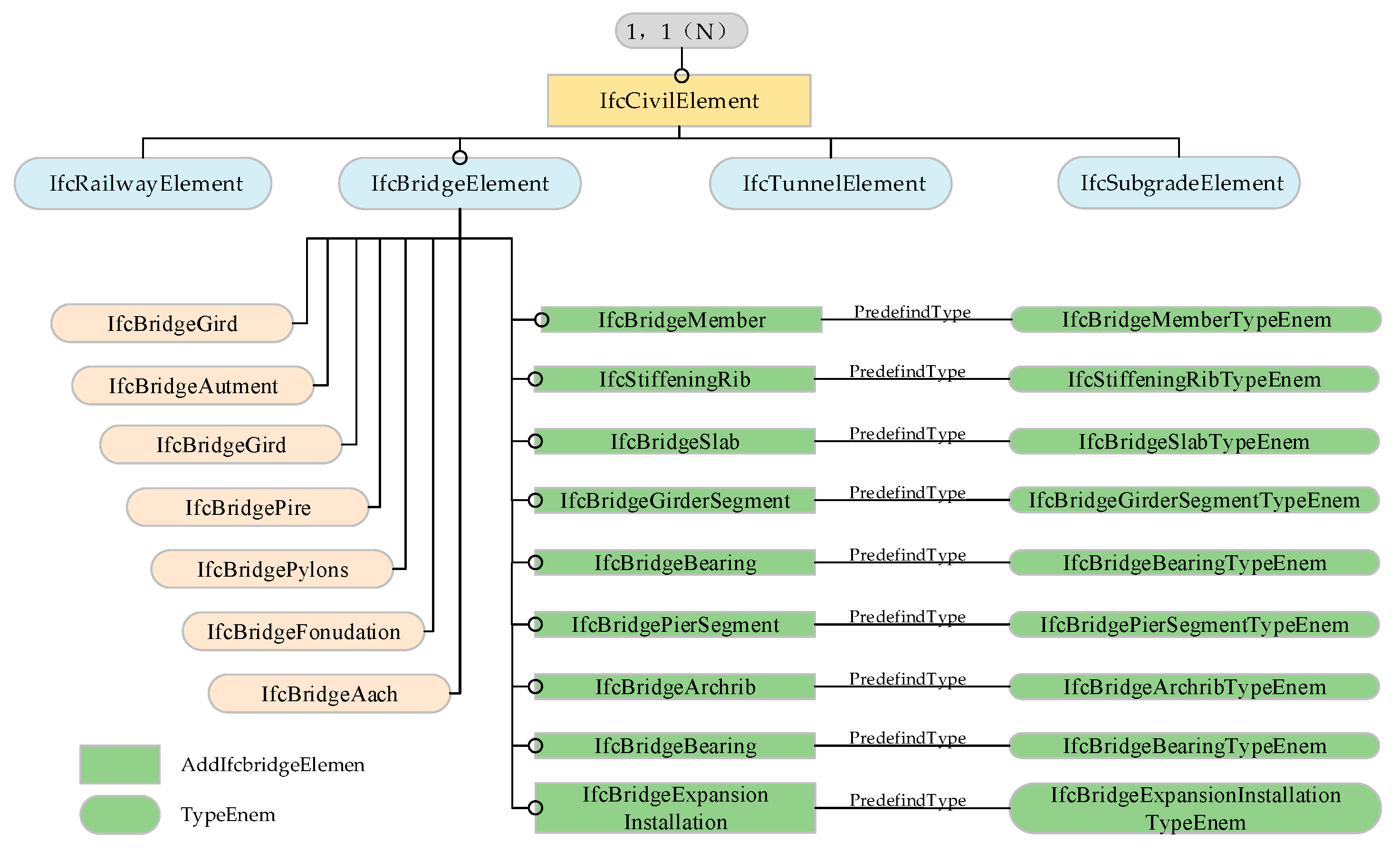
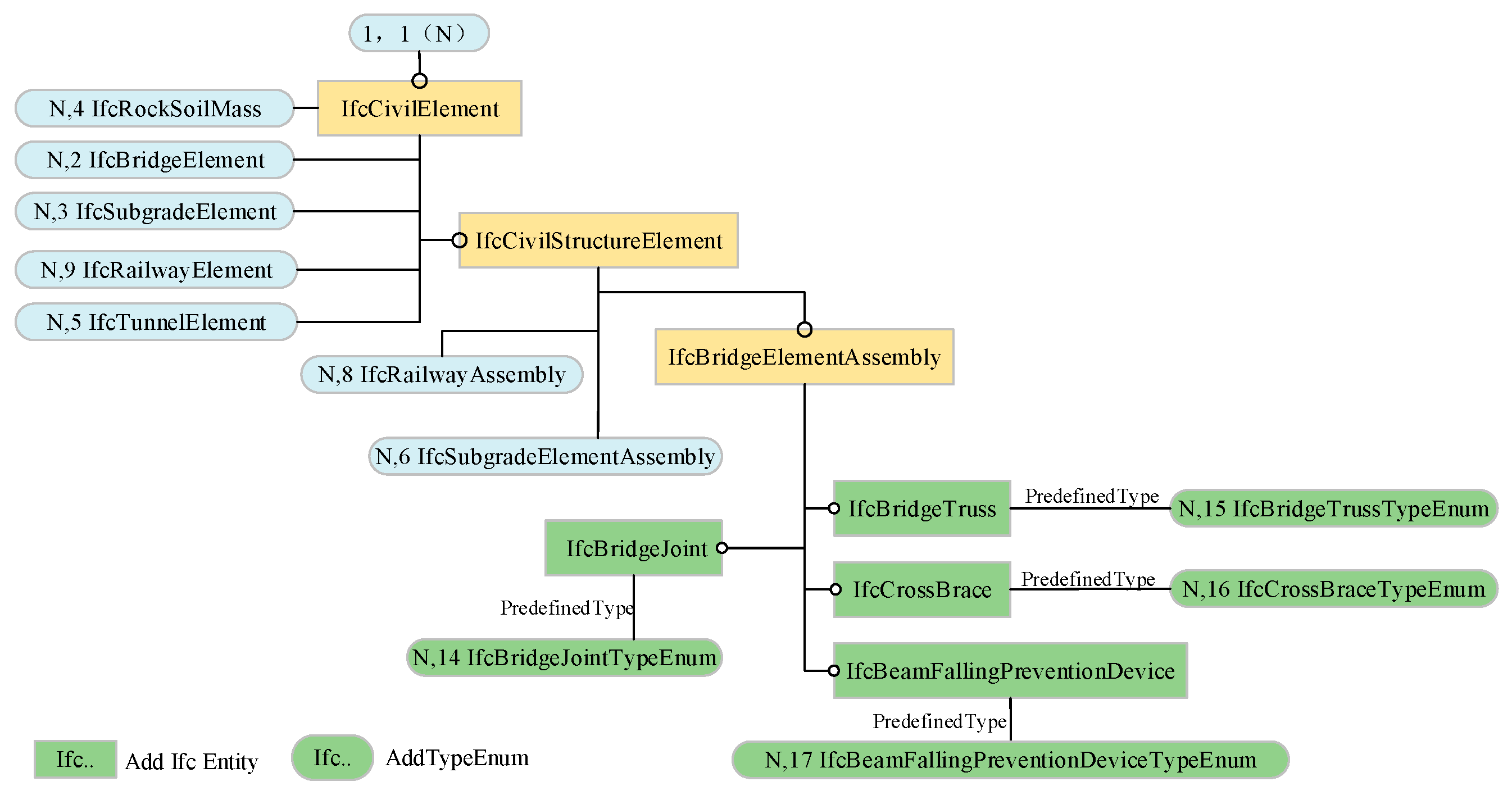
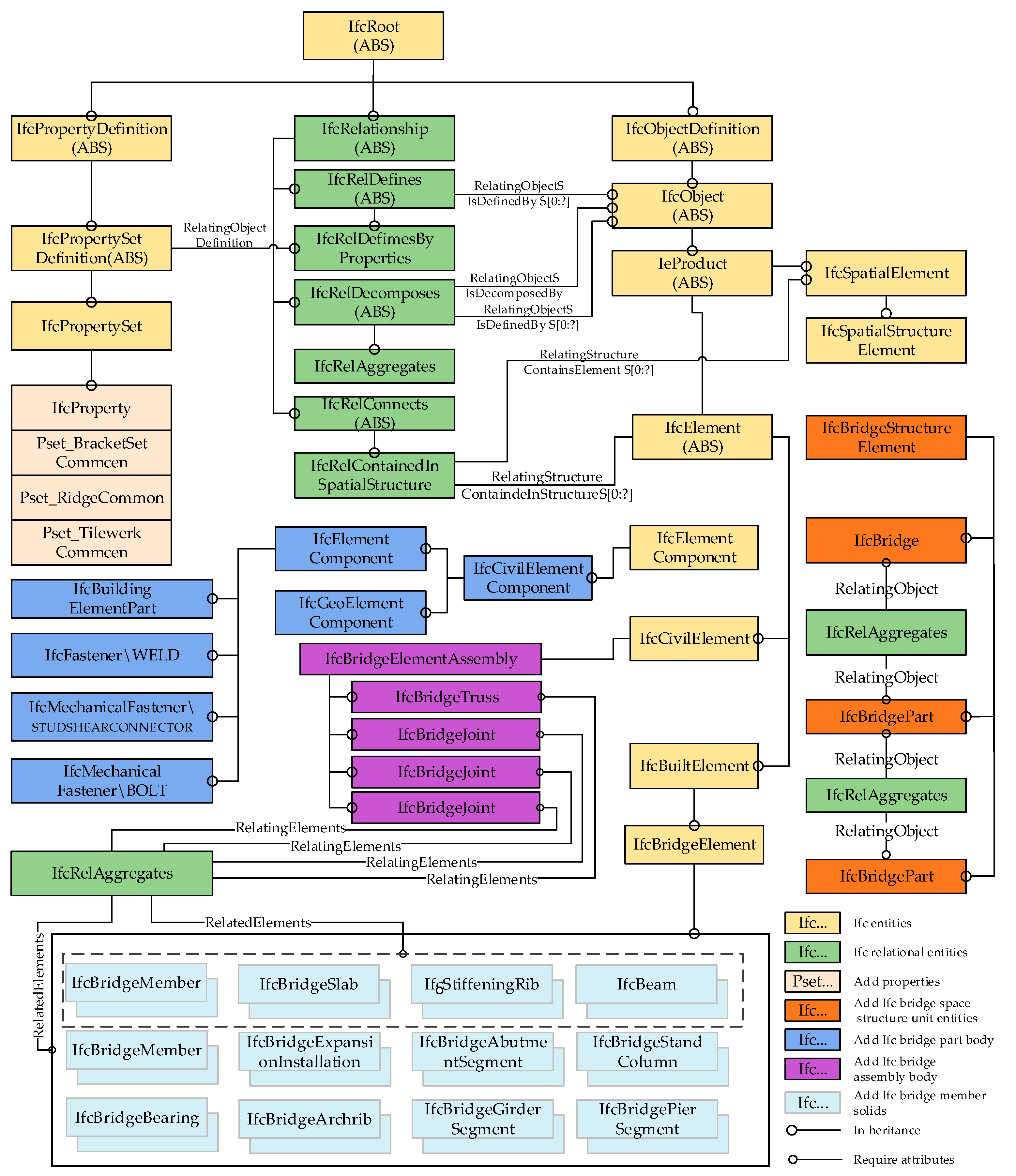
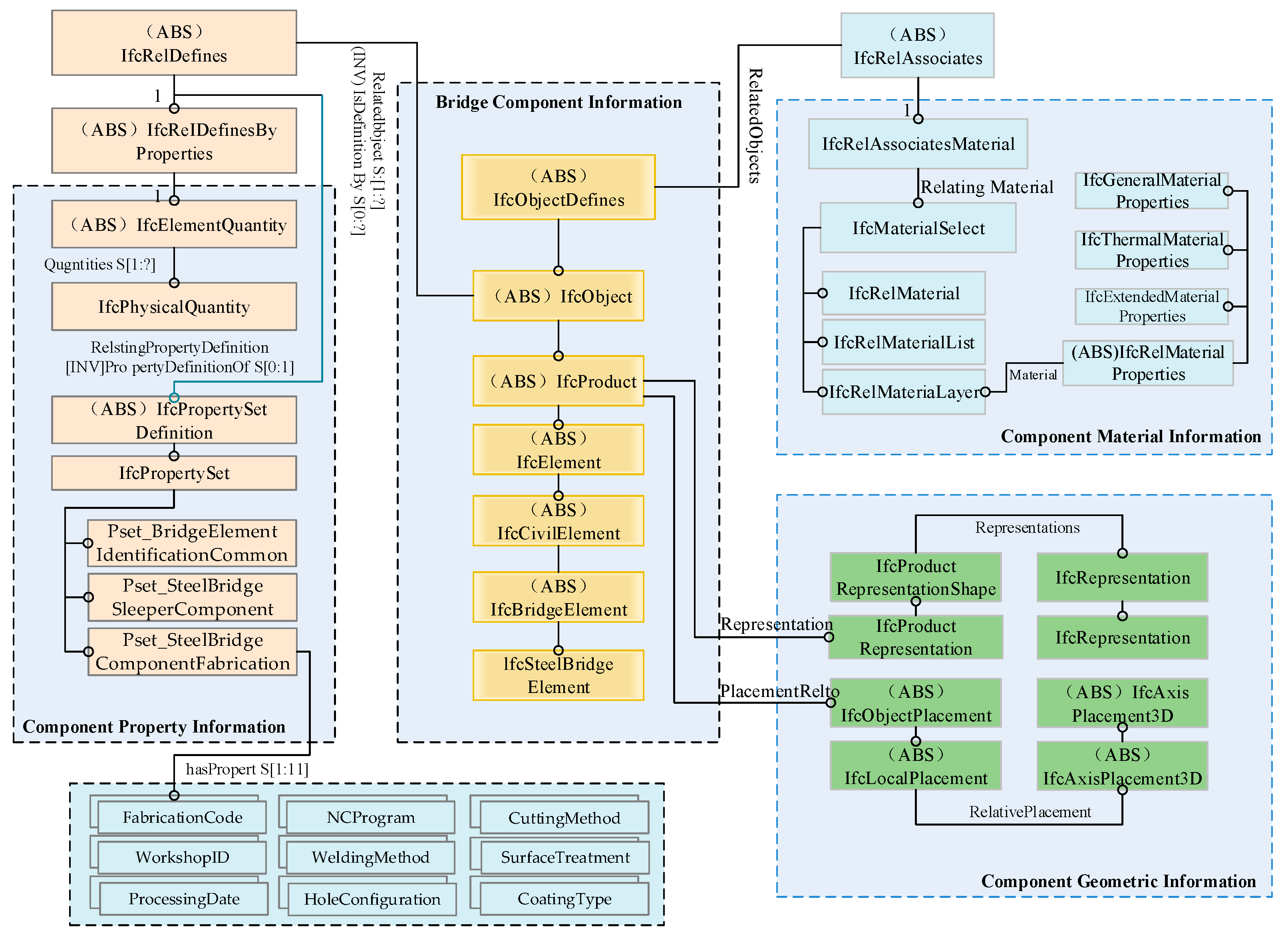
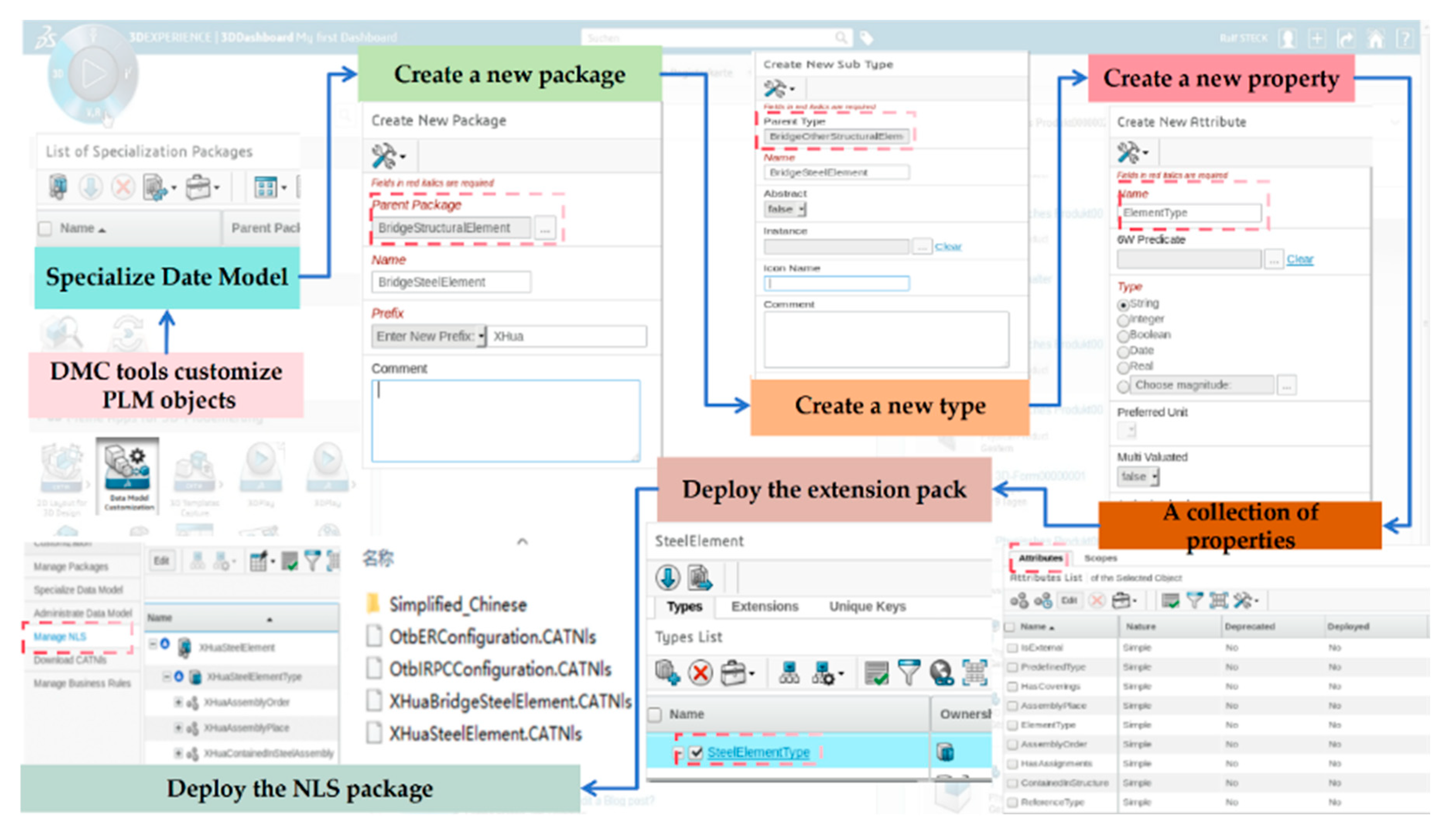
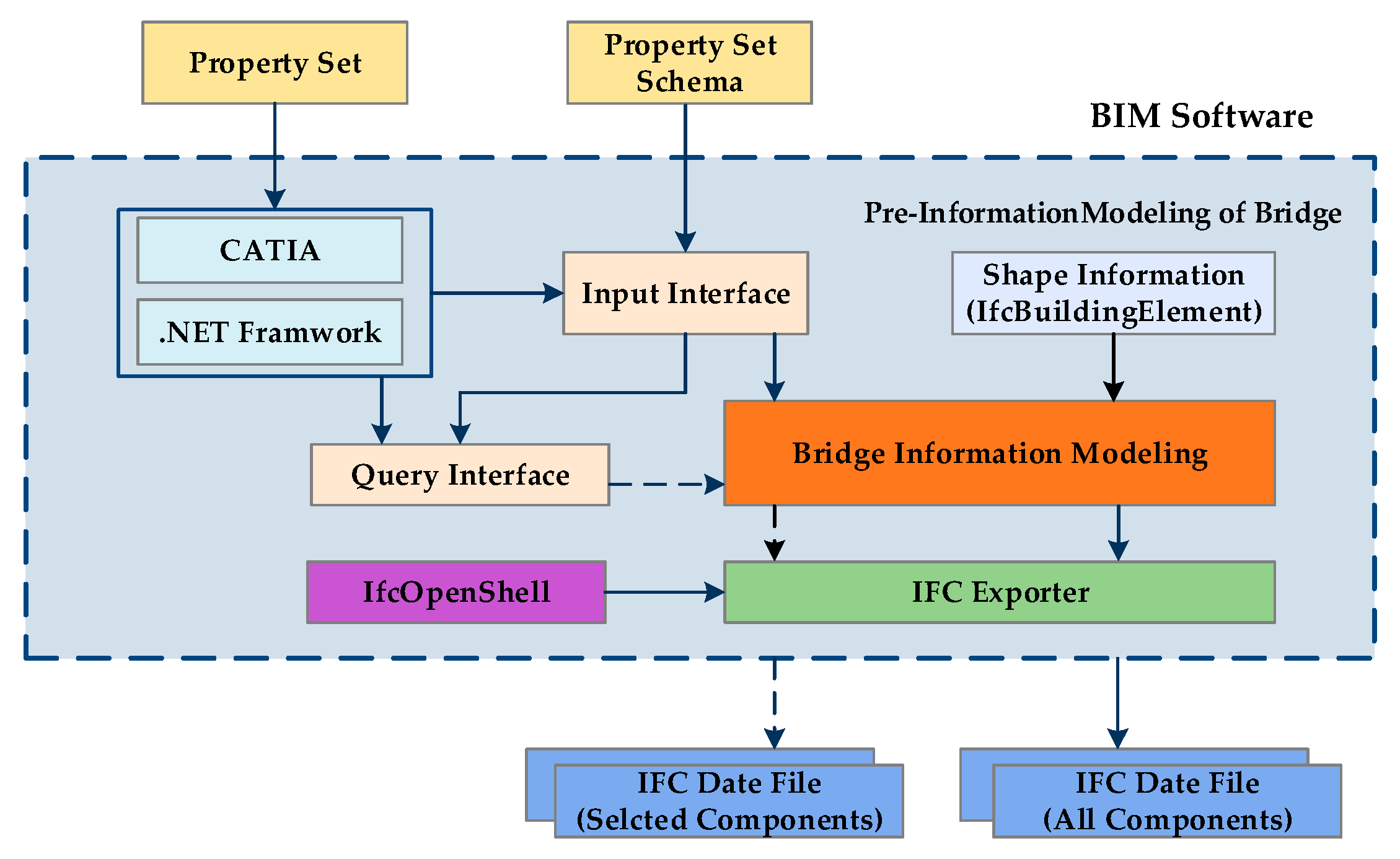
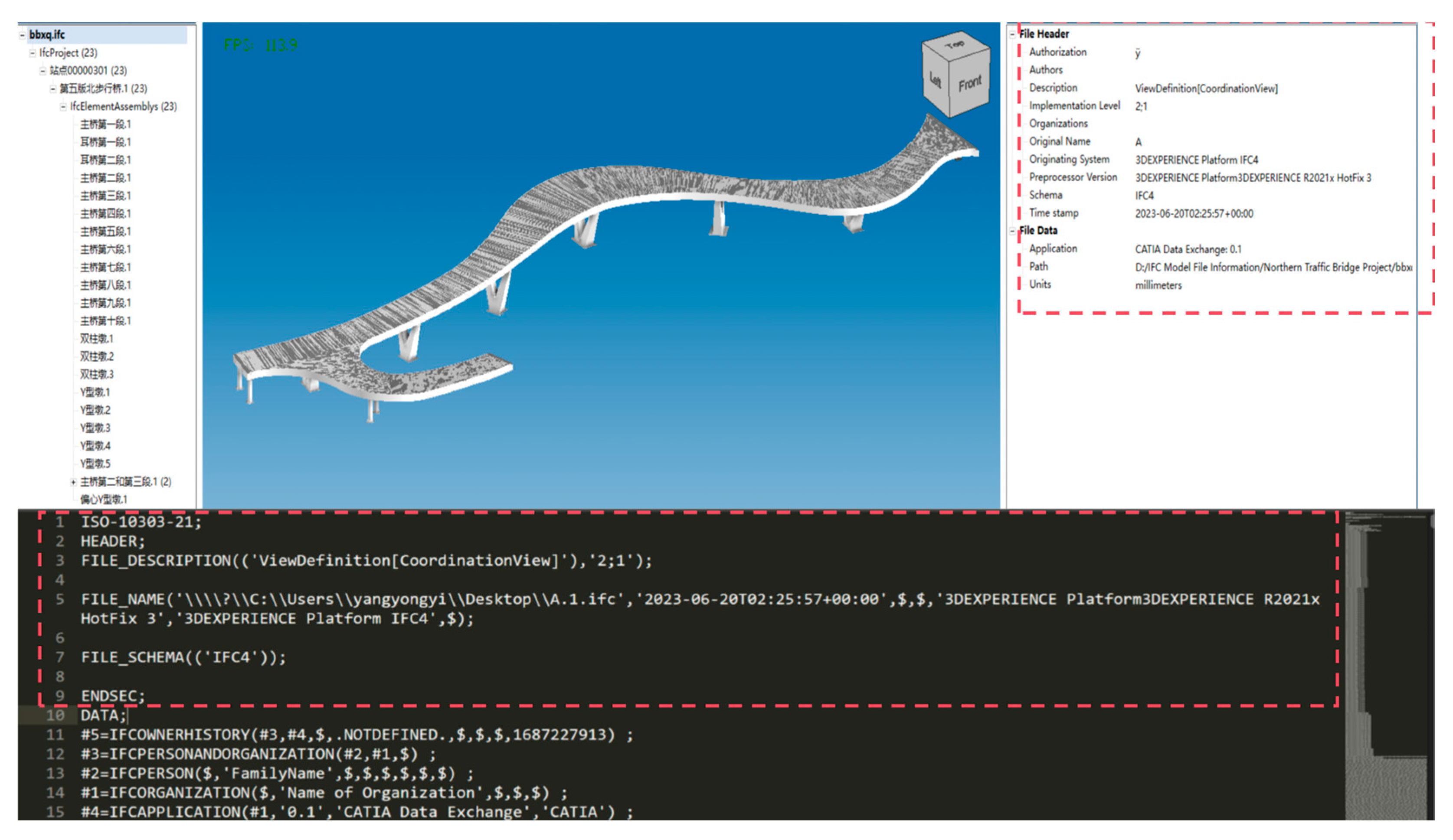
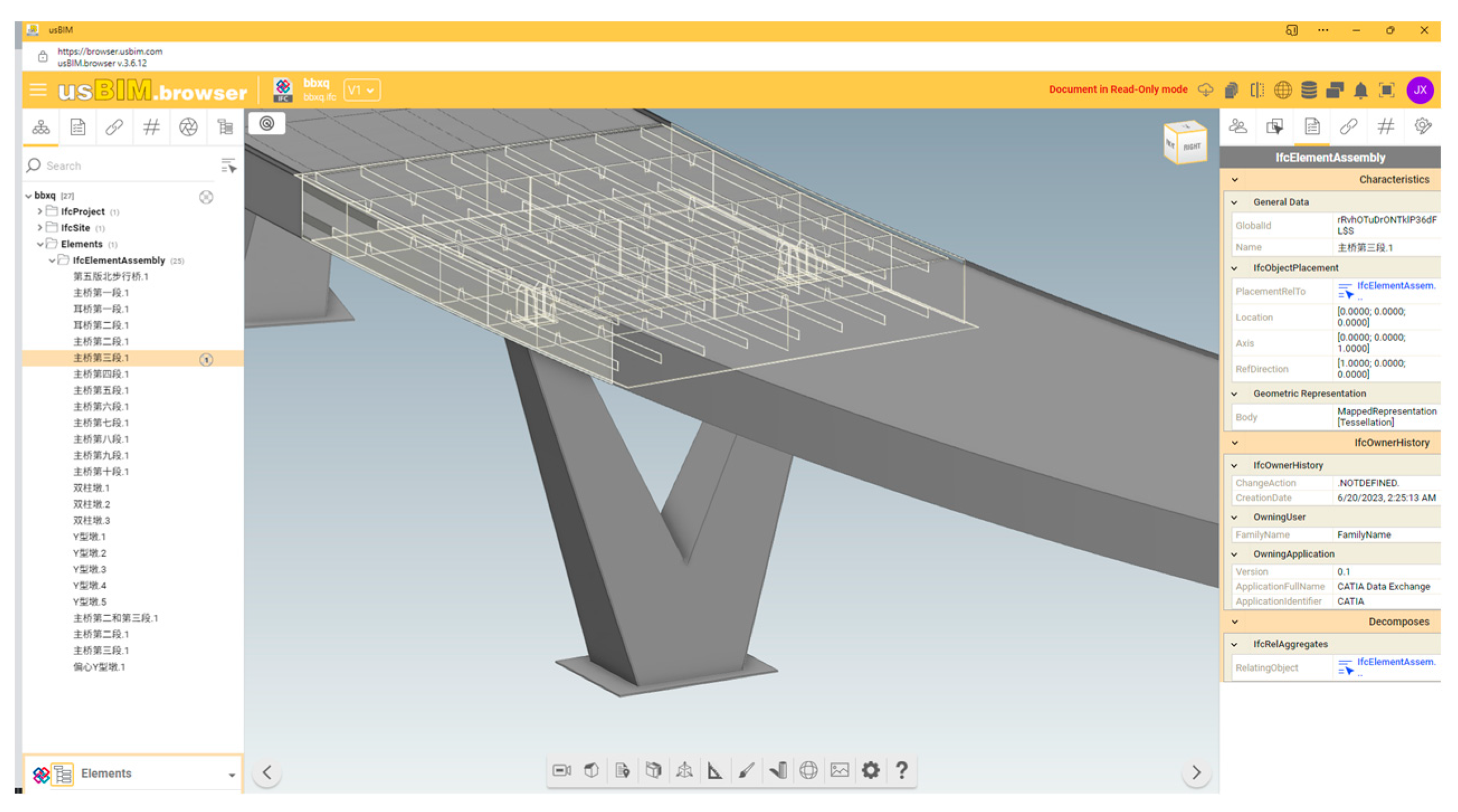
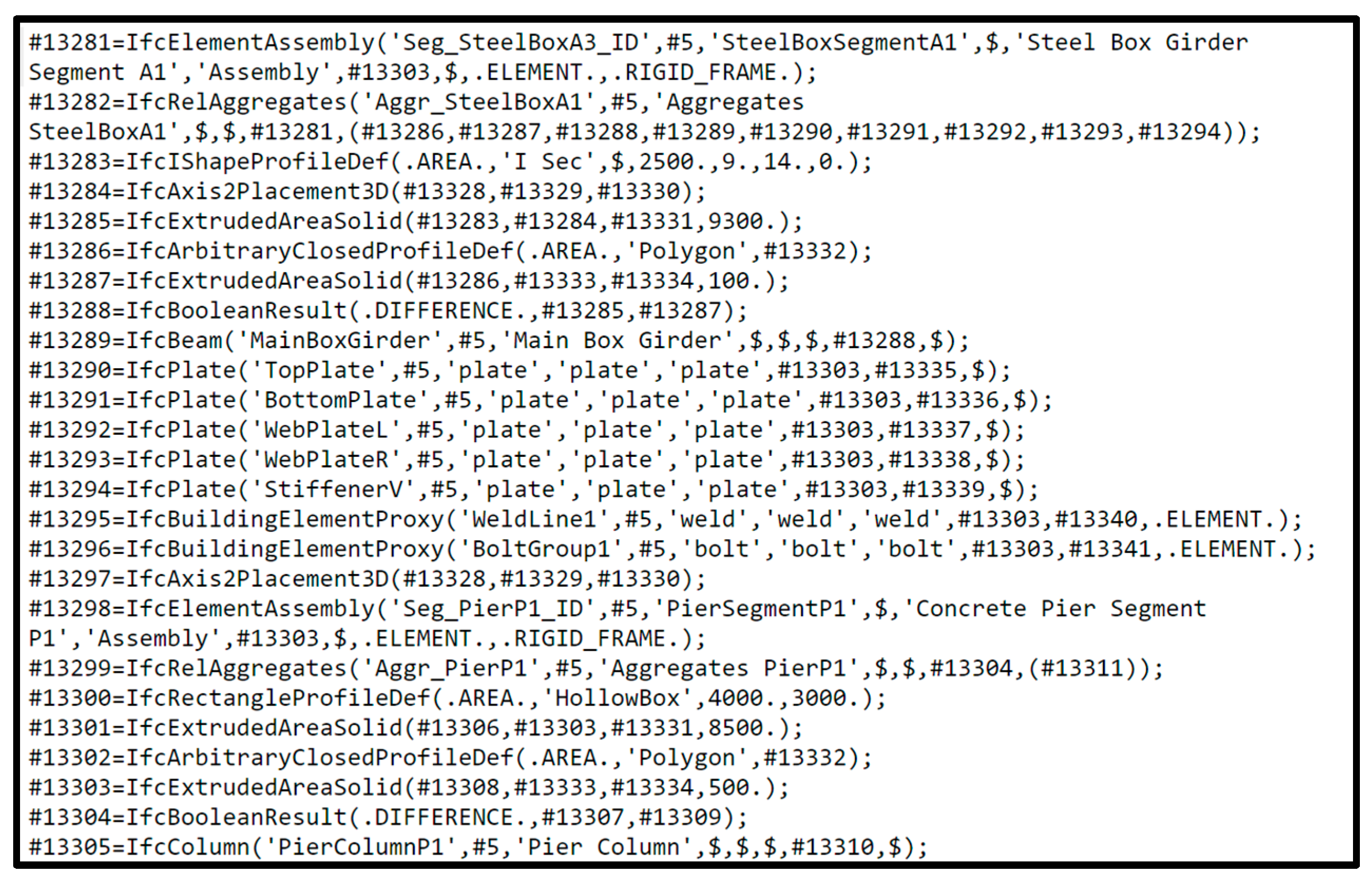
To address the practical needs for data sharing and exchange in the bridge engineering domain, this study creatively fills the definitional gap of IFC entities for steel bridges. In response to the deficiencies arising from the absence of domain-layer entity information in the IFC standard architecture, an extension strategy is proposed that integrates new entity definitions with customized property sets to enrich and formalize the steel bridge domain. On this basis, a foundational data framework for steel bridge structures is established, encompassing extended definitions for spatial structural units, assemblies, components, and parts. The customized property sets further expand the entity attributes related to the design and fabrication stages, thereby developing an IFC-based manufacturing information model for steel bridges. Furthermore, a parametric BIM modeling approach for steel bridges is introduced on the 3DEXPERIENCE platform, employing IfcOpenShell to inject semantic information and export models in standard IFC format. The proposed IFC extension and modeling methodology is demonstrated through its application to the Chengdu Q7 North Pedestrian Bridge project, confirming its practical value in enhancing the completeness and transferability of steel bridge BIM model information from the design phase through to fabrication.
Keywords: steel bridges; Building Information Modeling (BIM); IFC extension; user property sets; data exchange steel bridges; Building Information Modeling (BIM); IFC extension; user property sets; data exchange