Article

Development of Seismic Fragility Curve for Railway Tunnel Crossing Fracture Zone

1
Urban Life Network, Yongun-ro 1-3, 2F, Dae-dong, Dong-gu, Daejeon 34648, Republic of Korea
2
Department of Fire Safety Engineering and Disaster Management, University of Seoul, 163, Seoulsiripdae-ro, Dongdaemun-gu, Seoul 02504, Republic of Korea
3
Department of Civil & Environmental Engineering, Gachon University, 1342, Seongnam-daero, Sujeong-gu, Seongnam-si 13120, Gyeonggi-do, Republic of Korea
4
Department of Geotechnical Engineering Research, Korea Institute of Civil Engineering and Building Technology (KICT), 283, Goyang-dearo, Ilsan-seogu, Goyang-si 10223, Gyeonggi-do, Republic of Korea
*
Authors to whom correspondence should be addressed.
Buildings 2025, 15(18), 3304; https://doi.org/10.3390/buildings15183304

Submission received: 16 July 2025 / Revised: 20 August 2025 / Accepted: 9 September 2025 / Published: 12 September 2025
(This article belongs to the Special Issue Seismic Response Analysis of Underground Structure)

Abstract

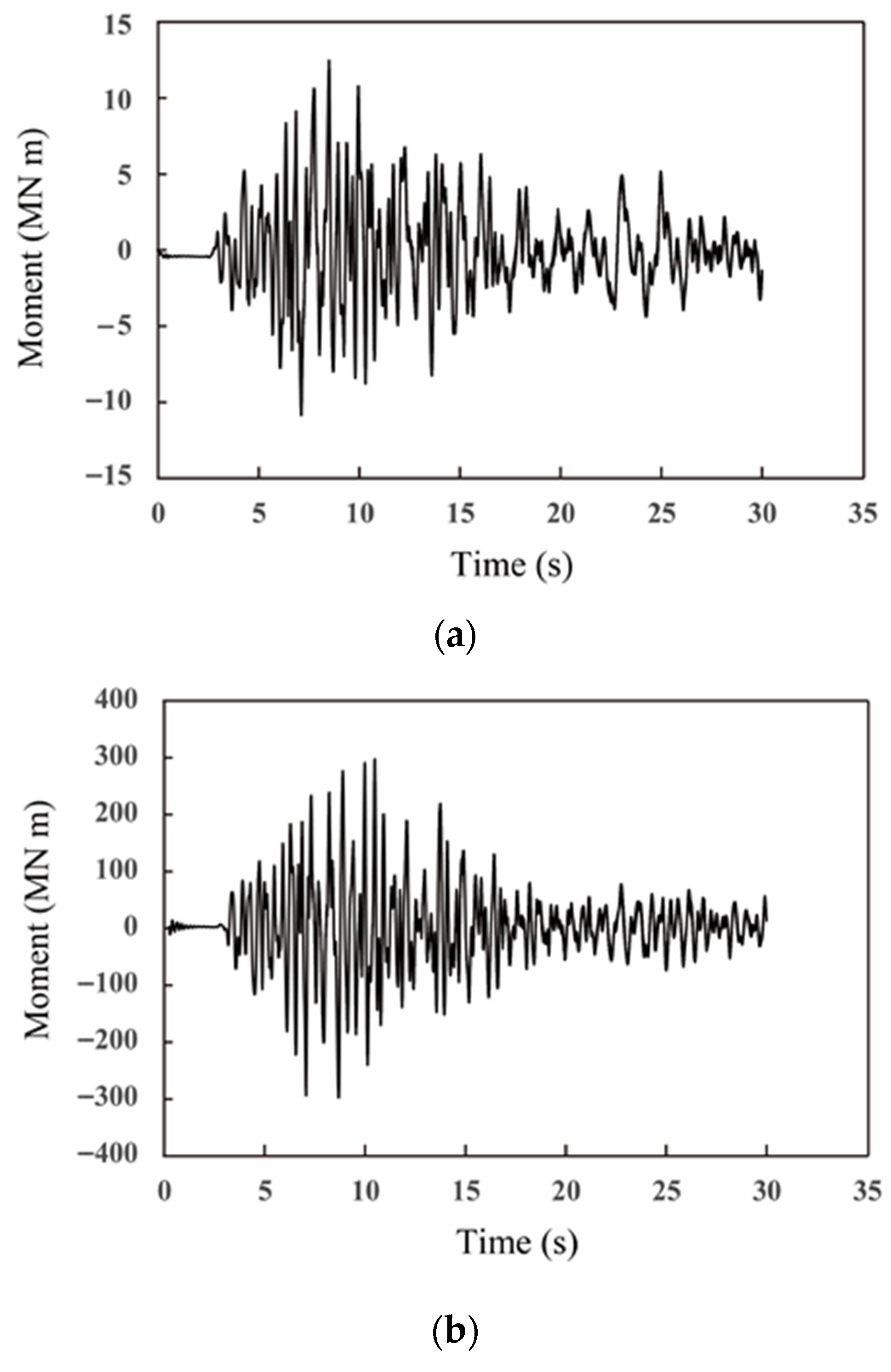
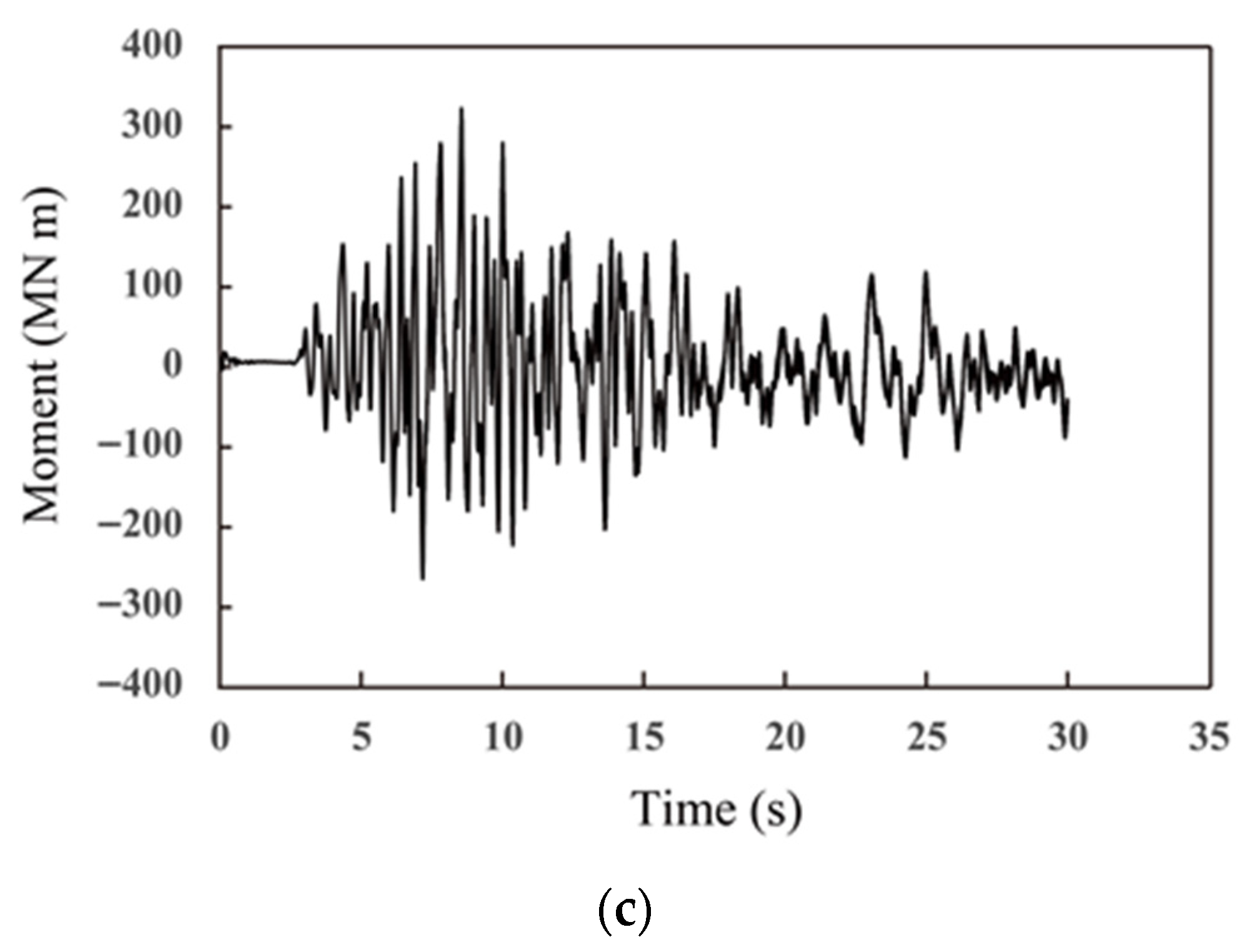
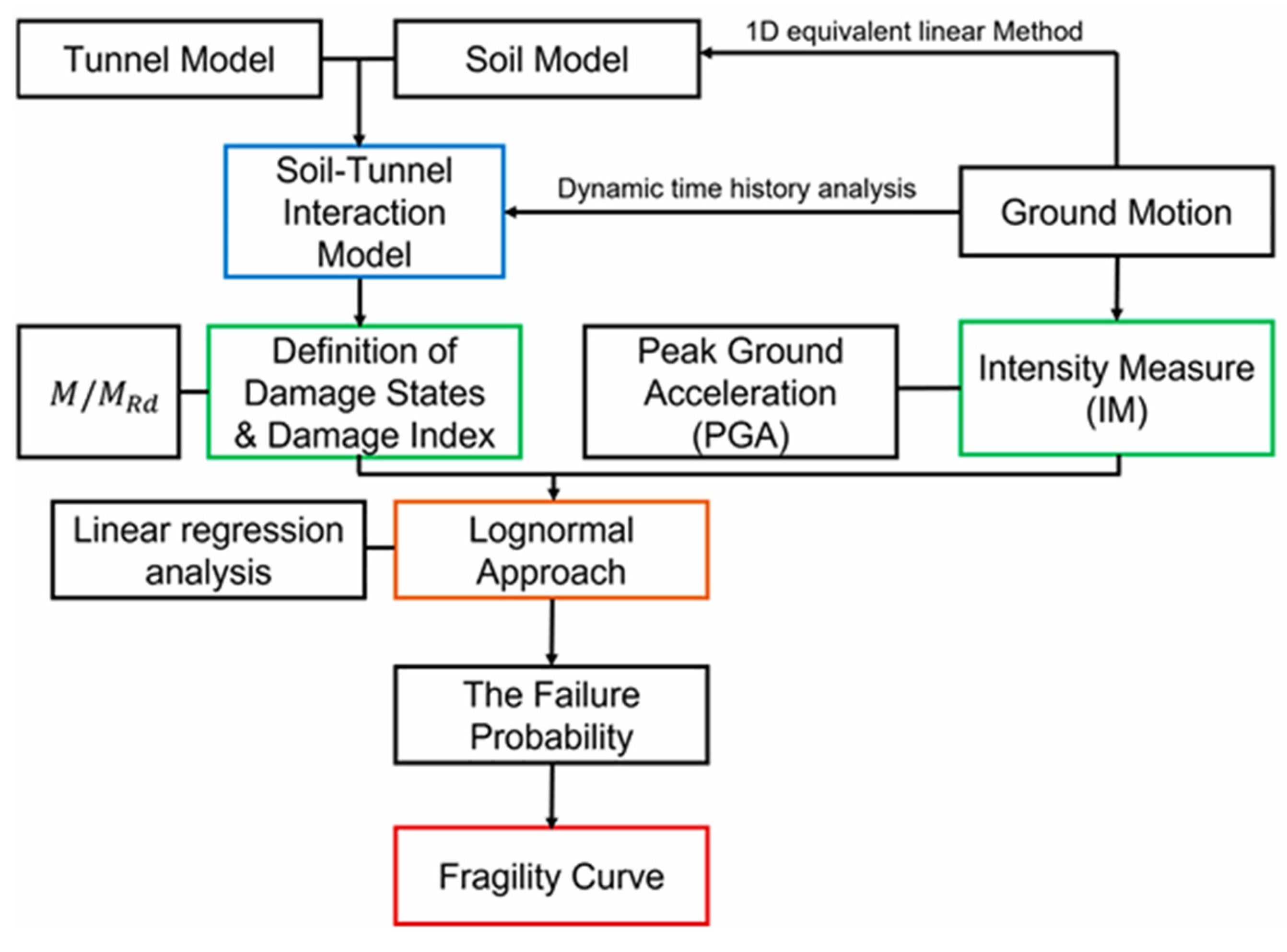
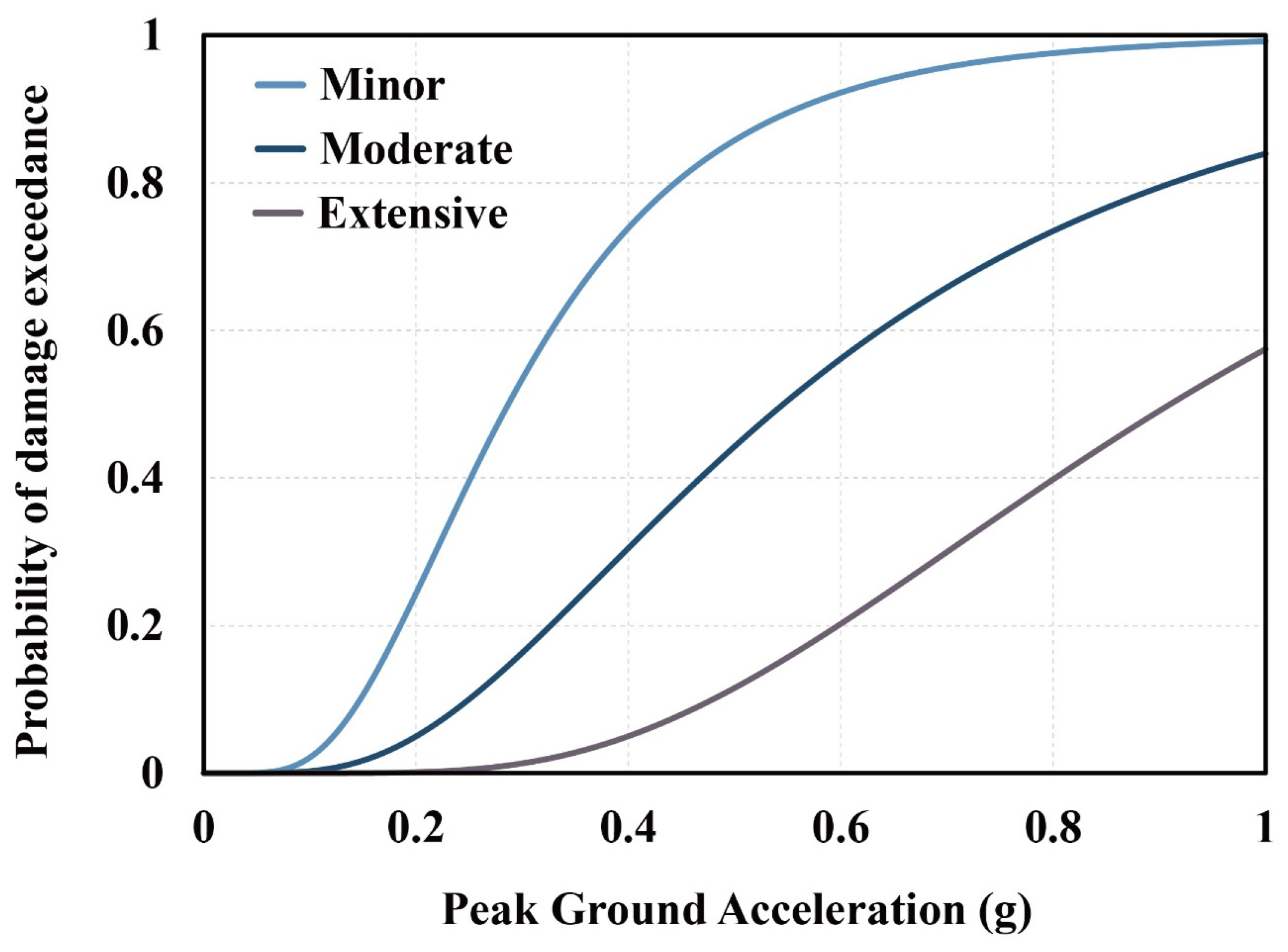
This study investigates the seismic fragility of railway tunnels intersecting fractured geological zones using a nonlinear numerical approach. A series of dynamic analyses was performed on tunnel models subjected to multiple ground motions with varying frequency contents. The structural response was evaluated in terms of maximum bending moment, and the resulting damage indices were used to classify damage states. Based on these classifications, seismic fragility functions were developed for tunnels passing through fractured zones using a lognormal cumulative distribution with peak ground acceleration (PGA) as the intensity measure. The fragility curves indicated that the probabilities of exceeding minor, moderate, and extensive damage states surpassed 50% at PGAs of approximately 0.289 g, 0.578 g, and 0.91 g, respectively. These findings highlight the elevated seismic risk in tunnels intersecting fractured ground and emphasize the necessity of incorporating geological conditions into seismic design frameworks.
Keywords: seismic fragility; fractured zones; railway tunnels; nonlinear dynamic analysis; damage index seismic fragility; fractured zones; railway tunnels; nonlinear dynamic analysis; damage index