1. Introduction
In 2020, the Communist Party of China Central Committee’s Proposals for Formulating the 14th Five-Year Plan for National Economic and Social Development and the Long-Range Objectives Through the Year 2035 clearly put forward the goal of “urban regeneration”, and its core issues were maintaining urban cultural characteristics, promoting social equity and justice, improving the living quality of residents, enhancing citizens’ sense of regional identity, and increasing urban vitality.
The regeneration of heritage conservation sites in historic districts is an issue of particular concern to the public. Heritage conservation sites are often the birthplaces of cities, with profound cultural deposits, and reflect the local characteristics of cities, whose regeneration reflects the dual demands of and contradictions between cultural authenticity conservation and socio-economic development. The destruction of cultural resources, commercial recession, and social conflict caused by urban regeneration are significant in these areas [
1,
2,
3].
Zhongshan Road is the most important historic district in Qingdao, a coastal urban city in China, and its regeneration has been widely appreciated by people from all walks of life against the background of its decline in the 1990s [
4]. During the five rounds of regeneration in the past three decades, different subjects have made different regeneration attempts through environmental design, tourism planning, building renovations, and street environment reconstruction [
5], but they all failed to revive Zhongshan Road Historic District. This study reviews the regeneration process from the theoretical framework perspective of the interaction between “space production” and “place-making” to answer the following three questions: What are the characteristics of “space production” and “place-making” in the regeneration of Zhongshan Road? How do the two interact with each other? What are the internal reasons why the regeneration of Zhongshan Road Historic District failed after several transformation attempts?
This study employs the urban regeneration of Zhongshan Road Historic District as a case to explore the relationship between “space production” and “place-making” within a Chinese political–economic context. This case study spans more than 30 years, which provides the possibility of revealing the logic between the different stages. As a single case, this research may have its limitations in terms of its representativeness. In response to this, in the second half of this paper we will put this case into a comparative matrix to partially overcome its limits.
4. Transformation Course of Zhongshan Road
Based on the subject, purpose, critical influencing factors, mode, and characteristics of Zhongshan Road regeneration, the regeneration and transformation course of Zhongshan Road are divided into five stages, each named by its core regeneration theme.
4.1. First Stage (1990s): Disordered Modern Commercial Development
The first stage is a disordered modern commercial development in the 1990s; features, such as purpose and results, in this stage are displayed in
Table 2.
Table 2.
First stage of regeneration.
Table 2.
First stage of regeneration.
| Subject | Government + Market |
|---|
| Purpose | The government, seeking economic growth, and market subjects, seeking profit, formed a local growth alliance with common interests [27] and targeted the dilapidated historic district of the old urban area, trying to profit from the process of rapid spatial change. |
| Critical influencing factors | Since the 1990s, great changes have taken place under the social background of market-oriented transition, new patterns of opening to the outside world, and tax-sharing reform. |
| Main planning protocol | Transformation Planning of Zhongshan Road Area, Southeast University. |
| Main regeneration | Part of the plots were demolished and built into large department stores, such as Guohuo, Dongfang, Xinhua Bookstore, and Parkson. In 1996, 129 roadside trees that were nearly 100 years old were removed to increase the visibility of the shops. |
| Regeneration mode | Indigenous people were relocated to other places. |
| Characteristics | Regeneration included large-scale demolition, focusing on the development of material space; some historic buildings were demolished without planning, and the design was based on the characteristics of historic districts. |
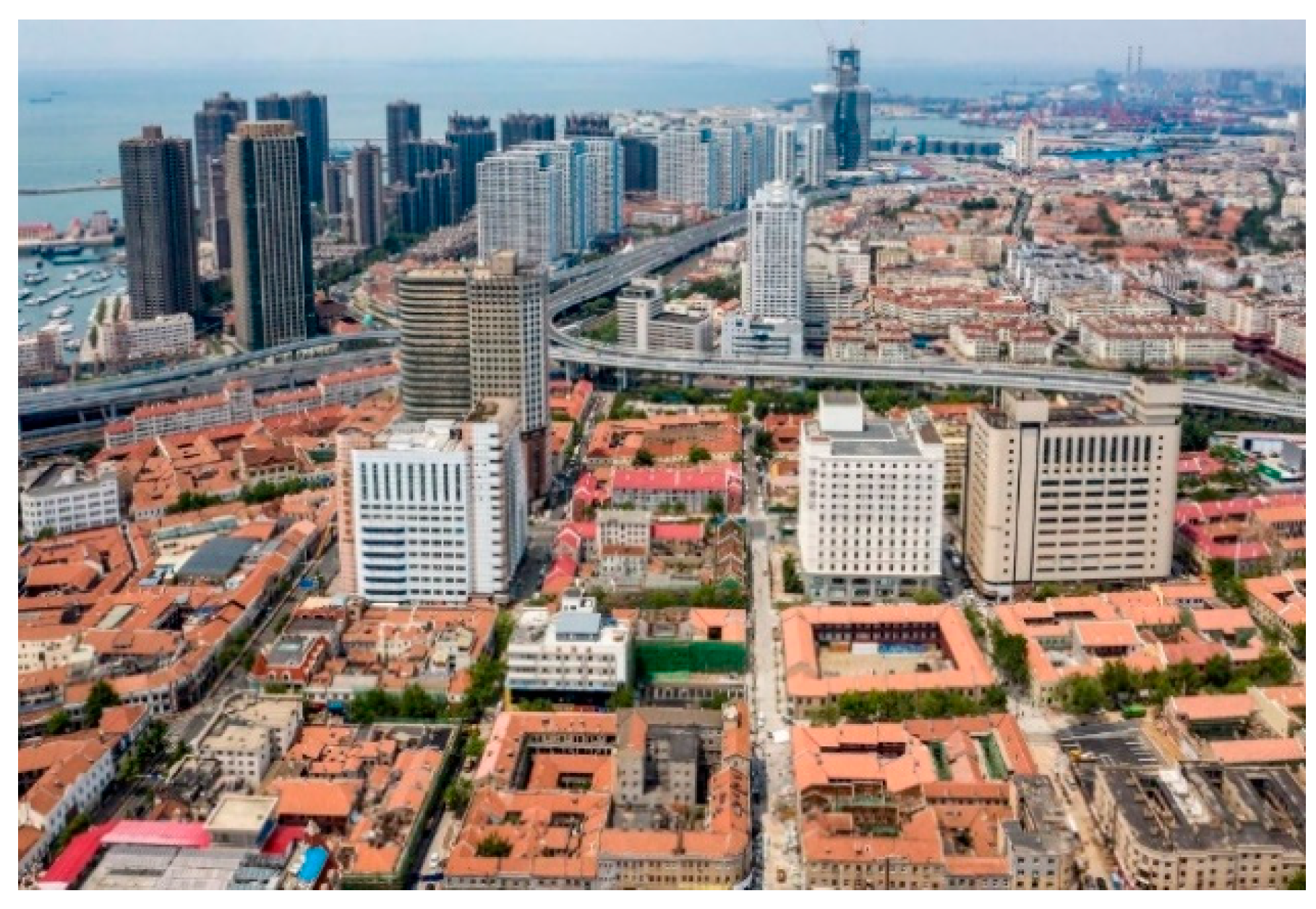
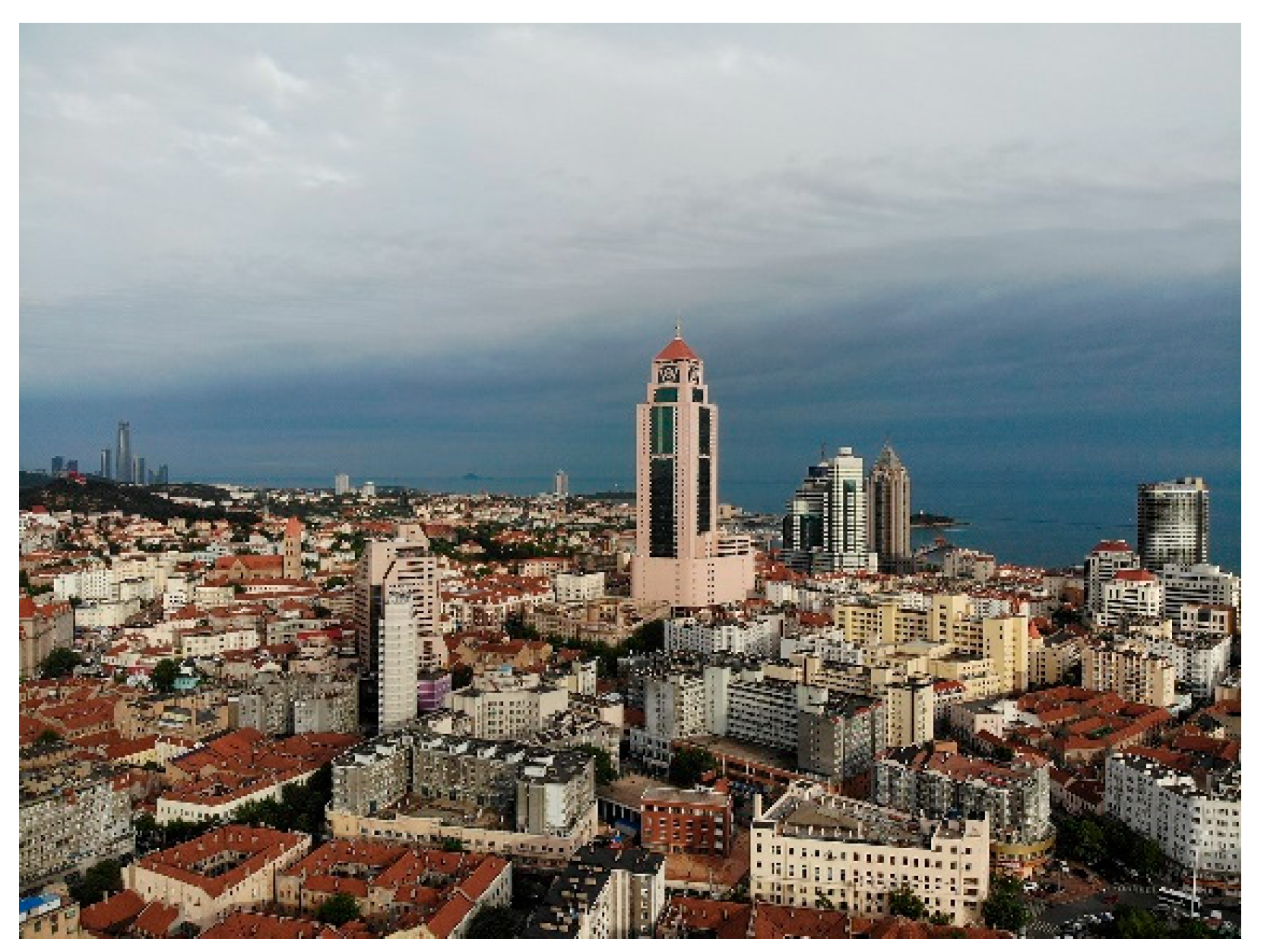
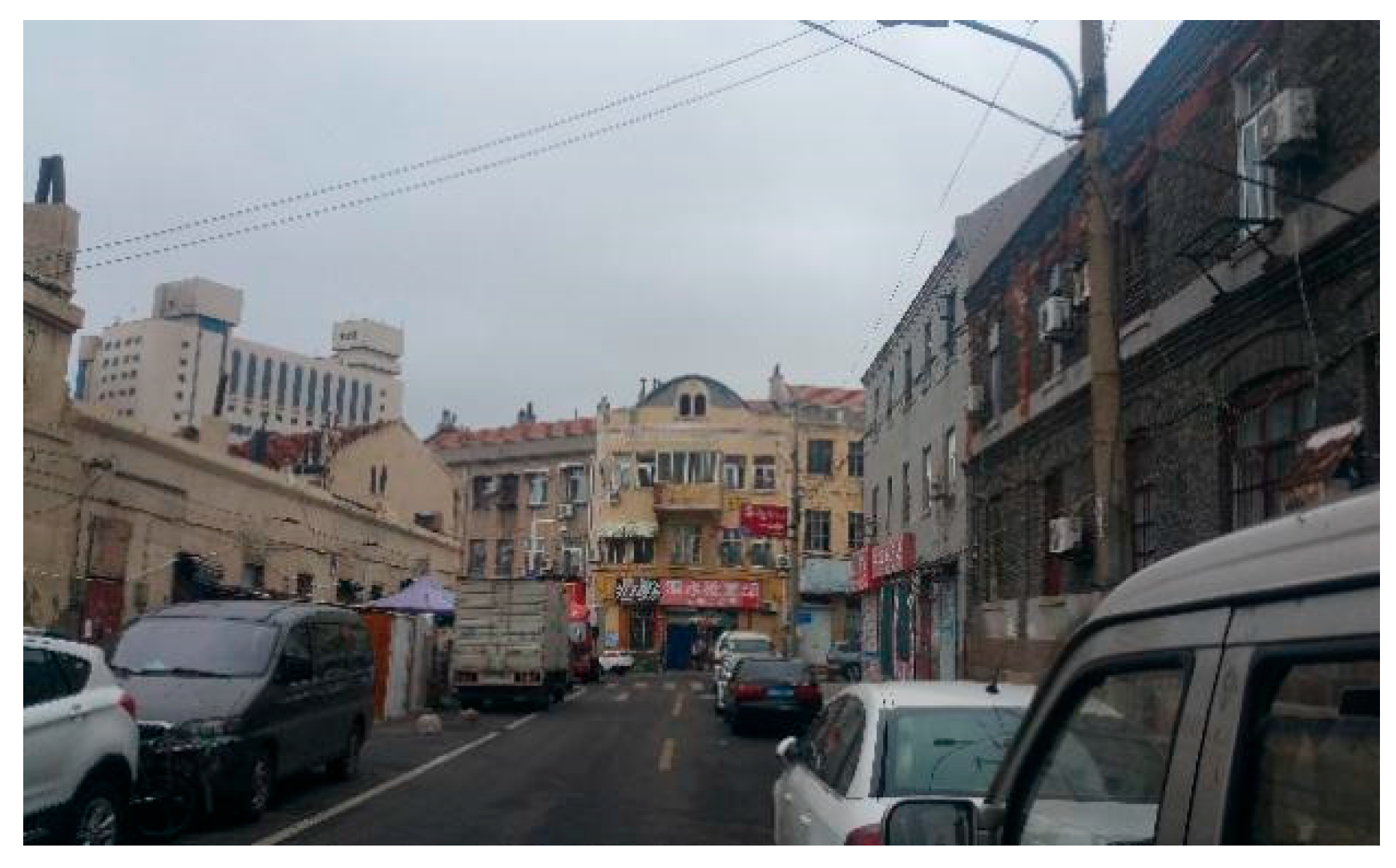
| Results | In the short term, commercial vitality was enhanced. With the movement of the commercial centres to east Qingdao, Zhongshan Road gradually became silent. High-rise commercial buildings reduced the scale and disrupted the skyline of the historic district (Figure 4 and Figure 5). The public registered many complaints about the felling of roadside trees on Zhongshan Road. In 2009, the roadside trees were replanted. |
Figure 4.
High-rise buildings on Zhongshan Road and the urban texture in the early 1990s (photos from the internet).
Figure 4.
High-rise buildings on Zhongshan Road and the urban texture in the early 1990s (photos from the internet).
Figure 5.
High-rise buildings on Zhongshan Road and the urban texture in the early 1990s (photos from the internet).
Figure 5.
High-rise buildings on Zhongshan Road and the urban texture in the early 1990s (photos from the internet).
During this period, Chinese cities were on a fast growth path. A large number of historical blocks were demolished due to their redevelopment with new business functions, such as Financial Street in Beijing, which experienced the massive demolition of the Hutong and quadrangle courtyards (siheyuan). Pingan Avenue in Beijing also saw the destruction of traditional buildings along it due to broadening projects. Some of the facades of these traditional buildings have been rebuilt, but in a fake manner. The Nanjing Confucius Temple also demolished traditional housing to build fake historical blocks as a business district, which is a tendency in Chinese cities.
4.2. Second Stage (2001–2004): Business + Conservation
The second stage is a redevelopment combined business and conservation between 2002 and 2004; main information in this stage are displayed in
Table 3.
Table 3.
Second stage of regeneration.
Table 3.
Second stage of regeneration.
| Subject | Government + state-owned project companies; in 2001, the government established the “Zhongshan Real Estate” company. |
| Purpose | Focused on business revitalization. |
| Critical influencing factors | The conservation of Qingdao Historical and Cultural City was put on the agenda; business on Zhongshan Road had declined substantially. |
| Main planning protocol | Revitalization Plan for Zhongshan Road Area of the Canadian International Development Agency in 2001, Conservation Planning for the Historical and Cultural City of Qingdao (2002), Urban Design of Qingdao Zhongshan Road Area of Tsinghua University in 2002, and Planning and Design of Zhongshan Road Commercial and Tourist Area of the Architectural Design and Research Institute of Qingdao City. |
| Main regeneration | In 2003, the Qingdao Hotel, the Red Star Cinema, an ancient books bookstore, and other historic buildings were demolished. |
| Regeneration mode | Monetary compensation or remote resettlement. |
| Characteristics | Many discussions were held at the planning level, and solutions for Zhongshan Road’s revitalization were proposed from different perspectives, but a plan was not implemented due to financial factors. Local material transformation was performed for commercial development, without overall effective measures for revitalization. Although the conservation of the historic district was included in the conservation plan, many historic buildings were demolished. |
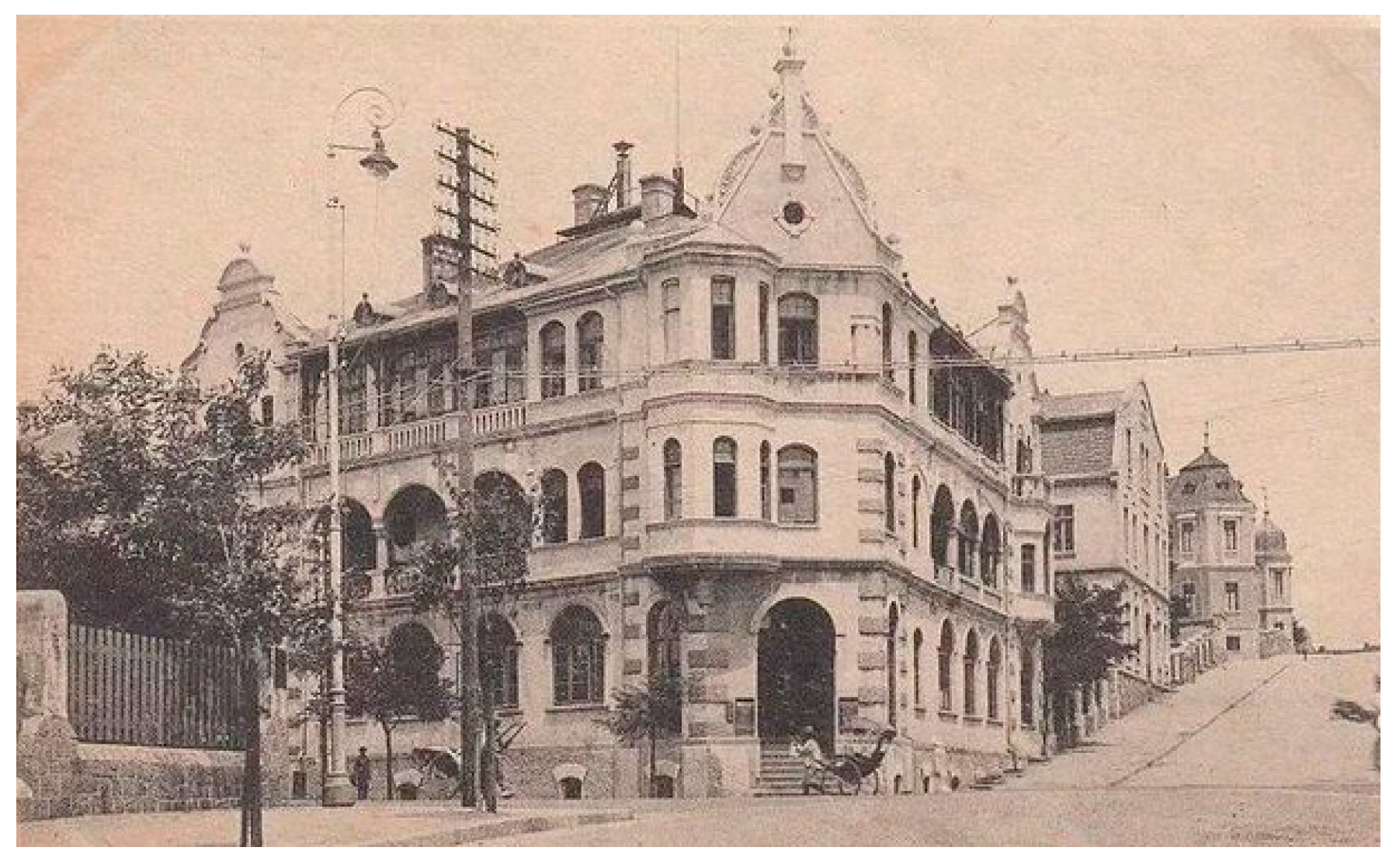
| Results | New buildings were constructed where historic buildings were demolished (Figure 6 and Figure 7). There was no significant effect of revitalization, and the demolished historic buildings caused public dissatisfaction. |
4.3. Third Stage (2005–2010): Business + Tourism + Conservation
The third stage is another redevelopment combined business, tourism and conservation between 2005 and 2010; main features of this stage are displayed in
Table 4.
Table 4.
Third stage of regeneration.
Table 4.
Third stage of regeneration.
| Subject | Government + state-owned project companies; in 2005, the government established the “Zhongshan Road Business (Tourism) District Transformation Headquarter”. |
| Purpose | Focused on business revitalization, with the revitalization of tourism and buildings taken into account. |
| Critical influencing factors | Conservation Planning for the Historical and Cultural City of Qingdao (2002) and the 2008 Olympic Games. |
| Main planning protocol | Preliminary Overall Transformation Planning of Zhongshan Road in Qingdao of the Hong Kong Polytechnic University, Study on Conservation and Regeneration of Tapautau Historic District of the University of Tokyo and Qingdao University of Technology, Planning of Liyuan Courtyard Historical and Cultural Block in Sifang Road of the Qingdao Urban Planning Bureau, Conservation Planning for the Historical and Cultural City of Qingdao (2011–2020) of the Qingdao Urban Planning Bureau, and Overall Planning of Commercial and Trade Development in Shinan District of Qingdao (2005–2010). |
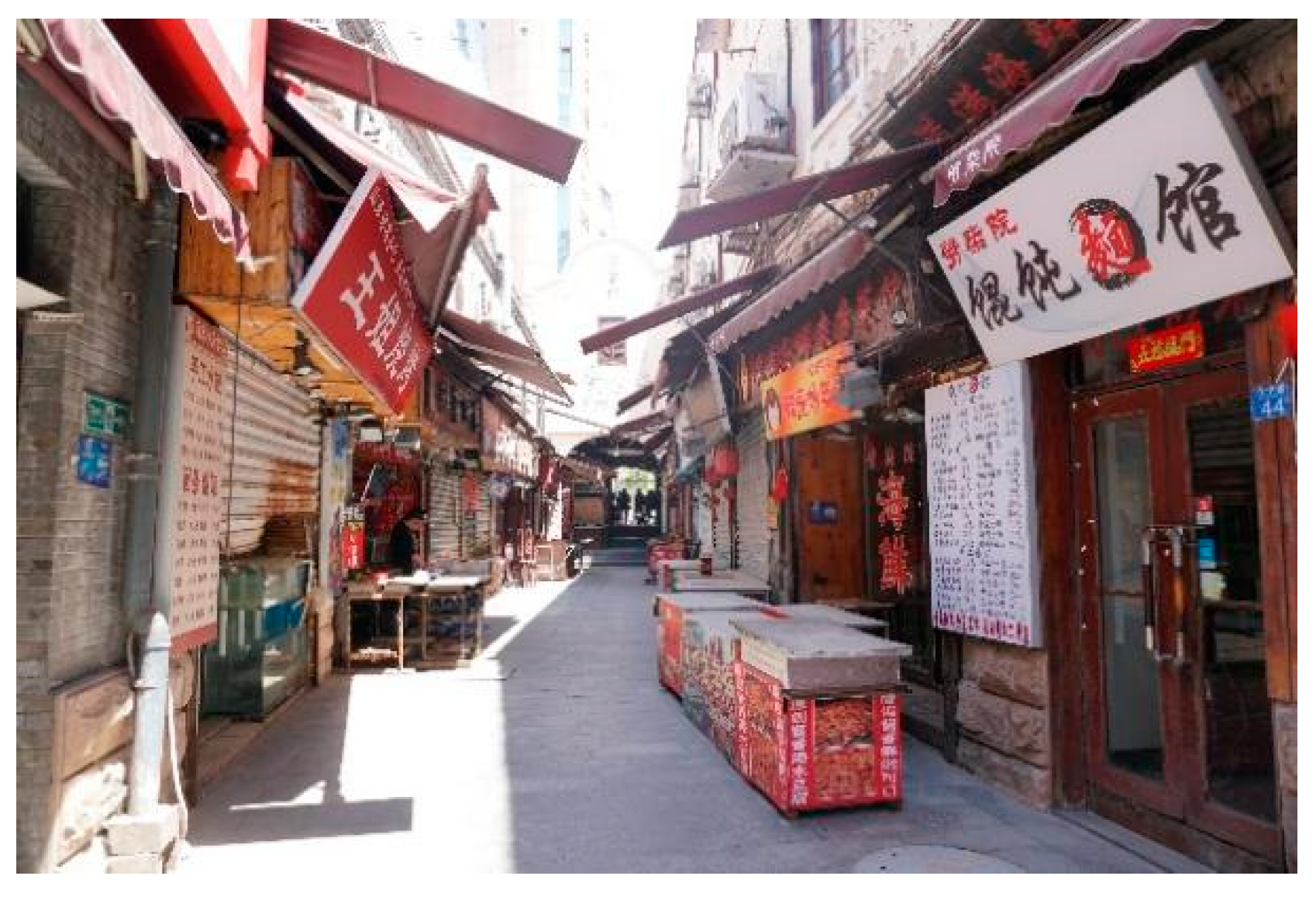
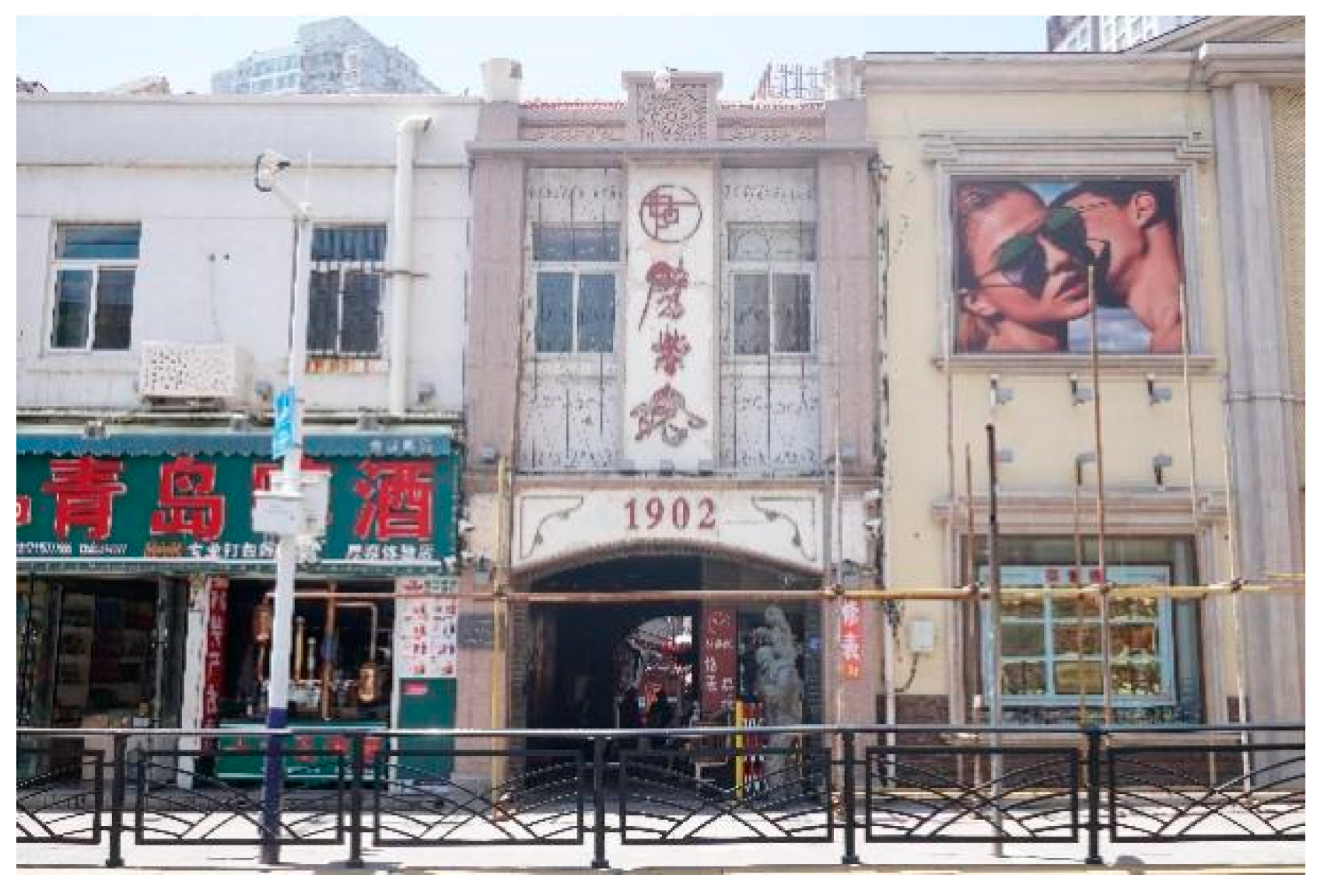
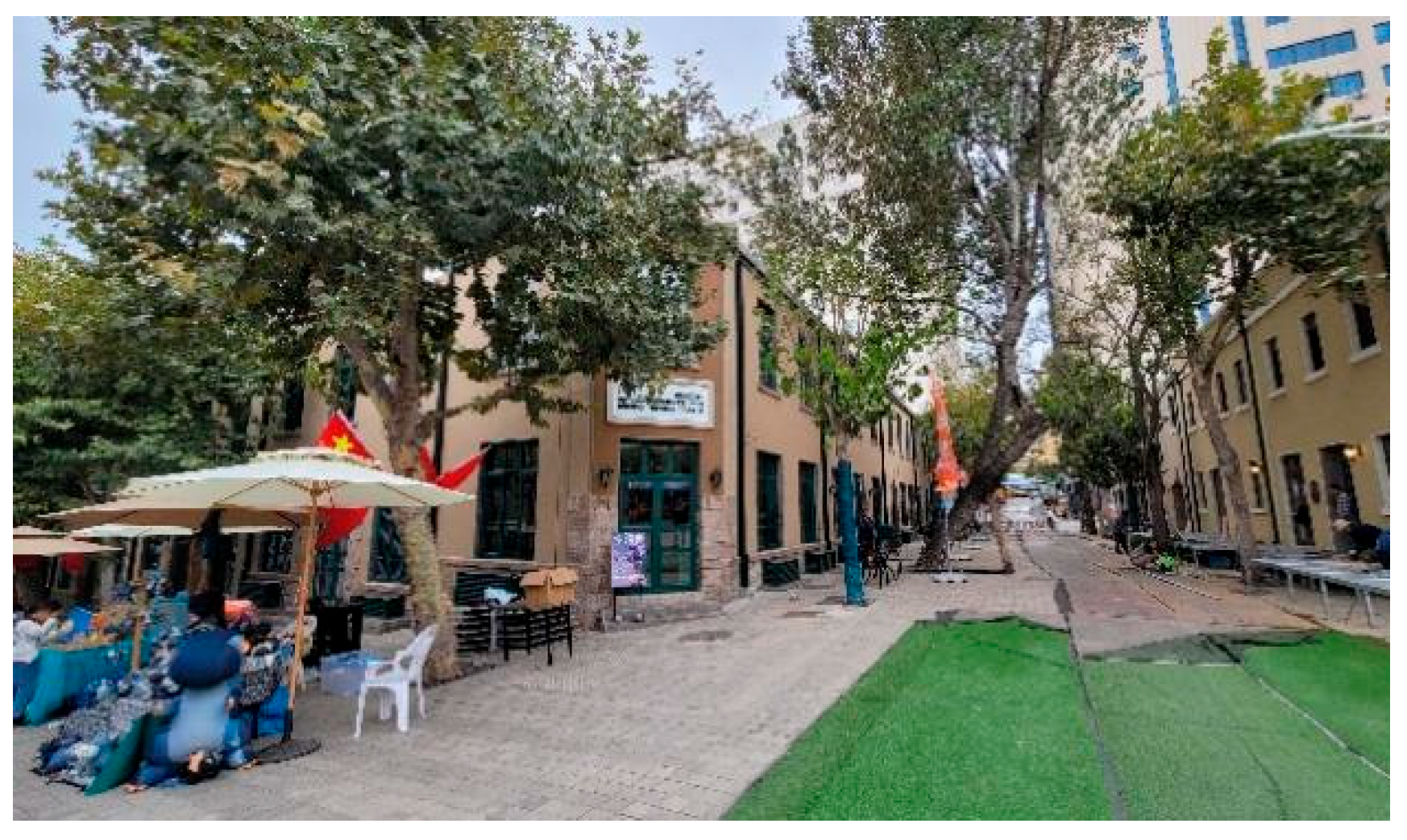
| Main regeneration | In 2005, the construction of a shopping, tourism, business, culture, leisure and entertainment, and nightlife district was planned, with the goal of making the area a famous business district in China. In 2006, illegal buildings along the road were demolished, and old buildings were maintained. In 2009, Pichaiyuan was reconstructed (Figure 8 and Figure 9). |
| Regeneration mode | Monetary compensation or remote resettlement. |
| Characteristics | Focused on business + tourism + conservation, including the revitalization of buildings, industries, and tourism. |
| Results | Commercial vitality was generated in the short term, but most of the shops have now closed. |
Figure 8.
Pichaiyuan in 2022 (photo taken by the author).
Figure 8.
Pichaiyuan in 2022 (photo taken by the author).
Figure 9.
Pichaiyuan in 2022 (photo taken by the author).
Figure 9.
Pichaiyuan in 2022 (photo taken by the author).
The period from 2000 to 2010 was a decade of accelerated urbanization in China, and also a period of important changes in the protection and renovation of historical blocks. In 2002, the “Cultural Relics Protection Law of the People’s Republic of China” was revised, clarifying the concept of “historical and cultural blocks” for the first time. Beijing, Shanghai, and other cities issued special regulations on the protection of historical and cultural cities. Compared with the “large-scale demolition and reconstruction” of the 1990s, there were more attempts at “protective renovation” during this period, including the Shanghai Xintiandi model, which retained part of the building shell and completely commercialized the interior; the Fuzhou Sanfang Qixiang model, which relocated the original residents and transformed the buildings into cultural display areas; and the Beijing Shichahai area, which saw the government-led regeneration of the exterior and the relocation of residents. However, these regeneration projects also sparked controversy due to issues such as excessive commercialization, loss of authenticity, and social equity. The gains and losses of this phase directly affected the upgrading of the protection concept after 2010, and also provided an important case for today’s discussion on “how to make historical blocks truly alive.”
4.4. Fourth Stage (2012–2018): Expropriation, Regeneration, and Stagnation
The fourth stage is new redevelopment with further expropriation, regeneration and stagnation between 2005 and 2010; characteristics of this stage are displayed in
Table 5.
Table 5.
Fourth stage of regeneration.
Table 5.
Fourth stage of regeneration.
| Subject | Government + State-Owned Project Companies. In 2012, the Government established the “European Style Headquarter” (29 experts and scholars from China and abroad were invited to form an expert committee). In 2014, the “European Style Headquarter” was changed to “Qingdao Bay Old Urban Area Transformation Project Headquarter”. |
| Purpose | To revive the vitality of the centennial street, improve the physical environment of the district, protect the style and historic buildings of the historic district, restore commercial vitality, and create characteristic districts with rich local cultures that will become a highly desired tourist destination. |
| Critical influencing factors | Conservation Planning for the Historical and Cultural City of Qingdao (2011–2020). |
| Main planning protocol | Measures for the Conservation and Management of Historic Buildings in Qingdao (2012) and Overall Planning of Zhongshan Road Historic District (2012). |
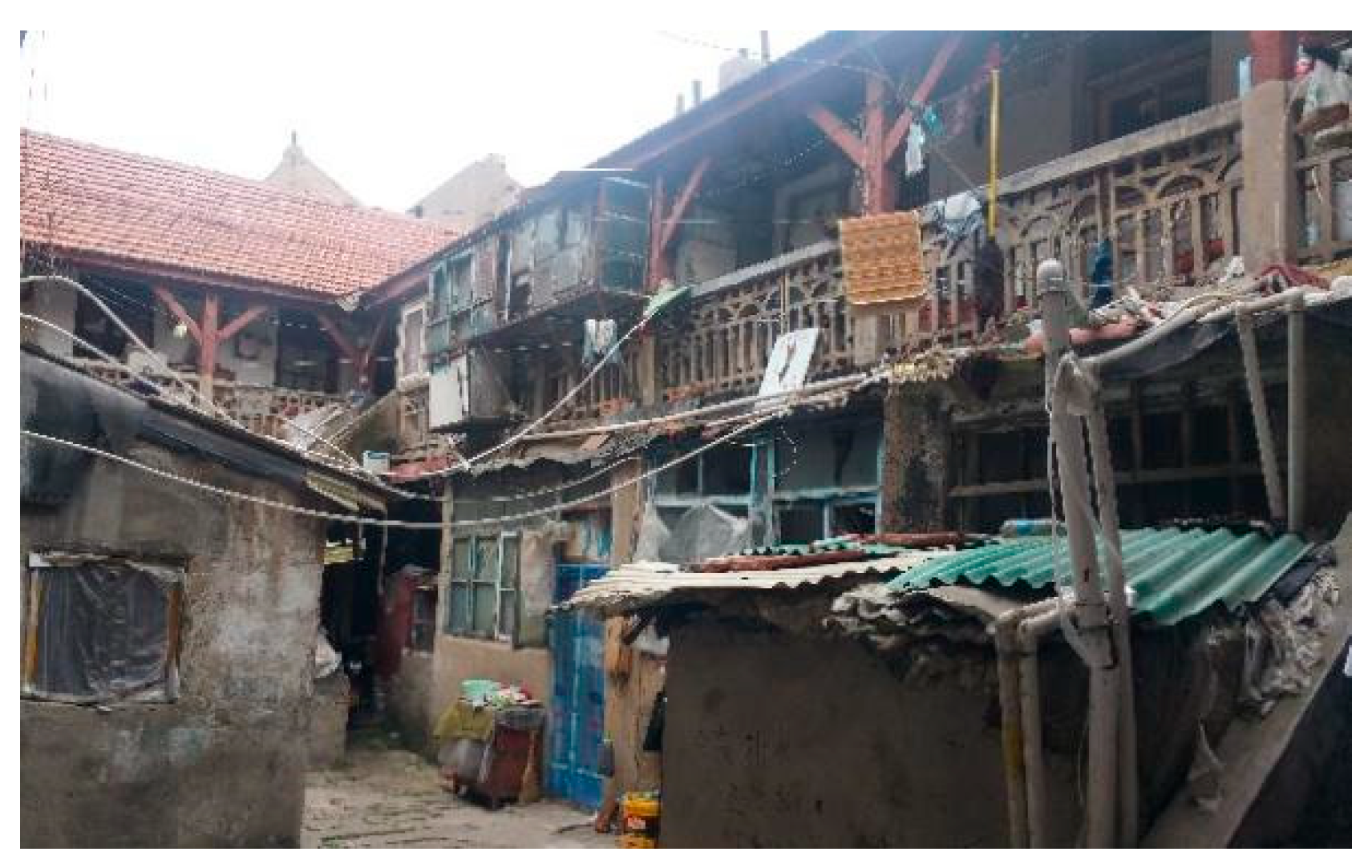
| Main regeneration | In 2015, a shantytown transformation project was launched in the old urban area of Zhongshan Road. In 2017, 12,900 households participated in the shantytown transformation project in Shibei District. Among them, the Jimo Road sub-district had the largest transformation volume in Shibei District in 2017, which involved 3395 households in total (Figure 10 and Figure 11). |
| Regeneration mode | Monetary compensation or remote resettlement. |
| Characteristics | Mainly expropriation of northern “Tapautau”, which lasted for a long time. |
| Results | Because of vacancies, this area seemed to be particularly deteriorating, which aroused widespread concern among the public. |
Figure 10.
Zhongshan Road Liyuan Courtyard during expropriation (photo taken by the author).
Figure 10.
Zhongshan Road Liyuan Courtyard during expropriation (photo taken by the author).
Figure 11.
Zhongshan Road Liyuan Courtyard during expropriation (photo taken by the author).
Figure 11.
Zhongshan Road Liyuan Courtyard during expropriation (photo taken by the author).
After 2010, the regeneration of China’s historical blocks entered a more diversified stage. Based on the lessons learned from the past “large-scale demolition and construction” and “excessive commercialization”, a more sustainable renewal model was gradually explored. At the same time, the 2016 “National New Urbanization Plan (2014–2020)” proposed to actively protect and promote conservative excellent culture in urban construction and renewal, and maintain the historical context of cities. The 2016 “Several Opinions on Further Strengthening Urban Planning and Construction Management” emphasized “prohibiting large-scale demolition and construction, and advocating organic renewal.” During this period, regeneration paid more attention to authenticity protection, community participation, mixed functions, and micro-regeneration strategies. The regeneration of China’s historical blocks gradually shifted from “commercialization-oriented” to an “equal emphasis on cultural and social values”, but how to balance protection, life, and business was still a core problem. Relatively successful cases, such as Guangzhou Yongqingfang Phase II and Nanjing Xiaoxihu, proved that resident participation, low-intensity renewal, and mixed functions are the key, while the failed cases remind us that the soul of historical blocks lies in the “people”, not just the shells of the buildings.
4.5. Fifth Stage (2019–Present): Integration of Production, Business, Culture, and Tourism
The fifth stage is an integration of different functions, such as production, business, culture and tourism after 2019. Main characteristics of this stage are displayed in
Table 6.
Table 6.
Fifth stage of regeneration.
Table 6.
Fifth stage of regeneration.
| Subject | Government + state-owned platform companies + leading enterprises + social capital; leading enterprises integrated design, procurement, construction, and operations. In 2019, Qingdao established the “Historic District Conservation and Regeneration Headquarter”. |
| Purpose | After the unified recovery of the property rights of historic buildings, the historic buildings were utilized as social resources, and regional vitality was activated by integrating new industries and new functions. |
| Critical influencing factors | After the Shanghai Cooperation Organization Summit in 2018, Qingdao put forward a higher goal for the conservation and regeneration of old urban areas; in 2019, an application for inclusion on the World Heritage List was submitted for the old urban area. The 14th Five-Year Plan in 2020 proposed to accelerate the transformation of urban development and implement urban regeneration action; shantytown transformation was promoted by a targeted poverty alleviation policy. |
| Main planning protocol | Conservation Planning for the Historical and Cultural City of Qingdao (2020–2035) in 2020, Conservation Planning for Zhongshan Road Historical and Cultural Block (Regulatory Detailed Planning), Guidelines for the Repair and Construction of Modern and Contemporary Historic Buildings in Qingdao (Trial), Guidelines for Conservation Planning for Historic Buildings in Historical and Cultural Blocks in Qingdao (Trial), and Administrative Measures for the Conservation and Utilization of Historic Buildings in Qingdao in 2020. |
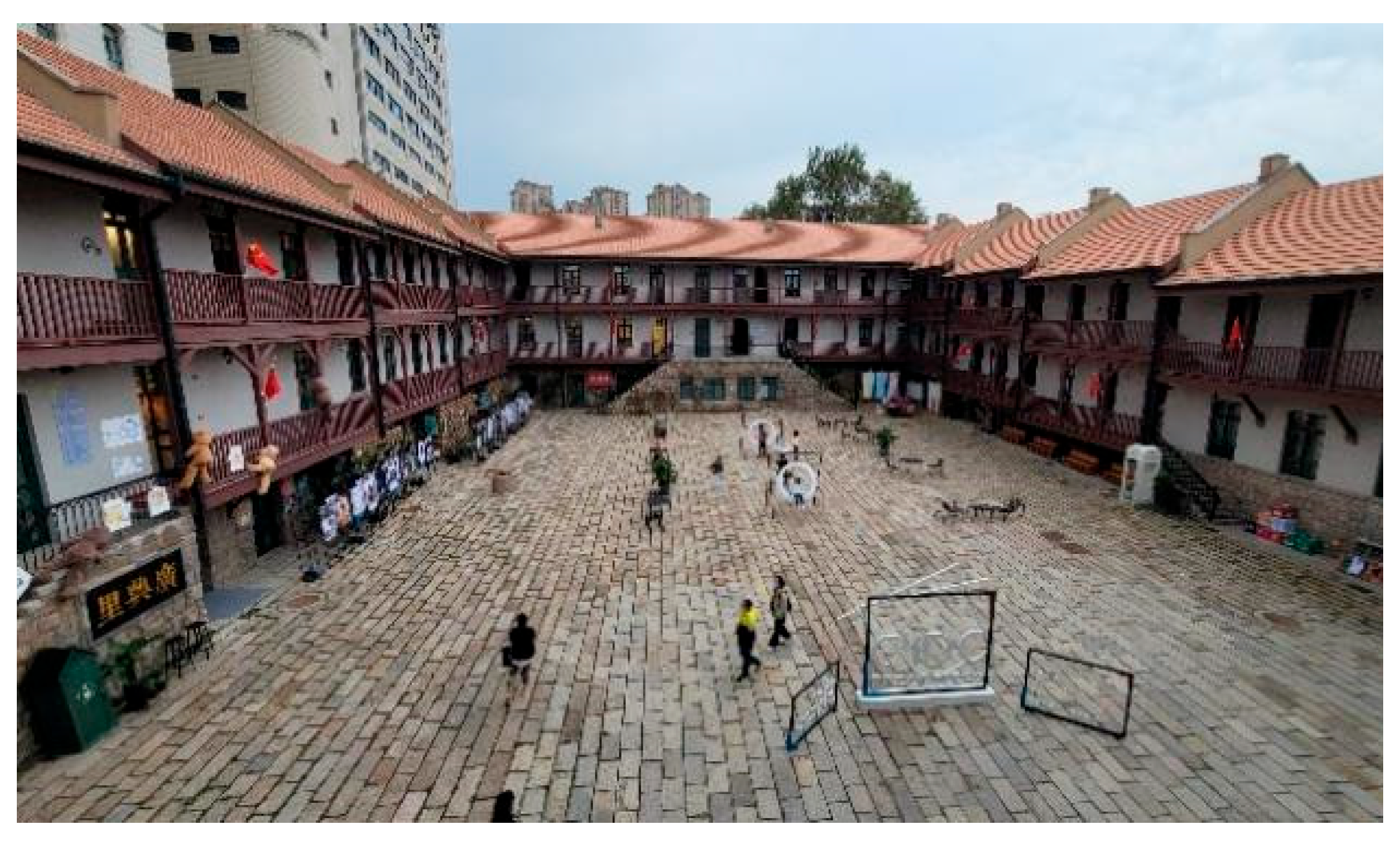
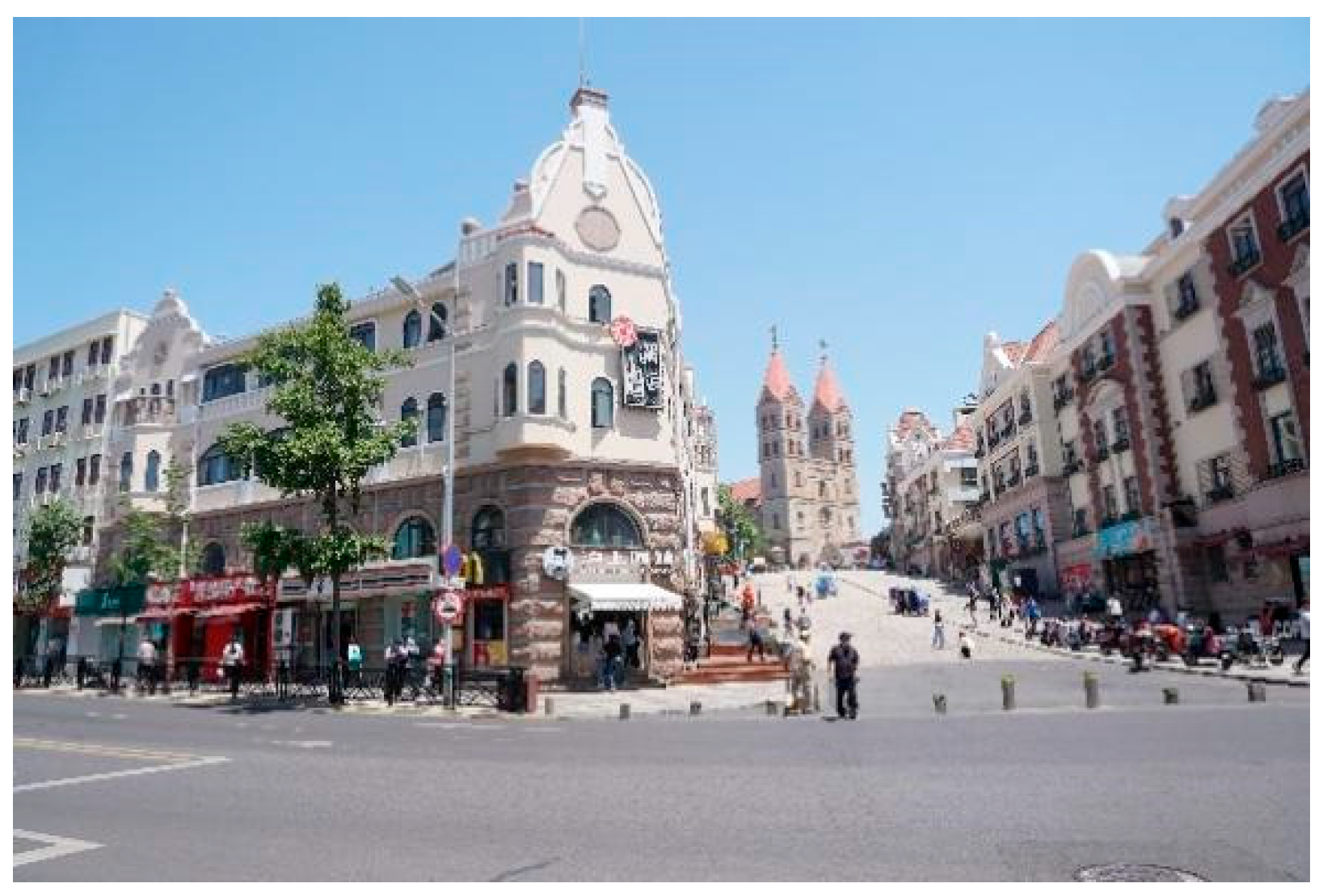
| Main regeneration | In 2021, a phase II transformation project involving the Guangxing, Ningyang Road, and Pichaiyuan areas of Liyuan Courtyard was initiated (Figure 12 and Figure 13): the space arrangement of the railway station square was performed in 2021; No. 4 Hubei Road was renovated; Victoria Underground Plaza, which had been idle for ten years, was transformed into Guangdeli 1898; Jinan Road was widened; the renovation of 42 facades on both sides of Zhongshan Road was accelerated; 11 Liyuan Courtyards along Huangdao Road were repaired; the former sites of the Qingdao Chamber of Commerce at No. 19 Weixian Road and Nos. 72–74 Zhongshan Road were renovated; historic buildings at Nos. 62–70 Zhongshan Road were renovated; the overpass on Zhongshan Road was demolished; and the gate to Zhongshan Mall was demolished. In addition to the regeneration at the material level, the government also enhanced the organization and planning of various cultural activities along Zhongshan Road. |
| Regeneration mode | Monetary compensation or remote resettlement. |
| Characteristics | Focused on the introduction of industries and businesses and new paths for the integrated development of culture, tourism, and business. |
| Results | The regeneration is ongoing, and no specific effect has been seen in the short term. While the restoration of the material environment has been well received, some citizens think that the historic district “has no soul anymore”. |
Figure 12.
Zhongshan Road Liyuan Courtyard after transformation in 2021 (photo taken by the author).
Figure 12.
Zhongshan Road Liyuan Courtyard after transformation in 2021 (photo taken by the author).
Figure 13.
Zhongshan Road Liyuan Courtyard after transformation in 2021 (photo taken by the author).
Figure 13.
Zhongshan Road Liyuan Courtyard after transformation in 2021 (photo taken by the author).
In 2021, the Ministry of Housing and Urban–Rural Development issued a notice on preventing large-scale demolition and construction in the implementation of urban renewal actions, requiring that the demolished building area within an urban renewal unit or project should not exceed 20% of the existing total building area. In addition, residents should not be relocated on a large scale or forcibly; the social structure should not be changed; the relationship between the people, land, and culture should not be severed; and the resettlement rate of urban renewal units should not be less than 50%. The reconstruction of historical blocks after 2020 includes community co-governance models represented by Guangzhou Pantang Wuyue and low-intervention repair models represented by Beijing Bell and Drum Tower area, and its core logic has shifted from “building protection” to “life continuation”.
5. Research Findings
These five distinct stages of urban regeneration in Zhongshan Road, Qingdao, have diverse subjects, purposes, critical influencing factors, main planning protocols, main regeneration goals, regeneration modes, characteristics, and results. It seems like a kaleidoscope of regenerating historical areas in a Chinese context. For instance, in terms of “space production”, it seems that every possibility has been attempted, such as demolition and relocation, in-suit resettlement, and everything in between. “Place-making” shares this feature and includes quite diverse modes. Furthermore, the relationships between different stages are also interesting here, because every subsequent stage has tried to correct the mistakes of the last phase. Therefore, this part will analyse these characteristics, namely, the kaleidoscope style of regenerating modes, and the relevant interactions among the stages through the perspectives of “space production” and “place-making”.
5.1. Mechanism from “Space Production” to “Place-Making”
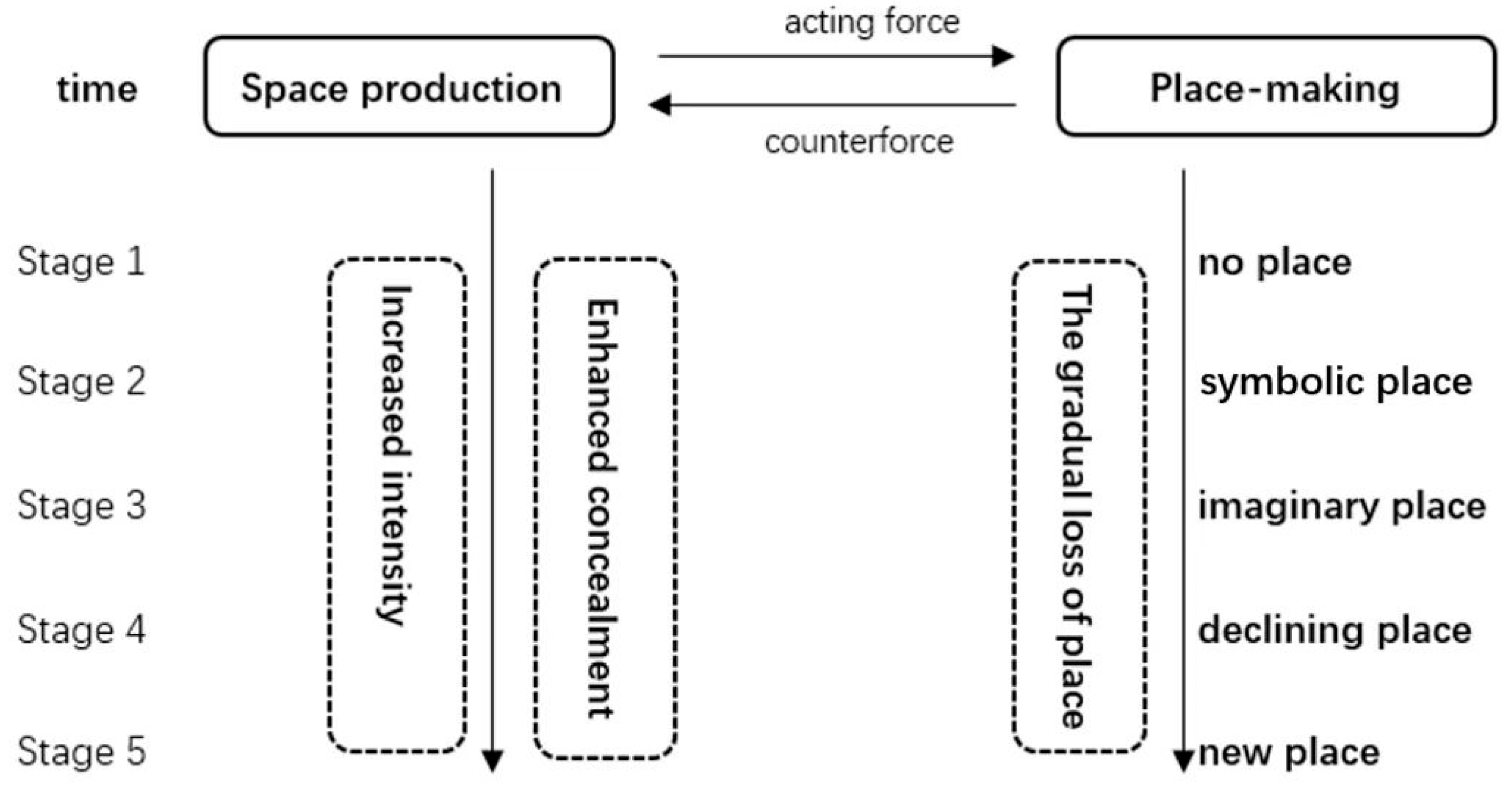
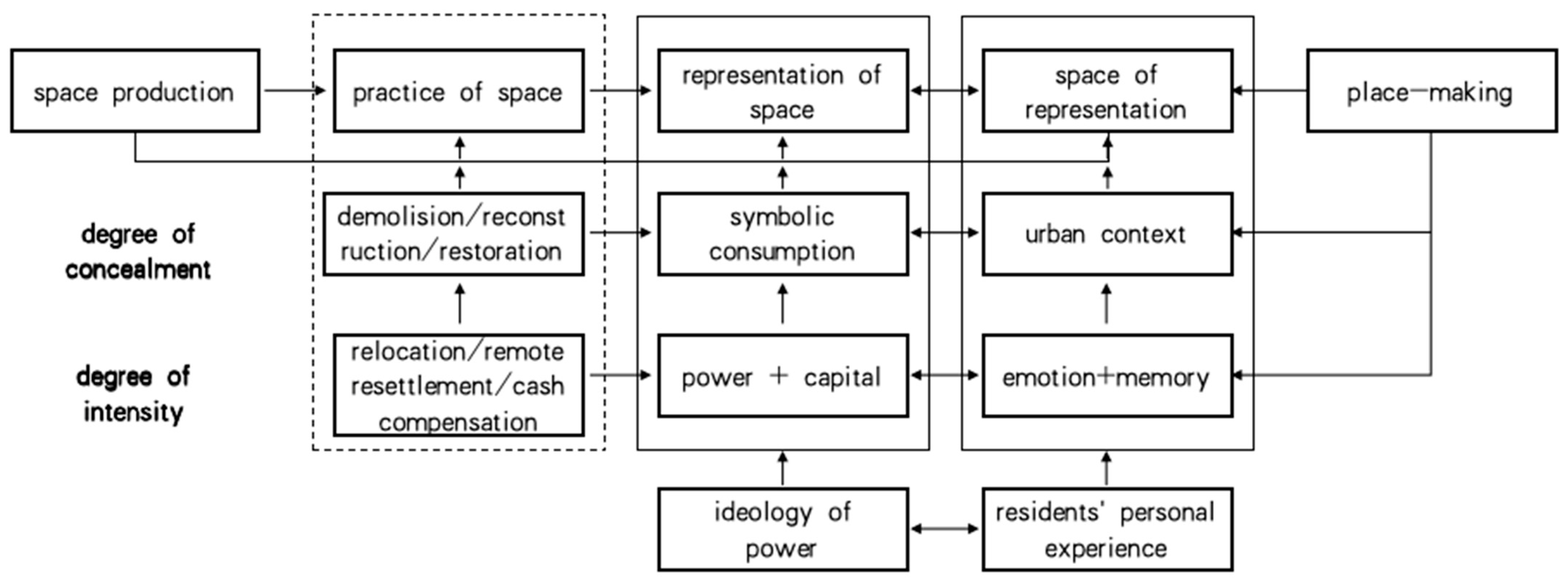
With the help of the analytical framework for the interaction between “space production” (the practice of space and the representation of space) and “place-making” (urban context and emotion + memory) (
Figure 1), it was found that the common essence of the five stages of Zhongshan Road’s regeneration was the will of power embodied by the combination of power (government) and capital (market), in which “space production” started and changed the “place-making”. The specific interactions are as follows.
In the first stage (1990s), the space reconstruction of Zhongshan Road Historic District followed capital-led production, dominated by demolition and construction driven by the demand of capital for growth, without considering the inheritance of local cultural characteristics. Although the new high-rise buildings seriously disrupted the skyline and style pattern of the district, there were not a large number of demolished and constructed plots in general, and there was no fundamental change in the road’s texture (
Figure 4 and
Figure 5). The vitality of the district continued to decline, but it remained a popular commercial district for local citizens, and the dilapidated living environment of the indigenous peoples had not yet begun to lag behind other areas of the city.
In the second stage (2001–2004), the government promulgated the Conservation Planning for the Historical and Cultural City of Qingdao after 2000 to protect the historical style of old urban areas. However, the indiscriminate demolition of historic buildings continued, but new buildings were constructed in a relatively harmonious style through the use of architectural symbols and the matching of architectural scales (
Figure 6 and
Figure 7), which covered up the higher intensity of space production driven by the government, and place-making manifested as the application of historic symbols onto material surfaces. In terms of regeneration, teams in China and abroad were hired for the planning and design of Zhongshan Road Historic District, but the regeneration of Zhongshan Road was far less successful than the development of the new urban area that expanded eastward under the consideration of maximizing economic benefits; therefore, it was difficult to implement a scientific planning and design protocol for regeneration.
In the third stage (2005–2010), regeneration was enacted to pursue economic growth under the leadership of the “Zhongshan Road Transformation Headquarter”, a powerful entity with Chinese characteristics, and the commercial redevelopment of the historic district was the main purpose of the transformation. “Place-making”, focusing on the restoration and transformation of old buildings, aimed to create a rationality for redevelopment consistent with the public’s expectations of local cultural revitalization, i.e., the development of business and tourism mixed with local culture. (Comments from netizens on the “Pichaiyuan” transformation project of 2009: “Pichaiyuan is the memory of the older generation. Of course, memories most often exist only in memories, and some rich colours may be lost when they are reproduced. Now, Pichaiyuan is a popular attraction in the tourist season. The so-called pot stickers, fried skewers and wonton have lost their original taste. Some so-called time-honoured brands were operated by owners all around the country rather than locals.” (comment by Bu in DianPing, December 2021)). “Place-making” in this stage involved the imagination of place based on a commercial purpose, and homogeneous types of businesses led to false place-making.
In the fourth stage (2012–2018), the government continued its leading role through the “headquarter” and increased the intellectual input from top experts in China and abroad to strengthen the ability of the government and state-owned enterprises to achieve regeneration. In this stage, the government mainly expropriated the property rights of individuals and resettled them in other places. Due to the large scope of its involvement, the government’s financial pressure was increasing, leading to stagnation. The complete decline and depression following the original businesses and residents vacating the area aroused widespread concern among the public. Residents lacked the right to know and speak about the transformation process and did not receive a corresponding direct income, but were forced to move from a familiar place, thus resulting in the loss of social capital and facility support attached to the downtown spatial location. (An old man said: “We were pushed into Baisha River (suburb), and old people like us could not find any help when sick.” (Online interview, “Those People and Things in Liyuan Courtyard”, Local Elderly. 2015)).
In the fifth stage (2019–present), the new “headquarter”, in the form of a complex, i.e., government + state-owned platform companies + head enterprises + social capital, received an injection of capital, further enhancing the ability of the power (government) to overcome the challenges of the previous stage and achieve the regeneration goals. Regeneration during this stage was not limited to the material level but included deeper goals, such as economic recovery and social space adjustments. The capital injection undoubtedly solved the funding problem that had long plagued regeneration and conservation, and new industrial projects provided new content for space production. However, the original social spatial relations completely dissolved and were replaced with new consumption relations. Due to the transformation and upgrading of the material spaces, the original businesses could not afford the higher rent and thus gradually left. As a result, Zhongshan Road has gradually become a “new place” that is strange to locals. (“Before the transformation, Haibo Road, Gaomi Road, and Zhifu Road had always had unique hustle and bustle. Dilapidated and damp Liyuan Courtyards of different sizes, large flagstone roads, a crowded street with vendors and barbecue stalls were all the historical imprint of the old Qingdao…Some of the Liyuan Courtyards here were renovated into art galleries, with quite fresh colours; some were transformed into a strong Chinese style with carved dragons and painted phoenixes; some became literary and creative bookstores, full of European style… Unfortunately, I saw a brand new picture with a messy style and a lack of vitality…So I thought that it might be relatively simple to take on a new look, but keeping the original flavour and soul of the old buildings and districts by restoring the old as the old is the most difficult thing worth considering…” (comment by Sa in DianPing, May 2021); “It’s a good opportunity to transform. Unfortunately, there’s no content but an empty shell!” (comment by Shin DianPing, September 2021)).
5.2. Changes in “Space Production”: Increased Intensity and Enhanced Concealment
The essence of the five stages of Zhongshan Road regeneration after 1990 is the material adjustment driven by the capitalization of space. “Space production” is the major mechanism of urban historic area regeneration, and both power intervention and capital investments are the main driving forces of space production. Due to the high institutional and economic costs of historic district regeneration, the government tends to develop new urban areas, further leading to a decline in old urban areas and making regeneration more necessary. To promote the regeneration of historic districts in the face of many challenges, it is necessary to combine power and capital to further increase the intensity of space production and to enhance the efficiency of space production through ingenious strategies. Therefore, both spatial changes and social changes in the “space production” of Zhongshan Road regeneration have become increasingly more intense, i.e., from local new construction to a broader transformation in terms of space, and from in situ relocation to remote resettlement, constantly increasing the intensity of “space production” (reflected in changes in the status quo). Additionally, with the increasing attention of the public to historic heritage, “place” has become a scarce resource in “space”, and power and capital are constantly changing the “urban context” created by the district’s and the residents’ personal experiences, displayed in the form of symbols of consumption and false memories. As a result, the newly added capital value of “space production” is enhanced, and the essence of “space production” is covered up, making the space more concealed (
Figure 14).
5.3. Changes in “Place-Making”: Five Types of Places
The mechanisms and results of “space production”, the “urban context” and “emotion + memory” of “place-making”, have extremely different looks in the five stages. “Place-making” in the first stage (1990s) could be considered to be “no place”, i.e., demolishing old buildings and constructing new high-rise buildings completely ignored the original sense of place. “Symbolic place” was the mechanism and result of the second stage (2001–2004); that is, after the original buildings were demolished, new buildings were intentionally built to have an architectural style consistent with the historical culture, in terms of the district scale and symbol use, and a sense of place was experienced by the residents through the material and one-dimensional symbols. In the third stage (2005–2010), an “imaginary place” was constructed. To enhance commercial vitality through historical and cultural elements, regeneration attempted to achieve “place-making” more comprehensively by transitioning from functionality to the scene, which, however, was not based on authenticity but rather on commercial perspectives, resulting in the loss of local characteristics. The fourth stage (2012–2018) involved more scenes of urban life than commercial scenes because a large number of residents had been relocated to other places, resulting in the loss of vitality and memory, forming a “declining place” (
Figure 14). In the fifth stage (2019–present), commercial space is continuously replacing life space, the urban context has completely changed, the original social relations have been replaced, and memories are continuously being re-infused, forming a “new place”. On the whole, Zhongshan Road, as a “place”, is increasingly alienated and utilized because of the increasing intensity of space production and the concealment of the production strategy. Power and capital are distorting the authenticity of “place” to match the logic of “space production”, and the residents who become involved involuntarily experience a loss of emotions and memories, and experience a new sense of place.
5.4. Reaction of “Place-Making” to “Space Production”
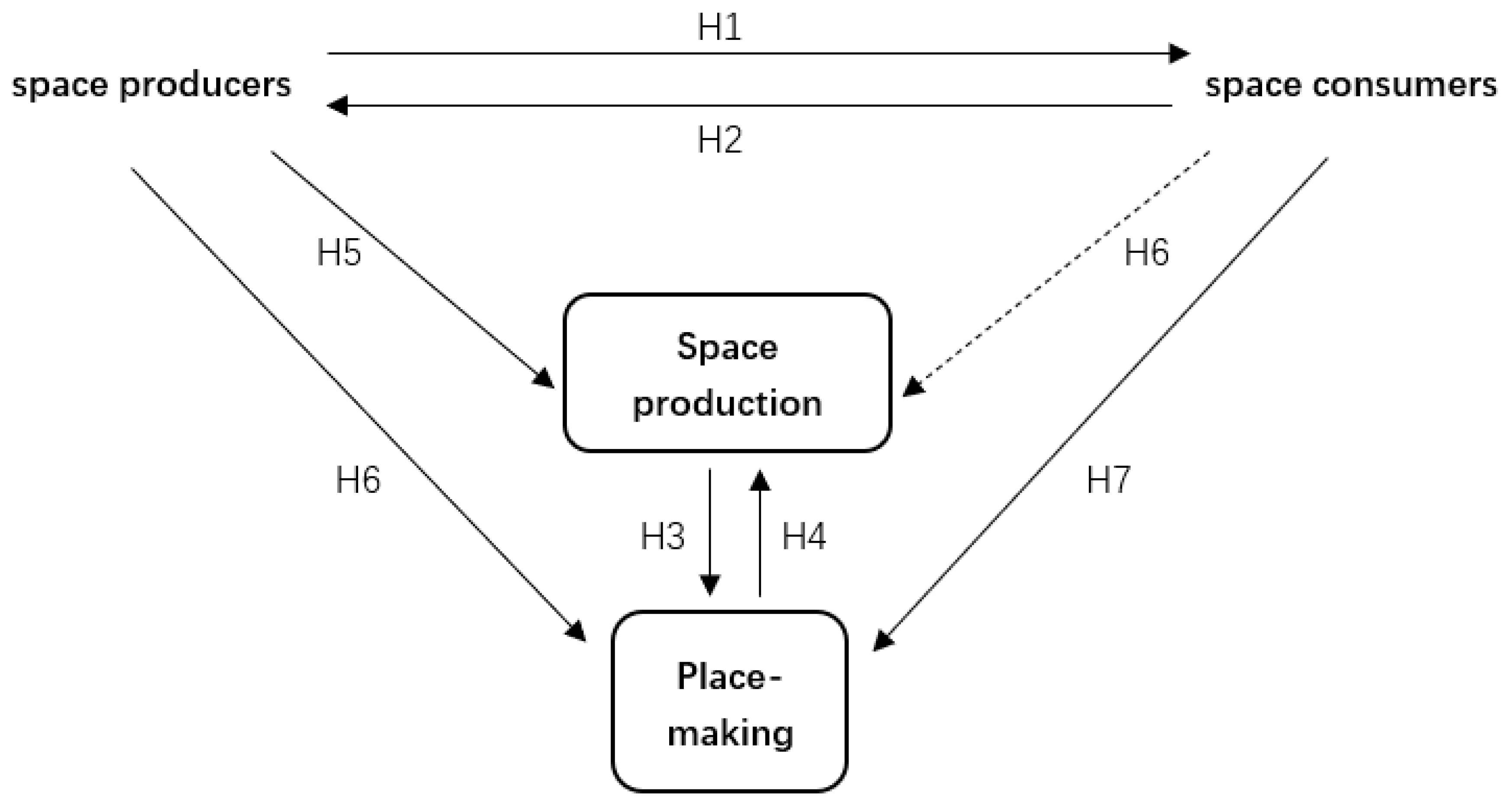
“Place-making” is not only the result of “space production” (H3 in
Figure 11); the transformation of residents’ personal experiences affects the behaviour of power and capital in turn (H4 in
Figure 11). In the first stage of “place-making”, “no place”, caused by new high-rise buildings and ignoring history drew criticism; therefore, “space production” in the second stage had to respond to the residents’ demands for historic culture in a “symbolic” way. The demolished historical buildings on Zhongshan Road, such as Qingdao Hotel and the Red Star Cinema, were rebuilt and repaired on their original sites. In the second stage, the “symbolic place-making” was superficial, and the residents’ emotional identity was insufficient; therefore, the promotion effect on business was insufficient. As a result, the intensity of production was further increased in the third stage of space production, attempting to have residents identify more with the urban context and emotions through “imaginary place-making”, thereby enhancing the commercial value of the renewed space but neglecting life space. For example, Pichaiyuan Food Street was renovated in an attempt to inspire residents to identify more with the city context and emotions, thereby increasing the commercial value of the renewed space. However, as the historical and cultural resources of Pichaiyuan in the Zhongshan Road area were inseparable from the lives of the residents and the city, the historical block renovation project, which was dominated by capital and guided by tourism and commercial needs, led to excessive commercialization. Pichaiyuan sells the same snacks that are available in scenic spots across the country and souvenirs wholesaled from the Yiwu Small Commodity Market. False place construction affects residents’ consumption experiences, thus affecting spatial production, causing the Pichaiyuan renovation project to eventually become depressed and stagnant. Until 2022, Pichaiyuan ushered in a new round of renovation by the government, hoping to revive Pichaiyuan through a new round of material space renovation and re-investment.
In the fourth stage, “place-making” focused on the regeneration of the life scene (residential area) of residents, but the regeneration of life spaces failed to be effective because of the lack of capital mobilization, resulting in a “declining place”. Facing “declining place-making” in the fourth stage, power and capital mobilized more administrative resources and funds in the fifth stage, with greater expectations for the return, and started constructing a “new place”. From the perspective of social relations, with the increase in rents after renovations, it is basically impossible for many original shops to move in, the original residents have moved away, and the social relations between consumers and merchants have basically changed. The result is spatial reconstruction. From this perspective, the decline in the number of consumers will also affect local reconstruction, and then indirectly affect spatial production. In the fifth round of regeneration, the government has encouraged governmental and financial companies to move in to some areas in order to solve the problem of the lack of popularity caused by long-term vacancy. However, whether this construction can effectively form new scenes, emotions, and memories is still in doubt.
“Space production” and “place-making” are determined by “space producers” (H5 and H6 in
Figure 11), but the shared feelings of “space consumers” can be transformed into actions through place-making, indirectly affecting space production (H6 and H7 in
Figure 11). Therefore, although space producers play a leading role in promoting the space produced, the “space consumers”, in a disadvantaged position, have personal experiences and use the new space produced, and the intentions of the highly dominant power and capital will eventually be realized in the practices of consumers. Regarding the poor emotional experience of “place-making”, the business output induced by space production decreases, further affecting the subsequent decisions of space producers (H1 and H2 in
Figure 15). As a result, power and capital have to abandon previous strategies and methods again and again and pursue smooth regeneration progress and face space consumers with a stronger mobilization capability and more concealed production strategies. (“Pichaiyuan, located on Zhongshan Road, was very popular when we were young. Zhang’s meat in pot, sweet congee, and pot stickers…They were all very delicious. Jiangning Guild Hall and the grand theatre…You could drink tea and listen to the opera there. Now, Pichaiyuan has declined because there are fewer and fewer people on Zhongshan Road. It is no longer as prosperous as it used to be. Even on holidays and minor vacations, it is still desolate. We look forward to restoring the glory of Pichaiyuan. Anyway, it is a tourist attraction and worth visiting.” (comment by Hai in DianPing, October 2021)).
6. Conclusions and Discussion: People’s Urban Regeneration
The regeneration efforts directed to Zhongshan Road as a historic block in Qingdao not only reflects the common difficulties in the redevelopment of historical blocks, but also reflects the contradictions in regenerating dramatically declined old urban core areas during a rapid urbanization stage. Under the analytical framework of the interaction between “space production” and “place-making”, this study focuses on the five stages of regeneration of Zhongshan Road Historic District. These regeneration attempts were all “space production” projects led by the government, with the market serving as participants and little involvement by the residents; this regeneration was driven by the capital- and power-led pursuit of urban economic growth. Additionally, the change process from “consumption in space” to “consumption of space” also altered the social relations of the multiple subjects involved in the regeneration of the historic district. In this study, it is found that, in the context of the government paying more attention to eastward expansion and the historic district increasingly becoming a burden, the “space production” of Zhongshan Road became increasingly intense throughout the regeneration process, garnering plenty of opposition. To reduce social pressure, the strategy of power and capital to was to cover up, and the real motive of “space production” using “place-making” became increasingly ingenious and concealed. As the embodiment of the “representation of space” in “space production” by space consumers, the mechanisms and results of “place-making” constantly changed with changes in the intensity and concealment of “space production”, proceeding through five states: no place, symbolic place, imaginary place, declining place, and new place.
Although the “space producer”, who controls the capital and power, determines the land allocation, space planning, space construction, and space sale, and the “space consumer” is in a weak position during the space production of historic districts, the shared emotion of the general public, representing the “space consumer”, can also be transformed into a power that affects space production in the game between the two.
It is difficult to consider the five rounds of regeneration of the Zhongshan Road Historic District as successful. The main criterion for judging whether the transformation has been effective is the flow of visitors. Without the activities of people, the place loses all its vitality. The failure of the Zhongshan Road project lies in the gradual loss of active people. During the transformation process, the government did not pay enough attention to improving the various facilities and housing conditions in the old city. Several transformations were mainly small changes, such as painting exterior walls, or moving out all the original residents, which further reduced the retention of active people in the old city. The reason for this is that under the premise of a growth alliance between an urban government and market-oriented departments, the construction of new urban areas yields economic and political benefits, whereas the regeneration of historic districts does not yield immediate economic benefits and can generate opposition and pressure from cultural and social concerns. In this context, the regeneration of historic districts is regarded as a burden, and it is difficult to receive full investment and support from the government. In addition, the authenticity of historic districts is greatly distorted due to the demand for profit during the development process, and the historic culture is simply symbolized, or even erased and reconstructed, which hurts people’s emotional connection to “place-making” and leads to unsettled “homesickness”. To reverse this situation, completely changing the priority of an urban government, from pursuing economic growth to starting to pursue a “people’s city”, is the most fundamental approach [
31].
In these five stages of regeneration, the local state has displayed its learning and adaptive capacities to pursue political performance and returns, through more mobilized capital, smarter social control, and better beautification. The nature of these changes has not change; the local state is the monopoly player that defines the goals and rules for urban regeneration without sharing power. In the so-called new age, such a shift towards a “people’s city” may reflect a transition in China’s urban politics. Targets beyond economic growth, such as historical preservation, the welfare of urban residents, and public participation, have emerged in new regeneration projects after 2012 [
32]. The market used to be the instrument of the local state for urban regeneration; now, its rule has been replaced. However, continuity, rather than break and change, is the political nature of the new age. Excepting the propaganda part of the “people’s city” concept, people seem to be the serviced targets of urban regeneration; however, who defines people, and what aspects of peoples’ demands will be serviced? These introductory questions are not answered by the people; rather, they are decided and announced by the local state, according to their political preference. Has a mobilized local state maybe lost their desire?
From an international perspective, these changes that have happened in Qingdao are part of a global tendency to surpass limited goals, such as promoting capital accumulation and supporting economic growth. Particularly in the Global South, extra-economic goals, such as increasing political legitimacy, and decreasing social segregation and religious division, are often pursued by local states in urban regeneration projects labelled as economic-led activities [
33,
34]. The markets and communities are instruments for political considerations. Political logic often twists other logics, such as economic, cultural, and social. This may be due to the weak protections of property rights against the threat of state power in developing countries, even in the so-called global neo-liberal age, which emphases the significance of capital. It is always the state, not the markets or communities, that is the entity that produces a space or makes a place; it is always political, not economic or cultural, rationales that are the driving forces that change the form, function, emotion, and memory of the cities in developing countries. Generally speaking, in western cities, because of the relatively stable constitutional order and strong protection of private property against state power, capital has more power in urban transformation. Therefore, capital should be blamed more in the loss of a place after space production. However, in the Global South, capital might be the scapegoat, and the state is the final boss who shifts the blame to the market and capital. Urban studies of developing cities should thus return to a focus on the politics of redevelopment to rethink the role of the state and the specific form of politics. It might be helpful to emphasize that regeneration should not be what the government wants, but rather how the government can serve the people. Lessons from other Chinese cities and international ones, which are displayed between
Section 4.1 and
Section 4.5, are helpful (see
Table 7).
The role of the state, communities, and the markets are different in diverse cases and cities. Under this state–market–society structure, various strategies to regenerate historical buildings and blocks are accordingly established. The key element in all cases is the role of state, which involves policies and actions to encourage actors from the markets and communities to not only follow a profit-led logic, but to also follow a comprehensive perspective to include social and cultural values in a gradual manner. Not as a “space producer”, but as the “place-maker”, the government should apply the following actions:
- (1)
Place-making should emphasize the strategy of “protecting people and buildings together”.
- (2)
Give equal importance to the material relics and intangible heritage of different eras, and enhance a place’s spirit and the cultural identity of historical blocks.
- (3)
The “Improvement of people’s livelihood” is the basic premise. The utilization of existing historical buildings should take into account the residents’ willingness to relocate, pay attention to the local life of the residents, improve their living quality while stimulating the vitality of the site, and integrate the site into modern life.
- (4)
“Small scale, gradual” is the basic operation mode of design and implementation. Expand financing channels, prevent excessive capitalization, do not use the government or development unit as the sole subject for the overall transformation, and encourage private capital intervention and the residents’ spontaneous regeneration.