Article

Losing One’s Place During Policy Suspension: Narratives of Indirect Displacement in Shanghai’s New-Build Gentrification

College of Architecture and Urban Planning, Tongji University, Shanghai 200092, China
*
Author to whom correspondence should be addressed.
Buildings 2025, 15(15), 2766; https://doi.org/10.3390/buildings15152766
Submission received: 2 July 2025 / Revised: 22 July 2025 / Accepted: 28 July 2025 / Published: 6 August 2025
(This article belongs to the Special Issue Emerging Trends in Architecture, Urbanization, and Design)

Abstract

While existing studies document physical and economic impacts of new-build gentrification, the temporally protracted trauma of indirect displacement in communities adjacent to redeveloped areas remains understudied. Employing constructivist grounded theory, this study asks the following question: how do residents experience place attachment erosion during prolonged policy suspension in Shanghai’s new-build gentrification? Through iterative analysis of 25 interviews, we reveal a temporal vicious cycle of waiting triggered by uneven redevelopment and policy inertia. This cycle systematically dismantles belonging through several mechanisms: (1) chronic place-identity deterioration; (2) progressive social network fragmentation; (3) the collapse of imagined futures; and (4) the ambiguous loss of place attachment—where physical presence coexists with psychological disengagement. Crucially, we redefine indirect displacement as a temporal erosion of place identity and attachment, revealing a paradoxical state of physical presence coexisting with psychological disengagement. This paper provides a new perspective for better understanding the different dimensions of indirect displacement in new-build gentrification, which will help inform equitable development efforts that are more inclusive and just.

1. Introduction

Amidst the contentious debates surrounding the third wave of gentrification in 2005, Davidson and Lees pioneered the concept of “new-build gentrification”. This specific form of gentrification is characterized by residential redevelopment projects, such as luxury apartment complexes or townhouses, that attract middle-class residents and lead to the displacement of existing lower-income communities [1]. Subsequent quantitative research on new-build gentrification, however, has revealed that since many urban redevelopment projects occur on brownfield sites, vacant land, or abandoned parcels, this particular form of gentrification does not necessarily entail the direct displacement of residents [2,3]. This empirical insight regarding the absence of direct displacement has prompted a significant shift in the critical perspectives of some scholars towards gentrification. Their central thesis posits that, in contexts where low-income communities are not directly displaced, the influx of new middle-class residents—endowed with substantial economic, social, and cultural capital—can catalyze increased public investment. This augmented investment subsequently fosters the development of enhanced infrastructure, public services, and urban landscapes within the area [4]. Furthermore, it is argued that this process can generate increased opportunities for “upward mobility” for the remaining low-income residents in the vicinity, alongside improvements in local employment prospects and household income levels [5].
However, this seemingly optimistic narrative has been challenged by critical scholars who argue that the absence of physical displacement does not preclude other insidious forms of socio-spatial exclusion. Building on Marcuse’s (1985) foundational concept of exclusionary displacement, whereby gentrification restricts housing access for low-income groups by reducing the availability of affordable properties [6], Davidson (2008; 2009) expands the displacement framework to encompass indirect displacement. Drawing on the phenomenological perspectives of Lefebvre and Heidegger, Davidson emphasizes the social dimension of place and conceptualizes indirect displacement as a multidimensional process of socio-spatial exclusion [7]. Here, while remaining physically in place, low-income residents experience the erosion of neighborhood resources, cultural alienation, and a profound loss of place [7,8]. This resonates with Atkinson’s (2015) notion of symbolic displacement, which is defined as the complex feelings of alienation, estrangement, and “incumbent unanchoring to dwelling in place” experienced by residents as their neighborhood undergoes drastic physical and social transformations [9]. Crucially, overlooking these indirect and symbolic forms of displacement, which generate significant emotional distress, ontological insecurity, and social dislocation even in the absence of immediate physical removal [10], leads to a profound underestimation of the true human cost and socio-spatial impact of new-build gentrification [11,12].
As a dominant mode of urban transformation in China, state- and property-led new-build gentrification has generated an extensive amount of literature documenting its socio-spatial consequences [13]. Quantitative analyses of Shanghai reveal how municipal governments leverage land commodification and luxury redevelopment to accelerate capital accumulation, resulting in the direct displacement of large numbers of low-income residents during the new-build gentrification process [14]. Research in Shenzhen has employed multilevel hedonic price models to quantitatively confirm the strong price-shadowing effect and unveil the significant phenomenon of indirect displacement triggered by large-scale property-led redevelopment projects [15]. However, existing studies predominantly focus on the political and economic drivers of redevelopment projects, and the socio-spatial structure transformation of redevelopment areas. There is a significant lack of research on residents’ feelings about indirect displacement in communities that have been targeted for new-build gentrification but suspended from it. The following key questions remain unanswered: How do socio-spatial structures transform in communities adjacent to yet excluded from new-build gentrification? How do the residents experience the threat of indirect displacement under prolonged policy suspension? How does policy suspension and temporal uncertainty reshape residents’ place attachment and everyday life?
To bridge these gaps, this study uses constructivist grounded theory (CGT) to investigate the impact of new-build gentrification on the sense of place of residents who remain in communities adjacent to redeveloped areas. Specifically, we explore how prolonged exposure to the threat of redevelopment and the resulting socio-spatial transformations shape residents’ place identity and attachment, as well as experiences of indirect displacement pressures.
The Xibailinsi community is a uniquely salient and theoretically significant case study for this research. Located within Shanghai’s historic Yangpu Riverside Industrial Area, the area has undergone extensive state- and property-led urban redevelopment since the early 2000s, which is emblematic of China’s dominant mode of new-build gentrification. Xibailinsi was formally designated for redevelopment as part of this broader transformation wave; however, unlike neighboring areas that have been demolished and rebuilt, redevelopment plans for Xibailinsi have been suspended for an extended period. This has created a state of limbo for its residents, who have consequently faced sustained pressure to leave and have lived under the shadow of potential redevelopment for years without any actualization of the planned project. This protracted uncertainty, coupled with its physical proximity to completed or ongoing luxury redevelopment zones, makes Xibailinsi an ideal site for examining the under-researched dynamics of communities targeted by, yet suspended from, new-build gentrification. The area offers a critical vantage point from which to understand how socio-spatial structures evolve under such suspended animation, how residents navigate the persistent threat of indirect displacement, and how temporal uncertainty fundamentally reshapes place attachment and everyday existence on the urban fringe of major redevelopment projects. It should be noted that Xibailinsi is an aging community. According to China’s Seventh National Census, over 60% of its residents in 2020 were aged 60 or over. This demographic reality is reflected in our sample. Consequently, this study primarily examines how a prolonged threat of indirect displacement reshapes place attachment among elderly residents experiencing cumulative temporal trauma.
The remainder of this article is structured as follows. Section 2 reconstructs the spatial trajectory of Xibailinsi within the two-decade new-build gentrification process of Yangpu Riverside, contextualizing the community’s physical environmental changes and the suspension of the community’s redevelopment policies. Section 3 introduces the CGT research methods and semi-structured interview data. Section 4 provides a detailed description of the coding process, while Section 5 sheds light on the dimensions of indirect displacement experienced during the wait for new-build gentrification and culminates in the theorization of the “vicious cycle of waiting”.

2. Xibailinsi as the Target for New-Build Gentrification

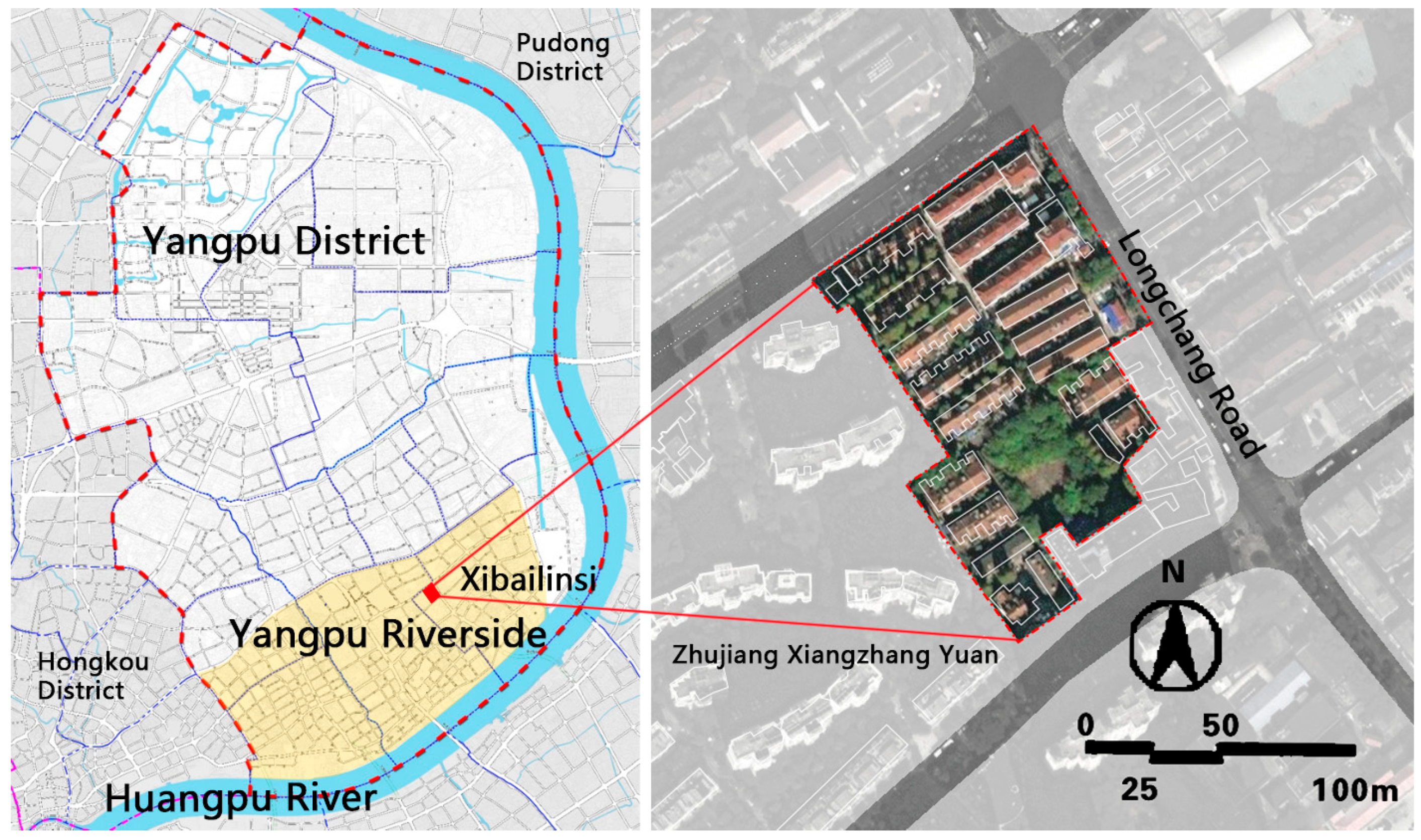
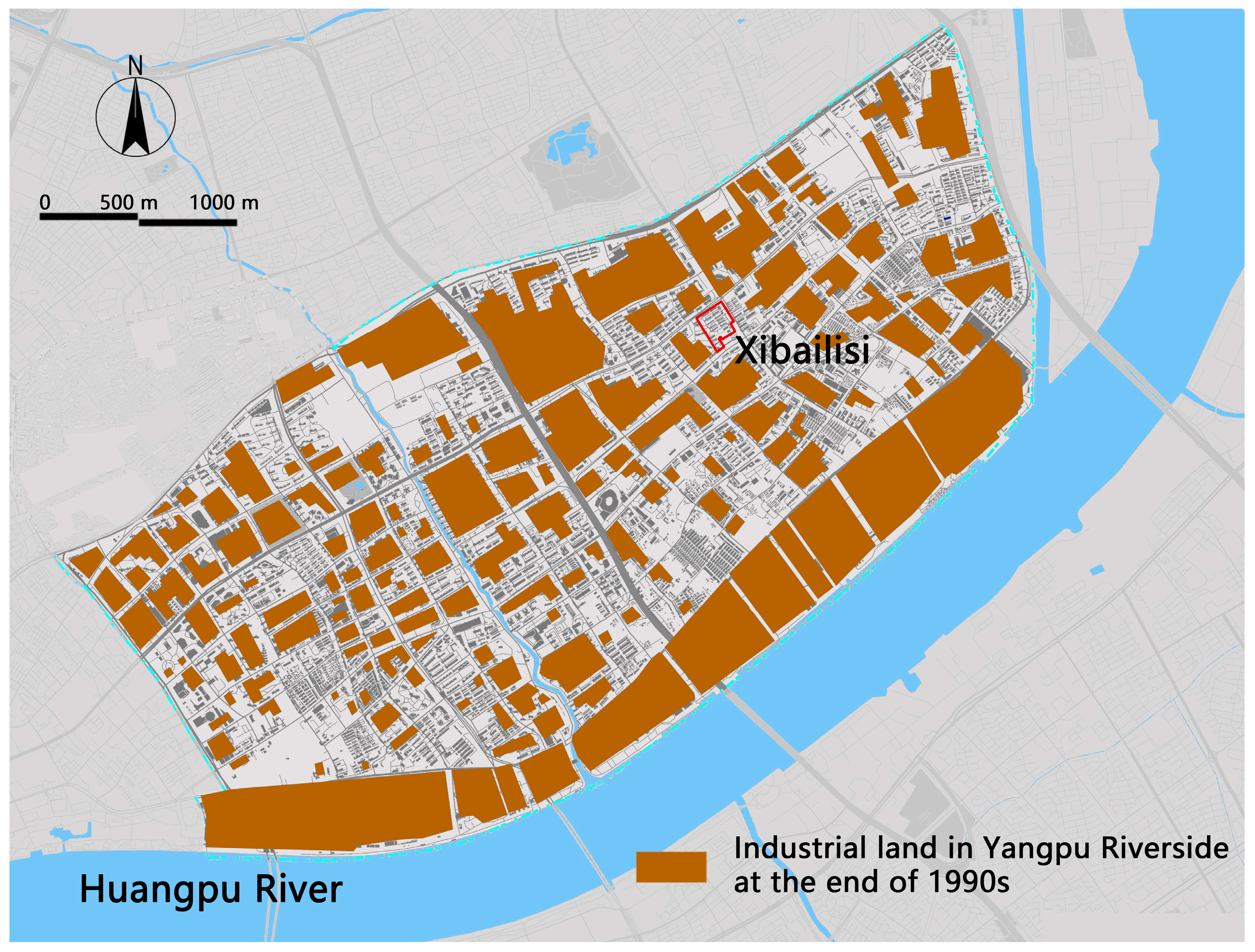
Shanghai Yangpu Riverside Area, where Xibailinsi is located, has historically served as a key industrial hub and the city’s largest residential area for factory workers (see Figure 1). During the Concession Era (1843–1943), foreign capital—notably from Japanese and British firms—established factories, waterworks, power plants, shipyards, and textile mills within this International Settlement. Adjacent to these industrial compounds, foreign investors built hierarchical worker dormitories, traditional lilong (lane-house) neighborhoods, and extensive self-built settlements for laborers and refugees [16].
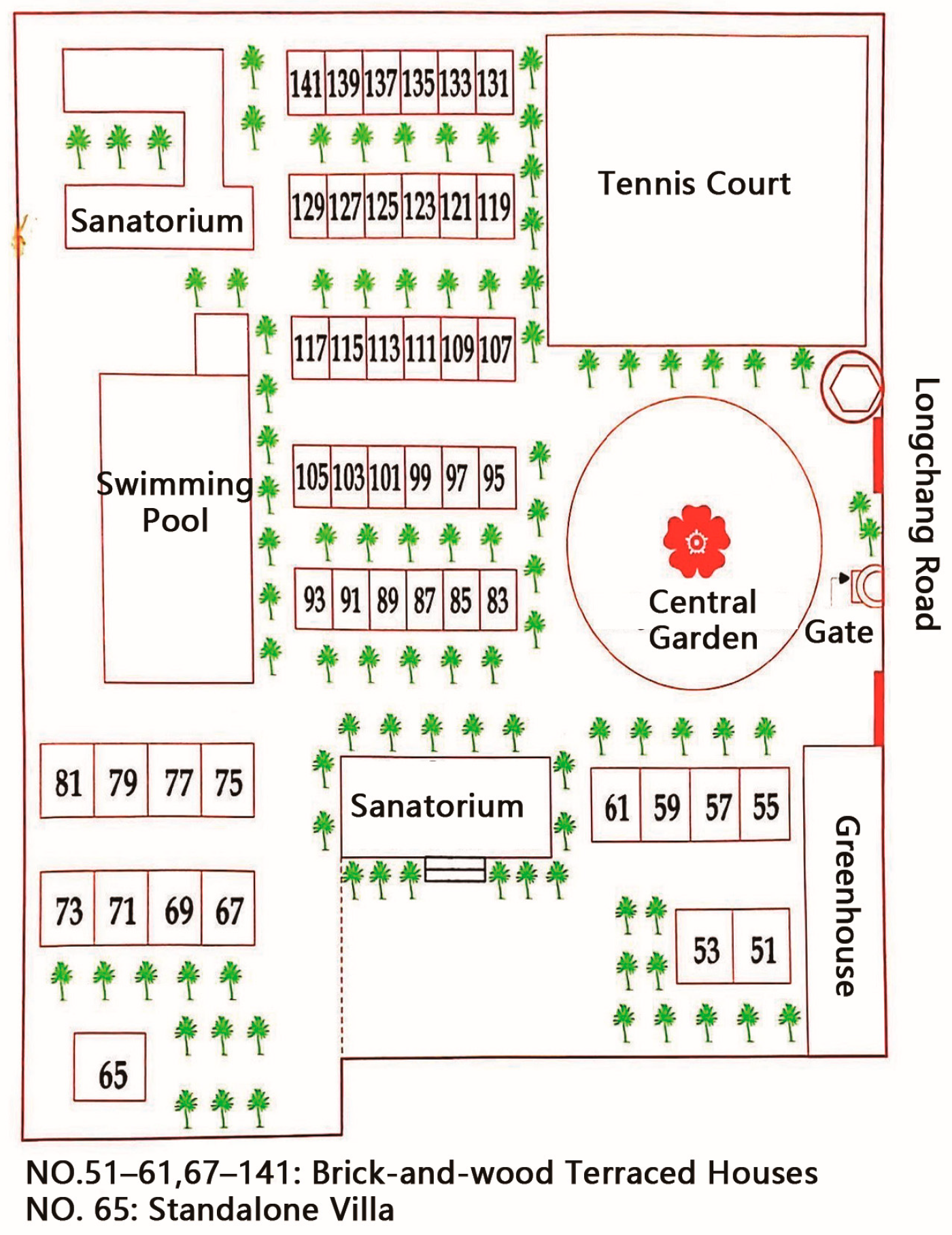
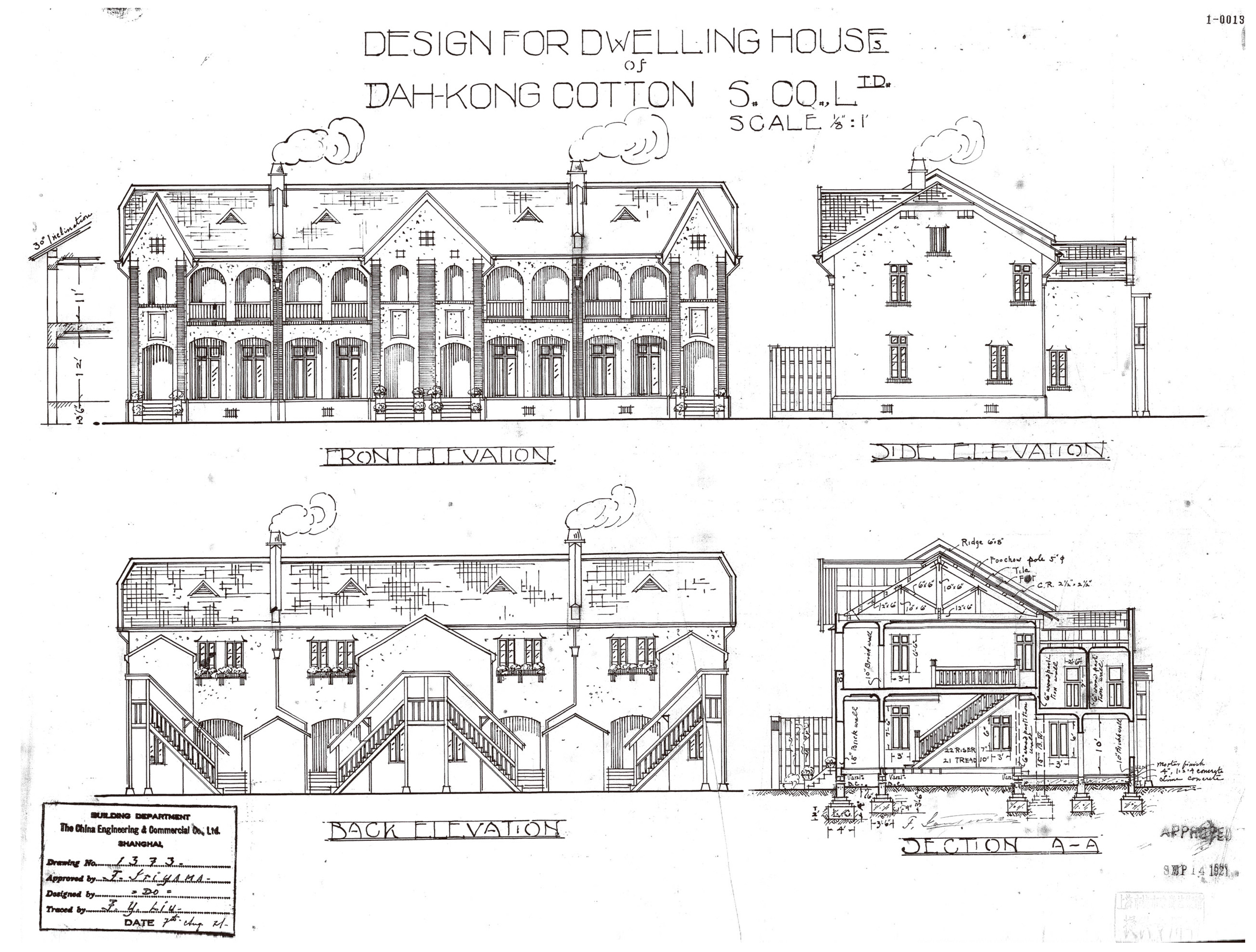
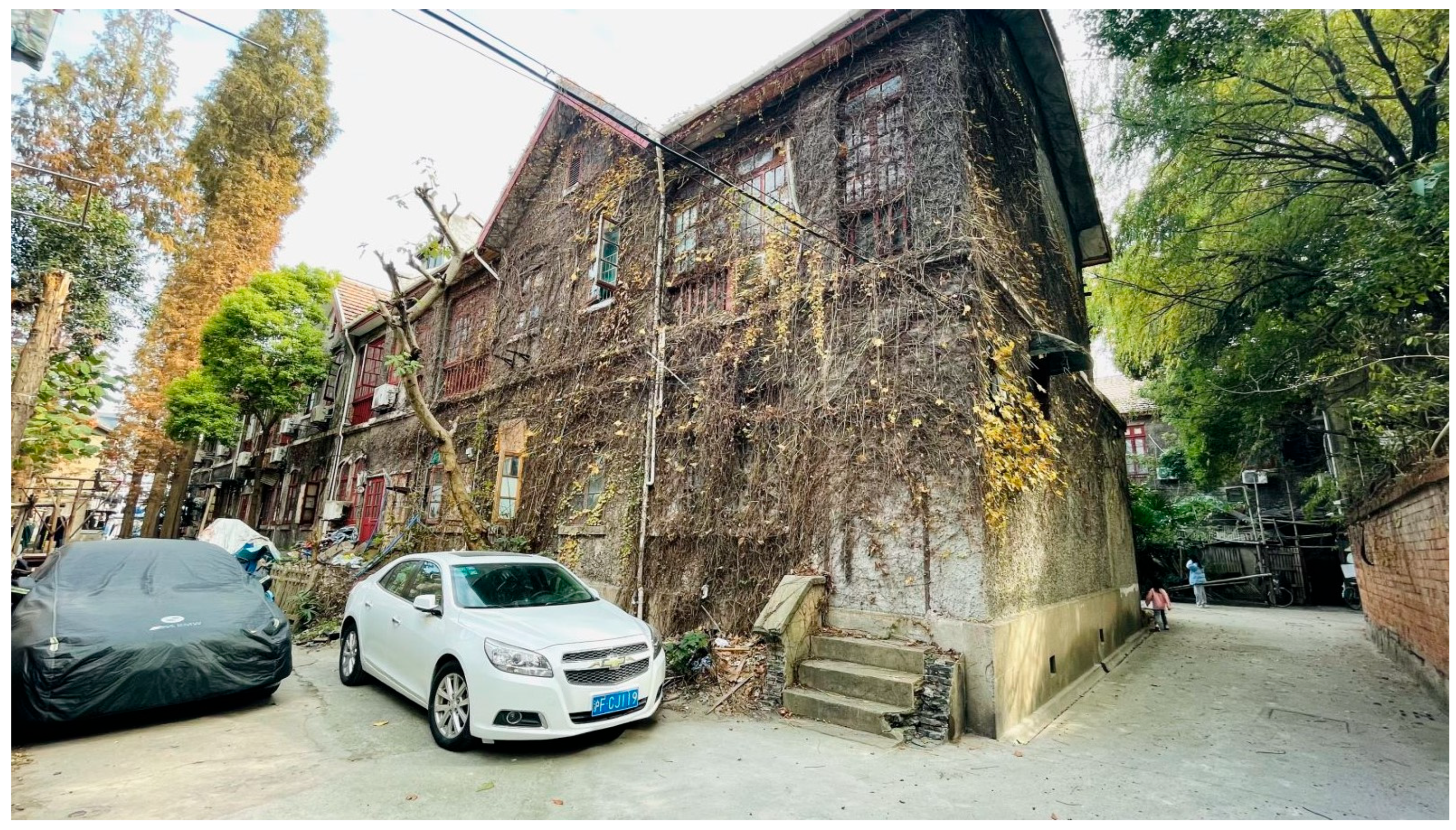
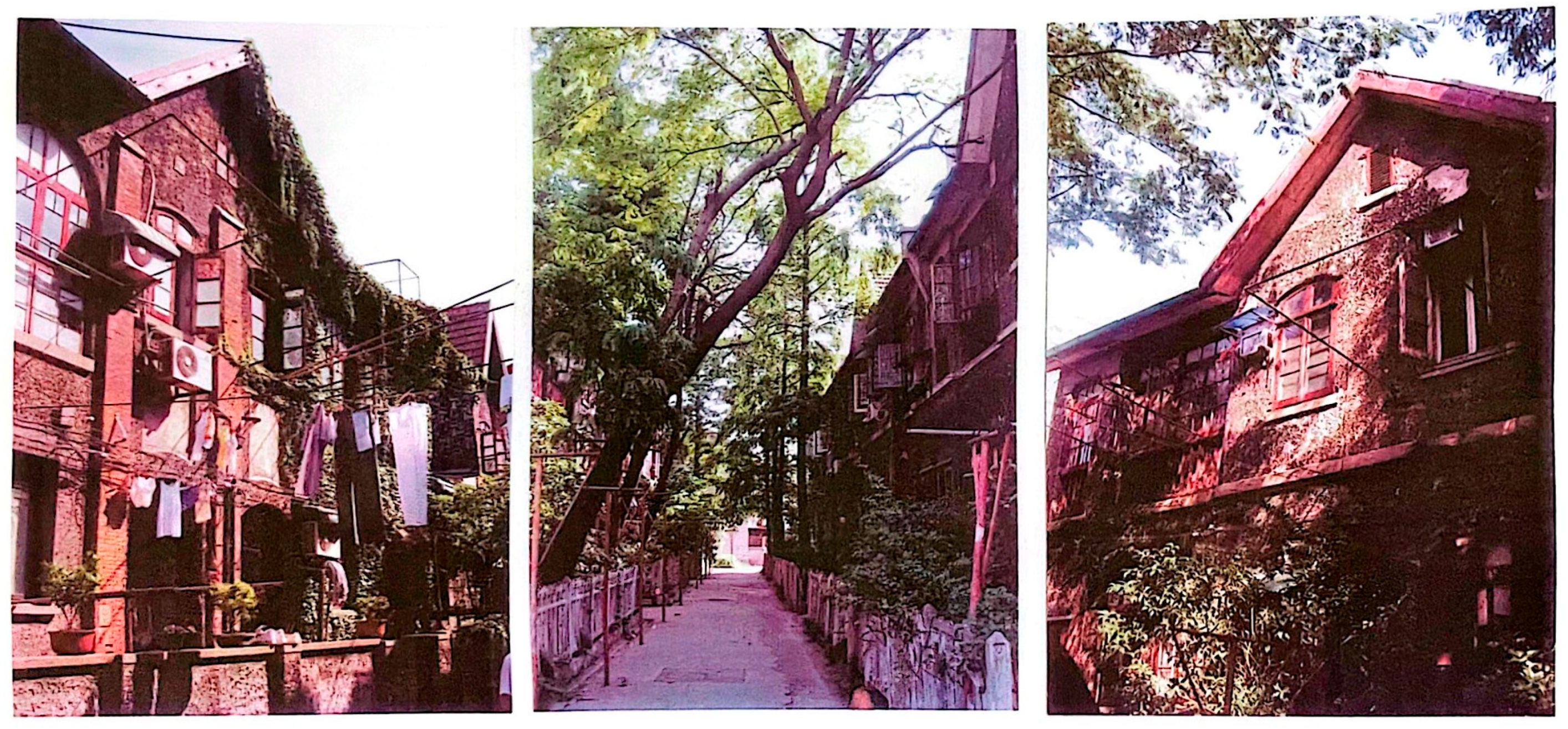
Xibailinsi was constructed during this period by the Japanese-owned Dahkong Cotton Mill to serve as managerial dormitories. The compound originally comprised nine brick-and-wood terraced houses and one standalone villa, accompanied by communal amenities including a central garden, a swimming pool, a tennis court, and a sanatorium (see Figure 2, Figure 3 and Figure 4).
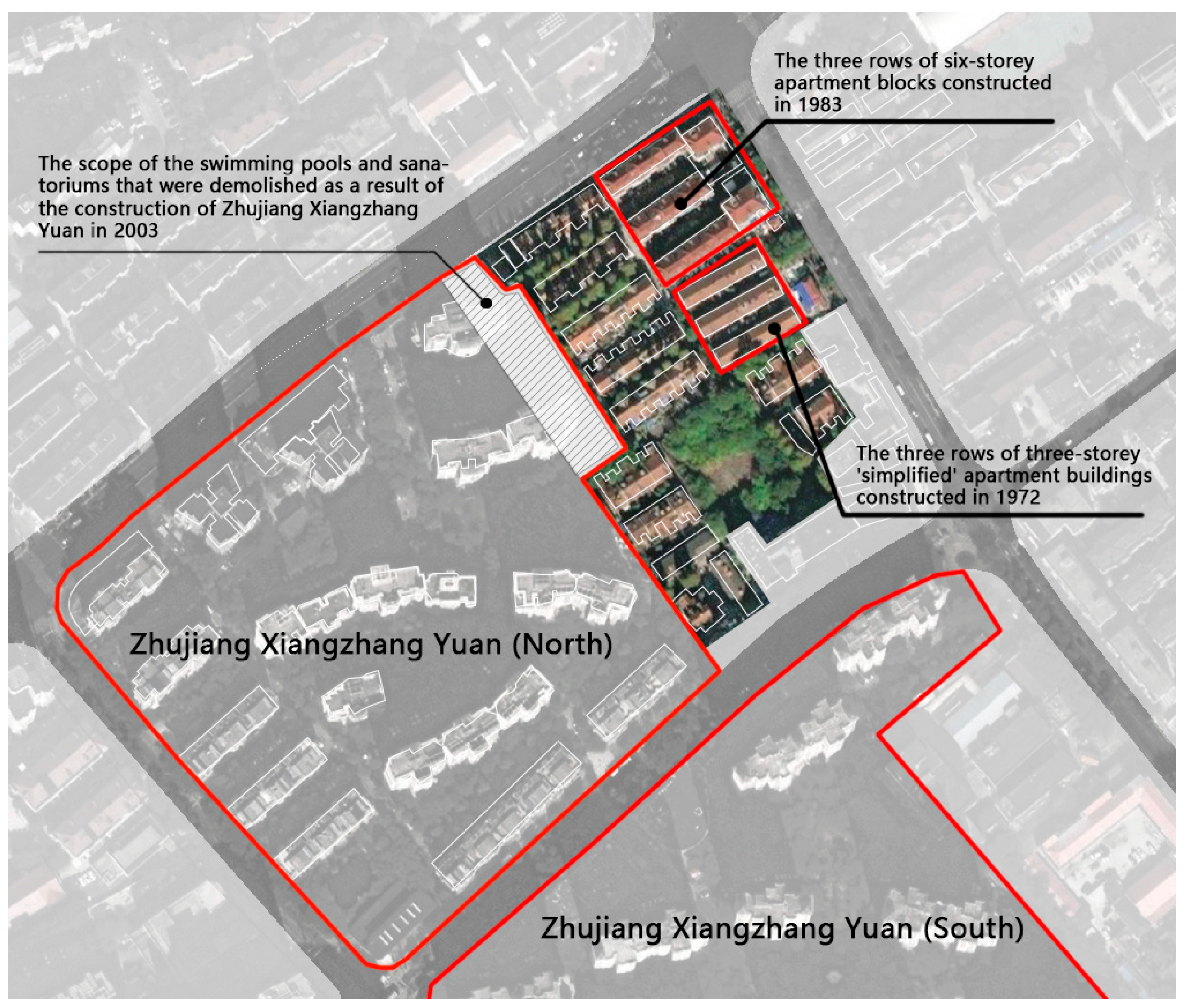
Following the establishment of the People’s Republic of China in 1949, state-owned enterprises (SOEs) expanded industrial operations in Yangpu Riverside, attracting waves of workers and intensifying population density. Over the following five decades, this industrial–urban trajectory resulted in the creation of a spatial fabric in which SOE factories, SOE residential compounds (known as the danwei system), and informal settlements became intertwined (see Figure 5). Xibailinsi remained a residential area for SOE workers during this period but became more densely populated: the central garden and tennis court were demolished in 1972 and 1983, respectively, and replaced by three rows of three-story simplified apartment buildings and three rows of six-story apartment blocks (its construction quality is slightly better than simplified apartment buildings) to accommodate more families through welfare housing allocation (see Figure 6).
Market reforms in the 1990s led to the relocation of factories and the restructuring of SOEs. A large number of factories in the Yangpu Riverside Area have started to move out to the suburbs or shut down. Meanwhile, in 2002, Shanghai adopted the comprehensive transformation of both sides of the Huangpu River as a municipal redevelopment strategy. The Yangpu Riverside Area was identified as a key area for transformation due to the large amount of industrial land available there. Local authorities began actively promoting the relocation of industrial enterprises in the riverfront area for commercial and residential use. Alongside the housing commercialization reforms of the same period, this resulted in a wave of large-scale commercial residential development on industrial land in the Yangpu Riverside Area [17]. Between 2005 and 2010, land-use changes were implemented on 94 hectares (ha) of land, while land-use rights were transferred for 50 ha. During the subsequent period (2010–2015), 48.4% of the total land area in the Southern Yangpu waterfront was completed with land-use function, and 22.7% was sold to new owners for development [18].
Xibailinsi also experienced a partial relocation during this period. Between 2001 and 2003, the adjacent Shanghai Smelter was redeveloped into a luxury housing complex “Zhujiang Xiangzhang Yuan” (see Figure 6 and Figure 7), which incorporated the swimming pool and sanatorium of Xibailinsi. This prompted petitions from residents for inclusion in the redevelopment. The Yangpu District authorities initiated land acquisition in 2004 but suspended demolition in 2005 due to resistance concerning historical preservation and disputes over compensation. Ultimately, 147 households (36%) were relocated, while 257 households (64%) chose to stay in Xibailinsi.
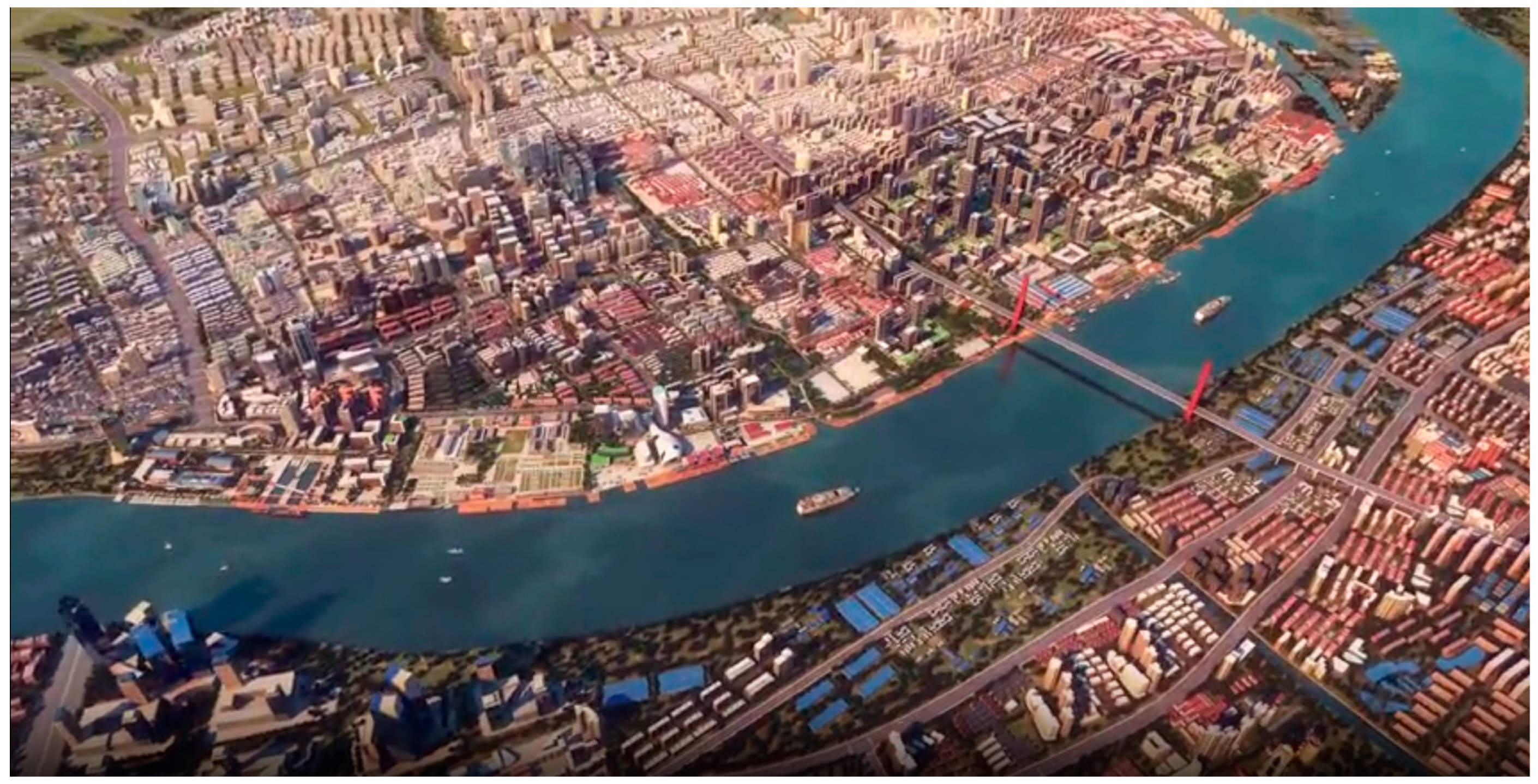
Large-scale commercial and residential development on industrial land in the Yangpu Riverside Area has resulted in obvious signs of new-build gentrification appearing in parts of the area [19]. During this period, the Shanghai Municipal Government and the Yangpu District Government set out their vision for the area’s future through a series of regeneration and development plans. The aim was to create high-quality work–life spaces that would attract science and innovation elites and establish the area as a world-class waterfront destination [20] (see Figure 8).
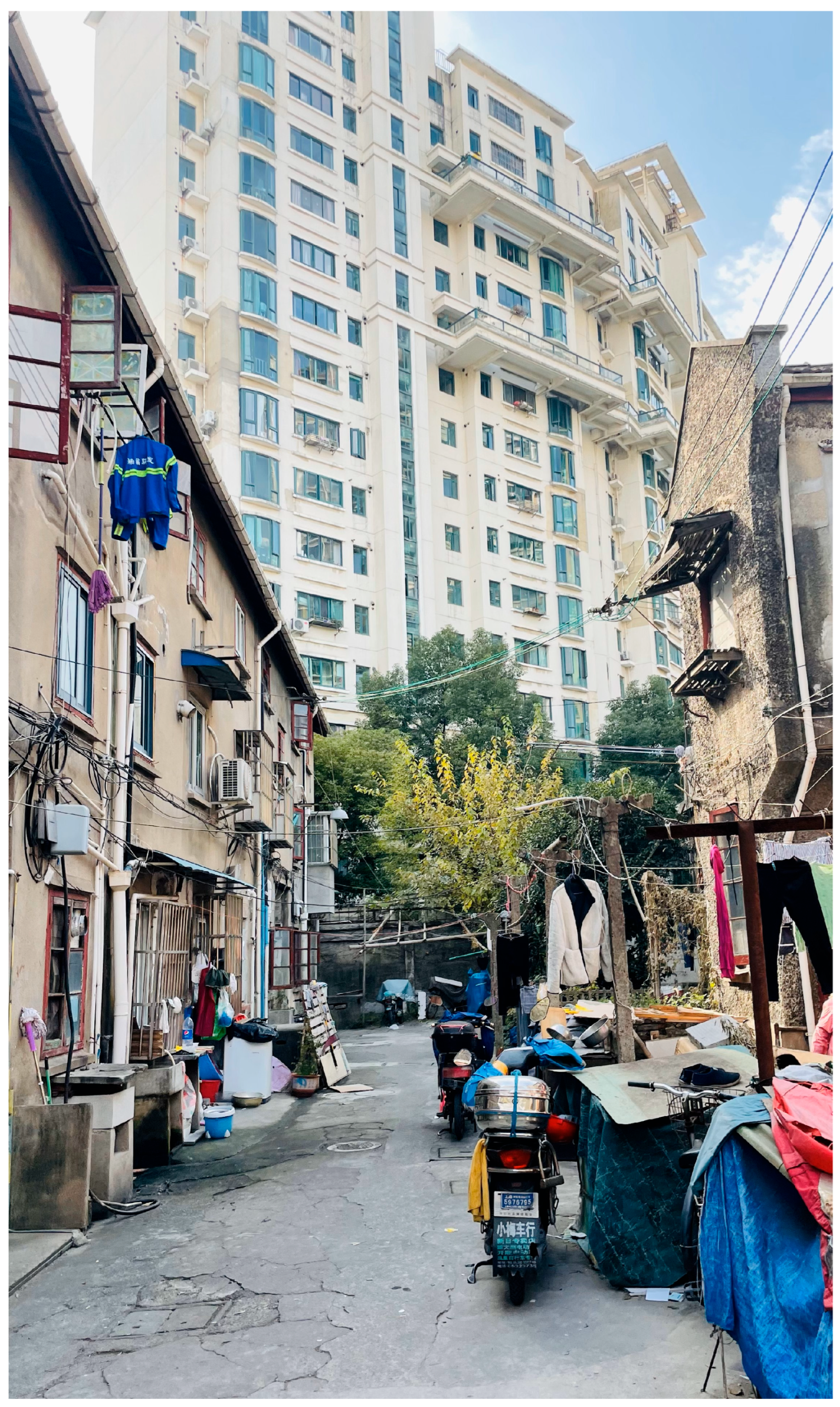
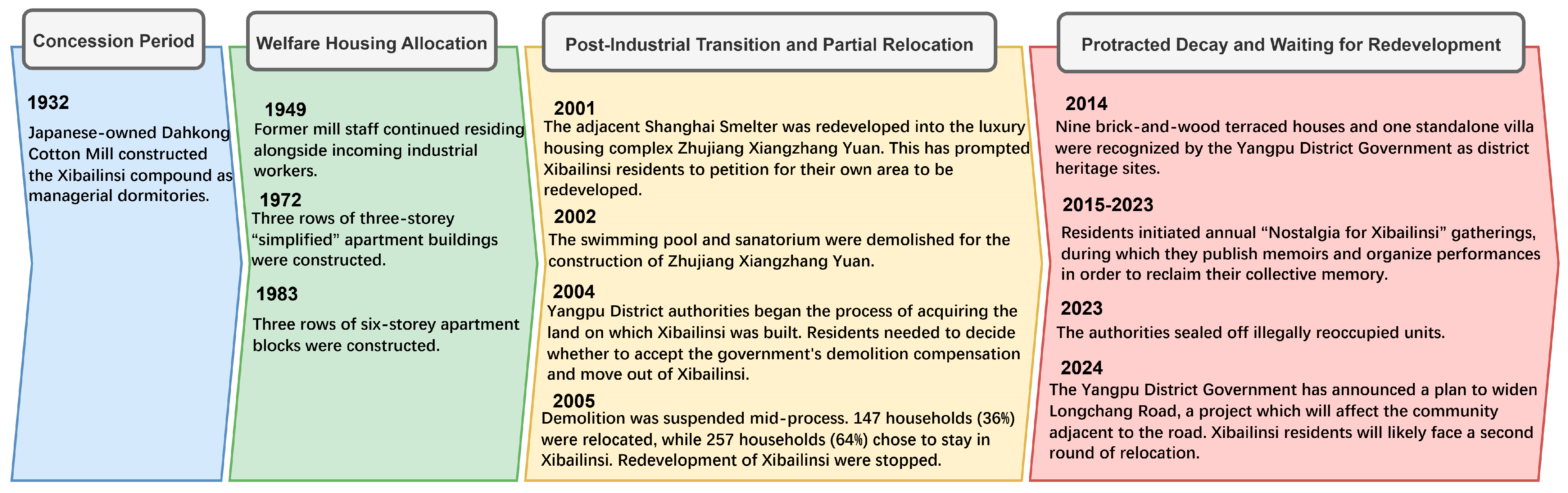
In stark contrast to the gleaming, redeveloped surroundings, Xibailinsi entered a state of protracted physical decay following the suspension of the partial relocation in 2005. Over the following two decades, crumbling infrastructure and environmental deterioration defined the neighborhood (see Figure 7), while vacated units were informally reoccupied. This limbo entrenched a prolonged collective anticipation of future redevelopment. Paradoxically, the designation of its nine brick-and-wood terraced houses and one standalone villa as Yangpu District Cultural Preservation Sites in 2014 fueled speculation of permanent redevelopment stasis (see Figure 9). In response to this uncertainty, the community initiated annual “Nostalgia for Xibailinsi” gatherings from 2015 onwards—rituals of collective memory-reclaiming that reunited nearly 200 current and former residents through the compilation of contact directories, the publication of memoirs, and the staging of performances. In 2023, authorities sealed illegally occupied units, terminating informal housing. By 2024, plans for the Longchang Road widening project—integral to Yangpu Riverside’s renewed development push—had reignited displacement anxieties. Rumors of imminent redevelopment resurfaced, thrusting residents into another cycle of waiting.

3. Materials and Methods

3.1. Data Collection

Between 2022 and 2024, we conducted 25 semi-structured interviews (60–180 min) and participant observations in Xibailinsi. Purposive and snowball sampling captured residents with ≥30 years tenure (n = 21), balanced gender (10 male, 15 female), and aged ≥50 (n = 23), including 20 public housing occupants and 5 long-term renters. Community ties covered native-born, welfare recipients, house-exchange/marriage entrants, and renters in local services. These generated 230,000 words of interview transcripts (see Appendix A for a table detailing the demographics).
Interviews followed a semi-structured protocol (Appendix B), beginning with reconstructions of community experiences: nostalgic memories of past environments, neighborhood relations, responses to landmark events (e.g., the 2005 relocation), and evaluations of community decline. Participants then critically examined the impacts of the protracted redevelopment on living conditions, livelihoods, and social networks. The final segment elicited future narratives on displacement adaptation, community regeneration, and post-renewal aspirations.
While guided by this three-part structure, question sequencing and depth were adaptively managed based on respondent feedback. Supplementary Materials—including historical photographs, community memoirs, resident directories, documents related to relocation and expropriation, and materials pertaining to residents’ petitions—were collected from residents to contextualize the narrative data.
Subsequently, two focus group discussions (total participants: n = 13) explored community history, current challenges, and future aspirations. These sessions produced approximately 40,000 words of supplementary transcripts, enriching the insights from individual interviews (Appendix C).

3.2. Research Methodology and Data Analysis

This constructivist interpretive study adopts the classic iterative analytical paradigm central to qualitative inquiry. Simultaneous data collection and analysis began with the first interview conducted. Throughout the research process, we implemented constructivist grounded theory (CGT) to analyze interview transcripts, field notes, and the Supplementary Materials. This enabled us to continuously distil residents’ perceptual transformations of the period of urban transition, with particular attention to their lived experiences of neighborhood change, responsive behaviors, and resultant impacts.
Grounded in interpretivist epistemology, CGT creates a framework through inductive analysis of interview data, which explicitly addresses subjectivity, power dynamics, and social contexts [22]—essential for critically examining socio-spatial inequalities inherent in new-build gentrification. CGT’s emphasis on constant comparative analysis (tracing actions, meanings, and their interconnections) proves particularly apt for documenting longitudinal shifts in place identity, attachment, and resistance strategies [23].
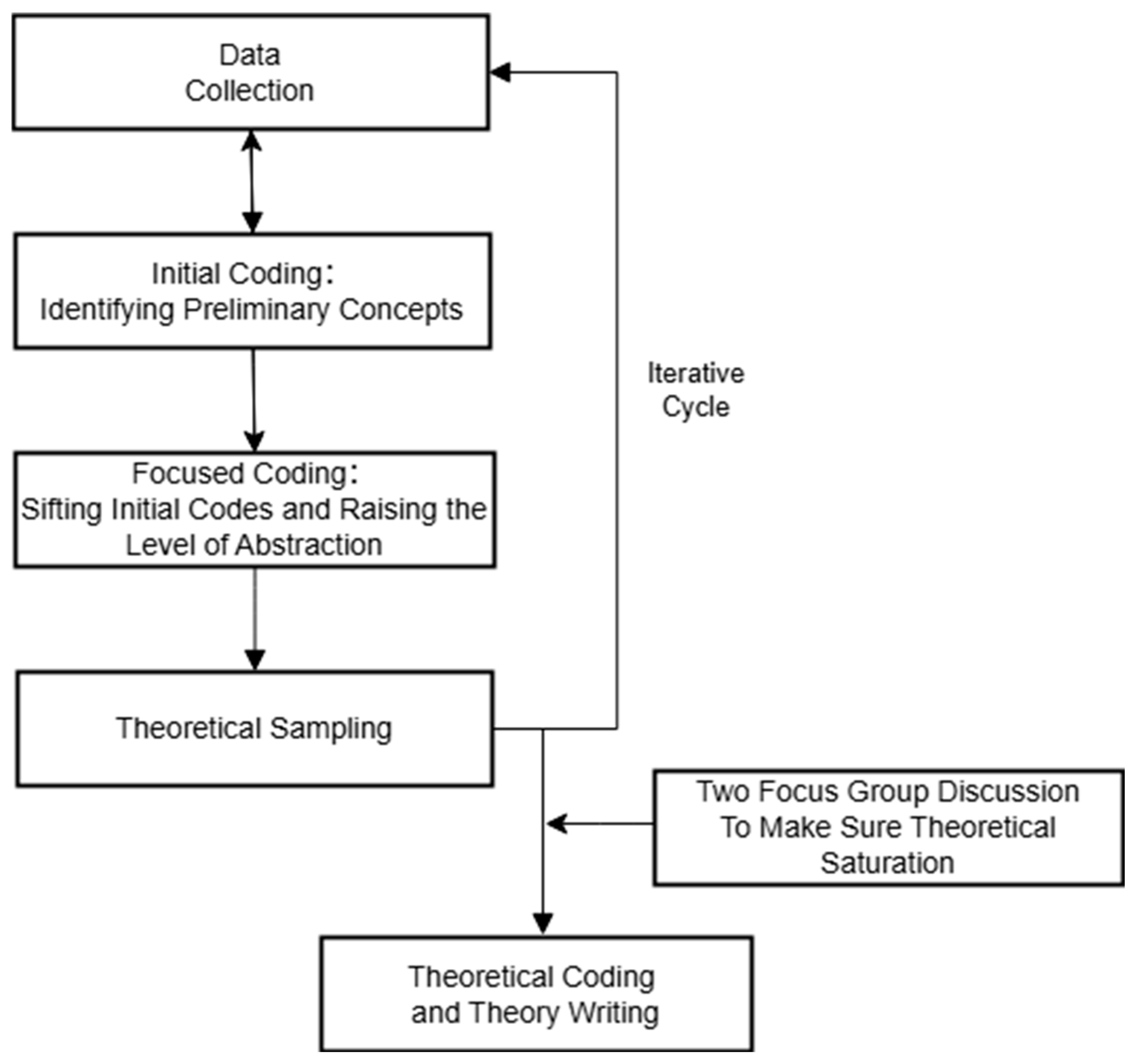
Based on CGT, we implemented an iterative coding process (see Figure 10) and used memo writing to record thoughts, ideas, insights, as well as to explore the dimensions and interrelationships of conceptual categories. Through reflexive memos, we critically examined how our professional backgrounds influenced interpretations of state–resident power asymmetries. Regular team debriefings mitigated analytical bias, especially when interpreting contested events like the 2005 relocation suspension. Theoretical saturation was verified using reserved focus group transcripts.

4. Results

4.1. Initial Coding

Data from the audio-recordings of interviews were transcribed by the primary researcher (first author). All of the interviews were uploaded into NVivo, a qualitative data analysis application, and codes were applied to all interviews. Analysis proceeded with line-by-line open coding by two coders. This generated a list of descriptive codes (e.g., invoking elders’ status or recalling schooling experiences) and sub-codes (e.g., forming individual identity or sharing same life trajectories). Several in vivo codes (e.g., forgotten corner or love-turned-hate) were also generated to maximize the preservation of residents’ perspectives and emotions (see Table 1 for code organization).

4.2. Focused Coding

In the next phase of the analysis process, we compared and sifted these initial codes in order to capture the most core, interesting, and explanatory ideas within the data. This stage of coding allowed us to raise initial codes to a higher level of abstraction and identify more abstract and interpretive categories (e.g., the chronic deterioration of place identity, the progressive erosion of social networks, the ambiguous loss of place attachment, the collapsed future imaginary, and the temporalities of waiting). These categories formed the basis of our focused codes (see Table 2).

4.3. Theoretical Coding

Further analysis of the history of regional urban redevelopment and focused codes revealed dynamic interactions between categories. Preliminary findings indicated that the core category of our research is indirect displacement during waiting for new-build gentrification under policy suspension.
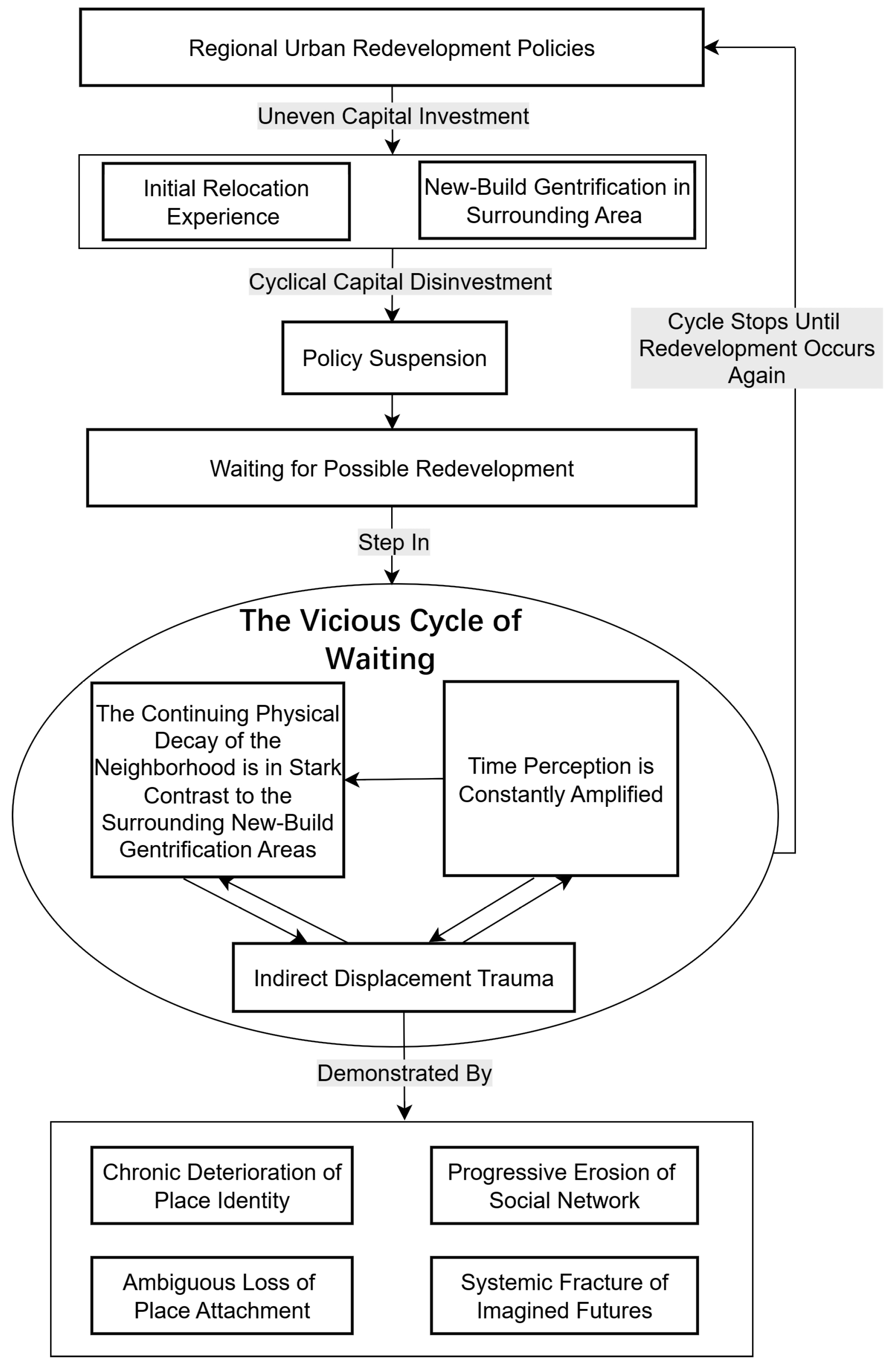
In Figure 11, we propose a conceptual framework for elucidating the dynamics of indirect displacement trauma during prolonged waiting periods for new-build gentrification. As subsequent findings will demonstrate, this trauma manifests through four interrelated dimensions: chronic deterioration of place identity, progressive erosion of social networks, ambiguous loss of place attachment, and collapsed future imaginary.
The framework further delineates the “vicious cycle of waiting” instigated by regional urban redevelopment. This cycle originates from spatially uneven capital investment, which precipitates new-build gentrification in targeted zones while condemning adjacent communities to a state of “waiting for possible redevelopment”. Subsequent cyclical capital disinvestment and policy suspension immobilize communities until redevelopment recommences. Throughout this process, the persistent physical decay of neighborhoods starkly contrasts with adjacent gentrified zones, while amplified time perception exacerbates indirect displacement trauma among residents.

5. Findings

Theme 1.
Chronic deterioration of place identity.
Place identity constitutes a dimension of individual or collective self-concept mediated through engagement with physical environments. According to Harner (2001), place identity is a cultural value shared by the community—a collective understanding about social identity intertwined with place meaning [24]. To understand how the changes to Xibailinsi and the surrounding area impacted people’s place identity, it is important to first grasp how residents understood their social identity in Xibailinsi before the prolonged waiting process.
In this study, long-term residents of Xibailinsi exhibited remarkable consistency when narrating their life trajectories and local memories. Formerly superior housing conditions, similar family backgrounds, a rich communal life, and closely intertwined life trajectories within the group—as well as profound place memories accumulated over an extended period—collectively shaped a shared identity anchored in the community, resulting in a strong sense of place.
When discussing the past living environment, all residents emphasized the community’s historically superior housing conditions. Until the 1970s and 1980s, the area’s Japanese-style architecture was highly desirable compared to most workers’ housing in Shanghai at the time. A female interviewee who moved into the community upon marriage in the 1970s recalled the following:
“When my friends came to see my marital home, they were all extremely envious that I could live in such a nice house.”
(C)
At that time, living here was an important symbol of identity for its residents. During interviews, most people proactively mentioned their parents’ character and education, as well as the academic or career achievements of their children:
“The older generation had high levels of education and professional accomplishment. Although we didn’t receive much formal education due to the times, our children excel academically. This is the ethos here.”
(A)
Residents’ memories also reflect a prolonged period of exceptionally fulfilling community life. Public spaces within the community, such as the “large garden” and “swimming pool” (which was demolished in 2002), played a vital role in anchoring these local recollections:
“Originally, there was a 25 m swimming pool. We residents had special discount cards. Every afternoon, we would gather at the pool entrance and queue up to enter. Factories often held swimming competitions here. There were many skilled swimmers among us, and together we formed an amateur water polo team that won awards in some Shanghai competitions.”
(D)
However, this strong sense of place identity began to deteriorate slowly following the start of large-scale new-build gentrification in the surrounding area in 2005. First, during the partial relocation, the demolition of the swimming pool—a crucial public space for social activity—deprived residents of a significant anchor point for positive collective memories. Secondly, living in the Xibailinsi community ceased to be a source of pride. Over the eighteen years since the relocation was suspended, the price per square meter of properties in the adjacent Zhujiang Xiangzhang Yuan increased from RMB 3300 at launch to almost RMB 100,000. The locational advantages, transport links, and ecological environment outside the community have significantly improved, with various commodity housing estates, shopping malls, and office buildings constructed nearby. In stark contrast, the Xibailinsi community has sunk into prolonged physical decay. The phrase “only poor people live in this terrible place” emerged as a recurring theme of self-deprecation and identity negation among multiple interviewees. In the residents’ narratives, the proud social identity enjoyed by the older generation has vanished with their passing, while the success of the younger generation is now symbolized by leaving Xibailinsi:
“Few young people stay here; the capable ones moved out long ago. Those remaining are all incapable and can only rely on their parents.”
(A.)
Within residents’ increasingly negative descriptions of their own identity and situation, tenants are frequently being labeled as “disorderly individuals”. Some even blame the deterioration of the community on tenants who have no affection for Xibailinsi, saying the following:
“Tenants don’t care about hygiene; their belongings are piled up everywhere. We are not like them.”
(L.)
In fact, their descriptions readily reveal a projection of the residents’ own dissatisfaction onto the tenants. By persistently denigrating tenants’ status, residents attempt to accentuate their own identity and maintain the dwindling vestiges of pride amidst the chronic deterioration of place identity.
Theme 2.
Progressive erosion of social networks.
The community’s experience of partial relocation in 2005 marked the first direct confrontation between residents—who were unified under a working-class identity forged by welfare housing—and the forces of housing commodification. The Housing Demolition and Relocation Notice transformed their emotionally charged homes into commodified categories—“standalone villa”, “terraced house” or “apartment building”—each with a different compensation value (standalone villas: highest; terraced houses: intermediate; apartment buildings: lowest). This market logic fragmented the collective place identity of “Xibailinsi residents” into atomized “property claimants”. Contentious benefit distribution bred a collective sense of identity deprivation and distributive injustice, polarizing residents into adversarial “pro-demolition” and “anti-demolition” factions. Consequently, former neighborly bonds degenerated into mutual recrimination.
Residents living in the three-story simplified apartment buildings, which were constructed in 1972 and had the worst housing conditions, were the primary advocates for community relocation in 2003. Together with some residents living in terraced houses, they formed the “pro-demolition” faction.
“The conditions in our building were dire. During construction in 1973, I questioned the builders about the thin, single-layer walls. They admitted that they were temporary structures with a lifespan of only ten years. By 2002, we had collectively funded structural inspections which proved the building’s hazardous state. It was only through organized petitions that we secured relocation.”
(V.)
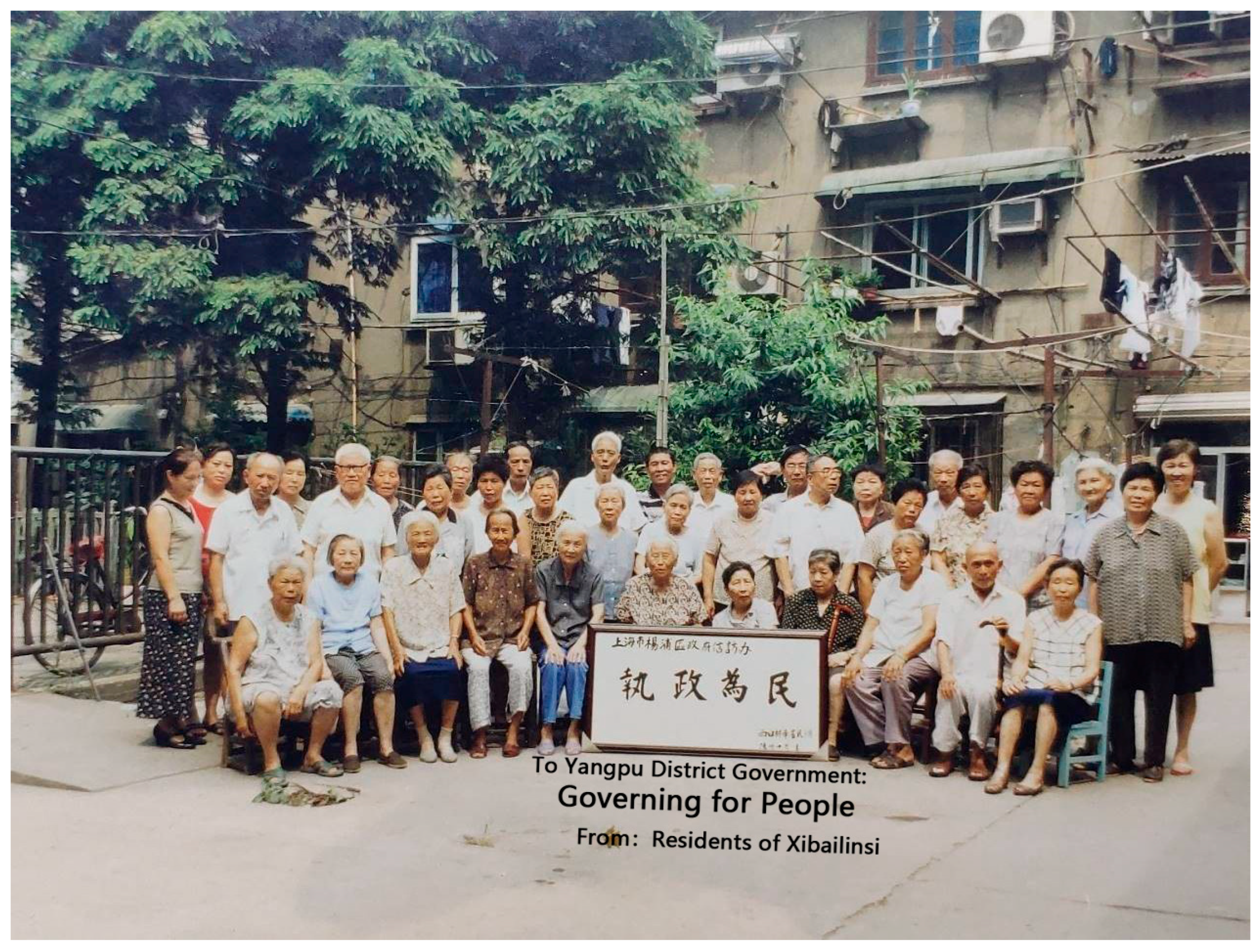
Their advocacy successfully engaged the district government and the adjacent developer, Zhujiang Company (Guangzhou, China). Subsequently, Yangpu District incorporated all building types—terraced houses, standalone villas, and three-story simplified apartment buildings—into the redevelopment agenda. Following approval, residents in favor of demolition commemorated their victory with a group photograph alongside a plaque praising officials for “governing for the people” (Figure 12).
Conversely, most residents of the terraced houses mobilized as the anti-demolition faction. One subgroup opposed relocation on socio-cultural grounds, emphasizing the historical significance and suitability of their homes; another subgroup rejected the compensation packages as inadequate from an economic perspective. This resistance impeded the 2004 land acquisition process for Xibailinsi, prompting the authorities to suspend demolition in 2005. Residents had different theories about the suspension, attributing it to either developer insolvency or the prosecution of corrupt officials, with latent inter-factional blame permeating these narratives.
Pro-demolition voices accused opponents of acting out of self-interest:
“Anti-demolition residents have decent housing—often entire buildings. They refuse to relocate. We endure four to five families crammed into each building and we desperately need demolition. Our values are irreconcilable.”
(P.)
Members of the anti-demolition group who are focused on compensation countered that relocation had stalled due to cost inefficiencies:
“Developers would readily acquire terraced house plots—high land-to-resident ratios offer profitable density bonuses. However, including high-density, three-story simplified apartment buildings made the project economically unviable. This deadlock caused indefinite delays.”
(K.)
Others in the anti-demolition faction blamed pro-demolition activism for degrading living conditions:
“In 2002, government crews started to restore buildings. However, pro-demolition residents sabotaged the construction work and petitioned for relocation, fracturing community consensus. If these historic buildings were properly restored, they could rival modern housing.”
(C.)
Following the suspension, chronic environmental decline drove out long-term residents. The influx of low-income tenants into vacated units further reconfigured social networks. Resident interactions atrophied, social ties progressively dissolved, and community cohesion eroded.
Theme 3.
Systemic fracture of imagined futures.
Lacking control over the redevelopment process, residents perceive their voices as being ignored, leading to the persistent erosion of their agency. This prolonged sense of powerlessness gradually diminishes residents’ ability to imagine a better future. Most residents over the age of 60 have witnessed dramatic environmental transformation over the past two decades during their middle age and are now entering old age. Often born into large families, they have witnessed numerous family disputes triggered by relocations. The prospect of future relocation signifies endless disputes and fragmentation within their extended families and with their children. They fear experiencing similar upheavals and worry about their inability to live out their days in peace amidst such turmoil.
“I dislike moving. For us elderly people, relocation is like ”disturbing the land” [in Chinese culture, ”disturbing the land” implies an association with death].”
(J.)
“My husband asks, ”What will we do if we have to move?” I know what he means—he’s unsure how to divide the compensation from our parents’ house with his siblings. I tell him it’s fine; we’ll just go to court. After that, we won’t have any more contact with them. It’s best not to demolish it, otherwise we will have nowhere to live. I hope we can live out our days in peace here. After I die, the younger generation can fight it out in court (when the house been demolished).”
(D.)
Some residents harbor hopeful visions for the potential new-build gentrification their community might undergo. Yet, underlying these visions is the tacit assumption that they themselves will inevitably be displaced and no longer belong there.
“Although the community is mostly ruined, at least the nine brick-and-wood terraced houses and one standalone villa remain intact. I hope they can be preserved… Once the government has protected them, we probably won’t be able to live there anymore. It will surely be commercialized…”
(B.)
“Imagine replanting cherry blossoms here, beautifying every front and back garden, and restoring the houses. Then many people would come, and I could visit occasionally…”
(C.)
Theme 4.
Ambiguous loss of place attachment.
From a family systems perspective, Pauline Boss (2002) proposed the theory of ambiguous loss, predicated on the conceptualization that certain losses are neither absolute nor complete but manifest as partial absences—whether psychological or physical—characterized by a state of physical presence without psychological availability [25]. As ambiguous losses are often not recognized socially and there are no established rituals for grieving or acknowledging the loss itself, individuals experiencing such losses frequently encounter significant barriers when trying to access social support systems [26]. Consequently, they may develop profound feelings of isolation and hopelessness while experiencing exacerbated psychological trauma [27]. In contexts of displacement, ambiguous loss may also include the erosion of place identity, the disruption of social networks, and the fragmentation of one’s sense of self, as well as weakened attachment to a place [27,28].
Residents’ narratives about their daily work and living conditions in Xibailinsi reveal their acute awareness of the material losses resulting from the partial relocation in 2005, specifically in terms of housing quality, public facilities, and employment opportunities. However, they struggle to articulate the ambiguous loss associated with their emotional attachment to this place.
During interviews, residents frequently presented historical photographs of Xibailinsi (Figure 13) and expressed profound nostalgia. Crucially, the suspended policy leaves residents facing a dilemma regarding the maintenance and renovation of their homes: they are reluctant to invest in improvements for fear that their houses may be demolished later, yet the continuous deterioration of their homes steadily degrades their quality of life and fosters a profound sense of powerlessness. The following statements from two residents exemplify the contradictory predicament faced by Xibailinsi residents:
“This old house shows no signs of activity. Is the government actually going to relocate us or not? If not, and if the government properly improves the public environment in the community, we could renovate our homes and live quite comfortably. But now it feels like the government might relocate us at any time. How can we dare to invest money and effort in renovating our home? What if it gets demolished right after we finish?”
(C.)
“Many of us residents intend to improve our living conditions, but because the rumors of relocation persist, we can never make up our minds or act rashly.”
(B.)
Amid such policy uncertainty, residents exhibit a state of contradiction between their physical presence and psychological absence. Although they live in the community, they are emotionally detached from it. This paradox involves an unresolvable attachment to their historical homeland, coupled with a reluctance to invest further financial or emotional resources due to environmental decay and the unpredictability of their future. Consequently, they evolve towards desiring the accelerated demolition of their properties in order to obtain material compensation through expropriation, which culminates in an existential predicament of “residing without belonging”.
Theme 5.
The vicious cycle of waiting.
Waiting is an activity that requires individuals to integrate time into their everyday lives in order to develop a healthy relationship with time and take control of their lives [29]. However, due to the uncertainty of the redevelopment policy, residents of Xibailinsi have lost control of their time and space and are caught in the vicious cycle of a waiting process.
Following the termination of the incomplete relocation in Xibailinsi in 2005, some residents remained hopeful that the project would restart imminently. During interviews, the research team collected letters written by residents between 2005 and 2008 in which they continuously petitioned relevant local government departments to restart the project. Although the government did not respond explicitly, the ongoing development in surrounding areas persistently renewed residents’ hopes.
After the conclusion of the 2010 Shanghai World Expo, the Yangpu Riverside Area underwent a period of rapid development, accompanied by numerous industrial renewal projects. Major Chinese internet companies such as Bilibili, ByteDance, and Meituan subsequently set up operations there. Various luxury residential communities supporting these industrial functions were also constructed. The latest official government planning document envisages the future of the Yangpu Riverside Area as “a distinctive waterfront aspired to by global innovative talent, a hub converging world innovation factors, a charming waterfront blending history and future, and a Shanghai-style community offering excellent living conditions for outstanding talent” (Shanghai Yangpu District Unit Plan, 2022 [30]).
Holding onto this aspirational vision, residents of Xibailinsi have been waiting for years, their state pendulating between “infinitely waiting” and “heightened suspense”. While some residents are hopeful about the future and anticipate substantial financial compensation from the potential redevelopment and relocation, others are fearful that the compensation will not cover the costs incurred during this protracted waiting period; moreover, the longer they wait, the more they fear that the eventual compensation will not cover the costs incurred during this prolonged period of waiting, which would plunge them into despair.
“Selling the house now would definitely be financially disadvantageous. Relocation is coming, and I certainly wouldn’t get as much money from selling as the government would give me in compensation!”
(D.)
“Compared to the compensation offered in the past, the current relocation compensation is definitely not advantageous. Back then, the compensation received could buy a house nearby, but now I doubt I could afford one.”
(G.)
The experience of waiting in powerlessness fundamentally deprives individuals of control over the process and their own perception of time. Waiting becomes an existential condition rather than a transitional phase. This altered perception of time has a profound impact on the psychological state of each community member, filling their lives with dissatisfaction and frustration. During this time, their perception of time becomes slow and heavy, and can even become distorted. The prolonged wait transforms the prospect of a better life they once envisioned into a nightmare of entrapment. Some residents describe two decades in limbo as an exercise in endurance:
“I don’t know how I’ve endured these years. The house issue causes constant arguments at home, and I don’t know when this life will end.”
(M.)
“I’m already over 70 years old. How much longer do I have to wait?”
(U.)
In 2024, the Yangpu District Government announced a new plan for Xibailinsi. The plan envisages the development of the community through the renewal and conservation of its historical buildings, integrating it into the overall Yangpu Riverside development framework to create a distinctive public space that supports innovative talent in the area. However, despite this announcement, residents have still not been informed of a specific start date for the implementation of the new community renewal plan. (See Yangpu District Government’s Response to Residents’ Inquiries Regarding the Future Redevelopment Plan for Xibailinsi [31].)
Nevertheless, the persistent emergence of new-build gentrification processes in the surrounding area continuously intensifies the indirect displacement experienced by community residents. This trauma further amplifies the temporal pressures experienced by residents during the waiting period. The time anxiety inherent in the waiting process and the trauma of indirect displacement reinforce each other, forming the “vicious cycle of waiting”. This cyclical pattern exemplifies what Ay and Penpecioglu (2024) refer to as “waiting as governance”—a governance strategy that fragments collective resistance by exhausting residents’ psychological and material resources. This prolonged state of limbo constitutes a form of temporal politics, whereby government inaction is used as a tool to discipline communities [32].

6. Discussion and Conclusions

Using constructivist grounded theory, this study examines the lived experiences and psychosocial effects on long-term residents enduring prolonged waiting periods amid new-build gentrification. By analyzing the interconnected processes of the chronic deterioration of place identity, the progressive erosion of social networks, the systemic fracture of imagined futures, and the ambiguous loss of place attachment, this research identifies a self-perpetuating “vicious cycle of waiting” triggered by uneven urban redevelopment.
The ambiguous loss of place attachment—where residents remain physically present yet psychologically detached—extends Atkinson’s (2015) symbolic displacement by integrating Boss’s (2002) theory of ambiguous loss [9,25]. Unlike the Australian cases where displacement stemmed from active gentrification (e.g., rising rents and evictions), Xibailinsi’s trauma emerged from redevelopment policy suspension and government inaction. Residents’ entrapment in suspended agency—reducing place attachment to a calculative anticipation of demolition compensation—exposes how policy inertia can inflict deeper psychosocial harm than direct market pressures, challenging Atkinson’s focus on landlord–tenant dynamics in neoliberal contexts.
The process of the progressive erosion of social networks reveals that new-build gentrification proponents employ a divide-and-rule strategy to fragment residents into adversarial “pro-demolition” and “anti-demolition” factions, thereby undermining community cohesion [33]. Simultaneously, these actors strategically weaponize temporality through protracted waiting—a form of temporal governance that induces exhaustion and anxiety among residents. This deliberate imposition of temporal pressure traps communities in a vicious cycle of waiting, ultimately coercing acceptance of displacement inevitability, which also aligns with Sakizlioglu’s (2014) “politics of time” framework [34]. Both social–spatial fracturing and temporal domination operate synergistically to erode place attachment and dismantle collective resistance to new-build gentrification.
Critically, our findings demonstrate that displacement begins not at physical relocation but with the onset of waiting—a liminal state suspending residents between a mourned past and an uncontrollable future. Under displacement pressures and policy suspension, inhabitants persist in waiting amid mixed emotions (hope, anxiety, fear, and despair). These experiences are similar to those of refugees and migrants who are navigating a prolonged “limbo” period while trying to establish a new home [27]. This further validates Elliott-Cooper’s (2020) conception of displacement as temporal micro-events, where attrition unfolds cumulatively over time [35].
This study advances the conceptualization of indirect displacement by revealing its temporally protracted and psychologically corrosive nature under policy suspension. By centering temporal politics within displacement mechanisms, this research shows that policy suspension in China’s new-build gentrification causes more severe indirect displacement trauma than capital-driven direct displacement. It extends new-build gentrification theories by incorporating a spatiotemporal dialectic lens. The framework provides policymakers with diagnostic tools with which to assess hidden trauma costs in stalled redevelopment, while offering critical insights into power dynamics and socio-spatial transformations in urban renewal governance.
To mitigate place-based trauma accumulated during prolonged policy suspension, we suggest policymakers consider three collaborative measures: First, establishing transparent timelines for stalled redevelopment projects could reduce temporal uncertainty. Second, implementing participatory mechanisms during limbo periods, such as community co-design workshops for interim space improvements, may empower residents facing social fragmentation. Third, integrating mental health support into neighborhood services—particularly grief counseling for ambiguous loss and future anxiety—could help communities endure prolonged uncertainty.
This study has three limitations. Firstly, while centering on long-term homeowners, this research overlooks renters’ experiences despite their dual role as both potential beneficiaries and victims in the waiting cycle. Although some residents perceive renters as benefiting from declining rents amid environmental decay, this view neglects emerging evidence that renters face significant indirect displacement pressures during new-build gentrification—including exclusion from compensation negotiations, temporal precarity in lease terms, and accelerated involuntary relocation [9,36,37]. Consequently, future work must examine how tenants negotiate transient belonging and socio-spatial exclusion in “waiting zones”, particularly through the lens of tenure insecurity and rights deprivation. Secondly, while this study reveals the experiences of elderly residents in relation to displacement temporality, the limited inclusion of younger generations restricts the generalizability of the findings across age cohorts. During fieldwork, younger residents who were contacted declined interviews due to disengagement from community affairs. Future research should investigate how generational differences mediate place perception under displacement pressures. Thirdly, while CGT effectively captures nuanced lived experiences, its reliance on retrospective narratives risks obscuring dynamic changes in place attachment over time. To address this, future research should operationalize longitudinal mixed methods: (1) Multi-wave surveys tracking place-attachment metrics (e.g., emotional bonding and functional dependence) across more than 10 years of redevelopment suspensions. (2) Embedded ethnography documenting residents’ adaptive strategies at different policy stages. Furthermore, cross-city comparisons are critical to test how local governance frameworks reshape the waiting cycle’s socio-spatial outcomes.
By March 2025, as this study concludes, Xibailinsi residents’ protracted wait had come to an end. They observed unfamiliar government officials documenting the community, which was soon followed by the posting of a notice regarding prohibited acts related to housing expropriation at the neighborhood entrance. This triggered palpable anticipation. Within days, households were summoned to submit property documentation at the expropriation office and participate in preliminary consultations. The haphazardly arranged chairs near the notice became an impromptu forum for daily discussions about relocation. Notably, “Xibailinsi”—the long-standing toponym that embodied their sense of place—gradually vanished from their conversations, being replaced by the bureaucratic designation “Plot 136” from government expropriation documents.
What future awaits this place? The answer remains unknown, yet decades of suspended policy have transmuted this question from practical concern to existential irony—its urgency dissipated not by resolution but by the state’s systematic erosion of belonging through temporal violence. For residents, the end of waiting marks not resolution but the systemic erosion of place belonging—revealing how policy suspension perpetuates spatial inequity through bureaucratic processes. This demands urban scholarship to reconceptualize temporal rights as fundamental to spatial justice, and planners to recognize that governance through waiting inflicts trauma no less destructive than physical displacement.

Supplementary Materials

The following supporting information can be permanently downloaded at: https://pan.baidu.com/s/13adg16zJonTxkE66sx3svA?pwd=0000 (1 July 2025). File S1: Community Memoirs; File S2: Historical Photographs and Materials Pertaining to Residents’ Petitions; File S3: Documents Related to Relocation and Expropriation.

Author Contributions

Conceptualization, P.H. and J.Z.; Methodology, W.C.; Formal Analysis, P.H. and J.Z.; Investigation, P.H. and J.Z.; Writing—original draft, P.H.; Writing—review and editing, W.C.; Visualization, P.H. All authors have read and agreed to the published version of the manuscript.

Funding

This research received no external funding.

Data Availability Statement

The data supporting the findings of this study consist of qualitative interviews conducted with local residents. Due to privacy and ethical considerations, the interview data are not publicly available. Further information about this research or specific inquiries can be directed to the corresponding author.

Acknowledgments

This study was approved by the Ethics Committee of the College of Architecture and Urban Planning, Tongji University (approval No.: TJ-CAUP20221110-1). All procedures involving human participants adhered to the ethical standards of the 1964 Declaration of Helsinki and its later amendments. Prior to data collection, written informed consent was obtained from all participants using formal documentation in Chinese. Publication rights for all participant-provided historical materials (including photographs) were secured through signed informed consent forms.

Conflicts of Interest

The authors declare no conflicts of interest.

Abbreviations

The following abbreviations are used in this manuscript:
CGTConstructivist grounded theory
SOEsState-owned enterprises

Appendix A

Table A1. Table of interviewees.
NoIdentity TraitsGenderAgeDuration of Residence (Years)Type of Residential Architecture
ABorn in the communityMale60+60+Japanese-style residences constructed in 1932
BBorn in the communityMale70+70+
CMarried into the community during the 1980sFemale60+40+
DMarried into the community during the 1970sFemale70+40+
EMarried into the community during the 1980sFemale60+40+
FMarried into the community during the 1980sFemale60+40+
GAcquired the right to use housing by purchasing it from the original inhabitants in the 1980sMale60+40+
HTenant since the 2000sMale40+20+
ITenant since the 2000sFemale50+10+
JAcquired housing through governmental welfare allocation in the 1950sFemale90+70+
KBorn in the communityMale70+70+
LBorn in the communityMale70+70+
MAcquired housing through governmental welfare allocation in the 1960sFemale70+50+
NAcquired housing through governmental welfare allocation in the 1970sFemale80+50+Three-story simplified apartment buildings established post-1970s
OAcquired housing through governmental welfare allocation in the 1970sMale60+50+
PAcquired the right to use housing by purchasing it from the original inhabitants in the 1990sFemale70+30+
QTenant since the 1980sMale60+40+
RTenant since the 1980sFemale60+40+
STenant since the 2000sFemale60+20+
TMarried into the community during the 1990sFemale40+20+
UAcquired housing through governmental welfare allocation in the 1970sFemale70+50+
VAcquired housing through governmental welfare allocation in the 1970sFemale50+50+
WAcquired housing through governmental welfare allocation in the 1970sMale60+50+
XAcquired the right to use housing by purchasing it from the original inhabitants in the 1980sMale60+30+
YMarried into the community during the 1980sFemale60+40+
Note: All residences within Xibailinsi are publicly owned. During the planned economy era, the right to occupy was leased to residents through a welfare allocation system, with tenants only required to pay a nominal rent for long-term possession and use of the housing. In this study, the term “tenant” refers not to residents who obtained the right to use publicly owned housing under the welfare allocation system but to individuals from outside the community who sublet the right to use housing from existing residents after the 1980s.

Appendix B

Table A2. Table of basic outline for semi-structured interviews.
Interview ModulesInterview ThemesSpecific Questions
Perceptions of Indirect DisplacementCherished and Melancholic Memories of Community Spatial EvolutionCould you give us a general introduction to this area?
What do you consider the most beautiful and nostalgic aspects of your community?
Which period in recent years would you say the quality of life in the community was at its best? Why?
What do you remember about the relocation in 2005? How did it make you feel?
When would you say the community began to decline?
Utilization of Material Spaces Within and Around the CommunityWhich public spaces within or around the neighborhood do you frequently use?
What public services here satisfy you the most?
Which nearby places do you often visit? Do you frequently stroll around the newly built public green spaces in the Yangpu Riverfront District?
Sentiments on Planning and Development in the Community and its Environs Over the YearsHow would you rate the living conditions here? What do you think is lacking?
Has your house ever undergone any major repairs or renovations? Are you satisfied with them?
How do you feel about the large-scale renewal and reconstruction in the Yangpu Riverfront District? What are your thoughts on such urban planning and development?
How has the regeneration of the surrounding areas impacted your daily life?
Personal Strategies in Response to Regional ConstructionDo you wish to continue living and working here? Why?
If this area were to be relocated (or re-relocated) in the future, what are your plans? What kind of resettlement plan would you hope for?
What kind of future do you envision for this place?
Principal Factors Influencing the Experience of Indirect DisplacementResidents’ Personal Lives and EmploymentHow did you come to live in this community? How long have you been living here?
Do you have any family members living with you here?
At which factory/unit did you use to work? What is your current employment/retirement status?
What are your hobbies? Where do you usually go for activities or leisure in the surrounding area? Where is your favorite place to go?
Social Networks of the ResidentsHow would you describe your relationships with your neighbors? Do you interact frequently?
How often do you connect with colleagues/classmates/relatives in the vicinity?
Have you participated in any collective activities here?
Have you been involved in any public affairs of the community?
Do you often interact with the neighborhood committee/property management? What issues have they primarily resolved?

Appendix C

Table A3. The characteristics of the focus group.
CharacterNumber
GenderMale6
Female7
AgeUnder 602
Between 60 and 809
Over 802
Duration of Residence (Years)Between 20 and 402
Between 40 and 708
Over 70 3
Total13

References

  1. Davidson, M.; Lees, L. New-build ‘gentrification’and London’s riverside renaissance. Environ. Plan. A-Econ. Space 2005, 37, 1165–1190. [Google Scholar] [CrossRef]
  2. Slater, T. The eviction of critical perspectives from gentrification research. Int. J. Urban Reg. Res. 2006, 30, 737–757. [Google Scholar] [CrossRef]
  3. Freeman, L. Displacement or succession? Residential mobility in gentrifying neighborhoods. Urban Aff. Rev. 2005, 40, 463–491. [Google Scholar] [CrossRef]
  4. Freeman, L. Comment on ‘The Eviction of Critical Perspectives from Gentrification Research’. Int. J. Urban Reg. Res. 2008, 32, 186–191. [Google Scholar] [CrossRef]
  5. Musterd, S.; Andersson, R. Housing Mix, Social Mix, and Social Opportunities. Urban Aff. Rev. 2005, 40, 761–790. [Google Scholar] [CrossRef]
  6. Marcuse, P. Gentrification, Abandonment, and Displacement: Connections, Causes, and Policy Responses in New York City. Wash. Univ. J. Urban Contemp. Law 1985, 28, 195–240. [Google Scholar]
  7. Davidson, M. Displacement, Space and Dwelling: Placing Gentrification Debate. Ethics Place Environ. 2009, 12, 219–234. [Google Scholar] [CrossRef]
  8. Davidson, M. Spoiled Mixture: Where Does State-led ‘Positive’ Gentrification End? Urban Stud. 2008, 45, 2385–2405. [Google Scholar] [CrossRef]
  9. Atkinson, R. Losing One’s Place: Narratives of Neighbourhood Change, Market Injustice and Symbolic Displacement. Hous. Theory Soc. 2015, 32, 373–388. [Google Scholar] [CrossRef]
  10. Loder, K.; Stuart, F. Displacement frames: How residents perceive, explain and respond to un-homing in Black San Francisco. Urban Stud. 2023, 60, 1013–1030. [Google Scholar] [CrossRef]
  11. Millard-Ball, A. Gentrification in a Residential Mobility Framework: Social Change, Tenure Change and Chains of Moves in Stockholm. Hous. Stud. 2002, 17, 833–856. [Google Scholar] [CrossRef]
  12. Davidson, M.; Lees, L. New-Build Gentrification: Its Histories, Trajectories, and Critical Geographies. Popul. Space Place 2010, 16, 395–411. [Google Scholar] [CrossRef]
  13. Wu, F. Scripting Indian and Chinese urban spatial transformation: Adding new narratives to gentrification and suburbanisation research. Environ. Plan. C Politics Space 2020, 38, 980–997. [Google Scholar] [CrossRef]
  14. He, S. New-Build Gentrification in Central Shanghai: Demographic Changes and Socioeconomic Implications. Popul. Space Place 2010, 16, 345–361. [Google Scholar] [CrossRef]
  15. Liu, Y.; Tang, S.; Geertman, S.; Lin, Y.; van Oort, F. The chain effects of property-led redevelopment in Shenzhen: Price-shadowing and indirect displacement. Cities 2017, 67, 31–42. [Google Scholar] [CrossRef]
  16. Den Hartog, H.; Ding, F.; Wang, X.; Wu, J. Waterfront Revitalization as Opportunity for Sustainability Transitions—The Huangpu River in Shanghai; Allam, Z., Ed.; Springer Nature: Singapore, 2023; pp. 149–160. [Google Scholar] [CrossRef]
  17. Feng, Y.; Zhang, F.; Wu, F. Waterfront regeneration as a political mission: Megaprojects under state entrepreneurialism. J. Urban Aff. 2025, 1–18. [Google Scholar] [CrossRef]
  18. Chen, Y. Financialising urban redevelopment: Transforming Shanghai’s waterfront. Land Use Policy 2022, 112, 105126. [Google Scholar] [CrossRef]
  19. Xiao, Y.; Zhang, Y. Displacement in Activities Space? Identification of Activity-Space-Based Gentrification via Mobile Phone Data. Popul. Space Place 2025, 31, e70026. [Google Scholar] [CrossRef]
  20. Anchoring a World-Class Science and Technology Innovation Landmark, Yangpu Riverside’s “Nine-Square Grid” Shapes a “New Quality and Beauty”. Available online: https://www.shyp.gov.cn/shypq/xwzx-bmdt/20250506/479838.html (accessed on 6 May 2025).
  21. Future Development Vision of Yangpu Riverside. Available online: https://www.shyp.gov.cn/shypq/zjyp-shws/20171206/50724.html (accessed on 21 March 2017).
  22. Charmaz, K. Constructing Grounded Theory: A Practical Guide Through Qualitative Analysis; Sage: London, UK, 2006. [Google Scholar]
  23. Charmaz, K.; Thornberg, R. The pursuit of quality in grounded theory. Qual. Res. Psychol. 2021, 18, 305–327. [Google Scholar] [CrossRef]
  24. Harner, J. Place identity and copper mining in Sonora, Mexico. Ann. Assoc. Am. Geogr. 2001, 91, 660–680. [Google Scholar] [CrossRef]
  25. Boss, P.G. Ambiguous Loss: Working with Families of the Missing. Fam. Process 2002, 41, 14–17. [Google Scholar] [CrossRef] [PubMed]
  26. Boss, P. The Context and Process of Theory Development: The Story of Ambiguous Loss. J. Fam. Theory Rev. 2016, 8, 269–286. [Google Scholar] [CrossRef]
  27. Bunn, M.G. Samuels and C. Higson-Smith, Ambiguous loss of home: Syrian refugees and the process of losing and remaking home. Wellbeing Space Soc. 2023, 4, 100136. [Google Scholar] [CrossRef]
  28. Perez, R.M. Lifelong Ambiguous Loss: The Case of Cuban American Exiles. J. Fam. Theory Rev. 2016, 8, 324–340. [Google Scholar] [CrossRef]
  29. Yılmaz, A.; Kurt, Ö.Z. Waiting for Regeneration: Temporalities of Gentrification in İzmir Ballıkuyu Neighborhood. J. Hous. Built Environ. 2022, 37, 1971–1995. [Google Scholar] [CrossRef]
  30. Shanghai Yangpu District Unit Plan. Available online: https://www.shyp.gov.cn/yp-zwgk/zwgk/buffersInformation/details?id=ff27377b-109f-49e6-88ed-2b0e1ae68533 (accessed on 30 January 2023).
  31. Yangpu District Government’s Response to Residents’ Inquiries Regarding the Future Redevelopment Plan for Xibailinsi. Available online: https://www.shyp.gov.cn/yp-zwgk/zwgk/buffersInformation/details?id=e52a6330-fac1-4274-aa01-edcfd3989022 (accessed on 7 August 2024).
  32. Ay, D.; Penpecioglu, M. Politics of ‘waiting for transformation’ in protracted urban renewal projects in Turkey. Environ. Plan. C Politics Space 2024, 42, 1026–1044. [Google Scholar] [CrossRef]
  33. Sakizlioglu, N.B.; Uitermark, J. The Symbolic Politics of Gentrification: The Restructuring of Stigmatized Neighborhoods in Amsterdam and Istanbul. Environ. Plan. A Econ. Space 2014, 46, 1369–1385. [Google Scholar] [CrossRef]
  34. Sakizlioğlu, B. Inserting Temporality into the Analysis of Displacement: Living Under the Threat of Displacement. Tijdschr. Voor Econ. Soc. Geogr. 2014, 105, 206–220. [Google Scholar] [CrossRef]
  35. Elliott-Cooper, A.; Hubbard, P.; Lees, L. Moving beyond Marcuse: Gentrification, displacement and the violence of un-homing. Prog. Hum. Geogr. 2020, 44, 492–509. [Google Scholar] [CrossRef]
  36. Liu, Y.; Geertman, S.; van Oort, F.; Lin, Y. Making the ‘Invisible’ Visible: Redevelopment-induced Displacement of Migrants in Shenzhen, China. Int. J. Urban Reg. Res. 2018, 42, 483–499. [Google Scholar] [CrossRef]
  37. Baeten, G.; Westin, S.; Pull, E.; Molina, I. Pressure and violence: Housing renovation and displacement in Sweden. Environ. Plan. A Econ. Space 2017, 49, 631–651. [Google Scholar] [CrossRef]
Figure 1. Location of Xibailinsi community.
Buildings 15 02766 g001
Figure 2. Spatial layout of Xibailinsi before 1949 (mapped from residents’ recollections).
Buildings 15 02766 g002
Figure 3. Terraced house design plans of Xibailinsi in 1932 (source: Shanghai Urban Construction Archives).
Buildings 15 02766 g003
Figure 4. Brick-and-wood terraced houses in their current state.
Buildings 15 02766 g004
Figure 5. Distribution of industrial land in the Yangpu Riverside Area at the end of the 1980s.
Buildings 15 02766 g005
Figure 6. Evolution of spatial functions in Xibailinsi.
Buildings 15 02766 g006
Figure 7. Decaying environment in Xibailinsi and adjacent Zhujiang Xiangzhang Yuan.
Buildings 15 02766 g007
Figure 8. Future development vision of Yangpu Riverside in government planning (source: Yangpu District Government’s official website [21]).
Buildings 15 02766 g008
Figure 9. Temporal trajectory of Xibailinsi.
Buildings 15 02766 g009
Figure 10. Coding flow.
Buildings 15 02766 g010
Figure 11. Cyclical model of indirect displacement during waiting for new-build gentrification.
Buildings 15 02766 g011
Figure 12. A commemorative photograph of pro-demolition residents celebrating the approval of their relocation (provided by an interviewee).
Buildings 15 02766 g012
Figure 13. Historical photographs in 2005 of Xibailinsi (provided by an interviewee).
Buildings 15 02766 g013
Table 1. Initial coding organization.
Descriptive CodesSub-CodesOverview of Sub-Codes
A1 Invoking Elders’ Status
A2 Claiming Professional Identity
A3 Claiming the Achievements of Offspring
A4 Noting the Employment of Neighbors
A—Forming Individual IdentityThe majority of long-term residents who are not tenants spontaneously mention the occupations or significant positions their parents held prior to the liberation in interviews. They also talk about their children’s achievements, thereby highlighting the community’s cultural depth and concentration of intellectuals.
B1 Recalling Schooling Experiences
B2 Recalling the Cultural Revolution
B3 Enduring the Rustication Movement
B4 Returning to Shanghai
B5 Working in Factory
B6 Allocation of Welfare Housing
B7 Enduring Unemployment
B8 Enduring Re-employment
B9 Enduring Retirement
B—Sharing Same Life TrajectoriesEnduring these milestones—the Cultural Revolution, the rural resettlement movement, the return of educated youth to the city, local employment, welfare housing allocation, subsequent re-employment after layoffs, and ultimately retirement—traces the quintessential life narratives of numerous long-term residents here. As a workers’ community established prior to the founding of the People’s Republic, the analogous life experiences of the population have forged a collective identity within the community.
C1 Neighbors
C2 Childhood Friends and Schoolmates
C3 Colleagues
C4 Parents and Elder Relatives
C5 Children and Descendants
C6 Landlords and Tenants
C—Social NetworkThe majority within the community share certain relationships as classmates or colleagues with their neighbors. Due to the welfare housing allocation system, some neighbors even encompass sibling and other familial ties. Additionally, some residents have rented out their homes, thus introducing a dynamic of landlords and tenants among neighbors.
D1 Longchang Road Primary School
D2 Gatehouse
D3 Grand Garden D4 Flag-raising Platform
D5 Swimming Pool
D6 Cherry Blossoms
D7 Courtyards
D8 Nostalgic Xibai Lin Si
D—Forming Collective MemoriesDemolished public spaces (the swimming pool and central garden) anchor residents’ collective memories of community life. Annual “Nostalgia for Xibailinsi” gatherings since 2015 formally reconstruct these shared histories through oral and performative practices.
E1 Asset Valuation
E2 Historic Buildings
E3 Dangerous Buildings
E4 Developers
E5 Xiangzhang Garden
E6 Opposition to Major Repairs
E7 Compensation Fees
E8 Relocation to Suburbs
E9 Collective Petitioning
E10 Disputes
E—Initial Relocation ExperienceCompensation disputes during the 2005 relocation polarized residents: historical preservation advocates conflicted with those prioritizing hazardous housing demolition. Collective petitions became key resistance tactics against perceived injustice.
F1 Suffering Garbage Accumulation
F2 Deterioration of Pavements
F3 Water and Electricity Seepage
F4 Insufficient Sunlight
F5 Proliferation of Insects
F6 Enduring Housing Deterioration
F7 Issues with Kitchen and Bathroom Facilities
F—Experiencing Physical DecayThe current community environment is rife with issues that cause discontent among residents. The majority contend that, following the initial relocation, the community forfeited regular public maintenance for an extended period, resulting in the progressive deterioration of its surroundings.
G1 Enjoying the New Metro
G2 Hospital
G3 Riverside Greenery
G4 Losing Street Vending Spaces
G5 Marketplace
G6 Shopping Mall
G7 Suffering Sunlight Deprivation
G8 Improvement in Environmental Pollution
G—Witnessing Spatial TransformationResidents report contradictory perceptions of neighborhood change: satisfaction with metro/parks clashes with nostalgia for lost street markets. Upscale redevelopment is seen as economically exclusionary, while high-rises degrade living conditions.
H1 Pride
H2 Comfort
H3 Joy
H4 Attachment
H5 Enjoying Spatial Autonomy
H6 Sympathetic
H—Cherishing Communal BondsResidents’ more positive emotions predominantly revolve around the community’s formerly superior living environment and the idyllic life they fondly remember unfolding within it.
I1 Dissatisfaction
I2 Anger
I3 Regret
I4 Disappointment
I5 Helplessness
I6 Confusion
I7 Aversion
I8 Anxiety
I—Resenting Systemic AbandonmentNegative emotions predominantly emerge when residents discuss their present life and future plans, which can be broadly categorized into two types. One type is the dissatisfaction, anger, or regret expressed towards the demolition in the past. The other type is the disappointment, helplessness, confusion, aversion, and anxiety they feel about their current living conditions.
J1 Indifference
J2 Ignorance
J3 Waiting
J—Maintaining Emotional DistanceSome tenants express predominantly neutral sentiments when speaking of the community. Despite having lived there for over a decade, they often admit to not understanding the community well and feeling detached from it, perceiving it as not closely related to their own lives.
Table 2. Focused coding organization.
CategoryDefinition
Chronic Deterioration of Place IdentityThe chronic deterioration of place identity manifests through the progressive disintegration of residents’ collective pride in their community amid large-scale new-build gentrification. This erosion is driven by the disappearance of positive memory anchors (e.g., the demolition of public recreational spaces), persistent physical decay, relative deprivation stemming from stark contrasts with adjacent gentrified areas, and intergenerational value alienation (as seen in narratives equating the departure of the next generation with success). Together, these forces fracture self-identity and sever place-based identity.
Progressive Erosion of Social NetworksFollowing the partial relocation in 2005, the collective identity of Xibailinsi residents fragmented into antagonistic factions (“pro-demolition” vs. “anti-demolition”), transforming neighborhood solidarity into mutual recrimination. Prolonged waiting amidst deteriorating conditions compelled some residents to leave, while low-cost rentals attracted transient tenants to the vacated properties, fundamentally altering the existing social fabric. Declining interpersonal interactions progressively eroded community cohesion.
Collapsed Future ImaginaryProlonged policy suspension systematically undermines residents’ agency. When excluded from decision-making processes during waiting, residents perceive their voices as marginalized. This powerless waiting erodes the ability to imagine better futures constructively, manifesting as fears of familial disintegration if relocated and a passive acceptance of a “relocation-as-destiny” narrative. Community futures are thereby reduced to binary endpoints: “relocation again” or “death here”.
Ambiguous Loss of Place AttachmentResidents experience an ambiguous loss of place attachment, trapped in a paradox of physical presence and psychological absence. Although they live in the community, they exhibit emotional detachment—it is as if they have a love-turned-hate relationship with it. Although historical ties to their homeland persist, environmental degradation and future uncertainties deter further financial investment in maintenance or emotional engagement. Consequently, they become dependent on imminent demolition compensation schemes, experiencing indirect displacement trauma characterized by “residing without belonging”.
Temporalities of WaitingDuring periods of policy suspension, residents’ perception of time was disrupted. Prolonged uncertainty surrounding future prospects has a profound impact on psychological well-being and social behaviors. This prolonged liminal state creates a pervasive sense of temporal dislocation that affects daily life.
Disclaimer/Publisher’s Note: The statements, opinions and data contained in all publications are solely those of the individual author(s) and contributor(s) and not of MDPI and/or the editor(s). MDPI and/or the editor(s) disclaim responsibility for any injury to people or property resulting from any ideas, methods, instructions or products referred to in the content.