



Comparison of Deterministic, Stochastic, and Energy-Data-Driven Occupancy Models for Building Stock Energy Simulation



Abstract
1. Introduction
2. Literature Review
3. Research Aims and Scope
4. Method
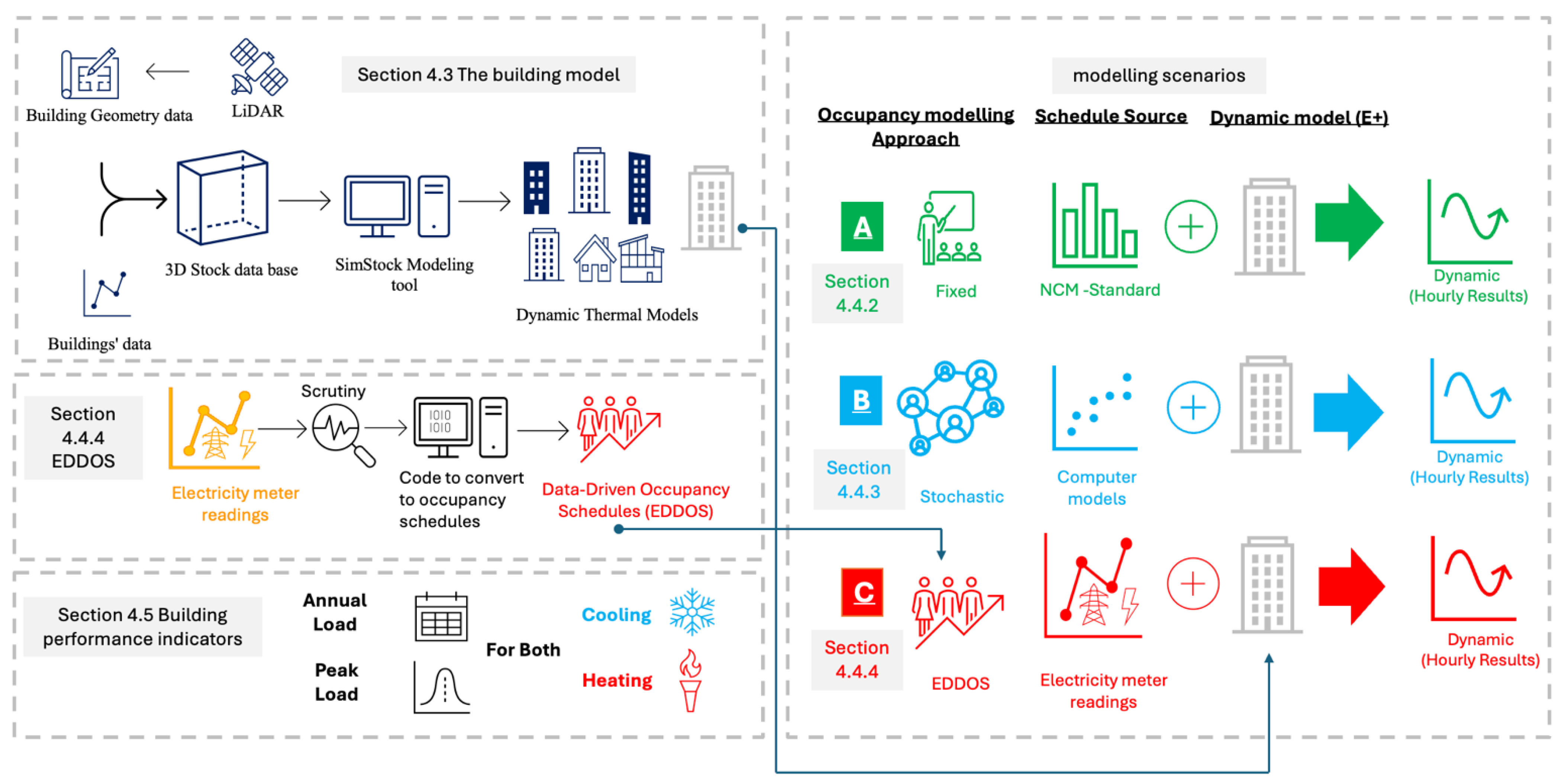
4.1. Overview
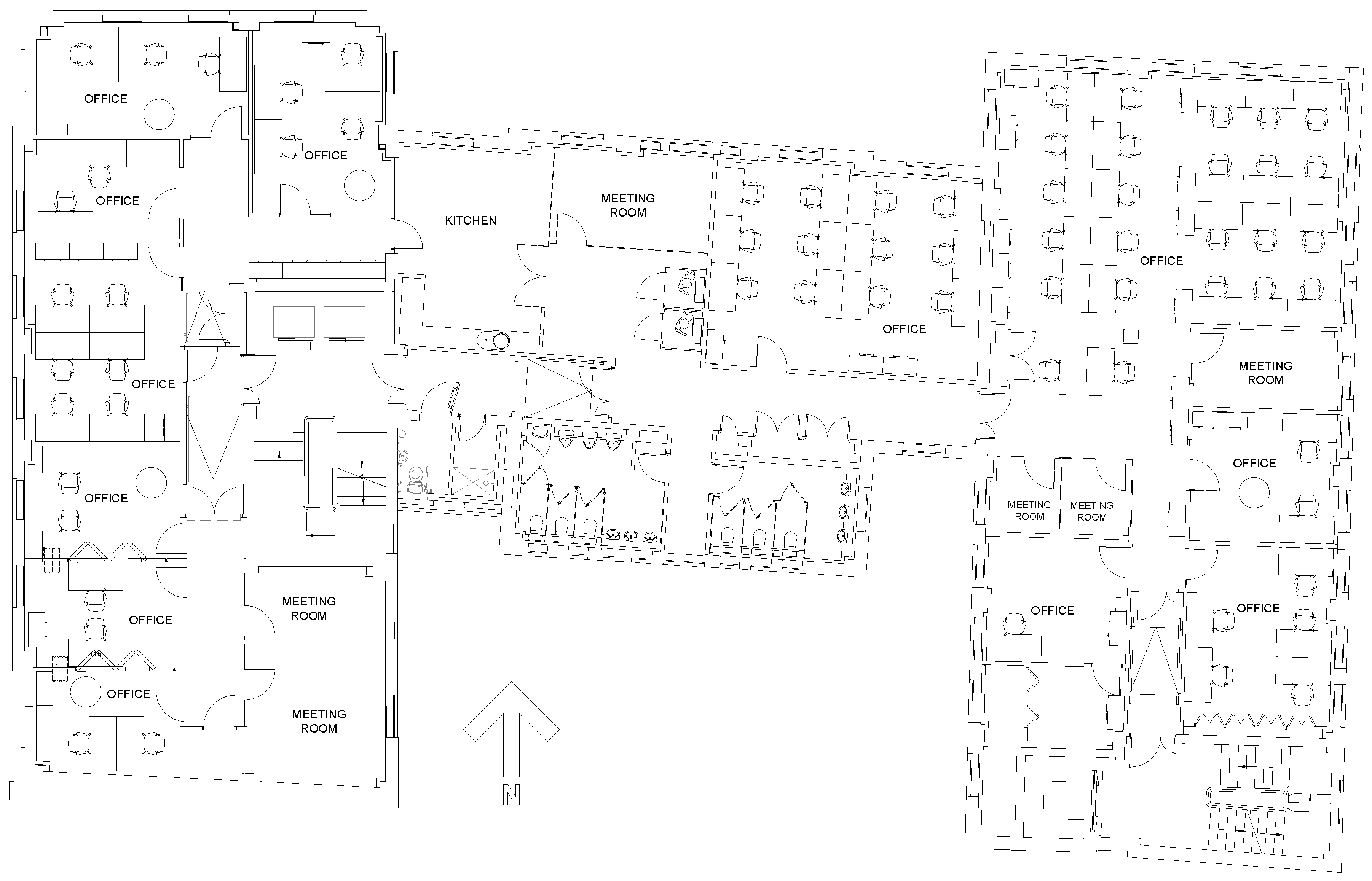
4.2. Case Study Building
4.3. The Building Model
- Developing a 3D building stock database integrating key building-level data including building name, geometry (including footprint and height), construction, and activity type, based on data sources such as UCL Estates, Display Energy Certificates, Ordnance Survey, and Valuation Office Agency (as detailed in [46]).
- Using a Python-coded tool called SimStock [47] to automatically generate EnergyPlus thermal models for each building by extracting data from the 3D building stock database.
4.4. Occupancy Modelling
4.4.1. Studied Approaches
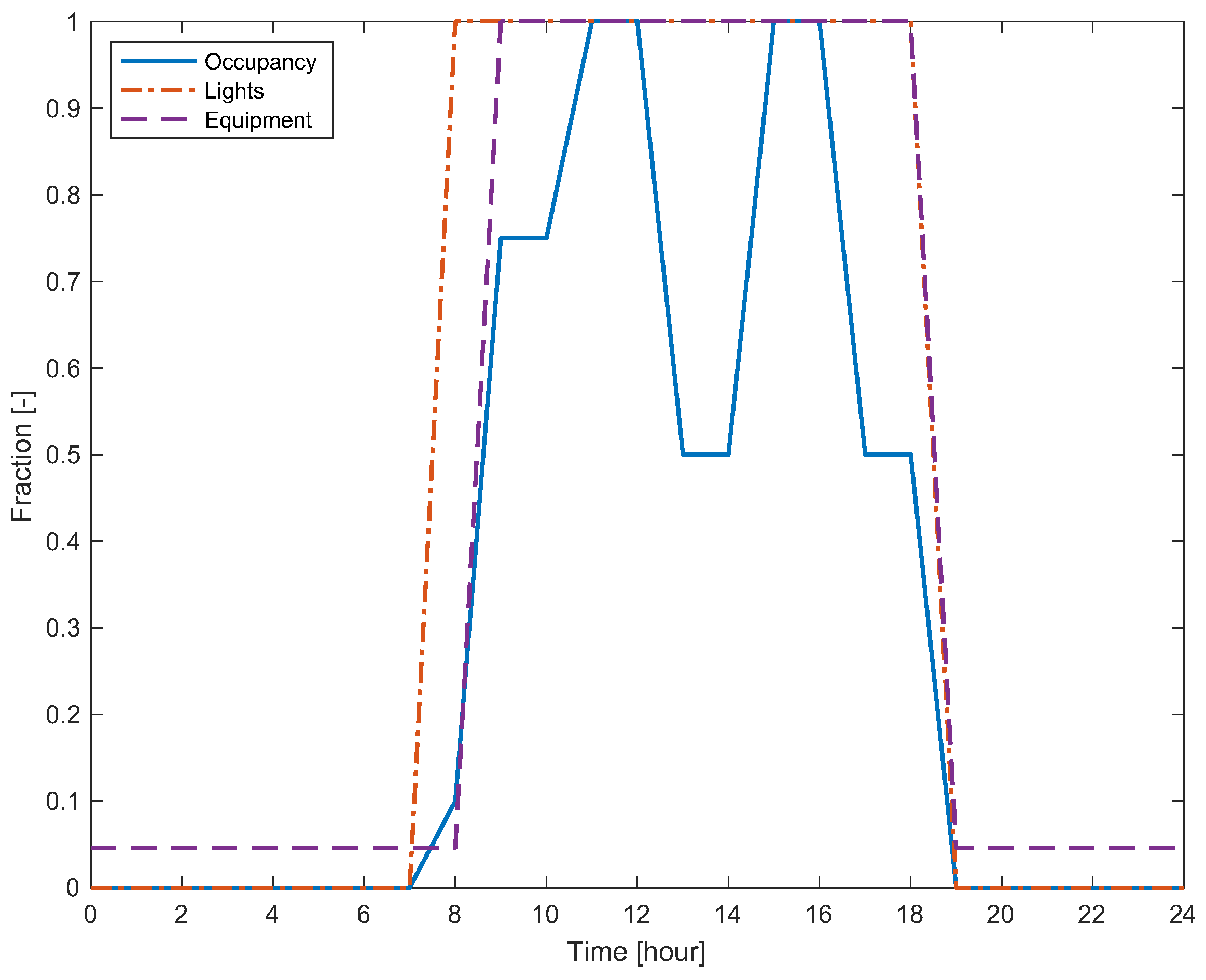
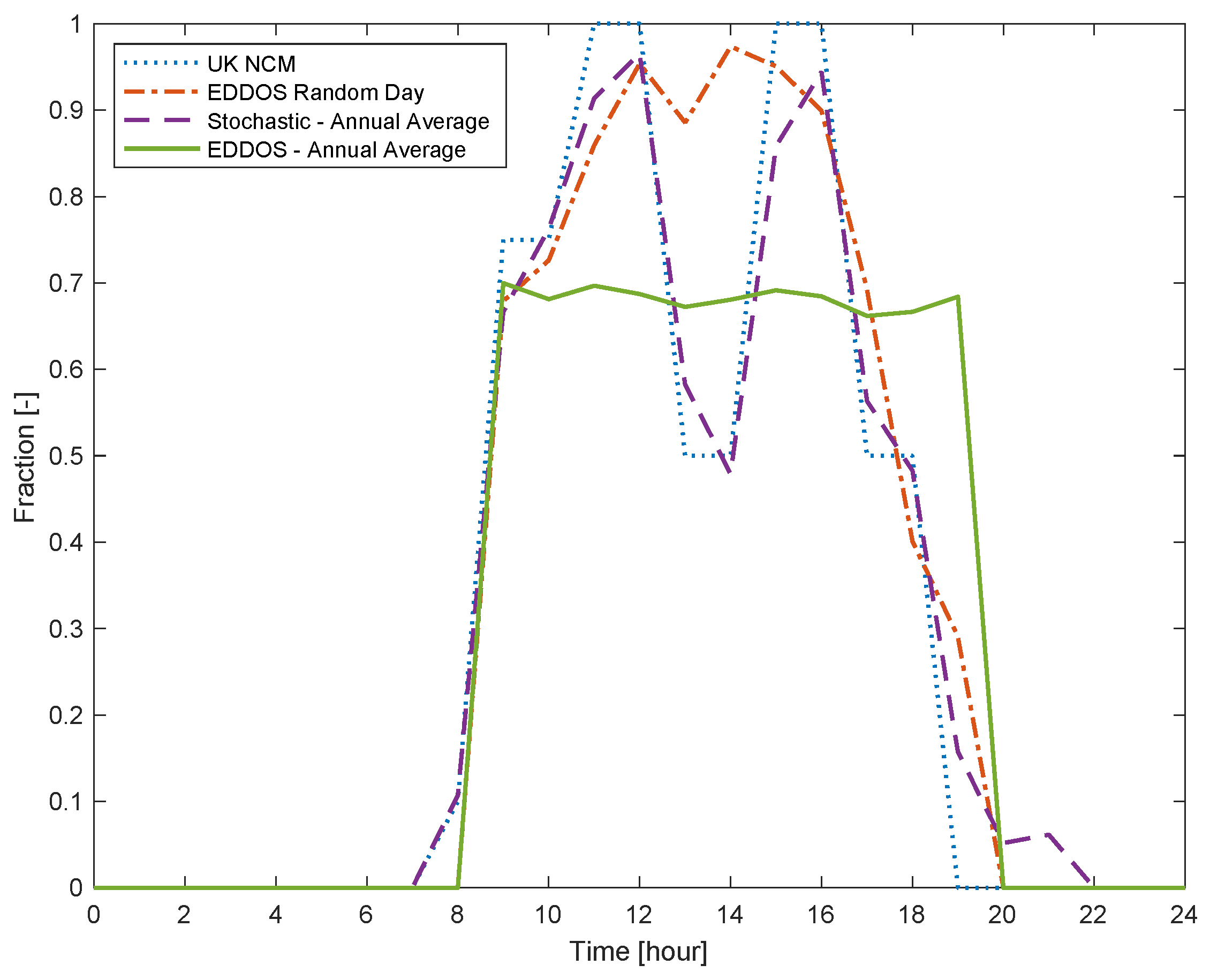
4.4.2. Fixed Standard-Based Occupancy Schedules
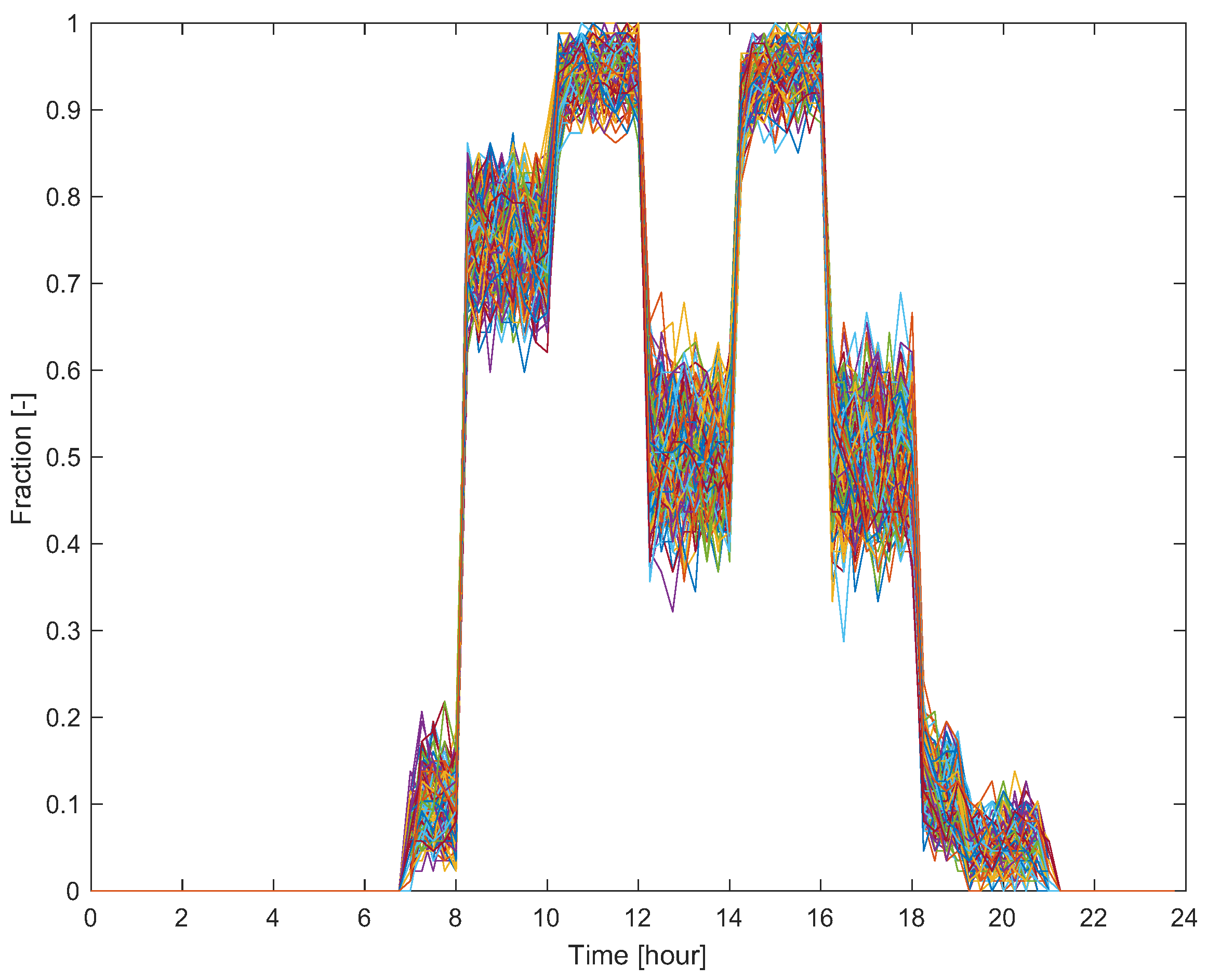
4.4.3. Non-Repeating Occupancy Profiles from a Stochastic Model
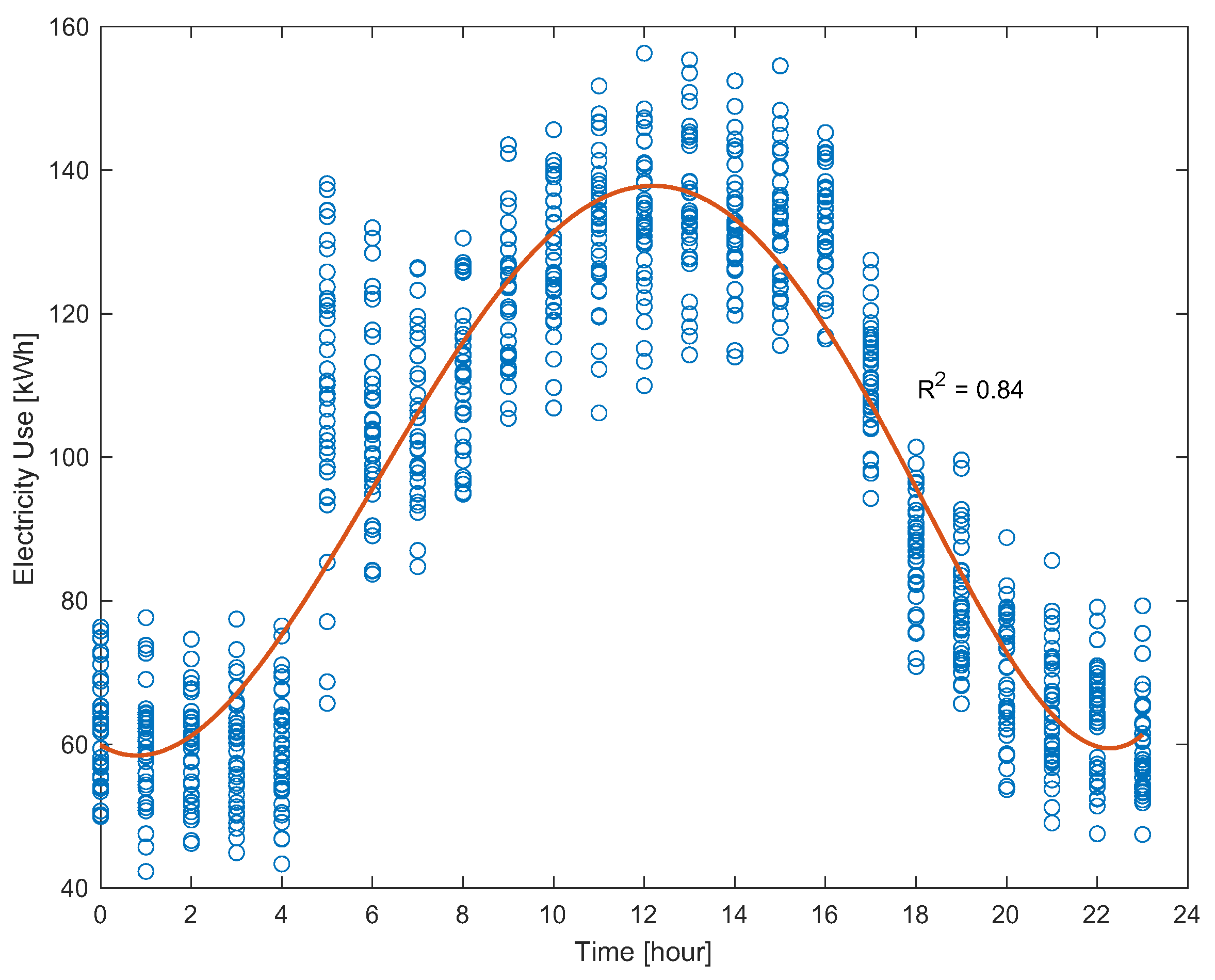
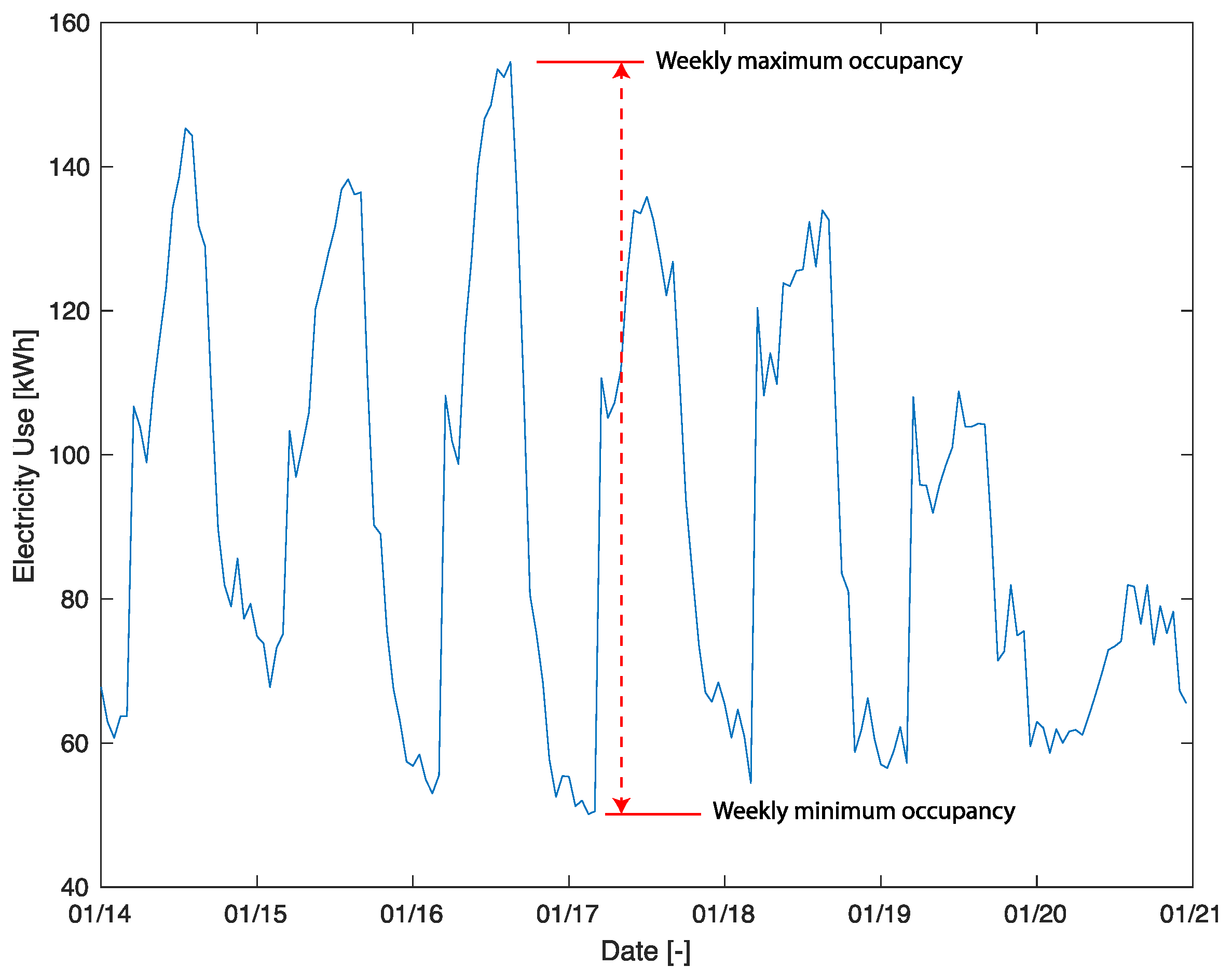
4.4.4. Energy-Data-Driven Occupancy Schedules (EDDOSs)
4.5. Building Performance Indicators and Evaluation of Occupancy Models
- Annual Heating Demand (AHD): This represents the total amount of heating energy required over a year to maintain the heating set-points:
- Peak Heating Demand: This represents the maximum heating energy required to maintain the heating set-points at a certain hour over a year.
- Annual Cooling Demand (ACD): This represents the total amount of cooling energy required over a year to maintain the cooling set-points:
- Peak Cooling Demand: This represents the maximum cooling energy required to maintain the cooling set-points at a certain hour over a year.
5. Results and Discussions
5.1. Occupancy Profiles
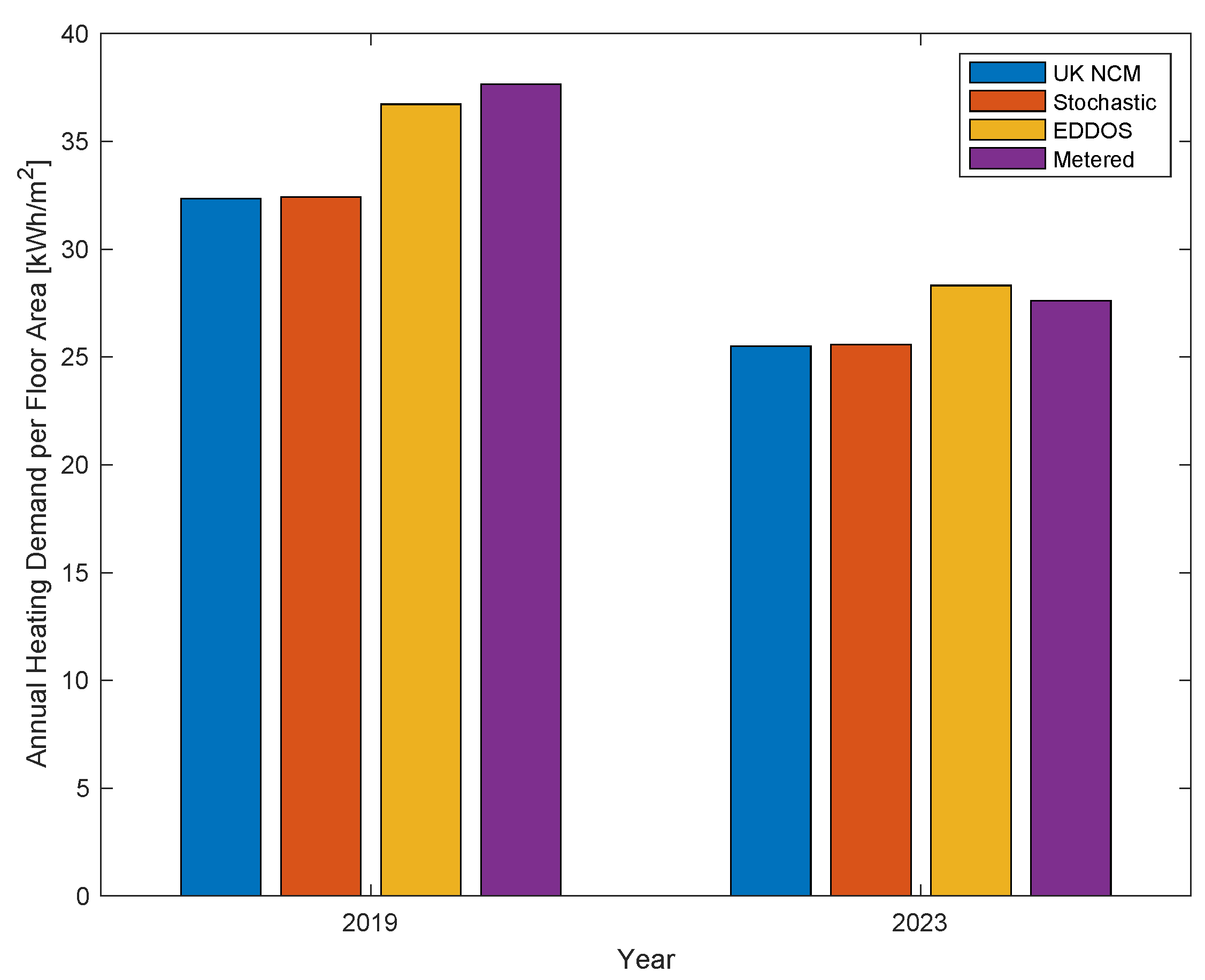
5.2. Annual Heating Demand
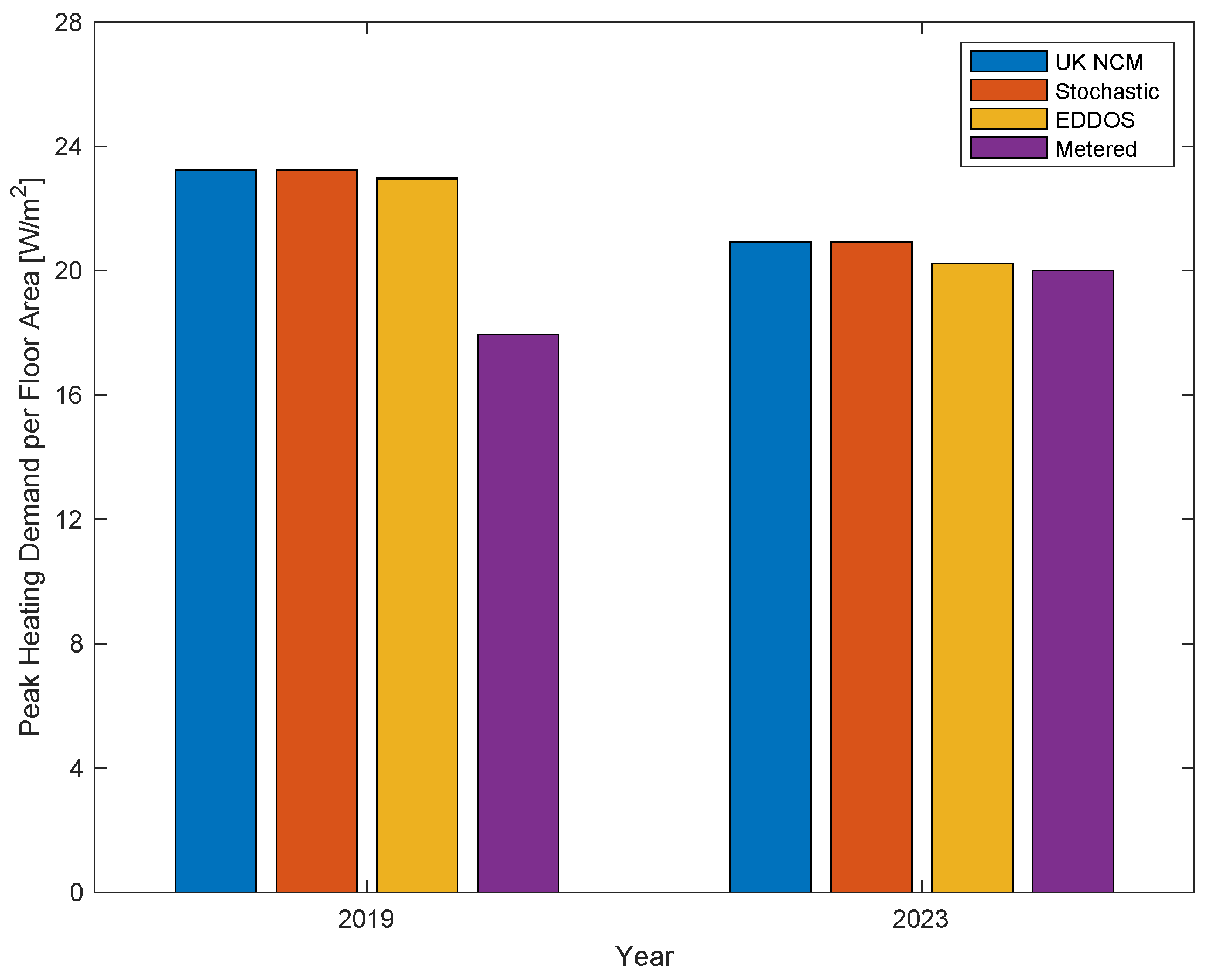
5.3. Peak Heating Demand
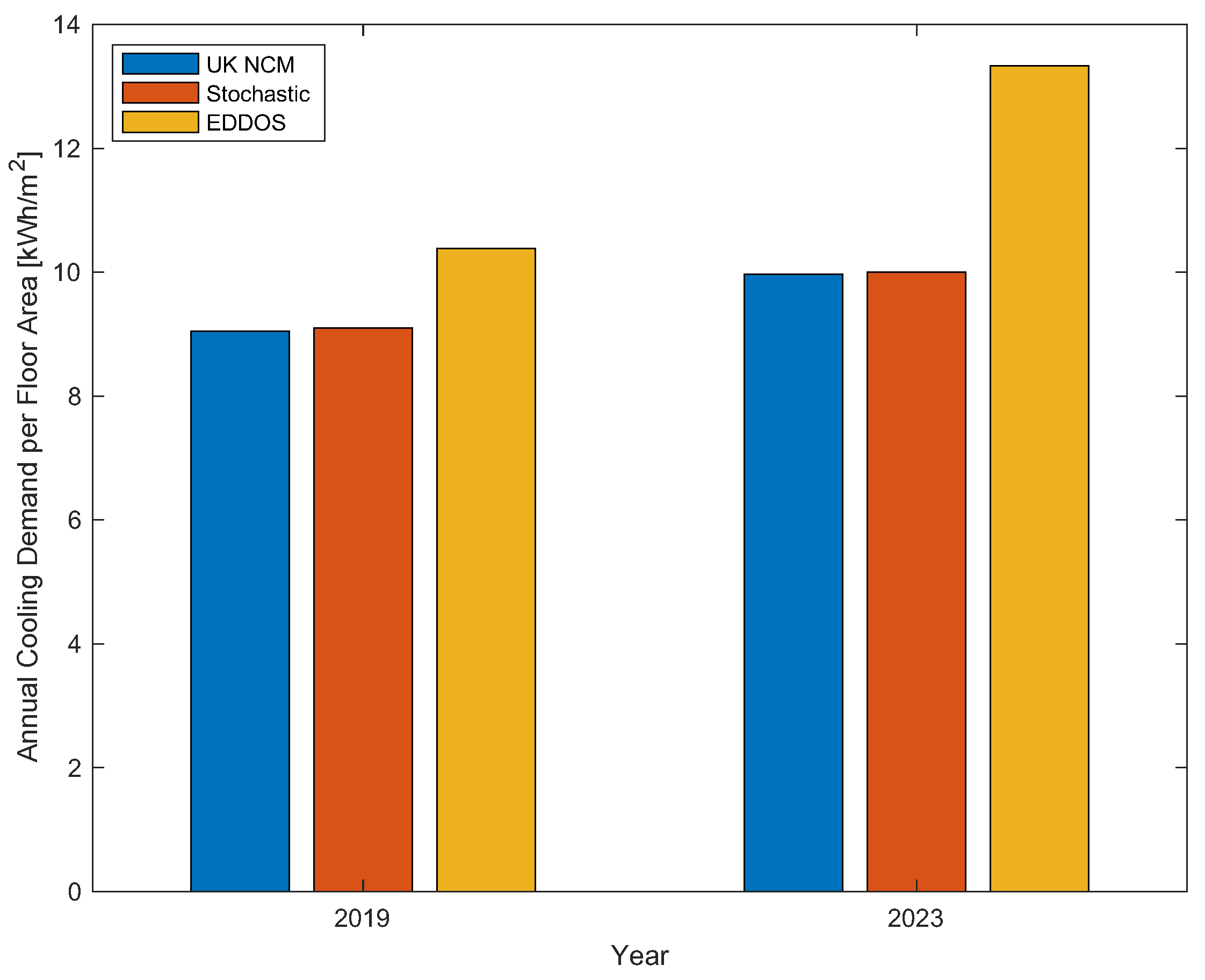
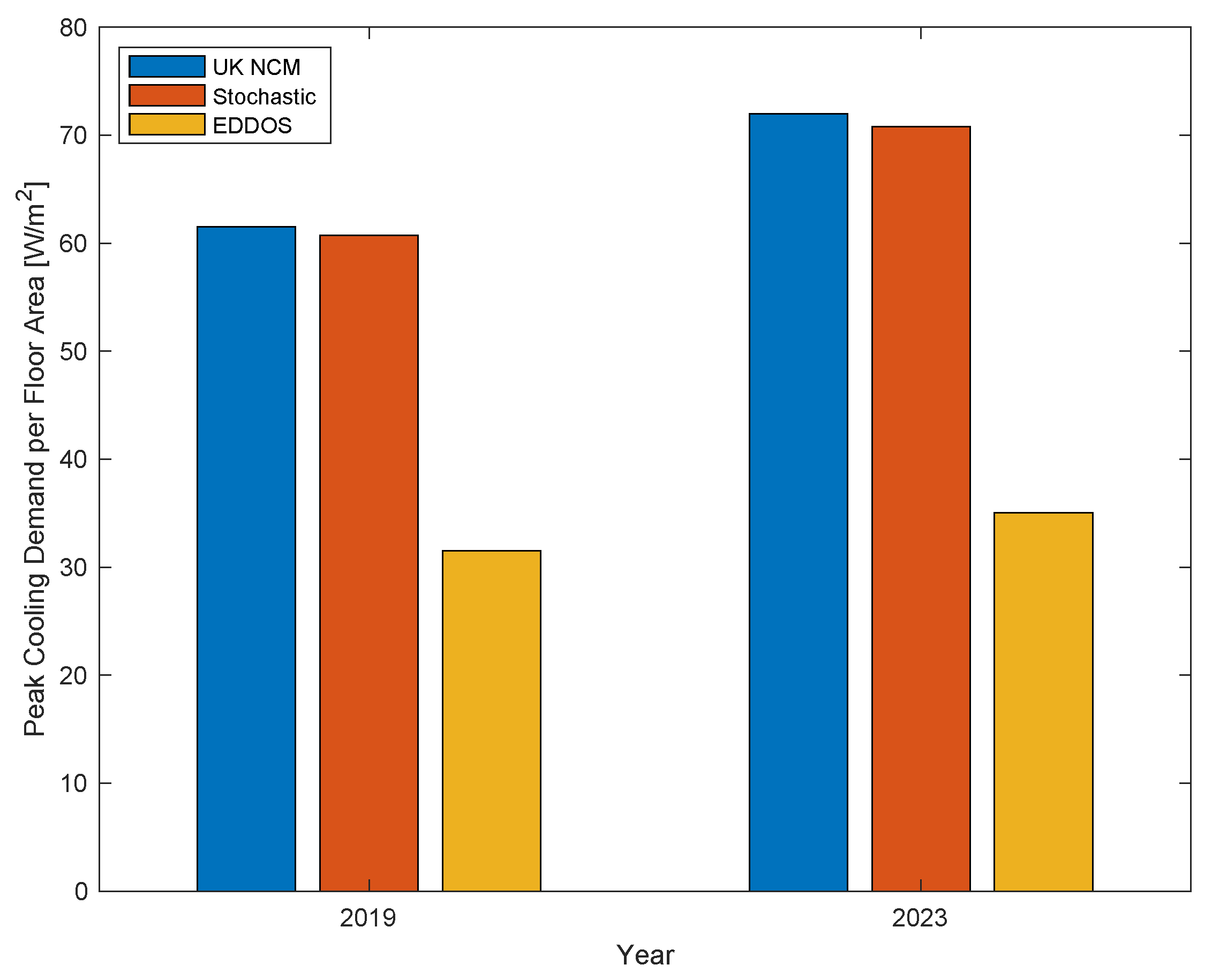
5.4. Annual and Peak Cooling Demands
6. Conclusions
- The energy-data-driven model (EDDOS) demonstrated superior performance in estimating annual heating demands, with errors of ±2.5% compared to 14% and 7% for the standard-based and stochastic occupancy models in 2019 and 2023, respectively. This highlights the potential of energy-data-driven approaches in capturing realistic occupancy patterns.
- The stochastic occupancy model, despite its higher computational cost, did not significantly improve heating demand estimations compared to standard-based schedules. For instance, in 2019, NCM estimated 32.34 kWh/m2, while the stochastic model estimated 32.41 kWh/m2, a negligible difference of 0.07 kWh/m2.
- For peak heating demand estimation, all models performed similarly, with EDDOS showing a slight edge (28% error compared to 29.5% for both stochastic and NCM in 2019).
- In cooling demand estimations, the energy-data-driven model (EDDOS) yielded notably different results compared to standard-based and stochastic models. For example, in 2023, EDDOS estimated an annual cooling demand of 13.34 kWh/m2, which was significantly higher than the estimations of the standard-based and stochastic models (9.96 kWh/m2 and 10 kWh/m2, respectively).
- The energy-data-driven model estimated lower peak cooling demands compared to other occupancy models, suggesting a more diverse pattern of occupancy throughout the year.
Author Contributions
Funding
Data Availability Statement
Conflicts of Interest
Nomenclature
| ACD | Annual Cooling Demand |
| AHD | Annual Heating Demand |
| ASHRAE | American Society of Heating, Refrigerating and Air-Conditioning Engineers |
| CDD | Cooling Degree Day |
| CO2 | Carbon Dioxide |
| DES | District Energy System |
| EDDOS | Energy-Data-Driven Occupancy Schedule |
| HDD | Heating Degree Day |
| HVAC | Heating, Ventilation, and Air Conditioning |
| NCM | National Calculation Method |
| UCL | University College London |
References
- Nejat, P.; Jomehzadeh, F.; Taheri, M.M.; Gohari, M.; Majid, M.Z.A. A global review of energy consumption, CO2 emissions and policy in the residential sector (with an overview of the top ten CO2 emitting countries). Renew. Sustain. Energy Rev. 2015, 43, 843–862. [Google Scholar] [CrossRef] [Scilit]
- Charani, S.C.; Rismanchi, B.; Foliente, G. Energy master planning for net-zero emission communities: State of the art and research challenges. Renew. Sustain. Energy Rev. 2021, 137, 110600. [Google Scholar] [CrossRef] [Scilit]
- Koch, A.; Girard, S.; McKoen, K. Towards a neighbourhood scale for low- or zero-carbon building projects. Build. Res. Inf. Int. J. Res. Dev. Demonstr. 2012, 40, 527–537. [Google Scholar] [CrossRef] [Scilit]
- Chow, Y. Utilizing district energy system as a cost-effective measure in meeting UK domestic ‘zero carbon’ targets. Int. J. Low-Carbon Technol. 2009, 4, 169–174. [Google Scholar] [CrossRef] [Scilit]
- O’brien, W. Conclusion, Research Needs, and Future Directions. Modeling, Design, and Optimisation of Net-Zero Energy Buildings; Ernst & Sohn: Berlin, Germany, 2015. [Google Scholar]
- Walker, S.; Labeodan, T.; Boxem, G.; Maassen, W.; Zeiler, W. An assessment methodology of sustainable energy transition scenarios for realizing energy neutral neighborhoods. Appl. Energy 2018, 228, 2346–2360. [Google Scholar] [CrossRef] [Scilit]
- Nord, N.; Schmidt, D.; Kallert, A.M.D. Necessary Measures to Include more Distributed Renewable Energy Sources into District Heating System. Energy Procedia 2017, 116, 48–57. [Google Scholar] [CrossRef] [Scilit]
- Lyu, Y.; Pan, Y.; Huang, Z. Development and Test of a New Fast Estimate Tool for Cooling and Heating Load Prediction of District Energy Systems at Planning Stage. Buildings 2022, 12, 1671. [Google Scholar] [CrossRef] [Scilit]
- An, J.; Yan, D.; Hong, T.; Sun, K. A novel stochastic modeling method to simulate cooling loads in residential districts. Appl. Energy 2017, 206, 134–149. [Google Scholar] [CrossRef] [Scilit]
- Zhang, J.; Hu, Y.; Yaun, Y.; Yuan, H. Accuracy improvement of the load forecasting in the district heating system by the informer-based framework with the optimal step size selection. Energy 2024, 291, 130347. [Google Scholar] [CrossRef] [Scilit]
- Menapace, A.; Santopietro, S.; Gargano, R.; Righetti, M. Stochastic Generation of District Heat Load. Energies 2021, 14, 5344. [Google Scholar] [CrossRef] [Scilit]
- Aoun, N.; Baviere, R.; Vallee, M.; Sandou, G. Load shifting of space-heating demand in district heating systems based on a reduced-order building model identifiable at substation level. In Proceedings of the 4th Smart Energy Systems and 4th Generation District Heating Conference, Aalborg, Denmark, 13–14 November 2018. [Google Scholar]
- Yan, D.; O’brien, W.; Hong, T.; Feng, X.; Gunay, H.B.; Tahmasebi, F.; Mahdavi, A. Occupant behavior modeling for building performance simulation: Current state and future challenges. Energy Build. 2015, 107, 264–278. [Google Scholar] [CrossRef] [Scilit]
- Tahmasebi, F.; Mahdavi, A. The sensitivity of building performance simulation results to the choice of occupants’ presence models: A case study. J. Build. Perform. Simul. 2015, 10, 625–635. [Google Scholar] [CrossRef] [Scilit]
- Gaetani, I.; Hoes, P.-J.; Hensen, J.L.M. Occupant behavior in building energy simulation: Towards a fit-for-purpose modeling strategy. Energy Build. 2016, 121, 188–204. [Google Scholar] [CrossRef] [Scilit]
- Schweiker, M. Understanding occupants’ behaviour for energy efficiency in buildings. Curr. Sustain. Energy Rep. 2017, 4, 8–14. [Google Scholar] [CrossRef] [Scilit]
- Azar, E.; Menassa, C.C. A comprehensive analysis of the impact of occupancy parameters in energy simulation of office buildings. Energy Build. 2012, 55, 841–853. [Google Scholar] [CrossRef] [Scilit]
- He, Z.; Hong, T.; Chou, S.K. A Framework for Estimating the Energy-saving Potential of Occupant Behaviour Improvement. Appl. Energy 2021, 287, 116591. [Google Scholar] [CrossRef] [Scilit]
- Hong, T.; Taylor-Lange, S.C.; D’oca, S.; Yan, D.; Corgnati, S.P. Advances in research and applications of energy-related occupant behavior in buildings. Energy Build. 2016, 116, 694–702. [Google Scholar] [CrossRef] [Scilit]
- Maracchini, G.; Latini, A.; Giuseppe, E.G.; Gianangeli, A.; D’orazio, M. What Matters the Most? The Role of Actual Occupancy Patterns and Automatic Model Calibration in Reducing the Building Energy Performance Gap in an Italian Case Study. In Sustainability in Energy and Buildings 2023; Littlewood, J.R., Jain, L., Howlett, R.J., Eds.; Springer Singapore: Singapore, 2024; pp. 237–247. [Google Scholar]
- Carpino, C.; Loukou, E.; Heiselberg, P.; Arcuri, N. Energy performance gap of a nearly Zero Energy Building (nZEB) in Denmark: The influence of occupancy modelling. Build. Res. Inf. 2020, 48, 899–921. [Google Scholar] [CrossRef] [Scilit]
- Barthelmes, V.M.; Becchio, C.; Corgnati, S.P. Occupant behaviour lifestyles in a residential nearly zero energy building: Effect on energy use and thermal comfort. Sci. Technol. Built Environ. 2016, 22, 960–975. [Google Scholar] [CrossRef] [Scilit]
- Ebuy, H.T.; Bril El Haouzi, H.; Benelmir, R.; Pannequin, R. Occupant Behavior Impact on Building Sustainability Performance: A Literature Review. Sustainability 2023, 15, 2440. [Google Scholar] [CrossRef] [Scilit]
- Pristerà, G.; Allacker, K.; Rock, M.; Sala, S. Archetype selection process for the development of a building stock model. IOP Conf. Ser. Earth Environ. Sci. 2023, 1196, 12013. [Google Scholar] [CrossRef] [Scilit]
- Yang, Y.; Gu, Q.; Wei, H.; Liu, H.; Wang, W.; Wei, S. Transforming and validating urban microclimate data with multi-sourced microclimate datasets for building energy modelling at urban scale. Energy Build. 2023, 295, 113318. [Google Scholar] [CrossRef] [Scilit]
- Happle, G.; Fonseca, J.A.; Schlueter, A. A review on occupant behaviour in urban building energy models. Energy Build. 2018, 174, 276–292. [Google Scholar] [CrossRef] [Scilit]
- NCM. UK’s National Calculation Method for Non Domestic Buildings. 2021. Available online: https://www.uk-ncm.org.uk/index.jsp (accessed on 10 September 2024).
- Zhang, D.; Javanroodi, K.; Nik, V.M.; Chen, Y. Using urban building energy modeling to quantify the energy performance of residential buildings under climate change. Build. Simul. 2023, 16, 1629–1643. [Google Scholar]
- Spyridon, S. Generating Occupancy Profiles for Building Simulations Using a Hybrid GNN and LSTM Framework. Energies 2023, 16, 4638. [Google Scholar] [CrossRef] [Scilit]
- Cui, Y.; Zhu, Z.; Zhao, X.; Li, Z. Energy Schedule Setting Based on Clustering Algorithm and Pattern Recognition for Non-Residential Buildings Electricity Energy Consumption. Sustainability 2023, 15, 8750. [Google Scholar] [CrossRef] [Scilit]
- Malatesta, T.; Li, Q.; Breadsell, J.K.; Eon, C. Distinguishing Household Groupings within a Precinct Based on Energy Usage Patterns Using Machine Learning Analysis. Energies 2023, 16, 4119. [Google Scholar] [CrossRef] [Scilit]
- Hong, T.; Malik, J.; Krelling, A.; O’Brien, W.; Sun, K.; Lamberts, R.; Wei, M. Ten questions concerning thermal resilience of buildings and occupants for climate adaptation. Build. Environ. 2023, 244, 110806. [Google Scholar] [CrossRef] [Scilit]
- Nejadshamsi, S.; Eicker, U.; Wang, C.; Bentahar, J. Data sources and approaches for building occupancy profiles at the urban scale—A review. Build. Environ. 2023, 238, 110375. [Google Scholar] [CrossRef] [Scilit]
- Krishnan, D.; Kelly, S.; Kim, Y. A Meta-Analysis Review of Occupant Behaviour Models for Assessing Demand-Side Energy Consumption. Energies 2022, 15, 1219. [Google Scholar] [CrossRef] [Scilit]
- Haldi, F.; Robinson, D. Interactions with window openings by office occupants. Build. Environ. 2009, 44, 2378–2395. [Google Scholar] [CrossRef] [Scilit]
- Mahdavi, A.; Tahmasebi, F. The deployment-dependence of occupancy-related models in building performance simulation. Energy Build. 2016, 117, 313–320. [Google Scholar] [CrossRef] [Scilit]
- Tahmasebi, F.; Mahdavi, A. An inquiry into the reliability of window operation models in building performance simulation. Build. Environ. 2016, 105, 343–357. [Google Scholar] [CrossRef] [Scilit]
- Vassiljeva, K.; Matson, M.; Ferrantelli, A.; Petlenkov, E.; Thalfeldt, M.; Belikov, J. Data-Driven Occupancy Profile Identification and Application to the Ventilation Schedule in a School Building. Energies 2024, 17, 3080. [Google Scholar] [CrossRef] [Scilit]
- Li, T.; Liu, X.; Li, G.; Wang, X.; Ma, J.; Xu, C.; Mao, Q. A systematic review and comprehensive analysis of building occupancy prediction. Renew. Sustain. Energy Rev. 2024, 193, 114284. [Google Scholar] [CrossRef] [Scilit]
- Rugani, R.; Picco, M.; Salvadori, G.; Fantozzi, F.; Marengo, M. A numerical analysis of occupancy profile databases impact on dynamic energy simulation of buildings. Energy Build. 2024, 310, 114114. [Google Scholar] [CrossRef] [Scilit]
- Vosoughkhosravi, S.; Thomas, M.A.; Jafari, A. Developing Data-Driven Occupancy Detection Models Based on Individual Plug Load Profiles in Office Spaces. Comput. Civ. Eng. 2023, 2023, 979–986. [Google Scholar]
- Zhou, H.; Yu, J.; Zhao, Y.; Chang, C.; Li, J.; Lin, B. Recognizing occupant presence status in residential buildings from environment sensing data by data mining approach. Energy Build. 2021, 252, 111432. [Google Scholar] [CrossRef] [Scilit]
- Johari, F.; Shadram, F.; Widén, J. Urban building energy modeling from geo-referenced energy performance certificate data: Development, calibration, and validation. Sustain. Cities Soc. 2023, 96, 104664. [Google Scholar] [CrossRef] [Scilit]
- Hou, H.; Pawlak, J.; Sivakumar, A.; Howard, B. Building occupancy modelling at the district level: A combined copula-nested hazard-based approach. Build. Environ. 2022, 225, 109661. [Google Scholar] [CrossRef] [Scilit]
- Samareh Abolhassani, S.; Zandifar, A.; Ghourchian, N.; Amayri, M.; Bouguila, N.; Eicker, U. Improving residential building energy simulations through occupancy data derived from commercial off-the-shelf Wi-Fi sensing technology. Energy Build. 2022, 272, 112354. [Google Scholar] [CrossRef] [Scilit]
- Kourgiozou, V.; Salam, A.-S.; Ivan, K.; Mark, D.; Andrew, C.; Rui, T.; Dimitrios, R.; Dejan, M. Development of a dynamic building stock model for smart energy transition decision support: University campus stock case study. In Proceedings of the Building Simulation 2023: 18th Conference of IBPSA. IBPSA, Shanghai, China, 4–6 September 2023. [Google Scholar]
- SimStock. Available online: http://cee.ac.uk/simstock/ (accessed on 10 October 2023).
- Dong, J.; Schwartz, Y.; Korolija, I.; Mavrogianni, A.; Mumovic, D. London School Building Stock Model for Cognitive Performance Assessment. In Proceedings of the 5th Building Simulation and Optimization Conference, Loughborough, UK, 21–22 September 2020. [Google Scholar]
- Ghiassi, N.; Tahmasebi, F.; Mahdavi, A. Harnessing buildings’ operational diversity in a computational framework for high-resolution urban energy modeling. Build. Simul. 2017, 10, 1005–1021. [Google Scholar] [CrossRef] [Scilit]
- Page, J.; Robinson, D.; Morel, N.; Scartezzini, J.-L. A generalised stochastic model for the simulation of occupant presence. Energy Build. 2007, 40, 83–98. [Google Scholar] [CrossRef] [Scilit]
- Divkovic, D.; Knorr, L.; Meschede, H. Design approach to extend and decarbonise existing district heating systems—Case study for German cities. Int. J. Sustain. Energy Plan. Manag. 2023, 38, 141–156. [Google Scholar] [CrossRef] [Scilit]
- Gonzalo, F.D.A.; Santamaría, B.M.; Burgos, M.J.M. Assessment of Building Energy Simulation Tools to Predict Heating and Cooling Energy Consumption at Early Design Stages. Sustainability 2023, 15, 1920. [Google Scholar] [CrossRef] [Scilit]
- Edtmayer, H.; Fochler, L.-M.; Mach, T.; Fauster, J.; Schwab, E.; Hochenauer, C. High-resolution, spatial thermal energy demand analysis and workflow for a city district. Int. J. Sustain. Energy Plan. Manag. 2023, 38, 47–64. [Google Scholar] [CrossRef] [Scilit]
- Rodríguez, L.R.; Ramos, J.S.; Domínguez, S. Building geometry data from online maps for accurate thermal simulations of districts. Build. Simul. 2023, 16, 1659–1674. [Google Scholar] [CrossRef] [Scilit]
- Martinazzoli, G.; Pasinelli, D.; Lezzi, A.M.; Pilotelli, M. Design of a 5th Generation District Heating Substation Prototype for a Real Case Study. Sustainability 2023, 15, 2972. [Google Scholar] [CrossRef] [Scilit]
- Shiny Weather Data. 2021. Available online: https://shinyweatherdata.com/ (accessed on 10 October 2023).
- Raftery, P.; Keane, M.; Costa, A. Calibrating whole building energy models: Detailed case study using hourly measured data. Energy Build. 2011, 43, 3666–3679. [Google Scholar] [CrossRef] [Scilit]
- Coakley, D.; Raftery, P.; Keane, M. A review of methods to match building energy simulation models to measured data. Renew. Sustain. Energy Rev. 2014, 37, 123–141. [Google Scholar] [CrossRef] [Scilit]
- Chaudhary, G.; New, J.; Sanyal, J.; Im, P.; O’Neill, Z.; Garg, V. Evaluation of “Autotune” calibration against manual calibration of building energy models. Appl. Energy 2016, 182, 115–134. [Google Scholar] [CrossRef] [Scilit]
- Im, P.; Joe, J.; Bae, Y.; New, J.R. Empirical validation of building energy modeling for multi-zones commercial buildings in cooling season. Appl. Energy 2020, 261, 114374. [Google Scholar] [CrossRef] [Scilit]

| Model Input Parameter | Value |
|---|---|
| People maximum density | 0.103 [persons/m2] |
| Occupancy schedule | UK NCM D1_Edu_CellOff_Occ |
| Metabolic rate | 123 [W/persons] |
| Latent heat fraction | 0.4 |
| Lighting maximum density | 4.6 [W/m2] |
| Lighting schedule | UK NCM D1_Edu_CellOff_Light |
| Equipment maximum density | 11.99 [W/m2] |
| Equipment schedule | UK NCM D1_Edu_CellOff_Equip |
| Hot water Supply | 0.2369 (l/day/m2) |
| Year | Indicators | Standard-Based Occupancy Schedule (UK NCM) | Stochastic Occupancy Model | Energy-Data-Driven Occupancy Schedules (EDDOSs) | Metered |
|---|---|---|---|---|---|
| 2019 | Annual Heating Demand [kWh/m2] | 32.34 | 32.41 | 36.73 | 37.66 |
| Estimation Error [%] | −14.1 | −13.9 | −2.5 | - | |
| 2023 | Annual Heating Demand [kWh/m2] | 25.50 | 25.57 | 28.32 | 27.62 |
| Estimation Error [%] | −7.7 | −7.4 | 2.5 | - |
| Year | Indicators | Standard-Based Occupancy Schedule (UK NCM) | Stochastic Occupancy Model | Energy-Data-Driven Occupancy Schedules (EDDOSs) | Metered |
|---|---|---|---|---|---|
| 2019 | Hourly Peak Heating Demand [kW] | 117.76 | 117.76 | 116.38 | 90.93 |
| Estimation Error [%] | +29.5 | +29.5 | +28.0 | - | |
| 2023 | Hourly Peak Heating Demand [kW] | 106.04 | 106.03 | 102.51 | 101.37 |
| Estimation Error [%] | +4.6 | +4.6 | +1.1 | - |
Disclaimer/Publisher’s Note: The statements, opinions and data contained in all publications are solely those of the individual author(s) and contributor(s) and not of MDPI and/or the editor(s). MDPI and/or the editor(s) disclaim responsibility for any injury to people or property resulting from any ideas, methods, instructions or products referred to in the content. |
© 2024 by the authors. Licensee MDPI, Basel, Switzerland. This article is an open access article distributed under the terms and conditions of the Creative Commons Attribution (CC BY) license (https://creativecommons.org/licenses/by/4.0/).
Share and Cite
Al-Saegh, S.; Tahmasebi, F.; Tang, R.; Mumovic, D. Comparison of Deterministic, Stochastic, and Energy-Data-Driven Occupancy Models for Building Stock Energy Simulation. Buildings 2024, 14, 2933. https://doi.org/10.3390/buildings14092933
Al-Saegh S, Tahmasebi F, Tang R, Mumovic D. Comparison of Deterministic, Stochastic, and Energy-Data-Driven Occupancy Models for Building Stock Energy Simulation. Buildings. 2024; 14(9):2933. https://doi.org/10.3390/buildings14092933
Chicago/Turabian StyleAl-Saegh, Salam, Farhang Tahmasebi, Rui Tang, and Dejan Mumovic. 2024. "Comparison of Deterministic, Stochastic, and Energy-Data-Driven Occupancy Models for Building Stock Energy Simulation" Buildings 14, no. 9: 2933. https://doi.org/10.3390/buildings14092933
APA StyleAl-Saegh, S., Tahmasebi, F., Tang, R., & Mumovic, D. (2024). Comparison of Deterministic, Stochastic, and Energy-Data-Driven Occupancy Models for Building Stock Energy Simulation. Buildings, 14(9), 2933. https://doi.org/10.3390/buildings14092933

