Article

Nonplanar Robotic Printing of Earth-Based Material: A Case Study Using Cob-like Mixture

1
College of Arts and Creative Enterprises, Zayed University, Abu Dhabi P.O. Box 144534, United Arab Emirates
2
Welsh School of Architecture, Cardiff University, Cardiff CF10 3NB, UK
*
Author to whom correspondence should be addressed.
Buildings 2024, 14(8), 2589; https://doi.org/10.3390/buildings14082589

Submission received: 8 July 2024 / Revised: 7 August 2024 / Accepted: 15 August 2024 / Published: 22 August 2024
(This article belongs to the Special Issue Research on Construction Innovation and Digitization)

Abstract

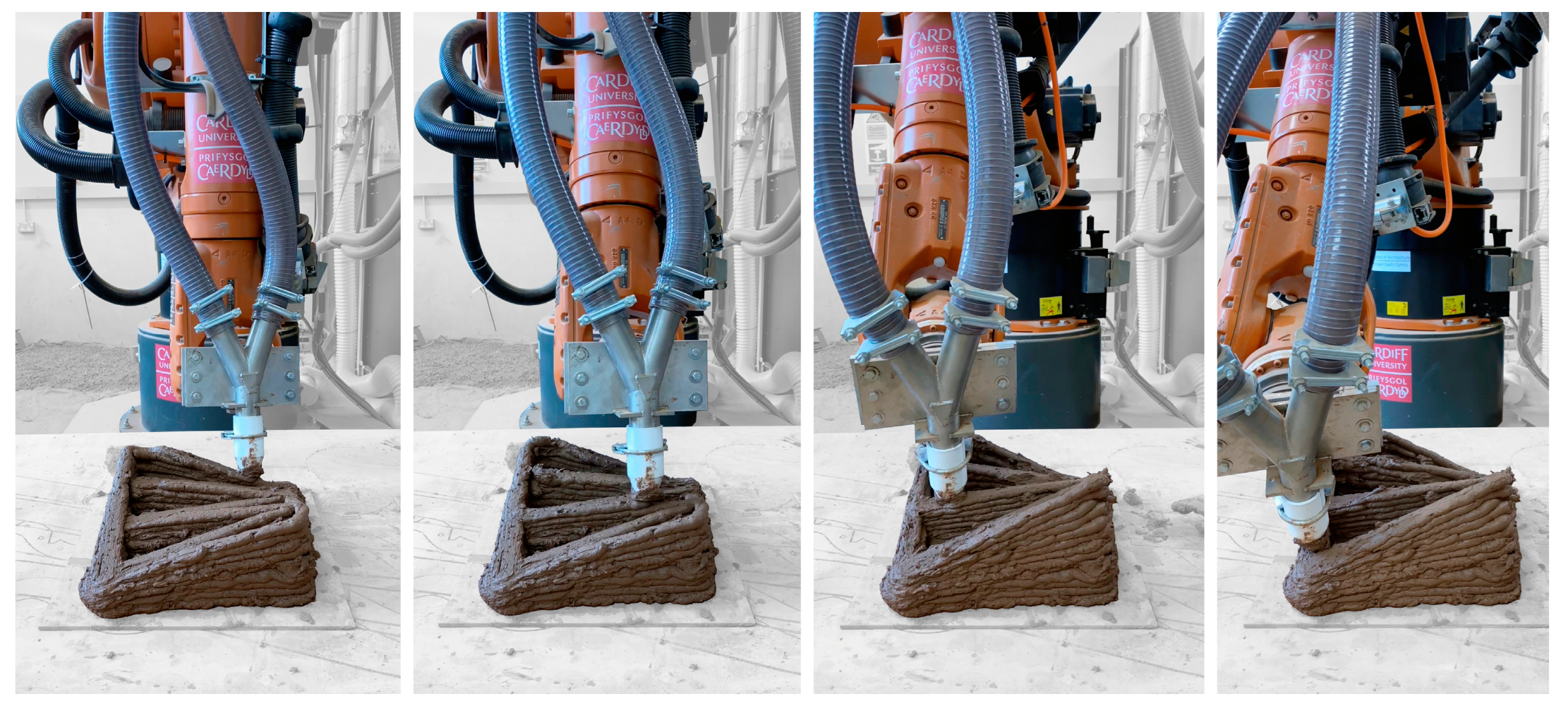
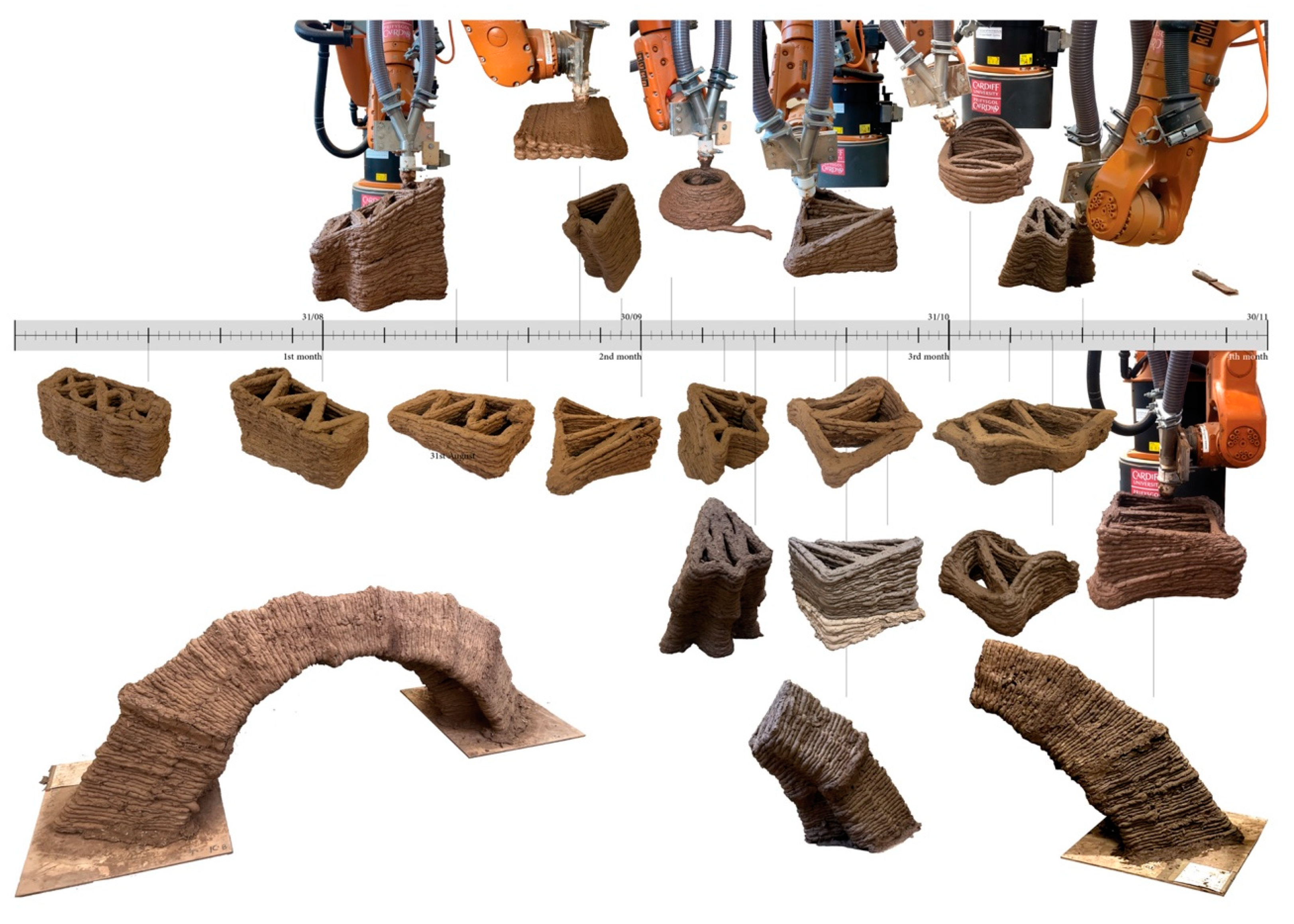
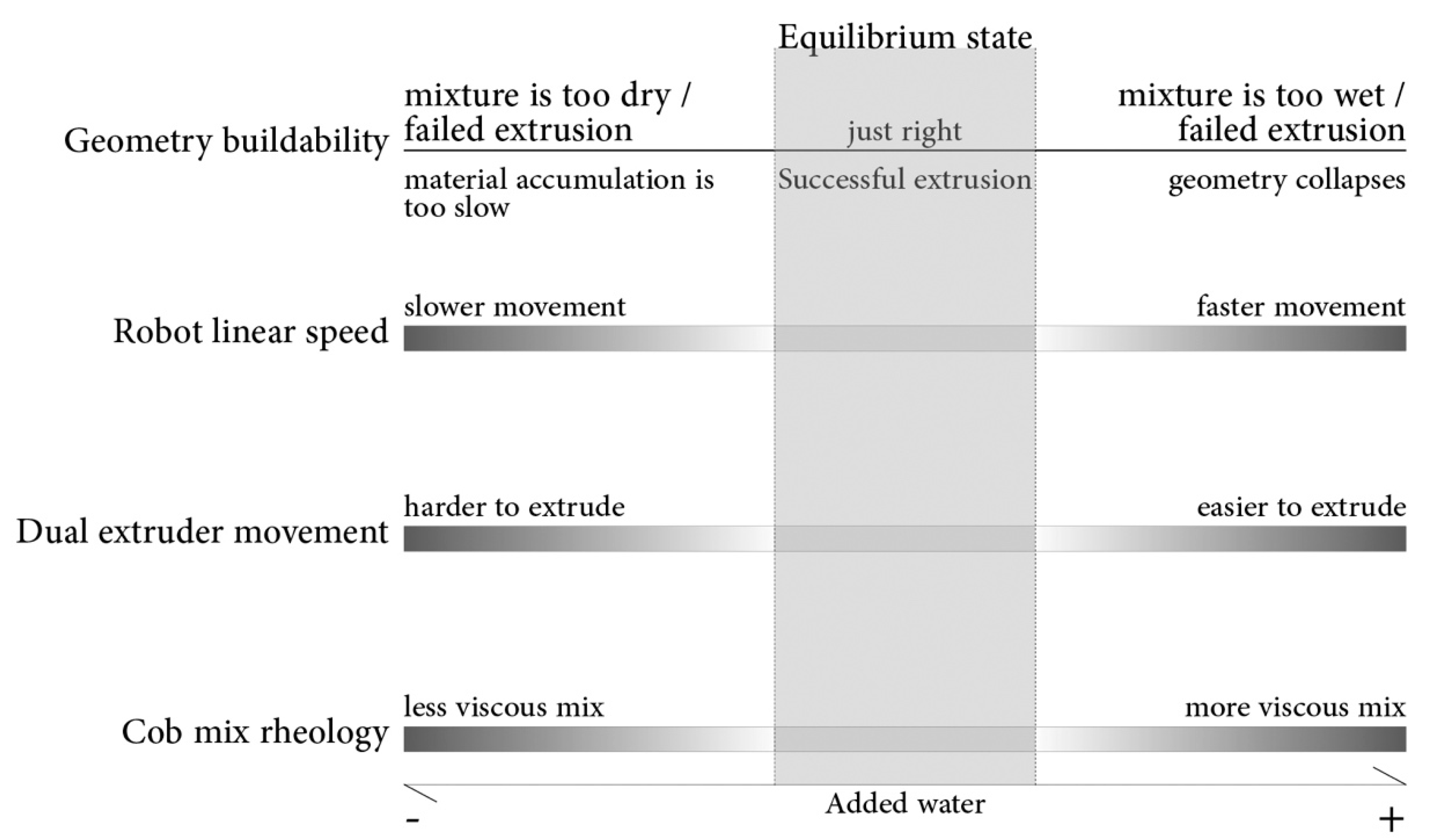
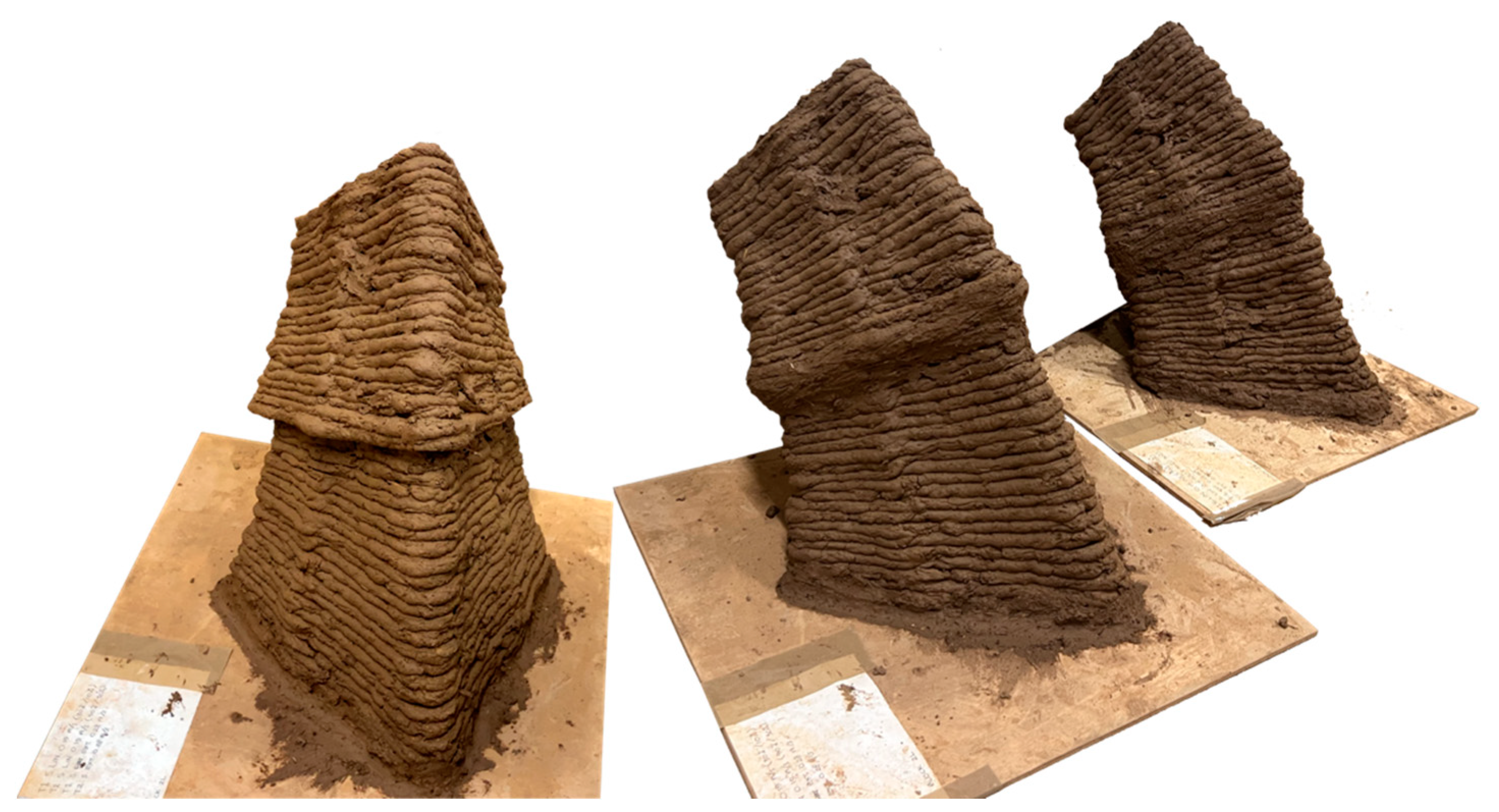
The study presents an integration of cob with robotic processes. By challenging conventional monolithic earth-building methods, the study proposes the use of spatial nonplanar formations that are robotically fabricated, presenting an alternative geometric language for earth construction. The research methodology is derived from existing factors within the robotic lab, encompassing both constant and variable parameters. Through an experimental approach, the variables are systematically manipulated while observing the outcomes to identify patterns and relationships. Incremental refinements to the research conditions result in an optimal equilibrium state within the defined lab parameters. An empirical investigation approach serves as the foundation for controlling the printing process; wherein an iterative adjustment of the robot extrusion parameters is based on the behaviour of the deposited material. The outcome is several robotically printed cob nonplanar prototypes. Depending on their geometric formations and complexity, the printing process combined three variations: continuous, intervals, and modular. The latter enabled the production of a cob arch, serving as proof of feasibility for the creation of modular cob structures through a segmented assembly process. The study contributes to expanding the possibilities of cob construction by leveraging robotic technologies and paving the way for innovative applications of cob in contemporary architecture practices.
Keywords: robotic additive manufacturing; spatial robotic printing; digital fabrication; nonplanar geometry; earth-based architecture robotic additive manufacturing; spatial robotic printing; digital fabrication; nonplanar geometry; earth-based architecture