Article

Indoor Environmental Quality for Comfort Learning Environments: Case Study of Palestinian School Buildings

1
Laboratory Civil Engineering and Geo-Environment Laboratory (LGCgE), Lille University, 59000 Lille, France
2
Faculty of Engineering and Information Technology, An-Najah National University, Nablus P400, Palestine
*
Author to whom correspondence should be addressed.
Buildings 2024, 14(5), 1296; https://doi.org/10.3390/buildings14051296

Submission received: 27 March 2024 / Revised: 25 April 2024 / Accepted: 30 April 2024 / Published: 4 May 2024
(This article belongs to the Section Building Energy, Physics, Environment, and Systems)

Abstract

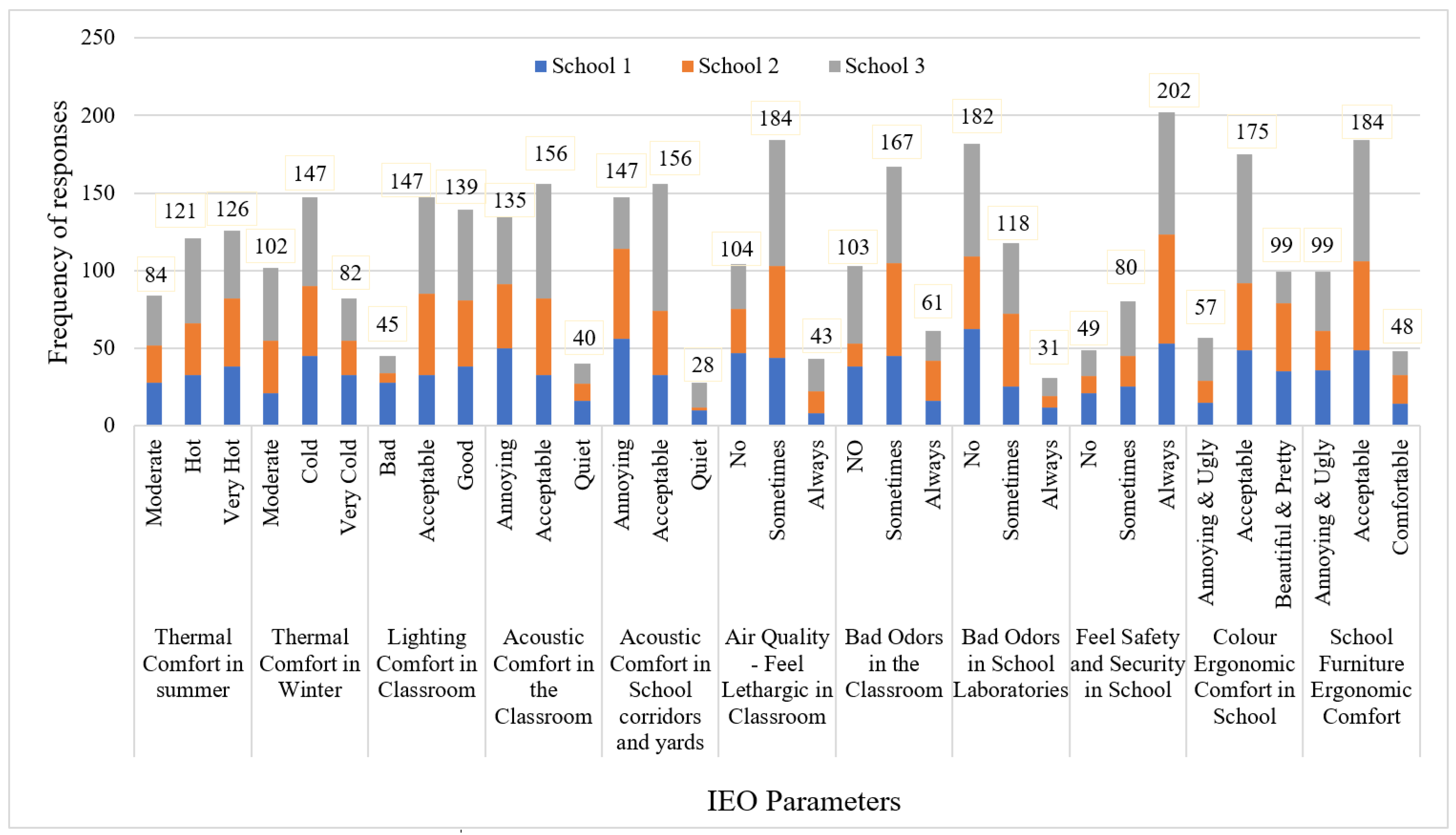
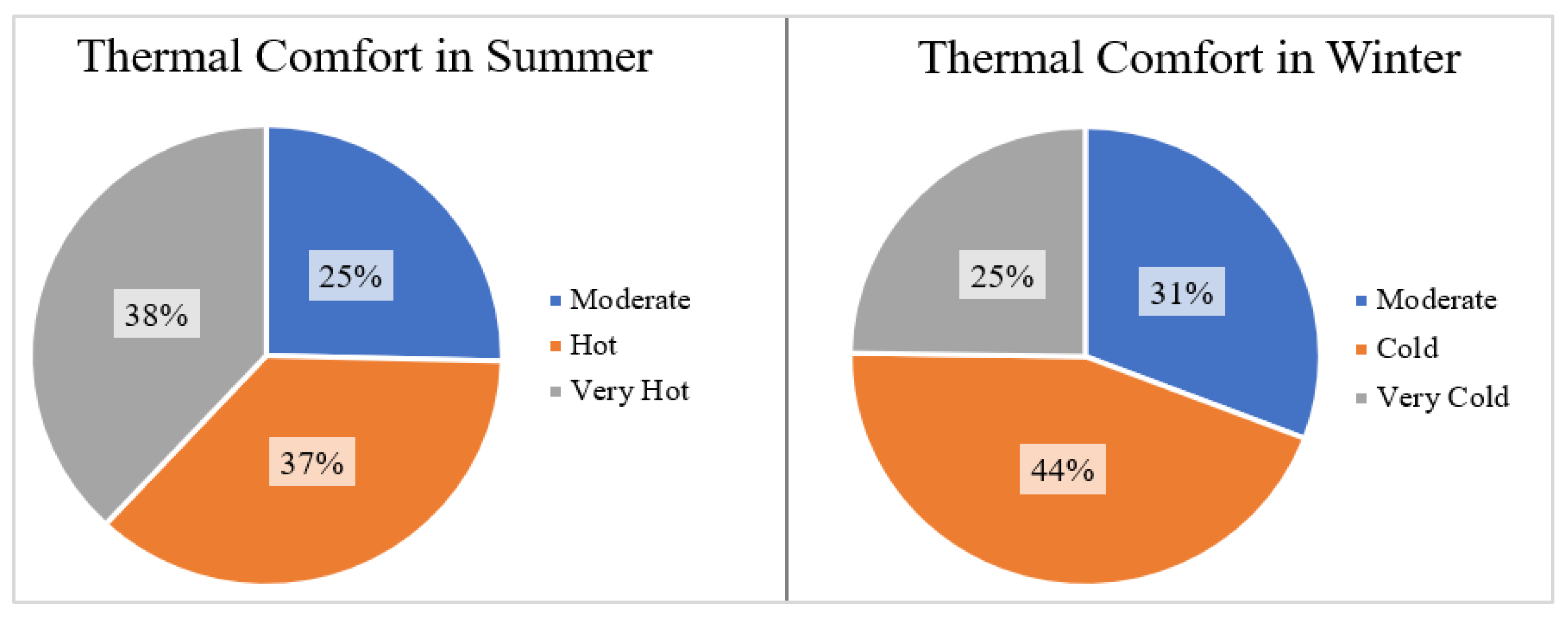
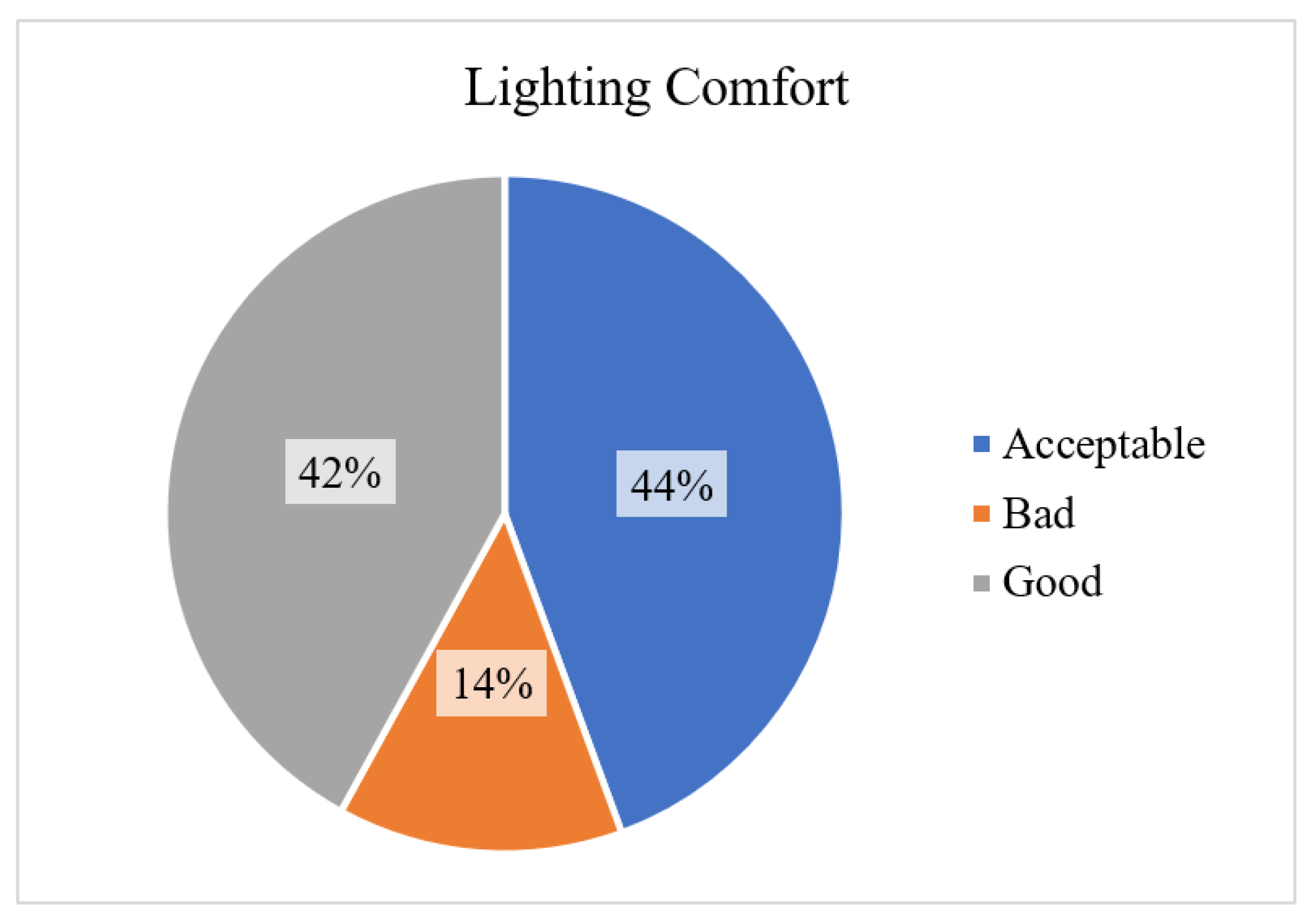
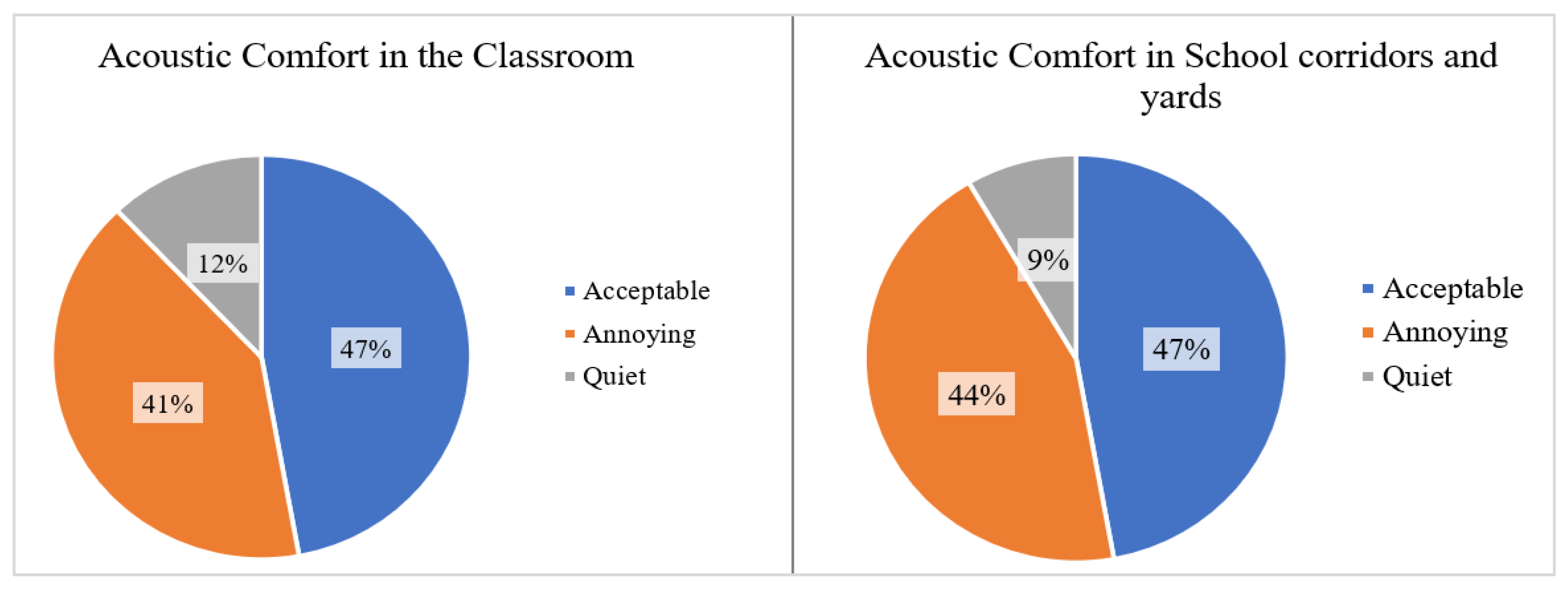
This research evaluates the quality of the indoor environment and comfort of Palestinian public schools. The importance of this study is related to the pivotal role of indoor environmental quality (IEQ) on students’ health, well-being, and academic performance, especially in a region facing significant challenges such as limited financial resources and diverse climate conditions. Unlike traditional technical evaluations, this research uses a post-occupancy evaluation (POE) methodology. This research is based on a questionnaire about classes’ indoor environment and comfort parameters, including thermal comfort, lighting, acoustics, indoor air quality, and ergonomic environment. The research focuses on students’ overall well-being, considering factors often overlooked in traditional assessments. Key findings reveal significant challenges in thermal conditions due to inadequate heating, cooling, and ventilation systems and a lack of passive thermal design. High carbon dioxide levels in classrooms due to inadequate ventilation highlight a second critical challenge. Schools also suffered from noise pollution due to the absence of noise-absorbing materials. Students expressed their satisfaction with the lighting and indoor ergonomic comfort. This research resulted in recommendations to address classrooms’ IEQ challenges, focusing on strategies to improve thermal comfort, acoustics, and indoor air quality.
Keywords: indoor environmental quality; post-occupancy evaluation; questionnaire; thermal comfort; acoustics; lighting; indoor air quality; ergonomic comfort; Palestinian; schools indoor environmental quality; post-occupancy evaluation; questionnaire; thermal comfort; acoustics; lighting; indoor air quality; ergonomic comfort; Palestinian; schools