Article

Influences of the Decomposition Atmosphere and Heating Rate on the Pyrolysis Behaviors of Resin Sand


1
College of Information and Management Science, Henan Agricultural University, Zhengzhou 450046, China
2
School of Resources and Civil Engineering, Northeastern University, Shenyang 110819, China
*
Authors to whom correspondence should be addressed.
Buildings 2024, 14(5), 1234; https://doi.org/10.3390/buildings14051234

Submission received: 21 March 2024 / Revised: 24 April 2024 / Accepted: 25 April 2024 / Published: 26 April 2024

Abstract

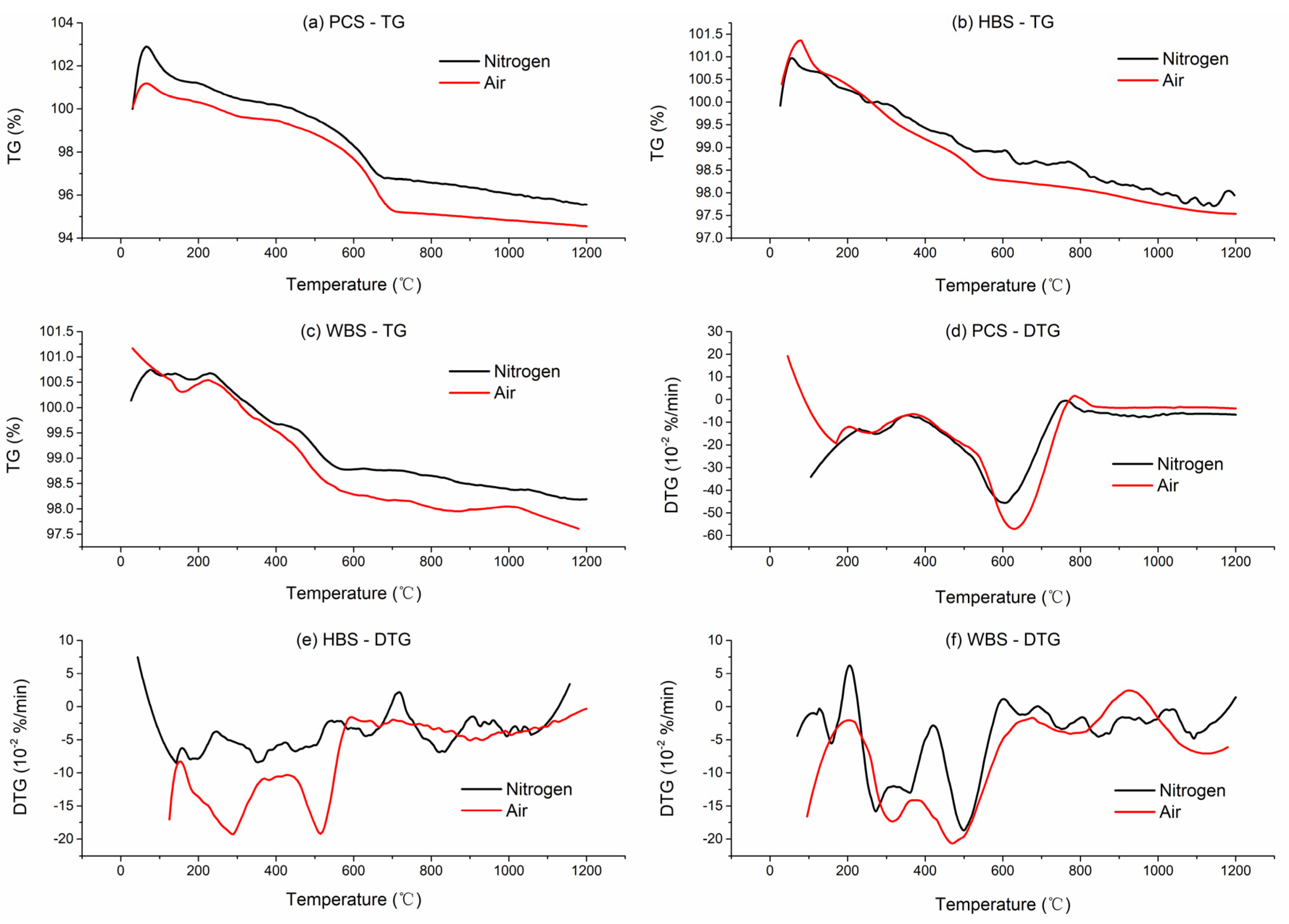
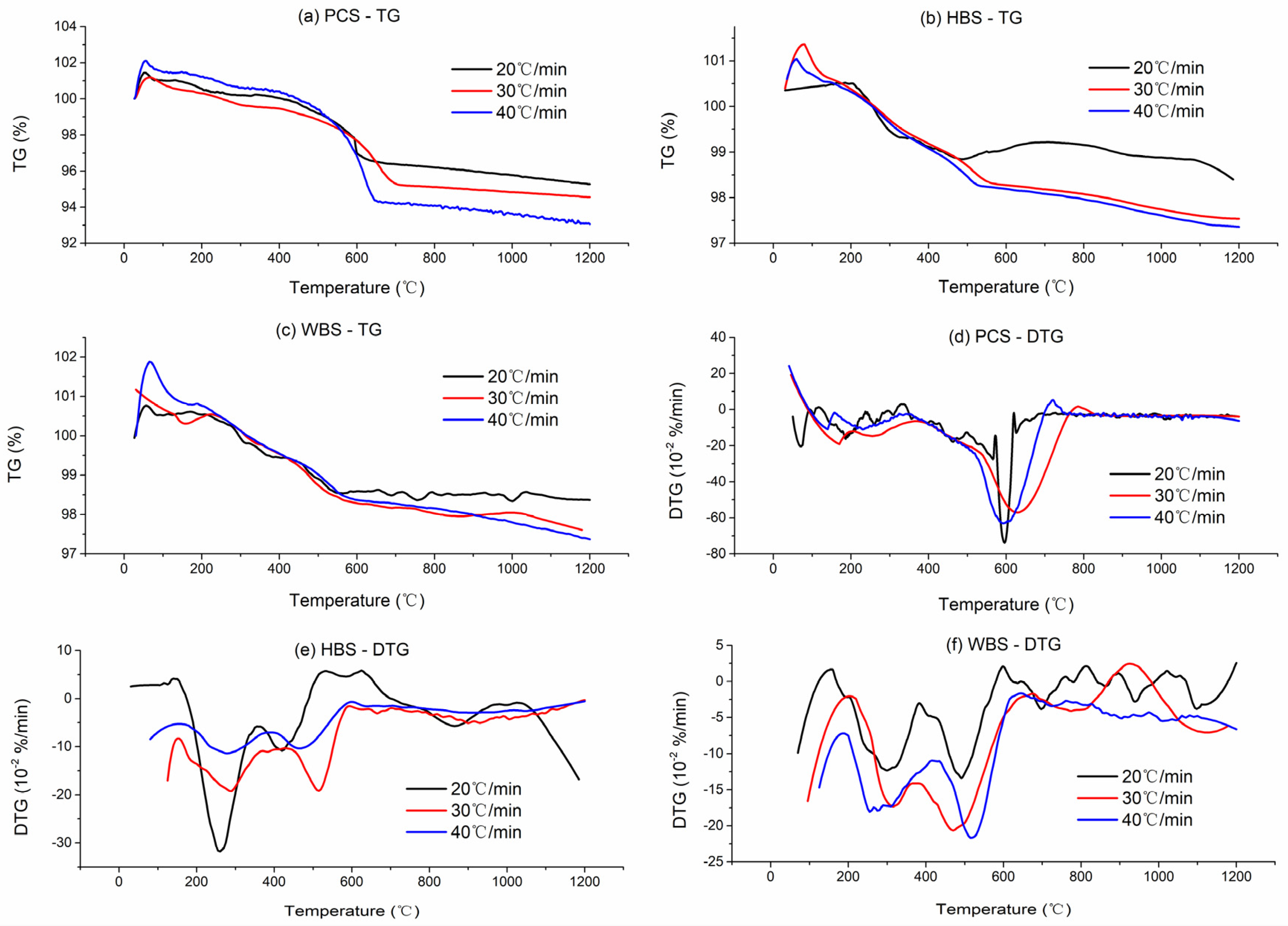
The pouring of sand casting is accompanied by severe heat conduction, and there is an urgent need to investigate the pyrolysis properties of foundry sand. The main purpose of this study was to investigate the pyrolysis behaviors of resin sand, including precoated sand (PCS), hot box sand (HBS), and warm box sand (WBS), at heating rates of 20 °C/min, 30 °C/min, and 40 °C/min in nitrogen and air atmospheres. The mass loss of the resin sand was monitored continuously with a simultaneous thermal analyzer, and the kinetic parameters of the resin sand were calculated based on the Coats–Redfern method and thermal data. The average mass loss of the resin sand during pyrolysis was 3.03%, which was much smaller than that of the other sands. The volatile release characteristic index of resin sand could not be calculated based on this concept. To solve this issue, the term Tstv/mloss was established, and its value was determined. With increasing heating rates from 20 °C/min to 30 °C/min and from 30 °C/min to 40 °C/min, the mass losses of the resin sand increased by 0.79% and 0.64%, respectively, and the volatile release characteristic indices of the resin sand increased by 3.8 × 10⁻¹⁰ and 1.06 × 10⁻⁹, respectively. In addition, the mass losses and volatile release characteristic indices of resin sand in an air atmosphere were greater than those in a nitrogen atmosphere. With increasing heating rate, the activation energy of the resin sand decreased in a nitrogen atmosphere. The findings concerning the thermal decomposition behaviors of resin sand provided a theoretical basis for the pouring step of the sand casting process.
Keywords: decomposition atmosphere; heating rate; resin sand; volatile release characteristic index; activation energy decomposition atmosphere; heating rate; resin sand; volatile release characteristic index; activation energy