Article

Increasing the Utilization of Solar Energy through the Performance Evaluation of Air-Based Photovoltaic Thermal Systems

Department of Architectural Engineering, Kyonggi University, Suwon 16227, Republic of Korea
Buildings 2024, 14(5), 1219; https://doi.org/10.3390/buildings14051219

Submission received: 18 March 2024 / Revised: 19 April 2024 / Accepted: 20 April 2024 / Published: 25 April 2024
(This article belongs to the Special Issue Energy Consumption and Environmental Comfort in Buildings)

Abstract

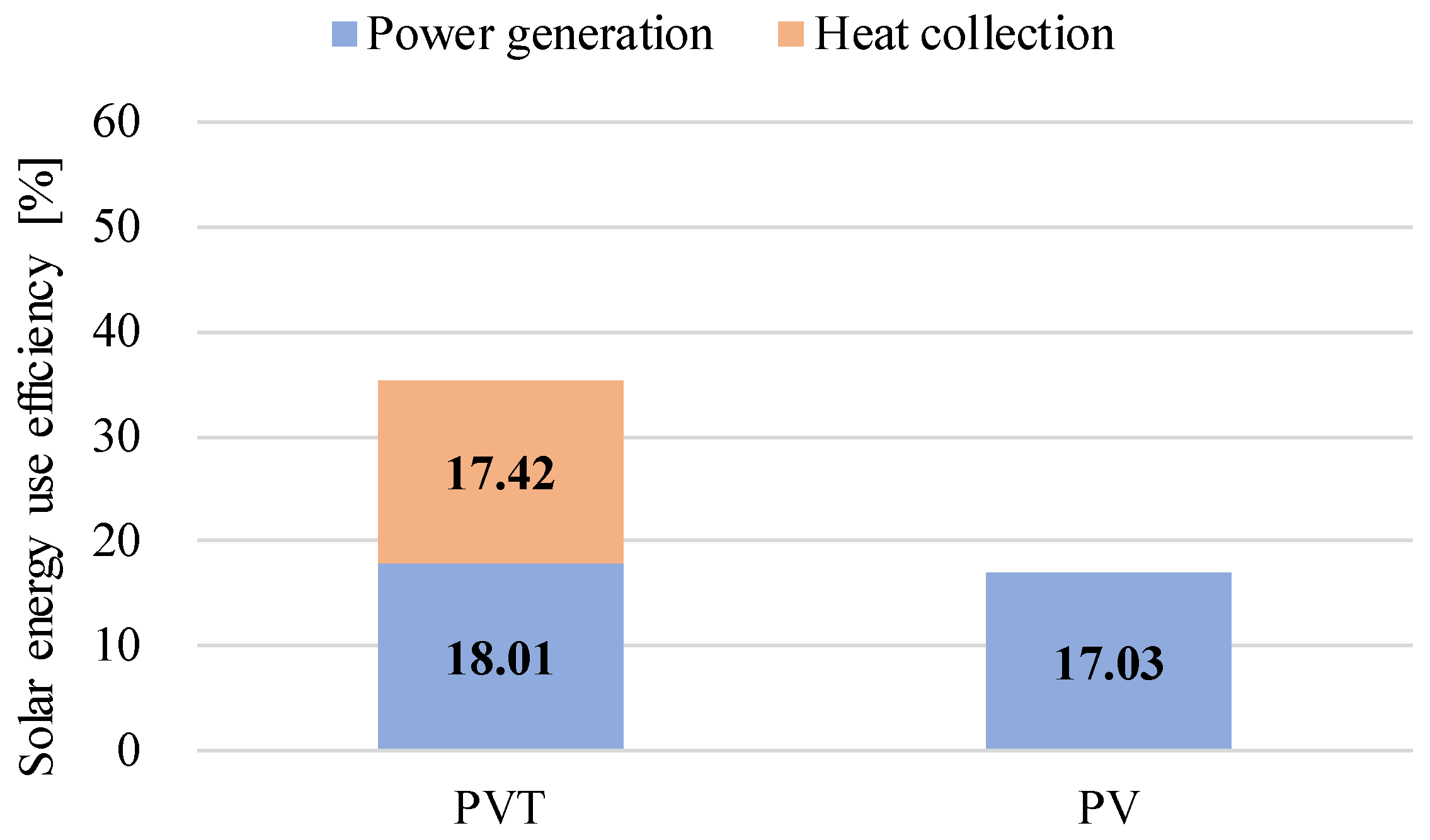
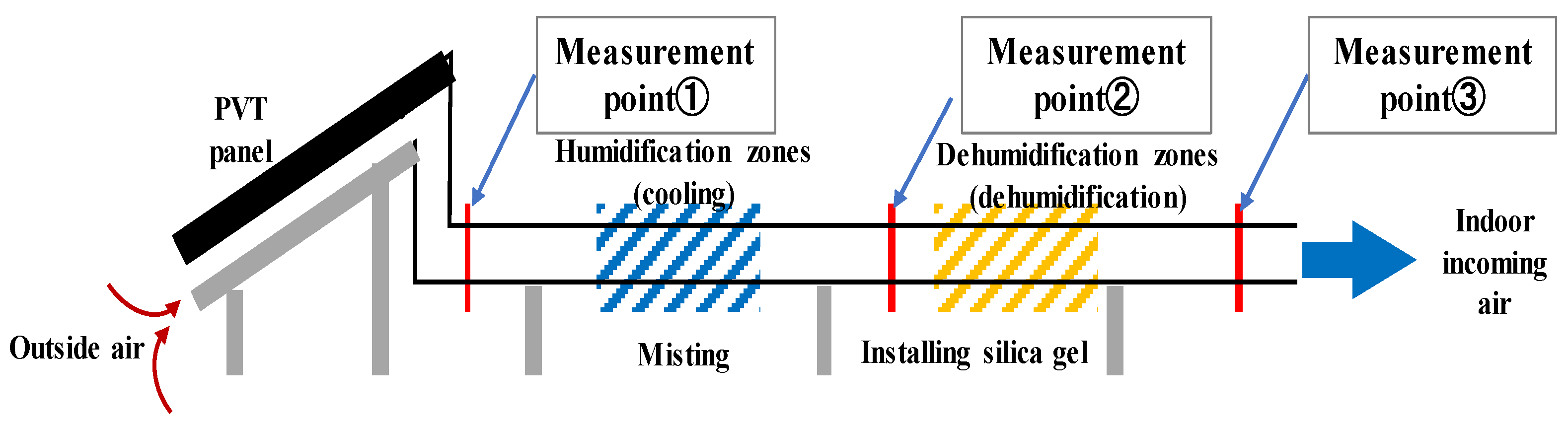
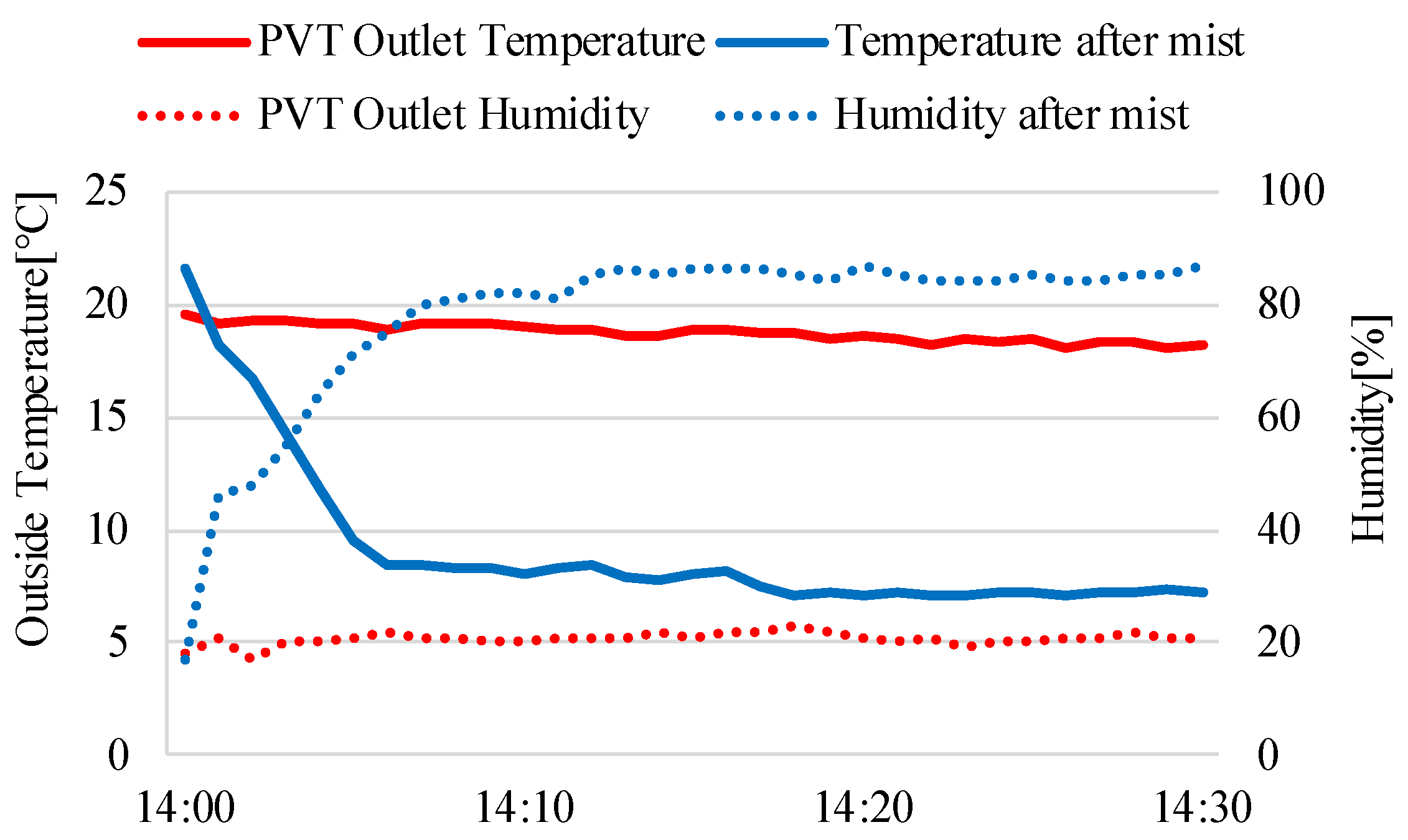
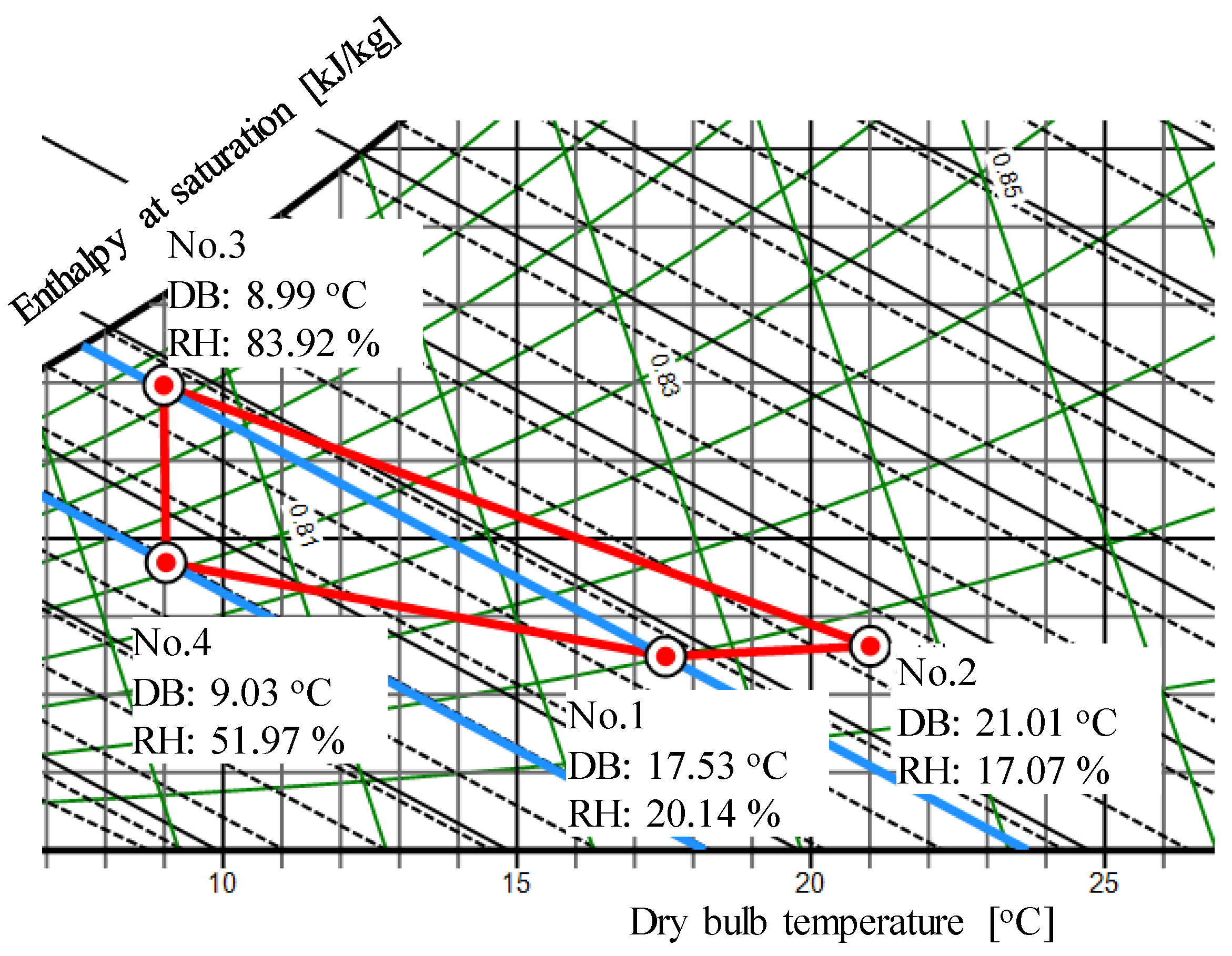
Photovoltaic thermal (PVT) systems are attracting a significant amount of attention in research because they can generate electricity outside of daytime hours, unlike photovoltaic (PV) systems, and can increase efficiency and collect additional energy by reducing the temperature of PVT panels. However, a somewhat lower amount of collected energy is used in the summer than in the winter, and research on this issue is lacking. In this study, first, we experimentally evaluated the performance of PV and PVT systems by season and verified the improvement in the performance of the PVT system. Second, experiments were conducted to verify the enthalpy reduction via mist cooling and dehumidification, and the temperature and humidity control effect via mist cooling and dehumidification was verified. Based on our research findings, we propose a model that can be integrated with indoor ventilation systems to increase the solar energy utilization of PVT systems. Using the PVT system, we improved the panel power generation efficiency by up to 5.89% and generated up to a 38.0% higher collection efficiency than that of the PV system. The air that passed through the PVT system was then subjected to mist cooling and dehumidification to reduce its temperature and increase its humidity, resulting in a 23.2% reduction in enthalpy.
Keywords: solar energy; photovoltaic/thermal system; dehumidification; energy saving; power generation efficiency solar energy; photovoltaic/thermal system; dehumidification; energy saving; power generation efficiency