Article

Evaluation of the Residual Seismic Capacity of Post-Earthquake Damaged RC Columns Based on the Damage Distribution Model


1
State Key Laboratory of Green Building in Western China, Xi’an University of Architecture & Technology, Xi’an 710055, China
2
School of Civil Engineering, Xi’an University of Architecture and Technology, Xi’an 710055, China
*
Authors to whom correspondence should be addressed.
Buildings 2023, 13(3), 595; https://doi.org/10.3390/buildings13030595

Submission received: 1 February 2023 / Revised: 15 February 2023 / Accepted: 21 February 2023 / Published: 23 February 2023

Abstract

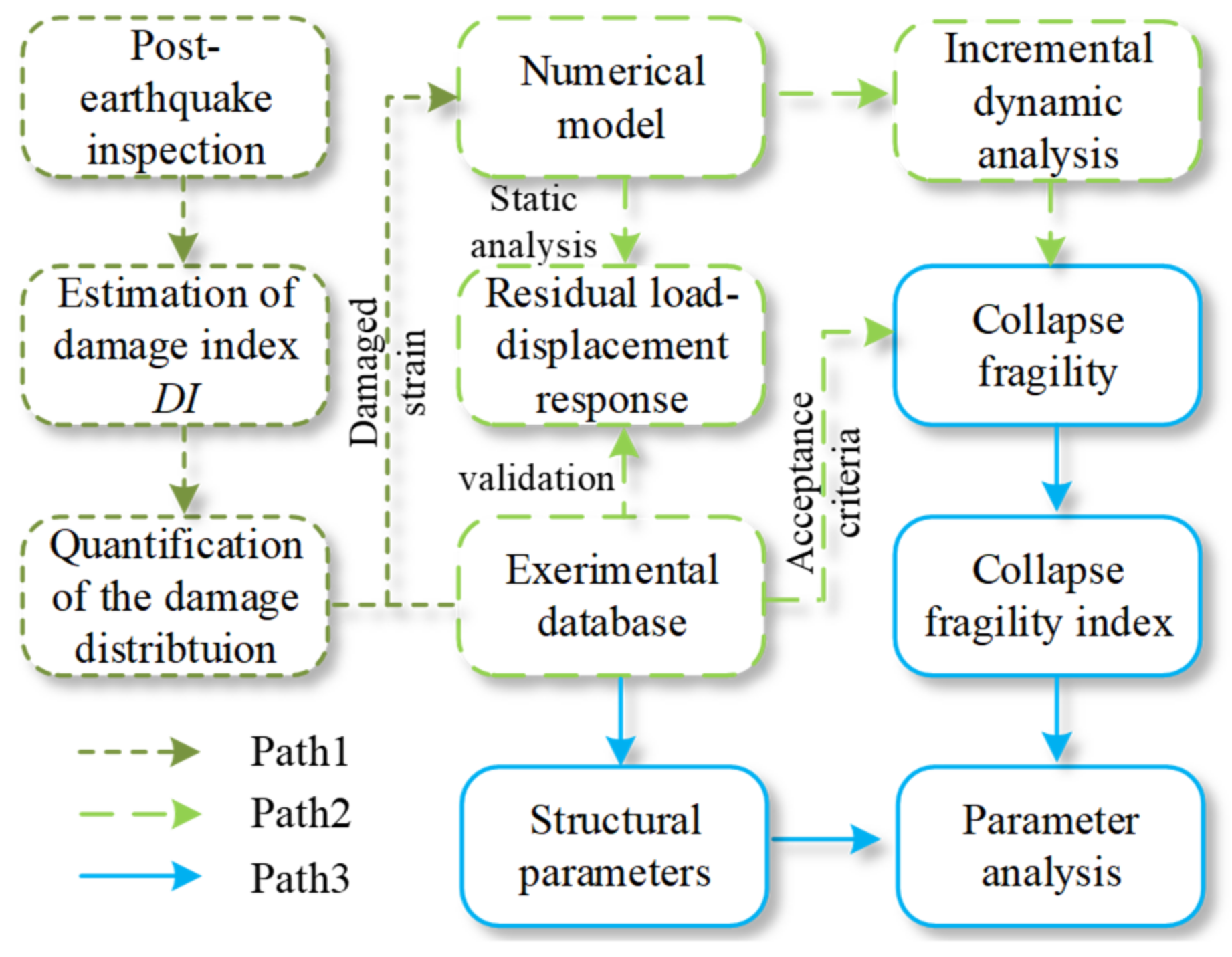
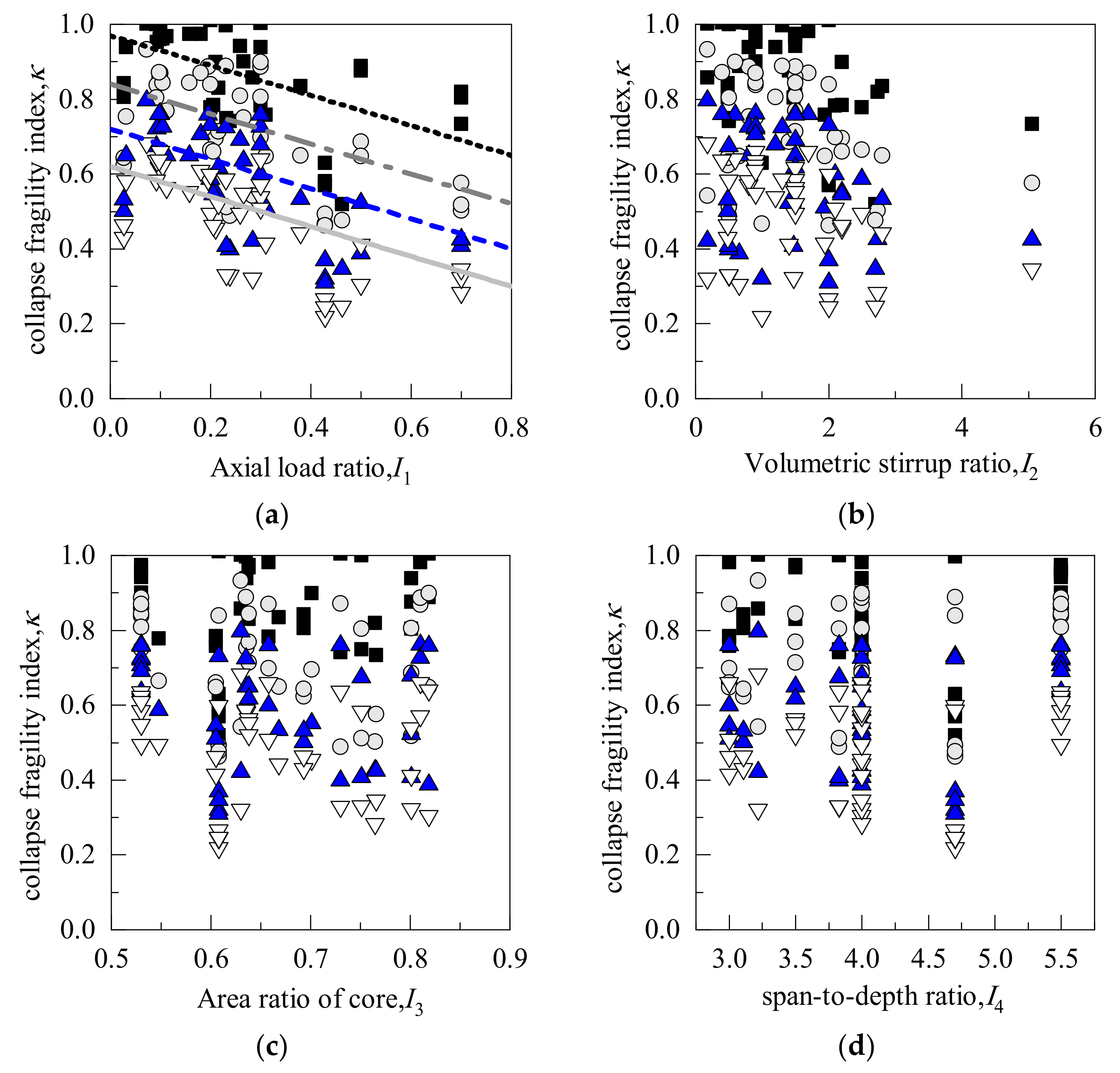
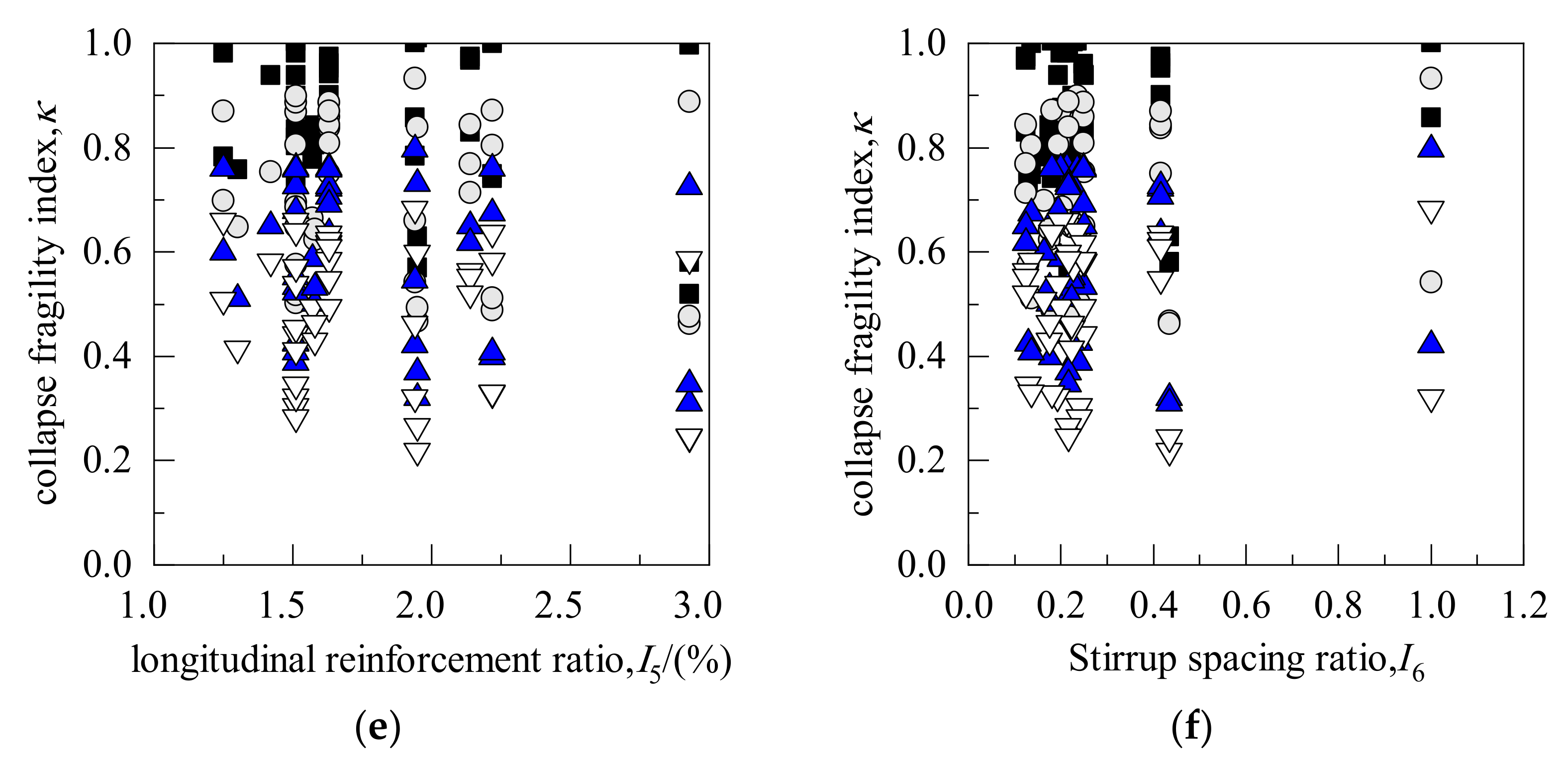
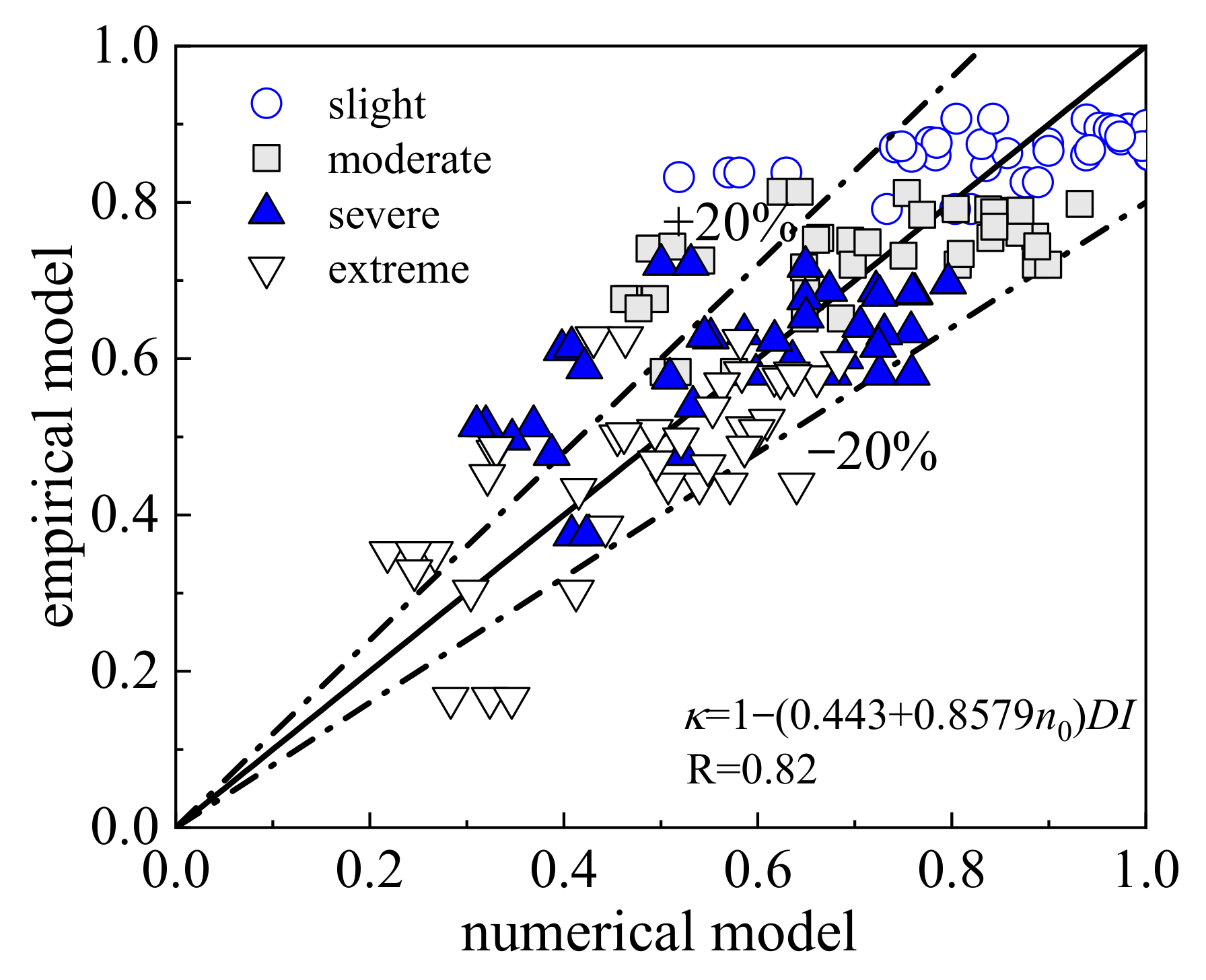
Evaluation of the residual seismic capacity (RSC) of post-earthquake damaged buildings is instrumental to the formation of reasonable recovery strategies. At present, incremental dynamic analysis (IDA) that considers the mainshock and aftershock is the method most frequently used to evaluate the RSC of damaged structures. However, the mainshock-induced structural damage determined using the IDA method may be inconsistent with the damage observed in actual engineering. This inconsistency could potentially lead to an unreasonable evaluation result. To overcome this drawback, it is necessary to evaluate the RSC of damaged structures according to their observed damage instead of that obtained by the IDA. In this paper, a method of evaluating the RSC of damaged reinforced concrete (RC) columns is proposed. First, the damage degree and distribution of the damaged columns were evaluated via visual inspection after mainshocks. Then, a numerical model was developed to predict the residual behavior of damaged columns subjected to aftershocks. After that, the RSC of damaged columns was estimated based on fragility analysis. The degradation of the collapse capacity of damaged columns was quantified by the collapse fragility index (CFI), and a parameter analysis was conducted to study the effect of structural parameters on the CFI of damaged columns. Lastly, an empirical model for predicting the CFI was proposed, facilitating the application of this study in actual post-earthquake assessments. The parameter analysis indicates that the axial load ratio of the columns and the degree of damage degree accumulated during mainshocks have a significant effect on the CFI. Additionally, the proposed empirical model can effectively predict the degradation of the collapse capacity of RC columns in existing test data, with an accuracy of 0.82.
Keywords: residual seismic capacity; post-earthquake; damage distribution; mainshock; aftershock; collapse residual seismic capacity; post-earthquake; damage distribution; mainshock; aftershock; collapse