Article

Parametric Automated Design and Virtual Simulation of Building Machine Using BIM

1
School of Civil Engineering, Architecture and Environment, Hubei University of Technology, Wuhan 430068, China
2
China Construction Third Bureau Intelligent Construction Robot Co., Ltd., Shenzhen 518107, China
3
School of Civil Engineering, Changsha University of Science & Technology, Changsha 410114, China
*
Authors to whom correspondence should be addressed.
Buildings 2023, 13(12), 3011; https://doi.org/10.3390/buildings13123011

Submission received: 8 November 2023 / Revised: 26 November 2023 / Accepted: 28 November 2023 / Published: 1 December 2023

Abstract

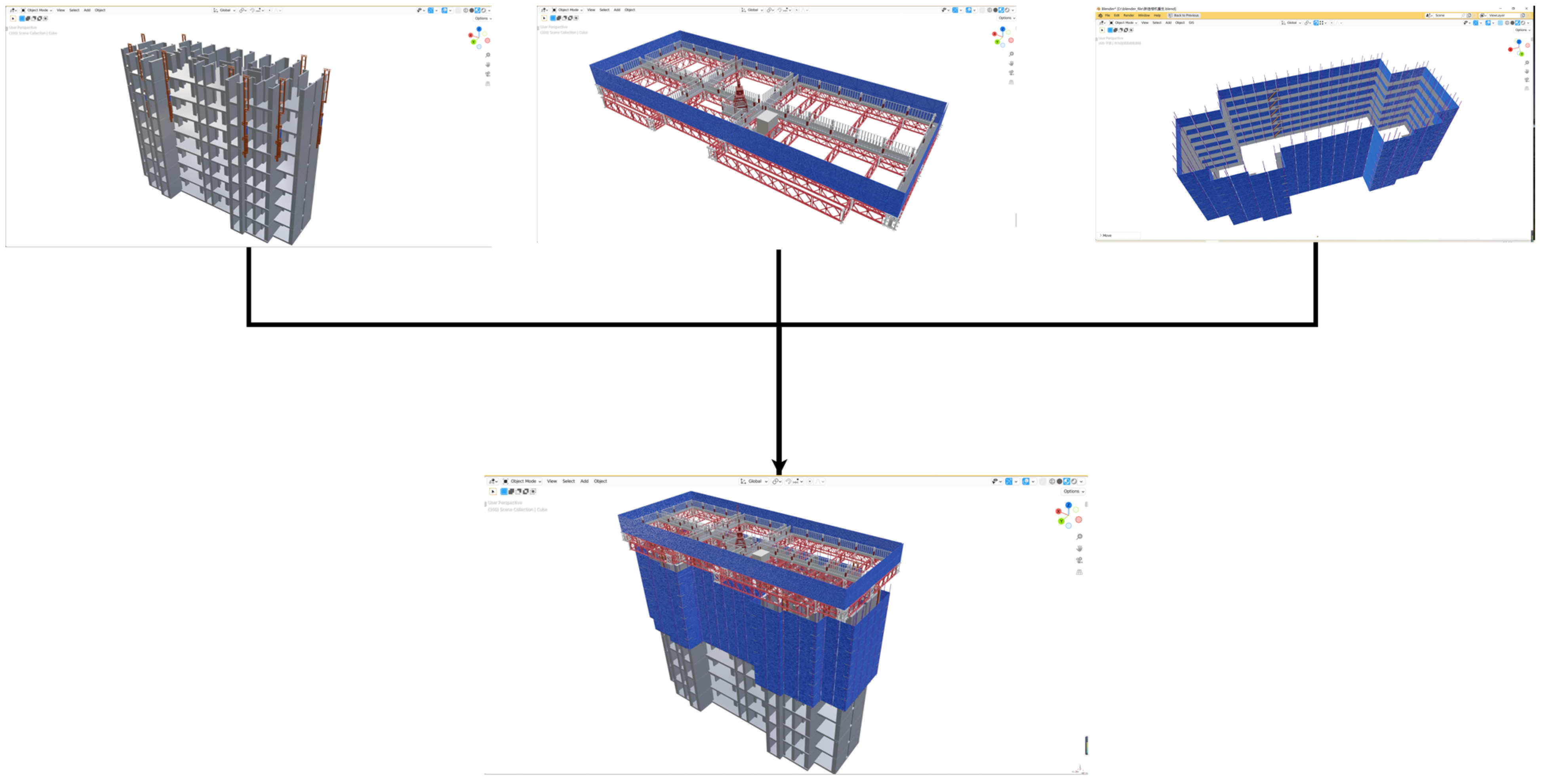
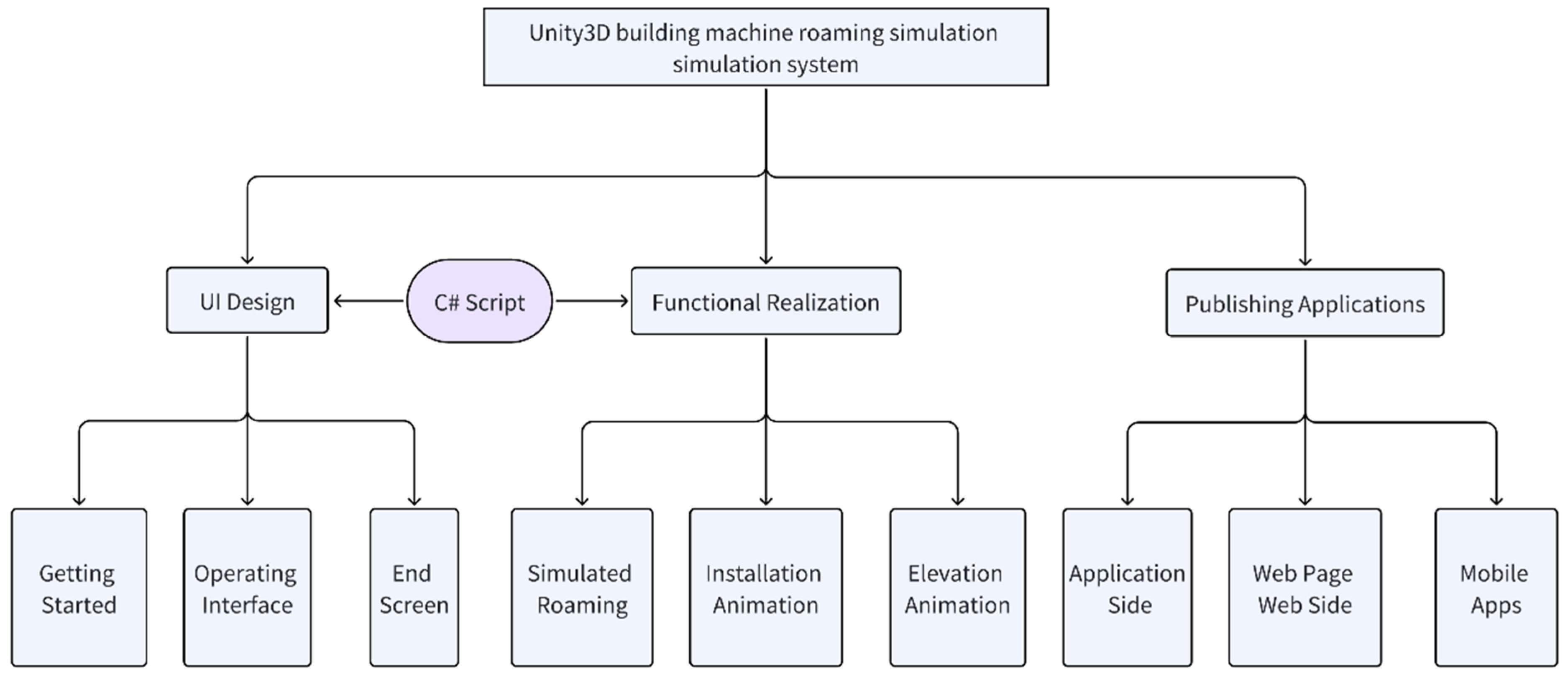
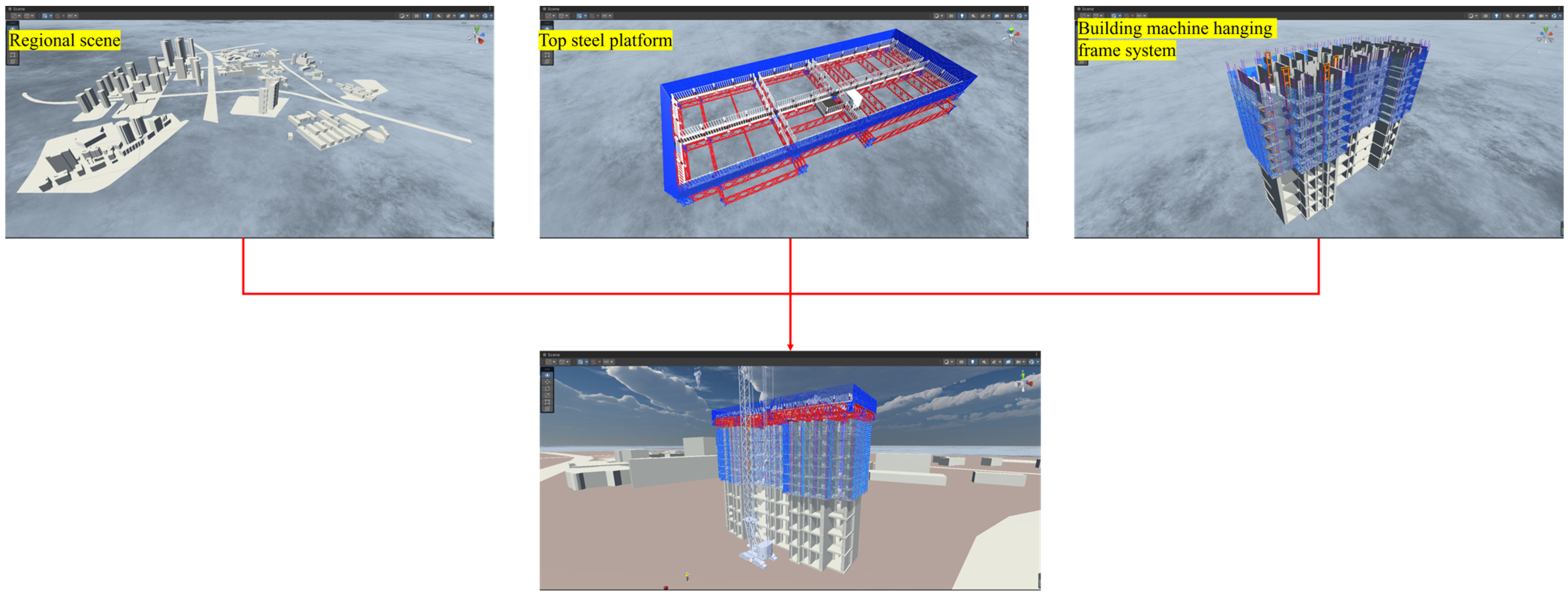
With the continuous development of the construction technology of the main structure of high-rise buildings, traditional construction techniques have been widely used in high-rise building projects. However, these technologies have problems such as low safety, low intelligence, and poor integrity. In order to solve these challenges, the Third Engineering Bureau of China Construction independently developed a new type of construction technology—a high-rise building integrated work construction platform (referred to as a building machine). Building machines has been gradually applied to high-rise building projects due to its intelligence, integration, safety, and other advantages. However, with the increase in the number of high-rise building projects, the traditional way of designing building machine layout programs is inefficient and the design program is complicated to change. To solve these problems, this paper proposes a building machine parametric design and layout and virtual simulation method. This method uses Blender open-source software to model the building machine parametrically and quickly using its visual programming tool Geometry Nodes (GN) and simulates the building machine in the virtual scene through the Unity3D platform. The results show that, compared with the traditional design mode, the method proposed in this paper can quickly complete the scheme design in the design phase of the building machine and display it through the 3D model, which has a better visualization effect, improves the design efficiency, and reduces the design cost, and the Unity simulation platform can also provide the construction personnel with pre-shift education and simulation of the operation of the building machine. This method provides a theoretical basis and guidance for the digital construction of the building machine.
Keywords: construction technology; building machines; parameterization; BIM; virtual simulation construction technology; building machines; parameterization; BIM; virtual simulation