


Abstract
Clay brick and granite waste are part of the waste generated by construction and demolition activities. The amount of these wastes generated is enormous, but on the one hand, they can be used as a raw material for cement mixtures; thus, it is important to find ways to utilize them efficiently. In this study, clay brick and granite waste were crushed and screened into two size fractions (0.15–2.36 mm for sand replacement and smaller than 0.15 mm for cement replacement), and a total of four different forms of recycled materials were obtained (recycled brick aggregate, recycled brick powder, recycled granite aggregate and recycled granite powder) and used in cement mortar. Various properties (workability, mechanical strength and drying shrinkage) of the mortars were assessed according to standardized test methods. The results showed that the various material forms had different effects on the various properties of cement mortar. At replacement ratios of 10% and 20%, recycled granite showed better workability when used as powder, whereas recycled brick used as aggregate had higher workability. In common, using recycled brick and recycled granite in the form of aggregate was advantageous for the strength development of mortar, while using them in the form of powder helped to mitigate drying shrinkage.
1. Introduction
Concrete has made a major contribution to industrial development and economic growth, such as the construction of road networks and urban skyscrapers. However, the enormous consumption of concrete, which is mainly made of cement, sand and aggregate, places a considerable burden on the environment and ecosystem. Cement is produced at a high temperature of about 1400 °C, and CO2 is generated from burning fossil fuels to heat a kiln to the temperature required for this calcination process. Moreover, during the calcination reaction, limestone (CaCO3), the main raw material of cement, is decomposed to produce lime (CaO) and additional CO2. The cement industry is known to account for about 7% of human-generated CO2 and is the second-largest emission source after power generation [1]. Furthermore, the excessive use of natural sand threatens the ecosystem. Pascal [2] mentioned that the amount of sand consumed is greater than the amount of sand that is naturally deposited, and the UN Environment Programme (UNEP) [3] noted that sand, which plays a role in ecosystem services, biodiversity maintenance, and economic development support, should be recognized as a strategic resource.
In order to reduce dependence on sand and cement, there have been studies using construction and demolition (C&D) waste as raw materials for concrete. It has often been reported that the main component of C&D waste is concrete, and accordingly, extensive research has been conducted on the recycling of concrete waste. Followed by concrete waste, several studies have shown that bricks are one of the largest types of C&D waste in various regions [4,5,6,7]. Ding and Xiao [8] reported that in 2012, bricks and blocks accounted for 38% of construction waste and 63% of demolition waste in Shanghai, China. Granite waste belongs to the category of waste due to its non-biodegradable nature, and it can also be generated by cutting and grinding stones, as well as by damage, demolition and aging of stone products. In particular, Singh et al. [9] stated that the amount of granite waste generated during the production stage is nearly 65% of the total granite production. Therefore, some studies have been conducted using brick waste and granite waste as replacements for cement and sand in cement composites.
Bektas et al. [10] used brick waste as fine aggregate and reported that there were no significant differences in the compressive strength of mortar at 20% replacement. In a study by He et al. [11], they investigated the applicability of brick waste as partial cement replacement, and the optimal replacement level of waste brick was suggested to be 5–15%, considering the performance degradation caused by the increase in waste brick powder. For granite waste, it has been reported that the angular and rough texture of granite particles reduced the workability of cement mixtures but increased the flexural and compressive strengths at a 20% sand replacement ratio [12]. Asadi et al. [13] and Taji et al. [14] reported that 10% replacement of Portland cement by waste granite powder significantly improved microstructure, achieving a mechanical strength comparable to or greater than that of concrete with 100% Portland cement.
With respect to effective recycling methods for waste, Kim et al. [15] reported that the influence differs depending on how recycled materials are used, even if they are obtained from a single source of waste. In the study, concrete waste was crushed to different sizes and used as recycled coarse aggregate (RCA), recycled fine aggregate (RFA) and recycled powder (RP) in concrete, respectively. The results showed that the compressive strength of concrete with 10% and 20% replacement of cement with RP was only 1% and 7% lower than that of concrete without recycled material, but 30% replacement reduced the compressive strength by 29%. This was 17% lower than concrete with 100% RFA and 12% lower than concrete with 100% RCA and RFA simultaneously. These results suggest the need for an in-depth investigation of what form will be most advantageous to achieve the enhanced properties of cementitious materials, which must also be matched with an appropriate method of waste recycling for their preparation.
To the best of our knowledge, the majority of published articles, as mentioned above, have used single waste as a supplementary cementitious material or as a replacement for aggregate. Recycling waste in a single form (e.g., using brick waste as either brick aggregate or brick powder) can provide information about the potential of a certain type of waste, but recycling in various forms can further provide information about the effective recycling of waste. However, few studies have compared and analyzed the effects of using brick and granite wastes as fine aggregate and cement replacements, respectively. Therefore, in this study, waste brick and waste granite were crushed, collected by size, and recycled as fine aggregate for sand and powder for cement replacement in cement mortar, respectively. For the prepared mortar, fluidity, compressive and flexural strength, ultrasonic pulse velocity (UPV) and drying shrinkage were investigated.
The novelty of this study is to use a single type of waste (in this study, clay brick and granite wastes) for both forms of fine aggregate and cement replacements in cement mortar. The significance of this study is to provide knowledge about which form of waste recycling (aggregate or powder) is more beneficial to the performance of cement mortar by comparing and analyzing the influences of different forms of demolished waste clay brick and waste granite on the properties of cementitious materials. This study can contribute to the conservation of the environment and ecosystems by reducing the consumption of sand and cement.
2. Materials and Methods
2.1. Materials
The main cementitious binder used to prepare mortar mixtures was ordinary Portland cement (OPC), which has a specific gravity of 3.15. The physical properties of OPC are shown in Table 1.
Table 1.
Physical properties of ordinary Portland cement.
For fine aggregate, silica river sand with a specific gravity of 2.59 and water absorption of 1.48% was used.
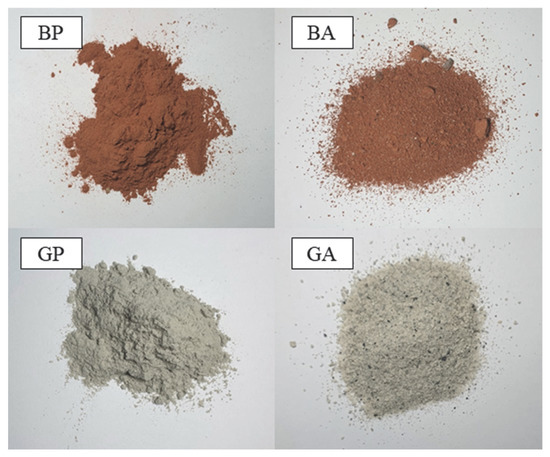
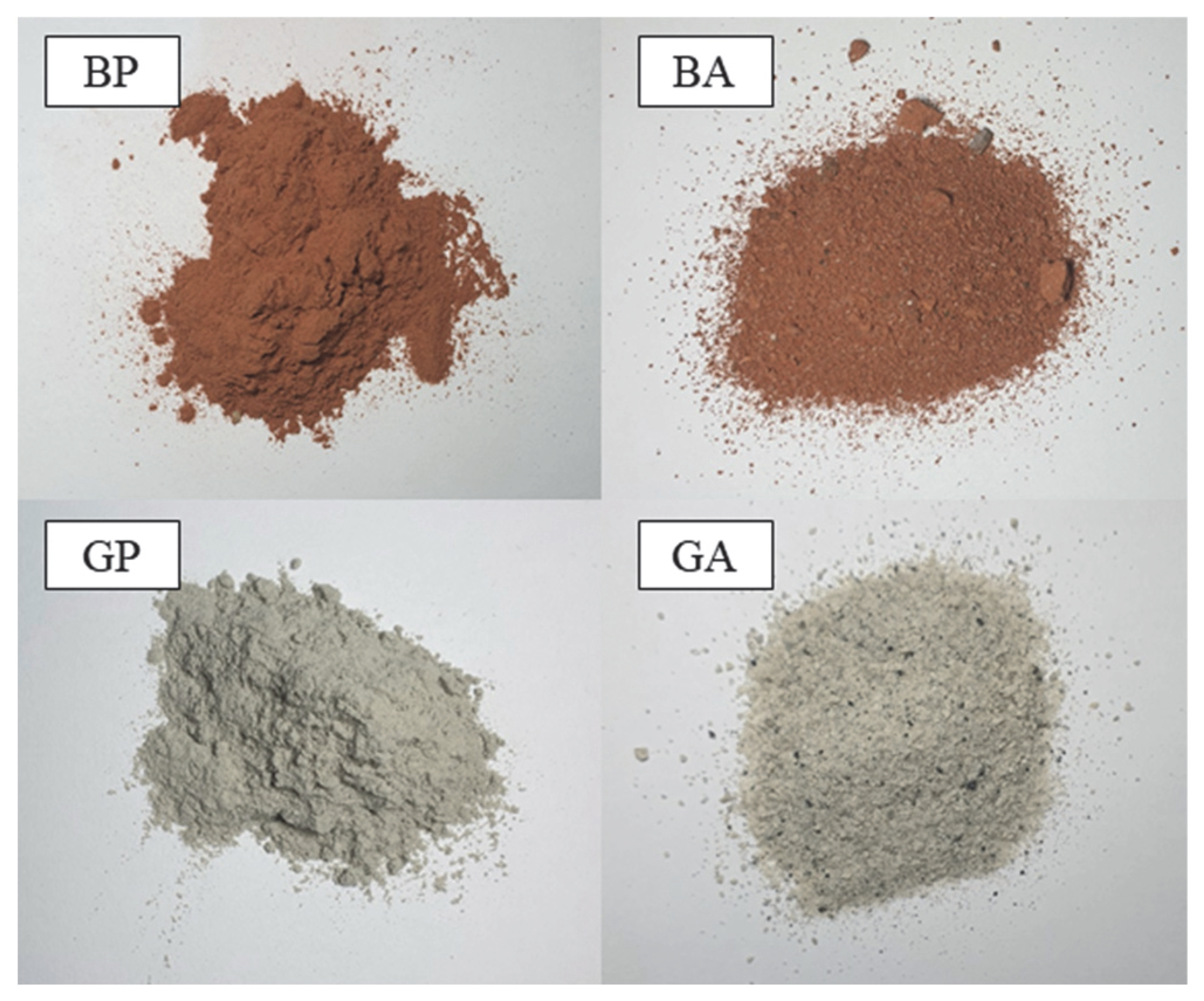
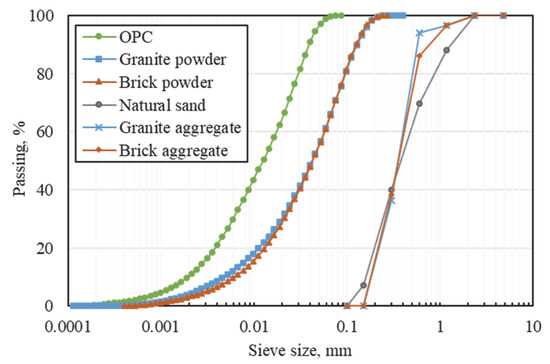
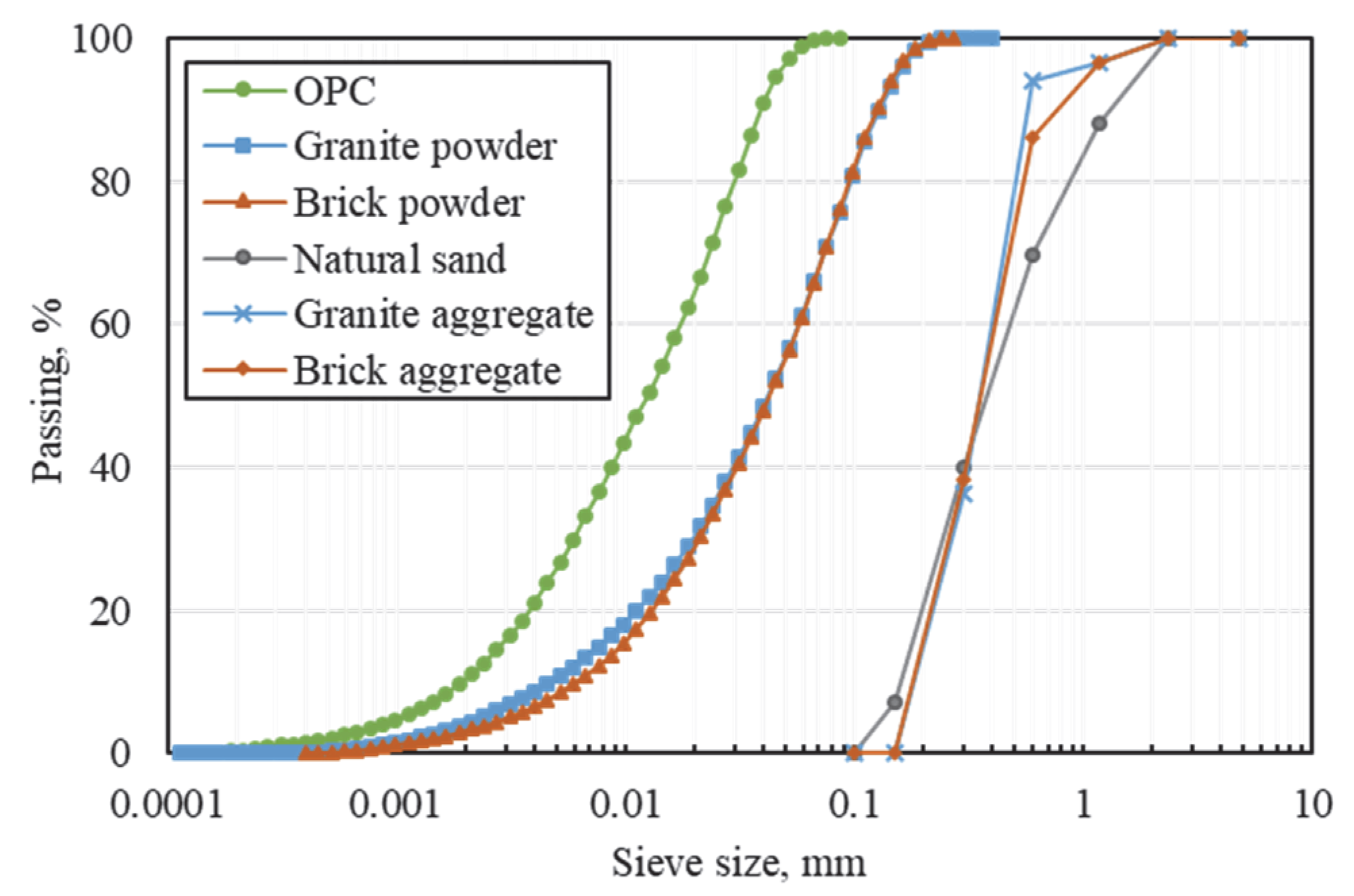
Two types of waste, clay brick and granite block, were obtained from a building demolition in Korea. These two wastes were washed with tap water to remove impurities, then dried and crushed in a ball mill [16]. Afterward, recycled brick (RB) and recycled granite (RG) with two different particle sizes, ranging from 150 μm to 2.36 mm and smaller than 150 μm, were collected, respectively. RG and RB with particle sizes from 150 μm to 2.36 mm were named recycled granite aggregate (GA) and recycled brick aggregate (BA) and were used as partial replacements for fine aggregates in mortar mixtures. RG and RB with particle sizes smaller than 150 μm were denominated as recycled granite powder (GP) and recycled brick powder (BP) and used as partial replacements for cement (Figure 1). The particle size distribution curves of the four prepared recycled materials are provided in Figure 2.
Figure 1.
Different forms of recycled materials used in the study.
Figure 2.
Particle size distribution of natural and recycled materials.
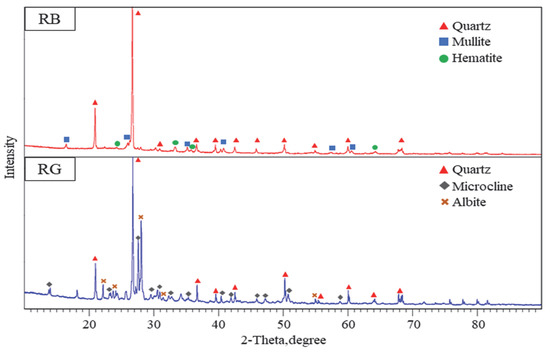
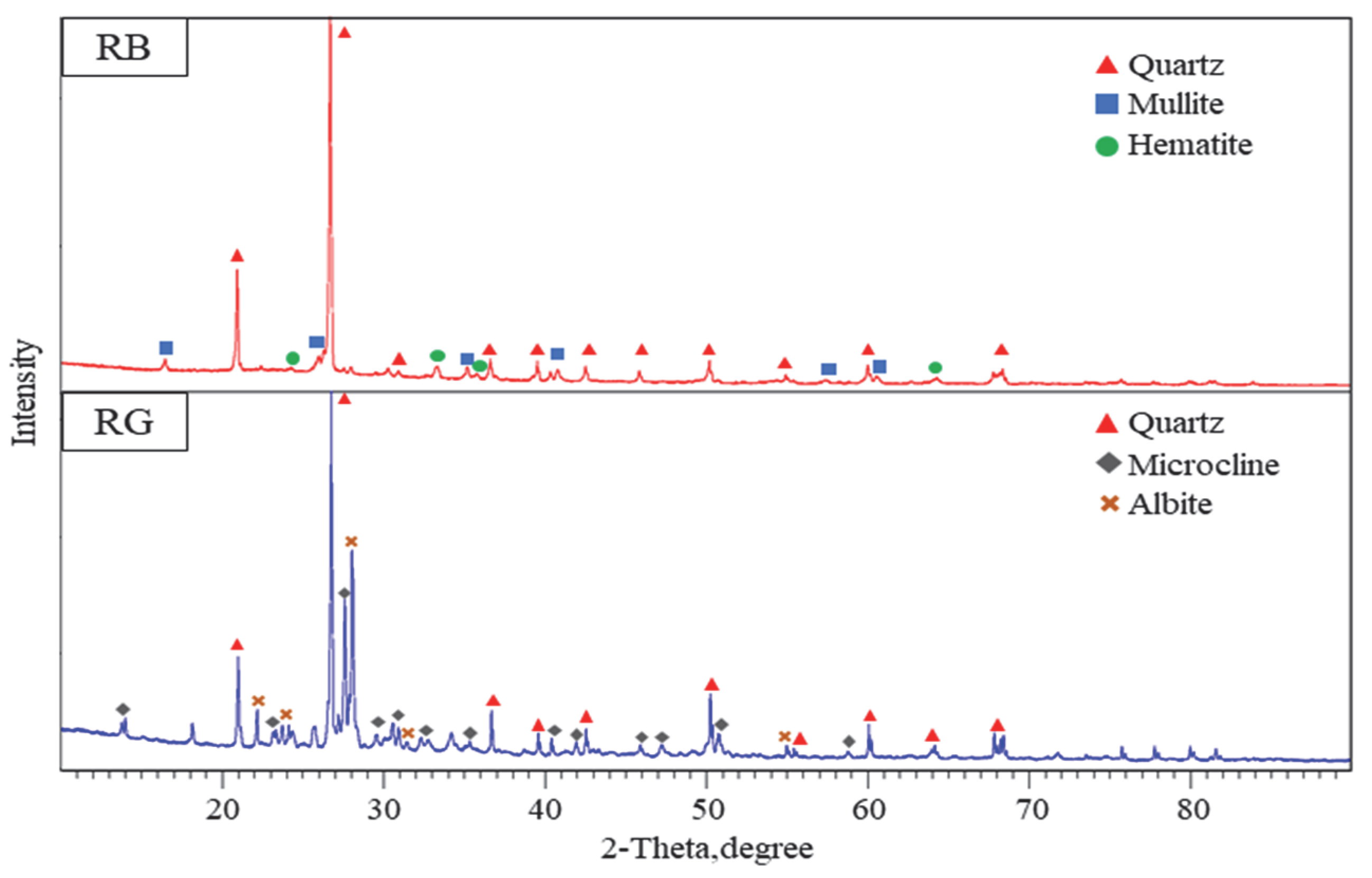
The physical characteristics of RB and RG are given in Table 2. The chemical and mineralogical composition was investigated using XRF and XRD techniques, and the results are shown in Table 3 and Figure 3. For RB, the percentage of SiO2 + Al2O3 + Fe2O3 is greater than 70%, complying with the chemical composition requirements of pozzolanic materials according to ASTM C618 [17], whereas GB does not. The main minerals constituting RB were quartz (SiO2), mullite (3Al2O3·2SiO2), and hematite (Fe₂O₃). For RG, the main minerals were quartz, microcline (KAlSi3O8) and albite (NaAlSi3O8).
Table 2.
Physical characteristics of recycled brick and recycled granite aggregates.
Table 3.
Chemical composition of recycled brick and recycled granite powders by percentage.
Figure 3.
X-ray diffraction of recycled brick and recycled granite powders.
2.2. Mix Proportion and Specimen Preparation
The mix proportion was determined according to ASTM C109 [18]. The material ratios of water, cementitious binders (cement, BP and GP) and fine aggregates (river sand, BA and GA) for all mortars produced were 0.485:1:2.75 by weight. Each recycled material replaced cement and sand, respectively, at 10%, 20% and 30% by weight. Detailed proportions are presented in Table 4. The materials were mixed using an automatic mixer programmed with the mixing procedure provided in ASTM C305 [19].
Table 4.
Mix proportion of recycled mortar.
2.3. Test Methods
Fluidity, compressive and flexural strength, UPV and drying shrinkage tests were conducted on the prepared mortar.
A flow table test was carried out to determine the fluidity of each mortar mixture in accordance with ASTM C1437 [20].
For the mechanical strength, a hydraulic universal testing machine (WJ-100S, Woojin, Republic of Korea) was utilized. The compressive strength test was carried out as per ASTM C109 [18]. A load of 100 kN/min was applied to three 50-mm cube specimens per mortar mixture.
Flexural strength was performed according to ASTM C348 [21]. At 28 days of age, a load of 2.5 kN/min was applied to three prism specimens with a size of 40 mm × 40 mm × 160 mm.
Drying shrinkage was performed based on ASTM C596 [22], and the length change was measured for four 25 mm × 25 mm × 285 mm bar specimens for each mortar. After 24 h of moisture curing, the specimens were cured in lime-saturated water for 48 h. The initial length (L0) of the specimen and the reading at a length comparator (Li) were taken, and the specimens were stored in a chamber maintained at 23 ± 2 °C and 60 ± 4% relative humidity. The length change of the specimens was recorded to the nearest 0.001 mm at 4, 11, 18 and 25 days of storage in the chamber (Ld). The length change was calculated by the following Formula (1):
The UPV can provide predictable information about concrete quality. Using a portable device (Pundit-Plus, CNS Farnell Ltd., Hertfordshire, UK), consisting of a pair of receivers and transmitters, the UPV was measured on the longitudinal ends of three prism specimens cured for 28 days. The results were calculated as the path length divided by the time it takes for an ultrasonic pulse to travel from the transmitter to the receiver.
3. Results and Discussion
3.1. Flow
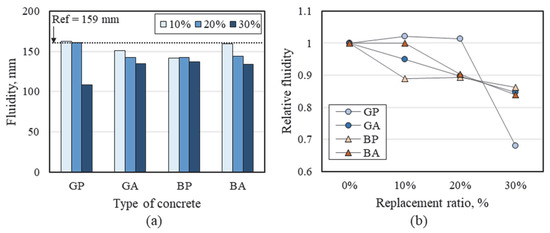
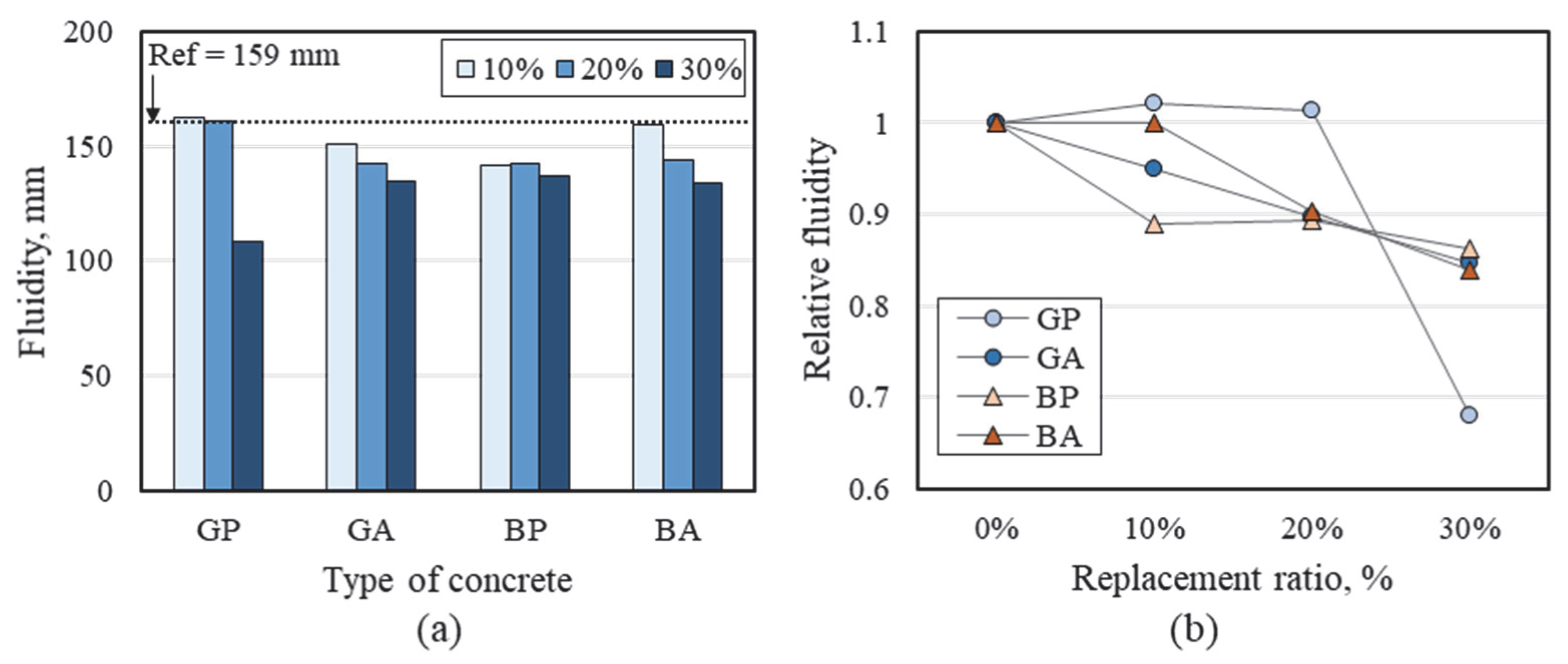
The flow table test results of mortars in which cement and sand were partially replaced by RG and RB are shown in Figure 4a. It is worth mentioning that the water-to-binder ratio was kept constant to evaluate only the influence of RG and RB in the mortar. As shown in Figure 4a, the increase in the replacement ratios of RG and RB (both powders and aggregates) decreased the fluidity of the mortar. The flow of the reference mortar, which does not contain any recycled materials, was 159 mm, and the GP10, GP20 and BA10 achieved a similar flow to that of the reference mortar. The flow of mortars, except for these three series, was in the range of 68–95% of that of the reference mortar. It has been reported that this decrease is associated with the irregular surface texture and angular shape of RG and RB and the high water absorption of RB [23,24,25]. Nevertheless, there was no significant difference between the flow values of GA-based mortars and BA-based mortars. Although mortars with BA would be expected to have a poorer consistency due to its greater absorption, the rough and irregular surface of GA due to the crushing process is likely to have a comparable effect on consistency.
Figure 4.
Fluidity (a) and relative fluidity (b) of mortars made with recycled brick and recycled granite.
Figure 4b shows the relative flow of the prepared mortars, in which the flow of the reference mortar is represented as a benchmark (i.e., the flow of the reference mortar is indicated by 1). For the mortars that replaced fine aggregates with GA and BA, gradual decreases in fluidity were observed with increasing replacement ratios. When the replacement ratios were increased to 10%, 20% and 30%, the flow of GA-based mortar decreased by 5%, 10% and 15% compared to the reference mortar, and the flow of BA-based mortar decreased by 0%, 10% and 16% at the given replacement ratios. Mortars containing BP changed their flow value minimally when the replacement ratio was increased from 10% to 30%; the flow change was from 1% to 3%. However, the consistency of mortars with GP was noticeably reduced by 33% at 30% replacement.
It is worth noting that the material forms of RG and RB are different for better fluidity. At the 10% and 20% replacement ratios, it is favorable to use RG as powder rather than fine aggregate, while RB is recommended as a substitute for fine aggregate. At a 30% replacement ratio, mixtures may require the aid of plasticizers to achieve adequate workability, particularly for GP.
3.2. Compressive Strength
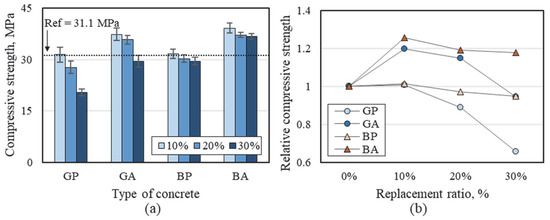
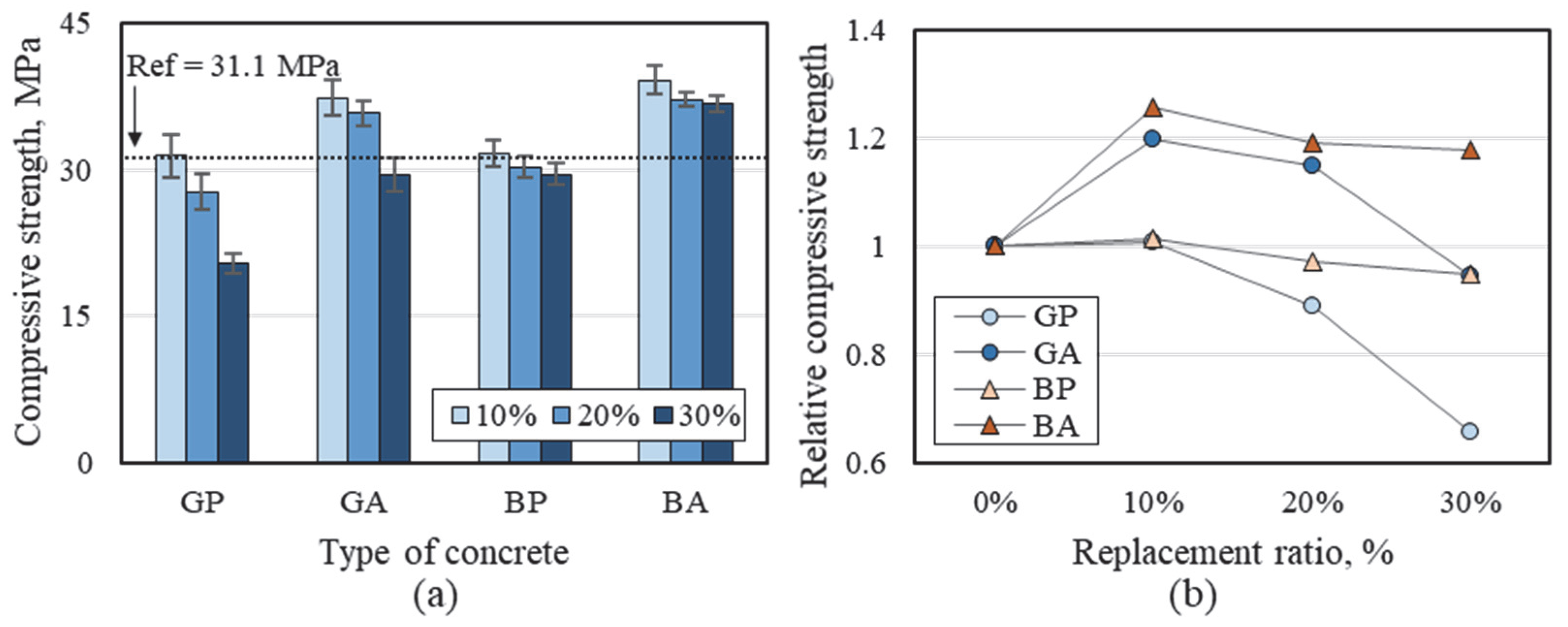
The 28-day compressive strength test results for various mortars are shown in Figure 5. Figure 5a clearly shows that the material forms of RG and RB had different effects on the compressive strength, and also that the proper use of RG and RB can achieve compressive strength exceeding that of the reference mortar.
Figure 5.
Compressive strength (a) and relative compressive strength (b) of mortars made with recycled brick and recycled granite.
The compressive strengths of mortars in which sand was replaced by GA and BA ranged from 95–120% and 118–126% of that of the reference mortar, respectively, and all the GA- and BA-based mortars exceeded the compressive strength of the reference mortar, except for GA30, which was 5.4% (1.6 MPa) lower. This increase in strength can be explained by several reasons. For the GA-based mortars, it has been reported that the rough, angular grain shape of GA can increase strength by improving the bonds between the aggregates and binder [26]. As it seems, the benefit is more prevalent at 10% and 20% replacement of sand; however, at the 30% replacement ratio, a greater reduction in strength has been noted. The difference in intrinsic strength between the natural silica sand and the GA can be considered a factor influencing the strength of mortar, and the GA may contain microcracks and other damages during its lifetime, including the crushing for recycling [27]. For the BA-based mortars, the effective water-to-cement (w/c) ratio and internal curing caused by the high porosity of BA need to be considered. The porous BA absorbs a large amount of water during the mixing process. Since the same w/b ratio (=0.485) was applied to all mixtures in this study, the effective w/c ratio for the actual hydration reaction is lower than 0.485, specifically, the effective w/c ratios of 0.464 for BA10, 0.443 for BA20 and 0.422 for BA30. Consequently, the lowered w/c ratio may have contributed to the improved strength of the BA-based mortars. Moreover, the water absorbed into BA during the mixing process acts as a moisture source, causing an internal curing effect. As presented in previous studies [28,29], clay bricks are known to absorb mixing water during the mixing process of cement-based materials in proportion to their absorption capacity. This absorbed water acts as an internal curing agent that internally supplies the water needed for hydration in the later stages of curing, increasing the density and reducing cracking in mortar.
At the given replacement ratios, the compressive strength of the GP-based mortar was 65–101% of that of the reference mortar, and that of the BP-based mortar was 95–102%. According to ASTM C618 [17], the compressive strength of mortars containing pozzolanic materials should achieve a minimum of 75% of that of mortar made with 100% OPC. Namely, the GP- and BP-based mortars, except for GP30, meet the strength requirements. However, as the replacement ratios increase, the decrease in strength of the GP-based mortar is more pronounced than that of the BP-based mortar. This may be because the BP, which met the chemical composition requirements as a pozzolanic material, contributed to the development of compressive strength, whereas the GP, which did not satisfy the chemical requirements, did not have a noticeable effect on the strength development [30]. The pozzolanic reactions are generally greater when the particle size is smaller. Therefore, when RB is used in powder form, the pozzolanic reaction is more active, forming CSH gels that contribute to the enhancement of strength [31]. In fact, the compressive strength of the BP-based mortars ranged from 95% to 102% of that of the reference mortar, showing that the use of BP as a cement substitute did not cause a noticeable loss of compressive strength within a certain replacement range.
From an environmental point of view, 10% replacement of GP and replacement within 30% of BP show no detrimental effect on the compressive strength of mortar. Therefore, GP and BP can be considered eco-friendly supplementary cementitious materials that can reduce the large amount of CO2-generated in the cement industry. However, from a performance-based perspective, under the same replacement ratios, the compressive strengths of the GP- and BP-based mortars decreased by 19% and 29% compared to the GA- and BA-based mortars (Figure 5b). This is related to a decrease in the hydration product of the cement mortar due to the ‘dilution effect’ occurring when a large amount of cement is replaced with GP and BP [32]. Thus, to improve the compressive strength, it is desirable to use RG and RB as substitutes for fine aggregates.
Table 5 shows some examples of the practical utilization of each mortar prepared in this study based on the compressive strength required by various standards. In practice, the specific strength class required for a given structure is prescribed by the designer based on the type of construction and the applied loads. The mortars tested meet the strength criteria and the relevant classification as shown in Table 5. For example, according to EN998-1 [33], which specifies the requirements for mortars for plastering and rendering of building elements such as walls, ceilings, columns and internal partitions, all mortars in this study can be used for these purposes, meeting a strength level of at least 6 MPa. According to EN13813 [34], regarding mortar for floor screeds, the required compressive strength varies depending on the degree of load applied to the floor; thus, the forms and replacement ratios of recycled materials need to be selected in consideration of the design load. For example, for members where high loads are expected, RG and RB should be used in the form of aggregate, and the recommended replacement ratios can be 20% and 30%, respectively. For elements with low applied loads, RG and RB can be used as powder forms, meeting the requirements.
Table 5.
Classification of mortar mixtures for selected practical applications according to compressive strength.
3.3. Flexural Strength
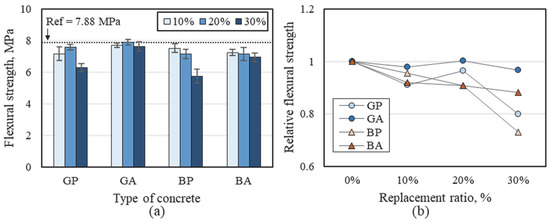
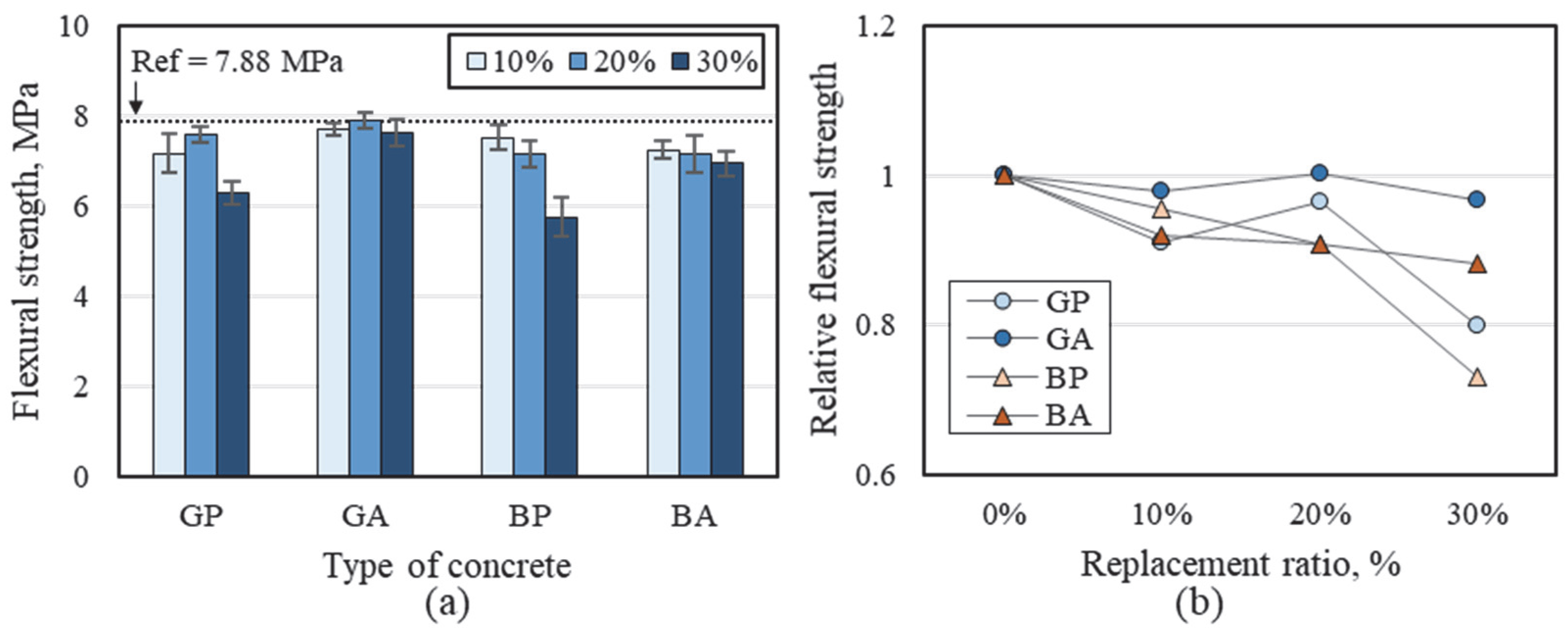
The flexural strength test results for mortars containing RG and RB at various replacement ratios are presented in Figure 6a,b. The 28-day flexural strength of all the prepared mortar mixtures was lower than that of the reference mortar, 7.88 MPa. The material forms had a different effect on the flexural strength properties. Whether RG was recycled as aggregate or powder, the flexural strength was the highest at a replacement rate of 20%, whereas RB decreased in flexural strength as the replacement ratio increased.
Figure 6.
Flexural strength (a) and relative flexural strength (b) of mortars made with recycled brick and recycled granite.
Within a 30% replacement ratio, the flexural strength loss of the GA-based mortar was only 3% of that of the reference mortar, indicating that the effect of GA on the flexural strength was considered negligible. Donza et al. [36] concluded that the effect of crushed sand type on strength was insignificant when the volume of cement paste was the same and the flexural strength did not differ significantly at various replacement ratios. Therefore, GA can be used as an attractive partial substitute for natural sand in terms of flexural strength performance and eco-friendliness. For the BA-based mortars, the flexural strength was progressively decreased with increasing replacement ratios, with the strength losses ranging from 8.0% to 11.7%. This is due to the low intrinsic strength and porosity of BA [31].
Compared to the reference mortar, the flexural strength of the GP-based mortar at 10%, 20% and 30% replacement ratios was 9%, 3.6% and 20.1% lower, respectively. Similarly, the strength loss of the BP-based mortars was 4.5%, 9.1% and 26.8%. As expected, the lowest flexural strengths were observed in GP30 and BP30. In particular, the 30% replacement of cement by both GP and BP dramatically dropped the flexural strength, which is due to the dilution effect caused by the OPC reduction, and this result is consistent with the trend observed for the compressive strength.
As shown in Figure 6b, when RG was used as a substitute for sand, higher flexural strength was achieved than when RG was used as a cement replacement. On the contrary, recycling RB as powder rather than aggregate at 10% and 20% replacement ratios was more favorable for the development of flexural strength.
In practice, values of flexural strength are specified (e.g., for floor mortars), and Table 6 provides a classification of the tested mixtures.
Table 6.
Classification of mortar mixtures for selected practical applications according to flexural strength.
3.4. Ultrasonic Pulse Velocity
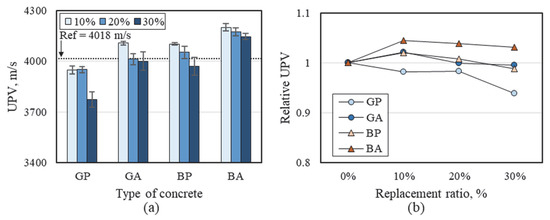
The UPV values for various mortars are presented in Figure 7a,b. Regardless of the material types, the replacement of natural sand and cement by recycled aggregates and recycled powders showed that the UPV values decreased with increasing replacement ratios; however, the UPV of six series out of a total of 12 mortars (i.e., GA10, BP10, BP20, BA10, BA20 and BA30) showed higher values than that of the reference mortar of 4018 m/s. The UPV of cementitious materials is proportional to the volume fraction of the solid phase and inversely proportional to the porosity as ultrasonic pulses are transmitted through the solid phase [37]. Therefore, the UPV results in this study indicate that the use of appropriate amounts of RG and RB can make the pore structure of cement composite denser compared to that made with natural sand and cement. According to the quality classification of mortar by the UPV value presented by Estévez et al. [38], the quality can be considered “excellent” when the UPV exceeds 3800 m/s and “good” when the UPV is between 3500 m/s and 3800 m/s. The lowest UPV of the prepared mortars was 3774 m/s for the GP30, indicating “good” quality, while the mortars other than the GP30 showed “excellent” quality, ranging from 3947 m/s to 4200 m/s.
Figure 7.
Ultrasonic pulse velocity (a) and relative ultrasonic pulse velocity (b) of mortars made with recycled brick and recycled granite.
Within the replacement ratios of 30%, the UPV values of the GA-based mortars were in the range of 99.5–102.2% of those of the reference mortar, indicating no significant difference. Unexpectedly, the BA-based mortars, which are generally considered to have porous structures, showed the highest UPV values (103.2–104.5%). According to a previous study [39], the water absorbed into BA during the mixing process due to its high water absorption acts as a self-curing agent in the cement-based materials in later stages, and the absorbed internal water not used for hydration fills the pores to make the BA denser. In fact, Rao [40] reported higher UPV values when brick and stone replaced river sand at 30%.
At the given replacement ratios, the UPV of the GP- and BP-based mortar ranged from 93.9–98.3% and 98.8-102.1% of the reference concrete, respectively. As shown in Figure 7b, the UPV values tend to be higher in the mortars containing recycled aggregate (i.e., GA and BA series) than in the mortars containing recycled powder (i.e., GP and BP series). The UPV results are in good agreement with the trend observed in the compressive strength tests of the corresponding mortars.
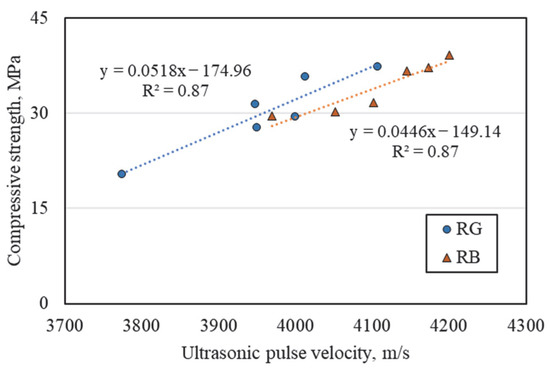
Figure 8 shows the correlation between compressive strength and UPV for the mortars prepared in this study. A linear relationship between the two parameters was observed, and the R2 coefficient of determination was 0.87, indicating that there is very high reliability in predicting the dependent variable. Thus, the UPV technique can be useful for estimating the compressive strength of cement composites containing RG and RB as sand and cement replacements.
Figure 8.
A correlation between UPV and compressive strength.
3.5. Drying Shrinkage
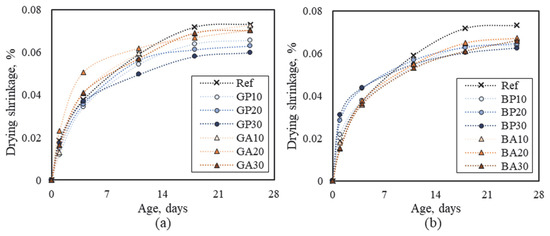
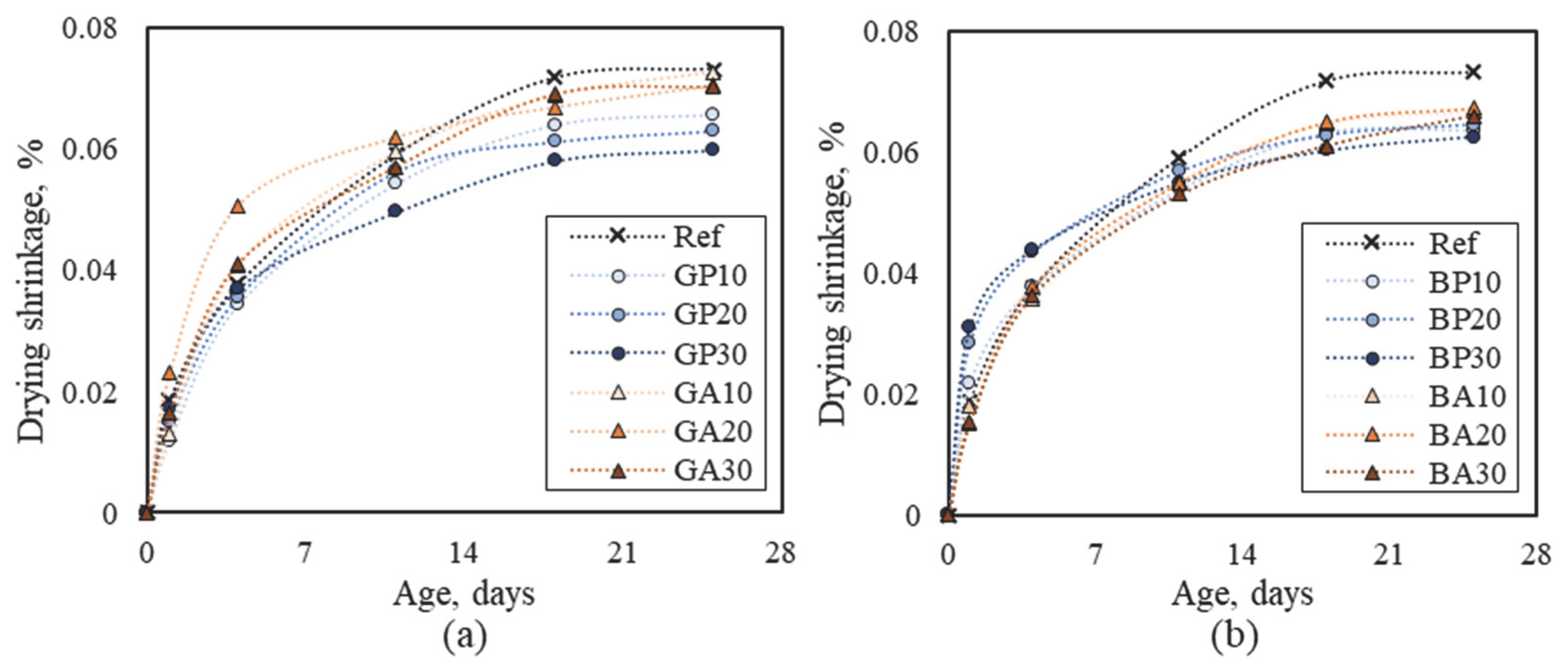
The length changes due to drying shrinkage of the mortar containing RG and RB are plotted in Figure 9a,b, respectively. The drying shrinkage of all mortars increased over time, but the change in length was not as large as that of the reference mortar.
Figure 9.
Drying shrinkage of mortars made with recycled granite (a) and recycled brick (b).
Since GA and BA used in this study are finer than sand, drying shrinkage may have been reduced due to improved pore structure and reduced evaporation of water through capillary pores. These results have been frequently reported in studies using RB and RG as partial substitutes for fine aggregates [41,42,43].
In addition, in both the GP and BP series, the replacement of cement was more effective in mitigating drying shrinkage than the replacement of sand. The 28-day drying shrinkage of the GP-based mortars ranged from 0.06% to 0.063%, and that of the GA-based mortars was from 0.07% to 0.073%. For RB, no marked difference in shrinkage was observed. For example, the BP-based mortars showed 28-day drying shrinkage of 0.062% to 0.064%, and the BA-based mortars showed shrinkage of 0.066% and 0.067%. Dang et al. [44] found that there was no remarkable difference in drying shrinkage at 50% replacement of sand by BA. The authors concluded that this was due to the combined beneficial effects of the pozzolanic reaction and internal curing. The lowest drying shrinkage was for GP30 and BP30, in which 30% of the cement was replaced by GP and BP, which had about 15–18% less shrinkage than the reference mortar. This is related to the fact that one parameter that causes drying shrinkage is the cement content [45]. One of the causes of drying shrinkage is due to the evaporation of the moisture from the cement matrix, and there is a positive correlation between cement content and moisture loss. Therefore, the drying shrinkage deformation of mortar with low cement content is relatively small, and when RG and RB are recycled as a substitute for cement rather than as a substitute for sand, drying shrinkage can be suppressed by 9–14% and 4–5%, respectively. This trend is in line with previous studies [46,47].
4. Conclusions
In this study, the effects of different forms of recycled materials, waste clay brick and waste granite, both in aggregate and powdery forms, were investigated. Based on the experimental results, the following conclusions can be drawn:
- The effect of the application of RG and RB on cement mortar depends on the material forms in which the wastes are processed. With optimal forms and mix proportions, even better properties of cementitious mixtures can be achieved with recycled materials than with standard ingredients.
- At replacement ratios of 10% and 20%, it is favorable for RG to be recycled as a cement replacement, while RB needs to be recycled as a replacement for sand to obtain a more workable mixture.
- In terms of strength development, RG and RB are advantageous for recycling as alternatives to sand. At the same replacement ratio, the compressive strength of GA was 19% to 45% higher than that of GP, and BA showed approximately 23% higher compressive strength than BP.
- The flexural strength of mortars containing RB decreased with the increase in replacement ratios, whereas that of mortars containing RG was highest at 20% replacement (i.e., GA20 and GP20). Moreover, the replacement of natural sand by GA within 30% resulted in only a 3% loss of flexural strength compared to the reference mortar.
- The UPV values showed an appropriate correlation with the compressive strength (R2 = 0.87), indicating that the UPV technique could be utilized to estimate the compressive strength of mortar containing RB and RG.
- Both forms of RG and RB contributed to a reduction in shrinkage and an improvement in the quality of mortars, with more favorable results in the powder form. Recycled powder contributed to drying shrinkage mitigation by reducing the cement content in cement composites. The lowest shrinkage was observed in GP30 and BP30, where 30% of the cement was replaced by RG and RB.
During the production of recycled materials from waste, residues, mainly of fine size, are inevitably generated. Moreover, the advanced technologies of the present time make it possible to turn waste into recycled materials with the desired sizes. Therefore, further research needs to be conducted on various recycling approaches that can achieve better performance with less energy consumption.
Author Contributions
Conceptualization, J.K. and D.L.; methodology, J.K.; formal analysis, J.K. and D.L.; investigation, J.K. and N.K.; resources, D.L. and N.K.; data curation, J.K. and A.S.; writing—original draft preparation, J.K.; writing—review and editing, A.S.; supervision, A.S. and N.K.; funding acquisition, A.S. and N.K. All authors have read and agreed to the published version of the manuscript.
Funding
This research has been carried out within the project of Slovak Scientific Grant Agency VEGA (Grant No. 1/0336/22) “Research on the effects of Lean Production/Lean Construction for improving the efficiency of on-site and off-site construction technologies”.
Data Availability Statement
The data presented in this study are available on request from the corresponding author.
Acknowledgments
This work was supported by NAWA STER Programme Internationalisation of Wroclaw University of Science and Technology Doctoral School. The authors would like to thank the Cooperative Equipment Center at KOREATECH for assistance with particle size, XRF and XRD analysis. The financial support of the National Scholarship Programme of the Slovak Republic (ID 37273) is also acknowledged.
Conflicts of Interest
The authors declare no conflict of interest.
References
- UNEP-GEAS. Greening Cement Production Has a Big Role to Play in Reducing Greenhouse Gas Emissions; UNEP-GEAS: Nairobi, Kenya, 2010. [Google Scholar]
- Pascal, P. Sand, Rarer than One Thinks. Environ. Dev. 2014, 11, 208–218. [Google Scholar] [CrossRef] [Scilit]
- UNEP. Sand and Sustainability: 10 Strategic Recommendations to Avert a Crisis; UNEP: Geneva, Switzerland, 2022. [Google Scholar]
- Kim, J. Construction and Demolition Waste Management in Korea: Recycled Aggregate and Its Application. Clean Technol. Environ. Policy 2021, 23, 2223–2234. [Google Scholar] [CrossRef] [Scilit]
- Islam, R.; Nazifa, T.H.; Yuniarto, A.; Shanawaz Uddin, A.S.M.; Salmiati, S.; Shahid, S. An Empirical Study of Construction and Demolition Waste Generation and Implication of Recycling. Waste Manag. 2019, 95, 10–21. [Google Scholar] [CrossRef] [Scilit]
- Wu, H.; Duan, H.; Zheng, L.; Wang, J.; Niu, Y.; Zhang, G. Demolition Waste Generation and Recycling Potentials in a Rapidly Developing Flagship Megacity of South China: Prospective Scenarios and Implications. Constr. Build. Mater. 2016, 113, 1007–1016. [Google Scholar] [CrossRef] [Scilit]
- Zhao, W.; Leeftink, R.B.; Rotter, V.S. Evaluation of the Economic Feasibility for the Recycling of Construction and Demolition Waste in China—The Case of Chongqing. Resour. Conserv. Recycl. 2010, 54, 377–389. [Google Scholar] [CrossRef] [Scilit]
- Ding, T.; Xiao, J. Estimation of Building-Related Construction and Demolition Waste in Shanghai. Waste Manag. 2014, 34, 2327–2334. [Google Scholar] [CrossRef] [Scilit]
- Singh, S.; Khan, S.; Khandelwal, R.; Chugh, A.; Nagar, R. Performance of Sustainable Concrete Containing Granite Cutting Waste. J. Clean. Prod. 2016, 119, 86–98. [Google Scholar] [CrossRef] [Scilit]
- Bektas, F.; Wang, K.; Ceylan, H. Effects of Crushed Clay Brick Aggregate on Mortar Durability. Constr. Build. Mater. 2009, 23, 1909–1914. [Google Scholar] [CrossRef] [Scilit]
- He, Z.; Shen, A.; Wu, H.; Wang, W.; Wang, L.; Yao, C.; Wu, J. Research Progress on Recycled Clay Brick Waste as an Alternative to Cement for Sustainable Construction Materials. Constr. Build. Mater. 2021, 274, 122113. [Google Scholar] [CrossRef] [Scilit]
- Jain, A.; Gupta, R.; Chaudhary, S. Performance of Self-Compacting Concrete Comprising Granite Cutting Waste as Fine Aggregate. Constr. Build. Mater. 2019, 221, 539–552. [Google Scholar] [CrossRef] [Scilit]
- Asadi Shamsabadi, E.; Ghalehnovi, M.; de Brito, J.; Khodabakhshian, A. Performance of Concrete with Waste Granite Powder: The Effect of Superplasticizers. Appl. Sci. 2018, 8, 1808. [Google Scholar] [CrossRef] [Scilit]
- Taji, I.; Ghorbani, S.; de Brito, J.; Tam, V.W.Y.; Sharifi, S.; Davoodi, A.; Tavakkolizadeh, M. Application of Statistical Analysis to Evaluate the Corrosion Resistance of Steel Rebars Embedded in Concrete with Marble and Granite Waste Dust. J. Clean. Prod. 2019, 210, 837–846. [Google Scholar] [CrossRef] [Scilit]
- Kim, J.; Grabiec, A.M.; Ubysz, A. An Experimental Study on Structural Concrete Containing Recycled Aggregates and Powder from Construction and Demolition Waste. Materials 2022, 15, 2458. [Google Scholar] [CrossRef] [Scilit]
- Kim, J.; Kim, N. Recycling Waste Paver Blocks in the Manufacture of New Concrete Paver Blocks and Building Bricks. Appl. Sci. 2022, 12, 10970. [Google Scholar] [CrossRef] [Scilit]
- ASTM C618; Standard Specification for Coal Fly Ash and Raw or Calcined Natural Pozzolan for Use in Concrete. ASTM International: West Conshohocken, PA, USA, 2022.
- ASTM C109; Standard Test Method for Compressive Strength of Hydraulic Cement Mortars. ASTM International: West Conshohocken, PA, USA, 2021.
- ASTM C305; Standard Practice for Mechanical Mixing of Hydraulic Cement Pastes and Mortars of Plastic Consistency. ASTM International: West Conshohocken, PA, USA, 2020.
- ASTM C1437; Standard Test Method for Flow of Hydraulic Cement Mortar. ASTM International: West Conshohocken, PA, USA, 2020.
- ASTM C348; Standard Test Method for Flexural Strength of Hydraulic-Cement Mortars. ASTM International: West Conshohocken, PA, USA, 2021.
- ASTM C596; Standard Test Method for Drying Shrinkage of Mortar Containing Hydraulic Cement. ASTM International: West Conshohocken, PA, USA, 2018.
- de Azevedo, A.R.G.; Marvila, M.T.; da Silva Barroso, L.; Zanelato, E.B.; Alexandre, J.; de Castro Xavier, G.; Monteiro, S.N. Effect of Granite Residue Incorporation on the Behavior of Mortars. Materials 2019, 12, 1449. [Google Scholar] [CrossRef] [Scilit]
- Schackow, A.; Stringari, D.; Senff, L.; Correia, S.L.; Segadães, A.M. Influence of Fired Clay Brick Waste Additions on the Durability of Mortars. Cem. Concr. Compos. 2015, 62, 82–89. [Google Scholar] [CrossRef] [Scilit]
- Singh, S.; Nagar, R.; Agrawal, V. A Review on Properties of Sustainable Concrete Using Granite Dust as Replacement for River Sand. J. Clean. Prod. 2016, 126, 74–87. [Google Scholar] [CrossRef] [Scilit]
- Gupta, L.K.; Vyas, A.K. Impact on Mechanical Properties of Cement Sand Mortar Containing Waste Granite Powder. Constr. Build. Mater. 2018, 191, 155–164. [Google Scholar] [CrossRef] [Scilit]
- Dong, L.; Zhang, Y.; Ma, J. Micro-Crack Mechanism in the Fracture Evolution of Saturated Granite and Enlightenment to the Precursors of Instability. Sensors 2020, 20, 4595. [Google Scholar] [CrossRef] [Scilit]
- Chen, F.; Wu, K.; Ren, L.; Xu, J.; Zheng, H. Internal Curing Effect and Compressive Strength Calculation of Recycled Clay Brick Aggregate Concrete. Materials 2019, 12, 1815. [Google Scholar] [CrossRef] [Scilit]
- Sicakova, A.; Figmigova, E. Two Variants of Internal Curing of RBA-Based Concrete and Their Influence on the Properties of Concrete. Rev. Rom. Mater. 2021, 51, 221–227. [Google Scholar]
- Bacarji, E.; Toledo Filho, R.D.; Koenders, E.A.B.; Figueiredo, E.P.; Lopes, J.L.M.P. Sustainability Perspective of Marble and Granite Residues as Concrete Fillers. Constr. Build. Mater. 2013, 45, 1–10. [Google Scholar] [CrossRef] [Scilit]
- Wong, C.L.; Mo, K.H.; Yap, S.P.; Alengaram, U.J.; Ling, T.C. Potential Use of Brick Waste as Alternate Concrete-Making Materials: A Review. J. Clean. Prod. 2018, 195, 226–239. [Google Scholar] [CrossRef] [Scilit]
- Zhao, Y.; Gao, J.; Xu, Z.; Li, S.; Luo, X.; Chen, G. Long-Term Hydration and Microstructure Evolution of Blended Cement Containing Ground Granulated Blast Furnace Slag and Waste Clay Brick. Cem. Concr. Compos. 2021, 118, 103982. [Google Scholar] [CrossRef] [Scilit]
- SK EN 998-1:2019; Specification for Mortar for Masonry—Part 1: Rendering and Plastering Mortar. The Office for Standardisation, Metrology and Testing of the Slovak Republic: Bratislava, Slovakia, 2019.
- SK EN 13813:2009; Screed Material and Floor Screeds—Screed Material—Properties and Requirements. The Office for Standardisation, Metrology and Testing of the Slovak Republic: Bratislava, Slovakia, 2009.
- SK EN 998-2:2019; Specification for Mortar for Masonry—Part 2: Masonry Mortar. The Office for Standardisation, Metrology and Testing of the Slovak Republic: Bratislava, Slovakia, 2019.
- Donza, H.; Cabrera, O.; Irassar, E. High-Strength Concrete with Different Fine Aggregate. Cem. Concr. Res. 2002, 32, 1755–1761. [Google Scholar] [CrossRef] [Scilit]
- Hong, G.; Oh, S.; Choi, S.; Chin, W.-J.; Kim, Y.-J.; Song, C. Correlation between the Compressive Strength and Ultrasonic Pulse Velocity of Cement Mortars Blended with Silica Fume: An Analysis of Microstructure and Hydration Kinetics. Materials 2021, 14, 2476. [Google Scholar] [CrossRef] [Scilit]
- Estévez, E.; Martín, D.A.; Argiz, C.; Sanjuán, M.Á. Ultrasonic Pulse Velocity—Compressive Strength Relationship for Portland Cement Mortars Cured at Different Conditions. Crystals 2020, 10, 133. [Google Scholar] [CrossRef] [Scilit]
- Cachim, P.B. Mechanical Properties of Brick Aggregate Concrete. Constr. Build. Mater. 2009, 23, 1292–1297. [Google Scholar] [CrossRef] [Scilit]
- Chakradhara Rao, M. Influence of Brick Dust, Stone Dust, and Recycled Fine Aggregate on Properties of Natural and Recycled Aggregate Concrete. Struct. Concr. 2021, 22, E105–E120. [Google Scholar] [CrossRef] [Scilit]
- Vardhan, K.; Siddique, R.; Goyal, S. Influence of Marble Waste as Partial Replacement of Fine Aggregates on Strength and Drying Shrinkage of Concrete. Constr. Build. Mater. 2019, 228, 116730. [Google Scholar] [CrossRef] [Scilit]
- Khyaliya, R.K.; Kabeer, K.I.S.A.; Vyas, A.K. Evaluation of Strength and Durability of Lean Mortar Mixes Containing Marble Waste. Constr. Build. Mater. 2017, 147, 598–607. [Google Scholar] [CrossRef] [Scilit]
- Hu, L.; Hao, J.; Wang, L. Laboratory Evaluation of Cement Treated Aggregate Containing Crushed Clay Brick. J. Traffic Transp. Eng. 2014, 1, 371–382. [Google Scholar] [CrossRef] [Scilit]
- Dang, J.; Zhao, J.; Pang, S.D.; Zhao, S. Durability and Microstructural Properties of Concrete with Recycled Brick as Fine Aggregates. Constr. Build. Mater. 2020, 262, 120032. [Google Scholar] [CrossRef] [Scilit]
- Abdalhmid, J.M.; Ashour, A.F.; Sheehan, T. Long-Term Drying Shrinkage of Self-Compacting Concrete: Experimental and Analytical Investigations. Constr. Build. Mater. 2019, 202, 825–837. [Google Scholar] [CrossRef] [Scilit]
- Wu, H.; Xiao, J.; Liang, C.; Ma, Z. Properties of Cementitious Materials with Recycled Aggregate and Powder Both from Clay Brick Waste. Buildings 2021, 11, 119. [Google Scholar] [CrossRef] [Scilit]
- Ge, Z.; Feng, Y.; Yuan, H.; Zhang, H.; Sun, R.; Wang, Z. Durability and Shrinkage Performance of Self-Compacting Concrete Containing Recycled Fine Clay Brick Aggregate. Constr. Build. Mater. 2021, 308, 125041. [Google Scholar] [CrossRef] [Scilit]

Disclaimer/Publisher’s Note: The statements, opinions and data contained in all publications are solely those of the individual author(s) and contributor(s) and not of MDPI and/or the editor(s). MDPI and/or the editor(s) disclaim responsibility for any injury to people or property resulting from any ideas, methods, instructions or products referred to in the content. |
© 2023 by the authors. Licensee MDPI, Basel, Switzerland. This article is an open access article distributed under the terms and conditions of the Creative Commons Attribution (CC BY) license (https://creativecommons.org/licenses/by/4.0/).