Article

Break the Cycle of Collusion: Simulation to Influence Mechanism of Cognitive Bias on To-Collude Decision Making

School of Management Science and Real Estate, Chongqing University, 83# Shabei St., Shapingba District, Chongqing 400045, China
*
Authors to whom correspondence should be addressed.
Buildings 2022, 12(7), 997; https://doi.org/10.3390/buildings12070997

Submission received: 1 June 2022 / Revised: 28 June 2022 / Accepted: 9 July 2022 / Published: 13 July 2022
(This article belongs to the Section Construction Management, and Computers & Digitization)

Abstract

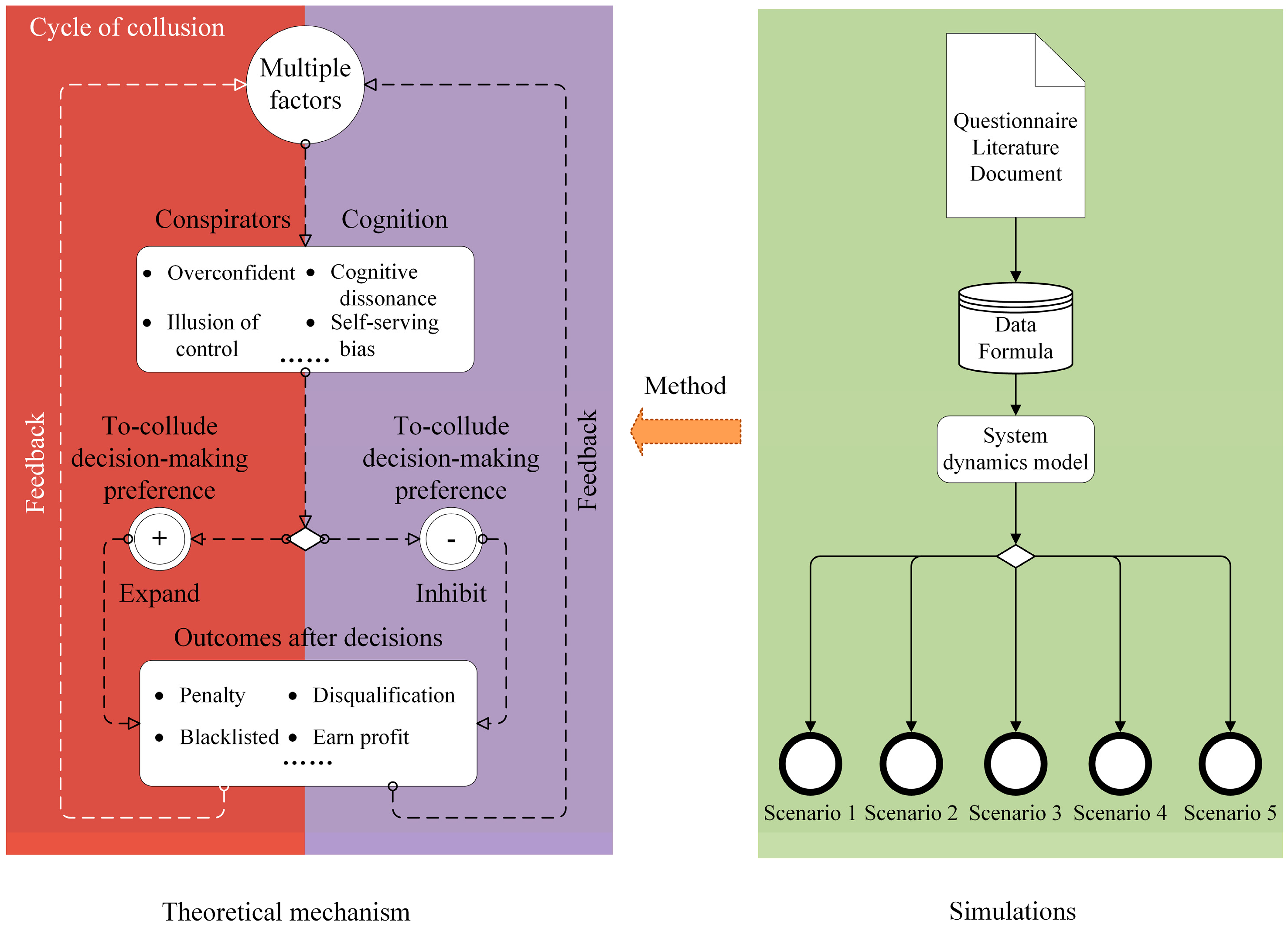
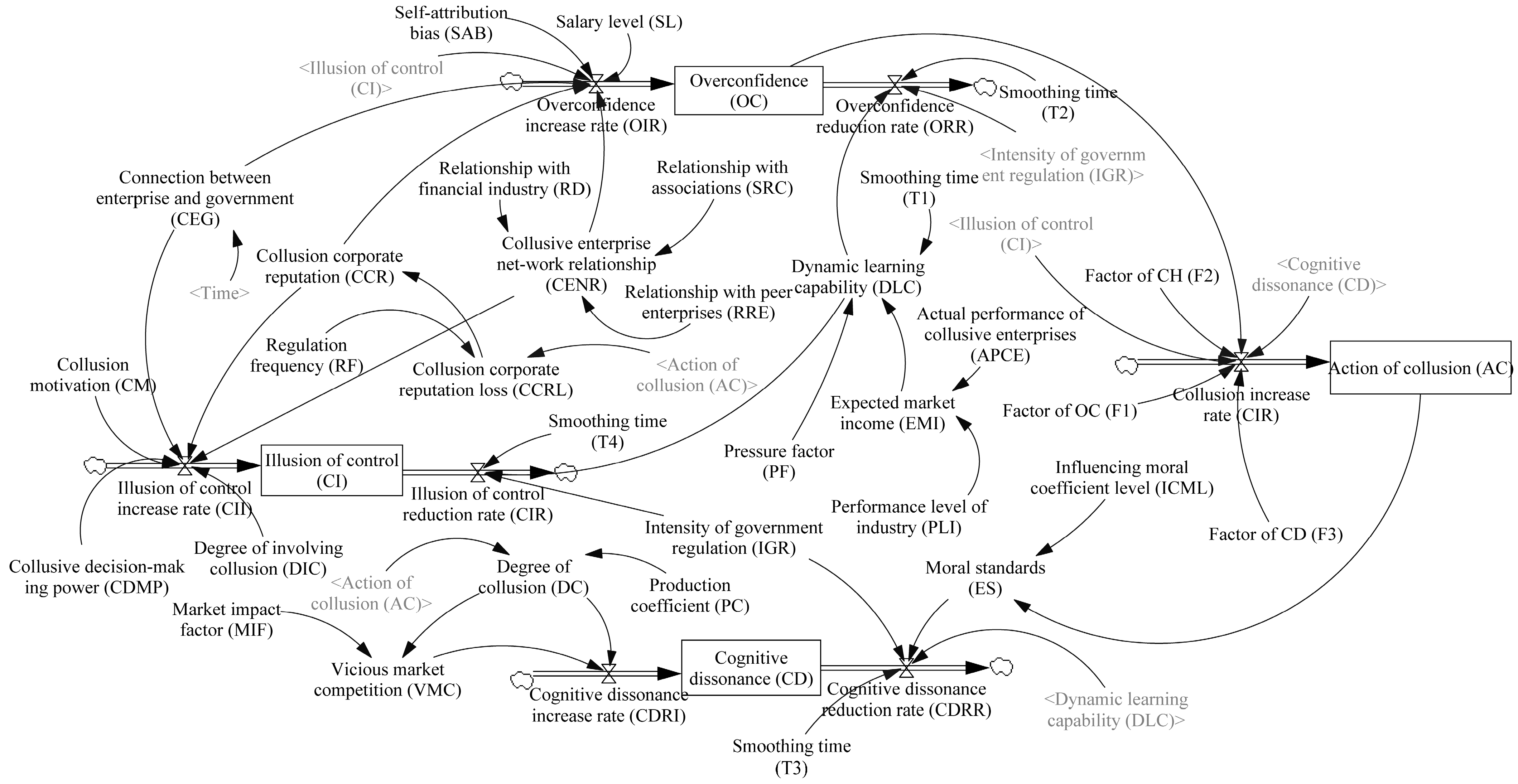
Collusion is an all-pervading illegal market behavior that can undermine the sustainable development of the construction industry. It is acknowledged that collusive bidding decision making is influenced by conspirators’ cognitive bias. Nevertheless, the understanding of such an influence mechanism remains vague in the literature. This study aims to examine the mechanism of conspirators’ to-collude decision making by establishing a system dynamic model. The model development is based on the theories of cognitive biases, collusive bidding, and complex adaptive system. Multiple scenarios were simulated in the context of the Chinese construction industry. Three most influential cognitive bias are overconfidence, the illusion of control, and cognitive dissonance. The simulation results reveal conspirators’ intrinsic mechanisms to decide whether they deserve to participate in collusive bidding. The evolution of to-collude decision making is characterized by nonlinearity, multiplier, and stimulus enhancement effects. Collusion motivation and enterprise network relationships expand conspirators’ to-collude decision making. The increase of government regulation intensity and enterprise performance inhibit conspirators’ to-collude decision making. This study provides an insight into the cycle of collusion emergence from a complex system perspective and implies that antitrust authorities can launch carrot-and-stick measures for better regulation.
Keywords: collusive bidding; cognitive bias; complex adaptive system; collusion motivation; government regulation intensity collusive bidding; cognitive bias; complex adaptive system; collusion motivation; government regulation intensity