Article

Shaking Table Seismic Experimental Investigation of Lightweight Rigid Bodies
by
Giuseppe Cocuzza Avellino
,
Francesco Cannizzaro
* and
Nicola Impollonia
Department of Civil Engineering and Architecture, University of Catania, Via Santa Sofia 64, 95125 Catania, Italy
*
Author to whom correspondence should be addressed.
Buildings 2022, 12(7), 915; https://doi.org/10.3390/buildings12070915

Submission received: 30 May 2022 / Revised: 20 June 2022 / Accepted: 25 June 2022 / Published: 28 June 2022
(This article belongs to the Special Issue Computational Models for Dynamic Analyses of Buildings and Structures)

Abstract

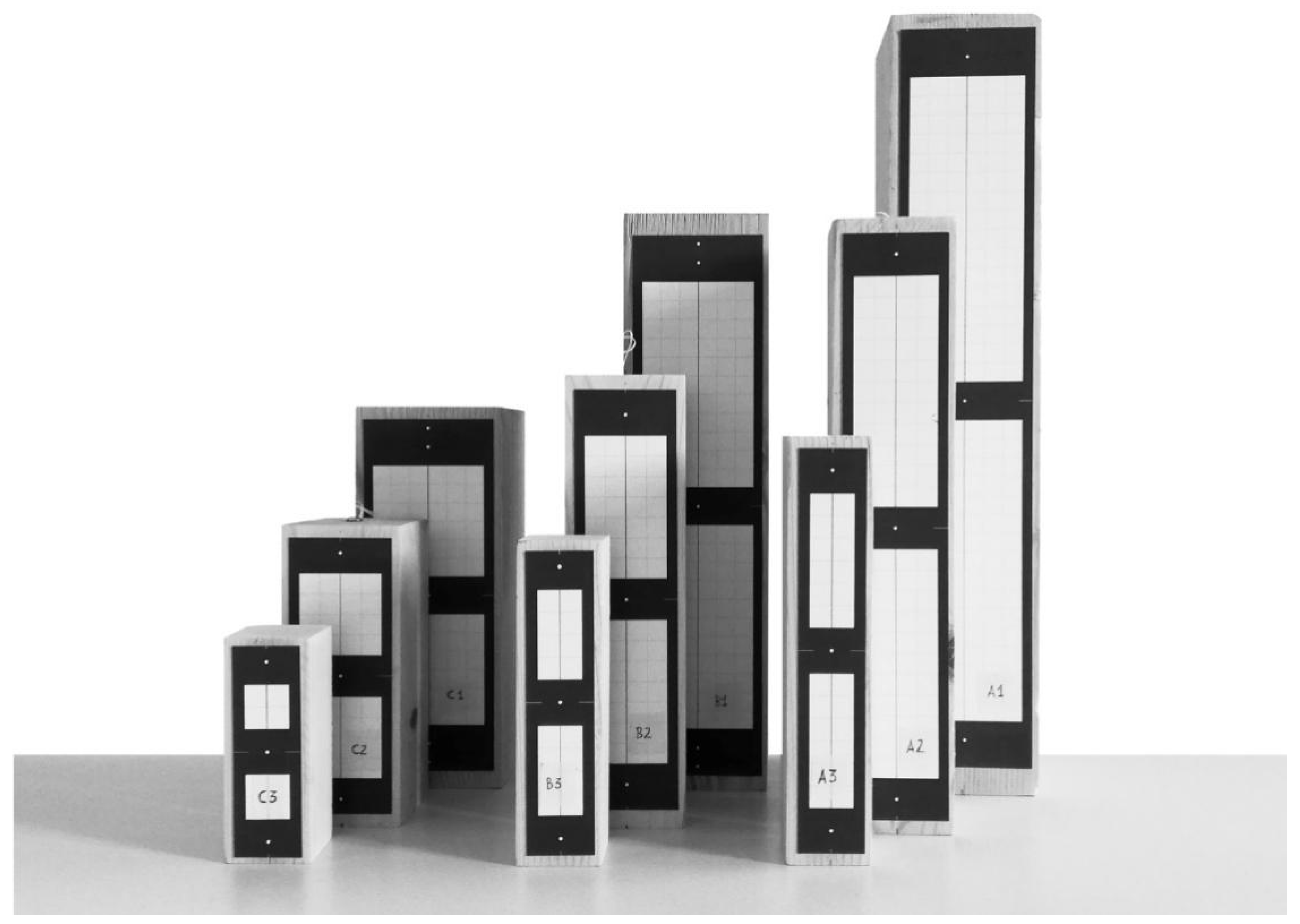
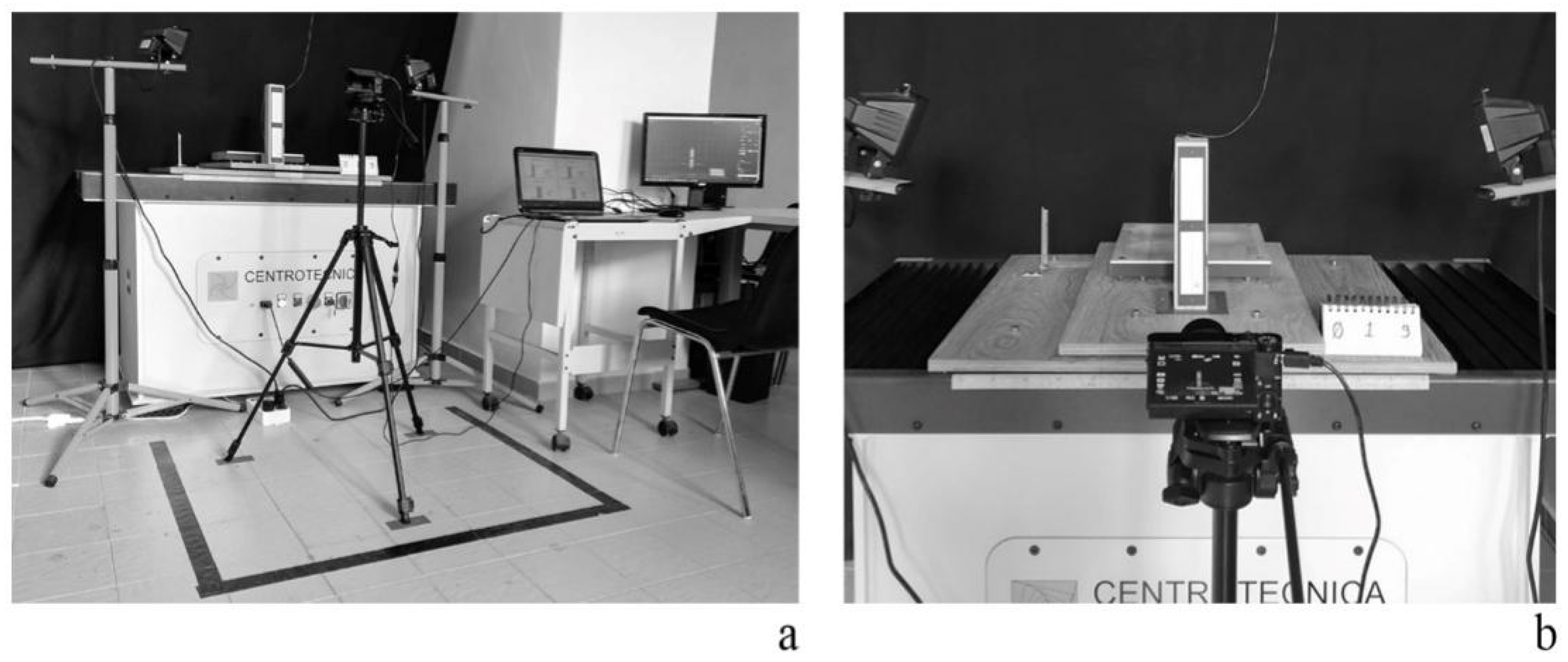
This study presents the findings of an extensive shaking table experimental campaign conducted on nine free-standing wooden specimens, aiming at providing insights on the rigid body motion of free-standing objects. The specimens, which differ in slenderness and size, are characterized by impairments in their base surface and most likely in their shapes, which also lead to asymmetric responses. The imperfections of the tested objects are an additional source of uncertainty with respect to the intrinsic chaotic character of the rigid body motion, which is a crucial factor that prevents the reproducibility of the tests and induces discrepancies between specimen responses and those of their ideal models. A contactless measurement strategy is employed to assure unaltered data acquisition. The experimental campaign includes free vibration tests, pulse excitation, and natural ground motions tests; the dynamic responses of the specimens are organized and rearranged, aiming at providing a comprehensive set of data that could be employed for calibrating numerical models accounting for imperfect conditions. The damping properties of the specimens are discussed, providing a novel estimation of the coefficient of restitution based on the free vibration tests. The limits of the ideal simple rigid model are highlighted, and the roles of size factor and aspect ratio are discussed according to the obtained results.
Keywords: asymmetric rigid block; rigid body motion; shaking table; scale effect; nonlinear dynamics; seismic behavior asymmetric rigid block; rigid body motion; shaking table; scale effect; nonlinear dynamics; seismic behavior