Abstract
Global warming is resulting in higher summer indoor temperatures in the severe cold region and cold region of China, and this is affecting thermal comfort. Local building design codes consider these regions as cool in summer, and do not consider the phenomenon of overheating or propose countermeasures. This paper studied the possibility of overheating in residential buildings in these areas. It suggested alleviating this phenomenon using external horizontal shading, and discussed how to integrate thermal comfort into the building design and save energy consumption. The IESVE software was used to simulate 18-storey residential buildings with natural ventilation in Yichun, Harbin, Shenyang, Dalian, and Beijing, and to calculate the change in indoor operative temperature. Horizontal shading was designed for case study building to attempt to alleviate the overheating phenomenon in summer. The results showed that the case study building in the five cities experienced different degrees of overheating. External horizontal shading was successful in reducing indoor overheating, especially in the severe cold B and C zones and the cold A and B zones. The relevant building codes should be modified to take this into account. Reasonable design of horizontal shading can effectively reduce energy consumption, particularly when compared with air-conditioned buildings.
1. Introduction
Global warming has become an indisputable fact. The climate system has repeatedly observed human-induced global warming, including rising land and ocean temperatures and more frequent heat waves [1]. A report released by the Intergovernmental Panel on Climate Change (IPCC) in 2018 explains that we must control global warming above 1.5 °C and how to do it [2]. Additionally, the report on climate change, desertification, land degradation, sustainable land management, food security, and greenhouse gas flux of terrestrial ecosystems was released in 2019 [3]. However, Xu et al. believe that global warming is accelerating, and we are likely to exceed an increase of 1.5 °C by 2030 [4]. The global average temperature in 2020 was 1.2 ± 0.1 °C higher than the baseline in 1850–1900 [5]. We need to reduce greenhouse gas emissions more significantly than before in order to achieve any given goal of global temperature stability [6]. In addition, some studies indicate that exposure to high ambient temperatures is harmful to human health. High temperature has an adverse effect on the quality of sleep and reduces appetite [7], and also increases the risk of some diseases, such as respiratory diseases, cardiovascular diseases [8], and allergies [9]. Climate change and the associated rising temperatures increase the risk of early mortality [10]. For example, the 2003 European heat wave killed an estimated 70,000 people [11]. It is estimated that there are about 2000 high temperature-related deaths in the UK every year, and this figure is expected to rise to about 257% by 2050 due to more severe and frequent heat waves and population aging [12]. Additionally, studies have shown that rising temperatures will increase people’s negative emotions, thus increasing the suicide rate [13], including in China [14] and other East Asian regions [15].
As the temperatures increase, cooling energy consumption also increases gradually [16]. Urban heat island leads to a 19% median increase in cooling energy consumption [17]. Specifically, a 1% increase in CDD (Cooling Degree Days) will lead to a 0.094% increase in per capita electricity demand in China [18]. By the end of this century, climate change is expected to increase cooling energy consumption in the United States and China by 20–35% and 37–41% respectively [19]. The increasing use of air conditioning has increased global carbon emissions. In summary, global warming is having an impact on all aspects of humanity. Buildings should actively adapt to the climate and provide their inhabitants with a more comfortable indoor environment.
In the past, residential buildings in the severe cold region and cold region of China were not considered to be prone to overheating. There is no explicit requirement in the local building standards to prevent summer overheating in these regions. In these areas, the main focus is on winter heating, and the architectural design aims to reduce heating demand. Research shows that decreases in cold extremes and increases in warm extremes over most of China in a warm world [20]. Within a background of global warming of 1.5 °C (relative to the reference period 1986–2005), the annual average temperature in China is expected to rise by 1.83 °C, 1.75 °C, and 1.88 °C under the scenarios of RCP2.6, RCP 4.5, and RCP 8.5 respectively [21]. Since the 1950s, China’s climate has been warming, and the rate of rise of surface air temperature is higher than the global average [22]. From this point of view, China must more urgently deal with summer overheating.
Recent studies have begun to emphasize the increased risk of building overheating in the severe cold region and cold region of China. The building envelope in these regions is designed for good thermal insulation performance to reduce heating energy consumption in winter, but this insulation increases the risk of overheating in summer [23]. In other words, buildings with high insulation and air tightness are more likely to overheat than old buildings with poor insulation and air tightness [24]. There is limited research into the identification of measures to resolve summer overheating in the severe cold region and cold region of China.
There are various ways to solve summer overheating. The most commonly used method is air conditioning refrigeration, which can quickly adjust the indoor temperature to the appropriate temperature of the human body. However, the cost is high and not suitable for all people. Compared with air conditioning, the elderly prefer to open windows for ventilation to alleviate overheating in summer [25]. Although window ventilation and fans are more comfortable and economical than air conditioning, they have higher requirements for human behavior and need to be opened or adjusted manually. Additionally, the degree of window ventilation promoting air flow is also affected by architectural design. In addition, more suitable building materials can be used to alleviate summer overheating, but it is not applicable to buildings that have been put into use. The existing research by Udrea et al. [26] and Sun et al. [27] showed that the building shading design can effectively alleviate the phenomenon of overheating in summer, and has the advantages of being economical, wide applicability, and high comfort. Because the external shading devices of the building can block the solar radiation outdoors, the shading effect is better than the internal shading devices effect [28], and there is no need for human control. External sunshade devices include horizontal sunshade devices, vertical sunshade devices, and other forms. For the south window in China’s severe cold region and cold region, this paper studied the impact of horizontal shading devices on indoor thermal comfort in summer.
According to current standards, residential buildings in the severe cold region and cold region in China are considered not to be overheated. Additionally, there is no clear conclusion on the degree of summer overheating, nor is there any direction regarding the necessity of shading devices in these regions. However, with the increase of global warming and extreme warm weather, previous literature shows that summer overheating may exist in severe cold region and cold region in China. This paper verified this conjecture and tried to use horizontal shading to alleviate the degree of overheating. This is helpful to provide design basis for architects and suggestions for policy makers to modify codes such that they could save energy consumption while taking into account indoor thermal comfort in summer. The research questions were as follows:
- (1)
- Are residential buildings in the severe cold region and cold region of China suffering from overheating during summer, particularly those with natural ventilation?
- (2)
- To what extent can shading devices alleviate overheating in these regions?
- (3)
- What are the design parameters for horizontal shading design while keeping the year-round energy performance of these buildings in view?
The existing literature reviews have shown that the summer overheating phenomenon exists in similar latitudes. In this paper, whether the same phenomenon also exists and the degree of using horizontal shading to alleviate summer overheating in severe cold region and cold region of China was verified. Due to the influence of horizontal shading on day-lighting in winter, heating energy consumption will increase. The change of solar height angle can be used to adjust the depth and height of external horizontal shading to achieve Pareto optimization. Additionally, this paper discussed how to design the sun shading device to save energy consumption and increase indoor thermal comfort in summer.
2. Literature Review
2.1. Global Climate Change and the Overheating Phenomenon
The 2020 global climate report by the World Meteorological Organization (WMO) highlighted that 2020 was 1.2 °C (±0.1) warmer than the period 1850–1900 [5]. The 2018 Lancet countdown report on health and climate change indicated that the number of people exposed to heat wave events increased by 157 million in 2017, compared with 2000. Labor lost due to high temperature increased by over 62 billion hours, reaching 153 billion hours in 2017 [29]. In “The World Energy Outlook (WEO)”, the International Energy Agency (IEA) revealed that under the established policy scenario, the frequency of extreme high-temperature events will double by 2050, and their intensity will increase by about 120% [30].
It has been proven that summer overheating occurs in the temperate regions of the world. A case study of residential buildings in the Netherlands shows that due to an increase in internal and solar heat, the free-running indoor temperature is on average 6 °C higher than the outdoor air temperature during the period from 1 May to 30 September [31]. Pathan A et al. studied 122 residential buildings in London in 2009 and 2010. It was found that in 2009, 29% and 31% of the summertime occupied hours of the living room and bedroom respectively exceeded the comfort range recommended by the standard by 1%. In 2010, 37% of living rooms and 49% of bedrooms had more than 1% of summertime occupied hours outside the comfort range [32]. Kuczyński et al. proposed that in temperate European countries, building residential buildings with heavy envelopes and partitions would significantly reduce overheating in the next few decades [33]. Additionally, the closing of external blinds can also be considered to alleviate this phenomenon [34].
2.2. Overheating Standards
2.2.1. Global Overheating Standards
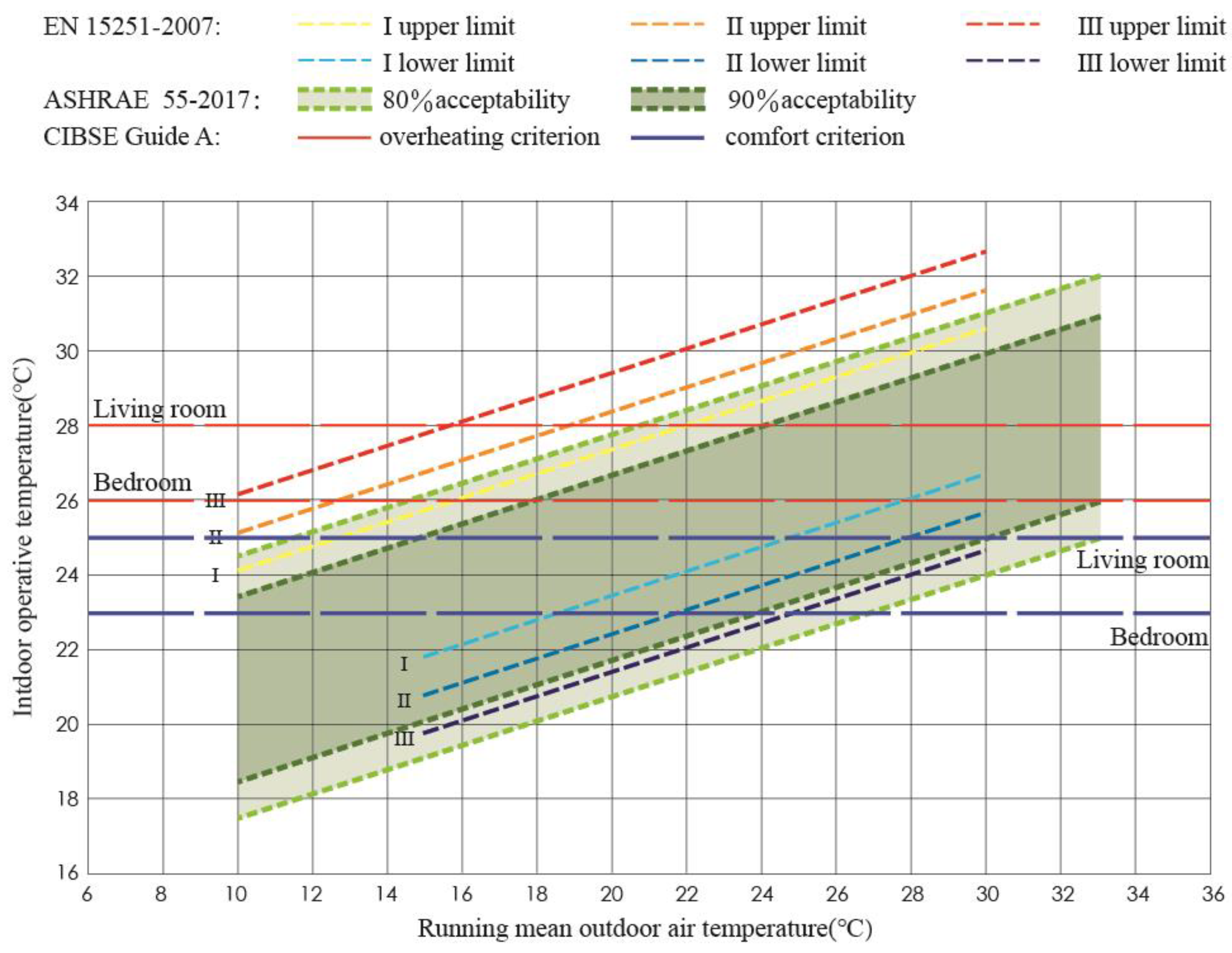
At present, there is no unified global definition of overheating. Different countries and regions have formulated different standards (Figure 1). The International Organization for Standardization (IOS) has issued ISO7730-2005. This standard uses the predicted mean vote (PMV) and predicted percentage dissatisfied (PPD) to quantify thermal comfort for the measurement and assessment of comfort in moderate and extreme thermal environments [35]. The American Society of Heating, Refrigerating and Air-Conditioning Engineers (ASHRAE) produced ASHRAE 55-2017 [36]. The European Committee for Standardization has developed EN 15251 [37]. In the UK, the Chartered Institution of Building Services Engineers (CIBSE) has developed several guides for summer overheating in residential buildings. Environmental design CIBSE Guide A stipulates that the comfortable temperatures in bedrooms and living rooms for non-air-conditioned residential buildings are 23 °C and 25 °C respectively. When the operative temperature of the bedroom and living room in these residential buildings exceeds 26 °C and 28 °C respectively, the room is said to be ‘overheated’ and if this occurs for more than 1% of the annual occupied hours the residence is said to suffer overheating [38]. However, these standards are static overheating criteria, and they do not take into account the residents’ adaptation to warm climates, especially in buildings with natural ventilation [24]. The adaptation of building users is taken into account in the CIBSE TM52-2013 issued in 2013. This specifies the definition of overheating as a room or building that fails any two of the three criteria in Table 1 [39]. According to the CIBSE TM59 specification, residential buildings with natural ventilation must comply with the following:
Figure 1.
Thermal comfort and overheating criteria. (Data source: CIBSE Guide A, ASHRAE 55-2017, EN 15251-2007; drawn by the authors).
Table 1.
Three criteria for overheating from CIBSE TM52-2013.
- (a)
- During the period from May to September, the hours when the operative temperature of the bedroom and living room exceeds or is equal to the comfort temperature threshold 1 K shall not exceed 3% of the occupied hours.
- (b)
- In order to ensure comfort during sleep, the working time when the operative temperature exceeds 26 °C in the bedroom from 10 p.m. to 7 a.m. shall not exceed 1% of the annual working time. 1% of the annual working hours between 22:00 and 07:00 in the bedroom is 32 h, so 33 h or more above 26 °C will be recorded as unqualified [40].
2.2.2. Local Overheating Standards in China
China is divided into five climate regions due to its vast territory. These are the severe cold region, cold region, temperate region, hot summer and cold winter region, and hot summer and warm winter region, according to the Code for Thermal Design of Civil Buildings (GB 50176-2016). The severe cold region and cold region are further divided into five sub-regions: “severe cold region 1A”, “severe cold region 1B”, “severe cold region 1C”, “cold region 2A”, and “cold region 2B” [41]. At present, the code specifies 26 °C as the critical value for thermal comfort in summer, but it does not explain how to prevent summer overheating in the severe cold region and cold region. According to the Design Standard for Energy Efficiency of Residential Buildings in Severe Cold and Cold Zones (JGJ 26-2018), there is no requirement for shading devices in these regions, but clause 4.2.4 suggests that shading devices could be considered in cold region 2B [42]. However, in spite of the increasing severity of global warming, according to limited references, there is no direct reference to the summer overheating phenomenon in the severe cold region and cold region of China, nor any discussion of measures for its alleviation, such as shading devices.
2.3. Horizontal Shading Devices
Solar radiation heat gain is an important component of indoor overheating in summer. Shading devices can be external, internal, or intermediate. Shading devices external to the building envelope can reduce indoor solar radiation heat gains in summer and keep out direct sunlight. Heidari et al. showed that horizontal shading devices can give consideration to daylighting and thermal comfort [43]. Shahdan et al. consider that external shading devices may have a significant effect on building energy conservation [44]. The research of Sghiouri et al. showed that under the Mediterranean climate of Casablanca, the optimized overhangs reduce the cooling demand by 4.1% and improves the thermal comfort [45]. External shading devices can be classified into overhangs, side fins and louvers, etc.
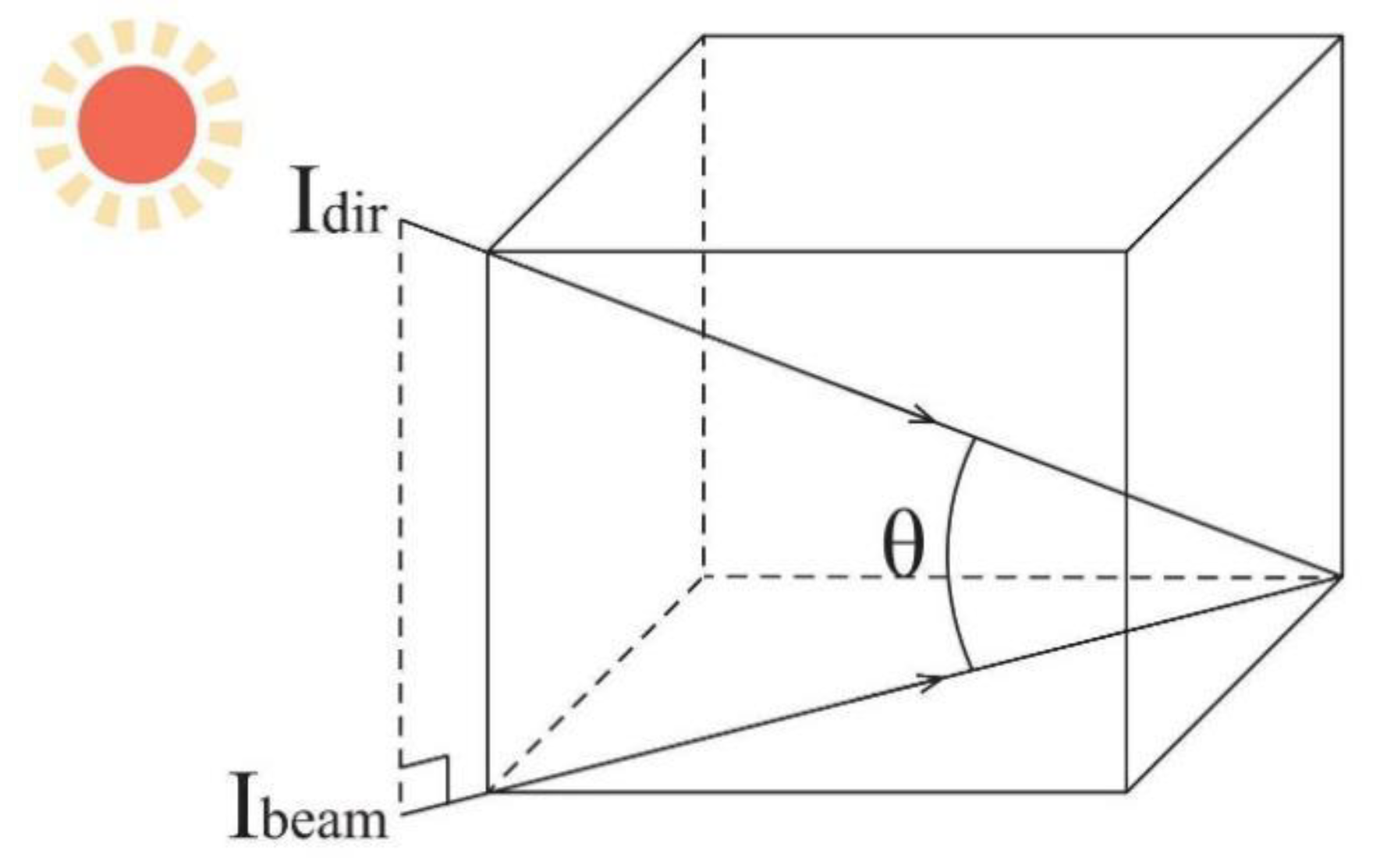
The calculation of the influence of external shading devices on window solar radiation is a very complex process. The height angle and azimuth of the sun and the outdoor meteorological conditions are constantly changing, resulting in a continuous change in the amount of solar radiation with time, and the shadow area of the sun on the window surface is also changing with time. Solar radiation incident on the building surface can be divided into three components, namely direct (beam) radiation from the sky area near the solar disk, diffuse radiation from the sky dome, and radiation scattered by the ground. The calculation formula for solar radiation in the Integrated Environment Solution Virtual Environment (IES-VE) software is the following:
where, Idir is the direct solar flux (W/m2) incident on the surface; Ibeam is the solar flux (W/m2) measured perpendicular to the beam; θ is the angle of incidence (Figure 2).
Idir = Ibeam cos θ,
Figure 2.
Schematic diagram of direct solar flux; drawn by the authors.
Diffuse solar flux includes two sources from the sky and the ground:
where, Isdiff is the diffuse sky solar flux (W/m2) incident on the surface; Ihdiff is the diffuse sky solar flux (W/m2) on the horizontal plane; β is the inclination of the surface; Igdiff is the diffuse ground solar flux (W/m2) incident on the surface; ρg is the solar reflectance (albedo) of the ground. The total solar flux Ihglob (W/m2) on the horizontal plane is given by the following formula where α is the solar altitude [46].
Isdiff = Ihdiff cos2 (β/2),
Igdiff =ρg Ihglob sin2 (β/2),
Ihglob = Ihdiff + Ibeam sin2 α,
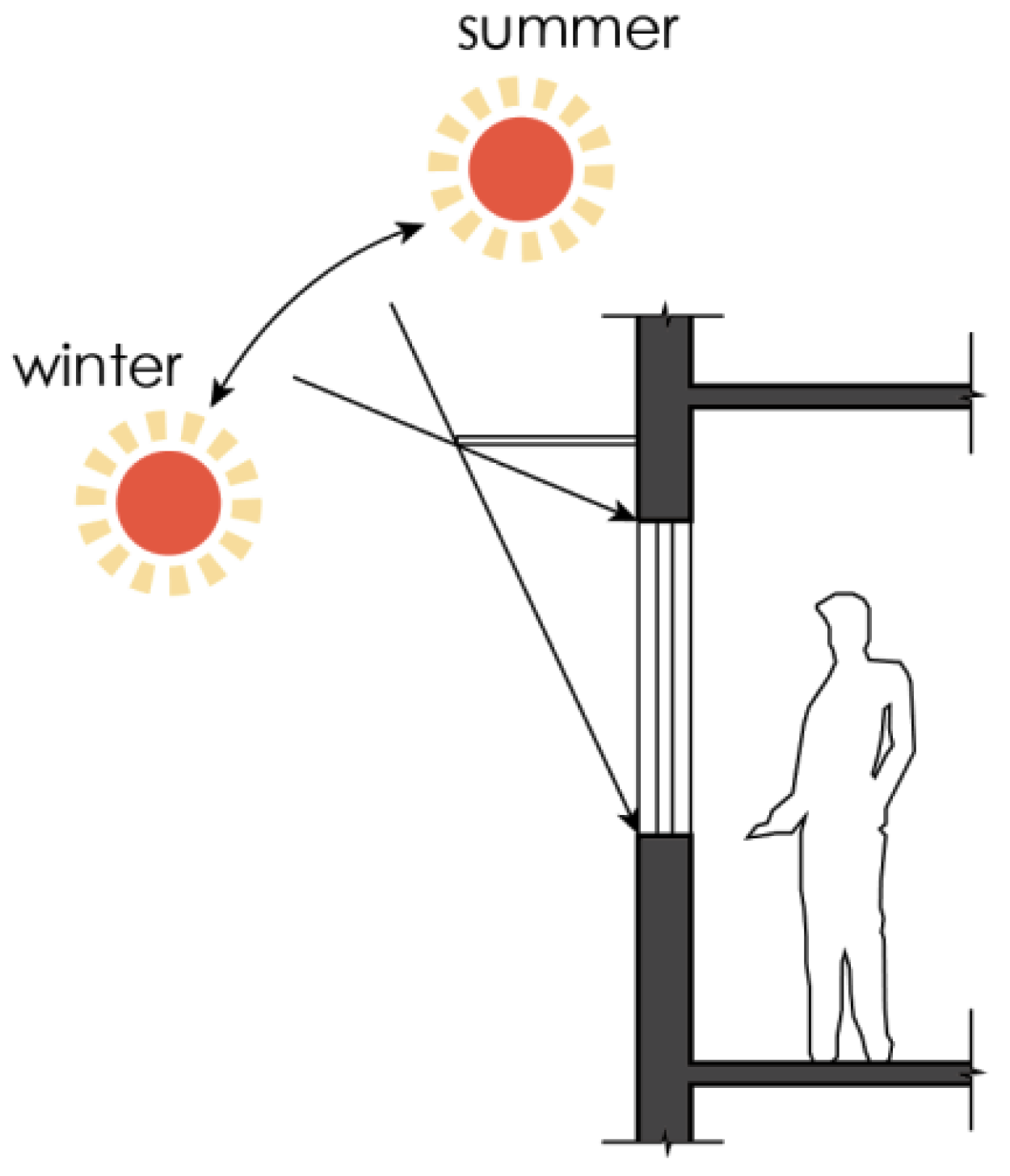
The severe cold region and cold region in China are located north of the Tropic of Cancer, and the south wall is the main irradiation surface for the sun’s rays. A horizontal sun shading device can actually transfer more solar radiation through a window in winter due to the change in the solar height angle as shown in Figure 3. Sghiouri H et al. examined thermal comfort in residential buildings in Casablanca, Marrakesh, and Oujda, Morocco. By optimizing the overhangs, they found that cooling demand in the south facing living room was reduced by 6.8%, 3.6%, and 5.4% respectively [45]. Studies in similar latitudes have shown that external horizontal shading on windows in a south-facing room can effectively alleviate overheating in summer and improve indoor thermal comfort [43].
Figure 3.
Schematic diagram showing change in solar altitude angle on window receiving solar radiation; drawn by the authors.
At the same time, solar radiation is the main component to increase heat in winter, and this is important to improve indoor temperatures and reduce heating energy consumption. Therefore, while improving the shading effect in summer, it is important not to introduce shading in winter. With this in mind, this paper discussed the design of overhang shading devices on south facing windows in residential buildings in the severe cold region and cold region of China.
3. Framework and Case Study Building
3.1. Framework of the Study
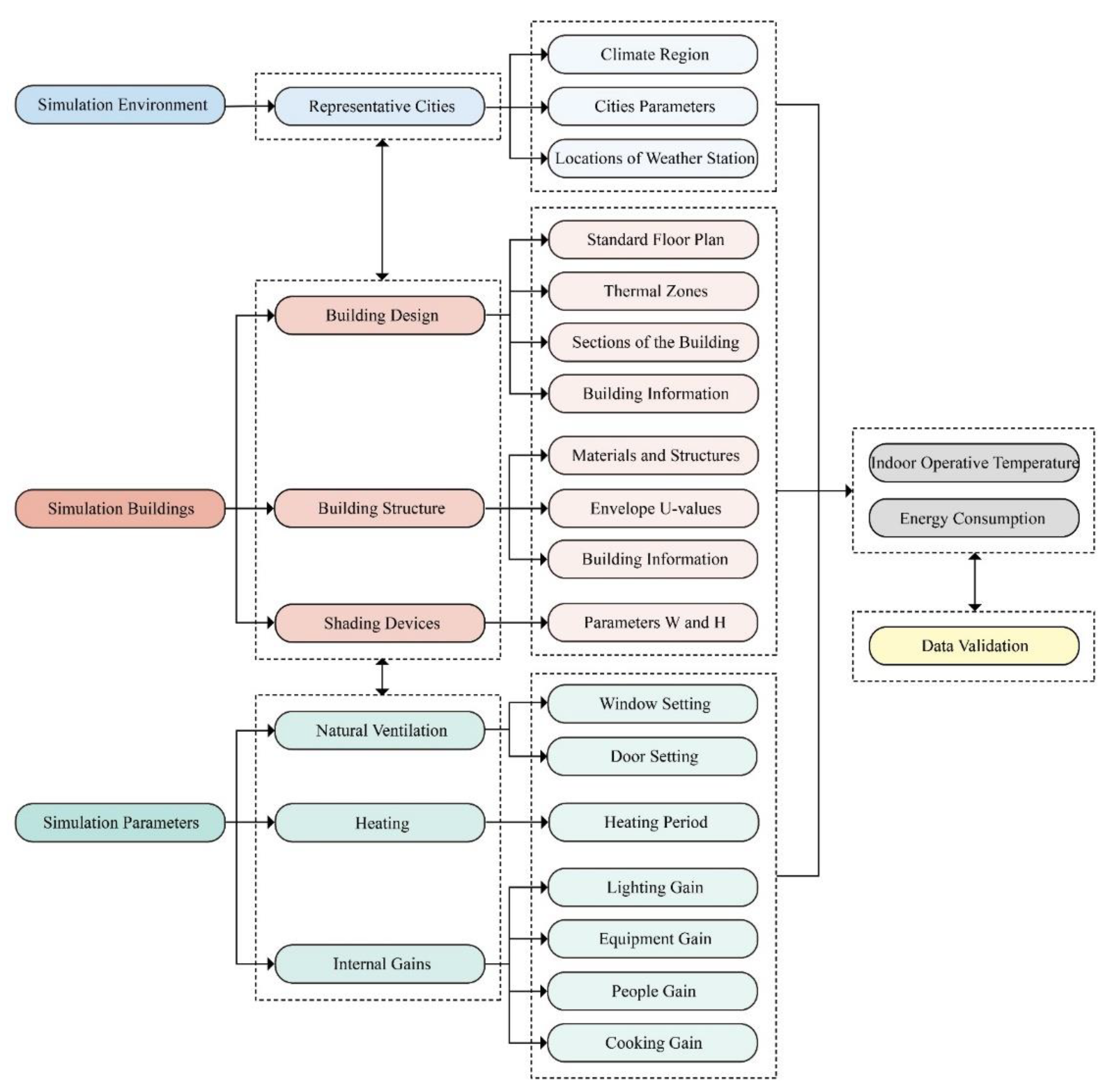
Simulation was used to model the indoor operating temperature for residential buildings with natural ventilation. This study was divided into steps shown in Figure 4. First of all, five cities were selected as representative of the simulation environment fin the severe cold regions (1A, 1B, 1C) and cold regions (2A, 2B) of China. The cold region 2B is indicated as the region where horizontal shading external to the building envelope is recommended in the specification as the control group. The commercial software IES VE was used to simulate an 18-Storey Reinforced Concrete residential building to obtain the indoor operative temperature and the energy consumption under different shading conditions. Since many codes discuss the definition of overheating on the premise of natural ventilation, such as ASHRAE Standard 55–2017 [36] and EN 15251 [37], this study examined building overheating with natural ventilation and no air conditioning. Since the shading device also has a certain impact on daylighting in winter, heating was also considered and the annual energy consumption was calculated. In addition, in order to ensure the accuracy of the simulation data, this paper selected the residential buildings in Shenyang to measure the operative temperature for data validation.
Figure 4.
Flowchart of the building simulation; drawn by the authors.
3.2. Case Study Building
3.2.1. Simulation Environment
Five representative cities, one from each sub region of the severe cold region and cold region, were selected to evaluate the duration of overheating and the effect of horizontal shading in naturally ventilated residential buildings. These cities are Yichun, Harbin, Shenyang, Dalian and Beijing. Horizontal shading is recommended in Beijing in the Design Standard for Energy Efficiency of Residential Buildings in Severe Cold and Cold Zones [42]. The simulation results from these five cities were compared. In each sub-region there are different building standard requirements to ensure compliance with the local climate characteristics. In the case study building, the U-value and R-value of the building elements were defined to meet the design standards to ensure that these buildings are well insulated in the cold climate. The specific locations and thermal design details for the five cities are shown in Table 2.
Table 2.
Five cities representative of the climate sub regions.
3.2.2. Basic Building Design Data
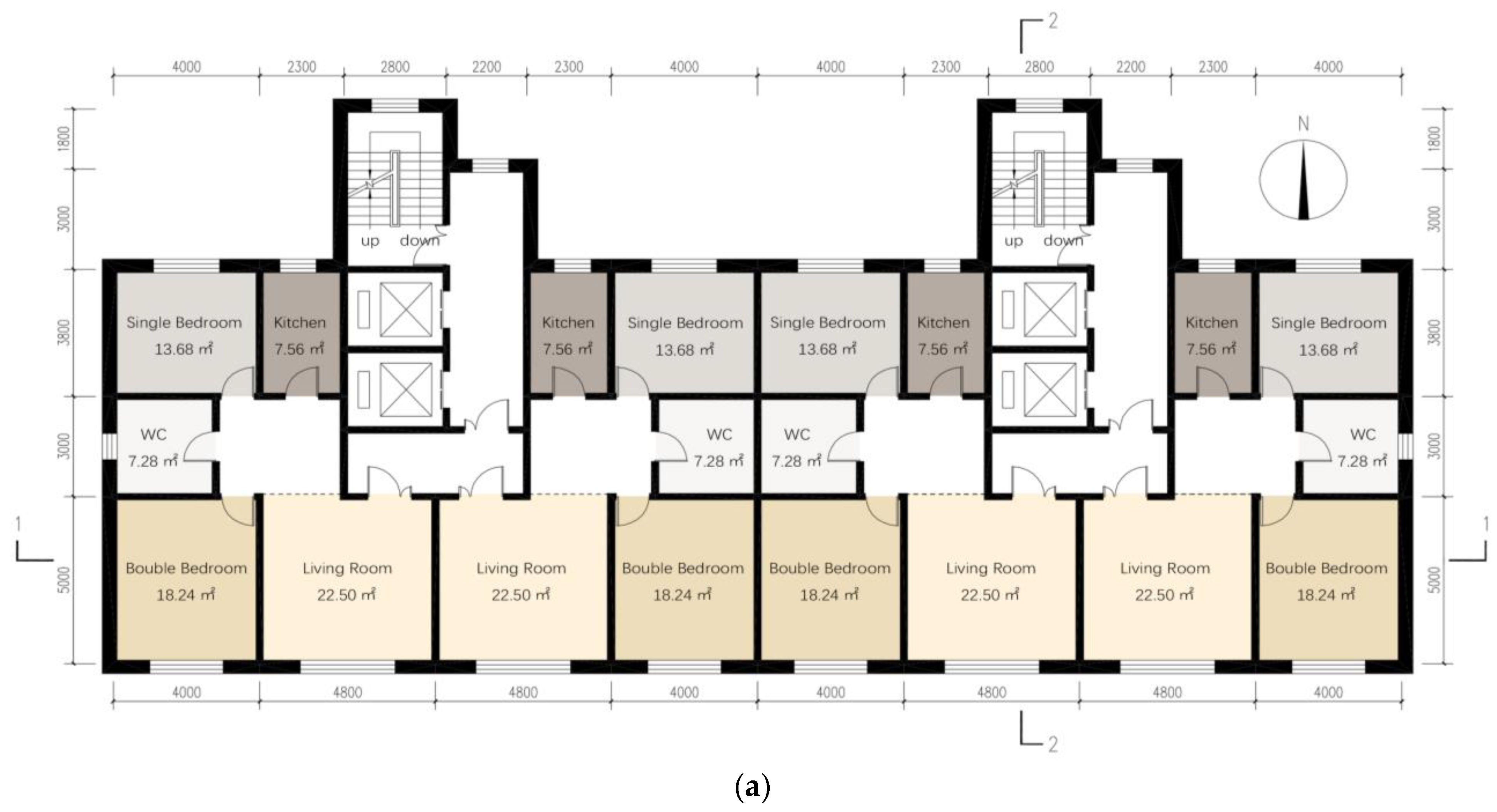
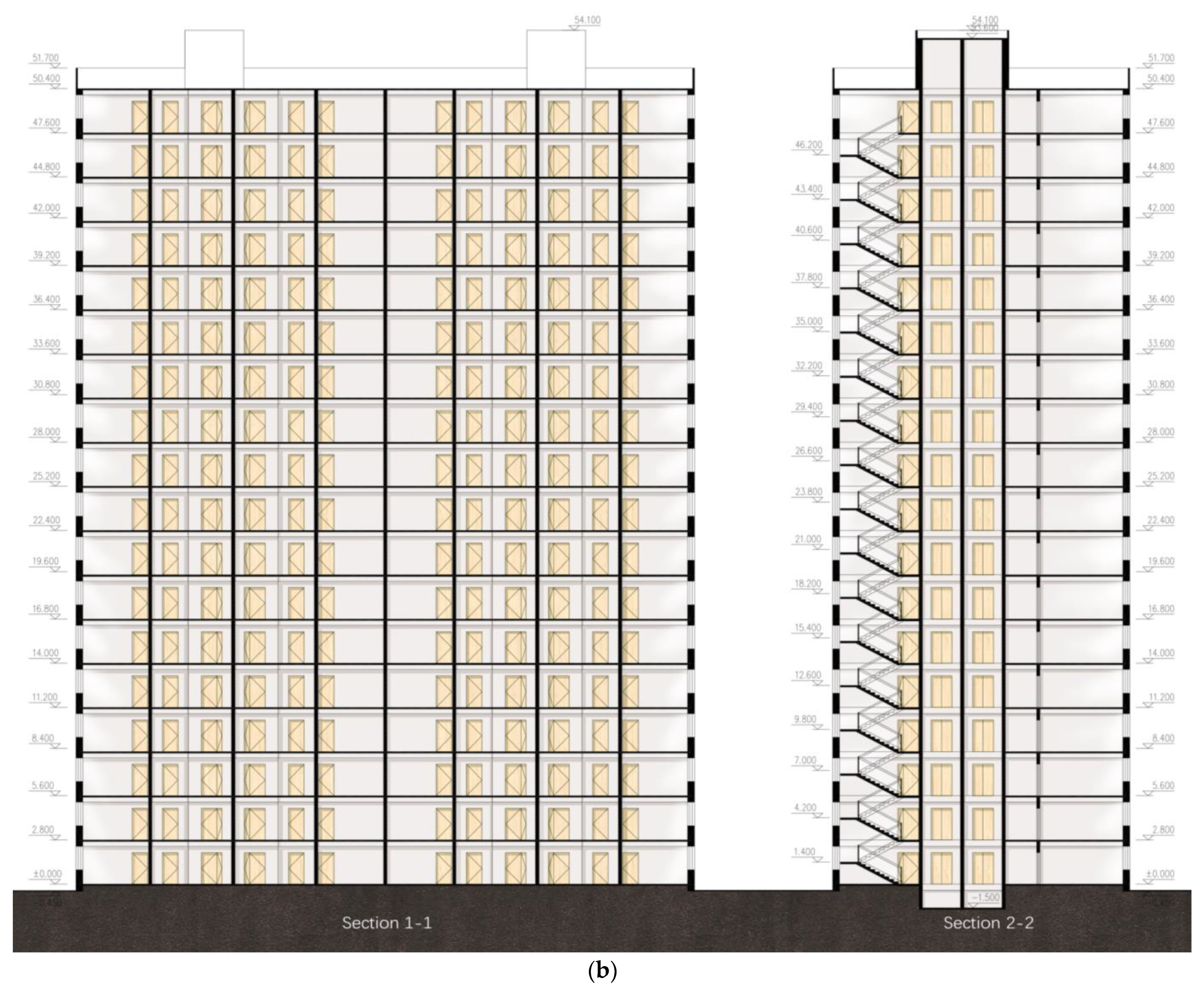
A representative 18-storey Reinforced Concrete residential building was selected as the research case. The case study building is a slab-type apartment house with good ventilation from north to south, with architectural design typical of the severe cold region. There are two units with similar plans on each floor. Each unit consists of two apartments, each with a living room and two bedrooms facing north and south. The living room and the dining room constitute two different thermal zones. This study simulated the operation of the residential building with natural ventilation, and focused on the indoor operative temperature with different dimensions sizes of shading devices. In order to avoid the effects of ground heat transfer, solar radiation from the roof, and convective heat transfer on the external walls, the study considered the south bedroom and living room of the middle unit on the 10th floor. The details of the building case are shown in Figure 5 and Table 3.

Figure 5.
Details of the architectural case; drawn by the authors. (a) Standard floor plan of the residential building. (b) Sections 1-1 and 2-2 of the residential building.
Table 3.
Building information.
3.2.3. The Residential Building Configuration
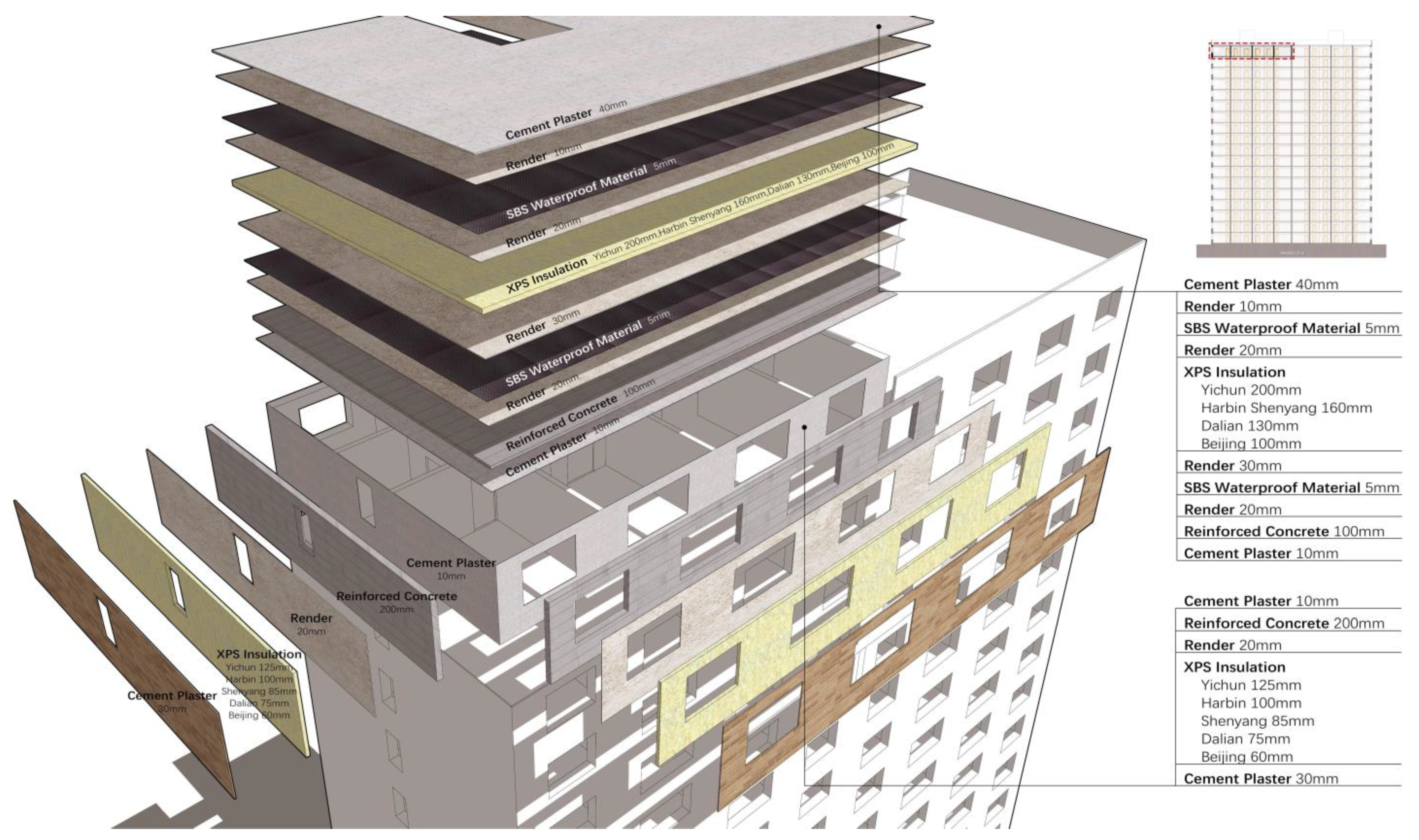
The building materials and configuration conform to the specification requirements and local experience. For cities in the different areas, the specifications of the building envelope are adjusted to meet the requirements of the local standards in the different thermal zones, with different requirements for the U value of the external walls, roof, ground and windows. In areas with long cold winters, a layer of insulation is required to reduce the energy consumed by central heating in winter. The five sub regions have different requirements for the insulation layer thickness. These variations in the building envelop result in different values for the building heat storage capacity, and this affects the overheating time and shading effect. This was taken into consideration when examining overheating and horizontal shading design in the five representative cities. The details of the architectural case are presented in Figure 6 and Table 4.
Figure 6.
External wall and roof design for the RC residential buildings in the five cities. Data source: Code for thermal design of civil buildings (GB 50176-2016); drawn by the authors.
Table 4.
Envelope U-values.
3.2.4. Shading Devices Setting
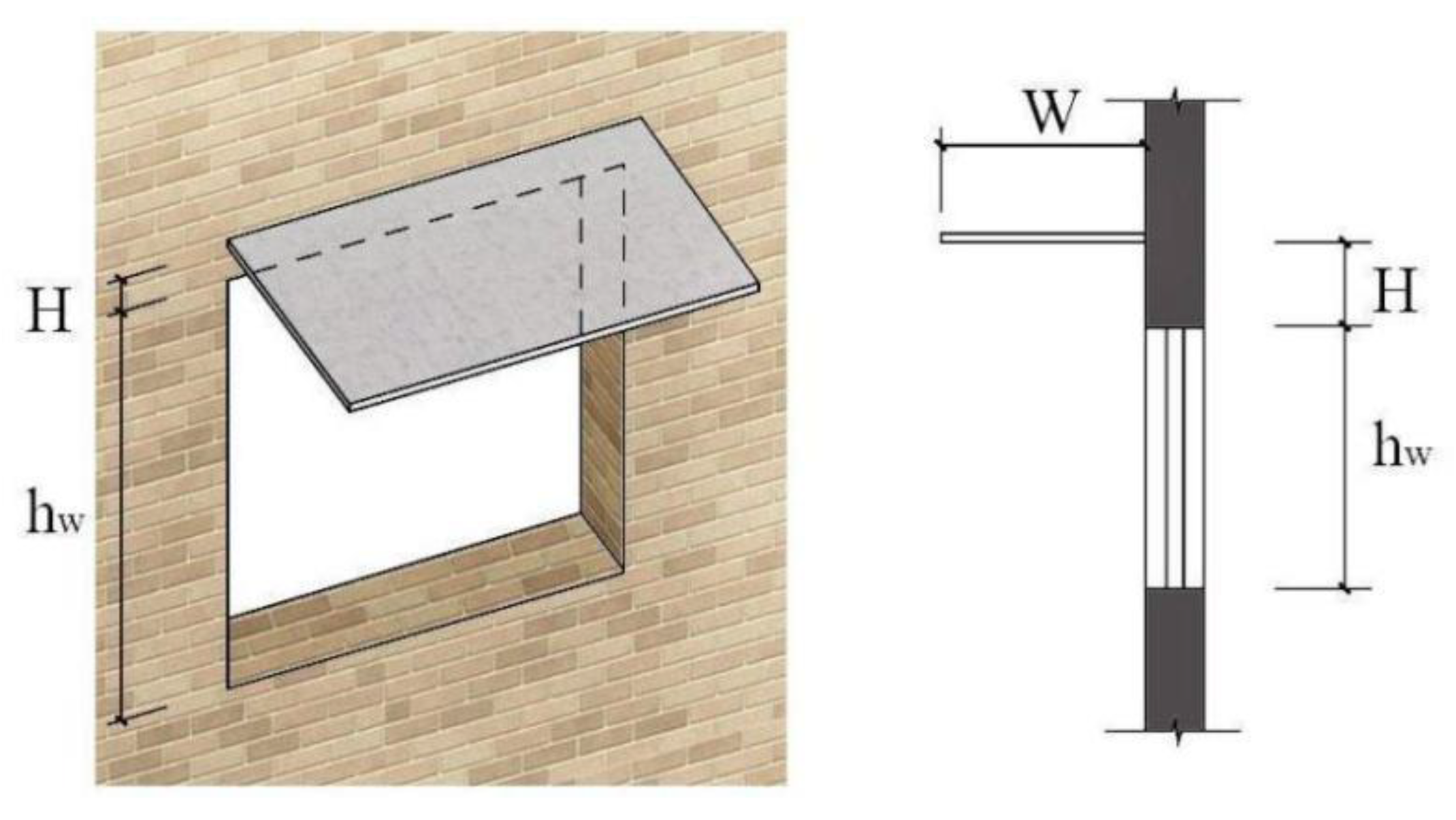
For this simulation, overhang shading was set in the living room and the south bedroom of the case building to determine the overheating duration in the rooms under different shading conditions. The width of shading affects the amount of incoming solar radiation, and thus reduces the length of the overheating period. The height of the shading facilities can allow more incoming solar radiation to the building in winter due to the changes in solar height angle between winter and summer. The effect of these two values on building overheating duration and energy consumption was examined here. In the simulation, W represents the width of the shading device and H represents the distance from the lower edge of the shading devices to the upper edge of the window. In the IESVE software, the “overhang projection” value corresponds to W, and the “overhang offset” value represents H. The detailed description of the shading devices is shown in Figure 7. The value of H ranges from 0 m to 1.2 m on 0.1 m steps, and W ranges from 0 m to 0.7 m with the same size steps.
Figure 7.
Details of the shading devices; drawn by the authors.
4. Methods
4.1. Natural Ventilation
This study examined indoor overheating of naturally ventilated residential buildings without air conditioning. The CIBSE Guide A, CIBSE TM 52, CIBSE TM 59, etc. describe the overheating definition for naturally ventilated houses. Therefore, cooling conditions in summer were not considered. The natural ventilation parameters are presented in Table 5 and Table 6. These include the opening and closing states of doors and windows in the different seasons. The ventilation rates for natural ventilation and mechanical ventilation were set respectively. The ventilation time was set on the basis of the expected behavior ordinary residents, and the operation of ventilation takes place outside working hours. The ventilation volume was adjusted to meet the requirements of the Design Standard for Energy Efficiency of Residential Buildings in Severe Cold and Cold Zones [42]. In the actual situation, the entrance door is normally closed, and the bedroom door is normally open. According to Chinese kitchen usage, the kitchen door is closed for three periods in the day. Detailed settings are shown in Table 6.
Table 5.
Simulation parameters for natural ventilation of windows in Harbin.
Table 6.
Door open and closed times in the simulation.
4.2. Space Heating
In the severe cold region and cold region of China, the outdoor temperatures are low for the greater part of the long winter season, and central heating is widely used. In 2012, central heating covered about 5.18 billion m² in the severe cold region and cold region in China, of which about 70% of the heated area was attributed to residential buildings [47]. This study took into consideration the fact that horizontal shading reduces the solar radiation entering the building in winter, and increases the annual energy consumption of the building. The heating season and hours of operation vary in each city and Table 7 lists the heating duration for the five representative cities.
Table 7.
Heating settings in five cities.
4.3. Internal Gains
In order to accurately simulate the duration of indoor overheating in summer, the influence of internal lighting, people, and equipment was taken into account. Domestic hot water, elevators, and other small equipment were not considered as they have little impact on the internal gains in the room. The times of operation of lights and equipment were set according to the pattern of the occupier and number, and shall be set according to the user’s habits and the number of people inside the building, and the times of occupancy were also defined to match the actual situation as much as was possible. In addition, according to CIBSE TM59-2017, the internal gain from people in bedrooms is reduced by 30% during sleep. Therefore, the internal gains from people in the bedroom differ between activity time and sleep time. The indoor internal gains are shown in Table 8.
Table 8.
Internal gains for the building.
4.4. Data Validation
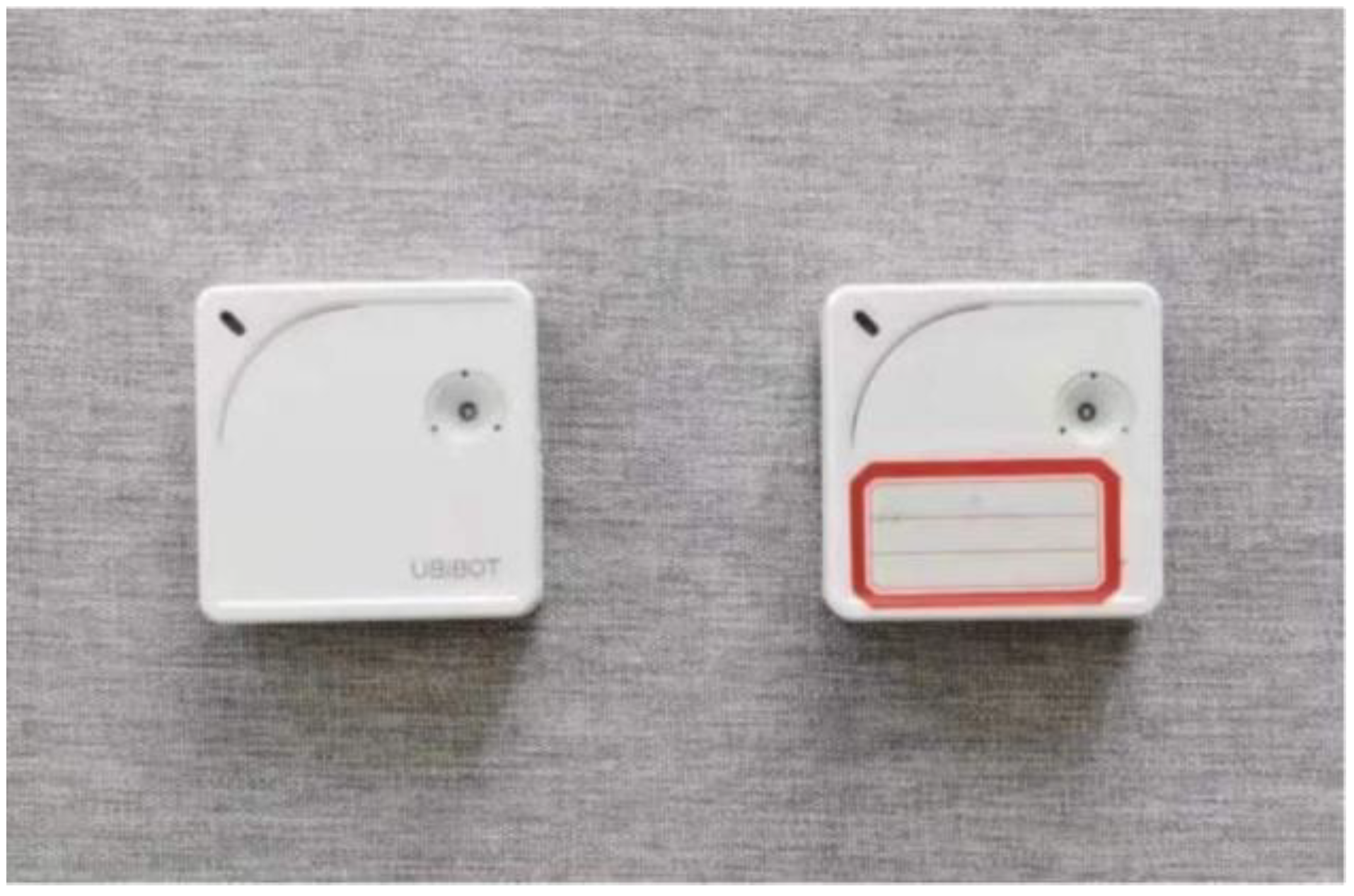
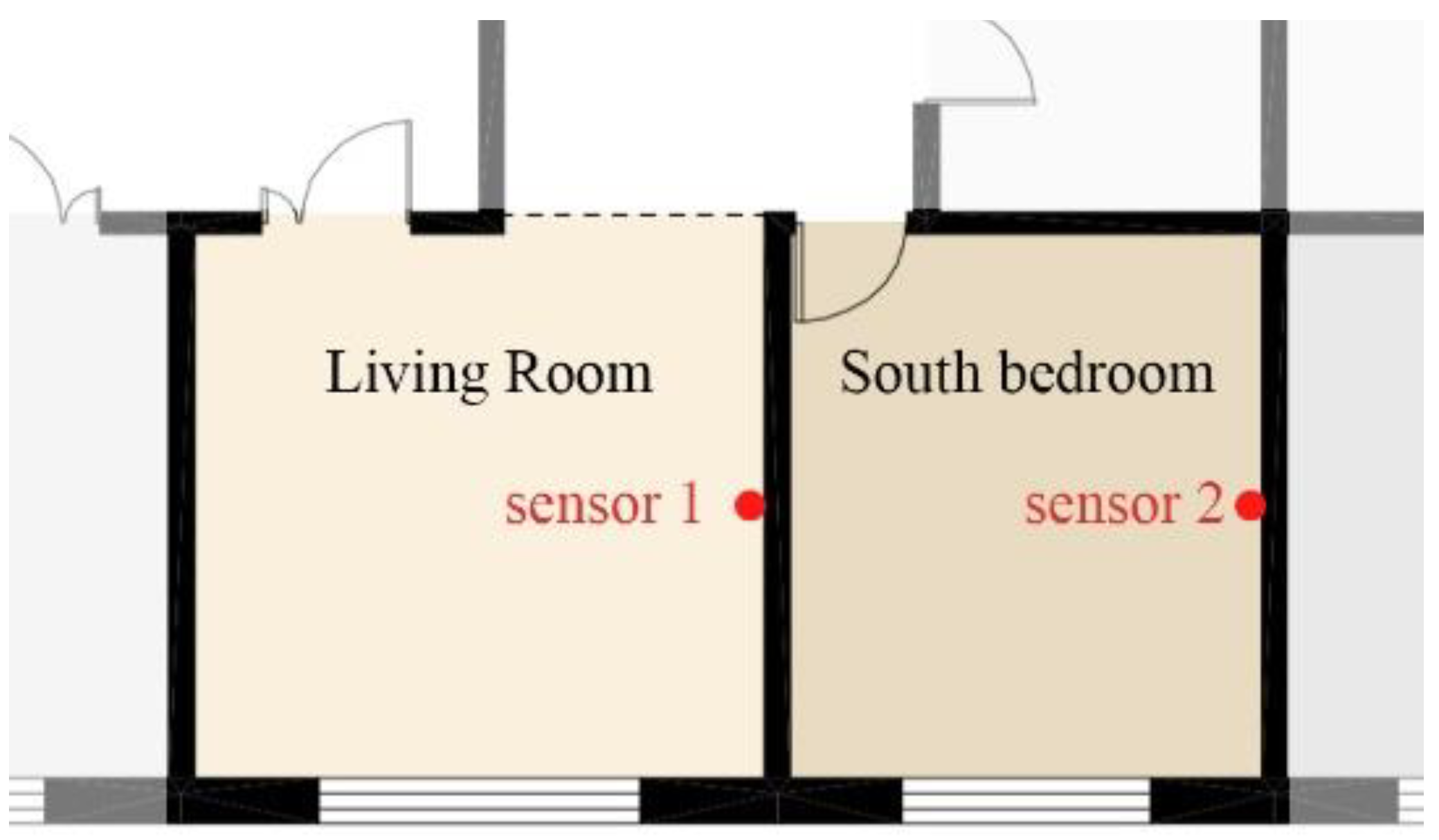
The model in IESVE was validated according to empirical results from a dwelling in Shenyang city in 2021, which was monitored by sensors placed onto the wall of living room and bedroom. With the temperature measurement range from 10 °C to 55 °C and accuracy of ±0.3 °C, the sensors produced by Ubibot can collect and upload the data in real time through a wireless network. The pictures and parameters of the sensor are shown in Figure 8, Figure 9 and Figure 10 and Table 9. Additionally, the location of the sensors in the rooms are shown in Figure 10. The measured data contain the hourly temperature from 1 May to 30 September. Moreover, the local meteorological data recorded during the period above were applied into the simulation for validation.
Figure 8.
Style of sensor.
Figure 9.
Actual picture of sensors.
Figure 10.
Sensor positions; drawn by the authors.
Table 9.
Sensor parameters.
By gathering monitored temperature and simulation results of the living room and bedroom of the dwelling, the study chose temperature data at 6 a.m., 12 a.m., 6 p.m., and 12 p.m. of each day to assess the accuracy level of the simulation. Pearson correlation coefficient RMeas, Sim was applied to make judge whether there was a strong linear correlation between measured results and simulation data. The definition of RMeas, Sim is given by equation followed. As one of the most notable indicators of quality of regression, Pearson correlation coefficient revealed the fitting degree towards y = x. When the value was closer to 1, simulation accuracy reached a higher level.
5. Results
5.1. The Duration of Overheating
IESVE was used to simulate the indoor operative temperature in residential buildings in five cities. Table 10 shows the overheating assessment of the case building using CIBSE TM59. Under natural ventilation conditions, the operative temperature of the bedroom and living room from May to September shall not exceed 3% of the occupied time from 24 °C and 26 °C respectively. From 10:00 p.m. to 7:00 a.m., the time when the operative temperature of the bedroom exceeds 26 °C every year shall not exceed 1% of the occupied time. The specification recommends that occupancy of the bedroom is 3672 h per year (including 24 h from May to September) and that of the living room is 1989 h per year (including 13 h from May to September).
Table 10.
South bedroom and living room overheating assessment based on CIBSE TM59.
In addition, according to the requirements of CIBSE Guide A, if the duration of the bedroom exceeding 26 °C and the living room exceeding 28 °C exceeds 1% of the annual occupancy hours respectively, it is determined as overheating (Table 11).
Table 11.
South bedroom and living room overheating assessment based on CIBSE Guide A.
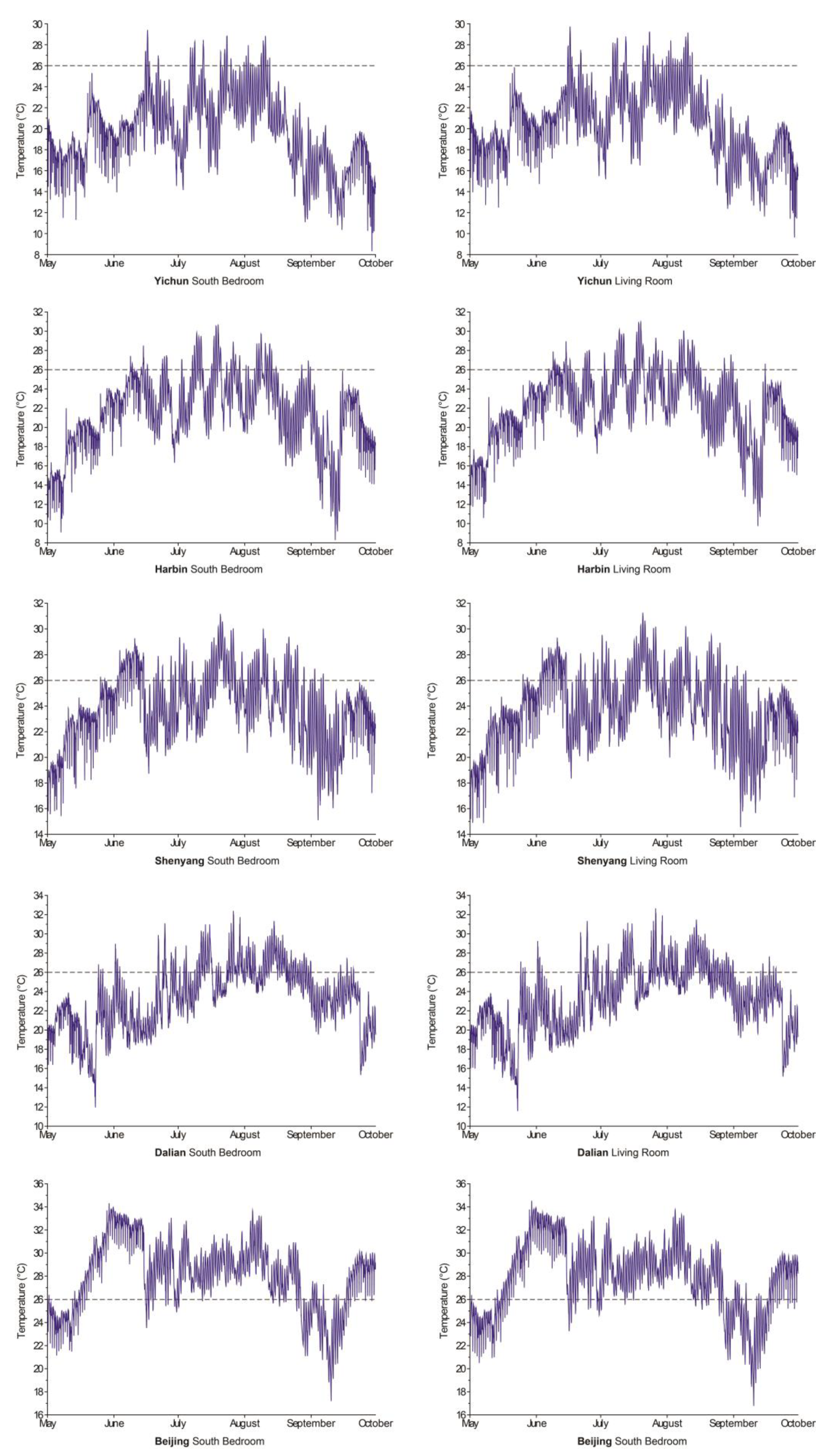
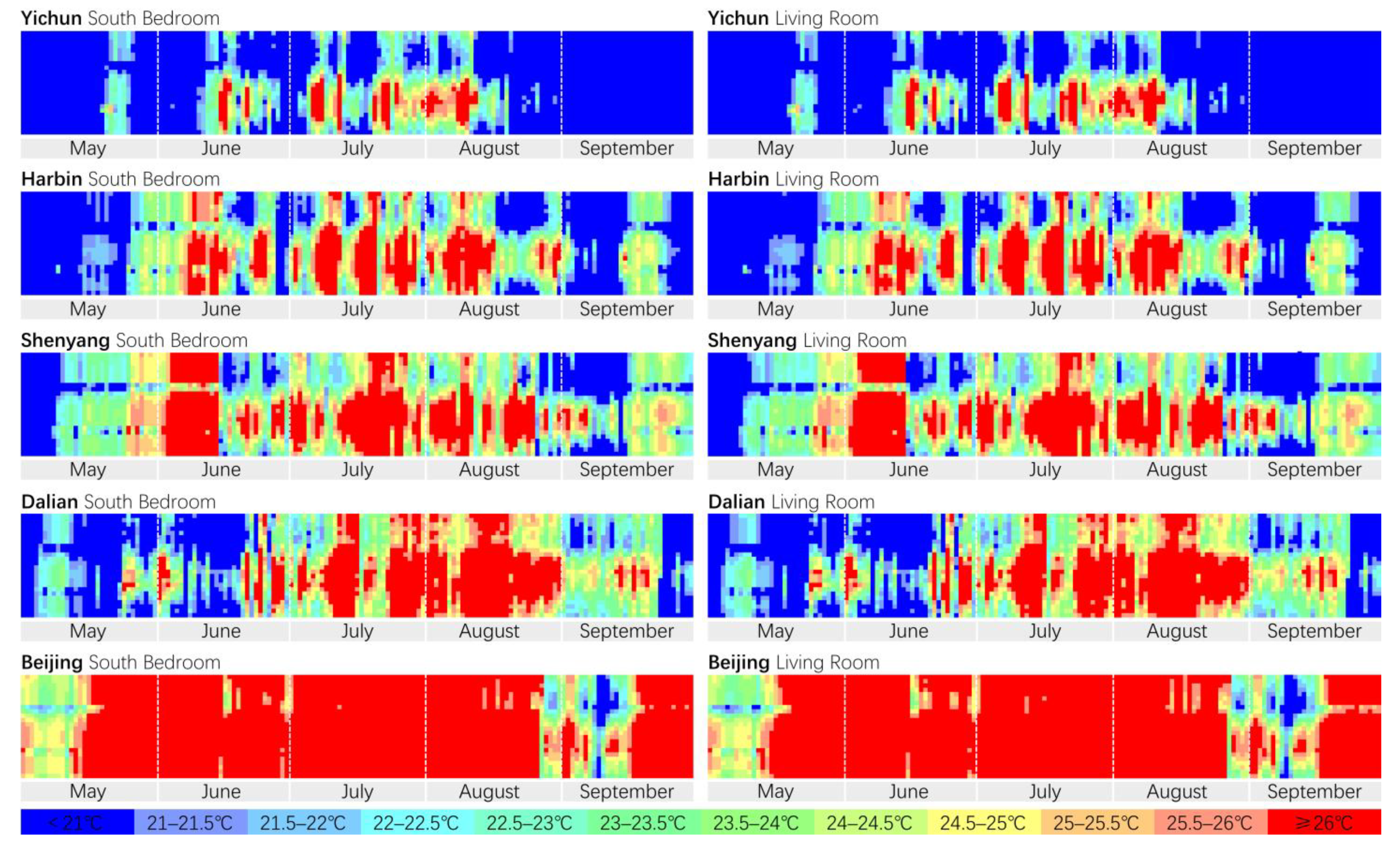
The results in Table 10 and Table 11 show that the bedrooms and living rooms of 18-storey residential buildings in the five representative cities have different degrees of overheating. In high latitudes, such as in Yichun, the overheating phenomenon is not obvious. The south bedroom and living room exceed 26 °C for 145 h and 159 h respectively. The degree of overheating in Beijing was the most pronounced, with the south bedroom and living room exceeding 26 °C for 3120 h and 2998 h respectively. Table 12 shows the monthly average temperature values of five cities from May to September. Additionally, the temperature change curve with natural ventilation from May to September is shown in Figure 11. The duration of overheating in each city is closely related to the local climate. With a decrease of latitude, the degree of overheating tends to increase. The rooms in the simulation did not meet the thermal comfort standards specified in CIBSE TM59 and CIBSE Guide A.
Table 12.
Average monthly indoor operative temperature from May to September.
Figure 11.
Indoor operative temperature in five representative cities from May to September.
5.2. Effect of Horizontal Shading Device on Reducing Time
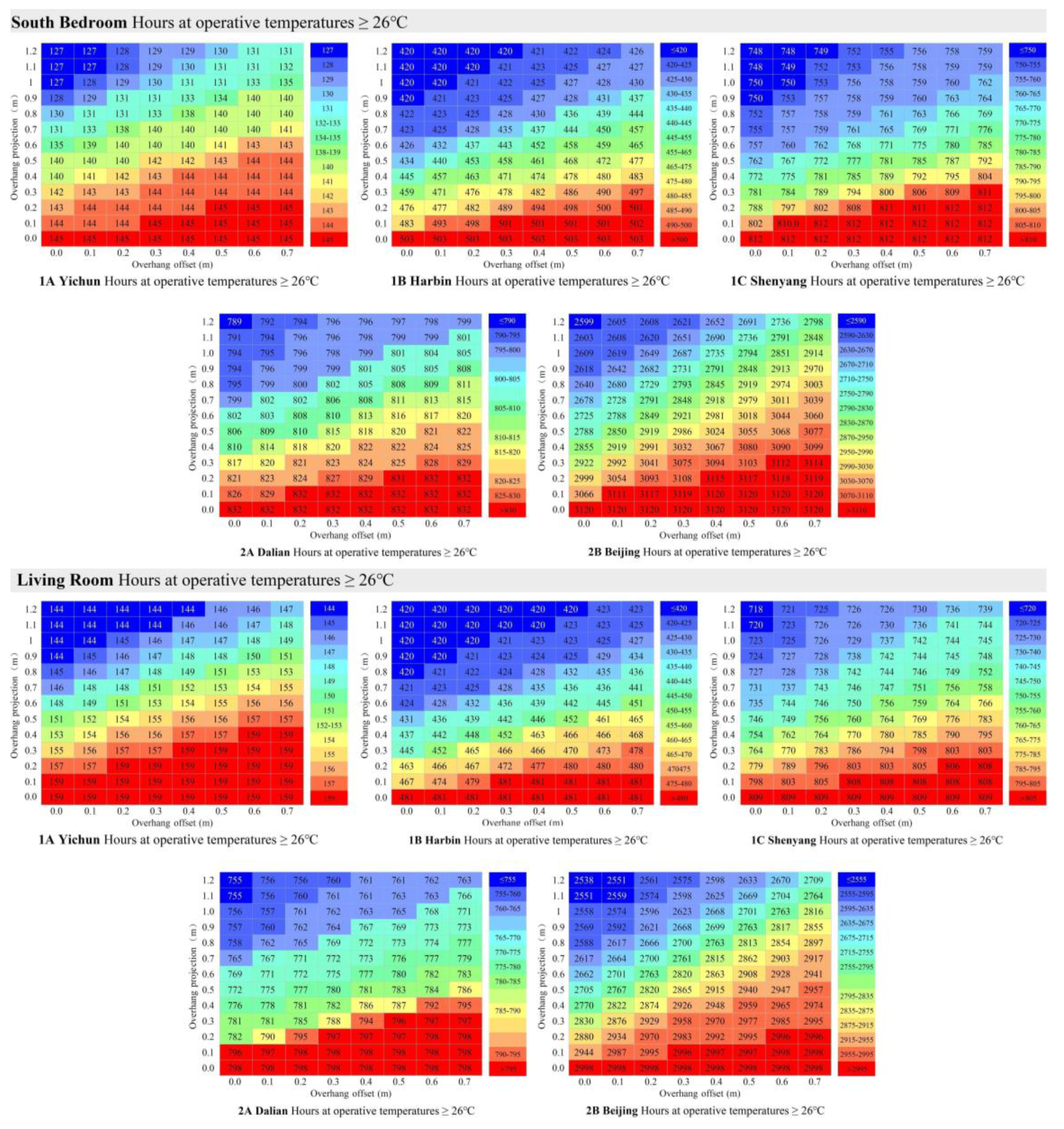
This paper calculated the overheating duration for different shading designs in 18-storey residential buildings in the severe cold region and cold region of China. According to Chinese specifications, the overheating limit is 26 °C. The results for this calculation are shown in Figure 12. They show that different shading designs alleviated the overheating in the building to varying degrees. In the simulation results, when W was 1.2 m and H was 0 m, the change in duration of overheating of the south bedroom on the 10th floor was 18 h, 83 h, 64 h, 43 h, and 521 h in Yichun, Harbin, Shenyang, Dalian, and Beijing respectively, a reduction of 12.41%, 16.50%, 7.88%, 5.17%, and 16.70% overheating respectively. Overheating in the living rooms in the five cities was alleviated for 15 h, 61 h, 91 h, 43 h, and 460 h respectively, a reduction in duration of by 9.43%, 12.68%, 11.25%, 5.39%, and 15.34% respectively. An increase in the H value increased the overheating duration. For example, when W was 0.7 m, H was 0 m or 0.5 m respectively, and overheating in the South bedrooms in Yichun, Harbin, Shenyang, Dalian, and Beijing increased by 9 h, 21 h, 14 h, 12 h, and 301 h respectively for the higher H value. This is a percentage increase of 6.87%, 4.96%, 1.85%, 1.50%, and 11.24%, respectively. Table 13 shows the solar gain of three horizontal shading designs in the five representative cities from May to September.
Figure 12.
The number of hours where the operative temperature exceeds 26 °C.
Table 13.
Solar gain values of five representative cities from May to September.
5.3. Influence of Horizontal Shading on Energy Consumption
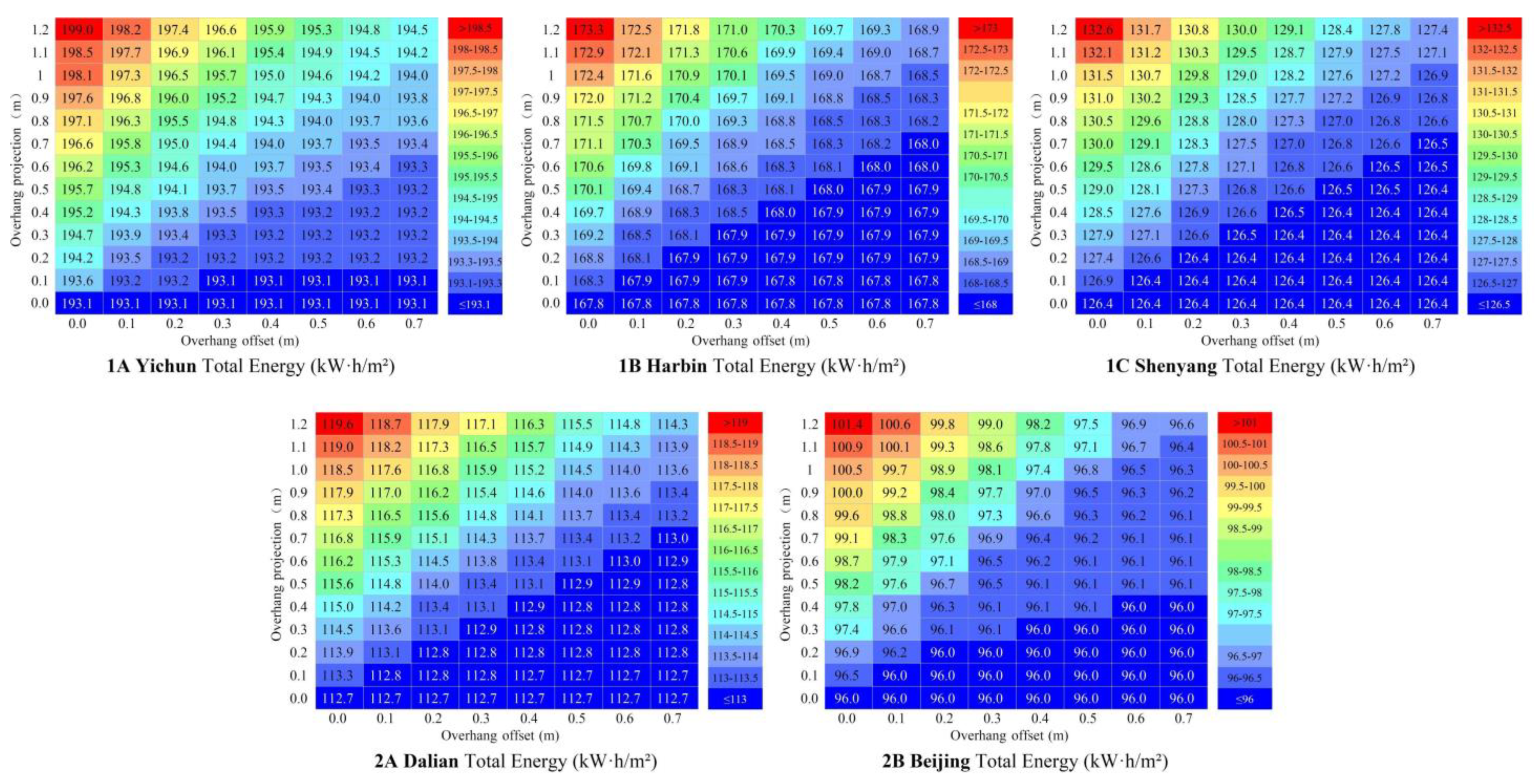
Although horizontal shading facilities can reduce overheating in summer, they also impede solar radiation from entering the room in winter, thus affecting the indoor temperature and increasing energy consumption by central heating. A simulation of the annual energy consumption for the 18-storey case study buildings was carried out and the results are shown in Figure 13. Additionally, the energy consumption composition of three horizontal shading designs in five representative cities is tabulated in Table 14. Without shading, the annual energy consumption in Yichun, Harbin, Shenyang, Dalian, and Beijing with natural ventilation was 193.1 kW·h/m², 167.8 kW·h/m², 126.4 kW·h/m², 112.7 kW·h/m², and 96.0 kW·h/m², respectively. When W was 1.2 m and H was 0 m, the annual building energy consumption was the maximum achieved in this simulation, with values of 199.0 kW·h/m², 173.3 kW·h/m², 132.6 kW·h/m², 119.6 kW·h/m², and 101.4 kW·h/m². The energy consumption in the five cities increased by 3.06%, 3.28%, 4.91%, 6.12%, and 5.63% respectively. With an increase in the H value, the annual energy consumption of buildings would also decrease. For example, when W was 0.7 m and H was increased to 0.5 m from 0 m, the annual energy consumption of the five cities was reduced by 2.9 kW·h/m², 2.8 kW·h/m², 3.2 kW·h/m², 3.4 kW·h/m², and 2.9 kW·h/m², accounting for 1.48%, 1.64%, 2.46%, 2.91%, and 2.93% reduction respectively.
Figure 13.
Total annual energy consumption of the case building.
Table 14.
Building energy consumption composition in five cities.
5.4. Validation Results
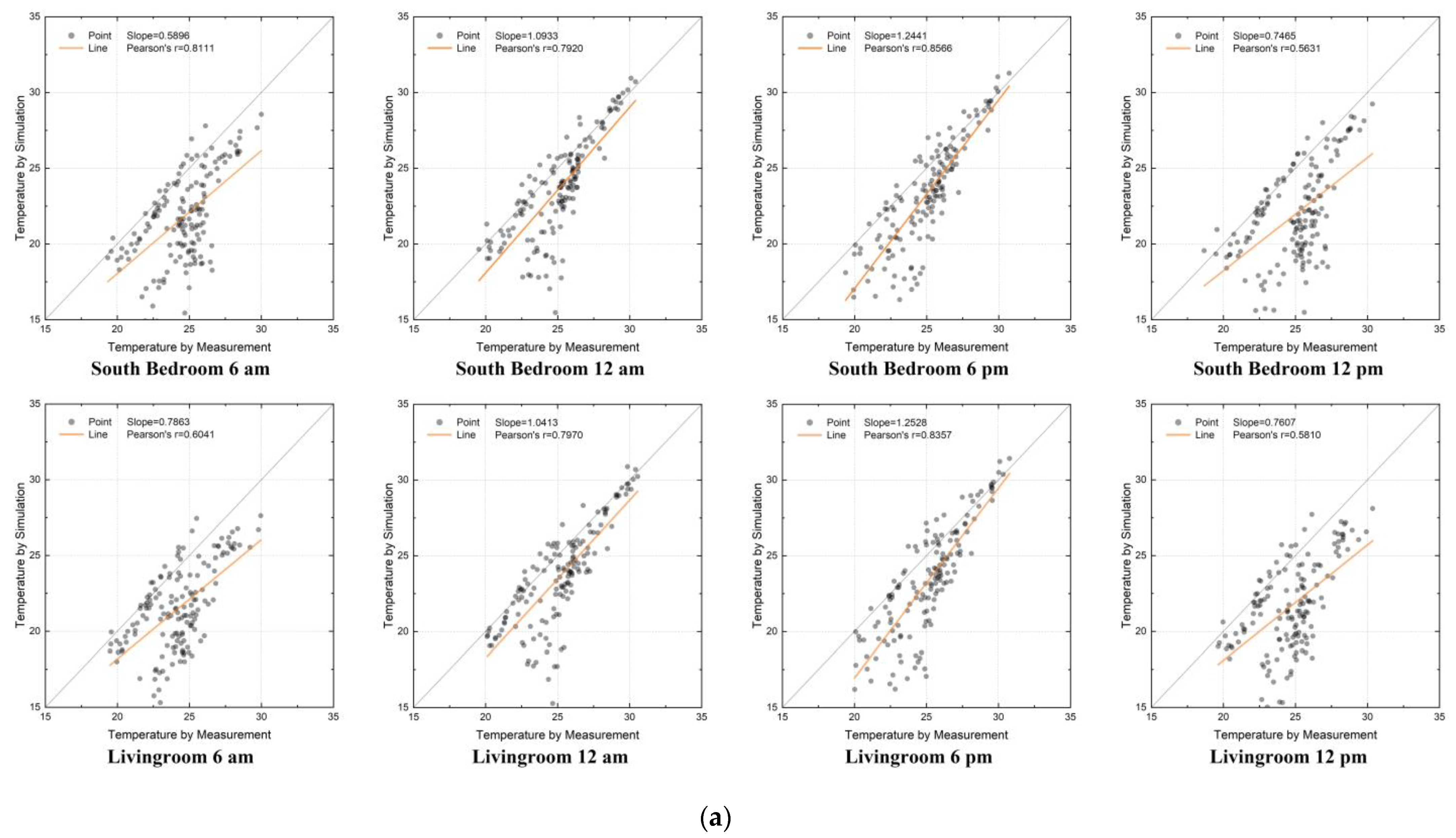
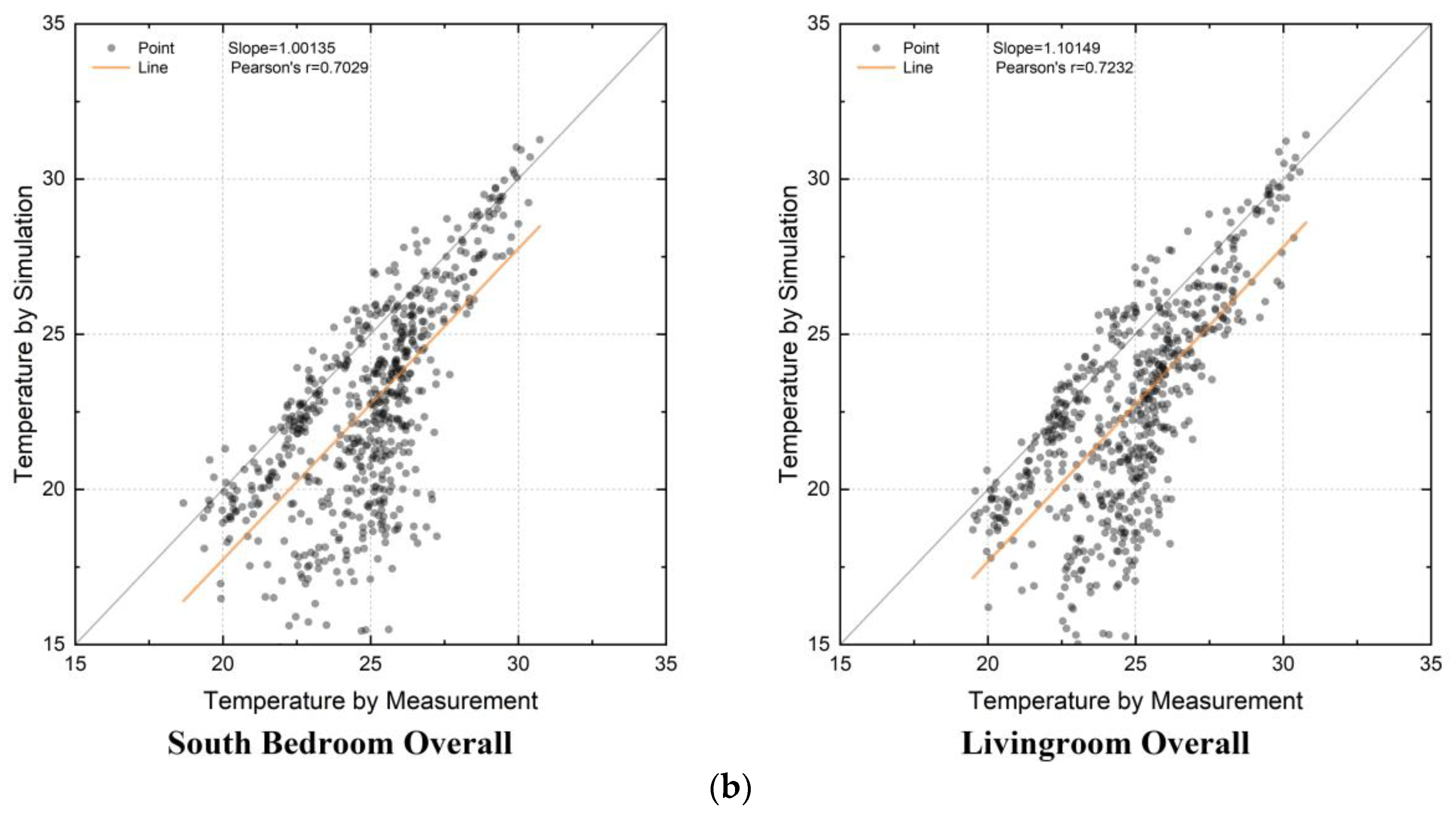
The graph illustrates the comparison between the regression line and line y = x, an ideal state when simulation results equal operative temperature in reality. Figure 14a reveals the correlation between monitored temperature and simulation results of 6 a.m., 12 a.m., 6 p.m., and 12 p.m. in the living room and bedroom, while Figure 14b shows the overall regression relation when gathering and analyzing all the above data together.

Figure 14.
Correlation between simulated results and measured results of the south bedroom and living room in Shenyang; drawn by the authors. (a) Correlation between 6 a.m., 12 a.m., 6 p.m., and 12 p.m. (b) Overall correlation.
With the value of 0.7232 and 0.7029 of the correlation factors of the living room and bedroom overall data respectively, the high RMeas, Sim indicates a strong correlation and great quality of the simulation. The regression equation between simulation results and measured data is given by the equation:
Sim living room= 1.01049 Meas living room − 2.63247
Sim bedroom= 1.00135 Meas bedroom − 2.28768
The results show the simulated data are highly consistent with the real data. The simulation was reliable for predicting the overheating phenomenon in terms of the indoor temperature in the residential buildings with the shading as independent variable in the study.
6. Discussion and Analysis
6.1. Overheating in the Severe Cold Region and Cold Region in China
Table 15 and Figure 15 show that south-facing bedrooms in Yichun, Harbin, Shenyang, Dalian, and Beijing are overheated to varying degrees. The overheating periods in Yichun, Harbin, Shenyang, Dalian, and Beijing occur from 16 June to 12 August, 8 June to 31 August, 25 May to 7 September, 24 May to 20 September, and 29 April to 22 October respectively. As the latitude decreases, the duration of the overheating period increases and the annual maximum temperature also shows an upward trend. Yichun has seen three overheating peaks from mid-June, with the third overheating period being the longest, in late July and early August. As the latitude decreases, the peaks connect, and the duration gradually becomes longer. The number of days of overheating in Beijing increase to 92% from May to September, and the overheating becomes continuous.
Table 15.
The hours of each interval of indoor operative temperature in the south bedroom and living room on the 10th floor in five cities from May to September.
Figure 15.
Indoor operative temperature (°C) in south bedroom and living room on 10F of five cities.
According to the definitions in CIBSE TM59 and CIBSE Guide A, overheating occurs in all five cities. The maximum temperature in Yichun is low and the overheating duration is relatively short. It is possible that residents are not sensitive to overheating in summer in Yichun. Periods with temperatures above 26 °C in the south bedroom and living room of Harbin are three times longer than that in Yichun. The overheating period in Shenyang and Dalian is over five times longer than that in Yichun. Indoor overheating in Beijing is the most serious. In summary, the five representative cities need to take some measures to intervene. In addition to climatic factors, the causes of overheating in these areas include the architectural form, building envelope materials, ventilation methods, window opening forms, and so on. In the severe cold region and cold region of China, the existing building design codes are mainly focused on reducing the energy consumption of central heating in winter. However, the phenomenon of summer overheating experienced in recent years can be alleviated by passive or active methods such as more reasonable architectural design conducive to summer ventilation, the use of cold and hot two-way energy-saving building envelope materials, reasonable shading devices, or the use of air conditioning.
6.2. Suggestions for the Modification of the Architectural Design Code
According to the Design Standard for Energy Efficiency of Residential Buildings in Severe Cold and Cold Zones [42] issued by the Ministry of Housing and Urban-Rural Development of the People’s Republic of China (MOHURD), it is recommended to use shading devices in cold region B in summer (article 4.2.4). There is no clear design standard for the severe cold regions and cold region A to avoid overheating in summer. However, the simulation results showed that overheating occurs in the five regions. The reasonable application of suspension shading could alleviate overheating to a certain extent. Horizontal shading devices can reduce the incident solar radiation, which not only reduces the heat gain in the building and slows down the rise of indoor air temperature, but also reduces the direct solar radiation. In the different geographical locations, the reasonable range for W is also different. In Yichun and Harbin, when the W value was greater than 0.7 m, the shading effect did not increase significantly. For Shenyang, the reduction in overheating time was not significant when W exceeded about 0.8 m. The maximum recommended value of W in Beijing and Dalian was 1.0 m. The variation of the shading effect in different cities may be related to the solar altitude angle. The recommended W maximum values are given in Table 16.
Table 16.
Urban latitude and recommended maximum W value.
In the simulation, the effect of using horizontal shading to alleviate summer overheating was different in the five cities. In addition to Beijing, Harbin obtained the best results from the use of horizontal shading to reduce the duration of overheating. When W was 1.2 m, overheating in the south bedroom was reduced by 83 h in a year, accounting for 16.50% of the total duration of the overheating period. The total overheating time in Shenyang was longer than in Harbin, but the reduction in time experienced using the same dimensions of horizontal shading was less than that in Harbin. It may be that the change in insulation layer thickness in the building envelope of Shenyang intensifies the overheating phenomenon in summer. Therefore, even if horizontal shading is used to reduce solar radiation, the reduction of overheating in the south bedroom and living room of Shenyang was not obvious in the simulation. In addition, although the overheating time for the Yichun south bedroom was reduced by 12.41%, this is only 18 h because the total overheating time was lower.
It can be seen that in the severe cold region and cold region in China, although the building codes recommend horizontal shading devices in Beijing, they are also useful in Harbin, Shenyang, and Dalian to alleviate summer overheating, especially in Harbin. Since the overall overheating phenomenon in Yichun in summer is not serious and the duration is relatively short, although shading can reduce the overheating time, the decision to install shading devices can be taken according to the specific demand.
6.3. Influence of Shading Devices on Energy Consumption
In the severe cold region and cold region of China, winter lasts longer and summer is shorter. Although the residential buildings in the five simulated cities experience overheating in summer, the installation of excessively large shading devices on the building envelope will reduce solar radiation entering the room in winter and increase the heating energy consumption. Appropriately increasing the distance between the horizontal shading devices and the upper part of the window, the change in the solar height angle in summer and winter can be used to minimize this increase in energy consumption and achieve Pareto optimization. For example, when W is 0.7 m and H is 0 m and 0.5 m, the summer overheating duration in the Harbin south bedroom was reduced by 15.90% and 11.73% respectively, and the total energy consumption was increased by 1.97% and 0.30% respectively. It can be seen that a reasonable H value can not only ensure the shading effect, but also effectively increase the solar radiation of the south room in winter and reduce energy consumption. Different value ranges are presented according to the geographical location and climate characteristics of the city. Overlarge shading devices may increase cost and affect the architectural aesthetics. According to the recommended values in Table 17, architects could select reasonable horizontal shading design parameters in combination with building facade design to improve indoor comfort and save energy consumption. Additionally, the recommended value of horizontal shading data from the simulation is available to policy makers to modify local building codes to alleviate overheating in the cold region and severe cold region of China.
Table 17.
Recommended horizontal sunshade dimensions.
In order to compare the effect of using horizontal shading with air conditioning to reduce the length of the overheating period in summer and the increase of energy consumption, the indoor temperatures in the 18-storey residential building with air conditioning were simulated. The results showed that the south bedroom and living room on the 10th floor of Harbin exceeded 26 °C for 426 h and 416 h, while buildings with natural ventilation were reduced by 77 h and 65 h respectively, equivalent to a reduction of 15.31% and 13.51%. However, the annual energy consumption increased by 0.64%. When the horizontal sunshade was set to W 0.7 m and H 0.5 m, the overheating period in the south bedroom and living room was reduced by 11.73% and 9.36% respectively, and the total energy consumption increased by 0.30%. The results showed that both horizontal shading and air conditioning are effective in alleviating indoor overheating in summer, and reasonable horizontal shading is more energy-saving than using air conditioning.
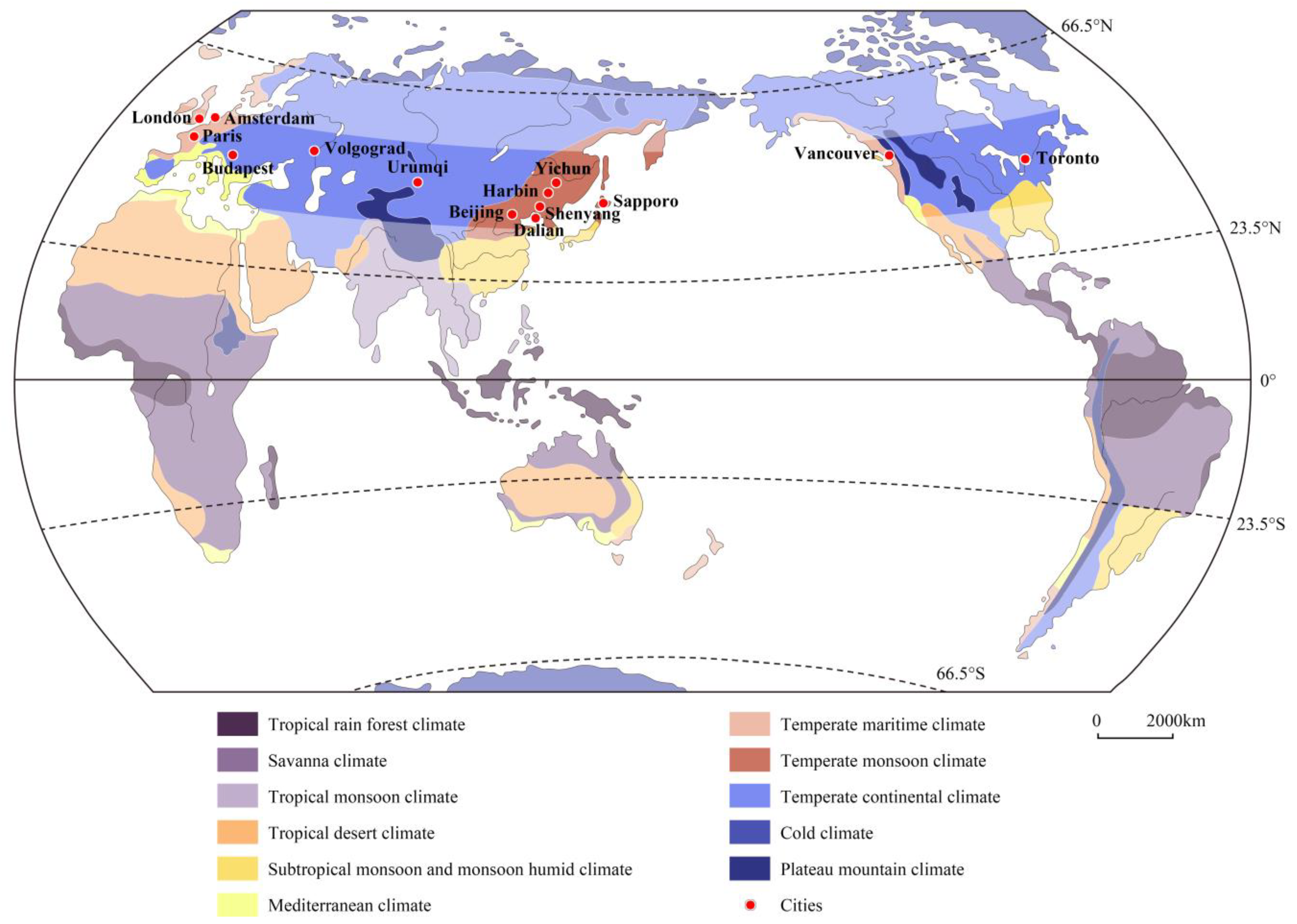
6.4. Application in the World
The research scope of this paper focused on the severe cold region and cold region in northern China, which are located in a temperate continental climate. In similar latitudes of the study area, there are a large number of cities with human aggregation. There are many related studies on summer overheating in these areas. However, there is limited research on temperate continental monsoon climates at present. This paper shows more details about the research on summer overheating in this region. In the same latitudes of the world, horizontal shading devices may also be used to improve indoor thermal comfort and reduce energy consumption in summer. However, there are significant differences in climatic conditions between the severe cold region of China and the other regions at the same latitude in the world. The research results of this paper provide a reference for the data setting of this geographical region (Figure 16).
Figure 16.
World climate zoning map; drawn by the authors.
7. Conclusions
Due to global warming and increasing requirements for indoor comfort, there is a risk of indoor overheating in the severe cold region and cold region in China in summer. This paper studied overheating in residential buildings in these regions, and selected five typical cities for a simulation of the indoor operative temperature. In addition, the indoor operative temperature and total energy consumption with different shading designs were discussed. The findings include recommendations for the reasonable dimension of the shading devices in five representative cities. The main research method was software simulation and the principal conclusions are the following:
- (1)
- The severe cold region and cold region of China do have indoor overheating in summer. The south-facing bedrooms and living rooms of the residential buildings simulated in these areas experienced overheating to varying degrees in summer. The risk of indoor overheating in residential buildings in cold regions is more serious. The severity and duration of overheating depends on the geographical location of the building and local climatic conditions. According to CIBSE TM59 and CIBSE Guide A standards, Yichun, Harbin, Shenyang, Dalian, and Beijing experience overheating in summer.
- (2)
- The results of this paper confirmed that horizontal shading is effective in alleviating indoor overheating in severe cold region and cold region of China in summer. The reduction in overheating in Harbin was of 64 h at most, which is 16.5% of the total overheating duration. In China’s residential building code, there are no relevant provisions for the shading of residential buildings in the severe cold region and cold region, except for cold region B. This provision could be modified to adapt to the changing climate environment.
- (3)
- The recommended horizontal shading parameters were described in this paper. Due to the long winter and relatively short summer in these regions, the introduction of shading devices in the building envelope would reduce direct sunlight entering the room through the window in winter, thus increasing the heating energy consumption in winter. This study recommends the dimension of the shading facilities in the five cities.
Author Contributions
Conceptualization, H.G. and Y.S.; methodology, Y.X.; software, Y.X. and R.B.; validation, Y.X. and R.B.; formal analysis, Y.X.; investigation, W.-S.C.; resources, H.G.; data curation, W.-S.C.; writing—original draft preparation, Y.X.; writing—review and editing, H.G. and Y.X.; visualization, R.B.; supervision, H.G. and Y.S.; project administration, H.G. and Y.S.; funding acquisition, H.G. All authors have read and agreed to the published version of the manuscript.
Funding
This research was funded by National Natural Science Foundation of China, grant number 52078153 and Heilongjiang Provincial Natural Science Foundation of China, grant number LH2019E110.
Institutional Review Board Statement
Not applicable.
Informed Consent Statement
Not applicable.
Data Availability Statement
Not applicable.
Conflicts of Interest
The authors declare no conflict of interest.
References
- Hoegh-Guldberg, O.; Jacob, D.; Bindi, M.; Brown, S.; Camilloni, I.; Diedhiou, A.; Djalante, R.; Ebi, K.; Engelbrecht, F.; Guiot, J. Impacts of 1.5 °C global warming on natural and human systems. In Global Warming of 1.5 C: An IPCC Special Report; IPCC: Geneva, Switzerland, 2018. [Google Scholar]
- Intergovernmental Panel on Climate Change. Global Warming of 1.5° C: An IPCC Special Report on the Impacts of Global Warming of 1.5 °C above Pre-Industrial Levels and Related Global Greenhouse Gas Emission Pathways, in the Context of Strengthening the Global Response to the Threat of Climate Change, Sustainable Development, and Efforts to Eradicate Poverty; Intergovernmental Panel on Climate Change; IPCC: Geneva, Switzerland, 2018.
- Intergovernmental Panel on Climate Change. Climate Change and Land: An IPCC Special Report on Climate Change, Desertification, Land Degradation, Sustainable Land Management, Food Security, and Greenhouse Gas Fluxes in Terrestrial Ecosystems; IPCC: Geneva, Switzerland, 2019.
- Xu, Y.; Ramanathan, V.; Victor, D.G. Global warming will happen faster than we think. Nature 2018, 564, 30–32. [Google Scholar] [CrossRef] [PubMed] [Green Version]
- World Meteorological Organization. State of the Global Climate 2020; WMO: Geneva, Switzerland, 2021. [Google Scholar]
- Brown, P.T.; Caldeira, K. Greater future global warming inferred from Earth’s recent energy budget. Nature 2017, 552, 45–50. [Google Scholar] [CrossRef] [PubMed]
- Zheng, G.; Li, K.; Wang, Y. The Effects of High-Temperature Weather on Human Sleep Quality and Appetite. Int. J. Environ. Res. Public Health 2019, 16, 270. [Google Scholar] [CrossRef] [Green Version]
- Ban, J.; Xu, D.; He, M.Z.; Sun, Q.; Chen, C.; Wang, W.; Zhu, P.; Li, T. The effect of high temperature on cause-specific mortality: A multi-county analysis in China. Environ. Int. 2017, 106, 19–26. [Google Scholar] [CrossRef] [Green Version]
- Lam, H.C.Y.; Chan, E.Y.Y. Effects of high temperature on existing allergic symptoms and the effect modification of allergic history on health outcomes during hot days among adults: An exploratory cross-sectional telephone survey study. Environ. Res. 2019, 175, 142–147. [Google Scholar] [CrossRef]
- Li, J.; Xu, X.; Yang, J.; Liu, Z.; Xu, L.; Gao, J.; Liu, X.; Wu, H.; Wang, J.; Yu, J. Ambient high temperature and mortality in Jinan, China: A study of heat thresholds and vulnerable populations. Environ. Res. 2017, 156, 657–664. [Google Scholar] [CrossRef]
- Robine, J.-M.; Cheung, S.L.K.; Le Roy, S.; Van Oyen, H.; Griffiths, C.; Michel, J.-P.; Herrmann, F.R. Death toll exceeded 70,000 in Europe during the summer of 2003. Comptes Rendus Biol. 2008, 331, 171–178. [Google Scholar] [CrossRef]
- Hajat, S.; Vardoulakis, S.; Heaviside, C.; Eggen, B. Climate change effects on human health: Projections of temperature-related mortality for the UK during the 2020s, 2050s and 2080s. J. Epidemiol. Commun. Health 2014, 68, 641–648. [Google Scholar] [CrossRef] [Green Version]
- Bando, D.H.; Teng, C.T.; Volpe, F.M.; Masi, E.d.; Pereira, L.A.; Braga, A.L. Suicide and meteorological factors in Sao Paulo, Brazil, 1996–2011: A time series analysis. Brazil J. Psychiatry 2017, 39, 220–227. [Google Scholar] [CrossRef] [Green Version]
- Luan, G.; Yin, P.; Wang, L.; Zhou, M. Associations between ambient high temperatures and suicide mortality: A multi-city time-series study in China. Environ. Sci. Pollut. Res. 2019, 26, 20377–20385. [Google Scholar] [CrossRef]
- Kim, Y.; Kim, H.; Honda, Y.; Guo, Y.L.; Chen, B.-Y.; Woo, J.-M.; Ebi, K.L. Suicide and ambient temperature in East Asian countries: A time-stratified case-crossover analysis. Environ. Health Persp. 2016, 124, 75–80. [Google Scholar] [CrossRef] [PubMed] [Green Version]
- Mutschler, R.; Rüdisüli, M.; Heer, P.; Eggimann, S. Benchmarking cooling and heating energy demands considering climate change, population growth and cooling device uptake. Appl. Energy 2021, 228, 116636. [Google Scholar] [CrossRef]
- Li, X.; Zhou, Y.; Yu, S.; Jia, G.; Li, H.; Li, W. Urban heat island impacts on building energy consumption: A review of approaches and findings. Energy 2019, 174, 407–419. [Google Scholar] [CrossRef]
- Fan, J.-L.; Hu, J.-W.; Zhang, X. Impacts of climate change on electricity demand in China: An empirical estimation based on panel data. Energy 2019, 170, 880–888. [Google Scholar] [CrossRef]
- Zhou, Y.; Eom, J.; Clarke, L. The effect of global climate change, population distribution, and climate mitigation on building energy use in the US and China. Clim. Chang. 2013, 119, 979–992. [Google Scholar] [CrossRef]
- Zhou, B.; Xu, Y.; Wu, J.; Dong, S.; Shi, Y. Changes in temperature and precipitation extreme indices over China: Analysis of a high-resolution grid dataset. Int. J. Climatol. 2016, 36, 1051–1066. [Google Scholar] [CrossRef]
- Zhou, M.; Zhou, G.; Lu, X.; Zhou, L.; Ji, Y. Projection of temperature and precipitation changes over China under global warming of 1.5 and 2 °C. Acta Meteorol. Sin. 2019, 77, 728–744. [Google Scholar]
- Sun, Y.; Zhang, X.; Ding, Y.; Chen, D.; Zhai, P. Understanding human influence on climate change in China. Nat. Sci. Rev. 2021, 9, nwab113. [Google Scholar] [CrossRef]
- Wang, R.; Lu, S.; Feng, W.; Xu, B. Tradeoff between heating energy demand in winter and indoor overheating risk in summer constrained by building standards. Build. Simul. 2021, 14, 987–1003. [Google Scholar] [CrossRef]
- Laouadi, A.; Bartko, M.; Lacasse, M. A new methodology of evaluation of overheating in buildings. Energy Build. 2020, 226, 110360. [Google Scholar] [CrossRef]
- Wu, Y.; Liu, H.; Li, B.; Kosonen, R.; Kong, D.; Zhou, S.; Yao, R. Thermal adaptation of the elderly during summer in a hot humid area: Psychological, behavioral, and physiological responses. Energy Build. 2019, 203, 109450. [Google Scholar] [CrossRef]
- Udrea, I.; Badescu, V. Usage of solar shading devices to improve the thermal comfort in summer in a Romanian PassivHaus. Simulation 2020, 96, 471–486. [Google Scholar] [CrossRef]
- Sun, H.; Calautit, J.; Jimenez-Bescos, C. An Evaluation on the effect of thermal mass to modulate overheating in the cold climate in China and the role of shading devices and night ventilation. In Proceedings of the Applied Energy Symposium 2021: Low Carbon Cities and Urban Energy Systems, Matsue, Japan, 4–8 September 2021. [Google Scholar]
- Kirimtat, A.; Koyunbaba, B.K.; Chatzikonstantinou, I.; Sariyildiz, S. Review of simulation modeling for shading devices in buildings. Renew. Sustain. Energy Rev. 2016, 53, 23–49. [Google Scholar] [CrossRef]
- Watts, N.; Amann, M.; Arnell, N.; Ayeb-Karlsson, S.; Belesova, K.; Berry, H.; Bouley, T.; Boykoff, M.; Byass, P.; Cai, W. The 2018 report of the Lancet Countdown on health and climate change: Shaping the health of nations for centuries to come. Lancet 2018, 392, 2479–2514. [Google Scholar] [CrossRef]
- International Energy Agency. The World Energy Outlook 2021; International Energy Agency: Paris, France, 2021.
- Hamdy, M.; Carlucci, S.; Hoes, P.-J.; Hensen, J.L. The impact of climate change on the overheating risk in dwellings—A Dutch case study. Build. Environ. 2017, 122, 307–323. [Google Scholar] [CrossRef]
- Pathan, A.; Mavrogianni, A.; Summerfield, A.; Oreszczyn, T.; Davies, M. Monitoring summer indoor overheating in the London housing stock. Energy Build. 2017, 141, 361–378. [Google Scholar] [CrossRef]
- Kuczyński, T.; Staszczuk, A.; Ziembicki, P.; Paluszak, A. The Effect of the Thermal Mass of the Building Envelope on Summer Overheating of Dwellings in a Temperate Climate. Energies 2021, 14, 4117. [Google Scholar] [CrossRef]
- Kuczyński, T.; Staszczuk, A.; Gortych, M.; Stryjski, R. Effect of thermal mass, night ventilation and window shading on summer thermal comfort of buildings in a temperate climate. Build. Environ. 2021, 204, 108126. [Google Scholar] [CrossRef]
- International Organization for Standardization. ISO 7730; Ergonomics of the Thermal Environment—Analytical Determination and Interpretation of Thermal Comfort Using Calculation of the PMV and PPD Indices and Local Thermal Comfort Criteria. International Organization for Standardization (ISO): Geneva, Switzerland, 2005.
- Standard 55–2017; Thermal Environmental Conditions for Human Occupancy. Ashrae: Atlanta, GA, USA, 2017.
- Olesen, B.W. The Philosophy behind EN 15251: Indoor Environmental Input Parameters for Design and Assessment of Energy Performance of Buildings Addressing Indoor Air Quality, Lighting and Acoustics; Comite Europeen de Normalisation: Brussels, Belgium, 2007. [Google Scholar]
- Chartered Institution of Building Services Engineers. CIBSE Guide A: Environmental Design; The Chartered Institution of Building Services Engineers: London, UK, 2015. [Google Scholar]
- CIBSE TM52; The Limits of Thermal Comfort: Avoiding Overheating in European Buildings. The Chartered Institution of Building Services Engineers: London, UK, 2013.
- CIBSE TM59; Design Methodology for the Assessment of Overheating Risk in Homes. The Chartered Institution of Building Services Engineers: London, UK, 2017.
- GB 50176-2016; Code for Thermal Design of Civil Building. Ministry of Housing and Urban-Rural Development of the People’s Republic of China: Beijing, China, 2016.
- JGJ 26-2018; Design Standard for Energy Efficiency of Residential Buildings in Severe Cold and Cold Zones. Ministry of Housing and Urban-Rural Development of the People’s Republic of China: Beijing, China, 2018.
- Heidari, A.; Taghipour, M.; Yarmahmoodi, Z. The Effect of Fixed External Shading Devices on Daylighting and Thermal Comfort in Residential Building. J. Daylighting 2021, 8, 165–180. [Google Scholar] [CrossRef]
- Shahdan, M.; Ahmad, S.; Hussin, M. External shading devices for energy efficient building. In Proceedings of the IOP Conference Series: Earth and Environmental Science, Shah Alam, Selangor, Malaysia, 8–9 November 2017; p. 012034. [Google Scholar]
- Sghiouri, H.; Mezrhab, A.; Karkri, M.; Naji, H. Shading devices optimization to enhance thermal comfort and energy performance of a residential building in Morocco. J. Build. Eng. 2018, 18, 292–302. [Google Scholar] [CrossRef]
- IES VE: User Guides. Available online: https://help.iesve.com/ve2019/getting_started.htm (accessed on 21 October 2021).
- Zhou, Z.; Wang, C.; Sun, X.; Gao, F.; Feng, W.; Zillante, G. Heating energy saving potential from building envelope design and operation optimization in residential buildings: A case study in northern China. J. Clean. Prod. 2018, 174, 413–423. [Google Scholar] [CrossRef]
Publisher’s Note: MDPI stays neutral with regard to jurisdictional claims in published maps and institutional affiliations. |
© 2022 by the authors. Licensee MDPI, Basel, Switzerland. This article is an open access article distributed under the terms and conditions of the Creative Commons Attribution (CC BY) license (https://creativecommons.org/licenses/by/4.0/).