Article

Exploring the Barriers against Using Cryptocurrencies in Managing Construction Supply Chain Processes

1
Department of Civil Engineering, Yildiz Technical University, Istanbul 34220, Turkey
2
Department of Civil, Architectural, and Environmental Engineering, Illinois Institute of Technology, Chicago, IL 60616, USA
*
Author to whom correspondence should be addressed.
Buildings 2022, 12(3), 357; https://doi.org/10.3390/buildings12030357

Submission received: 16 February 2022 / Revised: 11 March 2022 / Accepted: 14 March 2022 / Published: 15 March 2022
(This article belongs to the Section Construction Management, and Computers & Digitization)

Abstract

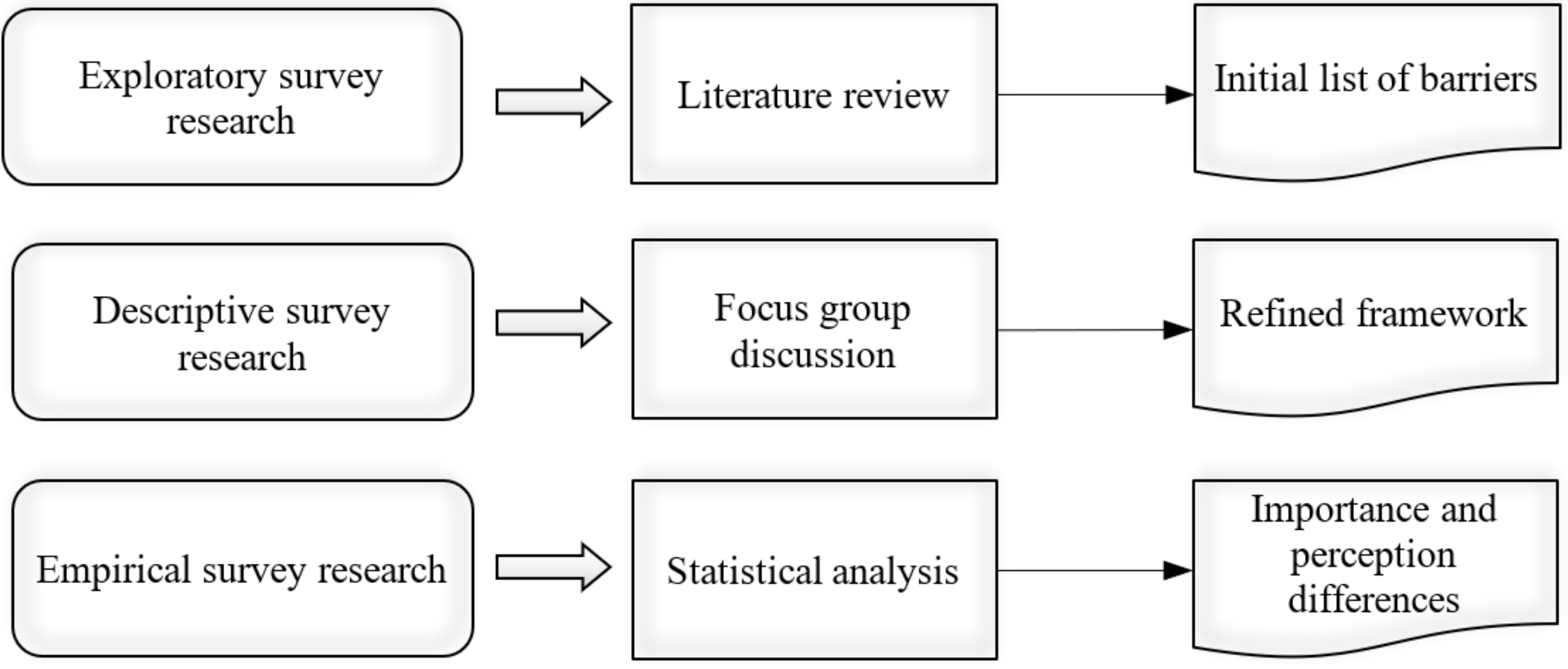
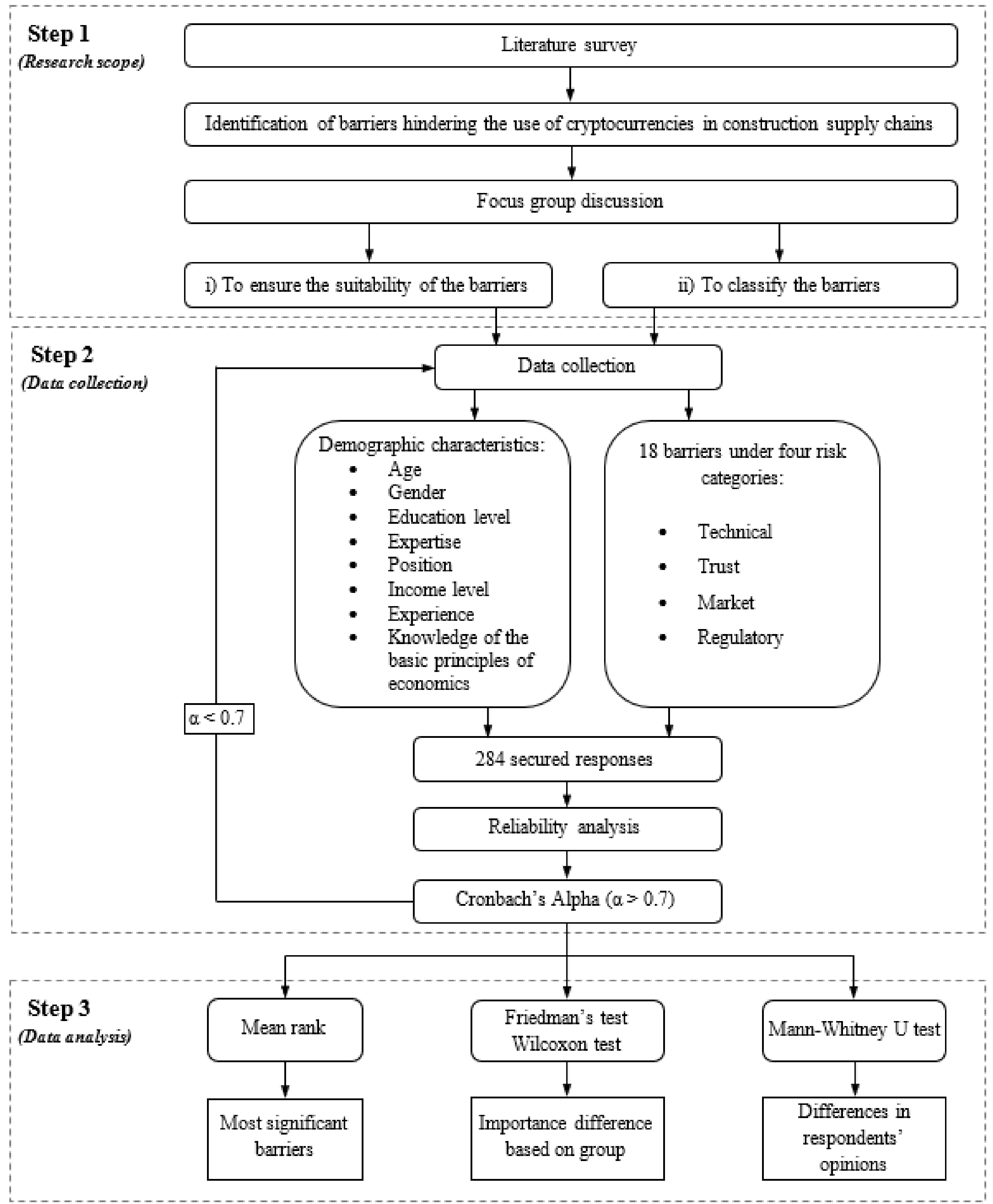
Various stakeholders are involved in managing supply chain processes in construction. Suppliers can hardly tolerate upfront costs when faced with flaws in the payment pipeline. This is a serious problem in building construction that uses a large variety of materials as opposed to civil construction that requires fewer types of materials. Alternative secure payment systems are needed, and the use of cryptocurrencies can be an option. However, cryptocurrencies are seldom used in building construction projects due to several challenges that are mostly ignored in the existing literature. To fill this gap, this study investigates the use of cryptocurrencies in construction supply chains as an alternative payment solution to improve the financial performance of the stakeholders by taking advantage of this economical and traceable financial transaction system. The study involves exploratory, descriptive, and empirical survey research. Accordingly, a literature review, focus group discussions, and statistical analyses (Friedman test, Wilcoxon test, and Mann–Whitney U test) were performed. The results imply that a lack of technical knowledge about cryptocurrencies, fluctuations in the value of cryptocurrencies, limited market opportunities, security gaps, personal information required by cryptocurrency systems, no assurance of permanent use, and government actions limiting the use of cryptocurrencies were the most significant barriers against using cryptocurrencies in construction supply chain management. The findings are expected to provide critical information to construction professionals and regulatory agencies about the potential advantages and shortcomings of cryptocurrencies, hence motivating policymakers to create strategies that minimize the concerns of construction professionals about using cryptocurrencies in the building construction industry.
Keywords: supply chain; cryptocurrency; blockchain; building construction; innovation; payment supply chain; cryptocurrency; blockchain; building construction; innovation; payment