Article

Energy Performance Evaluation of Historical Building

Department of Building Engineering, Energy Systems, and Sustainability Science, Faculty of Engineering and Sustainable Development, University of Gävle, 801 76 Gävle, Sweden
*
Author to whom correspondence should be addressed.
Buildings 2022, 12(10), 1667; https://doi.org/10.3390/buildings12101667

Submission received: 9 September 2022 / Revised: 22 September 2022 / Accepted: 9 October 2022 / Published: 12 October 2022
(This article belongs to the Section Building Energy, Physics, Environment, and Systems)

Abstract

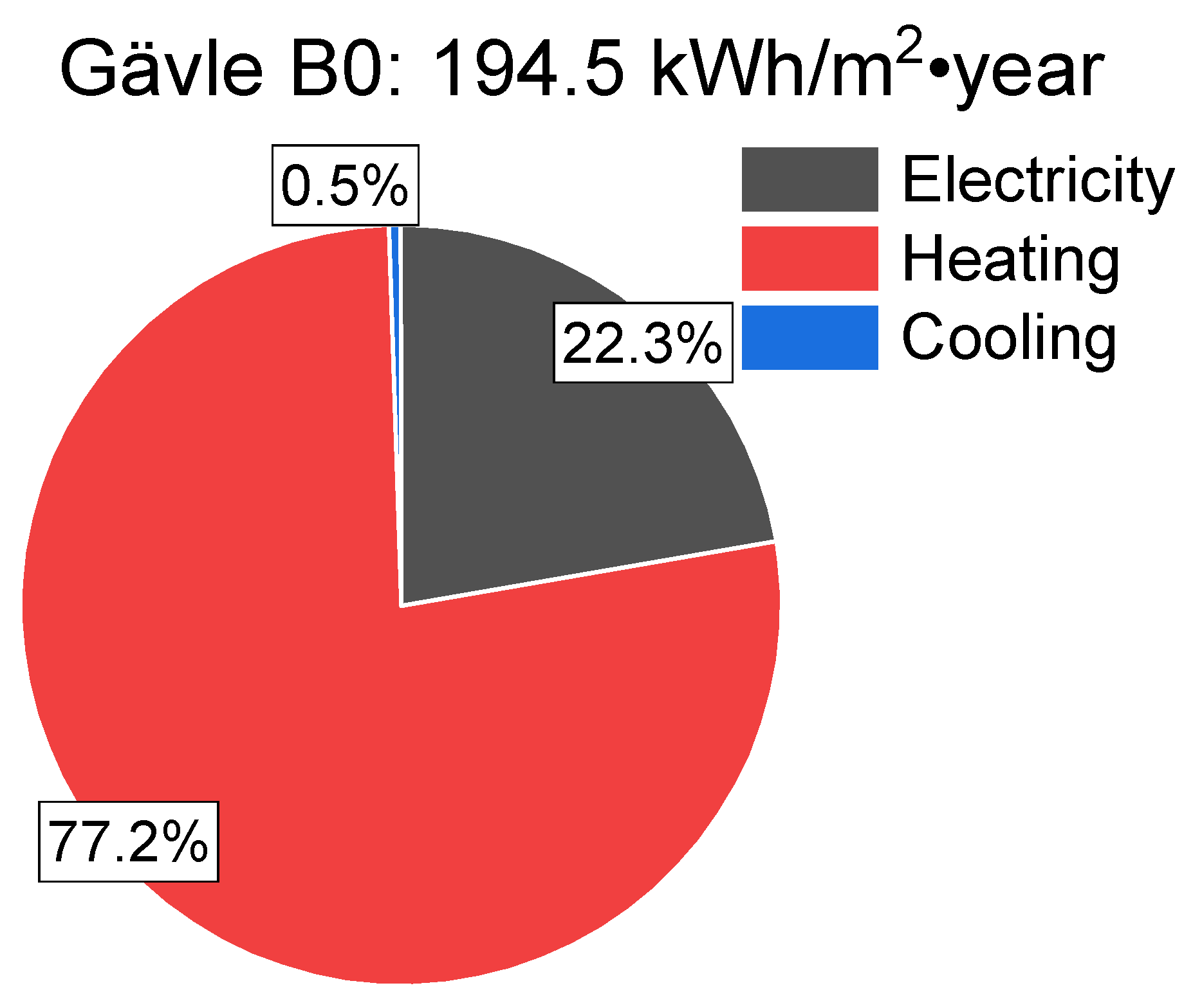
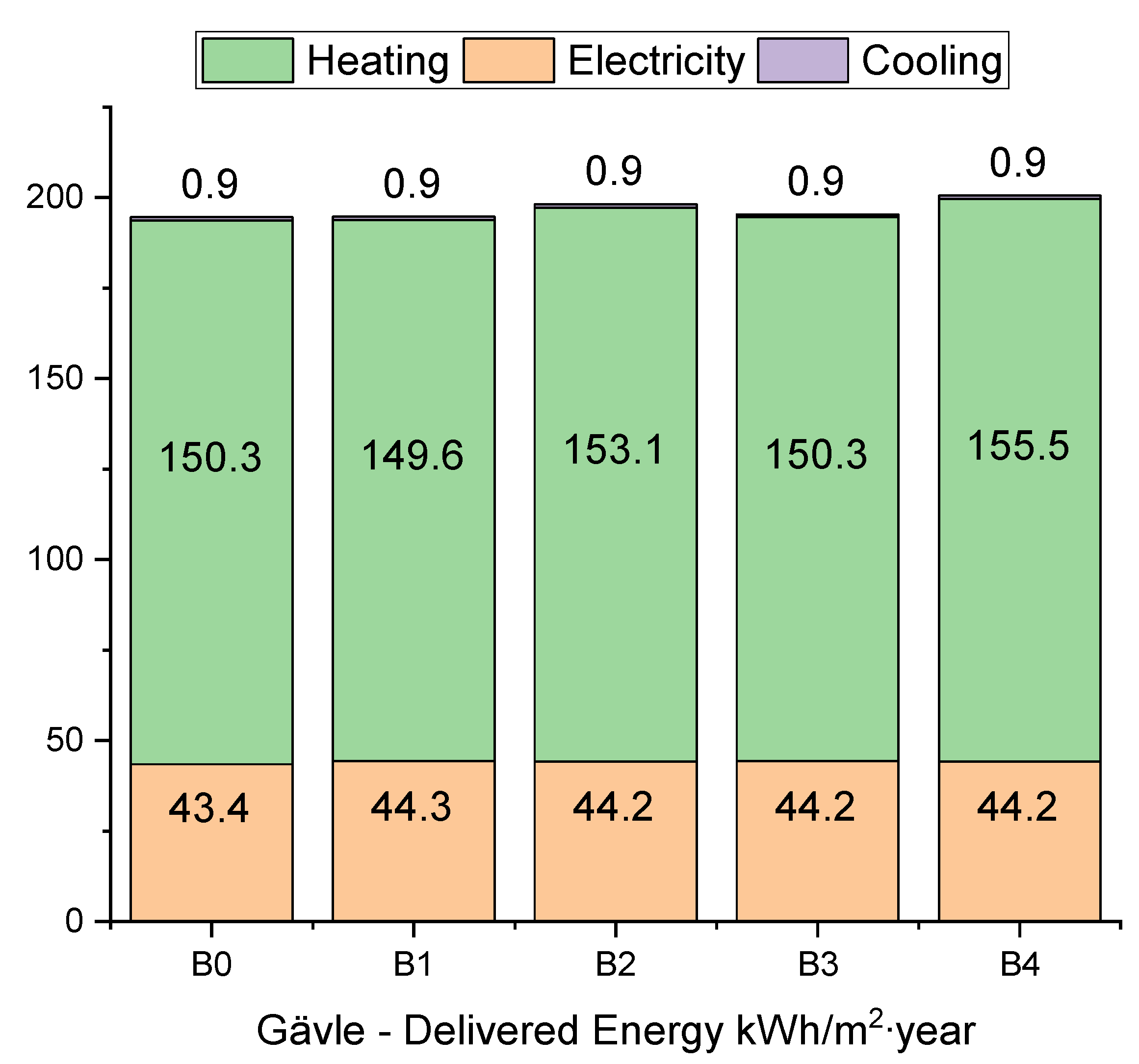
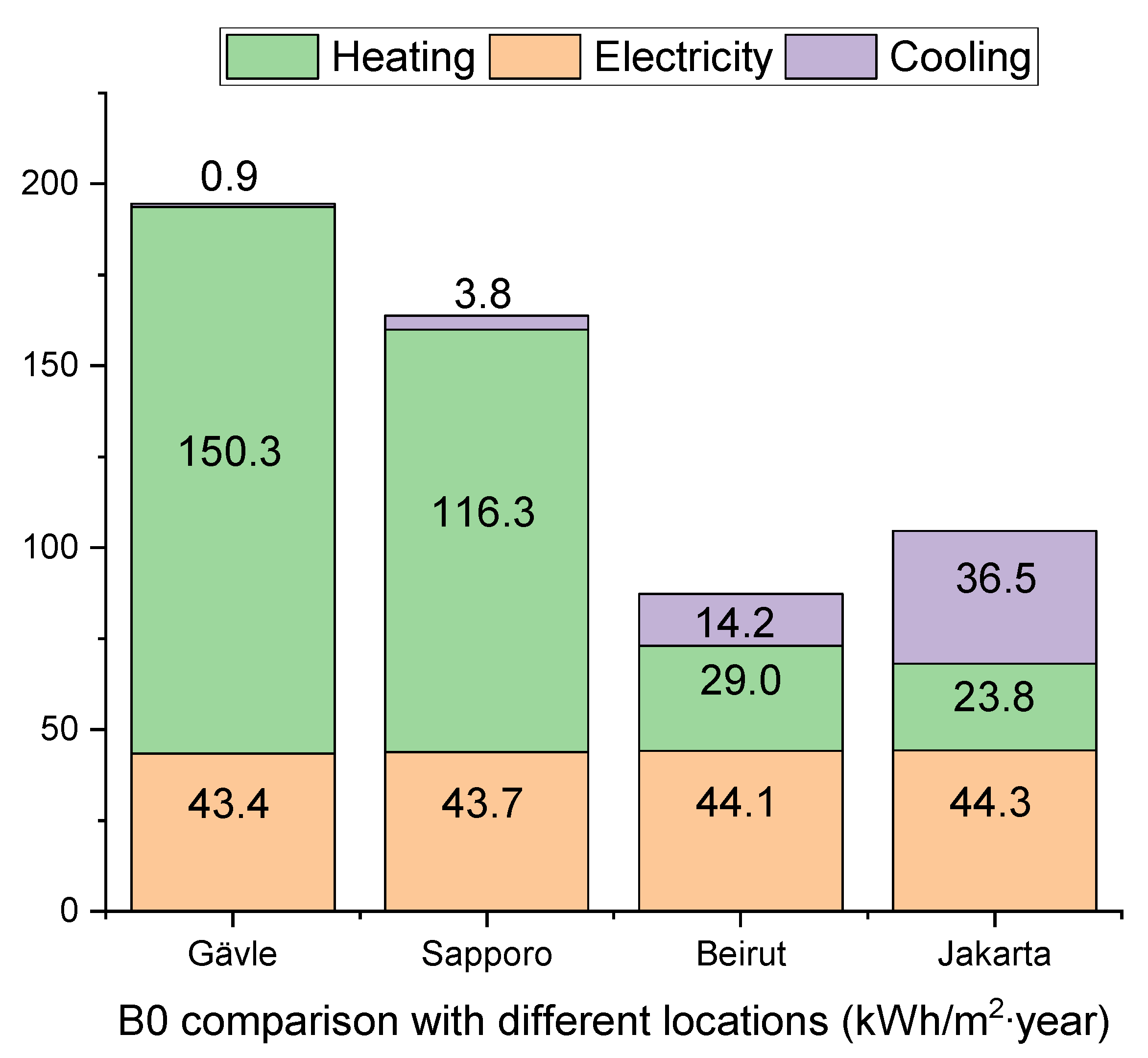
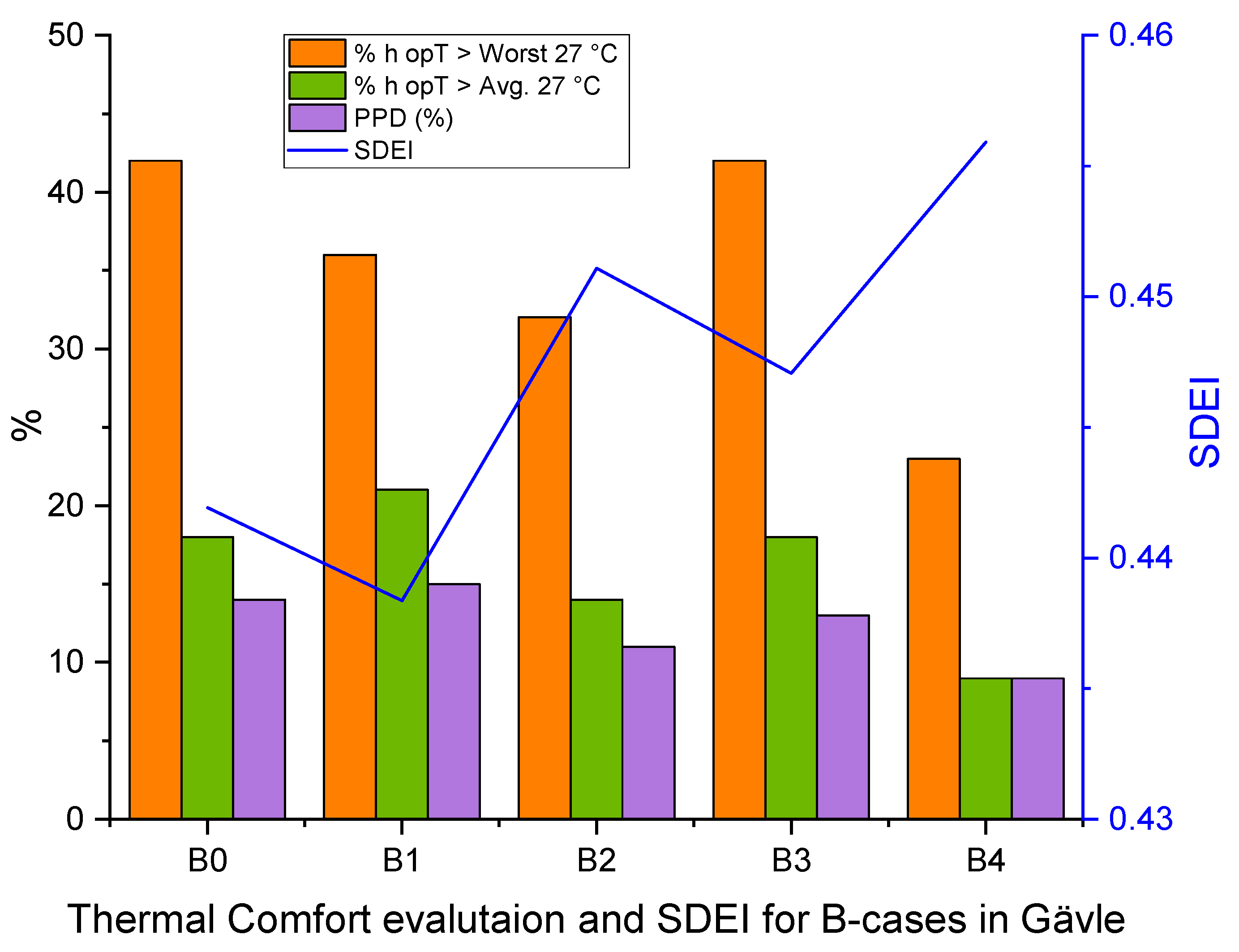
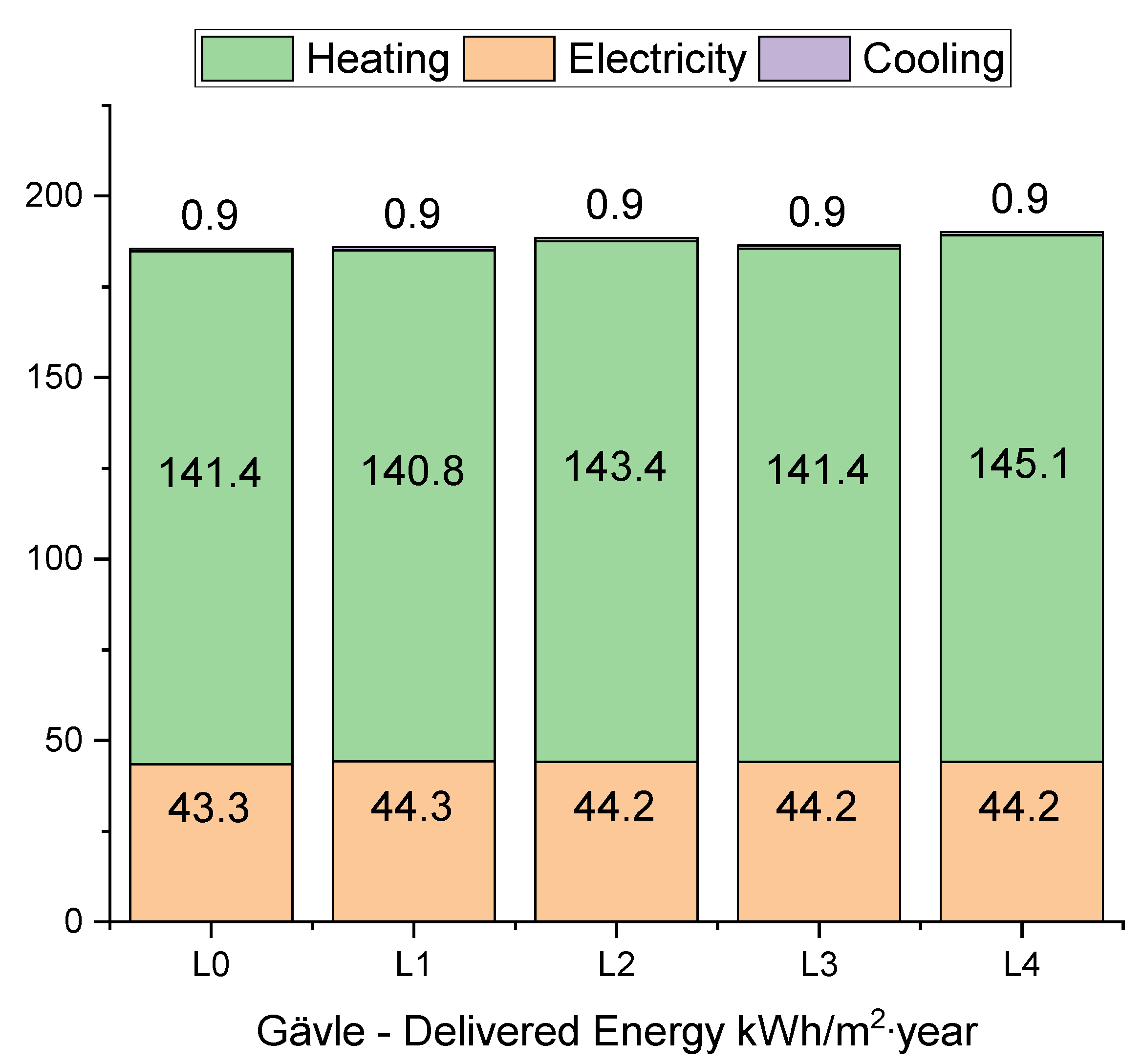
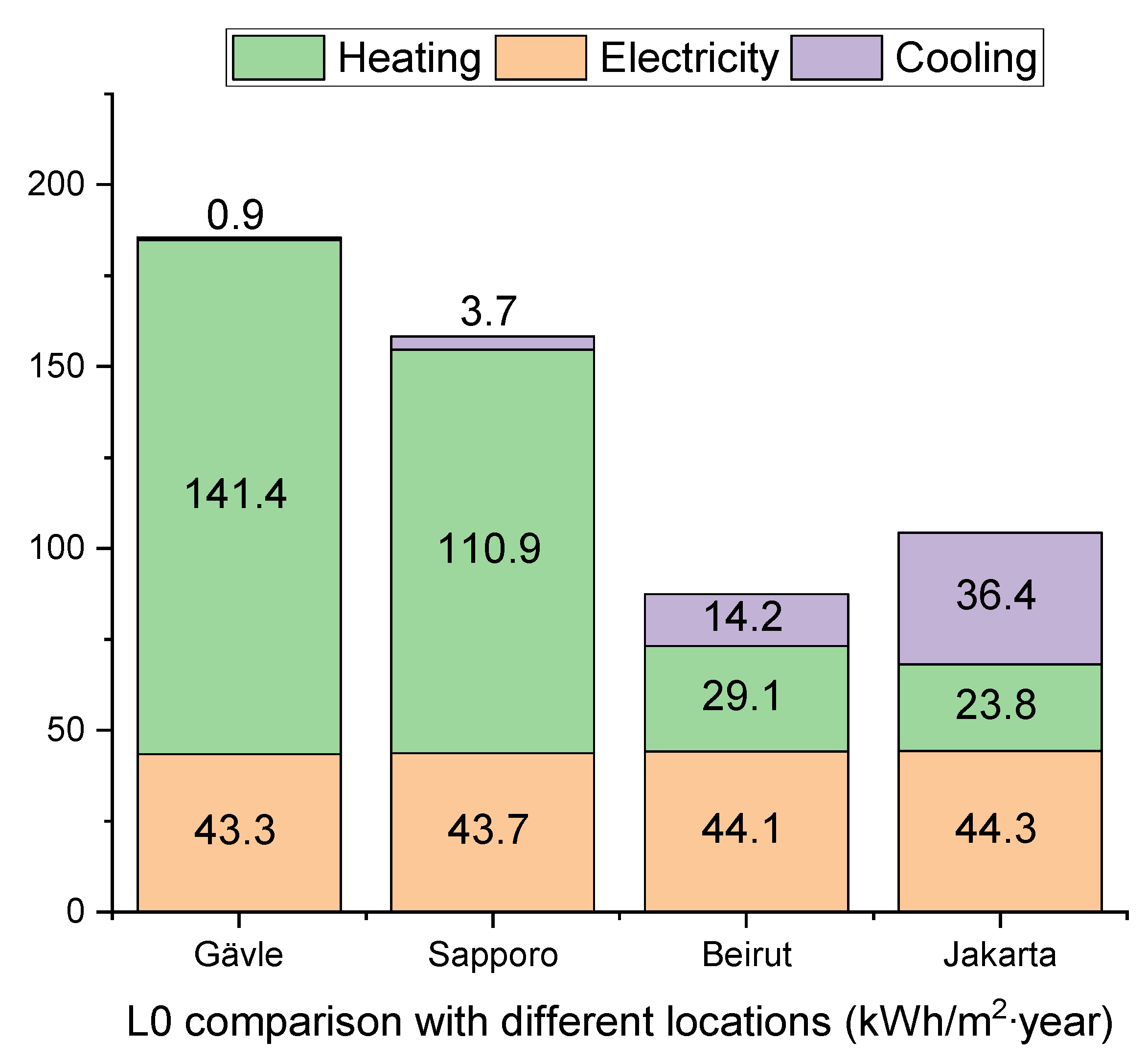
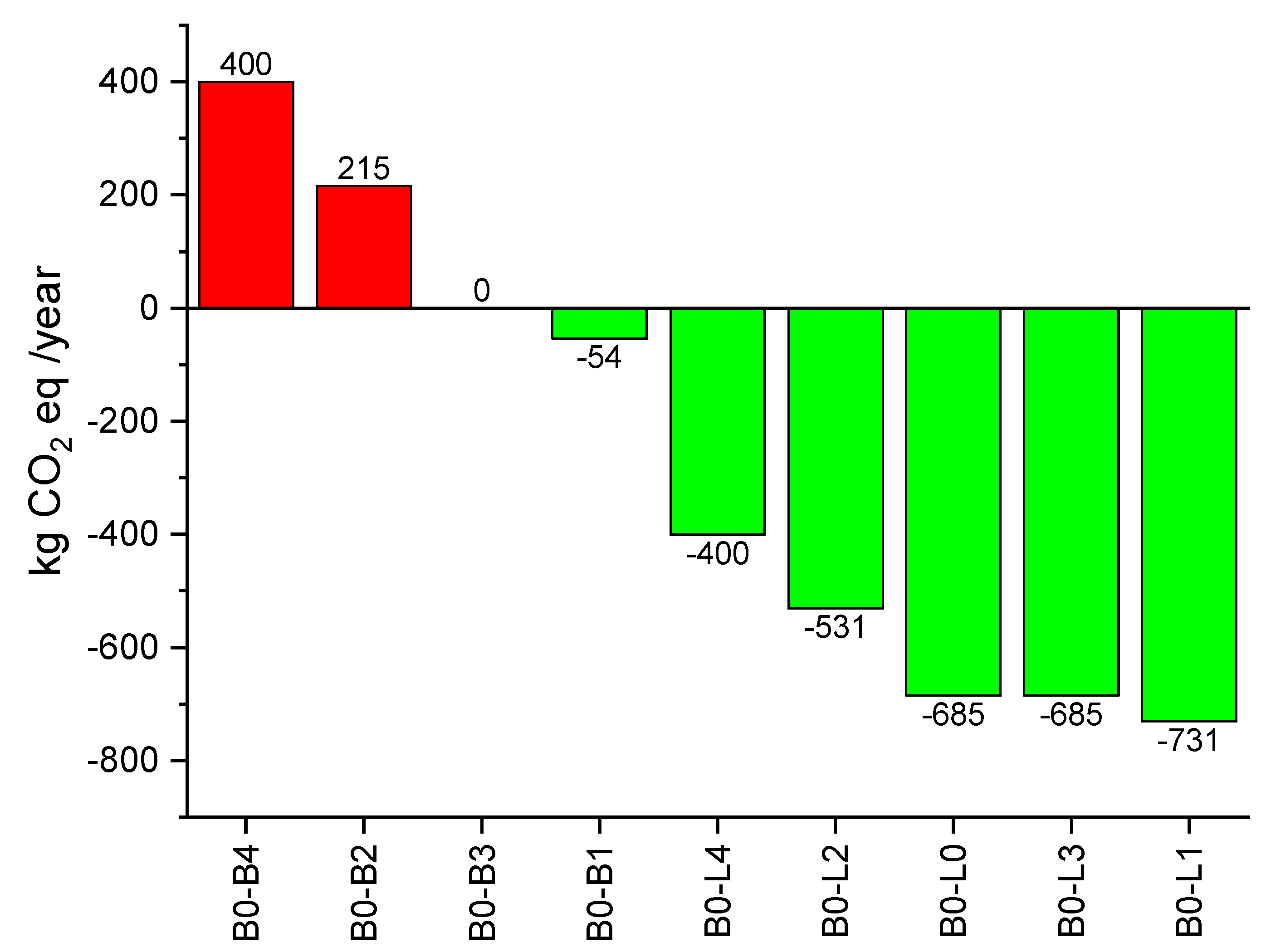
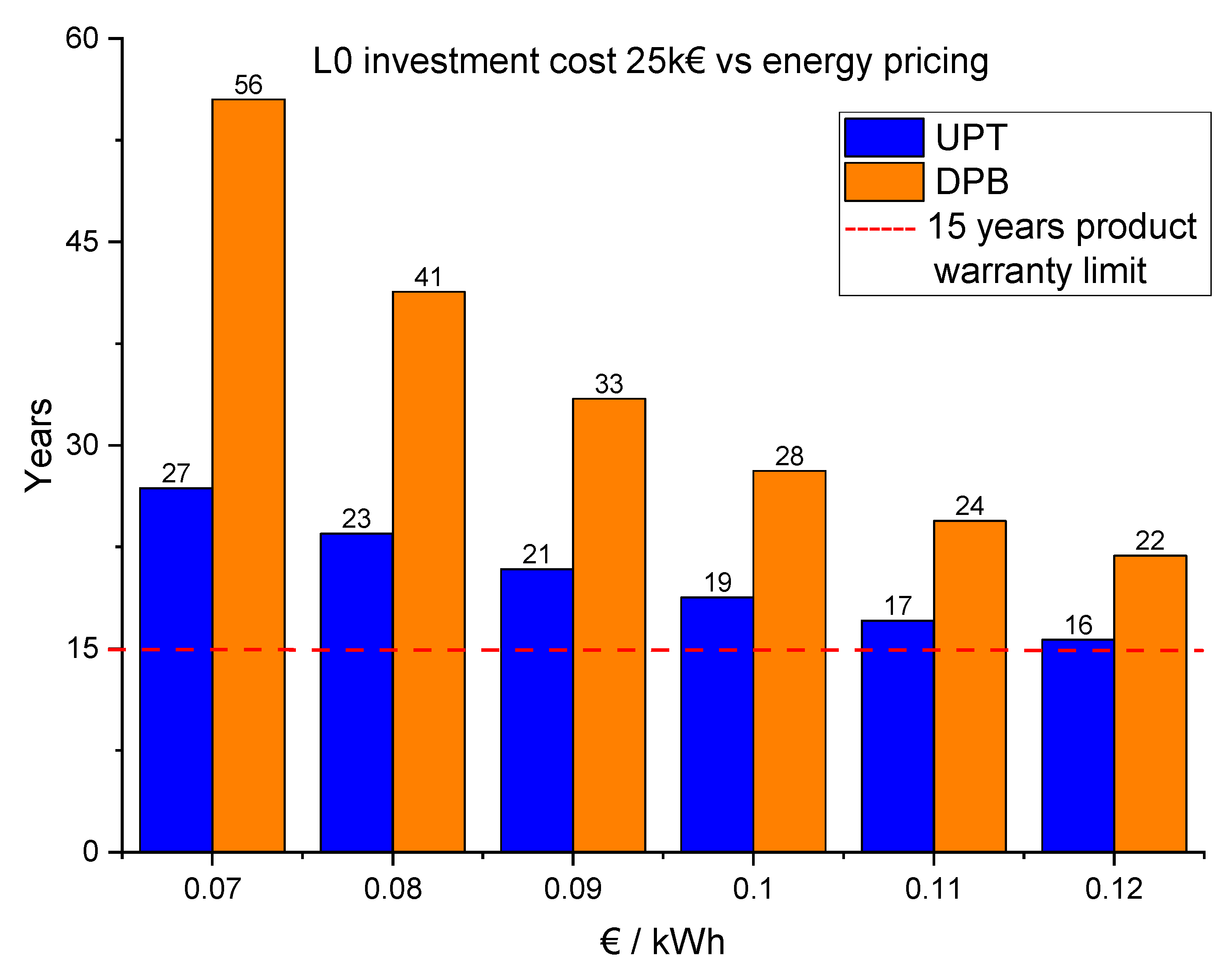
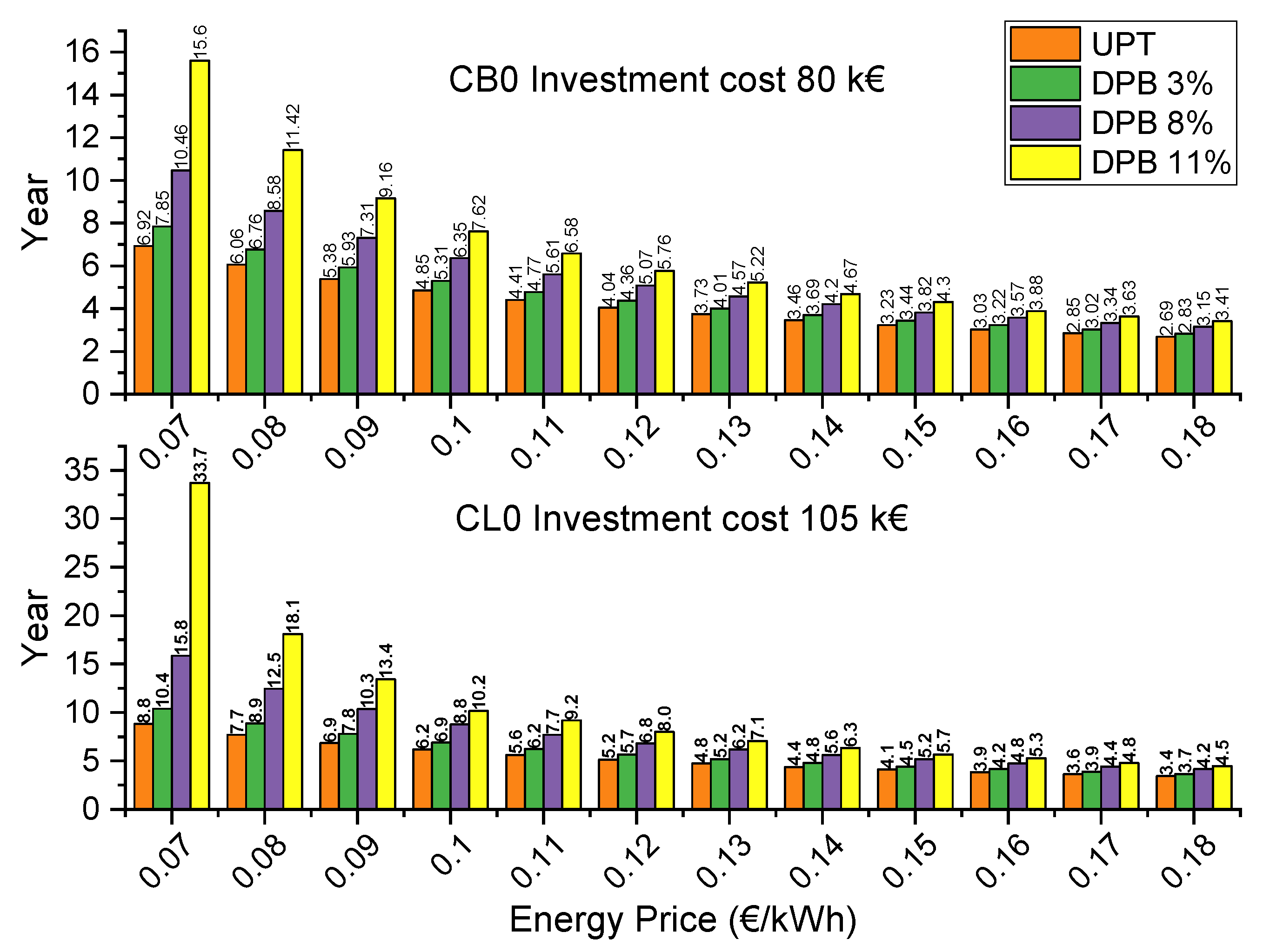
Retrofitting measures in old buildings aimed at reducing energy usage have become important procedures meant to counteract the effects of climate change and greenhouse gas emissions. The aim of this study is to evaluate energy usage, thermal comfort, and CO2 emissions of an old building by changing parameters such as building orientation, shading systems, location, low energy film application, and alternative energy supply in the form of a geothermal heat pump. When evaluating the buildings in terms of geographical location with or without applying the low energy film, the results show that the city of Gävle in Sweden requires the most heating energy, 150.3 kWh/m2∙year (B0) compared to Jakarta (L0), which requires 23.8 kWh/m2∙year. When examining the thermal comfort, cases B4 and L4 demonstrate the best results in their respective categories (B0–B4 are cases without low energy film and L0–L4 are cases with applied low energy film). The results for the CO2 emissions levels for B0–B4 and L0–L4 indicate that B4 has the highest value, 400 kg CO2 eq/year higher than B0, and L1 has the lowest value, 731 kg CO2 eq/year lower than B0. The economic feasibility study illustrates that the installation of a geothermal heat pump with at least a coefficient of performance of 4.0 leads to a shorter payback period than solely applying LEF.
Keywords: building energy; CO2 emissions; historical building; retrofitting; IDA ICE; simulation building energy; CO2 emissions; historical building; retrofitting; IDA ICE; simulation