Communication

Influence of Boron Content on the Tensile Properties and Deformation Behavior of GH3230 Nickel-Based Superalloy


1
State Key Laboratory of Nickel and Cobalt Resources Comprehensive Utilization, Jinchuan Group Co., Ltd., Jinchang 737100, China
2
School of Materials Science and Engineering, Northwestern Polytechnical University, Xi’an 710072, China
*
Author to whom correspondence should be addressed.
Metals 2026, 16(9), 1038; https://doi.org/10.3390/met16091038 (registering DOI)
Submission received: 20 August 2026 / Revised: 9 September 2026 / Accepted: 15 September 2026 / Published: 18 September 2026

Abstract

Minor alloying elements play critical roles in the microstructural evolution and mechanical properties of wrought superalloys. The wrought GH3230 Ni-based superalloys with boron (B) contents ranging from 0.0018 to 0.0088 wt.% were prepared by a casting–forging process to investigate the effects of B on microstructure and tensile deformation behavior. The results showed that while the B content had a limited influence on ultimate tensile strength, it significantly improved macroscopic ductility by promoting deformation homogeneity through the modification of carbide morphology and distribution. The carbides exhibited blocky aggregation at low B contents (0.0018–0.0052 wt.%), whereas the formation of uniformly dispersed granular carbides was promoted at higher B contents (0.0066–0.0088 wt.%). Digital image correlation and EBSD analyses revealed that aggregated carbides induced localized deformation and high dislocation density regions, while dispersed granular carbides facilitated homogeneous strain distribution. These findings demonstrate that the B-induced carbide evolution plays a critical role in regulating tensile deformation behavior of GH3230 alloys.

1. Introduction

Nickel-based wrought superalloys are widely used in critical hot-section components of aero-engines and gas turbines owing to their excellent high-temperature strength, oxidation resistance, and thermal corrosion resistance [1,2]. With the rapid development of aerospace and nuclear energy systems, higher requirements have been imposed on the temperature capability, load-bearing capacity, and long-term service reliability of these components [3]. Vacuum melting combined with forging is the primary route for manufacturing wrought superalloys. Although increasing the type and content of alloying elements during melting is theoretically beneficial for improving alloy performance, practical production is often restricted by composition segregation and stress-induced cracking caused by the intrinsic characteristics of multiple elements [4]. Recent studies have demonstrated that minor alloying elements such as boron (B) and carbon (C) play critical roles in the microstructural evolution and mechanical properties of wrought superalloys [5].
Wang et al. [6] reported that B addition modified grain boundary characteristics in high-Cr nickel-based superalloys by promoting carbide spheroidization and boride precipitation. Moderate B addition improved fracture life and elongation, whereas excessive B addition deteriorated the properties due to crack initiation associated with incipient melting regions and coarse borides. Jie et al. [7] found that increasing B content enhanced both tensile strength and stress rupture life of IN718C alloy. Similarly, Guo et al. [8] demonstrated that tensile strength increased with increasing B content. However, Rong et al. [9] reported that B had a limited effect on the tensile properties of GH4738 alloy because deformation was mainly controlled by intragranular mechanisms. Consequently, the exact influence of B content on the mechanical properties of wrought nickel-based superalloys remains a subject of ongoing debate.
Jie et al. [10] found that increasing the B content from 0.0026 to 0.0059 wt.% refined the carbides in IN718C and altered their morphology from irregular to granular, thereby improving the stress rupture properties. Chen et al. [11] found that increasing B content suppressed the precipitation of coarse continuous grain boundary carbides in the GH4049 alloy, thereby improving the mechanical properties. Zhang et al. [12] demonstrated that B segregation at grain boundaries preferentially contributed to the formation of second phases rather than remaining in solid solution. The above findings confirm that B plays a critical regulatory role in grain boundary characteristics, precipitate evolution, and mechanical properties. This study systematically investigates the effects of B addition on the microstructure and room-temperature tensile properties of high-carbon nickel-based wrought superalloy. Investigating room-temperature tensile behavior not only helps eliminate the interference of complex high-temperature mechanisms to clarify how carbides regulate deformation uniformity, but also provides a critical basis for evaluating the thermal fatigue and processability of the alloy [13,14].
The underlying mechanisms governing the B-induced changes in tensile deformation behavior are elucidated through the combined application of digital image correlation (DIC) and electron backscatter diffraction (EBSD). Unlike previous studies that broadly attribute B-induced enhancements to simple grain refinement or phase precipitation. Therefore, rather than attempting to artificially decouple these interwoven factors, this study aims to elucidate the coupled microstructural evolution and the subsequent transition of deformation mechanisms in GH3230 alloy with varying trace B contents. By combining macro-mechanical testing with multi-scale characterization techniques, this work comprehensively maps how the B addition co-modulates grain size uniformity and carbide distribution. More importantly, we reveal the transition of the dominant structural bottleneck determining ductility: shifting from severe strain localization induced by carbide aggregation at low B levels, to global strain incompatibility driven by mixed-grain heterogeneity at excessive B levels. This comprehensive understanding provides critical theoretical guidance for optimizing the trace element composition and microstructural synergy in advanced superalloys.

2. Materials and Methods

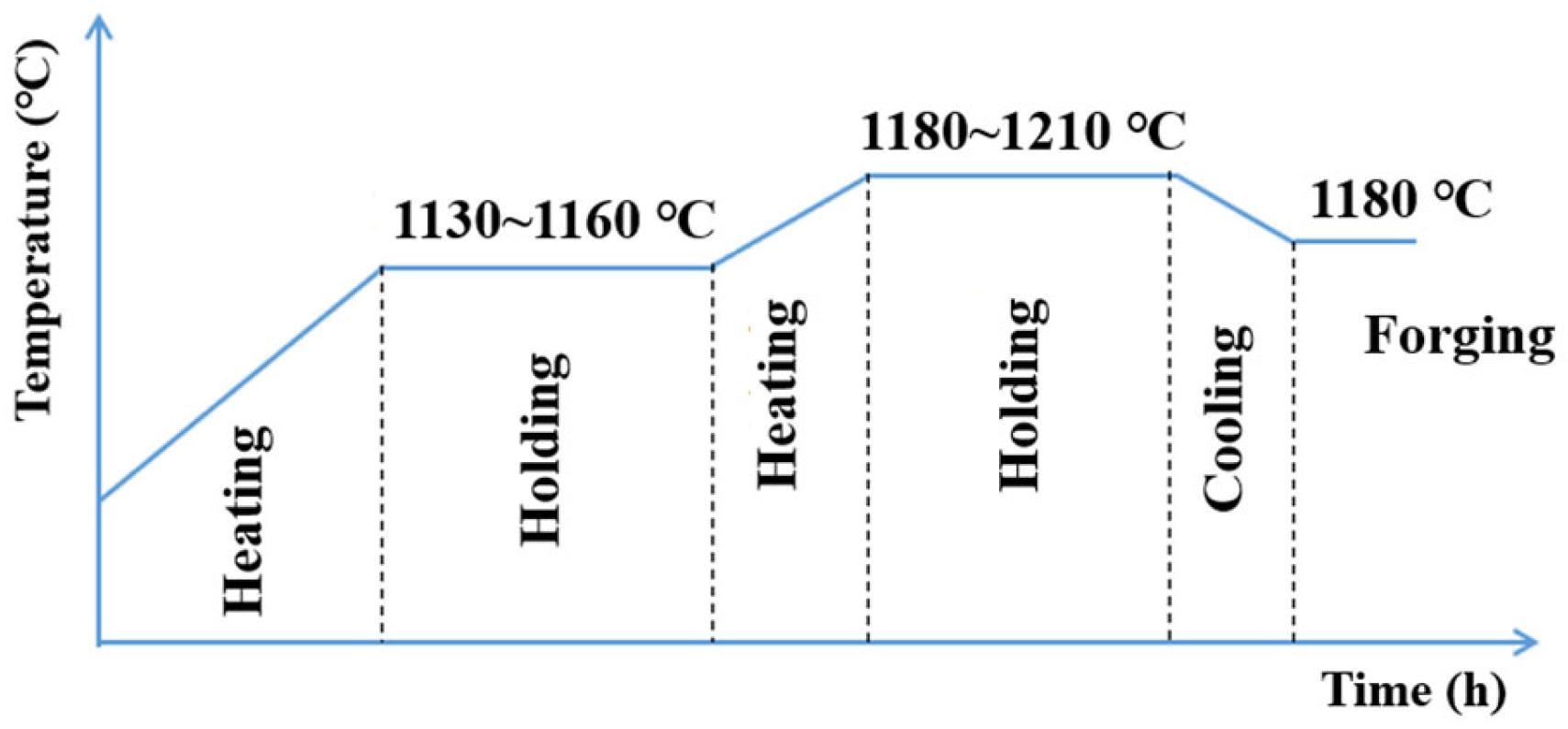
Five GH3230 alloy ingots with different B contents were fabricated using a WZG-25 vacuum induction melting furnace (Jinzhou Oriental Metallurgical Technology Research Institute Co., Ltd., Jinzhou, China) at a nominal temperature of 1700 °C. The melt temperature was monitored using a W-Re thermocouple protected by a molybdenum tube. The chemical composition in Table 1 revealed that the actual B contents were 0.0018, 0.0030, 0.0052, 0.0066, and 0.0088 wt.%, respectively. While B was controlled as the primary variable, minor fluctuations in other elements (such as Al) were inevitable during the melting process; nevertheless, these slight variations remained strictly within the standard tolerances of the GH3230 alloy and are considered to have a negligible impact on the comparative results. The ingots obtained after melting were subjected to a two-stage homogenization treatment in a heating furnace, thereby eliminating the dendrites and element segregation within the alloy and ensuring the uniformity of the internal structure. The homogenization process is shown in Figure 1. The homogenized ingots were subsequently breakdown forged using a 2000-ton fast forging press (Lanzhou Lanshi Heavy Equipment Co., Ltd., Lanzhou, China) at 1160 °C with a forging ratio of 6. The forged billets were solution treated at 1180–1240 °C. Metallographic specimens were prepared for optical microscopy (OM) and scanning electron microscopy (SEM) observations. Plate-shaped tensile specimens with a gauge dimensions of 24 × 8.7 × 1.4 mm were machined and tested at room temperature using an Instron 3382 testing machine (Instron Corporation, Norwood, MA, USA) equipped with a DIC system. Specifically, the uniaxial tensile tests were conducted with a loading rate of 0.36 mm/min in the elastic stage, which was subsequently increased to 9.648 mm/min in the plastic deformation stage until fracture. To achieve accurate full-field strain measurement, a three-dimensional DIC system was employed to track the surface speckle images in real time. The XTDIC system (Xintuo 3D Technology (Shenzhen) Co., Ltd., Xi’an, China), equipped with 25 mm lenses and capable of measuring displacements with a precision of 0.01 pixel and strains from 0.01% to 1000% with an accuracy of 0.005%, was utilized for this purpose. Accordingly, the specimen surfaces were pre-painted to create a uniform and fine speckle pattern prior to the tests. After fracture, specimens from different strain regions were electrolytically polished for EBSD characterization.

3. Results

3.1. Effect of B Content on Carbide Distribution

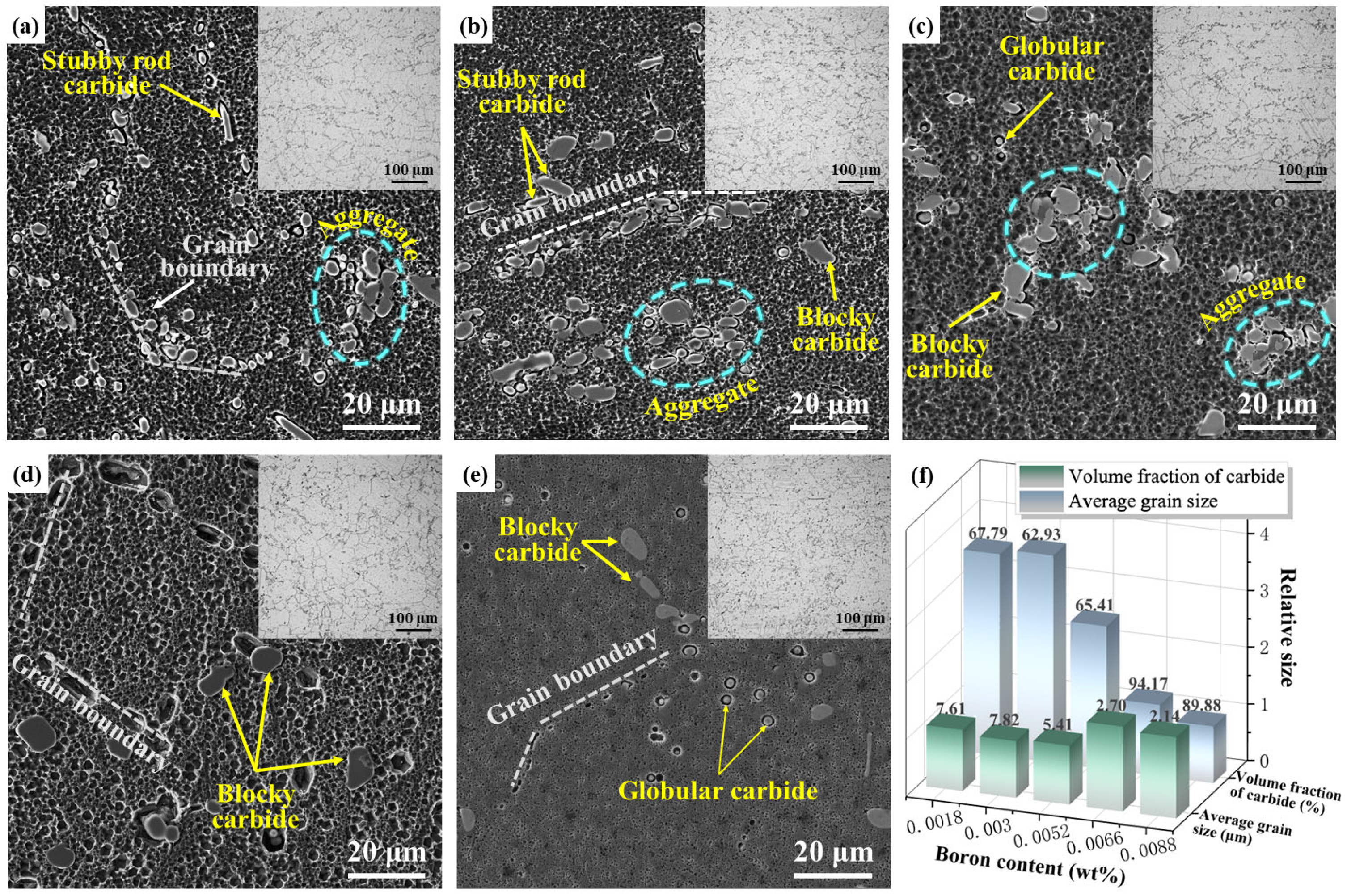
As shown in Figure 2, B content strongly affected the grain evolution and carbide distribution characteristics of the GH3230 alloy. When the B content ranged from 0.0018 to 0.0030 wt.%, the alloy exhibited a fine and homogeneous grain structure with an average grain size of 65.71 μm. Meanwhile, carbides mainly aggregated along grain boundaries and within the grains. With increasing B content to 0.0052 wt.%, continuous thin-film-like carbides appeared in the microstructure. Further increasing the B content to 0.0066 wt.% resulted in grain coarsening. The carbides became larger and exhibited a relatively uniform distribution. No obvious carbide aggregation or continuous precipitation was observed. When the B content reached 0.0088 wt.%, the grain size distribution became heterogeneous and the microstructural uniformity decreased. Meanwhile, the fraction of carbide decreased and the remaining carbides exhibited a fine and dispersed distribution.
The variation in grain size with different B contents was closely related to the evolution of carbides. As observed in Figure 2, at lower B contents, the abundant carbides precipitated along the grain boundaries may potentially act as physical barriers, restricting grain boundary migration and resulting in a fine grain size. However, at 0.0066 wt.% B, the coarsening of carbides reduced the pinning–dragging force, leading to grain coarsening. When the B content further increased to 0.0088 wt.%, the significant decrease in the number of carbides led to an insufficient and non-uniform pinning effect. Some grain boundaries broke free and migrated rapidly while others remained pinned, which eventually triggered abnormal grain growth and the formation of a highly heterogeneous mixed-grain structure. This explains the grain size evolution presented in Figure 2f.
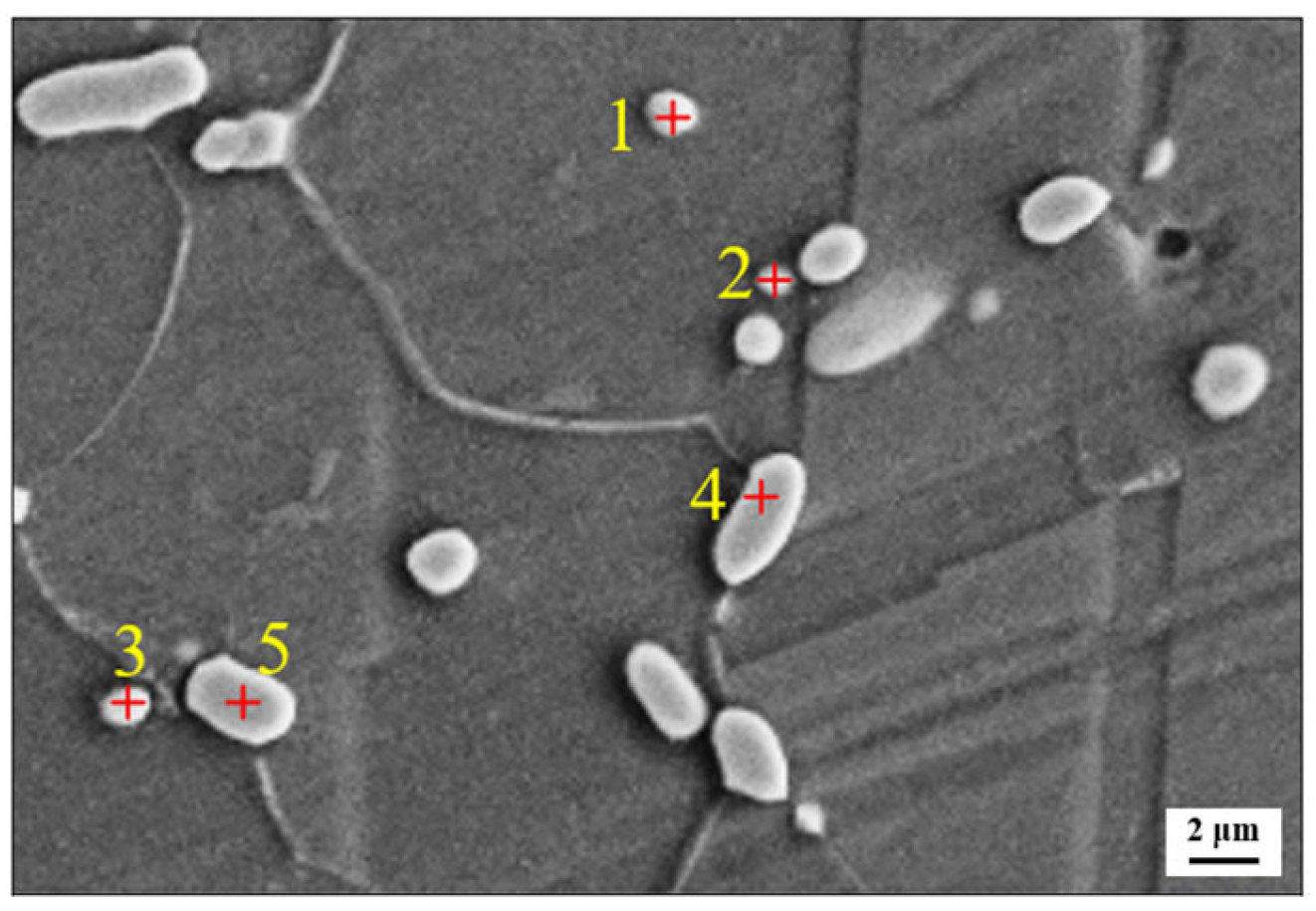
Further analysis of the various precipitate morphologies within the grains and at the grain boundaries, as illustrated in Figure 3, revealed that the bright white carbides predominantly exhibited granular, blocky, and short-rod-like shapes, with sizes ranging from approximately 0.71 to 7.1 μm. The compositional analysis of the precipitates in Figure 3 is presented in Table 2. As shown in Table 2, the fine granular precipitates primarily distributed within the grains possessed a higher carbon content. The atomic ratio at this location corresponded to (Cr, Ni, Mo, W)6C, indicating that these fine particles were M6C-type carbides. The smaller spherical particles at points 2 and 3 display typical intergranular distribution and were clustered around the larger blocky precipitates. Compositional analysis confirmed that these were M23C6-type carbides. The deduced phase composition of the larger short-rod-like and blocky precipitates at points 4 and 5 was consistent with that of the intergranular small spherical particles, with both identified as M23C6-type carbides.
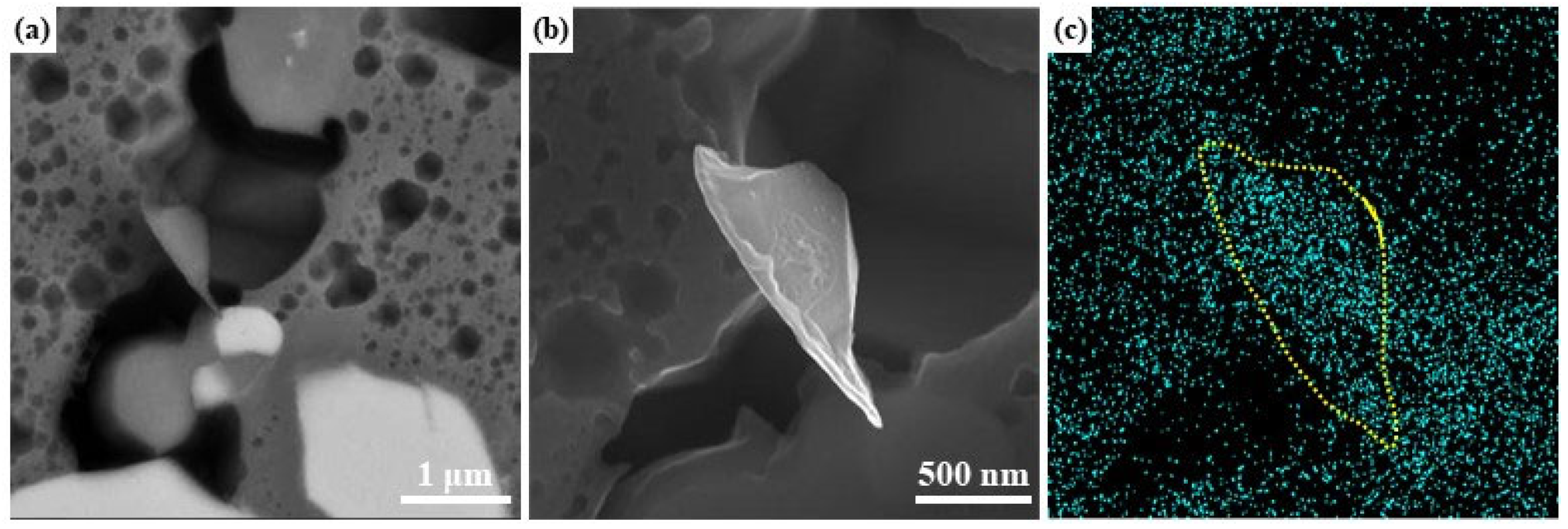
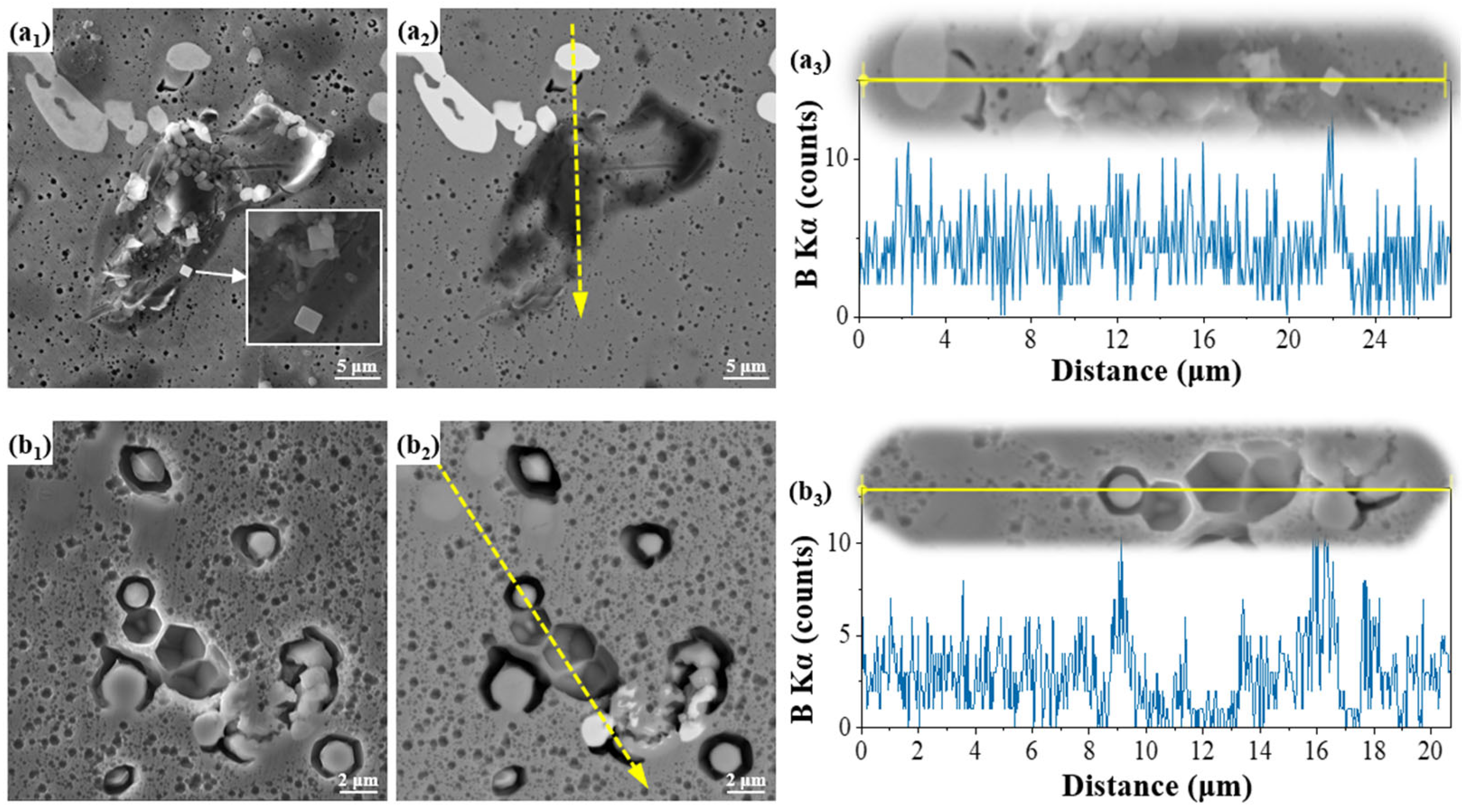
To further elucidate the effect of B content on carbide distribution behavior, micro-area chemical composition analysis was performed in typical carbide aggregation regions. To rule out the accidental nature of single-line scans and confirm widespread B segregation, elemental mapping was additionally conducted. As shown in Figure 4, the two-dimensional elemental mapping of the 0.0018 wt.% B alloy provides direct visual evidence of widespread B enrichment corresponding to the wedge-shaped precipitates. Furthermore, the line-scanning profile in Figure 5(a1–a3) indicates that obvious B enrichment also occurred in the carbide aggregation region when the B content was 0.0030 wt.%. The elemental mapping and line-scan results suggest a possible association between local B enrichment and carbide-rich regions. With increasing B content to 0.0066 wt.%, Figure 5(b3) shows that the B concentration in the matrix region was lower than that in the corresponding region of the low-B alloy. This indicated that higher B content correlated with the formation of more dispersed B-enriched areas. The increased number of dispersed B-enriched areas reduced the tendency for carbide precipitation in specific regions [8]. Therefore, carbides were more uniformly precipitated, resulting in an improved spatial distribution. However, it should be noted that while our EDS and elemental mapping results reveal a strong correlation, proving that B is directly and solely responsible for this carbide redistribution requires further atomic-scale investigations (e.g., Atom Probe Tomography), as B may also simultaneously alter grain boundary energies or interact with other segregating elements.

3.2. Effect of B Content on Room-Temperature Tensile Properties

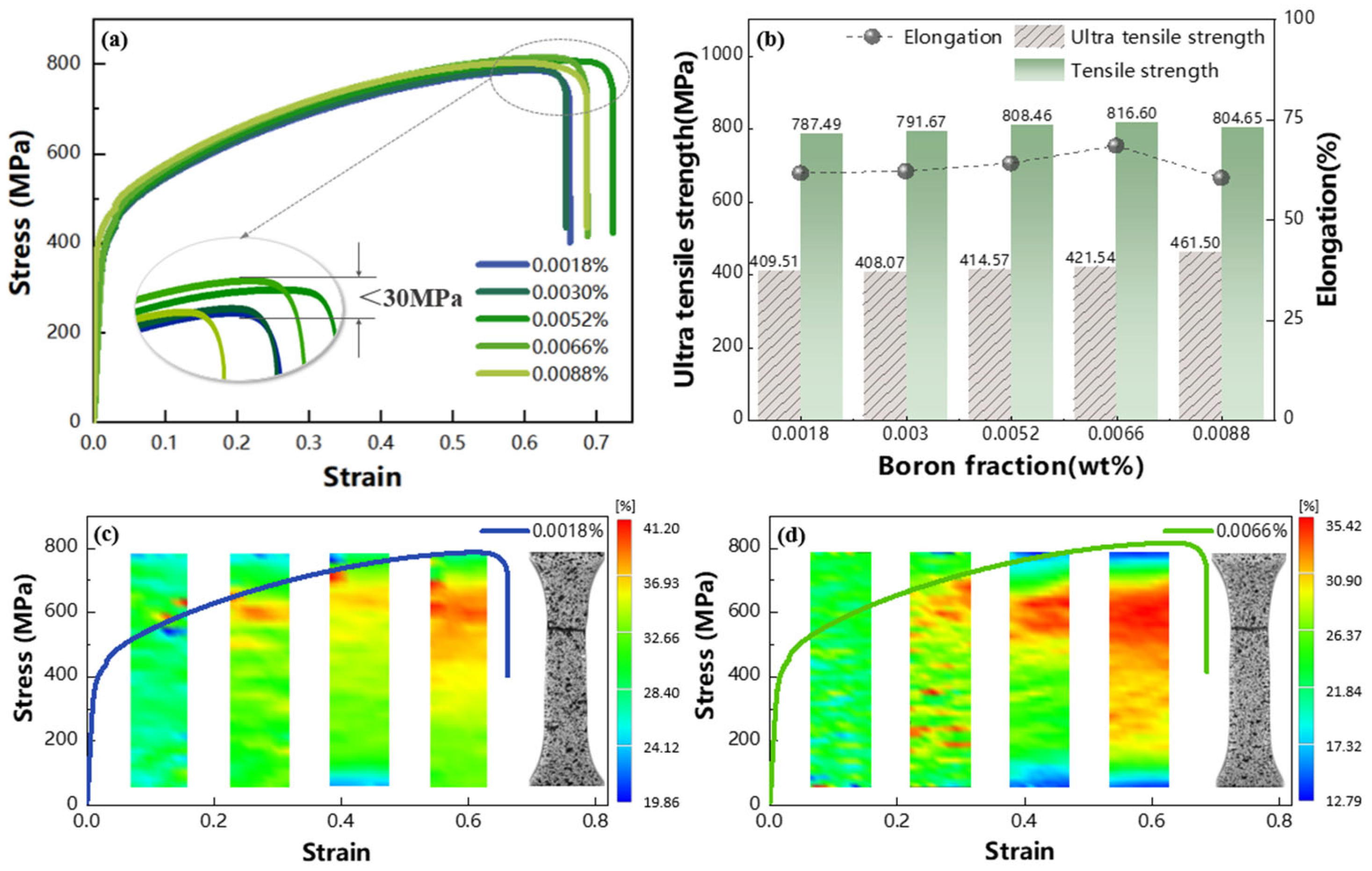
As shown in Figure 6a,b, the ultimate tensile strength of GH3230 alloys with different B contents exhibited limited variation, with a difference of less than 30 MPa. With increasing B content, the elongation initially increased and then decreased, with the alloy containing 0.0066 wt.% B exhibiting the highest ductility. To quantitatively support our mechanistic understanding of the failure behavior, the local strain distributions were extracted from the DIC raw data. The DIC analysis revealed that the low-B alloy with 0.0018 wt.% B developed severe localized strain concentration at the early stage of tensile deformation. Quantitative extraction at a macroscopic strain of 0.6 showed that the peak local strain of 41.20% in the 0.0018 wt.% B alloy reached approximately 24.64%, which was 1.67 times higher than the average macroscopic strain, indicating severe early-stage strain localization that gradually evolved into the final fracture site. In contrast, the alloy containing 0.0066 wt.% B exhibited a much more homogeneous strain distribution during tensile deformation. At the equivalent macroscopic strain level, the peak local strain was strictly limited to 35.42%, the average macroscopic strain was 31.57%, and their ratio was 1.12. The strain continuously expanded and accumulated along the gauge length, quantitatively confirming that localized deformation was effectively suppressed. This behavior was consistent with its higher elongation. The observed local strain heterogeneity was likely caused by variations in the alloy’s microstructure, including grain size and precipitates [15,16].

3.3. Mechanism Underlying the Effect of B Content on Tensile Deformation Behavior

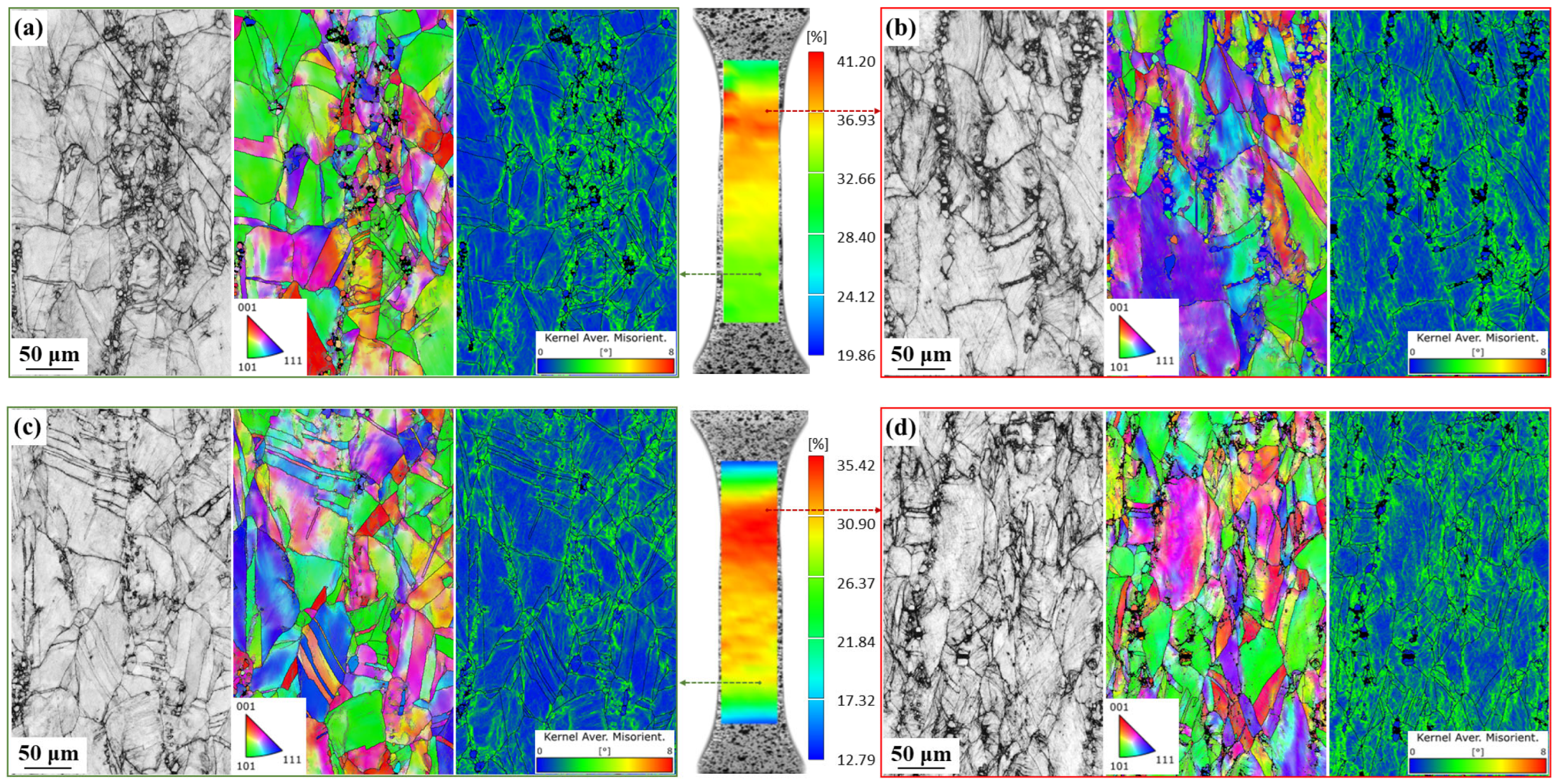
The EBSD results in Figure 7a,b indicated that the alloy with 0.0018 wt.% B exhibited pronounced localized deformation characteristics. At the low-strain stage, the overall deformation degree of grains remained limited, while regions adjacent to the aggregated carbides already exhibited high dislocation density. With increasing strain, significant plastic deformation occurred within the grains. However, the dislocation accumulation in intragranular and grain boundary regions remained limited, with dislocations mainly concentrated around the aggregated carbides.
For the alloy containing 0.0066 wt.% B, as shown in Figure 7c,d, a more homogeneous strain distribution was observed during deformation. With increasing strain, continuous dislocation accumulation occurred in both intragranular and grain boundary regions, indicating that more regions participated in coordinated deformation. The carbide distribution appears to play an important role in determining the deformation homogeneity of GH3230 alloy. Combined with the DIC strain analysis (Figure 6) and the carbide distribution (Figure 2), these EBSD observations suggest that the addition of B is associated with modified carbide precipitation characteristics and may subsequently alter local strain evolution behavior, potentially affecting the plastic deformation behavior of the alloy.

4. Discussion

As astutely indicated by the microstructural and mechanical correlations, the carbide distribution plays a fundamentally critical role in determining the deformation homogeneity of the GH3230 alloy. By synthesizing the static carbide distribution (Figure 2) with the dynamic local strain evolution captured by DIC (Figure 6) and EBSD observations, a clear mechanistic pathway emerges. The addition of B is intrinsically associated with modified carbide precipitation characteristics, which subsequently dictate the local strain evolution and macroscopic plastic deformation behavior. In alloys with sub-optimal B contents, the severely aggregated or unevenly distributed carbides act as structural stress concentrators. During plastic deformation, these regions promote early severe dislocation pile-ups and premature strain localization, which is visibly corroborated by the DIC strain maps (Figure 6). Conversely, at the optimal B content of 0.0066 wt.%, the highly uniform and finely dispersed carbide distribution effectively homogenizes the local slip processes across the matrix. This optimized precipitation characteristic mitigates the severity of localized strain gradients, thereby delaying the onset of macroscopic necking and ultimately yielding the superior macroscopic elongation observed in this condition. Therefore, B acts as a vital tuning parameter for deformation homogeneity, primarily by modulating the spatial distribution and precipitation behavior of the carbides.
Overall, the experimental evidence indicates that the variation in ductility across different B contents cannot be attributed to a single dominant factor, nor can the interwoven effects of grain size and carbide distribution be entirely decoupled. While the uniform spatial redistribution of carbides observed at 0.0066 wt.% B coincides with the highest elongation and more homogeneous local slip, it is deeply intertwined with the concurrent evolution of grain size. For instance, a sudden decrease in macroscopic elongation was observed when the B content reached the highest level of 0.0088 wt.%. As observed in Figure 2, this deterioration in ductility phenomenologically coincides with a severe degradation of microstructural uniformity; specifically, the alloy exhibited abnormal grain growth, resulting in a highly heterogeneous mixed-grain structure, along with a significant reduction in total carbide content.
While the localized strain mechanisms for the low-B and optimal-B alloys have been robustly demonstrated via in-situ DIC, the specific micromechanical failure mechanism driving the premature fracture of the 0.0088 wt.% B alloy remains unclear based on the current static microstructural evidence. Given the lack of direct fractographic or dynamic in-situ observation of microcrack initiation in this specific heavily doped condition, attributing the macroscopic failure strictly to strain incompatibility or intergranular microcracking would be speculative. Therefore, identifying the exact micro-deformation and cracking behaviors of this mixed-grain structure requires dedicated in-situ microscopic investigations, which will serve as the primary focus of our forthcoming research.
In summary, the macroscopic ductility of the GH3230 alloy is highly sensitive to the structural homogeneity modulated by B addition. The key contribution of this work lies in definitively demonstrating the transition from carbide-aggregation-induced early localization (in low-B alloys) to uniform macroscopic deformation (in optimal-B alloys). The addition of B serves as a critical tuning parameter for these coupled microstructural features, and maintaining microstructural uniformity is imperative for preventing premature ductility loss.

5. Conclusions

  • The B content shows a strong correlation with grain evolution and carbide distribution. Low B levels ranging from 0.0018 to 0.0052 wt.% produce fine grains but are accompanied by severe local carbide aggregation. As the B content increases to 0.0066 wt.%, uniformly dispersed granular carbides and improved spatial homogeneity are achieved. Excessive B addition of 0.0088 wt.% is associated with a reduction in the total carbide content and triggers abnormal grain growth, ultimately forming a mixed-grain structure with heterogeneous grain sizes.
  • While the ultimate tensile strength of the GH3230 alloy is marginally affected by the B content, its macroscopic ductility is highly sensitive to the microstructural uniformity associated with the B addition. The alloy containing 0.0066 wt.% B exhibits higher elongation. Digital image correlation analysis confirms that this enhanced ductility is linked to a uniform macroscopic strain distribution along the gauge length, which effectively suppresses the severe localized strain concentration typically observed in low-B alloys.
  • The carbide distribution is one of the critical factors influencing tensile deformation compatibility. Aggregated carbides in low-B alloys appear to promote severe local dislocation pile-ups and early strain localization. Among the investigated compositions, the uniformly dispersed carbides at an optimal B content of 0.0066% contribute to homogenizing local slip and maximizing ductility. Conversely, excessive B doping (0.0088 wt.%) disrupts this microstructural balance by inducing a severely heterogeneous mixed-grain structure and reducing carbide fractions, which phenomenologically corresponds to a sudden deterioration in macroscopic ductility.

Author Contributions

Conceptualization, S.Y. and B.Z.; methodology, W.X. and Z.Z.; software, W.X.; validation, Z.Z. and S.Y.; formal analysis, B.Z.; investigation, B.Z.; resources, S.Y.; writing—original draft preparation, B.Z.; writing—review and editing, W.X., S.Y. and Z.Z.; visualization, W.X.; supervision, B.Z.; project administration, B.Z. All authors have read and agreed to the published version of the manuscript.

Funding

This research was funded by special fund of National Key Laboratory of Ni&Co Associated Minerals Resources Development and Comprehensive Utilization (No. GZSYS-KY-2022-019).

Data Availability Statement

The original contributions presented in this study are included in the article material. Further inquiries can be directed to the corresponding author.

Conflicts of Interest

Author Bin Zan was employed by the company “Jinchuan Group Co., Ltd.”. The remaining authors declare that the research was conducted in the absence of any commercial or financial relationships that could be construed as a potential conflict of interest.

References

  1. Borges, D.A.d.S.; Almeida, G.F.C.; Noronha Ferreira Ribeiro, S.; Ribeiro, G.D.L.X.; Nascimento, P.H.T.D.; Gonçalves, R.L.P.; Lima, C.R.C.; Massi, M.; Couto, A.A. Creep Behavior of Inconel 718 Produced by Laser Powder Bed Fusion (LPBF). Metals 2026, 16, 641. [Google Scholar] [CrossRef] [Scilit]
  2. Li, M.; Wan, J.; Ding, Z.; Li, R. The Role of Si Element on the Precipitation Behavior of GH2907 Superalloys. Metals 2025, 15, 484. [Google Scholar] [CrossRef] [Scilit]
  3. Ishtiaq, M.; Jung, J.E.; Bae, H.J.; Yun, D.W.; Kang, S.-G.; Zargaran, A.; Lee, Y.-K.; Choi, Y.-S.; Seol, J.B. Observation of interface disruption and Lomer-Cottrell locks in a crept L12-strengthened Ni-based superalloy. Mater. Sci. Eng. A 2025, 940, 148570. [Google Scholar] [CrossRef] [Scilit]
  4. Panin, S.V.; Maruschak, P.O.; Vlasov, I.V.; Syromyatnikova, A.S.; Bolshakov, A.M.; Berto, F.; Prentkovskis, O.; Ovechkin, B.B. Effect of Operating Degradation in Arctic Conditions on Physical and Mechanical Properties of 09Mn2Si Pipeline Steel. Procedia Eng. 2017, 178, 597–603. [Google Scholar] [CrossRef] [Scilit]
  5. Asit, B.; Ashok, K.S.; Siba, S.S.M. Application of Ni-based superalloy in aero turbine blade: A review. Proc. Inst. Mech. Eng. Part E J. Process Mech. Eng. 2023. [Google Scholar] [CrossRef] [Scilit]
  6. Wang, H.W.; Yang, J.X.; Meng, J.; Ci, S.W.; Yang, Y.H.; Sheng, N.C.; Zhou, Y.Z.; Sun, X.F. Effects of B content on microstructure and high-temperature stress rupture properties of a high chromium polycrystalline nickel-based superalloy. J. Alloys Compd. 2021, 860, 157929. [Google Scholar] [CrossRef] [Scilit]
  7. Jie, Z.Q.; Zhang, J.; Huang, T.W.; Su, H.J.; Zhang, Y.B.; Liu, L.; Fu, H.Z. Effects of boron and zirconium additions on the fluidity, microstructure and mechanical properties of IN718C superalloy. J. Mater. Res. 2016, 31, 3557–3566. [Google Scholar] [CrossRef] [Scilit]
  8. Guo, J.T.; Hou, J.S.; Zhou, L.Z.; Ye, H.Q. Prediction and improvement of mechanical properties of corrosion resistant superalloy K44 with adjusting minor additions C, B and Hf. Mater. Trans. 2006, 47, 198–206. [Google Scholar] [CrossRef] [Scilit]
  9. Rong, Y.; Hou, W.X.; Du, J.H.; Qu, J.L. Influence of B contents on mechanical properties of GH4738 alloy. Rare Met. Mater. Eng. 2025, 54, 2336–2344. [Google Scholar] [CrossRef]
  10. Jie, Z.Q.; Liu, D.Y.; Zhang, J. Effect of combined addition of B and Zr on the fluidity of IN718 superalloy. Acta Metall. Sin. 2024, 60, 1615–1621. [Google Scholar] [CrossRef]
  11. Chen, G.S.; Jin, X.; Zhou, D.H.; Wang, S.P.; Xie, W.; Wang, L.T. Effects of boron content on boundaries precipitates in Ni base alloy GH4049 and its high temperature properties. Acta Metall. Sin. 2005, 41, 622–626. [Google Scholar]
  12. Zhang, H.R.; Ojo, O.A. Cr-rich nanosize precipitates in a standard heat-treated Inconel 738 superalloy. Philos. Mag. 2010, 90, 765–782. [Google Scholar] [CrossRef] [Scilit]
  13. Texier, D.; Milanese, J.; Jullien, M.; Genée, J.; Passieux, J.-C.; Bardel, D.; Andrieu, E.; Legros, M.; Stinville, J.-C. Strain localization in the Alloy 718 Ni-based superalloy: From room temperature to 650 °C. Acta Mater. 2024, 268, 119759. [Google Scholar] [CrossRef] [Scilit]
  14. Jiang, R.; Bull, D.J.; Evangelou, A.; Harte, A.; Pierron, F.; Sinclair, I.; Preuss, M.; Hu, X.T.; Reed, P.A.S. Strain accumulation and fatigue crack initiation at pores and carbides in a SX superalloy at room temperature. Int. J. Fatigue 2018, 114, 22–33. [Google Scholar] [CrossRef] [Scilit]
  15. Tiwari, S.; Zargaran, A.; Bae, H.J.; Jo, W.H.; Lee, C.H.; An, J.H.; Ishtiaq, M.; Jung, J.E.; Lee, Y.K.; Seol, J.B. Enhanced high-temperature ductility without strength drop in a lean Co Ni-based superalloy. J. Alloys Compd. 2024, 991, 174407. [Google Scholar] [CrossRef] [Scilit]
  16. Maruschak, P.; Konovalenko, I.; Sorochak, A. Methods for evaluating fracture patterns of polycrystalline materials based on the parameter analysis of ductile separation dimples: A review. Eng. Fail. Anal. 2023, 153, 107587. [Google Scholar] [CrossRef] [Scilit]
Figure 1. Homogenizing procedure for GH3230 alloy.
Metals 16 01038 g001
Figure 2. Grain and carbide morphologies of GH3230 alloys with different B contents: (a) 0.0018 wt.%; (b) 0.0030 wt.%; (c) 0.0052 wt.%; (d) 0.0066 wt.%; (e) 0.0088 wt.%; and (f) variation in carbide volume fraction and grain size with B content.
Metals 16 01038 g002
Figure 3. SEM micrograph of the GH3230 alloy (0.0088% B) and the corresponding energy dispersive X-ray spectroscopy (EDS) testing-point diagram. The red plus signs and yellow numbers 1–5 indicate the EDS analysis points.
Metals 16 01038 g003
Figure 4. Micro-area analysis of the GH3230 alloy with 0.0018% B content: (a) backscattered electron SEM image; (b) high-magnification secondary electron SEM image of the wedge-shaped precipitates; (c) B element mapping. The yellow dashed-line area indicates the precipitate outline in (b).
Metals 16 01038 g004
Figure 5. Line scanning profiles of GH3230 alloys with different B contents: (a) 0.0030 wt.% and (b) 0.0066 wt.%. Subfigures (a1,b1) show the SEM morphologies of the phases; (a2,b2) show backscattered electron micrographs, with yellow dashed arrows indicating the direction of the line scans; (a3,b3) display the EDS line scan results, where the yellow straight lines in the insets correspond to the scanned paths, and the blue lines represent the B Ka intensity profiles.
Metals 16 01038 g005
Figure 6. Room-temperature tensile behavior of GH3230 alloys: (a) stress–strain curves; (b) relationship between B content and mechanical properties; (c) tensile curve and DIC strain maps of the alloy with 0.0018 wt.% B; and (d) tensile curve and DIC strain maps.
Metals 16 01038 g006
Figure 7. EBSD characterization of local low- and high-strain regions in tensile specimens of GH3230 alloys with different B contents: (a) 0.0018 wt.% B, low-strain region; (b) 0.0018 wt.% B, high-strain region; (c) 0.0066 wt.% B, low-strain region; and (d) 0.0066 wt.% B, high-strain region.
Metals 16 01038 g007
Table 1. Chemical compositions (wt.%) of GH3230 alloys with different B contents.
SampleAlTiMoMnCoCrWBSiLaCNi
1#0.300.011.250.50.1622.314.250.00180.450.030.1Bal.
2#0.320.011.250.50.1622.314.250.00300.450.030.1Bal.
3#0.310.011.250.50.1622.314.250.00520.450.030.1Bal.
4#0.300.011.250.50.1622.314.250.00660.450.030.1Bal.
5#0.310.011.250.50.1622.314.250.00880.450.030.1Bal.
Table 2. Energy Dispersive Spectroscopy analysis results of the points shown in Figure 3 (at.%).
LocationCCrNiMoWCarbide
Point 114.2724.0147.771.712.25M6C-type
Point 25.5426.1662.430.815.06M23C6-type
Point 36.1725.5461.611.155.53M23C6-type
Point 45.9721.6765.981.035.35M23C6-type
Point 56.2425.8160.731.285.94M23C6-type
Disclaimer/Publisher’s Note: The statements, opinions and data contained in all publications are solely those of the individual author(s) and contributor(s) and not of MDPI and/or the editor(s). MDPI and/or the editor(s) disclaim responsibility for any injury to people or property resulting from any ideas, methods, instructions or products referred to in the content.