Article

Microbiologically Influenced Corrosion on Turbine Blades in a Hydroelectric Power Plant

1
Institute of Metals and Technology, Lepi Pot 11, 1000 Ljubljana, Slovenia
2
Department of Materials and Metallurgy, Faculty of Natural Sciences and Engineering, University of Ljubljana, Aškerčeva 12, 1000 Ljubljana, Slovenia
3
Department of Microbiology, Biotechnical Faculty, University of Ljubljana, Jamnikarjeva 101, 1000 Ljubljana, Slovenia
4
HESS d.o.o., Cesta Bratov Cerjakov 33a, 8250 Brežice, Slovenia
*
Author to whom correspondence should be addressed.
Metals 2026, 16(9), 1039; https://doi.org/10.3390/met16091039
Submission received: 20 August 2026 / Revised: 8 September 2026 / Accepted: 15 September 2026 / Published: 18 September 2026
(This article belongs to the Section Metal Failure Analysis)

Abstract

This study investigated the root cause of severe corrosion damage observed on G-X4CrNi13-4 martensitic stainless steel turbine blades at the Brežice hydroelectric power plant on the Sava River in Slovenia. The investigation employed a comprehensive analytical approach, including on-site visual inspections, non-destructive testing with a portable microscope (Struers, Ballerup, Denmark), X-ray fluorescence spectroscopy (Thermo Fisher Scientific, Waltham, MA, USA), and 3D topographical mapping (Bruker Alicona, Graz, Austria). Laboratory analyses utilized scanning electron microscopy (ZEISS, Oberkochen, Germany) and energy-dispersive X-ray spectroscopy (EDAX, Pleasanton, CA, USA) to examine surface deposits, biofilms, and corrosion products, complemented by physical and chemical water quality assessments. A visual inspection revealed a dense layer of biological deposits, approximately 0.3 mm thick, with stochastic pitting damage located beneath the biofilm. The analytical results confirmed that the blade material met the specifications; however, EDS analysis (EDAX, Pleasanton, CA, USA) revealed significant localized manganese enrichment within the pits (~1.4 wt%) and in the biofilm (>10 wt%). Although water analysis showed relatively low manganese concentrations (7–18 µg/L), these values may be sufficient to support the metabolic activity of manganese-oxidizing microorganisms. Historical hydrological data suggest that extreme drought conditions in 2022, stagnant water, and elevated temperatures facilitated the attachment of microorganisms and the formation of a corrosive biofilm. These findings highlight the impact of changing environmental conditions and low-flow periods on the integrity of stainless steel components in hydroelectric facilities.

1. Introduction

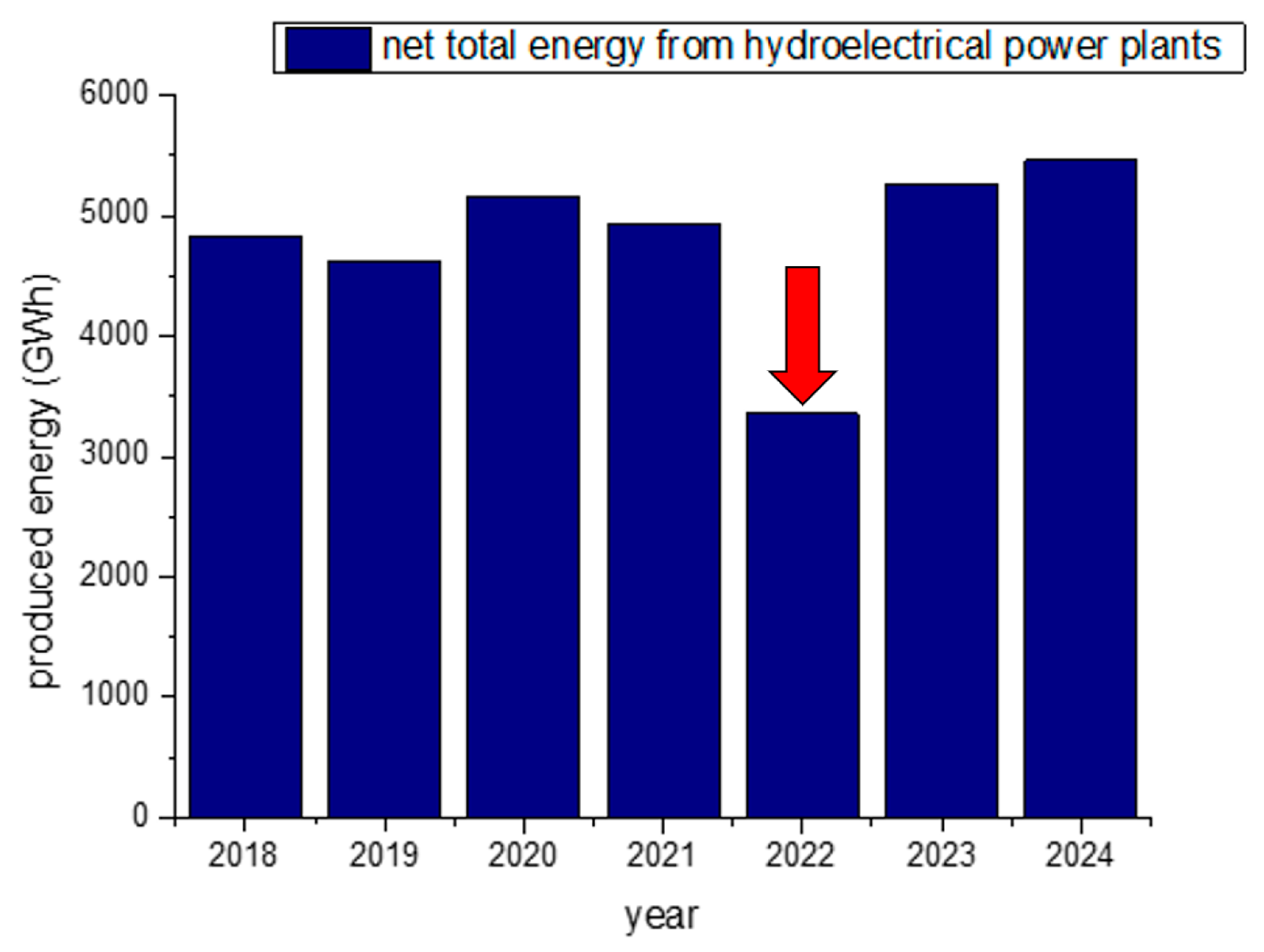
Hydroelectric power plants can help reduce greenhouse gas emissions and are an important part of a carbon-free society. While this technology is not completely without environmental impact, its impact is much smaller compared to that from burning fossil fuels. In 2024, hydroelectric power plants provided 34% of the total Slovenian-produced electrical energy, in the amount of 5455 GWh, which accounted for approximately 70% of sustainable electrical energy production in Slovenia [1].
Corrosion poses a major threat to material durability in aqueous environments. If it is not controlled, it could cause major damage to hydroelectric power plants [2,3]. To mitigate the corrosion threat, most parts are made from corrosion-resistant stainless steels [4], but even those can corrode under special circumstances. The main contributing factors to the corrosion of hydroelectric power plant components are vegetation, water chemistry, microorganisms, operating conditions, water flow, temperature, and the construction materials used in the plant components [5,6,7].
G-X4CrNi13-4 martensitic stainless steel is a steel grade frequently used for hydroelectric turbines; it contains roughly 13% Cr, 4% Ni and 0.5% Mo [8]. Its nickel content, along with its low carbon content, ensures better weldability, ductility, impact resistance and fatigue resistance properties when compared to 13 Cr ferritic–martensitic grades (AISI 410-420, EN 1.4000, X6Cr13) [9,10]. The G-X4CrNi13-4 steel grade has good corrosion resistance in fresh water and performs well under typical erosion–corrosion phenomena but can be susceptible to microbiologically induced corrosion [11].
Microbiologically induced corrosion (MIC) is a particularly complex and unpredictable form of corrosion that occurs in natural environments [12,13]. It has been reported in stainless steel systems used in water cooling circuits, ballast tanks, fire protection systems, storage tanks, and heat exchangers, particularly under stagnant or low-flow conditions [14,15]. Such conditions facilitate the attachment of microorganisms to metal surfaces and the subsequent formation of biofilms. These biofilms provide a habitat for diverse microbial communities, including species capable of oxidizing or reducing dissolved ions, thereby accelerating corrosion processes [16,17]. In addition, biofilms can promote localized forms of attack, such as crevice corrosion [18,19].
The risk of MIC is expected to increase as environmental conditions continue to change. In hydroelectric power plants, shifts in microbial community composition and abundance are associated with rising water temperatures and reduced water levels and flow rates, particularly during summer months, as well as increased nutrient inputs (nitrates and phosphates) from agricultural runoff and other anthropogenic sources [20,21,22]. Understanding the mechanisms governing MIC and the environmental factors that influence microbial growth is therefore essential for the effective prevention and control of corrosion in critical stainless steel infrastructure.
Several different types of microorganisms that form biofilms on metal surfaces and are responsible for MIC have been identified [23,24]. The most common types are the following [23,24]:
-
Sulphate-reducing bacteria that produce hydrogen sulphide, which can cause corrosion [25].
-
Acid-producing bacteria that produce acid, which can lower the pH of the electrolyte solution and cause corrosion [26].
-
Iron- and manganese-oxidizing bacteria that produce enzymes which catalyse the oxidation of iron or manganese ions, leading to the formation of metal oxides [27].
-
Slime producers, such as Pseudomonas aeruginosa, that produce enzymes which catalyse the oxidation of various metal ions [28].
In this study, we report a corrosion case that occurred on a hydroelectric turbine and was reported by maintenance workers during a routine yearly checkup of the hydroelectric power plant Brežice on the Sava River in Slovenia in 2022. The rotor blades, constructed from G-X4CrNi13-4, showed signs of severe corrosion damage. Technical inspection of the blades was carried out on site, followed by additional laboratory testing. The goal was to assess the damage done to the turbine blades and propose the cause of the damage. The findings will be used to avoid and mitigate the identified degradation mechanisms in the future operation of the hydroelectric power plant. The findings of the investigation are presented in this paper.

2. Materials and Methods

To determine the root cause of the degradation, a comprehensive analytical approach was employed.
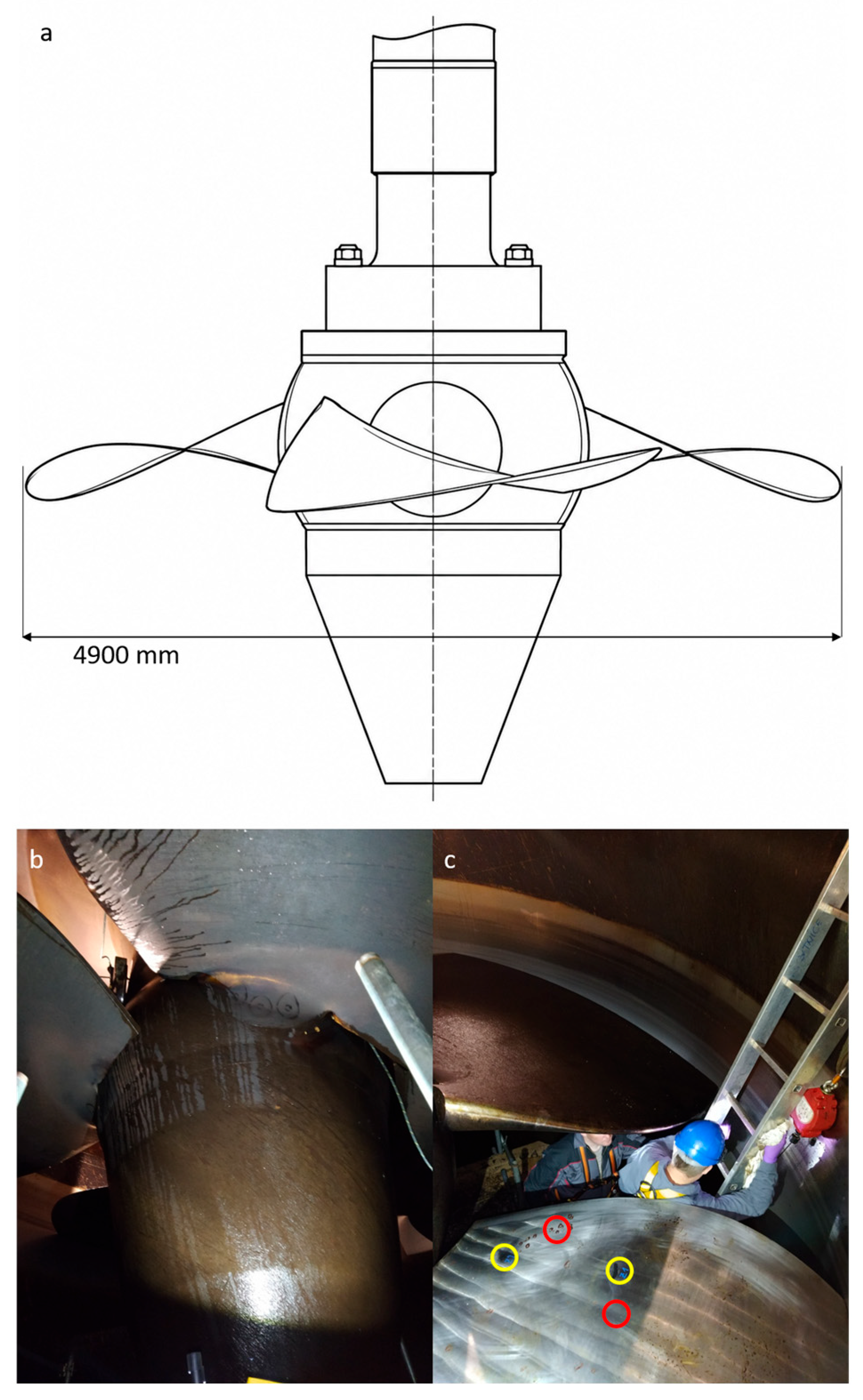
On-site inspections were initially performed to estimate the extent of the damage and its basic morphology. Non-destructive testing (NDT) was conducted via a portable microscope examination (PSM-10, Struers, Ballerup, Denmark) to analyse the microstructure of the blade steel. A small surface of the blade was ground, electrolytically polished (MoviPol-5, Struers, Ballerup, Denmark), and etched with ferichloride (Fisher Scientific, Pittsburgh, PA, USA). On site, water samples were collected for chemical analysis. Hardness measurements (Equotip 550 UCI, Proceq, Zurich, Switzerland) and chemical composition analysis (XRF, X-ray fluorescence spectroscopy, Thermo Scientific Niton XL3t GOLDD+, Thermo Fisher Scientific, Waltham, MA, USA) were performed directly on the turbine blades. Three-dimensional replica techniques (RepliSet, Ballerup, Struers, Denmark) were utilized to map the topography of the damage. Surface deposits, corrosion products and water samples were collected for further laboratory evaluation, wherein scanning electron microscopy (SEM, CrossBeam 550, ZEISS, Oberkochen, Germany) with EDS (OctaneElite, EDAX, Pleasanton, CA, USA) was used. Figure 1 shows a sketch of the Kaplan turbine (Figure 1a); the turbine blades from below, covered in biofilm (Figure 1b); and the locations of the NDT (Figure 1c). Yellow circles in Figure 1c mark the location of 3D putty replicas, while red circles show the locations of XRF and hardness measurements. The diameter of the entire turbine was 4900 mm, and the blade thickness was from 250 to 80 mm.
Water samples were analysed for physicochemical and microbiological parameters including pH, conductivity, alkalinity fractions, hardness components, major ions, and colony-forming units (ACP—aerobic colony count and YM—yeast and mould count). All measurements were performed according to accredited procedures at the National Laboratory of Health, Environment and Food (Slovenia).

3. Results and Discussion

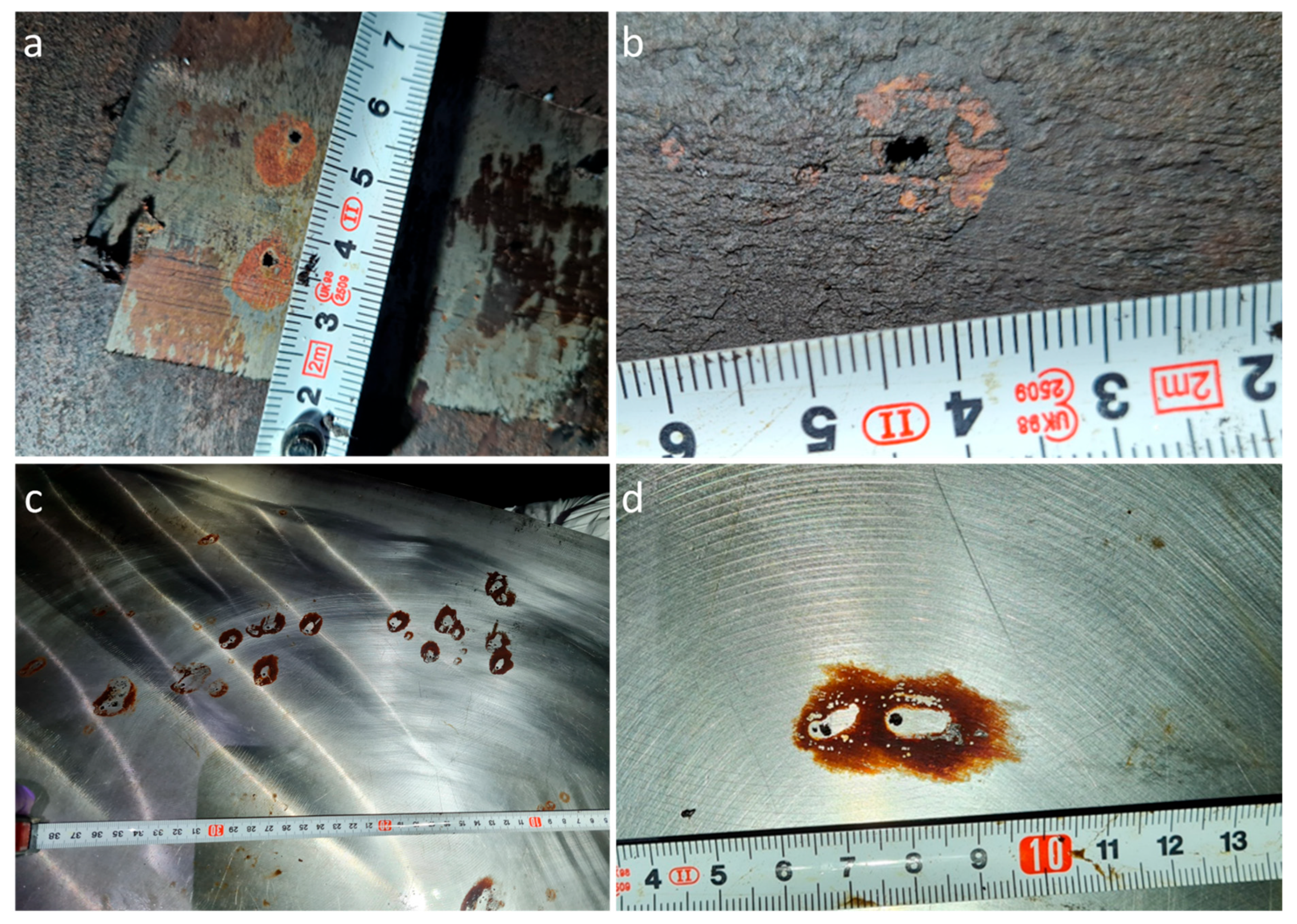
During the inspection of the turbine blades, a dense layer of biological fouling (biofilm) was observed, measuring approximately 0.3 mm in thickness, with corrosion pits found under the biofilm (Figure 2).
Pitting was identified on both the pressure (lower) and suction (upper) surfaces of the blades, as well as on the leading and trailing edges. Visual analysis of the damage distribution indicated no significant preferential sites; the occurrence of the pits appeared to be stochastically distributed across the blade surfaces. The individual corrosion pits were circumscribed by distinct reddish-brown rings (indicative of iron oxide/hydroxide accumulation). The interior of the pits exhibited a dark, matte appearance with a complete absence of metallic lustre, which is evident from panels Figure 2c,d. This specific combination of a thick biofilm and localized pitting points toward microbiologically influenced corrosion (MIC) [29,30].
In addition to the visual assessment, a series of in situ XRF measurements showed interesting results. The elemental composition confirmed that the blade material was consistent with the stoichiometric requirements of G-X4CrNi13-4 martensitic stainless steel (Table 1). Targeted chemical analysis conducted specifically within the corrosion pits (Table 1, spots 3 and 4) revealed locally elevated concentrations of manganese (Mn), reaching values of around 1.4 wt%. This again points to the possibility of microbiologically induced corrosion, where localized manganese enrichment is indicative of secondary mineral precipitation or specific metabolic byproducts of the microorganisms [31].
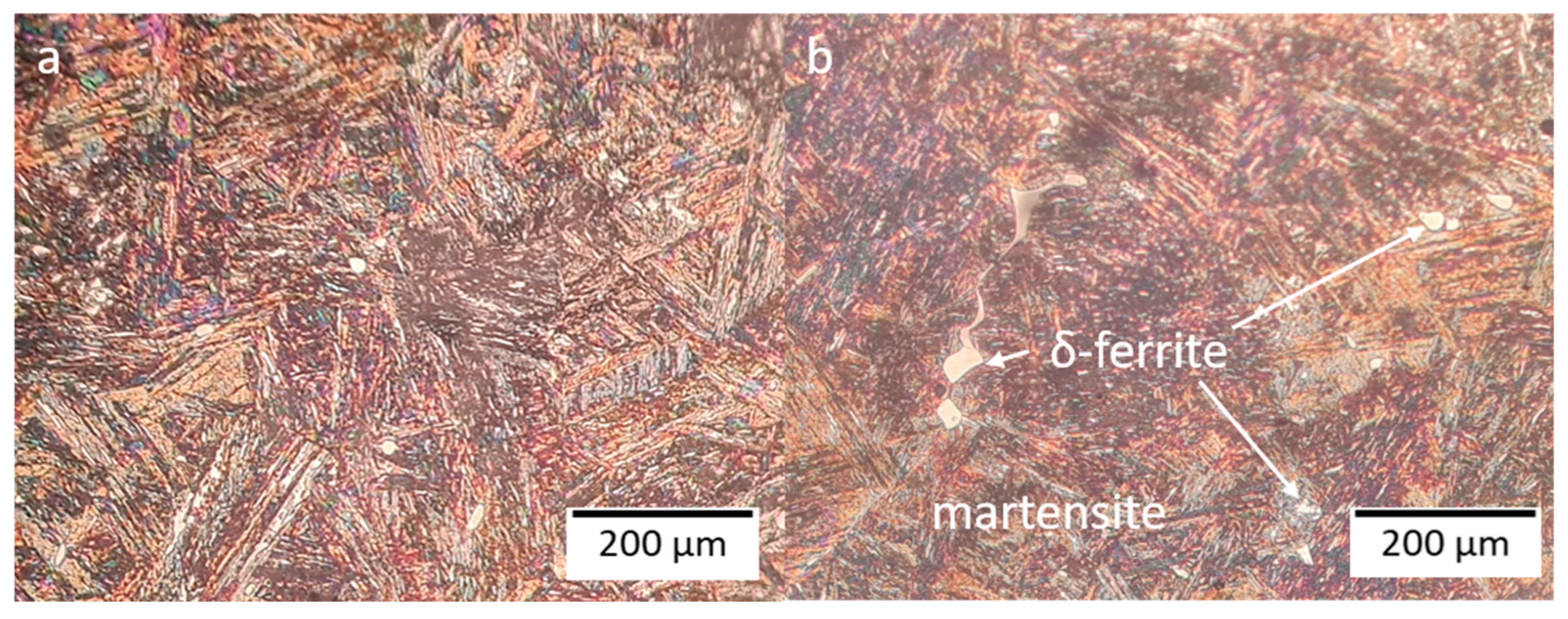
The microstructure of the blade material was observed on site by a portable light microscope (Struers, Ballerup, Denmark) and revealed no anomalies in the tempered martensite matrix structure (Figure 3). The steel microstructure consisted mainly of martensite, but there were some smaller δ-ferrite islands. Some minor non-metallic inclusions were visible; they had a globular shape. This would indicate silicates or modified alumina non-metallic inclusions, but because the microstructure was cast, there was no elongation of deformable inclusions during rolling. The absence of typical non-metallic inclusion shapes made the type and subsequent chemical composition harder to identify with optical light microscopy. The on-site hardness measurements showed appropriate values for this steel grade and the intended application, ranging from 254 HV1 to 284 HV1.
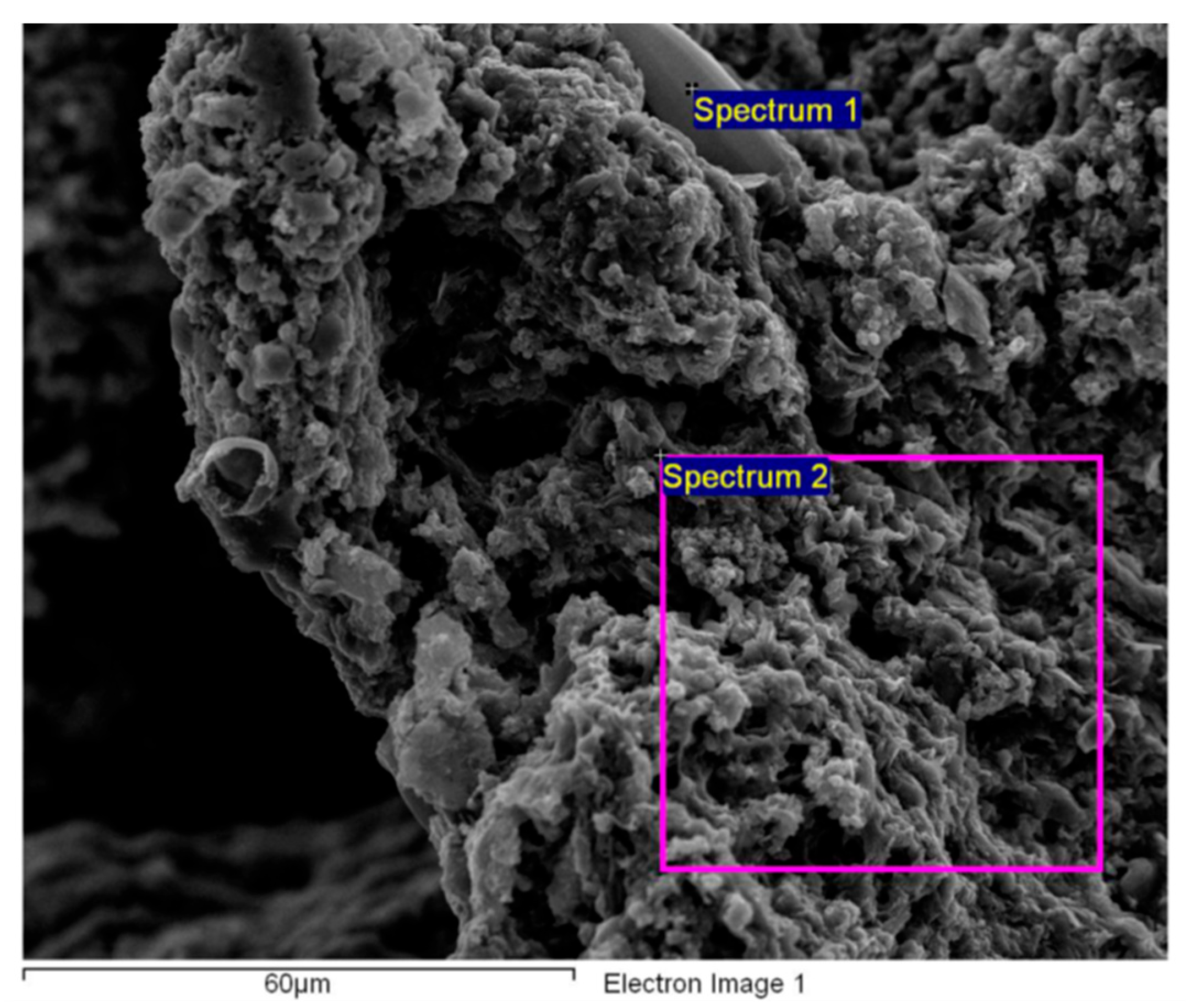
The biofilm that was present on the surface of the turbine blades was scraped off and preserved for analysis. SEM imaging (Figure 4) showed that the biofilm contained remnants of cell metabolic products and several diatoms that are naturally present in river waters. Diatoms are a major group of microscopic, mostly single-celled algae found in freshwater as well as marine environments [32]. SEM-EDS measurements (Table 2, diatom and biofilm in general) revealed locally very high manganese concentrations, exceeding 10 wt%. Such enrichment is consistent with biologically mediated manganese oxidation, where microorganisms accumulate manganese oxides within the biofilm structure [33].
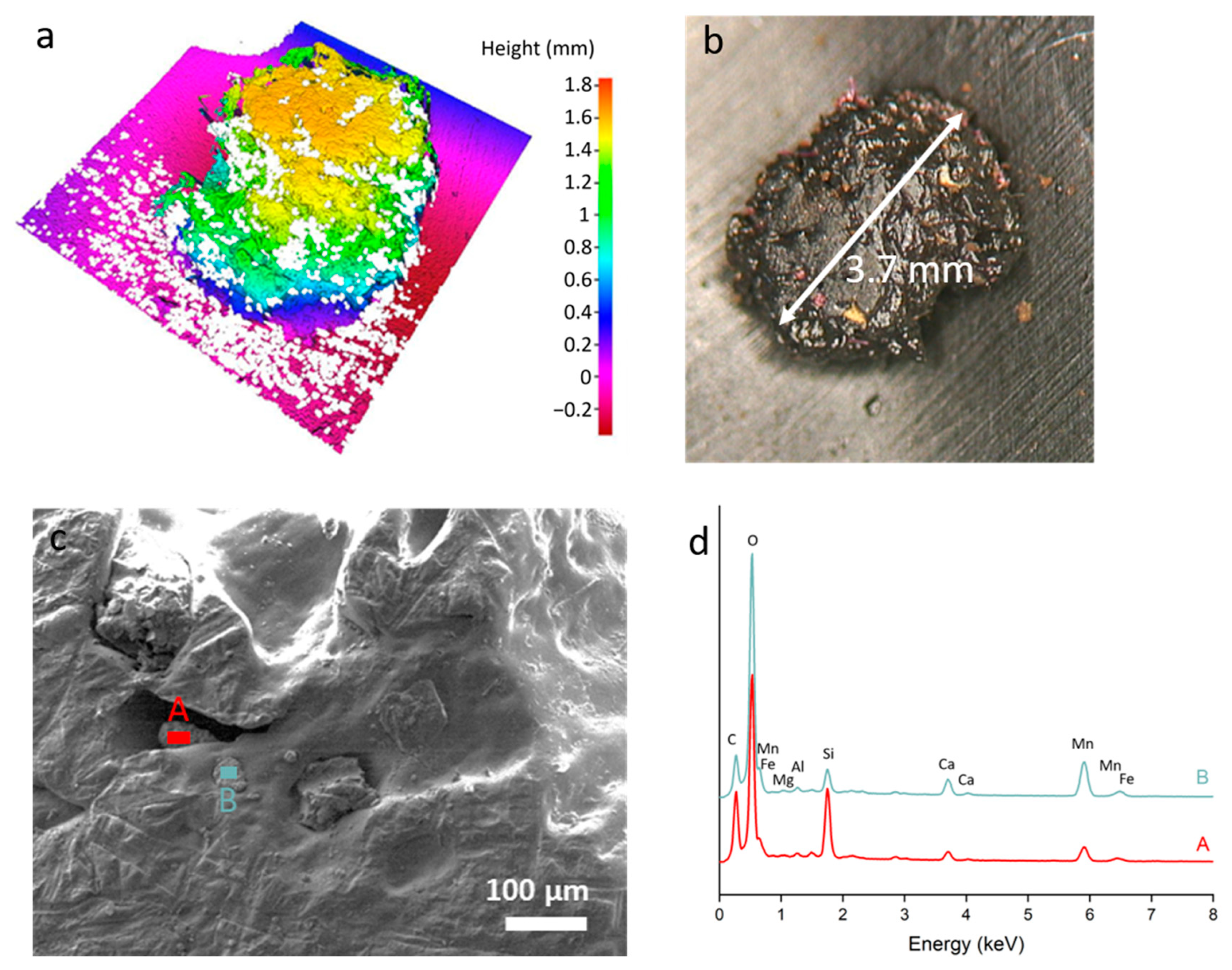
The 3D replicas were scanned by an optical contactless profilometer (Bruker Alicona, Graz, Austria), as shown in Figure 5. The corrosion products that were stuck on the replica revealed a high concentration of Mn in the present oxide (Figure 5 and Table 3). The high amount of carbon is attributed to replica material and not the corrosion product itself. The replicas also showed that the depth of the pits was around 2 mm, while the deepest measured was 3 mm. The time of MIC activity was estimated to be a few (2–3) months, not the whole year. This indicates a relatively high corrosion rate, circa 1 mm/month.
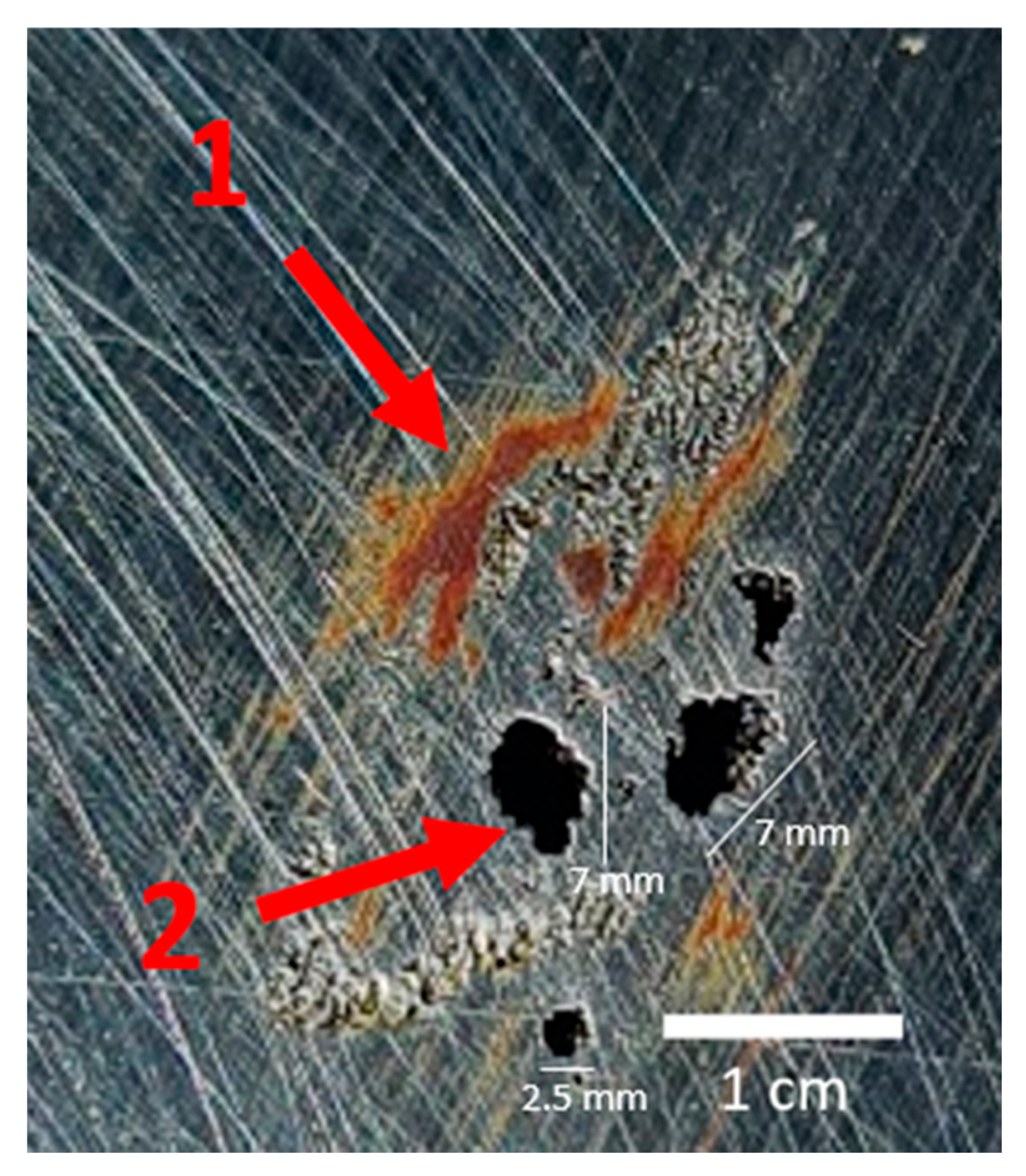
Additional samples of corrosion products were scraped from around the pit (marked 1 in Figure 6), and taken from the bottom of the pit (marked 2 in Figure 6) and analysed by SEM EDS. The analysis results in Table 4 show that the corrosion products around the pit were mainly ferrous oxides, while the pit contained higher levels of manganese oxides.
The presence of Mn(III) and Mn(IV) oxides on stainless steel surface causes ennoblement of the steel, which in turn prevents the formation of the protective passive film of chromium oxides, thus enabling corrosion [34]. Higher Mn oxides can form in two ways. In the first way, the chemical route, Mn2+ can be oxidized in aerated, near-neutral waters; however, the chemical reaction is very slow and, in practice, elevated Mn2+ levels and strong oxidizing elements (Cl) must be present [35,36,37]. In the second way, the biological route, Mn2+ is oxidized by microbial metabolism; the reaction is fast and requires very low Mn2+ levels of around 20 µm/L. In fact, Sly et al. [38] recommend less than 10 µm/L Mn2+ to prevent manganese deposits in drinking water pipes. However, we must consider that the concentrations of ions dissolved in water change beneath the biofilm, especially Cl levels, as the biofilm acts similarly to a crevice [34,39,40].
Manganese-oxidizing microorganisms (MOMOs) appear to be the dominant microbial species involved in MIC in hydroelectric power plants. These microorganisms form a biofilm on the metal surface and produce enzymes that catalyse the oxidation of manganese ions. This leads to the formation of manganese oxides. The manganese oxide that forms is often black or brown in colour, which can make the MIC caused by MOMOs visible [41]. The corrosion rate caused by MOMOs can be much higher than the corrosion rate caused by other types of MIC and can lead to severe pitting and crevice corrosion of the metal surface [42]. This is why the process is relevant for hydroelectric power plants, as the damage occurs during shutdowns, when the water flow rate is low.
The water analysis (Table 5 and Table 6) did not show high concentrations of Mn, but they could be sufficient for MIC initiation by manganese-oxidizing microorganisms. Stagnant water also adds to the problem, especially because the water is untreated and contains microorganisms, as shown in the analysis (Table 6).
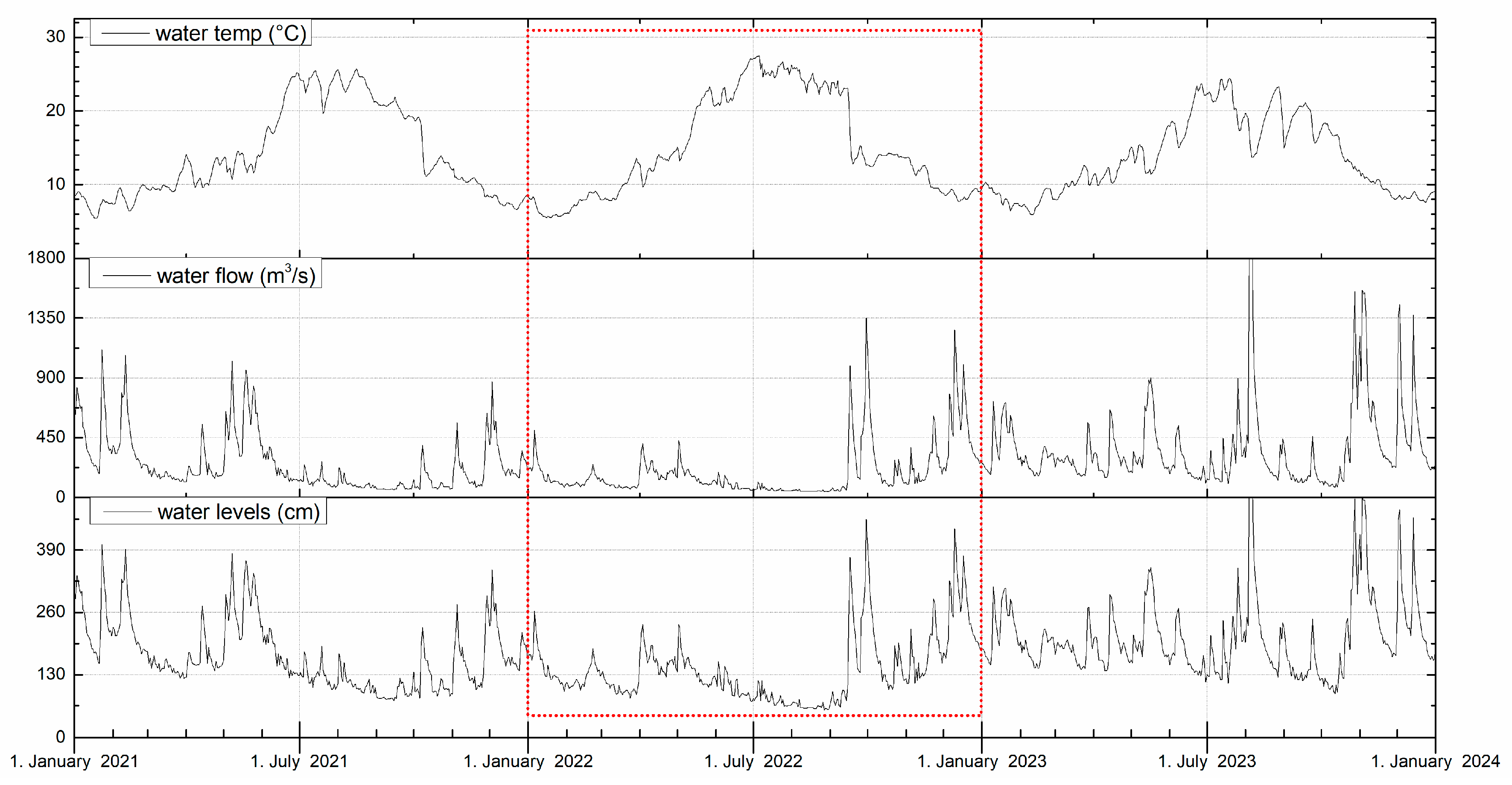
An important factor that can contribute to degradation and corrosion by MIC is stagnant water [43]. In fact, archived monitoring data [44] show abnormally low water levels and water flow at location Brežice I, near the power plant (Figure 7), in the year 2022, which is when the corrosion damage was observed. Another indication of stagnant river conditions is the archived data of hydroelectric power plant production, which show a drastic reduction in 2022 compared to other years, due to the severe drought (Figure 8). The total number of hydroelectric power plants was the same in the years 2022, 2023 and 2024. Overall, the findings suggest a causal chain in which climatic conditions indirectly contributed to lower power generation, which in turn provided conditions for severe corrosion damage by microbial activity and biofilm formation.

4. Conclusions

The investigation results indicate that the corrosion damage observed on the turbine blades was likely caused by microbiologically induced corrosion (MIC).
The MIC process was most likely triggered by the activity of manganese-oxidizing microorganisms, which were able to survive despite low environmental manganese concentrations by forming a thick biofilm.
Biofilm development was likely facilitated by prolonged turbine inactivity, which reduced hydrodynamic flow and allowed microbial surface colonization.
The MIC damage showed roughly 2 mm deep corrosion pits that formed within one year. The exact time of the MIC activity is unknown but is estimated to be a few months.
The resistance of stainless steel to MIC could be improved by increasing the Cr, Ni, Mo, W, and N concentrations in steel, as they increase resistance to chlorine attack.

Author Contributions

Conceptualization, J.B. and B.Ž.; methodology, B.Ž., D.P. and B.Š.B.; validation, T.D., D.P. and B.Š.B.; formal analysis, J.B. and B.Ž.; data curation, B.Ž.; investigation J.B., B.Ž., D.P. and B.Š.B.; visualization, J.B. and B.Š.B.; resources, J.B. and D.P.; writing—original draft preparation, J.B. and B.Š.B.; writing—review and editing, J.B., B.Š.B., B.Ž., D.S., D.P. and T.D.; funding acquisition, J.B., D.S., D.P. and B.Š.B.; supervision, J.B. and D.S.; project administration, B.Ž. and D.P. All authors have read and agreed to the published version of the manuscript.

Funding

This research was funded by ARIS project funding grant No. L2-50060 and ARIS programme funding Nos. P2-0050, P2-0056 and P4-0116.

Data Availability Statement

The data presented in this study are openly available in Zenodo at https://doi.org/10.5281/zenodo.21626440, reference number [45].

Conflicts of Interest

Author Damjan Požun was employed by the company HESS. The remaining authors declare that the research was conducted in the absence of any commercial or financial relationships that could be construed as a potential conflict of interest.

References

  1. Statistical Office of the Republic of Slovenia (SURS). Available online: https://www.stat.si/statweb/en (accessed on 7 September 2026).
  2. Al-Shawesh, G.A.M.; Che Ismail, M.B. Corrosion Challenges in Hydropower Sustainability: Insights from a Three-Decade and Future Direction. In Proceedings of the 2024 ASU International Conference in Emerging Technologies for Sustainability and Intelligent Systems (ICETSIS), Manama, Bahrain, 28–29 January 2024; pp. 1212–1218. [Google Scholar] [CrossRef] [Scilit]
  3. Khalid Mohammed Ridha, W.; Reza Kashyzadeh, K.; Ghorbani, S. Common Failures in Hydraulic Kaplan Turbine Blades and Practical Solutions. Materials 2023, 16, 3303. [Google Scholar] [CrossRef] [Scilit] [PubMed]
  4. Musa, M.; Ghobrial, L.; Sasthav, C.; Heineman, J.; Rencheck, M.; Stewart, K.; DeNeale, S.; Tseng, C.-Y.; White, D.; Davis, L.; et al. Advanced Manufacturing and Materials for Hydropower: Challenges and Opportunities; Oak Ridge National Laboratory (ORNL): Oak Ridge, TN, USA, 2023. [Google Scholar] [CrossRef] [Scilit]
  5. Dastgerdi, A.A.; Brenna, A.; Ormellese, M.; Pedeferri, M.P.; Bolzoni, F. Experimental Design to Study the Influence of Temperature, PH, and Chloride Concentration on the Pitting and Crevice Corrosion of UNS S30403 Stainless Steel. Corros. Sci. 2019, 159, 108160. [Google Scholar] [CrossRef] [Scilit]
  6. Linhardt, P.; Nichtawitz, A. MIC in Hydroelectric Powerplants. In Proceedings of the 57th NACE International Annual Corrosion Conference and Exposition, San Diego, CA, USA, 16–21 March 2003. [Google Scholar] [CrossRef] [Scilit]
  7. Predescu, C.; Berbecaru, A.C.; Coman, G.; Sohaciu, M.G.; Predescu, A.M.; Matei, E.; Dumitrescu, R.E.; Ciuca, S.; Gherghescu, I.A. Corrosion Resistance Evaluation of Some Stainless Steels Used in Manufacture of Hydraulic Turbine Runner Blades. Rev. Chim. 2019, 70, 2491–2496. [Google Scholar] [CrossRef] [Scilit]
  8. Kaňa, V.; Krutiš, V.; Bořil, P.; Záděra, A.; Rimko, M. Influence of Heat Treatment and Nickel Content on the Properties of the Gx4crni13-4 Steel. Arch. Metall. Mater. 2021, 66, 37–41. [Google Scholar] [CrossRef] [Scilit]
  9. Godin, S.; Hamel-Akré, J.; Thibault, D.; Serventi, A.M.; Bocher, P. Ni and Mn Enrichment Effects on Reformed Austenite: Thermodynamical and Low Cycle Fatigue Stability of 13%Cr–4%Ni and 13%Cr–6%Ni Stainless Steels. SN Appl. Sci. 2020, 2, 382. [Google Scholar] [CrossRef] [Scilit]
  10. Vijaya Prakash, B.; Murali, B.; Muthu Kumaran, A.; Pandiyarajan, V.; Shailendra Kumar, B.; Duraimurugan, P. Corrosion-Fatigue Properties of 13%Cr4%Ni Steel ForHydroturbine Components. Mater. Today Proc. 2024; in press. [CrossRef] [Scilit]
  11. Linhardt, P. Mikrobielle Werkstoffzerstörung—Simulation, Schadensfälle Und Gegenmaßnahmen Für Metallische Werkstoffe: Manganoxidierende Bakterien Und Lochkorrosion an Turbinenteilen Aus CrNi-Stahl in Einem Laufkraftwerk. Mater. Corros. 1994, 45, 79–83. [Google Scholar] [CrossRef] [Scilit]
  12. Canales, C.; Galarce, C.; Rubio, F.; Pineda, F.; Anguita, J.; Barros, R.; Parragué, M.; Daille, L.K.; Aguirre, J.; Armijo, F.; et al. Testing the Test: A Comparative Study of Marine Microbial Corrosion under Laboratory and Field Conditions. ACS Omega 2021, 6, 13496–13507. [Google Scholar] [CrossRef] [Scilit] [PubMed]
  13. Little, B.J.; Hinks, J.; Blackwood, D.J. Microbially Influenced Corrosion: Towards an Interdisciplinary Perspective on Mechanisms. Int. Biodeterior. Biodegrad. 2020, 154, 105062. [Google Scholar] [CrossRef] [Scilit]
  14. Ackerson, T.N. Metallographic Examination of Microbiologically Influenced Corrosion in a Fire Truck Water Tank. In ASM Failure Analysis Case Histories: Automobiles and Trucks; ASM International: Mumbai, India, 2019. [Google Scholar]
  15. Al-Refai, F.; Al-Beajan, A.; Al-Qanaee, F.; Abdelmotelb, A.; Selvaraj, V. Mitigation of Microbiologically Influenced Corrosion in Stagnant Fire Water Lines. In Proceedings of the AMPP Annual Conference + Expo, Denver, CO, USA, 19–23 March 2023; pp. 1–11. [Google Scholar] [CrossRef] [Scilit]
  16. Jia, Y.; Qi, B.; Zhao, J.; Guo, X.; Dong, W.; Lv, X.; Dai, Z.; Yuan, Y. Recent Challenges and Research Progress in Microbiologically Influenced Corrosion in Drinking Water Distribution Systems. Environ. Technol. Innov. 2025, 38, 104054. [Google Scholar] [CrossRef] [Scilit]
  17. Liu, S.; Gunawan, C.; Barraud, N.; Rice, S.A.; Harry, E.J.; Amal, R. Understanding, Monitoring, and Controlling Biofilm Growth in Drinking Water Distribution Systems. Environ. Sci. Technol. 2016, 50, 8954–8976. [Google Scholar] [CrossRef] [Scilit] [PubMed]
  18. Zhang, H.-J.; Dexter, S.C. Effect of Marine Biofilms on Initiation Time of Crevice Corrosion for Stainless Steels. In Proceedings of the 50th NACE International Annual Corrosion Conference and Exposition, Orlando, FL, USA, 26–31 March 1995; pp. 1–14. [Google Scholar] [CrossRef] [Scilit]
  19. Zuo, P.; Zhang, Z.; Zhang, Z.; Zhang, B.; Zhuo, X.; Yong, X.; Wu, J. Effect of Sulfate-Reducing Bacteria on Crevice Corrosion of 316L Stainless Steel. J. Mater. Res. Technol. 2025, 35, 6505–6518. [Google Scholar] [CrossRef] [Scilit]
  20. Beusen, A.H.W.; Bouwman, A.F.; Van Beek, L.P.H.; Mogollón, J.M.; Middelburg, J.J. Global Riverine N and P Transport to Ocean Increased during the 20th Century despite Increased Retention along the Aquatic Continuum. Biogeosciences 2016, 13, 2441–2451. [Google Scholar] [CrossRef] [Scilit]
  21. Chen, X.; He, D.; Zhou, L.; Cao, Y.; Li, Z. Influence of Hydropower Stations on the Water Microbiota in the Downstream of Jinsha River, China. PeerJ 2020, 8, e9500. [Google Scholar] [CrossRef] [Scilit] [PubMed]
  22. Sunardi, S.; Ariyani, M.; Agustian, M.; Withaningsih, S.; Parikesit, P.; Juahir, H.; Ismail, A.; Abdoellah, O.S. Water Corrosivity of Polluted Reservoir and Hydropower Sustainability. Sci. Rep. 2020, 10, 11110. [Google Scholar] [CrossRef] [Scilit] [PubMed]
  23. Singh, M.; Pokhrel, M. A Fuzzy Logic-Possibilistic Methodology for Risk-Based Inspection (RBI) Planning of Oil and Gas Piping Subjected to Microbiologically Influenced Corrosion (MIC). Int. J. Press. Vessel. Pip. 2018, 159, 45–54. [Google Scholar] [CrossRef] [Scilit]
  24. Telegdi, J.; Shaban, A.; Trif, L. Microbiologically Influenced Corrosion (MIC). In Trends in Oil and Gas Corrosion Research and Technologies; Woodhead Publishing: Cambridge, UK, 2017; pp. 191–214. [Google Scholar] [CrossRef] [Scilit]
  25. Enning, D.; Venzlaff, H.; Garrelfs, J.; Dinh, H.T.; Meyer, V.; Mayrhofer, K.; Hassel, A.W.; Stratmann, M.; Widdel, F. Marine Sulfate-Reducing Bacteria Cause Serious Corrosion of Iron under Electroconductive Biogenic Mineral Crust. Environ. Microbiol. 2012, 14, 1772–1787. [Google Scholar] [CrossRef] [Scilit] [PubMed]
  26. Lin, J.; Ballim, R. Biocorrosion Control: Current Strategies and Promising Alternatives. Afr. J. Biotechnol. 2012, 11, 15736–15747. [Google Scholar] [CrossRef] [Scilit]
  27. Tebo, B.M.; Bargar, J.R.; Clement, B.G.; Dick, G.J.; Murray, K.J.; Parker, D.; Verity, R.; Webb, S.M. Biogenic Manganese Oxides: Properties and Mechanisms of Formation. Annu. Rev. Earth Planet. Sci. 2004, 32, 287–328. [Google Scholar] [CrossRef] [Scilit]
  28. Li, H.; Sun, M.; Du, M.; Zheng, Z.; Ma, L. Mechanism Underlying the Acceleration of Pitting Corrosion of B30 Copper–Nickel Alloy by Pseudomonas Aeruginosa. Front. Microbiol. 2023, 14, 1149110. [Google Scholar] [CrossRef] [Scilit] [PubMed]
  29. Salgar-Chaparro, S.J.; Darwin, A.; Kaksonen, A.H.; Machuca, L.L. Carbon Steel Corrosion by Bacteria from Failed Seal Rings at an Offshore Facility. Sci. Rep. 2020, 10, 12287. [Google Scholar] [CrossRef] [Scilit] [PubMed]
  30. Stamps, B.W.; Bojanowski, C.L.; Drake, C.A.; Nunn, H.S.; Lloyd, P.F.; Floyd, J.G.; Emmerich, K.A.; Neal, A.R.; Crookes-Goodson, W.J.; Stevenson, B.S. In Situ Linkage of Fungal and Bacterial Proliferation to Microbiologically Influenced Corrosion in B20 Biodiesel Storage Tanks. Front. Microbiol. 2020, 11, 167. [Google Scholar] [CrossRef] [Scilit] [PubMed]
  31. Little, B.J.; Wagner, P.A.; Lewandowski, Z. The Role of Biomineralization in Microbiologically Influenced Corrosion. In Proceedings of the 53rd NACE International Annual Corrosion Conference and Exposition, San Diego, CA, USA, 22–27 March 1998. [Google Scholar] [CrossRef] [Scilit]
  32. Wang, J.; Liu, Q.; Zhao, X.; Borthwick, A.G.L.; Liu, Y.; Chen, Q.; Ni, J. Molecular Biogeography of Planktonic and Benthic Diatoms in the Yangtze River. Microbiome 2019, 7, 153. [Google Scholar] [CrossRef] [Scilit] [PubMed]
  33. Spiro, T.G.; Bargar, J.R.; Sposito, G.; Tebo, B.M. Bacteriogenic Manganese Oxides. Acc. Chem. Res. 2010, 43, 2–9. [Google Scholar] [CrossRef] [Scilit] [PubMed]
  34. Liao, J.; Fukui, H.; Urakami, T.; Morisaki, H. Effect of Biofilm on Ennoblement and Localized Corrosion of Stainless Steel in Fresh Dam-Water. Corros. Sci. 2010, 52, 1393–1403. [Google Scholar] [CrossRef] [Scilit]
  35. Linhardt, P. MIC of Stainless Steel in Freshwater and the Cathodic Behaviour of Biomineralized Mn-Oxides. Electrochim. Acta 2006, 51, 6081–6084. [Google Scholar] [CrossRef] [Scilit]
  36. Linhardt, P. Corrosion of Metals in Natural Waters Influenced by Manganese Oxidizing Microorganisms. Biodegradation 1997, 8, 201–210. [Google Scholar] [CrossRef] [Scilit]
  37. Nealson, K.H.; Tebo, B.M.; Rosson, R.A. Occurrence and Mechanisms of Microbial Oxidation of Manganese. Adv. Appl. Microbiol. 1988, 33, 279–318. [Google Scholar] [CrossRef] [Scilit]
  38. Sly, L.I.; Hodgkinson, M.C.; Arunpairojana, V. Deposition of Manganese in a Drinking Water Distribution System. Appl. Environ. Microbiol. 1990, 56, 628–639. [Google Scholar] [CrossRef] [Scilit] [PubMed]
  39. Zhang, Z.; Li, Z.; Wu, F.; Xia, J.; Huang, K.; Zhang, B.; Wu, J. A Comparison Study of Crevice Corrosion on Typical Stainless Steels under Biofouling and Artificial Configurations. npj Mater. Degrad. 2022, 6, 85. [Google Scholar] [CrossRef] [Scilit]
  40. Wu, J.; Chen, Z.; Li, G.; Teng, K.; Ge, L.; Chen, Y.; Li, L.; Qu, Q. Visualisation and Quantification of Biofilm-Substrate Interface Microenvironments Based on a Fungal-Bacterial Interaction Model: An in-Depth Investigation into Microbially Mediated Corrosion Processes. Corros. Sci. 2025, 246, 112725. [Google Scholar] [CrossRef] [Scilit]
  41. Linhardt, P. Microbially Influenced Corrosion of Stainless Steel by Manganese Oxidizing Microorganisms. Mater. Corros. 2004, 55, 158–163. [Google Scholar] [CrossRef] [Scilit]
  42. Wakai, S.; Eno, N.; Miyanaga, K.; Mizukami, H.; Sunaba, T.; Miyano, Y. Dynamics of Microbial Communities on the Corrosion Behavior of Steel in Freshwater Environment. npj Mater. Degrad. 2022, 6, 45. [Google Scholar] [CrossRef] [Scilit]
  43. Weisser, K.; Howell, A.G.; Puckorius, P.R. Stagnant Water Corrosion—Case Histories of Failures in Non-Flowing Water Systems. In Proceedings of the 48th NACE International Annual Corrosion Conference and Exposition, New Orleans, LA, USA, 7–12 March 1993; pp. 1–8. [Google Scholar] [CrossRef] [Scilit]
  44. Slovenian Environment Agency (ARSO). Available online: https://www.arso.gov.si (accessed on 7 September 2026).
  45. Burja, J.; Žužek, B.; Šetina Batič, B. Dataset Supporting Publication “Microbiologically Influenced Corrosion on Turbine Blades in a Hydroelectric Power Plant”. Zenodo. 2026. Available online: https://zenodo.org/records/21626440 (accessed on 7 September 2026).
Figure 1. Turbine blade setting: (a) a sketch of the Kaplan turbine, (b) a photo of the turbine blades, and (c) NDT areas on the turbine blades.
Metals 16 01039 g001
Figure 2. Visual inspection of the affected blades, showing (a,b) observed pits and biofilm and (c,d) corrosion damage under the biofilm.
Metals 16 01039 g002
Figure 3. Microstructure of the turbine blade: (a) representative microstructure consisting of tempered martensite; (b) area with pronounced δ-ferrite and marked phases.
Metals 16 01039 g003
Figure 4. A SEM image of the biofilm, with marked areas for the EDS analysis given in Table 2.
Metals 16 01039 g004
Figure 5. A replica of a corrosion pit with EDS analysis of the corrosion products on the replica: (a) the 3D scanned replica; (b) a macro image of the replica; (c) a SEM image of corrosion products trapped in the replica with marked SEM EDS analysis spots A and B; (d) SEM EDS spectra of the areas marked A and B in panel (c).
Metals 16 01039 g005
Figure 6. Pitting damage. Samples of the corrosion product were taken from locations marked with arrows, 1 around the pit (brown blemish) and 2 from the pit (pit bottom).
Metals 16 01039 g006
Figure 7. Water levels, water flow and water temperature measurements at the location Brežice I, near the hydroelectric power plant, in 2022. The data show extreme drought, characterized by consistently low water levels and water flows until mid-August, marked by red bracket, Data from Ref. [44].
Metals 16 01039 g007
Figure 8. Data on hydroelectric power plant energy production per year, red arrow marking the year of analysis, Data from Ref. [1].
Metals 16 01039 g008
Table 1. XRF on-site measurements for different locations on the turbine blade. Measurements are in wt%.
LocationMoCuNiFeMnCrVSi
Turbine blade spot 1, no damage0.460.113.8981.760.8212.580.040.3
Turbine blade spot 2, no damage0.460.093.8881.750.8412.580.040.31
Turbine blade spot 3, corrosion pit0.450.123.881.361.2812.440.050.45
Turbine blade spot 4, corrosion pit0.470.143.7681.221.4312.460.050.43
Turbine blade spot 5, no damage0.450.113.7881.920.8212.440.050.31
Table 2. EDS results of biofilm elemental composition (from Figure 3).
COMgAlSiPKCaMnFe
1—Diatom18.042.00.10.417.81.90.44.412.82.2
2—Biofilm23.240.30.94.58.00.21.15.811.54.5
Table 3. EDS analysis of the corrosion product stuck on the replica. Sites A and B are marked in Figure 5.
COMgAlSiCaMnFe
Site A39.644.50.50.54.91.87.40.9
Site B23.548.10.60.323.621.10.7
Table 4. XRF measurements (wt.%) of the scraped corrosion products.
CONaMgAlSiCaCrMnFeNi
1—Brown blemish1.043.5//0.30.9/0.80.452.30.7
2—Pit bottom39.644.5/0.50.54.91.8/7.40.9/
Table 5. Physical parameters of Sava water (abbreviations: pH—acidity/alkalinity; conductivity—ionic content; p—phenolphthalein alkalinity; m—total (methyl-orange) alkalinity; CT—total hardness; KT—carbonate hardness; NKT—non-carbonate hardness; CaT—calcium hardness; MgT—magnesium hardness).
pHConductivitypmCTKTNKTCaTMgT
µs/cmmEq/LmEq/LmEq/LmEq/LmEq/LmEq/LmEq/L
Brežice water intake8.394200.34.35.24.30.92.72.5
Brežice Sava River8.563960.54.35.24.30.92.72.5
Table 6. Chemical and biological parameters of Sava water (abbreviations: Fe—iron; Mn—manganese; PO43−—phosphate; SO42−—sulphate; Cl—chloride; NO3—nitrate; SiO2—dissolved silica; ACP—aerobic colony count; YM—yeast and mould count).
FeMnPO43−SO42−ClNO3SiO2ACPYM
µg/Lµg/Lmg/Lmg/Lmg/Lmg/Lµg/Lno. of colonies/mLno. of colonies/mL
Brežice water intake3018017.8212.835.48603400
Brežice Sava River287018.1813.315.3386900
Disclaimer/Publisher’s Note: The statements, opinions and data contained in all publications are solely those of the individual author(s) and contributor(s) and not of MDPI and/or the editor(s). MDPI and/or the editor(s) disclaim responsibility for any injury to people or property resulting from any ideas, methods, instructions or products referred to in the content.