3.2. Thermal Treatment of the Black Mass
Given the significant lithium content detected in the black mass, further processing steps will be undertaken to recover the lithium. These subsequent treatments aim to separate and recover lithium from the remaining matrix through metallurgical methods.
To the best of our knowledge, research on lithium recovery from Li-SOCl
2 batteries is limited. In the present work, lithium recovery from the obtained black mass was investigated based on lithium recovery processes from other types of black masses. The overall process consists of a thermal treatment step, followed by a hydrolysis step [
16].
For the thermal treatment, a homogeneous mixture of black mass and carbon black as the reducing agent (20 wt.%) was placed in an alumina crucible. N2 flow was used to maintain an inert atmosphere while the mixture was heated in the furnace at a set temperature. Several conditions were assessed to analyze the influence of the thermal treatment.
Table 2 summarizes the thermal treatment conditions employed, along with the amount of Li lost. It should be noted that lithium loss was determined by comparing the lithium amount in the mixture before and after the thermal treatment after digestion of the corresponding solids. As shown, the combination of high temperatures and prolonged thermal treatment resulted in significant Li loss (test 1). A similar trend was observed when the thermal treatment was carried out at short times at elevated temperatures (test 2).
These results can be attributed to the increased vapor pressure of lithium-containing species at elevated temperatures [
17]. Unlike conventional lithium-ion batteries, where lithium is strongly bound within complex transition metal oxide frameworks, the black mass from Li-SOCl
2 batteries contains lithium predominantly as LiCl, which is generated during battery discharge. Although the boiling point of LiCl is substantially higher than the temperatures investigated in this study, volatilization can occur well below the boiling temperature because vapor pressure increases continuously with temperature and may become significant even in the solid state. Consequently, prolonged thermal treatment at 850 °C promotes lithium loss through volatilization, whereas operation at 500 °C effectively limits this phenomenon. Furthermore, the complex chemical composition of the black mass may lead to the formation of volatile lithium-containing species during thermal treatment, making the overall volatilization behavior more complex than that of pure LiCl alone. Therefore, careful optimization of the treatment temperature is essential to maximize lithium retention while ensuring the decomposition of sulfur-containing compounds.
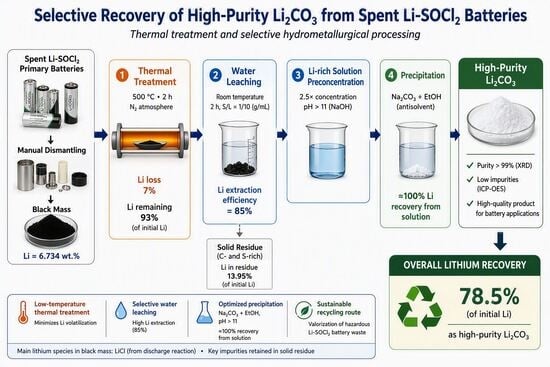
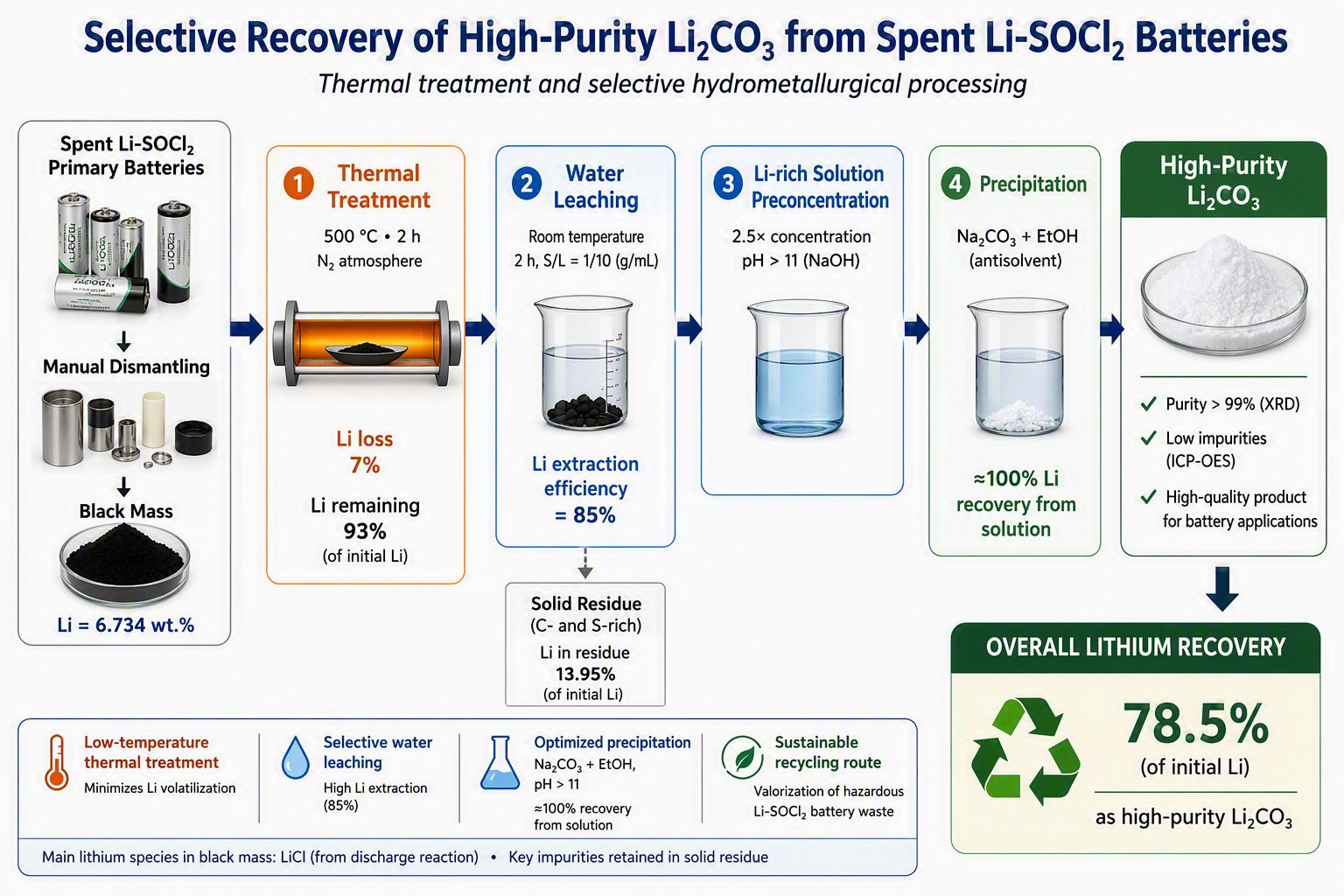
The first stage involves a thermal treatment of the black mass at moderate temperatures. Temperature optimization is particularly important because lithium loss may occur through volatilization of lithium-containing species during thermal processing.
After the carboreduction tests, the thermally treated black mass mixture was subjected to a hydrolysis step at room temperature for 2 h with constant mechanical stirring. Subsequently, the final suspension was filtered, and each fraction was analyzed independently. A comparison of the chemical compositions of the carboreduced and the water-leached carboreduced black mass is exhibited in
Table 3. While the lithium content in the thermally treated black mass was measured by ICP-OES at 6.29 wt.%, this value decreased significantly to 1.43 wt.% following the water-leaching step, demonstrating the high efficiency of the process.
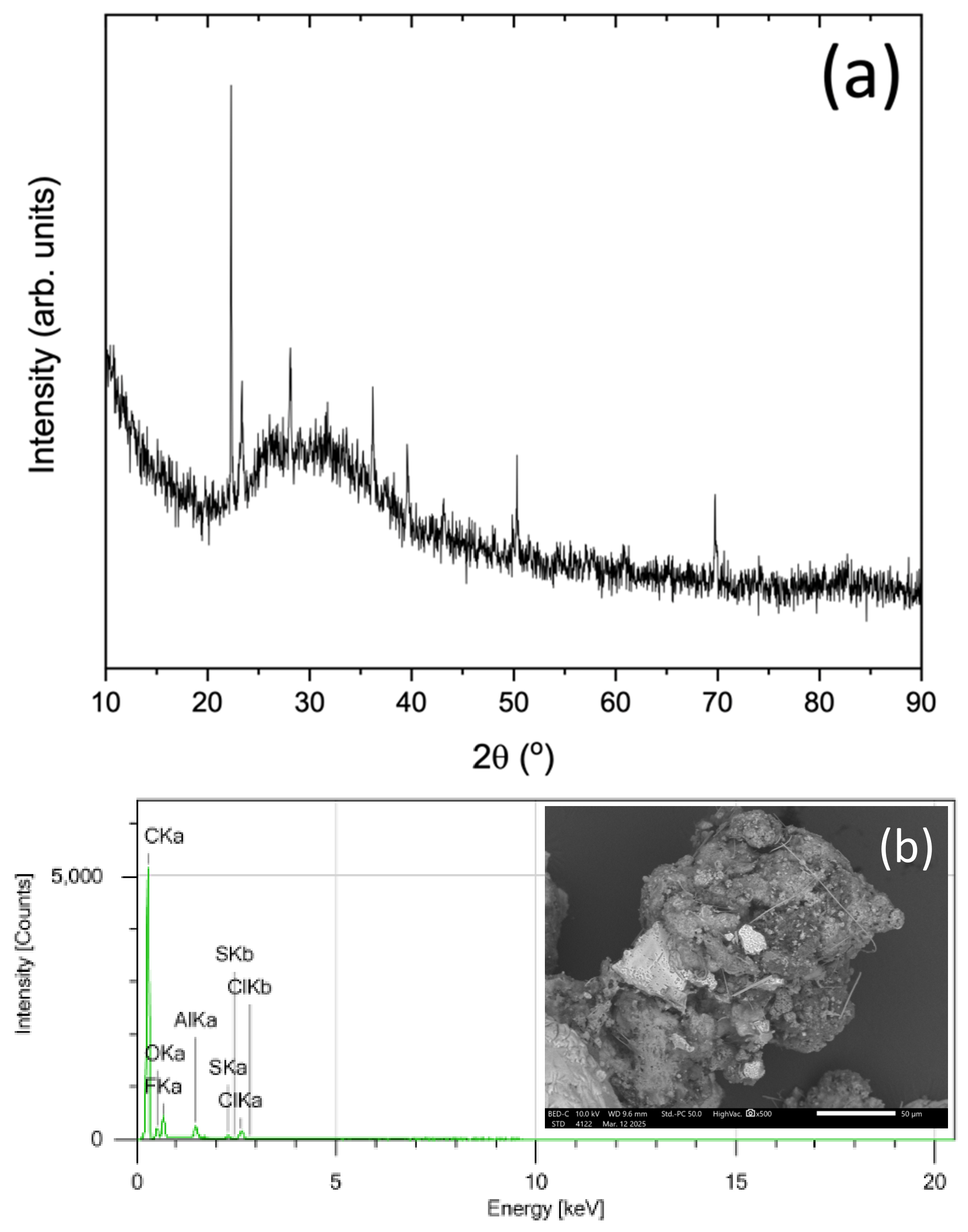
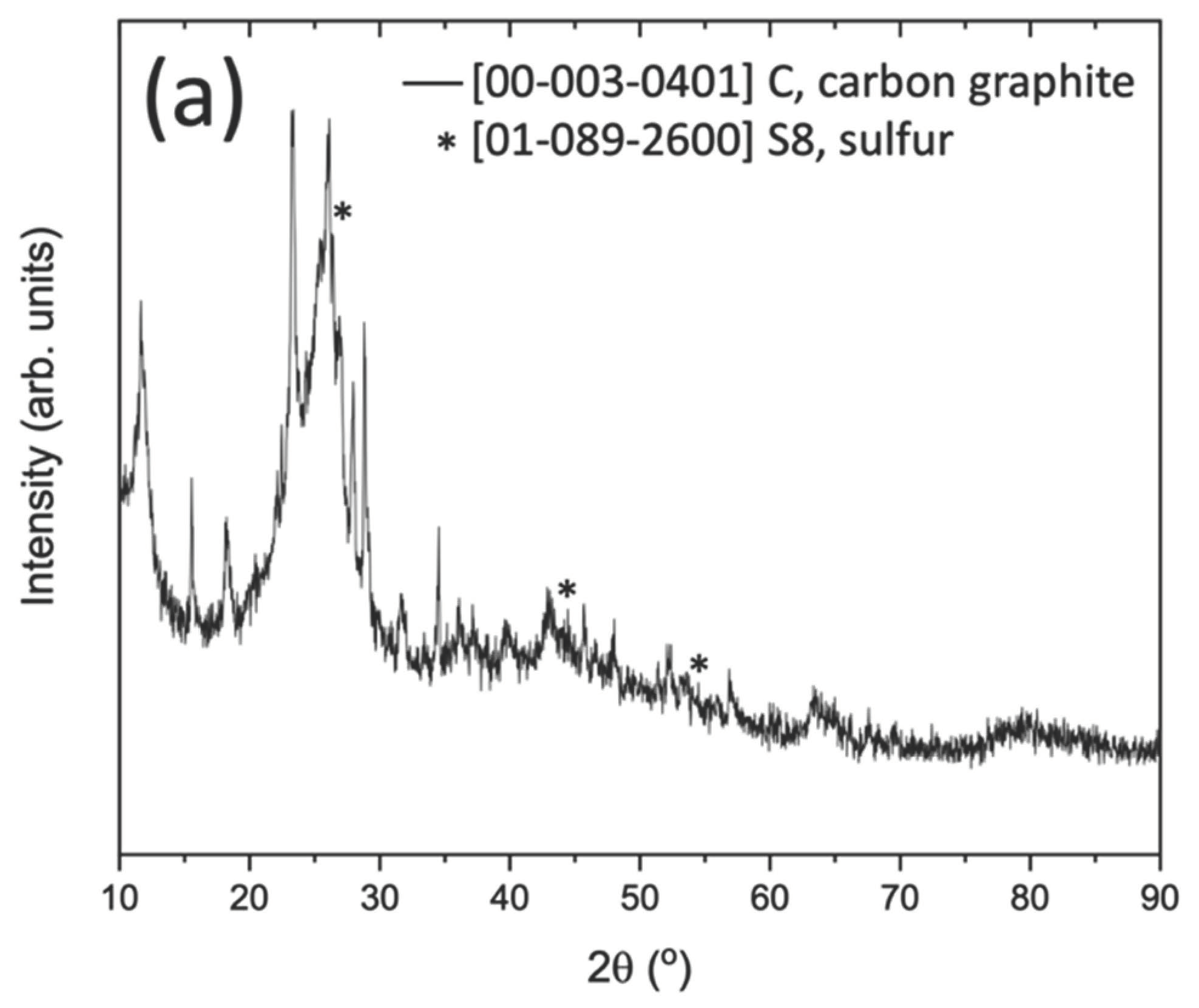
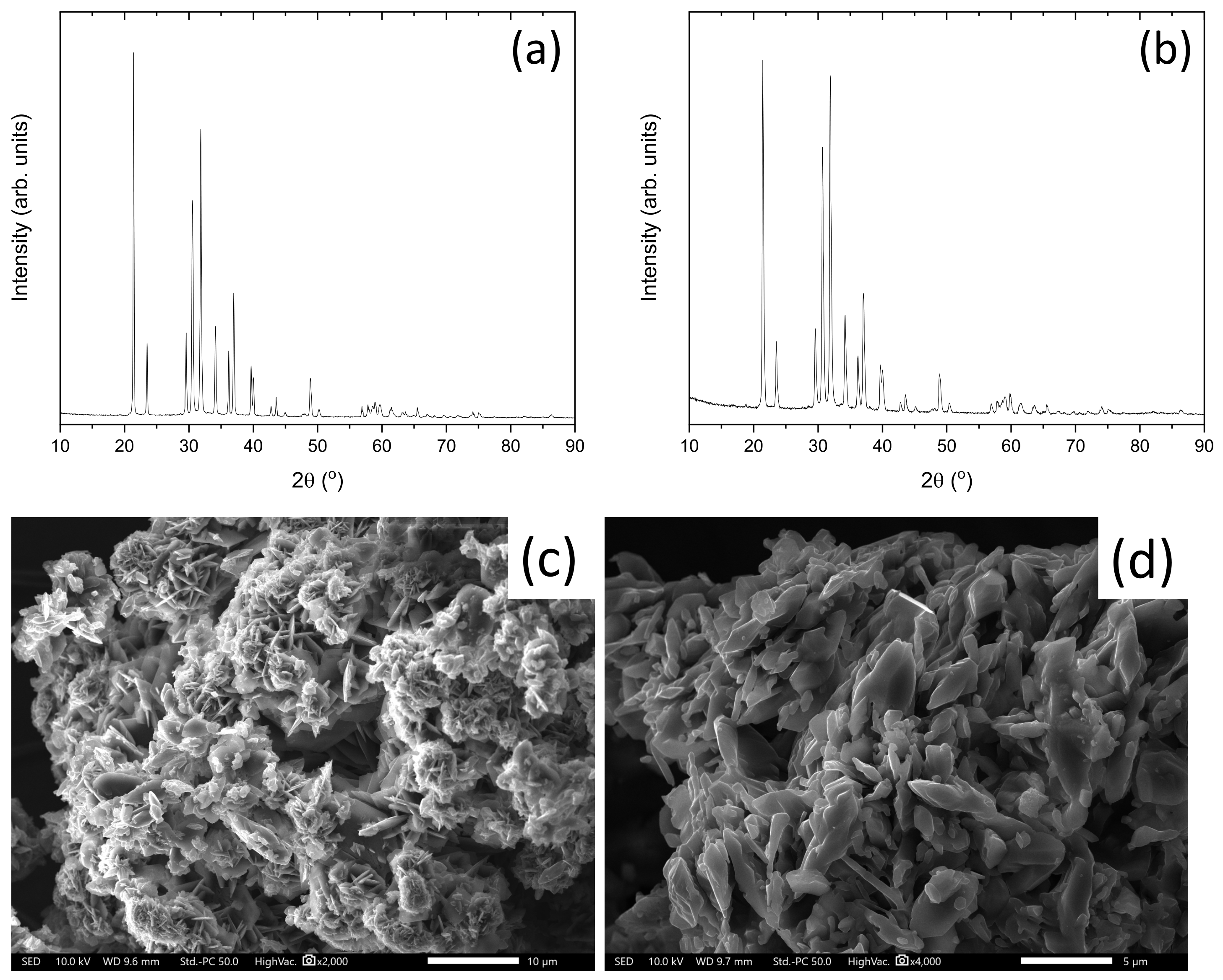
In addition, the XRD pattern (
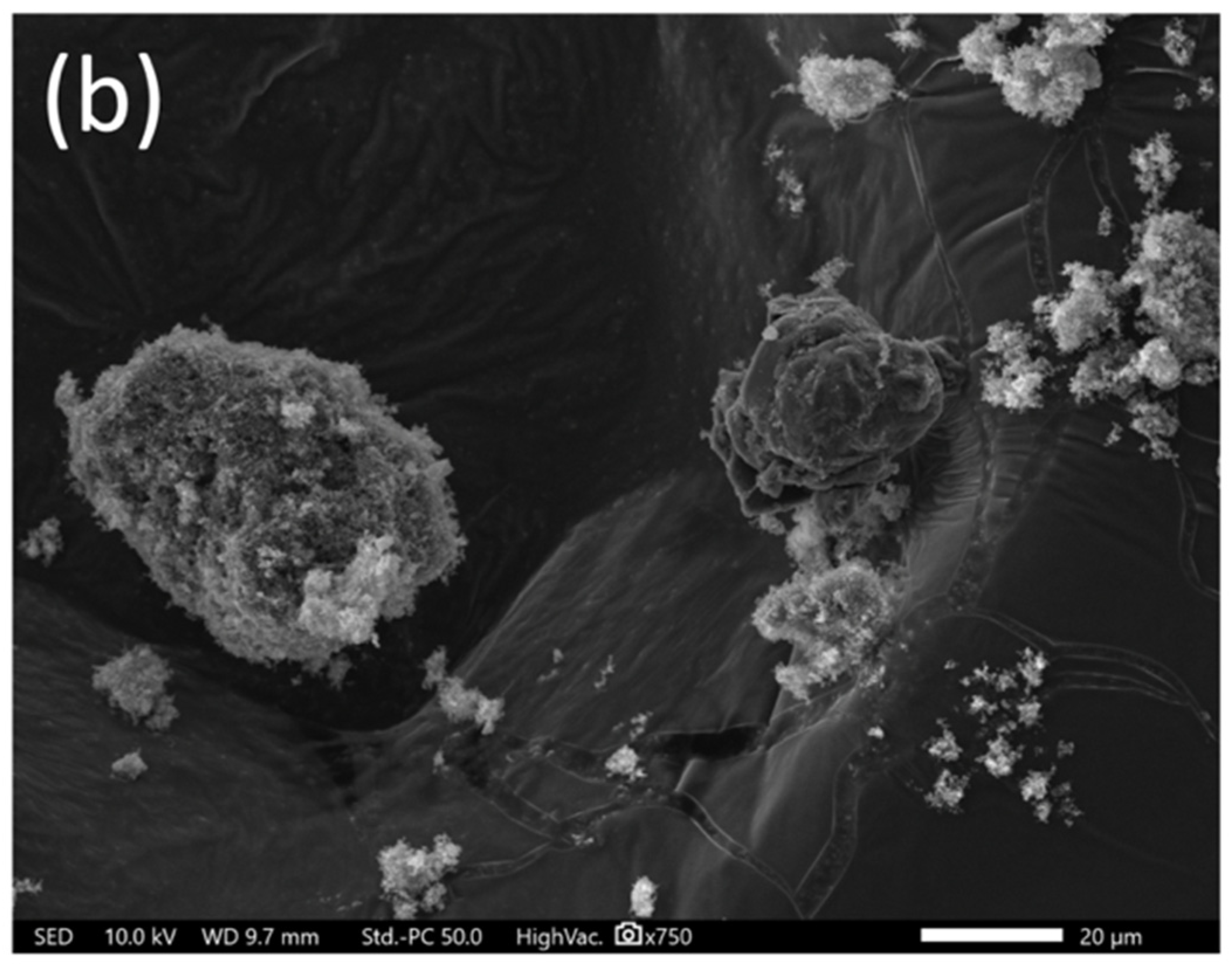
Figure 5a) of the solid fraction reveals a predominantly amorphous carbon graphite structure, where some crystalline reflections can be observed, attributable to sulfur phase [card nº 01-089-260]. This result is consistent with the composition of the initial black mass treated. The SEM micrograph (
Figure 5b) reveals a heterogeneous surface topography, characterized by irregular, micron-sized particulate agglomerates anchored onto larger, smooth carbonaceous sheets (graphite matrix).
The chemical composition of the aqueous fraction was also determined from ICP-OES measurements, as shown in
Table 4. Lithium was identified as the predominant species within the recovered liquid fraction. This high concentration demonstrates that the lithium was efficiently recovered in the liquid fraction, confirming that it remained as a highly water-soluble phase (such as residual LiCl) within the porous carbon host after the thermal treatment step. Furthermore, a significant sulfur concentration was detected, indicating partial dissolution of the sulfur-bearing subproducts generated during Li-SOCl
2 battery discharge, and subsequent thermal treatment. Finally, impurities exhibited minimal dissolution, remaining in minor trace quantities.
3.3. Lithium Recovery
Unlike oxide-based lithium-ion battery black masses, which are reduced by the carbothermic reduction reaction, typically leading to the formation of either Li2CO3 or Li2O, lithium in spent Li-SOCl2 batteries is in a different chemical form, as it is chiefly found in the discharged form as LiCl. Therefore, thermal treatment is not expected to reduce Li+ to metallic lithium. Instead, it is anticipated that it will only result in the decomposition of sulfur-based compounds and some of the residual electrolyte, with lithium remaining in its ionic state principally as water-soluble LiCl. This interpretation is consistent with the high lithium extraction achieved after the water-leaching in this study.
Lithium recovery from the leached solution using a precipitation approach was investigated for the selective precipitation of lithium carbonate. This process is based on the reaction between Li+ ions in dissolution and carbonate ions supplied by a carbonating reagent.
Among the reagents evaluated, ammonium carbonate ((NH
4)
2CO
3) was first selected due to its ability to promote LiCO
3 formation (Equation (4)) while avoiding the incorporation of foreign cations into the crystal lattice, thus enabling the production of a high-purity lithium compound [
18].
Therefore, different experimental conditions were assessed (summarized in
Table 5):
(1) For the lithium solution, a stoichiometric amount of ammonium carbonate was slowly added to the Li solution. This precipitation was carried out with slight heating to prevent the solubilization of lithium carbonate. (2) For the lithium solution, ammonium carbonate was slowly added at a molar ratio of 2:1 (ammonium carbonate:lithium). This precipitation was also carried out with slight heating to prevent solubilization of the lithium carbonate. (3) The initial lithium solution was basified by the addition of NaOH until a pH of 11 was reached. To the basified solution, ammonium carbonate was slowly added at a molar ratio of 2:1 (2:1 carbonate: lithium). This precipitation was carried out with slight heating to promote the formation of lithium carbonate.
The obtained results from the precipitation tests are also shown in
Table 5 in terms of lithium recovery efficiency (%). This percentage was calculated based on the stoichiometric relationship between the lithium recovered as Li
2CO
3, and the initial lithium concentration present in the solution. As indicated, the lowest lithium recovery yield (38%) was obtained under route (1) when utilizing a strictly stoichiometric amount of (NH
4)
2CO
3. This poor performance is related to the relatively high solubility of lithium carbonate in aqueous media at ambient temperature, which prevents complete precipitation under equimolar conditions. In contrast, efficiency enhancement was achieved under route (2) by increasing the (NH
4)
2CO
3 molar ratio to 2:1, leading to lithium recovery yield of up to 65%. This marked improvement can be attributed to the common-ion effect, whereby the excess carbonate ions (CO
32−) force more dissolved lithium to precipitate, which minimizes the amount of lithium that remains dissolved. The maximum recovery yield (68% lithium recovery) using (NH
4)
2CO
3 as the precipitating reagent was achieved via route (3), which combined a 2:1 molar ratio with a basification step previously using NaOH to reach a pH of 11. Although the final recovery efficiencies of routes (2) and (3) appear similar, the alkaline environment in route (3) plays a critical role in preventing the protonation of carbonate ions into bicarbonate (HCO
3−). At pH below 10, the concentration of active (CO
32−) ions decreases due to the equilibrium with (HCO
3−), which forms highly soluble lithium bicarbonate (LiHCO
3) and hinders the final recovery. Thus, increasing the pH to 11 kept the carbonate species fully deprotonated, maximizing the availability of (CO
32-) ions to react with the remaining Li
+ ions.
Although alkaline conditions and an increased ammonium carbonate dosage theoretically seem to promote lithium carbonate precipitation, the relatively low recovery efficiency could be attributed to the thermal instability of the precipitating reagent.
Based on the optimal conditions obtained, further precipitation experiments were conducted to optimize lithium recovery from the leach solution. According to previous studies, ammonium carbonate gradually decomposes into water vapor, carbon dioxide, and ammonia at 58 °C [
19,
20], according to Equation (5). Therefore, lithium precipitation may not be complete even with excess ammonium carbonate added.
In addition, previous studies have investigated the addition of non-aqueous solvents to lithium precipitation. The presence of a non-aqueous solvent in the medium results in a decrease in the dielectric constant of the medium (water ≈ 80; ethanol ≈ 25) and less solvation of the ions, which causes a decrease in the solubility of Li
2CO
3 and therefore greater supersaturation and precipitation [
18].
Finally, previous studies have shown that precipitation efficiency is higher at higher concentrations of lithium in the initial solution because a more concentrated solution facilitates the formation of an insoluble solid through interactions with the precipitating agent [
21,
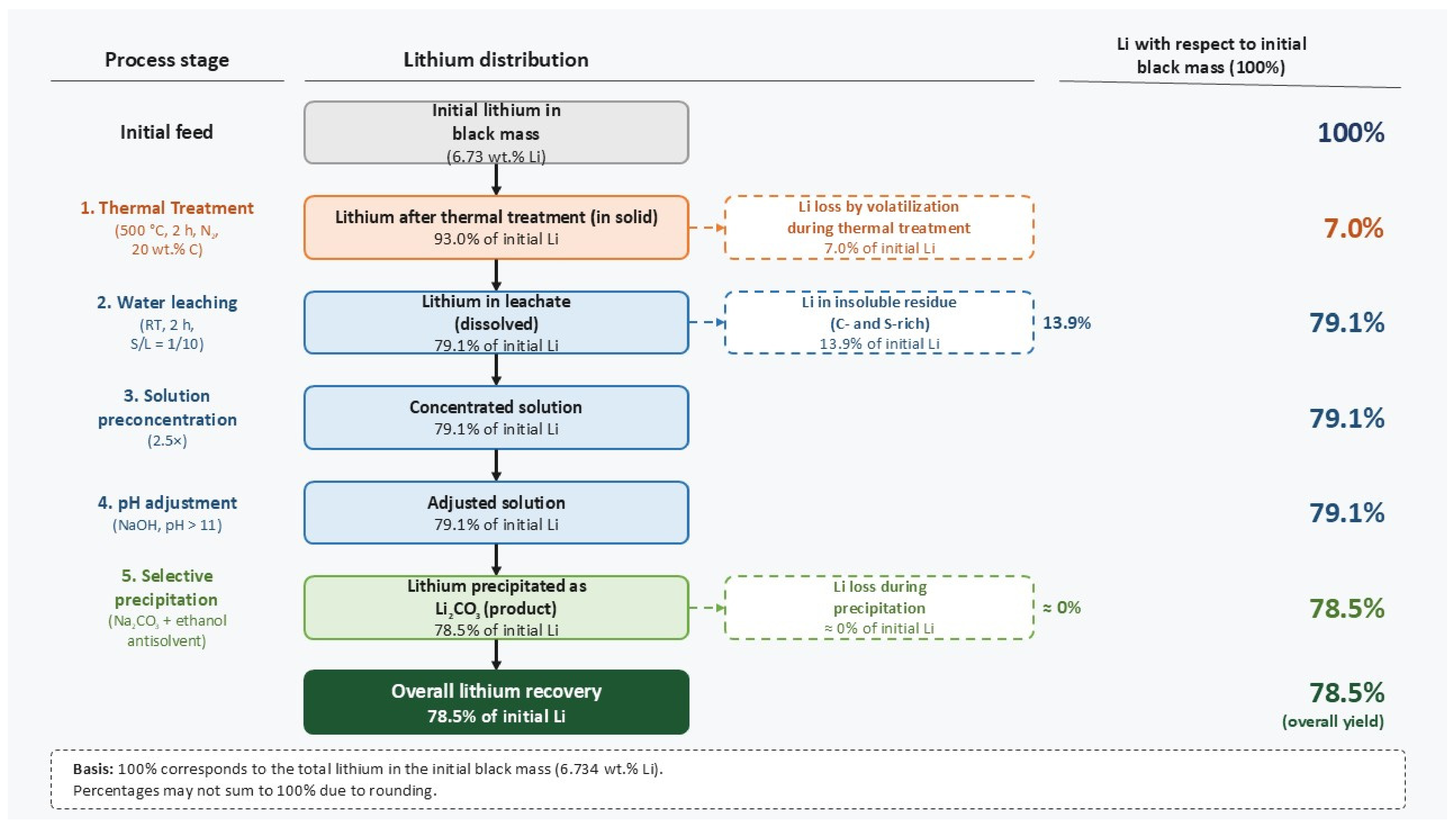
22]. Therefore, the initial lithium solution was concentrated 2.5-fold. After that, the lithium concentrate solution was again basified using sodium hydroxide at a pH higher than 11 and selectively precipitated using a stoichiometric amount of sodium hydroxide with light heating. Finally, the obtained solid was filtered, and the corresponding liquid and solid fractions were analyzed.
Thus, different experimental conditions were assessed (summarized in
Table 6):
Routes (4) and (5) evaluate the use of sodium carbonate (Na2CO3) at a 2:1 molar ratio, substituting the previously tested carbonating agent. Specifically, route (5) incorporates ethanol (EtOH) to decrease the solubility of lithium carbonate via dielectric constant modification of the aqueous medium. Additionally, route (6) evaluates a two-step process that combines an initial stage to concentrate the solution, followed by precipitation using Na2CO3 with the addition of EtOH as an antisolvent.
As can be observed, route (4) yielded a recovery of 80%, indicating the effectiveness of using Na2CO3 under excess conditions to promote precipitation equilibrium. In route (5), this value was increased to 88% due to the addition of ethanol, which reduces the lithium carbonate solubility by changing the dielectric constant of the aqueous phase. Finally, route (6) obtained nearly complete lithium recovery (near 100%). This excellent performance is attributed to the synergistic effect of the initial solution preconcentration step and the antisolvent-assisted precipitation step. This two-step configuration is the best strategy to maximize efficiency.