
Industrial Waste Upcycling for Modern Construction: SAW Slag-Incorporated Composites with Multifunctional Properties Against Biological Degradation

 ,
,  , ,
, ,  , , ,
, , ,  and
and 
Abstract
1. Introduction
2. Materials and Methods
2.1. Characterization of Materials
2.2. Preparation of LB Medium
2.3. Preparation of PCA Medium
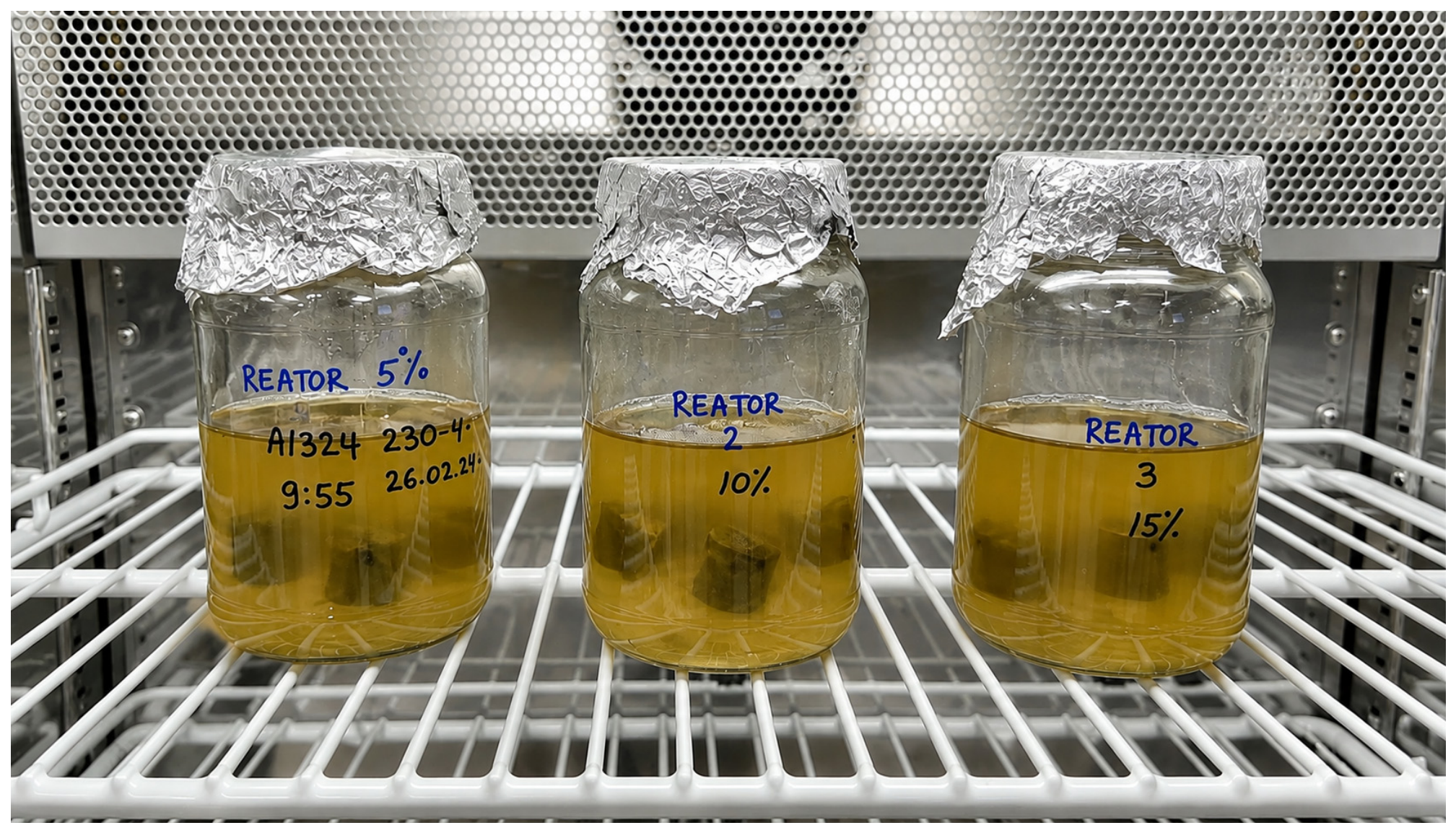
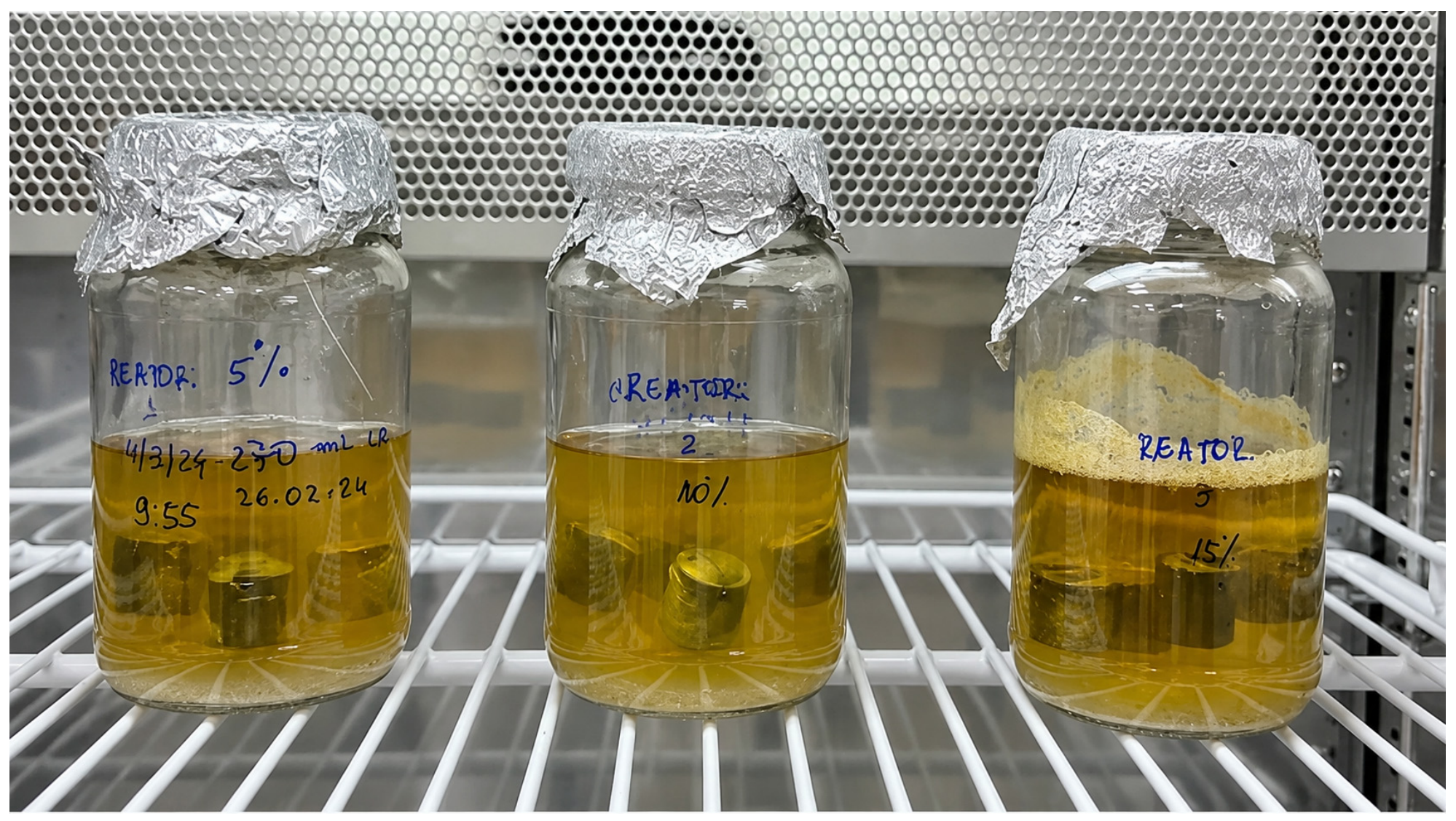
2.4. Assembly of the Reactors (Bioreactors)
2.5. Bacterial Isolation Procedure
2.6. Sample Preparation for SEM Analysis
3. Results and Discussion
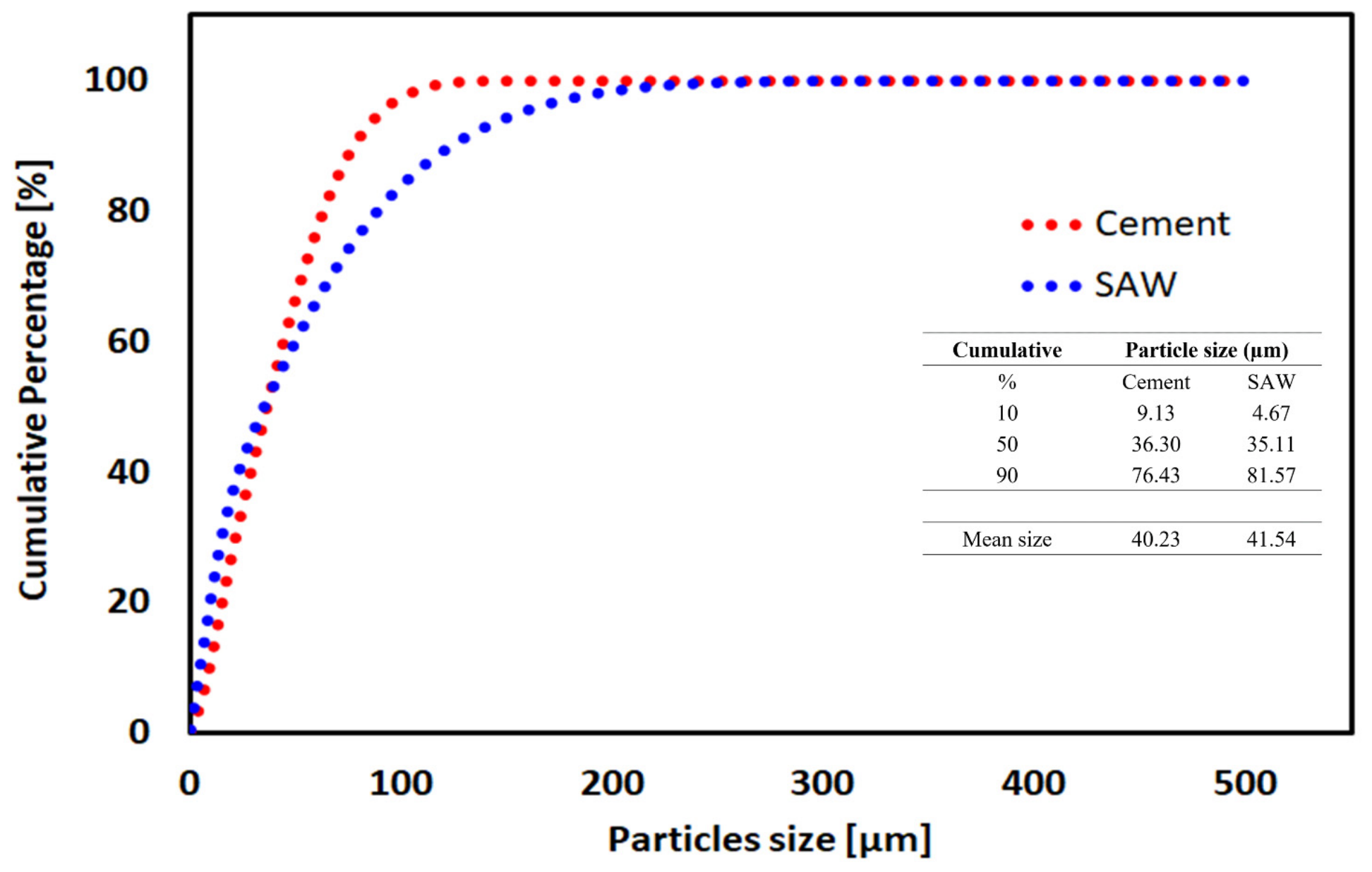
3.1. Physical and Chemical Characterization of Raw Materials
3.2. Environmental Safety Assessment Regarding Potentially Toxic Element
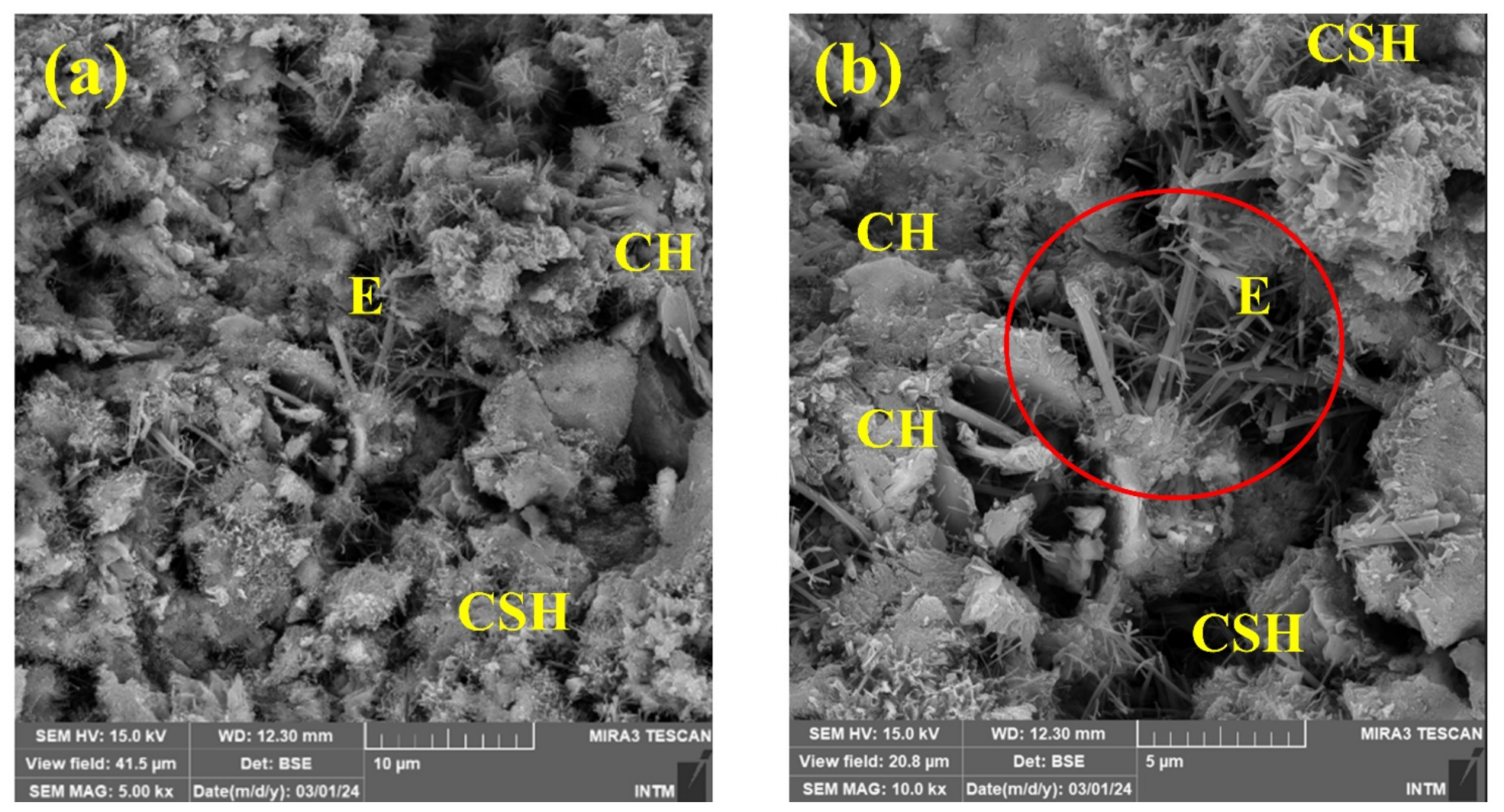
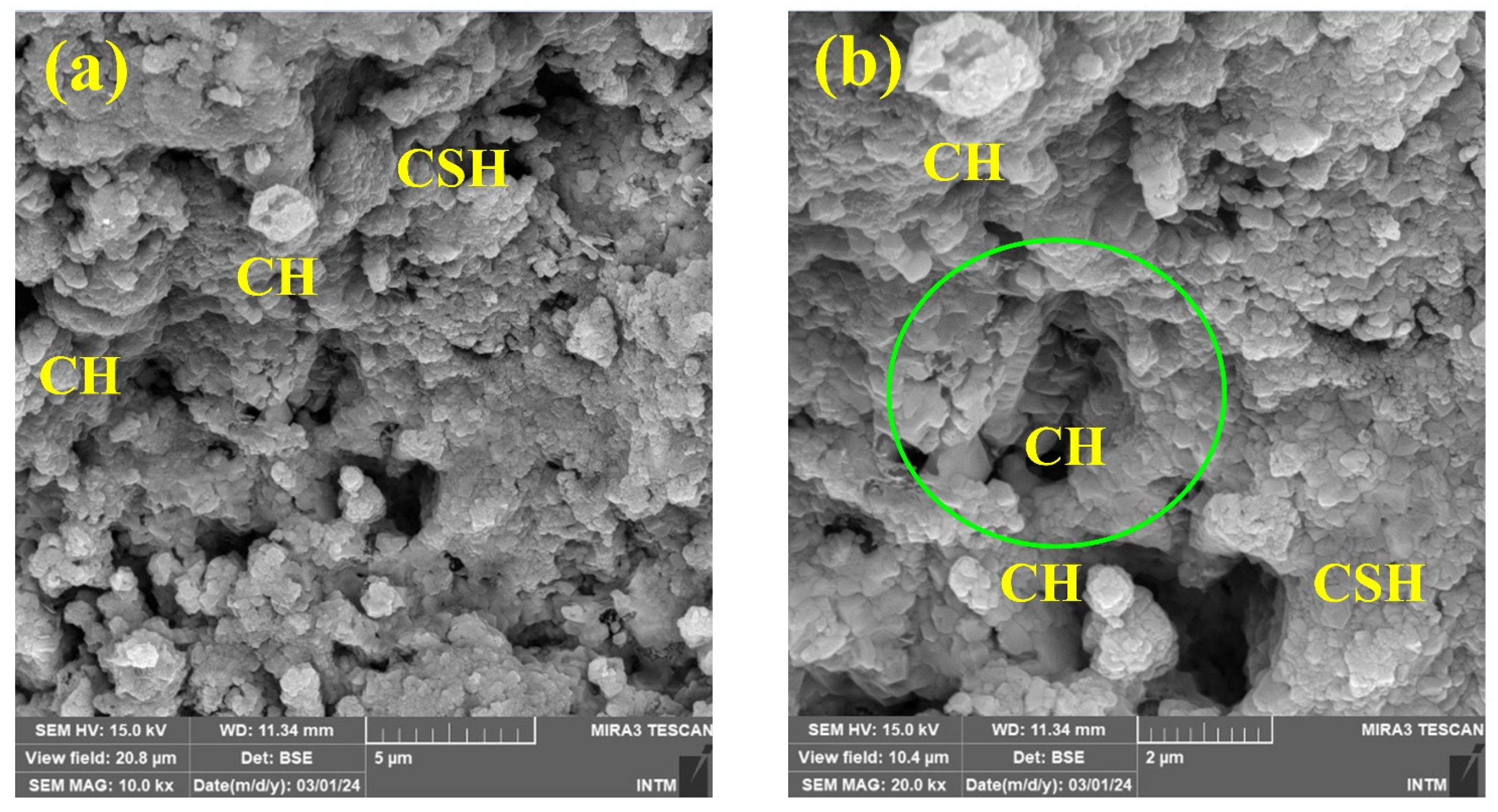
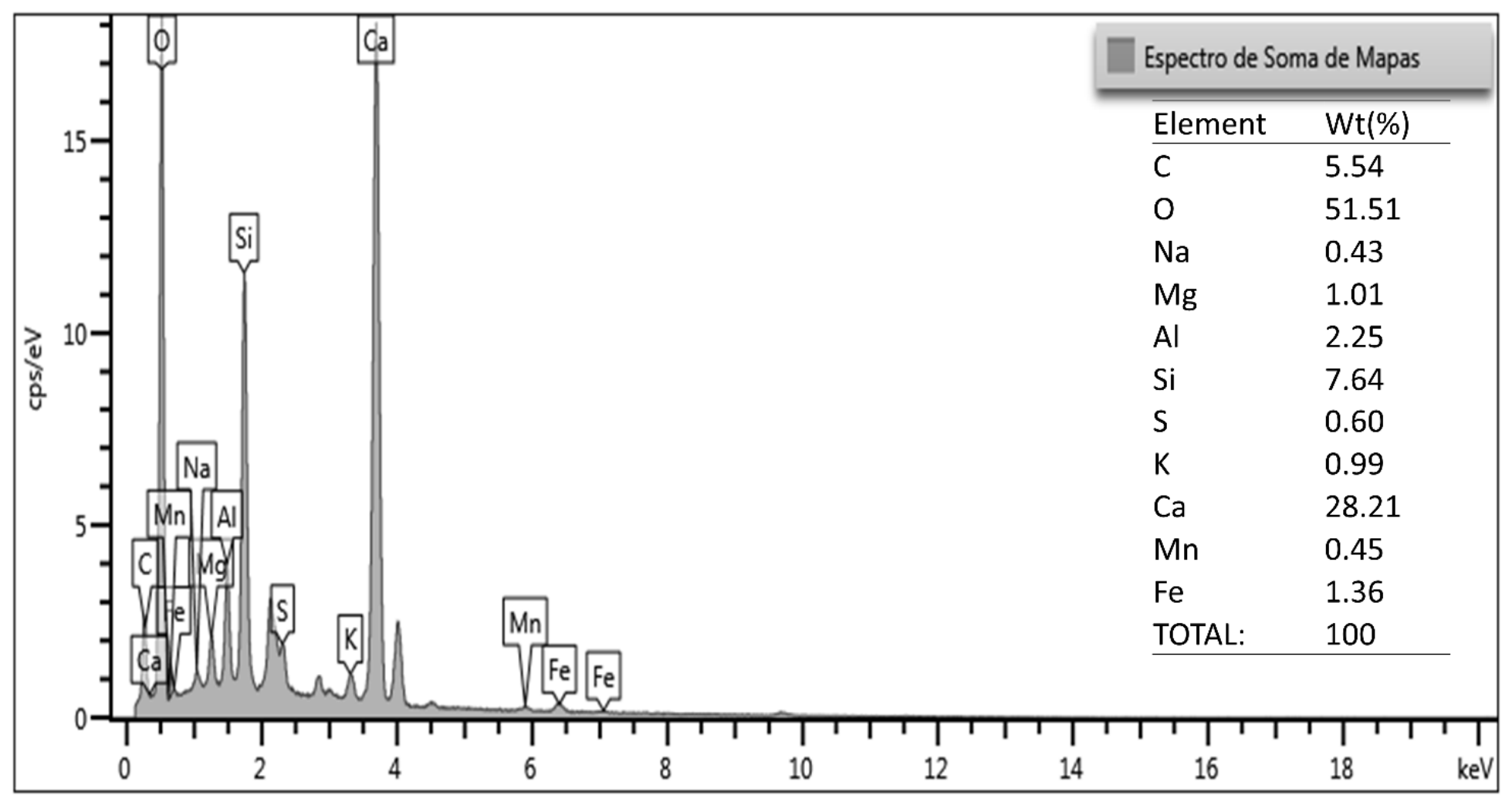
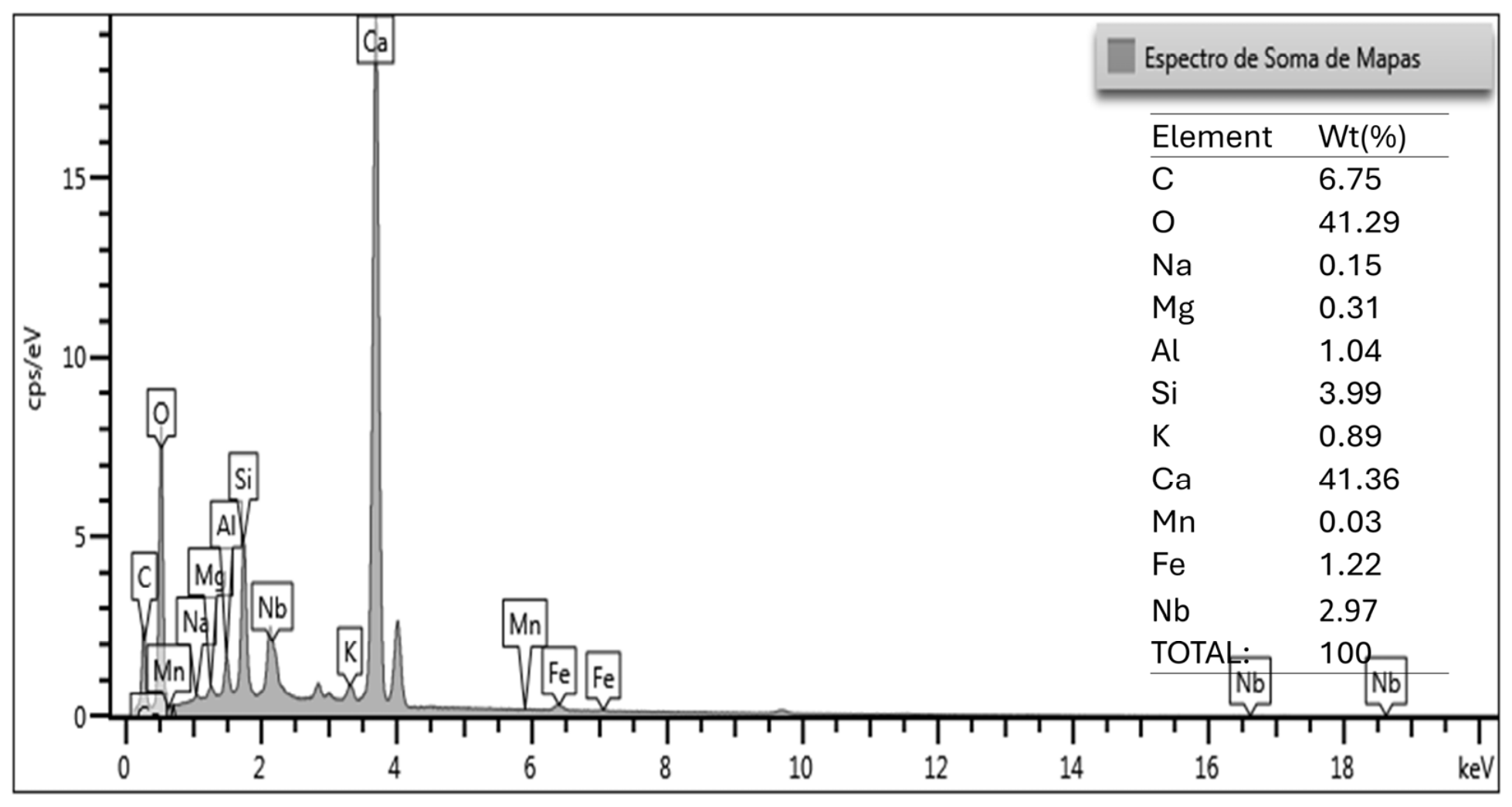
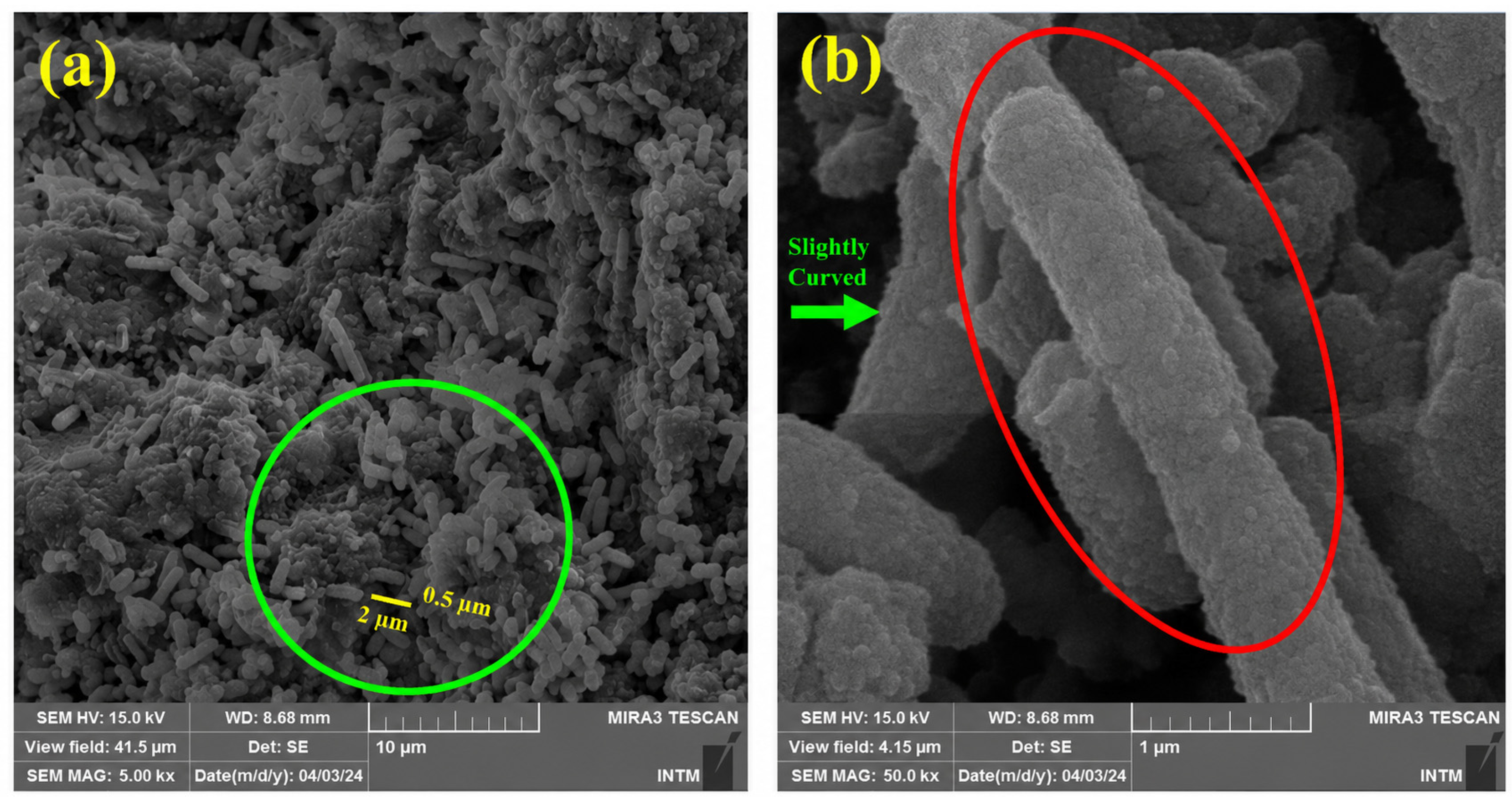
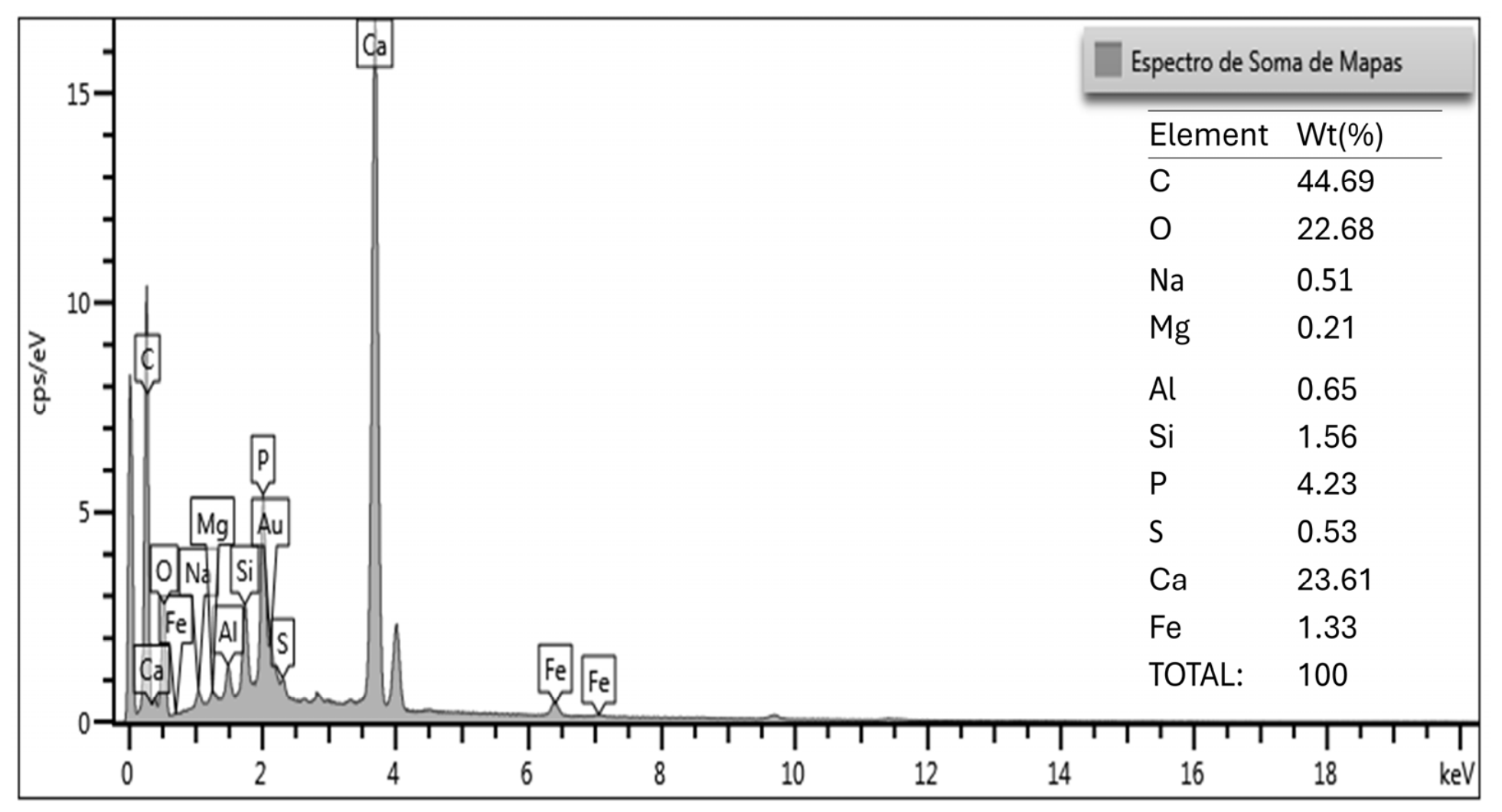
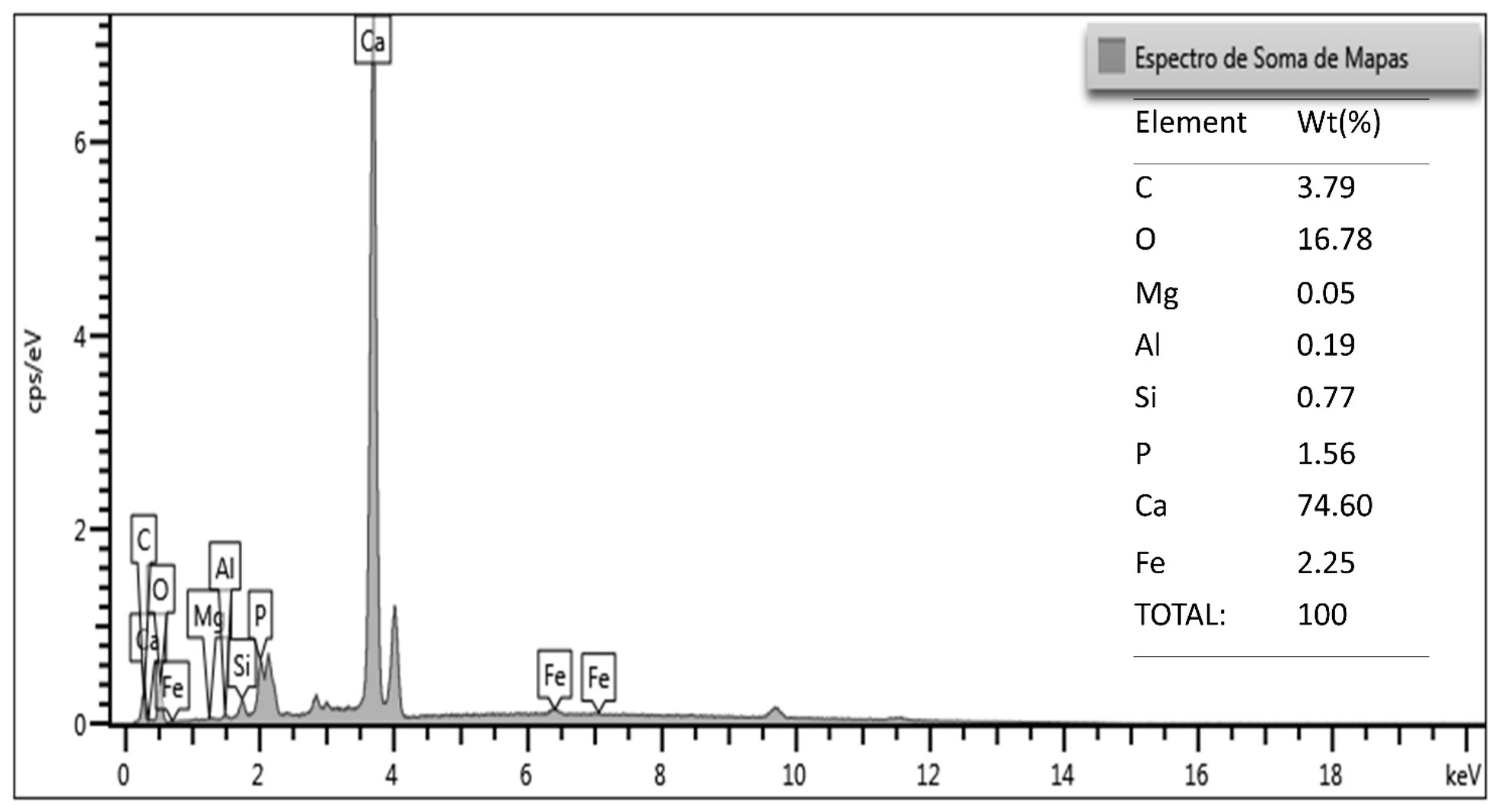
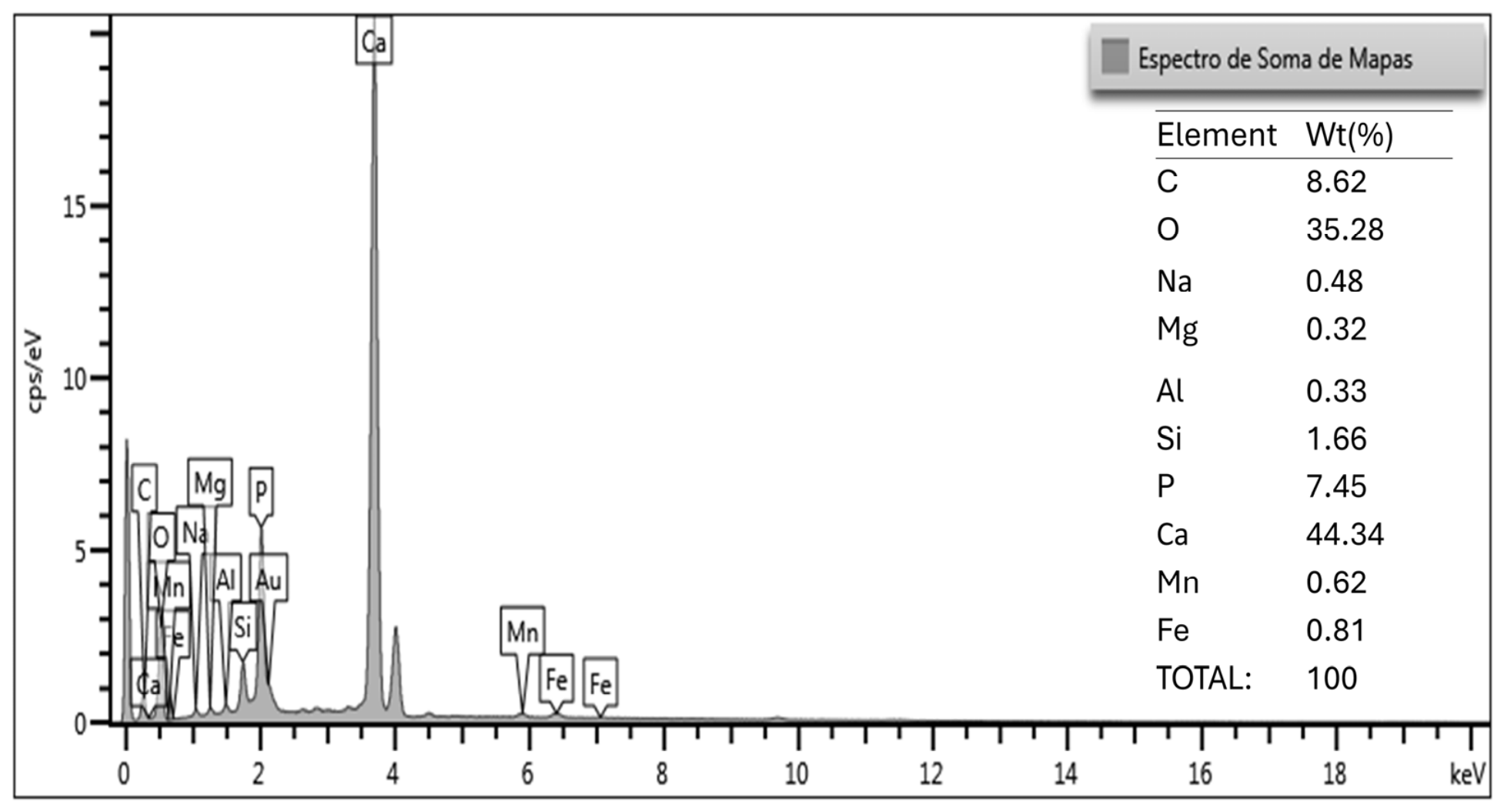
3.3. SEM and EDS Results Before Incubation
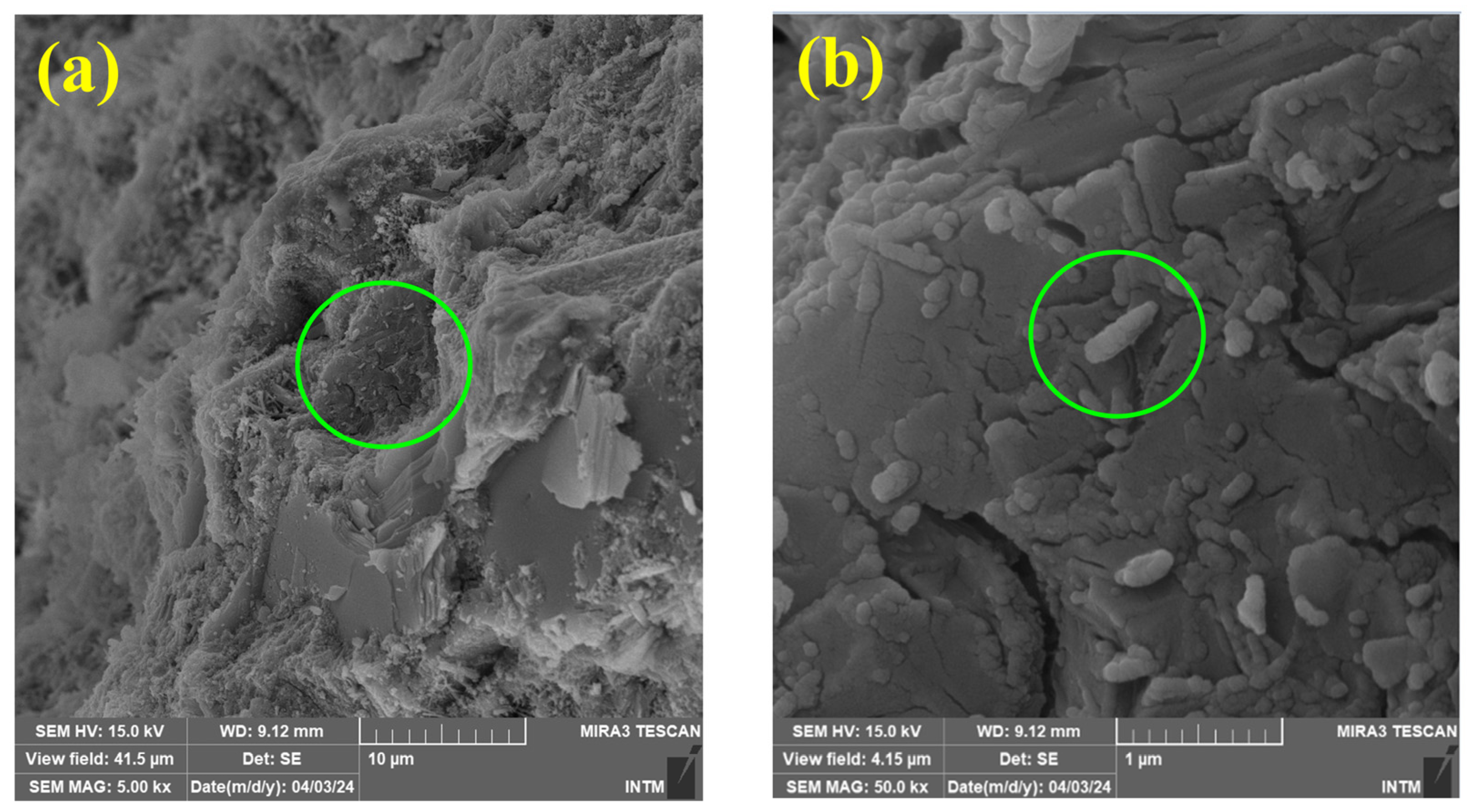
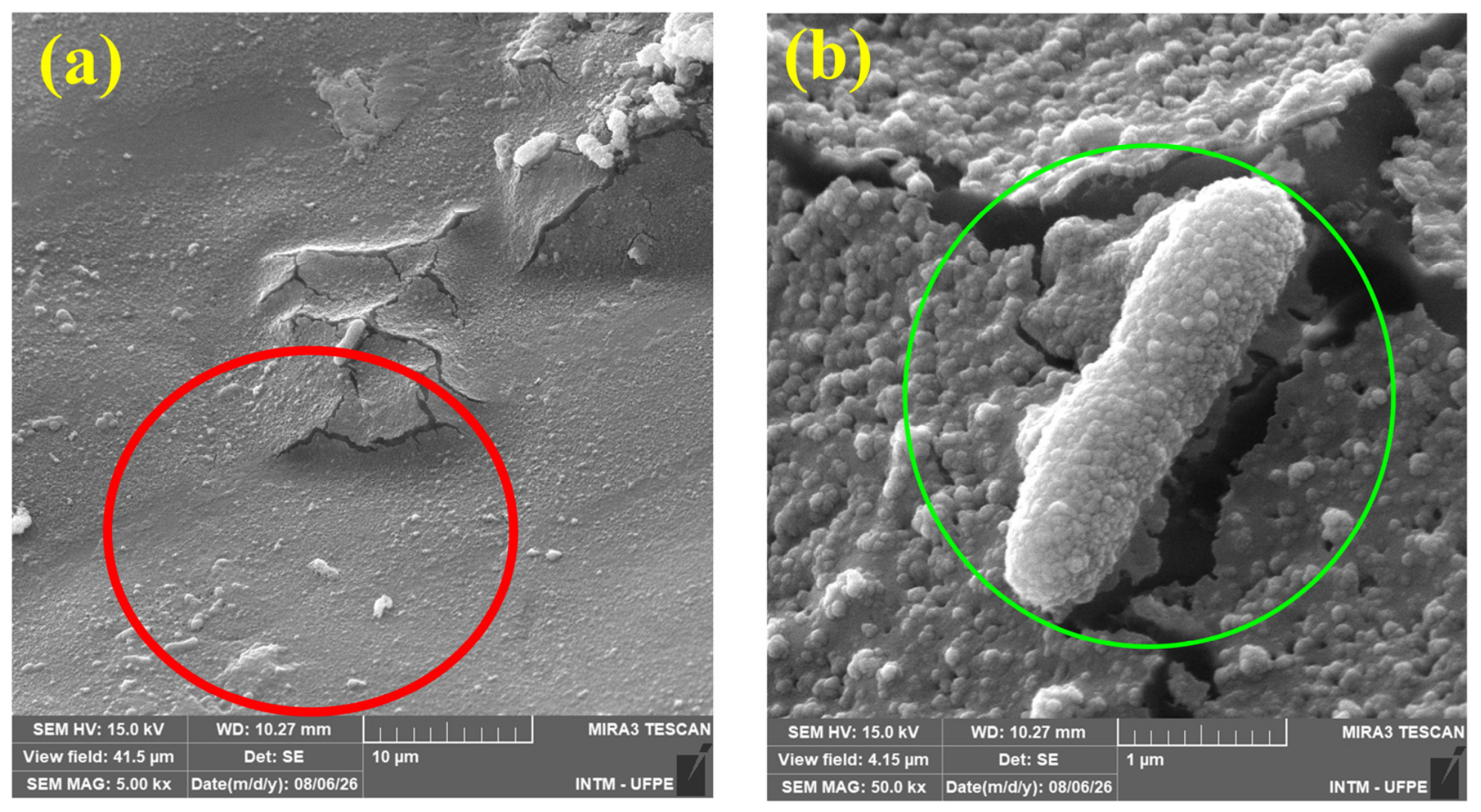
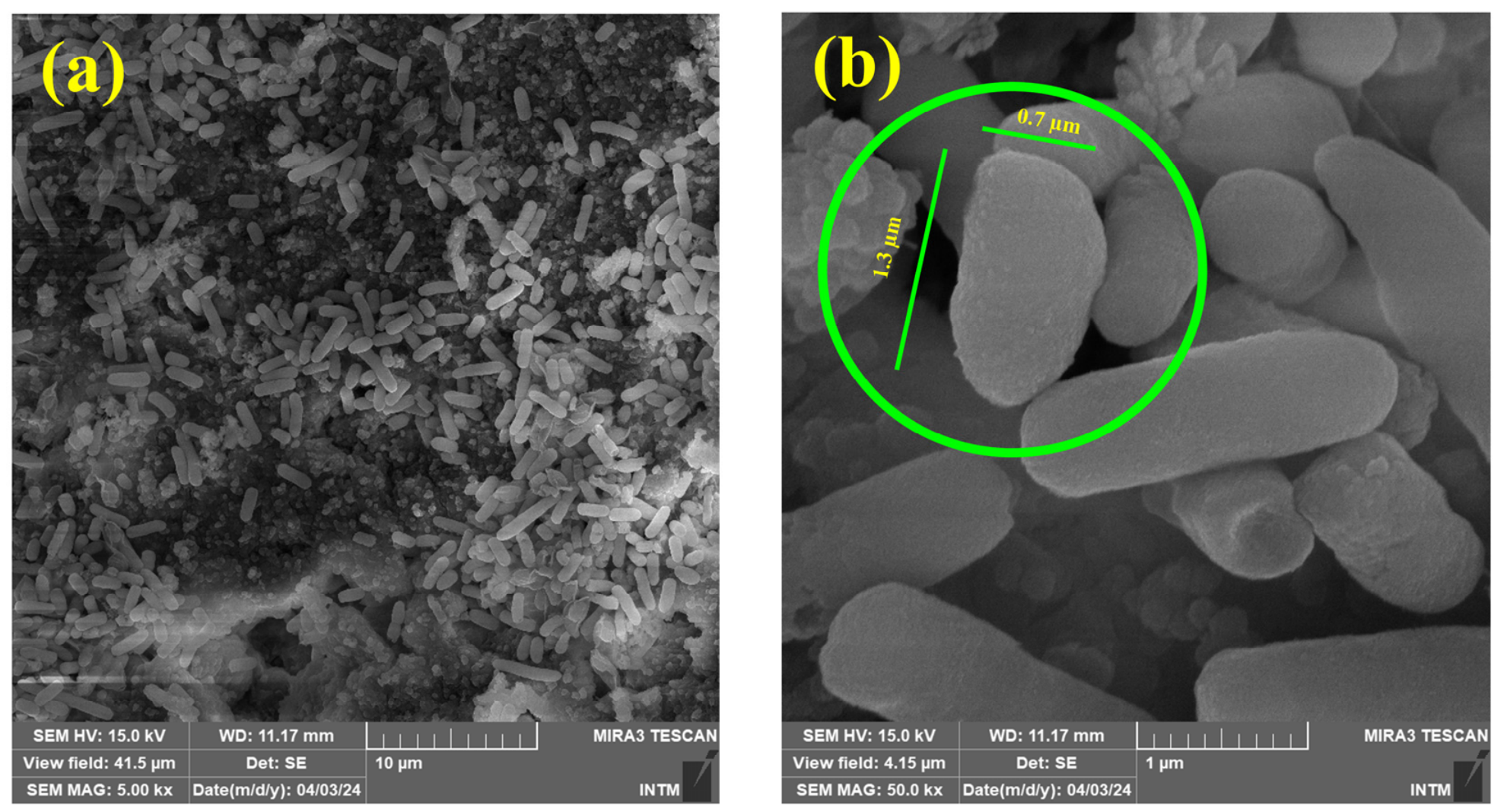
3.4. SEM and EDS Results After 15 Days of Incubation
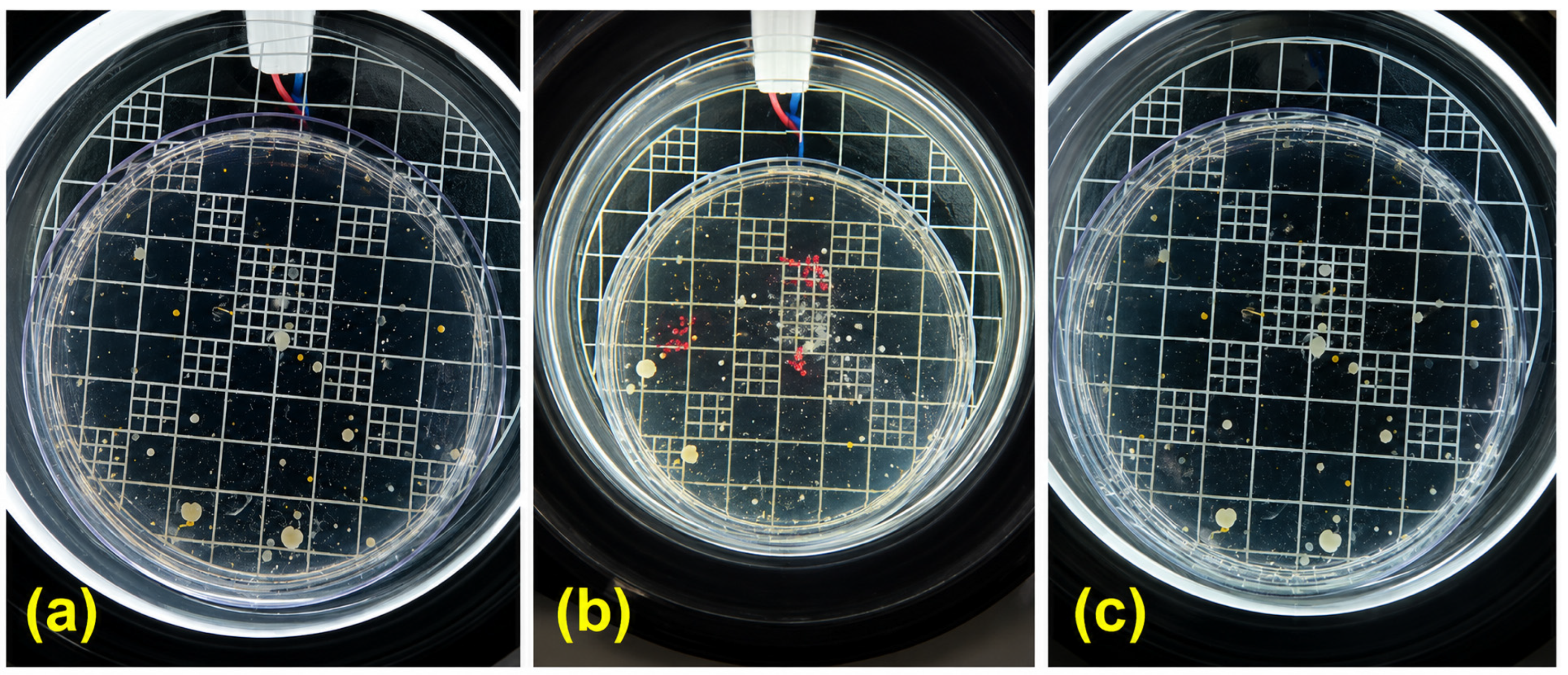
3.5. Microbiological Analyses of Surfaces (Planktonic Counts and Sessile Counts)
3.6. Mass Loss of Test Specimens Before and After 15 Days of Incubation
3.7. Mixing Design of Mortars (Compressive Strength)
3.8. Pozzolan Effectiveness Coefficient (PEC)
4. Conclusions
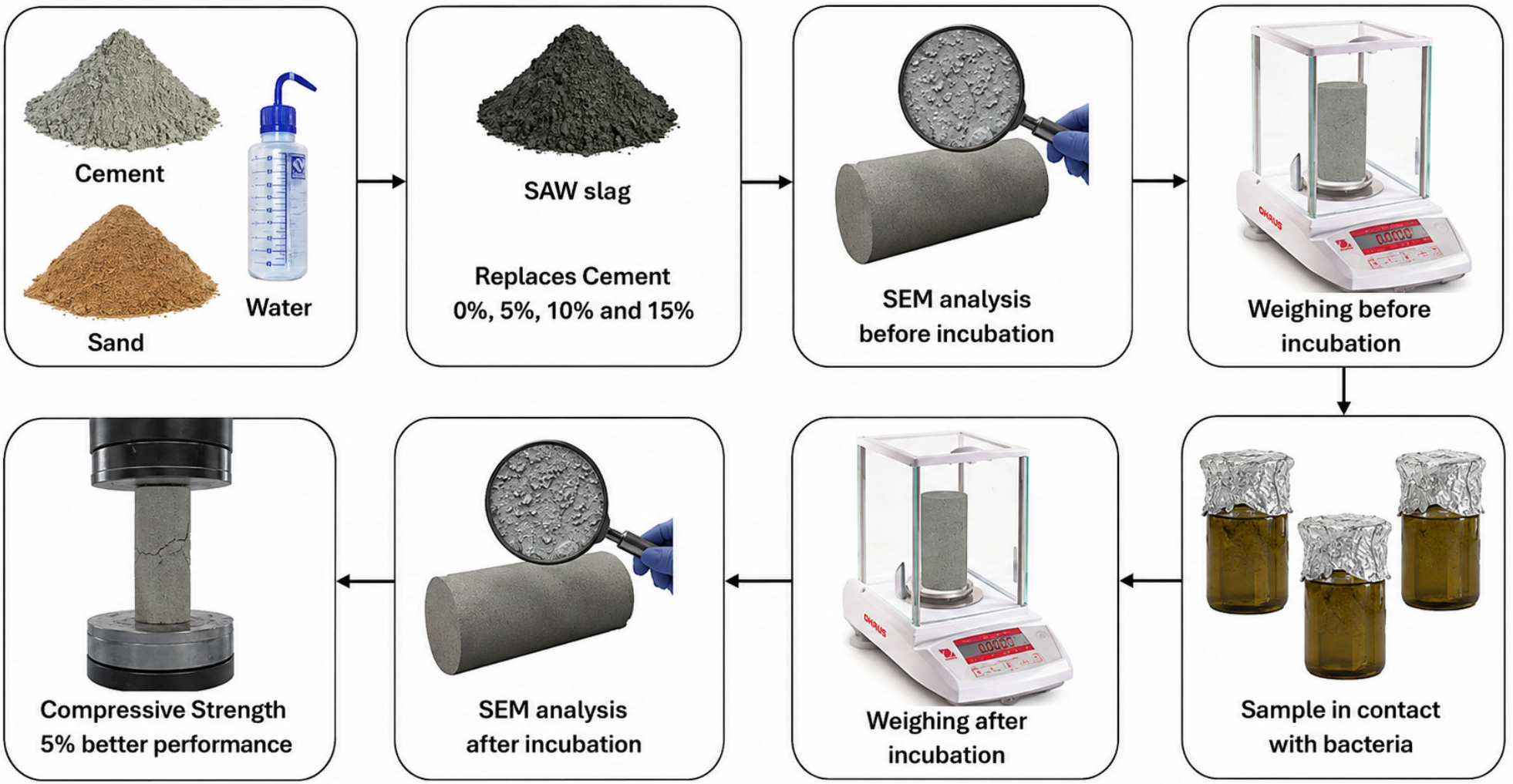
- The incorporation of SAW slag altered the fresh properties of the cementitious composites, with increasing slag contents reducing the spread diameter and workability. This behavior is consistent with a previous study [64], which reported that such additions can modify rheological behavior, reducing workability and increasing porosity.
- The adopted methodology enabled the quantification of bacterial adhesion and its correlation with the physicochemical characteristics of the specimens before and after exposure to E. coli. SEM and EDS analyses further provided information on bacterial morphology and possible chemical changes induced by microbial contact, revealing that microbial colonization varied with slag content. In particular, specimens containing 5% slag showed lower bacterial adhesion than the control, whereas 15% slag resulted in higher bacterial concentrations.
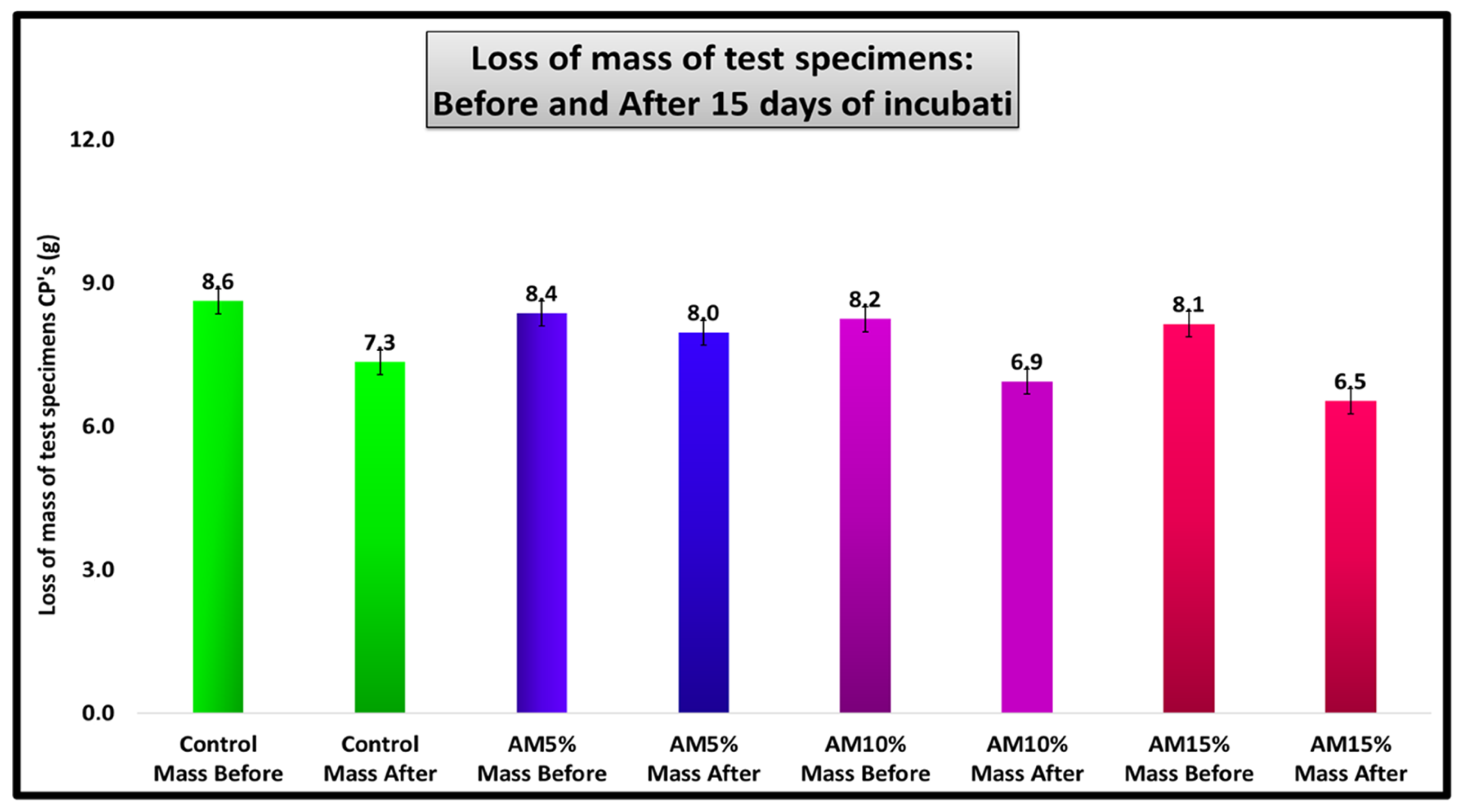
- Although the mass loss analysis was preliminary and limited to 15 days, a slight mass loss was observed. Further studies under more representative conditions, particularly evaluating exposure to gases and vapors generated in sewage treatment plant (STP) environments, are therefore recommended.
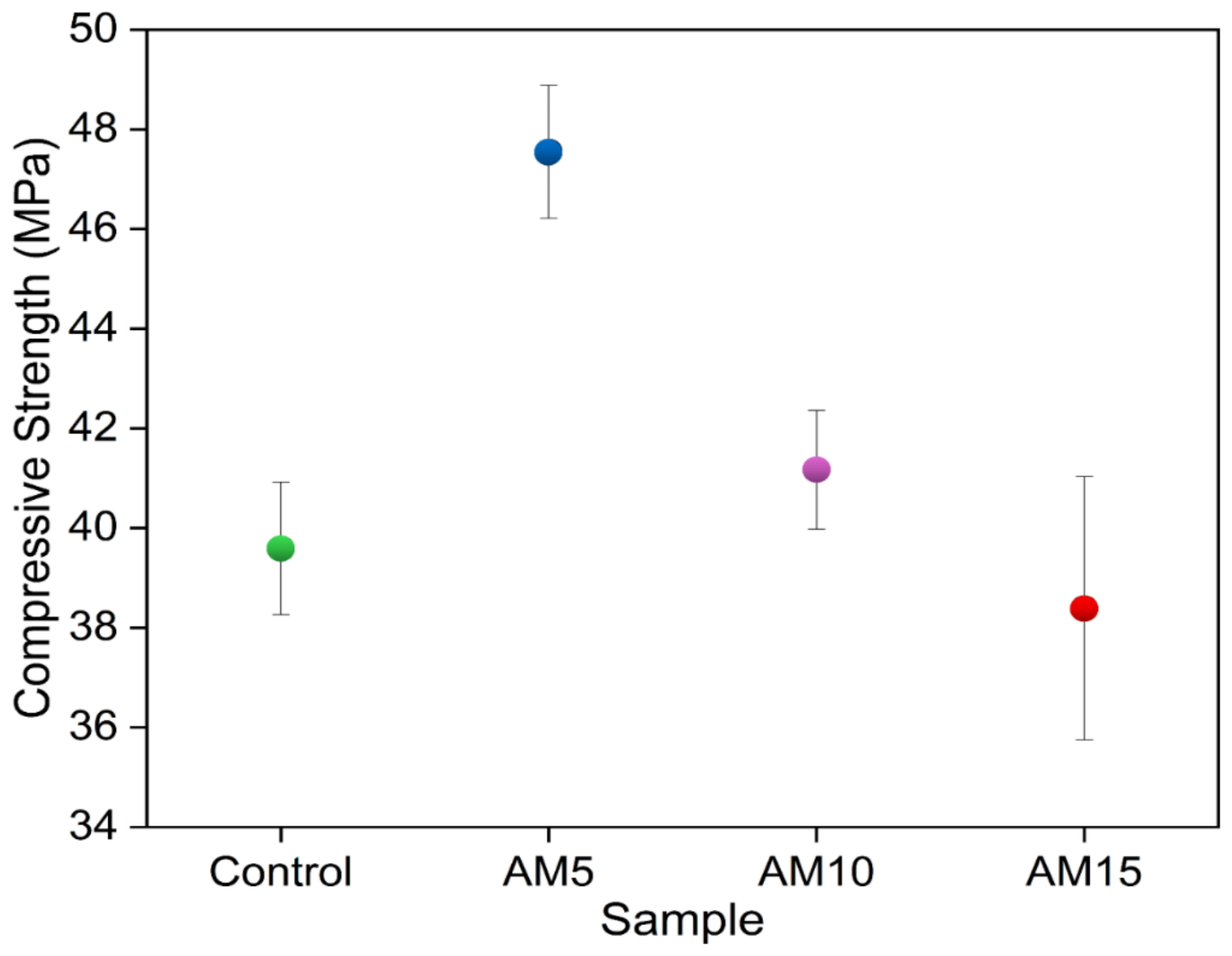
- The mechanical results confirmed that 5% SAW slag significantly improved compressive strength, in agreement with microstructural evidence of enhanced C-A-S-H formation and pore refinement, which may also contribute to mitigating bacterial biofilm formation. Consistently, the Pozzolanic Effectiveness Coefficient (PEC) indicated that the AM5% samples achieved the most favorable chemical–mechanical efficiency, with their higher PEC reflecting a synergistic effect associated with enhanced C-S-H and C-A-S-H gel formation.
- Overall, the incorporation of 5% SAW slag represents a promising alternative for cementitious composites intended for highly aggressive environments, such as STPs. However, XRF screening identified Cr, Mn, Zn, Fe, Ti, and Zr in the slag, and their total concentrations do not directly represent their leachable fractions. Although matrix densification and secondary hydration products may restrict the mobility of these elements, standardized leaching tests are still required to confirm environmental safety and long-term immobilization under representative service conditions.
Author Contributions
Funding
Data Availability Statement
Acknowledgments
Conflicts of Interest
References
- Castro-Lopes, S.; Rodrigues, V.D.; Marden, S.; Peña-Garcia, R.; Padrón-Hernández, E.; Berenguer, R. Influence of Submerged Arc Welding Slag Content Variation on Cementitious Materials: A Sustainable Alternative. Constr. Build. Mater. 2025, 483, 141792. [Google Scholar] [CrossRef] [Scilit]
- Sousa, É.; Santana, A.; Moura, M.; Delgado, J.M.P.Q.; Berenguer, R. Thermography Applied to the Adhesion Phenomenon of Mortars with Additions of Submerged Arc Welding (SAW) Slag. Buildings 2024, 14, 2960. [Google Scholar] [CrossRef] [Scilit]
- Moura, A.G.L.; Centurion, V.B.; Okada, D.Y.; Motteran, F.; Delforno, T.P.; Oliveira, V.M.; Varesche, M.B.A. Laundry Wastewater and Domestic Sewage Pilot-Scale Anaerobic Treatment: Microbial Community Resilience Regarding Sulfide Production. J. Environ. Manag. 2019, 251, 109495. [Google Scholar] [CrossRef] [Scilit] [PubMed]
- Jethwa, K.B.; Mishra, U.; Ray, M.R.; Yadav, N.; Singh, A.N. A Study on Hybrid Treatment System for Domestic Wastewater (Sewage) through Constructed Wetlands for India: A Review. Biocatal. Agric. Biotechnol. 2024, 60, 103268. [Google Scholar] [CrossRef] [Scilit]
- Roosz, C.; Vieillard, P.; Blanc, P.; Gaboreau, S.; Gailhanou, H.; Braithwaite, D.; Montouillout, V.; Denoyel, R.; Henocq, P.; Madé, B. Thermodynamic Properties of C-S-H, C-A-S-H and M-S-H Phases: Results from Direct Measurements and Predictive Modelling. Appl. Geochem. 2018, 92, 140–156. [Google Scholar] [CrossRef] [Scilit]
- Muduli, R.; Mukharjee, B.B. Effect of Incorporation of Metakaolin and Recycled Coarse Aggregate on Properties of Concrete. J. Clean. Prod. 2019, 209, 398–414. [Google Scholar] [CrossRef] [Scilit]
- Du, J.; Tang, Z.; Li, G.; Yang, H.; Li, L. Key Inhibitory Mechanism of External Chloride Ions on Concrete Sulfate Attack. Constr. Build. Mater. 2019, 225, 611–619. [Google Scholar] [CrossRef] [Scilit]
- Cordeiro, G.C.; Toledo Filho, R.D.; De Moraes Rego Fairbairn, E. Use of Ultrafine Rice Husk Ash with High-Carbon Content as Pozzolan in High Performance Concrete. Mater. Struct./Mater. Constr. 2009, 42, 983–992. [Google Scholar] [CrossRef] [Scilit]
- Hoppe Filho, J.; Souza, D.J.; Medeiros, M.H.F.; Pereira, E.; Portella, K.F. Concrete Attack by Sodium Sulfate: Mineral Additions as a Mitigation Tool. Ceramica 2015, 61, 168–177. [Google Scholar] [CrossRef] [Scilit]
- Ashraf, M.; Naeem Khan, A.; Ali, Q.; Mirza, J.; Goyal, A.; Anwar, A.M. Physico-Chemical, Morphological and Thermal Analysis for the Combined Pozzolanic Activities of Minerals Additives. Constr. Build. Mater. 2009, 23, 2207–2213. [Google Scholar] [CrossRef] [Scilit]
- César, M.; Soares, P.; Ferreira, B.; Alexandre, E. Kinetic and Thermodynamic Study in Pozzolanic Chemical Systems as an Alternative for Chapelle Test. Mater. Res. 2018, 21, e20180131. [Google Scholar] [CrossRef] [Scilit]
- Zunino, F.; Scrivener, K. The Reaction between Metakaolin and Limestone and Its Effect in Porosity Refinement and Mechanical Properties. Cem. Concr. Res. 2021, 140, 106307. [Google Scholar] [CrossRef] [Scilit]
- Zhang, X.; Bai, Y.; Luo, Q. Exploring Synergistic Effects and Hydration Mechanisms in Metakaolin-Blended Cement System with Varying Metakaolin and Wollastonite Content. Constr. Build. Mater. 2024, 425, 135962. [Google Scholar] [CrossRef] [Scilit]
- Liu, K.; Nong, Y.; Zhuang, S.; Zhao, Z. Effect of Superfine Mineral Admixture on Early Strength and Durability of Concrete. J. Build. Eng. 2026, 118, 115102. [Google Scholar] [CrossRef] [Scilit]
- Kim, M.S.; Han, S.C.; Yun, J.I. Effect of Supplementary Cementitious Materials on the Degradation of Cement-Based Barriers in Radioactive Waste Repository: A Case Study in Korea. Nucl. Eng. Technol. 2024, 56, 3942–3949. [Google Scholar] [CrossRef] [Scilit]
- Gill, A.S.; Siddique, R. Durability Properties of Self-Compacting Concrete Incorporating Metakaolin and Rice Husk Ash. Constr. Build. Mater. 2018, 176, 323–332. [Google Scholar] [CrossRef] [Scilit]
- Pintan, N.M.; Berenguer, R.A.; da Costa e Silva, A.J.; Lins, C.M.M.S.; Monteiro, E.C.B. Pathological Manifestations and the Study of Corrosion Present on Bridges of the City of Recife. Electron. J. Geotech. Eng. 2015, 20, 11893–11907. [Google Scholar]
- Berenguer, R.; Passos, A.; Monteiro, E.; Helene, P.; Just, Â.; Oliveira, R.; Medeiros, M.; Carneiro, A. Verificação de Penetração de Cloretos Em Corpos de Prova Parcialmente Imersos Em Água Do Mar Em Recife, Pernambuco. Rev. Alconpat 2018, 8, 108–122. [Google Scholar] [CrossRef] [Scilit]
- Kurda, R.; de Brito, J.; Silvestre, J.D. Carbonation of Concrete Made with High Amount of Fly Ash and Recycled Concrete Aggregates for Utilization of CO2. J. CO2 Util. 2019, 29, 12–19. [Google Scholar] [CrossRef] [Scilit]
- Hassan, A.A.A.; Lachemi, M.; Hossain, K.M.A. Effect of Metakaolin and Silica Fume on the Durability of Self-Consolidating Concrete. Cem. Concr. Compos. 2012, 34, 801–807. [Google Scholar] [CrossRef] [Scilit]
- Belaidi, A.S.E.; Azzouz, L.; Kadri, E.; Kenai, S. Effect of Natural Pozzolana and Marble Powder on the Properties of Self-Compacting Concrete. Constr. Build. Mater. 2012, 31, 251–257. [Google Scholar] [CrossRef] [Scilit]
- Ghrici, M.; Kenai, S.; Meziane, E. Mechanical and Durability Properties of Cement Mortar with Algerian Natural Pozzolana. J. Mater. Sci. 2006, 41, 6965–6972. [Google Scholar] [CrossRef] [Scilit]
- Pereira Godinho, J.; de Medeiros, M.H.F. Biogenic Sulfur Attack in a Reinforced Concrete Sewage Treatment Plant. Re-Visited Mechanism and Rehabilitation Proposal. Eng. Fail. Anal. 2021, 124, 105354. [Google Scholar] [CrossRef] [Scilit]
- George, R.P.; Ramya, S.; Ramachandran, D.; Kamachi Mudali, U. Studies on Biodegradation of Normal Concrete Surfaces by Fungus Fusarium Sp. Cem. Concr. Res. 2013, 47, 8–13. [Google Scholar] [CrossRef] [Scilit]
- Parker, C. The Corrosion of Concrete. Aust. J. Exp. Biol. Med. Sci. 1945, 23, 91–98. [Google Scholar] [CrossRef] [Scilit]
- Yin, H.; Zhao, H.; Sun, L.; Jia, J.; Zhang, Z.; Zhang, Y. An Avalanche Transistor-Based Marx Circuit Pulse Generator with Sub-Nanosecond, High Frequency and High-Voltage for Pathogenic Escherichia Coli Ablation. Process Saf. Environ. Prot. 2024, 191, 1784–1792. [Google Scholar] [CrossRef] [Scilit]
- Li, X.; Liang, X.; Li, Z.; Ye, Y. Preparation, Microstructural Characterization, and Bio-Corrosion Resistance of Novel High-Performance Marine Concrete Admixture. Case Stud. Constr. Mater. 2025, 23, e05239. [Google Scholar] [CrossRef] [Scilit]
- Avery, S.M.; Buncic, S. Escherichia Coli O157 Diversity with Respect to Survival during Drying on Concrete. J. Food Prot. 2003, 66, 780–786. [Google Scholar] [CrossRef] [Scilit] [PubMed]
- Kumar, P.; Virupapura, P. Durability and Fatigue Studies Of bacteria Induced Concrete for Rigid Pavements with 3S Recron Fibers—A Review. Next Mater. 2026, 10, 101551. [Google Scholar] [CrossRef] [Scilit]
- Sowmya, S.; Pannem, R.M.R. Integrating Bacteria and Fibres for Self-Healing Concrete: A Comprehensive Review of Synergistic Effects. Results Eng. 2025, 28, 107071. [Google Scholar] [CrossRef] [Scilit]
- Thakare, A.A.; Gupta, T.; Deewan, R.; Chaudhary, S. Micro and Macro-Structural Properties of Waste Tyre Rubber Fibre-Reinforced Bacterial Self-Healing Mortar. Constr. Build. Mater. 2022, 322, 126459. [Google Scholar] [CrossRef] [Scilit]
- Sun, Z.; Liu, T.; Guo, N.; Guo, Z.; Zhang, Y.; Yin, Y. Effect of Biofilm Structure and Components on Microbiologically Influenced Corrosion of EH36 Steel by Extracellular Polymeric Substances of Pseudalteromonas. Corros. Sci. 2026, 259, 113456. [Google Scholar] [CrossRef] [Scilit]
- Wang, Y.; Yu, F.; Hu, J. Dual-Scale Laser-Induced Surface Structures Inhibit E. Coli Biofilm Formation via Reduced Adhesion and Patterned EPS Distribution. Appl. Surf. Sci. 2026, 717, 164742. [Google Scholar] [CrossRef] [Scilit]
- Papa, L.; Mezzapesa, F.P.; Volpe, A.; Gaudiuso, C.; Ancona, A. Bacterial Adhesion Eradication and Biofilm Inhibition through Laser Surface Texturing. Appl. Mater. Today 2025, 45, 102801. [Google Scholar] [CrossRef] [Scilit]
- Xu, Z.; Liu, M.; Liu, L.; Chen, G.; Wu, Y.; Yang, C.; Zhao, N.; Zhang, X. Cu-Bearing Stainless Steel Inhibits Biofilm by Modulating Bacterial Motility. Mater. Lett. 2024, 377, 137338. [Google Scholar] [CrossRef] [Scilit]
- Zhang, X.; Sun, B.; Xi, T.; Zhao, J.; Yang, K.; Sun, S.; Yang, C. Quorum Quenching as a Mechanism for Cu-Bearing Stainless Steel to Conduct Nonbiocidal Retardation of Biofilm Development. Chem. Eng. J. 2024, 499, 155996. [Google Scholar] [CrossRef] [Scilit]
- Xu, Y.; Chen, Q.; Lv, Z.; Cao, L.; Chen, Y.; Jiang, S.; Zhu, Z.; Chu, H.; Jiang, L. Experimental and Simulation Evaluation of Sulfate Attack Behavior of Concrete in Sulfate-Rich and Stray Current Environment. Case Stud. Constr. Mater. 2025, 22, e04144. [Google Scholar] [CrossRef] [Scilit]
- Kohzadi, A.; Behfarnia, K. Flexural Behavior of Kenaf Textile-Reinforced Concrete Exposed to Sulfuric Acid (H2SO4) Solution. Case Stud. Constr. Mater. 2025, 22, e04861. [Google Scholar] [CrossRef] [Scilit]
- Xu, W.; Yang, L.; Gao, D.; Tang, J.; Zhang, S.; Meng, Y. Long-Term Mechanical Properties of Steel Fiber Reinforced Concrete under Sulfuric Acid Attack. Tunn. Undergr. Space Technol. 2024, 153, 105977. [Google Scholar] [CrossRef] [Scilit]
- Jeon, D.; Song, H.; Bae, Y.; Oh, J.E. Microstructural Verification of Delayed Ettringite Formation (DEF) Mitigation in GGBFS-Blended High-Early-Strength Cement Mortars. Case Stud. Constr. Mater. 2025, 23, e05349. [Google Scholar] [CrossRef] [Scilit]
- Mohr, B.J.; Islam, M.S.; France-Mensah, J. Leachate Testing for Delayed Ettringite Formation Potential in Cementitious Systems. Cement 2023, 12, 100060. [Google Scholar] [CrossRef] [Scilit]
- Gupta, M.; Pen, K.; Igarashi, G.; Takahashi, Y.; Ishida, T. Expansion Characteristics of Concrete with Free Lime Based Expansive Additives under Uniaxial Restraint Conditions. Constr. Build. Mater. 2022, 356, 129330. [Google Scholar] [CrossRef] [Scilit]
- Leklou, N.; Nguyen, V.-H.; Mounanga, P. The Effect of the Partial Cement Substitution with Fly Ash on Delayed Ettringite Formation in Heat-Cured Mortars. KSCE J. Civ. Eng. 2017, 21, 1359–1366. [Google Scholar] [CrossRef] [Scilit]
- Lu, S.; Liu, J.; Tian, Z.; Lu, Y.; Liang, G.; Zhang, L.; Bian, H. Deterioration Mechanisms and Strength Prediction of Hybrid Fiber-Reinforced Concrete under Coupled Sulfate Attack and Dry-Wet Cycles. Constr. Build. Mater. 2025, 493, 143243. [Google Scholar] [CrossRef] [Scilit]
- Vahedi, A.; Nematzadeh, M.; Kiamansouri, A.; Hosseinzadeh, H. Influence of Sulfuric Acid Attack on Mechanical Properties, Impact Resistance, and Electrical Resistivity of Concrete Incorporating Microsilica and Forta-Ferro Fibers: Experiments and Predictions. Results Eng. 2025, 28, 108051. [Google Scholar] [CrossRef] [Scilit]
- Wang, R.; Tian, N.; Li, Y. Performance Evolution and Life Prediction of Different Polymeric Coatings for Concrete under Coupled Action of Sulfate Attack and Dry-Wet Cycles. J. Build. Eng. 2026, 119, 115151. [Google Scholar] [CrossRef] [Scilit]
- Yardım, Y.; Gesoğlu, M.; Nahhab, A.H. Durability of Ultra-High Performance Fiber Reinforced Concrete against Internal Sulfate Attack Using Gypsum-Contaminated Aggregates. Constr. Build. Mater. 2025, 498, 144067. [Google Scholar] [CrossRef] [Scilit]
- Yang, X.; Tu, B.; Wu, S.; Xu, S.; Song, Y.; Chen, D.; Yang, C. Performance Evaluation of Pre-Stressed High-Strength Concrete Pipe Piles Produced with Steel Slag Powder and Ground Quartz Sand as Composite Supplementary Cementitious Materials. Constr. Build. Mater. 2025, 478, 141451. [Google Scholar] [CrossRef] [Scilit]
- Wang, Y.; Hu, J.; Kou, D.; Li, W.; Liu, Y. Comparative Assessment of Concrete Degradation in Sewage Pipelines: Biogenic vs. Mineral Sulfuric Acid and Sewage Liquid. Case Stud. Constr. Mater. 2025, 23, e05169. [Google Scholar] [CrossRef] [Scilit]
- Wang, W.; Xing, Q.; Li, H.; Bao, J.; Wen, L.; Lei, D. Enhancing Marine Concrete Durability: A Novel Silicone-Based Slippery Coating for Antifouling and Corrosion Resistance. Constr. Build. Mater. 2025, 501, 144342. [Google Scholar] [CrossRef] [Scilit]
- NBR 16697; Portland Cement. Brazilian Association of technical standards: Rio de Janeiro, Brazil, 2018.
- ASTM C150/C150M; Standard Specification for Portland Cement. American Society for Testing and Materials: West Conshohocken, PA, USA, 2018.
- ASTM C204-18; Standard Test Methods for Fineness of Hydraulic Cement by Air-Permeability Apparatus. American Society for Testing and Materials: West Conshohocken, PA, USA, 2018.
- NBR 13276; Mortars Applied on Walls and Ceilings—Determination of the Consistence Index. Brazilian Association of Technical Standards: Rio de Janeiro, Brazil, 2016.
- NBR 13278; Mortar for Laying and Covering Walls and Ceilings—Determination of Mass Density and Incorporated Air Content. Brazilian Association of Technical Standards: Rio de Janeiro, Brazil, 2005.
- ASTM C618-17a; Standard Specification for Coal Fly Ash and Raw or Calcined Natural Pozzolan for Use in Concrete. American Society for Testing and Materials: West Conshohocken, PA, USA, 2017.
- NBR 12653; Pozzolanic Materials—Requirements. Brazilian Association of Technical Standards: Rio de Janeiro, Brazil, 2015.
- Castro-Lopes, S.; Rodrigues, V.D.; Urtiga-Filho, S.L.; Abreu-Santos, T.F.; Araújo, W.; Diógenes, H.J.F.; Berenguer, R. Enhancing Adhesion and Microstructural Properties of Cementitious Mortars through Submerged Arc Welding (SAW) Slag Incorporation. J. Adhes. 2026, 1–28. [Google Scholar] [CrossRef] [Scilit]
- Moura, M.V.d.; Paiva, S.A.; Rodrigues, V.D.; Lopes, S.J.d.C.; Santos, T.F.d.A.; Berenguer, R.A. Analysis of the Influence of Mechanical Properties of Cementitious Composites Using Submerged Arc Welding (SAW) Slag Recycled Aggregate. Rev. Gest. Secr. 2024, 15, e3623. [Google Scholar] [CrossRef] [Scilit]
- Arunachalam, A.; Jayakumar, K. Influence of Weld Slag Aggregate in High-Performance Concrete. Proc. Inst. Civ. Eng.—Waste Resour. Manag. 2016, 169, 14–20. [Google Scholar] [CrossRef] [Scilit]
- ASTM C188-17; Standard Test Method for Density of Hydraulic Cement. American Society for Testing and Materials: West Conshohocken, PA, USA, 2017.
- Cordeiro, G.C.; Toledo Filho, R.D.; Tavares, L.M.; Fairbairn, E.d.M.R. Ultrafine Grinding of Sugar Cane Bagasse Ash for Application as Pozzolanic Admixture in Concrete. Cem. Concr. Res. 2009, 39, 110–115. [Google Scholar] [CrossRef] [Scilit]
- Jiao, D.; Lesage, K.; Yardimci, M.Y.; Shi, C.; De Schutter, G. Possibilities of Fly Ash as Responsive Additive in Magneto-Rheology Control of Cementitious Materials. Constr. Build. Mater. 2021, 296, 123656. [Google Scholar] [CrossRef] [Scilit]
- Záleská, M.; Pavlíková, M.; Pavlík, Z.; Jankovský, O.; Pokorný, J.; Tydlitát, V.; Svora, P.; Černý, R. Physical and Chemical Characterization of Technogenic Pozzolans for the Application in Blended Cements. Constr. Build. Mater. 2018, 160, 106–116. [Google Scholar] [CrossRef] [Scilit]
- Castro-Lopes, S.; Simões, B.; Peres, S.; Rodrigues, V.; Santos, T.; Berenguer, R. Application of Graphene Oxide Nanoparticles to Cementitious Composites to Mitigate the Effects of Attacks by Aggressive Agents. Ing. Investig. 2025, 45, e117598. [Google Scholar] [CrossRef] [Scilit]
- Castro-Lopes, S.; Carvalho, A.S.; de Moura, M.V.; Peres, S.; Padrón-Hernández, E.; Diógenes, H.J.F.; Berenguer, R.A. Tailoring Water Absorption and Mechanical Properties of Cementitious Composites by Varying the Oxidation Degree of Graphene. Bull. Mater. Sci. 2025, 48, 85. [Google Scholar] [CrossRef]
- Carmo, I.S.; Berenguer, R.A.; Vieira Filho, J.O.; Silva, A.J.C.; Monteiro, E.C.B. Addition of metakaolin as a reducing agent of the concrete exposure effects to sulfate ions. Electron. J. Geotech. Eng. 2015, 20, 6673–6684. [Google Scholar]
- Conselho Nacional do Meio Ambiente (CONAMA). Resolution No. 420, of 28 December 2009. Brasília, Brazil, 2009. Available online: https://conama.mma.gov.br/?id=601&option=com_sisconama&task=arquivo.download (accessed on 10 August 2026).
- Yuan, S.; Wan, H.; Gao, L.; Teng, J.; Shi, N.; Liu, Z.; Wei, H. Bio-Mineralization Strengthened ITZ in Solid Waste-Based Recycled Concrete: Enhanced Mechanical Properties and Sulfate Attack Resistance. Structures 2025, 80, 109957. [Google Scholar] [CrossRef] [Scilit]
- Soleimani, S.; Ormeci, B.; Isgor, O.B. Evaluation of E. Coli Biofilm as a Protective Barrier against Microbiologically Influenced Deterioration of Concrete (MICD) under Mesophilic Temperatures. Water Sci. Technol. 2013, 68, 303–310. [Google Scholar] [CrossRef] [Scilit] [PubMed]
- Sukumaran, A.; Johnpaul, V.; Balasundaram, N.; Senthil Kumar, S. Bacterial Concrete: The Future of Self-Healing and Sustainable Infrastructure. MethodsX 2025, 15, 103569. [Google Scholar] [CrossRef] [Scilit] [PubMed]
- Taylor, H.F.W. Cement Chemistry; Thomas Telford: London, UK, 1997. [Google Scholar]
- Ali, S.I.; Ahmad, S.N. Microbiologically Influenced Corrosion in Uncoated and Coated Mild Steel. Sci. Rep. 2025, 15, 12629. [Google Scholar] [CrossRef] [Scilit] [PubMed]
- Tomar, P.; Kumar, R.; Lakhani, R.; Srivastava, A.; Chhibber, V.K. Improvement in Hygroscopic Property of Macro-Defect Free Cement Modified with Hypromellose/Potassium Methyl Siliconate Copolymer and Pulverized Fly Ash. J. Therm. Anal. Calorim. 2022, 147, 12417–12430. [Google Scholar] [CrossRef] [Scilit]
- Bameri, M.; Rashidi, S.; Mohammadhasani, M.; Maghsoudi, M.; Madani, H.; Rahmani, F. Evaluation of Mechanical and Durability Properties of Eco-Friendly Concrete Containing Silica Fume, Waste Glass Powder, and Ground Granulated Blast Furnace Slag. Adv. Mater. Sci. Eng. 2022, 2022, 2730391. [Google Scholar] [CrossRef] [Scilit]
- Li, Y.; Du, M.; Li, L.; Cui, B. The Influence of Modified Ferrite on the Absorption Performance of Cement-Based Materials. J. Mater. Sci. Mater. Electron. 2025, 36, 916. [Google Scholar] [CrossRef] [Scilit]
- Hassani, A.; Kazemian, F. Investigating Geopolymer Mortar Incorporating Industrial Waste Using Response Surface Methodology: A Sustainable Approach for Construction Materials. Case Stud. Constr. Mater. 2024, 21, e03609. [Google Scholar] [CrossRef] [Scilit]



| Sample | Height (mm) | Diameter (mm) | Area (mm2) |
|---|---|---|---|
| CP1 | 19.99 | 18.43 | 1686.6 |
| CP2 | 20.79 | 18.29 | 1719.2 |
| CP3 | 19.29 | 18.36 | 1641.3 |
| CP4 | 19.33 | 18.40 | 1648.3 |
| CP5 | 21.22 | 18.42 | 1760.0 |
| CP6 | 19.15 | 18.61 | 1662.8 |
| CP7 | 19.98 | 18.74 | 1727.0 |
| CP8 | 17.68 | 18.38 | 1550.7 |
| CP9 | 18.48 | 18.45 | 1605.0 |
| CP10 | 19.53 | 18.64 | 1688.6 |
| CP11 | 18.54 | 18.46 | 1609.7 |
| CP12 | 18.60 | 18.50 | 1617.8 |
| Average area value (mm2): 1659.75 | |||
| Materials | Chemical Composition (%) | ||||||||||||||
|---|---|---|---|---|---|---|---|---|---|---|---|---|---|---|---|
| SiO2 | K2O | Fe2O3 | CaO | Al2O3 | Na2O | TiO2 | SO3 | MgO | ZnO | MnO | ZrO2 | P2O5 | Cr2O3 | SrO | |
| Cement CPV-ARI | 19.96 | 0.68 | 3.52 | 66.25 | 4.20 | 0.23 | 0.22 | 3.21 | 0.61 | 0.03 | 0.05 | 0.02 | 0.49 | 0.11 | 0.42 |
| SAW slag | 18.21 | 3.89 | 5.02 | 28.13 | 15.66 | 0.03 | 8.15 | 0.02 | 4.01 | 2.07 | 7.17 | 5.22 | 2.36 | 0.03 | 0.03 |
| Parameter | Standard | Cement | SAW |
|---|---|---|---|
| Unit mass (kg/dm3) | ASTM C188 (2017) [61] | 1.00 | 2.64 |
| Specific mass (kg/dm3) | ASTM C188 (2017) [61] | 3.15 | 3.37 |
| Specific surface area (m2/g) | ASTM C204 (2018) [53] | 1.41 | 1.03 |
| Spread Diameter of Fresh Mixtures | |||||
|---|---|---|---|---|---|
| Sample | D1 (mm) | D2 (mm) | D3 (mm) | Average (mm) | Standard Deviation (mm) |
| Control Sample | 149.4 | 148.8 | 149.2 | 149.1 | 0.3 |
| AM5% | 148.1 | 147.1 | 148.4 | 147.9 | 0.7 |
| AM10% | 138.9 | 139.1 | 139.2 | 139.1 | 0.2 |
| AM15% | 137.1 | 136.9 | 137.3 | 137.1 | 0.2 |
| Bulk Density of Tested Mortars | |
|---|---|
| Sample | Bulk Density (g/cm3) |
| Control Sample | 2.144 |
| AM5% | 2.135 |
| AM10% | 2.125 |
| AM15% | 2.013 |
| Element | XRF Oxide | Oxide Content (%) | Estimated Element Content (mg/kg) | Environmental Relevance |
|---|---|---|---|---|
| Cr | Cr2O3 | 0.03 | ~205 | Potentially toxic element; relevant to environmental screening |
| Mn | MnO | 7.17 | ~55,529 | Relevant to environmental assessment |
| Zn | ZnO | 2.07 | ~16,630 | Relevant to soil-quality assessment |
| Fe | Fe2O3 | 5.02 | ~35,111 | Major metallic constituent |
| Ti | TiO2 | 8.15 | ~48,847 | Predominantly associated with mineral phases |
| Zr | ZrO2 | 5.22 | ~38,645 | Predominantly associated with mineral phases |
| Reactor/Sample | Composition (% Slag) | Bacteria Planktonic (CFU/mL) | Bacteria Sessile (CFU/cm2) |
|---|---|---|---|
| R1 (CPs 1,4,5,6) | AM5% (CPs 4, 5, 6 with 5% slag); CP1 control (0%) | 1.80 × 10² | 9.40 × 101 |
| R2 (CPs 2,7,8,9) | AM10% (CPs 7, 8, 9 with 10% slag); CP2 control (0%) | 1.80 × 10² | 8.90 × 101 |
| R3 (CPs 3,10,11,12) | AM15% (CPs 10, 11, 12 with 15% slag); CP3 control (0%) | 1.38 × 10⁸ | 4.40 × 10⁶ |
| Sample | Average (MPa) | Standard Deviation | Standard Error | Lower 95% CI | Upper 95% CI |
|---|---|---|---|---|---|
| Control | 39.59 | 1.33 | 0.54 | 38.19 | 40.98 |
| AM5 | 47.55 | 1.33 | 0.54 | 46.16 | 48.94 |
| AM10 | 41.17 | 1.19 | 0.49 | 39.91 | 42.42 |
| AM15 | 38.39 | 2.64 | 1.08 | 35.62 | 41.16 |
Disclaimer/Publisher’s Note: The statements, opinions and data contained in all publications are solely those of the individual author(s) and contributor(s) and not of MDPI and/or the editor(s). MDPI and/or the editor(s) disclaim responsibility for any injury to people or property resulting from any ideas, methods, instructions or products referred to in the content. |
© 2026 by the authors. Licensee MDPI, Basel, Switzerland. This article is an open access article distributed under the terms and conditions of the Creative Commons Attribution (CC BY) license.
Share and Cite
Castro-Lopes, S.; Melo, I.R.d.; Rodrigues, V.D.; Neto, J.A.d.S.; Araújo, E.; Medeiros, M.; Urtiga Filho, S.L.; Santos, T.F.d.A.; Pederneiras, C.; Berenguer, R. Industrial Waste Upcycling for Modern Construction: SAW Slag-Incorporated Composites with Multifunctional Properties Against Biological Degradation. Metals 2026, 16, 928. https://doi.org/10.3390/met16080928
Castro-Lopes S, Melo IRd, Rodrigues VD, Neto JAdS, Araújo E, Medeiros M, Urtiga Filho SL, Santos TFdA, Pederneiras C, Berenguer R. Industrial Waste Upcycling for Modern Construction: SAW Slag-Incorporated Composites with Multifunctional Properties Against Biological Degradation. Metals. 2026; 16(8):928. https://doi.org/10.3390/met16080928
Chicago/Turabian StyleCastro-Lopes, Samuel, Ivanilda Ramos de Melo, Viviane Drumond Rodrigues, José Anselmo da Silva Neto, Emanoel Araújo, Marcelo Medeiros, Severino Leopoldino Urtiga Filho, Tiago Felipe de Abreu Santos, Cinthia Pederneiras, and Romildo Berenguer. 2026. "Industrial Waste Upcycling for Modern Construction: SAW Slag-Incorporated Composites with Multifunctional Properties Against Biological Degradation" Metals 16, no. 8: 928. https://doi.org/10.3390/met16080928
APA StyleCastro-Lopes, S., Melo, I. R. d., Rodrigues, V. D., Neto, J. A. d. S., Araújo, E., Medeiros, M., Urtiga Filho, S. L., Santos, T. F. d. A., Pederneiras, C., & Berenguer, R. (2026). Industrial Waste Upcycling for Modern Construction: SAW Slag-Incorporated Composites with Multifunctional Properties Against Biological Degradation. Metals, 16(8), 928. https://doi.org/10.3390/met16080928