Article

Research on the Phase Transition Mechanisms and Consolidation Behavior of High-Titanium Vanadium–Titanium Pellets

College of Metallurgy and Energy, North China University of Science and Technology, Tangshan 063210, China
*
Author to whom correspondence should be addressed.
Metals 2026, 16(7), 777; https://doi.org/10.3390/met16070777
Submission received: 12 May 2026 / Revised: 9 July 2026 / Accepted: 10 July 2026 / Published: 12 July 2026

Abstract

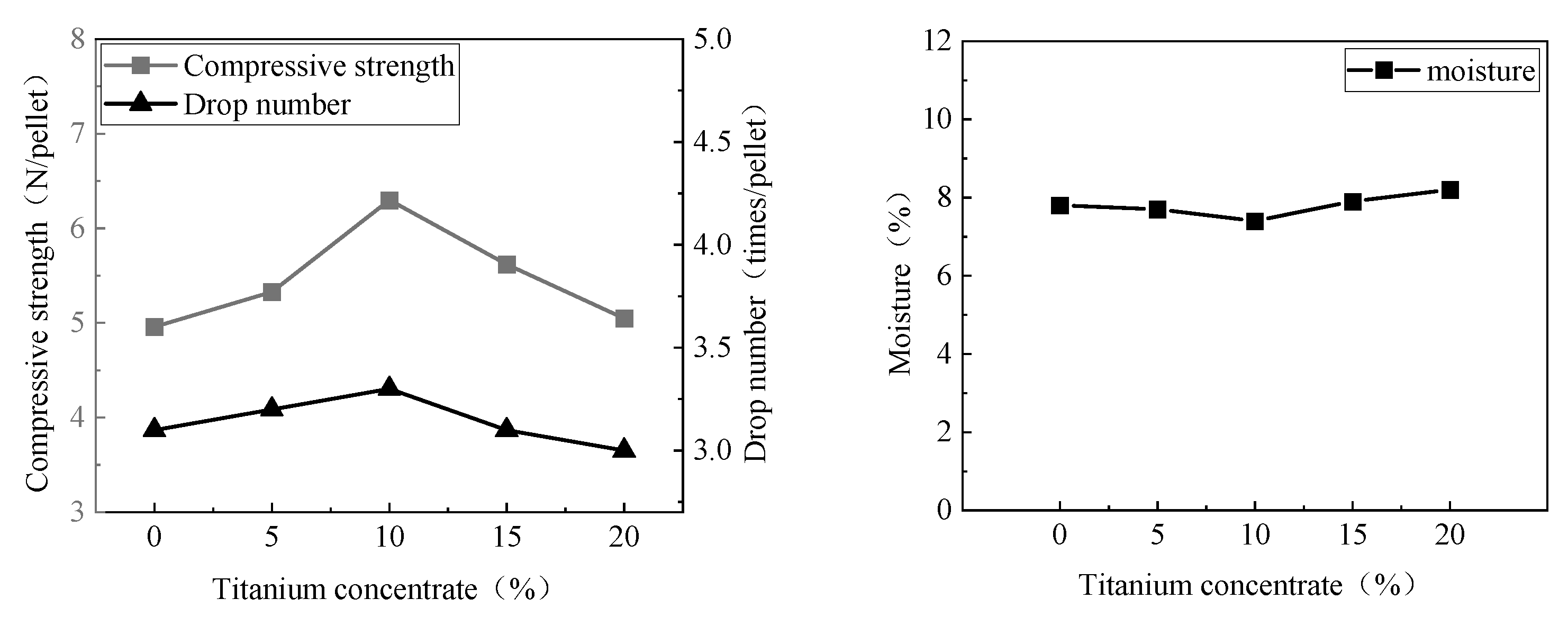
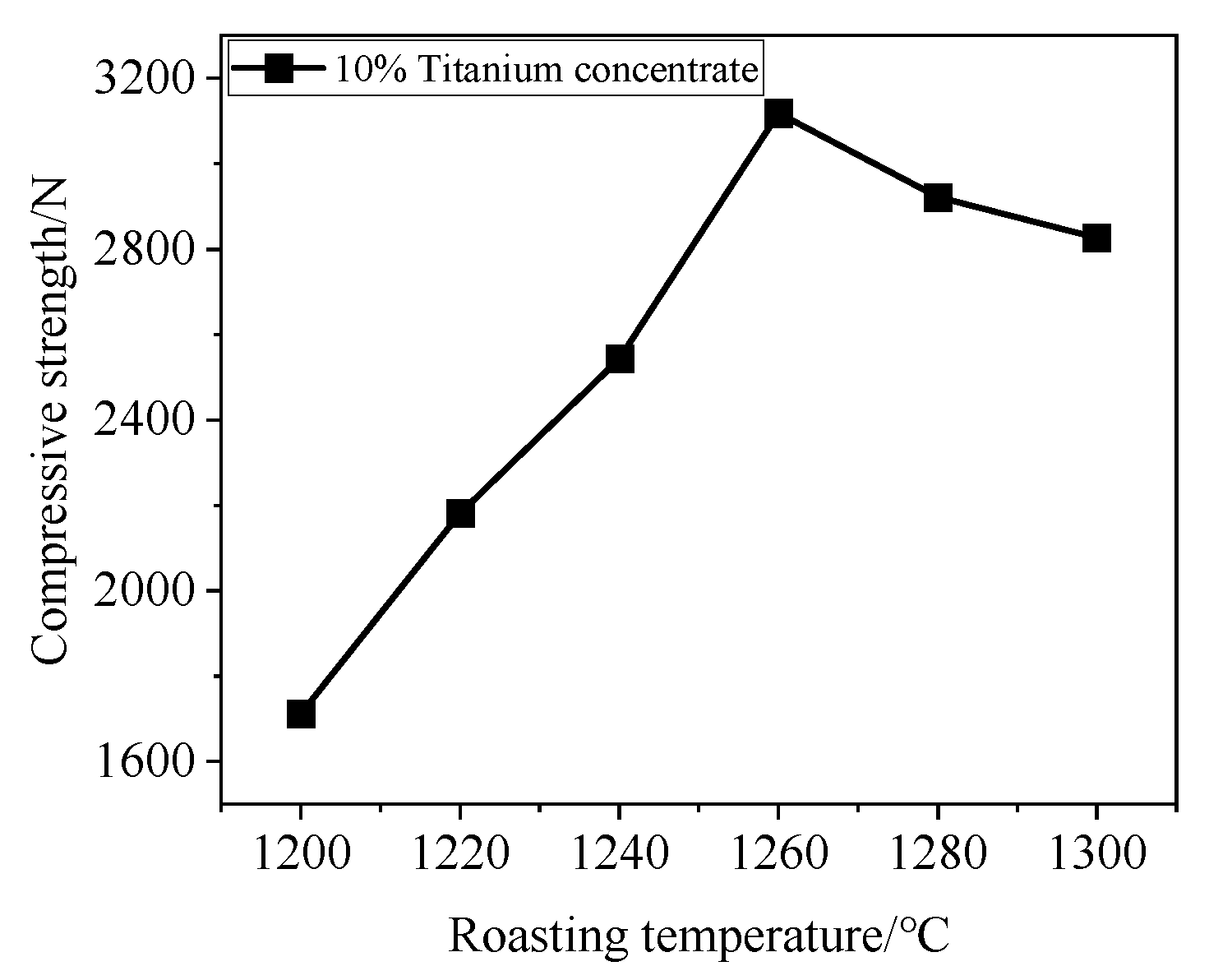
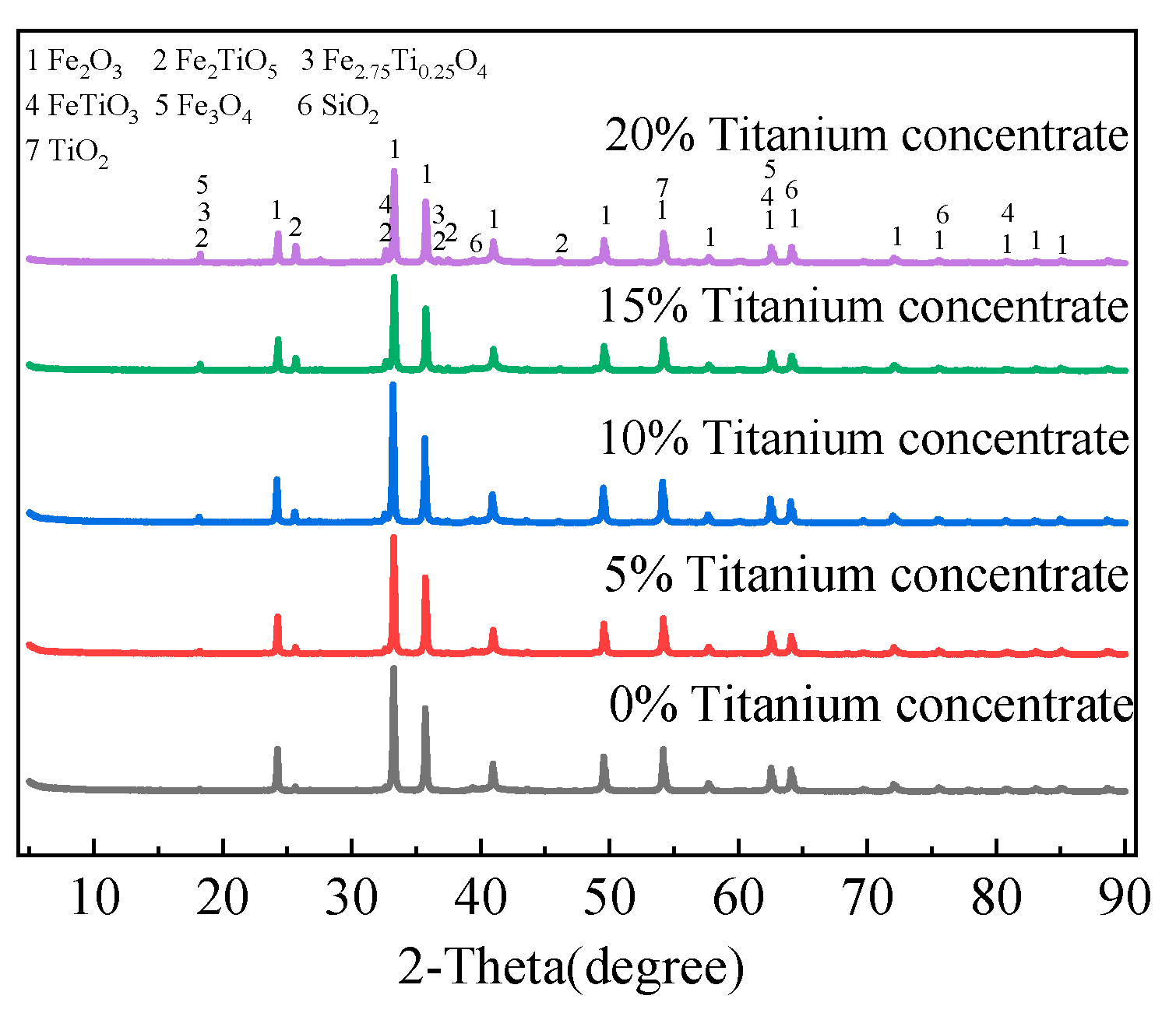
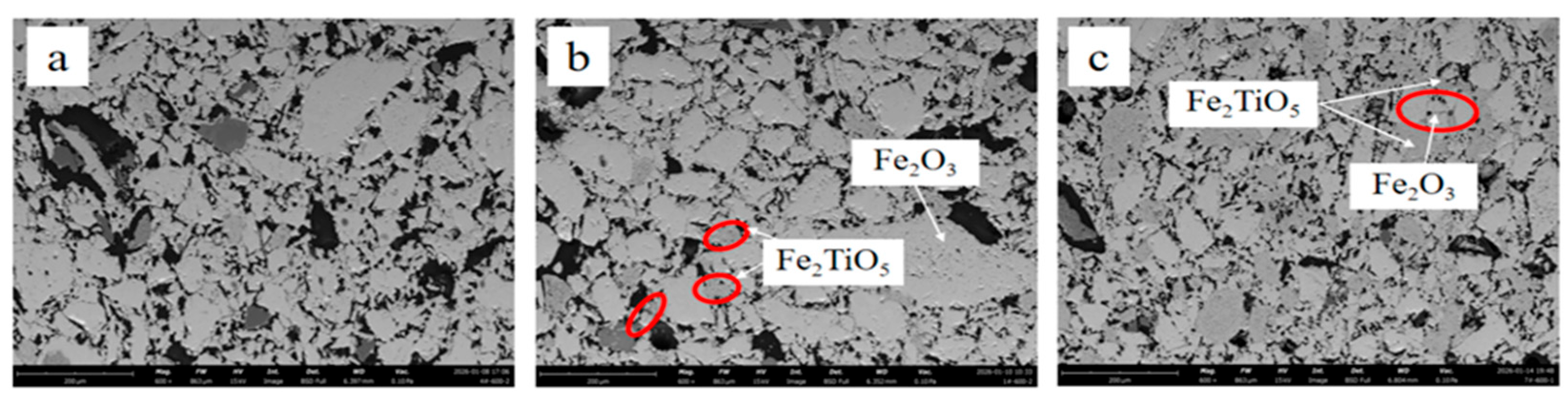
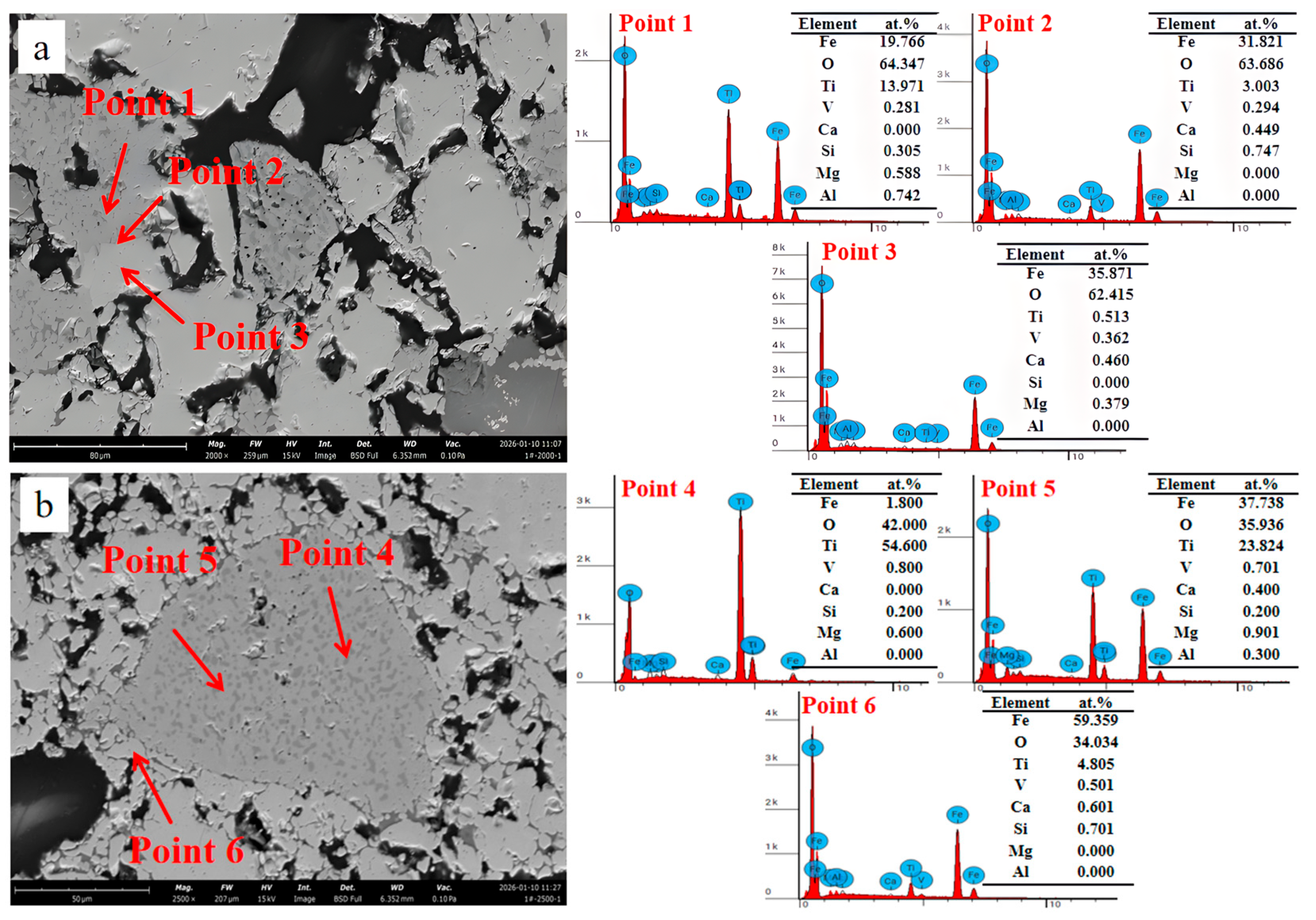
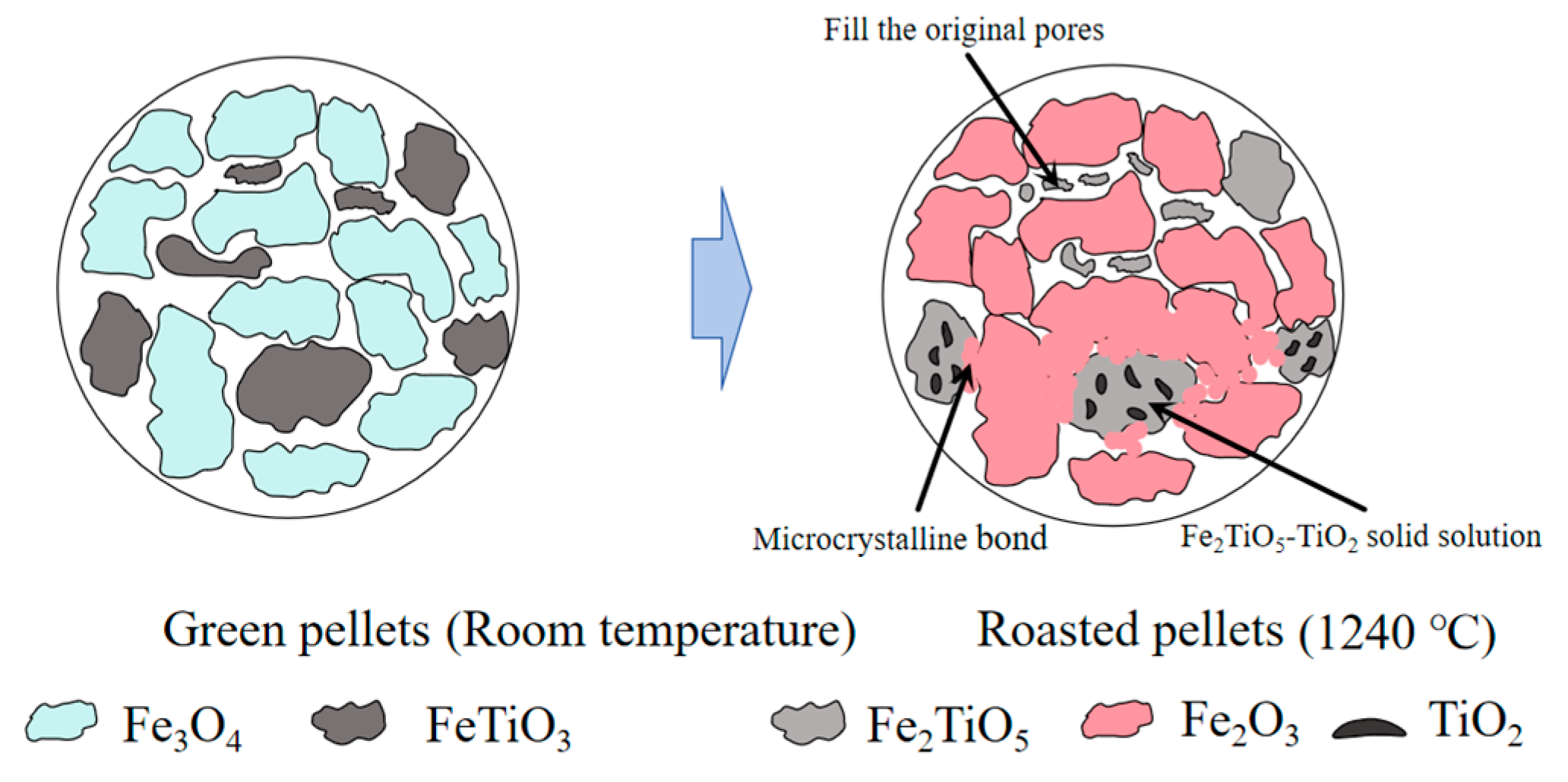
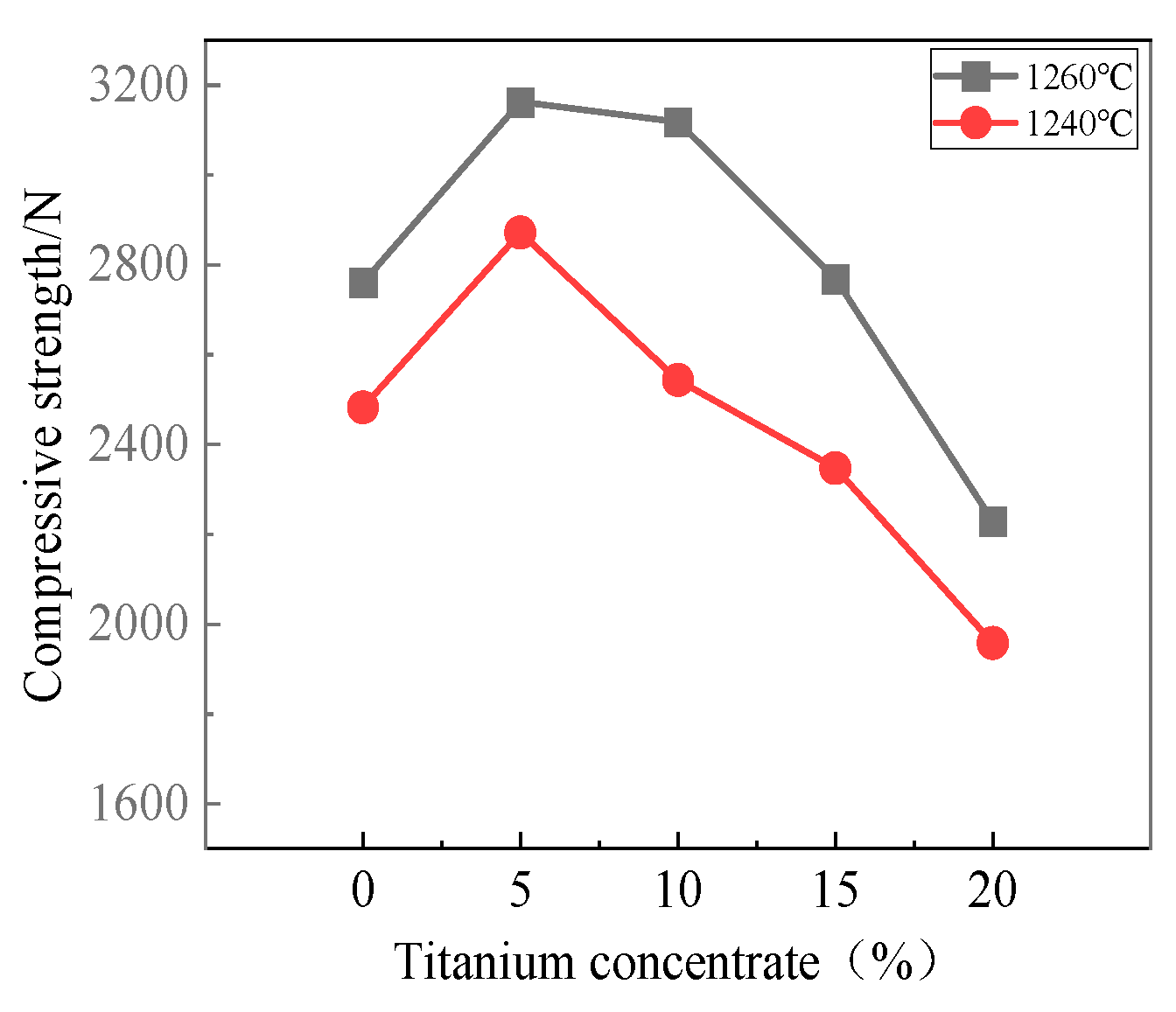
To support the production of high-titanium pellets for the gas-based shaft furnace–electric furnace route used to prepare high-titanium feedstock, the phase evolution and structural development of pellets prepared from titanium concentrate, vanadium–titanium powder, and Xuanhua powder were systematically investigated. The results show that the roasting temperature for high-titanium vanadium–titanium pellets should be controlled within 1240–1260 °C. When the titanium concentrate addition is 5 wt%, the pellets exhibit the optimum compressive strength. When the titanium concentrate addition is further increased to 10 wt%, the compressive strength decreases, but the pellets still satisfy the strength requirement for gas-based shaft furnace operation. The addition of titanium concentrate promotes the formation of pseudobrookite, which fills pores and forms crystal-bridge-like bonding with hematite, thereby enhancing pellet consolidation. However, excessive titanium concentrate addition leads to the formation of large amounts of pseudobrookite, which coats hematite grains, suppresses hematite recrystallization, and hinders oxygen diffusion within the pellets. The consolidation of high-titanium vanadium–titanium pellets is dominated by hematite recrystallization and is further strengthened by the intergrowth of hematite with the newly formed Fe2TiO5-TiO2 solid solution, resulting in a denser pellet structure.
Keywords: titanium concentrate; high-titanium vanadium–titanium pellets; compressive strength; phase evolution; consolidation mechanism titanium concentrate; high-titanium vanadium–titanium pellets; compressive strength; phase evolution; consolidation mechanism