Article

Electrochemical Hydrogenation-Induced Effects on the Room-Temperature Impact Toughness of Metastable and Stable Austenitic Stainless Steels


Institute of Materials Research, Slovak Academy of Sciences, Watsonova 47, 04001 Kosice, Slovakia
*
Author to whom correspondence should be addressed.
Metals 2026, 16(7), 753; https://doi.org/10.3390/met16070753
Submission received: 20 May 2026 / Revised: 28 June 2026 / Accepted: 30 June 2026 / Published: 7 July 2026
(This article belongs to the Special Issue Metallic Materials Behaviour Under Applied Load)

Abstract

In the present work, four grades of austenitic stainless steels, namely AISI 321, AISI 316Ti, AISI 309, and AISI 310S, are investigated in terms of electrochemical hydrogenation effect on their room-temperature impact toughness. All the materials were studied in their as-received (AR), i.e., industrially manufactured, material condition. LOM and SEM microstructural analyses combined with phase XRD and EBSD phase analyses revealed in all steels the polygonal-grain austenitic matrix and varying minor amounts of elongated δ-ferrite grains. Moreover, the metastable AISI 321 and AISI 316Ti steels exhibited noticeable occurrence (16% and 10%, respectively) of the BCC-structured phases (i.e., the strain-induced α′-martensite and non-equilibrium δ-ferrite) and little occurrence of primary TiN nitrides (below 1%). The AISI 321 and AISI 316Ti steels exhibited average amounts of 2.95% and 6.32% of δ-ferrite, respectively. The stable AISI 309 steel exhibited the occurrence of intergranular (Cr,Fe)23(C,N)6 precipitates (below 3%), indicative of prolonged (slow) cooling from the warm working temperature during the material manufacturing. The individual steel grades exhibited variable values of hardness and impact toughness depending strongly on their solid solution alloying and the amounts of individual minor phases in their microstructures. The AISI 316Ti steel exhibited the highest average hardness (273 HV) and lowest impact toughness (160 J/cm2) due to Mo-alloying and having the highest amount of δ-ferrite. The AISI 310S steel showed the highest impact toughness (210 J/cm2) and the second highest hardness (245 HV) thanks to having the most stable austenitic microstructure with the highest Ni- and Cr-alloying. The AISI 321 and AISI 309 steels show similarly low hardness (195 HV vs. 196 HV) and medium values of impact toughness (202 J/cm2 vs. 193 J/cm2). More importantly, all the steels under investigation exhibited detectable hydrogen-induced toughening effects, indicated by the negative HEI values. The metastable steels showed the lowest toughening effects (HEI: −2.0% and −3.8% for AISI 321 and AISI 316Ti, respectively), likely due to the adverse effect of α′-martensite. In contrast, the stable steels exhibited much higher toughening (HEI: −5.2% and −7.6% for AISI 309 and AISI 310S, respectively). Microstructural observations indicated that such toughening behavior might be related to the hydrogen-enhanced deformation banding and hydrogen-enhanced deformation twinning mechanisms, dividing the grains into smaller deformation zones, increasing the overall dissipation of deformation energy and consequently the materials’ impact toughness.

1. Introduction

Hydrogen is an efficient energy carrier that can be adopted in several industrial applications [1,2,3]. Hydrogen compatibility of structural metallic materials plays a key role in efforts aimed at global transformation into a clean, carbon neutral economy. However, a phenomenon known as hydrogen embrittlement (HE) represents a challenge for safe practical utilization of hydrogen in manufacturing, transportation, and power generation applications. HE is a degradation phenomenon related to the reduction in ductility and toughness that occurs at room or lower temperatures in various metals and alloys exposed to the action of free atomic (diffusible) hydrogen from liquid or gaseous hydrogen-containing environments [4,5,6]. The presence of thermally- or transformation-induced residual stresses and/or stress concentrators (e.g., constructional or microstructural notches) is well known to enhance HE [7,8,9,10]. It is generally accepted that the high hydrogen diffusivity in body-centered cubic (BCC) structured metals and alloys is the main reason for their high susceptibility to HE [11,12]. On the other hand, thanks to the face-centered cubic (FCC) crystal structure of austenitic stainless steels with high toughness, high hydrogen solubility, and low hydrogen diffusivity, these steels represent promising candidates for hydrogen storage and transportation systems [13,14]. Although austenitic stainless steels generally possess high resistance to HE, their brittle fracture resistance in hydrogen-containing environments may be lowered due to severe conditions, such as high pressure, low temperature, or high plastic deformation [15,16]. The resistance of austenitic stainless steels and other FCC-structured alloys against HE may also be significantly influenced by active deformation mechanisms occurring under specific environmental and mechanical loading conditions. For instance, the role of deformation twinning with respect to HE in austenitic alloys may either be negative or positive, depending on specific microstructural and deformation conditions. Cho et al. [17] studied the effect of severe plastic pre-strain induced by cold rolling on the formation of deformation twins and HE resistance of 8Cr-1Mn-11Ni-0.15N austenitic stainless steel. They revealed that hydrogen-induced degradation of tensile elongation gradually increased with the increase in the degree of cold rolling. The study concluded that cold rolling increased the density of microstructural defects, including the creation of cracks at twin boundaries, thereby facilitating hydrogen penetration into the steel, resulting in severe HE [17]. However, numerous studies have indicated that the resistance of some austenitic stainless steels and other FCC-structured alloys against HE may even be increased as a result of the deformation twinning-induced plasticity (TWIP) mechanism in hydrogen-charged material conditions [18,19,20,21,22,23,24,25,26,27,28]. Thus, the hydrogen-enhanced TWIP effect, including hydrogen-facilitated deformation nano-twinning, has been accepted as a possible hydrogen-induced toughening mechanism that may occur in various steels and alloys with an austenitic matrix. In addition, Gutierrez-Urrutia et al. [29] recently reported another kind of hydrogen-induced toughening mechanism of austenitic FeMnAlC low-density steel subjected to pressurized hydrogen gas pre-charging at 543 K for 200 h and subsequent tensile loading at room-temperature. Their study has shown that hydrogen affects deformation behavior by promoting specific deformation mechanisms associated with inhomogeneous plasticity and strain localization, namely hydrogen-enhanced deformation banding (HEDB) and hydrogen-enhanced microbanding (HEMB). It has been concluded that these hydrogen-induced effects manifested by macroscopic kink bands and localized strain gradients promote the plastic relaxation and enhancement of strain-hardening capacity, which consequently results in improved HE resistance of the material [29].
On the other hand, the results of several other studies, e.g., Refs. [30,31], indicated that a susceptibility to HE increases in metastable austenitic steels, which transform to α′-martensite as a result of deformation-induced martensitic transformation (DIMT). Moreover, the presence of non-equilibrium δ-ferrite in austenitic stainless steels and their welds also increases their sensitivity to HE [32,33]. Common non-metallic inclusions (e.g., sulfides, oxides, calcium aluminates, etc.) together with strengthening precipitates of secondary phases (e.g., carbides, nitrides, and various intermetallic phases) depending on their size, morphology, and distribution in the steel microstructure may act like either irreversible (strong) or reversible (weak) hydrogen traps with either positive or negative effects on the resulting HE resistance [34]. HE research studies that focused on “300 series” stainless steels under conventional tensile or slow-strain rate quasi-static loading conditions are widely available in the literature, e.g., [15,17,30,31,32,33,35,36,37]. However, studies related to the investigation of HE susceptibility of austenitic steels in impact loading conditions are rather limited, e.g., [38,39,40,41].
Our present work is focused on the investigation of the electrochemical hydrogenation-induced effects on the room-temperature impact toughness of metastable and stable austenitic stainless steels in order to characterize their brittle fracture resistance against HE under dynamic mechanical loading. Microstructural dependence of the observed brittle fracture resistance for individual austenitic stainless steels in the studied environmentally assisted impact loading conditions is analyzed and discussed.

2. Experimental Materials and Procedures

Two metastable (AISI 321 and AISI 316Ti) and two stable (AISI 309 and AISI 310S) austenitic stainless steels were investigated in their as-received (AR), commercially manufactured material condition. All the studied steel grades were received in the form of rods 16 mm in diameter. Their nominal chemical composition is listed in Table 1.
From the AR rods of all considered steel grades, prismatic bodies of sub-sized Charpy V-notch (CVN) impact toughness test specimens were produced by conventional grinding machining. However, V-notches were manufactured by spark erosion in order to assure the precise notch geometry. Schematic sampling of the CVN impact toughness test specimen from the AR steel rod and the dimensional characteristics of the sub-sized CVN impact toughness test specimen are shown in Figure 1.
The CVN impact toughness tests were carried out for all investigated steel grades (AISI 321, AISI 316Ti, AISI 309, and AISI 310S) in conditions without and with subsequent electrochemical hydrogen charging. The reason for selecting the investigated steel grades for the present comparative study was so that the individual steels differed from each other significantly in terms of their chemical composition, microstructure and phase stability, which gives rise to the assumption of differing hydrogen embrittlement sensitivity. In contrast to stable austenitic stainless steels, metastable steels possess a high propensity to the formation of strain-induced martensite, which is known to be the hydrogen diffusion accelerator lowering the hydrogen embrittlement resistance.
Room-temperature electrochemical hydrogen charging of prepared CVN impact toughness test specimens was performed in a solution of 1 M HCl with 0.05M N2H6SO4 at a current density of 20 mA/cm2 for 24 h. The chosen parameters of the electrochemical hydrogenation process represent an artificial laboratory process aimed at accelerated testing of hydrogen embrittlement sensitivity of structural steels considered for application in hydrogen-containing environments. During electrochemical hydrogenation, the current lines (i.e., electric field lines mapping the current density and hydrogen flux) are highly concentrated at the notch root. Because the notch geometry induces a sharp geometrical discontinuity, it forms a region of high local stress and accelerated hydrogen diffusion [42]. The electrochemically hydrogenated CVN impact toughness specimens were tested shortly after hydrogen pre-charging. Before conducting the impact toughness tests, the hydrogenated specimens were transported to the testing place within a thermal insulating box with an interior temperature of 5 °C. Just before conducting each individual CVN impact toughness test, the specimens were spontaneously warmed up one by one in still air to room temperature and subsequently subjected to the CVN impact toughness test. For each material state, five CVN impact toughness test specimens were tested at room temperature using a conventional Charpy pendulum impact tester PSW 30 (VEB Werkstoffprüfmaschinen, Leipzig, Germany) with a 300 J impact energy pendulum hammer in conformity with standard ISO 148-1:2016 [43]. The hydrogen embrittlement susceptibility characterizing the brittle-fracture resistance of studied materials was determined by the calculation of the hydrogen embrittlement index (HEI) according to the following equation:
HEI CVN   =   C V N 0 C V N H C V N 0   ×   100 %
where CVN0 and CVNH are the average values of Charpy V-notch impact toughness of the non-hydrogenated and hydrogen-charged material states, respectively [44].
Conventionally prepared metallographic specimens were etched in the solution of “Aqua Regia” (i.e., acidic solution of the concentrated HCl and HNO3 acids in a molar ratio of 3:1). The average austenitic grain size and area fractions of the δ-ferrite and TiN nitrides in the studied materials were determined by microstructural image analyses using software ImageJ (version 1.46, National Institutes of Health, Bethesda, MD, USA). The grain size was determined in terms of the calculation of the Feret mean grain diameter [45]. For the image analyses, five microstructures were randomly selected from various microstructural areas of the studied steels, and the obtained results were statistically evaluated.
Microstructural analyses of the investigated materials were performed by using the light-optical microscope (LOM) OLYMPUS GX71 (Olympus Corporation, Tokyo, Japan) and scanning electron microscope (SEM) JEOL JSM-7000F (Jeol Ltd., Tokyo, Japan) equipped with the electron back-scattered diffraction (EBSD) detector Nordlys-I (Oxford Instruments plc, Abingdon, Oxfordshire, UK). The EBSD measurements were carried out on a drawing direction plane of prepared metallographic specimens, and the obtained results were treated using the CHANNEL-5, HKL software (service pack 7, HKL technology A/S, Hobro, Denmark). Crystallographic data for the expected FCC- and BCC-structured phases were taken from the EBSD software database.
Fractographic observations of broken CVN impact toughness test specimens were carried out by using the scanning electron microscope (SEM) Tescan Vega-3 LMU (TESCAN Brno, s.r.o., Czech Republic). The local chemical (elemental) micro-analyses of minor phases (precipitates) on prepared metallographic cross-sections were performed via “point analyses” using the energy-dispersive X-ray (EDX) spectrometer Bruker XFlash Detector 410-M (Bruker Nano GmbH, Berlin, Germany).
Experimental investigation of phase composition of the investigated steels was performed by X-ray diffraction (XRD) analyses using a Philips X’Pert Pro diffractometer (Panalytical B.V., Almelo, The Netherlands) in Bragg–Brentano geometry with Co-Kα radiation and ultra-high-speed detector X’Celerator (type number: 9430 030 15201, Malvern Panalytical Ltd., Malvern, UK). The recorded XRD patterns were evaluated for the phase identification of the individual detected phases using XPert HighScore Plus software (Version: 2.0, Panalytical B.V., Almelo, The Netherlands) using the PDF-2 database (The International Centre for Diffraction Data, Philadelphia, PA, USA). The expected phases, i.e., FCC-structured austenite matrix and BCC-structured minor phases, i.e., the δ-ferrite and strain-induced α′-martensite, were identified on the recorded XRD patterns by matching them with corresponding reference patterns, i.e., ICDD 00-023-0298 for austenite and ICDD 00-006-0696 for δ-ferrite and strain-induced α′-martensite. However, due to the very similar lattice parameters of both the BCC-structured minor phases, their mutual differentiation was carried out by means of EBSD phase mapping and simultaneous microstructural (morphological) differentiation.

3. Results and Discussion

3.1. Microstructure and Hardness of As-Received Materials

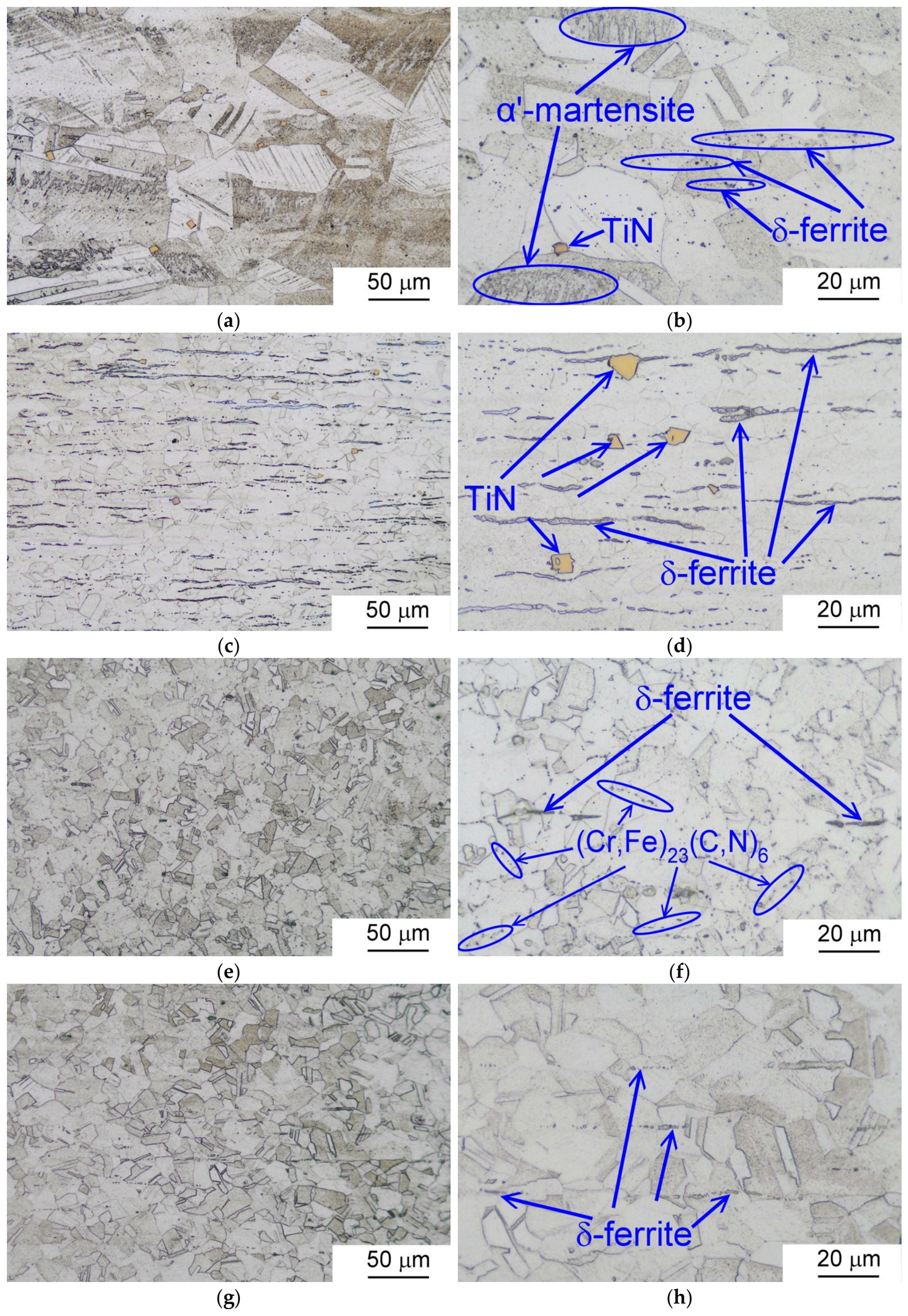
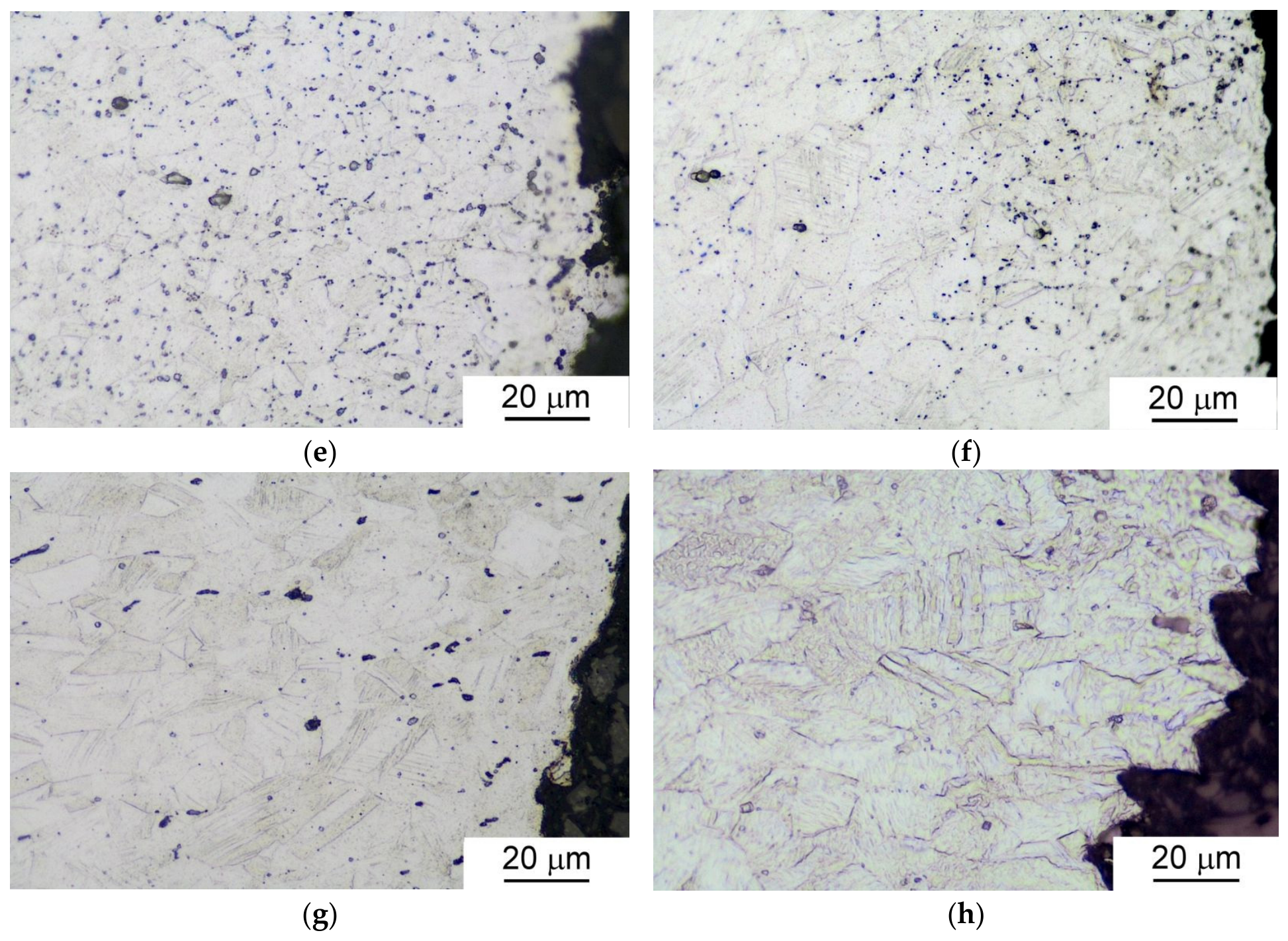
Figure 2 shows LOM microstructures of the studied austenitic stainless steels in their as-received (AR) material condition without application of electrochemical hydrogen charging. The horizontal orientation of the investigated metallographic specimens was in the longitudinal, i.e., drawing, direction. The microstructures of all studied steels were formed of polygonal austenitic grain structures with typical annealing twins and variable minor amounts of non-equilibrium δ-ferrite. The presence of non-equilibrium δ-ferrite in microstructures of all AR steel grades is indicative that these materials were industrially manufactured by drawing into the bars without conducting subsequent solution annealing. In general, performing the solution heat treatment would dissolve the δ-ferrite in the considered microstructures. Although δ-ferrite occurrence is one of the indicative parameters in terms of temperature dependence of the drawing process, other effects, such as the dislocation density and recrystallization processes, also play a crucial role in AR microstructure formation. However, the investigation of these effects was beyond the scope of the current investigation. All the studied microstructures were recorded parallel to the drawing direction for clear visualization of mostly elongated (i.e., longitudinally deformed) δ-ferrite grains of their typical directional “chain-like” morphology, including linearly scattered “tiny” grain distribution (Figure 2). Both the metastable, Ti-stabilized steels, i.e., AISI 321 and AISI 316Ti, showed minor occurrence of the primary TiN nitrides of sharp, angular morphology and typical goldish-colored microstructural contrast (see Figure 2a–d).
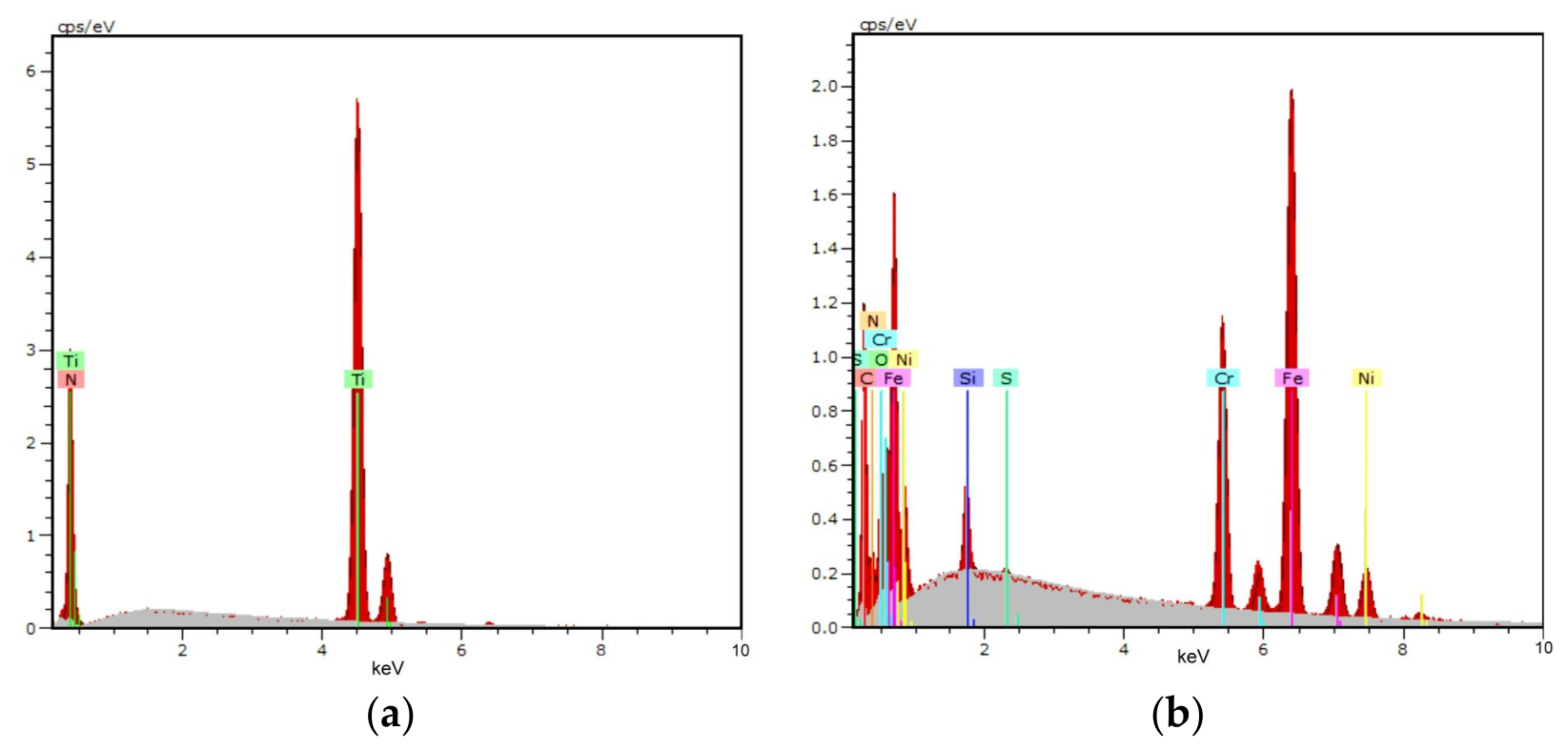
The stable steel AISI 309 showed intergranular precipitates of secondary (Cr,Fe)23(C,N)6 carbo-nitrides with globular or lenticular morphology (Figure 2f), indicative of prolonged cooling from the warm working temperature. The representative EDX spectra of corresponding chemical micro-analyses of minor precipitate phases are shown in Figure 3. The formation of carbo-nitrides during the steel manufacturing can also be supported by the fast diffusion kinetics of the interstitial C and N elements. On the other hand, due to the much slower diffusion kinetics of the Fe and Cr atoms, the precipitation of intermetallic FeCr-based σ-phase was less likely during the steel production process. The presence of the Si, Ni and S elements in the EDX spectrum of the carbo-nitride (Figure 3b) likely originated from the surrounding matrix and/or their partial dissolution within the carbo-nitride.
The results of the performed microstructural image analyses, i.e., the average austenitic grain size and the area fractions of the δ-ferrite, TiN nitrides, and (Cr,Fe)23(C,N)6 carbo-nitrides, are summarized in Table 2.
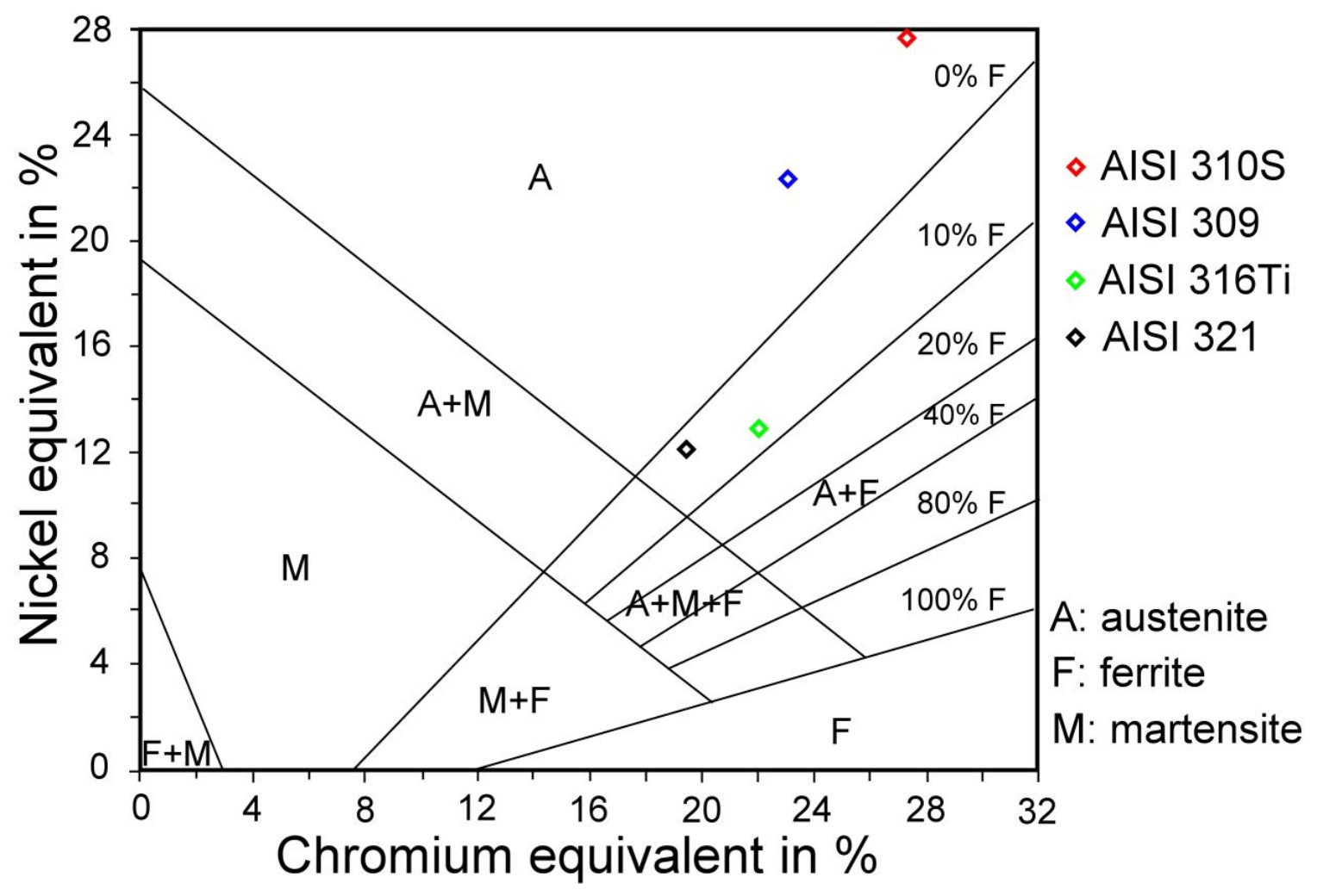
The tendency for δ-ferrite to form and the amount in the microstructure of austenitic stainless steels are crucial in terms of their weldability and impact toughness. A small balanced amount of δ-ferrite (from 5% to 10%) is well known to be beneficial for the weldability of austenitic stainless steels (i.e., prevention of hot cracks during welding), whereas an increasing amount of δ-ferrite in microstructures deteriorates the resulting impact toughness. An approximate estimate of the phase composition in non-equilibrium microstructures of stainless steels can be commonly assessed according to the Schaeffler constitution diagram [46] using the calculated values of chromium and nickel equivalents, i.e., Creq and Nieq, quantifying the effects of the ferrite- and austenite-stabilizing elements on the resulting microstructure according to the steel chemical composition in weight % [47,48]:
Creq = [Cr] + 1.4[Mo] + 1.5[Si] + 0.5[Nb] + 2[Ti]
Nieq = [Ni] + 30 × ([C] + [N]) + 0.5[Mn]
After the calculation of individual Creq and Nieq values for the chemical compositions of the steels investigated in this study, a Schaeffler diagram with the positions of the steels was created, as shown in Figure 4.
In accordance with the performed microstructural observations (Figure 2, Table 2), the highest amount of non-equilibrium δ-ferrite was found for AISI 316Ti steel, whereas the steels AISI 309 and AISI 310S were almost free of δ-ferrite in their microstructures. The steel AISI 321 showed a medium amount of δ-ferrite, ranging between the amounts corresponding to the other studied steels (Figure 2, Table 2). Thus, with respect to the stability of the austenitic phase (Figure 4), it is shown that the Ti-stabilized AISI 321 and AISI 316Ti steels represent metastable austenitic stainless steels, whereas the non-stabilized AISI 309 and AISI 310S steels represent stable austenitic stainless steels. The austenite stability, which increases with the increasing amount of Ni in the steel or with the increasing Nieq value, characterizes the resistance of the steel against DIMT and thus also the resistance against HE, which is particularly important for the material selection in terms of hydrogen compatibility. Based on this criterion, the resistance against HE should increase in the following order based on the increasing Nieq value of the materials investigated in this study: AISI 321, AISI 316Ti, AISI 309, and AISI 310S. This assumption will be further analyzed and discussed in the subsequent Section 3.2, which analyzes the effect of hydrogen charging on the resulting values of CVN impact toughness.
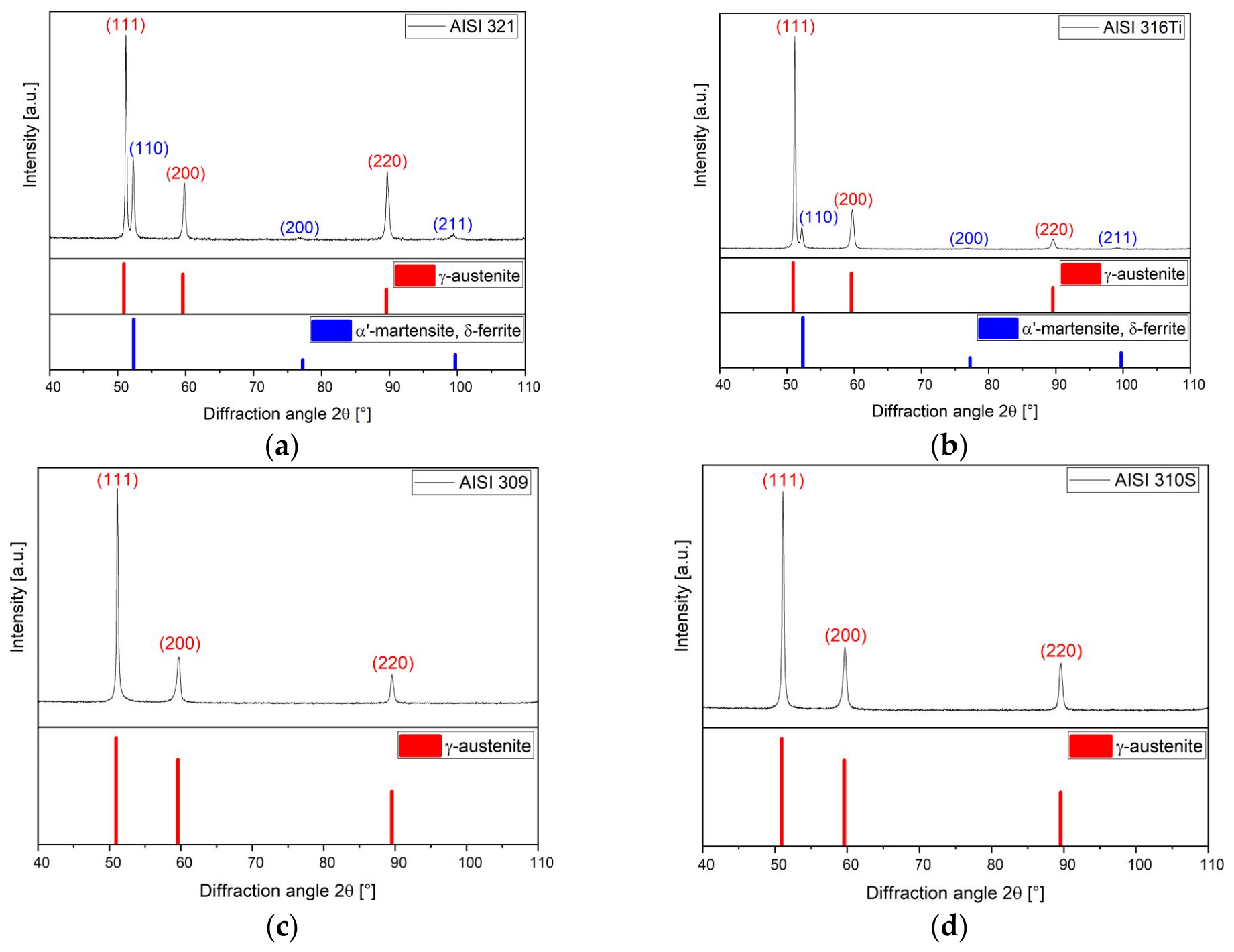
The results of complementary XRD phase analyses for the investigated stainless steels are shown in Figure 5.
XRD analyses (Figure 5) were performed on the longitudinal metallographic sections to better correlate with the metallographic analyses presented in Figure 2. The XRD patterns of the AISI 321 and AISI 316Ti steels (Figure 5a,b) showed the occurrence of both the FCC-structured solid solution (γ-austenite) and BCC-structured Fe-based phases, presumably to be δ-ferrite and α′-martensite. However, due to very similar lattice parameters of both of the BCC-structured minor phases (aδ-ferrite = 0.289–0.292 nm and aα′-martensite = 0.286–0.289 nm [49,50]), mutual differentiation from each other could not be carried out by the performed XRD analyses. The XRD patterns of the stable AISI 309 and AISI 310S steels (Figure 5c,d) showed only the sole occurrence of γ-austenite. This observation is likely related to the very small amount of δ-ferrite within the microstructures of the AISI 309 and AISI 310S steels (as shown in Table 2), lying below the XRD detection limit, and also to their strongly suppressed tendency to DIMT. The same holds true for the TiN nitrides (Table 2), which were also detected only by metallographic observations, as presented in Figure 2. In Table 3, the lattice parameters of the FCC- and BCC-structured phases, along with volume fractions of the BCC-structured phases determined by the XRD measurements for the stainless steels investigated in this study, are listed.
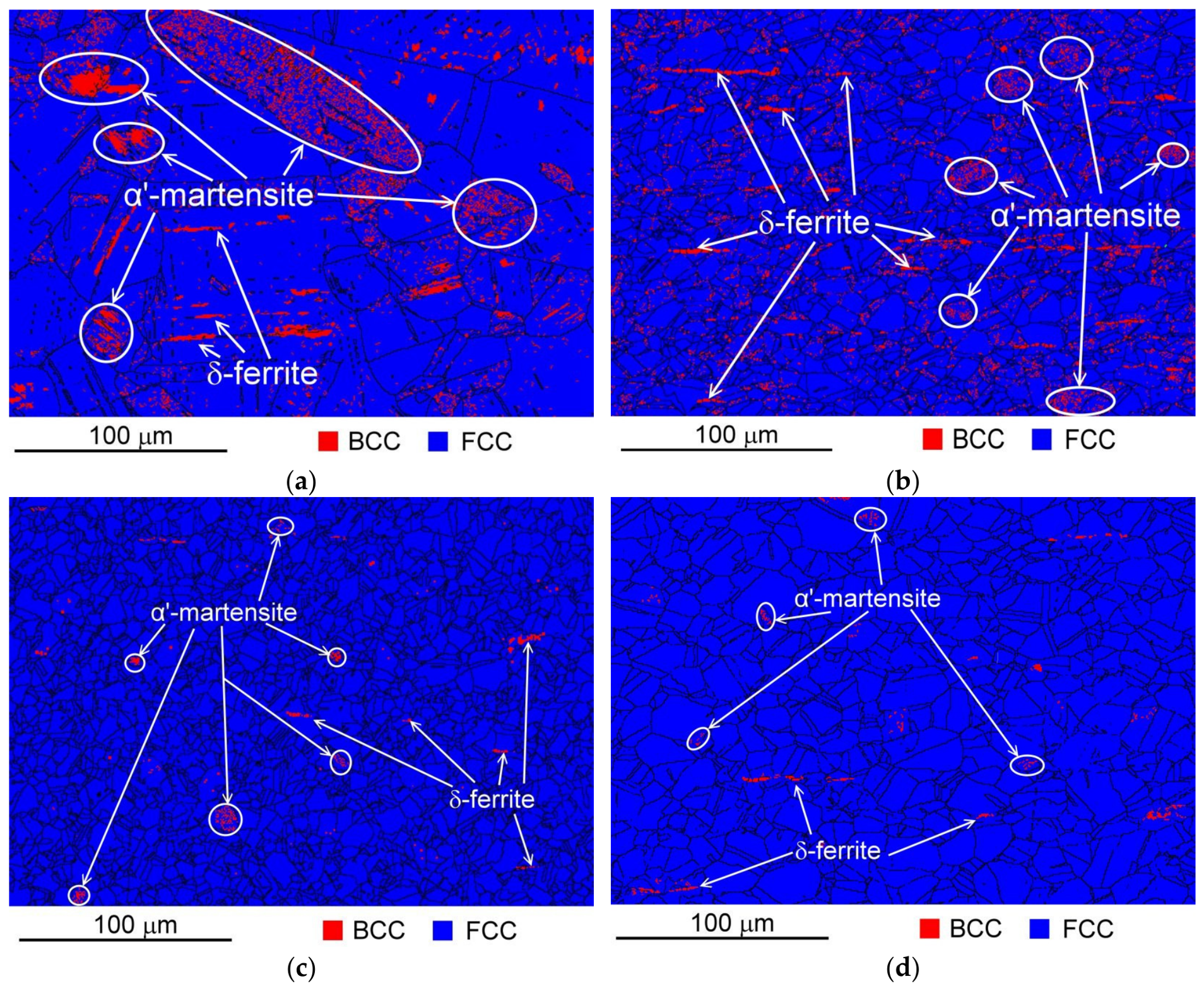
According to the results presented in Table 3, it can be seen that the measured lattice parameters of the BCC-structured phases were closer to the α′-martensite. However, for the differentiation between the δ-ferrite and strain-induced α′-martensite, further microstructural characterization based on the EBSD phase mapping and simultaneous morphological differentiation was carried out (Figure 6).
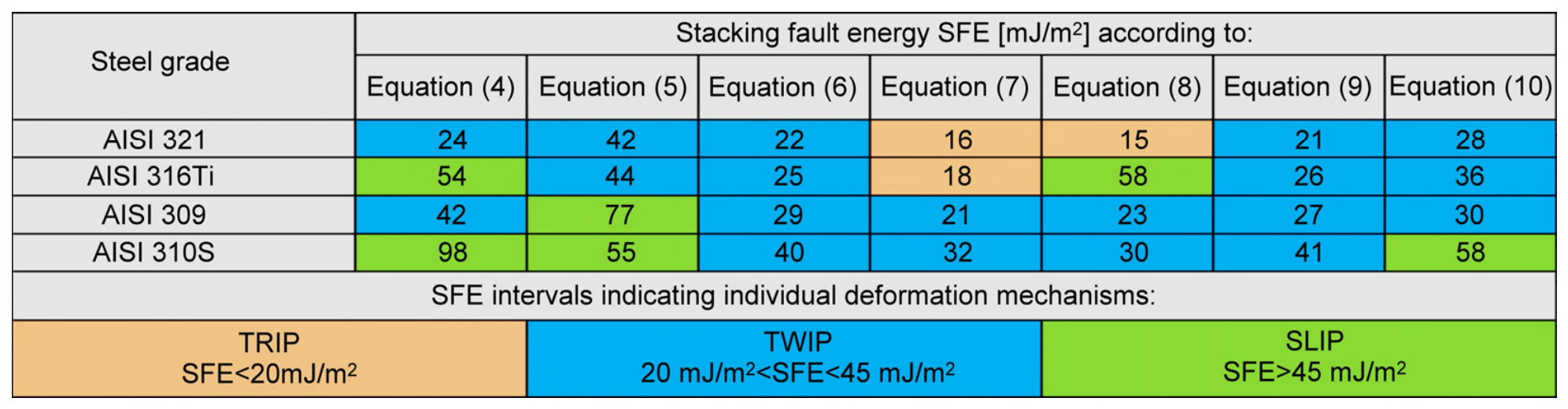
As shown in Figure 6, the metastable AISI 321 and AISI 316Ti steels with the lowest nickel contents (Table 1) showed an increased additional occurrence of the strain-induced α′-martensite (Figure 6a,b), formed during steel manufacturing as a result of deformation-induced martensitic transformation (DIMT). This observation is in good agreement with reported findings of other authors, e.g., Refs. [51,52], who assessed the strain-induced α′-martensite in these steel grades by EBSD and XRD analyses. On the contrary, the stable AISI 309 and AISI 310S steels showed only a negligible occurrence of the strain-induced α′-martensite (Figure 6c,d) due to the high stability of the γ-austenite phase (Figure 4). It should be acknowledged that the formation of ε-martensite with a hexagonal close-packed (HCP) crystal structure cannot be excluded, especially during the initial stages of cold deformation of metastable austenitic stainless steels. However, in our present study, only the BCC-structured α′-martensite was indicated by the XRD and EBSD analyses (Figure 5 and Figure 6). For further estimation of the γ-austenite phase stability, calculation of stacking fault energy (SFE) was additionally performed (see Figure 7) according to the following equations [53,54,55,56,57,58,59]:
SFE (mJ/m2) = −53 + 6.2[Ni] + 0.7[Cr] + 3.2[Mn] + 9.3[Mo]
SFE (mJ/m2) = 25.7 + 2[Ni] + 410[C] − 0.9[Cr] − 77[N] − 13[Si] − 1.2[Mn]
SFE (mJ/m2) = 16.7 + 2.1[Ni] − 0.9[Cr] + 26[C]
SFE (mJ/m2) = 5.53 + 1.4[Ni] − 0.16[Cr] + 17.1[N]
SFE (mJ/m2) = 39 + 1.59[Ni] − 1.34[Mn] + 0.06[Mn]2 − 1.75[Cr] + 0.01[Cr]2 + 15.21[Mo] − 5.59[Si] − 60.69 × ([C] + 1.2[N])1/2 + 26.27 × ([C] + 1.2[N]) × ([Cr] + [Mn] + [Mo])1/2 + 0.61 × ([Ni]([Cr] + [Mn]))1/2
SFE (mJ/m2) = 2.2 + 1.9[Ni] − 2.9[Si] + 0.77[Mo] + 0.5[Mn] + 40[C] − 0.016[Cr] − 3.6[N]
SFE (mJ/m2) = −7.1 + 2.8[Ni] + 0.49[Cr] + 2[Mo] − 2[Si] + 0.75[Mn] − 5.7[C] − 24[N]
However, the presence of hydrogen in hydrogen-charged specimens of austenitic stainless steels may result in a reduction in SFE values due to hydrogen pair formation [61].
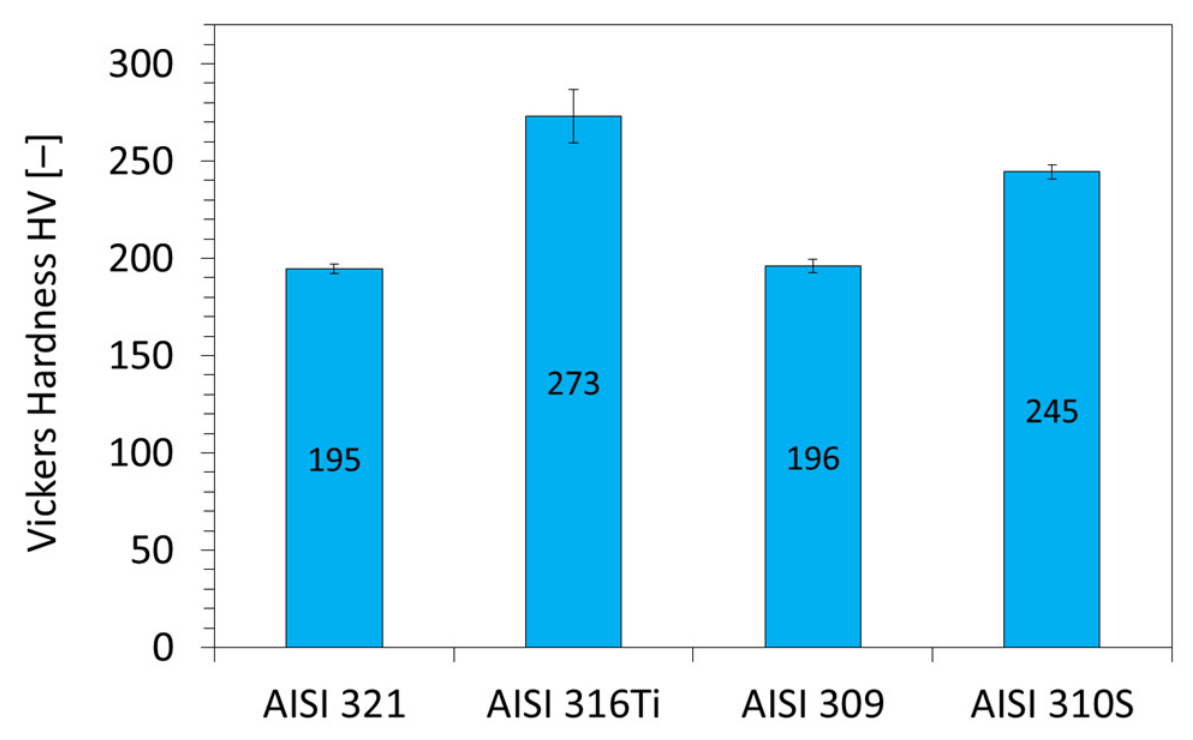
Further characterization of the studied materials was carried out by the determination of their hardness, as shown in Figure 8.
It can be seen in Figure 8 that the highest hardness was measured for the AISI 316Ti steel, which had the highest amount of δ-ferrite in its γ-austenite matrix microstructure. However, the highest hardness of AISI 316Ti steel was not just related to it having the highest amount of δ-ferrite, but also to its high degree of alloying with molybdenum (Table 1), resulting in an intensive solid solution hardening effect [62], compared to the other investigated steels without molybdenum. The additional contribution of hardening to the AISI 316Ti steel can also be related to the presence of the strain-induced α′-martensite (Figure 6). The second highest hardness was measured for the molybdenum-free AISI 310S steel (Figure 8), thanks to the solid solution hardening effects related to it having the highest degree of alloying with chromium and nickel of the studied steels (Table 1). Moreover, an increased amount of silicon in AISI 310S steel also represents a significant solid solution hardening contribution [62]. The steels AISI 321 and AISI 309 showed similarly low hardness values (Figure 8) despite relatively high differences in their microstructures (Figure 2) and chemical composition (Table 1). Such an observation indicates that effects other than solid solution alloying or grain-boundary strengthening play a crucial role in terms of the hardening/softening contributions in this case. Despite the significantly lower alloying of the AISI 321 steel, it showed a very similar hardness to the AISI 309 steel (Figure 8). This observation indicates that the hardening of AISI 321 steel is mainly related to the occurrence of strain-induced α′-martensite as a result of deformation-induced martensitic transformation (DIMT), but at the same time, the softening effect is related to its coarse γ-austenitic grain size and significantly lower degree of alloying compared to the AISI 309 steel (Table 1). The XRD pattern of AISI 321 steel indicates that it had the highest number of BCC phases (Figure 5a), although the highest amount of δ-ferrite was metallographically observed for the AISI 316Ti steel (Figure 2). This is due to the fact that the highest BCC (110) reflection in the XRD pattern of AISI 321 steel is related to the presence of two BCC-structured phases, namely δ-ferrite and α′-martensite. However, as already discussed above, a low hardness similar to that of the lower-alloyed AISI 321 steel was also observed for the higher-alloyed AISI 309 steel due to some other softening mechanism that is not directly related to γ-austenitic grain size. The low hardness value (Figure 8) and the presence of intergranular (Cr,Fe)23(C,N)6 precipitates of lenticular morphology in AISI 309 steel (Figure 2f) indicate that this steel likely underwent some prolonged, slow cooling from the warm working temperature during its industrial manufacturing, which might have resulted in the observed material softening (Figure 8). In addition to the discussed alloying and microstructural effects, the level of cold work hardening represents one of the crucial factors influencing the hardness of the studied materials in their AR material condition. However, details on the manufacturing conditions of the AR steel rods are not available. Nevertheless, according to the microstructural characteristics (Figure 2 and Table 2), the steels AISI 316Ti, AISI 309, and AISI 310S with relatively fine γ-austenitic grain size underwent a likely similar thermo-mechanical processes, in contrast to the steel AISI 321, which had significantly larger grain size.

3.2. Effect of Hydrogen Charging on CVN Impact Toughness and Fracture Behavior

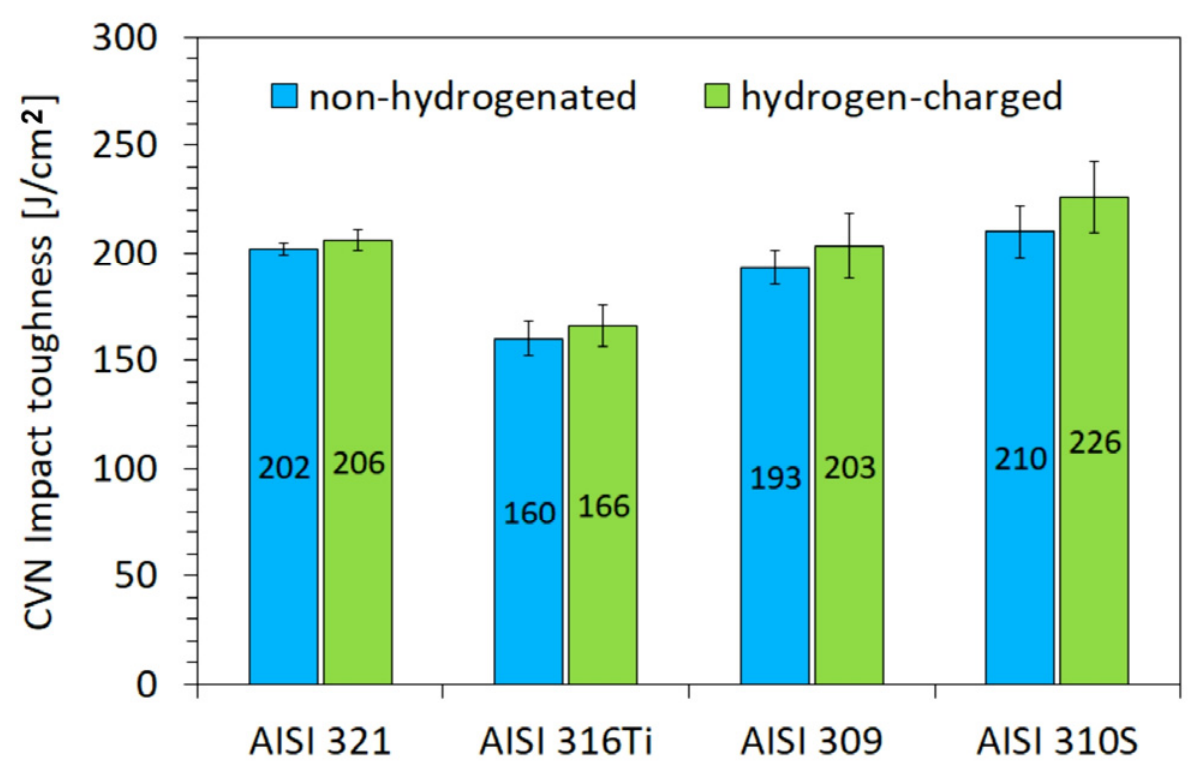
Figure 9 shows the average values of CVN impact toughness of the investigated steels in non-hydrogenated and hydrogen-charged material conditions. It can be seen that the effect of hydrogen charging on the CVN impact toughness was rather small. However, all hydrogen-charged materials exhibited a small but clear, systematic increase in CVN impact toughness values compared to the non-hydrogenated material condition.
Relative percentage changes in CVN impact toughness of hydrogen-charged materials related to their initial non-hydrogenated material condition were evaluated by the hydrogen embrittlement index (HEICVN) according to Equation (1). The calculated HEICVN values for all investigated steel grades are listed in Table 4. All the HEICVN values are negative and quantify the level of hydrogen-induced toughening effects in the individual studied materials.
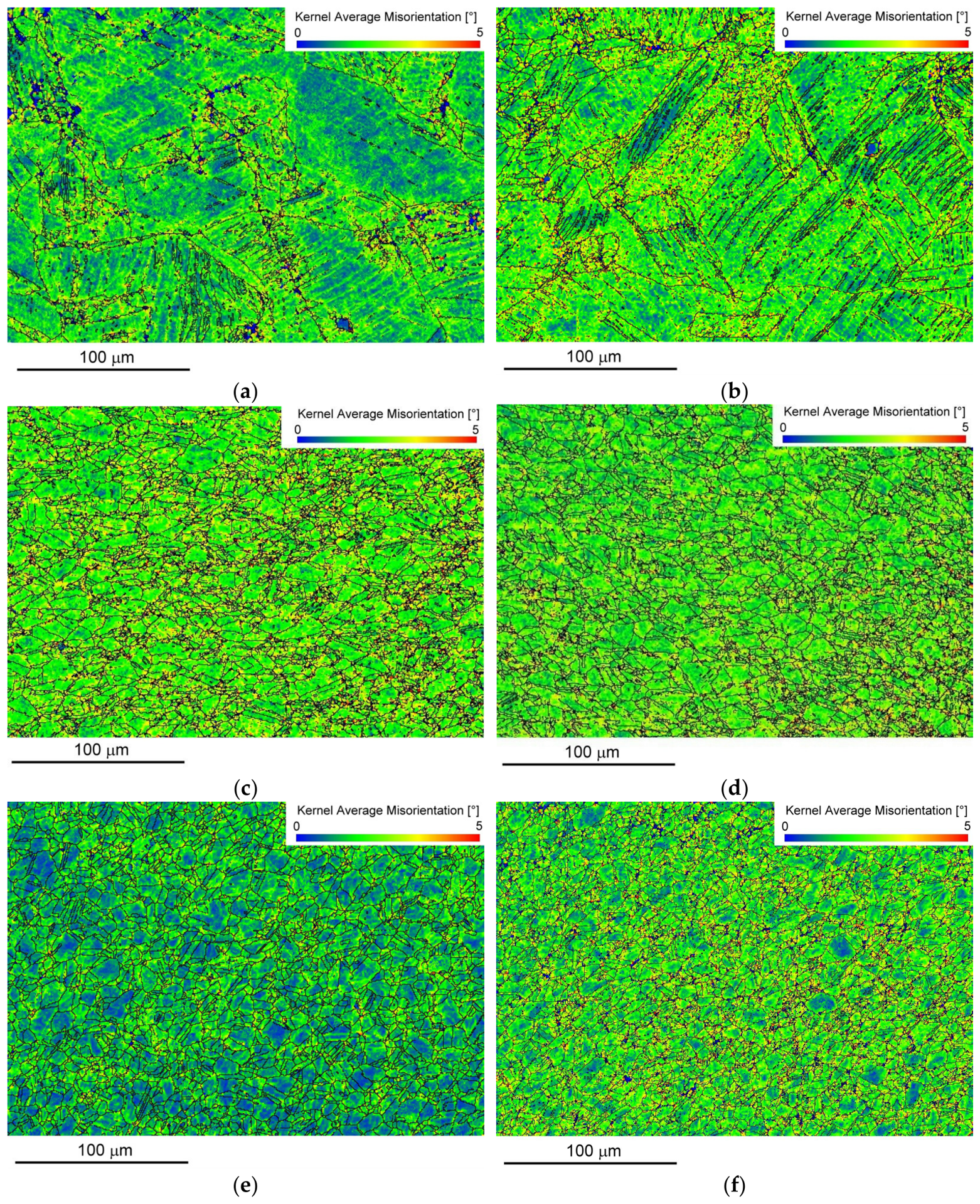
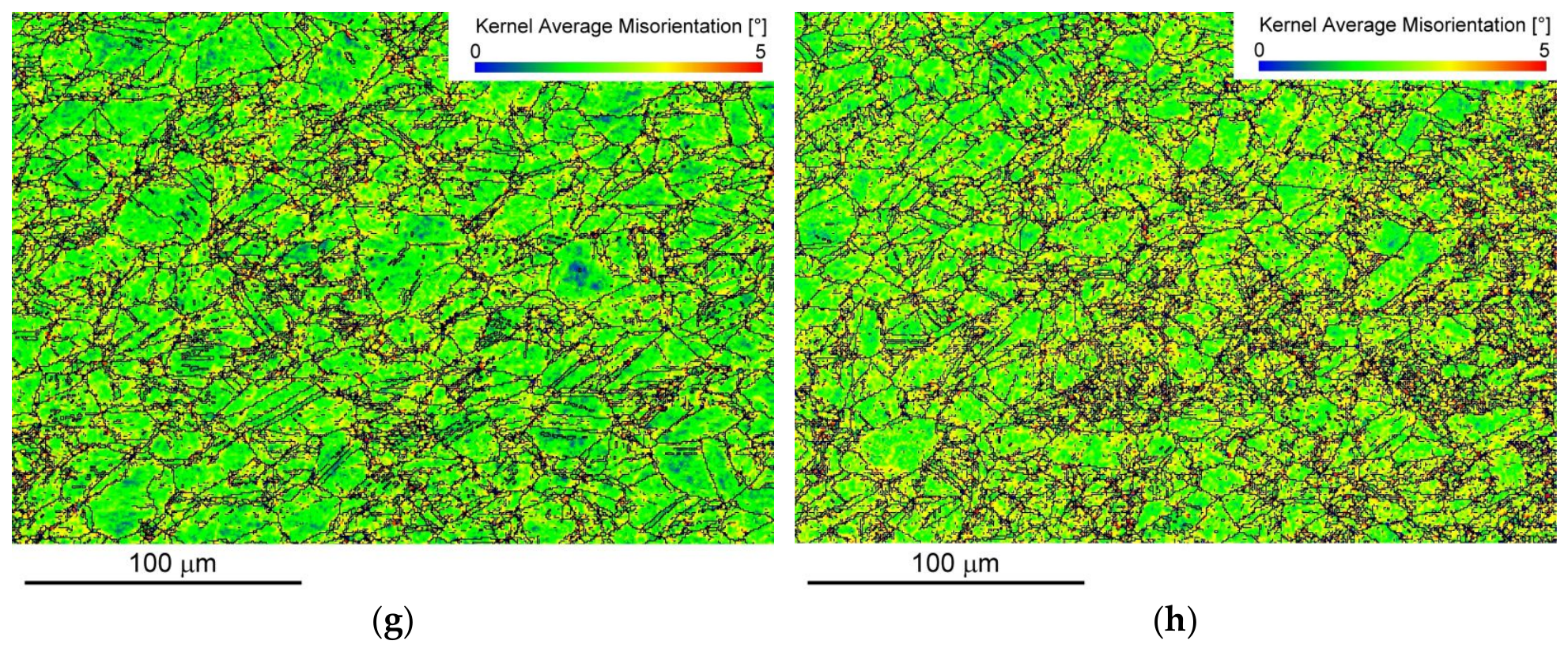
From Table 4, it is clearly visible that the stable AISI 310S steel exhibited the highest hydrogen-induced toughening effect, whereas the metastable AISI 321 steel showed the lowest hydrogen-induced toughening effect. Hydrogen-induced ductilization effects have been observed in many other austenitic steels and FCC-structured high-entropy alloys under quasi-static tensile loading conditions. Such behavior has been ascribed to the effect of hydrogen-enhanced, twinning-induced plasticity (TWIP), including hydrogen-facilitated deformation nano-twinning [18,19,20,21,22,23,24,25,26,27,28]. In our previous work focused on the investigation of the effects of electrochemical hydrogen charging on Charpy impact toughness of AISI 316H stainless steel, similar hydrogen-toughening effects were also observed under dynamic loading conditions [44]. Moreover, after hydrogen desorption, original property restoration occurred, which clearly indicated reversibility in dynamic mechanical behavior. Murakami et al. [18] investigated the fatigue crack growth resistance of AISI 304 and AISI 316L austenitic stainless steels and revealed that they demonstrated dramatically increased fatigue resistance after hydrogen charging. This behavior has been explained by the interplay of two competitive actions of hydrogen, namely the dislocation pinning and enhancement of dislocation mobility [18]. According to the results of the present study (Figure 9, Table 4), the highest dynamic hydrogen-induced toughening effects were observed for the stable austenitic stainless steels, i.e., AISI 309 and AISI 310S grades, whereas the metastable steels, i.e., AISI 321 and AISI 316Ti, exhibited small or even negligible (AISI 321 steel) toughening effects after electrochemical hydrogenation. This result is likely related to the DIMT occurring in the metastable steels, which acts as a hydrogen diffusion accelerator, thus lowering the HE resistance. Hence, it is assumed that the formation of strain-induced α′-martensite in the metastable austenitic stainless steels during the CVN impact toughness test acted against the hydrogen-enhanced toughening effect, which prevailed in the stable austenitic stainless steels (Figure 9, Table 4). Nevertheless, it is interesting to note that in numerous research studies, e.g., [30,63,64], it has been reported that the hydrogen generally stabilizes the γ-austenite phase in metastable austenitic stainless steels by suppression or retardation of the DIMT. In order to reveal differences in deformation behavior between the studied metastable and stable austenitic stainless steels, EBSD and fractographic analyses (Figure 10, Figure 11, Figure 12, Figure 13 and Figure 14) were carried out. Figure 10 shows the EBSD Kernel Average Misorientation (KAM) maps obtained by the mode of EBSD analyses, revealing the microstructural areas with increased KAM values, indicating pronounced local misorientation due to increased dislocation density and/or strain accumulation. The susceptibility of the investigated steels to specific deformation behavior was investigated on the fractured CVN impact toughness test specimens in microstructural areas located just beneath the V-notch, i.e., the areas that experienced the highest deformation during testing (Figure 10).
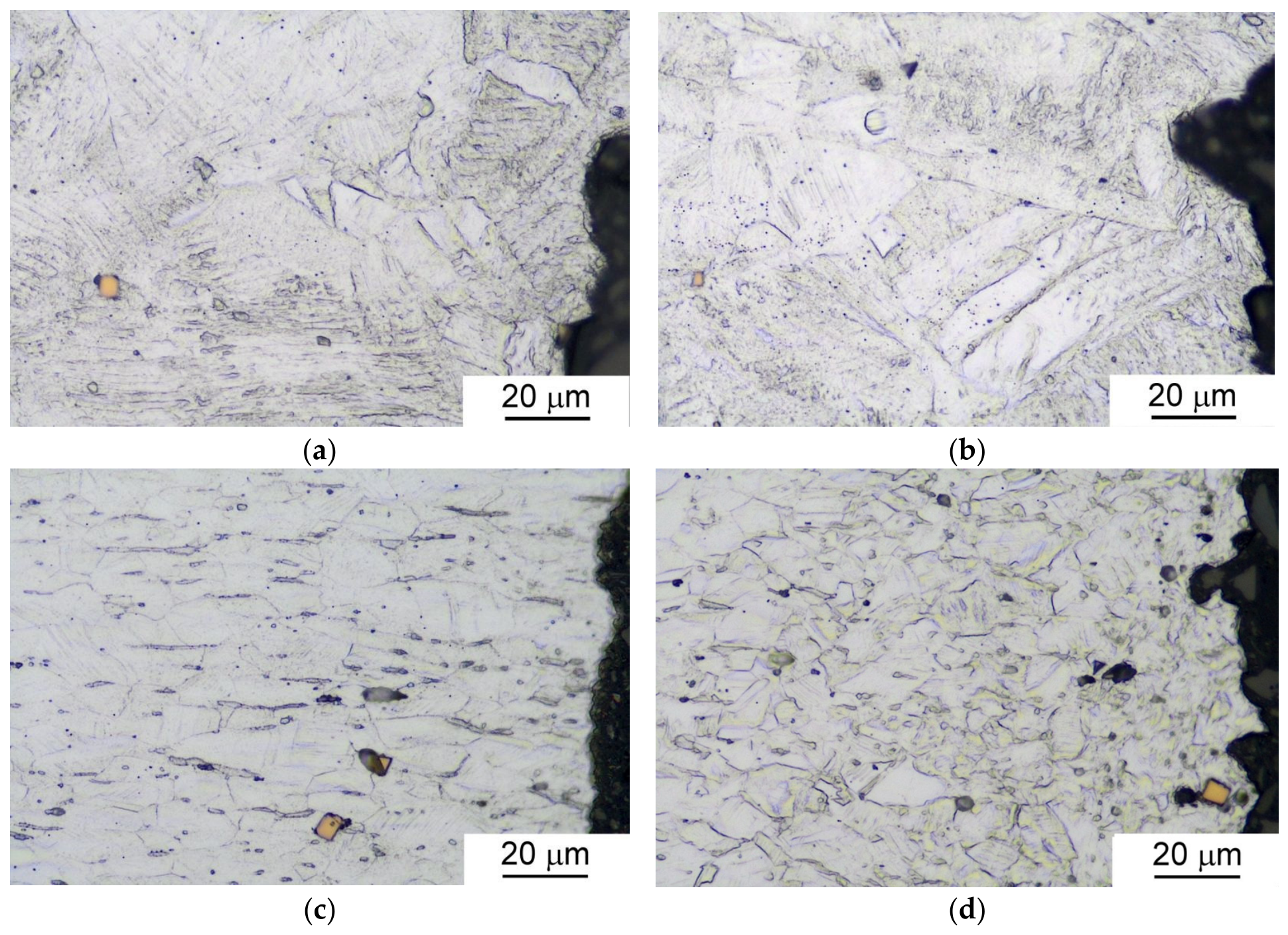
The non-hydrogenated and hydrogen-charged materials were compared, and within the hydrogenated materials, the occurrence of pronounced localized strain gradients was observed (Figure 10) as a result of hydrogen-enhanced deformation banding (HEDB) and hydrogen-enhanced deformation twinning (HEDT). This behavior represents a specific manifestation of the hydrogen-enhanced localized plasticity (HELP) effect, where dissolved hydrogen increases the mobility of dislocations, leading to localized slip and the formation of visible deformation bands or slip bands [29], as also shown on light-optical microscopic images in Figure 11.
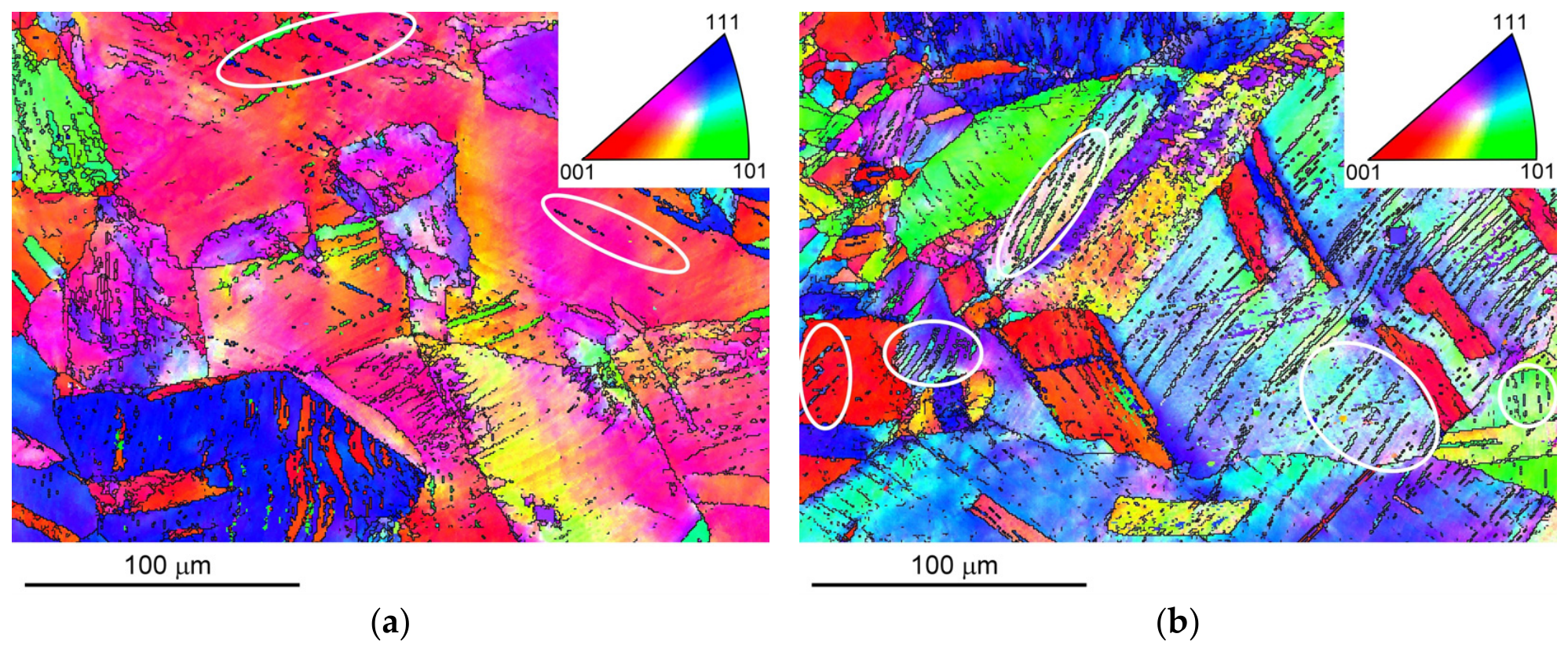
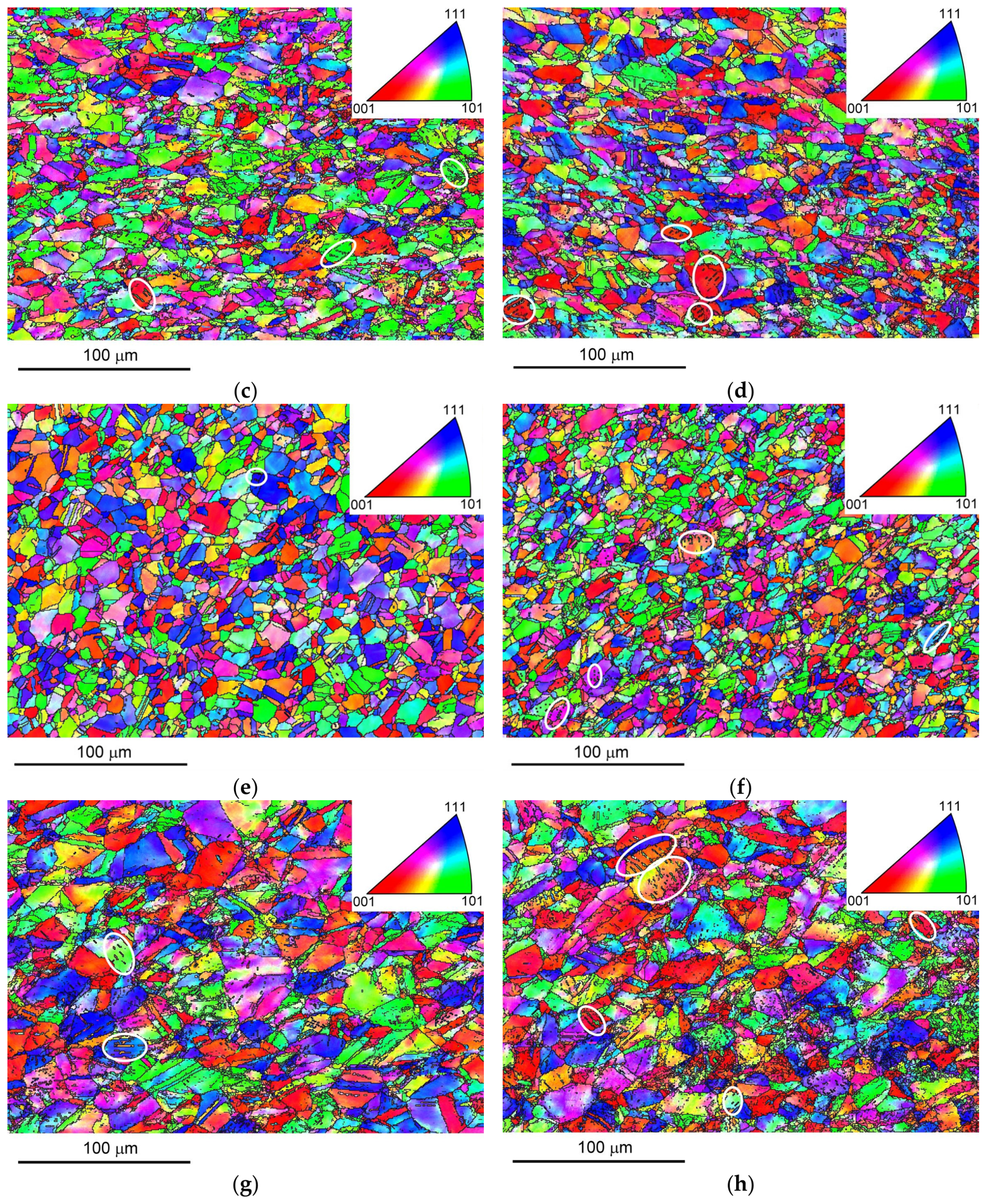
Thanks to the reduced values of stacking fault energy (SFE) of the γ-austenite phase by the action of hydrogen, the formation of deformation twins was favored [65], as also depicted on the EBSD inverse pole figure (IPF) crystallographic orientation maps in Figure 12.
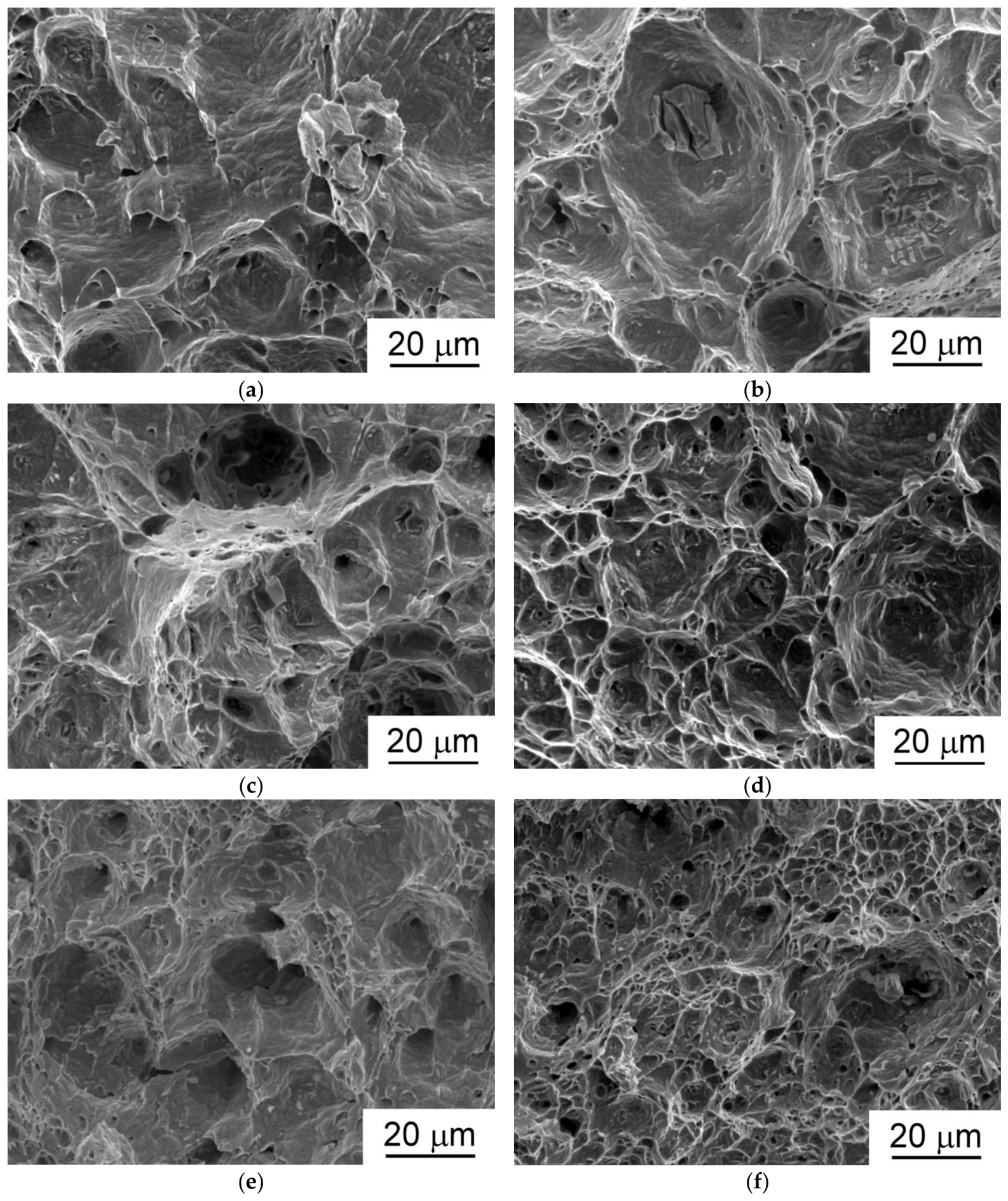
Both of these effects, i.e., HEDB and HEDT, create under specific loading conditions a so-called “dynamic Hall–Petch effect” that relaxes localized stresses, suppressing brittle crack initiation [66]. Moreover, HEDB acts as a mechanism whereby hydrogen facilitates the formation of high-density dislocation structures, strengthening the material rather than causing embrittlement [67,68]. Hydrogen accelerates dislocation activity in the lattice, promoting massive slip that accumulates into kink bands. These bands are often aligned parallel to the trace of the slip system associated with the strongest strain field [69]. Based on the microstructural analyses performed in this study (Figure 10, Figure 11 and Figure 12), it can be concluded that the mechanism of the toughness improvement due to the HEDB and HEDT effects is typically associated with dividing the grains into smaller deformation zones, increasing the dislocation storage and overall dissipation of the deformation energy, thereby improving the resulting fracture resistance (Figure 9). A formation of low-angle grain boundaries (LAGBs) along the slip bands and at the interfaces of high-angle grain boundaries (HAGBs) was observed (Figure 10, Figure 11 and Figure 12), as also reported in our former study [64] about the electrochemical hydrogenation effects on the tensile properties and impact toughness of AISI 316L and AISI 316H stainless steels. In order to support the findings obtained from the performed microstructural analyses indicating dispersion of deformation energy by the absorbed hydrogen, complementary fractographic analyses of broken CVN impact toughness test specimens were carried out (see Figure 13). The fractographic analyses were performed in the central area of broken CVN impact toughness specimens, approx. at about 1 mm distance from the notch root. As expected, the steels AISI 316Ti, AISI 309, and AISI 310S, with the highest hydrogen-induced toughening effects (Figure 9, Table 4), exhibited the most significant differences in fracture characteristics (Figure 13), related to their non-hydrogenated and hydrogen-charged material conditions.
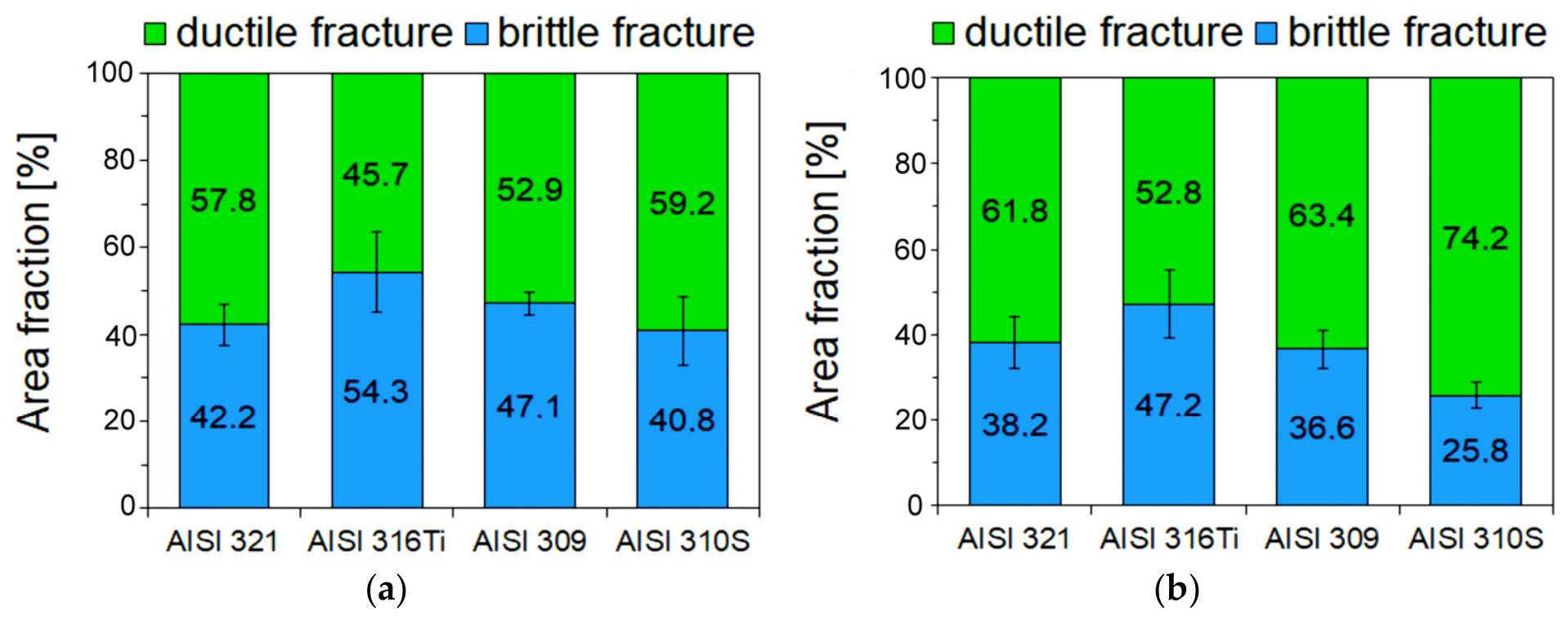
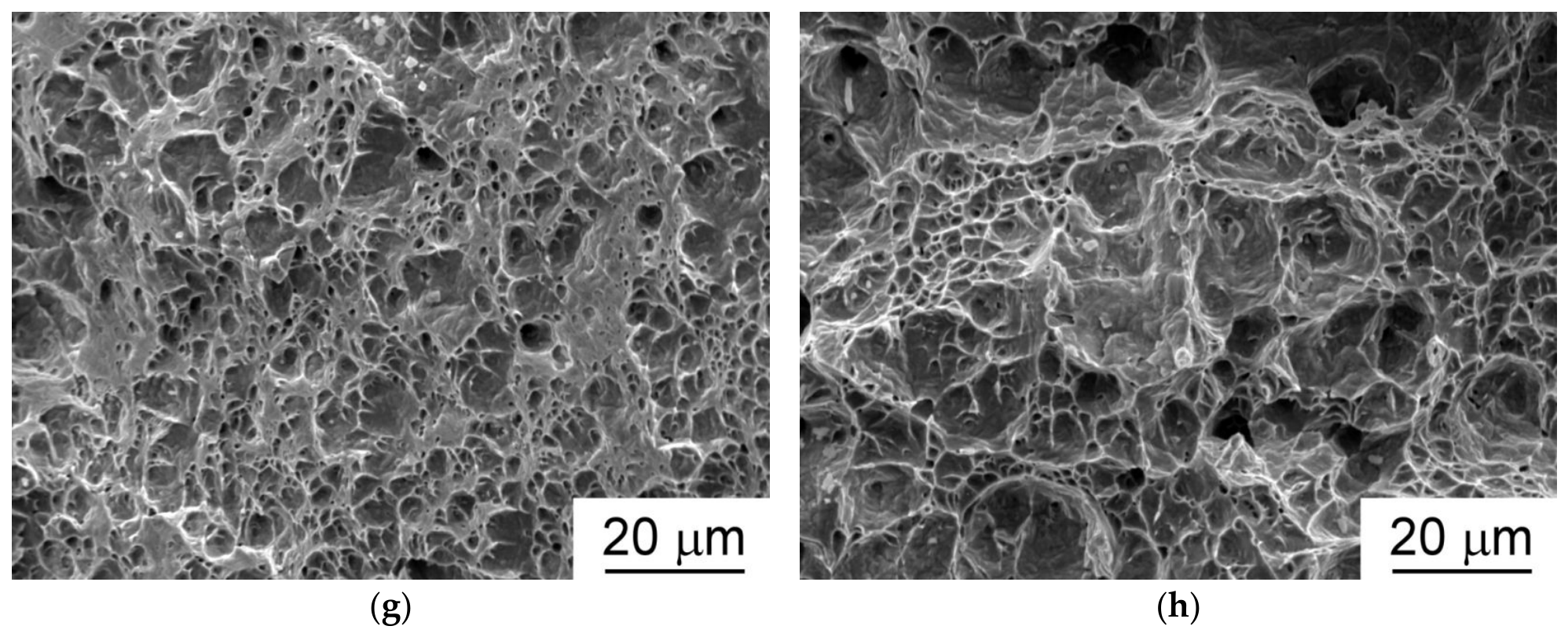
The fracture micro-mechanism of the metastable AISI 321 steel dynamically tested in the non-hydrogenated material condition consisted of coarse plastically shaped dimples, a small portion of shallow dimples and cleavage facets (Figure 13a). In the hydrogenated material condition (Figure 13b), the fractographic characteristics of the AISI 321 steel were very similar to the non-hydrogenated material state. The fracture micro-mechanism related to the metastable AISI 316Ti steel dynamically tested in the non-hydrogenated material state consisted of relatively coarse transgranular quasi-cleavage facets along with a minor portion of shallow dimples with low plastic deformation (Figure 13c). In contrast, the fracture micro-mechanism of the AISI 316Ti steel dynamically tested in the hydrogen-charged material condition consisted of deep, plastically shaped ductile dimples of various sizes and morphologies (Figure 13d). The stable AISI 309 steel exhibited, in its non-hydrogenated material state, mixed fracture micro-mechanisms, including coarse and fine ductile dimples in addition to a portion of transgranular cleavage fracture (Figure 13e). On the other hand, in the hydrogen-charged material state, it showed a significantly higher portion of fine ductile dimples (Figure 13f). Regarding the fracture behavior of the stable AISI 310S steel in the non-hydrogenated material state, it is clearly visible in Figure 13g that the fracture surface consisted of smooth cleavage facets and high density of fine, shallow dimples. On the contrary, the fracture surface of AISI 310S steel in the hydrogen-charged material condition was formed of highly plastically shaped ductile dimples of various sizes and morphologies (Figure 13h). The observed fracture behaviors of the studied materials support the findings about hydrogen-induced dissipation of deformation energy in impact loading conditions. A summary of the quantitative evaluation of the ductile and brittle area fractions on the fracture surfaces of individual materials in the non-hydrogenated and hydrogen-charged material conditions is provided in Figure 14.
It can be seen in Figure 14 that in the hydrogen-charged material state (Figure 14b), the area fraction of ductile fracture micro-mechanisms slightly increased, compared with the non-hydrogenated material condition (Figure 14a). Based on the presented results of the current investigation, it is concluded that although the observed hydrogen-enhanced toughening effects were rather small, it can be stated overall that all studied materials showed satisfactory HE resistance in room-temperature impact loading conditions. However, further research is needed to address the impact toughness behavior at lower, subzero temperatures, which is particularly important for cryogenic storage and transportation applications.

4. Conclusions

In this work, the effects of electrochemical hydrogen charging on the CVN impact toughness of metastable and stable austenitic stainless steels were investigated at room temperature. From the obtained findings, the following conclusions could be drawn:
  • The microstructures of all as-received materials, i.e., AISI 321, AISI 316Ti, AISI 309, and AISI 310S, were formed of FCC-structured γ-austenitic polygonal grain structures with various amounts of elongated δ-ferrite grains in the direction of the manufacturing deformation. The metastable AISI 321 and AISI 316Ti steels with the lowest values of nickel equivalent (Nieq) exhibited noticeable occurrence (16% and 10%, respectively) of the BCC-structured phases (i.e., strain-induced α′-martensite and non-equilibrium δ-ferrite) and little occurrence (below 1%) of primary TiN nitrides. In contrast, the stable AISI 309 and AISI 310S steels showed a highly stable γ-austenitic structure with a negligible occurrence of the δ-ferrite and strain-induced α′-martensite. The stable AISI 309 steel showed, in addition, a minor occurrence of intergranular (Cr,Fe)23(C,N)6 carbo-nitrides (below 3%).
  • The highest hardness (273 HV) and the lowest impact toughness (160 J/cm2) were measured for the AISI 316Ti steel thanks to its high degree of alloying with molybdenum (solid solution hardening effect) and having the highest amount of δ-ferrite (6.32%), respectively. The AISI 310S steel exhibited the second-highest hardness (245 HV) and the highest impact toughness (210 J/cm2), thanks to the solid solution hardening due to this steel having the highest degree of alloying with chromium and nickel. Despite the relatively low degree of alloying of the coarse-grained AISI 321 steel, it showed very similar hardness (195 HV) and impact toughness (202 J/cm2) to the fine-grained, more alloyed AISI 309 steel (196 HV and 193 J/cm2, respectively). This observation is likely related to the occurrence of α′-martensite in the AISI 321 steel.
  • Although the effect of hydrogen charging on the CVN impact toughness values of the investigated stainless steels was rather small, all hydrogen-charged materials exhibited a clear, systematic increase in their CVN impact toughness values compared to the non-hydrogenated material condition. The increasing hydrogen-induced toughening effects were characterized by decreasing HEI values. The highest hydrogen-induced toughening effects (i.e., HEI = −7.6% and −5.2%) were observed for the stable austenitic steels AISI 310S and AISI 309, respectively. In contrast, the metastable steels, i.e., AISI 316Ti and AISI 321, exhibited the smallest toughening effects (i.e., HEI = −3.8% and −2.0%, respectively), probably due to the higher amounts of strain-induced α′-martensite in their microstructures, thus lowering their hydrogen embrittlement resistance.
  • Within the hydrogenated materials, the occurrence of pronounced localized strain gradients was locally observed as a result of hydrogen-enhanced deformation banding (HEDB) and hydrogen-enhanced deformation twinning (HEDT). The observed toughness improvement due to the HEDB and HEDT effects is typically associated with dividing the grains into smaller deformation zones, increasing the overall dissipation of the deformation energy, which has also been supported by complementary fractographic observations. Finally, it can be concluded that all studied materials showed satisfactory hydrogen embrittlement resistance in room-temperature impact loading conditions. However, further research is necessary to study the impact toughness behavior at lower, subzero temperatures, which is highly important for practical applications.

Author Contributions

Conceptualization, L.F.; methodology, L.Č., F.K., R.D. and I.P.; formal analysis, L.F.; investigation, L.F., L.Č., R.D. and I.P.; data curation, L.Č., F.K., R.D. and I.P.; writing—original draft preparation, L.F. and L.Č.; writing—review and editing, L.F., L.Č. and I.P.; visualization, L.Č., F.K. and I.P.; supervision, L.F.; project administration, L.F.; funding acquisition, L.F. All authors have read and agreed to the published version of the manuscript.

Funding

This work was supported by the Slovak Research and Development Agency under contract No. APVV-23-0034. The conducted research was also partly performed within the framework of the project supported by the Slovak National Grant Agency, grant No. VEGA 2/0069/24.

Data Availability Statement

The original contributions presented in this study are included in the article. Further inquiries can be directed to the corresponding author.

Conflicts of Interest

The authors declare no conflicts of interest.

References

  1. Gado, M.G. Green hydrogen: A key energy carrier replacing fossil fuels across multiple sectors. Renew. Sustain. Energy Rev. 2026, 230, 116683. [Google Scholar] [CrossRef]
  2. Vinardell, S.; Valderrama, C. Techno-economic assessment of hydrogen-based energy carriers for renewable fuel applications. Energy Convers. Manag. X 2026, 29, 101523. [Google Scholar] [CrossRef]
  3. Nnabuife, S.G.; Yang, J.; Kuang, B.; Akpala-Okoroafor, E.N.; Onwualu, P.A. Optimising hydrogen carrier pathways for industrial decarbonisation: A techno-policy framework for readiness in infrastructure and governance. Int. J. Hydrogen Energy 2025, 178, 151612. [Google Scholar] [CrossRef]
  4. Javeria, U.; Kim, S.J. Investigation of hydrogen embrittlement in steel alloys: Mechanism, factors, advanced methods and materials, applications, challenges, and future directions: A review. J. Mater. Res. Technol. 2025, 38, 1276–1301. [Google Scholar] [CrossRef]
  5. Li, Q.; Ghadiani, H.; Jalilvand, V.; Alam, T.; Farhat, Z.; Islam, M.A. Hydrogen Impact: A Review on Diffusibility, Embrittlement Mechanisms, and Characterization. Materials 2024, 17, 965. [Google Scholar] [CrossRef] [PubMed]
  6. Paterlini, L.; Re, G.; Curia, A.; Ormellese, M.; Bolzoni, F. Mechanical Testing Methods for Assessing Hydrogen Embrittlement in Pipeline Steels: A Review. Metals 2025, 15, 1123. [Google Scholar] [CrossRef]
  7. Sobola, D.; Dallaev, R. Exploring Hydrogen Embrittlement: Mechanisms, Consequences, and Advances in Metal Science. Energies 2024, 17, 2972. [Google Scholar] [CrossRef]
  8. Nishimura, H.; Hojo, T.; Ajito, S.; Shibayama, Y.; Koyama, M.; Saitoh, H.; Shiro, A.; Yasuda, R.; Shobu, T.; Akiyama, E. Effects of Residual Stress on Hydrogen Embrittlement of a Stretch-Formed Tempered Martensitic Steel Sheet. ISIJ Int. 2021, 61, 1170–1178. [Google Scholar] [CrossRef]
  9. Pandey, C.; Saini, N.; Mahapatra, M.M.; Kumar, P. Hydrogen induced cold cracking of creep resistant ferritic P91 steel for different diffusible hydrogen levels in deposited metal. Int. J. Hydrogen Energy 2016, 41, 17695–17712. [Google Scholar] [CrossRef]
  10. Toribio, J. Role of hydrostatic stress in hydrogen diffusion and embrittlement of pearlitic steel in the presence of notches in the Name of Johann Sebastian Bach. Procedia Struct. Integr. 2024, 59, 198–205. [Google Scholar] [CrossRef]
  11. Li, H.; Niu, R.; Li, W.; Lu, H.; Cairney, J.; Chen, Y.S. Hydrogen in pipeline steels: Recent advances in characterization and embrittlement mitigation. J. Nat. Gas Sci. Eng. 2022, 105, 104709. [Google Scholar] [CrossRef]
  12. Hirata, K.; Iikubo, S.; Koyama, M.; Tsuzaki, K.; Ohtani, H. First principles study on hydrogen diffusivity in BCC, FCC, and HCP iron. Metall. Mater. Trans. A 2018, 49, 5015–5022. [Google Scholar] [CrossRef]
  13. Lee, J.Y.; Lee, S.M. Hydrogen trapping phenomena in metals with bcc and fcc crystal structures by the desorption thermal-analysis technique. Surf. Coat. Technol. 1986, 28, 301–314. [Google Scholar] [CrossRef]
  14. Balaji, V.; Jeyapandiarajan, P.; Joel, J.; Arivazhagan Anbalagan, P.; Ashwath, S.; Anouncia, M.; Batako, A.; Xavior, M.A. Mitigating hydrogen embrittlement in high-entropy alloys for next-generation hydrogen storage systems. J. Mater. Res. Technol. 2024, 33, 7681–7697. [Google Scholar] [CrossRef]
  15. Choi, Y.-H.; Lee, J.H.; Kim, S.-M.; Lee, D.-H.; Kim, H.-T.; Kim, J.-H.; Kim, M.; Kim, S.-K.; Lee, J.-M. Temperature-Dependent Hydrogen Embrittlement of Austenitic Stainless Steel on Phase Transformation. Metals 2023, 13, 35. [Google Scholar] [CrossRef]
  16. Miao, X.; Xin, H.; Zhang, J.; Tao, P.; Peng, J. Research on the factors of hydrogen induced fracture behavior of AISI 304: Loading level, stress concentration and stress state. Int. J. Press. Vessel. Pip. 2026, 219, 105687. [Google Scholar] [CrossRef]
  17. Cho, H.J.; Kim, K.S.; Noh, H.S.; Kim, S.J. Origin of deformation twins and their influence on hydrogen embrittlement in cold-rolled austenitic stainless steel. Int. J. Hydrogen Energy 2021, 46, 22195–22207. [Google Scholar] [CrossRef]
  18. Murakami, Y.; Kanezaki, T.; Mine, Y. Hydrogen Effect against Hydrogen Embrittlement. Metall. Mater. Trans. A 2010, 41, 2548–2562. [Google Scholar] [CrossRef]
  19. Lai, Z.H.; Lin, Y.T.; Sun, Y.H.; Tu, J.F.; Yen, H.W. Hydrogen-induced ductilization in a novel austenitic lightweight TWIP steel. Scr. Mater. 2022, 213, 114629. [Google Scholar] [CrossRef]
  20. Luo, H.; Li, Z.; Raabe, D. Hydrogen enhances strength and ductility of an equiatomic high-entropy alloy. Sci. Rep. 2017, 7, 9892. [Google Scholar] [CrossRef] [PubMed]
  21. Ogawa, Y.; Nishida, H.; Takakuwa, O.; Tsuzaki, K. Hydrogen-enhanced deformation twinning in Fe-Cr-Ni-based austenitic steel characterized by in-situ EBSD observation. Mater. Today Commun. 2023, 34, 105433. [Google Scholar] [CrossRef]
  22. Pu, Z.; Chen, Y.; Dai, L.H. Strong resistance to hydrogen embrittlement of high-entropy alloy. Mater. Sci. Eng. A 2018, 736, 156–166. [Google Scholar] [CrossRef]
  23. Ueki, S.; Oura, R.; Mine, Y.; Takashima, K. Micro-mechanical characterisation of hydrogen embrittlement in nano-twinned metastable austenitic stainless steel. Int. J. Hydrogen Energy 2020, 45, 27950–27957. [Google Scholar] [CrossRef]
  24. Feng, Z.; Li, X.; Song, X.; Gu, T.; Zhang, Y. Hydrogen Embrittlement of CoCrFeMnNi High-Entropy Alloy Compared with 304 and IN718 Alloys. Metals 2022, 12, 998. [Google Scholar] [CrossRef]
  25. Zhang, S.; Liu, M.; Luo, Y.; Wang, L.; Wang, Z.; Wang, Z.; Li, F.; Wang, X. Immunity of Al0.25CoCrFeNi high-entropy alloy to hydrogen embrittlement. Mater. Sci. Eng. A 2021, 821, 141590. [Google Scholar] [CrossRef]
  26. Kwon, Y.J.; Won, J.W.; Park, S.-H.; Lee, J.H.; Lim, K.R.; Na, Y.S.; Lee, C.S. Ultrahigh-strength CoCrFeMnNi high-entropy alloy wire rod with excellent resistance to hydrogen embrittlement. Mater. Sci. Eng. A 2018, 732, 105–111. [Google Scholar] [CrossRef]
  27. Mohammadi, A.; Novelli, M.; Arita, M.; Bae, J.W.; Kim, H.S.; Grosdidier, T.; Edalati, K. Gradient-structured high-entropy alloy with improved combination of strength and hydrogen embrittlement resistance. Corros. Sci. 2022, 200, 110253. [Google Scholar] [CrossRef]
  28. Zhao, Y.; Lee, D.H.; Kim, W.J.; Seok, M.Y.; Kim, J.Y.; Han, H.N.; Suh, J.Y.; Ramamurty, U.; Jang, J.I. Influence of pre-strain on the gaseous hydrogen embrittlement resistance of a high-entropy alloy. Mater. Sci. Eng. A 2018, 718, 43–47. [Google Scholar] [CrossRef]
  29. Gutierrez-Urrutia, I.; Ogawa, Y.; Shibata, A. Hydrogen-enhanced microbanding in an austenitic FeMnAlC low-density steel: Effect on hydrogen embrittlement resistance. Acta Mater. 2024, 280, 120335. [Google Scholar] [CrossRef]
  30. Bak, S.H.; Abro, M.A.; Lee, D.B. Effect of Hydrogen and Strain-Induced Martensite on Mechanical Properties of AISI 304 Stainless Steel. Metals 2016, 6, 169. [Google Scholar] [CrossRef]
  31. Fussik, R.; Egels, G.; Theisen, W.; Weber, S. Stacking Fault Energy in Relation to Hydrogen Environment Embrittlement of Metastable Austenitic Stainless CrNi-Steels. Metals 2021, 11, 1170. [Google Scholar] [CrossRef]
  32. Michler, T.; Naumann, J. Hydrogen environment embrittlement of austenitic stainless steels at low temperatures. Int. J. Hydrogen Energy 2008, 33, 2111–2122. [Google Scholar] [CrossRef]
  33. Bao, F.; Zhang, K.; Zhou, Z.; Zhang, W.; Cai, X.; Zhang, L. Effect of δ-ferrite on susceptibility to hydrogen embrittlement of 304 austenitic stainless steel in high-pressure hydrogen atmosphere. Anti-Corros. Methods Mater. 2021, 68, 202–208. [Google Scholar] [CrossRef]
  34. Chen, Y.-S.; Huang, C.; Liu, P.-Y.; Yen, H.-W.; Niu, R.; Burr, P.; Moore, K.L.; Martínez-Pañeda, E.; Atrens, A.; Cairney, J.M. Hydrogen trapping and embrittlement in metals—A review. Int. J. Hydrogen Energy 2025, 136, 789–821. [Google Scholar] [CrossRef]
  35. Hatano, M.; Fujinami, M.; Arai, K.; Fujii, H.; Nagumo, M. Hydrogen embrittlement of austenitic stainless steels revealed by deformation microstructures and strain-induced creation of vacancies. Acta Mater. 2014, 67, 342–353. [Google Scholar] [CrossRef]
  36. Falat, L.; Čiripová, L.; Petryshynets, I.; Milkovič, O.; Džupon, M.; Kovaľ, K. Hydrogen Embrittlement Behavior of Plastically Pre-Strained and Cathodically Hydrogen-Charged 316H Grade Austenitic Stainless Steel. Crystals 2022, 12, 1419. [Google Scholar] [CrossRef]
  37. Wang, Z.; Jiang, Y.; Ke, R.; Zhang, Y.; Cheng, L.; Nie, D.; Zhang, J.; Wan, X. Probing the impact of structure on hydrogen embrittlement in ultra-high strength Cr–Mn–N austenitic stainless steels: Study of the cold-deformed structure versus fine-grained structure. Ironmak. Steelmak. 2025, 52. [Google Scholar] [CrossRef]
  38. Nguyen, L.T.H.; Hwang, J.-S.; Kim, M.-S.; Kim, J.-H.; Kim, S.-K.; Lee, J.-M. Charpy Impact Properties of Hydrogen-Exposed 316L Stainless Steel at Ambient and Cryogenic Temperatures. Metals 2019, 9, 625. [Google Scholar] [CrossRef]
  39. Bae, K.O.; Nguyen, T.T.; Park, J.; Park, J.S.; Baek, U.B. Temperature dependency of hydrogen-related impact energy degradation of type 304 austenitic stainless steel. J. Mech. Sci. Technol. 2023, 37, 2891–2901. [Google Scholar] [CrossRef]
  40. Falat, L.; Čiripová, L.; Homolová, V.; Ďurčová, M.; Milkovič, O.; Petryshynets, I.; Džunda, R. Microstructural Dependence of the Impact Toughness of TP316H Stainless Steel Exposed to Thermal Aging and Room-Temperature Electrolytic Hydrogenation. Materials 2024, 17, 4303. [Google Scholar] [CrossRef] [PubMed]
  41. Cho, H.J.; Kim, D.H.; Lee, S.; Kim, S.J. Cryogenic impact toughness characteristics of Ni/Mn replaced austenitic stainless steels subjected to high-pressure gaseous hydrogen. Int. J. Hydrogen Energy 2024, 92, 877–894. [Google Scholar] [CrossRef]
  42. Hwang, B.-K.; Cha, S.-J.; Kim, H.-T.; Lee, S.-J.; Kim, J.-H.; Lee, J.-M. Notch Sensitivity of Hydrogen-Charged 316L Stainless Steel: Experimental Insights into Mechanical Degradation and Fracture Mechanics. Materials 2025, 18, 1274. [Google Scholar] [CrossRef] [PubMed]
  43. ISO 148-1:2016; Metallic Materials—Charpy Pendulum Impact Test—Part 1: Test Method. International Organization for Standardization: London, UK, 2016. Available online: https://www.iso.org/standard/63802.html (accessed on 14 May 2023).
  44. Falat, L.; Čiripová, L.; Petruš, O.; Puchý, V.; Petryshynets, I.; Kovaľ, K.; Džunda, R. The Effects of Electrochemical Hydrogen Charging on Charpy Impact Toughness and Dry Sliding Tribological Behavior of AISI 316H Stainless Steel. Crystals 2023, 13, 1249. [Google Scholar] [CrossRef]
  45. Walton, W. Feret‘s Statistical Diameter as a Measure of Particle Size. Nature 1948, 162, 329–330. [Google Scholar] [CrossRef]
  46. Schaeffler, A.L. Constitution diagram for stainless steel weld metal. Met. Prog. 1949, 56, 680. [Google Scholar]
  47. De Long, W.T. A Modified Phase Diagram for Stainless Steel Weld Metals. Met. Prog. 1960, 77, 98–100. [Google Scholar]
  48. Cui, C.; Uhlenwinkel, V.; Schulz, A.; Zoch, H.-W. Austenitic Stainless Steel Powders with Increased Nitrogen Content for Laser Additive Manufacturing. Metals 2020, 10, 61. [Google Scholar] [CrossRef]
  49. Lyu, Z.; Lienert, T.J.; Li, L. Quantification of δ-ferrite and austenite retention in laser-deposited martensitic stainless steel. J. Mater. Res. Technol. 2024, 31, 2762–2773. [Google Scholar] [CrossRef]
  50. Lobodyuk, V.A.; Meshkov, Y.Y.; Pereloma, E.V. On Tetragonality of the Martensite Crystal Lattice in Steels. Metall. Mater. Trans. A 2019, 50A, 97–103. [Google Scholar] [CrossRef]
  51. Čilliková, M.; Ganev, N.; Moravec, J.; Mičietová, A.; Neslušan, M.; Minárik, P. Influence of Strain Rate on the Strain-Induced Martensite Transformation in Austenitic Steel AISI 321 and Barkhausen Noise Emission. Materials 2025, 18, 3714. [Google Scholar] [CrossRef] [PubMed]
  52. Kaddour, H.; Belgacem, L.; Sakmeche, M. Effect of Preheat Treatment on Strain-Induced Martensite Transformation in AISI 316Ti Austenitic Stainless Steel. J. Mater. Eng. Perform. 2025, 34, 24962–24971. [Google Scholar] [CrossRef]
  53. Schramm, R.E.; Reed, R.P. Stacking fault energies of seven commercial austenitic stainless steels. Metall. Trans. A 1975, 6, 1345–1351. [Google Scholar] [CrossRef]
  54. Pickering, F.B. Physical Metallurgical Development of Stainless Steels. In Proceedings of the Conference on Stainless Steels, Gothenburg, Sweden, 3–4 September 1984; pp. 2–28. [Google Scholar]
  55. Brofman, P.J.; Ansell, G.S. On the Effect of Carbon on the Stacking Fault Energy of Austenitic Stainless Steels. Metall. Trans. A 1978, 9, 879–880. [Google Scholar] [CrossRef]
  56. Ojima, M.; Adachi, Y.; Tomota, Y.; Katada, Y.; Kaneko, Y.; Kudora, K.; Saka, H. Weak Beam TEM Study on Stacking Fault Energy of High Nitrogen Steels. Steel Res. Int. 2009, 80, 477–481. [Google Scholar] [CrossRef]
  57. Dai, Q.-X.; Wang, A.-D.; Cheng, X.-N.; Luo, X.-M. Stacking fault energy of cryogenic austenitic steels. Chin. Phys. 2002, 11, 596–600. [Google Scholar] [CrossRef]
  58. Bellefon, G.M.; Duysen, J.C.; Sridharan, K. Composition-dependence of stacking fault energy in austenitic stainless steels through linear regression with random intercepts. J. Nucl. Mater. 2017, 492, 227–230. [Google Scholar] [CrossRef]
  59. Yonezawa, T.; Suzuki, K.; Ooki, S.; Hashimoto, A. The Effect of Chemical Composition and Heat Treatment Conditions on Stacking Fault Energy for Fe-Cr-Ni Austenitic Stainless Steel. Metall. Mater. Trans. A 2013, 44, 5884–5896. [Google Scholar] [CrossRef]
  60. Lu, J.; Hultman, L.; Holmström, E.; Antonsson, K.H.; Grehk, M.; Li, W.; Vitos, L.; Golpayegani, A. Stacking Fault Energies in Austenitic Stainless Steels. Acta Mater. 2016, 111, 39–46. [Google Scholar] [CrossRef]
  61. Hermida, J.D.; Roviglione, A. Stacking fault energy decrease in austenitic stainless steels induced by hydrogen pairs formation. Scr. Mater. 1998, 39, 1145–1149. [Google Scholar] [CrossRef]
  62. Kvačkaj, T.; Bidulská, J.; Fedoríková, A.; Bidulský, R. Mechanical Properties and Strengthening Contributions of AISI 316 LN Austenitic Stainless Steel Grade. Materials 2025, 18, 499. [Google Scholar] [CrossRef] [PubMed]
  63. Mine, Y.; Horita, Z.; Murakami, Y. Effect of hydrogen on martensite formation in austenitic stainless steels in high-pressure torsion. Acta Mater. 2009, 57, 2993–3002. [Google Scholar] [CrossRef]
  64. Efremenko, B.; Chabak, Y.; Falat, L.; Efremenko, V.; Syrotyuk, A.; Petrišinec, I.; Kromka, F.; Kulyk, V. Hydrogen-Induced Effects on Tensile Properties and Impact Toughness in Additively Manufactured vs. Wrought Austenitic Stainless Steels. Corros. Mater. Degrad. 2026, 7, 14. [Google Scholar] [CrossRef]
  65. Zhou, X.W.; Nowak, C.; Skelton, R.S.; Foster, M.E.; Ronevich, J.A.; San Marchi, C.; Sills, R.B. An Fe–Ni–Cr–H interatomic potential and predictions of hydrogen-affected stacking fault energies in austenitic stainless steels. Int. J. Hydrogen Energy 2022, 47, 651–665. [Google Scholar] [CrossRef]
  66. Zhu, Q.; Sun, Y.; Liu, K.; Zhang, L.; Fan, G.; Zhang, P. Synergistic improvement of micro-tensile strength and ductility in CoCrNiMo medium-entropy alloys: Dynamic Hall-Petch effect dependent on deformation twinning. J. Alloys Compd. 2025, 1037, 182629. [Google Scholar] [CrossRef]
  67. Khanchandani, H.; Ponge, D.; Zaefferer, S.; Gault, B. Hydrogen-induced hardening of a high-manganese twinning induced plasticity steel. Materialia 2023, 28, 101776. [Google Scholar] [CrossRef]
  68. Ogawa, Y.; Hosoi, H.; Tsuzaki, K.; Redarce, T.; Takakuwa, O.; Matsunaga, H. Hydrogen, as an alloying element, enables a greater strength-ductility balance in an Fe-Cr-Ni-based, stable austenitic stainless steel. Acta Mater. 2020, 199, 181–192. [Google Scholar] [CrossRef]
  69. Sperry, R.; Harte, A.; Quinta da Fonseca, J.; Homer, E.R.; Wagoner, R.H.; Fullwood, D.T. Slip band characteristics in the presence of grain boundaries in nickel-based superalloy. Acta Mater. 2020, 193, 229–238. [Google Scholar] [CrossRef]
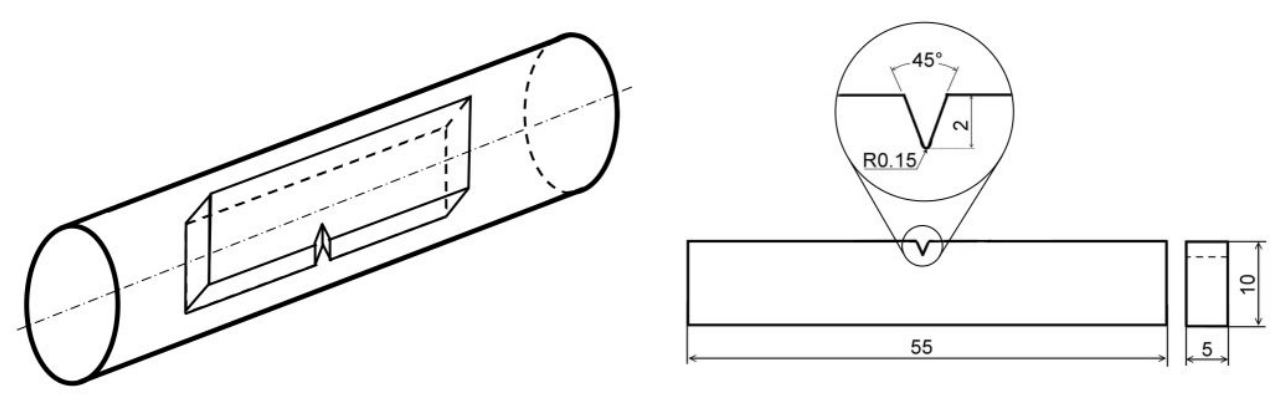
Figure 1. Schematic sampling of the CVN impact toughness test specimens (left) and their dimensional characteristics (right).
Metals 16 00753 g001
Figure 2. LOM microstructures of as-received austenitic stainless steels without application of electrochemical hydrogen charging: (a) AISI 321 at lower magnification; (b) AISI 321 at higher magnification; (c) AISI 316Ti at lower magnification; (d) AISI 316Ti at higher magnification; (e) AISI 309 at lower magnification; (f) AISI 309 at higher magnification; (g) AISI 310S at lower magnification; (h) AISI 310S at higher magnification.
Metals 16 00753 g002
Figure 3. Representative EDX spectra of minor phases: (a) TiN nitride in AISI 321 and AISI 316Ti steels; (b) (Cr,Fe)23(C,N)6 carbo-nitride in AISI 309 steel. Qualitative EDX chemical micro-analyses were performed as point analyses on conventional metallographic cross-sections.
Metals 16 00753 g003
Figure 4. Positions of investigated stainless steels in the Schaeffler constitution diagram, indicating the phase composition in as-received (non-equilibrium) material condition. Adapted from Ref. [46].
Metals 16 00753 g004
Figure 5. Indexed XRD patterns indicating the phase composition of the investigated stainless steels: (a) AISI 321; (b) AISI 316Ti; (c) AISI 309; (d) AISI 310S.
Metals 16 00753 g005
Figure 6. EBSD phase mapping and morphological differentiation of individual BCC-structured phases in studied austenitic stainless steels: (a) AISI 321; (b) AISI 316Ti; (c) AISI 309; (d) AISI 310S.
Metals 16 00753 g006
Figure 7. Calculated SFE values for investigated austenitic stainless steels governing dominant deformation mechanisms, such as the transformation-induced plasticity (TRIP), including the ε-martensite formation, twinning-induced plasticity (TWIP), and conventional glide of dislocations (i.e., SLIP). The Equations (4)–(10) are based on [53,54,55,56,57,58,59]. The SFE intervals and related deformation mechanisms are based on [60].
Metals 16 00753 g007
Figure 8. Vickers hardness of the investigated austenitic stainless steels.
Metals 16 00753 g008
Figure 9. Effect of hydrogen charging on CVN impact toughness of studied austenitic stainless steels.
Metals 16 00753 g009
Figure 10. EBSD KAM maps of the highly deformed microstructural areas beneath the V-notch of the fractured test specimens after the CVN impact toughness tests: (a) non-hydrogenated AISI 321 steel; (b) hydrogen-charged AISI 321 steel; (c) non-hydrogenated AISI 316Ti steel; (d) hydrogen-charged AISI 316Ti steel; (e) non-hydrogenated AISI 309 steel; (f) hydrogen-charged AISI 309 steel; (g) non-hydrogenated AISI 310S steel; (h) hydrogen-charged AISI 310S steel.
Metals 16 00753 g010aMetals 16 00753 g010b
Figure 11. LOM images of the highly deformed microstructural areas and fracture paths of broken CVN impact toughness test specimens: (a) non-hydrogenated AISI 321 steel; (b) hydrogen-charged AISI 321 steel; (c) non-hydrogenated AISI 316Ti steel; (d) hydrogen-charged AISI 316Ti steel; (e) non-hydrogenated AISI 309 steel; (f) hydrogen-charged AISI 309 steel; (g) non-hydrogenated AISI 310S steel; (h) hydrogen-charged AISI 310S steel.
Metals 16 00753 g011aMetals 16 00753 g011b
Figure 12. EBSD IPF crystallographic orientation maps of the highly deformed microstructural areas of broken CVN impact toughness test specimens: (a) non-hydrogenated AISI 321 steel; (b) hydrogen-charged AISI 321 steel; (c) non-hydrogenated AISI 316Ti steel; (d) hydrogen-charged AISI 316Ti steel; (e) non-hydrogenated AISI 309 steel; (f) hydrogen-charged AISI 309 steel; (g) non-hydrogenated AISI 310S steel; (h) hydrogen-charged AISI 310S steel. The example areas with deformation twins are delimited by white ellipses.
Metals 16 00753 g012aMetals 16 00753 g012b
Figure 13. SEM images showing typical fracture features on the fracture surfaces of broken CVN impact toughness tests of the selected steel grades in various conditions: (a) non-hydrogenated AISI 321 steel; (b) hydrogen-charged AISI 321 steel; (c) non-hydrogenated AISI 316Ti steel; (d) hydrogen-charged AISI 316Ti steel; (e) non-hydrogenated AISI 309 steel; (f) hydrogen-charged AISI 309 steel; (g) non-hydrogenated AISI 310S steel; (h) hydrogen-charged AISI 310S steel.
Metals 16 00753 g013aMetals 16 00753 g013b
Figure 14. Area fractions of ductile and brittle fracture micro-mechanisms on the fracture surfaces of the investigated stainless steels with respect to the hydrogenation condition: (a) non-hydrogenated; (b) hydrogen-charged.
Metals 16 00753 g014
Table 1. Chemical composition of investigated austenitic stainless steels [wt.%].
MaterialCSiCrNiMnPSTiMoNFe
AISI 3210.060.6717.739.420.020.0150.28-≤0.10Balance
AISI 316Ti0.050.4317.410.61.80.020.0150.262.5≤0.10Balance
AISI 309≤0.22201220.0450.015--≤0.11Balance
AISI 310S≤0.1≤1.52520.520.0450.015--≤0.11Balance
Table 2. Microstructural characteristics of studied austenitic stainless steels determined by image analyses.
Steel GradeAverage Austenitic Grain Size [μm]Area Fraction of δ-Ferrite [%]Area Fraction of TiN Nitrides [%]Area Fraction of (Cr,Fe)23(C,N)6 Carbo-Nitrides [%]
AISI 32137.44 ± 13.92.95 ± 1.80.47 ± 0.37-
AISI 316Ti15.21 ± 1.76.32 ± 1.20.42 ± 0.68-
AISI 30913.95 ± 0.732.48 ± 0.65-1.95 ± 0.8
AISI 310S16.76 ± 1.31.48 ± 0.52--
Table 3. Lattice parameters of all phases and volume amounts of BCC-structured phases in the studied austenitic stainless steels estimated by XRD phase analyses.
Steel GradeLattice Parameter of FCC-Structured Phase [nm]Lattice Parameter of BCC-Structured Phases [nm]Volume Fraction of BCC-Structured Phases [%]
AISI 3210.35930.287716
AISI 316Ti0.35960.288310
AISI 3090.3593--
AISI 310S0.3596--
Table 4. Calculated HEICVN values for all steel grades under investigation.
Initial StateFinal StateHEICVN (%)
AISI 321, non-hydrogenatedAISI 321, hydrogen-charged−2.0
AISI 316Ti, non-hydrogenatedAISI 316Ti, hydrogen-charged−3.8
AISI 309, non-hydrogenatedAISI 309, hydrogen-charged −5.2
AISI 310S, non-hydrogenatedAISI 310S, hydrogen-charged−7.6
Disclaimer/Publisher’s Note: The statements, opinions and data contained in all publications are solely those of the individual author(s) and contributor(s) and not of MDPI and/or the editor(s). MDPI and/or the editor(s) disclaim responsibility for any injury to people or property resulting from any ideas, methods, instructions or products referred to in the content.