Article

Cavitation Erosion of the Biodegradable AM50 Alloy After Artificial Aging Heat Treatment

by
Ilare Bordeasu
1,
Dorin Bordeasu
2,*,
Lavinia-Madalina Micu
3,*,
Filip-Sebastian Tatu
4,
Nicusor-Alin Sirbu
5,
Radu-Nicolae Popescu
5,
Cristian Ghera
1,*,
Liviu-Daniel Pirvulescu
6,
Alexandru-Nicolae Luca
1,
Brandusa Ghiban
7 and
Raluca Faur
5
1
Department of Mechanical Machines, Equipment and Transports, Politehnica University Timisoara, Bulevardul Mihai Viteazul nr.1, 300222 Timisoara, Romania
2
Department of Automation and Applied Informatics, Politehnica University of Timisoara, Vasile Parvan, No. 2, 300223 Timisoara, Romania
3
Department of Agricultural Technologies-Department I, King Mihai I University of Life Sciences, 119 Calea Aradului, 300645 Timișoara, Romania
4
Clinica de Ortopedie si Trautomatologie Spital Clinic Militar de Urgenta “Dr.Victor Popescu” Timisoara, Str. Gheorghe Lazăr nr.7, 300080 Timișoara, Romania
5
National Institute for Research and Development in Welding and Materials Testing, Mihai Viteazul str., no. 30, 300222 Timisoara, Romania
6
Department of Mechanics and Strength of Materials, Politehnica University Timisoara, Bulevardul Mihai Viteazul nr.1, 300222 Timisoara, Romania
7
Department of Metallic Materials Science, National University of Science and Technology Politehnica Bucharest, 060042 Bucharest, Romania
*
Authors to whom correspondence should be addressed.
Metals 2026, 16(6), 684; https://doi.org/10.3390/met16060684 (registering DOI)
Submission received: 20 May 2026 / Revised: 15 June 2026 / Accepted: 16 June 2026 / Published: 22 June 2026
(This article belongs to the Special Issue Structure and Properties of Biomedical Alloys)

Abstract

Magnesium-based alloys remain poorly researched, particularly regarding their behavior and resistance under hydrodynamic loading conditions. Interest in these materials is driven by their low density, lower even than that of aluminum alloys, and their excellent pressure die-casting capability, leading to manufacturing components with high geometric accuracy and structural homogeneity. Due to their biodegradability and biocompatibility, recent research has focused on using them in reconstructive surgery devices, similar to Zn-Mg alloys. As the blood circulatory system can, at certain stages, be considered similar to a hydraulic system, it is subjected to hydrodynamic flow regimes, including cavitation erosion. In this context, the current research, conducted on the AM50 magnesium-based alloy, provides new insights into its behavior and structural resistance exposed to shock waves and microjets generated by cavitation. Cavitation tests were performed using a standard 20 kHz vibratory device on three material conditions: one semi-finished (initial) state and two aged, heat-treated states at 200 °C for 12 and 24 h. Analyses of the characteristic erosion curves, cavitation resistance parameters, and macro- and microstructural examinations of the eroded surfaces revealed that, compared with the semi-finished condition, the applied heat-treatment regimes increased the HV5 hardness by 6.8–17% and the cavitation resistance by 27–61%.

1. Introduction

The growing interest of the scientific community in magnesium alloys is closely related to their increasing use, alongside zinc, titanium, and aluminum-based alloys, polymers, composites, and ceramic materials, in medical devices intended for reconstructive surgery applications [1,2,3,4,5,6,7]. Important advances have already been achieved in understanding the cavitation behavior and resistance of titanium and zinc-based alloys [8,9,10,11,12,13,14,15,16,17]. Research concerning the mechanical behavior and cavitation resistance of magnesium-based alloys is still relatively recent and limited [18,19,20,21,22,23]. Titanium alloys have been extensively investigated because of their widespread use in orthopedic implants and cardiovascular devices [24,25,26]. Regarding zinc alloys, the literature reports significant findings on the cavitation erosion resistance of pure Zn [13,22,27,28,29,30,31,32], ZnMg alloys [11,14,31,33], ZnCuMg alloys [13,15,34], Az31B alloys [16,19,35,36], Az31Mg alloys [18,19], and AlMg2 alloys [20,21] evaluated in various structural states. Most studies considered either the initial condition (semi-finished state) or states obtained after different bulk heat-treatment regimes involving various temperatures and holding times. Because heat treatments modify the mechanical properties of these alloys (including hardness, tensile strength, yield strength, toughness, and elongation at fracture) and the size and distribution of the solid-solution grains and brittle intermetallic compounds, important differences in cavitation behavior and erosion resistance have been observed. These evaluations are generally based on characteristic cavitation parameters (such as mass loss, mean erosion depth, erosion rate, and cavitation resistance) and the morphology and dimensions of the microcavities formed by the impact with cavitation shock waves and microjets. Thus, the studies performed on pure zinc subjected to heat treatments at 300 °C and 400 °C, each with holding times of 5 and 10 h [15,28], demonstrated that the optimum cavitation resistance was achieved after treatment at 300 °C for 5 h. Studies conducted on ZnMg [11,14,31] and ZnCu [13,15,28] alloys, also subjected to heat-treatment regimes at 300 °C and 400 °C with two holding times (of 5 and 10 h) for each alloy, showed that the optimum resistance to cavitation erosion was achieved after heat treatment at 300 °C for 10 h in the case of the ZnMg alloy and at 400 °C for 10 h for the ZnCu alloy. Research conducted on ZnCuMg alloys [28], subjected to heat-treatment regimes at 300 °C and 350 °C with holding times of 5 and 10 h, demonstrated that the optimum resistance to cavitation erosion was achieved after heat treatment at 350 °C for 5 h. Krella [18] reported that, in pure magnesium and its alloys, the primary damage mechanisms under cavitation loading are deformation twinning and ductile fracture. The author also observed that surface hardness increased by approximately 89% after cavitation testing due to twinning and the formation of an MgO layer, which additionally contributed to crack closure. In another study, Krella [20] investigated the influence of cavitation intensity on the cavitation erosion behavior of the AlMg2 alloy and found that intermetallic precipitates accelerate erosion, while a linear relationship exists between cavitation intensity and mean penetration depth. Vibratory cavitation tests performed by Ye et al. [19] on the AZ31B alloy, using water and kerosene as testing media, demonstrated that ultrasonic amplitude, stand-off distance, and exposure time strongly influence the Vickers hardness of the surface. Their results showed that cavitation testing in water increased surface hardness by 1.5–3 times compared with the initial state and by 23.77–48.19% compared with testing in kerosene. Sleiman et al. [16] investigated the ultrasonic dissolution behavior of pure Mg and the AZ31B alloy and reported lower dissolution rates for the alloy compared with pure magnesium. Jasionowski et al. [21], evaluating the cavitation erosion resistance of the MgAl2Si alloy using three different testing facilities (vibratory apparatus, hydrodynamic tunnel, and liquid-jet device), demonstrated that the degree of material degradation strongly depends on cavitation intensity generated by each testing facility.
Despite these advances, research concerning cavitation behavior, degradation mechanisms, and erosion resistance of magnesium alloys intended for reconstructive surgery devices, particularly for cardiovascular applications, where blood-flow hydrodynamics may locally generate cavitation phenomena, remains insufficiently explored. The purpose of our research is to evaluate the cavitation resistance of magnesium alloy AM50 in three different conditions: semi-finished state and after two artificial aging heat-treatment regimes. The results presented in the current research are timely and were obtained in full compliance with the requirements of the ASTM G32-2016 [37] standard for cavitation erosion testing. Nevertheless, the combined effects of cavitation and corrosion in physiologically relevant environments remain an important topic for future investigation.

2. Researched Material (AM50 Alloy) and Applied Heat-Treatment Regimes

The researched material was the pressure die-cast AM50 magnesium alloy, examined in three different structural states: the initial (semi-finished state) condition and two artificially aged states. The artificial aging heat treatments were performed at 200 °C with holding times of 12 and 24 h. After both heat treatment regimes, air cooling was applied. The heat treatments were chosen in order to evidence the possibility of increasing the hardness of the materials and finally the cavitation erosion resistance, knowing the phenomena of precipitation solution hardening.
The chemical composition of the investigated alloy (Table 1) was determined on specimens extracted from the semi-finished state in the specialized laboratory of the Politehnica University of Timișoara [38]. The mechanical properties, also determined in the Materials Strength Laboratory of the same university [38], were ultimate tensile strength at Rm = 236.9 MPa, yield strength at Rp0.2 = 122.8 MPa, and elongation at fracture =14.5%.
For clarity in presenting the experimental results, discussions, and analyses, the following notations are used for the investigated structural states:
  • SF—Semi-finished state;
  • 200/12 h—Structural state obtained after artificial aging heat treatment at 200 °C with a holding time of 12 h;
  • 200/24 h—Structural state obtained after artificial aging heat treatment at 200 °C with a holding time of 24 h.
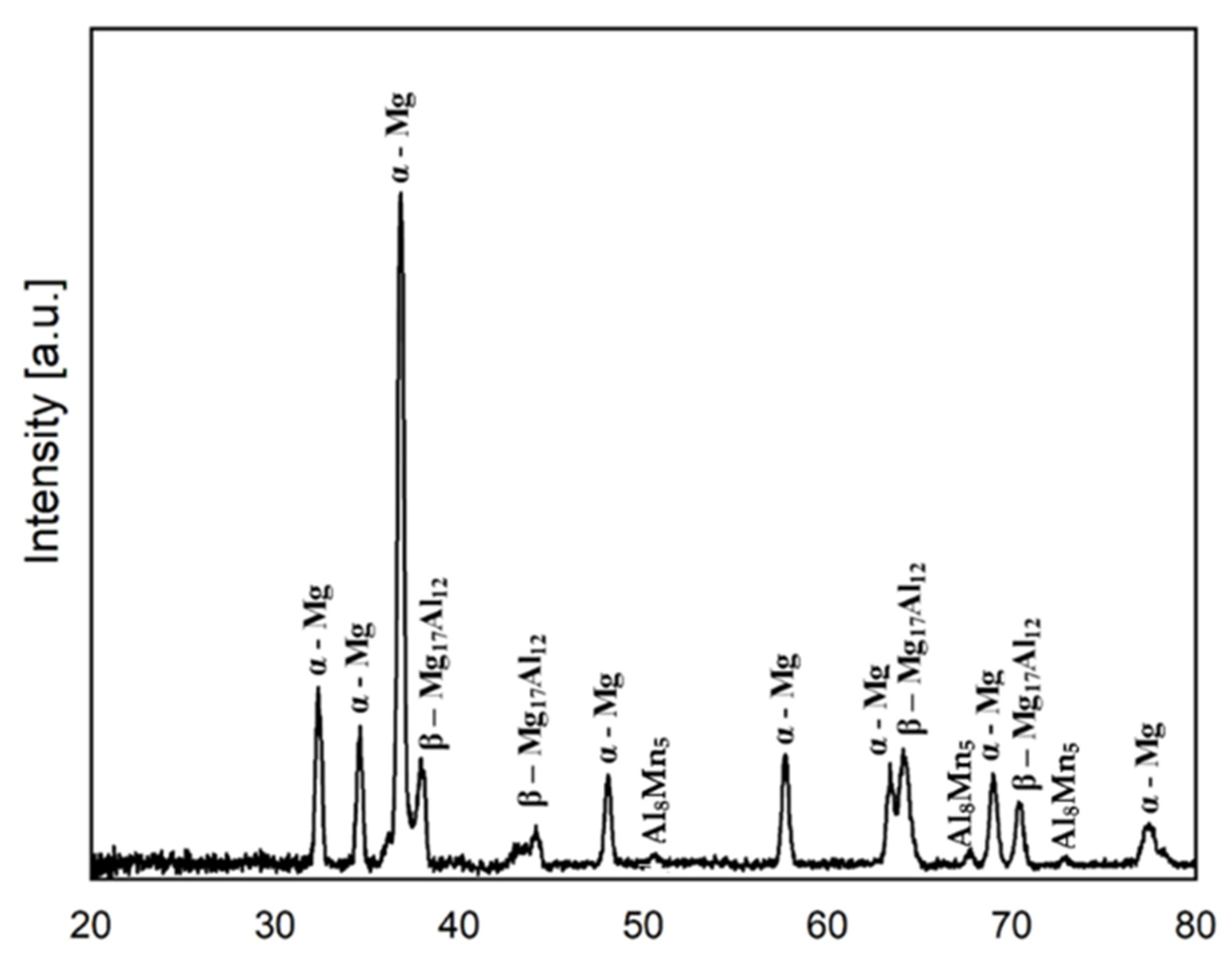
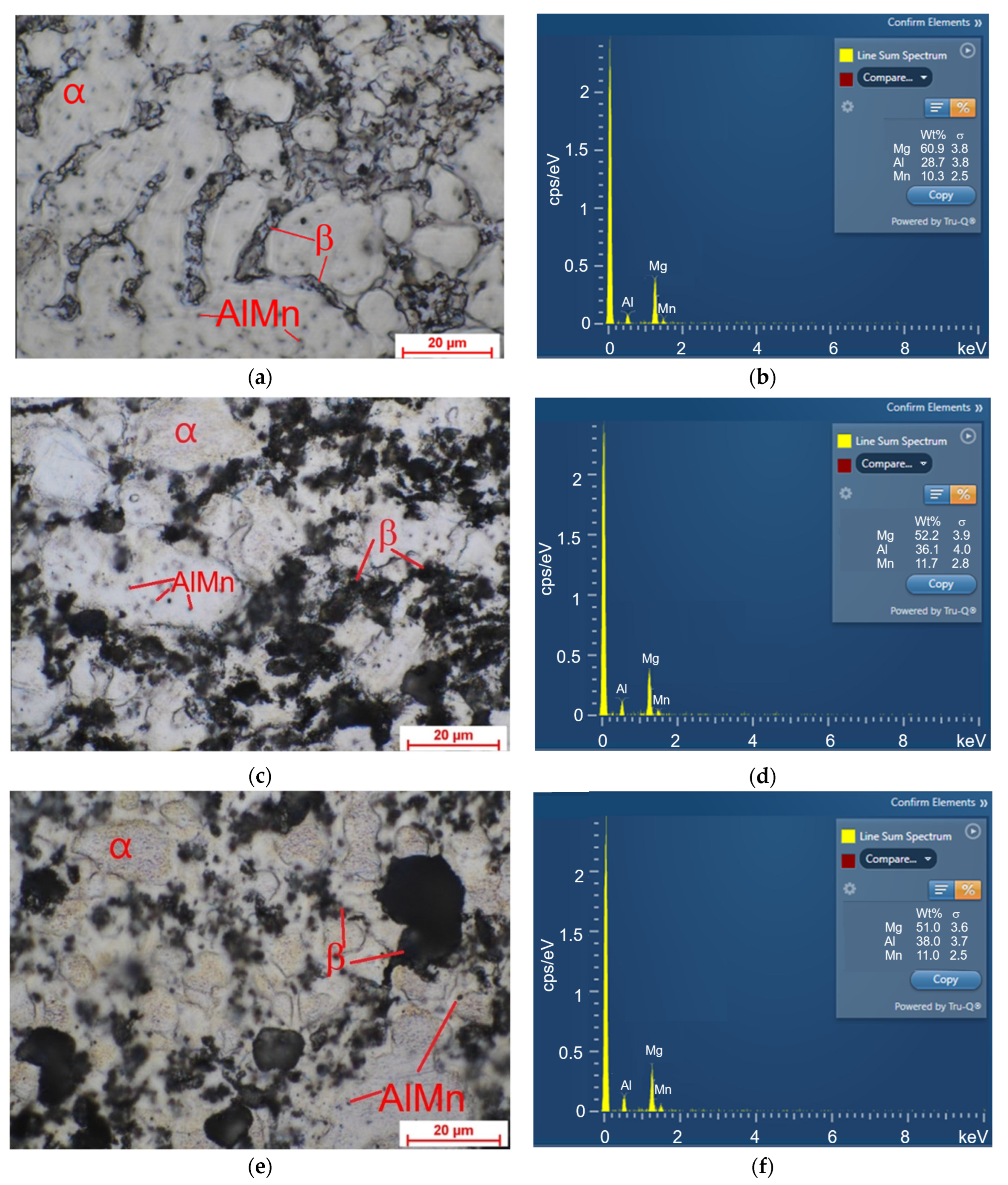
Figure 1 presents the microstructural images and energy-dispersive X-ray (EDX) spectrum, and Figure 2 presents the X-ray diffraction (XRD) pattern of the investigated surfaces before cavitation exposure, which is identical for all three structural states. The metallographic images were obtained using an OLYMPUS metallographic microscope (Olympus Corporation, Hamburg, Germany) equipped with image processing software at the Physical Metallurgy laboratory at the National University of Science and Technology Politehnica Bucharest. XRD analyses for phase identification were carried out using a PANalytical X’Pert diffractometer (Malvern Panalytical Ltd., Malvern, UK) with Cu Kα radiation (λ = 1.5406 Å). Measurements were performed in the 2θ range between 20° to 80°, using a step size of 0.03° and an integration time of 1 s/step. The tube voltage and current were 45 kV and 30 mA.
EDX spectrum allows us to determine the local chemical composition of the β phase from the alloy AM50 in different conditions. So, the SF state of the β phase contains 61%Mg, 10%Mn, and 29%Al. In the heat-treated state (either in 200/12 or 200/24), the β phase’s Mg content decreases to 51–52%, and Mn increases to 11%; the rest is Al.
The XRD analysis confirmed the presence of the α(Mg), β(Mg17Al12), and Al8Mn5 phases in the investigated alloy. Since the volume fraction of the secondary phases was below 3%, a quantitative phase assessment was not considered reliable and was therefore not undertaken. The focus of the present work is the evaluation of cavitation behavior and erosion resistance in different structural states of the AM50 alloy rather than a comprehensive quantitative phase characterization by EDS.
Analyses of the XRD pattern revealed the predominant presence of the α(Mg) phase, characterized by a hexagonal close-packed (hcp) structure corresponding to the solid solution of aluminum in magnesium. In addition to the major phase, low-intensity diffraction peaks associated with the intermetallic β(Mg17Al12) phase, having a cubic structure typical of Mg–Al systems, were also identified. The relatively low intensity of these peaks suggests a small volume fraction of the β phase, consistent with the relatively low aluminum content of the alloy (≈4%). The formation of this intermetallic phase is characteristic of Mg–Al alloys solidified under near-equilibrium conditions, where local aluminum enrichment promotes the precipitation of Mg17Al12, typically along grain boundaries. Diffraction peaks corresponding to the brittle Al8Mn5 intermetallic compound were also observed.
Although the XRD patterns are identical, significant microstructural differences exist among the investigated states (conditions).
These include changes in crystallite size, internal stress level, preferential orientation, and the distribution of β(Mg17Al12) and Al8Mn5 intermetallic phases. The 200/12 h state exhibits a more refined microstructure and a higher density of crystalline defects, whereas the 200/24 h state is characterized by higher crystallinity and improved structural stability.
Previous research on aluminum alloys [20,21,39,40,41] and zinc alloys [11,28,42] demonstrated that heat treatments generally reduce both the size and number of brittle intermetallic compounds, as well as the grain size of the solid-solution matrix. Measurements performed in the present study indicate a slight reduction in intermetallic phase dimensions compared with the semi-finished (SF) state, depending on the applied heat-treatment regime. In the SF state, the intermetallic particles ranged from 5 to 50 μm, while in the 200/12 h and 200/24 h states, their size decreased to 5–30 μm and 5–25 μm, respectively. The dimensions of the particles were measured by optical metallography, and they are confirmed by SEM analysis. According to the studies of Hobbs [43], Garcia [44], and Hammitt [45], as well as investigations conducted in the Cavitation Erosion Research Laboratory of the Politehnica University of Timișoara on aluminum [1,2,9,10,33] and zinc alloys [11,13,14,15,28], hardness is the mechanical property with the greatest influence on cavitation erosion resistance. Since the AM50 alloy is characterized by high toughness [38], surface hardness becomes the key parameter governing resistance to the cyclic loading induced by shock waves and microjets generated during cavitation bubble collapse [44,45,46,47]. Therefore, Table 2 also includes hardness values, representing the average of eight measurements performed with a Zwick 3212 Hardness Tester (ZwickRoell Group, Ulm, Germany) on one of the specimens used during cavitation testing.
Compared with the semi-finished state, the effect of heat treatment on the microstructure is evident from both the micrographs and the XRD patterns shown in Figure 1. The applied heat-treatment regimes led to a reduction in the size of brittle Al8Mn5 intermetallic compounds and refinement of the α(Mg) and β(Mg17Al12) grains.
From Table 2, it can be observed that the highest hardness value was recorded for the 200/24 h structural state, representing an increase of approximately 17% compared with the SF state and about 9.7% compared with the 200/12 h state.
As will be demonstrated by the characteristic curves and the macro- and microscopic images, all these effects significantly influence both the cavitation behavior and the resistance of the surface microstructure to the shock waves and microjets generated by the hydrodynamic mechanism of vibratory cavitation.

3. Experimental Setup and Experimental Results

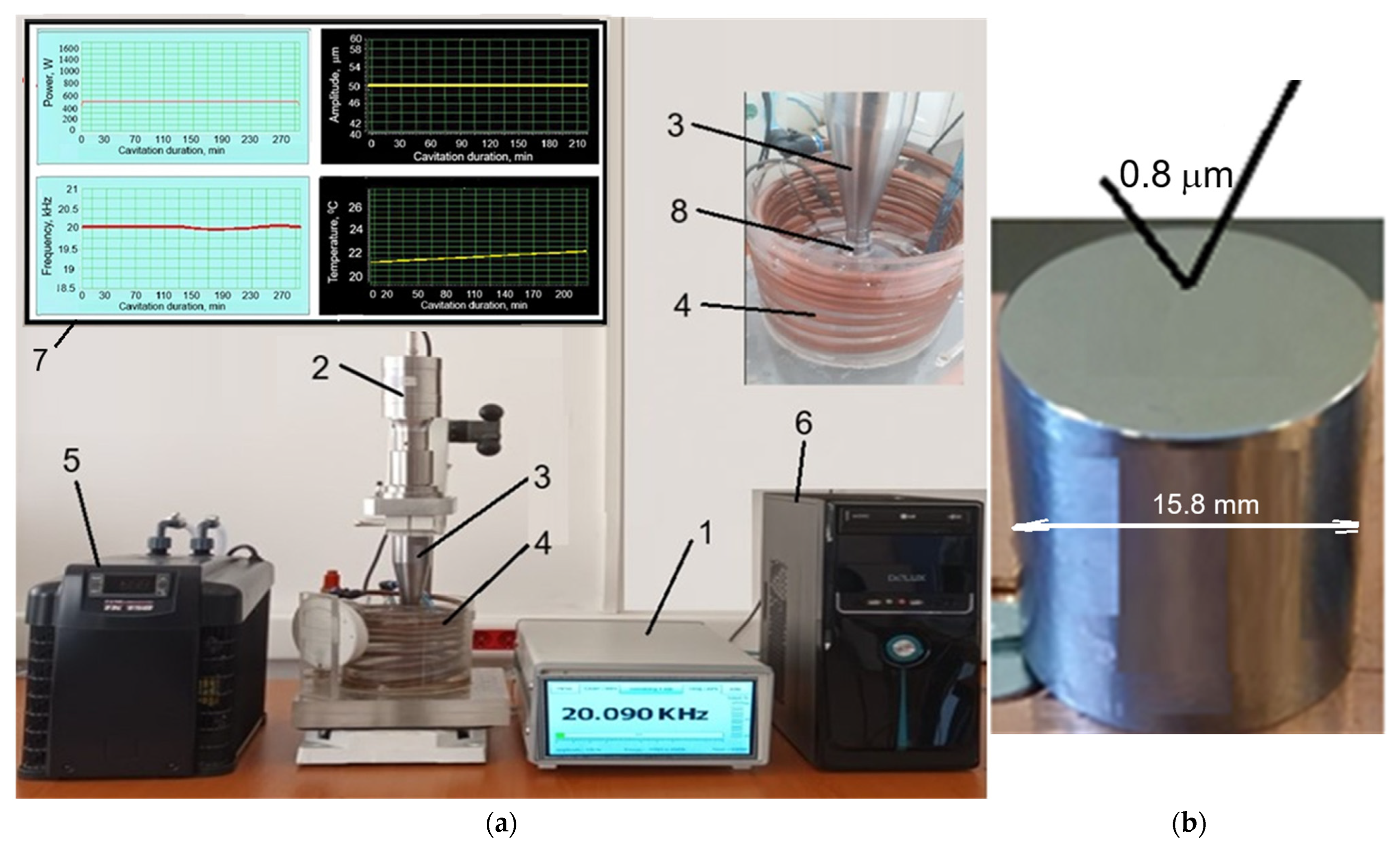
To evaluate cavitation behavior and erosion resistance, a piezoceramic vibratory device available at the Cavitation Erosion Research Laboratory [48] of the Politehnica University of Timișoara was used (Figure 3). The testing equipment meets the requirements imposed by the international ASTM G32-2016 standard [37]: vibration frequency = 20 ± 0.03 kHz, vibration amplitude = 50 μm, ultrasonic generator power = 500 W, cavitation-exposed surface diameter = 15.8 mm, and testing environment consisting of distilled water maintained at 22 ± 1 °C. Cavitation tests were performed in distilled water because testing in blood is not feasible, as blood coagulates and its physical properties change during exposure to ultrasonic excitation. Therefore, compliance with ASTM G32-2016 is required when the objective is to investigate the mechanical degradation of the material caused by the impact of cavitation microjets and shock waves generated during bubble collapse.
According to the laboratory testing protocol [48], three specimens from each structural state were tested under stationary conditions. The total exposure time was 165 min, selected based on the evolution of the experimental results and the stabilization tendency of the measured and calculated cavitation parameters. The total exposure time was divided into 12 intermediate intervals: one interval of 5 min, one interval of 10 min, and ten intervals of 15 min each. Before testing, the cavitation-exposed surface of each specimen was polished to a surface roughness of Ra = 0.8 μm (Figure 3b). The results presented in the characteristic erosion curves and macroscopic images confirm that this exposure time was sufficient to achieve the objectives of the current research.
The operating parameters influencing the cavitation intensity were rigorously controlled throughout the experiments using dedicated software developed within the laboratory and implemented on a computer connected to both the ultrasonic excitation system of the acoustic amplifier and the water-cooling unit [48].

3.1. Morphology of Structural Degradation

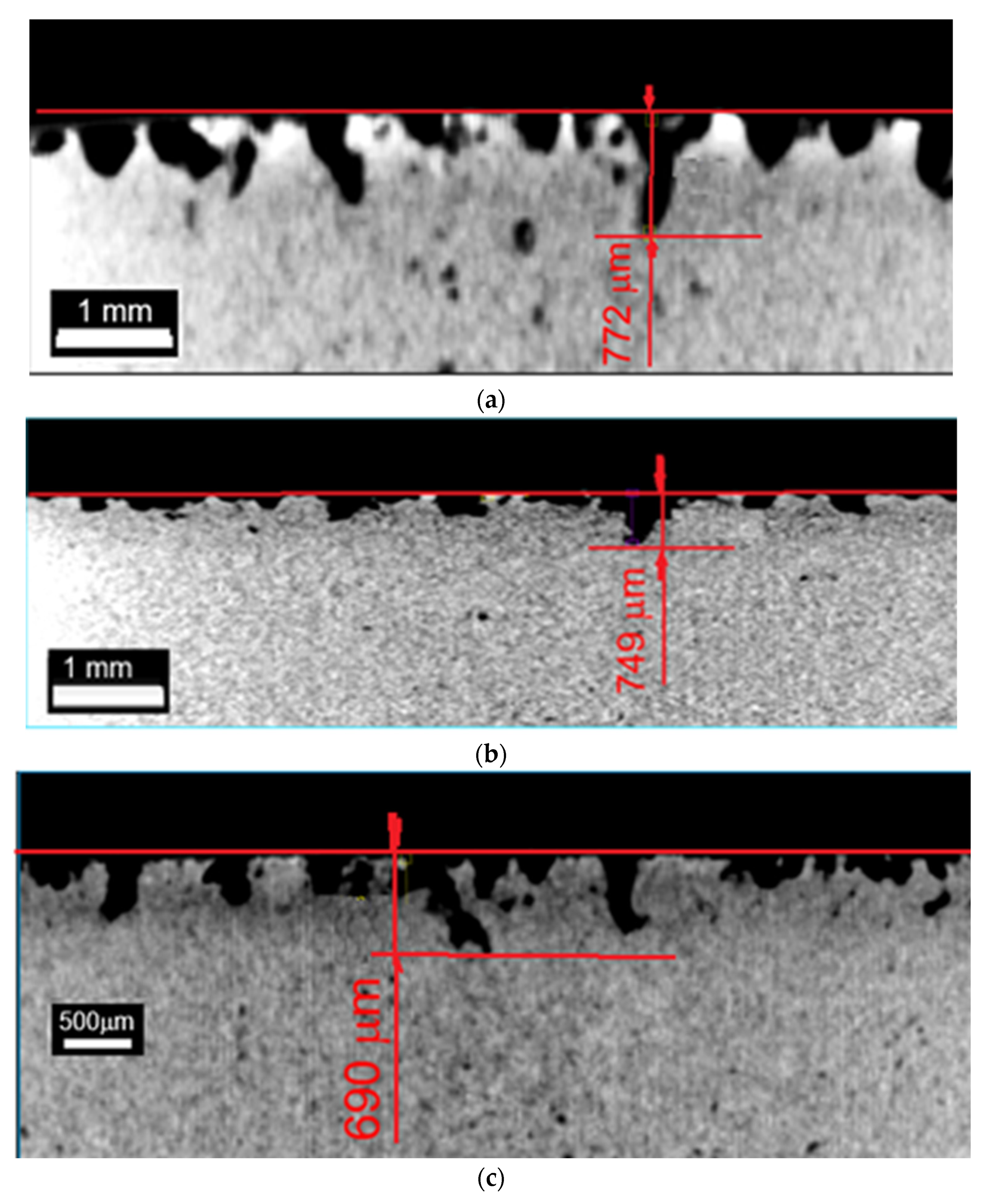
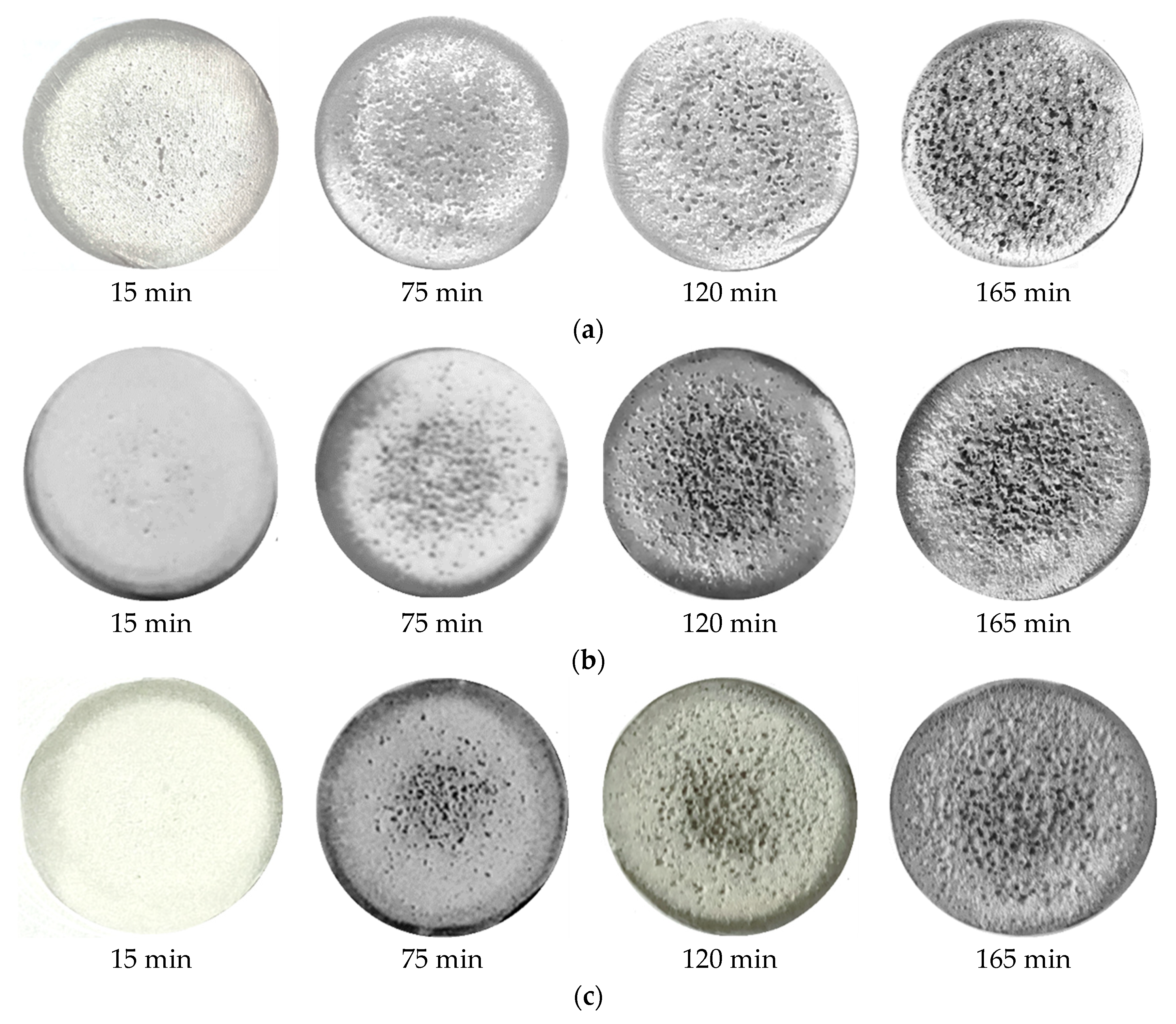
The morphology of surface degradation produced by the vibratory cavitation mechanism was analyzed using the macroscopic images presented in Figure 4; SEM (scanning electron microscope) images shown in Figure 5, obtained with a TESCAN VEGA 3 LMU Bruker EDX Quantax scanning electron microscope (Tescan, Brno, Czech Republic); and computed tomography (CT) images from Figure 6, obtained with Panthera 1.4.4 software on a TESCAN UniTOMH Computed Tomography scanner (Tescan, Brno, Czech Republic).
The images in Figure 4, analyzed separately for each structural state, show that increasing cavitation exposure time progressively degrades the tested surface through both the enlargement and multiplication of microcavities. Comparative analysis reveals a similar degradation mechanism for all researched structural states. After approximately 75 min of cavitation exposure, the erosion process is mainly characterized by the growth of previously formed cavities, while the formation rate of new cavities decreases. This behavior is attributed to microstructural refinement, intermetallic particle distribution, and microstructural stability, together with the work hardening of the exposed surface layer and the consequent reduction in the effectiveness of the impact pressure generated mainly by cavitation microjets, which are considered dominant in this degradation mechanism [47,49,50,51,52,53]. The macroscopic images also clearly demonstrate the beneficial effect of artificial aging heat treatment, particularly for the 200/24 h state.
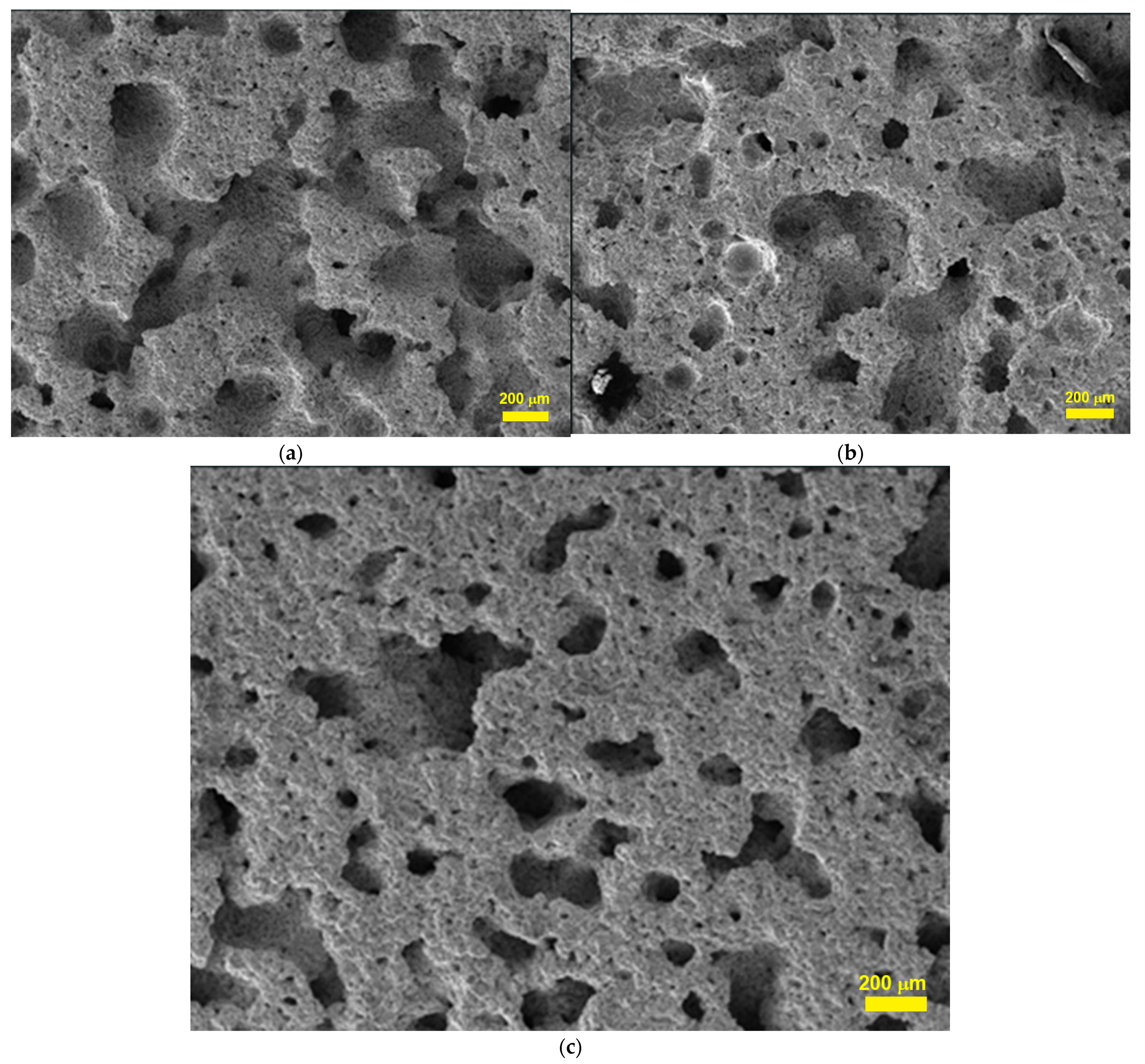
The SEM images presented in Figure 5, obtained at the end of the cavitation test (165 min), reveal the degradation mechanism of the surface microstructure during cavitation erosion.
Fractographic analysis indicates a mixed brittle–ductile fracture mode preceded by plastic deformation, which is associated with alloying by aluminum. The images reveal cavities with dimensions that vary depending on the structural state, all characterized by a highly irregular morphology with large cavities concentrated mainly in the central region of the exposed surface, an effect attributed to the geometry of the cavitation bubble cloud [48]. The cavity dimensions are strongly influenced by the applied heat-treatment regime. In the SF state, cavity lengths range from 20 μm to 2.0 mm; in the 200/12 h state, they range from 15 μm to 450 μm; in the 200/24 h state, they range from 5 μm to 350 μm. Determining cavity depth with complete certainty is more difficult because the sectioning location was selected arbitrarily. Nevertheless, based on the CT images presented in Figure 6, cavity depth also appears to be affected by the heat-treatment regime. Maximum cavity depths reached approximately 772 μm for the SF state, 749 μm for the 200/12 h state, and 690 μm for the 200/24 h state.
Fractographic investigation further indicates that cavity formation initiates preferentially at the interfaces between the α(Mg) solid-solution grains, the β(Mg17Al12) secondary phase, and the Al8Mn5 intermetallic compounds, which act as crack initiation sites. This observation is supported by the images shown in Figure 6, which reveal cavities formed by the pull-out of strengthening intermetallic particles. The morphology of the cavities and cracks propagating deep into the surface structure (see Figure 6) confirms that fracture was preceded by plastic deformation. The tunnel or cave-like morphology of the cavities, inclined at different angles relative to the attacked surface, highlights two important aspects of the fracture mechanism. The first is associated with the extremely high impact pressures, reaching hundreds of GPa [36,49,50,51,52,53], generated by cavitation microjets and by the compression of water trapped inside the formed cavities. The second is related to the dimensions and geometry of the fractured and expelled grains, which, as mentioned previously, are influenced by microstructural refinement, the distribution of intermetallic particles, and microstructural stability. In addition, the images in Figure 6 reveal mechanical hardening of the exposed layer caused by the repeated impacts of cavitation microjets and shock waves generated during bubble implosion.
The differences observed in Figure 4, Figure 5 and Figure 6 regarding cavity morphology, depth, and spatial distribution on the eroded surface suggest that these effects are governed not only by microstructural characteristics but also by the surface hardness values (see Table 2) resulting from the applied heat-treatment regimes.

3.2. Characteristic Curves and Parameters Describing Cavitation Behavior and Resistance

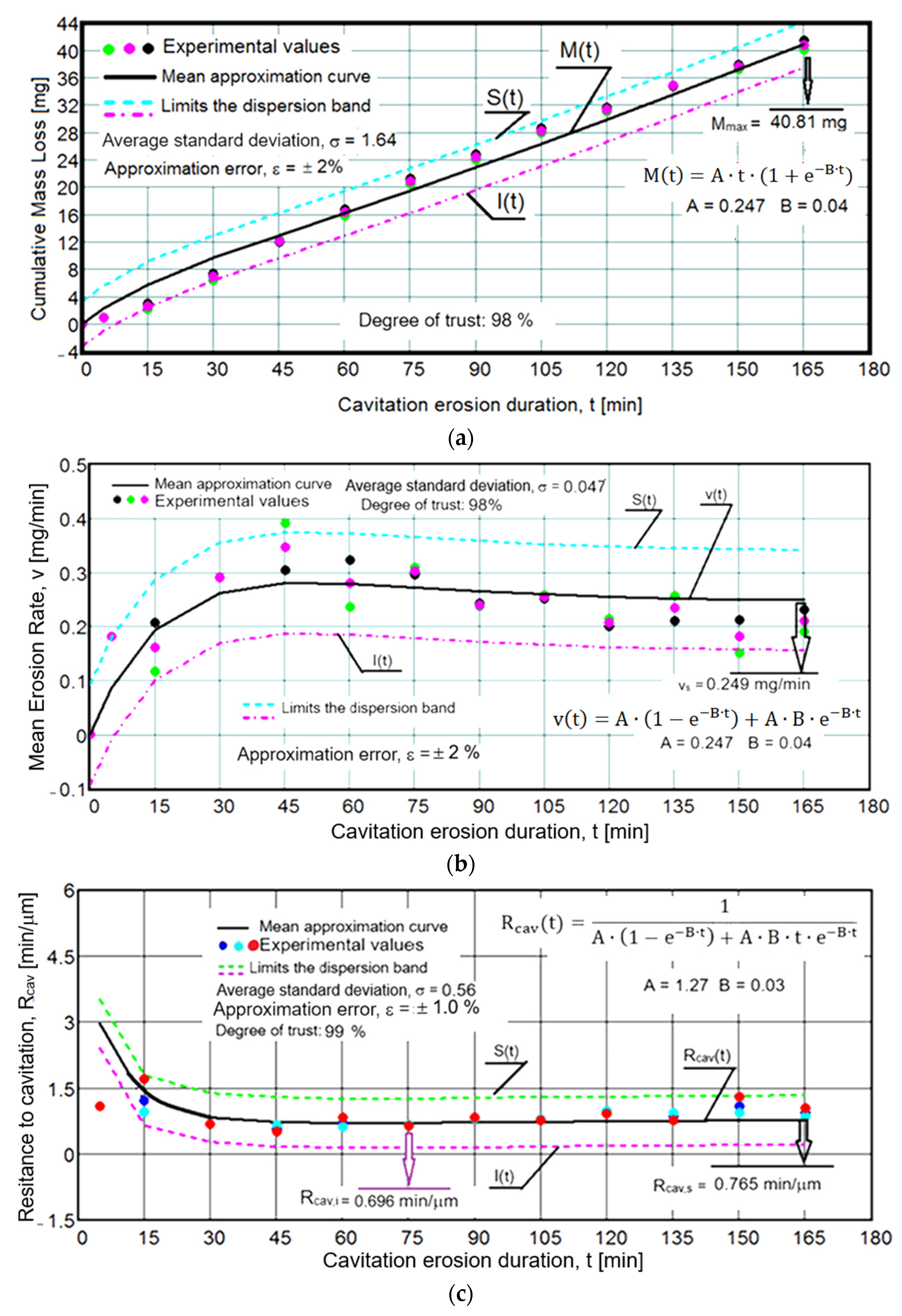
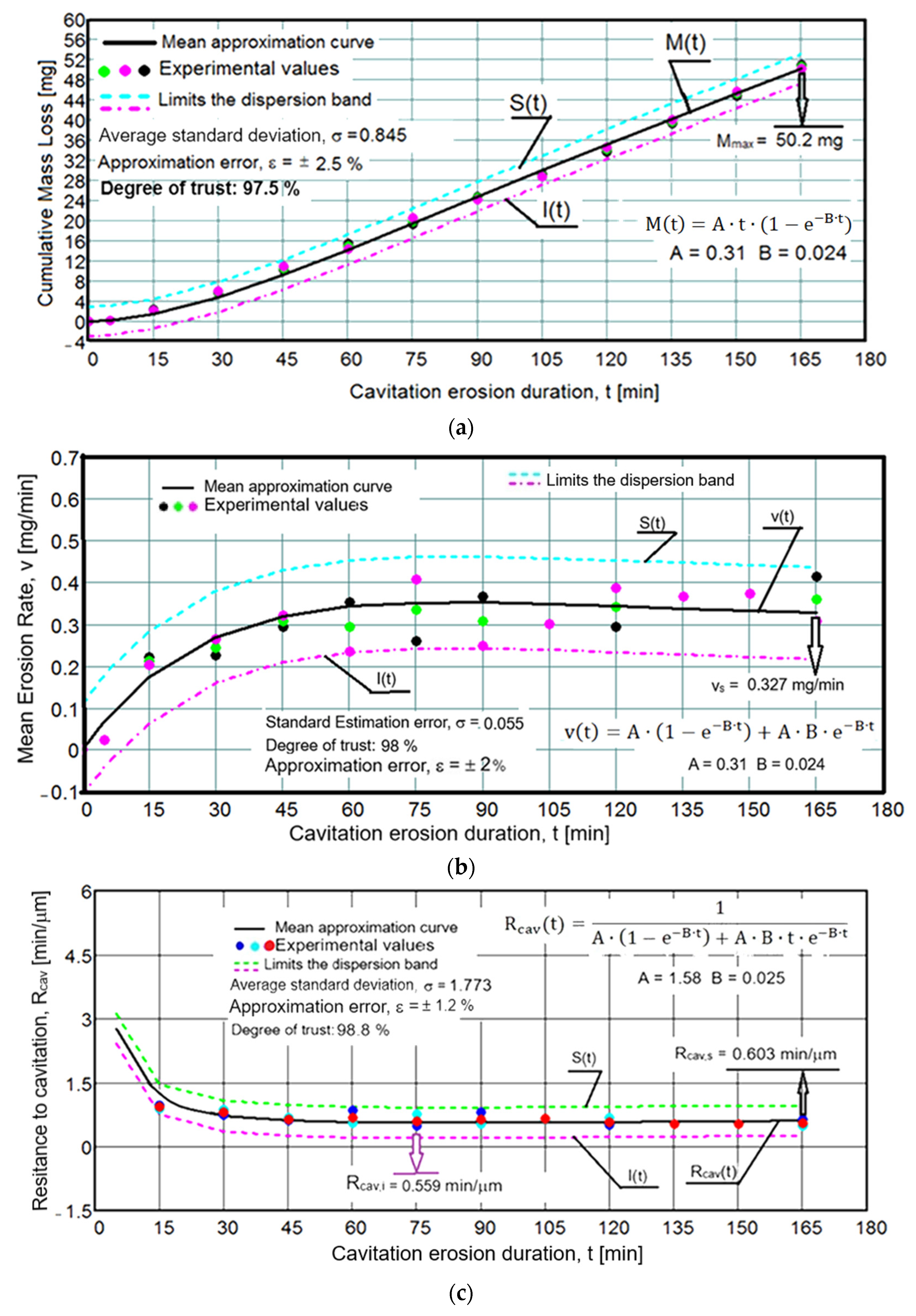
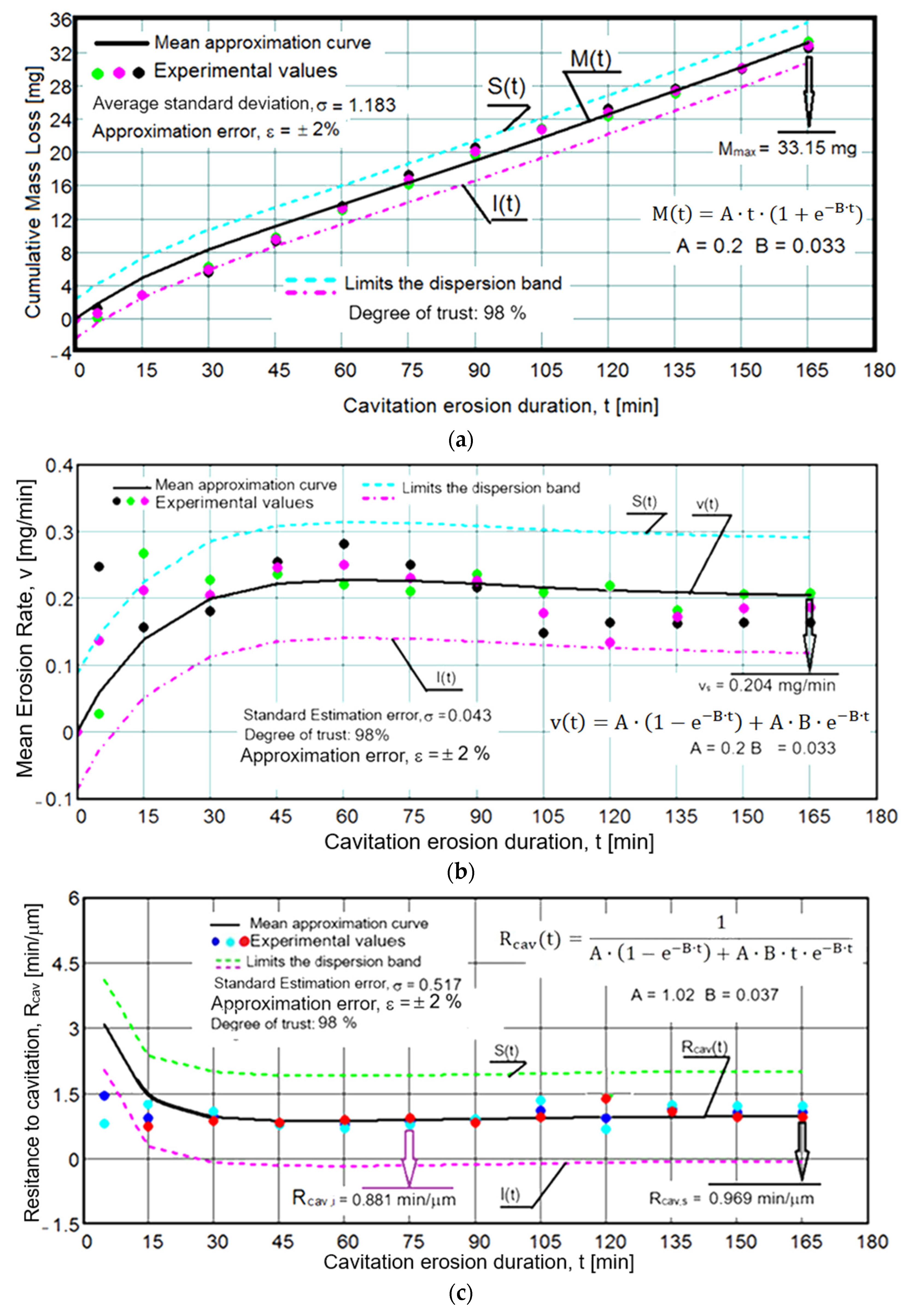
The results of the cavitation tests are presented in the diagrams shown in Figure 7, Figure 8 and Figure 9 through the experimental values (colored data points) of cumulative mass loss, erosion rate (mass-loss rate during each intermediate interval), and cavitation resistance corresponding to each intermediate testing period, together with the averaging curves M(t), v(t), and Rcav(t).
To validate the accuracy of both the applied heat-treatment regimes and the experimental procedure through the reproducibility of the results, the legends of these diagrams also include the statistical parameters defining the dispersion band of the experimental values, bounded by the upper curve S(t) and the lower curve I(t). These parameters include the standard mean deviation σ, the approximation accuracy ε, and the confidence level. In addition, the diagrams contain the analytical expressions of the averaging curves together with the statistical coefficients A and B, determined according to the procedures described in [48,54,55], under the condition of achieving a high approximation accuracy.
The mass of material removed from the cavitated surface was determined by weighing each specimen at the end of every intermediate testing interval. Consequently, the cumulative mass loss was calculated as the algebraic sum of the mass losses recorded during each intermediate interval according to the following relation:
M = i = 1 n m i
where
n represents the total number of intermediate intervals (n = 12);
Δmi is the mass loss during the intermediate interval i.
The erosion rate and the associated statistical parameters were calculated using the following equations:
Erosion rate:
v i = Σ i = 1 n Δ m i Σ i = 1 n Δ t i
Cavitation resistance:
R c a v i = ρ · π · d p 2 · Δ t i 4 · Δ m i ,
where
ρ = 1 730 Kg/m3 is the alloy’s density,
Δti is the duration of the intermediate test interval (one interval of 5 min, one interval of 10 min, and ten intervals of 15 min each).
Standard mean deviation for the approximation of the experimental cumulative mass-loss values resulting from cavitation erosion:
σ = i = 1 n M i M ( t ) i 2 n 1 1 2
Standard mean deviation for the approximation of the experimental erosion-rate values:
σ = i = 1 n v i v ( t ) i 2 n 1 1 2
Standard mean deviation for the approximation of the experimental cavitation resistance values:
σ = i = 1 n R c a v i R c a v ( t ) i 2 n 1 1 2
The confidence level associated with the dispersion band of the experimental values, bounded above by the curve S(t) and below by the curve I(t), was calculated based on the standard mean deviation values according to the following relations:
S t = M t ,   v t ,   R c a v t + n · σ ;   I t = M t ,   v t ,   R c a v t n · σ
(example for a confidence level of 98%, with an approximation error ε = ±2.0%).
S 98 ( t ) = [ M ( t ) ,   v ( t ) ,   R c a v ( t ) ] + 2 · σ ;   I 98 ( t ) = [ M ( t ) ,   v ( t ) ,   R c a v ( t ) ] 2 · σ
The values of the statistical parameters displayed in these diagrams (namely the standard mean deviation σ, the confidence level of 97.5–99% associated with the dispersion domain of the experimental values, and the approximation error of the averaging curves ε = ±1.0%…±2.5%) confirm the high accuracy and reproducibility of the experimental procedure.
Analysis of the data presented in Figure 7, Figure 8 and Figure 9 is based on the dispersion of the experimental values, the evolution of the characteristic curves (M(t), v(t), and Rcav(t)), and the specific cavitation resistance parameters of the surface microstructure (Mmax, vs, and Rcav,s). These parameters are recommended by ASTM G32 and have been widely used since the pioneering studies of Hammitt and Hobbs in 1966 [43,44] for evaluating the resistance of materials to cavitation-induced damage. As also demonstrated by previous investigations on magnesium alloys [16,17,18,19,20,21,38], both similarities and differences can be identified among the investigated structural states. These observations highlight the influence of mechanical properties (particularly hardness) and microstructural characteristics, such as grain refinement and the size, number, and distribution of brittle intermetallic compounds, on cavitation erosion behavior and resistance.
The similarities are reflected by the following:
  • The overlap of the experimental values obtained for the three tested specimens, regardless of the structural state (SF or artificially aged state) or of the parameter (mass loss, erosion rate, or cavitation erosion resistance). This scattering of experimental values at different stages of cavitation attack, also observed in previous research [28,38,56], is attributed to the heterogeneous structure of the alloy (consisting of a solid-solution matrix containing brittle intermetallic inclusions);
  • The evolution of the averaging curves, characterized by an approximately linear increase in cumulative mass loss M(t) after the incubation period of 0…45(60) min, by the asymptotic decrease in erosion rate v(t) after reaching a maximum value and by the gradual increase in cavitation resistance Rcav(t) after 75(90) min. According to both our previous investigations [14,15,38,39] and the literature [43,44,45,46,47,57], these trends result from the combined influence of mechanical properties (especially hardness) and microstructural characteristics;
  • The exposure duration (t = 75 min) after which the cavitation resistance Rcav begins to increase.
The differences are mainly associated with the following:
  • The values of the characteristic parameters Mmax, vs, and Rcav,s. The highest cumulative mass loss was recorded for the SF state (Mmax = 50.3 mg), while the lowest value was obtained for the 200/24 h state (Mmax = 32.57 mg). Similarly, the highest stabilized erosion rate corresponded to the SF state (vs = 0.327 mg/min), whereas the lowest value was measured for the 200/24 h state (vs = 0.204 mg/min). In contrast, the highest cavitation resistance was obtained for the 200/24 h state (Rcav,s = 0.969 min/μm), while the lowest was associated with the SF state (Rcav,s = 0.603 min/μm). These differences clearly reflect the influence of the initial surface hardness before cavitation exposure, which was highest for the 200/24 h state (68 HV5) and lowest for the SF state (58 HV5).
  • The cavitation exposure time at which the averaging curves v(t) reached their maximum values. The longest duration was observed for the SF state (t = 90 min), whereas the shortest corresponded to the 200/12 h state (t = 45 min). These differences provide clear evidence of the capability of the investigated structures to absorb energy through plastic deformation and impact-induced hardening in addition to the initial hardness state.
  • The slopes of the M(t) curves, which, according to previous studies [43,44,45,46,47,57], are governed not only by microhardness values but also by the capacity of the material to store deformation energy through plastic deformation and strain hardening.
  • The asymptotic evolution of the erosion-rate curves v(t) after reaching their maximum values, followed by a gradual decrease toward the stabilized erosion rate vs. These trends must be correlated with the increasing evolution of the cavitation resistance curves Rcav(t), since the times at which the curves change their evolution direction are identical (75 min). Experimental studies [28,38,47] demonstrated that these effects result from the following: (a) the mechanical hardening, to different extents, of the surface layer subjected to repeated impacts from cavitation microjets; and (b) the damping effect produced by the air and water trapped inside newly formed or previously existing cavities, which reduces the impact pressure during cavitation loading.
The mechanical hardening of the surface, caused by repeated impacts of cavitation microjets and shock waves generated during bubble implosion, is further supported by the increase in cavitation erosion resistance, ΔRcav = ((Rcav,sRcav,i)·100/Rcav,i), as indicated by the evolution of the Rcav(t) curves. The resistance increased by 7.87% for the SF state, 9.91% for the 200/12 h condition, and 9.98% for the 200/24 h condition. Furthermore, this hardening effect is supported by the CT images shown in Figure 6, where the brighter contrast (white regions) observed at the surface peaks indicates the presence of a mechanically hardened surface layer.
All conclusions derived from the analysis of the diagrams presented in Figure 7, Figure 8 and Figure 9, in which the v(t) curves decrease approximately linearly toward the stabilized erosion rate vs while the Rcav(t) curves gradually increase toward the stabilized cavitation resistance Rcav,s, and its values ΔRcav = 7.87–9.98%, are further supported by the macroscopic images shown in Figure 3 through the evolution of the cavities after 75 min of cavitation exposure.

4. Evaluation of Cavitation Resistance

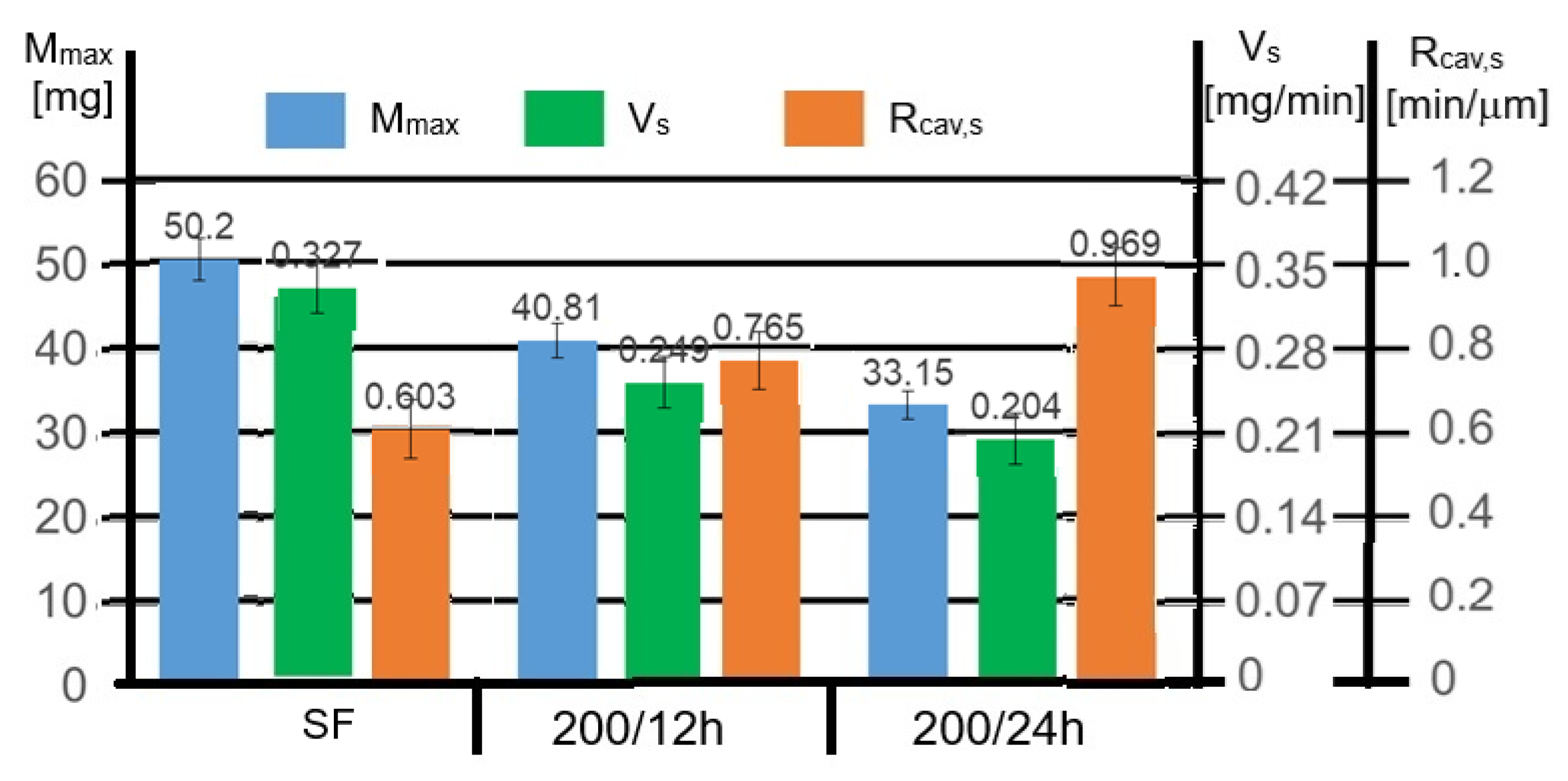
To evaluate the differences in resistance to erosion produced by vibratory cavitation, the histogram shown in Figure 10 was constructed using the characteristic parameters presented in the legends of Figure 7, Figure 8 and Figure 9, recommended by the ASTM G32-2016 standard, and they are commonly employed in our cavitation erosion research methodology.
Comparative analysis of the histogram data indicates that the heat-treatment regime performed at 200 °C with a holding time of 24 h produced the structural state with the highest resistance to vibratory cavitation erosion. Comparison among the researched structural states reveals the following trends:
  • 200/24 h state compared with the SF state: Mmax decreased by approximately 51%, and the stabilized erosion rate vs decreased by about 60%, while the stabilized cavitation resistance Rcav,s increased by approximately 61%;
  • 200/12 h state compared with the SF state: Mmax decreased by approximately 23%, vs decreased by about 31%, and Rcav,s increased by approximately 27%;
  • 200/24 h compared with 200/12 h: Mmax decreased by approximately 23%, and vs decreased by about 22%, while Rcav,s increased by approximately 27%.

5. Conclusions

Artificial aging heat treatments improve the cavitation resistance of the AM50 alloy primarily through an increase in surface microhardness and through the refinement of the constituent phase grains and the modified distribution of the strengthening brittle intermetallic compounds Al8Mn5.
The progressive degradation of the cavitated surface, characterized by both the multiplication and growth of microcavities despite the increase in hardness, is also associated with the fluid nature of cavitation shock waves and microjets, in addition to the high stresses generated by their impact on the exposed surface.
The tunnel or cave-like morphology observed for some cavities highlights the combined effects of the pressures generated by cavitation microjet impacts and those resulting from the compression of water trapped inside previously formed cavities. The structural state exhibiting the highest resistance to vibratory cavitation erosion was obtained after heat treatment at 200 °C with a holding time of 24 h. Compared with the other investigated structural states, this one exhibited an improvement in cavitation resistance ranging from 27% to 61%.
The results of the current research support the use of heat-treated AM50 alloy in the manufacture of devices for reconstructive surgery, where blood-flow hydrodynamics may involve cavitation-related phenomena.
This study also opens new research directions concerning the cavitation behavior and resistance of the AM50 alloy under alternative heat-treatment regimes, as well as under surface-hardening treatments based on advanced technologies such as laser-beam processing.

Author Contributions

Conceptualization, I.B. and B.G.; methodology, I.B. and B.G.; software, D.B. and L.-D.P.; validation, N.-A.S.; formal analysis, I.B., B.G. and F.-S.T.; investigation, L.-M.M., R.-N.P., C.G. and R.F.; resources, I.B., N.-A.S. and B.G.; data curation, I.B., B.G. and N.-A.S.; writing—original draft preparation, I.B., F.-S.T. and B.G.; writing—review and editing, D.B.; visualization, A.-N.L. and L.-D.P.; supervision, I.B. and B.G.; project administration, I.B.; funding acquisition, I.B. and N.-A.S. All authors have read and agreed to the published version of the manuscript.

Funding

This research received no external funding.

Data Availability Statement

The original contributions presented in this study are included in the article. Further inquiries can be directed to the corresponding authors.

Conflicts of Interest

The authors declare no conflicts of interest.

References

  1. Istrate, D.; Sbârcea, B.G.; Demian, A.M.; Buzatu, A.D.; Salcianu, L.; Bordeasu, I.; Micu, L.M.; Ghera, C.; Florea, B.; Ghiban, B. Correlation between Mechanical Properties—Structural Characteristics and Cavitation Resistance of Cast Aluminum Alloy Type Al-Mg. Crystals 2022, 12, 1538. [Google Scholar]
  2. Istrate, D.; Bordeasu, I.; Ghiban, B.; Sbarcea, B.G.; Ghera, C.; Luca, A.N.; Odagiu, P.O.; Florea, B.; Gubencu, D. Correlation between Mechanical Properties structural Characteristics and Cavitation Resistance of Rolled Aluminum Alloy Type 5083. Metals 2023, 13, 1067. [Google Scholar] [CrossRef]
  3. Katarivas Levy, G.; Goldman, J.; Aghion, E. The prospects of zinc as a structural material for biodegradable implants—A Review Paper. Metals 2017, 7, 402. [Google Scholar] [CrossRef]
  4. Zheng, Y.F.; Gu, X.N.; Witte, F. Biodegradable metals. Mater. Sci. Eng. R 2014, 77, 1–34. [Google Scholar] [CrossRef]
  5. Stefan, T.; Codrean, C.; Sirbu, N.-A.; Dume, A.I.; Cosma, C.; Serban, V.-A. Compressive Behavior of Various BCC Lattice Structure. Nano Hybrids Compos. 2023, 41, 39–45. [Google Scholar] [CrossRef]
  6. Stan, D.; Serban, I.; Cioana, C.; Cosma, C. Study on the influence of the processing parameters in the ultrasonic activated injection and extrusion. In MODTECH 2012: New Face of TMCR; ModTech Publishing House: Sinaia, Romania, 2012; Volumes I and II, pp. 917–920. [Google Scholar]
  7. Kabir, H.; Munir, K.; Wen, C.; Li, Y. Recent research and progress of biodegradable zinc alloys and composites for biomedical applications: Biomechanical and biocorrosion perspectives. Mioactive Mater. 2021, 6, 836–879. [Google Scholar] [CrossRef] [PubMed]
  8. Savu, S.V.; Tarnita, D.; Stefan, I.; Benga, G.C.; Savu, I.D.; Sîrbu, N.A.; Dumitru, I.; Ciungu, M.A.; Ursu, M.; Cosma, C. Research on the Influence of the Defects of Materials on Thermal Runaway in Microwave Hybrid Heating for Sintering Processes. Appl. Sci. 2025, 15, 4115. [Google Scholar] [CrossRef]
  9. Wang, Y.; Hao, E.; Zhao, X.; Xue, Y.; An, Y.; Zhou, H. Effect of microstructure evolution of Ti6Al4V alloy on its cavitation erosion and corrosion resistance in artificial seawater. J. Mater. Sci. Technol. 2022, 100, 169–181. [Google Scholar]
  10. Caceres, C.H.; Silvett, S.P. Cavitation damage in the superplastic Zn-22% Al-0.5% Cu alloy. Acta Metall. 1987, 35, 897–906. [Google Scholar] [CrossRef]
  11. Iordache (Gheorghe), C.M. Correlation Between Structure—Mechanical Characteristics-Biodegradability—Cavitation of Some Biomedical Alloys Form the System ZnMg(Fe). Ph.D. Thesis, National University of Science and Technology Politehnica Bucharest, Bucharest, Romania, 2024. (In Romanian) [Google Scholar]
  12. Zhang, S.; Zhang, X.; Zhao, C.; Li, J.; Song, Y.; Xie, C.; Tao, H.; Zhang, Y.; He, Y.; Jiang, Y.; et al. Research on an Mg–Zn alloy as a degradable biomaterial. Acta Biomater. 2010, 6, 626–640. [Google Scholar] [CrossRef] [PubMed]
  13. Ciungu, G.; Micu, L.M.; Bordeasu, I.; Iordache, C.M.; Ghiban, B.; Ghera, C. Cavitation Behaviour of A Biodegradable ZnCu Alloy. UPB Sci. Bull. Ser. B 2024, 86. [Google Scholar]
  14. Ghiban, B.; Bordeasu, I.; Antoniac, A.; Antoniac, I.; Gheorghe, C.M.; Bordeasu, D.; Micu, L.M.; Ghera, C.; Salcianu, L.C.; Florea, B.; et al. Influence of Homogenization Heat Treatments on the Mechanical, Structural, Biodegradation, and Cavitation Behavior of Some Alloys in the ZnMg(Fe) System. Crystals 2025, 15, 458. [Google Scholar]
  15. Ghiban, B.; Antoniac, A.; Bordeasu, I.; Antoniac, I.; Petre, G.; Rau, V.J.; Bordeasu, D.; Micu, L.M. Biodegradability and Cavitation Erosion Behavior of Some Zinc Alloys from the System ZnCuMg. Metalls 2025, 15, 161. [Google Scholar] [CrossRef]
  16. Sleiman, N.; Pflieger, R.; Hallez, L.; Nikitenko, I.S.; Hihn, J.-Y. Magnesium and magnesium alloy dissolution by high intensity focused ultrasound: Erosion/cavitation vs. Wave propagation. Ultrason. Sonochem. 2024, 104, 106836. [Google Scholar] [CrossRef] [PubMed]
  17. Tomlinson, W.J.; Matthews, S.J. Cavitation erosion of aluminium alloys. J. Mater. Sci. 1994, 29, 1101–1108. [Google Scholar] [CrossRef]
  18. Krella, A.; Erbe, A.; Johanes, M.; Gupta, M. Magnesium Degradation Under Cavitation Erosion Conditions. JOM J. Miner. 2026, 78, 5297–5309. [Google Scholar] [CrossRef]
  19. Ye, L.; Zhu, X.; He, Y.; Song, T.; Hu, W. Surface strengthening and grain refinement of AZ31B magnesium alloy by ultrasonic cavitation modification. Chin. J. Aeronaut. 2021, 34, 508–551. [Google Scholar] [CrossRef]
  20. Krella, A.-K. Degradation of AlMg2 aluminium alloy caused by cavitation—An effect of cavitation intensity. Mater. Charact. 2017, 130, 219–229. [Google Scholar]
  21. Jasionowski, R.; Zasada, D.; Polkowski, W. The Evaluation of the Cavitational Damage in MgAl2Si Alloy Using Various Laboratory Stands. Solid State Phenom. 2016, 252, 61–70. [Google Scholar]
  22. Agarwal, S.; Curtin, J.; Duffy, B.; Jaiswal, S. Biodegradable magnesium alloys for orthopaedic applications: A review on corrosion, biocompatibility and surface modifications. Mater. Sci. Eng. C 2016, 68, 948–963. [Google Scholar] [CrossRef] [PubMed]
  23. Persaud-Sharma, D.; McGoron, A. Biodegradable magnesium alloys: A review of material development and applications. J. Biomim. Biomater. Tissue Eng. 2012, 12, 25–39. [Google Scholar] [CrossRef] [PubMed]
  24. Niinomi, M. Recent metallic materials for biomedical applications. Metall. Mater. Trans. A 2002, 33, 477–486. [Google Scholar] [CrossRef]
  25. Mitelea, I.; Bordeasu, I.; Salcianu, L.; Craciunescu, C.M. Cavitation Erosion Mechanisms of Solution Treated X5CrNi18-10 Stainless Steels. J. Tribol.-Trans. ASME 2016, 138, 031102. [Google Scholar]
  26. Meng, X.; Song, F.; Zhou, J.; Lu, J.; Chen, X.; Zhang, H.; Cheng, Z.; Cai, J.; Xue, W.; Lin, K. Enhancing cavitation erosion resistance of Ti6Al4V titanium alloy by dual-pulse laser shock peening. Surf. Coat. Technol. 2025, 503, 131993. [Google Scholar]
  27. Mostaed, E.; Sikora-Jasinska, M.; Mostaed, A.; Loffredo, S.; Demir, A.G.; Previtali, B.; Mantovani, D.; Beanland, R.; Vedani, M. Novel Zn-based alloys for biodegradable stent applications: Design, development and in vitro degradation. J. Mech. Behav. Biomed. Mater. 2016, 60, 581–602. [Google Scholar] [CrossRef] [PubMed]
  28. Ciungu, G. Experimental Studies on the Cavitation and Biodegradation Behaviour of Some Alloys of the System ZnCu(Mg) System. Ph.D. Thesis, University Politehnica Bucharest, Bucharest, Romanian, 2024. (In Romanian) [Google Scholar]
  29. Mostaed, E.; Sikora-Jasinska, M.; Drelich, J.; Vadeni, M. Zinc-based alloys for degradable vascular stent applications. Acta Biomater. 2018, 71, 1–23. [Google Scholar] [CrossRef] [PubMed]
  30. Venezuela, J.; Dargusch, M.S. The influence of alloying and fabrication techniques on the mechanical properties, biodegradability and biocompatibility of zinc: A comprehensive review. Acta Biomater. 2019, 87, 1–40. [Google Scholar] [CrossRef] [PubMed]
  31. Luca, A.-N.; Bordeasu, I.; Iordache, C.-M.; Ciungu, G.; Ghiban, B.; Miculescu, M.; Micu, L.M. Heat Treatment Influence on the Cavitational Erosion Zn-Mg Behavior Used for Biomedical Applications. Tribol. Ind. 2024, 46, 270–282. [Google Scholar] [CrossRef]
  32. Bowen, P.K.; Shearier, E.R.; Zhao, S.; Guillory, R.J.; Zhao, F.; Goldman, J.; Drelich, J.W. Biodegradable metals for cardiovascularstents: From clinical concerns to recent Zn-alloys. Adv. Healthc. Mater. 2016, 5, 1121–1140. [Google Scholar] [PubMed]
  33. Werkhoven, R.J.; Sillekens, W.H.; Van Lieshout, J.B.J.M. Processing aspects of magnesium alloy stent tube. In Magnesium Technology; John Wiley & Sons, Inc.: Hoboken, NJ, USA, 2011; pp. 419–424. [Google Scholar]
  34. Yue, R.; Huang, H.; Ke, G.; Zhang, H.; Pei, J.; Xue, G.; Yuan, G. Microstructure, mechanical properties and in vitro degradation behavior of novel Zn-Cu-Fe alloys. Mater. Charact. 2017, 134, 114–122. [Google Scholar]
  35. Kwona, Y.-N.; Kimb, S.-H.; Lee, Y.S. Cavitation behavior of fine grained AZ31 alloy sheet during hot blow forming. Procedia Eng. 2011, 10, 3471–3476. [Google Scholar] [CrossRef][Green Version]
  36. Aguirre, J.V.; Takigawa, Y.; Higash, K. Experimental Investigation of Cavitation Behavior in AZ61 Magnesium Alloy. Mater. Trans. 2005, 46, 626–630. [Google Scholar] [CrossRef][Green Version]
  37. ASTM Standard G32; Standard Method of Vibratory Cavitation Erosion Test. ASTM: West Conshohocken, PE, USA, 2016.
  38. Pirvulescu, L.-D.; Bordeasu, I.; Ghiban, B. Contributions to the Study of Mechanical and Cavitational behaviors of the Magnesium Alloy Type AM50. UPB. Sci. Bull. Ser. B 2026, 88, 301–3016. [Google Scholar]
  39. Demian, A.-M. Cercetarea Comportării la Eroziunea Cavitațională a Aliajului de Aluminiu Tip 6082 în Corelație cu Diferite Stări Structural. Ph.D. Thesis, Politehnica University of Bucharest, Bucharest, Romania, 2026. [Google Scholar]
  40. Gottardi, G.; Tocci, M.; Montesano, L.; Pola, A. Cavitation Erosion Behaviour of an Innovative Aluminium Alloy for Hybrid Aluminium Forging. Wear 2018, 394–395, 1–10. [Google Scholar] [CrossRef]
  41. Mitelea, I.; Bordeasu, I.; Frant, F.; Utu, I.-D. Effect of heat treatment on corrosion and ultrasonic cavitation erosion resistance of AlSi10MnMg alloy. Mater. Test. 2020, 62, 921–926. [Google Scholar]
  42. Li, H.F.; Shi, Z.Z.; Wang, L.N. Opportunities and challenges of biodegradable Zn-based alloys. J. Mater. Sci. Technol. 2020, 46, 136–138. [Google Scholar] [CrossRef]
  43. Hobbs, J.M. Experience with A 20–KC Cavitations Erosion Test Erosion by Cavitations or Impingement; Technical Report; ASTM STP 408; ASTM International: Atlantic City, NJ, USA, 1966; pp. 150–180. [Google Scholar]
  44. Garcia, R. Comprehensive Cavitation Damage Data for Water and Various Liquid Metals Including Correlation with Material and Fluid Properties; Technical Report 6; University of Michigan: Ann Arbor, MI, USA, 1966. [Google Scholar]
  45. Hammitt, F.G.; Bhatt, N.R. Cavitation Damage Resistance of Hardened Steels; Tehnical Report; University of Michigan: Ann Arbor, MI, USA, 1970; pp. 1–36. [Google Scholar]
  46. Vaidya, S.; Preece, C.M. Cavitation erosion of age-hardenable aluminum alloys. Metall. Trans. A 1978, 9, 299–307. [Google Scholar] [CrossRef]
  47. Frank, J.-P.; Jean-Louis, K.; Karimi, A.; Fruman, D.-H.; Fréchou, D.; Briançon-Marjollet, L.; Billard, J.-Y.; Belahadji, B.; Avellan, F.; Michel, J.M. Physical Mechanisms and Industrial Aspects; Presses Universitaires de Grenoble: Grenoble, France, 1995. [Google Scholar]
  48. Bordeasu, I. Monografia Laboratorului de Cercetare a Eroziunii prin Cavitație al Universității Politehnica Timișoara (1960–2020); Editura Politehnica Timisoara: Timişoara, Romania, 2020. [Google Scholar]
  49. Brujan, E.-A.; Matsumoto, Y. Collapse of micrometer-sized cavitation bubbles near a rigid boundary. Microfluid. Nanofluid. 2012, 13, 957–966. [Google Scholar] [CrossRef]
  50. Brujan, E.A.; Ikeda, T.; Matsumoto, Y. On the pressure of cavitation bubbles. Exp. Therm. Fluid Sci. 2008, 32, 1188–1191. [Google Scholar] [CrossRef]
  51. Dular, M.; Montalvo, G.E.B.; Hocevar, M.; Novak, L.; Ohl, C.D.; Petkovsek, M. Questioning the ASTM G32-16 (stationary specimen) standard cavitation erosion test. Ultrason. Sonochem. 2024, 107, 106930. [Google Scholar] [CrossRef] [PubMed]
  52. Merouani, S.; Hamdaoui, O.; Rezgui, Y.; Guemini, M. Theoretical Procedure for the Characterization of Acoustic Cavitation Bubbles. Acta Acust. United Acust. 2014, 100, 823–833. [Google Scholar] [CrossRef]
  53. Chen, H.; Li, Y.; Chen, D.; Wang, J. Experimental and numerical investigations on development of cavitation erosion pits on solid surface. Tribol. Lett. 2007, 26, 153–159. [Google Scholar] [CrossRef]
  54. Bordeasu, I.; Patrascoiu, C.; Badarau, R.; Sucitu, L.; Popoviciu, M.O.; Balasoiu, V. New contributions to cavitation erosion curves modeling. FME Trans. 2006, 34, 39–43. [Google Scholar]
  55. Micu, L.M.; Bordeasu, I.; Popoviciu, M.O. A New Model for the Equation Describing the Cavitation Mean Depth Erosion Rate Curve. Rev. Chim. 2017, 68, 894–898. [Google Scholar] [CrossRef]
  56. Bordeasu, I.; Ghera, C.; Salcianu, C.-L.; Luca, A.-N.; Parmanche, R.-S. On the Influence of Mechanical Properties of Aluminum Alloys on Their Resistance to Cavitation Erosion. In Journal of Physics: Conference Series 3153 (ICAS), Proceedings of the 13th International Conference on Applied Sciences, Hunedoara, Romania, 29–31 May 2025; IOP Publishing: Philadelphia, PA, USA, 2025; p. 012001. [Google Scholar]
  57. Steller, K.; Reymann, Z.; Krzysztoowicz, T. Evaluation of the resistance of materials to cavitational erosion. In Proceedings of the Fifth Conference on Fluid Machinery; Akademia Kiado: Budapest, Ungaria, 1975; Volume 2, pp. 1081–1095. [Google Scholar]
Figure 1. Microstructural images (6% nital attack) and energy-dispersive X-ray (EDX) spectrum of the surfaces structures before cavitation exposure: (a) the microstructural image of the SF state; (b) the EDAX image of the SF state of the β phase; (c) the microstructural image of the 200/12 h state of the β phase; (d) the EDAX image of the 200/12 h state; (e) the microstructural image of the 250/24 h state; (f) the EDAX image of the 200/24 h state of the β phase.
Metals 16 00684 g001
Figure 2. The XRD patterns of the surface structures before cavitation exposure.
Metals 16 00684 g002
Figure 3. Vibratory device with piezoceramic crystals: (a) the overall image: 1—ultrasonic electronic generator; 2—piezoceramic transducer; 3—acoustic mechanical amplifier; 4—vessel with cavitating liquid; 5—cooler; 6—computer for controlling functional parameters; 7—monitor for tracking operating parameters (electrical power, amplitude, frequency, and liquid temperature); 8—specimen holder with test sample; (b) image of the specimen surface before the cavitation exposure.
Metals 16 00684 g003
Figure 4. Evolution of cavitation erosion on the exposed surface (photos taken using a Canon Power Shot A480 camera) of the (a) SF state; (b) 200/12 h state; and (c) 200/24 h state.
Metals 16 00684 g004
Figure 5. SEM images (×100 zoom) of cavities formed on the eroded surface after 165 min of cavitation exposure: (a) SF state; (b) 200/12 h state; (c) 200/24 h state.
Metals 16 00684 g005
Figure 6. CT images illustrating cavity depth distribution of the (a) SF state; (b) 200/12 h state; and (c) 200/24 h state.
Metals 16 00684 g006
Figure 7. Characteristic cavitation erosion curves for the SF state: (a) variation of cumulative mass loss with cavitation exposure time; (b) variation of erosion rate with cavitation exposure time; (c) influence of cavitation exposure duration on the resistance of the tested surface.
Metals 16 00684 g007
Figure 8. Characteristic cavitation erosion curves for the 200/12 h state: (a) variation of cumulative mass loss with cavitation exposure time; (b) variation of erosion rate with cavitation exposure time; (c) influence of cavitation exposure duration on the resistance of the tested surface.
Metals 16 00684 g008
Figure 9. Characteristic cavitation erosion curves for the 200/24 h state: (a) variation of cumulative mass loss with cavitation exposure time; (b) variation of erosion rate with cavitation exposure time; (c) influence of cavitation exposure duration on the resistance of the tested surface.
Metals 16 00684 g009
Figure 10. Histogram comparing the cavitation resistance of the three structural states: SF, 200/12 h, and 200/24 h.
Metals 16 00684 g010
Table 1. Chemical composition of the researched Mg alloy (values expressed in wt.%).
MaterialAlMnZnFeNiCuSiBeMgOther
AM504.700.320.130.0020.0010.0040.030.001494.770.005
Table 2. Surface hardness values.
StateSF200/12 h200/24 h
HV5 Hardness58 ± 362 ± 268 ± 2
Disclaimer/Publisher’s Note: The statements, opinions and data contained in all publications are solely those of the individual author(s) and contributor(s) and not of MDPI and/or the editor(s). MDPI and/or the editor(s) disclaim responsibility for any injury to people or property resulting from any ideas, methods, instructions or products referred to in the content.