Dissimilar Friction Stir Welding of Al and Ti: Elucidation of Microstructural Evolution, Material Flow, and Spring-Based Tensile Fracture Behavior



Abstract
1. Introduction
2. Experimental Procedure
2.1. Materials and Methods
2.2. X-Ray Computed Tomography
2.3. Metallurgical Characterization
2.4. Mechanical Testing
3. Results and Discussion
3.1. Volumetric Distribution of Particle in the Nugget Zone
3.2. Microstructural Characterization
3.3. Composition Analysis
3.4. Phase Analysis
3.5. Micro-Mechanism and Microstructural Evolution in Aluminum
3.6. The Mechanical Properties of the Weld
3.6.1. Hardness Distribution of the Weld
3.6.2. Tensile Properties of the Optimized Weld
3.6.3. Strengthening Mechanism of the Weld Nugget
3.6.4. Spring Model of Tensile Fracture
4. Conclusions
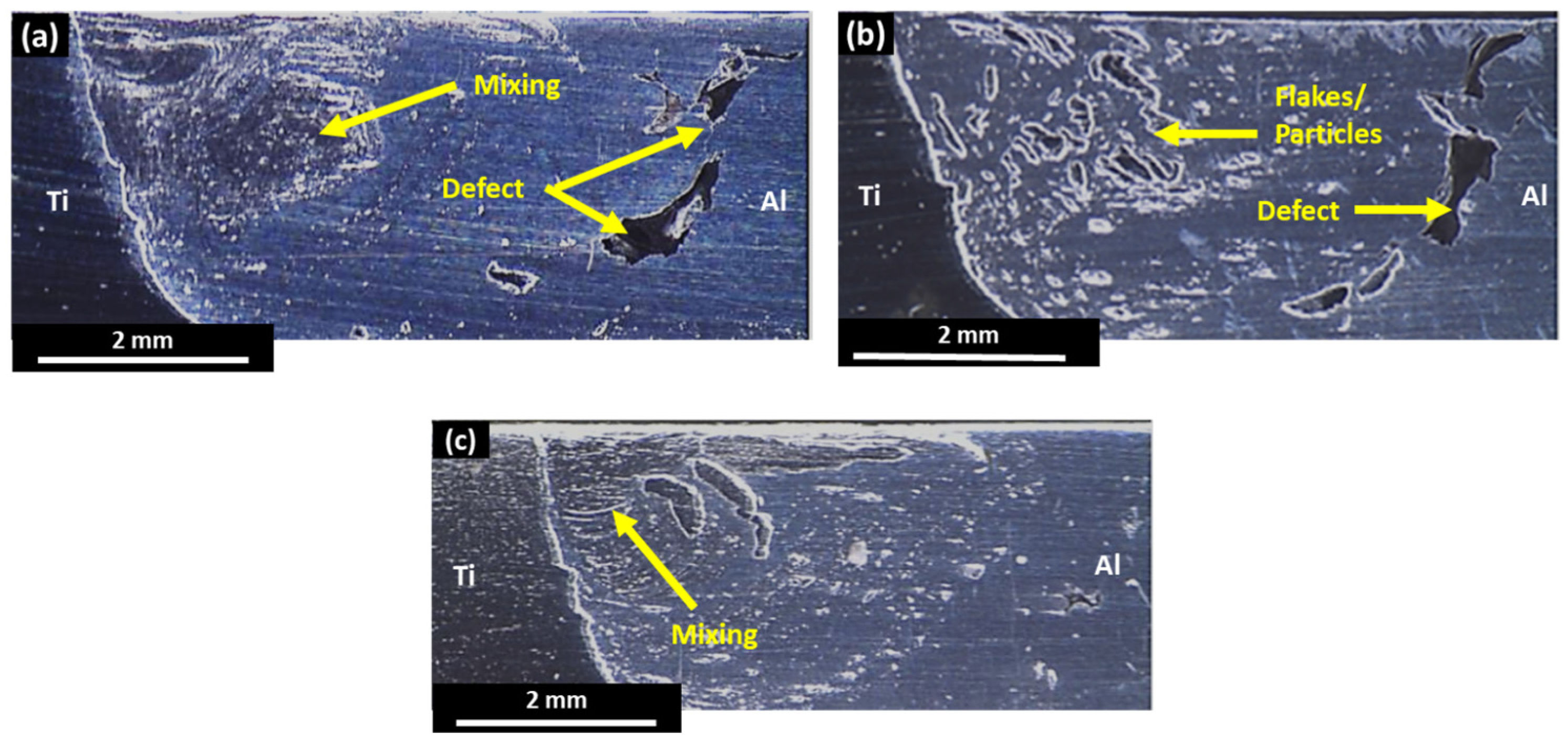
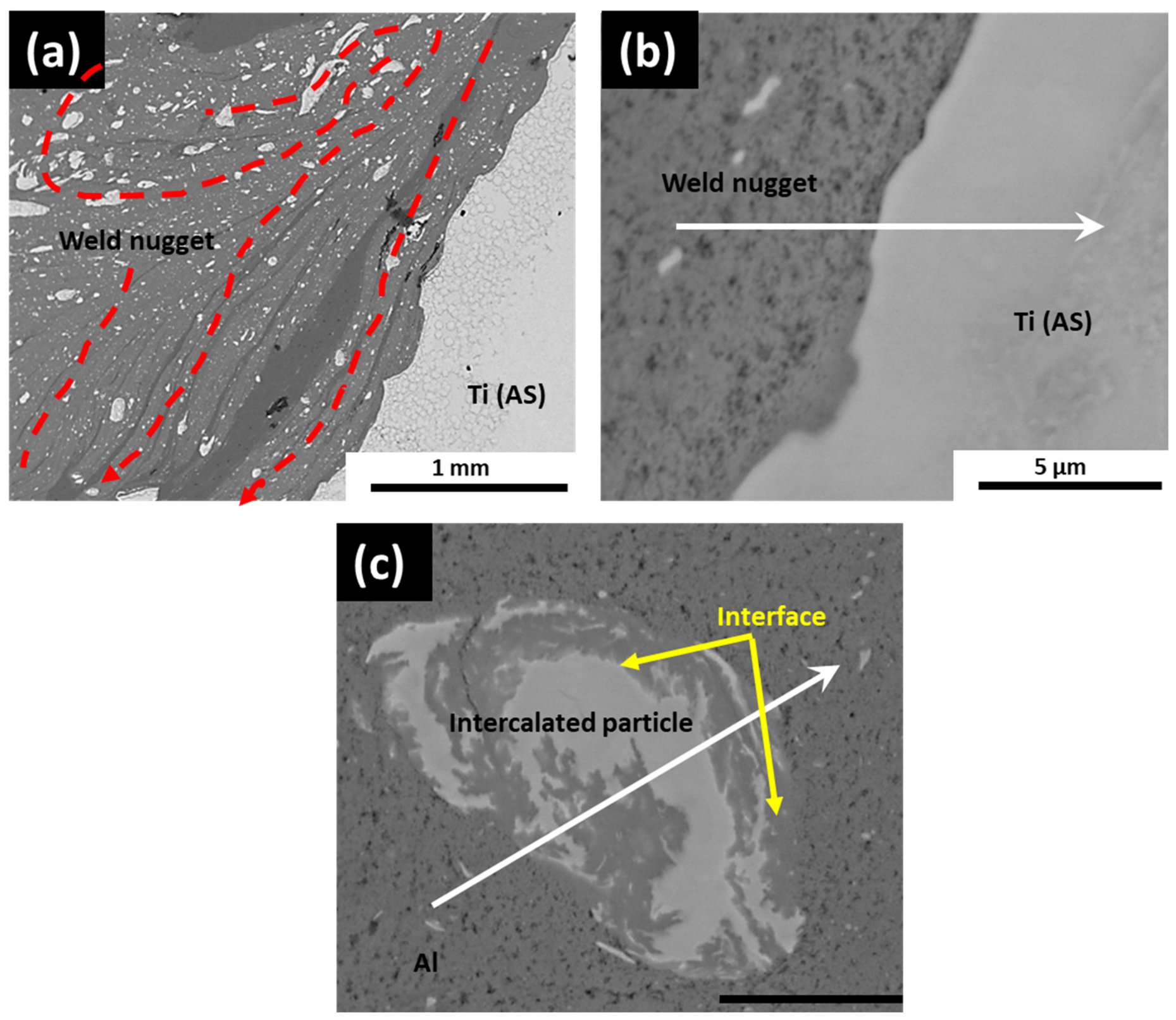
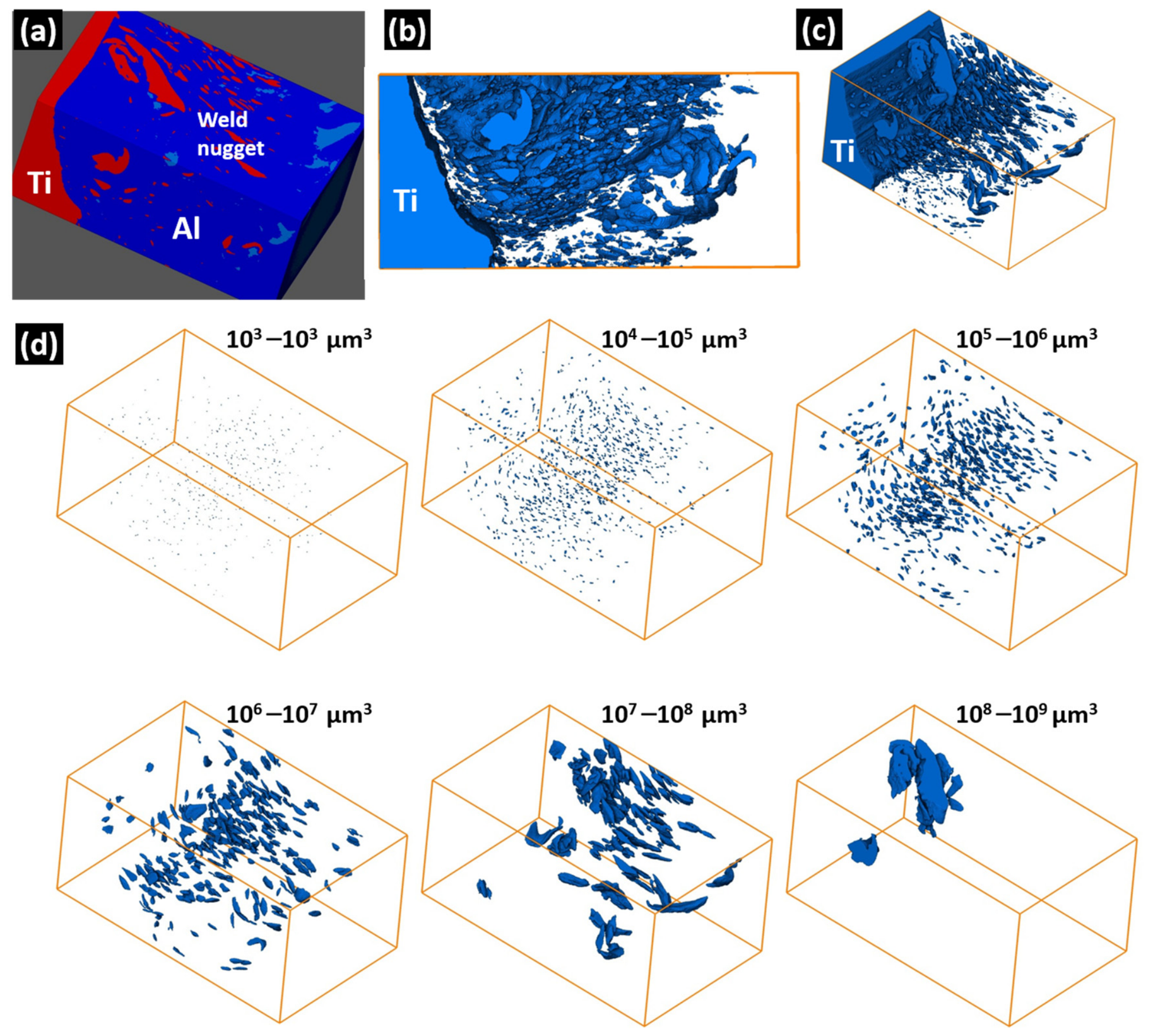
- The distribution of Ti particles depends on the morphology of the particles. Fine particles (volume 103–104 µm3) are homogeneously distributed in the weld nugget, unlike large particles and flakes (107–109 µm3), due to the effect of the drag force. Large Ti particles and flakes align along the direction of material flow due to high drag force, thereby resembling the trajectory of material flow in the weld nugget.
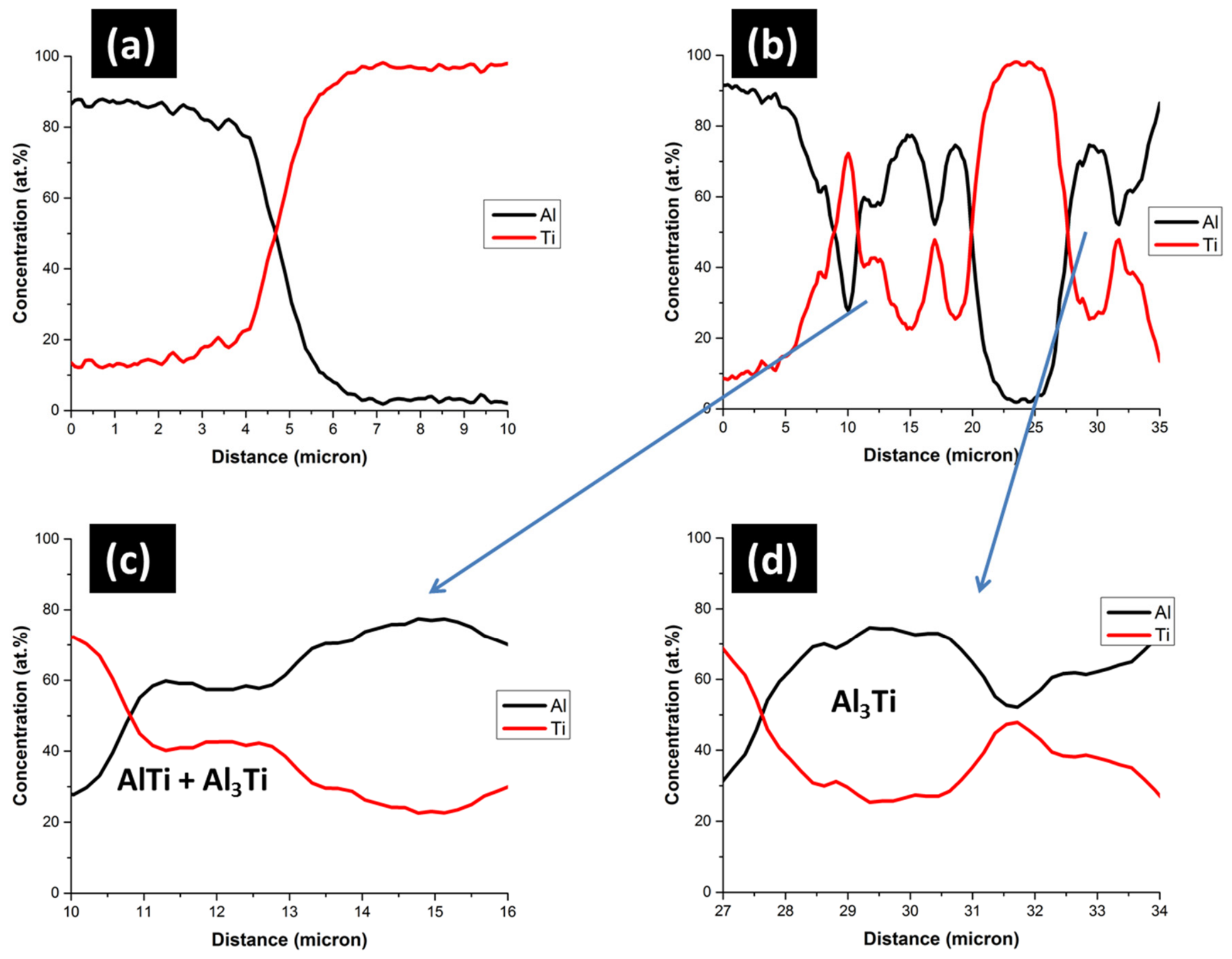
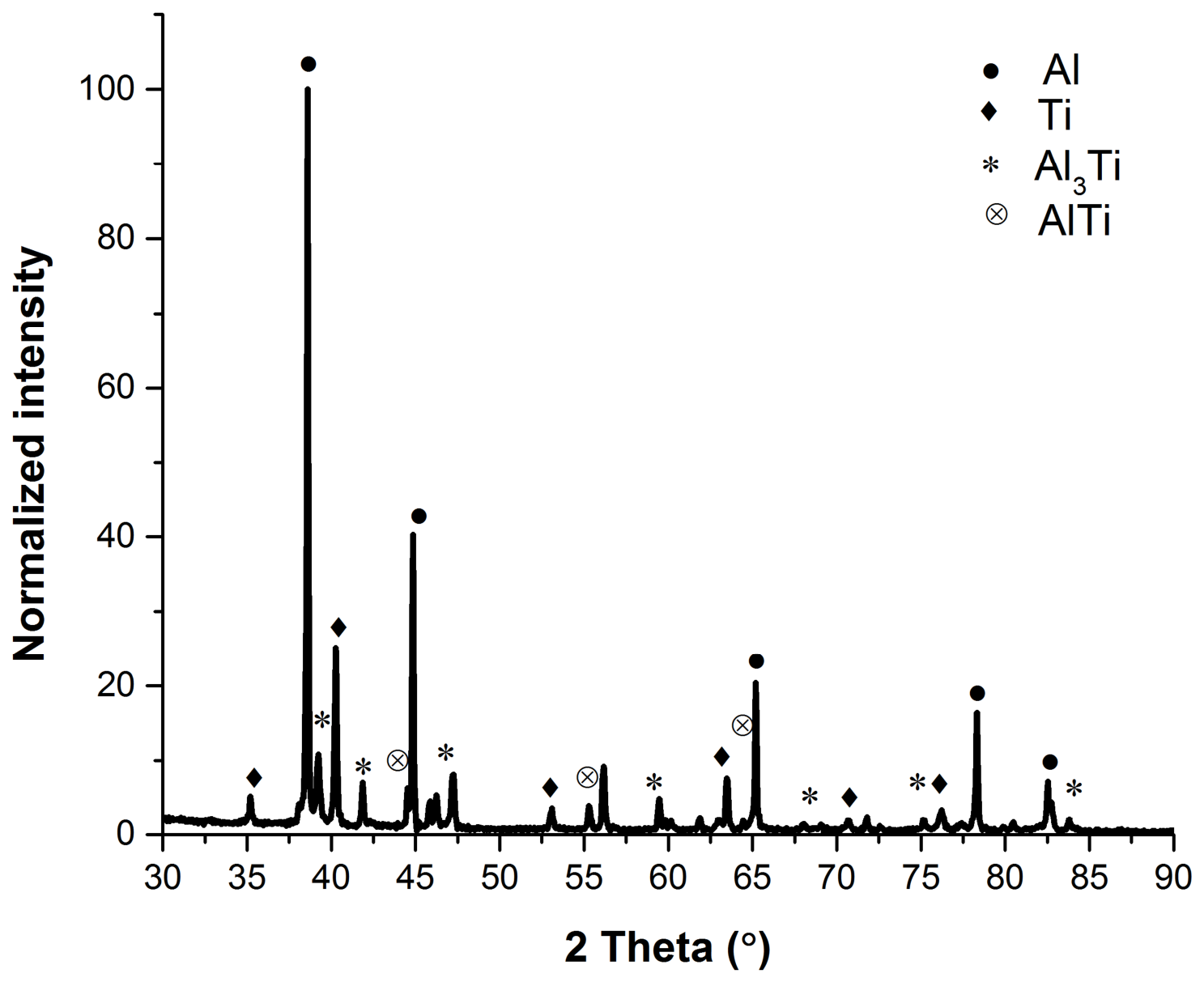
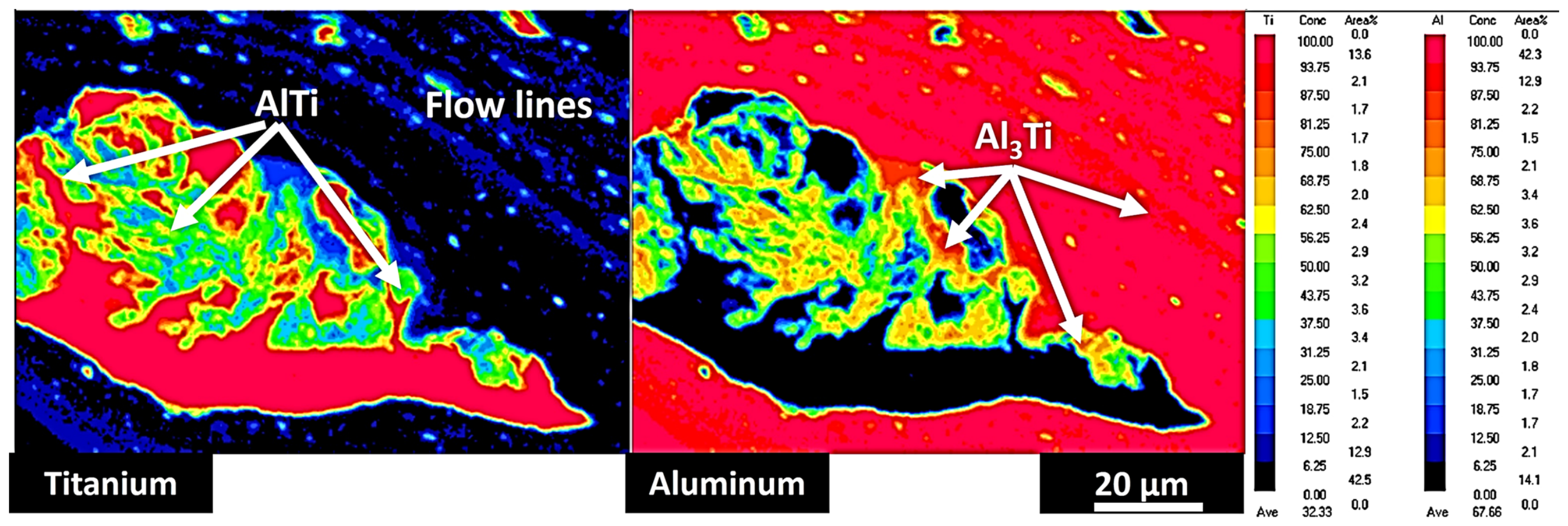
- The intermetallic phases (Al3Ti and AlTi) appear in the weld due to metallurgical reasons. High-stress-assisted deformation and thermal evolution lead to the formation of AlTi along with Al3Ti. Deformation of fragments, mechanical mixing, and particle size influence stress and compositional inhomogeneity across the particles and flakes, leading to the formation of intermetallics. The evolution of a high fraction of Al3Ti over AlTi is attributed to the lower Gibbs’s free energy of Al3Ti at the estimated weld temperatures (<600 °C).
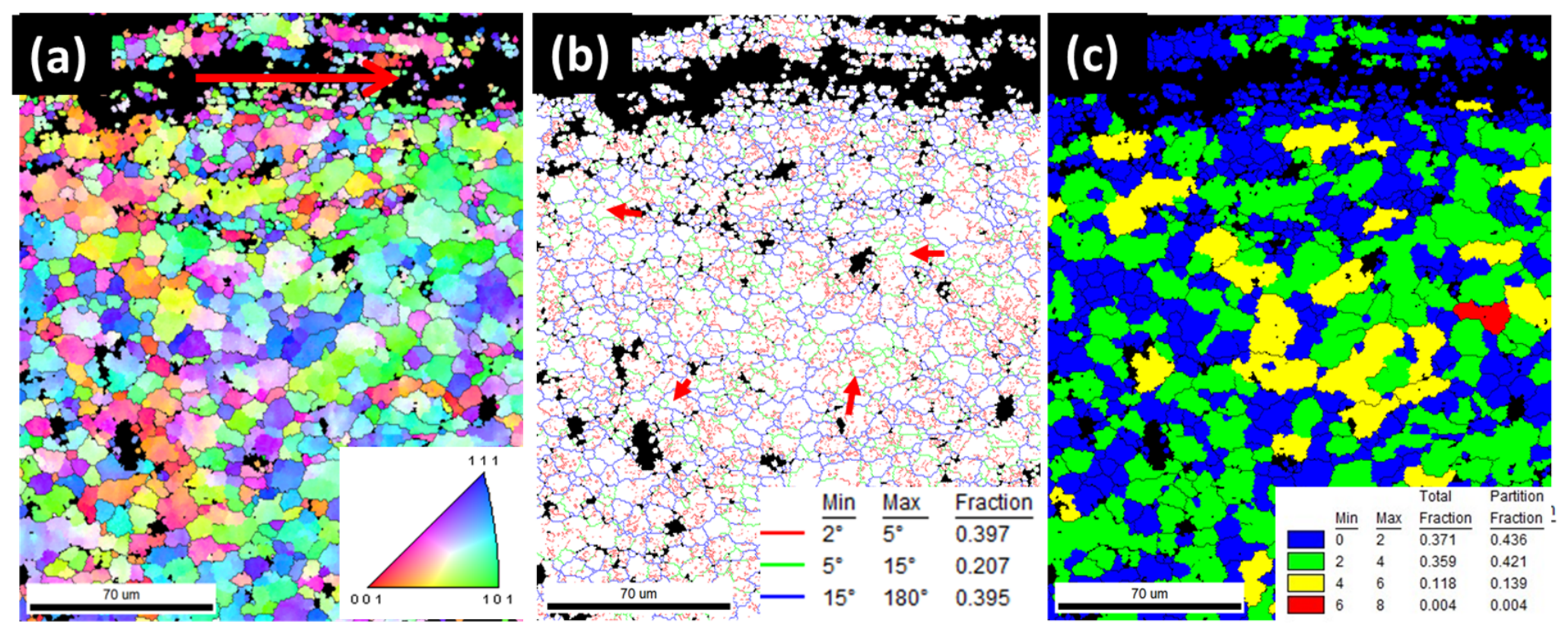
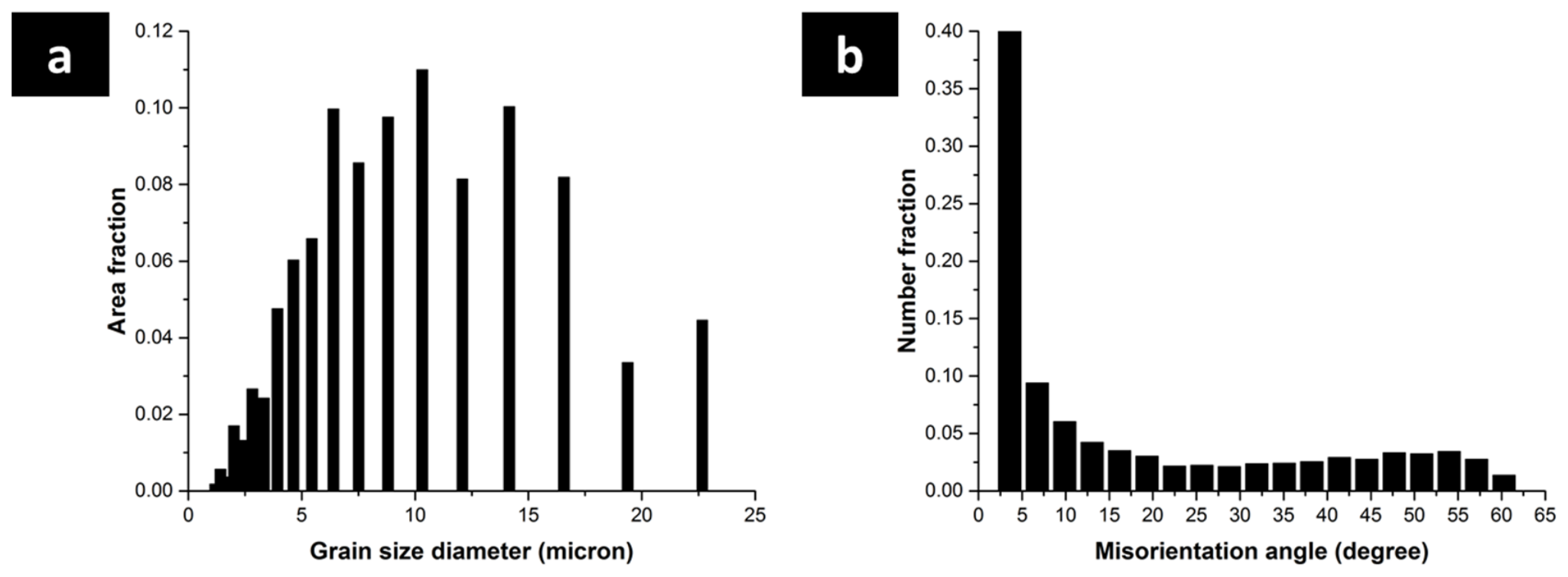
- Al in the weld nugget is dynamically recrystallized. Continuous Dynamic Recrystallization (CDRX) is the dominant recrystallization mechanism. Dynamic recovery (DRV) is the driving force behind CDRX in Al during high-strain-rate deformation owing to its high stacking-fault energy. The coupled mechanism yields a refined microstructure with a mean recrystallized grain size of 10.08 ± 5.41 µm. GOS analysis confirms that 44% of grains have undergone full recrystallization.
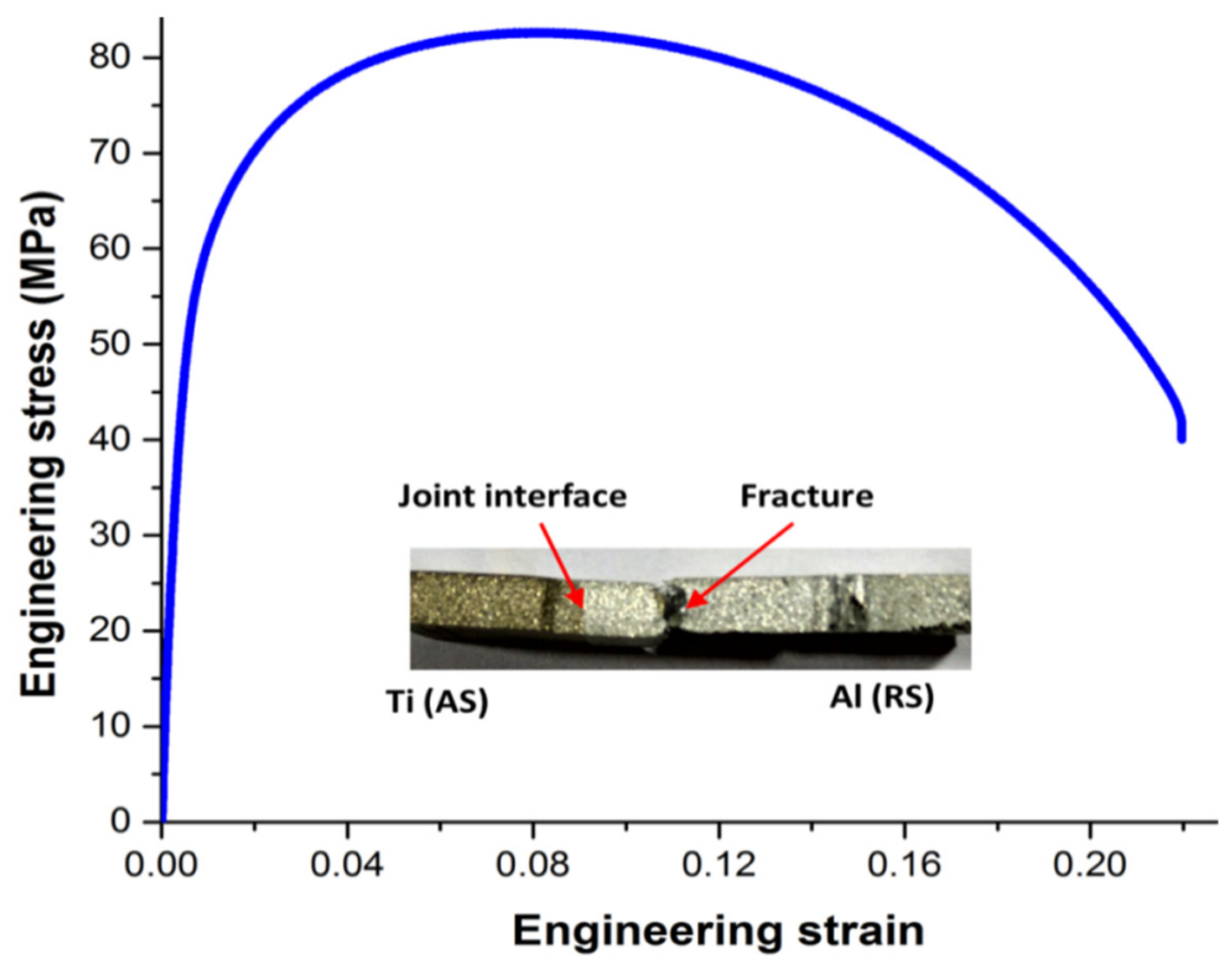
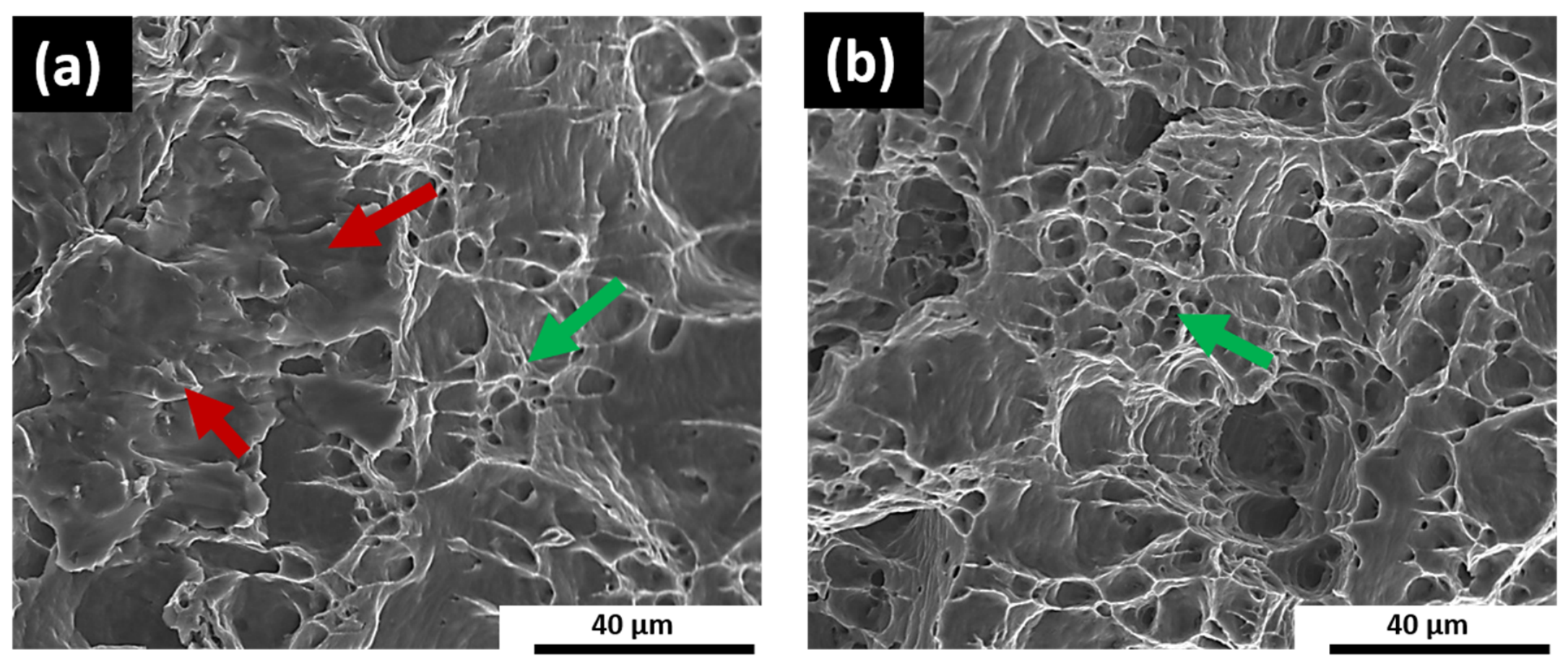
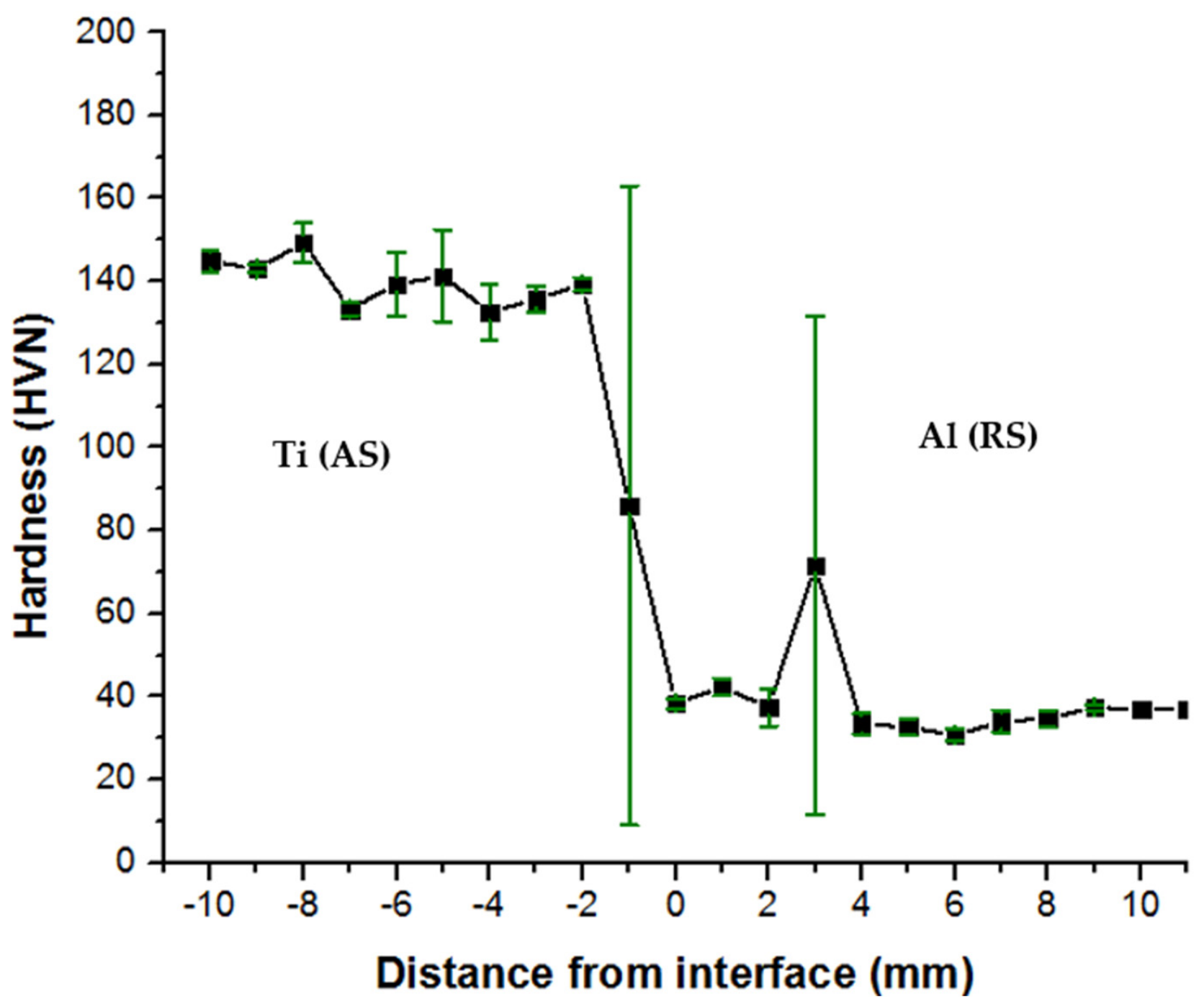
- The weld achieved a UTS of 82 MPa (joint efficiency of approximately 77% relative to base cp-Al) with an 11% improvement in elongation (21% vs. 19% for base cp-Al), and the variation in hardness in the weld nugget (up to 86 HVN vs. 28 HVN for base cp-Al) is attributed to the contribution from mechanical mixing and the formation of intermetallics. The fracture surface reveals a bimodal mode of fracture, which illustrates that the tensile sample fractured on the RS or weld nugget of the weld, indicating superior joint characteristics.
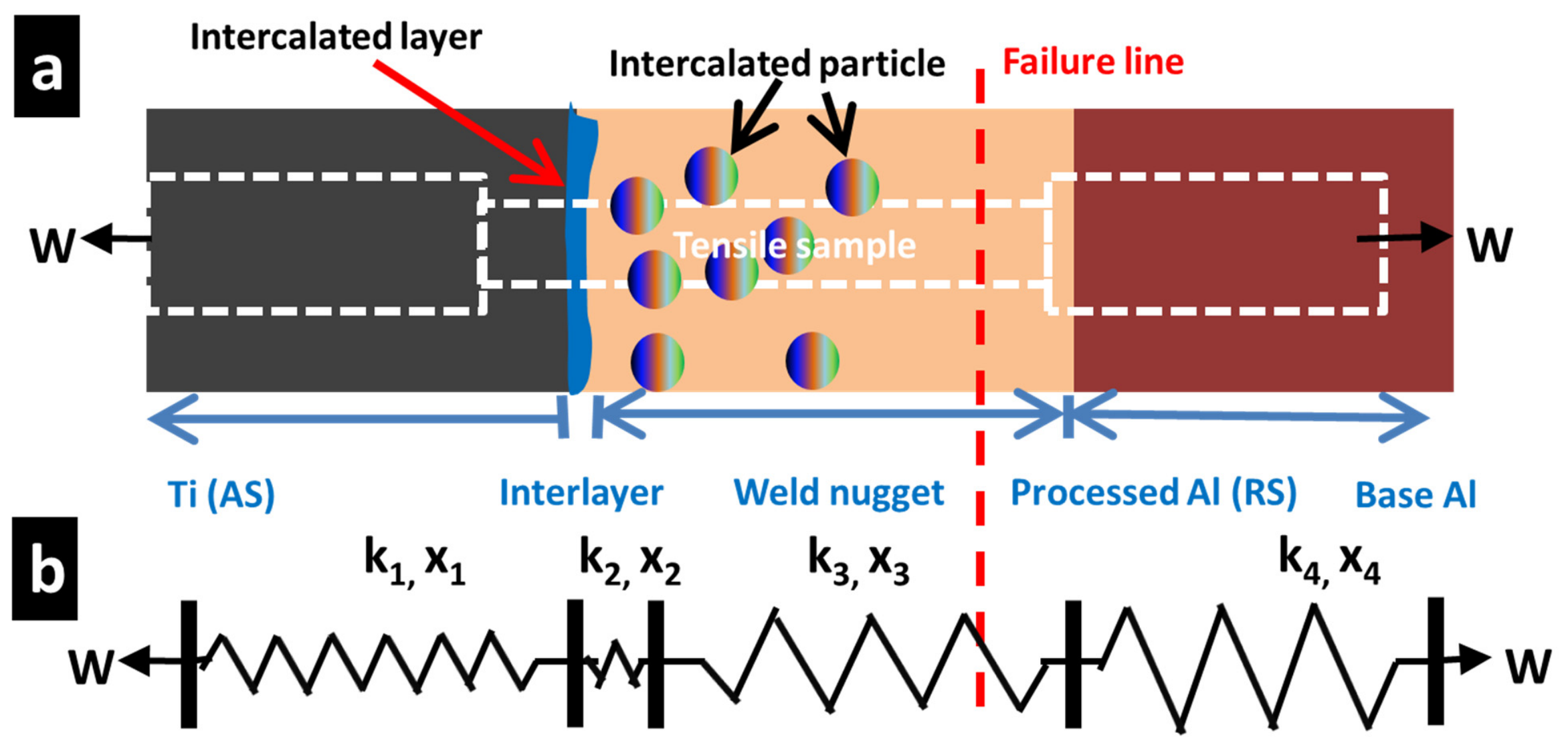
- A spring model has been introduced to correlate the microstructure evolution with springs connected in series. The model is used to predict the fracture location and mechanical properties of the weld. This method and mechanism can be an attractive option to predict the properties of a complex system having variations in the microstructure.
Author Contributions
Funding
Data Availability Statement
Acknowledgments
Conflicts of Interest
References
- Fronczek, D.M.; Wojewoda-Budka, J.; Chulist, R.; Sypien, A.; Korneva, A.; Szulc, Z.; Schell, N.; Zieba, P. Structural properties of Ti/Al clads manufactured by explosive welding and annealing. Mater. Des. 2016, 91, 80–89. [Google Scholar] [CrossRef]
- Wei, Y.; Aiping, W.; Guisheng, Z.; Jialie, R. Formation process of the bonding joint in Ti/Al diffusion bonding. Mater. Sci. Eng. A 2008, 480, 456–463. [Google Scholar] [CrossRef]
- Grassel, F.; Malaske, L.; Hoffmann, M.; Klusemann, B. (Semi-)Solid-state joining of aluminium and titanium alloys—A critical review. J. Mater. Res. Technol. 2025, 39, 3270–3291. [Google Scholar] [CrossRef]
- Kumar, S.; Gao, S.; Wu, C.; Kar, A.; Basak, S. Towards Sustainability: Critical Insights into Solid-State Joining Processes for Developing Lightweight Hybrid Structures. Int. J. Precis. Eng. Manuf.-Green Technol. 2026, 13, 89–115. [Google Scholar] [CrossRef]
- Kattner, U.R. The thermodynamic modeling of multicomponent phase equilibria. JOM 1997, 49, 14–19. [Google Scholar] [CrossRef]
- Cooke, K.O.; Atieh, A.M. Current Trends in Dissimilar Diffusion Bonding of Titanium Alloys to Stainless Steels, Aluminium and Magnesium. J. Manuf. Mater. Process. 2020, 4, 39. [Google Scholar] [CrossRef]
- Slipenyuk, A.; Kuprin, V.; Milman, Y.; Goncharuk, V.; Eckert, J. Properties of P/M processed particle reinforced metal matrix composites specified by reinforcement concentration and matrix-to-reinforcement particle size ratio. Acta Mater. 2006, 54, 157–166. [Google Scholar] [CrossRef]
- Luo, J.-G.; Acoff, V.L. Using cold roll bonding and annealing to process Ti/Al multi-layered composites from elemental foils. Mater. Sci. Eng. A 2004, 379, 164–172. [Google Scholar] [CrossRef]
- Majumdar, B.; Galun, R.; Weisheit, A.; Mordike, B.L. Formation of a crack-free joint between Ti alloyand Al alloy by using a high-power CO2 laser. J. Mater. Sci. 1997, 32, 6191–6200. [Google Scholar] [CrossRef]
- Van Loo, F.J.J.; Rieck, G.D. Diffusion in the titanium-aluminium system—I. Interdiffusion between solid Al and Ti or Ti-Al alloys. Acta Metall. 1973, 21, 61–71. [Google Scholar] [CrossRef]
- Kar, A.; Suwas, S.; Kailas, S.V. Microstructural Modification and High-Temperature Grain Stability of Aluminum in an Aluminum-Titanium Friction Stir Weld with Zinc Interlayer. JOM 2019, 71, 444–451. [Google Scholar] [CrossRef]
- Sujata, M.; Bhargava, S.; Sangal, S. On the formation of TiAl3 during reaction between solid Ti and liquid Al. J. Mater. Sci. Lett. 1997, 16, 1175–1178. [Google Scholar] [CrossRef]
- Kumar, K.; Kailas, S.V. On the role of axial load and the effect of interface position on the tensile strength of a friction stir welded aluminium alloy. Mater. Des. 2008, 29, 791–797. [Google Scholar] [CrossRef]
- Mishra, R.S.; Ma, Z.Y. Friction stir welding and processing. Mater. Sci. Eng. R Rep. 2005, 50, 1–78. [Google Scholar] [CrossRef]
- Lin, F.; Ren, M.; Wu, H.; Jia, F.; Yang, M.; Chen, Z.; Jiang, Z. In Situ Formation of Al3Ti and Its Effects on the Microstructure, Hardness and Tribological Properties of Al Matrix Composites with Various Ti Contents. Crystals 2023, 13, 805. [Google Scholar] [CrossRef]
- Dressler, U.; Biallas, G.; Alfaro Mercado, U. Friction stir welding of titanium alloy TiAl6V4 to aluminium alloy AA2024-T3. Mater. Sci. Eng. A 2009, 526, 113–117. [Google Scholar] [CrossRef]
- Li, W.Y.; Fu, T.; Hütsch, L.; Hilgert, J.; Wang, F.F.; dos Santos, J.F.; Huber, N. Effects of tool rotational and welding speed on microstructure and mechanical properties of bobbin-tool friction-stir welded Mg AZ31. Mater. Des. 2014, 64, 714–720. [Google Scholar] [CrossRef]
- Palanivel, R.; Koshy Mathews, P.; Murugan, N.; Dinaharan, I. Effect of tool rotational speed and pin profile on microstructure and tensile strength of dissimilar friction stir welded AA5083-H111 and AA6351-T6 aluminum alloys. Mater. Des. 2012, 40, 7–16. [Google Scholar] [CrossRef]
- Bang, K.-S.; Lee, K.-J.; Bang, H.-S.; Bang, H.-S. Interfacial Microstructure and Mechanical Properties of Dissimilar Friction Stir Welds between 6061-T6 Aluminum and Ti-6%Al-4%V Alloys. Mater. Trans. 2011, 52, 974–978. [Google Scholar] [CrossRef]
- Chen, Y.C.; Nakata, K. Microstructural characterization and mechanical properties in friction stir welding of aluminum and titanium dissimilar alloys. Mater. Des. 2009, 30, 469–474. [Google Scholar] [CrossRef]
- Li, B.; Shen, Y.; Luo, L.; Hu, W. Effects of processing variables and heat treatments on Al/Ti-6Al-4V interface microstructure of bimetal clad-plate fabricated via a novel route employing friction stir lap welding. J. Alloys Compd. 2016, 658, 904–913. [Google Scholar] [CrossRef]
- Shouzheng, W.; Yajiang, L.; Juan, W.; Kun, L.; Pengfei, Z. Microstructure and joining mechanism of Ti/Al dissimilar joint by pulsed gas metal arc welding. Int. J. Adv. Manuf. Technol. 2014, 70, 1137–1142. [Google Scholar] [CrossRef]
- Shouzheng, W.; Yajiang, L.; Juan, W.; Kun, L. Improving of interfacial microstructure of Ti/Al joint during GTA welding by adopting pulsed current. Int. J. Adv. Manuf. Technol. 2014, 73, 1307–1312. [Google Scholar] [CrossRef]
- Yadav, D.; Bauri, R.; Kauffmann, A.; Freudenberger, J. Al-Ti Particulate Composite: Processing and Studies on Particle Twinning, Microstructure, and Thermal Stability. Metall. Mater. Trans. A 2016, 47, 4226–4238. [Google Scholar] [CrossRef]
- Slipenyuk, A.; Kuprin, V.; Milman, Y.; Spowart, J.E.; Miracle, D.B. The effect of matrix to reinforcement particle size ratio (PSR) on the microstructure and mechanical properties of a P/M processed AlCuMn/SiCp MMC. Mater. Sci. Eng. A 2004, 381, 165–170. [Google Scholar] [CrossRef]
- Kar, A. In Situ Fabrication of Metal Matrix Composite Using Solid-State Mechanical Mixing. J. Manuf. Mater. Process. 2026, 10, 100. [Google Scholar] [CrossRef]
- Kar, A.; Kailas, S.V.; Suwas, S. Friction stir welding of aluminum to titanium: Quest for optimum tool-offset, deformation of titanium, and mechanism of joint formation. Int. J. Adv. Manuf. Technol. 2023, 128, 1943–1956. [Google Scholar] [CrossRef]
- Madhu, H.C.; Ajay Kumar, P.; Perugu, C.S.; Kailas, S.V. Microstructure and Mechanical Properties of Friction Stir Process Derived Al-TiO2 Nanocomposite. J. Mater. Eng. Perform. 2018, 27, 1318–1326. [Google Scholar] [CrossRef]
- Kocks, U.F.; Tomé, C.N.; Wenk, H.R. Texture and Anisotropy: Preferred Orientations in Polycrystals and Their Effect on Materials Properties; Cambridge University Press: Cambridge, UK, 2000. [Google Scholar]
- Timothy, S.P. The structure of adiabatic shear bands in metals: A critical review. Acta Metall. 1987, 35, 301–306. [Google Scholar] [CrossRef]
- Hines, J.A.; Vecchio, K.S. Recrystallization kinetics within adiabatic shear bands. Acta Mater. 1997, 45, 635–649. [Google Scholar] [CrossRef]
- Grebe, H.A.; Pak, H.-R.; Meyers, M.A. Adiabatic shear localization in titanium and Ti-6 pct Al-4 pct V alloy. Metall. Trans. A 1985, 16, 761–775. [Google Scholar] [CrossRef]
- Rajakumar, S.; Muralidharan, C.; Balasubramanian, V. Statistical analysis to predict grain size and hardness of the weld nugget of friction-stir-welded AA6061-T6 aluminium alloy joints. Int. J. Adv. Manuf. Technol. 2011, 57, 151–165. [Google Scholar] [CrossRef]
- Guo, B.; Song, M.; Zhang, X.; Cen, X.; Li, W.; Chen, B.; Wang, Q. Achieving high combination of strength and ductility of Al matrix composite via in-situ formed Ti-Al3Ti core-shell particle. Mater. Charact. 2020, 170, 110666. [Google Scholar] [CrossRef]
- Lu, X.; Ran, H.; Cheng, Q.; Guo, F.; Huang, C. Underlying mechanisms of enhanced plasticity in Ti/Al laminates at elevated temperatures: A molecular dynamics study. J. Mater. Res. Technol. 2024, 28, 31–42. [Google Scholar] [CrossRef]
- Kar, A.; Suwas, S.; Kailas, S.V. Two-pass friction stir welding of aluminum alloy to titanium alloy: A simultaneous improvement in mechanical properties. Mater. Sci. Eng. A 2018, 733, 199–210. [Google Scholar] [CrossRef]
- Yadav, D.; Bauri, R. Microstructural characterisation of friction stir processed aluminium. Mater. Sci. Technol. 2011, 27, 1163–1169. [Google Scholar] [CrossRef]
- Kar, A.; Yadav, D.; Suwas, S.; Kailas, S.V. Role of plastic deformation mechanisms during the microstructural evolution and intermetallics formation in dissimilar friction stir weld. Mater. Charact. 2020, 164, 110371. [Google Scholar] [CrossRef]
- Suresh, K.S.; Kumar, N.; Mishra, R.S.; Suwas, S. Evolution of Microstructure and Texture in Friction Stir Processed Al-Mg-Mn Alloy. Mater. Sci. Forum 2013, 753, 247–250. [Google Scholar]
- Kar, A.; Mathiyalagan, S.; Malopheyev, S.; Kaibyshev, R.; Suwas, S.; Kailas, S.V. Investigation on Friction Stir Welding Parameters: Mechanical Properties, Correlations and Corrosion Behaviors of Aluminum/Titanium Dissimilar Welds. Crystals 2024, 14, 305. [Google Scholar] [CrossRef]
- Kar, A.; Malopheyev, S.; Mironov, S.; Kaibyshev, R.; Suwas, S.; Kailas, S.V. A new method to elucidate fracture mechanism and microstructure evolution in titanium during dissimilar friction stir welding of aluminum and titanium. Mater. Charact. 2021, 171, 110791. [Google Scholar] [CrossRef]
- Kar, A.; Suwas, S.; Kailas, S.V. Multi-Length Scale Characterization of Microstructure Evolution and Its Consequence on Mechanical Properties in Dissimilar Friction Stir Welding of Titanium to Aluminum. Metall. Mater. Trans. A 2019, 50, 5153–5173. [Google Scholar] [CrossRef]
- Kar, A.; Choudhury, S.K.; Suwas, S.; Kailas, S.V. Effect of niobium interlayer in dissimilar friction stir welding of aluminum to titanium. Mater. Charact. 2018, 145, 402–412. [Google Scholar] [CrossRef]
- Sundar, S.A.; Kar, A.; Mugada, K.K.; Kumar, A. The Feasibility of Static Shoulder Friction Stir Welding in Joining Dissimilar Metals of Al6061 and Ti6Al4V. Metals 2024, 14, 128. [Google Scholar] [CrossRef]
- Li, Y.; Shi, L.; Wu, C.S.; Jiang, Y.N. Achieving high property medium-thick Ti/Al dissimilar joints by double side friction stir welding. Sci. Technol. Weld. Join. 2022, 27, 655–663. [Google Scholar] [CrossRef]
- Kar, A.; Singh, K.; Kumar, L. Effect of Tool Rotational Speed and Mechanisms Associated with Microstructure Evolution and Intermetallics Formation in Friction Stir Welding of Aluminum Alloy to Titanium Alloy. J. Mater. Eng. Perform. 2024, 33, 6748–6759. [Google Scholar] [CrossRef]
- Choi, J.-W.; Liu, H.; Fujii, H. Dissimilar friction stir welding of pure Ti and pure Al. Mater. Sci. Eng. A 2018, 730, 168–176. [Google Scholar] [CrossRef]
- Kalinenko, A.; Dolzhenko, P.; Borisova, Y.; Malopheyev, S.; Mironov, S.; Kaibyshev, R. Tailoring of Dissimilar Friction Stir Lap Welding of Aluminum and Titanium. Materials 2022, 15, 8418. [Google Scholar] [CrossRef] [PubMed]
- Saravana Sundar, A.; Radhika, N.; Kumar, A. Role of submerged friction stir welding in reducing intermetallic growth and enhancing microstructure in dissimilar Al-Ti joints. Sci. Rep. 2024, 14, 26908. [Google Scholar] [CrossRef] [PubMed]
- Chen, J.; Furushima, T. Effects of intergranular deformation incompatibility on stress state and fracture initiation at grain boundary: Experiments and crystal plasticity simulations. Int. J. Plast. 2024, 180, 104052. [Google Scholar] [CrossRef]
- Kumar, A.P.; Raj, R.; Kailas, S.V. A novel in-situ polymer derived nano ceramic MMC by friction stir processing. Mater. Des. 2015, 85, 626–634. [Google Scholar] [CrossRef]
- Nadammal, N.; Kailas, S.V.; Suwas, S. A bottom-up approach for optimization of friction stir processing parameters; a study on aluminium 2024-T3 alloy. Mater. Des. (1980–2015) 2015, 65, 127–138. [Google Scholar] [CrossRef]
- Yadav, D.; Bauri, R. Effect of friction stir processing on microstructure and mechanical properties of aluminium. Mater. Sci. Eng. A 2012, 539, 85–92. [Google Scholar] [CrossRef]
- Kumar, A.; Yadav, D.; Perugu, C.S.; Kailas, S.V. Influence of particulate reinforcement on microstructure evolution and tensile properties of in-situ polymer derived MMC by friction stir processing. Mater. Des. 2017, 113, 99–108. [Google Scholar] [CrossRef]
- Trivedi, M.K.; Patel, C.P. Advancements in Friction Stir Welding of Dissimilar Metals: A Review on Parameter Optimization Using Machine Learning Techniques. In Proceedings of the ASME 2025 International Mechanical Engineering Congress and Exposition, Memphis, TN, USA, 16–20 November 2025. [Google Scholar]
- Anis, A.; Shakaib, M.; Hanif, M.S. Statistical and Machine Learning Classification Approaches to Predicting and Controlling Peak Temperatures During Friction Stir Welding (FSW) of Al-6061-T6 Alloys. J. Manuf. Mater. Process. 2025, 9, 246. [Google Scholar] [CrossRef]
- Patel, V.; Li, W.; Wang, G.; Wang, F.; Vairis, A.; Niu, P. Friction Stir Welding of Dissimilar Aluminum Alloy Combinations: State-of-the-Art. Metals 2019, 9, 270. [Google Scholar] [CrossRef]
- Sidhu, R.S.; Kumar, R.; Kumar, R.; Goel, P.; Singh, S.; Pimenov, D.Y.; Giasin, K.; Adamczuk, K. Joining of Dissimilar Al and Mg Metal Alloys by Friction Stir Welding. Materials 2022, 15, 5901. [Google Scholar] [CrossRef] [PubMed]
- Beygi, R.; Akhavan-Safar, A.; Carbas, R.; Barbosa, A.Q.; Marques, E.A.S.; da Silva, L.F.M. Utilizing a ductile damage criterion for fracture analysis of a dissimilar aluminum/steel joint made by friction stir welding. Eng. Fract. Mech. 2022, 274, 108775. [Google Scholar] [CrossRef]
- Kalita, K.; Burande, D.; Ghadai, R.K.; Chakraborty, S. Finite Element Modelling, Predictive Modelling and Optimization of Metal Inert Gas, Tungsten Inert Gas and Friction Stir Welding Processes: A Comprehensive Review. Arch. Comput. Methods Eng. 2023, 30, 271–299. [Google Scholar] [CrossRef]









| Cu | Mg | Si | Fe | Mn | Ti | Zn | C | Al | Other | |
|---|---|---|---|---|---|---|---|---|---|---|
| CP-Al | 0.002 | 0.003 | 0.170 | 0.120 | 0.002 | 0.009 | 0.003 | 99.661 | 0.030 | |
| CP-Ti | 0.300 | 99.510 | 0.080 | 0.110 |
| UTS | Ductility | |||
|---|---|---|---|---|
| Absolute (MPa) | Relative to cp-Al (%) | Absolute (%) | Relative to cp-Al (%) | |
| As-received cp-Al | 106 | 100 | 19 | 100 |
| Weld | 82 | 77 | 21 | 111 |
Disclaimer/Publisher’s Note: The statements, opinions and data contained in all publications are solely those of the individual author(s) and contributor(s) and not of MDPI and/or the editor(s). MDPI and/or the editor(s) disclaim responsibility for any injury to people or property resulting from any ideas, methods, instructions or products referred to in the content. |
© 2026 by the authors. Licensee MDPI, Basel, Switzerland. This article is an open access article distributed under the terms and conditions of the Creative Commons Attribution (CC BY) license.
Share and Cite
Kar, A.; Suwas, S.; Kailas, S.V. Dissimilar Friction Stir Welding of Al and Ti: Elucidation of Microstructural Evolution, Material Flow, and Spring-Based Tensile Fracture Behavior. Metals 2026, 16, 671. https://doi.org/10.3390/met16060671
Kar A, Suwas S, Kailas SV. Dissimilar Friction Stir Welding of Al and Ti: Elucidation of Microstructural Evolution, Material Flow, and Spring-Based Tensile Fracture Behavior. Metals. 2026; 16(6):671. https://doi.org/10.3390/met16060671
Chicago/Turabian StyleKar, Amlan, Satyam Suwas, and Satish V. Kailas. 2026. "Dissimilar Friction Stir Welding of Al and Ti: Elucidation of Microstructural Evolution, Material Flow, and Spring-Based Tensile Fracture Behavior" Metals 16, no. 6: 671. https://doi.org/10.3390/met16060671
APA StyleKar, A., Suwas, S., & Kailas, S. V. (2026). Dissimilar Friction Stir Welding of Al and Ti: Elucidation of Microstructural Evolution, Material Flow, and Spring-Based Tensile Fracture Behavior. Metals, 16(6), 671. https://doi.org/10.3390/met16060671