Effect of Internal Reinforcing on Impact Axial Collapse Behavior of Hat-Shaped Tubular Structure


Abstract
1. Introduction
2. Materials and Methods
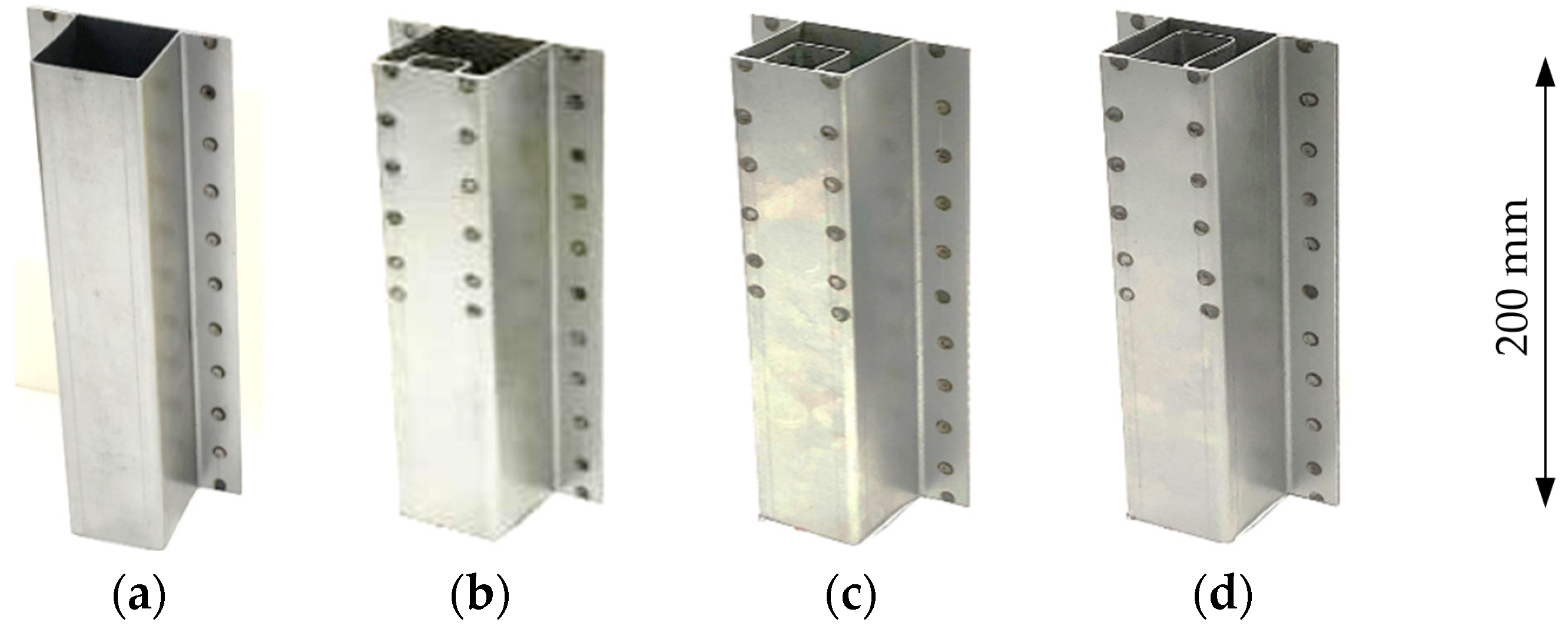
2.1. Test Structures
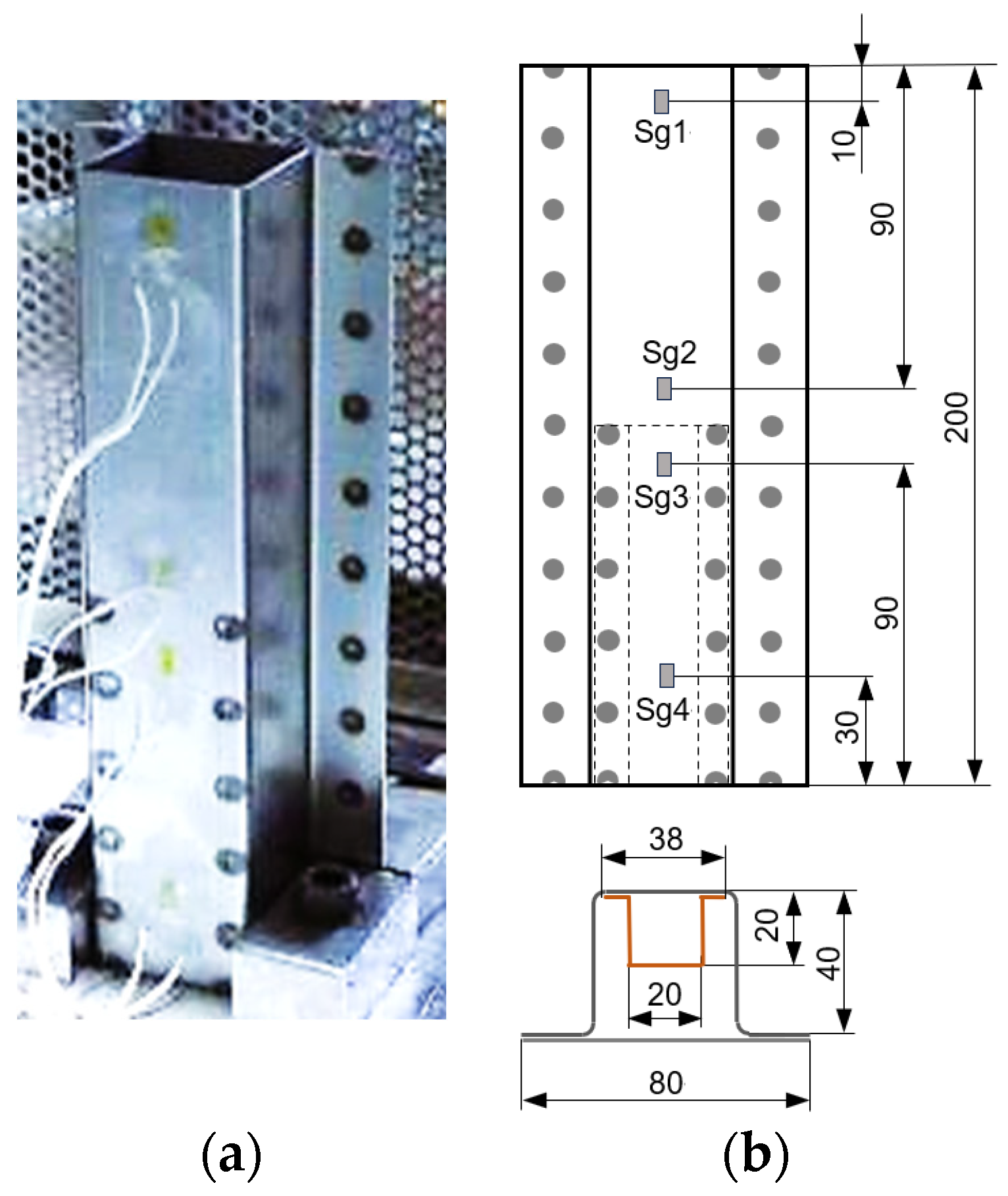
2.2. Strain Measurement Setup
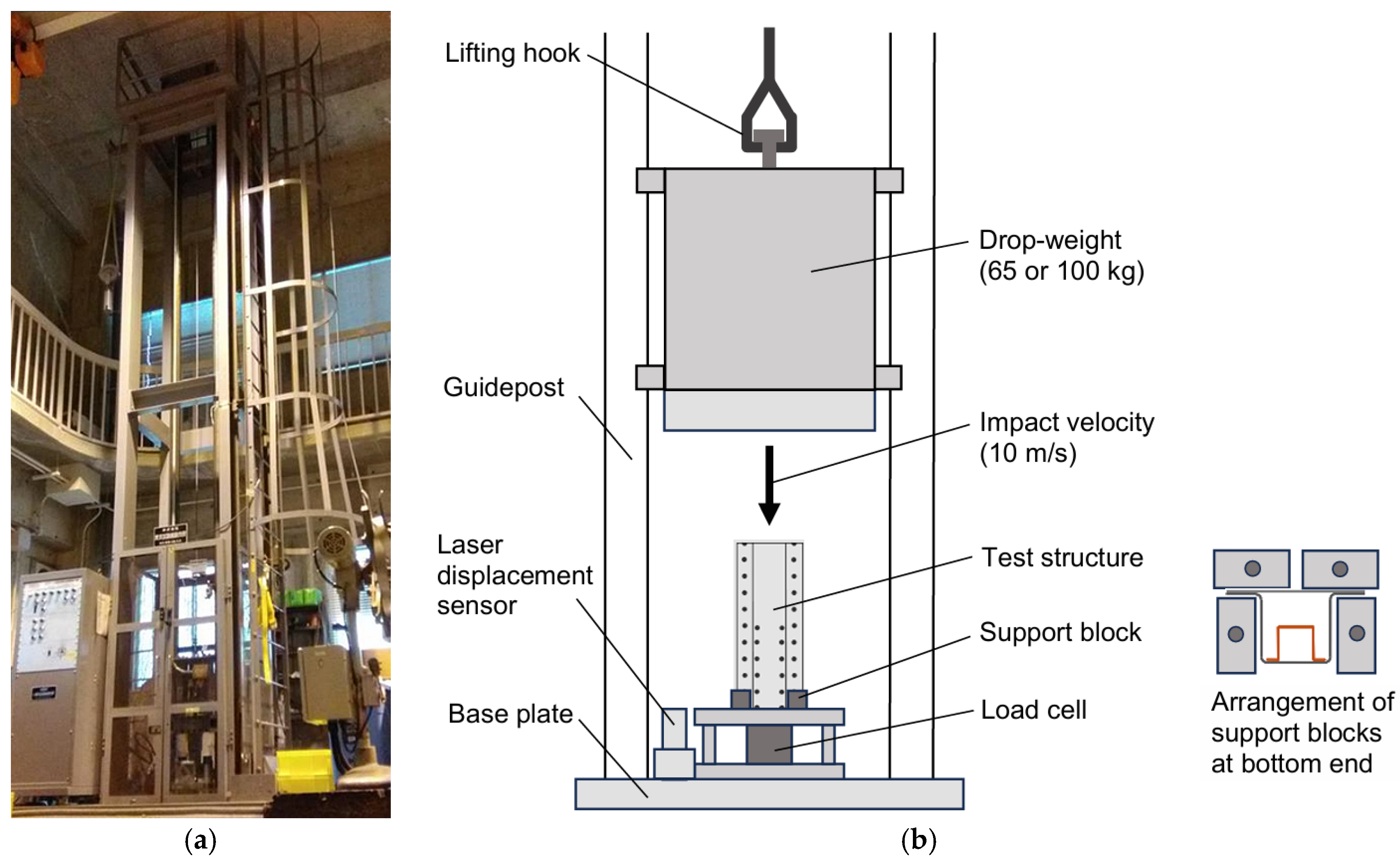
2.3. Experimental Method of Axial Compression Test
3. Results and Discussion
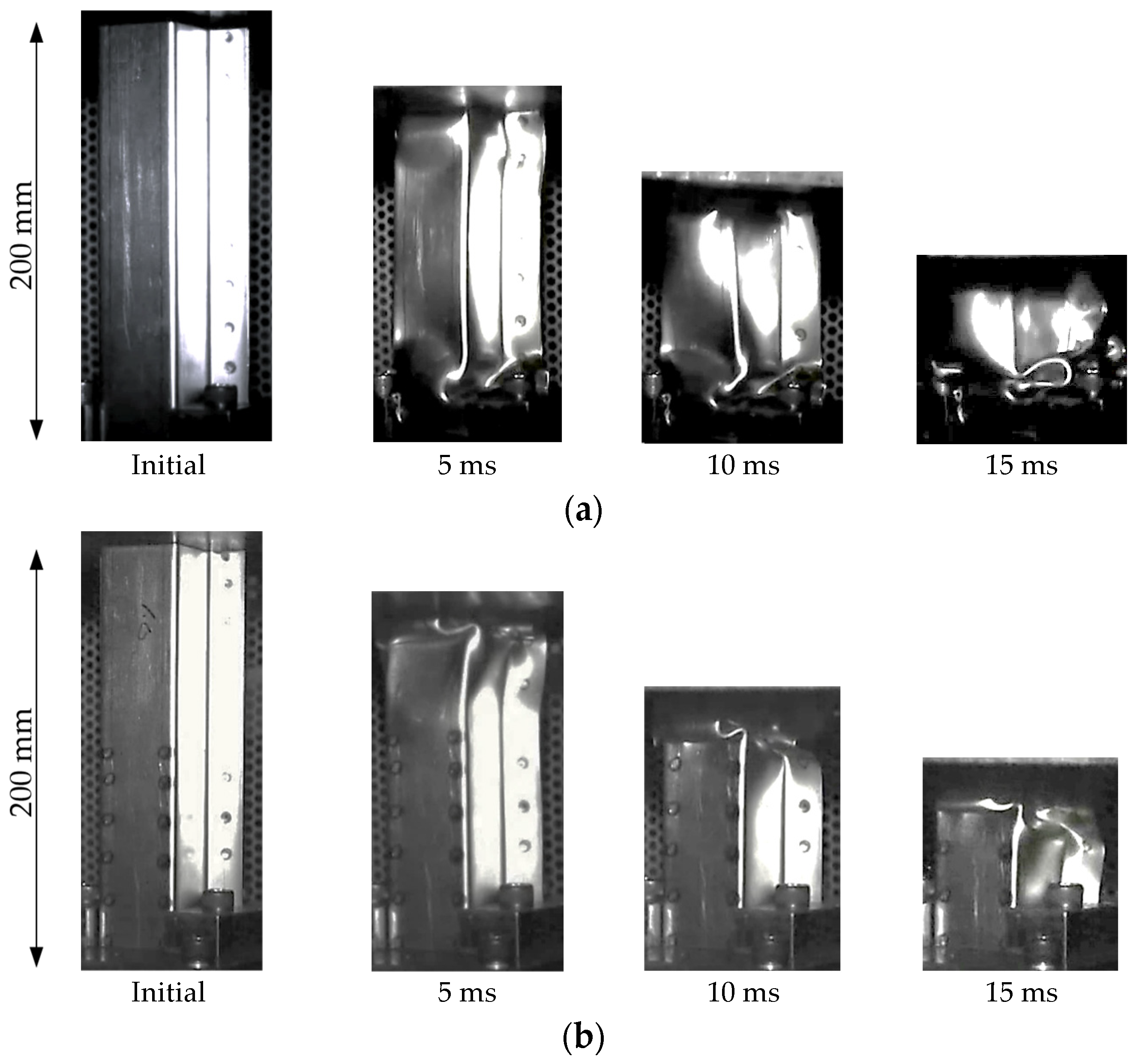
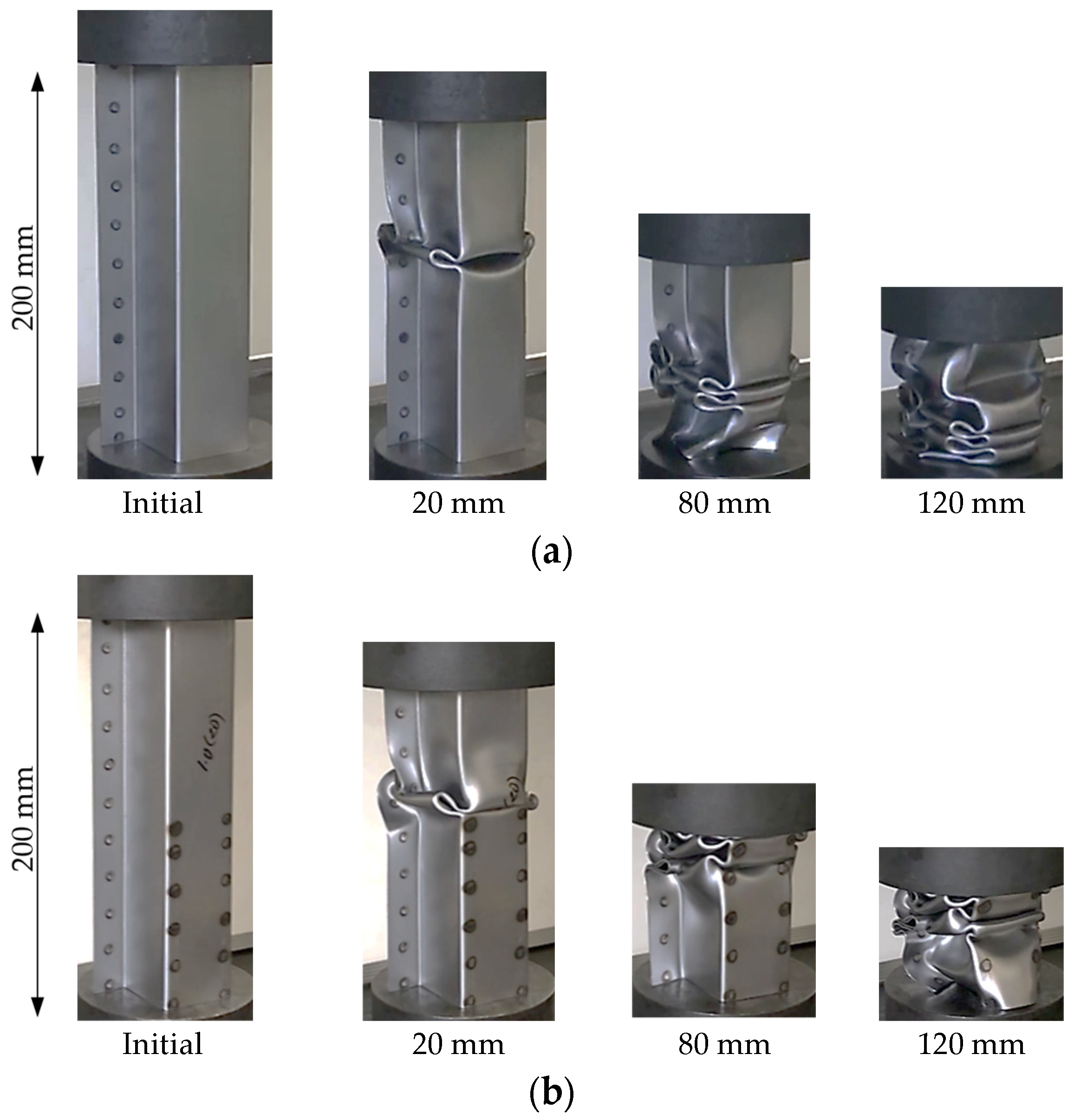
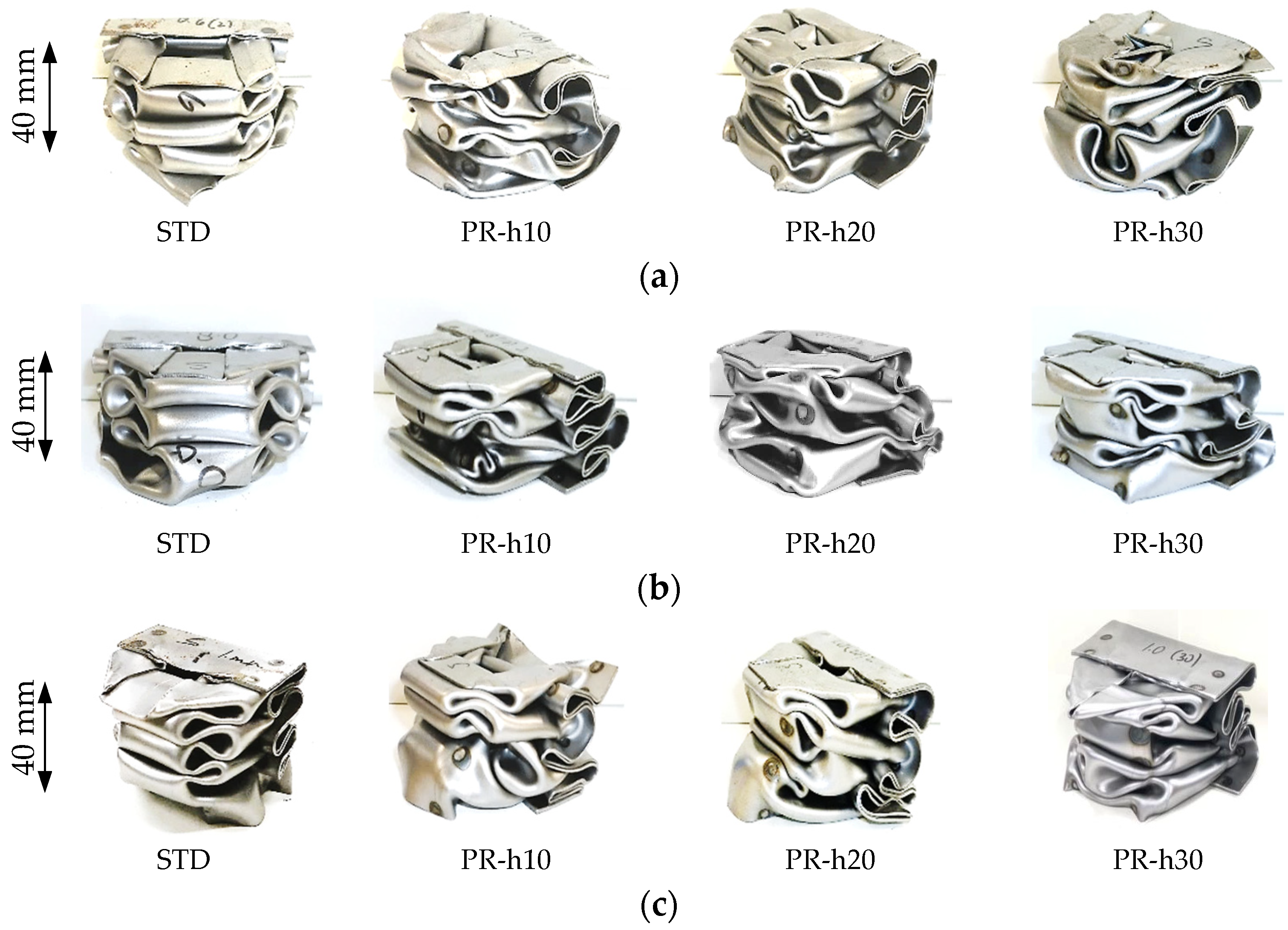
3.1. Deformation Patterns
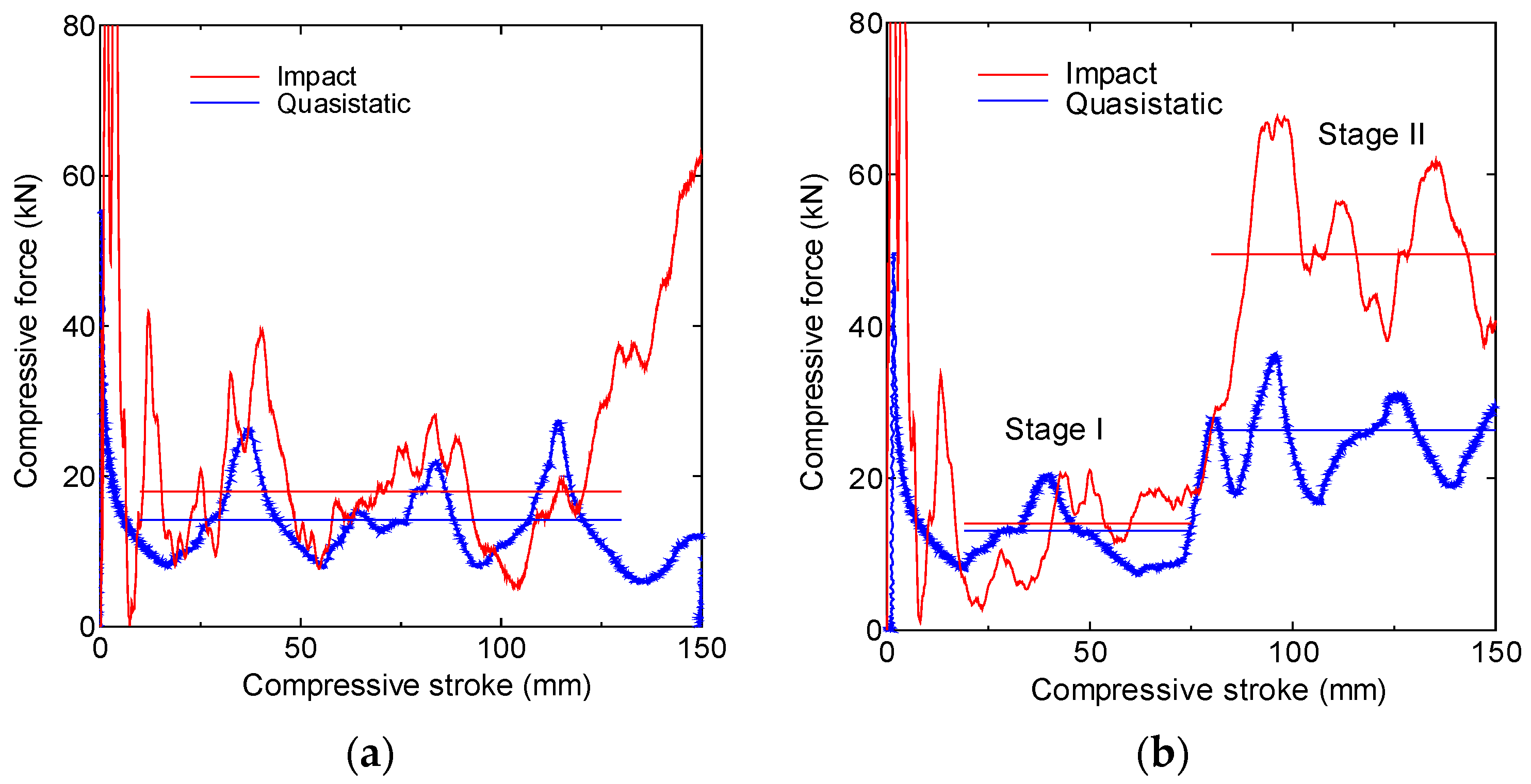
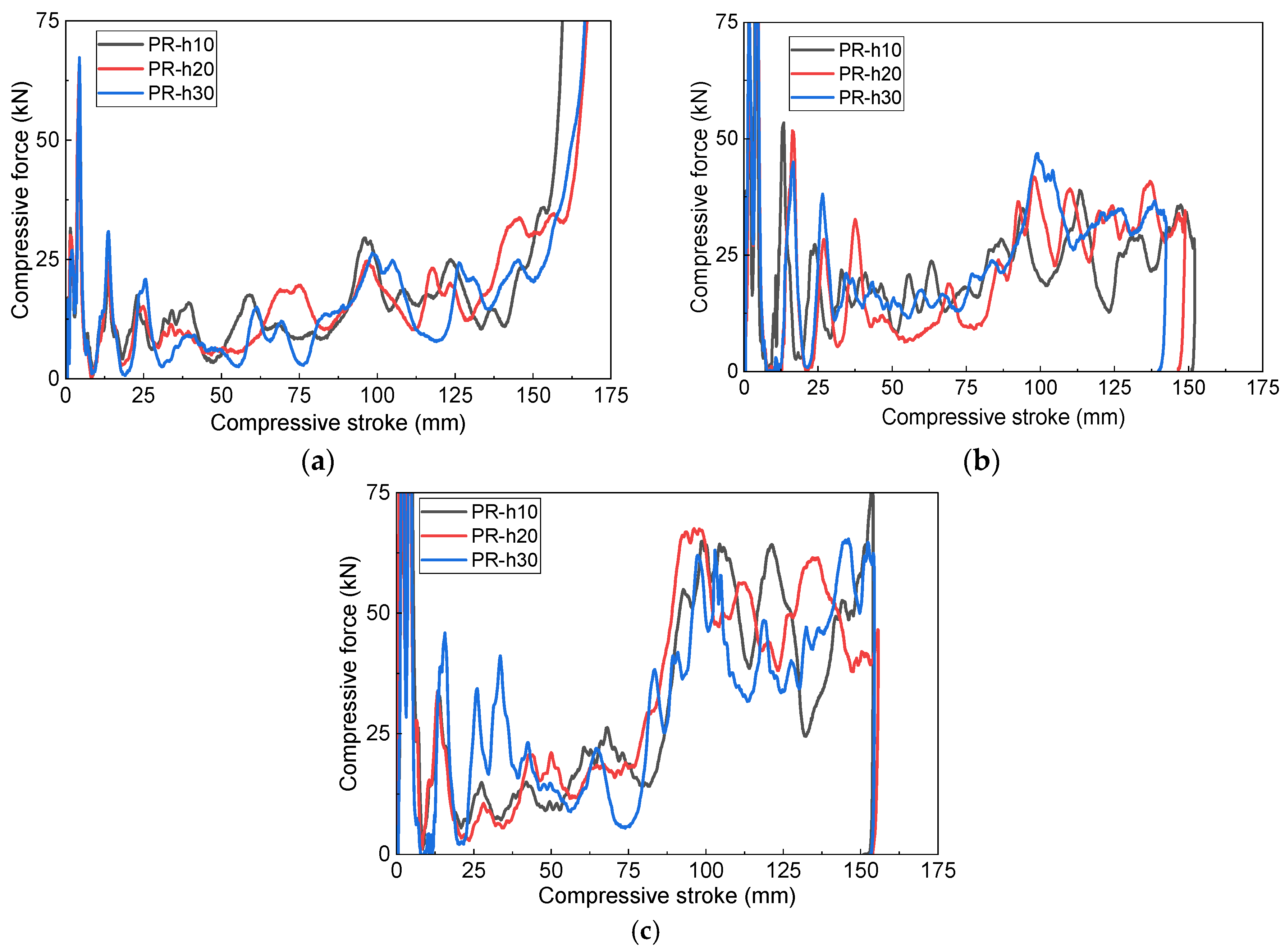
3.2. Relationship Between Compressive Force and Stroke
3.3. Crush Strength of the Standard and Partially Reinforced Structures
3.4. Semi-Theoretical Calculation to Explain Enhanced Force by Reinforcing Member
3.5. Strain Measurement During Early Stage of Impact Deformation
4. Conclusions
- The reinforcing member successfully enhanced the compressive force of the structure, exhibiting the stepped force variation regarding impact and quasistatic compressions. This effect becomes more pronounced as the wall thickness increases, but the effect of the internal hat height on the force is unclear due to significant fluctuations in the force waveforms. A dual-action impact absorption mechanism is realized without causing global bending.
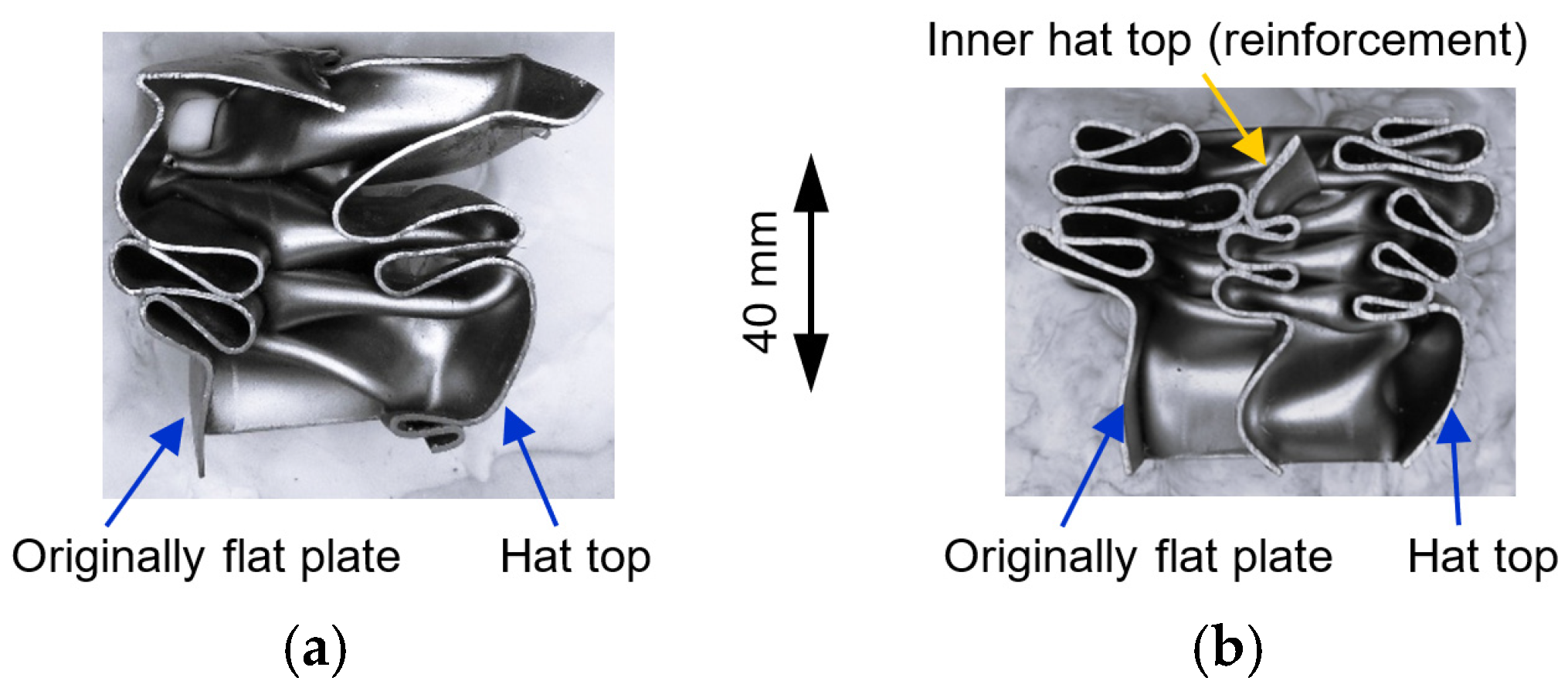
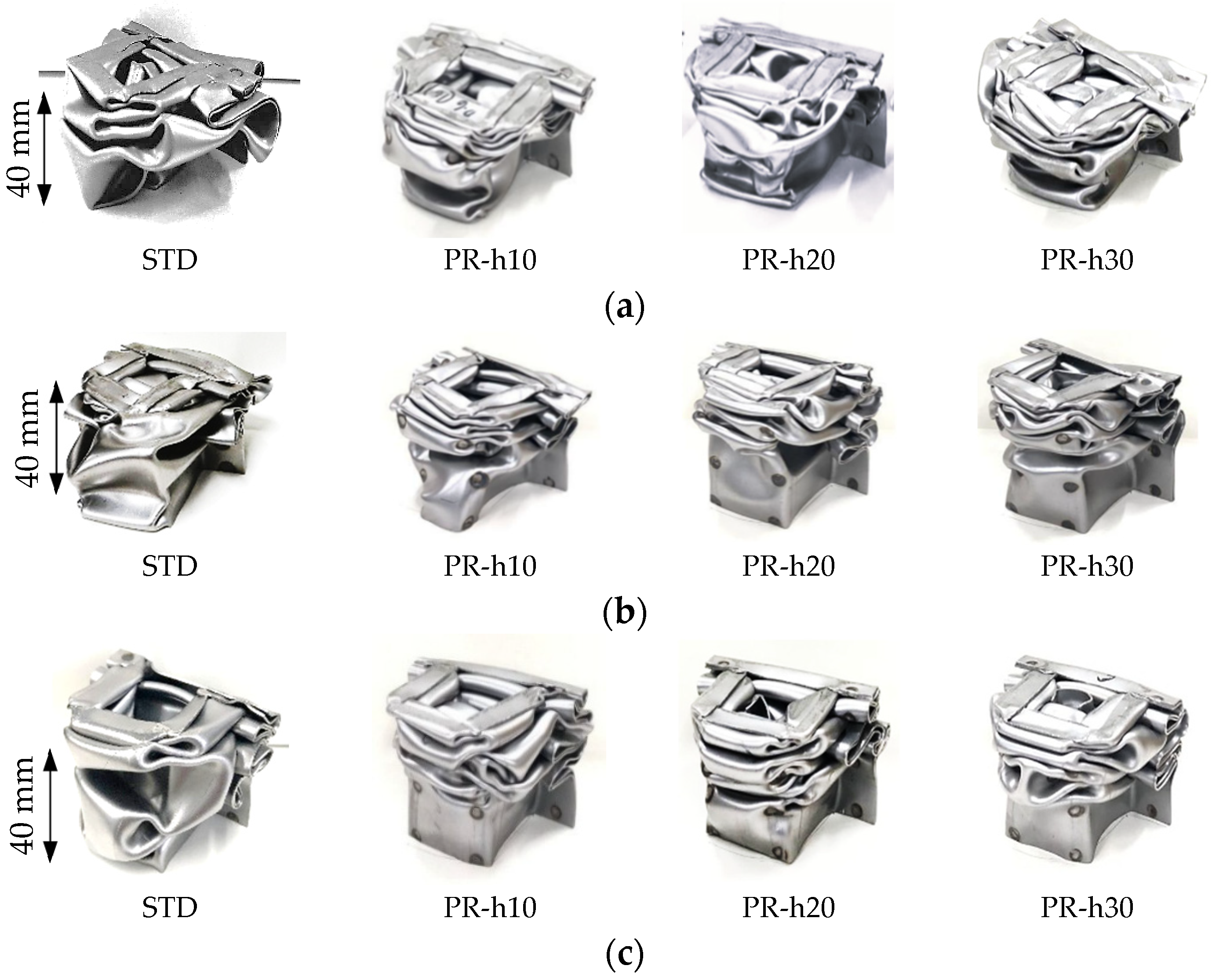
- The reinforcing member’s effect is more pronounced under impact conditions. From the deformation pattern, the collapse behavior is improved by promoting regular folding lobes and increasing the number of buckling lobes. In particular, the number becomes about double, affecting the deformation pattern at the outer hat top part of the structure.
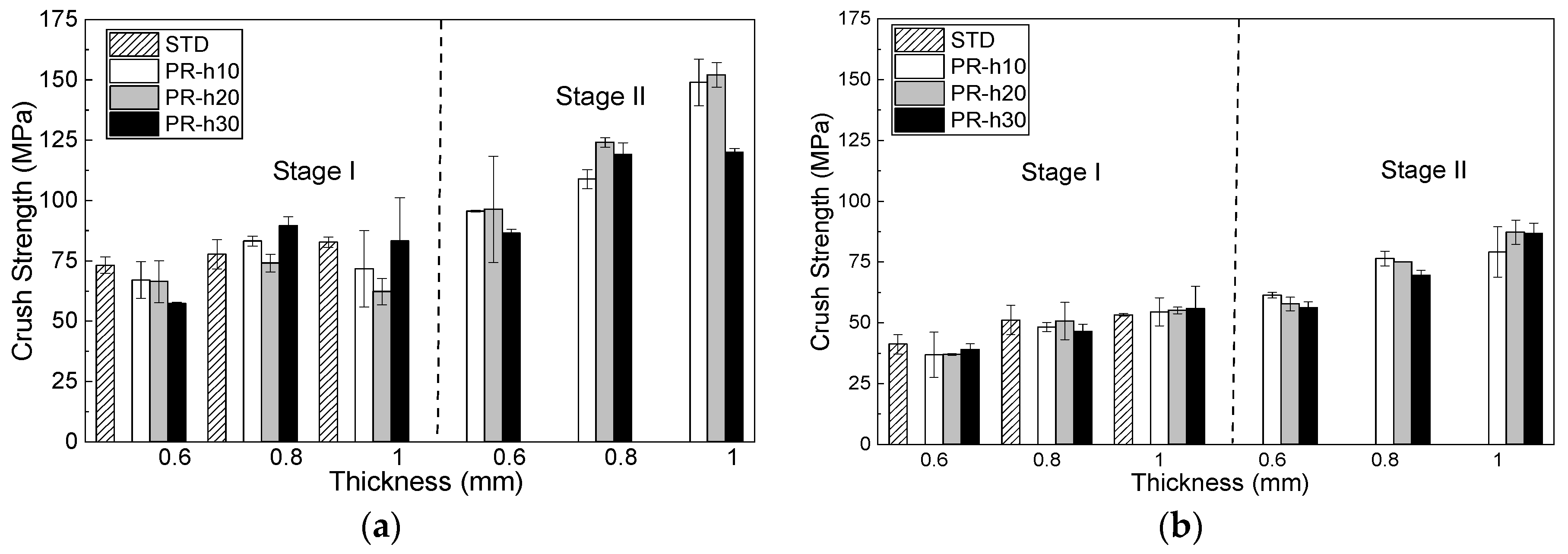
- Regarding energy absorption performance under impact conditions, the crush strength of the PR-h20 structure outperforms that of the PR-h10 and PR-h30 structures across all wall thicknesses. Furthermore, the PR-h20 structure exhibits more regular deformation patterns than both counterparts. Conversely, under quasistatic conditions, the crush strengths of all three structures are comparable, showing no distinct trend. The deformation patterns are irregular compared with those under impact conditions.
- To explain the increase in compressive force by adding a reinforcing member, a force estimation calculation was performed by considering the plastic deformation with folding lobes. The estimated increase ratio showed a reasonable agreement with the experimental result.
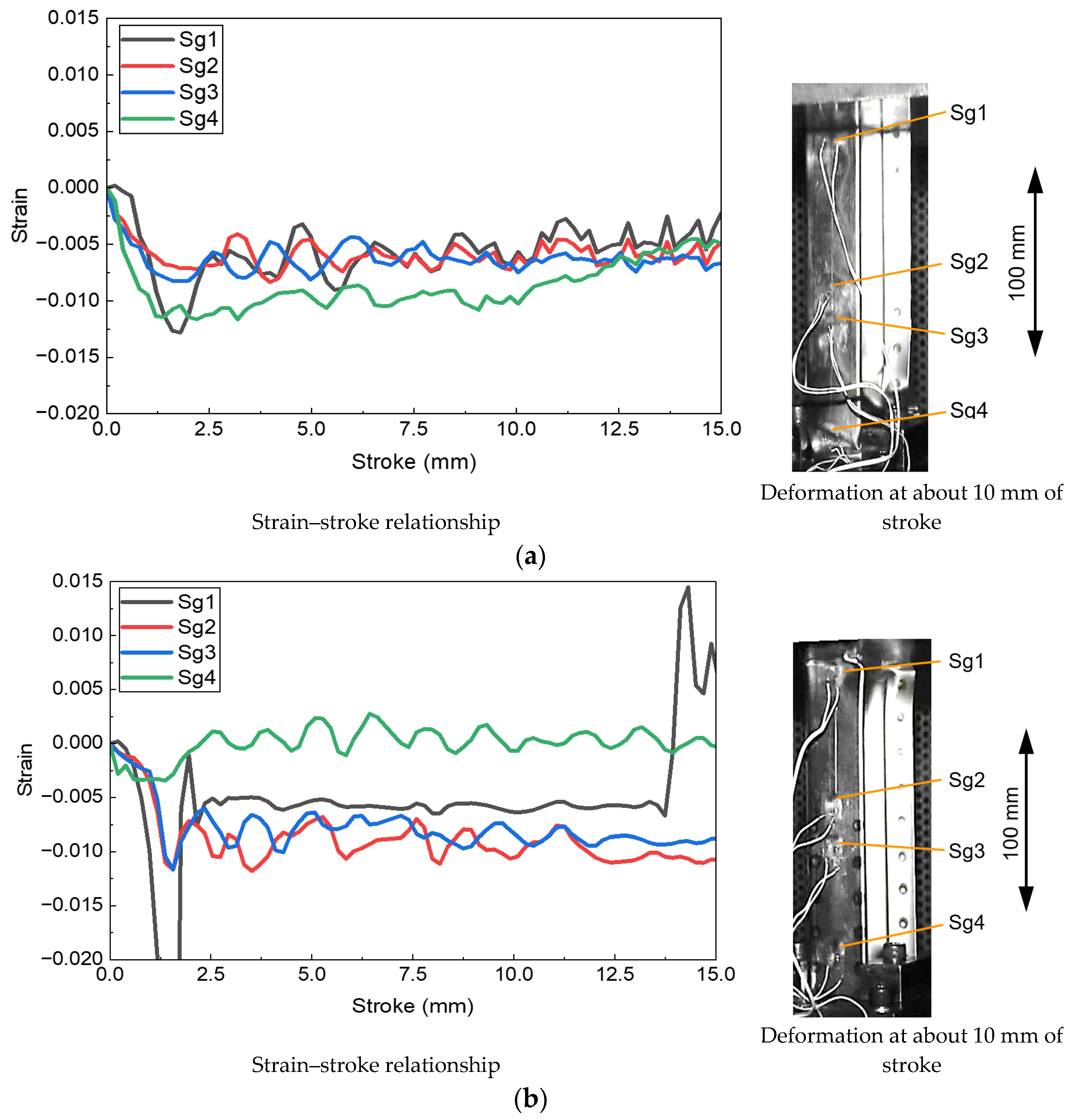
- The longitudinal strain at the structure’s hat top was measured during initial compression. The result showed that, in the partially reinforced structure, the large plastic deformation was delayed at the reinforced section, though the structure without a reinforcing member entered a plastic state for the entire structure.
Author Contributions
Funding
Data Availability Statement
Conflicts of Interest
References
- Baroutaji, A.; Sajjia, M.; Olabi, A.G. On the crashworthiness performance of thin-walled energy absorbers: Recent advances and future developments. Thin-Walled Struct. 2017, 118, 137–163. [Google Scholar] [CrossRef]
- Zahran, M.S.; Xue, P.; Esa, M.S.; Abdelwahab, M.M. A novel tailor-made technique for enhancing the crashworthiness by multi-stage tubular square tubes. Thin-Walled Struct. 2018, 122, 64–82. [Google Scholar] [CrossRef]
- Tesfaye, F.A.; Ali, A.N.; Fenta, E.W. Crashworthiness Optimization of Closed Cell–Sandwiched Aluminum Foam Crash Box Using FE and ANN Modeling. Eng. Rep. 2025, 7, e70353. [Google Scholar] [CrossRef]
- Saber, A.; Amer, A.M.; Shehata, A.I.; El-Gamal, H.A.; Abd_Eslam, A. Recent Developments in Additively Manufactured Crash Boxes: Geometric Design Innovations, Material Behavior, and Manufacturing Techniques. Appl. Sci. 2025, 15, 7080. [Google Scholar] [CrossRef]
- Abramowicz, W.; Jones, N. Dynamic axial crushing of square tubes. Int. J. Impact Eng. 1984, 1, 179–208. [Google Scholar] [CrossRef]
- Tarigopula, V.; Langseth, M.; Hopperstad, O.S.; Clausen, A.H. Axial crushing of thin-walled high-strength steel sections. Int. J. Impact Eng. 2006, 32, 847–882. [Google Scholar] [CrossRef]
- Deng, Z.; Liu, M.; Zhang, Z.; Feng, J. Crash-worthiness Design with a New Optimization Criterion for Multilevel Thin-Walled Structures. Coatings 2025, 15, 1058. [Google Scholar] [CrossRef]
- Abramowicz, W. Thin-walled structures as impact energy absorbers. Thin-Walled Struct. 2003, 41, 91–107. [Google Scholar] [CrossRef]
- Singace, A.A.; Elsobky, H.; Reddy, T.Y. On the eccentricity factor in the progressive crushing of tubes. Int. J. Solids Struct. 1995, 32, 3589–3602. [Google Scholar] [CrossRef]
- Wierzbicki, T.; Abramowicz, W. On the crushing mechanics of thin-walled structures. J. Appl. Mech. 1983, 50, 727–734. [Google Scholar] [CrossRef]
- Zhang, J.Y.; Lu, B.; Zheng, D.; Li, Z. Experimental and numerical study on energy absorption performance of CFRP/aluminum hybrid square tubes under axial loading. Thin-Walled Struct. 2020, 155, 106948. [Google Scholar] [CrossRef]
- Yamashita, M.; Gotoh, M.; Sawairi, Y. Axial crush of hollow cylindrical structures with various polygonal cross-sections: Numerical simulation and experiment. J. Mater. Process. Technol. 2003, 140, 59–64. [Google Scholar] [CrossRef]
- Zhang, J.; Xie, S.; Zho, H.; Li, T.; Li, Y. Study and optimization of energy absorption characteristics of a new concave polygon tube. Structures 2023, 53, 1030–1045. [Google Scholar] [CrossRef]
- Schneider, F.; Jones, N. Influence of spot-weld failure on crushing of thin-walled structural sections. Int. J. Mech. Sci. 2003, 45, 2061–2081. [Google Scholar] [CrossRef]
- White, M.D.; Jones, N.; Abramowicz, W. A theoretical analysis for the quasi-static axial crushing of top-hat and double-hat thin-walled sections. Int. J. Mech. Sci. 1999, 41, 209–233. [Google Scholar] [CrossRef]
- Yamashita, M.; Kenmotsu, H.; Hattori, T. Dynamic axial compression of aluminum hollow tubes with hat cross-section and buckling initiator using inertia force during impact. Thin-Walled Struct. 2012, 50, 37–44. [Google Scholar] [CrossRef]
- Zhou, Z.; Wang, Y.; Zhai, X.; Zhou, H. Compressive mechanical behaviors of Q235B steel over a wide range of temperatures and strain rates. Int. J. Impact Eng. 2025, 18, 105222. [Google Scholar] [CrossRef]
- Uenishi, A.; Yoshida, H.; Yonemura, S.; Hiwatashi, S.; Hirose, S.; Suzuki, N. High strain rate properties of high strength steel sheets. Int. J. Autom. Eng. 2009, 2, 109–113. [Google Scholar] [CrossRef] [PubMed]
- Uenishi, A.; Teodosiu, C. Constitutive modelling of the high strain rate behavior of interstitial-free steel. Int. J. Plast. 2004, 20, 915–936. [Google Scholar] [CrossRef]
- Gao, S.; Yu, X.; Li, Q.; Sun, Y.; Hao, Z.; Gu, D. Research on dynamic deformation behavior and constitutive relationship of hot forming high strength steel. J. Mater. Res. Technol. 2024, 28, 1694–1712. [Google Scholar] [CrossRef]
- Hu, J.; Xu, P.; Fan, Z.; Li, Y.; Tan, X. Axial compression response of multi-cell tube reinforced by parallel leaf veins inspired secondary ribs. Thin-Walled Struct. 2023, 185, 110557. [Google Scholar] [CrossRef]
- Wang, Z.; Shao, J. Study on Quasi-static axial compression performance and energy absorption of aluminum foam-filled steel tubes. Materials 2023, 16, 4485. [Google Scholar] [CrossRef] [PubMed]
- Santosa, S.P.; Wierzbicki, T.; Hanssen, A.G.; Langseth, M. Experimental and numerical studies of foam-filled sections. Int. J. Impact Eng. 2000, 24, 509–534. [Google Scholar] [CrossRef]
- Yan, S.; Jiang, Y.; Deng, Y.; Cai, Y. Energy absorption characteristics of aluminum foam-filled corrugated tube under axial compression loading. Thin-Wallet Struct. 2024, 193, 111333. [Google Scholar] [CrossRef]
- Zhang, W.; Xu, J.; Yu, T.X. Dynamic behaviors of bio-inspired structures: Design, mechanisms, and models. Eng. Struct. 2022, 265, 114490. [Google Scholar] [CrossRef]
- Rahi, A. Controlling energy absorption capacity of combined bitubular tubes under axial loading. Thin-Walled Struct. 2018, 123, 222–231. [Google Scholar] [CrossRef]
- Du, Z.; Duan, L.; Cheng, A.; Wei, B.; Zhang, G. Theoretical prediction and analysis of hybrid material hat-shaped tubes with strengthened corner structures under quasi-static axial loading. Eng. Struct. 2021, 230, 111699. [Google Scholar] [CrossRef]
- Jones, N. Energy-absorbing effectiveness factor. Int. J. Impact Eng. 2010, 37, 754–765. [Google Scholar] [CrossRef]
- Kim, S.B.; Huh, H. Tensile properties of sheet metals at intermediate strain rates with pre-strain. Steel Res. Int. 2015, 86, 1298–1311. [Google Scholar] [CrossRef]
- Huh, H.; Lim, J.H.; Park, S.H. High speed tensile test of steel sheets for the stress-strain curve at the intermediate strain rate. Int. J. Autom. Technol. 2009, 10, 195–204. [Google Scholar] [CrossRef]





| Thickness (mm) | c (MPa) | n | Ultimate Tensile Strength (MPa) | Total Elongation (%) |
|---|---|---|---|---|
| 0.6 | 576.5 | 0.211 | 340.2 | 39.5 |
| 0.8 | 565.8 | 0.205 | 336.8 | 39.7 |
| 1.0 | 537.0 | 0.184 | 331.3 | 37.3 |
| Stage I | Stage II | ||||||
|---|---|---|---|---|---|---|---|
| Section no. | 1 | 2 | 3 | 1 | 2 | 3 | 4 |
| Mean radius (mm) | 2.75 | 2.55 | 2.55 | 2.00 | 2.167 | 2.167 | 2.08 |
| Mean bending strain | 0.167 | 0.179 | 0.179 | 0.223 | 0.208 | 0.208 | 0.215 |
| Effective strain | 0.193 | 0.207 | 0.207 | 0.257 | 0.24 | 0.24 | 0.248 |
| Average yield stress (MPa) | 397 | 402 | 402 | 418 | 413 | 413 | 415 |
| Volume ratio | 0.585 | 0.442 | 0.442 | 0.768 | 0.585 | 0.585 | 0.662 |
| Length in cross-section (mm) | 120 | 40 | 80 | 140 | 40 | 80 | 60 |
| Deformed volume for axial length L (mm3) | 70.2L | 17.7L | 35.4L | 108L | 23.4L | 46.8L | 39.7L |
| Energy for axial length L (mJ) | 4539L | 1242L | 2484L | 9753L | 1960L | 3920L | 3456L |
| Total energy for axial length L (mJ) | 8265L | 19,089L | |||||
| STD | |||
|---|---|---|---|
| Section no. | 1 | 2 | 3 |
| Mean radius (mm) | 3.5 | 3.13 | 3.13 |
| Mean bending strain | 0.134 | 0.148 | 0.148 |
| Effective strain | 0.155 | 0.171 | 0.171 |
| Average yield stress (MPa) | 322 | 328 | 328 |
| Volume ratio | 0.455 | 0.486 | 0.486 |
| Length in cross-section (mm) | 120 | 40 | 80 |
| Deformed volume for axial length L (mm3) | 54.6L | 19.4L | 38.9L |
| Energy for axial length L (mJ) | 2725L | 1088L | 2182L |
| Total energy for axial length L (mJ) | 5995L | ||
Disclaimer/Publisher’s Note: The statements, opinions and data contained in all publications are solely those of the individual author(s) and contributor(s) and not of MDPI and/or the editor(s). MDPI and/or the editor(s) disclaim responsibility for any injury to people or property resulting from any ideas, methods, instructions or products referred to in the content. |
© 2026 by the authors. Licensee MDPI, Basel, Switzerland. This article is an open access article distributed under the terms and conditions of the Creative Commons Attribution (CC BY) license.
Share and Cite
Noviano, G.R.; Yamashita, M.; Nikawa, M. Effect of Internal Reinforcing on Impact Axial Collapse Behavior of Hat-Shaped Tubular Structure. Metals 2026, 16, 655. https://doi.org/10.3390/met16060655
Noviano GR, Yamashita M, Nikawa M. Effect of Internal Reinforcing on Impact Axial Collapse Behavior of Hat-Shaped Tubular Structure. Metals. 2026; 16(6):655. https://doi.org/10.3390/met16060655
Chicago/Turabian StyleNoviano, Gusmao Robbinson, Minoru Yamashita, and Makoto Nikawa. 2026. "Effect of Internal Reinforcing on Impact Axial Collapse Behavior of Hat-Shaped Tubular Structure" Metals 16, no. 6: 655. https://doi.org/10.3390/met16060655
APA StyleNoviano, G. R., Yamashita, M., & Nikawa, M. (2026). Effect of Internal Reinforcing on Impact Axial Collapse Behavior of Hat-Shaped Tubular Structure. Metals, 16(6), 655. https://doi.org/10.3390/met16060655