Article

Effect of Mo Content on Microstructure and Tribological Properties of WC–Ni–Fe–Mo Cemented Carbides

1
School of Materials Science and Engineering, Jiangxi University of Science and Technology, Ganzhou 341000, China
2
Ganzhou Nonferrous Metallurgy Research Institute Co., Ltd., Ganzhou 341000, China
3
Key Laboratory of Tungsten and Rare Earth Resource Recycling and New Material Application of Jiangxi Education Institutes, Jiangxi College of Applied Technology, Ganzhou 341000, China
4
Engineering Research of Center of High-Efficiency Development and Application Technology of Tungsten Resources, Ministry of Education, Ganzhou 341000, China
*
Authors to whom correspondence should be addressed.
Metals 2026, 16(6), 654; https://doi.org/10.3390/met16060654 (registering DOI)
Submission received: 8 May 2026 / Revised: 9 June 2026 / Accepted: 11 June 2026 / Published: 14 June 2026

Abstract

With the continuous increase in the manufacturing cost of conventional WC-Co cemented carbides, the development of low-cost, high-performance cobalt-free or low-cobalt cemented carbides has become a research hotspot in the industry. In this study, cobalt-free WC-Ni-Fe-Mo cemented carbides were successfully prepared by low-pressure sintering using fine WC powder as the raw material and Ni-Fe-Mo as the composite binder phase. The effect of Mo content variation on the microstructure, mechanical properties, and friction and wear properties of the alloys was systematically investigated. The results show that the as-prepared alloys consist of a two-phase structure composed of WC phase and γ-(Fe, Ni) phase. The addition of Mo further leads to the formation of Mo2C and Ni3W3C phases. With increasing Mo content, the average WC grain size gradually decreases from 0.45 μm to 0.31 μm, and the grain size distribution becomes more uniform. Meanwhile, the alloy density gradually decreases, hardness gradually increases, fracture toughness decreases, and transverse rupture strength first increases and then decreases. Affected by the brittle Ni3W3C phase, the wear resistance of the alloys gradually deteriorates. When the Mo content is 0.25 wt%, the alloy exhibits the best comprehensive performance, with a transverse rupture strength of 4078 MPa, a hardness of 90.5 HRA, a fracture toughness of 12.11 MPa·m1/2, and a friction coefficient of 0.42. This indicates that an appropriate addition of molybdenum has a significant strengthening effect on the mechanical properties of the material, thereby laying an experimental foundation and providing process guidance for the development of novel low-cost, high-performance cobalt-free cemented carbides.

1. Introduction

Cemented carbides are manufactured via powder metallurgy from high-hardness and high-strength refractory metal carbides (such as WC, TiC, TaC) and binder metals with good plasticity and excellent toughness (such as Co, Ni, Fe) as raw materials [1,2,3]. Cemented carbides combine the advantages of refractory metal carbides and binder metals, exhibiting excellent drilling, cutting, and milling performance, and are widely used in industrial fields such as aerospace and precision machining [4,5]. Because Co has favorable wettability to WC, WC-Co cemented carbides possess a series of outstanding mechanical properties, including high hardness and wear resistance. They are currently the most widely used and produced type of cemented carbide, occupying a prominent position in many application fields [6,7,8]. However, with societal development, cemented carbides are facing increasingly complex service conditions and higher costs. Therefore, it is necessary to develop novel cemented carbides to meet the application demands of emerging fields. Furthermore, cobalt powder has certain adverse effects on the environment and human health, making the development of new cobalt-free cemented carbides extremely essential [9].
As the value of rare resources such as tungsten and cobalt becomes increasingly prominent, the manufacturing costs of traditional cemented carbides continue to rise, making the development of new cemented carbides with high performance and low cost a research priority. Because the high strength and hardness of WC make it difficult to replace in the alloy, the optimal design of the binder phase has become the key to enhancing the overall performance of cemented carbides. Fe offers advantages including good hardness, high wear resistance, abundant resources, and low cost, while Ni is distinguished by its excellent corrosion resistance and oxidation resistance; therefore, Fe and Ni are regarded as ideal candidate substitutes for the Co binder phase [10,11,12]. However, owing to limitations in processing techniques and the complexity of compositional systems, research on Fe- and Ni-based binder cemented carbides remains largely at the laboratory stage, with considerable gaps remaining before industrial application can be realized. Between the two, Ni exhibits better wettability with WC than Fe, and combining Ni with Fe allows the full exploitation of their respective characteristics, which is conducive to achieving a favorable microstructure and overall performance [13]. Moreover, the (Fe, Ni) binder phase overcomes the inherent shortcomings of traditional WC–Co cemented carbides in terms of poor oxidation and corrosion resistance, thereby offering application potential in broader fields such as chemical processing and oxidizing environments [14,15]. In a previous study, Yang et al. found that the combination of certain WC-Co cemented carbides with WC-Fe-Ni cemented carbides could promote good strength and toughness in the alloys [16]. Gao et al. investigated the effect of different Fe/Ni atomic ratios on the properties of WC-Fe-Ni-Co cemented carbides and found that at an Fe/Ni atomic ratio of 4.3, the transverse rupture strength could reach 3069 MPa [17]. Zhao et al. indicated that the addition of Mo is beneficial for improving the mechanical properties of WC-5Fe-5Ni cemented carbides [18]. Although a series of studies have been conducted on cemented carbides with cobalt-free binder phases, the preparation of low-cost, high-performance cemented carbides with stable properties remains a current research hotspot.
Existing research on WC-Ni-Fe system cemented carbides has mainly focused on optimizing the Ni-Fe binder phase ratio and adjusting process parameters. On this basis, this paper further focuses on the role of Mo and systematically investigates the effect of Mo content variation on the microstructural evolution and tribological properties of cobalt-free WC-Ni-Fe-based cemented carbides. Grounded in industrial production practices, this study adopts low-pressure sintering technology to systematically reveal the regulation laws of Mo content variation on the grain size, phase composition, and mechanical properties of WC-Ni-Fe-Mo alloys, and clarifies the influence mechanism of Mo content variation on tribological properties. The research results provide a theoretical and experimental basis for the composition design and process optimization of low-cost, high-performance cobalt-free cemented carbides.

2. Materials and Methods

2.1. Material Preparation

Five alloys with different compositions were prepared in this study; the characteristic parameters of the raw powders are shown in Table 1. The WC powder was provided by Xiamen Golden Egret Special Alloy Co., Ltd. (Xiamen, China); the Ni and Fe powders were sourced from Jinchuan Group Co., Ltd. (Jinchang, China); the Mo powder was supplied by Jinduicheng Molybdenum Co., Ltd. (Xi’an, China); and the VC powder was produced by Zhuzhou Cemented Carbide Group Co., Ltd. (Zhuzhou, China).
Based on the binary Fe–Ni phase diagram, a Ni-rich composition was selected to obtain a single fcc structure and to improve the wettability between the binder phase and the WC hard phase. Accordingly, the total Ni–Fe binder content was fixed at 15.0 wt% with a Ni-to-Fe ratio of 5:1. The Mo addition ranged from 0 to 1.0 wt%, and the grain growth inhibitor was 0.5 wt% VC. The corresponding alloy compositions are presented in Table 2. Anhydrous ethanol was used as the grinding medium, and 2 wt% PEG was chosen as the texturizing agent. The ball-to-powder mass ratio was 5:1. Under an argon atmosphere, the mixed powders were milled in a cemented carbide tumbler at a speed of 270 r·min−1 for 72 h, followed by drying at 60 °C under vacuum for 180 min. During the forming process, the granular powders were placed into a mold using a vertical hydraulic press at a pressure of 100 MPa. Subsequently, dewaxing and sintering were performed in a COD 733RL-64bar low-pressure sintering furnace at a sintering temperature of 1410 °C for 60 min under an argon pressure of 5 MPa.

2.2. Characterization

The crystal structure was identified by X-ray diffraction using a diffractometer with Cu Kα radiation (X’Pert Pro Powder, PANalytical B.V. (Malvern Panalytical), Almelo, The Netherlands). The metallographic morphology of the alloys was observed using an optical microscope (Nikon LV 1500, Nikon Corporation, Tokyo, Japan). The etchant solution used consisted of 10% NaOH and 10% K3[Fe(CN)6]. The microstructure was then examined using a scanning electron microscope (SEM) (FEI Inspect F50, FEI Company (Thermo Fisher Scientific), Hillsboro, OR, USA). The density (D) and relative density (RD) of the alloys were measured using a densitometer (XS204, Mettler Toledo, Greifensee, Switzerland) and Archimedes’ method, with the density calculated as follows in Equation (1) [19]
D = m 2 d m 2 m 1
where m1 is the dry weight of the specimen in air, m2 denotes its weight when fully immersed in water, and d represents the density of water at ambient temperature.
The hardness of the alloys was determined using a Rockwell hardness tester (FR-3R, Future-Tech Corp., Kawasaki, Japan). The transverse rupture strength (TRS) was evaluated by a three-point bending test with a span of 14.5 mm. According to the international standard BS EN ISO 3327:2009, the TRS values were calculated as follows in Equation (2) [20]:
TRS = 3 F L 2 bh 2
where F is the fracture load; L is the span length; and b and h are the width and height of the alloy, respectively. The toughness of the alloys was tested using an HVS-50 Vickers microhardness tester(Lanzhou Huaying Instrument Co., Ltd., Lanzhou, China) under a load of 294.3 N for 10 s. The total length of the four cracks was then measured. The fracture toughness (KIC) values were calculated using the Palmqvist toughness formula, Equation (3) [21]:
K I C = 0.15 H V i = 1 4 Li
where the HV is the hardness (N/mm2), L is the sum of crack lengths (mm). The wear test was conducted using a high-speed reciprocating friction and wear tester (HSR-2M, Lanzhou Zhongke Kaihua Technology Development Co., Ltd., Lanzhou, China) under a load of 100 N, a sliding speed of 300 r/min, and a sliding time of 1 h, with a Si3N4 ball of 4.0 mm in diameter as the counterpart. The morphology of the wear track was observed using a 3D surface profiler (NanoMap 500LS, AEP Technology Inc., Santa Clara, CA, USA).

3. Results

3.1. XRD Analysis

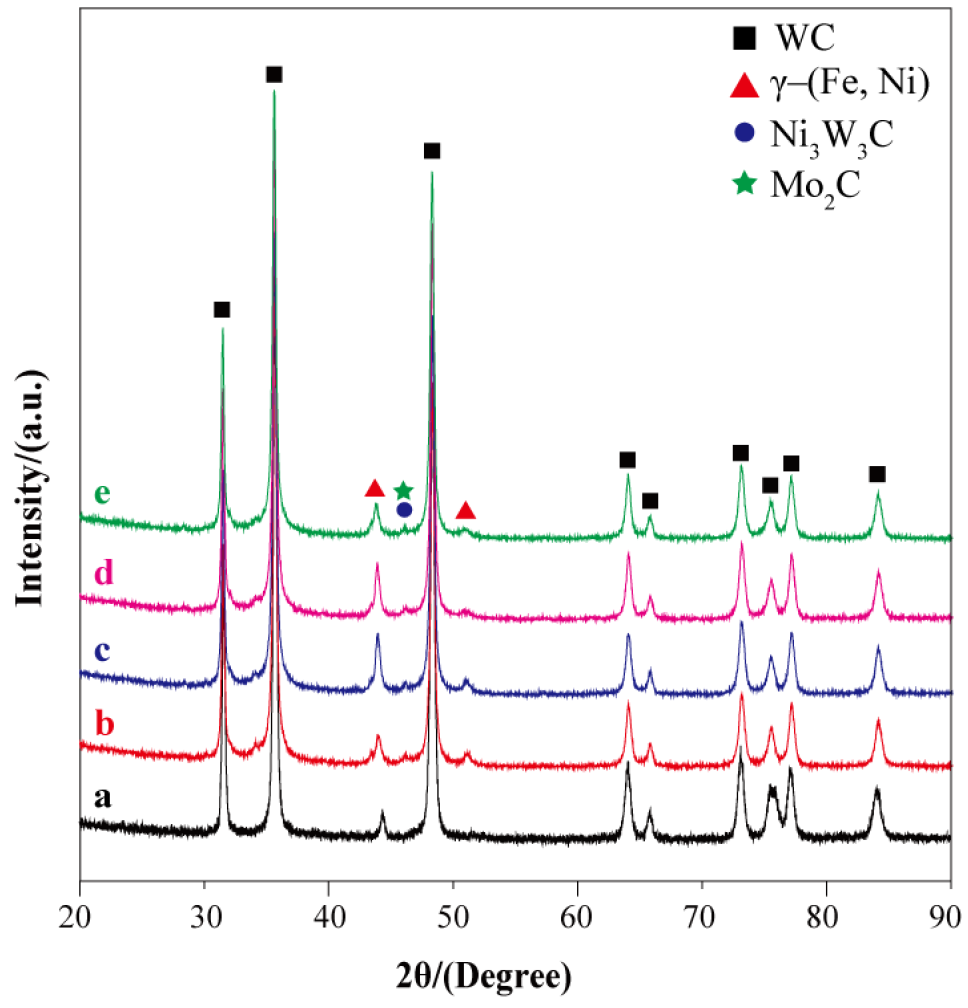
Figure 1 shows the XRD patterns of the WC-Ni-Fe-Mo cemented carbides with different Mo additions. The Mo-free alloy a consists of the hexagonal WC phase and the face-centered cubic γ-(Fe, Ni) phase, with the carbon activity lying within the two-phase stability region [22]. With the addition of Mo, Mo preferentially reacts with C to form Mo2C during solid-state sintering, consuming carbon and markedly lowering the local carbon activity [18]. This decrease in carbon activity shifts the dissolution equilibrium of WC to the right, enriching the binder phase with W atoms [1]. When the carbon activity falls below the critical level required for η-phase stability, Fe and Ni in the binder react with dissolved W and residual C to form brittle Ni3W3C. Consequently, the addition of Mo shifts the local phase constitution from the WC + γ two-phase region into the η-phase stability region. As the Mo content increases, the intensity of the Ni3W3C diffraction peaks gradually rises, indicating a progressive increase in the η-phase content [23,24].

3.2. Microstructure Characteristics

Figure 2 shows the optical micrographs of the WC-Ni-Fe-Mo cemented carbides after etching at low magnification, allowing a relatively clear observation of the macroscopic morphology of the alloys. During liquid phase sintering, owing to the high melting point of WC, it appears as fine granular particles or regular faceted squares under the optical microscope, whereas the (Fe, Ni) binder phase flows around and encapsulates the WC particles, exhibiting a continuous irregular shape. In the Mo-free alloy a, the microstructure consists of black WC phase particles and a gray (Fe, Ni) binder phase. In most regions, fine WC grains are dispersedly distributed around the grayish-white binder phase. However, in some regions, agglomeration of the gray, blocky (Fe, Ni) binder phase is observed, forming Fe-Ni pools analogous to Co pools [25]. This is attributed to the relatively high binder phase content in the alloy, where the (Fe, Ni) phase failed to flow and diffuse sufficiently during the sintering process. Subsequently, in alloy b, with the addition of Mo, the Fe-Ni pool phenomenon is significantly improved, transforming from an irregular flaky into continuous particles. When the Mo content is further increased to 0.5% in alloy c, the metallographic structure of the alloy is further optimized, appearing as relatively dispersed particles. With a further increase in Mo content, the metallographic structure of alloy d shows no significant change, but the metallographic structure of alloy e exhibits the phenomenon of continuously distributed Fe-Ni pools. This indicates that the addition of Mo is beneficial to the microstructure of WC-Ni-Fe cemented carbides and can inhibit the appearance of Fe-Ni pools to a certain extent.
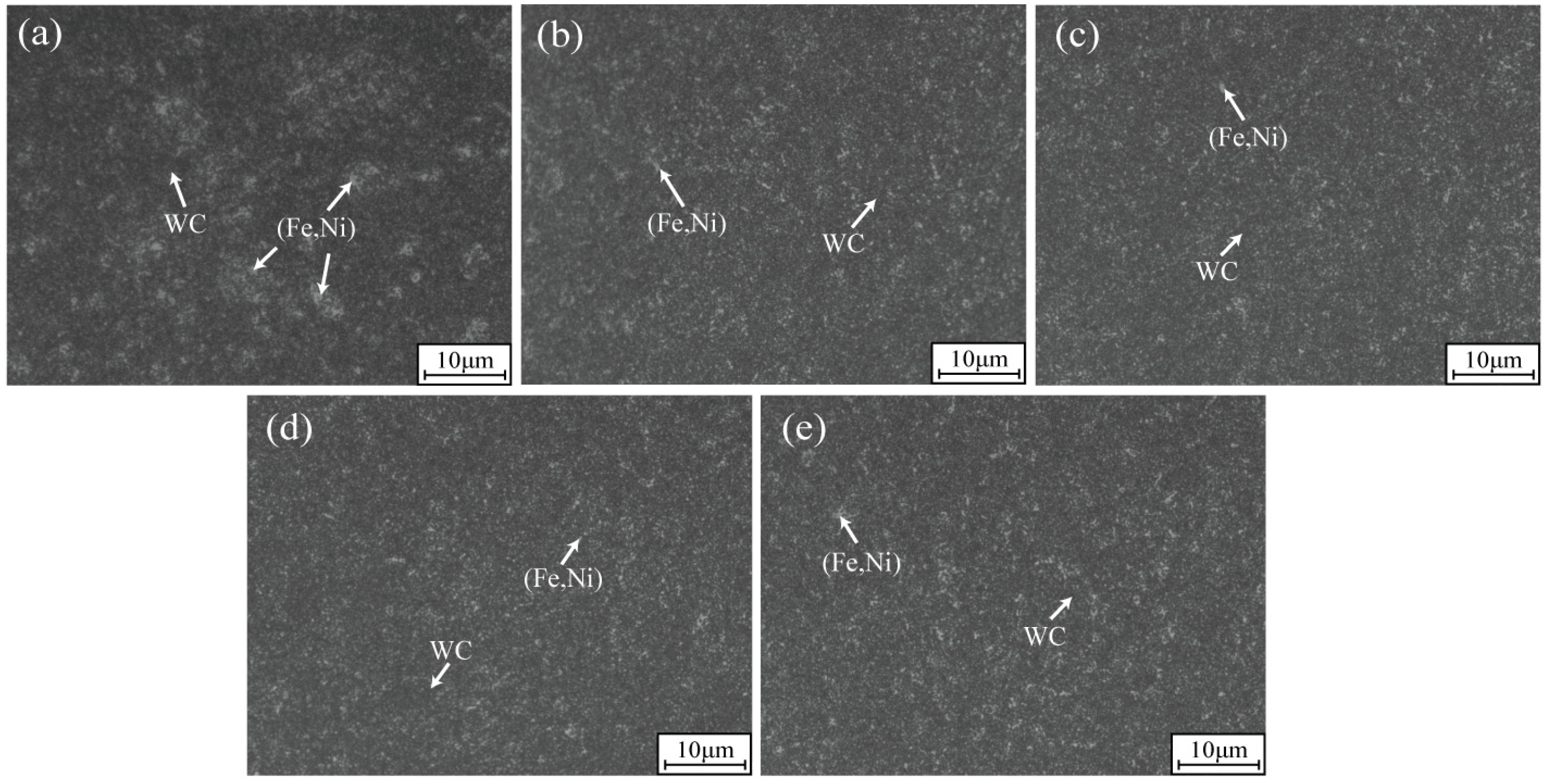
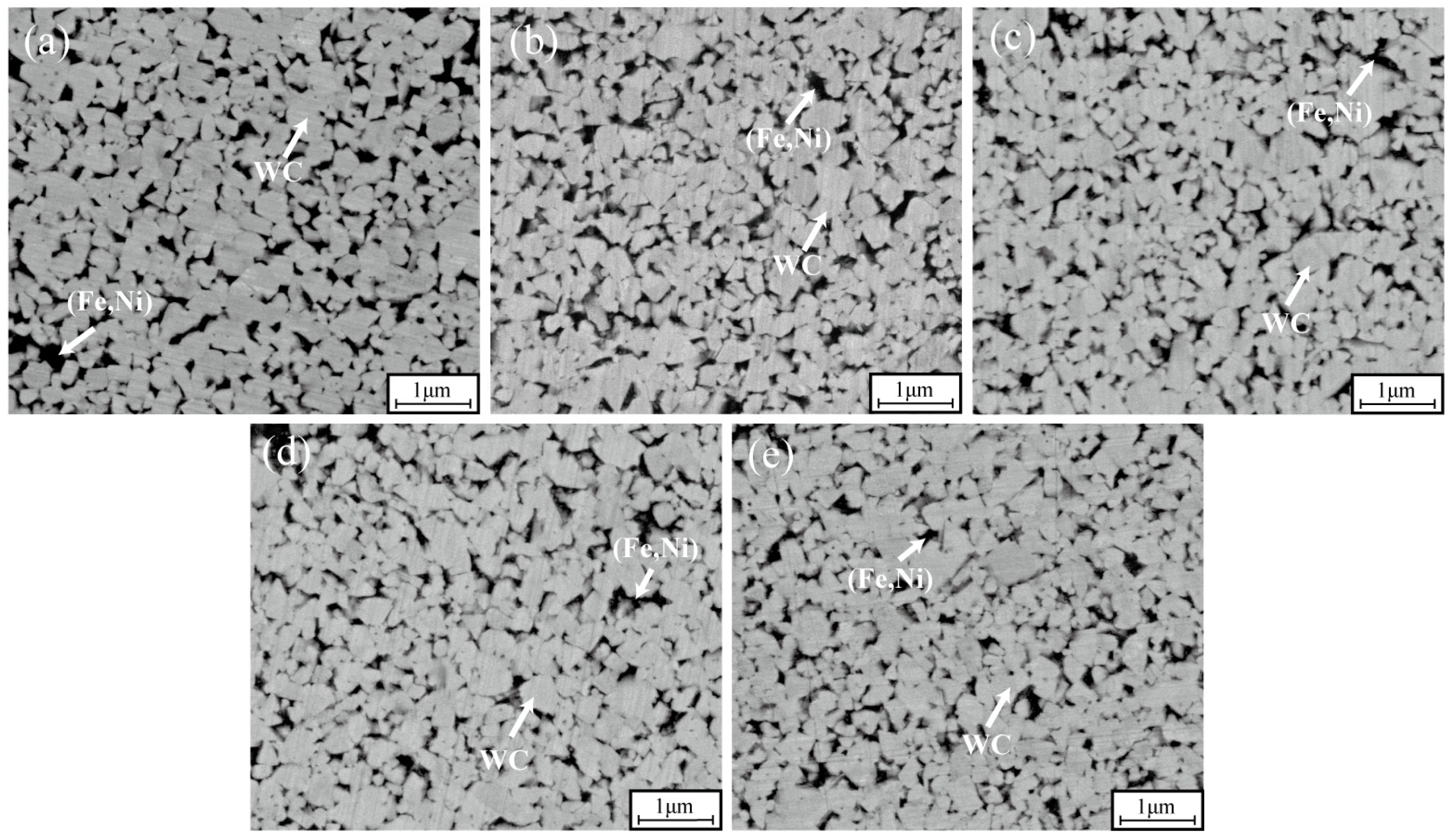
Figure 3 shows the BSE images of the WC-Ni-Fe-Mo cemented carbides, revealing the microstructure morphology of the alloy grains. In the images, the bright, regularly shaped, grayish-white particles are WC grains, while the dark phase is the (Fe, Ni) binder phase. It can be observed from Figure 3 that in alloy a, the overall distribution of WC grains is relatively uniform; however, there is also a considerable number of large-sized WC grains, resulting in a relatively thick (Fe, Ni) binder layer. In alloy b, with the addition of Mo, numerous fine WC grains appear, the number of large WC grains is significantly reduced, and the alloy structure is refined. This is because, during the liquid-phase sintering process, the added Mo reacts with carbon in the binder phase to nucleate and form Mo2C, which inhibits the re-precipitation of WC in the (Fe, Ni) binder phase [26]. As the Mo content in the alloy increases further, the changes in the grain structure of alloys c to e become relatively less pronounced, although a few individual larger grains do appear. This is due to the merging and growth of numerous fine particles during liquid-phase sintering, indicating that the addition of Mo can only refine the WC grain size to a certain extent.
Table 3 presents the EDS quantitative analysis results of the binder phase in alloys with different Mo contents. With increasing Mo content, the W content in the binder phase continuously increases from 15.47 wt% in alloy a to 26.25 wt% in alloy e, the Mo content correspondingly rises from 0 to 1.19 wt%, while the Ni content gradually decreases from 67.59 wt% to 55.32 wt%; the Fe content remains relatively stable at about 11.4–13.0 wt% in all alloys, and the C content also increases from 2.85 wt% to 4.96 wt%. Since Mo, as a strong carbide-forming element, preferentially reacts with C to form Mo2C, the carbon activity of the system is reduced, thereby intensifying the dissolution of WC and causing a large amount of W atoms to enter the binder phase. Meanwhile, Mo partially dissolves in the binder phase as a solid solution, with the remainder existing as Mo2C. The enrichment of W creates conditions for the subsequent precipitation of Ni3W3C. Therefore, the addition of Mo alters the chemical composition of the binder phase, and by promoting W dissolution and lowering the carbon activity, it creates both thermodynamic and kinetic conditions for the precipitation of the brittle Ni3W3C phase.
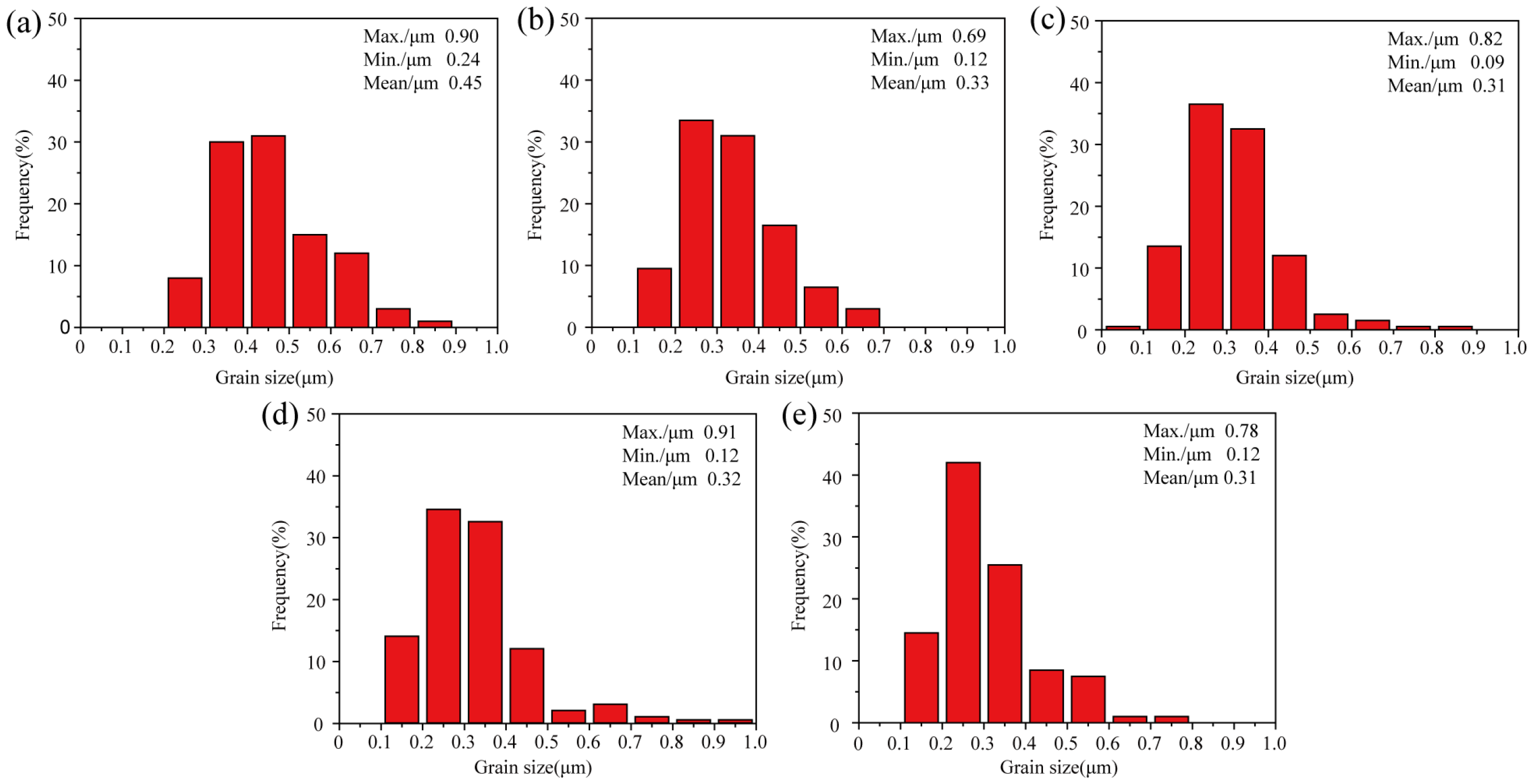
The distribution of WC grain sizes in the WC-Ni-Fe-Mo cemented carbides with different Mo contents is shown in Figure 4, which was measured directly from Figure 3 above. The grain size distribution for all alloys followed a normal distribution. Alloy a had the largest average grain size of 0.45 μm, primarily due to the high proportion of large WC grains. With increasing Mo content, the average grain size in alloy b gradually decreased to 0.33 μm; the grain size distribution became more concentrated, with an increased proportion of WC grains in the 0.2–0.3 μm range and a significant decrease in the number of WC grains above 0.5 μm. The average grain size in alloy c continued to decrease, reaching a minimum of 0.31 μm, and nano-sized grains below 0.1 μm appeared, indicating that the addition of Mo, combined with the grain growth inhibitor, can effectively further refine the WC grains [27]. However, the appearance of nano-sized grains can also lead to their dissolution into larger grains during the sintering process, resulting in the reappearance of a small number of relatively large grains. Consequently, in alloys d and e, with a further increase in Mo content, the proportion of small grains increased, but larger grains also increased correspondingly, and the average grain size of the alloys remained largely unchanged.

3.3. Mechanical Properties

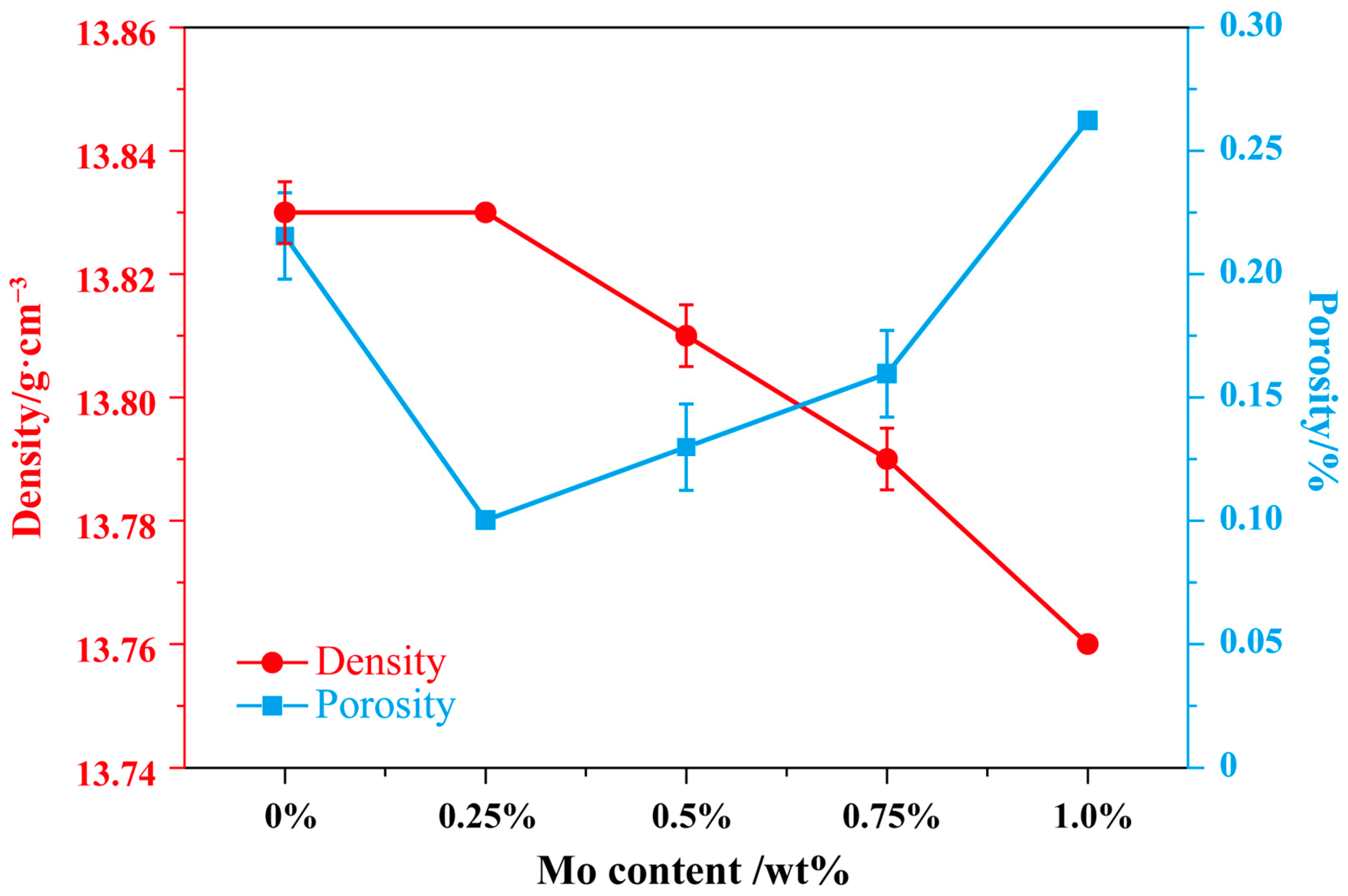
Figure 5 shows the relationship between density and porosity of the WC-Ni-Fe-Mo cemented carbides with different Mo contents. The red curve in the figure represents the density trend of the five alloys. Since the (Fe, Ni) binder content remains constant across all five alloys, as the Mo proportion increases, the WC proportion decreases correspondingly, causing the alloy density to gradually decline from 13.81 g/cm3 for alloy a to 13.76 g/cm3 for alloy e. The corresponding change in porosity is shown by the blue curve; the porosity of all five alloys exhibits a trend of first decreasing and then increasing. When the Mo content is low, the Fe-Ni pool phenomenon is relatively pronounced in the alloy, causing the (Fe, Ni) binder to flow sluggishly and agglomerate during liquid-phase sintering, thereby generating considerable porosity within the alloy [28]. With the addition of Mo, the Fe-Ni pool phenomenon is suppressed, and the distribution of the (Fe, Ni) binder becomes more uniform, enabling it to adequately fill the pores between WC grains, thus reducing the porosity of alloy b to 0.1%. As the Mo content increases further, the porosity gradually rises from 0.13% for alloy c to 0.26% for alloy e. This is attributed to the further increase in Mo2C content within the binder phase, which reduces the carbon content in the binder and leads to an increase in the amount of Ni3W3C. Concurrently, Mo2C as a high-melting-point compound, is dispersedly distributed throughout the binder phase, increasing the viscosity of the liquid phase and thereby reducing its fluidity [18]. Moreover, continuously distributed particle-like Fe-Ni pools reappear in the metallographic structure of the alloy, collectively contributing to the increase in porosity.
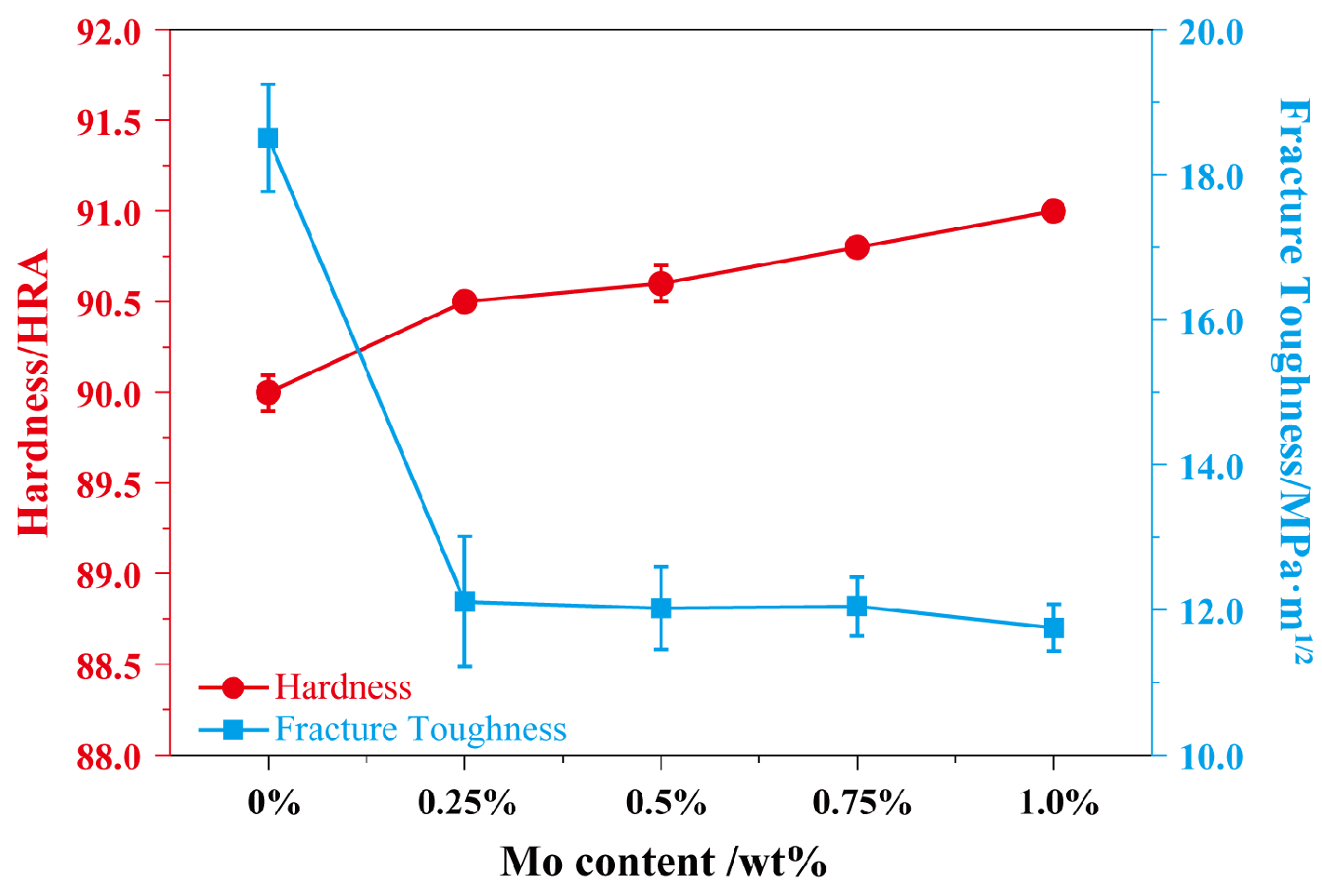
Figure 6 illustrates the relationship between hardness and fracture toughness of the WC-Ni-Fe-Mo cemented carbides with different Mo contents. The change in alloy hardness is shown by the red line. As the Mo content increases, the alloy hardness exhibits a linear trend, gradually increasing from 90.0 HRA for alloy a to 91.0 HRA for alloy e. This is attributed to the decreasing trend in the average grain size of the alloys with Mo addition. According to the Hall-Petch relationship, there is an inverse relationship between the hardness of an alloy and its grain size; finer grains lead to higher hardness [29]. Furthermore, it is related to the Mo2C content in the binder phase. As the Mo content increases, the amount of Mo2C within the (Fe, Ni) binder phase gradually increases, and the amount of the harder Ni3W3C phase also increases. This positively contributes to grain refinement and solid solution strengthening, thereby achieving an increase in alloy hardness [30].
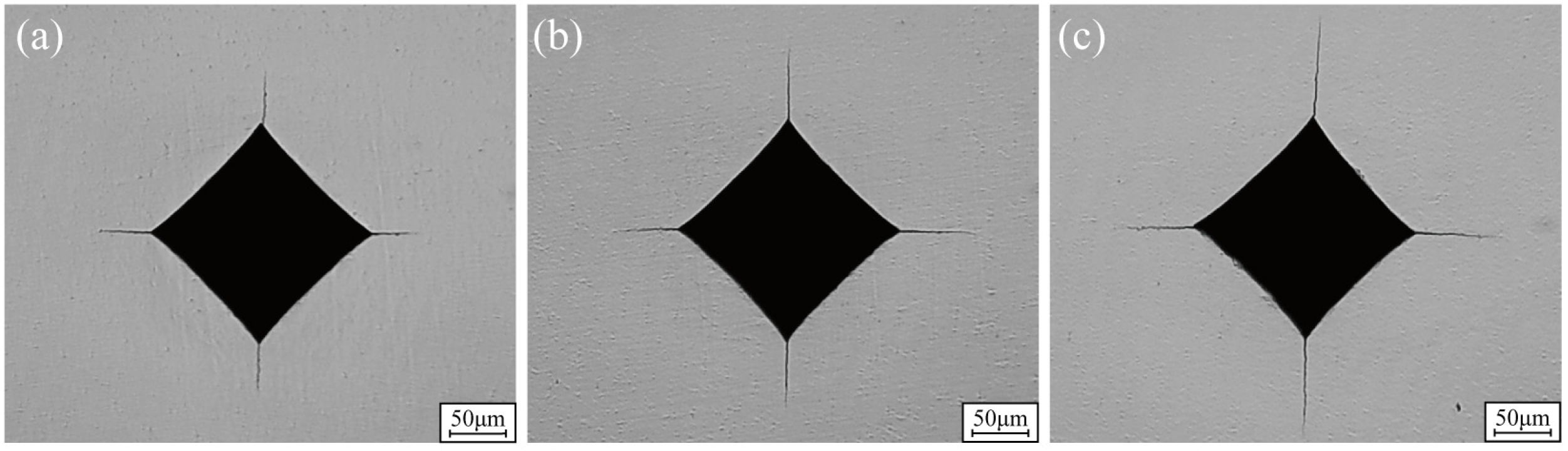
The blue curve in Figure 6 illustrates the relationship between the Mo content and the fracture toughness of the alloys. Owing to the relatively good ductility of Fe and Ni, the Mo-free alloy a exhibits a high fracture toughness of 18.51 MPa·m1/2. Upon the addition of Mo, the fracture toughness of alloy b drops sharply to 12.11 MPa·m1/2. With further increases in Mo content, the fracture toughness changes only gradually, declining modestly from 12.02 MPa·m1/2 for alloy c to 11.75 MPa·m1/2 for alloy e. The corresponding indentation morphologies are shown in Figure 7. The significant reduction in fracture toughness resulting from the addition of Mo can be attributed to two main factors. First, the formation of Mo2C within the (Fe, Ni) binder phase refines the grains while simultaneously increasing the brittleness of the binder, thereby leading to a substantial decrease in fracture toughness [31]. Second, fracture toughness is proportional to the mean free path of the binder phase and inversely proportional to hardness [32]; the addition of Mo promotes the formation of Mo2C, which in turn induces the precipitation of the brittle Ni3W3C, thereby increasing the overall hardness of the alloy and correspondingly reducing its fracture toughness. Moreover, the fracture toughness of cemented carbides is highly sensitive to internal defects and pores. As the relative density decreases, the number of defects and pores within the alloy gradually increases, which further contributes to the progressive decline in fracture toughness.
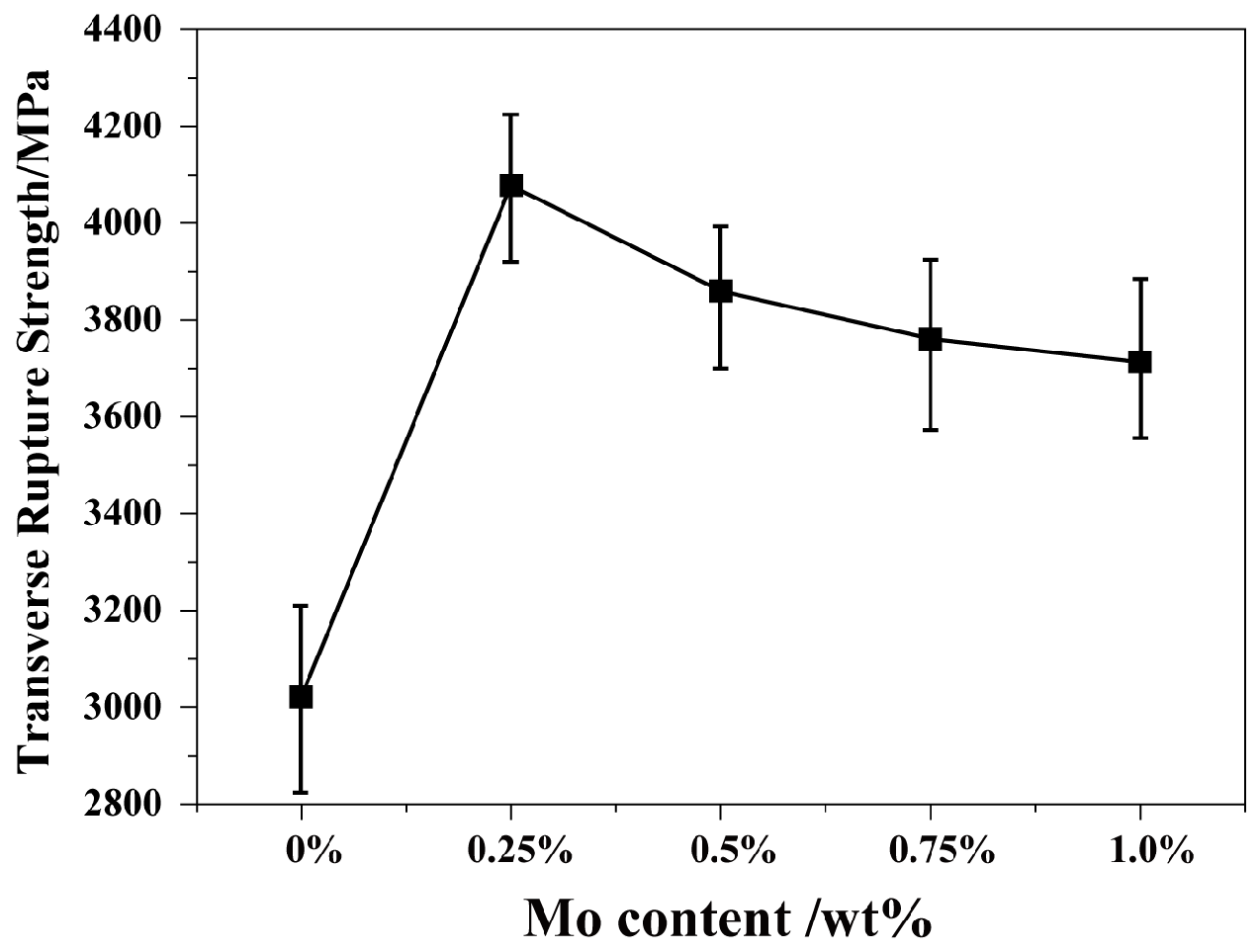
Transverse rupture strength is a crucial indicator representing the comprehensive mechanical properties of cemented carbides. As shown in Figure 8, with the addition of Mo, the alloys exhibit relatively excellent TRS. The TRS of the cemented carbides first increases and then decreases. As the Mo content increases, the TRS rises rapidly from 3021 MPa for alloy a to 4078 MPa for alloy b, representing an increase of 34.9%. Subsequently, it gradually decreases to 3713 MPa for alloy e. Multiple factors influence the TRS of cemented carbides, primarily including WC grain size, binder phase content, strength, and distribution [33]. In this study, the total content of the (Fe, Ni) binder phase is constant across all prepared alloys. Therefore, variations in WC grain size and porosity are the main factors affecting the TRS. As analyzed from Figure 4, the TRS of cemented carbides with different Mo contents is inversely proportional to the WC grain size. A smaller average grain size increases the number of grain boundaries, effectively enhancing the fracture strength of the alloy [34]. Compared to alloy a, alloy b exhibits a reduced average grain size and increased relative density, leading to a substantial increase in TRS. The average grain size of alloys c to e is largely consistent, but their relative density gradually decreases. This is the primary reason for the decline in TRS. Furthermore, as the Mo2C content in the binder phase increases, the content of the brittle Ni3W3C phase also increases, introducing more crack initiation sites within the alloy [23]. This also contributes to the gradual decrease in TRS. Despite the higher Mo2C content in the binder phase, the TRS of alloy e remains higher than that of alloy a. Therefore, an increased degree of densification is beneficial for enhancing the TRS of the alloy. The addition of Mo can optimize the agglomeration of the binder phase and improve the transverse rupture strength of the alloy. The mechanical properties of WC-Ni-Fe-Mo cemented carbides with different Mo contents are shown in Table 4.

3.4. Tribological Properties

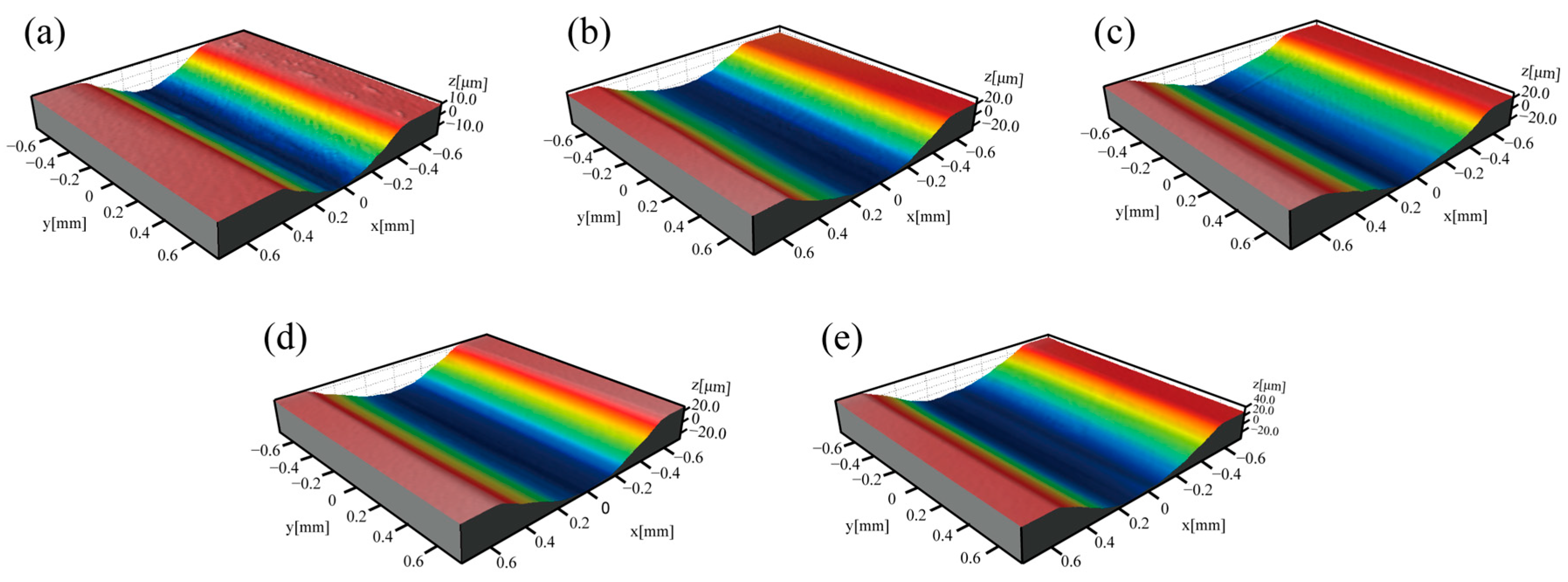
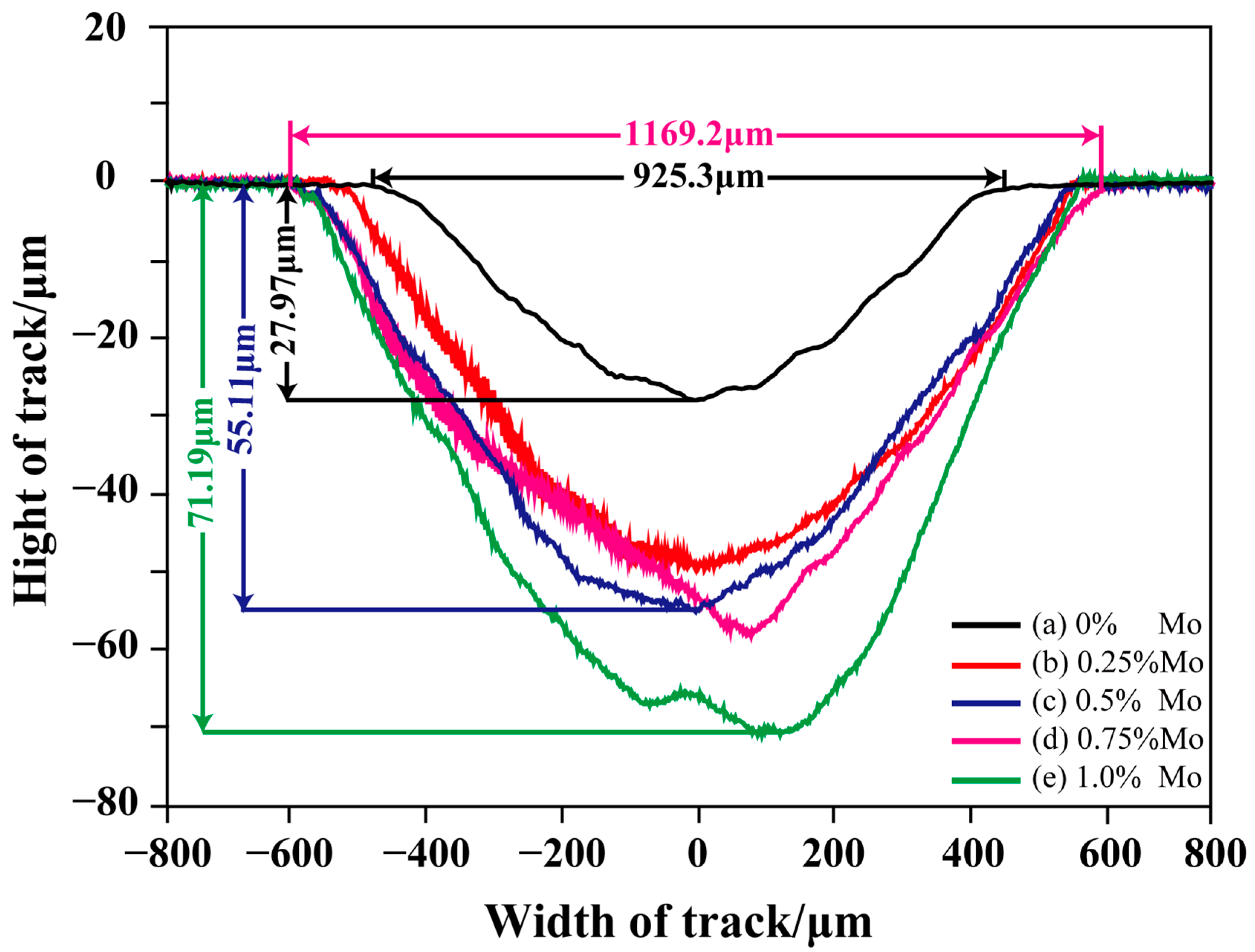
This study systematically investigates the effect of Mo content on the friction and wear properties of WC–Ni–Fe–Mo cemented carbides. Figure 9 presents the three-dimensional topographies of the worn surfaces of the alloys with five different Mo contents. With increasing Mo content, both the width and depth of the wear tracks show an overall increasing trend, indicating progressive intensification of material wear. Figure 10 further displays the two-dimensional cross-sectional profiles of the wear tracks, and quantitative analysis reveals the evolution of the wear characteristics. Specifically, for alloy a without Mo addition, the wear depth and width are 27.97 μm and 925.3 μm, respectively. When the Mo content increases to 0.5 wt.% in alloy c, the depth rises to 55.11 μm and the width reaches a peak value of 1169.2 μm. Upon further increasing the Mo content to 1.0 wt.% in alloy e, the depth continues to increase to 71.19 μm, whereas the width slightly declines to 1133.7 μm. These results indicate that the addition of Mo generally aggravates wear; notably, the wear depth increases monotonically with Mo content, while the wear width exhibits a non-monotonic variation. This phenomenon may be attributed to the combined effects of Mo on the hardness, brittleness, and tribo-interface stability of the alloy.
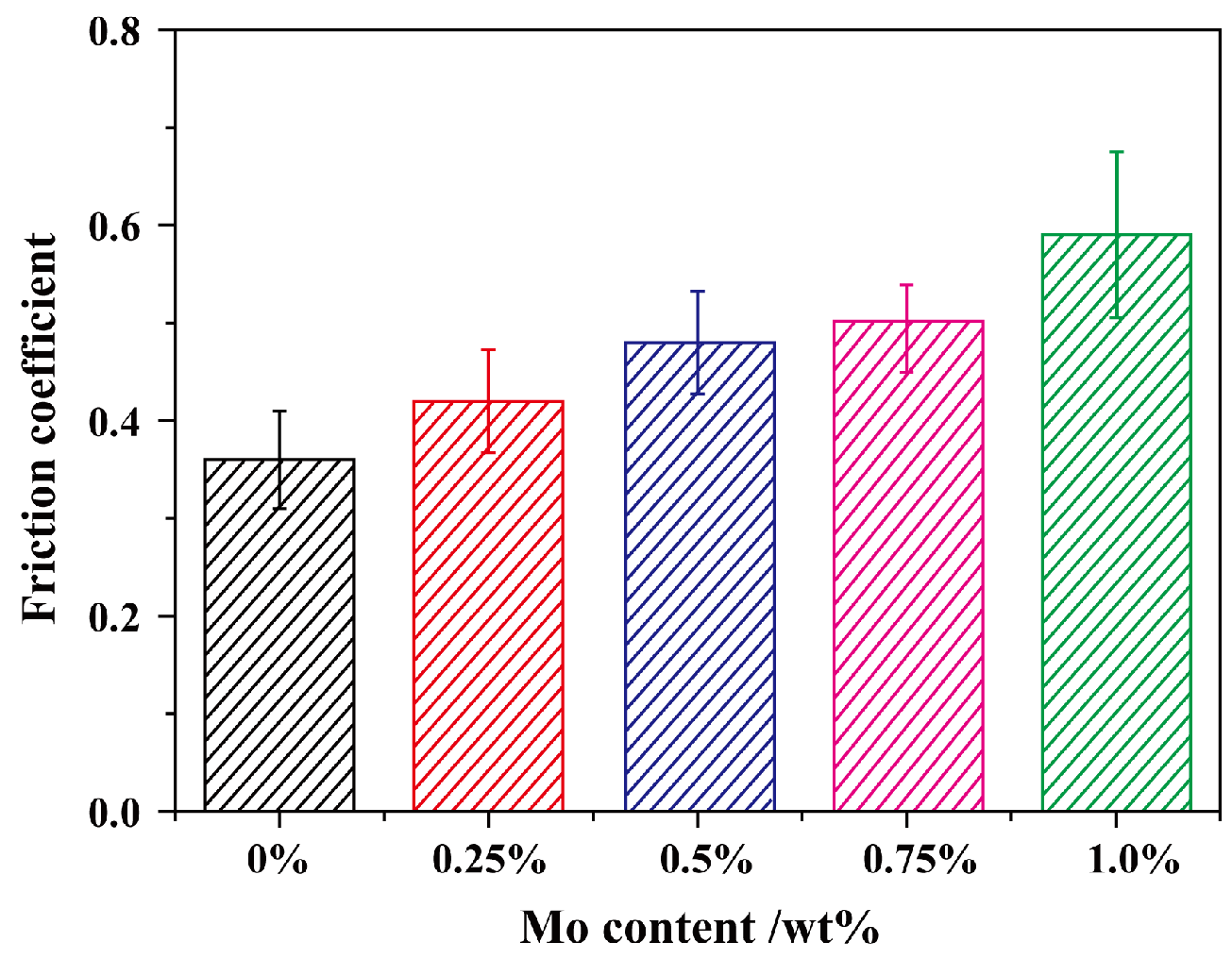
Figure 11 presents the corresponding coefficients of friction for the five alloys. Alloy a exhibits the lowest coefficient of friction, approximately 0.36, while alloy e shows the highest value of 0.59. Although the addition of Mo in this study is beneficial for refining WC grains and enhancing alloy hardness, the formation of Mo2C and Ni3W3C phases also increases the brittleness of the binder phase, thereby reducing the wear resistance of the alloy [24]. On one hand, during the wear process of cemented carbides, the binder phase is preferentially consumed, followed by the pull-out and fracture of WC grains. As the degree of wear increases, the binder phase deforms, causing a large number of WC grains to loosen and become trapped between the abrasive ball and the alloy surface [35]. Furthermore, with increasing Mo content, the Mo2C content in the alloy continuously increases, leading to the appearance of the brittle Ni3W3C phase. This further embrittles the binder phase and progressively exacerbates the wear damage.
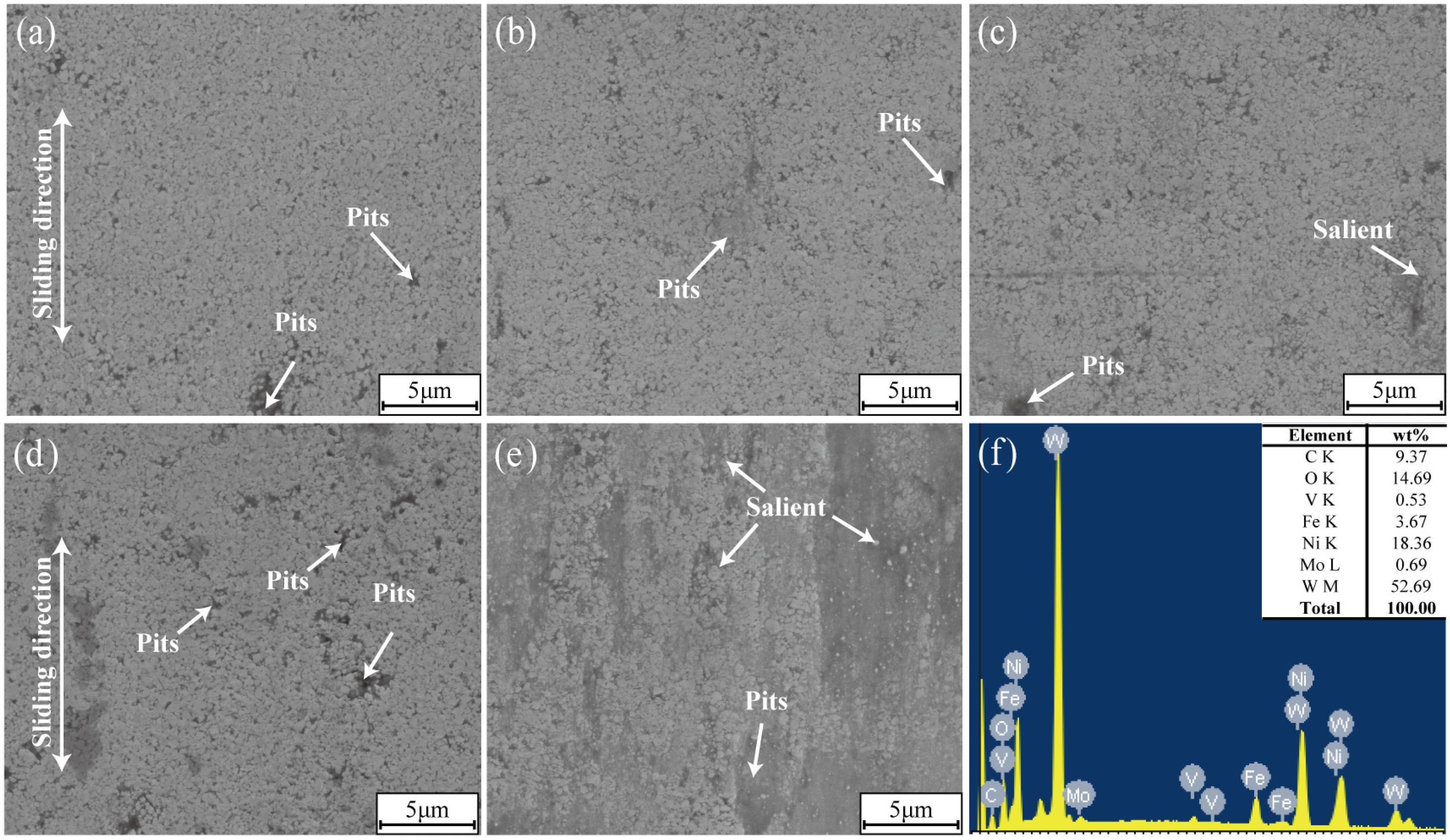
Figure 12 presents the SEM images and EDS analysis results of the worn surfaces of WC–Ni–Fe–Mo cemented carbides with different Mo contents. As can be seen, the worn surface of alloy a is relatively smooth, exhibits good symmetry, generates very little wear debris, and displays only a few shallow pits. This is attributed to the substantial hardness difference between the alloy and the Si3N4 counter-ball. Under these conditions, the dominant wear mechanisms are WC grain fracture, plastic deformation of WC grains, and pull-out of the binder phase [36]. The (Fe, Ni) binder phase in alloy a possesses good ductility, enabling it to undergo sufficient deformation during the wear process and to alleviate friction, thereby resulting in a relatively flat and smooth worn surface and a correspondingly low friction coefficient. With increasing Mo content, Mo2C and Ni3W3C form progressively within the (Fe, Ni) binder, leading to gradual embrittlement of the binder phase [24]. This promotes the generation of more wear debris, which progressively disrupts the equilibrium of the tribological interface and further aggravates wear damage. In alloys b and c, the wear severity increases markedly, as manifested by rapid expansion of the worn area and a distinct increase in the number of pits on the worn surface. As the Mo content further increases, alloys d and e exhibit severe material loss on the worn surface, with numerous large pits and protrusions that gradually coalesce into flake-like spallation, greatly intensifying the extent of wear. This is due to the further increase in the content of brittle phases such as Mo2C and Ni3W3C, accompanied by elevated porosity, which leads to a higher friction coefficient.
The EDS analysis of the worn surface of Figure 12f reveals markedly high W and O contents, indicating pronounced oxidation of the worn surface. This oxidation originates primarily from the fracture and detachment of WC grains during wear, followed by their oxidation to form high-hardness oxides. Meanwhile, the detection of Ni and Fe by EDS confirms that the binder phase is pulled out and exposed on the surface. The removal of the binder phase further undermines the mechanical support for WC grains, accelerating their fragmentation and detachment. The resulting hard oxide debris acts as a third-body abrasive at the friction interface, further exacerbating material loss. Therefore, the addition of Mo leads to the formation of Mo2C and brittle Ni3W3C within the binder phase, causing embrittlement of the binder. During wear, the embrittled binder is preferentially consumed and pulled out; the WC grains deprived of binder support subsequently undergo fracture and detachment and are then oxidized under the combined action of frictional heat and the oxidizing environment to form high-hardness oxides. This sequence ultimately results in a progressive deterioration of the wear resistance of the alloys with increasing Mo content.

4. Conclusions

This study investigated the variations in microstructure, mechanical properties, and wear performance of WC-Ni-Fe-Mo cemented carbides with different Mo contents.
(a)
The WC-Ni-Fe alloy exhibits a two-phase structure. The addition of Mo leads to the formation of Mo2C phase, which contributes to refining the alloy grains. The WC grain size gradually decreases from 0.45 μm to 0.31 μm.
(b)
The incorporation of Mo helps enhance the hardness of the alloy; however, it also reduces the fracture toughness. The transverse rupture strength of the alloy increases initially and then decreases, reaching a maximum value of 4078 MPa.
(c)
The addition of Mo increases the brittleness of the binder phase, thereby reducing the wear resistance of the alloy. The friction coefficient of the alloy increases from 0.36 to 0.59. The alloy demonstrates the most balanced comprehensive performance when the Mo content is 0.25 wt%.

Author Contributions

Conceptualization, F.Z. and D.Y.; methodology, F.Z. and Y.Y.; software, F.Z.; validation, D.Y., L.C. and H.C.; formal analysis, F.Z. and D.Y.; investigation, F.Z. and L.C.; writing—original draft preparation, F.Z.; writing—review and editing, F.Z., D.Y. and H.C.; supervision, Y.Y.; project administration, L.C. and H.C.; funding acquisition, H.C.; All authors have read and agreed to the published version of the manuscript.

Funding

This study was funded by the Central Government’s Guide to Local Science and Technology Development Fund (No. 20262ZDF030009), and the Key research and development project of Jiangxi Province (No. 20261BCE310034).

Data Availability Statement

The original contributions presented in this study are included in the article. Further inquiries can be directed to the corresponding authors.

Conflicts of Interest

Author Fan Zhang was employed by the company Ganzhou Nonferrous Metallurgy Research Institute Co., Ltd. The remaining authors declare that the research was conducted in the absence of any commercial or financial relationships that could be construed as a potential conflict of interest.

References

  1. García, J.; Ciprés, V.C.; Blomqvist, A.; Kaplan, B. Cemented carbide microstructures: A review. Int. J. Refract. Met. Hard Mater. 2019, 80, 40–68. [Google Scholar] [CrossRef]
  2. He, M.; Ouyang, Z.; Zhong, Q.; Zhang, J.; Li, Z.; Ye, J. Enhancement of Mechanical Properties and Corrosion Resistance of Dual-Scale Structured WC-10Co Cemented Carbides via Cr-N Dual-Functional Regulation. Metals 2026, 16, 447. [Google Scholar] [CrossRef]
  3. Liu, Z.H.; Zhou, K.C.; Shi, K.H.; Wu, X.Z.; Xiao, H.; Peng, C.Q.; Wang, R.C.; Wang, X.F. Additive manufacturing techniques for WC-Co cemented carbides: Principle, progress, and perspective. Trans. Nonferrous Met. Soc. China 2026, 36, 1–24. [Google Scholar] [CrossRef]
  4. Viswanadham, R.K.; Lindquis, P.G. Transformation-toughening in cemented carbides: Part I. Binder composition control. Metall. Trans. A 1987, 18, 2163–2173. [Google Scholar] [CrossRef]
  5. Gao, Y.; Kang, L.; Yang, Z.; Jia, Y.; Li, X.; Sun, D.; Guo, X.; Fan, L.; An, L. Preparation of ultra-high hardness and toughness WC-Co cemented carbides by dynamic hot forging. J. Alloys Compd. 2025, 1047, 185059. [Google Scholar] [CrossRef]
  6. Peng, R.; Chen, W.; Mao, M.; Zhao, L.; Chen, X. Chemical-Mechanical Synergy in Chemical Mechanical Polishing of WC-Co Cemented Carbide Inserts under Varied Chemical Environments. Ceram. Int. 2026, 52, 18128–18145. [Google Scholar] [CrossRef]
  7. Wu, X.Y.; Zhang, W.; Li, D.X.; Guo, J.D. Microstructure of WC in WC-Co cemented carbides consolidated by electric discharge. Mater. Sci. Technol. 2007, 23, 627–629. [Google Scholar] [CrossRef]
  8. Guo, Z.; Xiong, J.; Yang, M.; Xiong, S.; Chen, J.; Bi, S. Characterization and properties of MTCVD Ti(C,N) coated cemented carbide substrates with Fe/Ni binder. Int. J. Refract Met. Hard Mater. 2010, 28, 238–242. [Google Scholar] [CrossRef]
  9. Gries, B.; Prakash, L. Iron bonds to curb hardmetal’s more lethal tendencies. Met. Powder Rep. 2007, 62, 15–17. [Google Scholar] [CrossRef]
  10. Genga, R.M.; Cornish, L.A.; Akdogan, G. Effect of Mo2C additions on the properties of SPS manufactured WC-TiC-Ni cemented carbides. Int. J. Refract Met. Hard Mater. 2013, 41, 12–21. [Google Scholar] [CrossRef]
  11. Schubert, W.D.; Fugger, M.; Wittmann, B.; Useldinger, R. Aspects of sintering of cemented carbides with Fe-based binders. Int. J. Refract Met. Hard Mater. 2015, 49, 110–123. [Google Scholar] [CrossRef]
  12. Rosa, J.M.B.; Lugon, R.D.; Silva, K.S.; Chagas, V.M.; Guimarães, R.S.; Carvalho, C.S.; Barreto, L.P.P.; Filgueira, M. Study of characteristics and properties of spark plasma sintered WC with the use of alternative Fe-Ni-Nb binder as Co replacement. Int. J. Refract Met. Hard Mater. 2020, 92, 105316. [Google Scholar] [CrossRef]
  13. Kakeshita, T.; Wayman, C.M. Martensitic transformations in cermets with a metastable austenitic binder I: WC-(Fe-Ni-C). Mater. Sci. Eng. A 1991, 141, 209–219. [Google Scholar] [CrossRef]
  14. Ojo-Kupoluyi, O.J.; Tahir, S.M.; Baharudin, B.T.H.T.; Azmah Hanim, M.A.; Anuar, M.S. Mechanical properties of WC-based hardmetals bonded with iron alloys—A review. Mater. Sci. Technol. 2017, 33, 507–517. [Google Scholar] [CrossRef]
  15. Zheng, Y.; Huang, T.; Yao, J.; Fargas, G.; Armelin, E.; Llanes, L.; Xie, C.; Crespo, D.; Bruna, P.; Lavigne, O. Electrochemical corrosion behavior of WC-Co and WC-Ni cemented carbides: Effect of chloride and sulfate ions. Int. J. Refract Met. Hard Mater. 2025, 132, 107224. [Google Scholar] [CrossRef]
  16. Yang, S.; Zhu, W.; Ye, N.; Zhang, F.; Jiang, J.; Zhuo, H.; Tang, J. Realizing superior strength-toughness synergy in cemented carbides with coarse and fine-grained heterostructures. J. Mater. Res. Technol. 2025, 36, 3785–3795. [Google Scholar] [CrossRef]
  17. Gao, Y.; Luo, B.H.; He, K.J.; Zhang, W.W.; Bai, Z.H. Effect of Fe/Ni ratio on the microstructure and properties of WC-Fe-Ni-Co cemented carbides. Ceram. Int. 2018, 44, 2030–2041. [Google Scholar] [CrossRef]
  18. Zhao, Z.; Liu, J.; Tang, H.; Ma, X.; Zhao, W. Effect of Mo addition on the microstructure and properties of WC-Ni-Fe hard alloys. J. Alloys Compd. 2015, 646, 155–160. [Google Scholar] [CrossRef]
  19. Agrawal, S.A. Simplified measurement of density of irregular shaped composites material using Archimedes principle by mixing two fluids having different densities. Int. Res. J. Eng. Technol. 2021, 8, 1005. Available online: https://www.researchgate.net/publication/351065185 (accessed on 18 March 2026).
  20. BS EN ISO 3327:2009; Hardmetals-Determination of Transverse Rupture Strength. European Committee for Standardization: Brussels, Belgium, 2009.
  21. Ju, J.; Huang, D.; Xu, H.; Dong, D.; Lou, J.; Xu, Y.; Shi, J.; Zhu, L. Effects of Sintering Pressure and Co Content on the Microstructure and Mechanical Performance of WC–Co Cemented Carbides. Metals 2025, 15, 930. [Google Scholar] [CrossRef]
  22. Massalski, T.B. (Ed.) Binary Alloy Phase Diagrams, 2nd ed.; ASM International: Metals Park, OH, USA, 1990. [Google Scholar]
  23. Ghasali, E.; Kariminejad, A.; Raza, S.; Li, J.; Hussainova, I.; Alizadeh, M.; Antonov, M.; Ebadzadeh, T.; Orooji, Y. Comparative study of elemental additives (Mo, Si, Ti, V) in spark plasma sintered WC-5wt%Ni hardmetals: Phase formation, mechanical properties, and Wear performance. Int. J. Refract Met. Hard Mater. 2026, 138, 107762. [Google Scholar] [CrossRef]
  24. Ghasali, E.; Ebadzadeh, T.; Alizadeh, M.; Razavi, M. Mechanical and microstructural properties of WC-based cermets: A comparative study on the effect of Ni and Mo binder phases. Ceram. Int. 2018, 44, 2283–2291. [Google Scholar] [CrossRef]
  25. Tang, X.; Mao, R.; Zhang, F.; Jin, Y.; Zhou, W.; Su, W.; Jiang, W.; Wang, J. Optimizing WC-10Co cemented carbides with high-entropy (Ti, Cr, V, Nb, Mo)(C, N) inhibitor: Microstructure, mechanics, and wear resistance. J. Alloys Compd. 2025, 1037, 182148. [Google Scholar] [CrossRef]
  26. Fang, Z.Z.; Wang, X.; Ryu, T.; Hwang, K.S.; Sohn, H.Y. Synthesis, sintering, and mechanical properties of nanocrystalline cemented tungsten carbide-A review. Int. J. Refract Met. Hard Mater. 2009, 27, 288–299. [Google Scholar] [CrossRef]
  27. Buchegger, C.; Koos, R.; Lengauer, W.; Rödiger, K.; van den Berg, H. Hardmetals with alternative Fe/Ni and Fe/Co/Ni binders: A study on Mo doping, mechanical properties and creep behaviour. In Proceedings of the Euro International Powder Metallurgy Congress & Exhibition, Göteborg, Sweden, 15–18 September 2013. [Google Scholar]
  28. Chang, S.H.; Chen, S.L. Characterization and properties of sintered WC–Co and WC–Ni–Fe hard metal alloys. J. Alloys Compd. 2014, 585, 407–413. [Google Scholar] [CrossRef]
  29. Moskowitz, D.; Ford, M.J.; Humenik, M. High-Strength Tungsten Carbides. In Modern Developments in Powder Metallurgy; Hausner, H.H., Ed.; Springer: Boston, MA, USA, 1971; pp. 273–292. [Google Scholar]
  30. Chang, S.H.; Chang, P.Y. Investigation into the sintered behavior and properties of nanostructured WC–Co–Ni–Fe hard metal alloys. Mater. Sci. Eng. A 2014, 606, 150–156. [Google Scholar] [CrossRef]
  31. Chen, W.; Yin, Z.; Li, X.; Yuan, J. Effect of co-doped additives on microstructure and mechanical properties of microwave-sintered WC-10Co cemented carbide tool materials. J. Alloys Compd. 2023, 962, 171148. [Google Scholar] [CrossRef]
  32. Astacio, R.; Gallardo, J.M.; Cintas, J.; Montes, J.M.; Cuevas, F.G.; Prakash, L.; Torres, Y. Fracture toughness of cemented carbides obtained by electrical resistance sintering. Int. J. Refract Met. Hard Mater. 2019, 80, 259–269. [Google Scholar] [CrossRef]
  33. Brieseck, M.; Bohn, M.; Lengauer, W. Diffusion and solubility of Cr in WC. J. Alloys Compd. 2010, 489, 408–414. [Google Scholar] [CrossRef]
  34. Fang, Z.Z. Correlation of transverse rupture strength of WC–Co with hardness. Int. J. Refract Met. Hard Mater. 2005, 23, 119–127. [Google Scholar] [CrossRef]
  35. Bonny, K.; De Baets, P.; Perez, Y.; Vleugels, J.; Lauwers, B. Friction and wear characteristics of WC–Co cemented carbides in dry reciprocating sliding contact. Wear 2010, 268, 1504–1517. [Google Scholar] [CrossRef]
  36. Herr, M.; Sailer, T.; Sockel, H.G.; Schulte, R.; Feld, H.; Prakash, L.J. Characterisation of wear properties of ultrafine-grained hardmetals using a special abrasive wheel test. Int. J. Refract Met. Hard Mater. 2001, 19, 371–379. [Google Scholar] [CrossRef]
Figure 1. X-ray diffraction patterns of WC–Ni–Fe–Mo cemented carbides: (a) 0% Mo; (b) 0.25% Mo; (c) 0.5% Mo; (d) 0.75% Mo; (e) 1.0% Mo.
Metals 16 00654 g001
Figure 2. Metallographic photographs of WC–Ni–Fe–Mo cemented carbides: (a) 0% Mo; (b) 0.25% Mo; (c) 0.5% Mo; (d) 0.75% Mo; (e) 1.0% Mo.
Metals 16 00654 g002
Figure 3. BSE images of WC–Ni–Fe–Mo cemented carbides: (a) 0% Mo; (b) 0.25% Mo; (c) 0.5% Mo; (d) 0.75% Mo; (e) 1.0% Mo.
Metals 16 00654 g003
Figure 4. Grain size distribution of WC–Ni–Fe–Mo cemented carbides with different Mo contents: (a) 0% Mo; (b) 0.25% Mo; (c) 0.5% Mo; (d) 0.75% Mo; (e) 1.0% Mo.
Metals 16 00654 g004
Figure 5. Density and porosity of WC–Ni–Fe–Mo cemented carbides with different Mo contents.
Metals 16 00654 g005
Figure 6. Hardness and fracture toughness of WC–Ni–Fe–Mo cemented carbides with different Mo contents.
Metals 16 00654 g006
Figure 7. Indentation images of WC–Ni–Fe–Mo cemented carbides with different Mo contents: (a) 0% Mo; (b)0.5% Mo; (c) 1.0% Mo.
Metals 16 00654 g007
Figure 8. Transverse rupture strength of WC–Ni–Fe–Mo cemented carbides with different Mo contents.
Metals 16 00654 g008
Figure 9. 3D wear morphology images of WC–Ni–Fe–Mo cemented carbides with different Mo contents: (a) 0% Mo; (b) 0.25% Mo; (c) 0.5% Mo; (d) 0.75% Mo; (e) 1.0% Mo.
Metals 16 00654 g009
Figure 10. 2D wear curves of WC–Ni–Fe–Mo cemented carbides with different Mo contents.
Metals 16 00654 g010
Figure 11. Friction coefficient of WC–Ni–Fe–Mo cemented carbides with different Mo contents.
Metals 16 00654 g011
Figure 12. SEM images and EDS analysis of the wear scar surfaces of WC-Ni-Fe-Mo hard alloys with different molybdenum contents: (a) 0% Mo; (b) 0.25% Mo; (c) 0.5% Mo; (d) 0.75% Mo; (e) 1.0% Mo; (f) EDS analysis of the worn surface.
Metals 16 00654 g012
Table 1. Characteristics of raw powders.
PowderWCNiFeMoVC
Purity/%≥99.9≥99.9≥98.5≥99.9≥99.5
Oxygen/%0.150.300.500.250.79
Carbon/%6.130.350.800.0117.72
Fsss/μm0.551.001.00–6.003.001.15
Table 2. Design composition of WC-Ni-Fe-Mo cemented carbides (wt%).
AlloysDesign Composition (wt.%)
WCNiFeMoVC
a Balance12.52.500.5
bBalance12.52.50.250.5
cBalance12.52.50.50.5
dBalance12.52.50.750.5
eBalance12.52.51.00.5
Table 3. EDS analysis of the binder phase composition.
AlloysBinder Phase Composition (wt.%)
WCNiFeMoV
a 15.472.8567.5912.560.001.53
b17.093.6564.3013.040.261.66
c22.413.5959.5912.570.521.33
d25.783.7255.5612.550.711.68
e26.254.9655.3211.411.191.86
Table 4. Mechanical properties of WC-Ni-Fe-Mo cemented carbides.
AlloysDensity/
g·cm−3
Porosity/%Hardness/HRAFracture Toughness/MPa·m1/2Transverse Rupture Strength/MPa
a 13.83 ± 0.10.21 ± 0.0790.0 ± 0.218.51 ± 1.483021 ± 390
b13.830.10 ± 090.5 ± 0.112.11 ± 1.784078 ± 301
c13.81 ± 0.10.13 ± 0.0790.6 ± 0.212.02 ± 1.153860 ± 287
d13.79 ± 0.10.16 ± 0.0790.8 ± 0.112.05 ± 0.813761 ± 336
e13.760.26 ± 091.0 ± 0.111.75 ± 0.653713 ± 329
Disclaimer/Publisher’s Note: The statements, opinions and data contained in all publications are solely those of the individual author(s) and contributor(s) and not of MDPI and/or the editor(s). MDPI and/or the editor(s) disclaim responsibility for any injury to people or property resulting from any ideas, methods, instructions or products referred to in the content.