Article

Deep Purification of Molybdenum in Acidic Chloride System Accompanied by Conventional Metal Impurities Based on Coordination Extraction Using Amide

1
Key Laboratory of Coal Science and Technology, Ministry of Education, College of Chemistry and Chemical Engineering, Taiyuan University of Technology, Taiyuan 030024, China
2
State Key Laboratory of Coal Conversion, Institute of Coal Chemistry, Chinese Academy of Sciences, Taiyuan 030001, China
3
Institute of Nuclear and New Energy Technology, Tsinghua University, Beijing 100084, China
4
GRINM Resources and Environment Tech. Co., Ltd., Beijing 100088, China
*
Authors to whom correspondence should be addressed.
†
These authors contributed equally to this work.
Metals 2026, 16(6), 634; https://doi.org/10.3390/met16060634
Submission received: 14 May 2026 / Revised: 5 June 2026 / Accepted: 6 June 2026 / Published: 9 June 2026
(This article belongs to the Topic Advances in Solvent Extraction)

Abstract

In this work, an amide extractant was employed to purify Mo(VI) from chloride media, with particular emphasis on the extraction behavior of impurities and their migration during the extraction and scrubbing stages. The effects of hydrochloric acid concentration, extractant concentration, phase ratio, and temperature on Mo(VI) extraction were examined to clarify the extraction equilibrium and kinetics. Under the optimized conditions, a high extraction efficiency of 93.13% was achieved in a single stage. The loaded organic phase was subsequently purified by hydrochloric acid scrubbing, effectively removing co-extracted impurities while maintaining minimal Mo loss. Efficient stripping of Mo(VI) was realized using an ammonia solution with a stripping efficiency of 98.47%. FT-IR and ESI-MS analyses revealed that Mo(VI) was extracted as a protonated molybdenum oxychloride species interacting with the amide extractant through hydrogen bonding. Density functional theory calculations further confirmed the favorable interaction between the protonated molybdenum species and the carbonyl oxygen of the amide extractant. Thermodynamic analysis indicated that the extraction process was exothermic, with an enthalpy change of −22.17 kJ/mol. These findings provide mechanistic insight into the amide extraction of molybdenum from chloride systems and offer practical guidance for the purification of low-purity molybdenum products.

1. Introduction

Molybdenum (Mo), an important strategic metal in the periodic table, is widely used in key fields such as aerospace, electronic information, metallurgy and chemical engineering due to its high strength, high melting point and excellent corrosion resistance [1,2,3]. The purity and performance of molybdenum products directly affect the development quality of downstream high-end industries. Ammonium molybdate, one of the most important compounds among molybdate derivatives, is a fundamental raw material for preparing high-purity molybdenum products. In recent years, large-scale industrial production of ammonium molybdate has been achieved in China [4,5]. However, due to the complexity of raw materials and the influence of accompanying elements during hydrometallurgical extraction, industrial ammonium molybdate products often still contain certain impurity elements, making it difficult to meet the purity requirements for the preparation of high-end molybdenum materials [6,7]. Therefore, developing efficient and highly selective separation and purification methods to remove these impurities and improve the purity of molybdenum products is of great significance for the preparation of high-quality molybdenum materials.
In actual industrial production, ammonium molybdate leachate generally has problems such as low molybdenum concentration and a complex impurity composition. The solution often contains alkali metal and alkaline earth metal ions such as Na+, K+, and Ca2+, as well as harmful elements such as Si(IV), P(V), and As(V). These impurities seriously restrict the purity and performance of subsequent molybdenum products and may even lead to substandard product quality [8,9]. The preparation methods of ammonium molybdate mainly include ammonia leaching, solvent extraction, ion exchange and oxidation roasting [10,11]. Zhang et al. [12] prepared molybdate by treating ammonium molybdenum concentrate using an oxidative roasting method. However, the microwave system used required the installation of dedicated magnetrons, waveguides and high-precision temperature control devices, which led to high equipment maintenance costs and poor long-term operational economy. Hu et al. [13] achieved efficient removal of water-soluble quaternary ammonium cations using D001 ion exchange resin and obtained good results in molybdate purification. However, its adaptability in complex multi-component pulp systems still needs further verification. Moreover, the adsorption process is controlled by both intra-particle diffusion and chemical adsorption, which limits its operational stability under continuous high-load conditions.
Solvent extraction has become the mainstream technology for separation and purification in molybdenum hydrometallurgy due to its advantages of high selectivity, good separation effect and a high Mo recovery rate [14,15,16]. By choosing an appropriate extractant, selective enrichment of molybdenum in low-concentration molybdenum solutions can be achieved. Combined with washing operations, impurities can be effectively removed, laying the foundation for subsequent back-extraction to prepare high-purity ammonium molybdate. Traditional molybdenum extraction system mostly uses extractants such as tributyl phosphate (TBP) [17], di(2-ethylhexyl) phosphate acid (P204) [18], and trialkylamine (N235) [19]. Mehdi Ghadiri et al. [20] used TBP as a modifier and achieved a Mo extraction efficiency of 99.9%. However, this system needs to operate under strongly acidic conditions (pH = 1), and after being combined with trioctylamine, the viscosity of the system increases, limiting mass transfer efficiency. At the same time, the high dosage of 12 vol.% increased the cost of the organic phase. Shi et al. [21] achieved a Mo extraction efficiency of 99.6% using the N235 system and realized the synchronous separation of silicon. However, the stripping process required the use of 7.00 mol/L ammonia water and 0.80 mol/L ammonium carbonate as complexing reagents, resulting in high reagent consumption and energy consumption.
In recent years, amide extractants have received extensive attention in the field of metal separation, such as vanadium (V), chromium (Cr) and rare earths, due to their good chemical stability, low volatility, low water solubility and high extraction selectivity [22,23,24]. However, most existing studies have focused on extraction behavior in sulfuric acid (H2SO4) or hydrogen peroxide systems [25,26]. For example, when Xia et al. used the TRPO-TBP co-extractant in a peroxide system, the apparent equilibrium constant of Mo (logKMo-TRPO-TBP-H = 4.3) was measured to be lower than that in a single TRPO system (logKMo-TRPO-H = 5.8). However, by regulating the equilibrium pH within the range of 2 to 2.5, the co-extraction of tungsten (W) can be effectively inhibited, achieving a Mo-W separation efficiency superior to that of a single system. Tan [25] used N235 to separate and recover Mo, V and nickel (Ni) from H2SO4 leachate. The extraction mechanism indicated that only metal anions could be extracted into the organic phase. Therefore, the separation of Mo and V can be achieved by regulating the ionic form. However, systematic studies on the recovery of Mo using amide extractants in chlorination systems are still scarce, and the extraction mechanism and selectivity mechanism remain unclear. In addition, washing of the loaded organic phase and stripping of Mo are also key steps in achieving clean production.
Based on this, this paper systematically investigates the extraction and separation behavior of Mo(VI) using an amide extractant in a chloride medium, addressing the issues of low molybdenum concentration and complex impurities in ammonium molybdate leach solutions. By investigating the influence laws of factors such as hydrochloric acid (HCl) concentration, extractant concentration, phase ratio and temperature on the extraction of Mo(VI), the extraction equilibrium characteristics of the system were clarified, and the key process conditions for extraction, scrubbing and stripping were optimized, achieving efficient separation and recovery of Mo. Meanwhile, by combining spectral characterization methods such as FT-IR and ESI-MS with density functional theory (DFT) calculations, an in-depth analysis was conducted of the structures of the complexes formed during the extraction process and the intermolecular interactions, revealing the interaction mechanism between Mo(VI) and the amide extractant in the chlorination system. Through the calculation and analysis of thermodynamic parameters, the thermodynamic characteristics and reaction driving force of this extraction process were further clarified. The research results provide a theoretical basis for the efficient purification of molybdenum in chloride systems and offer valuable insights into the application and mechanism of amide-based extractants in molybdenum separation processes.

2. Materials and Methods

2.1. Materials

Dioctylamine and acetic anhydride used for the synthesis of the amide extractant were purchased from Sinopharm Chemical Reagent Co., Ltd. (Shanghai, China). N,N-dioctylacetamide (C18H37NO) was synthesized via the acylation reaction of dioctylamine and acetic anhydride. Hydrochloric acid (HCl) and ammonia solution (NH3·H2O) used in the extraction, scrubbing, and stripping experiments were analytical-grade reagents and were also supplied by Sinopharm Chemical Reagent Co., Ltd. D80 solvent oil, a sulfonation-treated commercial aliphatic hydrocarbon diluent widely used in solvent extraction processes, was supplied by Guangdong Oceanwide South United Energy Co., Ltd. (Shenzhen, China). Deionized water was used throughout all experiments.

2.2. Methods

2.2.1. Experimental Methods

A simulated chlorination-system leachate was prepared by dissolving industrial ammonium molybdate in hydrochloric acid solution to obtain the molybdenum-containing feed solution used in the extraction experiments. During the extraction process, the synthesized amide extractant, N,N-dioctylacetamide (C18H37NO), was mixed with the HCl solution containing Mo(VI) under specific conditions and magnetically stirred. Unless otherwise specified, extraction experiments were conducted at an O/A ratio of 1:1 by contacting 10 mL of the aqueous phase with 10 mL of the organic phase. The organic-to-aqueous phase ratio (O/A) refers to the volume ratio of the organic phase (Vorg) to the aqueous phase (Vaq). The acidity of the feed solution was adjusted with HCl to the desired concentration. The extraction process was carried out using a thermostatic magnetic stirrer (DF-101S, Lichen, Shanghai, China). After equilibration, the mixture was transferred into a separatory funnel and allowed to stand until complete phase separation was achieved. The molybdenum concentration in the raffinate was then determined using ICP-OES (Optima 8000, PerkinElmer, Waltham, MA, USA).
Scrubbing and stripping experiments were conducted following the same procedure as the extraction experiments. For scrubbing, the loaded organic phase obtained under the optimum extraction conditions was contacted with the scrubbing solution. The purpose of scrubbing was to remove co-extracted impurity elements from the loaded organic phase. For stripping, the loaded organic phase obtained after scrubbing under the optimum conditions was contacted with the stripping solution. The purpose of stripping was to transfer the target metal from the organic phase into the aqueous phase. After equilibration, the two phases were separated, and the corresponding aqueous solutions were analyzed by ICP-OES.
Since the volume changes in the aqueous and organic phases before and after extraction were negligible, the phase volumes were assumed to remain constant during the extraction process. The extraction efficiency (E%), scrubbing efficiency (Sc%), and stripping efficiency (S%) were calculated according to the following equations:
E % = V I C I − V R C R V I C I × 100 %
S c % = V a q C a q V o r g C o r g × 100 %
S % = V a q C a q V o r g C o r g × 100 %
where CI and CR represent the concentrations of the target element in the initial aqueous solution and the raffinate, respectively, while VI and VR represent the corresponding aqueous phase volumes before and after extraction. Caq and Corg represent the concentrations of the element in the aqueous phase and loaded organic phase, respectively, and Vaq and Vorg represent the corresponding phase volumes.

2.2.2. Characterization Methods

The Fourier-Transform Infrared Spectroscopy (FT-IR) of pure amide C18H37NO and the loaded organic phase were determined respectively by the corresponding instruments (Thermo Nicolet Corporation, Nicolet IS10, Waltham, MA, USA). The molecular structure of the synthesized amide extractant was further confirmed by high-resolution electrospray ionization mass spectrometry (ESI-MS) using an LTQ/Orbitrap mass spectrometer (Thermo Fisher Scientific, Waltham, MA, USA). Acetonitrile was used as the solvent during the measurements.

2.2.3. Calculation Methods

All spin-polarization DFT calculations were performed using GAUSSIAN 16 software. The molecular structures were optimized using the B3LYP hybrid functional and the def2svp basis set. Frequency calculations were subsequently carried out to confirm that the optimized structures corresponded to true minima on the potential energy surface, with no imaginary frequencies observed.
Based on the optimized geometries, frontier molecular orbital analysis and molecular electrostatic potential (MEP) analysis were performed to investigate the electronic properties and potential interaction sites of the studied species. The highest occupied molecular orbital (HOMO) reflects the electron-donating ability of a molecule, whereas the lowest unoccupied molecular orbital (LUMO) represents its electron-accepting ability. The HOMO and LUMO energies were obtained directly from the DFT-calculated molecular orbital energies. The energy gap (ΔE) was calculated according to the following equation:
Δ E = E L U M O − E H O M O
Generally, a smaller ΔE value indicates higher molecular reactivity and a stronger interaction capability between molecular species.
The MEP surfaces were calculated from the electron density distribution of the optimized structures and visualized on a constant electron density isosurface. The MEP maps provide information on the spatial distribution of electrostatic potential around the molecules. Negative potential regions represent electron-rich areas that are favorable for electrophilic attack and coordination interactions, while positive potential regions correspond to electron-deficient areas. Therefore, MEP analysis was employed to identify the potential coordination sites of the amide extractant and the reactive regions of the molybdenum species. All wavefunction analyses and visualizations of electronic properties were performed using Multiwfn software (version 3.8) [27].

3. Results and Discussion

3.1. ESI-MS Analysis of the Amide Extractant

ESI-MS was employed to further confirm the molecular structure of the synthesized amide extractant. The mass spectrum is shown in Figure 1. A prominent signal peak was observed at m/z = 284.2917, which corresponds to the protonated molecular ion [M + H]+ of the amide extractant (C18H37NO). In addition, a peak at m/z = 306.2740 corresponding to the sodium adduct ion [M + Na]+ was observed [24]. Furthermore, a weaker signal at m/z = 567.5736 was observed, corresponding to the protonated dimer ion [2M + H]+, suggesting that partial molecular association of amide molecules may occur in the organic phase. These results confirm the successful synthesis of the target amide extractant and the correctness of its molecular structure, providing a reliable basis for the subsequent extraction experiments.

3.2. Theoretical Analysis of the Extraction Mechanism

To clarify the selective extraction mechanism of Mo(VI) by the amide extractant in a chloride medium, DFT calculations were performed to investigate the key species in the system. In highly acidic chloride solutions, Mo(VI) mainly exists as oxychloride complexes, such as MoO2Cl2 and HMoO2Cl3, which may interact with the amide extractant to form stable complexes [28]. Frontier molecular orbital (HOMO–LUMO) analysis was employed to evaluate the electron-donating and electron-accepting characteristics of the investigated species, while MEP analysis was used to identify potential reactive sites and interaction regions. These analyses provide theoretical insight into the coordination interactions between the molybdenum species and the amide extractant and help elucidate the extraction mechanism.

3.2.1. Frontier Molecular Orbital Analysis

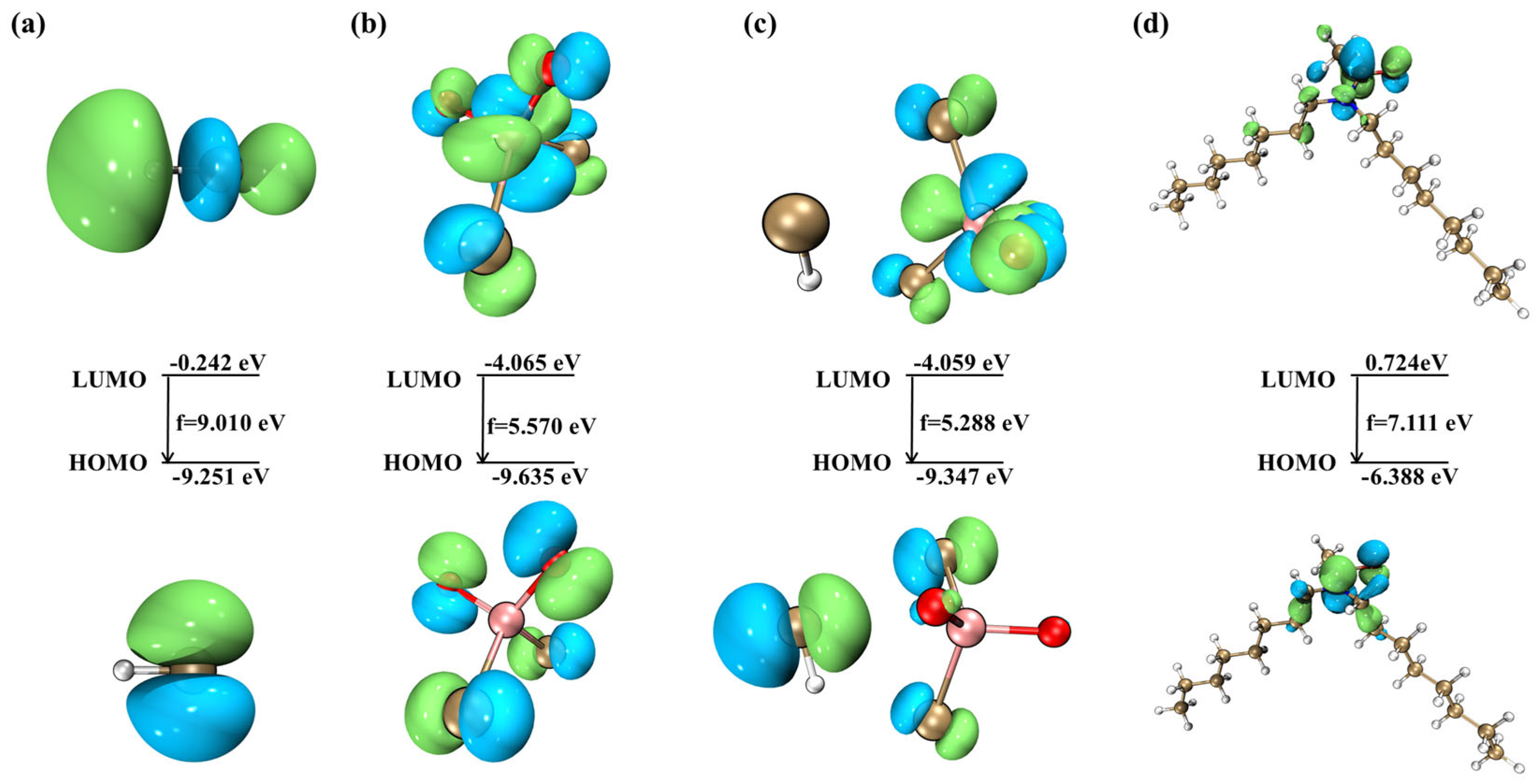
Frontier molecular orbital calculations were performed based on DFT to investigate the possible molecular species in the chloride system. As shown in Figure 2a, the HOMO and LUMO energy levels of HCl are −9.251 eV and −0.242 eV, respectively, with an energy gap (ΔE) of 9.01 eV. The large energy gap indicates the high stability and low chemical reactivity of HCl, suggesting that it is unlikely to interact with the amide extractant through orbital interactions and is therefore difficult to extract into the organic phase.
In contrast, molybdenum oxychloride complexes exhibit lower LUMO energy levels and smaller energy gaps. As shown in Figure 2b, MoO2Cl2 has HOMO and LUMO energy levels of −9.335 eV and −4.065 eV, respectively, with a ΔE of 5.570 eV. The lower LUMO energy indicates a stronger electron-accepting ability, while the smaller energy gap suggests higher chemical reactivity, facilitating coordination interactions. Similarly, HMoO2Cl3 (Figure 2c) shows a relatively small energy gap (5.288 eV), indicating high reactivity and the ability to interact with electron-donating extractant molecules. For the amide extractant (Figure 2d), the HOMO and LUMO energy levels are −6.388 eV and 0.724 eV, respectively, with a ΔE of 7.11 eV. The HOMO is mainly distributed around the carbonyl oxygen of the amide group, indicating strong electron-donating capability in this region, whereas the relatively high LUMO level suggests weak electron-accepting ability. Therefore, the molybdenum oxychloride complexes with low LUMO energy levels can readily interact with the electron-rich carbonyl oxygen of the amide extractant, leading to the formation of stable extracted complexes.

3.2.2. Molecular Electrostatic Potential Analysis

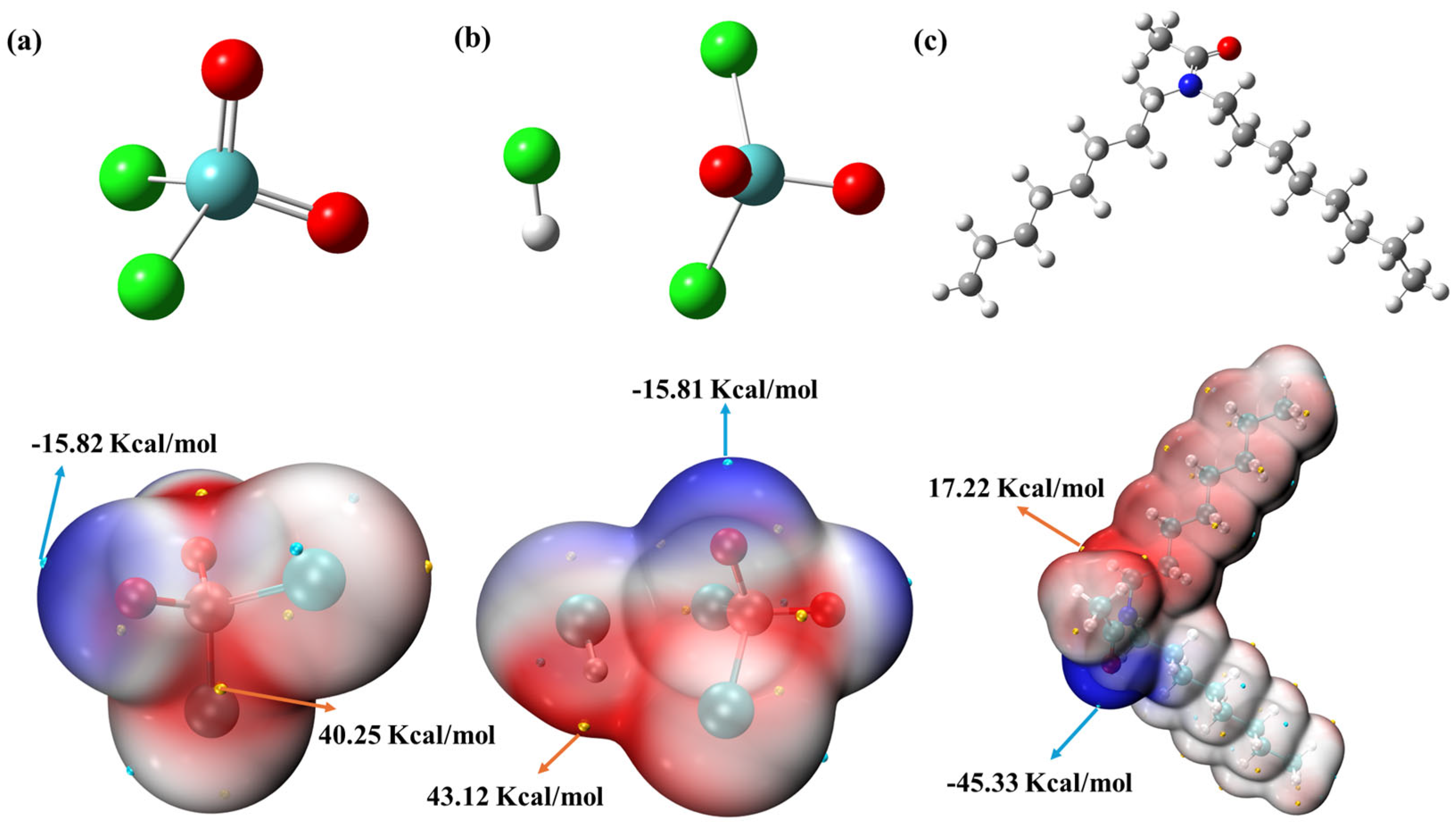
To further identify the reactive sites and interaction modes of the molecules during extraction, the MEP distributions of MoO2Cl2, HMoO2Cl3, and the amide extractant were calculated, as shown in Figure 3. As illustrated in Figure 3a, MoO2Cl2 exhibits an uneven charge distribution, with the maximum positive potential located at the terminal Cl atoms and an MEP value of approximately 40.25 kcal/mol, indicating a certain electrophilic character. The negative potential is mainly distributed on the opposite side of the molecule, with a minimum value of about −15.82 kcal/mol. This suggests that the Cl atoms can act as potential electrophilic sites for intermolecular interactions. In contrast, for HMoO2Cl3 (Figure 3b), the maximum positive potential is primarily located around the hydrogen atom, with an MEP value of 43.12 kcal/mol, which is significantly higher than that of other regions, while the minimum negative potential is about −15.81 kcal/mol. This indicates that, after protonation, the hydrogen atom becomes the dominant electrophilic active site. Therefore, compared with the Cl atoms, the hydrogen atom is more likely to interact with nucleophilic functional groups. For the amide extractant (Figure 3c), the minimum electrostatic potential is located near the carbonyl oxygen atom, with an MEP value of −45.33 kcal/mol. This region exhibits a strong negative potential, indicating high electron density and typical nucleophilic character. Overall, the MEP analysis suggests that the hydrogen atom in HMoO2Cl3 acts as the primary electrophilic center, which can interact with the nucleophilic carbonyl oxygen of amide extractant through hydrogen bonding, leading to the formation of stable intermolecular complexes.

3.3. Extraction Behavior of Mo(VI) from Ammonium Molybdate Solution

3.3.1. Effect of HCl Concentration and Extractant Concentration on Mo(VI) Extraction

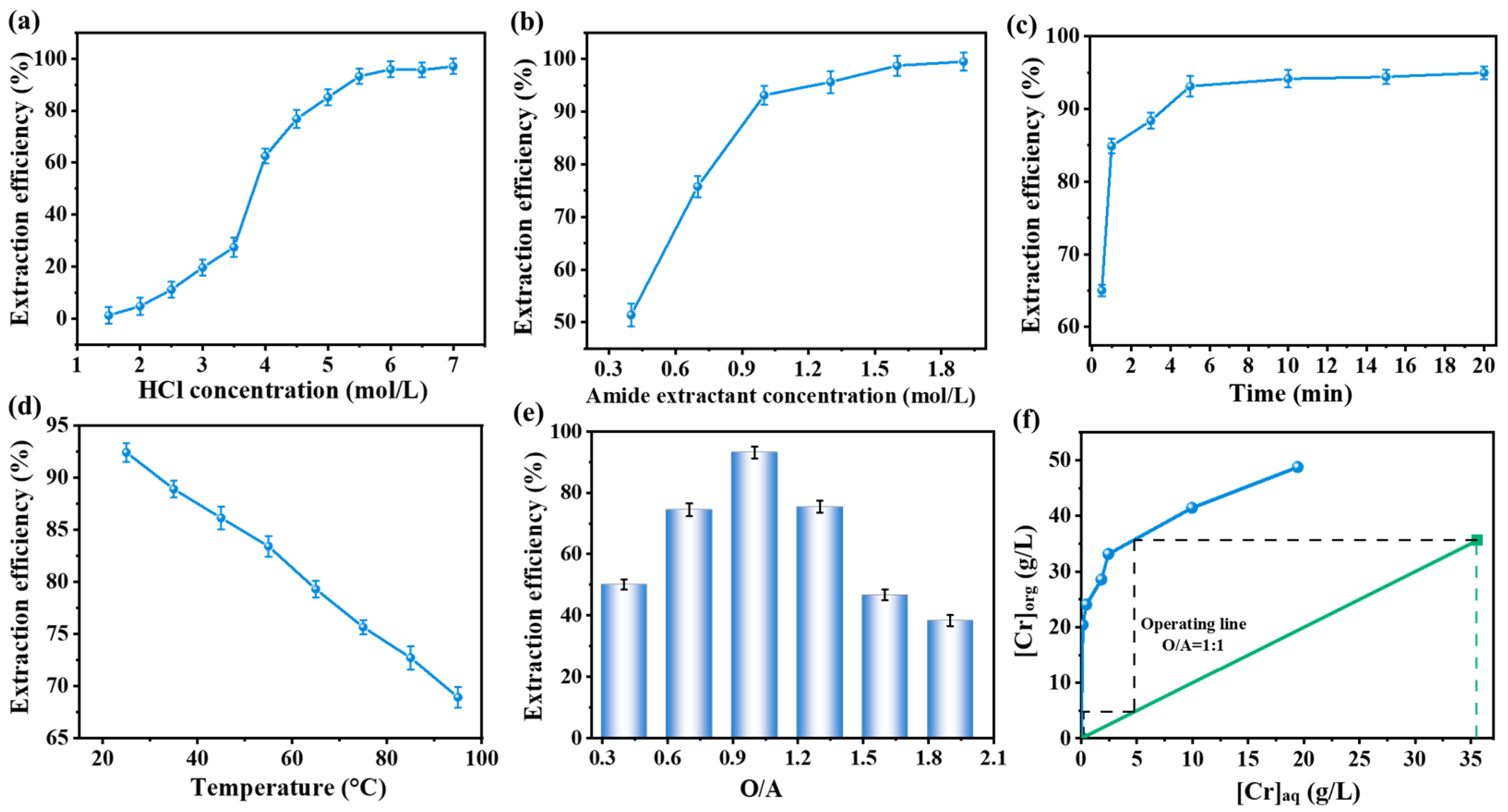
HCl concentration plays a critical role in Mo(VI) extraction, as it determines both the speciation of Mo(VI) in solution and the protonation of the amide extractant [29]. The experiments were conducted at an extraction time of 5 min, a temperature of 25 °C, O/A ratio of 1:1, and 1 mol/L amide extractant diluted in D80 solvent oil. As shown in Figure 4a, the extraction efficiency of Mo(VI) increased steadily with increasing HCl concentration, reaching 93.13% at 5.5 mol/L, and then leveled off at higher acidities. This behavior can be attributed to the change in Mo(VI) speciation in the chloride system. At low acidity, Mo(VI) mainly exists as oxyanions such as MoO42− and HMoO4−, which are difficult to extract by the amide extractant. With increasing HCl concentration, chloride ions coordinate with Mo(VI) to form anionic oxychloride species such as HMoO2O3. Meanwhile, the carbonyl oxygen of the amide becomes protonated under acidic conditions, facilitating ion-pair formation with the anionic Mo species and enhancing extraction through hydrogen bonding. Therefore, higher acidity significantly promotes Mo(VI) extraction. Considering both extraction efficiency and reagent consumption, 5.5 mol/L HCl was selected for subsequent experiments.
The extractant concentration also significantly affects the extraction efficiency. Under the fixed conditions described above with 5.5 mol/L HCl, the effect of extractant concentration was investigated (Figure 4b). The extraction efficiency increased markedly with increasing extractant concentration, rising from 51.39% at 0.4 mol/L to 93.13% at 1.0 mol/L, and then showing only a slight increase (6.40%) up to 1.9 mol/L. This is attributed to the increase in available active sites in the organic phase at higher extractant concentrations, which promotes complex formation with Mo(VI). However, excessive extractant concentration leads to increased organic phase viscosity and reduced mass transfer efficiency, while also increasing reagent consumption. Therefore, 1 mol/L of amide extractant was selected as the optimal concentration.

3.3.2. Effect of Extraction Time and Temperature on Mo(VI) Extraction

Extraction time is a key parameter to ensure that the extraction reaction reaches phase equilibrium. In the experiment, using fixed conditions of 5.5 mol/L HCl, 1 mol/L amide extractant, 25 °C, and an organic-to-aqueous phase ratio (O/A) of 1:1, the effect of extraction time on the extraction efficiency of Mo(VI) was investigated in the range of 0.5–20 min. With the prolongation of extraction time, the extraction efficiency of Mo(VI) increased rapidly. When the extraction time reached 5 min, the extraction efficiency was 93.13%. Further extending the time to 20 min had little influence on the extraction efficiency, indicating that the extraction system could reach phase equilibrium within 5 min (Figure 4c).
Subsequently, the effect of extraction temperature on the extraction efficiency of Mo(VI) was studied in the range of 20–95 °C, with the HCl concentration fixed at 5.5 mol/L, amide extractant concentration at 1 mol/L, extraction time at 5 min, and phase ratio O/A = 1:1. As shown in Figure 4d, the extraction efficiency of Mo(VI) decreased continuously with increasing temperature. When the temperature rose from 25 °C to 95 °C, the extraction efficiency dropped from 92.44% to 68.94%, demonstrating that the extraction reaction is exothermic, and low temperature is favorable for the extraction process. This is because the extraction of Mo(VI) by amide extractant mainly depends on ion-pair association and hydrogen bonding interactions. Increasing temperature destroys the stability of hydrogen bonds, reduces the solubility of the extracted complex in the organic phase, and aggravates volatilization loss of the organic phase, thus resulting in a significant decrease in the extraction efficiency. Therefore, 25 °C was selected as the optimal extraction temperature in this work.

3.3.3. Effect of Phase Ratio on Mo(VI) Extraction and Extraction Isotherms

The effect of the phase ratio (O/A) on the extraction efficiency of Mo(VI) was investigated within the range of 0.4:1 to 1.9:1. The experiments were conducted under fixed conditions: an HCl concentration of 5.5 mol/L, an amide extractant concentration of 1 mol/L, an extraction time of 5 min, and a temperature of 25 °C. As the phase ratio increased, the extraction efficiency of Mo(VI) rose continuously. When the phase ratio increased from 0.4:1 to 1:1, the extraction efficiency rapidly increased from 50.08% to 93.13%. Further increasing the O/A ratio resulted in only a slight improvement in extraction efficiency, whereas the molybdenum loading concentration in the organic phase decreased due to dilution of the loaded organic phase. Therefore, considering both extraction efficiency and molybdenum enrichment, an O/A ratio of 1:1 was selected (Figure 4e).
Through a series of experiments, the optimal conditions for the single-stage extraction of molybdenum by amide extractant were determined as follows: HCl concentration of 5.5 mol/L, extractant concentration of 1 mol/L, extraction time of 5 min, extraction temperature of 25 °C, and an O/A phase ratio of 1:1. Under these conditions, the extraction efficiency of Mo(VI) reached 93.13%. To determine the theoretical number of stages required for counter-current extraction, a McCabe–Thiele diagram [30,31,32] was constructed using the data obtained at O/A = 1:1 (Figure 4f). The stepping procedure between the operating line and the equilibrium curve indicates that only one theoretical extraction stage is required to achieve the desired extraction performance. This demonstrates that the amide extractant possesses excellent extraction capacity and a high distribution coefficient (D = 13.56) for Mo(VI) in the chloride system, where the distribution coefficient is defined as D = Corg/Caq, with Corg and Caq representing the equilibrium concentrations of Mo(VI) in the organic and aqueous phases, respectively. The high distribution coefficient enables efficient molybdenum recovery without the need for multi-stage extraction. This characteristic is advantageous for simplifying the process flow and reducing both equipment investment and operating costs.

3.4. Scrubbing of the Mo-Loaded Organic Phase

3.4.1. Effect of Scrubbing Agent Concentration on Scrubbing Performance

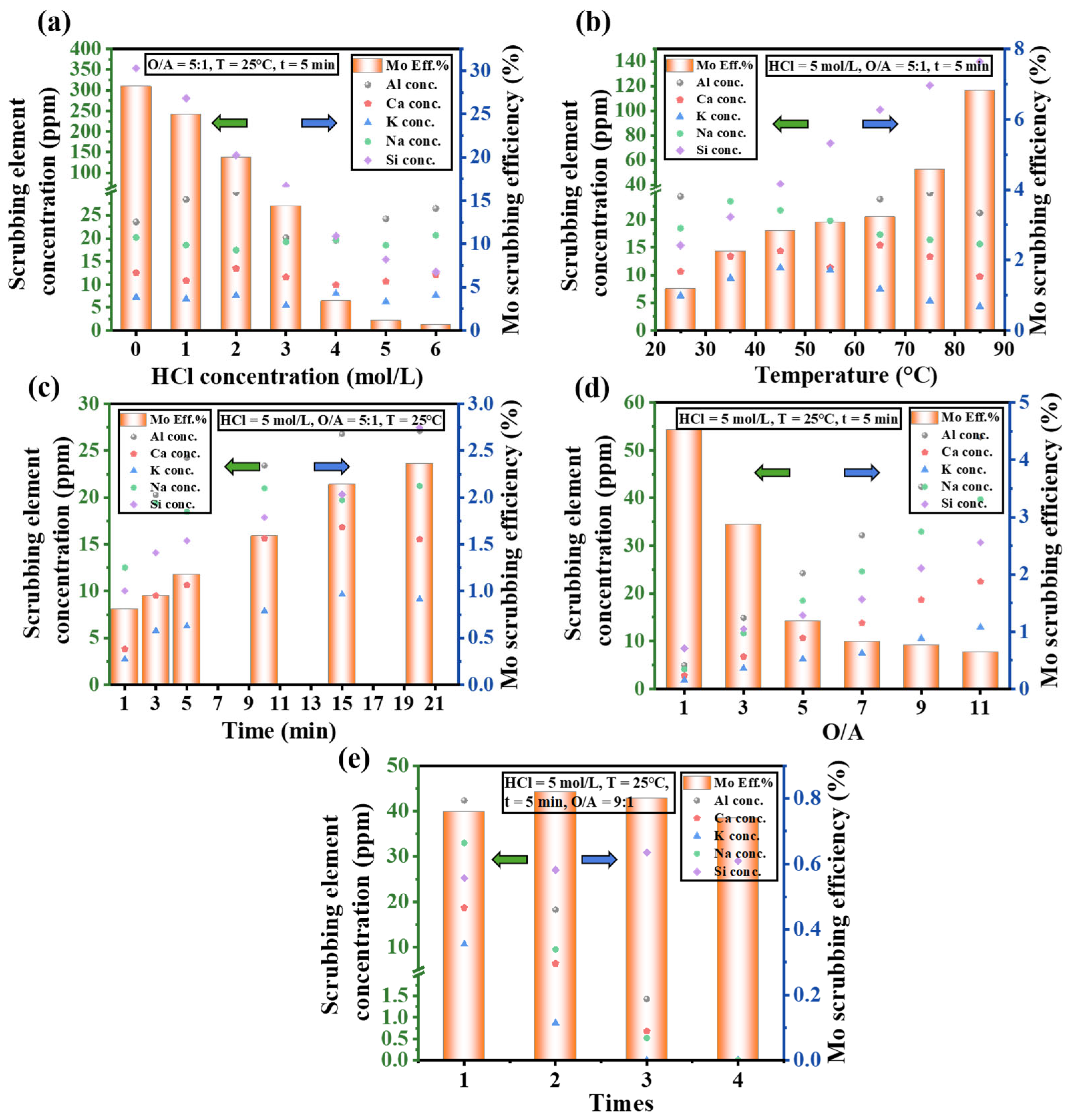
As the extraction system is based on a hydrochloric acid medium, hydrochloric acid solution was selected as the scrubbing agent to maintain the stability of the system acidity during the scrubbing process and to prevent significant molybdenum loss caused by abrupt changes in the chemical environment. High-purity hydrochloric acid was used to avoid the introduction of additional impurities during the scrubbing process. The experiment was conducted with A fixed scrubbing temperature of 25 °C and a scrubbing time of 5 min. The scrubbing ratio was O/A = 5:1. The effects of the HCl concentration in the scrubbing solution on impurity removal and molybdenum scrubbing efficiency were investigated. The results are shown in Figure 5a. The scrubbing efficiency of molybdenum showed a continuous downward trend with the increase in the HCl concentration of the scrubbing agent. This is because the higher the acidity, the more stable the structure of the molybdenum extract in the loaded organic phase, effectively inhibiting the dissociation of the extract, thereby reducing the migration of Mo (VI) to the aqueous phase and lowering the loss of molybdenum. When the concentration of HCl increased from 0 to 4.0 mol/L, the scrubbing efficiency of Mo (VI) decreased significantly from 28.16% to 3.43%. When the concentration was further increased to 5.0 mol/L, the scrubbing efficiency dropped to 1.18%. It is worth noting that at this concentration, the contents of other impurity elements in the system is also maintained at a relatively low level. The detection results of impurity elements in the scrubbing water phase show that the concentrations of Al, Ca, K and Na do not show a significant pattern with the concentration of HCl in the scrubbing agent. This phenomenon further verifies that such impurities do not enter the organic phase by combining with the amide extractant through the extraction reaction, but are mixed into the loaded organic phase through physical entraining effect of the organic phase. For Si impurities, their concentration in the scrubbing aqueous phase shows a significant decreasing trend with increasing HCl concentration. This confirms that acidic conditions are conducive to the combination of silicic acid and amide [33], and also indicates that amide extractant has a certain extraction ability for silicic acid. Further, it shows that Si is the most difficult impurity element to remove in the loaded organic phase. Based on the comprehensive molybdenum scrubbing efficiency and impurity removal effect, the optimal concentration of HCl for the scrubbing agent was selected as 5.0 mol/L.

3.4.2. Effect of Scrubbing Temperature and Time on Scrubbing Performance

The effect of scrubbing temperature is depicted in Figure 5b. The experiment was carried out at a fixed HCl concentration of 5.0 mol/L, a scrubbing time of 5 min, and a scrubbing phase ratio of O/A = 5:1, while the temperature was varied from 25 to 85 °C to investigate its influence on the scrubbing process. The results show that the scrubbing efficiency of molybdenum increases slowly with rising temperature. This phenomenon can be attributed to the dual effects of elevated temperature: on the one hand, intensified molecular thermal motion accelerates the mass transfer rate, which facilitates the desorption of impurities from the organic phase; on the other hand, high temperature weakens the stability of the extracted complex and promotes its decomposition, resulting in increased co-loss of molybdenum. At 25 °C, the scrubbing efficiency of the main impurities already met the requirements of the subsequent process, with a Mo scrubbing efficiency of only 1.18%. Further increasing the temperature leads to a remarkable rise in molybdenum loss, whereas the improvement in impurity scrubbing efficiency is negligible. Therefore, the scrubbing temperature was determined to be 25 °C.
Subsequently, the effect of scrubbing time was investigated (Figure 5c). With HCl concentration fixed at 5.0 mol/L, scrubbing temperature at 25 °C, and scrubbing phase ratio O/A = 5:1, the influence of scrubbing time ranging from 1 to 20 min on the scrubbing performance was examined. As the scrubbing time prolonged, the scrubbing efficiency of impurities increased rapidly, while the molybdenum scrubbing efficiency rose slowly. The scrubbing efficiency of the main impurities tended to level off when the scrubbing time reached 5 min. Further extending the scrubbing time brought no obvious improvement in impurity removal, but caused a continuous increase in molybdenum loss. This indicates that the scrubbing process can reach equilibrium within 5 min, and that an excessively long scrubbing time will aggravate molybdenum loss. Accordingly, the optimal scrubbing time was selected as 5 min.

3.4.3. Effect of Phase Ratio on Scrubbing Performance

The experiment investigated the effect of the O/A ratio ranging from 1:1 to 11:1 on the scrubbing effect under the conditions of a fixed HCl concentration of 5.0 mol/L, scrubbing temperature of 25 °C, and scrubbing time of 5 min. The results are shown in Figure 5d. The molybdenum scrubbing efficiency showed a significant downward trend as the ratio increased: when the ratio increased from 1:1 to 9:1, the molybdenum scrubbing efficiency decreased from 4.52% to 0.76%. Further increasing the ratio to 11:1 reduced the molybdenum loss by 0.64%. Meanwhile, the scrubbing efficiency of impurity elements did not significantly decrease due to the reduction in the volume of the aqueous phase. Overall, it remained at a relatively high level, and the process requirements for impurity removal could be met under the condition of O/A = 9:1. When the ratio increases, the volume of the aqueous phase relatively decreases, and the transfer of Mo(VI) from the organic phase to the aqueous phase is restricted, thereby effectively reducing the loss of molybdenum. However, the binding of impurity elements in the organic phase is relatively weak, and they are more likely to migrate from the organic phase to the aqueous phase. Therefore, they can still be effectively eluted even under the condition of a smaller volume of the aqueous phase. Taking into account the molybdenum loss and impurity removal effect comprehensively, the scrubbing ratio is selected as O/A = 9:1.

3.4.4. Effect of Scrubbing Stages on Scrubbing Performance

Under the above-mentioned optimal scrubbing process conditions (HCl concentration of 5.0 mol/L, scrubbing temperature of 25 °C, scrubbing time of 5 min, and scrubbing ratio of O/A = 9:1), the influence of scrubbing frequency on the impurity removal effect and molybdenum loss was investigated. With the increase in the number of washes, the content of impurity elements in the loaded organic phase gradually decreases (Figure 5e). After the first wash, the contents of Al, Ca, K, Na and Si in the wash solution were 42.34 ppm, 18.65 ppm, 10.57 ppm, 32.94 ppm and 25.27 ppm respectively, indicating that a large amount of co-extracted impurities was effectively eluted during the first wash process. When the number of washes increased to the third time, the impurity content further decreased. Al, Ca, K and Na dropped to 1.43 ppm, 0.68 ppm, undetectable and 0.52 ppm respectively, indicating that most of the co-extracted impurities had been effectively removed. When the number of washes was further increased to the fourth time, the impurity elements were basically undetectable, but the improvement in impurity removal effect by further scrubbing was already very limited. At the same time, excessive scrubbing times will increase the operation steps and may lead to the loss of molybdenum in the organic phase. Therefore, taking into account the impurity removal effect, operational efficiency and molybdenum loss comprehensively, three washes were selected as the optimal number of washes. Under this condition, most of the co-extractive impurities in the loaded organic phase can be effectively removed, while keeping the molybdenum loss at a relatively low level.

3.5. Stripping of Mo from the Loaded Organic Phase

3.5.1. Effect of Stripping Agent Concentration on Stripping Efficiency

The extraction of Mo(VI) by the amide extractant is mainly achieved via ion-pair association and hydrogen bonding interactions under acidic conditions. Therefore, ammonia solution was employed as the stripping agent to neutralize H+ in the extracted complex, destroy its structure, and liberate Mo(VI) into the aqueous phase. High-purity ammonia solution was used to avoid the introduction of additional impurities during the stripping process. In the experiment, the stripping temperature was fixed at 65 °C, the stripping time at 5 min, and the stripping phase ratio O/A = 1:1 to investigate the effect of ammonia concentration on the stripping efficiency of Mo(VI).
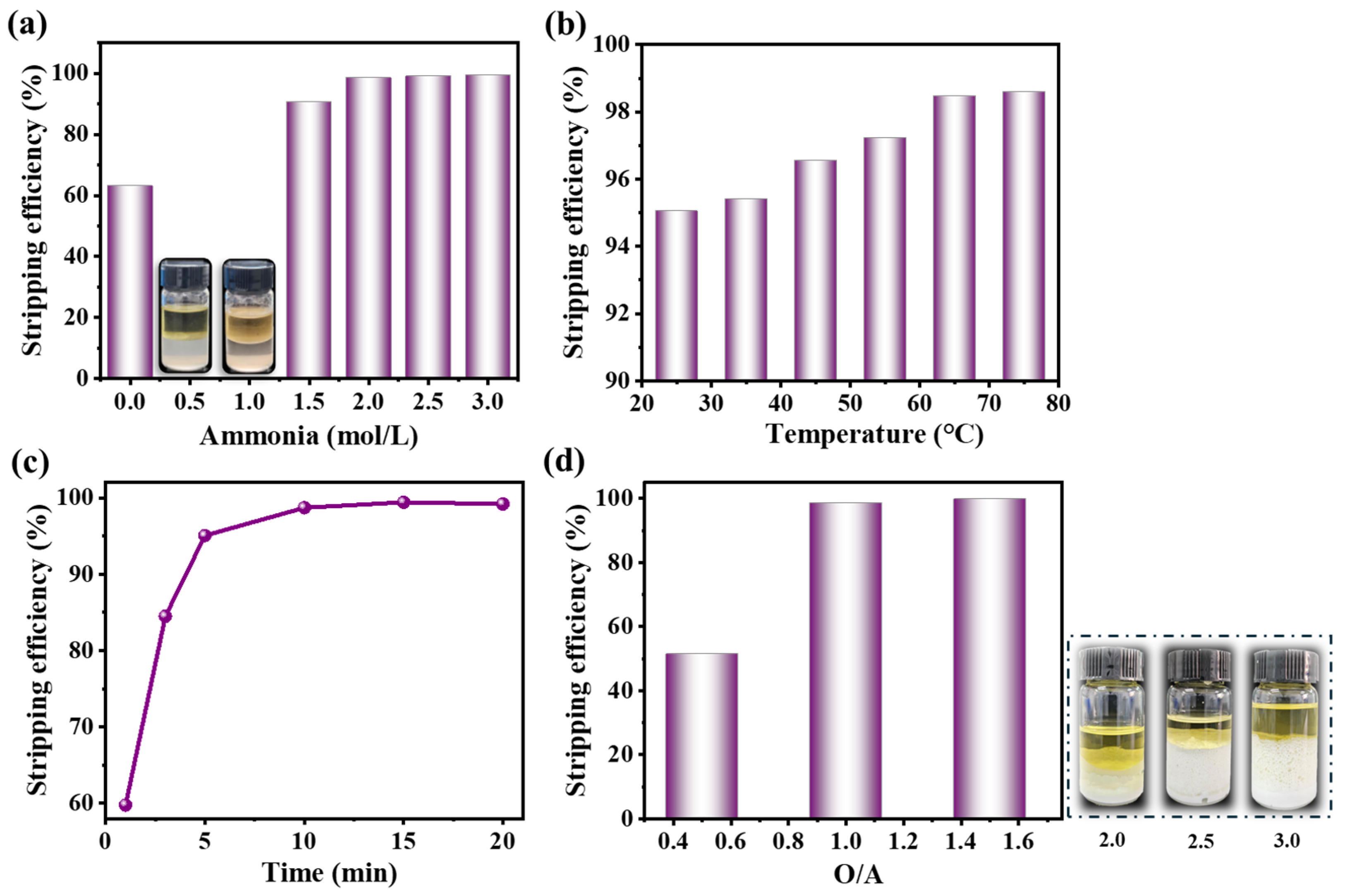
The results show that obvious precipitation occurs in the solution at relatively low ammonia concentrations (0.5–1.0 mol/L). This can be ascribed to the low solubility of ammonium molybdate formed under insufficient alkalinity, leading to its precipitation from the solution. No precipitation was observed when the ammonia concentration was increased to 1.5 mol/L and above, indicating that ammonium molybdate can be stably dissolved in the aqueous phase at higher alkalinity. The stripping efficiency of Mo(VI) increased rapidly with rising ammonia concentration: it rose from 63.15% to 98.47% as the ammonia concentration increased from 0 to 2 mol/L (Figure 6a). Further increasing the ammonia concentration to 3 mol/L had little effect on the stripping efficiency, which remained nearly constant. This phenomenon can be explained as follows: with the increase in ammonia concentration, the OH− concentration in the aqueous phase increases, which more effectively neutralizes H+ in the extracted complex, disrupts the ion-pair and hydrogen bonding interactions between amide extractant and Mo(VI), and thus releases Mo(VI) from the organic phase into the aqueous phase. Meanwhile, ammonium molybdate formed under alkaline conditions is stably soluble in the solution, which favors the stripping process. The extracted complex was almost completely decomposed and the stripping reaction approached equilibrium when the ammonia concentration reached 2.0 mol/L. Further increasing the ammonia concentration hardly improved the stripping efficiency, but may increase ammonia volatilization losses and the cost of subsequent treatment. Consequently, the optimal ammonia concentration for the stripping agent was determined to be 2.0 mol/L.

3.5.2. Effect of Stripping Temperature and Time on Stripping Efficiency

The influence of stripping temperature on the stripping efficiency of Mo(VI) is shown in Figure 6b. The experiment investigated the stripping behavior when the temperature rose from 25 °C to 75 °C under the conditions of a fixed ammonia water concentration of 2.0 mol/L, a stripping time of 5 min, and a stripping ratio of O/A of 1:1. Overall, the stripping efficiency only increased slightly with the rise in temperature. At 25 °C, it had already reached an efficient stripping level of 95.05%. When the temperature continued to rise to 55 °C, the stripping efficiency remained basically stable without showing a significant increase. This indicates that the stripping reaction is not sensitive to temperature changes and that full stripping of molybdenum can be achieved at room temperature.
The influence law of stripping time on the stripping efficiency of Mo(VI) is shown in Figure 6c. Under the fixed conditions of ammonia water concentration of 2.0 mol/L, stripping temperature of 25 °C, and stripping ratio of O/A = 1:1, the stripping efficiency showed a rapid increase and tended to stabilize with the extension of time. When the stripping time reached 10 min, the stripping efficiency had already reached 98.84%. After that, the duration was further extended to 15 min, and the stripping efficiency remained basically unchanged, indicating that the stripping reaction could completely reach equilibrium within 10 min. This equilibrium speed is significantly superior to some traditional stripping systems, shortening the overall process flow. The subsequent experiments selected 10 min as the optimal stripping time.

3.5.3. Effect of Phase Ratio on Stripping Efficiency

To balance the efficient recovery of molybdenum and the enrichment concentration in the stripping solution, it is necessary to optimize the stripping ratio. The experiment was conducted with a fixed ammonia water concentration of 2.0 mol/L, a stripping temperature of 25 °C, and a stripping time of 10 min. The effect of the stripping ratio O/A within the range of 0.5:1 to 3:1 on the stripping efficiency of Mo(VI) was investigated. The results are shown in Figure 6d. With the increase in the stripping ratio, the stripping efficiency of Mo(VI) showed a trend of rapid increase first and then tending to be abnormal: when the ratio increased from 0.5:1 to 1.5:1, the stripping efficiency significantly increased from 51.43% to 99.87%. This behavior indicates that, under the present ammonia concentration, the stripping process was not limited by stripping agent capacity within the investigated phase ratio range. However, when the ratio was further increased to 2:1, the stripping process was blocked and the stripping operation could not be carried out effectively. This phenomenon may be attributed to the fact that the proportion of the organic phase is too high due to the excessive contrast, and the relative volume of the stripping agent ammonia water is too small, making it difficult to fully contact and mix with the loaded organic phase. At the same time, the high viscosity makes phase separation difficult, which hinders the mass transfer process of molybdenum from the organic phase to the aqueous phase. Taking into account the stripping efficiency and enrichment effect comprehensively, the optimal stripping ratio is selected as O/A = 1.5:1.

3.6. FT-IR Analysis of the Mo Extraction Mechanism

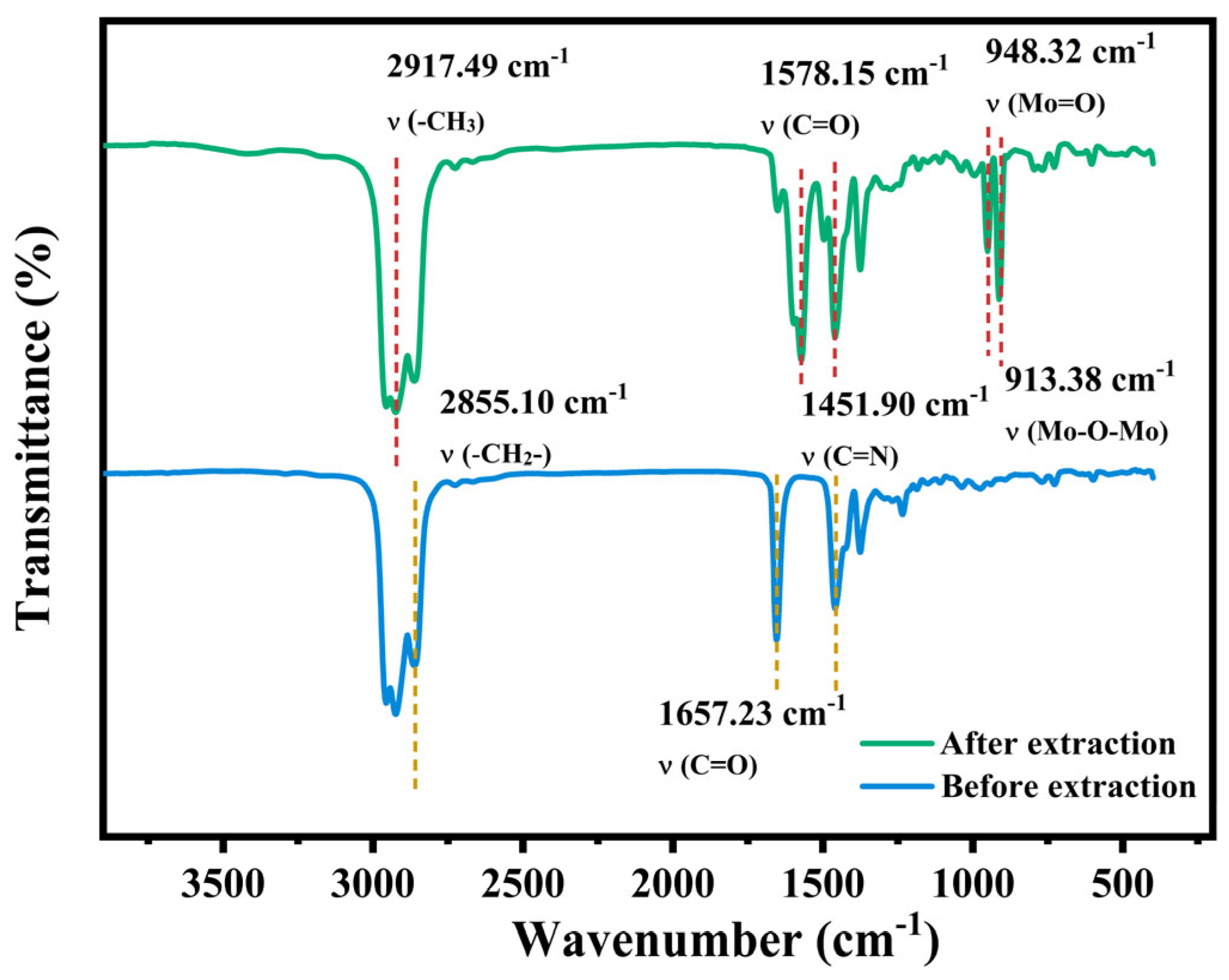
To further explore the extraction mechanism of molybdenum species by the amide extractant in the chlorination system, FT-IR analysis was conducted on the organic phase before and after extraction. The results are shown in Figure 7. In the organic phase spectrum before extraction, a distinct absorption peak was observed at 2855.10 cm−1, which belonged to the symmetrical stretching vibration of the -CH2- group, indicating the presence of long-chain alkyl structures in the extractant molecules. Meanwhile, a strong absorption peak appeared at 1657.23 cm−1, corresponding to the stretching vibration characteristic peak of the carbonyl group (C=O) in the amide group, which is a typical structural feature of amide extractants. In addition, a C=N vibration peak was observed at 1451.90 cm−1, further confirming the integrity of the amide molecular structure [34,35]. After molybdenum extraction, the infrared spectrum of the organic phase underwent significant changes. Firstly, a new absorption peak emerged at 2917.49 cm−1, corresponding to the stretching vibration peak of the -CH3 group, indicating that the alkyl chain of the extractant molecule still maintains a stable structure. Meanwhile, the carbonyl vibrational peak at 1657.23 cm−1 shifted significantly, and a new absorption peak emerged near 1578.15 cm−1, indicating that the carbonyl oxygen atom was involved in the intermolecular interaction, causing a change in its electron cloud density. This change indicates that the carbonyl group in the amide molecule participates in complexation or hydrogen bonding during the extraction process. Meanwhile, a new absorption peak emerged at 948.32 cm−1, which can be attributed to the stretching vibration peak of the Mo=O bond (ν(Mo=O)), indicating that the molybdenum oxide species has entered the organic phase and formed a new molybdenum oxide structure [36,37,38]. In addition, a Mo-O-Mo vibration peak was observed at 913.38 cm−1, indicating that molybdenum oxide species form certain structural units in the organic phase [39,40].

3.7. Thermodynamic Analysis of the Mo Extraction Process

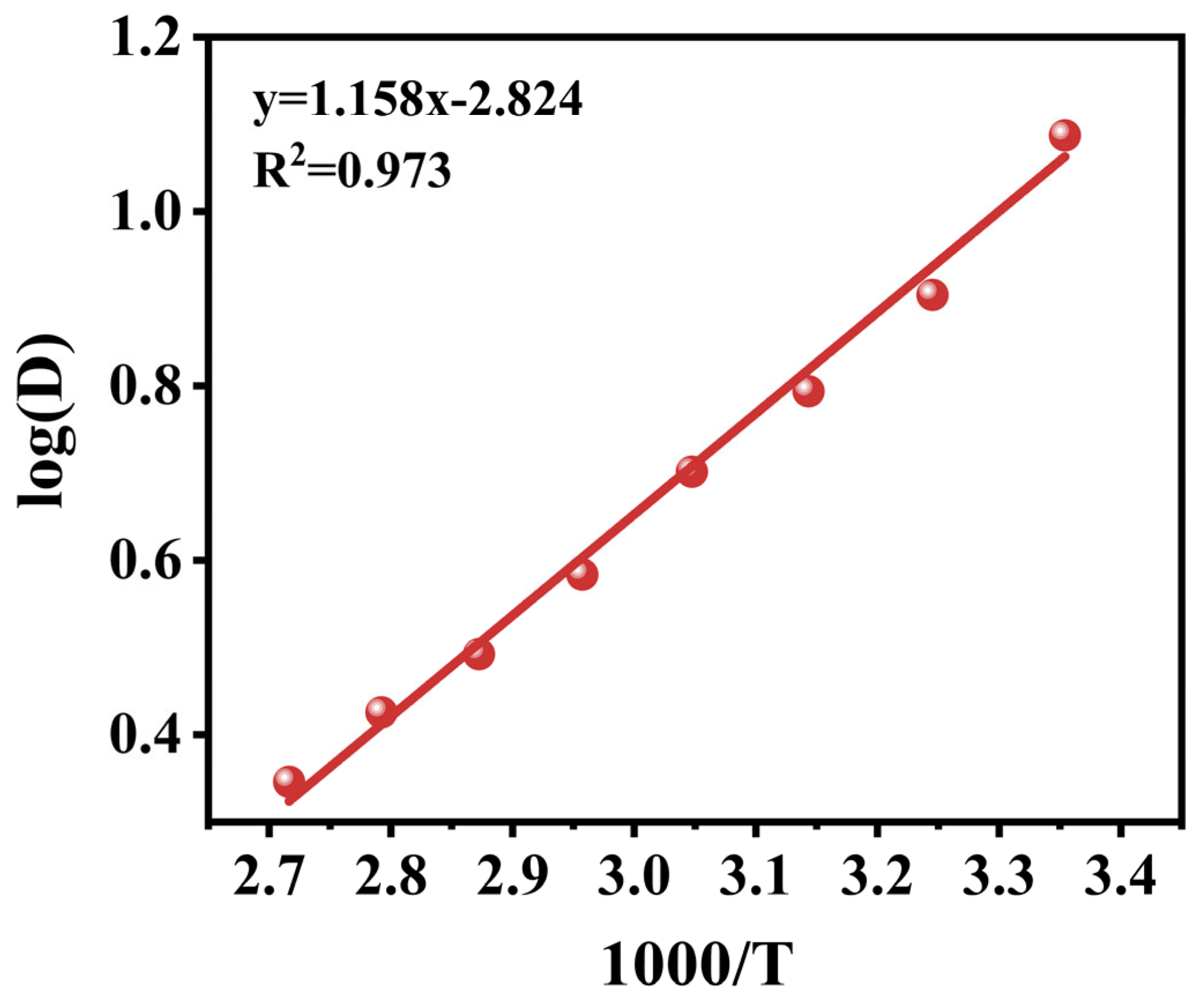
To further elucidate the thermodynamic characteristics of Mo species extraction by the amide extractant in the chloride system, the enthalpy change in the extraction reaction was evaluated. According to the Van’t Hoff equation [41], ΔHθ can be determined from the linear relationship between log(D) and 1000/T, as described in Equation (5), where D is the distribution ratio, R is the gas constant, and T is the absolute temperature (K).
Δ log D / Δ ( 1000 / T ) = − Δ H θ 2.303 R
Thermodynamic experiments were conducted over a temperature range of 25–95 °C using a thermostatic water bath. The experimental conditions were as follows: 1 mol/L amide extractant diluted in D80 solvent oil, an O/A ratio of 1:1, an extraction time of 5 min, and an aqueous phase consisting of ammonium molybdate solution in 5.5 mol/L HCl. The relationship between the distribution ratio of HMoO2Cl3 and temperature was obtained. As shown in Figure 8, a good linear correlation between log(D) and 1000/T was observed, with a slope of 1.158 and an R2 value of 0.973. Based on Equation (5), the enthalpy change was calculated to be −22.17 kJ/mol. The negative ΔHθ indicates that the extraction of HMoO2Cl3 by the amide extractant is an exothermic process. Consequently, increasing temperature shifts the equilibrium in the reverse direction, resulting in a decrease in the distribution ratio of Mo(VI). Therefore, lower operating temperatures are favorable for enhancing the extraction efficiency.

4. Conclusions

In this study, the extraction and purification of Mo(VI) from ammonium molybdate solution in a chloride medium using an amide extractant were systematically investigated. The extraction, scrubbing, and stripping processes were optimized, and the extraction mechanism was elucidated through spectroscopic analysis and theoretical calculations. The results showed that HCl concentration and extractant concentration play key roles in Mo(VI) extraction. Under the optimal conditions, a high extraction efficiency of 93.13% was achieved. Efficient removal of co-extracted impurities (Al, Ca, K, Na, and Si) was accomplished through a three-stage scrubbing process using 5.0 mol/L HCl in each stage. Although this mode increases scrubbing agent consumption, it effectively enhances deep impurity removal, which is beneficial for the preparation of high-purity ammonium molybdate products. Subsequently, efficient stripping of Mo(VI) was achieved using ammonia solution, with a stripping efficiency of 98.47%. FT-IR and ESI-MS analyses indicated that Mo(VI) was extracted as protonated molybdenum oxychloride species through hydrogen bonding interactions with the amide extractant. DFT calculations further confirmed the strong interaction between HMoO2Cl3 and the carbonyl oxygen of the amide extractant, explaining the high selectivity of the extraction system. Thermodynamic analysis revealed that the extraction process is exothermic, with an enthalpy change of −22.17 kJ/mol. Overall, the proposed extraction system exhibits high efficiency, good selectivity, and mild operating conditions, providing a promising approach for the recovery and purification of molybdenum from chloride media.

Author Contributions

Conceptualization, Z.Y. and S.C.; methodology, T.L., J.C., S.L. and S.C.; validation, T.L. and G.W.; formal analysis, T.L., J.C. and S.L.; investigation, T.L.; writing—original draft preparation, T.L.; writing—review and editing, Z.Y., G.W. and S.C.; visualization, G.W. and S.C.; funding acquisition, Z.Y. All authors have read and agreed to the published version of the manuscript.

Funding

This work was supported by the National Key R&D Program of China under Grant Number 2024YFC3907704, the National Natural Science Foundation of China under Grant Number 52404421, the China Postdoctoral Science Foundation under Grant Number 2024M751661, and the Chinese Academy of Sciences under Grant Number YBR2023001 and YBR2025003.

Data Availability Statement

The original contributions presented in this study are included in the article. Further inquiries can be directed to the corresponding authors.

Conflicts of Interest

Author Song Chen was employed by GRINM Resources and Environment Tech. Co., Ltd. The remaining authors declare that the research was conducted in the absence of any commercial or financial relationships that could be construed as a potential conflict of interest.

References

  1. Parhi, P.K.; Misra, P.K. Environmental Friendly Approach for Selective Extraction and Recovery of Molybdenum (Mo) from a Sulphate Mediated Spent Ni–Mo/Al2O3 Catalyst Baked Leach Liquor. J. Environ. Manag. 2022, 306, 114474. [Google Scholar] [CrossRef] [Scilit] [PubMed]
  2. Zhang, Y.; Sun, T.; Hou, Q.; Guo, Q.; Lu, T.; Guo, Y.; Yan, C. A Green Method for Extracting Molybdenum (VI) from Aqueous Solution with Aqueous Two-Phase System without Any Extractant. Sep. Purif. Technol. 2016, 169, 151–157. [Google Scholar] [CrossRef] [Scilit]
  3. Zhang, X.; Ning, P.; Cao, H.; Zhang, Y. Measurement and Modeling for Molybdenum Extraction from the Na2MoO4–H2SO4–H2O System by Primary Amine N1923. Ind. Eng. Chem. Res. 2016, 55, 1427–1438. [Google Scholar] [CrossRef] [Scilit]
  4. Yang, L.; Li, X.; Qi, T.; Liu, G.; Peng, Z.; Zhou, Q. Direct Synthesis of Pure Ammonium Molybdates from Ammonium Tetramolybdate and Ammonium Bicarbonate. ACS Sustain. Chem. Eng. 2020, 8, 18237–18244. [Google Scholar] [CrossRef] [Scilit]
  5. Sun, H.; You, M.; Yang, Z.; Liu, B.; Huang, Y.; Han, G. Metaphosphate-Quartz-Assisted Volatilization Roasting: An Innovative Approach for Streamlined Production of High-Purity MoO3 from Low-Grade Molybdenite Concentrates with Enhanced Molybdenum Recovery. Chem. Eng. Sci. 2026, 320, 122603. [Google Scholar] [CrossRef] [Scilit]
  6. Padilla, R.; Letelier, H.; Ruiz, M.C. Kinetics of Copper Dissolution in the Purification of Molybdenite Concentrates by Sulfidation and Leaching. Hydrometallurgy 2013, 137, 78–83. [Google Scholar] [CrossRef] [Scilit]
  7. Zhao, H.; Yang, H.; Tong, L.; Zhang, Q.; Zhang, J. Coupled Precipitation Enrichment of Molybdenum and Tungsten for Synthesizing Amtof (Artificial Molybdenum and Tungsten Ore First) from a Complex Trace Molybdenum-Tungsten Mixed Solution. Miner. Eng. 2025, 228, 109328. [Google Scholar] [CrossRef] [Scilit]
  8. Liu, Q.; Liu, R.; Yang, S.; Feng, W.; Wang, M. Removal Mechanism of Mineral Impurities in Molybdenum Concentrate Treatment Process. Minerals 2023, 13, 35. [Google Scholar] [CrossRef] [Scilit]
  9. Aracena, A.; Sanino, A.; Jerez, O. Dissolution Kinetics of Molybdite in KOH Media at Different Temperatures. Trans. Nonferrous Met. Soc. China 2018, 28, 177–185. [Google Scholar] [CrossRef] [Scilit]
  10. Zhao, Z.; Guo, M.; Zhang, M. Extraction of Molybdenum and Vanadium from the Spent Diesel Exhaust Catalyst by Ammonia Leaching Method. J. Hazard. Mater. 2015, 286, 402–409. [Google Scholar] [CrossRef] [Scilit] [PubMed]
  11. Zeng, L.; Yong Cheng, C. A Literature Review of the Recovery of Molybdenum and Vanadium from Spent Hydrodesulphurisation Catalysts: Part II: Separation and Purification. Hydrometallurgy 2009, 98, 10–20. [Google Scholar] [CrossRef] [Scilit]
  12. Zhang, M.; Liu, C.; Zhu, X.; Xiong, H.; Zhang, L.; Gao, J.; Liu, M. Preparation of Ammonium Molybdate by Oxidation Roasting of Molybdenum Concentrate: A Comparison of Microwave Roasting and Conventional Roasting. Chem. Eng. Process.-Process Intensif. 2021, 167, 108550. [Google Scholar] [CrossRef] [Scilit]
  13. Hu, Y.; Du, J.; Guan, W.; Wu, S.; Wang, M.; Cao, Z.; Li, Q.; Zhang, G.; Wu, X. Efficient and Deep Removal of Water-Soluble Quaternary Ammonium Cations by Ion Exchange with D001: Towards Ammonium Molybdate Purification and Environmental Protection. J. Water Process Eng. 2025, 78, 108802. [Google Scholar] [CrossRef] [Scilit]
  14. Sun, Y.; Yang, G.; Zhong, X.; Chen, Y.; Guan, W.; Wu, S.; Wu, X.; Zhang, G.; Wang, M.; Li, Q. Selectively Stepwise Recovery of Molybdenum and Vanadium from Sulfuric Acid Lixivium of Spent HDS Catalysts Using Solvent Extraction. J. Environ. Chem. Eng. 2025, 13, 120467. [Google Scholar] [CrossRef] [Scilit]
  15. Salehi, H.; Maroufi, S.; Kh. Nekouei, R.; Chinu, K.; Sahajwalla, V. Tailored Separation of Light Rare Earth Elements Using Combined Oxidative Precipitation and Multi-Stage Solvent Extraction Techniques. Sep. Purif. Technol. 2025, 364, 132566. [Google Scholar] [CrossRef] [Scilit]
  16. Shuai, J.; Liu, W.; Rohani, S.; Wang, Z.; He, M.; Ding, C.; Lv, X. Efficient Extraction and Separation of Valuable Elements from Spent Lithium-Ion Batteries by Leaching and Solvent Extraction: A Review. Chem. Eng. J. 2025, 503, 158114. [Google Scholar] [CrossRef] [Scilit]
  17. Bu, Y.; Wu, H.; Hu, K.; Huang, D.; Ai, T.; Yao, S. Mo Recovery from Waste Hydrotreating Catalyst via Tributyl Phosphate. Korean J. Mater. Res. 2025, 35, 69–81. [Google Scholar] [CrossRef] [Scilit]
  18. Wang, M.-Y.; Wang, X.-W.; Jiang, C.-J.; Tao, C.-F. Solvent Extraction of Molybdenum from Acidic Leach Solution of Ni–Mo Ore. Rare Met. 2014, 33, 107–110. [Google Scholar] [CrossRef] [Scilit]
  19. Shi, Z.; Ding, Y.; Ren, J.; He, X.; Zhao, B.; Zhong, J.; Zhu, Y.; Wang, B.; Zhang, S. Oxidation Leaching of NiMoV Alloy Enriched from Spent Hydrogenation Catalysts and Solvent Extraction of Mo and V. J. Environ. Chem. Eng. 2024, 12, 111714. [Google Scholar] [CrossRef] [Scilit]
  20. Ghadiri, M.; Ashrafizadeh, S.N.; Taghizadeh, M. Study of Molybdenum Extraction by Trioctylamine and Tributylphosphate and Stripping by Ammonium Solutions. Hydrometallurgy 2014, 144–145, 151–155. [Google Scholar] [CrossRef] [Scilit]
  21. Shi, W.; Li, J.; Lai, Y.; Zhang, H.; Zhang, H.; Zhang, X.; Liu, K.; Qi, T. Simultaneous Extraction of Molybdenum and Silicon from Sulphate Leach Solution of Spent Catalyst Using Trialkylamine (N235) and Recovery of Pure Ammonium Molybdate. Hydrometallurgy 2024, 227, 106308. [Google Scholar] [CrossRef] [Scilit]
  22. Bai, J.; Huo, M.; He, L.; Wang, S.; Wei, Q.; Ren, X.; Wang, S. Selective Recover of Bismuth by Amide Extractant from Chloride Leaching of Lead Anode Slime and the Mechanism. J. Environ. Chem. Eng. 2026, 14, 121449. [Google Scholar] [CrossRef] [Scilit]
  23. Zeng, L.; Cheng, C.Y. Recovery of Molybdenum and Vanadium from Synthetic Sulphuric Acid Leach Solutions of Spent Hydrodesulphurisation Catalysts Using Solvent Extraction. Hydrometallurgy 2010, 101, 141–147. [Google Scholar] [CrossRef] [Scilit]
  24. Ying, Z.; Song, Y.; Zhu, K.; Wu, G.; Ju, Y.; Wei, Q.; Ren, X. A Cleaner and Sustainable Method to Recover Vanadium and Chromium from the Leaching Solution Based on Solvent Extraction. J. Environ. Chem. Eng. 2022, 10, 107384. [Google Scholar] [CrossRef] [Scilit]
  25. Tan, H.; Liu, Y.; Fan, B.; Xu, K.; Zheng, S.; Zhang, Y. Separation and Recovery of Molybdenum, Vanadium and Nickel from a Sulfuric Acid-Leaching Solution. Sep. Purif. Technol. 2025, 361, 131611. [Google Scholar] [CrossRef] [Scilit]
  26. Xia, X.; Zhang, G.; Guan, W.; Zeng, L.; Wu, S.; Cao, Z.; Li, Q.; Zhou, Q.; Fang, K.; Shi, C. Extraction Equilibrium of Molybdenum(VI) and Tungsten(VI) in Aqueous Solutions Containing Hydrogen Peroxide by Synergistic Solvent Extraction with TRPO and TBP. Hydrometallurgy 2022, 208, 105818. [Google Scholar] [CrossRef] [Scilit]
  27. Lu, T.; Chen, F. Multiwfn: A Multifunctional Wavefunction Analyzer. J. Comput. Chem. 2012, 33, 580–592. [Google Scholar] [CrossRef] [Scilit] [PubMed]
  28. Bettinardi, D.J.; Paulenova, A.; Tkac, P. Speciation of Molybdenum(VI) in Chloride Media at Elevated Mo Concentrations. ACS Omega 2020, 5, 23786–23792. [Google Scholar] [CrossRef] [Scilit]
  29. Ying, Z.; Song, Y.; Wu, G.; Ju, Y.; Sun, X.; Ren, X.; Wei, Q. Recovery of Chromium (VI) from Hazardous APV Wastewater Using a Novel Synergistic Extraction System. Sci. Total Environ. 2022, 839, 156278. [Google Scholar] [CrossRef] [Scilit]
  30. He, J.; Cao, S.; Chen, Y.; Liu, T.; Li, Y.; Liao, F.; Dai, J.; Jie, Y. Selective and Efficient Extraction of Cu(II) from a Complex Sulfate Solution Containing Co(II), Fe(II), Cu(II), and Zn(II) Using DZ988N. J. Cent. South Univ. 2023, 30, 454–464. [Google Scholar] [CrossRef] [Scilit]
  31. Ying, Z.; Ren, X.; Li, J.; Wu, G.; Wei, Q. Recovery of Chromium(VI) in Wastewater Using Solvent Extraction with Amide. Hydrometallurgy 2020, 196, 105440. [Google Scholar] [CrossRef] [Scilit]
  32. Huo, M.; Zhao, R.; Ying, Z.; Jin, X.; Zhu, Y.; Wei, Q.; Ren, X. Efficient Separation of Fe3+ and Cr3+ from Chromium Sludge Leaching Solution Based on Hydrogen Bonding Using Trialkyl Phosphorus Oxide. Sep. Purif. Technol. 2025, 364, 132462. [Google Scholar] [CrossRef] [Scilit]
  33. Schmidt, S.W.; Christ, T.; Glockner, C.; Beyer, M.K.; Clausen-Schaumann, H. Simple Coupling Chemistry Linking Carboxyl-Containing Organic Molecules to Silicon Oxide Surfaces under Acidic Conditions. Langmuir 2010, 26, 15333–15338. [Google Scholar] [CrossRef] [Scilit]
  34. Ying, Z.; Chen, M.; Wu, G.; Li, J.; Liu, J.; Wei, Q.; Ren, X. Separation and Recovery Vanadium (V) and Chromium (VI) Using Amide Extractants Based on the Steric Hindrance Effect. J. Environ. Chem. Eng. 2021, 9, 105939. [Google Scholar] [CrossRef] [Scilit]
  35. Zhu, K.; Ren, X.; Li, H.; Wei, Q. Simultaneous Extraction of Ti(IV) and Fe(III) in HCl Solution Containing Multiple Metals and the Mechanism Research. Sep. Purif. Technol. 2021, 257, 117897. [Google Scholar] [CrossRef] [Scilit]
  36. Rabbani, O.; Ghasemi, S.; Hosseini, S.R. Sonochemical Assisted Synthesis of Manganese–Nickel Molybdate/Reduced Graphene Oxide Nanohybrid for Energy Storage. J. Alloys Compd. 2020, 840, 155665. [Google Scholar] [CrossRef] [Scilit]
  37. Purushothaman, K.K.; Cuba, M.; Muralidharan, G. Supercapacitor Behavior of α-MnMoO4 Nanorods on Different Electrolytes. Mater. Res. Bull. 2012, 47, 3348–3351. [Google Scholar] [CrossRef] [Scilit]
  38. Babulal, S.M.; Venkatesh, K.; Chen, T.-W.; Chen, S.-M.; Krishnapandi, A.; Rwei, S.-P.; Ramaraj, S.K. Synthesis of MnMoO4 Nanorods by a Simple Co-Precipitation Method in Presence of Polyethylene Glycol for Pseudocapacitor Application. Int. J. Electrochem. Sci. 2020, 15, 7053–7063. [Google Scholar] [CrossRef] [Scilit]
  39. Sian, T.S.; Reddy, G.B. Infrared Spectroscopic Studies on Mg Intercalated Crystalline MoO3 Thin Films. Appl. Surf. Sci. 2004, 236, 1–5. [Google Scholar] [CrossRef] [Scilit]
  40. Jayasubramaniyan, S.; Balasundari, S.; Rayjada, P.A.; Satyanarayana, N.; Muralidharan, P. Microwave Hydrothermal Synthesis of α-MnMoO4 Nanorods for High Electrochemical Performance Supercapacitors. RSC Adv. 2018, 8, 22559–22568. [Google Scholar] [CrossRef] [Scilit] [PubMed]
  41. Carrero, J.I. Application of the van’t Hoff Equation to Phase Equilibria. ChemTexts 2024, 10, 4. [Google Scholar] [CrossRef] [Scilit]
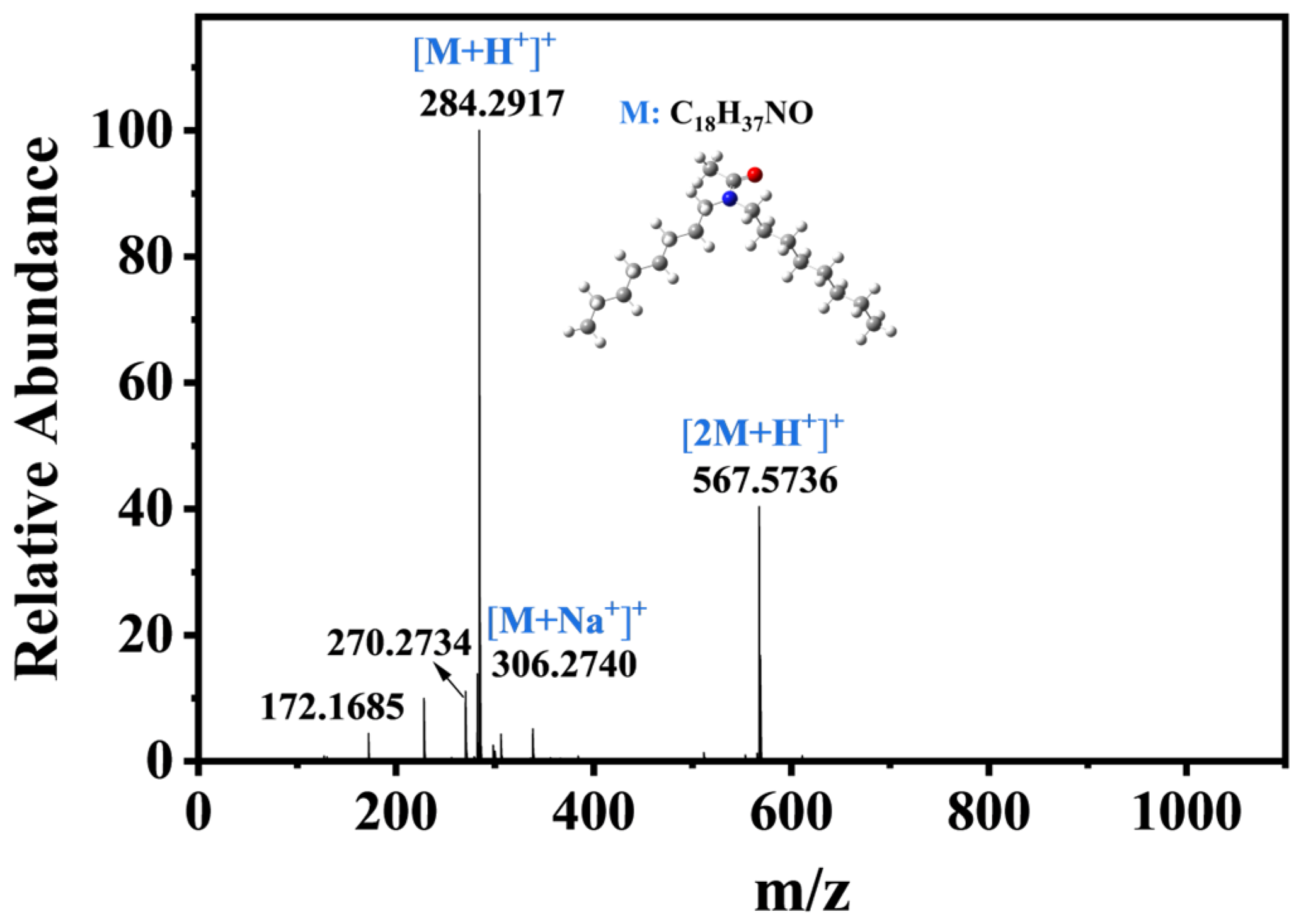
Figure 1. ESI-MS spectrum of the synthesized amide extractant.
Metals 16 00634 g001
Figure 2. Frontier molecular orbital energies and energy gaps: (a) HCl; (b) MoO2Cl2; (c) HMoO2Cl3; (d) the amide extractant.
Metals 16 00634 g002
Figure 3. Molecular electrostatic potential surfaces: (a) MoO2Cl2; (b) HMoO2Cl3; (c) the amide extractant.
Metals 16 00634 g003
Figure 4. Effects of (a) the HCl concentration; (b) the extractant concentration; (c) the extraction time; (d) the extraction temperature; and (e) the phase ratio on the extraction efficiency of Mo(VI); (f) McCabe–Thiele diagram for the extraction of Mo(VI).
Metals 16 00634 g004
Figure 5. Effects of (a) scrubbing agent concentration (O/A = 5:1, T = 25 °C, t = 5 min), (b) scrubbing temperature (HCl = 5 mol/L, O/A = 5:1, t = 5 min), (c) scrubbing time (HCl = 5 mol/L, O/A = 5:1, T = 25 °C), (d) scrubbing phase ratio (HCl = 5 mol/L, T = 25 °C, t = 5 min), and (e) scrubbing stage number on the scrubbing of the Mo-loaded organic phase (HCl = 5 mol/L, T = 25 °C, t = 5 min, O/A = 9:1). (The left axis represents the impurity scrubbing concentration for each element (ppm), and the right axis represents the scrubbing efficiency of Mo (%)).
Metals 16 00634 g005
Figure 6. Effects of (a) ammonia concentration, (b) stripping temperature, (c) stripping time, and (d) stripping phase ratio.
Metals 16 00634 g006
Figure 7. FT-IR spectra of the pure amide extractant and extraction complex.
Metals 16 00634 g007
Figure 8. Linear relationship between temperature and the distribution ratio of HMoO2Cl3.
Metals 16 00634 g008
Disclaimer/Publisher’s Note: The statements, opinions and data contained in all publications are solely those of the individual author(s) and contributor(s) and not of MDPI and/or the editor(s). MDPI and/or the editor(s) disclaim responsibility for any injury to people or property resulting from any ideas, methods, instructions or products referred to in the content.