Article

Data-Driven Optimization of Size-Aware T6 Heat Treatment Parameters for A356 Aluminum Alloy

1
Zyomax Ltd., 85 Great Portland Street, London W1W 7LT, UK
2
BCAST, Brunel University of London, Middlesex, Uxbridge UB8 3PH, UK
*
Author to whom correspondence should be addressed.
Metals 2026, 16(6), 615; https://doi.org/10.3390/met16060615
Submission received: 2 May 2026 / Revised: 29 May 2026 / Accepted: 31 May 2026 / Published: 4 June 2026
(This article belongs to the Section Metal Casting, Forming and Heat Treatment)

Abstract

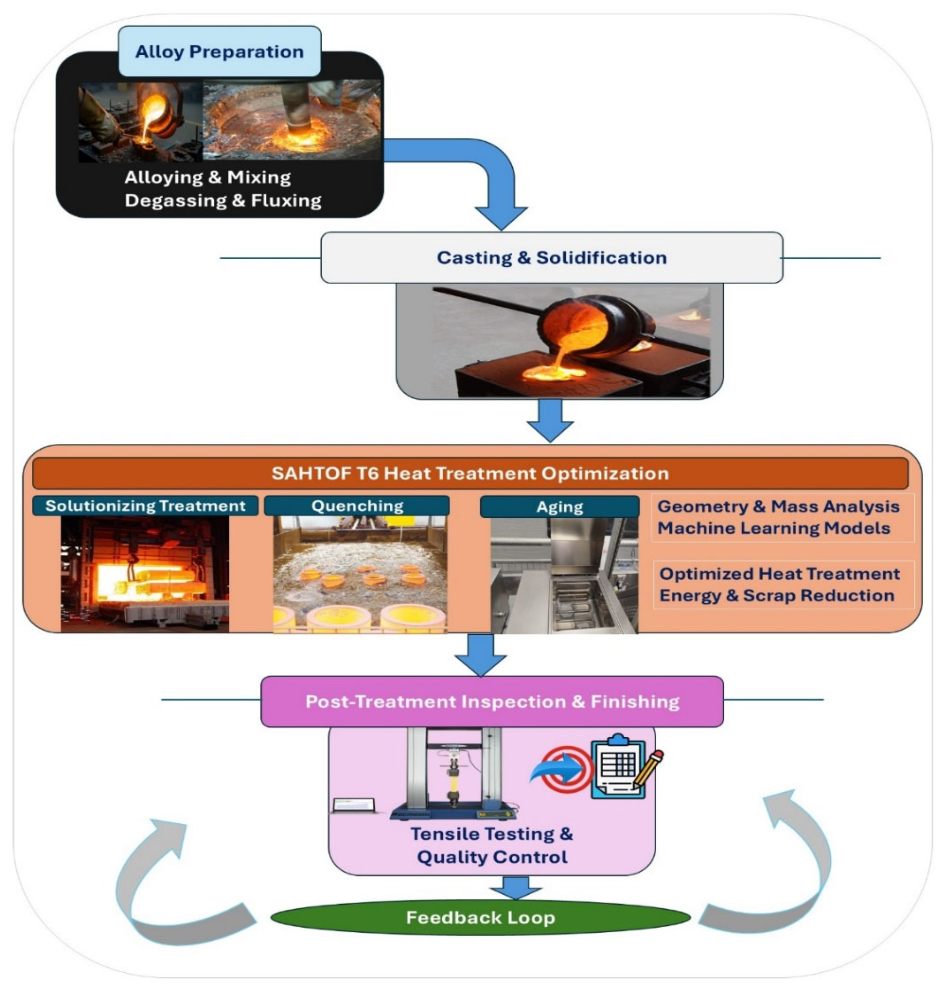
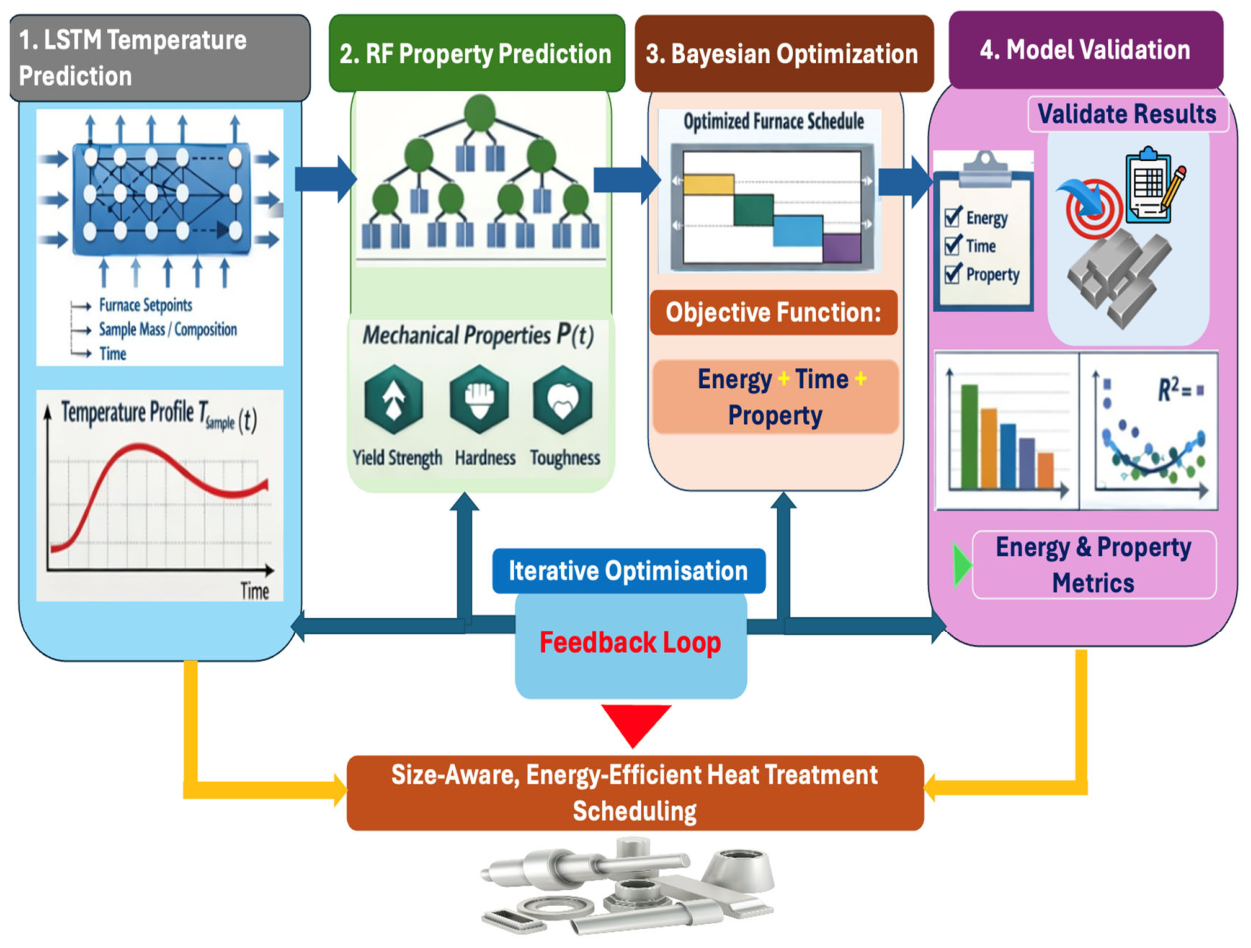
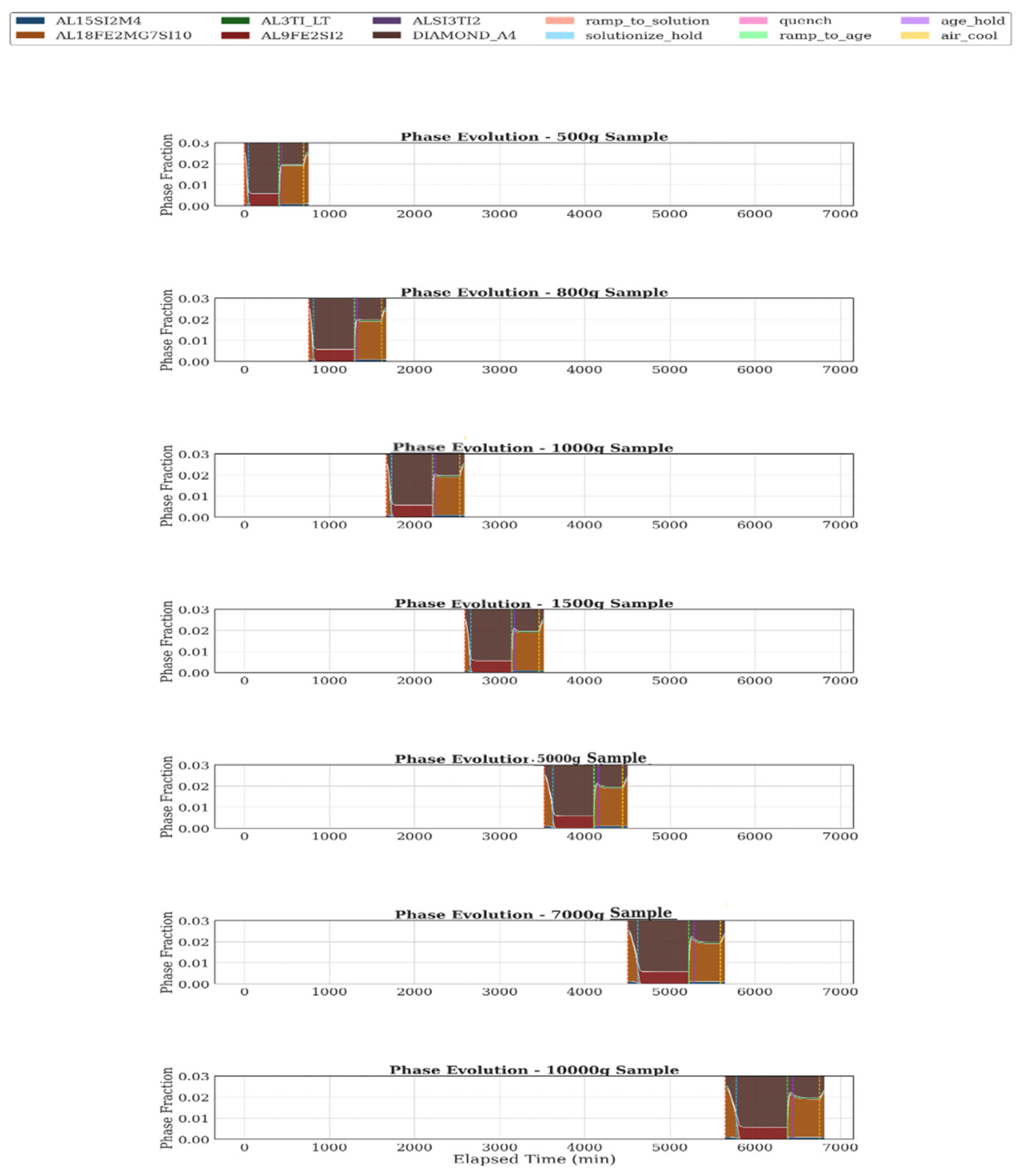
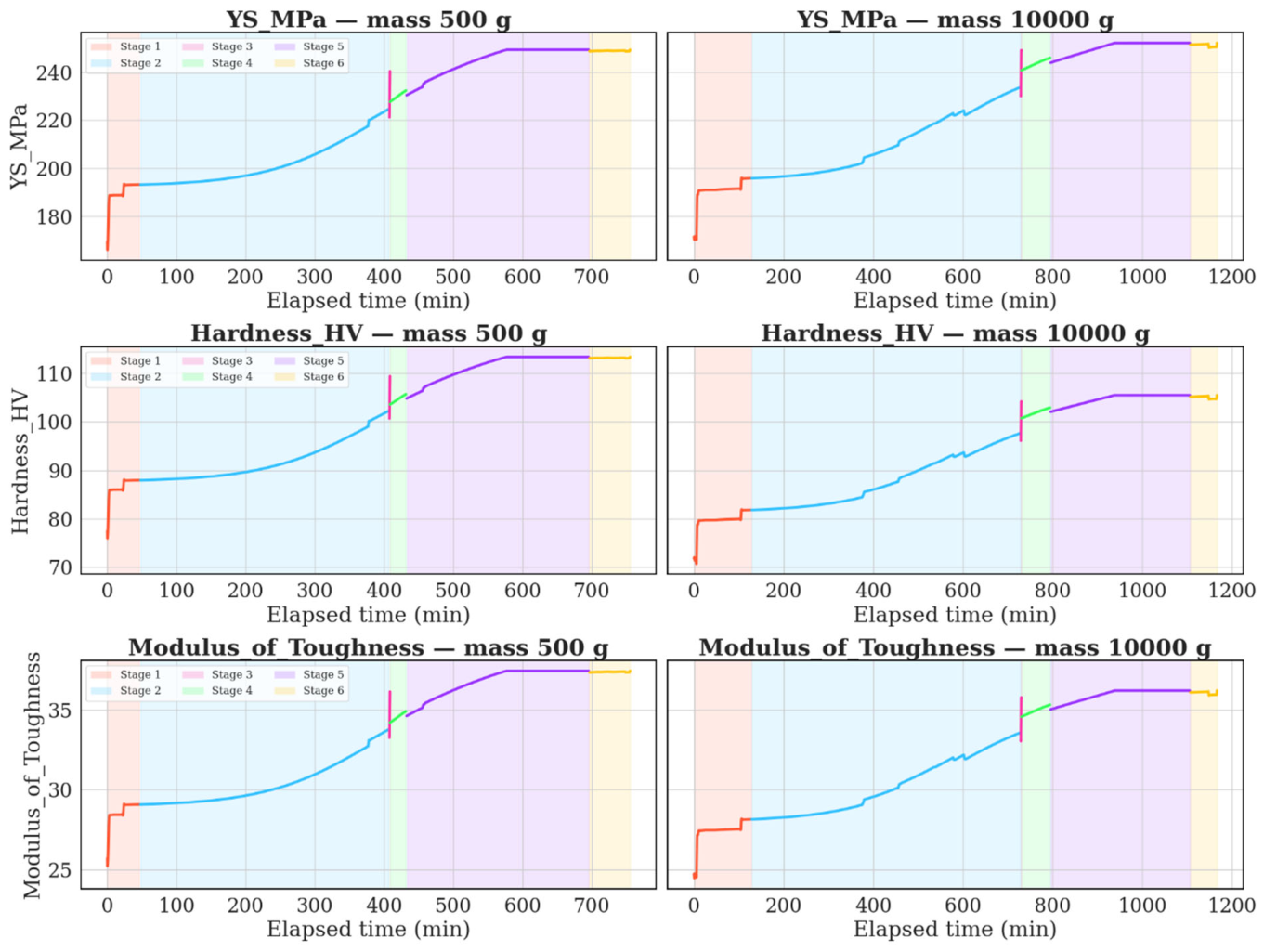
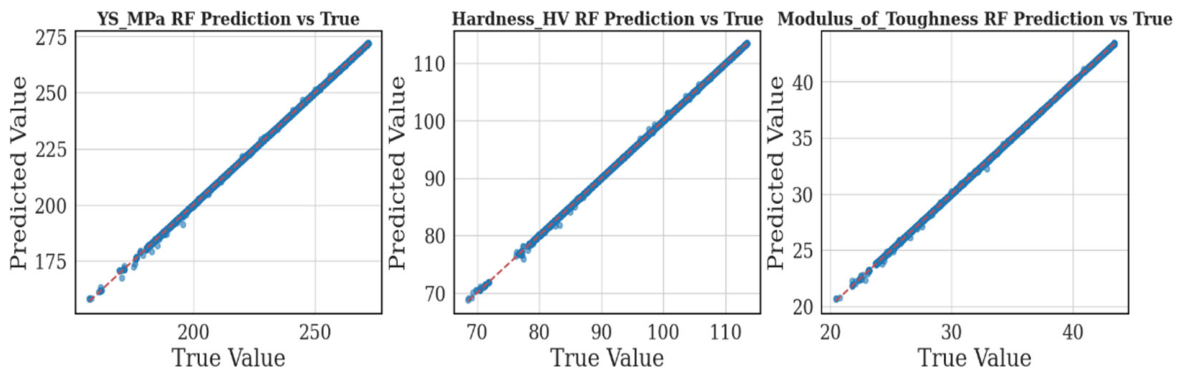
Aluminum alloy A356 (Al-7Si-0.3Mg) is widely employed in automotive structural components due to its favorable strength-to-weight ratio, yet its mechanical performance is highly sensitive to T6 heat-treatment processes. Conventional heat-treatment schedules are typically based on uniform, empirically derived parameters and fail to consider variations in component size, geometry, or thermal mass. Consequently, applying a single schedule across all component sizes often leads to inconsistent microstructural development, energy inefficiency, and elevated scrap rates. Smaller components tend to be over-processed, while larger components may be under-processed, both resulting in suboptimal mechanical properties and increased production costs. To overcome these limitations, this study presents a scalable heat-treatment optimization framework that integrates physics-based thermal simulations with machine learning techniques. The framework combines a transient thermal simulator with Long Short-Term Memory (LSTM) networks to predict sample temperature evolution, Random Forest regressors to estimate mechanical properties such as yield strength, hardness, and modulus of toughness, and Bayesian optimization to generate size-dependent, property-compliant heat-treatment schedules. Unlike traditional methods, this approach dynamically adjusts furnace parameters to individual component characteristics, optimizing both processing time and energy consumption while minimizing scrap. Application of the framework to components ranging from 0.5 to 10 kg demonstrates internally consistent simulation-based predictions of temperature profiles, phase-fraction evolution, and mechanical-property trends within the assumed modelling framework. Optimized schedules achieved 15–25% reductions in cycle time while maintaining properties within T6 specifications. These findings underscore the potential of AI-assisted heat-treatment optimization to enhance energy efficiency, reduce material waste, and improve the consistency of mechanical performance in automotive casting operations.
Keywords: A356 aluminum alloy; T6 heat treatment; size-dependent heat treatment optimization; machine learning for materials processing; scrap and energy reduction in casting A356 aluminum alloy; T6 heat treatment; size-dependent heat treatment optimization; machine learning for materials processing; scrap and energy reduction in casting