Analysis of EAF Energy Efficiency Characteristics Based on Industrial Data and Energy Balance


Abstract
1. Introduction
2. Research Methodology
2.1. Data Collection and Description
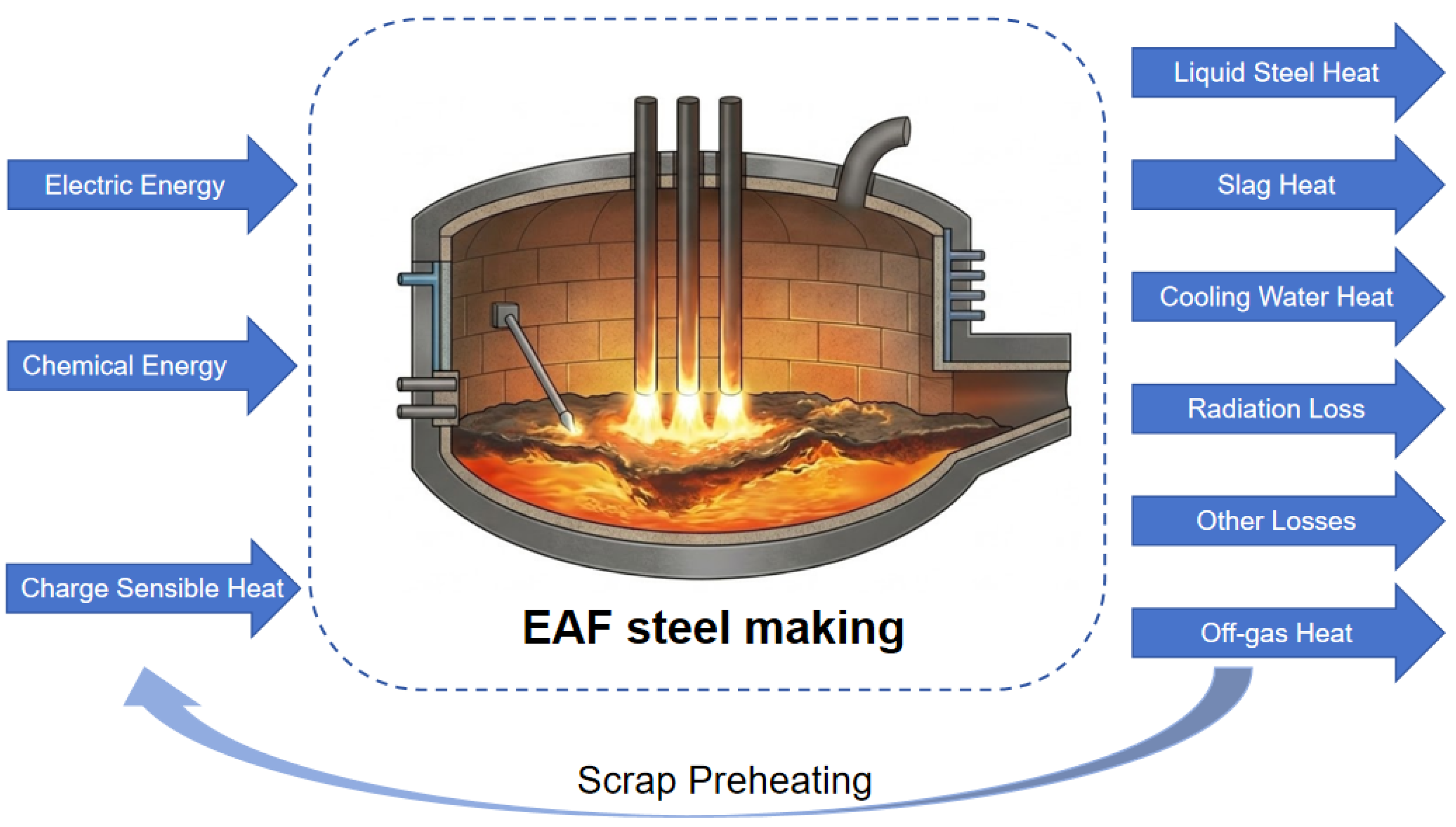
2.2. Mass and Energy Balance Model
2.2.1. System Boundary and Basic Assumptions
- Hot metal: C 4.3%, Si 0.8%, Mn 0.6%, P 0.05%, S 0.03% (mass fraction);
- Hot metal temperature: 1300 °C;
- Pig iron: C 4.2%, Si 0.8%, Mn 0.21%, P 0.05%, S 0.04%;
- Scrap: Fe 98.3%, C 0.18%, Si 0.25%, Mn 0.55%, P 0.03%, S 0.03%, balance impurities.
2.2.2. Mass Balance
2.2.3. Energy Balance
Energy Input
2.2.4. Energy Output
2.2.5. Energy Balance Equation and Energy Efficiency Index Calculation
2.2.6. Model Application
2.3. Model Validation and Sensitivity Analysis
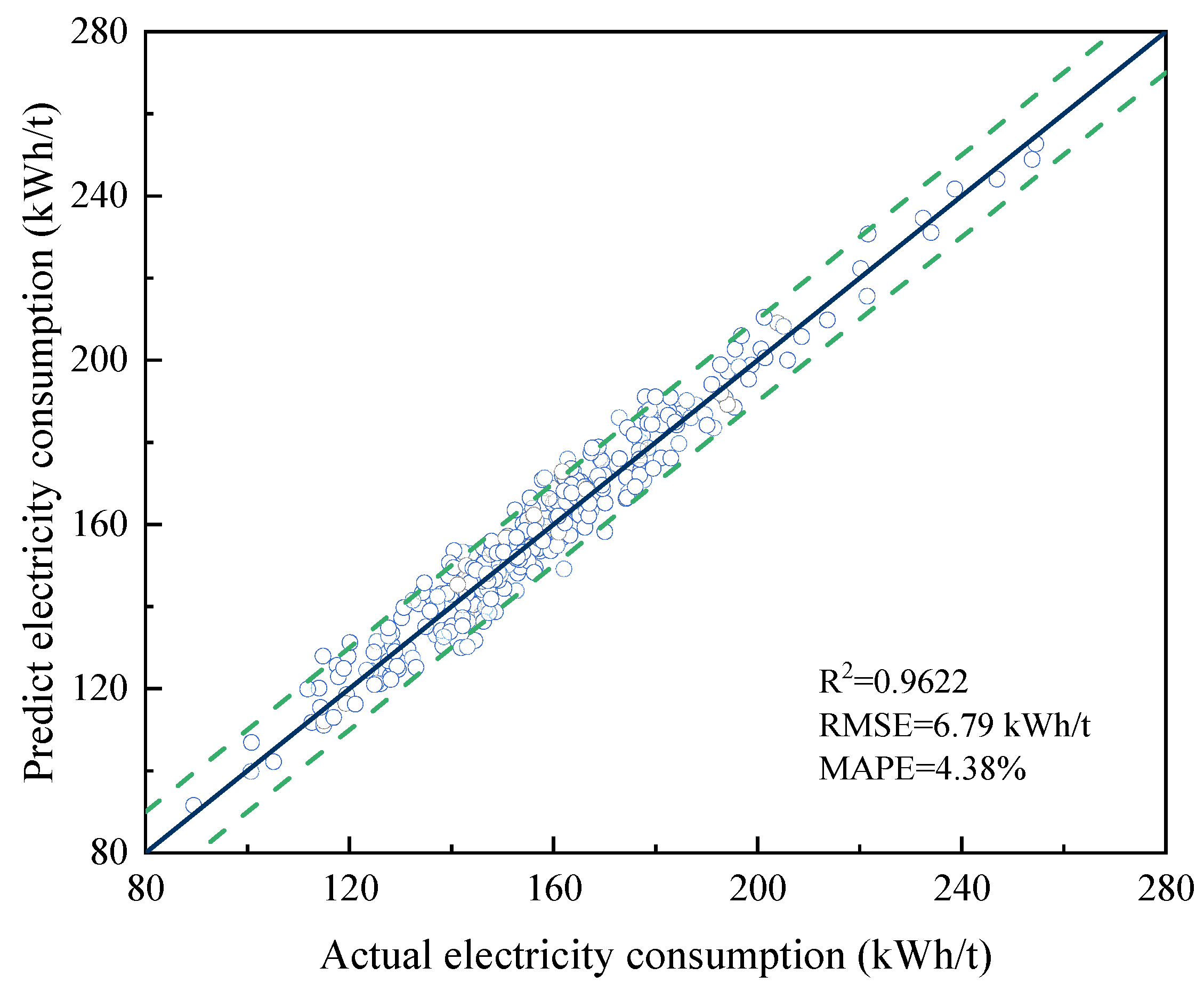
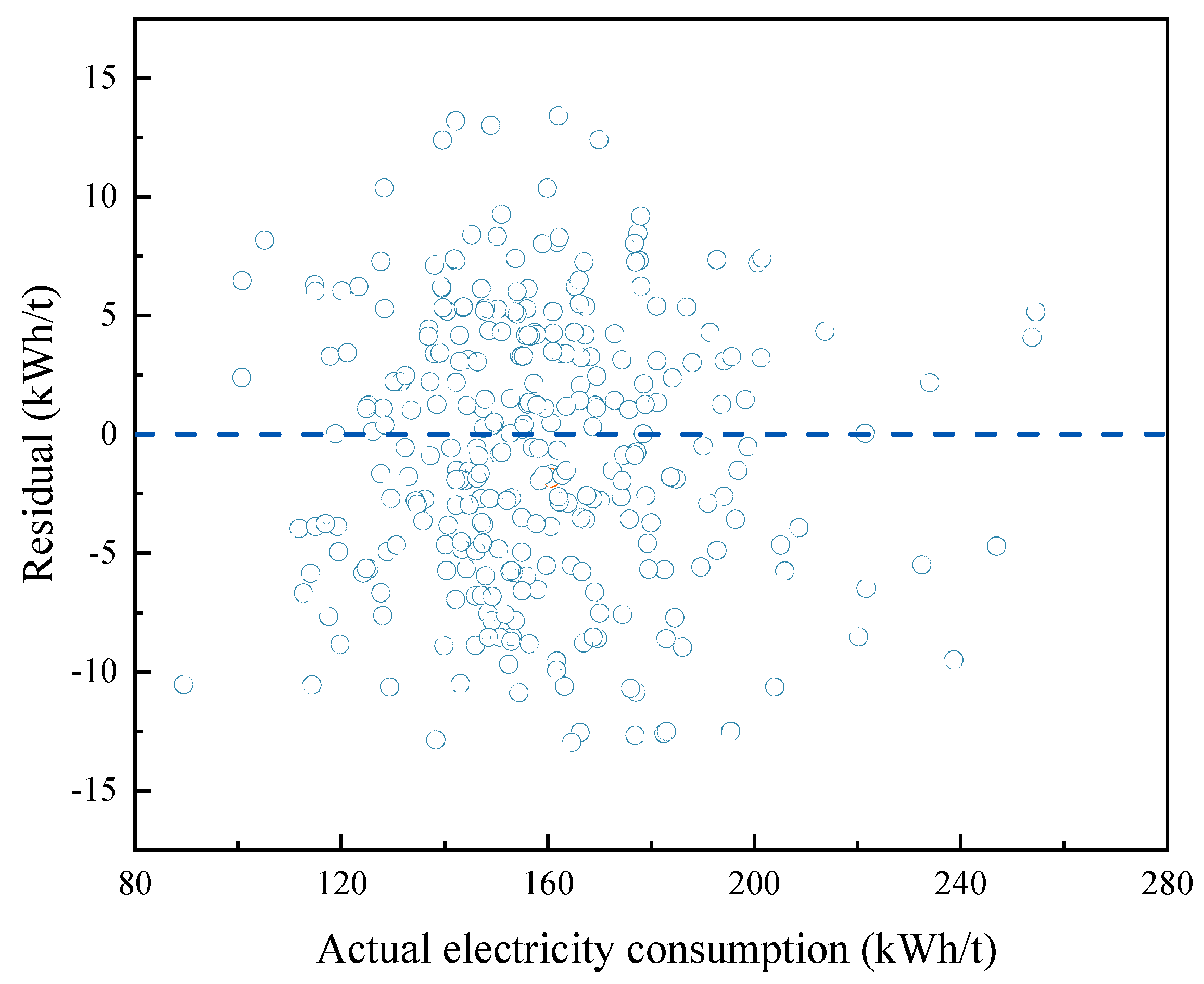
2.3.1. Model Validation
2.3.2. Sensitivity Analysis
3. Results and Discussion
3.1. Analysis of Industrial Data
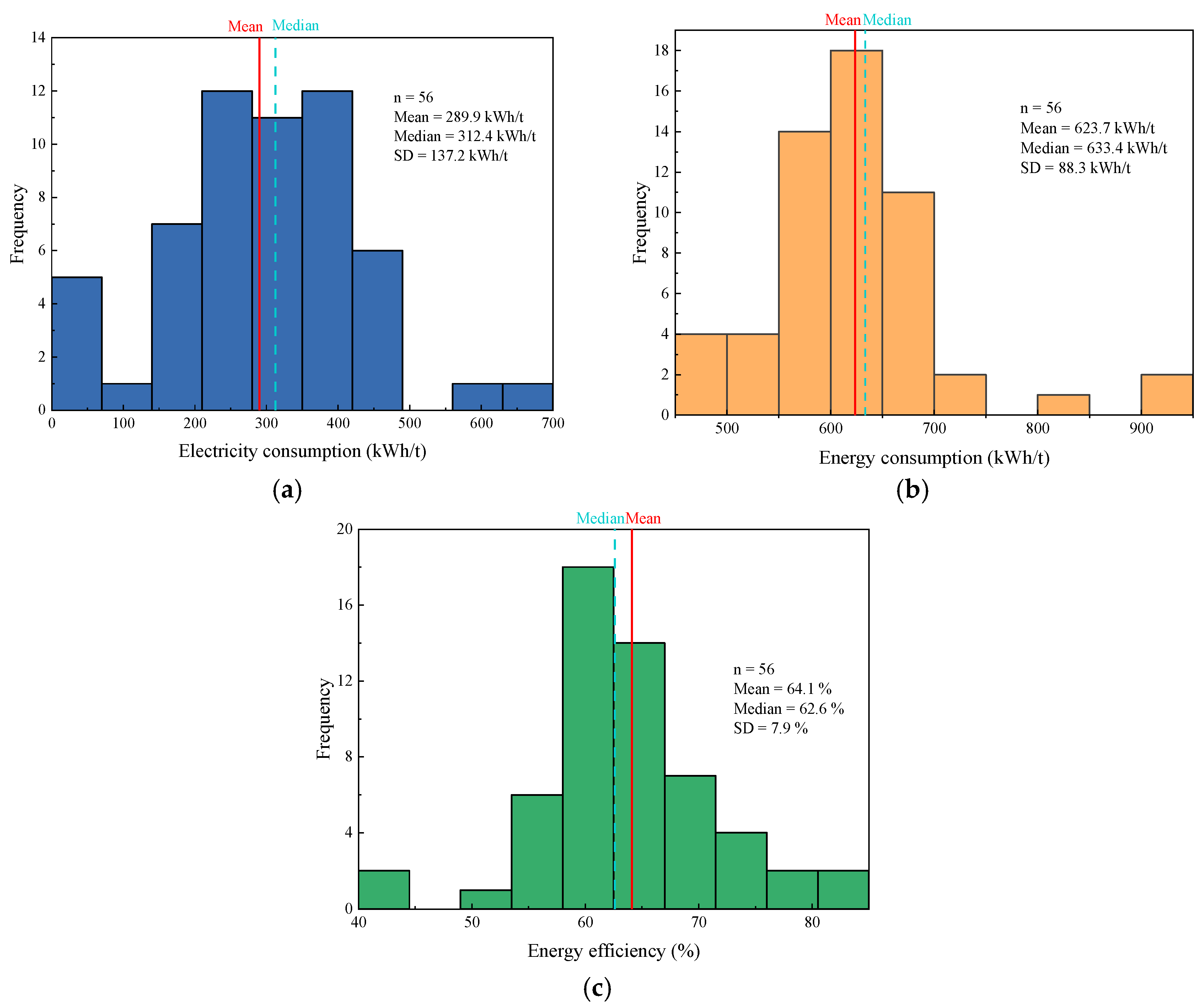
3.1.1. Industrial Data—Overall Statistics
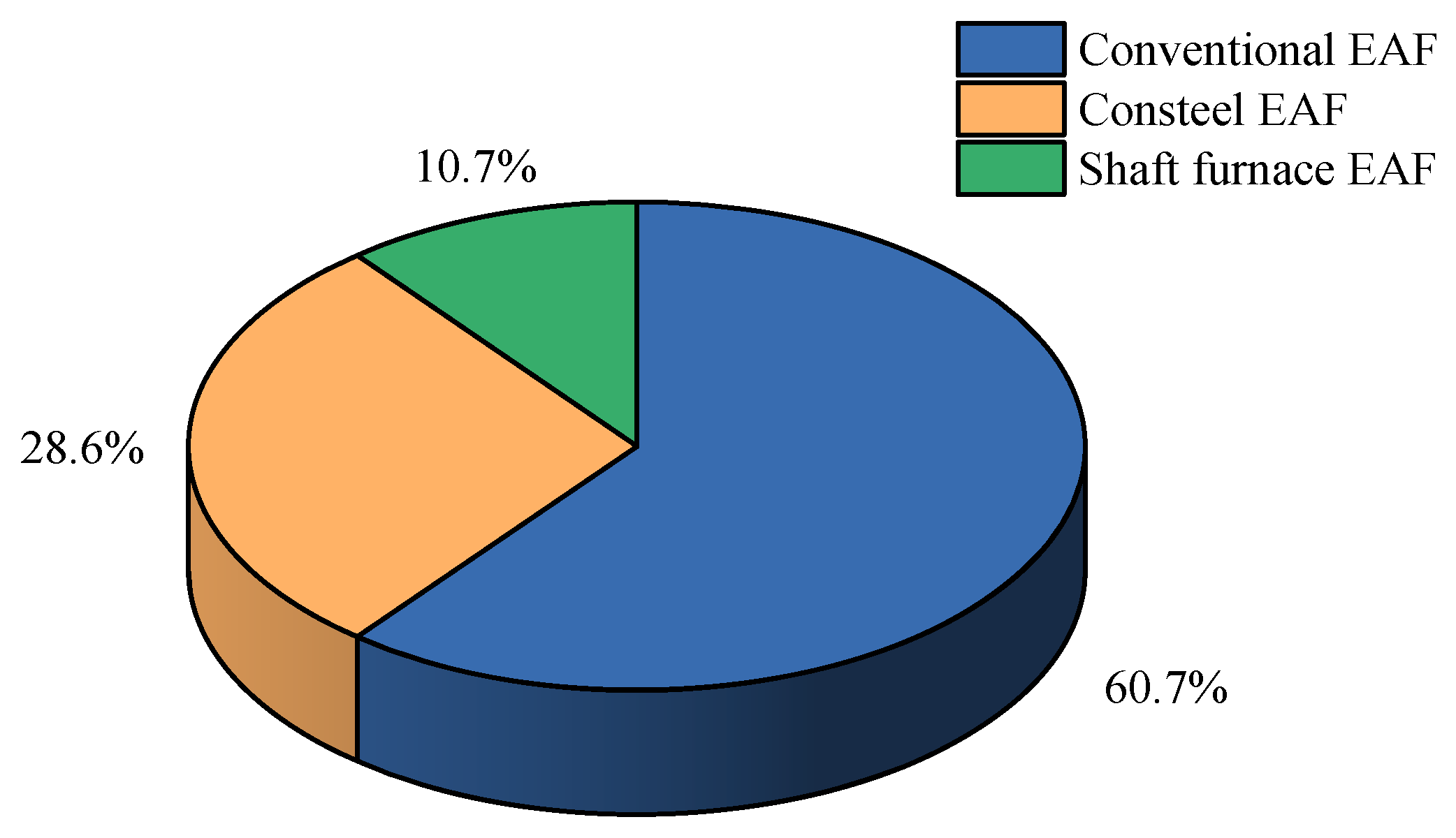
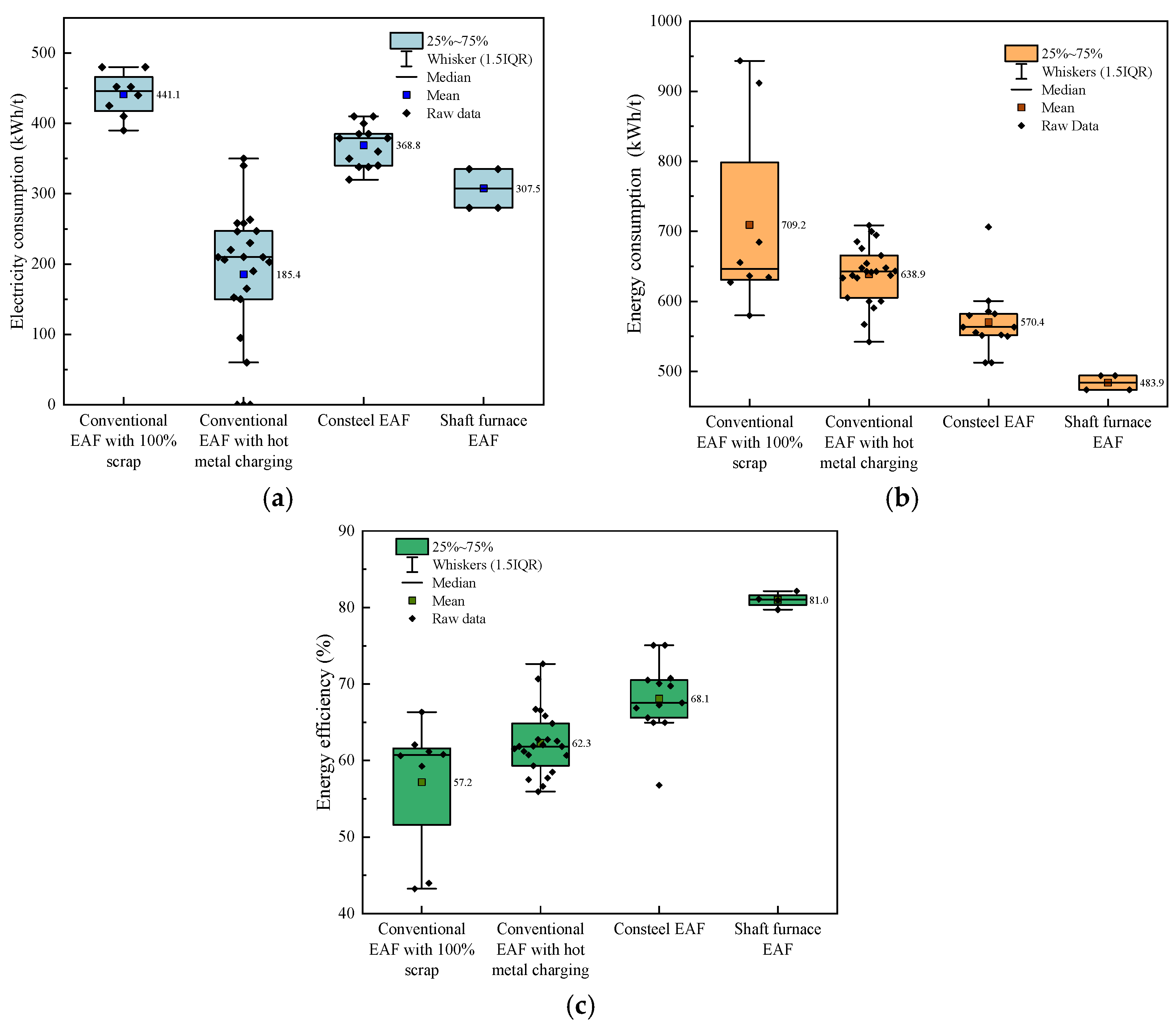
3.1.2. Industrial Data—Furnace Type
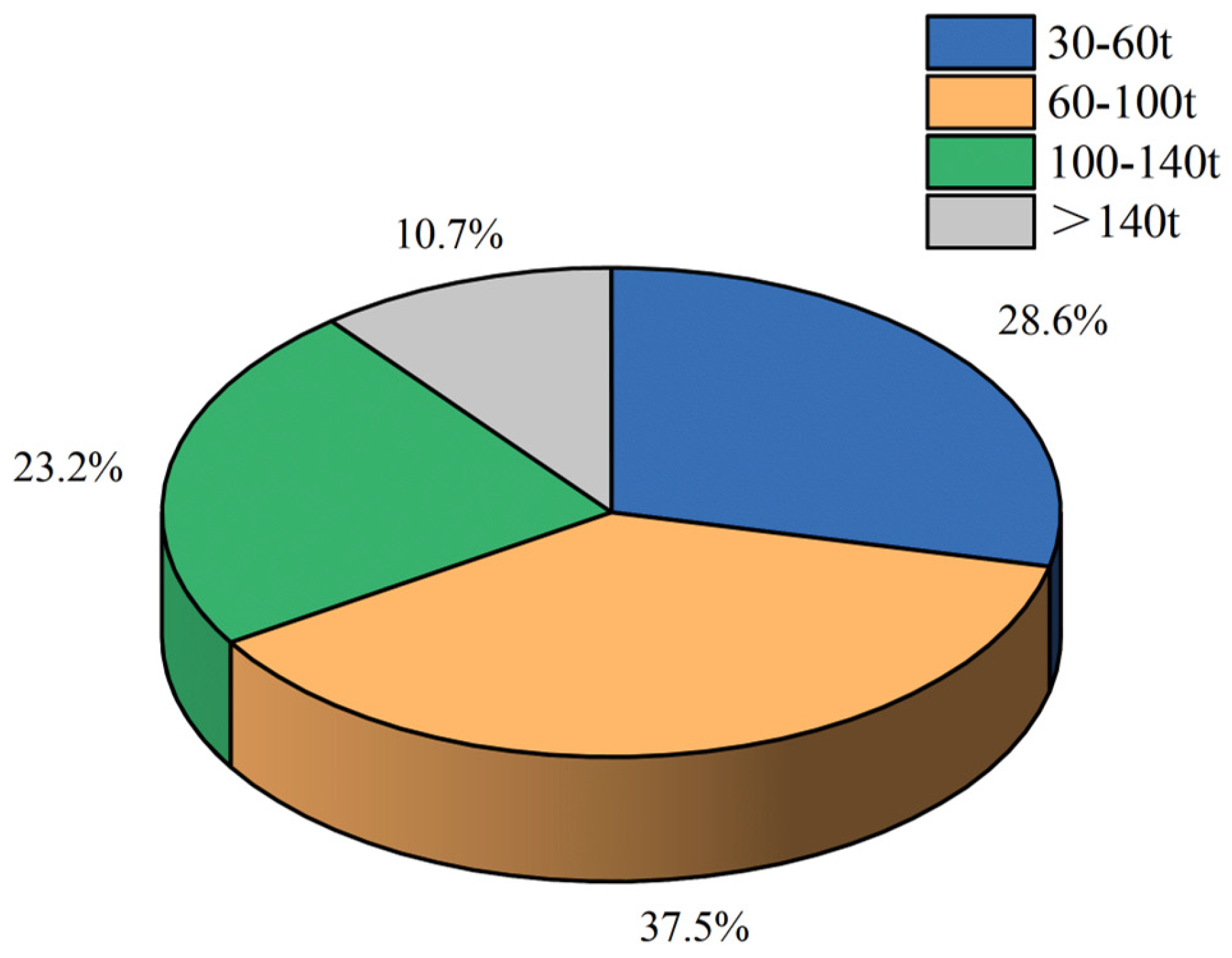
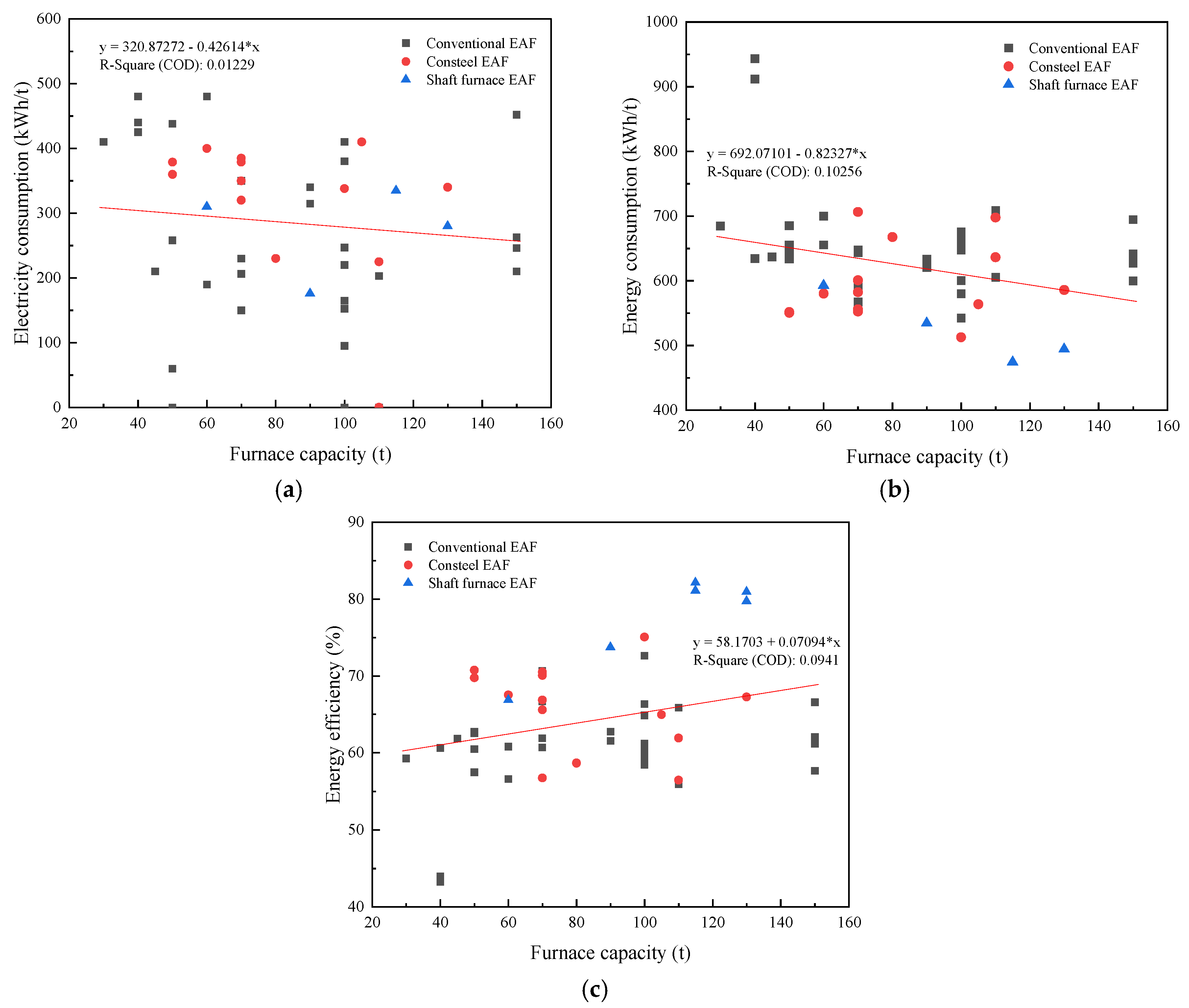
3.1.3. Industrial Data—Furnace Capacity
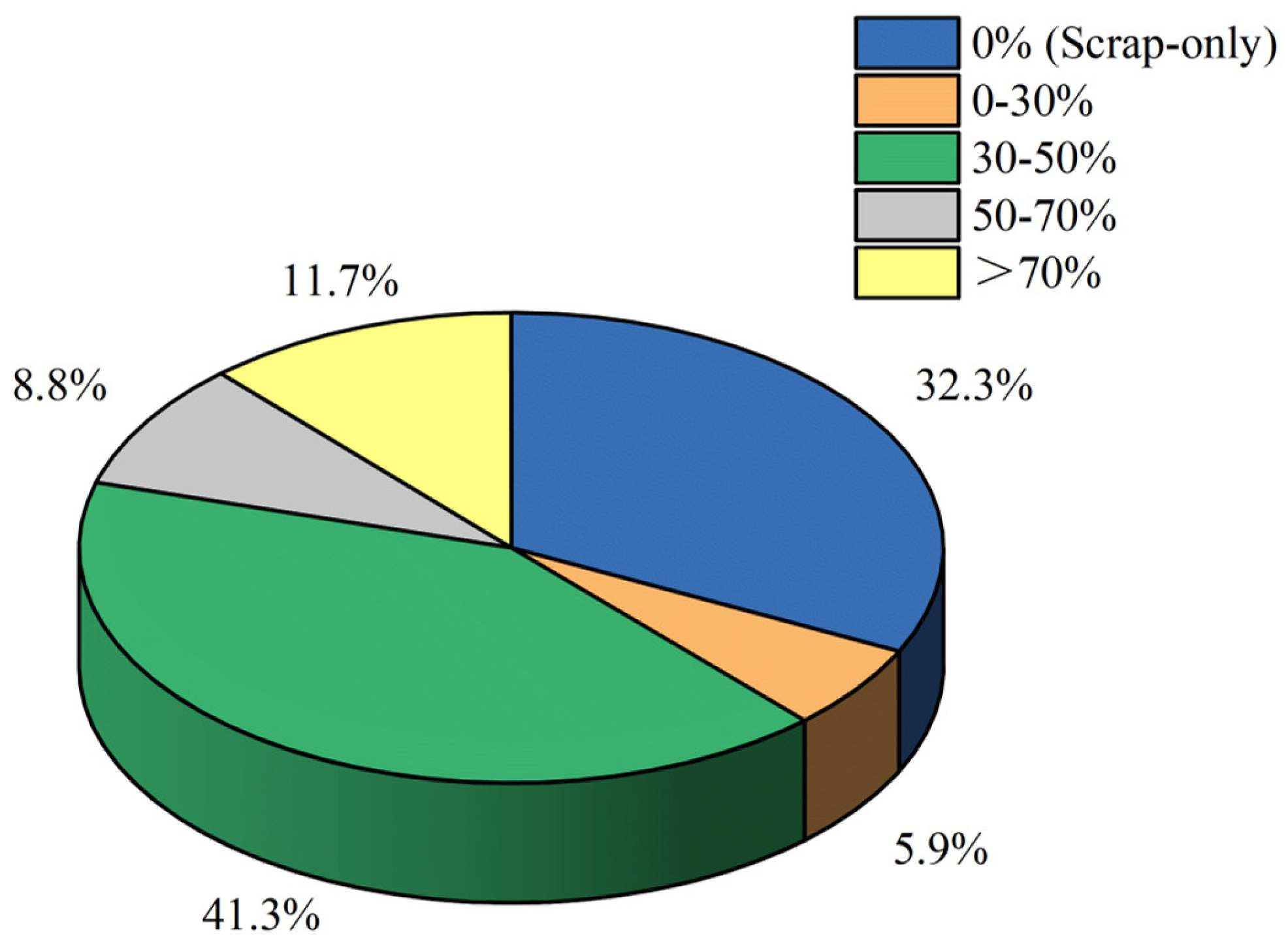
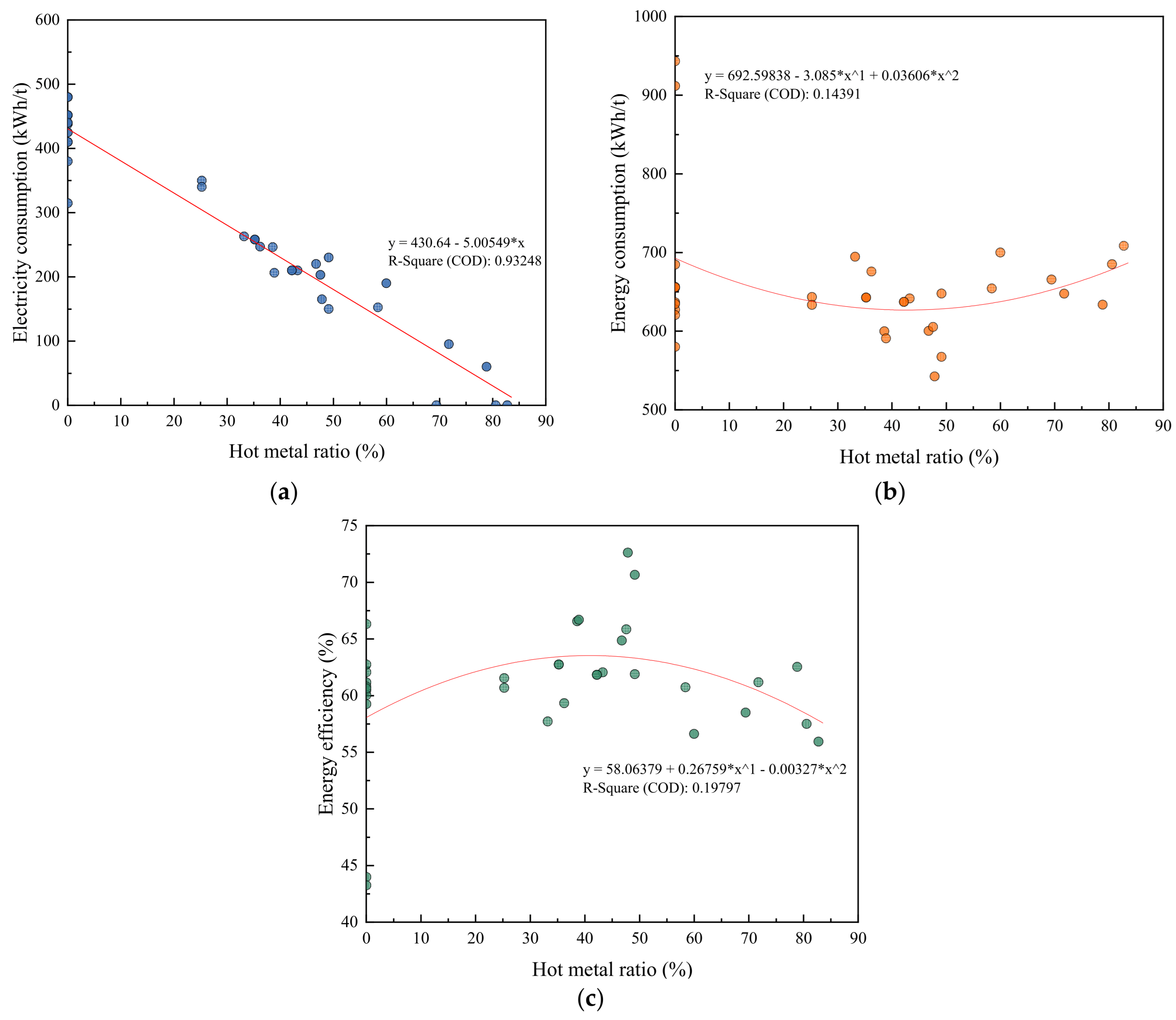
3.1.4. Industrial Data—Hot Metal Ratio
3.2. Model-Based Simulation Results
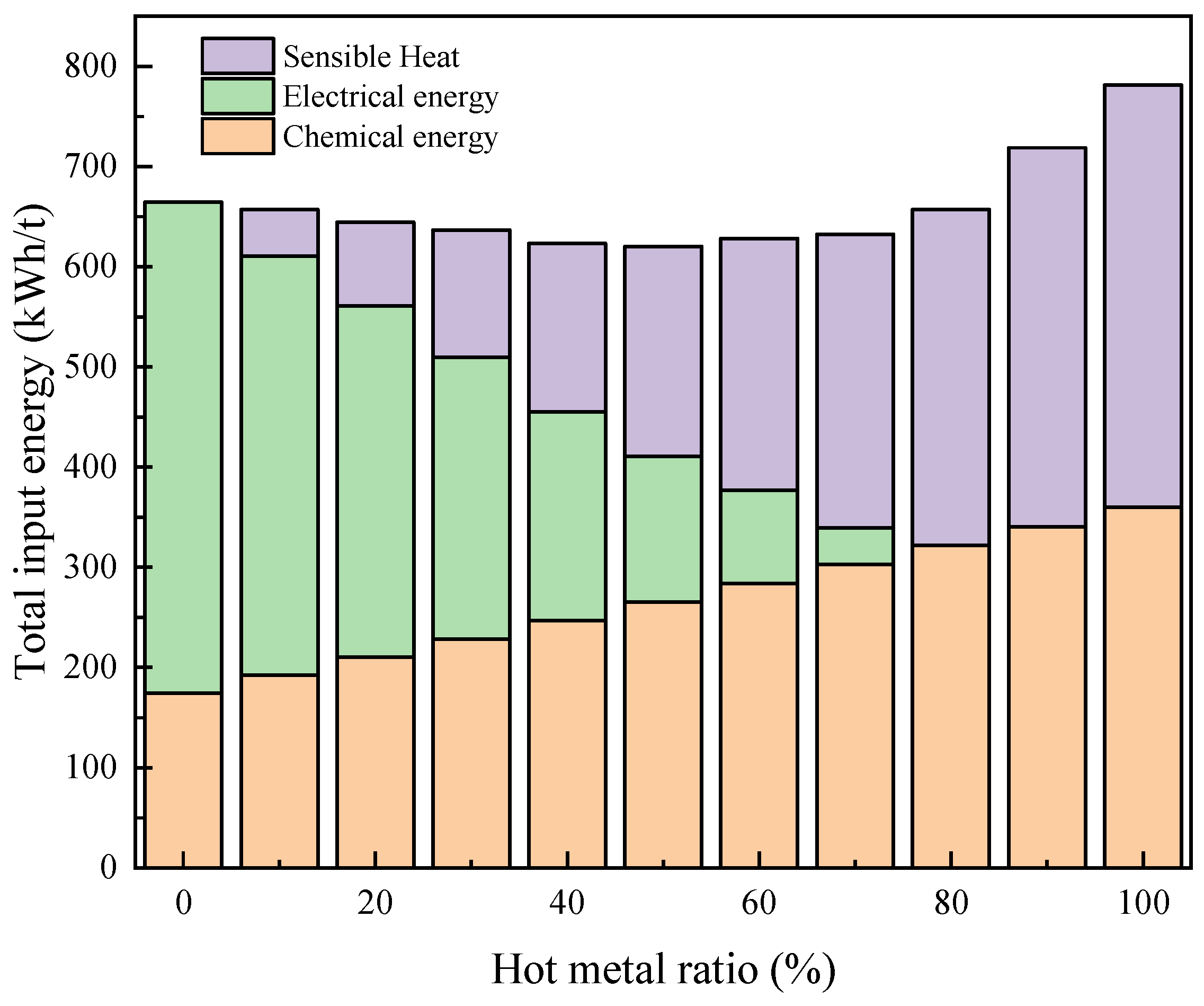
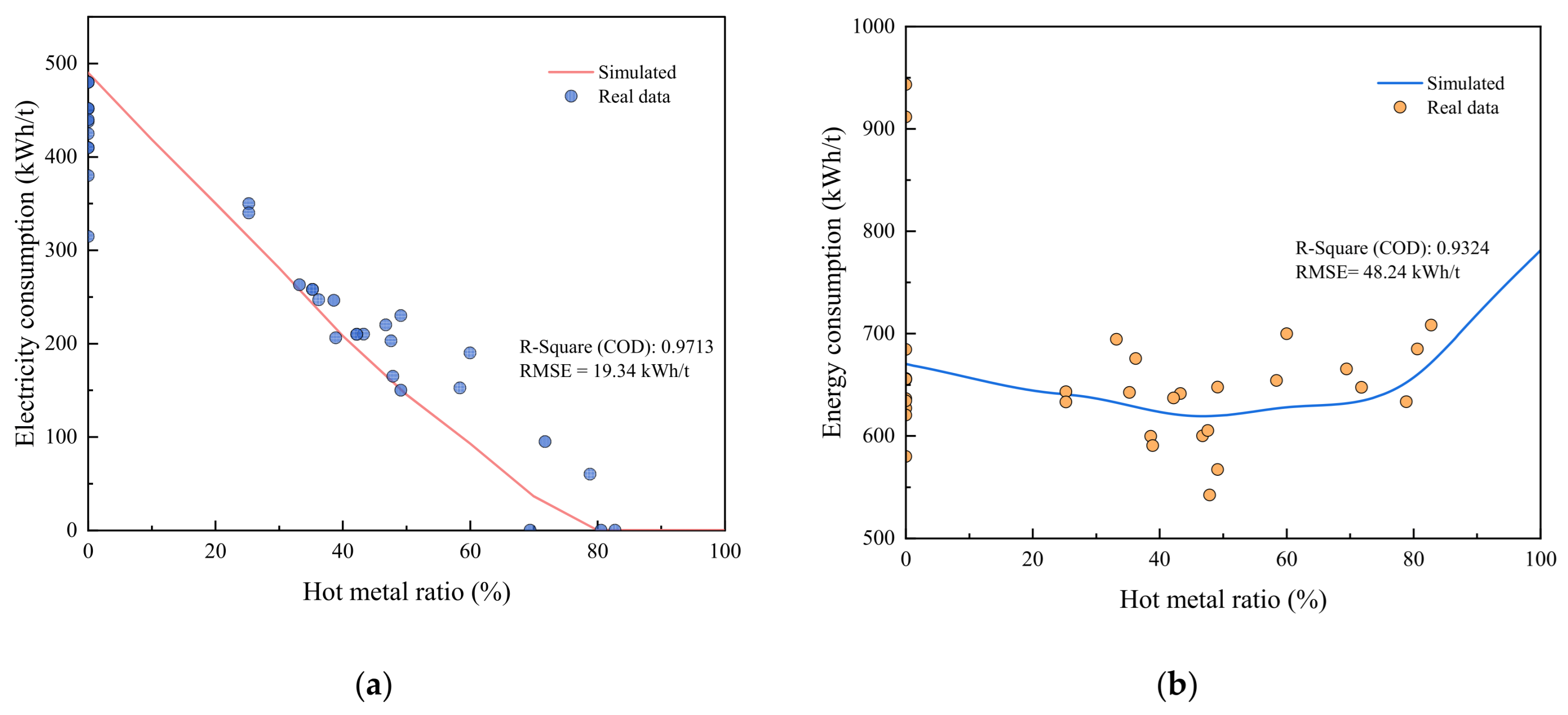
3.2.1. Hot Metal Ratio Simulation (0–100%)
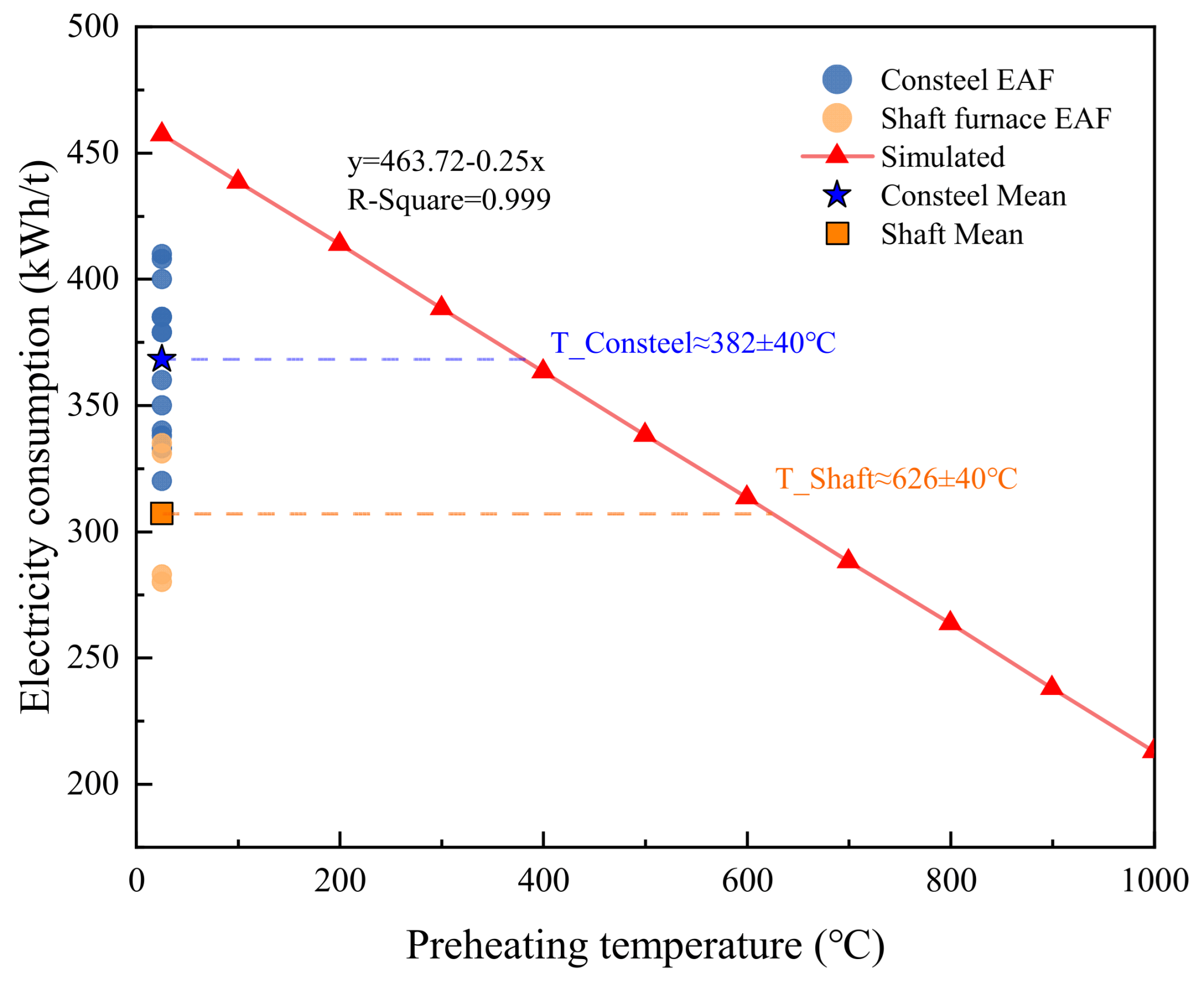
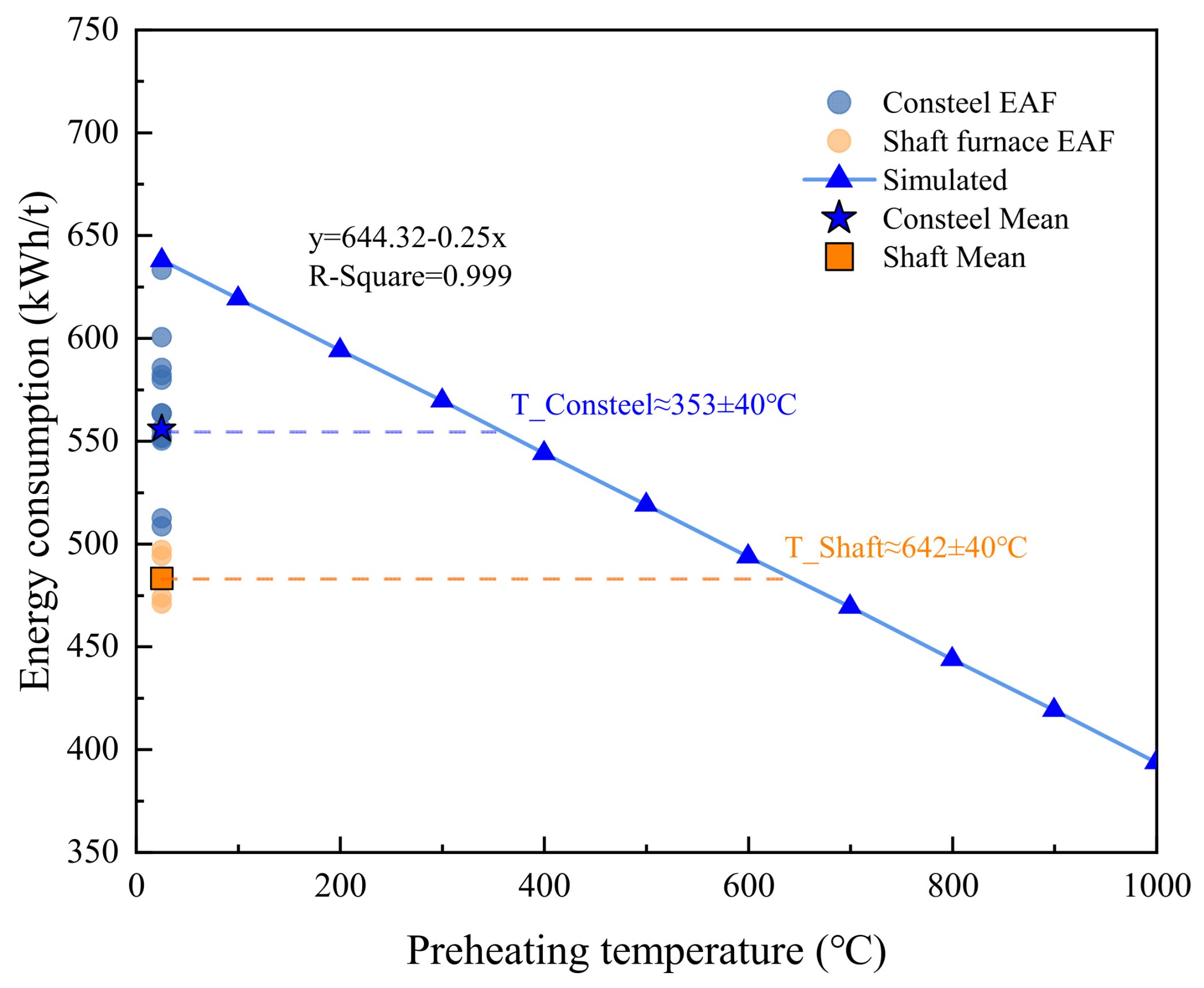
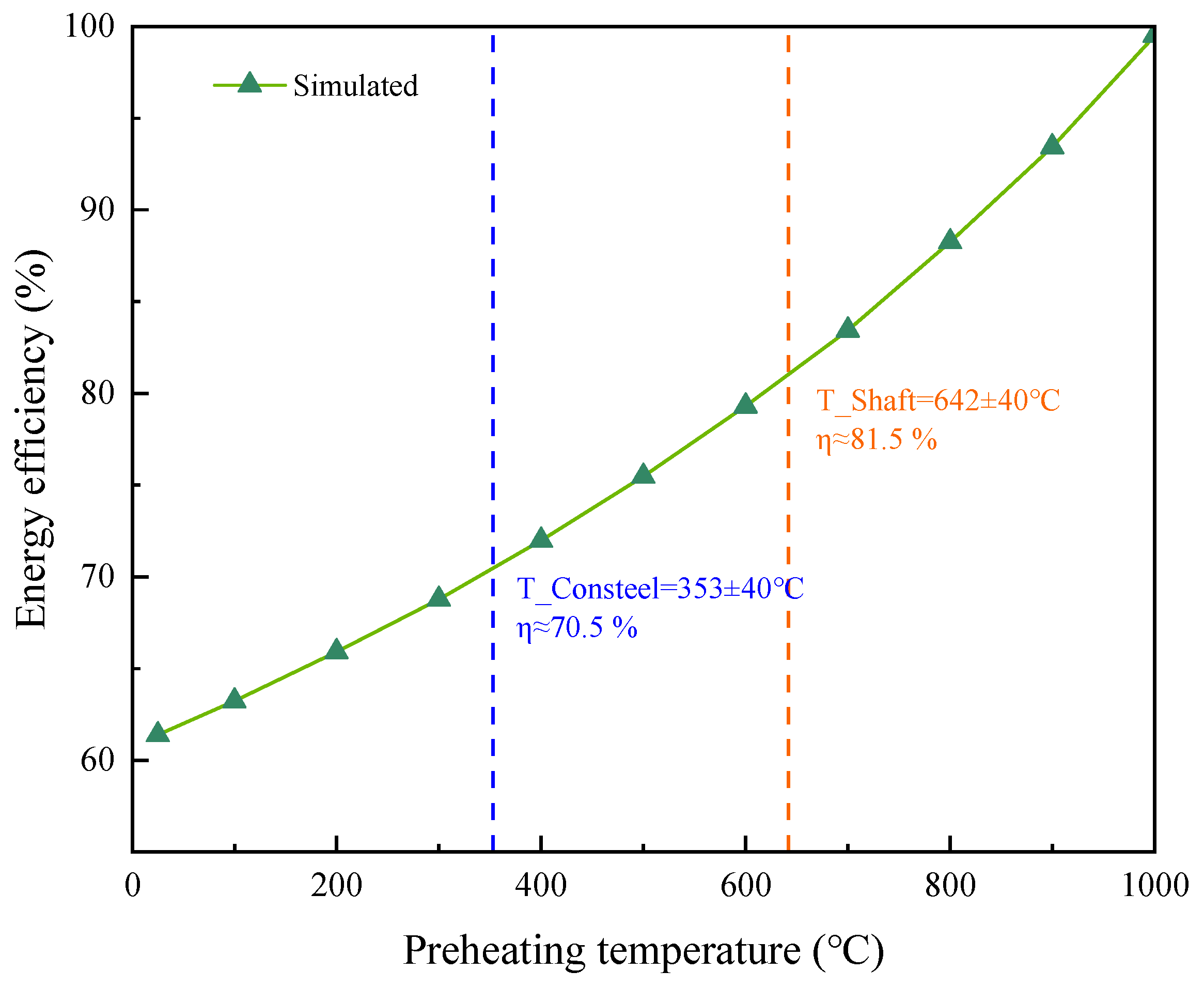
3.2.2. Scrap Preheating Inversion and Performance Analysis
Sample and Model Simulation Analysis
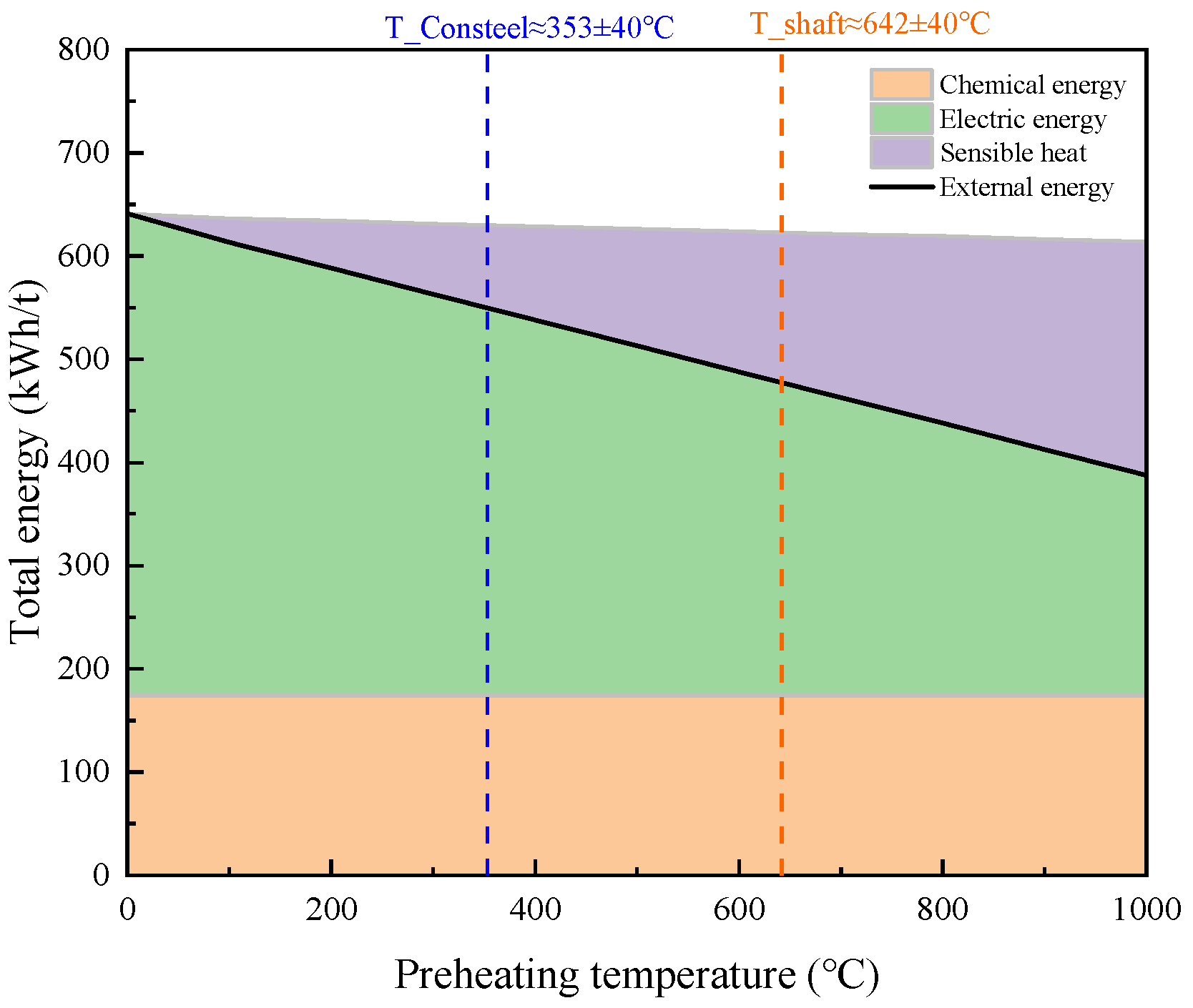
Energy Structure Analysis
4. Discussion
4.1. Key Mechanisms Underlying EAF Energy Efficiency
4.1.1. Furnace Type as the Decisive Factor
4.1.2. Secondary Effect of Furnace Capacity
4.1.3. Hot Metal Ratio: In-Process Substitution Rather than Net Energy Saving
4.1.4. Scrap Preheating: Process and Equipment Drivers of Energy Efficiency
4.2. Practical Implications
4.3. Research Limitations
5. Conclusions
Author Contributions
Funding
Data Availability Statement
Conflicts of Interest
Nomenclature
| Term | Definition | Unit |
| Energy consumption | Total external energy input per ton of steel, including electricity, hot metal energy, and fuel inputs | kWh/t |
| Electricity consumption | Electrical energy consumed per ton of steel | kWh/t |
| External energy | Energy supplied from outside the EAF system, excluding internal waste heat recovery | kWh/t |
| Chemical energy | Energy released from oxidation reactions (C, Si, Mn) in hot metal | kWh/t |
| Sensible heat | Thermal energy stored in materials proportional to temperature | kWh/t |
| Hot metal ratio | Mass fraction of hot metal in the total charge | % |
| Scrap preheating temperature | Average temperature of scrap after preheating by flue gas waste heat | °C |
| Energy efficiency | Ratio of effective energy for steelmaking to total external energy input | % |
| Consteel EAF | EAF with continuous scrap charging and flue gas preheating | — |
| Shaft furnace EAF | EAF equipped with a vertical preheating shaft for countercurrent heat exchange | — |
References
- Quader, M.A.; Ahmed, S.; Ghazilla, R.A.R.; Ahmed, S.; Dahari, M. A comprehensive review on energy efficient CO2 breakthrough technologies for sustainable green iron and steel manufacturing. Renew. Sust. Energ. Rev. 2015, 50, 594. [Google Scholar]
- Na, H.; Du, T.; Sun, W.; He, J.; Sun, J.; Yuan, Y.; Qiu, Z. Review of evaluation methodologies and influencing factors for energy efficiency of the iron and steel industry. Int. J. Energy Res. 2019, 43, 5659. [Google Scholar] [CrossRef]
- Association, China Iron and Steel Industry Yearbook 2020; Metallurgical Industry Press: Beijing, China, 2021.
- Kirschen, M.; Risonarta, V.; Pfeifer, H. Energy efficiency and the influence of gas burners to the energy related carbon dioxide emissions of electric arc furnaces in steel industry. Energy 2009, 34, 1065. [Google Scholar] [CrossRef]
- Tian, B.; Wei, G.; Li, X.; Zhu, R.; Bai, H.; Tian, W.; Dong, K. Effect of hot metal charging on economic and environmental indices of electric arc furnace steelmaking in China. J. Clean. Prod. 2022, 379, 134597. [Google Scholar] [CrossRef]
- Lu, Z.; Cai, J.; Du, T.; Yue, Q.; Gao, C.; Wang, H. The macro-control on energy consumption, material consumption & waste emission of steel industry. Strateg. Study Chin. Acad. Eng. 2015, 17, 126–132. [Google Scholar]
- Irawan, A.; Kurniawan, T.; Alwan, H.; Muslim, Z.A.; Akhmal, H.; Firdaus, M.A.; Bindar, Y. An energy optimization study of the electric arc furnace from the steelmaking process with hot metal charging. Heliyon 2022, 8, 11448. [Google Scholar] [CrossRef] [PubMed]
- Pfeifer, H.; Kirschen, M. Thermodynamic analysis of EAF energy efficiency and comparison with a statistical model of electric energy demand. In Proceedings of the 7th European Electric Steelmaking Conference, Venice, Italy, 26–29, May 2002; p. 1. [Google Scholar]
- Qian, F.; Zhong, W.; Du, W. Fundamental Theories and Key Technologies for Smart and Optimal Manufacturing in the Process Industry. Engineering 2017, 3, 154–160. [Google Scholar] [CrossRef]
- Hay, T.; Visuri, V.-V.; Aula, M.; Echterhof, T. A Review of Mathematical Process Models for the Electric Arc Furnace Process. Steel Res. Int. 2020, 92, 2000395. [Google Scholar] [CrossRef]
- Çamdali, Ü.; Tunç, M.; Karakaş, A. Second law analysis of thermodynamics in the electric arc furnace at a steel producing company. Energy Convers. Manag. 2003, 44, 961–973. [Google Scholar] [CrossRef]
- Chirattananon, S.; Gao, Z. A model for the performance evaluation of the operation of electric arc furnace. Energy Convers. Manag. 1996, 37, 161–166. [Google Scholar] [CrossRef]
- Babos, L.; Martegani, A.D. Energy conservation and recovery in electric arc furnaces dedusting plants. Energy Convers. Manag. 1982, 22, 347–355. [Google Scholar] [CrossRef]
- Trejo, E.; Martell, F.; Micheloud, O.; Teng, L.; Llamas, A.; Montesinos-Castellanos, A. A novel estimation of electrical and cooling losses in electric arc furnaces. Energy 2012, 42, 446–456. [Google Scholar] [CrossRef]
- Khodabandeh, E.; Ghaderi, M.; Afzalabadi, A.; Rouboa, A.; Salarifard, A. Parametric study of heat transfer in an electric arc furnace and cooling system. Appl. Therm. Eng. 2017, 123, 1190–1200. [Google Scholar] [CrossRef]
- Yigit, C.; Coskun, G.; Buyukkaya, E.; Durmaz, U.; Güven, H.R. CFD modeling of carbon combustion and electrode radiation in an electric arc furnace. Appl. Therm. Eng. 2015, 90, 831–837. [Google Scholar] [CrossRef]
- Khodabandeh, E.; Rahbari, A.; Rosen, M.A.; Najafian Ashrafi, Z.; Akbari, O.A.; Anvari, A.M. Experimental and numerical investigations on heat transfer of a water-cooled lance for blowing oxidizing gas in an electrical arc furnace. Energy Convers. Manag. 2017, 148, 43–56. [Google Scholar] [CrossRef]
- Kirschen, M.; Velikorodov, V.; Pfeifer, H. Mathematical modelling of heat transfer in dedusting plants and comparison to off-gas measurements at electric arc furnaces. Energy 2006, 31, 2926–2939. [Google Scholar] [CrossRef]
- Kirschen, M.; Pfeifer, H.; Wahlers, F.-J.; Mees, H. Off-gas measurements for mass and energy balances of a stainless steel EAF. In Electric Furnace Conference Proceedings, Dallas, Texas, USA, 11 November 2001–14 November 2026; Iron and Steel Society (ISS): Warrendale, PA, USA, 2001; pp. 737–748. [Google Scholar]
- Kirschen, M.; Badr, K.; Pfeifer, H. Influence of direct reduced iron on the energy balance of the electric arc furnace in steel industry. Energy 2011, 36, 6146–6155. [Google Scholar] [CrossRef]
- Pfeifer, H.; Kirschen, M.; Simoes, J.P. Thermodynamic analysis of electrical energy demand. In Proceedings of the 8th European Electric Steelmaking Conference, Birmingham, UK, 9–11 May 2005; p. 9. [Google Scholar]
- Chen, Y.; Li, S.Q.; Ji, S.J.; Liu, R. Theory and practice of the optimizing of charging structure in EAF steelmaking. J. Univ. Sci. Technol. Beijing 2005, 12, 313. [Google Scholar]
- Duan, J.-P.; Zhang, Y.-L.; Yang, X.-M. EAF steelmaking process with increasing hot metal charging ratio and improving slagging regime. Int. J. Miner. Metall. Mater. 2009, 16, 375. [Google Scholar] [CrossRef]
- Hernández, J.D.; Onofri, L.; Engell, S. Modeling and Energy Efficiency Analysis of the Steelmaking Process in an Electric Arc Furnace, Metall. Mater. Trans. B 2022, 53, 3413. [Google Scholar] [CrossRef]
- Manojlović, V.; Kamberović, Ž.; Korać, M.; Dotlić, M. Machine learning analysis of electric arc furnace process for the evaluation of energy efficiency parameters. Appl. Energy 2022, 307, 118209. [Google Scholar] [CrossRef]
- Yang, L.; Li, Z.; Hu, H.; Zou, Y.; Feng, Z.; Chen, W.; Chen, F.; Wang, S.; Guo, Y. Evaluation of energy utilization efficiency and optimal energy matching model of EAF steelmaking based on association rule mining. Metals 2024, 14, 458. [Google Scholar] [CrossRef]
- Lu, H.; Zhu, H.; Jiang, Z.; Li, H.; Yang, C. A novel hybrid framework for precise electric energy consumption prediction in steel production via electric arc furnace: Coupling mechanistic models with advanced data-driven algorithms. Metall. Mater. Trans. B 2026, 57, 1865–1883. [Google Scholar] [CrossRef]
- Al-Harbi, M.N.; Pistorius, P.C. Feature engineering to embed process knowledge: Analyzing the energy efficiency of electric arc furnace steelmaking. Metals 2024, 15, 13. [Google Scholar] [CrossRef]
- Yi, X.; Yue, Q.; Dou, Z.; Bu, Q. Enhancing efficiency in electric arc furnace steelmaking: A multi-objective optimization approach using the non-dominated sorting genetic algorithm II. Steel Res. Int. 2025, 96, 2400370. [Google Scholar] [CrossRef]
- Carlsson, L.S.; Samuelsson, P.B.; Jönsson, P.G. Modeling the effect of scrap on the electrical energy consumption of an electric arc furnace. Processes 2020, 8, 1044. [Google Scholar] [CrossRef]
- Carlsson, L.S.; Samuelsson, P.B.; Jönsson, P.G. Predicting the electrical energy consumption of electric arc furnaces using statistical modeling. Metals 2019, 9, 959. [Google Scholar] [CrossRef]
- Jawahery, S.; Visuri, V.-V.; Wasbø, S.O.; Hammervold, A.; Hyttinen, N.; Schlautmann, M. Thermophysical model for online optimization and control of the electric arc furnace. Metals 2021, 11, 1587. [Google Scholar] [CrossRef]
- Opitz, F.; Treffinger, P. Physics-based modeling of electric operation, heat transfer, and scrap melting in an AC electric arc furnace. Metall. Mater. Trans. B 2016, 47, 1489–1503. [Google Scholar] [CrossRef]
- Tomažič, S.; Andonovski, G.; Škrjanc, I.; Logar, V. Data-driven modelling and optimization of energy consumption in EAF. Metals 2022, 12, 816. [Google Scholar] [CrossRef]
- Matino, I.; Alcamisi, E.; Colla, V.; Baragiola, S.; Moni, P. Process modelling and simulation of electric arc furnace steelmaking to allow prognostic evaluations of process environmental and energy impacts. Matériaux Tech. 2016, 104, 104. [Google Scholar] [CrossRef]
- Rong, Z.; Bohan, T. Cost analysis and cost reduction of EAF steel. Henan Metall. 2019, 27, 1. [Google Scholar]
- Chen, Q.; Gu, Y.; Tang, Z.; Wei, W.; Sun, Y. Assessment of low-carbon iron and steel production with CO2 recycling and utilization technologies: A case study in China. Appl. Energy 2018, 220, 192. [Google Scholar] [CrossRef]
- Li, L.F.; Hu, Y.B. Energy Balance and Energy Efficiency Analysis of 100t Consteel Electric Arc Furnace with All Scrap. In Proceedings of the 14th China Iron and Steel Annual Conference—5. Electrometallurgy and Scrap Steel, Chongqing, China, 25–26 October 2023; pp. 15–24. [Google Scholar]
- Lee, B.; Ryu, J.W.; Sohn, I. Effect of Hot Metal Utilization on the Steelmaking Process Parameters in the Electric Arc Furnace. J. Iron Steel Res. Int. 2015, 86, 302. [Google Scholar] [CrossRef]





| Furnace Type | Produced Steel Grades | ||||
|---|---|---|---|---|---|
| Conventional EAF | Consteel EAF | Shaft Furnace EAF | Carbon Steel | Alloy Steel | Stainless Steel |
| 34 | 16 | 6 | 42 | 10 | 4 |
| Furnace Type | Furnace Capacity/t | Transformer Capacity /MVA | Hot Metal Ratio /% | Electric Consumption /kWh/t | Tap-to-Tap Time /min | Oxygen Consumption /Nm3/h |
|---|---|---|---|---|---|---|
| Conventional EAF | 30~150 | 9~155 | 0~82.7 | 0~480 | 35~133 | 22~58 |
| Consteel EAF | 50~130 | 35~100 | 0~83.8 | 0~410 | 35~70 | 25~45 |
| Shaft Furnace EAF | 60~130 | 36~140 | 0~39.4 | 175~335 | 30~65 | 25~49 |
| Item | Parameter |
|---|---|
| Furnace Type | Top-charged Conventional EAF |
| Furnace Capacity | 100 t |
| Raw Material Charge | 49% Hot Metal + 51% Scrap |
| Transformer | 72 MVA, 602~876 V, 12 tap positions |
| Oxygen Lances | 4 lances (2500 Nm3/h × 4) |
| Carbon Injection Lances | 2 lances (60 kg/min × 2) |
| Tap-to-Tap Time | 38 min |
| Specific Power Consumption | 175 kWh/t |
| Chemical Reaction | Released Chemical Energy |
|---|---|
| C + 0.5 O2 → CO | 2.73 kWh/kg (C) |
| C + O2 → CO2 | 9.19 kWh/kg (C) |
| [C] + 0.5 O2 → CO | 3.22 kWh/kg ([C]) |
| [C] + O2 → CO2 | 9.68 kWh/kg ([C]) |
| [Fe] + 0.5 O2 → (FeO) | 1.27 kWh/kg ([Fe]) |
| 2[Fe] + 1.5 O2 → (Fe2O3) | 2.06 kWh/kg ([Fe]) |
| [Si] + O2 → (SiO2) | 7.67 kWh/kg ([Si]) |
| 2[Al] + 1.5 O2 → (Al2O3) | 8.20 kWh/kg ([Al]) |
| [Mn] + 0.5 O2 → (MnO) | 2.04 kWh/kg ([Mn]) |
| 2[P] + 2.5 O2 → (P2O5) | 5.87 kWh/kg ([P]) |
Disclaimer/Publisher’s Note: The statements, opinions and data contained in all publications are solely those of the individual author(s) and contributor(s) and not of MDPI and/or the editor(s). MDPI and/or the editor(s) disclaim responsibility for any injury to people or property resulting from any ideas, methods, instructions or products referred to in the content. |
© 2026 by the authors. Licensee MDPI, Basel, Switzerland. This article is an open access article distributed under the terms and conditions of the Creative Commons Attribution (CC BY) license.
Share and Cite
Zhang, H.; Wei, G.; Liu, F.; Han, S.; Zhong, X.; Wang, J.; Luo, X. Analysis of EAF Energy Efficiency Characteristics Based on Industrial Data and Energy Balance. Metals 2026, 16, 594. https://doi.org/10.3390/met16060594
Zhang H, Wei G, Liu F, Han S, Zhong X, Wang J, Luo X. Analysis of EAF Energy Efficiency Characteristics Based on Industrial Data and Energy Balance. Metals. 2026; 16(6):594. https://doi.org/10.3390/met16060594
Chicago/Turabian StyleZhang, Hongjin, Guangsheng Wei, Fuhai Liu, Shenghai Han, Xiaodan Zhong, Jianzhong Wang, and Xiaoyun Luo. 2026. "Analysis of EAF Energy Efficiency Characteristics Based on Industrial Data and Energy Balance" Metals 16, no. 6: 594. https://doi.org/10.3390/met16060594
APA StyleZhang, H., Wei, G., Liu, F., Han, S., Zhong, X., Wang, J., & Luo, X. (2026). Analysis of EAF Energy Efficiency Characteristics Based on Industrial Data and Energy Balance. Metals, 16(6), 594. https://doi.org/10.3390/met16060594